
Adam Victor Brandizzi
Shared posts

28 Jan 11:09
Tactical Diversion
by joesim@bartenerds.com
I guess I should add some kind of funny thing with each update to the feed for you loyal subscribers from now on. Umm...
...fuck. I got nothing.
Next time, I promise.
...fuck. I got nothing.
Next time, I promise.

Adam Victor Brandizzi, Barciella likes this

28 Jan 11:03
#302239
<bofh> how did little endian come about anyway?
<tgies> ok you know about the original sin right
<bofh> like big endian seems fairly obvious as it's how we typically read numbers, and it was also used by the TCP/IP spec
<bofh> as in the trig function?
<tgies> no the biblical original sin
<tgies> god showed up
<tgies> and he was like
<tgies> ok, since you guys are dillholes and dont know how to fucking listen
<tgies> from now on you have to work for your food
<tgies> childbirth will be painful
<tgies> and you'll have to work with this fucking stupid god damn system for representing numbers where the least significant byte comes first
Comment: wgiowrb.dyndns.org #animutation
<tgies> ok you know about the original sin right
<bofh> like big endian seems fairly obvious as it's how we typically read numbers, and it was also used by the TCP/IP spec
<bofh> as in the trig function?
<tgies> no the biblical original sin
<tgies> god showed up
<tgies> and he was like
<tgies> ok, since you guys are dillholes and dont know how to fucking listen
<tgies> from now on you have to work for your food
<tgies> childbirth will be painful
<tgies> and you'll have to work with this fucking stupid god damn system for representing numbers where the least significant byte comes first
Comment: wgiowrb.dyndns.org #animutation
Adam Victor Brandizzi, firehose and 2 others like this

28 Jan 10:58


Tem que aprender desde cedo né?
by Zanfa

Robson Assis, Rafael Bernard Rodrigues Araújo and 8 others like this

27 Jan 12:05


sandandglass: Producer Harvey Weinstein on the Good Will...
Producer Harvey Weinstein on the Good Will Hunting script
(laughing softly) We used to do this for the amusement of our BS&P lady, before Hanna-Barbera became Cartoon Network. Good to see the tradition’s not dead. :)
claudzim, Luke.stirling and 5 others like this
27 Jan 11:58
Image Credit & Copyright: Sergei Makurin
Tomorrow's picture: milky way magnet < | Archive | Index | Search | Calendar | RSS | Education | About APOD | Discuss | >
The Milky Way over the Seven Strong Men Rock Formations
Discover the cosmos! Each day a different image or photograph of our fascinating universe is featured, along with a brief explanation written by a professional astronomer.
2015 January 26

Image Credit & Copyright: Sergei Makurin
Explanation: You may have heard of the Seven Sisters in the sky, but have you heard about the Seven Strong Men on the ground? Located just west of the Ural Mountains, the unusual Manpupuner rock formations are one of the Seven Wonders of Russia. How these ancient 40-meter high pillars formed is yet unknown. The persistent photographer of this featured image battled rough terrain and uncooperative weather to capture these rugged stone towers in winter at night, being finally successful in February of last year. Utilizing the camera's time delay feature, the photographer holds a flashlight in the foreground near one of the snow-covered pillars. High above, millions of stars shine down, while the band of our Milky Way Galaxy crosses diagonally down from the upper left.
Follow APOD on: Facebook, Google Plus, or TwitterTomorrow's picture: milky way magnet < | Archive | Index | Search | Calendar | RSS | Education | About APOD | Discuss | >
Authors & editors:
Robert Nemiroff
(MTU) &
Jerry Bonnell (UMCP)
NASA Official: Phillip Newman
Specific rights apply.
NASA Web
Privacy Policy and Important Notices
A service of:
ASD at
NASA /
GSFC
& Michigan Tech. U.
 Expanded from
27 Jan 11:01
More creepy robots from Boston Dynamics, the US Robotics from...
More creepy robots from Boston Dynamics, the US Robotics from real life.
Adam Victor Brandizzi likes this

26 Jan 21:57
The highest YouTube earner of 2014 made nearly $5 million just by opening Disney toy packages
Adam Victor BrandizziMy son was part of this story :P
An unidentified individual or group responsible for uploading videos that simply show a woman opening Disney toys made an estimated $4.9 million last year, more than any other channel for 2014, according to OpenSlate, a video analytics platform that analyzes ad-supported content on YouTube.
Almost nothing is known about the person or people behind the channel, DC Toys Collector (DC), which exclusively features a young woman in intricately painted nails removing the toys from their packaging and then assembling them. The account did not respond to a YouTube message.
Created in 2012, DC now features more than 1,600 videos and gets 380 million views a month. Its most viewed video, with more than 172 million streams, is called “Play Doh Sparkle Princess Ariel Elsa Anna Disney Frozen MagiClip Glitter Glider Princesas Magic Clip.” It was uploaded just this July.

The channel averages about one new video a day. The latest is the similarly titled, “Mermaid Ariel’s Flower Showers Bathtub Color Changers Magical Water Princess Cinderella Anna Elsa.”
Uploaded Thursday, it already had nearly 200,000 views as of Friday morning.

Former Buzzfeed reporter Hillary Reinsberg was the first to report evidence of DC’s possible identity, a 43-year-old Brazilian woman living in Florida who runs another toy unboxing channel, BluCollection, with her husband.
Later, New York Times contributor Mireille Silcoff tracked down another candidate for the videos’ protagonist, a 21-year-old Brazilian woman (the DC channel’s original title was DisneyCollectorBR) living in Westchester, New York, named Melissa Lima. But Lima has never totally confirmed her identity. She appears to have no connection to Disney itself; a Disney rep did not immediately return requests for comment.
“[She is] super mysterious,” OpenSlate’s Kate Ritchie said. “She is just an anomaly — she just does so well on YouTube, [the channel] is likely earning a lot of money, but no one knows who she is, or where she is located. She just doesn’t want to be known.”
Disney Collector is part of a new, highly lucrative genre of online videos called “unboxing.” Unboxers with seemingly no active sponsorship will decide on a set of consumer items, from electronics to makeup, and didactically discuss a given product’s parts and features. But it’s toys that seem to have taken off — at least two other unboxers, DisneyCarToys and the aforementioned BluCollection ToyCollector currently sit on OpenSlate’s most-viewed list and could crack its top-earner list for 2015.
“A lot more of these toy channels have started showing up in our platform,” Ritchie said. “They’re doing a good job [with] engagement, showing consistent influence, which takes into consideration things like social media and sharing.
Disney Collector’s particular success seems to be owed to her having hit the toy spot earlier than her peers, cementing her status as a superstar among children. Maria Moser, a mother of three who blogs at Change-Diapers.com, said she stumbled upon the videos about a year ago when she and her youngest son, then two, were searching for Thomas the Tank Engine videos.
She said her son just “really likes seeing the different toys opened and played with.”
“It’s so funny that he can sit and watch her opening and playing with toys as long as I let him,” Moser said in an email.
Rachel Callahan, a blogger and mom of two, said her son was also enamored with the style of the videos, and the toys themselves.

She added that the videos’ success might also be associated with autonomous sensory meridian response (ASMR), a condition Internet users have invented to describe intoxicatingly pleasant sensations upon hearing or viewing certain stimuli.
“[I] marveled on the similarities” with videos that directly elicit ASMR and Disney Collector’s, Callahan said in an email. “There is a quality to her voice that is very soothing and addictive. She has a pleasant tone and accent, and her videos all adhere to the same formula—and kids love formulas.”
OpenSlate’s earnings algorithm takes into account things like subscribers and social media reach, but average monthly views count most.
Here is the rest of OpenSlate’s top 10 (“SlateScore” measures social media reach and influence)
Ruler of all “unboxers,” evidently beloved by children everywhere.
Estimated Annual Earnings: $4,860,207.60
OpenSlate SlateScore: 527
Total Subscribers: 3,213,200
Monthly Views: 379,932,270
The best-selling recording artist of 2014.
Monthly Estimated Earnings: $342.565.71
Estimated Annual Earnings: $4,110,788.52
OpenSlate SlateScore: 650
Total Subscribers: 10,216,561
Monthly Views: 341,711,430
The Swedish John Madden of video games.
Monthly Estimated Earnings: $333,210.86
Estimated Annual Earnings: $3,998,530.32
OpenSlate SlateScore: 851
Total Subscribers: 32,990,682
Monthly Views: 323,333,040
Animated nursery rhymes.
Estimated Annual Earnings: $3,462,340.80
Monthly Estimated Earnings: $288,528.40
OpenSlate SlateScore: 516
Total Subscribers: 1,349,540
Monthly Views: 270,031,260
Distributor of a Russian-language animated programs like Masha and the Bear.
Estimated Annual Earnings: $2,712,715.32
Monthly Estimated Earnings: $226,059.61
OpenSlate SlateScore: 630
Total Subscribers: 2,573,419
Monthly Views: 225,495,870
All movie trailers, all the time.
Estimated Annual Earnings: $2,746,876.80
Monthly Estimated Earnings: $228,906.40
OpenSlate SlateScore: 779
Total Subscribers: 5,946,861
Monthly Views: 218,276,340
Massively successful Dutch EDM record label.
Estimated Annual Earnings: $2,516,189.52
Monthly Estimated Earnings: $209,682.46
OpenSlate SlateScore: 835
Total Subscribers: 7,762,108
Monthly Views: 200,102,550
Wrestling clips from today and yesteryear.
Estimated Annual Earnings: $2,350,169.28
Monthly Estimated Earnings: $195,847.44
OpenSlate SlateScore: 838
Total Subscribers: 4,673,996
Monthly Views: 189,586,350
Adam Victor Brandizzi likes this
26 Jan 19:10

Capital One Fraud Researchers May Also Have Done Some Fraud
Adam Victor BrandizziFascinante
Part of why people don't like insider trading is that it seems too easy. Some people spend their days slaving over a hot spreadsheet, trying to figure out if a company will make money or not, and then you just waltz in with a tip from your buddy at the golf club and buy some call options on the company just before it announces a merger. It's just unfair.
Say what you will about Bonan Huang and Nan Huang, but they (allegedly) worked hard for their hot tips. You don't see a lot of this on the golf course:
That's a heavily redacted list of search queries that they allegedly ran in Capital One's database of credit card sales, looking to see how many people were using their Capital One cards at Chipotle. Bonan Huang and Nan Huang worked at Capital One "as data analysts tasked with investigating fraudulent credit card activity," but, I mean, the database was just sitting there, how could they resist taking a peek? They could not.
Their queries seem to have revealed that a lot of people were putting burritos on their Capital One cards, because on July 21, 2014, the day after querying the database, Bonan Huang and Nan Huang between them apparently bought call options on 5,500 Chipotle shares for a total of just less than $100,000. Chipotle released earnings after the market closed that afternoon. Earnings were good; in particular, revenue was up 28.6 percent quarter-on-quarter.
The next day Bonan Huang and Nan Huang allegedly started selling their options, making a profit of about $278,000. For three days' work. But at least they wrote the queries. Usually when I say "for three days' work," the work was golf. These guys did work.
If you believe the Securities and Exchange Commission, actually, they did a ton of work:
Defendants worked for a large credit card issuer as data analysts tasked with investigating fraudulent credit card activity. While employed there, Defendants searched their employer's nonpublic database that recorded the credit card activity for millions of customers at numerous, predominantly consumer retail corporations. The Defendants conducted hundreds, if not thousands, of keyword searches of this database. These searches, which were not done in furtherance of their employment duties, allowed the Defendants to view and analyze aggregated sales data for the companies they searched.
Isn't that sort of sweet? I mean, these guys appear to have done fundamental research on a bunch of companies, and then bought stock in the companies whose fundamental performance was better than market expectations, while selling stock in the companies whose performance was worse than expected. The SEC singles out Chipotle, as well as Cabela's and Coach, where they bought put options because sales were decreasing, though there seem to have been quite a few other trades as well.
Apparently -- unsurprisingly -- there was a pretty strong relationship between people buying burritos or guns or purses with Capital One cards, and people buying burritos or guns or purses with cash and other credit cards, so their research proved profitable. Ridiculously profitable. From the SEC complaint:
From January 2012 to January 2015, defendants Bonan Huang and Nan Huang deposited a total of $147,300 into their six OptionsHouse accounts. During this time period they transferred approximately $1,763,500 out of these six accounts. As of January 15, 2015, the total balance in the six acounts was approximately $1,063,000. Accordingly, Bonan Huang and Nan Huang made approximately $2,826,500 trading options during this period in their OptionsHouse account. This represents a three-year return of approximately 1,819%.
That's amazing! These two like customer-support guys at Capital One were seemingly running an incredibly successful fundamental research-driven long/short equity hedge fund. A small fund, but still. The average equity hedge fund returned 25 percent -- total, not annual -- during that period. You sometimes see insider-trading cases where someone makes like a thousand-percent return in a few days by buying call options just before a merger. Every so often a network of tippers will yield multiple big scores like that. But to do hundreds of searches and trade multiple stocks over three years based entirely on raw consumer spending signals, and to make 1,819 percent doing it, is just phenomenal. Even if the consumer spending signals were, you know, stolen.
People have asked me if this is insider trading and, you know, sure it is? (If the allegations are true, I mean.) This is not "classical" insider trading -- trading or tipping by an insider at Chipotle or whatever -- but rather "misappropriation" insider trading:
The "misappropriation theory" holds that a person commits fraud "in connection with" a securities transaction, and thereby violates § 10(b) and Rule 10b-5, when he misappropriates confidential information for securities trading purposes, in breach of a duty owed to the source of the information. ... Under this theory, a fiduciary's undisclosed, self-serving use of a principal's information to purchase or sell securities, in breach of a duty of loyalty and confidentiality, defrauds the principal of the exclusive use of that information. In lieu of premising liability on a fiduciary relationship between company insider and purchaser or seller of the company's stock, the misappropriation theory premises liability on a fiduciary-turned-trader's deception of those who entrusted him with access to confidential information.
Here, Bonan Huang and Nan Huang allegedly got the information from their employer, Capital One, which was supposed to have exclusive use of the -- hey, wait a minute, does that mean that Capital One was allowed to trade on this data for its own profit? Wouldn't that be amazing? Surely the answer is no: I assume that Capital One signed agreements with retailers (or rather, with Visa and MasterCard, which signed agreements with retailers) in which it promised not to disclose transaction data, or use it for nefarious purposes. Really anyone who used this data would be misappropriating it from, ultimately, Chipotle. Which gets to keep its sales data to itself. Except once a quarter when it releases that data and the stock jumps.
Henry Manne, the pioneering scholar of law and economics who died last week, famously argued that insider trading should be legal, in part because it makes markets more efficient, and this case is a good example. Chipotle's and Coach's and Cabela's stocks were mispriced, the day before their earnings announcements, because those companies had earnings information that the market didn't have, and didn't tell anyone. (Until the next day.) People bought and sold those stocks at the wrong price all day long. Bonan Huang and Nan Huang seem to have done their research to figure out the right price. Illegal research, sure, but they were right -- spectacularly, and over and over again.
That's how markets work: People do research to try to figure out the right price, and then if the price is wrong they trade, and eventually prices get to be right. And so there are tons of legal, yet somehow unfair-seeming, ways in which smart traders try to figure out the right price. There are helicopters with heat-sensitive cameras flying over oil tanks to help hedge funds get non-public oil supply information. There's a former Google engineer "selling analysis of obscure data sets" -- like "satellite images of construction sites in 30 Chinese cities" -- "to traders in search of even the smallest edges." Or there are like a billion people trying to use Twitter to predict stock prices. That is the business. You take the data that is out there, or find new ways to get new data, and then you analyze the heck out of it to find out if it tells you anything about companies that you didn't already know.
And usually the answer is that it tells you a teeny little bit, and you add a few basis points to your returns. The returns to discoverers of new data sets tend to dissipate quickly -- in part because others discover them too, but in part because, you know, the market is smart, lots of people have incentives to figure this out, how much more information could one more piece of information really give you, etc. Markets are basically efficient. (Right?) If you had asked me two days ago if raw Capital One credit-card usage data would be helpful in making excess returns in the stock market, I'd have said, sure, of course. If you'd asked me if you could use it to make consistent excess returns of 1,800 percent over three years, though, I would have been skeptical. Surely lots of Wall Street firms -- Chipotle is followed by 31 analysts -- and asset managers are doing tons of research to try to estimate Chipotle's sales. They're visiting branches and calling investor relations and talking to pork suppliers and surveying consumers and generally getting paid a lot of money to build a robust estimate of how many burritos Chipotle is selling. One more piece of data -- one credit card company's charges at Chipotle -- would be helpful, but come on, not that helpful.
Nope: Super helpful! I don't know what to tell you. It seems a shame that Bonan Huang and Nan Huang's research was apparently illegal. Because it was really good.
To contact the author on this story:
Matt Levine
at mlevine51@bloomberg.net
To contact the editor on this story:
Zara Kessler
at zkessler@bloomberg.net
firehose, Albener Pessoa and one other like this
26 Jan 18:38

Priests Urge Cops Shooting At Black Mugshots To Use Their Images Instead
by Rhett Jones
A police department in North Miami Beach made headlines last week when it was discovered they were using mugshots of black men for target practice. Now, some unlikely meme-creators are trying to break the internet with a Twitter protest campaign.
The #UseMeInstead campaign was started on a Facebook group for Lutheran clergy. The idea is for priests and other unlikely targets of police brutality to volunteer their own photos to be used for target practice instead of young black men. Initially, the Chief of Police claimed that the practice was necessary for important facial recognition drills. Critics claim that the only thing being practiced in these drills is a reinforcement to keep a single demographic in cops cross-hairs.
According to Dazed:
“It’s such a desensitization thing, that if you start aiming at young black men, and told to put a bullet in them, you become desensitized,” Reverend Joy M Gonnerman told the Washington Post. “Maybe, to change the picture, it’s you know what, dare ya, shoot a clergy person.”
Gonnerman said she intended to email all the #UseMeInstead pictures to the North Miami Beach police department to send a message about what’s acceptable. “Essentially, we’re saying: We’re watching, we’re paying attention to this.”
The use of mugshots for target practice has reportedly been stopped in Miami, but the targeting of young black men in the field will undoubtedly continue.
Dear @myNMBPolice if you insist on using photos for target practice, don’t use young black men #UseMeInstead pic.twitter.com/haCqMJKvdO
— Ruben Austria (@rubenaustria) January 25, 2015
(Photo: Your Old Pal)
The post Priests Urge Cops Shooting At Black Mugshots To Use Their Images Instead appeared first on ANIMAL.
Sophianotloren, mkvande likes this
26 Jan 18:37
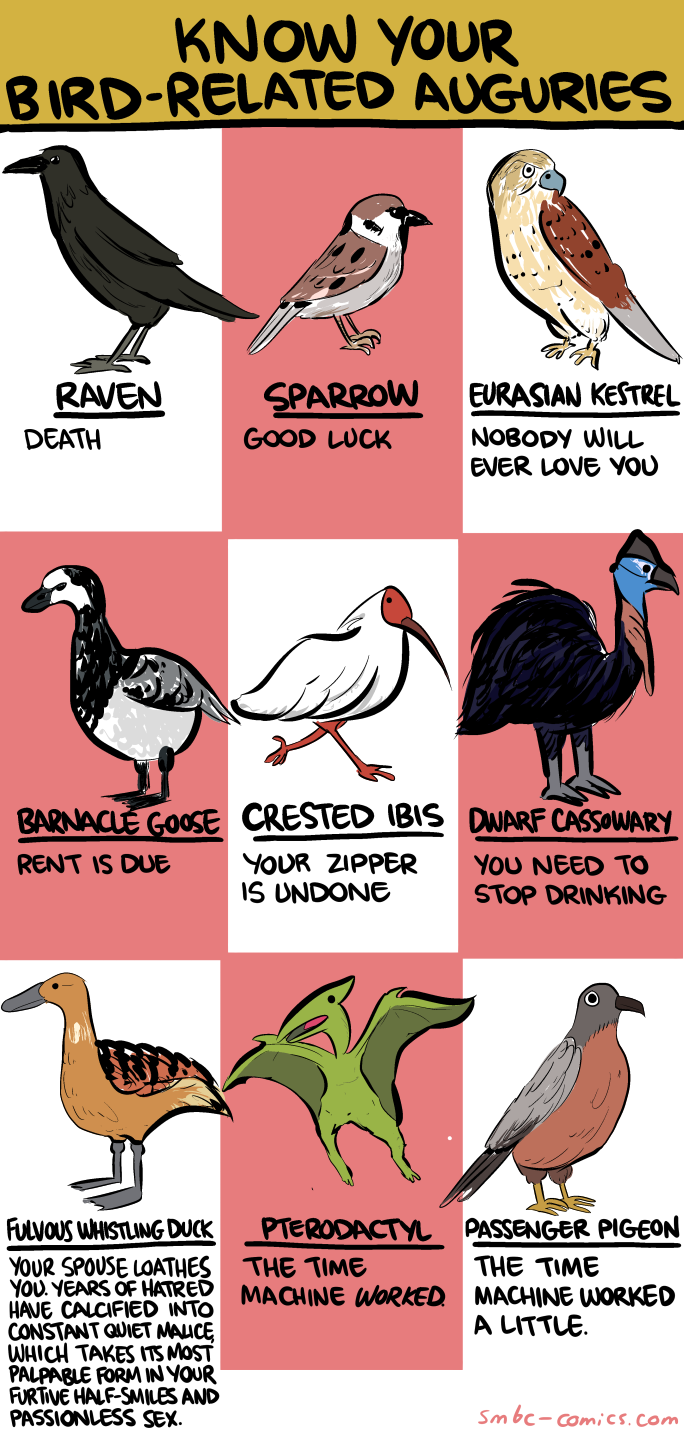
New BAHFest day! Ever wondere about the evolutionary origins of the handshake?

January 26, 2015
New BAHFest day! Ever wondere about the evolutionary origins of the handshake?
mkvande, Shortfatsteve and 4 others like this
26 Jan 17:03
SleuthSayers: The $3500 Shirt - A History Lesson in Economics
by Eve Fisher
One of the great advantages of being a historian is that you don't get your knickers in as much of a twist over how bad things are today. If you think this year is bad, try 1347, when the Black Death covered most of Europe, one-third of the world had died, and (to add insult to injury) there was also (in Europe) the little matter of the Hundred Years' War and the Babylonian Captivity of the Church (where the pope had moved to Avignon, France, and basically the Church was being transformed into a subsidiary of the French regime). Things are looking up already, aren't they?
Another thing is economics. Everyone complains about taxes, prices, and how expensive it is to live any more. I'm not going to go into taxes - that way lies madness. But I can tell you that living has never been cheaper. We live in a country awash in stuff - food, clothing, appliances, machines, cheap crap from China - but it's never enough. $4 t-shirts? Please. We want five for $10, and even then, can we get them on sale? And yet, compared to a world where everything is made by hand - we're talking barely 200 years ago - everything is cheap and plentiful, and we are appallingly ungrateful.

Let's talk clothing. When the Industrial Revolution began, it started with factories making cloth. Why? Because clothing used to be frighteningly expensive. Back in my teaching days I gave a standard lecture, which is about to follow, on the $3,500 shirt, or why peasants owned so little clothing. Here's the way it worked:
See this guy below, front left dancing? He's wearing a standard medieval shirt. It has a yoke, a bit of smocking and gathering around the neck, armholes, and the wrists would be banded, so he could tie or button them close.

Oh, and in the middle ages, it would be expected that all of the inside sleeves would be finished. This was all done by hand. A practiced seamstress could probably sew it in 7 hours. But that's not all that would go into the making. There's the cloth. A shirt like this would take about 4 yards of cloth, and it would be a fine weave: the Knoxville Museum of Art estimates two inches an hour. So 4(yards)*36(inches)/2 = 72 hours. (I'm a weaver - or at least I used to be - so this sounds accurate to me.) Okay, so hand weaving and hand sewing would take 79 hours. Now the estimate for spinning has always been complex, so stick with me for a minute: Yardage of thread for 4 yards of cloth, one yard wide (although old looms often only wove about 24" wide cloth), and requires 12 threads per inch, so:
 12 threads * 36" wide * (4 yards + 2 yards for tie-up = 6 yards, or 72") * 72 = 31,004 inches, or 864 yards of thread for the warp. And you'd need about the same for a weft, or a total of about 1600 yards of thread for one shirt.
1600 yards would take a while to spin. At a Dark Ages recreation site, they figured out a good spinner could do 4 yards in an hour, so that would be 400 hours to make the thread for the weaving.
So, 7 hours for sewing, 72 for weaving, 400 for spinning, or 479 hours total to make one shirt. At minimum wage - $7.25 an hour - that shirt would cost $3,472.75.
And that's just a standard shirt.
And that's not counting the work that goes into raising sheep or growing cotton and then making the fiber fit for weaving. Or making the thread for the sewing.
And you'd still need pants (tights or breeches) or a skirt, a bodice or vest, a jacket or cloak, stockings, and, if at all possible, but a rare luxury, shoes.
NEW NOTE (1/30/15) - I have updated the mathematics of this (which only increases the amount of time, and, therefore, money...): Is Time Money or is Money Time?
NOTE: Back in the pre-industrial days, the making of thread, cloth, and clothing ate up all the time that a woman wasn't spending cooking and cleaning and raising the children. That's why single women were called "spinsters" - spinning thread was their primary job. "I somehow or somewhere got the idea," wrote Lucy Larcom in the 18th century, "when I was a small child, that the chief end of woman was to make clothing for mankind." Ellen Rollins: "The moaning of the big [spinning] wheel was the saddest sound of my childhood. It was like a low wail from out of the lengthened monotony of the spinner's life." (Jack Larkin, The Reshaping of Everyday Life, p. 26)
Anyway, with clothing that expensive and hard to make, every item was something you wore until it literally disintegrated. Even in 1800, a farm woman would be lucky to own three dresses - one for best and the other two for daily living. Heck, my mother, in 1930, went to college with that exact number of dresses to her name... This is why old clothing is rare: even the wealthy passed their old clothes on to the next generation or the poorer classes. The poor wore theirs until it could be worn no more, and then it was cut down for their children, and then used for rags of all kinds, and then, finally, sold to the rag and bone man who would transport it off to be made into (among other things) paper.

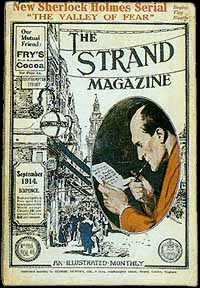
And speaking of paper, that was another thing that had to be invented for our society to exist: cheap paper. Good rag paper (made literally with expensive cloth rag) was always pricey, just not as pricey as parchment which was goat, sheep, or calf skin. (This is why medieval manuscripts were so few and why they were often kept chained up for fear of theft. It took at least a whole herd of animals to make the Book of Kells, for example. On the other hand, well-kept parchment can last thousands of years.) In fact, paper remained expensive long after clothing got cheaper, because it took a long time to figure out how to make paper out of nothing but wood pulp, without all that expensive rag content. It wasn't until the production of wood pulp paper was perfected in the mid-1800's that books (schoolbooks, fiction, non-fiction), magazines, and newspapers became available to the general public. Including pulp fiction - the first was Argosy Magazine in 1896 - a genre that was named for the cheapest of cheap fiber paper that it was published on. And without that pulp paper, where would our entire genre be?


One of the great advantages of being a historian is that you don't get your knickers in as much of a twist over how bad things are today. If you think this year is bad, try 1347, when the Black Death covered most of Europe, one-third of the world had died, and (to add insult to injury) there was also (in Europe) the little matter of the Hundred Years' War and the Babylonian Captivity of the Church (where the pope had moved to Avignon, France, and basically the Church was being transformed into a subsidiary of the French regime). Things are looking up already, aren't they?
Another thing is economics. Everyone complains about taxes, prices, and how expensive it is to live any more. I'm not going to go into taxes - that way lies madness. But I can tell you that living has never been cheaper. We live in a country awash in stuff - food, clothing, appliances, machines, cheap crap from China - but it's never enough. $4 t-shirts? Please. We want five for $10, and even then, can we get them on sale? And yet, compared to a world where everything is made by hand - we're talking barely 200 years ago - everything is cheap and plentiful, and we are appallingly ungrateful.
Let's talk clothing. When the Industrial Revolution began, it started with factories making cloth. Why? Because clothing used to be frighteningly expensive. Back in my teaching days I gave a standard lecture, which is about to follow, on the $3,500 shirt, or why peasants owned so little clothing. Here's the way it worked:
See this guy below, front left dancing? He's wearing a standard medieval shirt. It has a yoke, a bit of smocking and gathering around the neck, armholes, and the wrists would be banded, so he could tie or button them close.
Oh, and in the middle ages, it would be expected that all of the inside sleeves would be finished. This was all done by hand. A practiced seamstress could probably sew it in 7 hours. But that's not all that would go into the making. There's the cloth. A shirt like this would take about 4 yards of cloth, and it would be a fine weave: the Knoxville Museum of Art estimates two inches an hour. So 4(yards)*36(inches)/2 = 72 hours. (I'm a weaver - or at least I used to be - so this sounds accurate to me.) Okay, so hand weaving and hand sewing would take 79 hours. Now the estimate for spinning has always been complex, so stick with me for a minute: Yardage of thread for 4 yards of cloth, one yard wide (although old looms often only wove about 24" wide cloth), and requires 12 threads per inch, so:
1600 yards would take a while to spin. At a Dark Ages recreation site, they figured out a good spinner could do 4 yards in an hour, so that would be 400 hours to make the thread for the weaving.
So, 7 hours for sewing, 72 for weaving, 400 for spinning, or 479 hours total to make one shirt. At minimum wage - $7.25 an hour - that shirt would cost $3,472.75.
And that's just a standard shirt.
And that's not counting the work that goes into raising sheep or growing cotton and then making the fiber fit for weaving. Or making the thread for the sewing.
And you'd still need pants (tights or breeches) or a skirt, a bodice or vest, a jacket or cloak, stockings, and, if at all possible, but a rare luxury, shoes.
NEW NOTE (1/30/15) - I have updated the mathematics of this (which only increases the amount of time, and, therefore, money...): Is Time Money or is Money Time?
NOTE: Back in the pre-industrial days, the making of thread, cloth, and clothing ate up all the time that a woman wasn't spending cooking and cleaning and raising the children. That's why single women were called "spinsters" - spinning thread was their primary job. "I somehow or somewhere got the idea," wrote Lucy Larcom in the 18th century, "when I was a small child, that the chief end of woman was to make clothing for mankind." Ellen Rollins: "The moaning of the big [spinning] wheel was the saddest sound of my childhood. It was like a low wail from out of the lengthened monotony of the spinner's life." (Jack Larkin, The Reshaping of Everyday Life, p. 26)
Anyway, with clothing that expensive and hard to make, every item was something you wore until it literally disintegrated. Even in 1800, a farm woman would be lucky to own three dresses - one for best and the other two for daily living. Heck, my mother, in 1930, went to college with that exact number of dresses to her name... This is why old clothing is rare: even the wealthy passed their old clothes on to the next generation or the poorer classes. The poor wore theirs until it could be worn no more, and then it was cut down for their children, and then used for rags of all kinds, and then, finally, sold to the rag and bone man who would transport it off to be made into (among other things) paper.
And speaking of paper, that was another thing that had to be invented for our society to exist: cheap paper. Good rag paper (made literally with expensive cloth rag) was always pricey, just not as pricey as parchment which was goat, sheep, or calf skin. (This is why medieval manuscripts were so few and why they were often kept chained up for fear of theft. It took at least a whole herd of animals to make the Book of Kells, for example. On the other hand, well-kept parchment can last thousands of years.) In fact, paper remained expensive long after clothing got cheaper, because it took a long time to figure out how to make paper out of nothing but wood pulp, without all that expensive rag content. It wasn't until the production of wood pulp paper was perfected in the mid-1800's that books (schoolbooks, fiction, non-fiction), magazines, and newspapers became available to the general public. Including pulp fiction - the first was Argosy Magazine in 1896 - a genre that was named for the cheapest of cheap fiber paper that it was published on. And without that pulp paper, where would our entire genre be?

26 Jan 13:13
Image Credit: NASA, Expedition 42
Interior View
Discover the cosmos! Each day a different image or photograph of our fascinating universe is featured, along with a brief explanation written by a professional astronomer.
2015 January 23

Image Credit: NASA, Expedition 42
Explanation: Some prefer windows, and these are the best available on board the International Space Station. Taken on January 4, this snapshot from inside the station's large, seven-window Cupola module also shows off a workstation for controlling Canadarm2. Used to grapple visiting cargo vehicles and assist astronauts during spacewalks, the robotic arm is just outside the window at the right. The Cupola itself is attached to the Earth-facing or nadir port of the station's Tranquility module, offering dynamic panoramas of our fair planet. Seen from the station's 90 minute long, 400 kilometer high orbit, Earth's bright limb is in view above center.
Tomorrow's picture: light-weekend < | Archive | Submissions | Search | Calendar | RSS | Education | About APOD | Discuss | >
Authors & editors:
Robert Nemiroff
(MTU) &
Jerry Bonnell (UMCP)
NASA Official: Phillip Newman
Specific rights apply.
NASA Web
Privacy Policy and Important Notices
A service of:
ASD at
NASA /
GSFC
& Michigan Tech. U.
Rtersieva, Adam Victor Brandizzi likes this
26 Jan 13:12
Image Credit: X-ray: NASA/CXC/SAO; Optical: NASA/STScI; Radio: NSF/NRAO/AUI/VLA
Light from Cygnus A
Discover the cosmos! Each day a different image or photograph of our fascinating universe is featured, along with a brief explanation written by a professional astronomer.
2015 January 24

Image Credit: X-ray: NASA/CXC/SAO; Optical: NASA/STScI; Radio: NSF/NRAO/AUI/VLA
Explanation: Celebrating astronomy in this International Year of Light, the detailed image reveals spectacular active galaxy Cygnus A in light across the electromagnetic spectrum. Incorporating X-ray data ( blue) from the orbiting Chandra Observatory, Cygnus A is seen to be a prodigious source of high energy x-rays. But it is actually more famous at the low energy end of the electromagnetic spectrum. One of the brightest celestial sources visible to radio telescopes, at 600 million light-years distant Cygnus A is the closest powerful radio galaxy. Radio emission ( red) extends to either side along the same axis for nearly 300,000 light-years powered by jets of relativistic particles emanating from the galaxy's central supermassive black hole. Hot spots likely mark the ends of the jets impacting surrounding cool, dense material. Confined to yellow hues, optical wavelength data of the galaxy from Hubble and the surrounding field in the Digital Sky Survey complete a remarkable multiwavelength view.
Tomorrow's picture: twisted sun < | Archive | Submissions | Search | Calendar | RSS | Education | About APOD | Discuss | >
Authors & editors:
Robert Nemiroff
(MTU) &
Jerry Bonnell (UMCP)
NASA Official: Phillip Newman
Specific rights apply.
NASA Web
Privacy Policy and Important Notices
A service of:
ASD at
NASA /
GSFC
& Michigan Tech. U.
Adam Victor Brandizzi likes this
26 Jan 00:15


What I Wish I Knew When I Started My Career as a Software Developer
Adam Victor BrandizziAssino embaixo

When you're starting your career in any field, you probably have high hopes but don't really know what to expect. Should you keep your head down and do what you're told or should you aim only for ambitious projects? Here's what I've learned in my experience as a software developer.
Let me bat out a few suggestions based on my experience and observations. This list is not all-inclusive—because it can't be. Your experience will be unique.
1. Don't be afraid to learn on the job. Sadly, bookshelves at most workplaces are mostly just set-dressing (look at what our hackers claim to read!). You rarely see anyone reading one, especially not during core work hours. Still, you have a computer and can read papers and most books through an e-reader. So get to it. You're not going to learn much if you just do what you're assigned and little more. You also won't move forward if you ask for more work and get grunt work. Be willing to slow down and do things right and read up on the fundamentals. How do people develop an expertise in a coveted domain like machine learning? One day at a time.
2. Manage your career aggressively. Take responsibility for your own education and progress. One out of ten people (if that) find a mentor who will clear paths and pull strings and make sure they come out on top for promotions and plum projects. If you're in that other nine, and you will be most of the time, no one's looking out for you. So look out for yourself. Don't ask for more work unless you trust that person to give you better work than you'd get otherwise. When you can, do the bare minimum amount of work that's not advancing your career or teaching you something; if it has no career-adding value, people probably don't care enough about it for it to matter that you're putting in a minimum effort, as long as you don't get in anyone's way. After three years, if you're not being groomed for something bigger and badder, external promotion (read: changing jobs) is usually the way to go.
You're thinking of jumping ship. Maybe it's your job, a relationship, a degree, or some… Read more Read more
3. Recognize under-performance and over-performance and avoid them. There are a lot of low-effort players who stay employed for years. This isn't a bad strategy if you're settled, but I wouldn't fall too low. That said, the only people who typically get fired for under-performance are the people who fail so badly that they generate work for others. People who hide and do little tend not to make any enemies. At the same time, be cautious of over-performance. This isn't like college where challenging your professor's ideas could earn you an 'A' if you argued your point well. Over-performers often generate extra work for their superiors and colleagues and draw unwanted attention (see: McNulty in The Wire) and are more likely to be culled for "performance" (98 percent of "performance management" in companies is politics) than under-performers. I'm not saying that you shouldn't work hard and do a good job and learn as much as you can. That's not necessarily over-performance; in my experience, though, over-performance—being recklessly ambitious, perhaps—is much more dangerous than under-performance. It can get you just as fired and it will happen a lot faster. If you end up stuck between the two, ebb towards under-performance.
4. Never ask for permission unless it would be reckless not to. Want to spend a week investigating something on your own initiative? Don't ask for permission. You won't get it. You might not actually be doing your boss a favor when you ask for permission; from their perspective, you're asking for the right to pass the buck if your project doesn't pan out. Since he can deny you and your buck-passing after-the-fact, in any case, because he outranks you, you don't really gain anything from such a promise you might extract in the first place. So there's no upside in asking for that permission. Of course, if you're going to do something that presents a real risk to the business or where his permission would be reasonably expected, then go ahead and ask for permission. If the loss is small and the risk is appropriate to your level in the company (and any programming job where you're not trusted with days to weeks of your own time is not worth having) then don't ask for permission. Just do it, and do it well.
It's a vicious cycle: you can tell your boss is stressed, so you try to do more to make them… Read more Read more
5. Never apologize for being autonomous or using your own time. You can admit that a project or investigation didn't pan out, although it's best if you can spin it as a discovery exercise, but you should never apologize for a failed side project. It sets a precedent of you as a subordinate who needs more supervision. After describing something you did of your own initiative, don't say to the boss, "Don't worry, I did it strictly as a weekend project." If your company won't let you work on something during normal work hours, then don't do it on their behalf for any reason. Respect your time. Or no one else will.
6. Learn CS666 (what I call the politics of software development) and you can usually forget about it. Refuse to learn it, and it'll be with you forever. As we get older, we tend to see the value in transferable and general skills: functional programming rather than Spring/Hibernate; algorithms rather than quirks of a Java 1.4 legacy system. Well, CS666 ain't pretty, but it's transferable across the industry in a way that no programming language ever will be. I'm not saying that one should become a political animal or get obsessed with the politics, because that won't end well, but one ought to be politically aware because there's politics in everything we do. It's good to start studying people and their moves early, even if you're not planning to play (and when you're young, you shouldn't play often). Whether you get the Hadoop cluster in time, who gets to make the technical decisions, whether you get that feature freeze you've been asking for so you can clear away some technical debt, and what projects you're assigned... all politics, man. For better or worse, Meritocracy is the software engineer's Prince Charming and, in the real world you'd best be on the side that gets to define "merit" and structure how it is measured. If you learn CS666, you get some time to breathe and forget about it and just do great work. If you don't learn it, your career will be shaped by those who are better at it.
7. Don't be quixotic and try to prove your bosses wrong. When young engineers feel that their ideas are better than those of their superiors but find a lack of support, they often double down and throw in a lot of hours. "Let's prove our bosses wrong... by sacrificing our own time on something they will own!" Sorry, but if you have to throw down weekends (except on a rare occasion, like a production emergency) to bring a project through, that means that your bosses don't actually care that much about it. Otherwise, you'd have the time and resources and no patience for quixotry in yourself or others. Rather than trying to hit a home run with a cracked bat, you just should just let that game be. When bosses are "shown up" by people they doubted, they don't give that person an automatic promotion or raise. They find a way to confirm their negative impression (and your earnest self-association with a disliked project has put some stink on you) and, even if you succeed, you fail. If nothing else, there's always "He did a great job on that, but he was distracted from his assigned work and so I can't trust him going forward/we can't let him set a precedent/it was actually my idea."
8. Don't fight other peoples' battles. As you're young and inexperienced, you probably don't have any real power in most cases. Your intelligence doesn't automatically give you credibility. If you get involved in someone else's fight, or stand up for someone being unjustly treated, you'll just get mowed down. Watch Mad Men and The Wire and Breaking Bad for how people really are when there are any stakes. Save all your energy for your own fights. The corporate world is not a place where social justice is valued—people protest by leaving, not picketing—and you won't make any friends as a crusader. If you fight for yourself and it ends badly, you at least get some respect from some people (and that may pay off, years down the line) for your self-preservation. If you fight for other people, you're seen as an arrogant young fuck who didn't know the rules.
9. Try to avoid thinking in terms of "good" versus "bad." Be ready to play it either way. Young people, especially in technology, tend to fall into those traps—labeling something like a job or a company "good" or "bad" and thus reacting emotionally and sub-optimally. You might think something like: "I'm not going to work hard because my boss yelled at Sam today and I'm upset" or "I'm going to sacrifice my own health and career goals and throw 90 hours per week after grunt work because this is a great start-up and we're changing the world."
Yeah, fuck that. Every organization is a mix of good and bad. Whatever the territory, use it to your advantage. Boss yells a lot? That actually makes him less of a threat to your career, should he go against you, because they probably aren't trusted by their own superiors either. Assigned a boring project? It's probably boring to your managers too, which means they won't look at you much. You can put in a few hours per week and have 30-40+ left over to learn skills for your next job. Fucked-up culture? If you can stand it and others can't, you're a valued employee—and you can treat it as a learning opportunity ("MBA by counterexample"). It's important to stop thinking of every event as "good" or "bad" in some biblical sense and just see the angles and how to play it. This is a skill that seems to improve greatly with age. You stop sizing complex entities like corporations as "good" or "evil" and just learn how the play the landscape as it is.
10. Never step back on the salary scale except to be a founder. As a corollary, if you step back, expect to be treated as a founder. A 10% drop is permissible if you're changing industries (out of finance and into biotech research) or moving to a lower cost-of-living area. Beyond that, the answer is "no" unless you're making a permanent move. Most people are actually really bad at assessing how good someone is at his or her job, which means that, in the private sector, your salary is the best assessment of your global rank and is a starting point for future negotiations. You better have a damn good reason if you step back, and it better be a high-status one. Employee positions at start-ups are no exception (count the equity at zero, for the purpose of this item). If you leave a $150,000 per year hedge fund job for $90,000 "plus equity" (like, what? 0.05 percent?) then, congratulations, you're now a $90,000/year programmer. That's actually quite fine (being a $90k programmer) if you've moved to a less expensive area and intend to stay there, and it's fine if the company is arguably idealistic (e.g. clean energy) because you can probably bounce back to where you were if you're a good negotiator, but if you took that drop for other unjustifiable reasons, then you're just a chump and, no, you're not changing the world by fixing bugs in ad servers.
11. Exercise. It affects your health, your self-confidence, your sex life, your poise and your career. That hour of exercise pays itself off in increased productivity. If you find yourself no longer exercising, you're throwing down too many hours and you need to garbage-collect your life.
12. Long hours: sometimes okay, usually harmful. The difference between 12% growth and 6% growth is meaningful. Applied to a $60,000 salary over 10 years, one takes you to $107,451 and the other takes you to $186,351. That's a big difference (not just in salary, but in the level of job that those numbers suggest). When your work is multiplicative in nature and your input/output relationship is truly exponential, work hard. Don't work long hours on the merely additive stuff ("more of the same") that doesn't advance your career or knowledge in a long-standing way. If you're just doubling up on grunt work so some jerk boss can save money because you're working two positions and taking one salary, then fuck it. Walk away. It may not feel like the case, but he needs you more than you need him.
13. Recognize core technological trends apart from fluff. Half of the "NoSQL" databases and "big data" technologies that are hot buzzwords won't be around in 15 years. On the other hand, a thorough working knowledge of linear algebra (and a lack of fear with respect to the topic!) will always suit you well. There's a lot of nonsense in "data science" but there is some meat to it. Likewise, there's a lot of puffery and goofiness in "NoSQL" but non-relational databases do have their place. It's your job (and you get better at this over time, but start making guesses when you're young) to figure out what are core technological principles that make sense and are worth learning for the long term (e.g. functional programming) and which are just fads. It's often useful to have fluency in the fads (for example, if you need a job right now) but you shouldn't spend too much time on them. Buzzword-compliant programmers with weak fundamentals get stuck writing glue code and having to learn new junk when their old junky knowledge goes out of style.
14. Finally, learn as much as you can. It's hard. It takes work. This is probably redundant with some of the other points, but once you've learned enough politics to stay afloat, it's important to level up technically. And, when you're out of school and probably not going back, it's hard. Even the really smart people find it hard to read the cutting-edge papers. (In part, that's because many papers aren't well-written, but that's another topic.) No one is born with the ability to look at complex equations and just intuit what they mean. That stuff took the smartest people in the world hundreds of years to discover and, once discovered, it's much easier for the rest of us to follow along... but it's not without difficulty. If you want to be a great programmer, you'll probably have to study as an adult (with no grades!) harder than 95% of college students (and, maybe, 65% of graduate students) actually do study.
"What do software developers age 30 and over know now that they wish they had known in their 20s?" originally appeared on Quora. You can follow Quora on Twitter, Facebook, and Google+.
This answer has been edited for grammar and clarity.
Image adapted from Family Business and isak55 (Shutterstock). Want to see your work on Lifehacker? Email Andy.
Adam Victor Brandizzi likes this
26 Jan 00:15
The Likely Cause of Addiction Has Been Discovered, and It Is Not What You Think
It is now one hundred years since drugs were first banned -- and all through this long century of waging war on drugs, we have been told a story about addiction by our teachers and by our governments. This story is so deeply ingrained in our minds that we take it for granted. It seems obvious. It seems manifestly true. Until I set off three and a half years ago on a 30,000-mile journey for my new book, Chasing The Scream: The First And Last Days of the War on Drugs, to figure out what is really driving the drug war, I believed it too. But what I learned on the road is that almost everything we have been told about addiction is wrong -- and there is a very different story waiting for us, if only we are ready to hear it.
If we truly absorb this new story, we will have to change a lot more than the drug war. We will have to change ourselves.
I learned it from an extraordinary mixture of people I met on my travels. From the surviving friends of Billie Holiday, who helped me to learn how the founder of the war on drugs stalked and helped to kill her. From a Jewish doctor who was smuggled out of the Budapest ghetto as a baby, only to unlock the secrets of addiction as a grown man. From a transsexual crack dealer in Brooklyn who was conceived when his mother, a crack-addict, was raped by his father, an NYPD officer. From a man who was kept at the bottom of a well for two years by a torturing dictatorship, only to emerge to be elected President of Uruguay and to begin the last days of the war on drugs.
I had a quite personal reason to set out for these answers. One of my earliest memories as a kid is trying to wake up one of my relatives, and not being able to. Ever since then, I have been turning over the essential mystery of addiction in my mind -- what causes some people to become fixated on a drug or a behavior until they can't stop? How do we help those people to come back to us? As I got older, another of my close relatives developed a cocaine addiction, and I fell into a relationship with a heroin addict. I guess addiction felt like home to me.
If you had asked me what causes drug addiction at the start, I would have looked at you as if you were an idiot, and said: "Drugs. Duh." It's not difficult to grasp. I thought I had seen it in my own life. We can all explain it. Imagine if you and I and the next twenty people to pass us on the street take a really potent drug for twenty days. There are strong chemical hooks in these drugs, so if we stopped on day twenty-one, our bodies would need the chemical. We would have a ferocious craving. We would be addicted. That's what addiction means.
One of the ways this theory was first established is through rat experiments -- ones that were injected into the American psyche in the 1980s, in a famous advert by the Partnership for a Drug-Free America. You may remember it. The experiment is simple. Put a rat in a cage, alone, with two water bottles. One is just water. The other is water laced with heroin or cocaine. Almost every time you run this experiment, the rat will become obsessed with the drugged water, and keep coming back for more and more, until it kills itself.
The advert explains: "Only one drug is so addictive, nine out of ten laboratory rats will use it. And use it. And use it. Until dead. It's called cocaine. And it can do the same thing to you."
But in the 1970s, a professor of Psychology in Vancouver called Bruce Alexander noticed something odd about this experiment. The rat is put in the cage all alone. It has nothing to do but take the drugs. What would happen, he wondered, if we tried this differently? So Professor Alexander built Rat Park. It is a lush cage where the rats would have colored balls and the best rat-food and tunnels to scamper down and plenty of friends: everything a rat about town could want. What, Alexander wanted to know, will happen then?
In Rat Park, all the rats obviously tried both water bottles, because they didn't know what was in them. But what happened next was startling.
The rats with good lives didn't like the drugged water. They mostly shunned it, consuming less than a quarter of the drugs the isolated rats used. None of them died. While all the rats who were alone and unhappy became heavy users, none of the rats who had a happy environment did.
At first, I thought this was merely a quirk of rats, until I discovered that there was -- at the same time as the Rat Park experiment -- a helpful human equivalent taking place. It was called the Vietnam War. Time magazine reported using heroin was "as common as chewing gum" among U.S. soldiers, and there is solid evidence to back this up: some 20 percent of U.S. soldiers had become addicted to heroin there, according to a study published in the Archives of General Psychiatry. Many people were understandably terrified; they believed a huge number of addicts were about to head home when the war ended.
But in fact some 95 percent of the addicted soldiers -- according to the same study -- simply stopped. Very few had rehab. They shifted from a terrifying cage back to a pleasant one, so didn't want the drug any more.
Professor Alexander argues this discovery is a profound challenge both to the right-wing view that addiction is a moral failing caused by too much hedonistic partying, and the liberal view that addiction is a disease taking place in a chemically hijacked brain. In fact, he argues, addiction is an adaptation. It's not you. It's your cage.
After the first phase of Rat Park, Professor Alexander then took this test further. He reran the early experiments, where the rats were left alone, and became compulsive users of the drug. He let them use for fifty-seven days -- if anything can hook you, it's that. Then he took them out of isolation, and placed them in Rat Park. He wanted to know, if you fall into that state of addiction, is your brain hijacked, so you can't recover? Do the drugs take you over? What happened is -- again -- striking. The rats seemed to have a few twitches of withdrawal, but they soon stopped their heavy use, and went back to having a normal life. The good cage saved them. (The full references to all the studies I am discussing are in the book.)
When I first learned about this, I was puzzled. How can this be? This new theory is such a radical assault on what we have been told that it felt like it could not be true. But the more scientists I interviewed, and the more I looked at their studies, the more I discovered things that don't seem to make sense -- unless you take account of this new approach.
Here's one example of an experiment that is happening all around you, and may well happen to you one day. If you get run over today and you break your hip, you will probably be given diamorphine, the medical name for heroin. In the hospital around you, there will be plenty of people also given heroin for long periods, for pain relief. The heroin you will get from the doctor will have a much higher purity and potency than the heroin being used by street-addicts, who have to buy from criminals who adulterate it. So if the old theory of addiction is right -- it's the drugs that cause it; they make your body need them -- then it's obvious what should happen. Loads of people should leave the hospital and try to score smack on the streets to meet their habit.
But here's the strange thing: It virtually never happens. As the Canadian doctor Gabor Mate was the first to explain to me, medical users just stop, despite months of use. The same drug, used for the same length of time, turns street-users into desperate addicts and leaves medical patients unaffected.
If you still believe -- as I used to -- that addiction is caused by chemical hooks, this makes no sense. But if you believe Bruce Alexander's theory, the picture falls into place. The street-addict is like the rats in the first cage, isolated, alone, with only one source of solace to turn to. The medical patient is like the rats in the second cage. She is going home to a life where she is surrounded by the people she loves. The drug is the same, but the environment is different.
This gives us an insight that goes much deeper than the need to understand addicts. Professor Peter Cohen argues that human beings have a deep need to bond and form connections. It's how we get our satisfaction. If we can't connect with each other, we will connect with anything we can find -- the whirr of a roulette wheel or the prick of a syringe. He says we should stop talking about 'addiction' altogether, and instead call it 'bonding.' A heroin addict has bonded with heroin because she couldn't bond as fully with anything else.
So the opposite of addiction is not sobriety. It is human connection.
When I learned all this, I found it slowly persuading me, but I still couldn't shake off a nagging doubt. Are these scientists saying chemical hooks make no difference? It was explained to me -- you can become addicted to gambling, and nobody thinks you inject a pack of cards into your veins. You can have all the addiction, and none of the chemical hooks. I went to a Gamblers' Anonymous meeting in Las Vegas (with the permission of everyone present, who knew I was there to observe) and they were as plainly addicted as the cocaine and heroin addicts I have known in my life. Yet there are no chemical hooks on a craps table.
But still, surely, I asked, there is some role for the chemicals? It turns out there is an experiment which gives us the answer to this in quite precise terms, which I learned about in Richard DeGrandpre's book The Cult of Pharmacology.
Everyone agrees cigarette smoking is one of the most addictive processes around. The chemical hooks in tobacco come from a drug inside it called nicotine. So when nicotine patches were developed in the early 1990s, there was a huge surge of optimism -- cigarette smokers could get all of their chemical hooks, without the other filthy (and deadly) effects of cigarette smoking. They would be freed.
But the Office of the Surgeon General has found that just 17.7 percent of cigarette smokers are able to stop using nicotine patches. That's not nothing. If the chemicals drive 17.7 percent of addiction, as this shows, that's still millions of lives ruined globally. But what it reveals again is that the story we have been taught about The Cause of Addiction lying with chemical hooks is, in fact, real, but only a minor part of a much bigger picture.
This has huge implications for the one-hundred-year-old war on drugs. This massive war -- which, as I saw, kills people from the malls of Mexico to the streets of Liverpool -- is based on the claim that we need to physically eradicate a whole array of chemicals because they hijack people's brains and cause addiction. But if drugs aren't the driver of addiction -- if, in fact, it is disconnection that drives addiction -- then this makes no sense.
Ironically, the war on drugs actually increases all those larger drivers of addiction. For example, I went to a prison in Arizona -- 'Tent City' -- where inmates are detained in tiny stone isolation cages ('The Hole') for weeks and weeks on end to punish them for drug use. It is as close to a human recreation of the cages that guaranteed deadly addiction in rats as I can imagine. And when those prisoners get out, they will be unemployable because of their criminal record -- guaranteeing they with be cut off even more. I watched this playing out in the human stories I met across the world.
There is an alternative. You can build a system that is designed to help drug addicts to reconnect with the world -- and so leave behind their addictions.
This isn't theoretical. It is happening. I have seen it. Nearly fifteen years ago, Portugal had one of the worst drug problems in Europe, with 1 percent of the population addicted to heroin. They had tried a drug war, and the problem just kept getting worse. So they decided to do something radically different. They resolved to decriminalize all drugs, and transfer all the money they used to spend on arresting and jailing drug addicts, and spend it instead on reconnecting them -- to their own feelings, and to the wider society. The most crucial step is to get them secure housing, and subsidized jobs so they have a purpose in life, and something to get out of bed for. I watched as they are helped, in warm and welcoming clinics, to learn how to reconnect with their feelings, after years of trauma and stunning them into silence with drugs.
One example I learned about was a group of addicts who were given a loan to set up a removals firm. Suddenly, they were a group, all bonded to each other, and to the society, and responsible for each other's care.
The results of all this are now in. An independent study by the British Journal of Criminology found that since total decriminalization, addiction has fallen, and injecting drug use is down by 50 percent. I'll repeat that: injecting drug use is down by 50 percent. Decriminalization has been such a manifest success that very few people in Portugal want to go back to the old system. The main campaigner against the decriminalization back in 2000 was Joao Figueira, the country's top drug cop. He offered all the dire warnings that we would expect from the Daily Mail or Fox News. But when we sat together in Lisbon, he told me that everything he predicted had not come to pass -- and he now hopes the whole world will follow Portugal's example.
This isn't only relevant to the addicts I love. It is relevant to all of us, because it forces us to think differently about ourselves. Human beings are bonding animals. We need to connect and love. The wisest sentence of the twentieth century was E.M. Forster's -- "only connect." But we have created an environment and a culture that cut us off from connection, or offer only the parody of it offered by the Internet. The rise of addiction is a symptom of a deeper sickness in the way we live -- constantly directing our gaze towards the next shiny object we should buy, rather than the human beings all around us.
The writer George Monbiot has called this "the age of loneliness." We have created human societies where it is easier for people to become cut off from all human connections than ever before. Bruce Alexander -- the creator of Rat Park -- told me that for too long, we have talked exclusively about individual recovery from addiction. We need now to talk about social recovery -- how we all recover, together, from the sickness of isolation that is sinking on us like a thick fog.
But this new evidence isn't just a challenge to us politically. It doesn't just force us to change our minds. It forces us to change our hearts.
Loving an addict is really hard. When I looked at the addicts I love, it was always tempting to follow the tough love advice doled out by reality shows like Intervention -- tell the addict to shape up, or cut them off. Their message is that an addict who won't stop should be shunned. It's the logic of the drug war, imported into our private lives. But in fact, I learned, that will only deepen their addiction -- and you may lose them altogether. I came home determined to tie the addicts in my life closer to me than ever -- to let them know I love them unconditionally, whether they stop, or whether they can't.
When I returned from my long journey, I looked at my ex-boyfriend, in withdrawal, trembling on my spare bed, and I thought about him differently. For a century now, we have been singing war songs about addicts. It occurred to me as I wiped his brow, we should have been singing love songs to them all along.
The full story of Johann Hari's journey -- told through the stories of the people he met -- can be read in Chasing The Scream: The First and Last Days of the War on Drugs, published by Bloomsbury. The book has been praised by everyone from Elton John to Glenn Greenwald to Naomi Klein. You can buy it at all good bookstores and read more at www.chasingthescream.com.
Johann Hari will be talking about his book at 7pm at Politics and Prose in Washington DC on the 29th of January, at lunchtime at the 92nd Street Y in New York City on the 30th January, and in the evening at Red Emma's in Baltimore on the 4th February.
The full references and sources for all the information cited in this article can be found in the book's extensive end-notes.
If you would like more updates on the book and this issue, you can like the Facebook page: https://www.facebook.com/chasingthescream
Damiani.guilherme, mkvande and 5 others like this
26 Jan 00:13
The Genius of Moondog, New York’s Homeless Composer
Adam Victor BrandizziGrande história
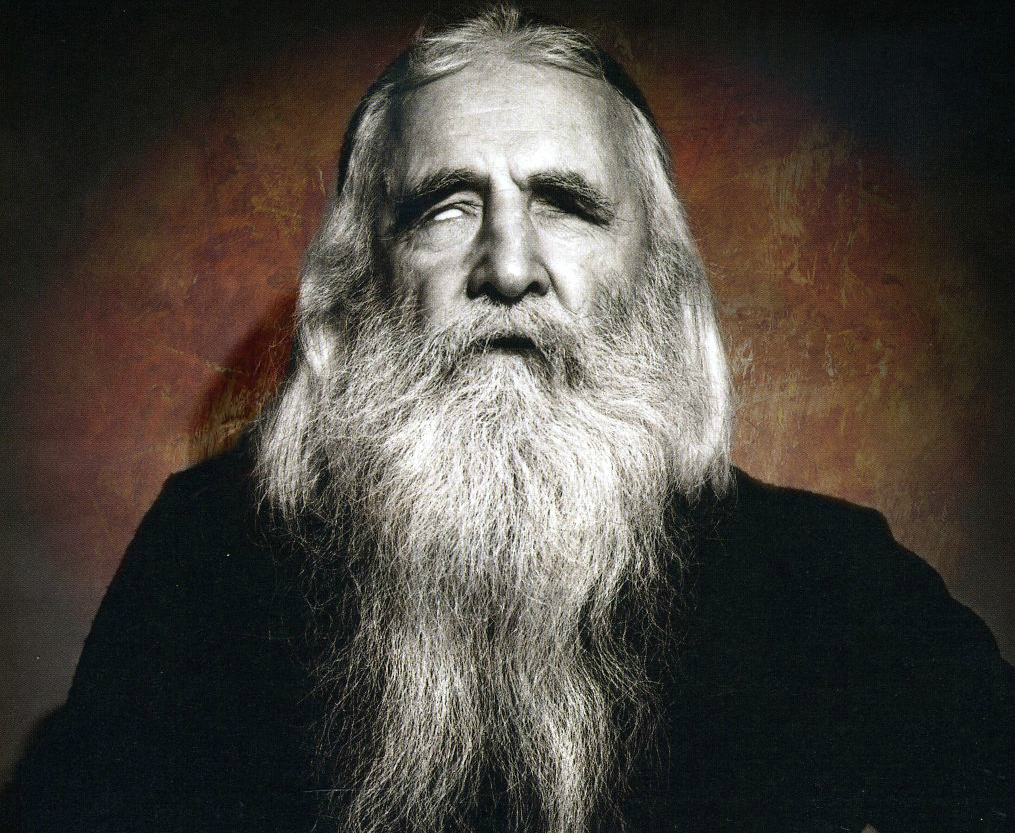
“I am an observer of life, a non-participant who takes no sides. I am in the regimented society, but not of it.”-- Moondog, 1964

For thirty years, a lumbering, blind “Viking” roamed the streets of New York City.
Armed with a six-foot, steel-pointed spear, a horned, leather-embossed cap, and a long, wispy beard, he’d find a spot along Sixth Avenue, set up his array of homemade instruments, and stand placidly for eight hours, like some ancient humanized statue. Amidst the shrill horns, screeching tires, and tumbling foot traffic of Manhattan, the sightless giant would gently rap on his drum, advertising his wares -- a set of albums and hand-written poems -- to anyone interested.
To the whole of the public, he was nothing more than a nutty, homeless waif. But unbeknownst to them, the Viking -- known more formally as Louis Hardin, Jr., or ‘Moondog’ -- had record deals, had been covered by Janis Joplin, and had been endorsed by some of the world’s greatest composers.
Moondog’s legacy is that of a man who endured through tumultuous circumstances -- acquired blindness, homelessness, and prejudice -- to become who many would call one of the most talented and under-appreciated musicians of the 20th century.
Moonpuppy
On May 26, 1916, in the backwoods of Marysville, Kansas, a healthy baby named Louis Thomas Hardin, Jr. was born. From a young age, Hardin’s parents, an Episcopal preacher and an accompanying organist, encouraged exposure to the arts: he was read everything from the satirical musings of Mark Twain to the King James Bible. His parents also imparted on him an affection for music -- particularly percussion. By the age of 5, Hardin had fashioned a set of drums from cardboard boxes; his father, sensing the child’s fascination, would take him to Arapaho Sun Dances, where he’d bang on buffalo-skin tom-toms and receive impromptu lessons from Native Americans.
His folks’ work life was itinerant, and the family often moved around. By the time Hardin was ten, he’d shuffled through Wisconsin, Wyoming, and Missouri, often at the whim of his father, who held various jobs as a “merchant, rancher, and insurance agent” after falling out of grace as a minister. Through this odyssey, Hardin accumulated a visionary collage of experiences -- until tragedy struck.
Toward the tail end of his time in Missouri, on the 4th of July, Hardin, then 16, came across a curious, cylindrical object out in the fields and began to toss it around. Hardin’s momentary curiosity would change the course of his life: the object, a dynamite cap, exploded in his face, and he was permanently blinded.
In the years following his accident, Hardin encountered a number of struggles -- chiefly, learning Braille, adjusting to a life without eyesight, and coping with the ugly divorce of his parents. During this time, Hardin’s older sister, Ruth, emerged as his mentor, reading him a wide array of philosophical, scientific, and mythological works; in time, he entirely abandoned his family’s Christian faith. As he learned to take solace in auditory sensations, Hardin’s early love for music returned with burning ambition: he vowed to devote himself entirely to composition.
At Iowa’s School for the Blind, he made good use of his time, familiarizing himself with a number of instruments, as well as composition theory and ear training. He went on to continue his studies in Memphis, Tennessee, where he met and married a “socially prominent” elderly woman, who convinced a wealthy friend to fund Hardin’s musical pursuits. Less than six months later, the relationship fell apart, and Hardin found himself without funds, and isolated from his peers.
Alone, poor, and with the grandiose dream of becoming a composer, Hardin packing his belongings and ventured to New York City.
Homeless in New York
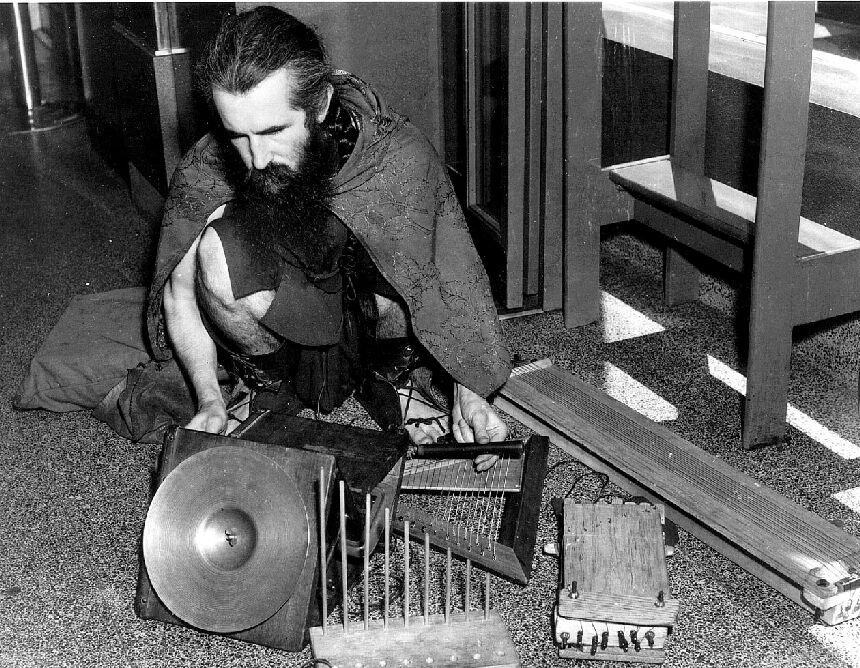
Moondog on the streets of New York, c.1953
In 1947, at age 27, Hardin arrived in big city with no contacts, no prospect of work, and little more than a month’s rent. Though he’d learned to sense his surroundings as a blind man, the crowded streets and bustling sidewalks of Manhattan quickly proved to be overwhelming.
Unsure of where to turn for guidance, Hardin decided to set himself up where he knew there’d be musicians about: on the sidewalk just outside of the stage entrance to Carnegie Hall, New York’s preeminent stomping grounds for composers. At well over six feet tall, and with chiseled features, Hardin was a striking figure, nonetheless immensely talented -- and after weeks sitting out front with his drum, people began to take notice. In time, he struck up conversations with various New York Philharmonic musicians, who then insisted that he meet Artur Rodzinski and Arturo Toscanini, both established conductors. Rodzinski was instantly impressed by Hardin, and offered him a deal: if Hardin could produce a favorable composition, Rodzinski would allow him to conduct it at the Philharmonic -- but he’d have to produce it himself.
Without the funds necessary to pay an assistant to translate his music, Hardin returned to the streets to perform. For a number of years, he remained here, homeless, bearded, and destitute, playing for coins and working on his compositions. And then, slowly, he began to transform.
After repeated comments from passersby that he looked like Jesus Christ, the anti-Christian Hardin grew weary. “I put up with that for a few years, getting compared with a monk or Christ,” he later recalled in an interview. “Then I said, 'That's enough, I don't want that connection. I must do something about my appearance to make it look un-Christian.'” At the time, Hardin was intensely interested in Nordic mythology, so he decided he’d alter his appearance to show his devotion.
It began with a series a reddish-brown robes and a flowing dark beard -- a get-up that Hardin quickly found to be inadequate. Soon, he’d adopted a full Viking-esque regalia: a horned helmet (his symbol of “virility”), a long, tapered spear (his symbol of “freedom”), self-crafted leather boots, and a flowing, bulky ensemble of blankets, cloths, and capes.

Moondog's early ensemble
In 1947, Hardin began calling himself ‘Moondog’ -- an homage to a childhood pet dog who’d “bayed at the moon” -- and encouraged others to identify him by the moniker. As Moondog got increasingly stranger, both in philosophy and fashion, he began to fall out of favor with the musicians who’d previously endorsed him.
''I had a lot of offers from people who said that they would help me but that I had to dress conventionally,'' he’d later say, ''but I valued my freedom of dress more than I cared to advance my career as a composer. I just wanted to do my own thing, and no matter how much it cost me in terms of my career, I did it.''
Hardin applied the same non-conformist philosophy to his music; striving for new, unique ways to do things, he began to construct his own instruments with the help of a local cabinet-maker. These included the “uni,” a seven-stringed zither; the “utsu,” a rudimentary type of keyboard tuned to the pentatonic scale (the same intervals of the black keys on a piano); the “tjui,” a series of nine tuned wooden pegs, and the “oo,” a triangular 25-stringed harp, which he favored most passionately.
Living on the street, he drew inspiration from the various sounds the surrounded him -- fog horns, street cars, footsteps, echoes, sirens -- and also learned to appreciate the importance of silence in composition. Pairing these influences with his early inspiration from Native American rhythms, Moondog released his first record, “Moondog’s Symphony,” in 1949. Using what he called “snake rhythm” (a slithery, complex beat that was a far departure from popular music at the time), Moondog’s creation was unlike anything ever produced:
‘Moondog’s Symphony’ (1949)
He took to selling his music, along with his hand-written poetry (usually, verses written in rhymed heptameter couplets), on the Avenue of the Americas, in the heart of Manhattan. At times, his antics would arouse the wrong sort of attention: in November of 1950, he was arrested for soliciting passersby with his music, and for enlisting the help of a 10-year-old boy to hand out fliers advertising his new work.
Moondog’s persistence paid off, and he began to slowly gain traction as not only as one of New York’s premier eccentrics, but as a laudable musician. One day, while sitting on the street plucking at his home-made instruments, he was offered the chance to produce some singles; this led to an opportunity to produce a full album -- a collection of “eight odd, exotic-sounding tunes” called “Moondog on the streets of New York” -- which earned a review from theTimes:
“Moondog in person is as bizarre and the music he plays. He wears a nondescript brown robe and sandals, a flowing beard and uncut hair in two braids over his shoulders. When performing, he places his instruments on the sidewalk and squats before them like a street musician in some Oriental bazaar. When asked, he tells questioners he’s from ‘Sasnak’ (Kansas backwards).”
Around this time, Moondog also met his muse, an elderly Japanese woman named Mary Suzuko Whiteing, who assisted him in cataloguing his compositions, many of which fit on a single page, due to the expensive process of transcribing Braille to musical notation. With his work in hand, Moondog was able to start landing shows at small venues around the city -- but not before fighting for the rights to his name.
Moondog Vs. the “Father of Rock n’ Roll”
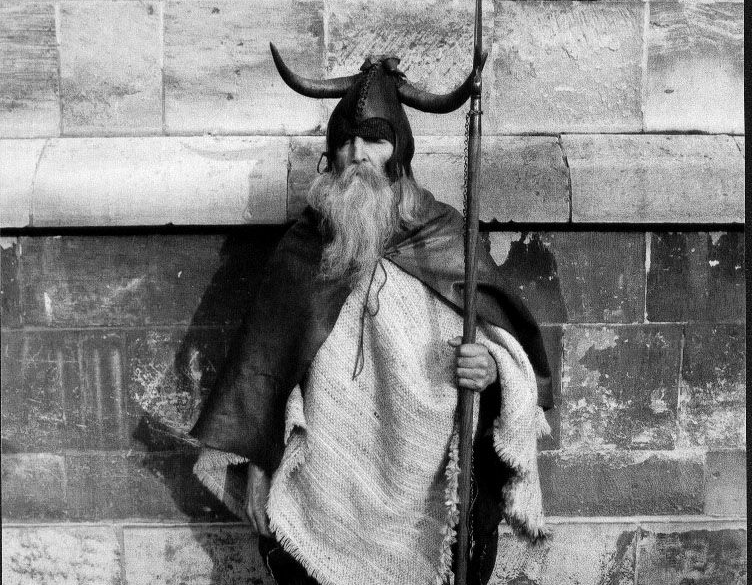
In the early 1950s, a young Cleveland disc jockey named Alan Freed got his hands on a copy of “Moondog Symphony,” and was instantly obsessed with it. He began calling his show “The Moondog House,” touted himself as “The King of the Moondoggers,” and used Moondog’s album as his show’s theme song, without permission. By 1952, the concept had became a phenomenon: a concert, dubbed “The Moondog Coronation Ball,” was organized at Cleveland Arena, and attracted a crowd so large and riotous that it had to be shut down (this was later cited as America’s “first rock ‘n roll show”). Advertisers subsequently recognized the program’s potential, and syndicated it in New York.
When Moondog’s fans heard the program, they immediately recognized that Freed had capitalized on the musician’s talent, and urged him to take action. So, in 1954, Moondog -- the bearded, homeless, Merlin-look-alike -- took on radio’s hottest DJ in court, filing an injunction against him. Despite the fact that Moondog’s works were not copyrighted, he was awarded $6,000 in personal damages, and Freed was forced to discontinue the use of “Moondog” -- largely thanks to the fact that prominent swing musician Benny Goodman had come to Moondog’s defense.
Alternately, Freed would go on to term his show “rock and roll,” coining the phrase.
***
After moving into a shabby midtown hotel room and focusing on his work, Moondog gained a cult following among some of New York’s finest musicians. Throughout the 1950s, he played profusely both on the streets, and in underground venues -- often far past midnight.
One show in 1955 billed him with Kenny Graham, "one of Britain's foremost jazz composers and arrangers," and was touted by the New York Times as “throbbing, percussive, [and] hypnotic.” Wrote the reviewer, “The bearded maverick strikes the drum with clavas or maracas as an Indian bell-bracelet rings gently from his wrist: it is an enchanting sound distinctive to Moondog.”
With the arrival of beatniks and hippies in the 1960s, appreciation for Moondog’s strange, non-conformist music grew exponentially: in New york, and beyond, he became an icon of the absurd.
Up-and-coming jazz legends Charlie Parker and Charles Mingus touted him as an innovator; minimalist composers Philip Glass and Steve Reich took his work “very seriously,” and recorded works with him. Famed rocker Janis Joplin recorded a cover of his song, “All Is Loneliness,” and introduced Moondog to a new generation of 60s hipsters. He shared the stage with the likes of painter Salvador Dali, poets William Burroughs and Allen Ginsberg, and renowned sitar player Ravi Shankar. In 1969, CBS records backed him with a full orchestra, and released ‘Moondog,’ a compilation of his compositions; two years later, they released ‘Moondog 2.’
Moondog’s Lament I, ‘Bird’s Lament’ (1969)
Moondog was such a fixture on the streets of New York that when textile manufacturer Burlington Industries brought a new exhibition to the city in 1969, they listed him an a landmark. “You may find us,” wrote the company in an advertisement, “up the street from Radio City, down the street from Central Park, and across the street from Moondog.” City dwellers knew exactly where to go.
Despite all of this, Moondog continued to inconspicuously play on the streets, to relatively little fanfare. He took no great satisfaction in fame or recognition, and only sought to improve his own craft. The whole of society continued to know very little about him, and most who passed him on the sidewalk thought he was either a “loony,” or a drug addict.
“Although he is a serious musician with several recordings to his credit, he makes his living begging,” reported the Times in 1965, when Moondog’s slight wardrobe modifications drew a headline. “He drinks from a hollow moose’s hoof...and [wears] a velvet cloak and hood of brilliant scarlet, lined with pale green satin,” the paper continued, “and stands for 8 hours a day on midtown corner.”
When asked whether he was ashamed about begging, Moondog’s response was candid -- “It’s not degrading. Homer begged, and so did Jesus Christ. It was only the Calvinists who ordained that no man shall eat who does not work” -- and he made sure to clarify that the only gods he held in regard were “the Gods of the viking pantheon, like Thor and Odin.”
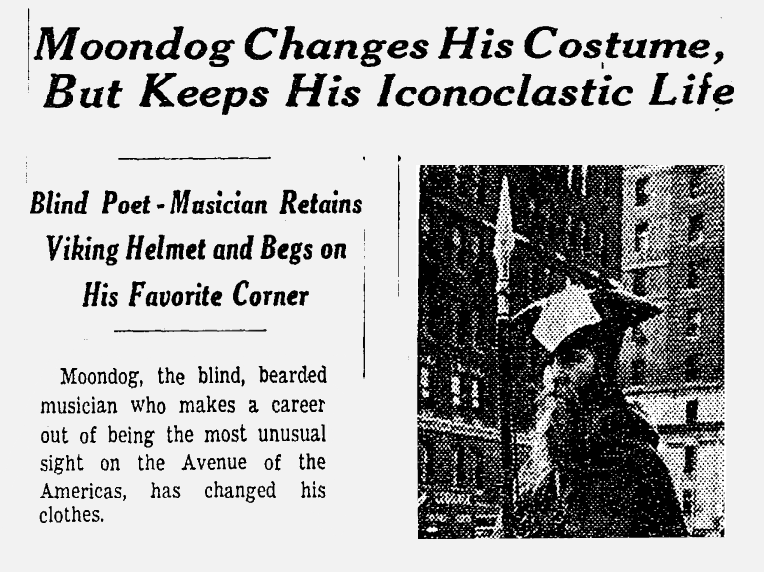
While he remained fairly underground, his antics never failed to drawn large crowds on the street. By 1965, he’d became such a spectacle that the police ordered him to cease his performances; he often rotated from location to location to avoid law enforcement. After all, it was here, on the street, that he was happiest.
“You don’t get exhaust fumes here because there’s an air shaft,” he told a reporter, “and the pigeons cooing and flapping above are my little bit of nature.”
Often, he’d be taunted for his attire, but he refused to change his ways. “It’s my way of saying ‘no’,” he’d say. “[People] try to chip away at you, to make you a conventional stereotype, and I have no interest in being conventional.” Ironically, this stance won him praise from fashionistas. “Moondog is an original,” fashion pioneer Bonnie Cashin told a room full of designers in 1970. “We are the phonies.”
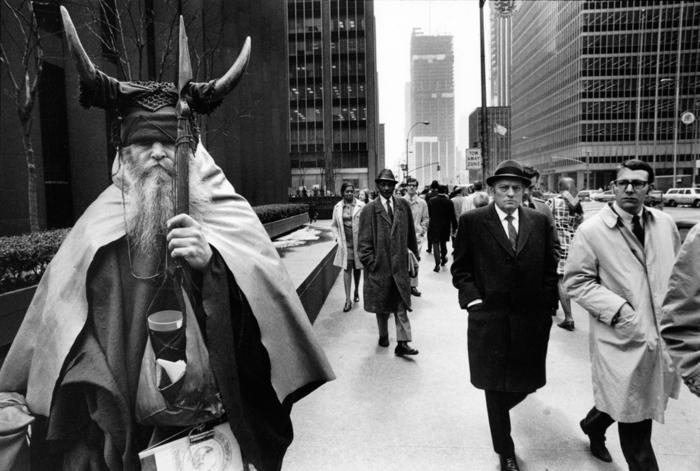
Moondog, in his later years (c.late 1960s)
Above all, Moondog remained curious, and eager to learn from sources of inspiration that often went neglected. “Moondog could work lyrically with odd rhythms,” recalls Philip Glass, with whom Moondog lived for nearly a year in the late 1960s:
“He'd stand in the stairway to the jazz club Birdland and play along with anything they were playing inside the club. I was amazed at his facility for doing this, and the way he could make music of found sounds. I remember him standing on the roof overlooking the Hudson River, and when the Queen Elizabeth pulled into port, blowing its horn, Moondog would toot along with it on his bamboo flute."
Eventually, it was this very curiosity that led to Moondog’s exit from New York.
Moondog Finds a Family
When Hessische Rundfunk, a prominent German radio station, offered Moondog the opportunity to play a set of shows abroad in 1974, he was delighted. After spending more than three decades establishing himself in New York, he was ready for a change, and eager to experience the “homeland of his musical idols.” Moondog’s absence from the city’s streets was so unusual that New York’s commuters and shop owners wrote to the Times inquiring if he’d died. But he hadn’t -- he’d simply disappeared abroad.
For two years, he roamed Europe, more or less doing what he’d done in America: peddling his music and poetry on the streets. Then in 1976, while on a street corner in the small town of Recklinghausen, dressed in full Viking regalia, he caught the eye of a 24-year-old German girl named Ilona Sommer.
“My 10-year-old brother wanted to invite him home for Christmas because he felt so sorry for him,” she recalled to a reporter in 1979, “but no one in the family had the nerve to ask him.” Then, she heard his music:
“I saw the record of his music -- orchestra pieces played by 45 musicians...and I bought it. When I first heard the music, I was shaken! I couldn’t believe that a man who could write music like that would have to live as he did. So then I invited him home.”
With Sommer’s father’s endorsement, Moondog soon moved into the family’s home in Oer-Erkenschwick, an “uninspiring little town in West Germany.” Soon, Sommer quit her archaeology studies and became Moondog’s full-time “publisher, producer, agent, and transcriber.”
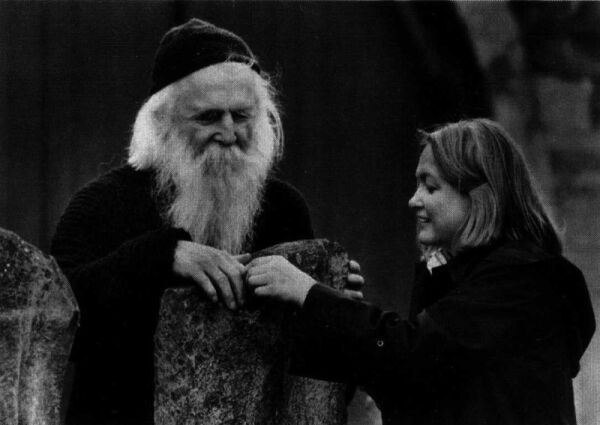
Over the ensuing three years, she negotiated the release two new albums of Moondog’s music., which she released through her own independent publishing company, Managram; she’d also secure a deal with another producer, Roof, to fund two new Moondog albums per year. By all accounts, she rejuvenated the man’s career, and made him something of a European sensation.
And in this new environment, Moondog flourished.
“I am living in a composer's paradise,” he told a reporter, shortly after moving in with Sommer. “I am surrounded by musicians, I get my meals on time, I’m warm, and most of all I’m free for my music.” With this freedom, he produced a prolific amount of work -- and also some of his finest (ie. “Sax Pax,” and “Big Band”) -- and embarked on frequent tours around Britain, Austria, France. He even once conducted his avant-garde music before the Royal Court.
Under Sommer’s direction, Moondog also compromised a few of his eccentricities: his horned Viking hat was traded in for a hand-knit beanie, his shall for a sweater, and his satin robe for “fashionable jersey pants.” The majestic white beard and flowing mane of hair, however, remained.
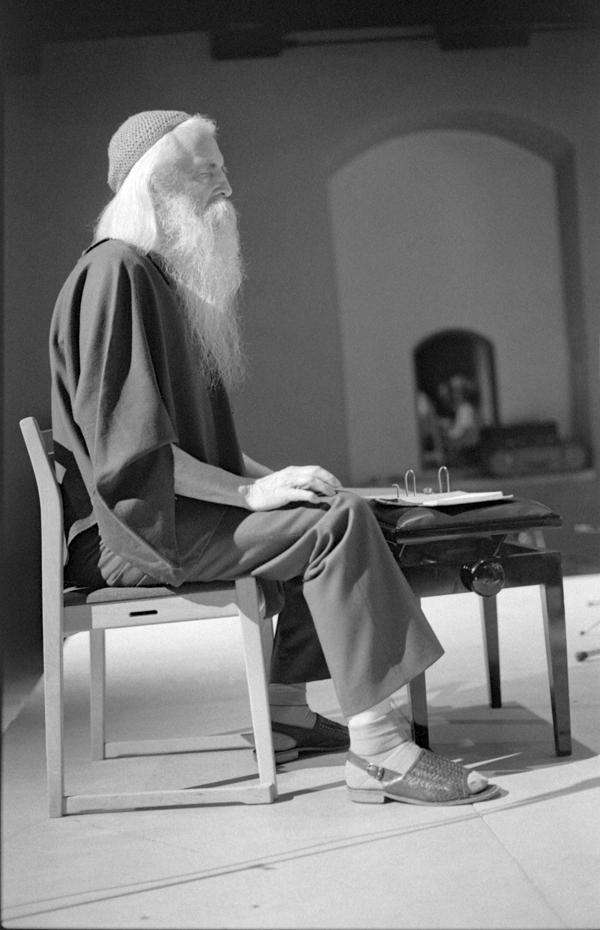
Moondog, composing in his new threads
''The persuasion of a woman is unbeatable,'' he’d later concede. ''But I still love horned helmets, and swords, and spears. I like to feel that I'm loyal to my past. I wouldn't want to be on the street anymore. But you know, [ being on the street] led to a lot of things.''
Often, Moondog lamented being away from the streets on which he first gained a reputation. “New York City was my mother and father for 30 years,” he recalled in the late 70s. “I worked and slept on her streets and ate through the kind generosity of her people. I would like to go back someday -- most of all I would like to have a concert of my music there.”
Moondog’s wish to return eventually came to fruition -- and in grand form.
In 1989, after 15 years away from New York, Brooklyn’s Philharmonic Chamber Orchestra invited him back to conduct a 30-minute performance of his own works. The homeless Viking who’d once been dismissed from Carnegie Hall for his eccentricity was now standing before hundreds a well-dressed denizens, leading a group of Juilliard-trained musicians who were playing his own music.
As recalled in a 1989 review of the performance, Moondog seemed bashful about being in charge:
“Like much else about him, Moondog's conducting style is unusual. He is uncomfortable with being an authority figure, so he sits to the side of the orchestra and provides the beat on a bass drum or timpani. Speaking of the orchestra members during an interview in his East Side hotel room the other day, he said: ‘I see my relationship with them as being first among equals, so that in a way there are 40 conductors, each in charge of his own part, and each responsible for the performance.’”
Despite glowing reviews, the show would be Moondog’s last in the United States. As quickly as he’d reappeared, the “Viking of Sixth Avenue” absconded back to West Germany.
He’d never return.
Hippie Hero
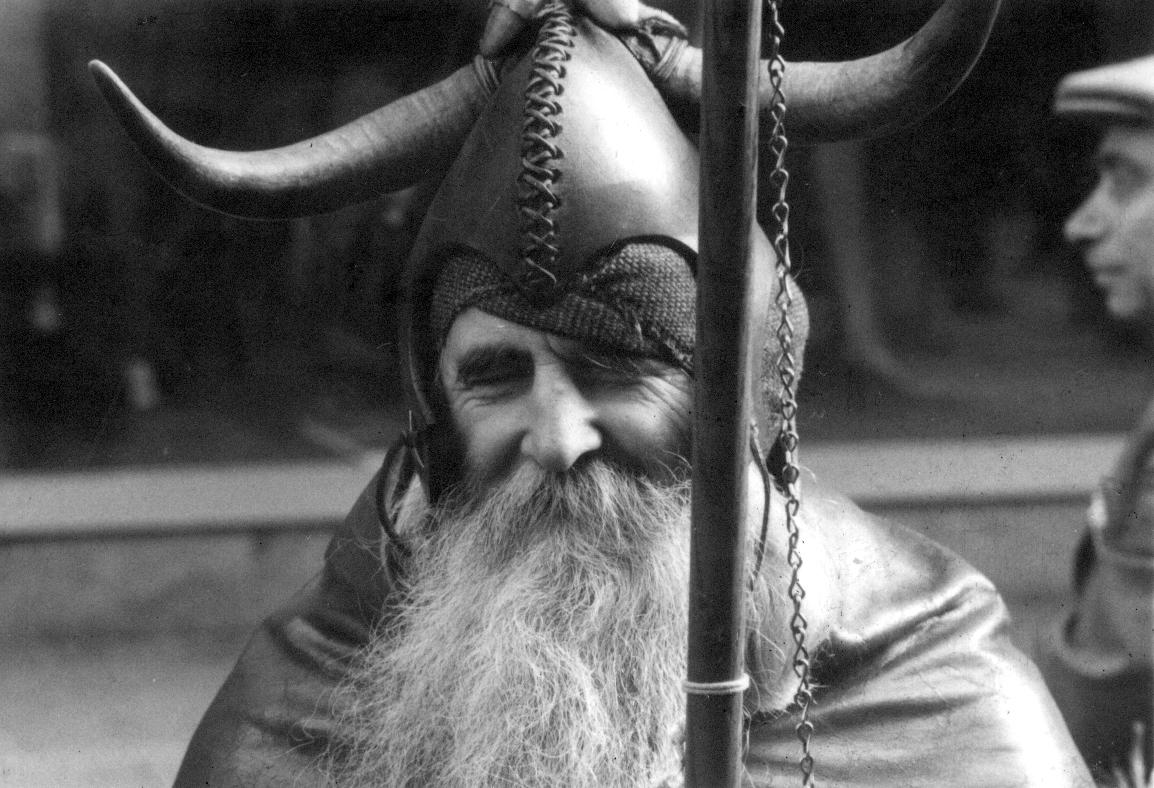
On September 8, 1999, at the age of 83, Louis ‘Moondog’ Hardin passed away in Munster, Germany, presumably from heart failure.
In his time, Moondog had influenced hundreds of artists, including some of the greatest musicians of the 20th century -- Philip Glass, Charlie Parker, Charles Mingus, and Janis Joplin among them. Today everyone from rock band Mars Volta to trip-hop group Portishead cites him as a source of inspiration.
He’d willed himself through the harsh streets of New York, found ways to dazzle onlookers, and signed record deals as a homeless man -- all the while pridefully defending his eccentricities. And after all of this, he’d redefined himself abroad -- had come to life more brilliantly than ever before, in unfamiliar territory.
His legacy has since been cemented in books, New York ice cream parlors, and, most recently, a documentary film that raised more than $100,000 on Kickstarter.
''He led an extraordinary life for a blind man who came to New York with no contacts and a month's rent, and who lived on the streets of New York for 30 years,'' said Dr. Robert Scotto, a New York-based English professor who published a biography on Moondog’s life shortly after his passing. ''Without question, he was the most famous street person of his time, a hero to a generation of hippies and flower children.''
This post was written by Zachary Crockett. You can follow him on Twitter here.
To get occasional notifications when we write blog posts, please sign up for our email list.
Adam Victor Brandizzi likes this

25 Jan 17:33

World War FUN, more like, amIrightladies???
by punchthemoon
World War FUN, more like, amIrightladies???
bernot, Adam Victor Brandizzi likes this




25 Jan 17:23

The secret kangaroo penguin club meeting went really well. I couldn't believe all the celebrities who showed up!
January 25, 2015
The secret kangaroo penguin club meeting went really well. I couldn't believe all the celebrities who showed up!
Gubetti, Doug Wibby and 7 others like this