Shared posts

19 Apr 11:17

Highs and lows of the minimum wage

by Tim Harford
Undercover Economist

‘The lesson of all this is that the economy is complicated and textbook economic logic alone will get us only so far’

In 1970, Labour’s employment secretary Barbara Castle shepherded the Equal Pay Act through parliament, with the promise that women would be paid as much as men when doing equivalent jobs. The political spark for the Act came from a famous strike by women at Ford’s Dagenham plant, and the moral case is self-evident.

The economics, however, looked worrisome. The Financial Times wrote a series of editorials praising “the principle” of equality but nervous about the practicalities. In September 1969, for example, an FT editorial observed that “if the principle of equal pay were enforced too rigorously, employers might often prefer to employ men”; and the day after the Act came into force on December 29 1975, the paper noted a new era “which many women may come to regret”.

The economic logic for these concerns is straightforward. Whether because of prejudice or some real difference in productivity, employers were willing to pay more for men than for women. That inevitably meant that if a new law artificially raised women’s salaries, women would struggle to find work at those higher salaries.

The law certainly did raise women’s salaries. Looking at the simple headline measure of hourly wages, women’s pay has gradually risen over the decades as a percentage of men’s, although it remains lower. Typically, this process of catch-up has been gradual but, between 1970 and 1975, the years when the Equal Pay Act was being introduced, the gap narrowed sharply.

Did this legal push to women’s pay cause joblessness, as some feared? No. Women have steadily made up a larger and larger proportion of working people in the UK, and the Equal Pay Act seems to have no impact on that trend whatsoever. If any effect can be discerned, it is that the proportion of women in the workforce increased slightly faster as the Act was being introduced; perhaps they were attracted by the higher salaries?

The lesson of all this is that the economy is complicated and textbook economic logic alone will get us only so far. The economist Alan Manning recently gave a public lecture at the London School of Economics, where he drew parallels between the Equal Pay Act and the minimum wage, pointing out that in both cases theoretical concerns were later dispelled by events.

The UK minimum wage took effect 16 years ago this week, on April 1 1999. As with the Equal Pay Act, economically literate commentators feared trouble, and for much the same reason: the minimum wage would destroy jobs and harm those it was intended to help. We would face the tragic situation of employers who would only wish to hire at a low wage, workers who would rather have poorly paid work than no work at all, and the government outlawing the whole affair.

And yet, the minimum wage does not seem to have destroyed many jobs — or at least, not in a way that can be discerned by slicing up the aggregate data. (One exception: there is some evidence that in care homes, where large numbers of people are paid the minimum wage, employment has been dented.)

The general trend seems a puzzling suspension of the law of supply and demand. One explanation of the puzzle is that higher wages may attract more committed workers, with higher morale, better attendance and lower turnover. On this view, the minimum wage pushed employers into doing something they might have been wise to do anyway. To the extent that it imposed net costs on employers, they were small enough to make little difference to their appetite for hiring.

An alternative response is that the data are noisy and don’t tell us much, so we should stick to basic economic reasoning. But do we give the data a fair hearing?

A fascinating survey reported in the most recent World Development Report showed World Bank staff some numbers and asked for an interpretation. In some cases, the staff were told that the data referred to the effectiveness of a skin cream; in other cases, they were told that the data were about whether minimum wages reduced poverty.

The same numbers should lead to the same conclusions but the World Bank staff had much more trouble drawing the statistically correct inference when they had been told the data were about minimum wages. It can be hard to set aside our preconceptions.

The principle of the minimum wage, like the principle of equal pay for women, is no longer widely questioned. But the appropriate level of the minimum wage needs to be the subject of continued research. In the UK, the minimum wage is set with advice from the Low Pay Commission, and it has risen faster than both prices and average wages. A recently announced rise, due in October, is well above the rate of inflation. There must be a level that would be counterproductively high; the question is what that level is.

And we should remember that ideological biases affect both sides of the political divide. In response to Alan Manning’s lecture, Nicola Smith of the Trades Union Congress looked forward to more ambition from the Low Pay Commission in raising the minimum wage “in advance of the evidence”, or using “the evidence more creatively”. I think British politics already has more than enough creativity with the evidence.

Written for and first published at ft.com.

31 Mar 19:48

A Medieval Recipe Could Kill Hospital Superbugs. No, Really. 

by Chris Mills

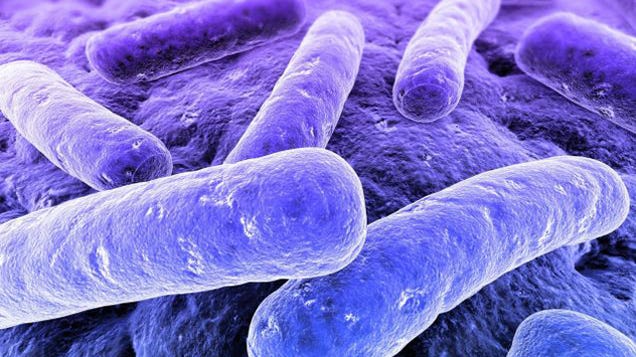
Staph infections are one of the most pervasive and annoying bacterial infections faced by hospitals every year. It infects half a million people in the US every year, with symptoms ranging from skin infections to heart problems — and worse, some strains (commonly known as MRSA) have evolved to resist common antibiotics.

Read more...


31 Mar 19:40

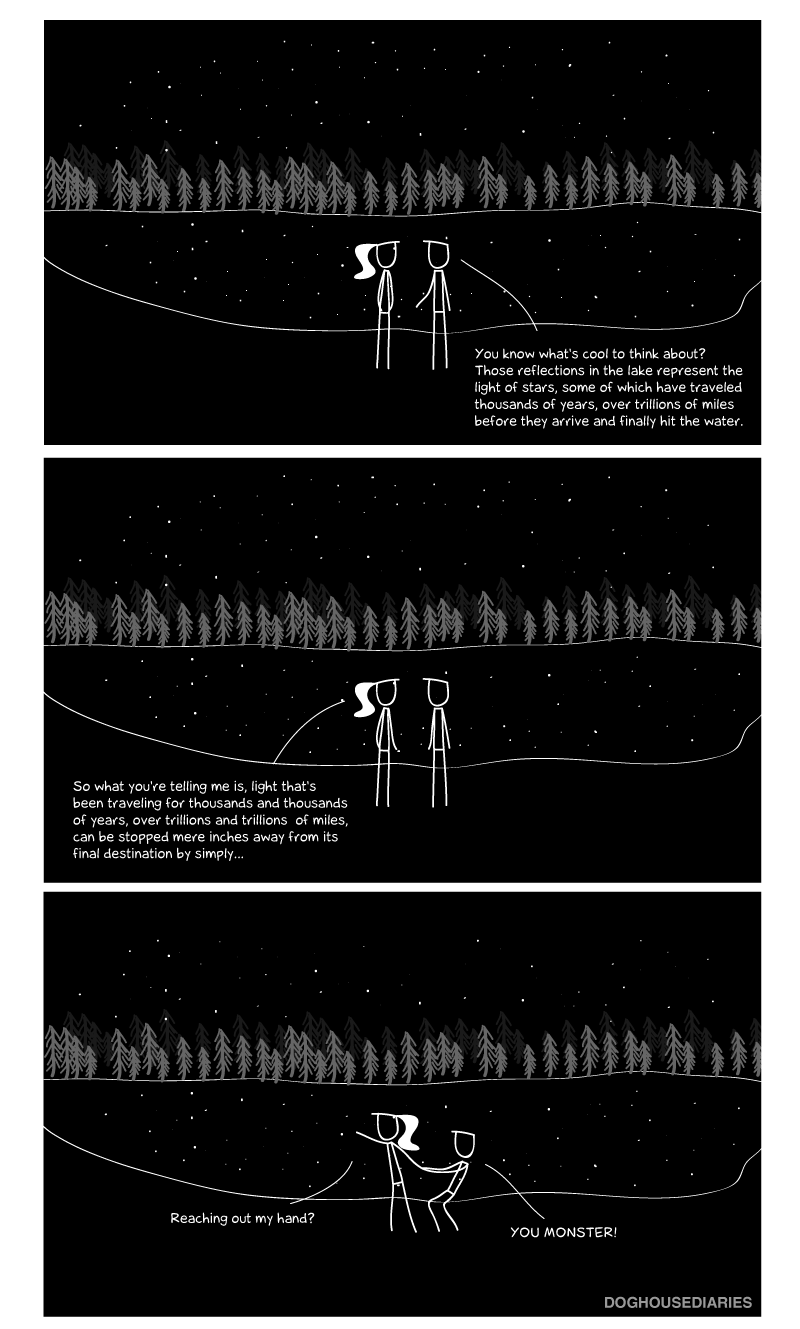
Light Years

by DOGHOUSE DIARIES

Light Years

I will henceforth refer to my hand as a "Galaxy Shield"

31 Mar 19:40

Saturday Morning Breakfast Cereal - Robot Horror

by admin@smbc-comics.com

31 Mar 19:38

Comic for March 31, 2015

31 Mar 19:12

RT @kaepora: By combining Haskell + Unicode, you can write perfectly functional programs...

by Pai Osias
800px-Coturnix_coturnix_eggs_normal.jpg
Author: Pai Osias
Source: Buffer
RT @kaepora: By combining Haskell + Unicode, you can write perfectly functional programs in Hieroglyphics. Beautiful. @aisamanra http://t.c…
CBGuIJyWUAAP_bZ.png:large
31 Mar 19:11

Re-order everyday items from Amazon with the 'Dash Button'

by Jessica Conditt
Amazon is rolling out the Dash Button, a physical device that allows customers to re-order items like toilet paper, diapers and laundry detergent as soon as they run out, with a simple press. The Dash Button is adhesive, and when pressed, customers r...
31 Mar 12:20

Photo


31 Mar 11:33

A Black and Blue Life: A Coal Miner Becomes a Photographer of Exquisite Waves and Seascapes

by Christopher Jobson

Convection - Ray Collins

Australian photographer Ray Collins first picked up a camera in 2007 and used it to photograph his friends surfing around his home after long shifts working in a nearby coal mine. His attention quickly shifted from his friends to patterns and forms he noticed in the waves. Collins, who is colorblind, was also drawn to the interplay of light and water, perhaps more attune to contrast than the nuance of color. He poetically refers to this switch from coal miner to fine art photographer as a balance between his “black life and blue life.”

The accolades, awards, and sponsorships have been heaped on Collins leading to the publication of his first book, Found at Sea, he also has a wide variety of prints on his website, and you can follow his photography day-to-day on Instagram. (via Laughing Squid)

Underwater - Ray Collins

Fury - Ray Collins

Ominous - Ray Collins

Beneath The Vortex - Ray Collins

Viscous  - Ray Collins

Ripples - Ray Collins

Rainbow - Ray Collins

ray-11

Sunburst - Ray Collins

31 Mar 11:32

Former feds in Silk Road case stand accused of stealing bitcoins

by Nicole Lee
While Ross Ulbricht was found guilty for creating and running the online black market known as Silk Road, it seems that a couple of Federal agents assigned to the case weren't so innocent either. The US Justice Department has just charged two former ...
30 Mar 15:51

Photo


30 Mar 13:17

alpha-beta-gamer: Pacapong is a glorious mash-up of Pacman,...


alpha-beta-gamer:

Pacapong is a glorious mash-up of Pacman, Pong and Space Invaders with multiple maps and cool retro music, It’s a wonderful blast of retro arcade fun.  It even features cameos from a certain retro primate. PacaDonkeyPong anyone?

Play Pacapong, Free (Win, Mac & Linux)

30 Mar 12:30

nevver:Isabel Muñoz

Adam Victor Brandizzi

I do not recall reblogging it but I'm happy I did it.

30 Mar 12:24

Iconic images from The Flickr Commons

by Bhautik Joshi

With the announcement of our 100th Flickr Commons institution yesterday, we wanted to take a closer look at some of the stories behind iconic photos from the collection. This selection represents a few of our favorite stories, but we highly encourage you to explore the Commons further on your own.

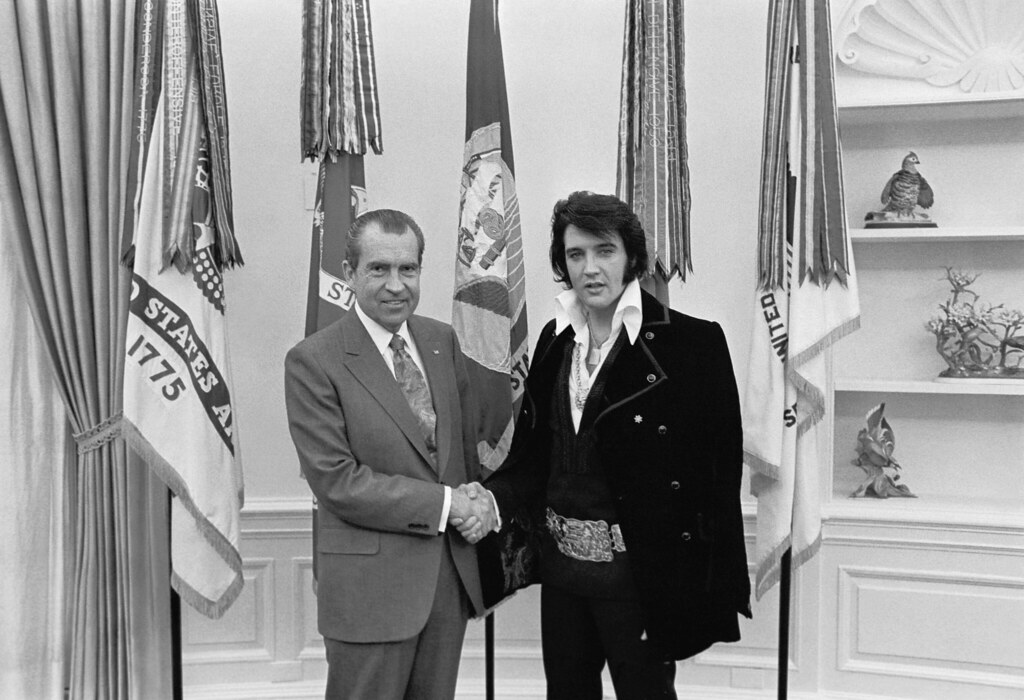
Richard M. Nixon and Elvis Presley at the White House
The U.S. National Archives, Richard M. Nixon and Elvis Presley at the White House, December 1970. Elvis Presley was famously obsessed with police badges, owning a huge collection of them. A notable hole in his collection was a badge from the then Federal Bureau of Narcotics and Dangerous Drugs (a predecessor of the DEA); he reportedly believed that “..with the federal narcotics badge, he could legally enter any country both wearing guns and carrying any drugs he wished.” On an overnight flight in an impromptu visit to Washington D.C., Elvis wrote a note to President Nixon requesting a meeting so he could get a “narc badge.” The visit was arranged the same day. A remarkable description of the meeting can be found here.

Migrant Mother, Nipomo, California

George Eastman House, Migrant Mother, Nipomo, California, 1936. This stunning portrait of the human face of the Great Depression in 1930’s America is popularly known as Migrant Mother. Commissioned by the Resettlement Administration to document migrant farm workers in California, Dorothea Lange (a remarkable photojournalist and major early influence in documentary photography) came across the destitute Florence Owens Thompson and her family, and shot a series of portraits. This image, and Lange herself, became a subject of controversy when Florence Thompson was rediscovered in 1978. About the picture, she said “I wish [Lange] hadn’t taken my picture. I can’t get a penny out of it. She didn’t ask my name. She said she wouldn’t sell the pictures. She said she’d send me a copy. She never did.” (source).

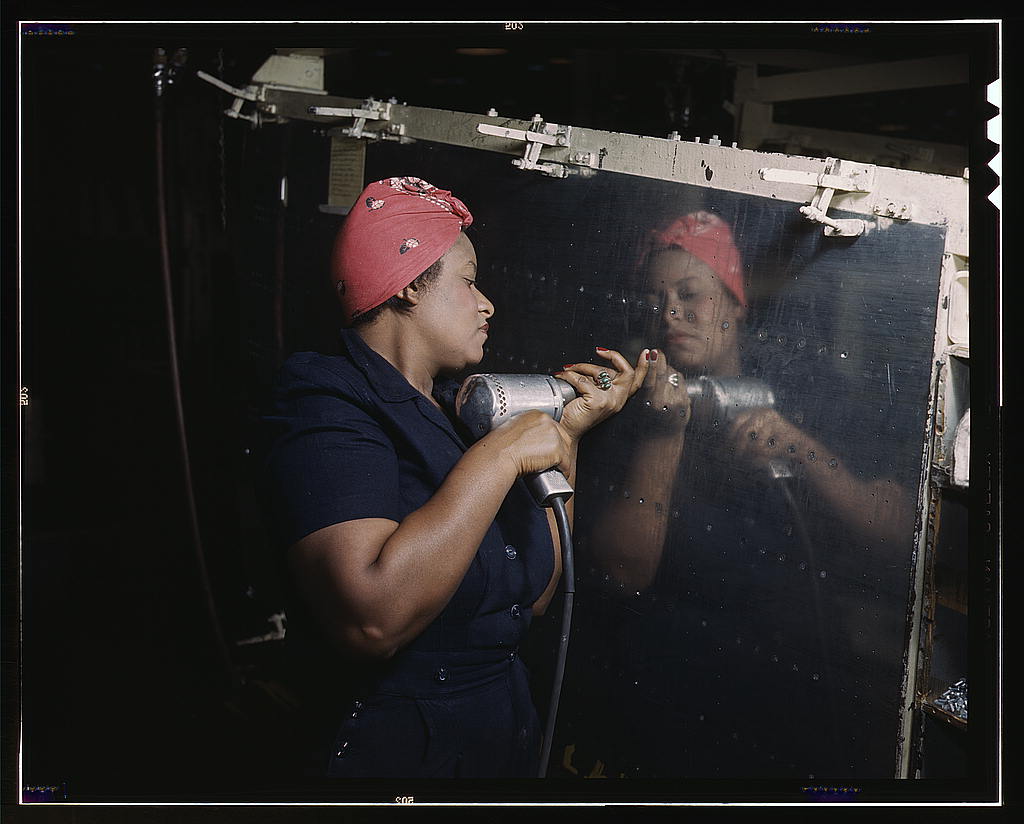
Operating a hand drill at Vultee-Nashville, woman is working on a "Vengeance" dive bomber, Tennessee  (LOC)

The Library of Congress, Operating a hand drill at Vultee-Nashville, woman is working on a “Vengeance” dive bomber, Tennessee (LOC), 1944. Rosie the Riveter became an iconic cultural idea in World War II in the United States. As significant chunks of the labor force were outside of the country, all parts of the population – notably women and people of all races – became involved in traditionally male-dominated fields, including aircraft and munitions factories. Sadly the name of the subject in this photograph is unknown.

03 - Sydney Harbour Bridge Construction

Royal Australian Historical Society, 03 – Sydney Harbour Bridge Construction, 1930. Although the start of construction predated the depression era of the late 1920s and 30s, the construction of the Sydney Harbour Bridge was completed in the middle of the depression and was a major source of local employment. This image shows a point in construction close to where the two sides of the arch were to meet; two gigantic creeper cranes can be seen on either side. These cranes were used to lower steelwork to points below, including the deck of the bridge. An iconic structure in its own right, the Sydney Harbour Bridge was a feat of engineering at the time.

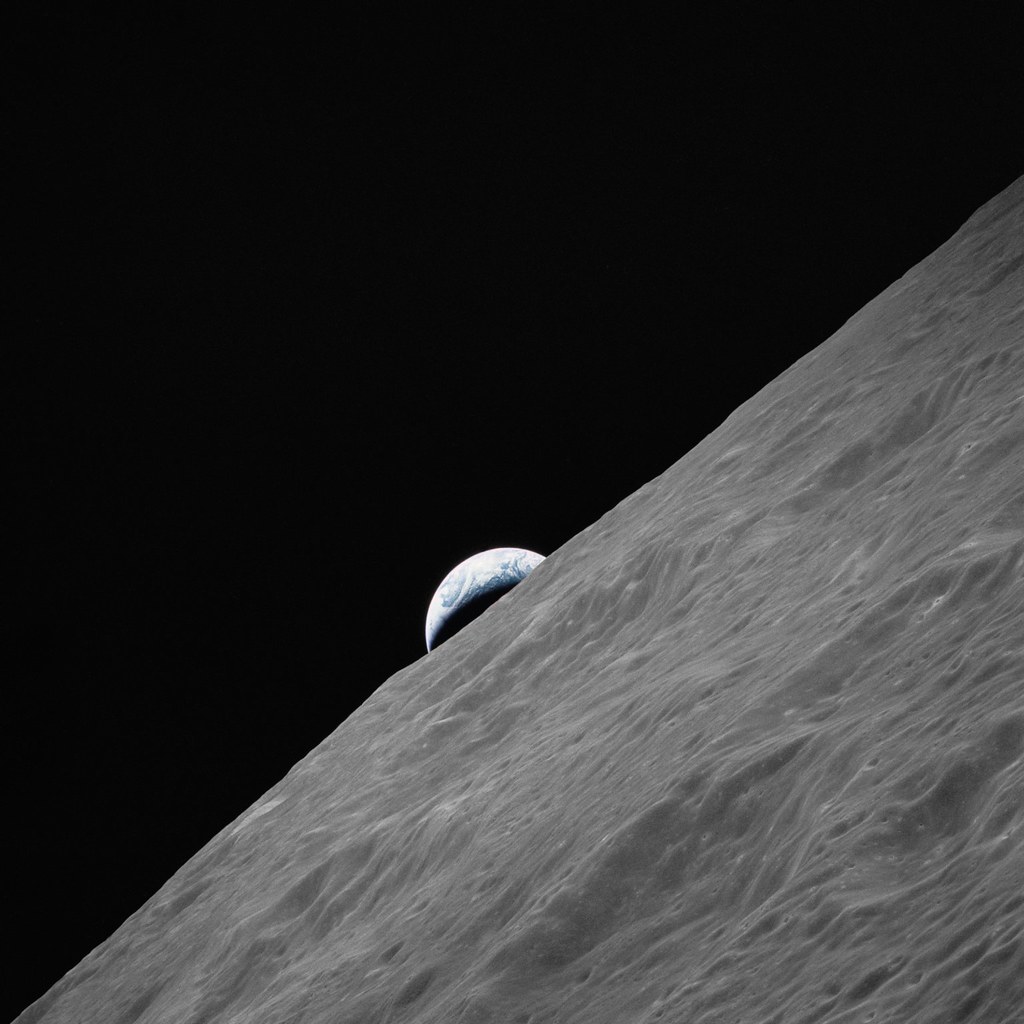
Cresent Earth rises above lunar horizon

NASA on The Commons, Cresent Earth rises above lunar horizon, December 1972. This remarkable image of Earthrise was taken by astronaut Ronald E. Evans in the command module of Apollo 17 orbiting the moon while his colleagues were descending to the surface in the lander module.

[Head of the Statue of Liberty on display in a park in Paris...

New York Public Library, Head of the Statue of Liberty on display in a park in Paris, 1883. The Statue of Liberty was not a gift from France to America – it was the brainchild of sculptor Frédéric-Auguste Bartholdi. He made several trips to the United States from France to pitch his idea of “Liberty Enlightening the World” to leaders of several cities. In 1872, he partnered with Edouard de Laboulaye to create the Franco-American Union, which raised funds to build the statue. In 1878 the statue’s head was on display for the Paris Exposition (the image above), and in 1884 the completed statue was on display in a courtyard next to Bartholdi’s studio – with a massive funding shortfall to get it to the United States. Joseph Pulitzer, owner of the daily tabloid New York World launched a campaign to raise funds to finish the project. Hundreds of thousands of dollars from private citizenry was raised as well as a significant donation from a laxative maker that advertised on the pedestal of the statue for a year. In 1886, ten years late, the statue was finally erected on Bedloe’s Island in New York Harbor.

Sex Pistols i Norge, 1977

National Archives of Norway, Sex Pistols i Norge, 1977, 1977. Johnny Rotten of the Sex Pistols performing at the Student Union in Trondheim, Norway, 1977.

"The Tetons - Snake River," Grand Teton National Park, Wyoming.

The U.S. National Archives, “The Tetons – Snake River,” Grand Teton National Park, Wyoming., 1941. In 1941, legendary landscape photographer Ansel Adams was commissioned by the Department of the Interior to take photographs of National Parks and reservations. This striking example of Adams’ mastery of landscape photography became one of the few images stored on a Voyager Golden Record: phonograph records containing records of life and culture on Earth and placed aboard Voyager 1 and 2.

Titanic

Public Records Office Of Northern Ireland, Titanic, 1912. Built in Belfast, the RMS Titanic was the largest ship of its era. This is an image of the Titanic leaving for a day-long sea trial, where it was declared seaworthy. 12 days later and 5 days into its maiden voyage, the Titanic struck an iceberg and sank.


30 Mar 12:15

University of Reginald Online

by nedroid

University of Reginald Online

30 Mar 12:10

March 20 – March 27, 2015: Animals

by dmitry

00021249_big
African lioness named Rani, or Queen, sits with her newly born five cubs at the house of her owner who has grown her as a pet, Thursday, March 26, 2015, in Multan, Pakistan. The African lioness has given birth to five healthy cubs. Lions normally have litters of two or three cubs. (Photo by Asim Tanveer/AP Photo)

1
A newborn giraffe baby stands next to its mother Sandra in the Savannah House of the Budapest Zoo in Budapest, Hungary, Wednesday, March 25, 2015. The s*x of the calf could not have been determined yet. (Photo by Attila Kovacs/AP Photo/MTI)

0002124b_big
Jalada Prasad, about six-month-old male Indian one-horned rhino runs around his enclosure on his debut to the public at Alipore Zoological Garden in Kolkata, India, Friday, March 27, 2015. The forest guards rescued Prasad when poachers at Jaldapara forest in north Bengal killed his mother in November 2014. He was brought to the zoo in January 2015 and was kept under strict vigil and nourishment, according to a zoo spokesperson. (Photo by Bikas Das/AP Photo)

0002124c_big
Felix, a 9-year-old male polar bear, shakes off water after swimming in a pool for the first time after winter at the Royev Ruchey zoo in a suburb of Russia’s Siberian city of Krasnoyarsk March 22, 2015. Felix was delivered to the zoo as a weak, orphaned cub from a scientific polar station on the Wrangel Island in the Arctic Ocean in May 2006, according to zoo representatives. (Photo by Ilya Naymushin/Reuters)

0002124d_big
Felix, a 9-year-old male polar bear, swims in a pool for the first time after winter at the Royev Ruchey zoo in a suburb of Russia’s Siberian city of Krasnoyarsk March 22, 2015. (Photo by Ilya Naymushin/Reuters)

0002124e_big
Buyan, a 15-year-old male Siberian brown bear, walks in its enclosure as he wakes up after winter hibernation at the Royev Ruchey zoo in a suburb of Russia’s Siberian city of Krasnoyarsk March 22, 2015. (Photo by Ilya Naymushin/Reuters)

00021250_big
Buyan, a 15-year-old male Siberian brown bear, walks in its enclosure as he wakes up after winter hibernation at the Royev Ruchey zoo in a suburb of Russia’s Siberian city of Krasnoyarsk March 22, 2015. (Photo by Ilya Naymushin/Reuters)

00021251_big
A wildlife department official holds a Malayan sun bear for the media at its head office in Kuala Lumpur, March 24, 2015. It was among other animals estimated to be worth $20,000, including juvenile eagles and a slow loris, seized by the wildlife department during an operation against illegal wildlife traders earlier this month. The illegal wildlife trade is estimated to be $8 billion a year worldwide, according to TRAFFIC, a wildlife trade monitoring network. (Photo by Olivia Harris/Reuters)

00021252_big
A slow loris is carried in a cage by a wildlife department official at the head office in Kuala Lumpur March 24, 2015. (Photo by Olivia Harris/Reuters)

00021253_big
An elephant family plays at the safari park in Guangzhou, Guangdong province, March 24, 2015. (Photo by Alex Lee/Reuters)

00021254_big
Lolita the Killer Whale is fed a fish by a trainer during a show at the Miami Seaquarium in Miami in this file photo from January 21, 2015. Animal activists seeking to free Lolita, a killer whale living in captivity for more than four decades, asked a federal appeals court in Florida March 24, 2015 to reconsider whether U.S. officials “rubber stamped” an aquarium’s license to keep her. (Photo by Andrew Innerarity/Reuters)

00021256_big
Paris zoo veterinarian Bastien Servieres works with a sea lion to acclimate it to his presence during a training session at the Paris Zoological Park in the Bois de Vincennes in the east of Paris March 26, 2015. A “behind-the-scenes” visit, with medical training and feeding of the animals, will be part of special presentations to the public as part of a month of celebration to commemorate the first anniversary of the re-opening of the park in April. (Photo by Philippe Wojazer/Reuters)

00021257_big
Paris zoo veterinarian Bastien Servieres works with a sea lion to acclimate it to his presence during a training session at the Paris Zoological Park in the Bois de Vincennes in the east of Paris March 26, 2015. (Photo by Philippe Wojazer/Reuters)

00021258_big
A zoo veterinarian feeds giraffes at the Paris Zoological Park in the Bois de Vincennes in the east of Paris March 26, 2015. (Photo by Philippe Wojazer/Reuters)

00021259_big
Paris zoo veterinarian Bastien Servieres works with a sea lion to acclimate it to his presence during a training session at the Paris Zoological Park in the Bois de Vincennes in the east of Paris March 26, 2015. (Photo by Philippe Wojazer/Reuters)

0002125a_big
Paris zoo veterinarian Bastien Servieres works with a sea lion to acclimate it to his presence during a training session at the Paris Zoological Park in the Bois de Vincennes in the east of Paris March 26, 2015. (Photo by Philippe Wojazer/Reuters)

0002125b_big
A rescue worker measures a recovered finless porpoise before releasing it back to the wild, in Poyang Lake, Jiangxi province, March 26, 2015. Oceanography and fishery experts said the finless porpoise has been endangered due to pollution and water shortage, local media reported. (Photo by Reuters/Stringer)

0002125c_big
Brown bear Oska (R) and Roni (L) play in a bear sanctuary near the village of Mramor, Kosovo, 18 March 2015. The Bear Sanctuary Pristina has currently 16 brown bears in custody rescued from the private restaurants around Kosovo. All privately kept brown bears lived in small cages at restaurants. They were born mostly in the forests of Kosovo or Albania and snatched from their mothers by animal dealers. (Photo by Valdrin Xhemaj/EPA)

0002125e_big
Beluga whales training at an open aviary, at the marine mammal scientific research base of the Primorye Oceanarium of the Far Eastern Division of the Russian Academy of Sciences (RAS) in Vladivostok, Russia on February 17, 2015. (Photo by Yuri Smityuk/TASS/ZUMA Wire)

0002125f_big
Ring Tailed Lemurs explore the new “In With The Lemurs” walk-through enclosure at The ZSL London Zoo, London, England, UK on Thursday 26th March, 2015. (Photo by Justin Ng/Retna Pictures/UPPA/ZUMA Wire)

00021260_big
Storks are seen in Biebesheim, central Germany on March 9, 2015 as the sun shines. (Photo by Boris Roessler/AFP Photo/DPA)

00021261_big
Recovering sea lion pups are fed herring in an enclosure at the Marine Mammal Center on March 18, 2015 in Sausalito, California. For the third winter in a row, hundreds of sick and starving California sea lions are washing up on California shores, with over 1,800 found and treated at rehabilitation centers throughout the state since the beginning of the year. The Marine Mammal Center is currently caring for 224 of the emaciated pups. (Photo by Justin Sullivan/Getty Images)

00021262_big
A vet from Chester Zoo catches one of the three as yet unnamed 12 week old Sumartran Tiger Cubs born earlier this year, to identify what sex they are and to vaccinate them, Friday March 27, 2015. The cubs, born in January to mum Kirana and dad Fabi, were found to be two males and one female. (Photo by Peter Byrne/AP Photo/PA Wire)

00021263_big
A vet from Chester Zoo catches one of the three as yet unnamed 12 week old Sumartran Tiger Cubs born earlier this year, to identify what sex they are and to vaccinate them, Friday March 27, 2015. (Photo by Peter Byrne/AP Photo/PA Wire)

00021265_big
A keeper holds a 12 week old Sumatran tiger cub during a routine health check in its enclosure at Chester Zoo in Chester northern England March 27, 2015. The cub, one of 3 born at the zoo, was sexed, vaccinated and micro-chipped. (Photo by Phil Noble/Reuters)

2
A fox squirrel munches on a discarded glazed donut Wednesday, March 25, 2015, at Mill Race Park in Columbus, Ind. (Photo by Andrew Laker/AP Photo/The Republic)

00021267_big
Bateleur “Attila” sits in its enclosure in the bird park Marlow, eastern Germany, on March 21, 2015. The Global population of this animal is estimated at 10,000 to 100,000 individuals. (Photo by Bernd Wustneck/AFP Photo/DPA)

00021268_big
A yet unnamed polar bear cub is out and about with its mother “Vilma” for the first time in their enclosure at the zoo in Rostock, Germany, 25 March 2015. The 3.5 months old polar bear cub weights just about 20 kg and is to be baptized on 31 March 2015. (Photo by Bernd Wuestneck/EPA)

0002126a_big
A picture made available on 25 March 2015 shows a cat yawning on a kitchen table at an apartment in Hamburg, Germany, 24 March 2015. Spring fever occurs mostly in spring time as the days get warmer. (Photo by Axel Heimken/EPA)

0002126b_big
Lion cubs cuddle in the Gyongyos Zoo in Gyongyos, Hungary, 21 March 2015. The one male and two female cubs were born on 12 March 2015. (Photo by Peter Komka/EPA)

0002126c_big
In this March 24, 2015, photo, California sea lions and harbor seals rest on the docks of the East End Mooring Basin in Astoria, Ore. During a Feb. 11 aerial survey, the Washington Department of Fish and Wildlife counted more than 1,200 California sea lions at the East End Mooring Basin, along with nearly 600 Steller and California sea lions on the South Jetty. On Friday March 20, spokeswoman Jessica Sall of the Oregon Department of Fish and Wildlife said, her agency counted 2,340 California sea lions at the East End Mooring Basin. (Photo by Joshua Bessex/AP Photo/Daily Astorian)

0002126d_big
The fluffy yellow chick and its pug pal can be seen cuddling up to one another, snoozing next to each other and posing for the camera on March 23, 2015. The cute chick can even be seen planting a peck on the pups cheek. The pug named Fugly and chick called KFC, were introduced by their owners who live next door to one another in the Philippines. Fuglys owner Tim Ho, who captured these adorable images, explained how he and his neighbour both bought the animals as pets around the same time and introduced them to each other to see how theyd react.To their surprise KFC and Fugly almost immediately bonded. He said the fact that the pug, now 15 months old, wasnt yet territorial over his new home helped make it easier for them to develop their blossoming friendship. (Photo by Tim Ho/Caters News)

0002126e_big
An adorable clouded leopard cub has become an Internet sensation for being so sensationally cute. The 2-week old kitten, who squeaks at meal times, is yet to be named and is currently being cared for 24/7 by staff at the Tampa Lowry Park Zoo in Florida. “He is very vocal, particularly near feeding time which occurs approximately every four hours”, the zoo’s rep said in a statement. The rare and fluffy cub’s father is called Yim and his mother is named Malee. The cub was born on March 7, 2015 and opened his eyes for the first time on on March 18. He is now beginning to learn to scoot along by himself. (Photo by TLPZ/Splash News and Pictures)

0002126f_big
Going toe-to-toe, these fighting primates could give Floyd Mayweather a run for his money. The amazing images – captured by Australian tourist Julie Rathbone on the banks of the Zambezi river in Africa – show the pair engaging in a few fisticuffs. The Chacma baboons appeared to settle a disagreement by fighting – before a senior baboon plays referee and steps in to break it up. Nurse unit manager Julie Rathbone, 59, from New South Wales, was on a cruise down the river when she spotted the fracas unfolding. (Photo by Julie Rathbone/Caters News)

00021270_big
Two wood bison bulls weighing upward of 2,000 pounds move toward higher ground at the Alaska Wildlife Conservation Center on Sunday, March 22, 2015, in Portage, Alaska. The Alaska Department of Fish and Game on Sunday moved the first wood bison to a staging area in Shageluk, Alaska, for reintroduction in a few week to their native Alaska grazing grounds. Wood bison, which are larger than plains bison native found in Lower 48 states, disappeared from U.S. soil more than a century ago. (Photo by Dan Joling/AP Photo)


Need hosting? Design You Trust is proudly supported and hosted by WebHostingBuzz Premium Infrastructure & Network.
30 Mar 12:08

03/25/15 PHD comic: 'Class communication'

Piled Higher & Deeper by Jorge Cham
www.phdcomics.com
Click on the title below to read the comic
title: "Class communication" - originally published 3/25/2015

For the latest news in PHD Comics, CLICK HERE!

30 Mar 12:03

Photo


30 Mar 11:54

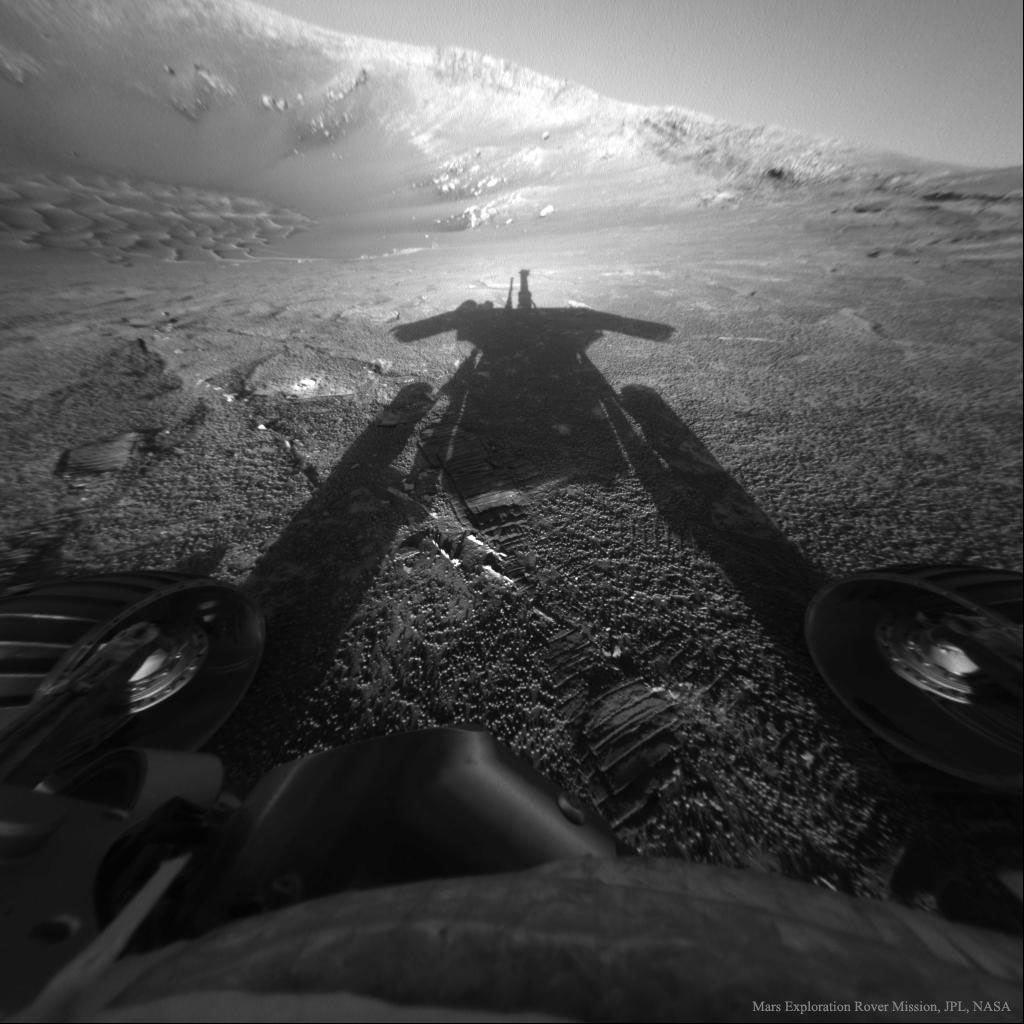
Shadow of a Martian Robot

Discover the cosmos! Each day a different image or photograph of our fascinating universe is featured, along with a brief explanation written by a professional astronomer.

2015 March 29
See Explanation.  Clicking on the picture will download
 the highest resolution version available.

Shadow of a Martian Robot
Image Credit: Mars Exploration Rover Mission, JPL, NASA

Explanation: What if you saw your shadow on Mars and it wasn't human? Then you might be the Opportunity rover currently exploring Mars. Opportunity has been exploring the red planet since early 2004, finding evidence of ancient water, and sending breathtaking images across the inner Solar System. Pictured above in 2004, Opportunity looks opposite the Sun into Endurance Crater and sees its own shadow. Two wheels are visible on the lower left and right, while the floor and walls of the unusual crater are visible in the background. Opportunity is continuing on its long trek exploring unusual terrain in Meridiani Planum which continues to yield clues to the ancient history of Mars, our Solar System, and even humanity.

Tomorrow's picture: aurora flag < | Archive | Submissions | Index | Search | Calendar | RSS | Education | About APOD | Discuss | >

Authors & editors: Robert Nemiroff (MTU) & Jerry Bonnell (UMCP)
NASA Official: Phillip Newman Specific rights apply.
NASA Web Privacy Policy and Important Notices
A service of: ASD at NASA / GSFC
& Michigan Tech. U.

Expanded from APOD by Feed Readabilitifier.
30 Mar 11:54

On March 31 the Swedish Museum Of Natural History opens a new...


On March 31 the Swedish Museum Of Natural History opens a new exhibition called Fossils & Evolution. My part of this production was to provide illustrations of the animals in their natural environment. With permission from the museum, I’m releasing the material on my website. I couldn’t have done these images without the help from the following people at NRM
  • Thomas Mörs - Senior Curator, Fossil Vertebrates 
  • Stephen McLoughlin -Senior Curator, Paleobotany
  • Christian Skovsted - Senior Curator, Fossil Invertebrates
  • Daniella Kalthoff - Curator, Zoology
  • Tove Frambäck - Producer

For the full series, go here.

For information about the exhibition go here.

27 Mar 21:48

The Myth of Asia's Miracle | Foreign Affairs

A CAUTIONARY FABLE

Once upon a time, Western opinion leaders found themselves both impressed and frightened by the extraordinary growth rates achieved by a set of Eastern economies. Although those economies were still substantially poorer and smaller than those of the West, the speed with which they had transformed themselves from peasant societies into industrial powerhouses, their continuing ability to achieve growth rates several times higher than the advanced nations, and their increasing ability to challenge or even surpass American and European technology in certain areas seemed to call into question the dominance not only of Western power but of Western ideology. The leaders of those nations did not share our faith in free markets or unlimited civil liberties. They asserted with increasing self-confidence that their system was superior: societies that accepted strong, even authoritarian governments and were willing to limit individual liberties in the interest of the common good, take charge of their economies, and sacrifice short-run consumer interests for the sake of long-run growth would eventually outperform the increasingly chaotic societies of the West. And a growing minority of Western intellectuals agreed.

The gap between Western and Eastern economic performance eventually became a political issue. The Democrats recaptured the White House under the leadership of a young, energetic new president who pledged to "get the country moving again" - a pledge that, to him and his closest advisers, meant accelerating America's economic growth to meet the Eastern challenge.

The time, of course, was the early 1960s. The dynamic young president was John F. Kennedy. The technological feats that so alarmed the West were the launch of Sputnik and the early Soviet lead in space. And the rapidly growing Eastern economies were those of the Soviet Union and its satellite nations.

Bookmarked at brandizzi Delicious' sharing tag and expanded by Delicious sharing tag expander.
27 Mar 18:00

InstaDoom: screw #nofilter (RC1) - DLC Pack 1 Released! - Doomworld Forums

Linguica


Posts: 4427
Registered: 05-00


https://www.dropbox.com/s/enxo9i3oi...tadoom.zip?dl=0

Feb. 22 update: DLC Pack 1 released!

There have been various attempts over the years to "improve" the Doom palette. While these attempts had various goals, and succeeded to various degrees, one question remains: did the authors get paid billions of dollars for recoloring pictures? No? Then their attempts were objectively inferior to one group of people who did!


That's right, now you can play Doom with any one of no less than 37 real Instagram filters, all painstakingly recreated in the Doom engine! Memento Mori with Mayfair! Requiem with Rise! Icarus with Inkwell! Alien Vendetta with Aden or Valencia!


BEHOLD THE FIDELITY! CAN YOU TELL INSTAGRAM VALENCIA FROM INSTADOOM VALENCIA???


In some cases, InstaDoom even IMPROVES on the filters! Here is "1977" applied to a screenshot. The middle is the real Instagram filter! It looks like hot garbage! The right is InstaDoom, where it is at least usable!


And that's not all! Download now and also receive:


You can only take so many pictures of your food slaughtering demons! You want to show the world how hott you are while you do it, and now you can! Use the latest in stick technology to get more of yourself in the shot! It's American President Approved!

Show how artistic you are while visiting far-away places!


Use the rule of thirds to compose your slaughter!


Let the world know what you think of something crazy you just saw!


All this and more!! Download now!!

Update: please enjoy this preview video from the good people at RPS!

Bookmarked at brandizzi Delicious' sharing tag and expanded by Delicious sharing tag expander.
27 Mar 18:00

Programmers: Before You Turn 40, Get a Plan B - Tech News | Latest Technology News

Some of the highest paying careers in the world are found in engineering. In fact engineering is one of the most lucrative and in demand career choices a school leaver can make. With salaries often exceeding $100k per year once the engineer has some experience behind them. Engineers earn more well in excess of the national average salary and this is only set to continue in the future. In fact Engineering degrees make up 10 of the top 17 highest paid degrees at the time of writing.The reason for this is simple, engineers are in high demand. This is fairly standard across all engineering disciplines. In fact almost half of all engineering positions are unfilled.To become an engineer, however, you need a degree. If you do not yet have a degree or you are looking to advance with a higher degree than you currently have, check out the below schools. They are some of our most requested engineering degrees that can help you get started toward a career you are proud of. Simply click a listing and request an information packet from them to get more detail on their engineering program.Here are the current six highest paid engineering careers available and how the future looks for each.1.Petroleum EngineeringHighest paid engineering jobsThe median starting salary for petroleum engineers is $74,240, with the mid-career salary of $132,320, and with experienced petroleum engineers making around the $186,520 mark. Industry groups anticipate many employees will retire in the next decade, just as the global demand for energy is increasing. The demand for petroleum engineers is expected to exceed the number of individuals trained to fill available positions increasing demand.Internationally and domestically this demand will advance the careers and the salaries of petroleum engineers. There are a number of degrees available for those interested in pursuing petroleum engineering including training online.Petroleum Engineer Salary EstimatesStarting salary: $74,240Mid-career salary: $132,320Experienced salary: $186,5202.Chemical EngineeringThe median starting for chemical engineers is approx. $94,000. Chemical engineers are typically employed in the areas of manufacturing and research. They work not only for chemical companies, but also work in the manufacturing of electronics, clothing, paper, medicine, and food to name just a few.Chemical engineers can advance their careers from manufacturing plants to technical sales and company management. The market for chemical engineers is expected to be reasonably flat over the next few years. Job growth, however, in closely-related fields, such as biomedical engineering, is expected to be much faster than average job growth according to the US Department of Labor. A mid-career salary of $109,000 is the average.Chemical Engineer Salary EstimatesStarting Salary: $58,830Mid-career salary: $154,8403.Electrical EngineeringNewly-graduated electrical engineers have a median starting salary of $57,330.Many electrical engineering jobs are tied to designing, testing and supervising the manufacturing of electrical equipment, but some electrical engineering careers consist of designing electronics schematics for commercial and consumer use.Job growth in these areas is expected to be around 6%, a rate lower than average, through the rest of the decade.Mid-career salaries for electrical engineers are in the neighborhood of $89,180.Electrical Engineer Salary EstimatesStarting Salary: $57,330Mid-career salary:  $89,1804.Materials EngineeringThe median starting salary for a materials engineer is $52,900.Materials engineers work at developing and testing materials used in the production of industrial and consumer products, as well as working with metals and fabrics, and understanding the uses of each in consumer products.From now to the year 2020, the job growth for a materials engineer position is expected to be around 9% with a mid-career salary of approx. $85,150.Materials Engineering Salary EstimatesStarting Salary: $52,900Mid-career salary:  $85,1505.Aerospace EngineeringA new graduate with a degree in aerospace engineering can expect a starting salary in the range of $65,450. With cutbacks in space exploration the Department of Labor expects that the need for aerospace engineers will grow at 5% over the next few years, a slower pace than the average job market. A mid-career salary for an aerospace engineer is $103,720.Aerospace Engineering Salary EstimatesStarting Salary: $65,450Mid-career salary:  $103,7206.Computer EngineeringThe median starting salary for a computer hardware engineer is $63,970. This is a relatively new field of engineering and some sources say that there are not enough computer engineers to keep up with demand while other sources say that the job growth for computer engineers will be below the national average. As schools start producing more computer engineers, the job growth rate could potentially slow.It is also a fact that most technological breakthroughs are coming in the area of software and not computer hardware. A computer engineer can anticipate earning a mid-career salary of $101,000.Computer Engineer Salary EstimatesStarting Salary: $63,970Mid-career salary:  $150,130

Bookmarked at brandizzi Delicious' sharing tag and expanded by Delicious sharing tag expander.
27 Mar 14:42

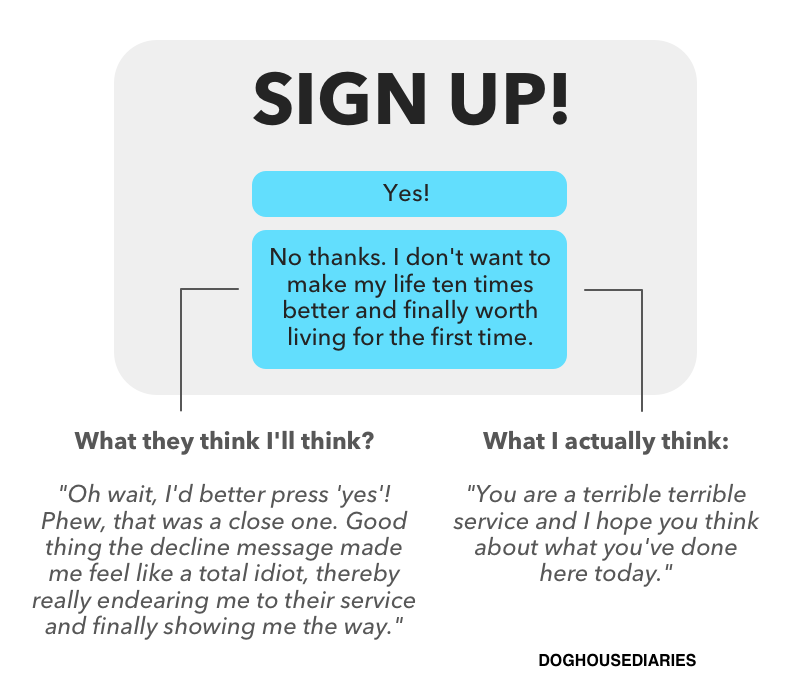
Decline Button

by DOGHOUSE DIARIES

Decline Button

Theater EXPENSIVE, only 1 movie showing, screen TINY, seat upright at beginning and end, and now I can?t locate my car. Free peanuts though.

— Ray Yamartino (@rayyamartino) March 21, 2015
27 Mar 11:29

Apocalipse

by Daniel Lafayette

tirinha---despadrao---beijo-gay

27 Mar 11:22

Opportunity

We all remember those famous first words spoken by an astronaut on the surface of Mars: "That's one small step fo- HOLY SHIT LOOK OUT IT'S GOT SOME KIND OF DRILL! Get back to the ... [unintelligible] ... [signal lost]"
27 Mar 03:18

135 - User Interface Automation

Adam Victor Brandizzi

Hahah. mas não é verdade: dá trabalho mas vale a pena.

Miloslav and Walt, talking in the kitchen | 
Miloslav: Imagine being trapped in inky black quicksand up to your waist -
your hopeless struggle to claw yourself free only hastening your demise. 
| They stare at one another 
| Walt: So, you're saying we shouldn't build a suite of Selenium tests
for our app.
Everything's a horrifying story with you, Milo. Why not just say 'we shouldn't use Selenium'?
26 Mar 21:30

This is why you shouldn’t believe that exciting new medical study - Vox

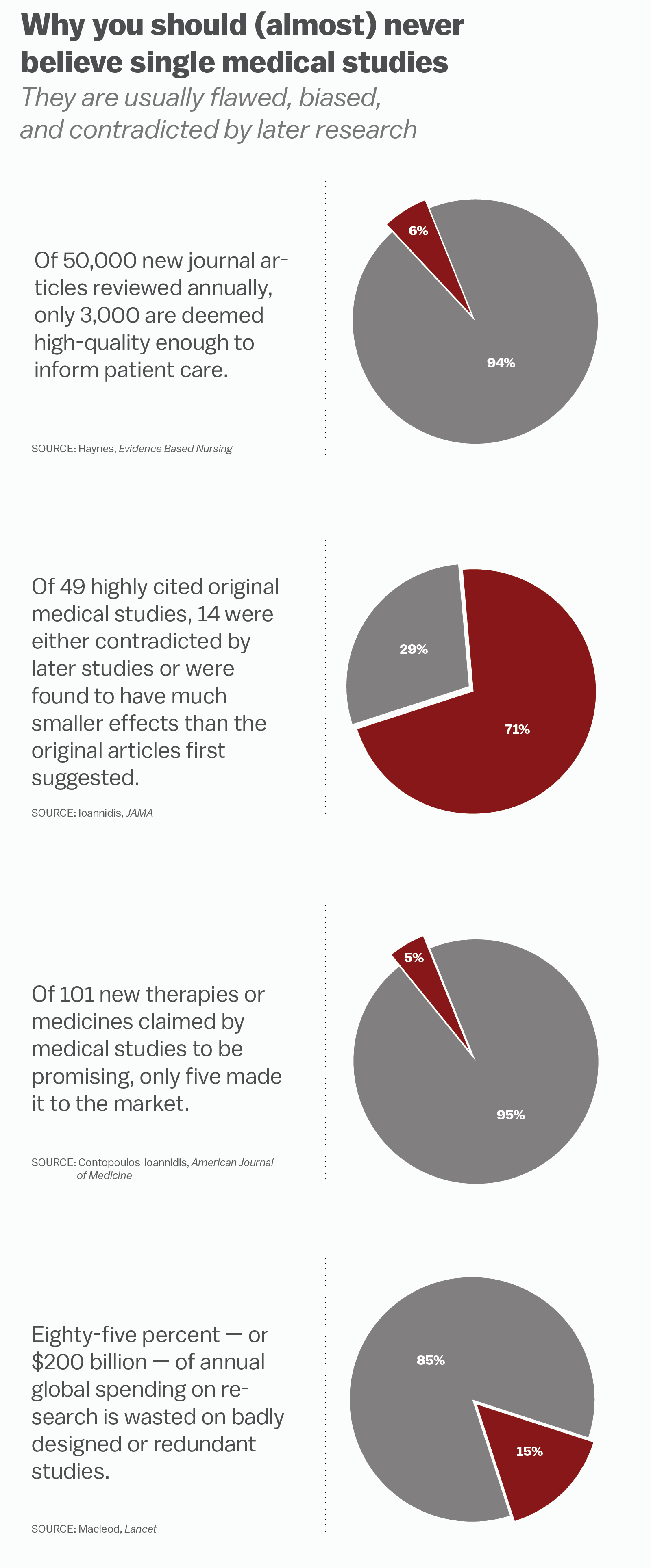
In 2003, researchers writing in the American Journal of Medicine discovered something that should change how you think about medical news. They looked at 101 studies published in top scientific journals between 1979 and 1983 that claimed a new therapy or medical technology was very promising. Only five, they found out, made it to market within a decade. Only one (ACE inhibitors, a pharmaceutical drug) was still extensively used at the time of their publication.

One.

But you'd never know that from reading the press. Take a recent miracle procedure for multiple sclerosis. MS is a degenerative disease with no cure. In sufferers, the immune system attacks the protective layer around the nerves, disturbing the communication between brain and body — and causing a cascade of devastating symptoms: unsteady and jerking movements; loss of vision, bladder and bowel control; and eventually, early death.

pie chart study

In 2009, a breakthrough: a charming Italian researcher, Dr. Paolo Zamboni, claimed to have cured his wife's MS by "unblocking" the veins in her neck. He theorized MS wasn't an autoimmune disorder but a vascular one. The research was counterintuitive, it gave people with the disease hope, and it had an appealing personal tale behind it, involving one man's quest to save his wife. It was catnip for health reporters, who hailed "liberation therapy" as a romance-fueled medical triumph.

Sadly, however, Zamboni's discovery was more hype than breakthrough. What didn't get as much attention as his romantic quest was the fact that his study was small and badly designed. Other researchers who attempted to replicate his findings failed. Soon, anecdotes of patient complications and relapses emerged.

"What makes it news is that it's new. ... My view would be that brand new results would be the most likely to be wrong."This cycle recurs again and again. An initial study promises a miracle. News stories hype the miracle. Researchers eventually disprove the miracle.

"There's a big, big, difference between how the media think about news and how scientists think about news," Naomi Oreskes, a Harvard professor of the history of science, recently told me in an interview. "For you, what makes it news is that it's new — and that creates a bias in the media to look for brand new results. My view would be that brand new results would be the most likely to be wrong."

Most medical studies are wrong

It’s a fact that all studies are biased and flawed in their own unique ways. The truth usually lies somewhere in a flurry of research on the same question. This means real insights don't come by way of miraculous, one-off findings or divinely ordained eureka moments; they happen after a long, plodding process of vetting and repeating tests, and peer-to-peer discussion. The aim is to make sure findings are accurate and not the result of a quirk in one experiment or the biased crusade of a lone researcher.

As science is working itself out, we reporters and our audiences seize on "promising findings." It's exciting to hear about a brand new idea that maybe — just maybe — could revolutionize medicine and stop some scourge people suffer through. We're often prodded along by overhyping scientists like Zamboni, who are under their own pressure to attract research funding and publications. 

We don't wait for scientific consensus; we report a little too early, and we lead patients and policymakers down wasteful, harmful, or redundant paths that end in dashed hope and failed medicine.

This tendency could be minimized if we could only remember that the overwhelming majority of studies in medicine fail.

There have been more than 200 failures of supposed cancer breakthroughs in recent yearsForbes health writer Matthew Herper recently unpicked a new Vice documentary about a "miraculous" cancer cure. While the experimental therapies featured in the film seem to be the holy grail in cancer treatment at the moment, they're also the latest in a long line of seemingly "revolutionary" fixes. According to one of Herper's sources, in fact, there have been more than 200 failures of supposed cancer breakthroughs in recent years.

A highly regarded service that vets new studies for clinicians finds — on average — only 3,000 of 50,000 new journal articles published each year are well-designed and relevant enough to inform patient care. That's 6 percent.

medical studies

More often than not, single studies contradict one another — such as the research on foods that cause or prevent cancer. The truth can be found somewhere in the totality of the research, but we report on every study in isolation underneath flip-flopping headlines. (Red wine will add years to your life one week, and kill you quicker the next.)

For a study on whether everything we eat is associated with cancer, academics randomly selected 50 ingredients from recipes in The Boston Cooking-School Cook Book. Most foods had studies behind them claiming both positive and negative results.

Researchers cannot always replicate the findings of other researchers, and for various reasons many don't even try. All told, an estimated 85 percent — or $200 billion — of annual global spending on research is wasted on badly designed or redundant studies.

This means early medical research will mostly be wrong until maybe eventually, if we're lucky, it's right. More tangibly, only a tiny fraction of new science will lead to anything that’s useful to humans.

There is no cure for our addiction to medical hype

We now live in an age of unprecedented scientific exploration. Through the internet, we have this world of knowledge at our fingertips. But more information means more bad information, and the need for skepticism has never been greater.

medical studies

I often wonder whether there is any value in reporting very early research. Journals now publish their findings, and the public seizes on them, but this wasn't always the case: journals were meant for peer-to-peer discussion, not mass consumption.

Working in the current system, we reporters feed on press releases from journals and it's difficult to resist the siren call of flashy findings. We are incentivized to find novel things to write about, just as scientists and research institutions need to attract attention to their work. Patients, of course, want better medicines, better procedures — and hope.

But this cycle is hurting us, and it's obscuring the truths research has to offer. (Despite the very early and tenuous science behind liberation therapy, MS sufferers traveled the world seeking it out, and launched political movements calling for resources to fund the treatment.)

For my part, I've tried to report new studies in context, and use systematic reviews — meta-analyses of all the best studies on clinical questions — wherever possible. When scientists or other members of the media prematurely blow up a novel breakthrough, I've tried to convey the reality that it's probably not a breakthrough at all. The more I do this, the more I realize the truth in what Harvard's Oreskes, Stanford's John Ioannidis, and many other respected researchers have reiterated over the years: we need to look past the newest science to where knowledge has accumulated. There, we'll find insights that will help us have healthier lives and societies.

As we turn away from the magic pills and miracle treatments, I think we'll focus more on the things that actually matter to health — like education, equality, the environment.

It's not always easy, and the forces pushing us to the cutting edge are powerful. But I try to proceed cautiously, to remind myself that most of what I'm seeing today is hopelessly flawed, that there's value in looking back.

Bookmarked at brandizzi Delicious' sharing tag and expanded by Delicious sharing tag expander.
26 Mar 20:53

immortality

by Lunarbaboon

26 Mar 20:50

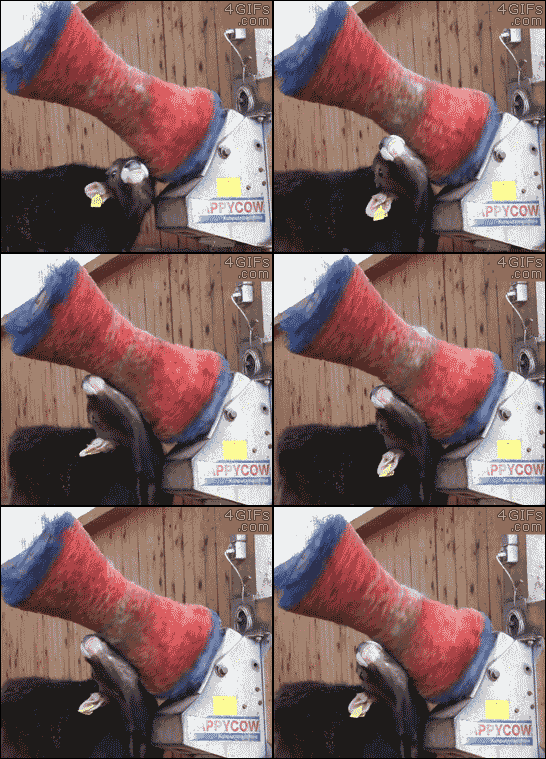
4gifs:Udder joy. [video]


4gifs:

Udder joy. [video]