Shared posts

20 Jun 16:51

Rejeição a Patriota esconde história feia

by João Paulo Charleaux

Guilherme-PatriotaO embaixador Guilherme Patriota tomou bomba no Senado. Indicado por Dilma para representar o Brasil na OEA, foi rejeitado por um voto de diferença – 38 senadores barraram a indicação, abrindo as comportas das análises manjadas sobre o desgaste da presidente no Congresso. Pode ter sido a primeira vez que isso acontece na história do Brasil, mas tirando o fato de que rende bons títulos, a questão é mais de forma do que de fundo. Dilma sacaneou a OEA por muito tempo. Durante quatro anos, deixou o Brasil sem representante nenhum na organização, até acordar e tentar emplacar ontem seu embaixador. Nesse período, o País acumulou uma dívida com o órgão de mais de R$ 20 milhões – o que equivale a quase 10% do orçamento total da OEA. Golpe baixo.

Agora, com a derrota imposta pelos senadores, o governo busca dar um sentindo de importância e de urgência algo a algo antes desprezado. O gelo de Dilma na OEA foi uma jogada de várzea. Contrariada com uma decisão crítica à construção da usina de Belo Monte, o Brasil fez uso de um procedimento falcônico para chantagear a organização. Cortou a grana e tirou o embaixador – chiliques diplomáticos que têm seu significado.

Na sabatina de Patriota, uma semana atrás, persistia o corpo mole. Questionado sobre o calote, o embaixador disse que faria “o que puder” para retomar o fluxo normal da grana e lembrou que esse não é “um fenômeno exclusivo da OEA”, resposta que equivale a lavar um carro sujo com aguinha da poça de lama.

A OEA foi por muito tempo saco de pancada dos bolivarianos. Derrapou em várias crises recentes e teve um presidente que parecia remar num pote de doce de leite (expressão que ouvi ontem de um amigo argentino). Flertou com a irrelevância e viu o surgimento da Unasul ameaçar sua existência. Mas a história do órgão é pra lá de importante, considerando especialmente a Corte Interamericana de Direitos Humanos e a Comissão, que fazem parte do combo.

Segue o jogo. Dilma indicará um substituo, que será em breve esquecido num cargo pelo qual a opinião pública nutre zero interesse. Fica a cicatriz no Planalto e a impressão de que, mesmo quando não entende nada de política externa, o Senado pode, involuntariamente, mandar um recado correto. Sinais trocados também comunicam.


12 Jun 00:18

This is the future of meat


Moo who? (Mike Groll/AP)

Meat — despite popular movements to decrease the amount humans consume — is still a central part of diets around the world. People who live in industrial countries (like the United States) eat roughly 210 pounds of it each year. And consumption in the developing world, where people eat closer to 66 pounds each year, is climbing fast. Growth is such that by 2030 the average human is expected to consume just under 100 pounds per year, 10 percent more than today.

Our collective affinity for meat likely began out of circumstance — humans that lived inland from the coast had little choice but to hunt in order to live — and has persisted for evolutionary reasons. Meat carries nutrients like zinc and protein, promotes growth, and provides energy. It also doesn't hurt that the price of meat has fallen dramatically.

But the reality is that there are several downsides to society's growing appetite for meat. Cheap meat, for one, might leave consumers with extra cash, but it has — largely — come at the expense of animal welfare. It also isn't great for the planet, which the U.S. government recently noted. "Meat is undoubtedly an environmentally expensive food," Vaclav Smil wrote in his 2013 book "Should We Eat Meat?"

But what if there were a way to produce meat that would avail us of the need to slaughter animals? What if we could continue to order hamburgers without also feeding the livestock industry as much as a third of the world's grain production? And what if it could be done for a reasonable price?

Professor Mark Post, who is part of the faculty at Maastricht University in the Netherlands, has been asking that question for almost a decade now. Two years ago, Post's team of researchers presented their first major discovery in the form of a five-ounce hamburger patty, which was created in a lab, but still was remarkably similar to ones sold on supermarket shelves. The reception was promising: The media was abuzz, and the BBC made several food critics try it, one of whom conceded "this is meat to me, it's not falling apart."

Now, Post is working to overcome some of lab-grown meat's biggest obstacles, including its price. And he believes it's only a short matter of time before he succeeds.

"It was $350,000 when we first publicized the patty," said Post. "At this point we've already managed to cut the cost by almost 80 percent. I don't think it will be long before we hit our goal of 65 to 70 dollars per kilo."

That would drop the five-ounce burger to below $10, a number that Post hopes will eventually drop even further.

To understand how it's possible to grow a hamburger that is made of actual animal tissue — rather than a protein substitute — you need to understand a bit about how muscle tissue works.

When muscle tissue is damaged, the body repairs the injured tissue by calling on a specific type of stem cell, called a myosatellite cell. Myosatellite cells can be taken from an animal without causing it harm. They also can reproduce fairly quickly. And they tend to form muscle fibers when they do.

These characteristics, it turns out, are very useful for someone trying to replicate the process by which muscle forms naturally.

"The thing is, you can take those cells and then let them replicate as they would in the case of injury inside the body of a cow," Post said. "And you can help them form muscle tissue again."

The process is hardly straightforward. Rather, it involves carefully extracting the cells, allowing them to multiply and then coercing them into differentiating. Once the cells have differentiated, which is a fancy term for the process in which cells change to assume different responsibilities, they combine into muscle fibers, at which point protein forms.

meat1-w

"The result are these little strips of tissue," Post said. "It's the same tissue grown by cells inside of the body. Except we grow them outside of it."

It takes about 20,000 of them to make the burger publicized in 2013.


100 percent prime lab-grown beef (source: Cultured Beef)

Perhaps the single largest reason why initial publicity around Post's futuristic hamburger was met with such reluctance is that it was less affordable than most houses in the world.

"Obviously this is all still being done on a small scale, in an academic environment," Post said. "That's why it costs so much. Once we scale up it will be a different story."

Post expects to be able to produce the patties on a large enough scale to sell them for under $10 a piece in a matter of five years.

"Once we can grow the tissue in a reactor the size of an Olympic swimming pool, we should be able to achieve that sort of volume," Post said. "For perspective, half a swimming pool would allow us to feed about 20,000 people for a year."

Irrespective of how much meat Post manages to produce, and how cheap it becomes as a result, there remains the question of whether society will ever actually warm up to the idea of eating lab grown beef.

Skepticism runs rampant enough that shmeat, which refers to the sort of synthetic meat Post had created, was a runner-up for Oxford Dictionary's word of the year in 2013. And the moniker frankenmeat has frequently been invoked.

But Post is confident that the benefits of cultured meat will eventually coerce people to give it a try.

"What people need to realize is that it will have a positive effect on many things, including animal welfare, because we would need to slaughter fewer animals, our efficiency with certain resources, and the environment," he said.

Cultured meat, according to a 2011 study, has a significantly smaller carbon footprint than regular beef, pork, and even poultry production. It also requires far less land and water than all three.

(source: American Chemical Society)

"The last thing we have to do is boost protein production beyond where we're at," Post said. "Normally, protein forms through exercise, as it is in real life with a cow. But you can also do it through electricity and other ways. We're very close to a sustainable process."

How exactly will it work? That's a bit of a secret.

"I would elaborate, but these methods are soon going to be patented!" Post said. "We actually have already done it, just not on a large scale. It's going to be really important for improving the meat's nutrition and taste."

Bookmarked at brandizzi Delicious' sharing tag and expanded by Delicious sharing tag expander.
12 Jun 00:18

Hand-stitched Magna Carta Wikipedia page explores the fabric of democracy

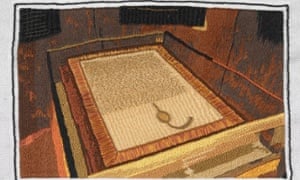
An embroidery of a 1297 copy of Magna Carta that appears on the Magna Carta Wikipedia page. The work was stitched by Cathy Johnson from the Embroiderers’ Guild. British Library An embroidery of the image of a 1297 copy of Magna Carta that appears on its Wikipedia page. The work was stitched by Cathy Johnson from the Embroiderers’ Guild. Photograph: British Library

Jarvis Cocker began stitching the words “common people” when he was on a train; the human rights lawyer Clive Stafford Smith got his needle and thread out for “law of the land” while in Guantánamo Bay; and Julian Assange had little choice but to embroider the word “freedom” from his room in the Ecuadorian embassy.

All three are contributors to a work of art by Cornelia Parker that goes on display at the British Library on Thursday: a 13-metre-long embroidery celebrating the Magna Carta by copying its Wikipedia article.

More than 200 people – including barons, lawyers, politicians, prisoners, writers and celebrities – contributed by stitching words and phrases that were significant to them.

“I wanted to create a portrait of our age,” said Parker. “All these people have opinions about democracy and I thought carefully about the words they should stitch.”

Parker got the idea quite straightforwardly after going online to Google “Magna Carta”. “The first thing you get is the Wikipedia page and I just got thinking that it’s an embroidery of history, really. The page has been made by lots of different people and it is quite subjective ... it is a people’s encyclopaedia. I thought perhaps we should embroider the page.”

Parker had the page’s text printed lightly on to fabric which was then cut up into more than 80 sections. They were then sent off to 36 prisoners in 13 jails who embroidered the bulk of the text. Nearly 200 gaps were left for other contributors to do their bit.

Pope Innocent III stitched by Anthea Godfrey, of the Embroiderers' Guild. Pope Innocent III stitched by Anthea Godfrey of the Embroiderers’ Guild. Photograph: British Library

Parker said she sent or gave willing participants the fabric section, a needle and thread, and a choice of three stitches to use: back, cable and stem.

Among those rising to the challenge were Baroness Doreen Lawrence, who stitched the words “justice”, “denial” and “delay” in line seven of the tapestry; the Wikipedia founder Jimmy Wales (“user’s manual”); the former Guantánamo inmate Moazzam Begg (“held without charge”); and Paddy Hill, one of the men wrongly convicted of the Birmingham bombing (“Freeman”).

The detailed, and far trickier, pictures on the Wikipedia page, such as a mural of Pope Innocent III and 13th-century documents from the British Library collection, were tackled by members of the Embroiderers’ Guild, a national charity that promotes the craft.

Parker said she loves the idea of turning something digital into an analogue hand-crafted object.

“I wanted the embroidery to raise questions about where we are now with the principles laid down in the Magna Carta, and about the challenges to all kinds of freedoms that we face in the digital age.”

Magna Carta (An Embroidery) was commissioned by the Ruskin School of Art at Oxford University in partnership with the British Library and is part of a wider programme of events marking the 800th anniversary of Magna Carta.

Parker said she was delighted with the end product and the contributions.

Some of the stitching is clearly better than others and some of the contributors admitted needing assistance – former home secretary Kenneth Clarke, for example, enlisted the help of his wife, Gillian.

There is even blood, supplied by the Guardian editor, Alan Rusbridger. A metaphor for the lengths this organisation will go to in pursuit of truth and justice? “He pricked his finger,” said Parker.

• Magna Carta (An Embroidery) is on display 15 May-24 July at the British Library.

Bookmarked at brandizzi Delicious' sharing tag and expanded by Delicious sharing tag expander.
12 Jun 00:04

Folk religions thrive with women's spirit

In her Georgia home, Tammy Bloome says her rosary to Santa Muerte, a skull-faced version of the Grim Reaper in woman’s garb.

In Maryland, Sonia Doi gathers with her fellow spiritists — mostly women — to discuss the philosophical vision of reincarnation.

Folk religions such as Santa Muerte and spiritism are thriving around the world, often powered by women as followers — and leaders.

A new Pew Research study projecting the growth of world religions found that in 2010 about 405 million people (roughly 6 percent of the world’s population) identified with folk or traditional religions without formal creeds, sacred texts and institutional structures.

Unlike Christianity, Judaism and Islam, historically all led by men, or the philosophies of the East such as Buddhism where male scholars and monks dominate, folk religions — so close to village or tribe or ancestry — are often practiced and led by women.

Santa Muerte expert Andrew Chesnut, professor of religious studies at Virginia Commonwealth University and author of a book on the Mexican folk religion, “Devoted to Death,” calls it “the fastest-growing New Religious Movement in the Americas,” with more than 10 million followers.

“Across the board in Latin America, you find disproportionate female participation in all religions, but in the folk religions there is more room, more space for women to exercise positions of authority,” said Chesnut.

Chesnut estimates 90 percent of Santa Muerte devotees live in Mexico and the U.S., and he notes on his website, The Skeleton Saint, that Santa Muerte is moving into Europe, where an academic conference on the folk religion was held last fall in the Netherlands.

Santa Muerte, the signifier of “holy death,” has a bad reputation, however, thanks in part to cameo roles in the hit TV series “Breaking Bad.”

She has been represented as the patroness of drug runners, not, as Chesnut maintains, “the protectress of narco-violence victims.”

When the Los Angeles Times profiled the Santa Muerte temple in LA, it described the folk religion as taking on a more virtuous cast, “like the Virgin for people on the edge.”

They may be marginalized by poverty, shattered families, undocumented immigration status or sexual orientation. Or they may be turning to Santa Muerte as a love goddess, someone they don’t find in Latin America’s prevalent Catholic culture, said Chesnut.

In 2011, when a Mexican quesadilla vendor put a life-size effigy of Santa Muerte in front of her house in a barrio, people began spontaneously making offerings of flowers and tequila and praying for health, help, even legal protection, said Chesnut. Soon, another Santa Muerte follower, Enriqueta Vargas, began performing baptisms and weddings and displaying the world’s tallest Santa Muerte statue.

Now, said Chesnut, Santa Muerte has become the “multitasking miracle worker of Mexico,” with followers appropriating prayers and practices from the prevalent Catholic Church, even a variation on the rosary, to honor her.

Catholic officials, who call her the satanic face of a blasphemous cult, loudly and frequently condemn the practice. But this hasn’t stemmed the religion’s growth. In the U.S., there are two Santa Muerte temples in Los Angeles, and others are under construction in New Orleans and Houston. The pioneer in New York City is a transgender Mexican, Arely Vazquez, who holds Saturday services and throws a massive fiesta every August.

Tammy Bloome plans to be there this August.

Bloome, 44, a food manager of a truck stop, shares one characteristic with many other Santa Muerte followers: She sees herself as a “disenfranchised Catholic.”

Divorced and remarried outside the Catholic Church, she left it behind when priests refused to baptize her children. When she lived for three years in Guatemala, she discovered Santa Muerte “because she accepts people no matter what they are, who they are — maybe even in spite of who they are.”

“I believe she intervened in my life,” said Bloome. “And I like that our saint is a woman, one who is second only to God.”

When she says a Santa Muerte rosary and lights candles at her home altar, “I believe something responds to the energy put out there.”

In Brazil, another major center of folk religion, Chesnut estimated that 70 percent to 80 percent of the leaders of Afro-Brazilian religions such as Candomble and Umbanda are women. So, too, are many of the educated, white Brazilian followers of spiritism, an import from late 19th-century Europe.

Brazil has 3 percent of the world’s folk religion followers, and census data there finds that 58 percent of the followers are women, said Conrad Hackett, lead demographer and author of the Pew study.

Spiritism was founded by a Frenchman, Allan Kardec, and popularized in Brazil by prolific writer Chico Xavier. It teaches that the path to moral and intellectual perfection is through successive reincarnations, each improving on the one before.

Sonia Doi describes this as a science-based viewpoint that answered all the questions she had as a Catholic child growing up in Brazil and later a religious seeker exploring other faiths.

“Since I was small, I always had the perception that there is something else,” Doi recalled. What she finds in spiritism is a religion based on Jesus’ moral teaching, a philosophy of moral guidance and a scientific explanation of the spirit world that makes sense to her, said Doi, 65, a physician and president of both the U.S. and International Spiritist Medical Associations, which promote knowledge about the connections between body and spirit.

“Our mission is to spread the knowledge that we are spirits. I believe women by nature are more sensitive. That makes the women a little more open and more attracted spirituality in general,” said Doi.

In China, where the government allows only five official religions, most say they have no faith. But folk religions, which technically are not permitted, have the highest market share of religious identity (21.9 percent), according to the Pew study.

However, sociology professor Fenggang Yang, director of the Center on Religion and Chinese Society at Purdue University, said polls underestimate the true numbers because researchers allowed people to choose only one religion and few would list something practiced in secret.

“If you are born in a village with many gods you belong to that folk religion community,” he said. “You can be both a Christian and a follower of a folk religion.”

As Chinese society becomes “more individualistic and independent,” many women and young people are choosing traditions such as feng shui, with its emphasis on personal harmony with one’s environment, he said.

But living folk traditions with spiritual rites and practices for healing thrive underground in cities and countryside, hidden from official notice.

“Most of these are still village-centered indigenous folk religions where women tend to take the lead,” said Nancy Chen, a professor of medical anthropology at University of California Santa Cruz. “Any time there are rituals of ordination or recognition, the institution becomes intertwined with patriarchal hierarchies.”

Copyright: For copyright information, please check with the distributor of this item, Religion News Service LLC.

Bookmarked at brandizzi Delicious' sharing tag and expanded by Delicious sharing tag expander.
25 May 11:54

Today’s Gender of the day is: This DEFINITELY HETEROSEXUAL...


Today’s Gender of the day is: This DEFINITELY HETEROSEXUAL skeleton with a bone bra

25 May 11:53

by Jim Benton

25 May 11:53

My preteen years were tough. Unfortunately, the sudden change in...


My preteen years were tough. Unfortunately, the sudden change in my underwear options only made it worse.

25 May 11:52

.PICAPIXELS / tumblr

by filip
22 May 11:52

(via gifsboom:Cat Wearing Cone Finds a New Way to Drink Water)

22 May 11:51

daughter

by Lunarbaboon

22 May 03:36

Viva Intensamente # 208

21 May 23:31

Learning the hard way

21 May 23:29

Photo


21 May 23:28

(Fact Sources: [1] [2]) For more facts, follow Ultrafacts 


(Fact Sources: [1] [2]) For more facts, follow Ultrafacts 

21 May 23:25

(photo via mranthony101)


(photo via mranthony101)

21 May 17:52

Flag Day Every Day

Flag Day Every DayFew countries are as obsessed with their flag as Denmark...
21 May 17:50

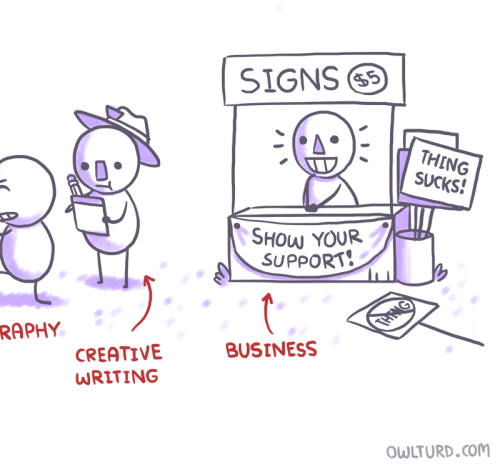
owlturdcomix: Major problem. image | twitter | facebook


owlturdcomix:

Major problem.

image | twitter | facebook

21 May 17:47

A Cliff Looming on Comet 67P

Discover the cosmos! Each day a different image or photograph of our fascinating universe is featured, along with a brief explanation written by a professional astronomer.

2015 May 20
See Explanation.  Clicking on the picture will download
 the highest resolution version available.

A Cliff Looming on Comet 67P
Image Credit & Licence: ESA, Rosetta, NAVCAM

Explanation: What that looming behind this gravel-strewn hill on Comet Churyumov–Gerasimenko? A jagged cliff. The unusual double-lobed nucleus of Comet 67P/Churyumov–Gerasimenko lends itself to unusual and dramatic vistas, another of which has been captured by the Rosetta spacecraft that arrived at the comet last September. The featured cometscape, taken last October and digitally enhanced, spans about 850 meters across. Meanwhile, Comet Churyumov–Gerasimenko continues to sprout jets as it nears its closest approach to the Sun in August. Along the way, Rosetta will continue listening for signals from Philae, a probe that landed on the nucleus but rebounded to an unknown surface location last November. If newly exposed to sunlight, Philae might regain enough energy to again signal Rosetta.

Click Through the Universe: Random APOD Generator
Tomorrow's picture: open space < | Archive | Submissions | Index | Search | Calendar | RSS | Education | About APOD | Discuss | >

Authors & editors: Robert Nemiroff (MTU) & Jerry Bonnell (UMCP)
NASA Official: Phillip Newman Specific rights apply.
NASA Web Privacy Policy and Important Notices
A service of: ASD at NASA / GSFC
& Michigan Tech. U.

Expanded from APOD by Feed Readabilitifier.
21 May 17:47

Comic for May 21, 2015

21 May 17:46

Comic for 2015.05.21

Cyanide & Happiness (Explosm.net)

Permalink:


More from Explosm

Loading...


Advertisement

Did you know by creating an account you can favorite comics and shorts, automatically bookmark the last one you saw, and more? Learn more about it here!

All content is Copyright © 2000–2015 of Explosm, LLC.

Log in or Register

This entry passed through the Full-Text RSS service - if this is your content and you're reading it on someone else's site, please read the FAQ at fivefilters.org/content-only/faq.php#publishers.

21 May 17:45

Photo


21 May 17:45

4gifs: Doberman thinks he is too tough for hugs. [video]


4gifs:

Doberman thinks he is too tough for hugs. [video]

21 May 17:44

"Unlearn...Privacy" Cards (1970s)

by Scarfolk Council

During the 1970s, the Scarfolk Education Publishing company produced packs of cards which taught children about society and its expectations. In particular, the cards focused on eradicating any false notions that children may have picked up from prohibited books, unauthorised wise people and illegal time immigrants (a flood of which materialised in 1979 to stockpile cake following a devastating pudding famine in the future).

In addition to the 1979 'Unlearn Privacy' pack, examples from which can be seen below, other series included 'Unlearn Altrusim', 'Unlearn Democracy' and 'Unlearn Contentment'.


The aforementioned time immigrants claimed that, by the year 2017, surveillance and the invasion of privacy become so ubiquitous that citizens' brains are connected to a central network. No thought, conscious or otherwise, is permitted expression unless it has been approved by a state computer programme nicknamed 'Brain O'Brien'. However, a backlog quickly accumulates, and many people go without a thought of their own for months, if not years at a time.

Fortunately, the government predicted such an emergency and prepared in advance a series of standardised thoughts, ideas and opinions which it inputs directly into citizens' minds. No doubt it is this considerate civic gesture which leads to the overwhelming majority vote for the incumbent party in many subsequent elections.


The bonus card above comes from an earlier pack, 'Unlearn Compassion', which was published in 1971.

21 May 17:42

Saturday Morning Breakfast Cereal - Descent

by admin@smbc-comics.com
21 May 17:42

Pneumàtic’s Salvaged Tire Installations Playfully Interact With Barcelona’s Urban Architecture

by Christopher Jobson

pneumatic-1

pneumatic-2

pneumatic-3

pneumatic-4

pneumatic-5

pneumatic-6

Pneumàtic was founded by artists OOSS, Iago Buceta, and Mateu Targa for the street art festival Ús Barcelona. The idea behind the cut salvaged tire installations was to create works that tested the traditional uses of architecture, playing with the audience’s understanding of what is just beyond their physical grasp.

The works, which are all placed in linear or circular arrangements, also test the viewer’s association with architecture, giving a playful tactility to the spaces they occupy. Although most of the sculptures look as if they are only decorative, many impede walking paths, forcing one to walk around their blockade or traipse upon their back like a bridge. Each installation appears as if the solid structures the tires are adhered to are malleable, the pieces disappearing and emerging from the ground and walls like they are being slowly sucked in by quick sand. (via designboom)

21 May 17:40

Artist Sean Yoro Paints Meticulous Seaside Murals While Balancing on His Paddle Board

by Kate Sierzputowski

Hula_01 Hula_02 Hula_03 Hula_04 Hula_05 Hula_06 Hula_07

Riding atop a paddle board, artist Sean Yoro (aka Hula), paints murals while floating on the waves, placing his works just above sea level. The murals, all portraits of women, have a hyperrealistic quality that appear as if each is existing just above the tide. Due to the works’ position above the water they reflect perfectly into the waves, the image extending out far from the painted surface.

The NYC-based artist paddles out to paint the murals, balancing his acrylic paint on his board all the while. Hula grew up on the island of Oahu, where he spent most of his days in the ocean. Although he grew up dabbling in graffiti, watercolor, and tattoo art, he didn’t take his work seriously until he began to paint the the human body when he was 21. Hula also uses cracked surfboards as a surface to paint his female portraits, more of which you can see on his Instagram, @the_hula. (via Street Art News)

21 May 00:47

A Technicolor Swimming Pool Painted by HOTTEA on New York’s Roosevelt Island

by Christopher Jobson

ASYLUM2

In a departure from his large-scale color field yarn installations, Minnesota-based artist HOT TEA is back in New York and was given the opportunity to transform a swimming pool on Roosevelt Island with whatever colors he saw fit. Apparently he took the ambitious approach and decided to use them all, spread between 120 gallons of paint.

The private commission produced by K&CO and Pliskin Architecture is called Asylum, a title the artist chose “because the act of creating it pushed my mental and physical endurance so far that I wasn’t sure I could complete the task,” he shares with Brooklyn Street Art. For almost a century starting in 1839, the island was also home to the New York City Lunatic Asylum. The vibrantly luminous gradients that define the area around the pool contrast starkly when viewed against the rest of the surrounding landscape, creating a surprising oasis of color.

The pool, located in Manhattan Park, opens for swimming Memorial Day weekend. You can read a bit more about it on Brooklyn Street Art.

ASYLUM3

ASYLUM4

ASYLUM7

ASYLUM8

ASYLUM9

brooklyn-street-art-hot-tea-jaime-rojo-05-15-web-1
Photo by Jamie Rojo for Brooklyn Street Art

brooklyn-street-art-hot-tea-jaime-rojo-05-15-web-6
Photo by Jamie Rojo for Brooklyn Street Art

ASYLUM11

21 May 00:46

alto151: fatfeministfetishist: fantasticcatadventures: mariusu...

20 May 20:54

05/20/2015

by Jennie Breeden

Twerk from the Heart

The Doubleclicks are awesome! For a spoiler, check out their video.

20 May 11:59

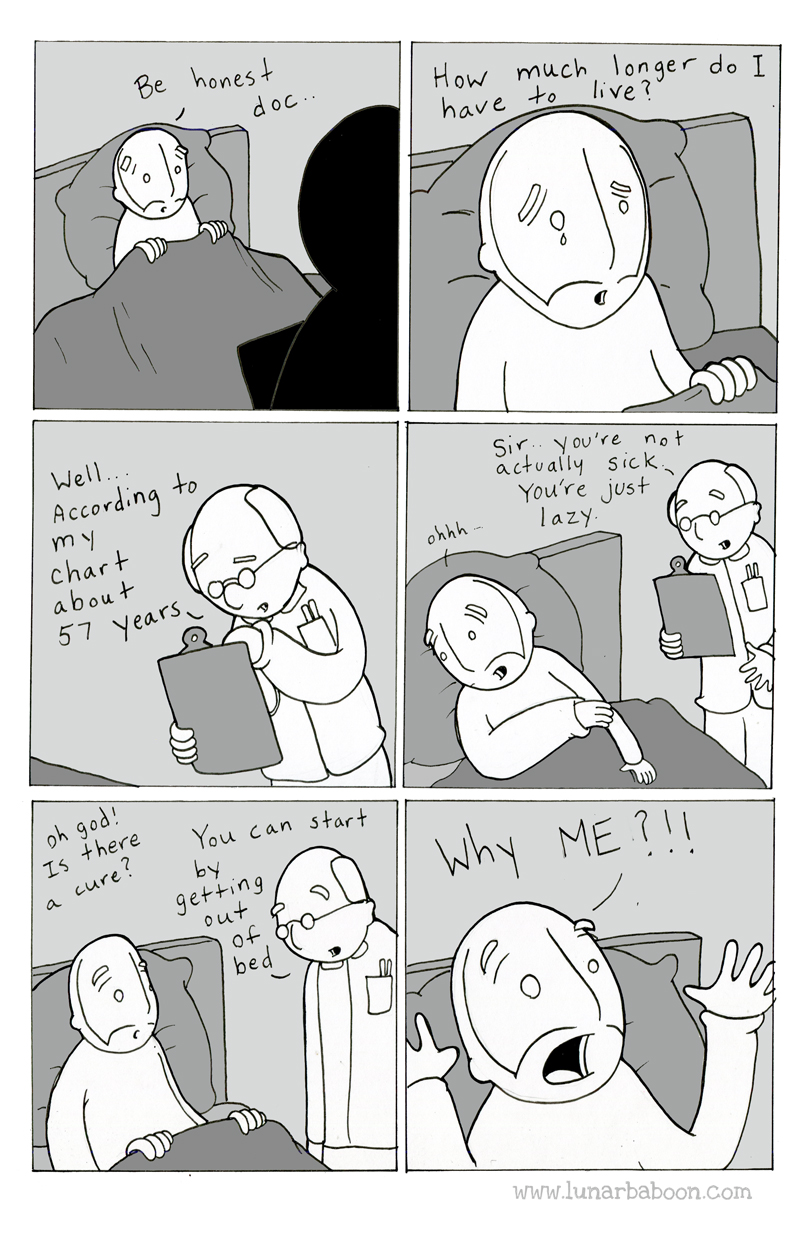
chronic

by Lunarbaboon