Читать дальше →
Alexander YarovoyКикстартер враг всему хорошему
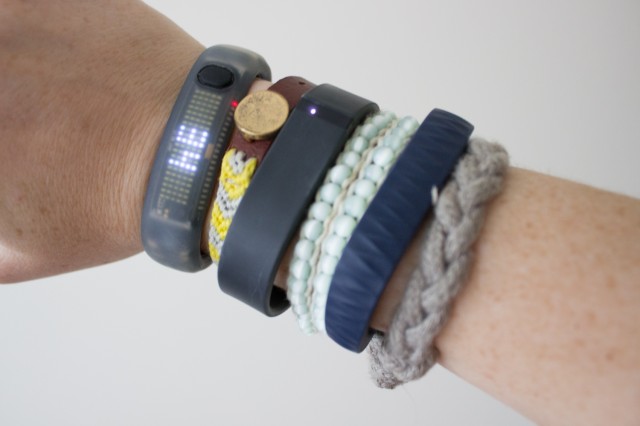
There’s nothing like an obesity epidemic to remind people that many of us have totally lost touch with what our bodies are doing all day. The disconnect between our conception of fitness and what we're doing to achieve it has grown faster than we can comprehend. We are in a fitness hole, trying to count our way out in calories, steps, pounds, heartbeats per minute, and hours of sleep per night.
The reason fitness devices have enjoyed such popularity is that they automate this tracking. And what they can’t automate, they make fairly easy to log. There's no obvious answer to our sedentary, overeating culture, but fitness bands offer a way toward a little more mindfulness about the ruts we may have fallen into over the course of our daily lives.
But given how trendy fitness dongles, bands, and apps have become, there’s a glut of them out there to sort through. Today we'll take a look at three of the most popular fitness bands: the Jawbone Up ($130), the Fitbit Flex ($100), and the Nike Fuelband ($149). Different interfaces will work for different people, so even if you don’t agree with our pick for the best device, we'll provide enough information to help you make an informed decision. We chose to stick to fitness bands, because they are the most recent evolution of the format. More (and perhaps more discreet) peripherals like the regular Fitbit are still available.
Read 58 remaining paragraphs | Comments

    
|
Alexander Yarovoyа так же впадать в депрессию.
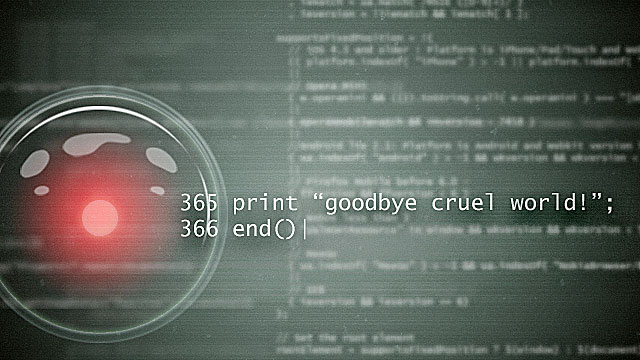
This Q&A is part of a weekly series of posts highlighting common questions encountered by technophiles and answered by users at Stack Exchange, a free, community-powered network of 100+ Q&A sites.
Jimbojw asks:
Should we design death into our programs, processes, and threads at a low level, for the good of the overall system?
Read 24 remaining paragraphs | Comments

|
|
Alexander YarovoyКакая крутая штука. Хочу себе такую.
 2-го июля Thalmic Labs разослала уведомление об открытии регистрации в программу для разработчиков. Компания Thalmic Labs известна прежде всего своим браслетом MYO (новость на Хабре), который использует метод электромиографии для регистрации электрической активности мышц руки и передает по Bluetooth в мельчайших подробностях информацию о том, какое движение совершил пользователь. Таким образом, создается носимый интерфейс управления любым устройством, которое поддерживает интеграцию по Bluetooth.
And there’s still so much I’ve left off. Standards (the lack thereof, really) have failed us. There’s money to be made! Tell us what your biggest gripe is on Facebook, or Twitter, or you know, any of the other ten trillion services there are. I need a nap.
Alexander YarovoyМне нравится эта точка зрения
Alexander YarovoyЗахотелось часы

EA продает часы, которые Айзек Кларк будет носить в третьей части Dead Space — производит Meister Watches, цена 250 долларов. Выглядят вроде бы неплохо. Под катом больше фото
Alexander YarovoyПро шелковый путь
 Shutterstock
An Australian drug dealer has become the first person to be convicted of a Silk Road-related crime, after using the black marketplace to buy a stash of MDMA, amphetamine, marijuana, and cocaine.
People can buy goods from Silk Road only by connecting with the anonymizing Tor network and using Bitcoins. The marketplace has very few restrictions on what people can sell. An August 2012 study by security researchers at Carnegie Mellon University revealed that the Silk Road trades items worth £1.22 million every month.
According to a report in The Age Paul Leslie Howard used Silk Road to buy and import the illicit drugs on 11 different occasions. Australian Customs and Border Protection Service officers in Melbourne and Sydney examined mail—most of which came from the Netherlands and Germany—destined for his home. They found 46.9 grams of MDMA and 14.5 grams of cocaine. The federal police then raided his house in July 2012 and found digital scales, ziplock bags, AU$2,300 ($2,394) in cash, 35 stun guns disguised as mobile phones and a money counter. They also found two working mobile phones, and forensically analyzed more than 20,000 text messages. In among them were incriminating texts such as "I got five grand worth if you want" and "promote the LSD I got more in. I sold 200 cubes last week".
Read 7 remaining paragraphs | Comments
Alexander YarovoyЭто мне кажется очень крутым
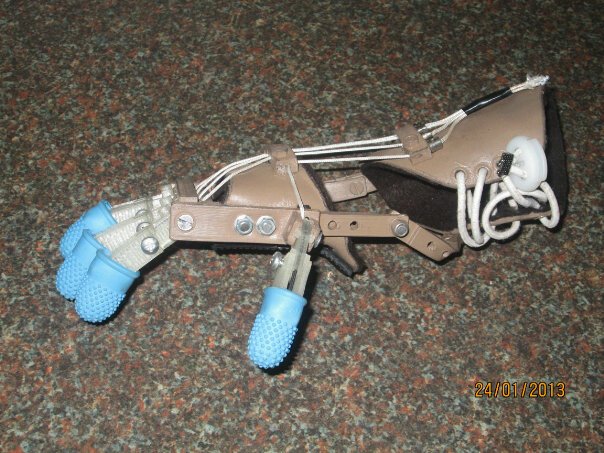 Liam's Robohand, the product of a collaboration between Ivan Owen in Bellingham, Washington and Richard Van As in South Africa—and produced on a MakerBot 3D printer.
Not too long ago, Liam had no fingers on his right hand. The South African five-year old was born with Amniotic Band Syndrome, which causes amputation of digits before birth. But since November, Liam has been using a series of prosthetic hands designed by two men living on opposite sides of the planet, using open source software and 3D-printing technology.
Now, those two men—Ivan Owen in Bellingham, Washington and Richard Van As in South Africa—have published the design for Robohand, the mechanical hand prosthesis, on MakerBot's Thingiverse site as a digital file that can be used to produce its parts in a 3D printer. They've intentionally made the design public domain in the hopes that others around the world who don't have access to expensive commercial prosthetics (which can cost tens of thousands of dollars) can benefit from it.
The project began with a mechanical hand Owen made for a science fiction convention in 2011. He works for a school supply business during the day, but he also works from home creating special effects. When a video of Owen demonstrating the oversized hand went viral, it got the attention of Van As, who had lost most of four fingers on his right hand in a woodworking accident. Van As had been told that prosthetic fingers, such as the X-Finger, would cost him at least $10,000 per finger replaced, so he set about in his workshop trying to design his own.
Read 8 remaining paragraphs | Comments
Alexander YarovoyЯ всегда это знал
 Our cats may be cuddly pals and adorable internet memes, but they are also destroying the environment more efficiently than humans. They have been called one of the "worst" invasive species. And a new study published today in Nature Communications suggests that cats are responsible for killing several endangered bird species in the United States, and decimating bird populations on islands all over the world. In the US, cats kill as many as 3.7 billion native birds annually, making them a bigger threat to these creatures than buildings, towers, windows, poison, and cars. But there is a solution to the problem. More »
Alexander Yarovoyмне очень нравится эта мысль
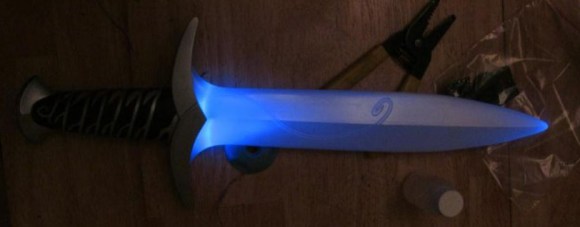
For a few years now, [Jomegat] has been thinking about Sting, the sword wielded by [Bilbo Baggins] and later [Frodo] in The Hobbit and The Lord of the Rings. Sting glows blue whenever an orc is near. Assuming the Elvish magic created by Tolkien is in reality highly advanced Elvish technology, [Jomegat] figured out a way to make his plastic Sting detect WiFi-enabled orcs.
Since The Hobbit was released, toy stores have been flooded with related merchandise that included a wonderful toy version of everyone’s favorite orc killing weapon. The only problem was how to add orc sensors to this plastic Sting. [Jomegat] assumed all orcs carry a cell phone, and being the low creatures they are, would always have their WiFi turned on. [Jomegat] found a very inexpensive WiFi detector key chain that would sense these phone-carrying orcs and light up to alert our warrior to imminent danger.
After acquiring the materials crafted from Elvish magic technology, [Jomegat] opened up the plastic hilt of Sting and installed the WiFi detector. Now, whenever Sting senses the preferred wireless connection of the orc, the blade glows a bright blue.
[Jomegat] was eaten by a grue shortly after completing this project.


Alexander YarovoyЭто я не нарадуюсь, что теперь можно шарить и лайкать посты из ленты trending.

Submitted by Damon
Alexander YarovoyIn your face grammarnazies!
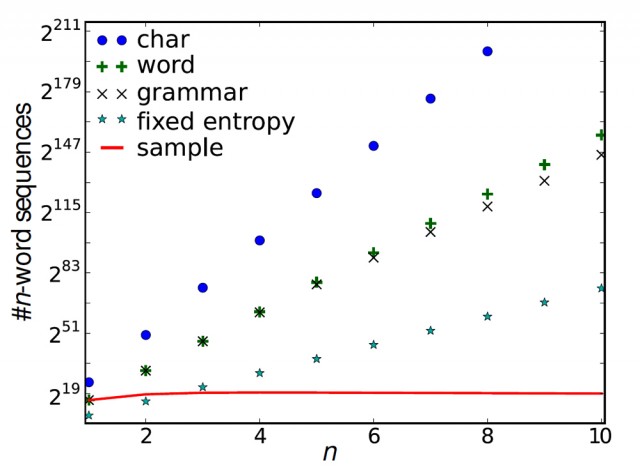 Comparison of the size of password search space when treating the password as a sequence of characters or words, or as words generated by grammatical structure.
Rao,et al.
Comparison of the size of password search space when treating the password as a sequence of characters or words, or as words generated by grammatical structure.
Rao,et al.
When it comes to long phrases used to defeat recent advances in password cracking, bigger isn't necessarily better, particularly when the phrases adhere to grammatical rules.
A team of Ph.D. and grad students at Carnegie Mellon University and the Massachusetts Institute of Technology have developed an algorithm that targets passcodes with a minimum number of 16 characters and built it into the freely available John the Ripper cracking program. The result: it was much more efficient at cracking passphrases such as "abiggerbetter password" or "thecommunistfairy" because they followed commonly used grammatical rules—in this case, ordering parts of speech in the sequence "determiner, adjective, noun." When tested against 1,434 passwords containing 16 or more characters, the grammar-aware cracker surpassed other state-of-the-art password crackers when the passcodes had grammatical structures, with 10 percent of the dataset cracked exclusively by the team’s algorithm.
The approach is significant because it comes as security experts are revising password policies to combat the growing sophistication of modern cracking techniques which make the average password weaker than ever before. A key strategy in making passwords more resilient is to use phrases that result in longer passcodes. Still, passphrases must remain memorable to the end user, so people often pick phrases or sentences. It turns out that grammatical structures dramatically narrow the possible combinations and sequences of words crackers must guess. One surprising outcome of the research is that the passphrase "Th3r3 can only b3 #1!" (with spaces removed) is one order of magnitude weaker than "Hammered asinine requirements" even though it contains more words. Better still is "My passw0rd is $uper str0ng!" because it requires significantly more tries to correctly guess.
Read 9 remaining paragraphs | Comments
Alexander YarovoyМне нравится идея живых облаков
 theaucitron
On a lazy summer day, you might look for animal shapes in the clouds, but you know they’re not real. There’s nothing alive up there but the occasional flock of airline passengers, right? Well, if you’ve ever had a microbiologist friend remark that a cloud reminded them of a bacterium, they were more right than you might have realized.
In turns out that microbes commonly hitch a breezy ride into the clouds. And while some organisms are simply biding their time, awaiting a return to familiar terra firma, others are actively going about their business despite their unorthodox surroundings. That’s no small feat considering the conditions—it’s extremely cold, UV radiation is intense, and the tiny droplets of water they often find themselves inside are acidic and chemically caustic.
Yet experiments have shown that bacteria appear to be active. And that might be important for more than just the microbes themselves. Lots of chemistry goes on in that cloud water that modifies the way clouds form and behave.
Read 8 remaining paragraphs | Comments
Alexander YarovoyС дыркой в желудке худеть станет проще простого.
Dean Kamen has been responsible for a whole slew of inventions, some beneficial and some less so. The latest creation with his name on it, described in a patent application filed on January 3 of this year, falls more into the "less so" category.
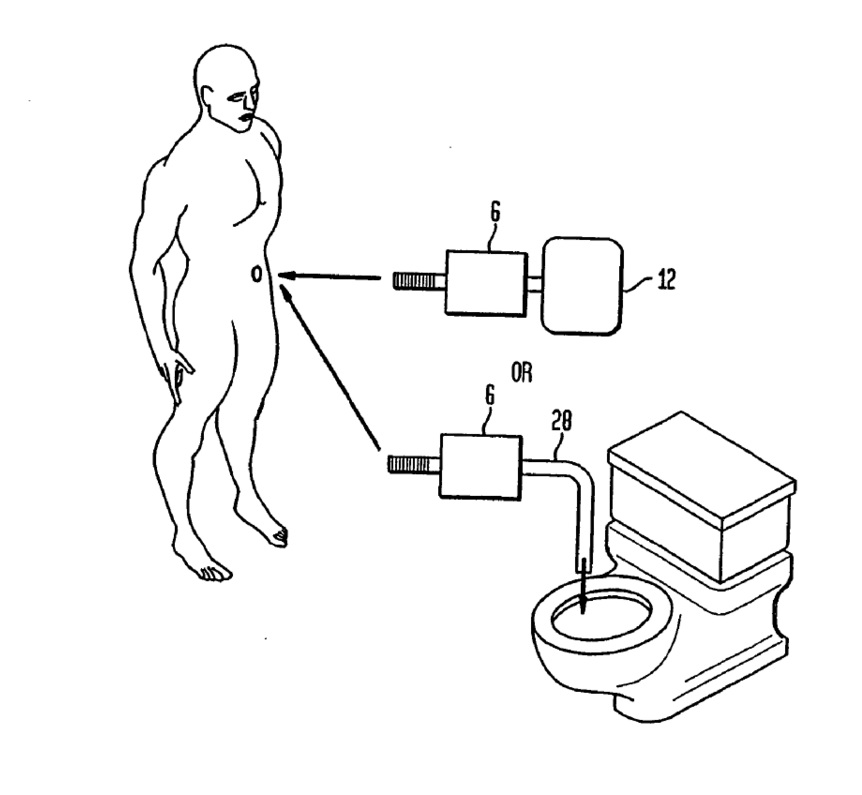
The patent application, titled "APPARATUS FOR TREATING OBESITY BY EXTRACTING FOOD," describes a device and method for sticking a tube into a person's stomach and allowing them to eat whatever they want, and then to eject the masticated but undigested food into a convenient toilet. The idea is to reduce the amount of calories your body absorbs by yanking the food out of your stomach, after you've enjoyed eating it but before it makes its way into your digestive tract.
 Enlarge USTPO
Lest you think that the contents of your stomach are safe and the invention exists only on paper, a company called Aspire Bariatrics already offers the system in Europe, proudly proclaiming, "The AspireAssist Aspiration Therapy System received CE mark approval in December 2011 to market in the European Union, and is now commercially available in selected regions in Europe and beyond." The company's website notes that the device and procedure aren't yet approved for use in the USA; that (and the FDA) are presumably the reasoning behind filing the patent.
Read 3 remaining paragraphs | Comments

Actually. Maybe I should write that book. Or at least make a comic out of a few and post it on the internet. Maybe I’ll get a few views. -Ray
TweetAlexander YarovoyИнтересно выглядит
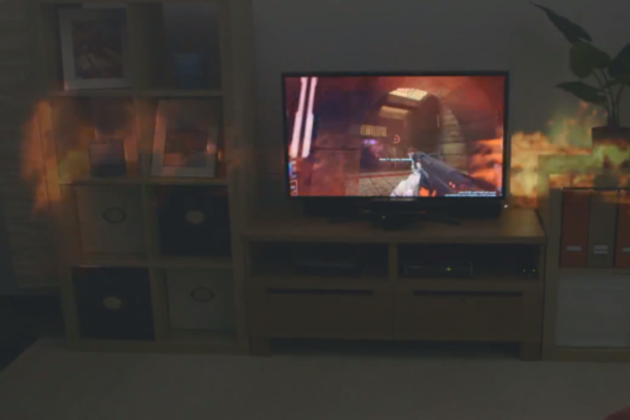
At Samsung's CES keynote today, Microsoft showed a video of Illumiroom, a technology that the company says will "expand interaction to any surface in your home." In other words, it projects imagery beyond your TV screen for a more immersive gaming experience. Bullets fly out of the display, an in-game fire makes it look like your living room is going up in flames, and a first-person shooter plays out on an entire wall.
It works by mapping the room with Kinect to create interactive illusions in real-time; this is something we'd love to see for ourselves, but unfortunately Microsoft won't show it off fully until April. In the meantime, watch this video to get a glimpse of where Microsoft sees the living room going.
Alexander Yarovoyлюблю шутки про цыпленка, переходящего дорогу

#258

In case you missed it, last week we announce our new store! Hopefully this is just the start. We’re going to try to add lots of other good stuff regularly! Thanks for all the support and encouragement! Also, feel free to continue letting us know if there’s anything in particular you’d like to see added in the shop.
TweetAlexander YarovoyСкоро всех нас будут штрафовать за незаконное копирование вирусов клетками организма во время простуды.
The Supreme Court announced on Friday that it will consider a legal challenge to a patent on a breast cancer gene held by the firm Myriad Genetics. The case could have broad implications for the future of medical diagnostic techniques.
In March, the Supreme Court ordered an appeals court to reconsider a 2011 decision holding that genetic material could be patented once it has been "isolated" from the human body. At the time, the Supreme Court had just rejected patents on medical diagnostic techniques, and the high court wanted the United States Court of Appeals for the Federal Circuit to re-consider its previous ruling in light of this new precedent.
In August, the Federal Circuit, which is responsible for hearing all patent law appeals, decided to stick with its previous ruling. It once again concluded that DNA sequences could be patented once they had been isolated from the human body. Now the Supreme Court will have a chance to check the Federal Circuit's work.
Read 4 remaining paragraphs | Comments
Alexander YarovoyЭтот комикс про меня