Shared posts

03 Jul 21:45

A Twisted Comic About A Space Colony Where Medical Experiments Are Holy

A Twisted Comic About A Space Colony Where Medical Experiments Are Holy

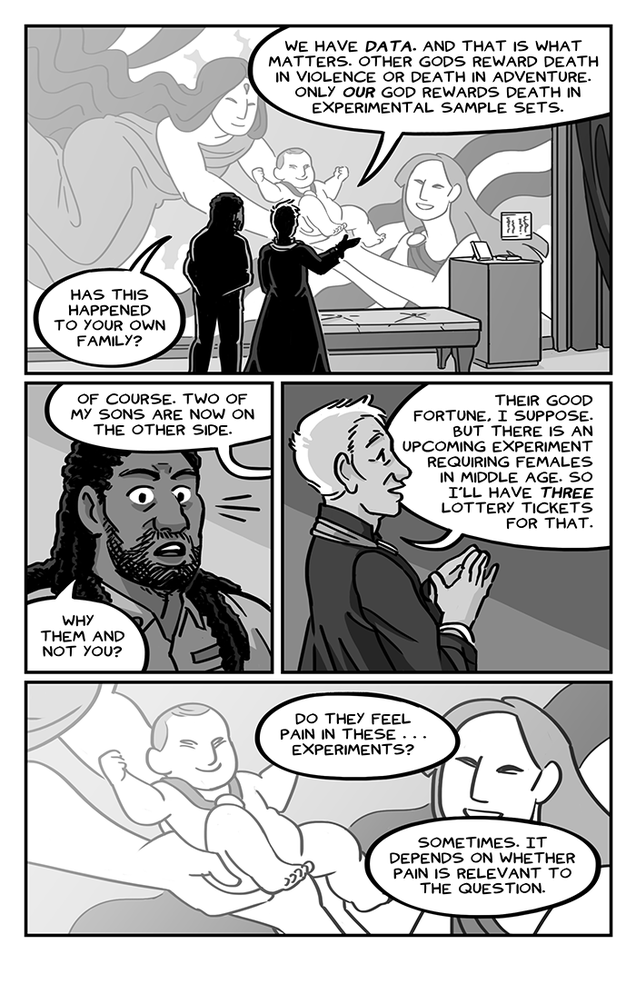
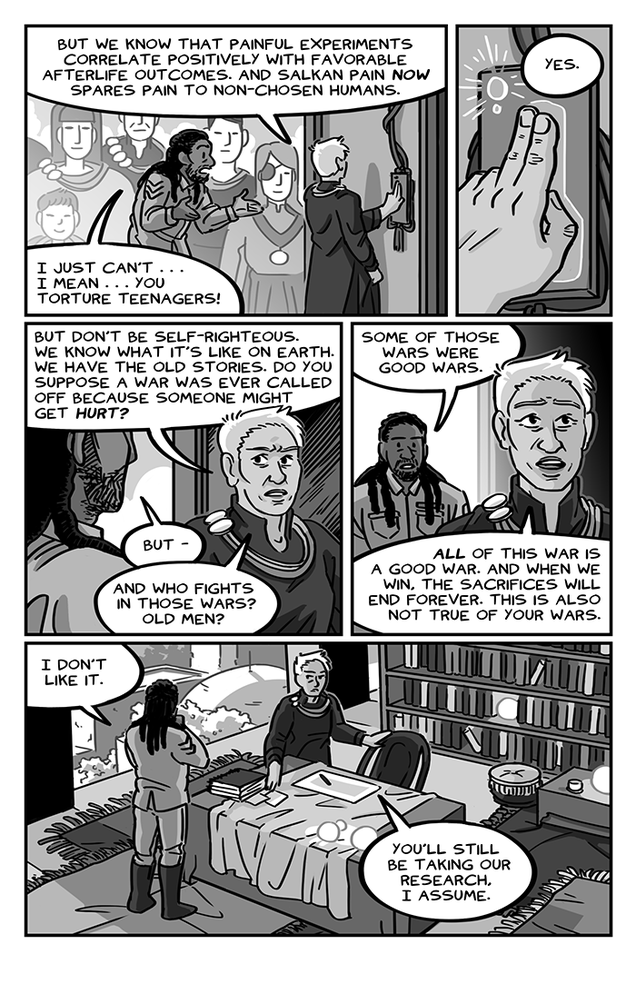
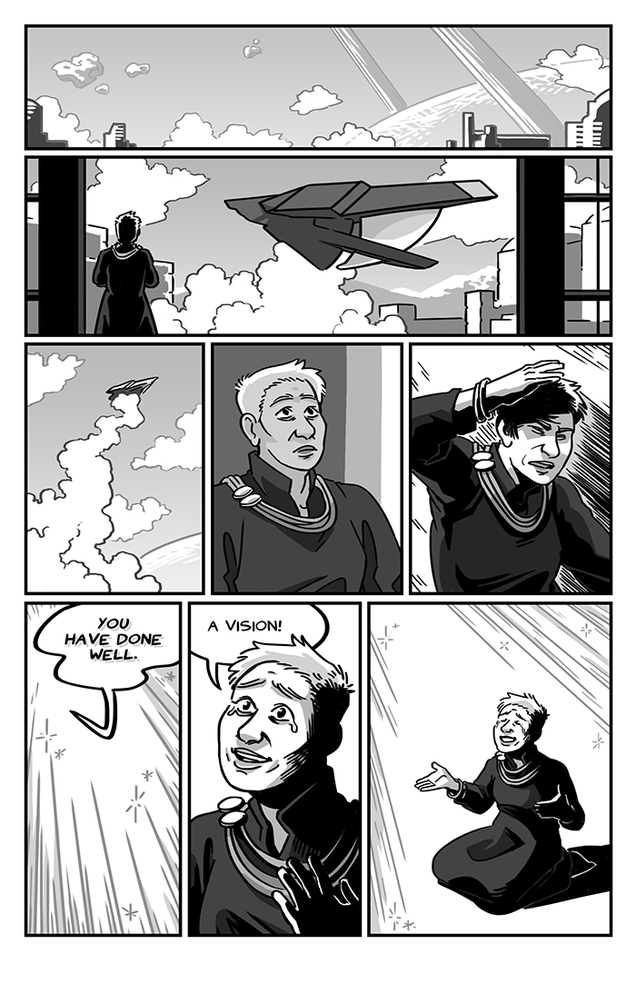
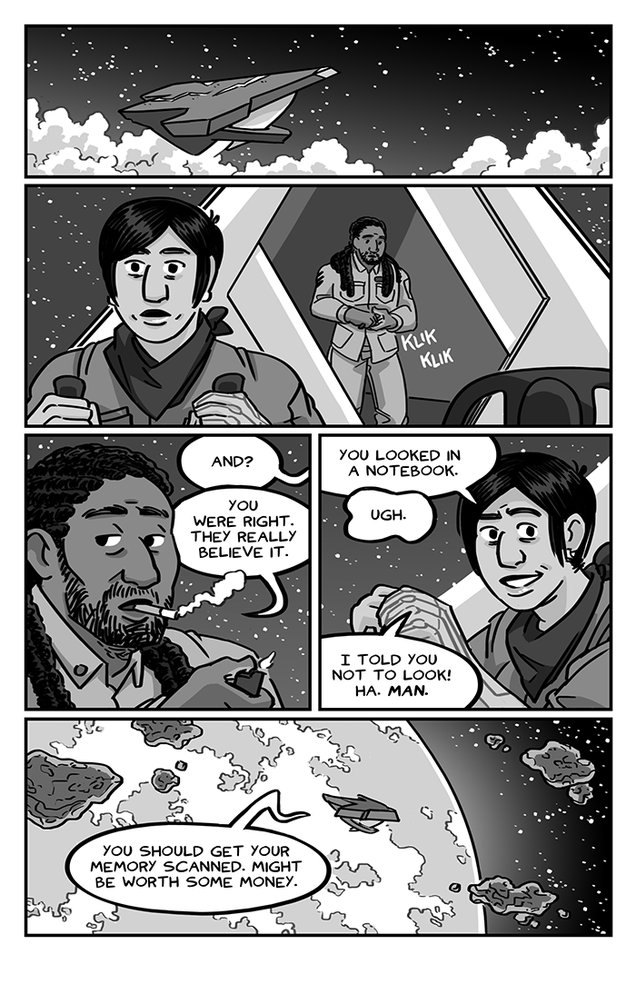
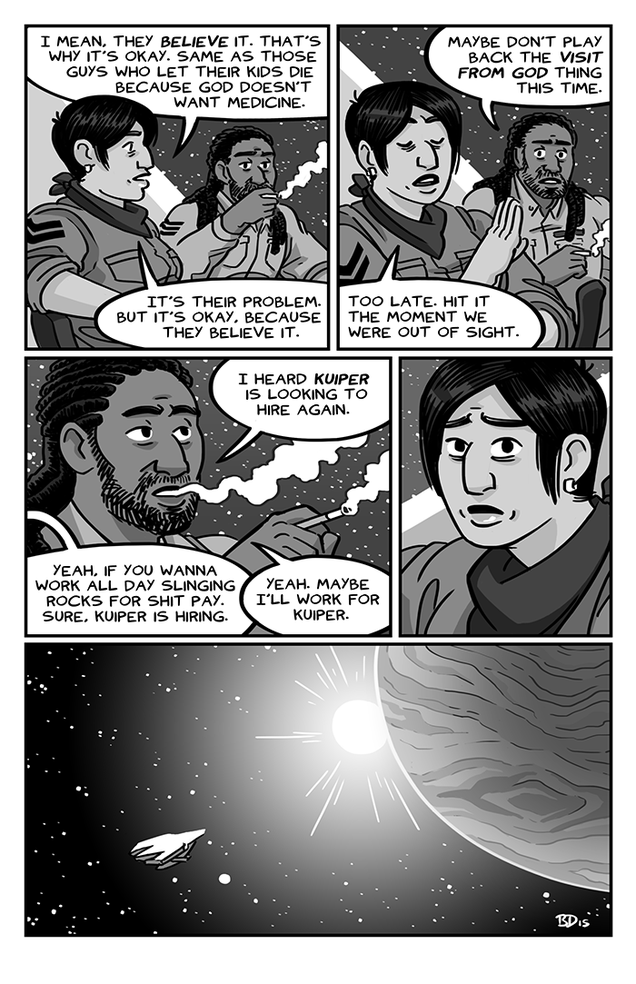
Upcoming comic anthology New World is all about civilizations clashing, and clash they do in this comic from the book, written by Saturday Morning Breakfast Cereal’s Zach Weinersmith and illustrated by O Human Star’s Blue Delliquanti, where a man visits in isolated space colony founded on an unusual belief.

Iron Circus, publisher of the comic anthologies Smut Peddler and Sleep of Reason, is currently running a Kickstarter campaign to fund the publication of New World. The anthology will feature 25 science fiction and fantasy stories about cultural conflict by 30 different creators including Weinersmith, Delliquanti, Matt Howarth (Those Annoying Post Brothers), Carla Speed McNeil (Finder, No Mercy), Evan Dahm (Rice Boy, Vattu), Ben Fleuter (Derelict), and Sophie Goldstein (Darwin Carmichael is Going to Hell, Mother Ship Blues).

The campaign isn’t just to cover printing and shipping; it’s also to increase the pay of the contributors. If you want to preorder your copy of New World, head over to Kickstarter to back the project.

And, courtesy of Iron Circus’ C. Spike Trotman, here’s Weinersmith and Delliquanti comic from New World, “An Experimenal Colony”:

A Twisted Comic About A Space Colony Where Medical Experiments Are Holy

A Twisted Comic About A Space Colony Where Medical Experiments Are Holy

A Twisted Comic About A Space Colony Where Medical Experiments Are Holy

A Twisted Comic About A Space Colony Where Medical Experiments Are Holy

A Twisted Comic About A Space Colony Where Medical Experiments Are Holy

A Twisted Comic About A Space Colony Where Medical Experiments Are Holy

A Twisted Comic About A Space Colony Where Medical Experiments Are Holy

Bookmarked at brandizzi Delicious' sharing tag and expanded by Delicious sharing tag expander.
20 May 12:06

Entendedor Anônimo # 25

20 May 12:00

Arthropods

by Doug
20 May 12:00

Gross Encounters

20 May 09:36

Photo


20 May 09:34

Humans

At this point, if we're going to keep insisting on portraying dinosaurs as featherless because it's "cooler", it's time to apply that same logic to art involving bald eagles.
20 May 09:32

Comic for 2015.05.20

Cyanide & Happiness (Explosm.net)

Permalink:


More from Explosm

Loading...


Advertisement

Did you know by creating an account you can favorite comics and shorts, automatically bookmark the last one you saw, and more? Learn more about it here!

All content is Copyright © 2000–2015 of Explosm, LLC.

Log in or Register

This entry passed through the Full-Text RSS service - if this is your content and you're reading it on someone else's site, please read the FAQ at fivefilters.org/content-only/faq.php#publishers.

20 May 00:57

Progress

by Jason Poland

Laurels! Laurels! Laurels!

So much fire. So little irons.

20 May 00:56

Artist Alexey Kondakov Imagines Figures from Classical Paintings as Part of Contemporary Life

by Christopher Jobson

art-1

For his ongoing series “Art History in Contemporary Life,” Ukrainian artist Alexey Kondakov takes scenes and figures lifted from classical paintings and drops them into modern-day life. Bouguereau’s Song of the Angels appears to take place on an empty subway car while a pair of men from Holbein’s famous The Ambassadors are transported to the table of a seedy bar. Much like Etienne Lavie’s billboard series and Julien de Casabianca’s recent Outings Project, the series creates an interesting and playful new context for artworks usually only encountered in museums and art history books. You can see more over on Facebook. (via Supersonic)

art-3

art-4

art-5

art-6

art-7

20 May 00:55

Tax: a Scandinavian solution

by Tim Harford
Undercover Economist

‘With tax, our politicians seem determined to make the process as clumsy and painful as possible’

If a politician was a surgeon, faced with the task of amputating your leg, we can well imagine how it would go. First he’d deny that he planned to amputate the leg. Then he’d pass a law making it illegal to amputate the leg. Then he’d say that he’d amputate an investment banker’s leg instead. Finally, he would blame the mess handed to him by the previous surgeon and would begin to rub away at your toes with a cheese grater.

So it is with taxes. It’s no fun paying them but public spending must be paid for somehow. Yet our politicians seem determined to make the process as clumsy, painful and disingenuous as possible.

This may be because politicians see taxes purely in political terms. They believe that the deep problem with taxes is that people do not like paying them, which is why they say, instead, that the taxes will be levied only on multinational corporations, investment bankers and tax dodgers of all stripes. Politicians placate angry voters with tax exemptions and deductions. All this is politically understandable but has the effect of making the taxes much more damaging than they need to be.

The true problem with taxes is quite different. It is that in an effort to pay less tax, people do some extraordinary things. Most obviously and controversially, they’ll adopt odd legal labels that have the effect of reducing their tax bill. Some are fiendishly complex international schemes, playing different tax treaties off against each other and generating corporate profit that each tax authority deems is someone else’s problem. Others are quite simple. All of them are unfair, and all of them generate paperwork.

A second problem, less fussed-about but probably more serious, is that people will change their behaviour rather than just the legal description of that behaviour. For example, some new mothers who want to work will stay at home rather than hire childcare out of heavily taxed income. The mother doesn’t get the career she wanted, and the taxman doesn’t get the tax revenue. Nobody wins.

Two articles in last year’s Journal of Economic Perspectives explore how governments might get more serious about raising taxes. One, by Gabriel Zucman, emphasises that the complexity and inconsistency of different tax systems allow wealthy individuals and multinational companies to exploit cross-border loopholes and avoid tax. Zucman’s calculations suggest that US companies are increasingly booking their profits in what he calls “the main tax havens”, jurisdictions that housed about 2 per cent of US corporate profits in 1984 but 18 per cent in 2013.

But one way to look at the problem of levying high taxes is to ask who has solved it. The answer: Denmark, Norway and Sweden. US tax revenue is about 25 per cent of GDP, the UK and Germany at about 35 per cent, and the Scandinavians at about 45 per cent, according to economist Henrik Jacobsen Kleven. Somehow the Scandinavians have managed to raise large sums from their citizens without destroying their economies. How?

That’s the question that Kleven sets out to answer and, of course, the answer is partly cultural. It is also partly about the comprehensive tax reporting in Scandinavia, which makes outright evasion very difficult. Norwegian tax returns are published for all to examine. (No wonder Gabriel Zucman dreams — perhaps implausibly — of a global financial registry to help track down tax dodgers.)

Not everyone will feel delighted about an all-seeing government determined to invade privacy in the name of higher taxes. But there are other elements of Scandinavian taxation that any government might want to emulate: Scandinavian countries minimise the distortions of their tax system by avoiding the bad habits of politicians in other countries.

Chief among these habits is targeting a narrow tax base. The US tax system is full of ad hoc deductions and exemptions. The UK system needlessly excludes swaths of the economy from tax. Rather than charge a 10 per cent rate of VAT on everything, the UK government charges a 20 per cent rate of VAT on roughly half of what consumers spend. The Danes have a much broader VAT base, and a higher rate too.

The simplest way to broaden the tax base is to dismantle barriers to getting a job. Scandinavian governments subsidise education, transport and care for children and the elderly, all of which help people to work who might otherwise find themselves stuck at home. As a result, even high taxes do not keep them out of the labour market.

That makes sense. If the surgeon really is going to amputate your leg, having a prosthetic replacement would be wise.

Written for and first published at ft.com.

Solve this puzzle and win a Dom Reilly bag

Tim Harford will be interviewing University of Chicago economist Richard Thaler about his new book Misbehaving on stage in London on June 10. Please visit live.ft.com/richard-thaler for more details.

In anticipation of this event, Professor Thaler is setting FT readers a challenge, revisiting a puzzle he set them once before, in 1997.

The task is simple: choose a number between 0 and 100, and supply a short justification for your choice. The winner is the person whose number is closest to two-thirds of the average of all the entries. For example, three entries are submitted: 20, 30 and 40. The average is then 30 and the winning entry is 20, being exactly two-thirds of the average.

In the event of a tie, the prize will go to the person who submits the best justification. Prof Thaler’s decision is final.

The prize for the winning entry is a luxurious weekend bag designed for the FT by Dom Reilly — lightweight, elegant and exquisitely handcrafted in brown full-grain leather with subtle FT branding.

Please send your guess and your justification to: email hidden; JavaScript is required

Competition ends May 31. T&Cs apply. ft.com/thalerconditions

20 May 00:53

146 - Unicornered

Warbeard: So you're here for the UI Designer role? Lots of... Photoshop, I guess?
Applicant: Actually, I imagined it would be more wireframing and InDesign.
| Miloslav: How would you reverse a linked list in C?
Warbeard: What's the linux command to check file permissions?
Applicant: I... Uh...
| Later:
Walt: So he couldn't even answer simple questions?
Miloslav: No.
Walt: Finding a decent UI designer is going to be way harder than I'd thought.
In their defense, he did bring a blank sheet of paper as his resume.
20 May 00:51

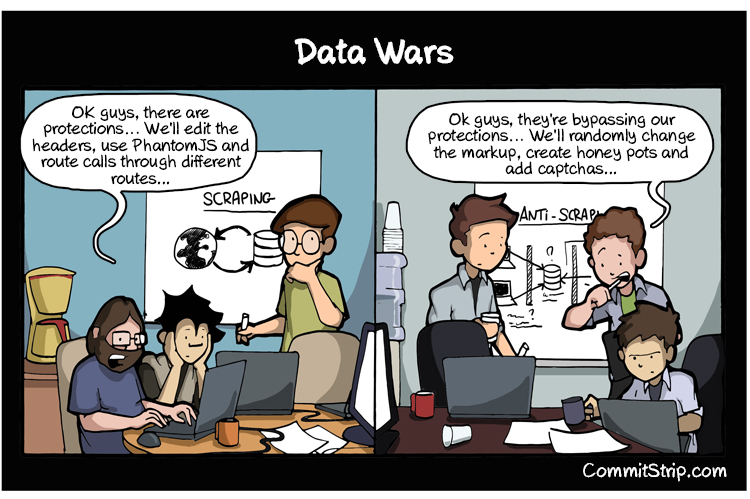
Data Wars

19 May 21:01

What It Feels Like

cleaning,gifs,waves,water

Submitted by: ToolBee

Tagged: cleaning , gifs , waves , water
19 May 20:54

Honest Job Titles (images via happy place)Previously: New Words...


Honest Job Titles (images via happy place)

Previously: New Words That Should Be Added to the Dictionary

19 May 20:18

We tried Tokyo’s “rent a middle-aged Japanese man” service, and it was awesome!

by Scott Wilson

ossan1

You can rent pretty much anything in Japan. Even people, it would seem.

With so many people working long hours and not having the time to devote to cultivating real relationships, it’s just easier to hand over some cash and pay someone to act as your boyfriend, girlfriend, or just a friend to hang out with for the day.

But what about when you’re looking for something different? What if you’re in need of life advice that only a middle-aged Japanese man can provide? Well that’s where the ossan (middle-aged/old) rental service comes in!

The idea of hanging out with a 47-year-old Japanese dude and getting sagely wisdom while getting coffee together was so intriguing we had to try it for ourselves.

The first step in renting our ossan was, of course, going to the ossan rental website. There you can rent Takanobu Nishimoto, a 47-year-old fashion producer/stylist. He has worked in Japan and the U.S., in all kinds of places from department store salons to being the executive producer for a major stylist company, and he’s even written a relationship advice column for women at one point.

But now, he just works as a professional ossan – a service that he started all by himself, and is currently the only man available to be rented.

The ordering process was as simple as purchasing anything else online: we added Nishimoto to our cart, selected the time we wanted to meet, and then checked out; that’s all there was to it.

▼ We double-checked to see if there were costumes we could add to our cart for him to dress up in, but unfortunately there was no such option. Yet.

ossan100

The day of our rental, we met Nishimoto-san at the Ebisu train station in Shinjuku, Tokyo. We’d seen his picture online, but still weren’t sure what to expect in real life.

▼ How would we even find him? Would we have to listen for the guy telling lame dad-jokes?

ossan2

▼ Or would we have to watch for a teenage girl crossing her arms and going “daaaaaaaad, you’re embarrassing me” every five seconds?

ossan31

▼ “Excuse me, handsome passerby. Have you seen a rental ossan around here at all?”

ossan4

▼ “Oh! It’s you. Why, I’d swear you were far more of a niisan than an ossan.”

ossan5

Since we were budget-conscious, we had only one hour to enjoy with Nishimoto-san, so we went straight to a cafe, sat down for some drinks, and got right down to business. Right off the bat, we asked him why he got into this line of work. “One day I was on the train and some girls nearby me went ‘Ugh, what a gross ossan,'” he said. “So I decided to embrace my ossan-ness and do this.”

▼ Now those same girls are paying him by the hour for relationship advice. Justice?

ossan6

When we asked how many clients he’d had since starting his ossan rental service in 2012, Nishimoto said that he’s had a total of 1,502 people rent him out to date! Apparently 60 percent of them are repeat customers, who are basically just Nishimoto-san fans at this point and can’t get enough of him.

We were also interested in what he and his clients typically did together during rental sessions. Unsurprisingly, it usually wasn’t too different from what we were doing with him: hanging out at a cafe or bar, chatting, drinking, or getting life advice over lunch.

But, he did say he’d had some pretty unusual requests: being rented out to visit sick people in the hospital he didn’t know, or to announce one woman’s marriage to her family since her father had been looking forward to doing it but had passed away before he could. Of course, he’s had requests for other less innocent things, but he has a strict “no touching” policy that is made clear from the get-go, so don’t get any wrong ideas about what this handsome middle-aged man is prepared to do!

Before we knew it, our hour of ossan rental was up. We couldn’t believe how fast the time went by – Nishimoto-san was just so suave and charming. Before we said goodbye though, he let us know that he’s planning on expanding his ossan rental business and has recently hired two new ossans (out of over 100 applicants!) who will be available for rent soon on his website.

▼ Which is also the place where you can buy his book: Diary of a Rental Ossan. For just the price of one hour with Nishimoto-san, you can get years worth of his experience!

ossan7

With over 1,500 clients under his belt, and at only 1,000 yen an hour, Nishimoto-san is a bargain hidden away in the typically overpriced Tokyo. Whether you need a tour guide, some social support, a bit of relationship advice, or just someone to suggest a new style for your hair, he’s got you covered.

The next time you’re in Tokyo, make a reservation on his website, and see what hanging out with the most experienced ossan in Tokyo can be like.

Reference: Ossan Rental
Photos © RocketNews24

Origin: We tried Tokyo’s “rent a middle-aged Japanese man” service, and it was awesome!
Copyright© RocketNews24 / SOCIO CORPORATION. All rights reserved.

Related Stories

19 May 20:13

redditfront: That awkward moment when Satan is a perfectly...


redditfront:

That awkward moment when Satan is a perfectly acceptable option for your kids

19 May 20:12

kelpforestdweller: Well I’m glad this terrifying pit into the...


kelpforestdweller:

Well I’m glad this terrifying pit into the abyss is wheelchair accessible

19 May 20:12

sandandglass: ’Indiana Jones’ Reboot Starring Anna Kendrick

19 May 19:58

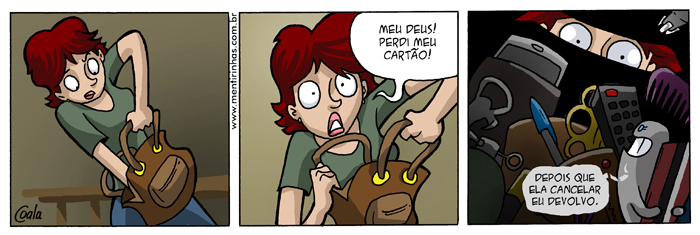
Mentirinhas #821

by Fábio Coala

mentirinhas_809


Pelo menos ela devolve :/

O post Mentirinhas #821 apareceu primeiro em Mentirinhas.

19 May 18:46

Five arguments against the self-defeating secrecy of the Trans-Pacific Partnership

Bookmarked at brandizzi Delicious' sharing tag and expanded by Delicious sharing tag expander.
19 May 18:46

Lets add one more exception

by sharhalakis

by uaiHebert

19 May 14:08

ONGs de redução de danos lutam para sobreviver

POR ESTÊVÃO BERTONI, DE SÃO PAULO

Até dezembro do ano passado, Wallace Osti e Silva, 26, foi uma vez por semana ao bairro do Tatuapé, em Piracicaba (a 160 km de São Paulo), falar com pessoas que fumam crack em “mocós” no meio de uma mata.

Explicava a eles por que tratar feridas na boca e não compartilhar cachimbos, na tentativa de barrar uma tendência: segundo pesquisa da Fiocruz, 71% dos usuários de crack dividem o utensílio, e 52% fumam em latinhas, o que ocasiona queimaduras nos lábios e propicia o contágio de doenças.

Wallace buscava ainda facilitar o acesso dos usuários de crack aos serviços de saúde (só 27% afirmam usá-los), dentro do princípio da redução de danos.

Surgida há 25 anos no país, essa estratégia não prega a abstinência –a escolha de largar ou não as drogas é do usuário. Seu objetivo é reduzir os riscos do uso.

Neste ano, o trabalho de Wallace nos “mocós” do Tatuapé, como redutor de danos do Casvi (Centro de Apoio e Solidariedade à Vida), tornou-se esparso. O financiamento da prefeitura ao projeto acabou, mas a ONG quer manter as visitas, aproveitando que já faz uma outra ação no bairro.

Na última década, centenas de entidades civis de redução de danos sumiram no país por falta de financiamento.

Estudos apontam que, entre 1993 e 2002, o Ministério da Saúde bancou 976 projetos de ONGs, 186 deles de prevenção à Aids entre usuários de drogas injetáveis. Com a queda no uso dessas drogas e com a descentralização dos recursos do Programa Nacional de Aids a partir de 2002, muitas entidades fecharam.

“Ficou a critério de Estados e municípios financiar essas ONGs. E eles não fizeram isso porque não é popular. Se o gestor tem liberdade para decidir onde colocar um recurso, ele pode preferir investir em prevenção nas escolas, que é muito mais popular para um político do que investir em troca de seringas para usuários de drogas. Redução de danos não traz votos”, afirma a pesquisadora Elize Massard da Fonseca, da FGV.

A Reduc (Rede Brasileira de Redução de Danos e Direitos Humanos) estima que 200 ONGs do tipo tenham existido no país. Hoje, a Aborda (Associação Brasileira de Redutoras e Redutores de Danos) não conta mais de 30.

Para Vera Da Ros, presidente da Reduc, embora a redução de danos tenha sido incorporada ao SUS (Sistema Único de Saúde), o trabalho das ONGs, que em muitos casos usavam ex-usuários como redutores, é importante por ir a locais onde os serviços públicos não chegam.

“O agente de saúde muitas vezes não faz parte daquela comunidade, não tem a linguagem do usuário que está em risco tanto para a Aids e a hepatite quando para uma overdose”, afirma.

Daniela Trigueiros, vice-presidente da Reduc, diz que as ONGs se agarraram exclusivamente ao financiamento público. “E não existe só o apoio de governo. Tem ainda iniciativa privada, doações, bazares. As ONGs que ficam na aba do governo acabam tendo uma dificuldade, porque os recursos também são limitados.”

Em Curitiba, a Humanar sobrevive de um bazar e da ajuda do governo federal para manter uma casa de apoio. O trabalho dos redutores de danos ainda é feito pela entidade, mas apenas nas ruas vizinhas à ONG.

PONTO DE CULTURA

Em São Paulo, o É de Lei, que existe desde 1998, tem hoje dois redutores –chegou a ter dez. Duas vezes por semana, eles distribuem na cracolândia manteiga de cacau (para evitar feridas nos lábios), piteiras e camisinhas.

No Brasil, 5% dos usuários de crack têm Aids, taxa oito vezes maior que a da população em geral, e 42% relatam já ter trocado droga por sexo, segundo estudo da Fiocruz.

Uma das estratégias da ONG para se manter foi virar, em 2010, um ponto de cultura (entidade que desenvolve atividades culturais com apoio do Ministério da Cultura). Passou a produzir, por exemplo, documentários com consumidores de crack.

Bruno Gomes, coordenador da ONG, diz que já tentou apoio com empresas da área de responsabilidade social, mas esbarrou no preconceito. “A gente apresentava o trabalho e elas diziam: ‘É legal, mas para a gente não é bonito apoiar’. Trabalhamos com pessoas estigmatizadas e não oferecemos uma salvação.”

INCORPORAÇÃO AO SUS

“Com meia dúzia de ONGs ativas, pode parecer, num primeiro olhar, que a redução de danos está morrendo. Só que a questão tem outro lado”, diz o sociólogo Dênis Petuco.

Surgida como estratégia de troca de seringas para tentar controlar a Aids nos anos 80 e 90, a redução de danos acabou se impondo com o passar dos anos e foi sendo incorporada ao SUS.

Iniciativas como os Caps AD (Centros de Atenção Psicossocial Álcool e Droga) e os Consultórios na Rua (de atenção básica para moradores de rua) são apontadas como seguidoras dessa perspectiva.

Mas a incorporação dos princípios da redução de danos ao sistema público de saúde nem sempre se deu “de modo pleno”, segundo especialistas.

“Percebeu-se que era importante ter pessoas com vivência do uso de drogas nesse trabalho. E como contratá-los por concurso público?”, questiona Dênis Petuco.

Para ele, o serviço dos redutores também exigia que se atuasse em locais e horários pouco convencionais.

“Por exemplo, estar debaixo de um viaduto em São Paulo à meia-noite. Como obrigar um servidor público a fazer isso? Contratando ONGs, isso ficou mais fácil”, afirma.

O professor da Unifesp Dartiu Xavier da Silveira lembra que há exemplos de bons trabalhos no SUS. “Existe o Caps da Sé, onde o agente de saúde trabalha de forma muito parecida com o É de Lei. Por que os outros não trabalham dessa forma? Porque não foram capacitados para isso.”

A redução de danos, na visão do advogado Maurides Ribeiro, sofre um “esvaziamento” desde o lançamento do plano nacional de enfrentamento ao crack, em 2010.

“Por paradoxal que pareça, a política de redução de danos se tornou oficial, mas, por opção política, não se investe mais nessa perspectiva. Você fala: estou internando todo mundo, e o ‘bom pai de família’ que está jantando e assistindo ao ‘Jornal Nacional’ vai ficar feliz”, afirma.

Há os que reafirmam a importância das ONGs, por serem uma estratégia a mais no tratamento aos usuários, mas que contestam os efeitos da redução de danos.

“A redução de danos é incrível para drogas injetáveis, mas com o crack não é realmente eficaz. Tem que incentivar a abstinência, porque, só reduzindo o dano, a longo prazo esse resultado é muito pequeno”, diz Clarice Madruga, professora da Unifesp.


19 May 12:02

Fausto-Montagem

by Daniel Lafayette

tirinha---despadrao---foto-faustao

19 May 12:02

wiselwisel:

19 May 12:02

Mesquite, are you EVEN TRYING???image | twitter | facebook


Mesquite, are you EVEN TRYING???

image | twitter | facebook

19 May 12:01

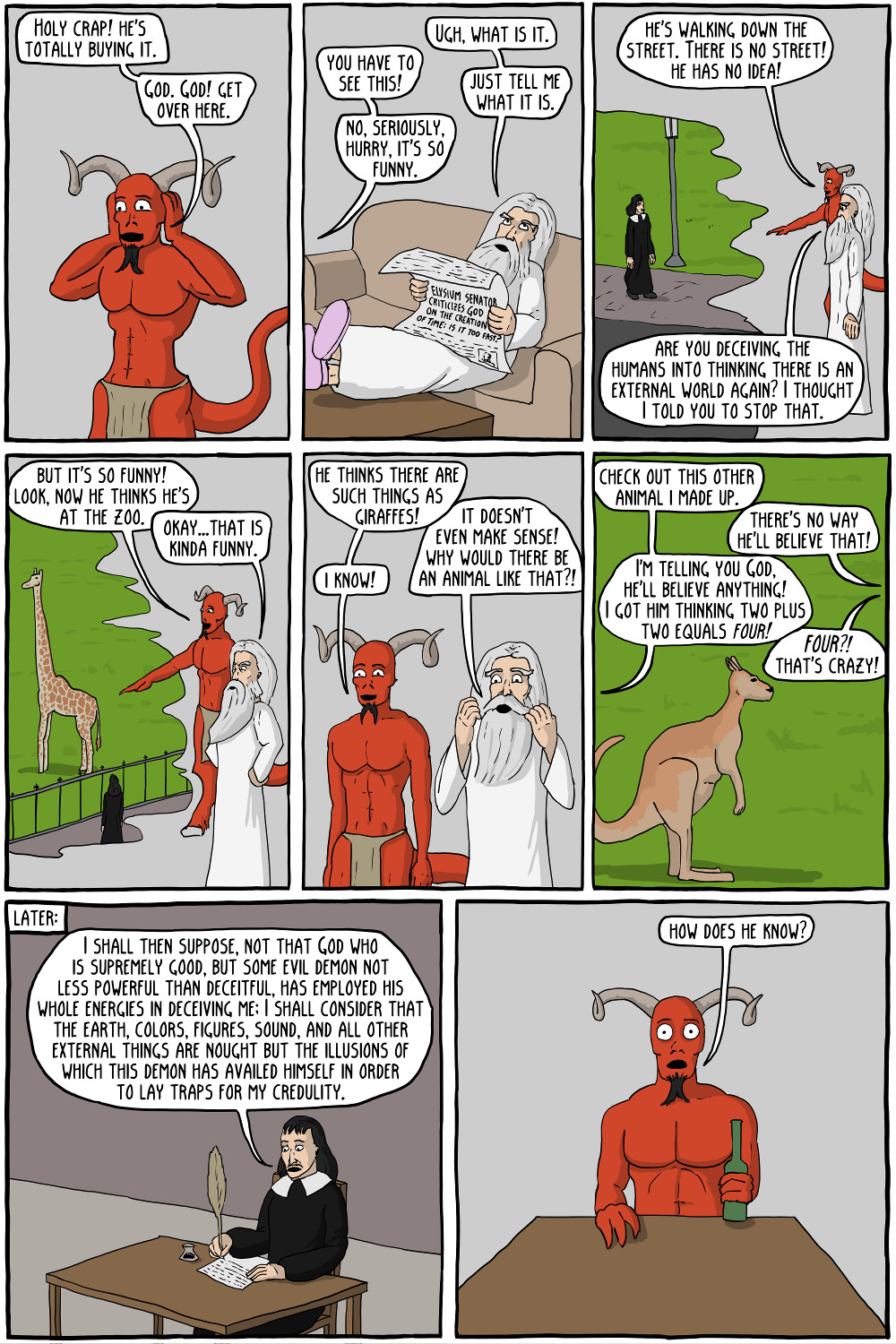
Descartes's Demon

19 May 11:58

Serpentine

"Serpentine" is my first hi-res render using Mandelbulb 3D (not to be confused with Mandelbulber which I have used a few times before).

In some areas it seems more powerful than the other app, but in others it isn't. It's a 32-bit program, for example, so I can only use 2 GB of my 128 installed GB to process images. This means some of the post-processing options (like DOF) run out of memory on large images.

I still think it's worth learning though. Let me know what you think of the first effort!

PS: You can now use the R/L arrow keys on your keyboard to navigate through my gallery :-)

19 May 11:58

Auroras and Star Trails over Iceland

Discover the cosmos! Each day a different image or photograph of our fascinating universe is featured, along with a brief explanation written by a professional astronomer.

2015 May 18
See Explanation.  Clicking on the picture will download
 the highest resolution version available.

Auroras and Star Trails over Iceland
Image Credit & Copyright: Vincent Brady

Explanation: It was one of the quietest nights of aurora in weeks. Even so, in northern- Iceland during last November, faint auroras lit up the sky every clear night. The featured 360-degree panorama is the digital fusion of four wide-angle cameras each simultaneously taking 101 shots over 42 minutes. In the foreground is serene Lake Myvatn dotted with picturesque rock formations left over from ancient lava flows. Low green auroras sweep across the sky above showing impressive complexity near the horizon. Stars far in the distance appear to show unusual trails -- as the Earth turned -- because early exposures were artificially faded.

Follow APOD on: Facebook, Google Plus, or Twitter
Tomorrow's picture: cluster of stars < | Archive | Submissions | Index | Search | Calendar | RSS | Education | About APOD | Discuss | >

Authors & editors: Robert Nemiroff (MTU) & Jerry Bonnell (UMCP)
NASA Official: Phillip Newman Specific rights apply.
NASA Web Privacy Policy and Important Notices
A service of: ASD at NASA / GSFC
& Michigan Tech. U.

Expanded from APOD by Feed Readabilitifier.
19 May 11:57

Winning

by Doug
19 May 01:33

Wounded turtle can return to the ocean thanks to a 3D-printed beak

by Mariella Moon
Look, we know this sea turtle's prosthetic beak has a tragic backstory, but it sure makes the reptile look like it has a future as a badass pizza-loving mutant. According to 3D Printing Industry, Turkish animal rescuers found it almost lifeless at se...