Seize immortality.
All content is Copyright © 2000–2015 of Explosm, LLC.

If the cries of ‘Je suis Charlie’ were sincere, the western world would be convulsed with worry and anger about the Wallström affair. It has all the ingredients for a clash-of-civilisations confrontation.
A few weeks ago Margot Wallström, the Swedish foreign minister, denounced the subjugation of women in Saudi Arabia. As the theocratic kingdom prevents women from travelling, conducting official business or marrying without the permission of male guardians, and as girls can be forced into child marriages where they are effectively raped by old men, she was telling no more than the truth. Wallström went on to condemn the Saudi courts for ordering that Raif Badawi receive ten years in prison and 1,000 lashes for setting up a website that championed secularism and free speech. These were ‘mediaeval methods’, she said, and a ‘cruel attempt to silence modern forms of expression’. And once again, who can argue with that?
The backlash followed the pattern set by Rushdie, the Danish cartoons and Hebdo. Saudi Arabia withdrew its ambassador and stopped issuing visas to Swedish businessmen. The United Arab Emirates joined it. The Organisation of Islamic Co-operation, which represents 56 Muslim-majority states, accused Sweden of failing to respect the world’s ‘rich and varied ethical standards’ — standards so rich and varied, apparently, they include the flogging of bloggers and encouragement of paedophiles. Meanwhile, the Gulf Co-operation Council condemned her ‘unaccept-able interference in the internal affairs of the Kingdom of Saudi Arabia’, and I wouldn’t bet against anti-Swedish riots following soon.
Yet there is no ‘Wallström affair’. Outside Sweden, the western media has barely covered the story, and Sweden’s EU allies have shown no inclination whatsoever to support her. A small Scandinavian nation faces sanctions, accusations of Islamophobia and maybe worse to come, and everyone stays silent. As so often, the scandal is that there isn’t a scandal.
It is a sign of how upside-down modern politics has become that one assumes that a politician who defends freedom of speech and women’s rights in the Arab world must be some kind of muscular liberal, or neocon, or perhaps a supporter of one of Scandinavia’s new populist right-wing parties whose commitment to human rights is merely a cover for anti-Muslim hatred. But Margot Wallström is that modern rarity: a left-wing politician who goes where her principles take her.
She is foreign minister in Sweden’s weak coalition of Social Democrats and Greens, and took office promising a feminist foreign policy. She recognised Palestine in October last year — and, no, the Arab League and Organisation of Islamic Co-operation and Gulf Co-operation Council did not condemn her ‘unacceptable interference in the internal affairs of Israel’. I confess that her gesture struck me as counterproductive at the time. But after Benjamin Netanyahu ruled out a Palestinian state as he used every dirty trick he could think of to secure his re-election, she can claim with justice that history has vindicated her.
She moved on to the Saudi version of sharia law. Her criticism was not just rhetorical. She said that it was unethical for Sweden to continue with its military co-operation agreement with Saudi Arabia. In other words, she threatened Swedish arms companies’ ability to make money. Saudi Arabia’s denial of business visas to Swedes threatened to hurt other companies’ profits too. You might think of Swedes as upright social democrats, who have never let worries of appearing tedious stand in the way of their righteousness. But that has never been wholly true, and is certainly not true when there is money at stake.
Sweden is the world’s 12th largest arms exporter — quite an achievement for a country of just nine million people. Its exports to Saudi Arabia total $1.3 billion. Business leaders and civil servants are also aware that other Muslim-majority countries may follow Saudi Arabia’s lead. During the ‘cartoon crisis’ — a phrase I still can’t write without snorting with incredulity — Danish companies faced global attacks and the French supermarket chain Carrefour took Danish goods off the shelves to appease Muslim customers. A co-ordinated campaign by Muslim nations against Sweden is not a fanciful notion. There is talk that Sweden may lose its chance to gain a seat on the UN Security Council in 2017 because of Wallström.
To put it as mildly as I can, the Swedish establishment has gone wild. Thirty chief executives signed a letter saying that breaking the arms trade agreement ‘would jeopardise Sweden’s reputation as a trade and co-operation partner’. No less a figure than His Majesty King Carl XVI Gustaf himself hauled Wallström in at the weekend to tell her that he wanted a compromise. Saudi Arabia has successfully turned criticism of its brutal version of Islam into an attack on all Muslims, regardless of whether they are Wahhabis or not, and Wallström and her colleagues are clearly unnerved by accusations of Islamophobia. The signs are that she will fold under the pressure, particularly when the rest of liberal Europe shows no interest in supporting her.
Sins of omission are as telling as sins of commission. The Wallström non-affair tells us three things. It is easier to instruct small countries such as Sweden and Israel on what they can and cannot do than America, China or a Saudi Arabia that can call on global Muslim support when criticised. Second, a Europe that is getting older and poorer is starting to find that moral stands in foreign policy are luxuries it can no longer afford. Saudi Arabia has been confident throughout that Sweden needs its money more than it needs Swedish imports.
Finally, and most revealingly in my opinion, the non-affair shows us that the rights of women always come last. To be sure, there are Twitter storms about sexist men and media feeding frenzies whenever a public figure uses ‘inappropriate language’. But when a politician tries to campaign for the rights of women suffering under a brutally misogynistic clerical culture she isn’t cheered on but met with an embarrassed and hugely revealing silence.
This article first appeared in the print edition of The Spectator magazine, dated 28 March 2015
Tags: Charlie Hebdo, Margot Wallstöm, Raif Badawi, Saudi Arabia, SwedenWhen photographer Eric Lafforgue took photo’s of North Korea this year, he never expected to be banned from the rogue state for his entire life. North Korean leader, Kim Jong Un, was strongly opposed to anyone seeing these photos because the images reveal the shocking extent of the deprivation suffered by people who live there. Here are the photographs of North Korea that ultimately got Lafforgue banned for the rest of his life.
North Korea does not allow you to photograph anyone who appears to be suffering from malnutrition.

You are not allowed to photograph anything that resembles poverty.

It’s okay to take photos of kids on computers, just not when it shows that the computers have no power.

He was asked to delete all photos of malnutrition like this photo above.

He was told to delete this photo because they feared that this photo would say this man was dead. He was actually alive, but just resting after a long day.

This photo portrays poverty which is illegal to photograph.

The power went out during this photo. He was told to delete it and was told that when the power goes out, it’s because of the American embargo.

Taking pictures of people who ride their bikes for hours to get to work is forbidden.





Because Germanwings pilot Andreas Lubitz killed himself when he purposefully drove a plane carrying 149 other people into a mountain in the Alps, there has been an assumption that he suffered from "depression: — an assumption strengthened by the discovery of antidepressants in his home and reports that he had been treated in psychiatry and neurology clinics.
Many patients and other interested parties are rightly concerned that Lubitz's murderous behavior will further stigmatize the mentally ill.
It is certainly true that stigma may lead those in need to avoid treatment. When I was a psychiatrist at an HIV clinic, I was baffled by the shame associated with a visit to see me. Patients at the clinic had advanced AIDS, often contracted through IV drug use or sex work, and many had unprotected sex despite their high viral loads.
Some were on parole. Many had lost custody of their children. Many lived in notorious single-room occupancy housing and used cocaine daily. But these issues, somehow, were less embarrassing than the suggestion that they be evaluated by a psychiatrist.
For my clinic patients, it was shameful to be mentally ill. But to engage in antisocial behavior as a way of life? Not so bad.
I think my patients were on to something. Bad behavior — even suicidal behavior — is not the same as depression. It is a truism in psychiatry that depression is under-diagnosed. But as a psychiatrist confronted daily with "problem" patients in the general hospital where I work, I find that depression is also over-diagnosed. Even doctors invoke "depression" to explain anything a reasonable adult wouldn't do.
For instance: act completely blasé, then lock the pilot out of the cockpit, and deliberately crash a plane full of people.
I don't know what that is, but it's not depression.
In the hospital where I practice, a small but regular population of patients are young men who sustained gunshot wounds during or in proximity to gang-related activities. Now paralyzed, they are admitted for pressure ulcers or urinary tract infections. These men were accustomed to getting their needs met through intimidation and even murder.
Now they are dependent on nurses and aides for intimate care, and it hasn't made them any nicer. They terrorize staff members by throwing urinals and food and sexually harassing them. When I am asked to evaluate for "depression," I see hopelessness, entitlement, and rage.
And it's not just antisocial behavior that is explained away by calling it "depression." I'm often asked to see patients with poorly managed chronic diseases; for example, diabetics who neglect to do fingersticks to draw blood and test their blood sugar. Recently I did a consultation for a patient who is on dialysis and ignores the low-salt "renal diet" prescribed by her doctor. Her insistence on eating chips led her nephrologist to wonder if she were depressed; after all, wouldn't a mentally healthy person give up junk food to save her own life?
We all know the answer to that.
On a daily basis in the hospital, I see sad, lonely, elderly widows. Many live in walk-up apartments but can no longer walk, and neither can their friends. Their children live in another country. When I ask what they enjoy doing, they say they enjoy knitting or dancing or visiting their grandchildren. But nudged a little, they admit that they haven't been able to do any of those things for years. They spend their whole lives watching television. Are they depressed? Or "depressed"?
"Depression" seems to signify social ills for which we have no solution, from violent, homicidal behavior, to health illiteracy, to our culture's neglect of the elderly. Constructing societal deficits as a medical problem does everyone a disservice — because treatment specific for depression won't work for people who don't really have depression. People who need social support can be expected to benefit most from programs that provide social support — not from psychiatrists.
The patient with bona fide depression will benefit from treatment with antidepressants or proven psychotherapies. For the lonely great-grandmothers, the junk-food addicts, and the violent paraplegics, there has to be another form of intervention. We must turn from the inappropriate use of the disease model of emotional distress and understand that individuals' psychological pain arises within social systems as well as within their own brains.
 REUTERS/Foto-Team-MuellerAndreas Lubitz runs the Airportrace half marathon in Hamburg in this September 13, 2009 file photo.
Lubitz did not die quietly at home. He maliciously engineered a spectacular plane crash and killed 150 people. Suicidal thoughts can be a hallmark of depression, but mass murder is another beast entirely.
Using the word "depression" to describe inexplicable or violent behavior sends two false signals: First, that society has no obligations with regard to our happiness — because misery is a medical problem — and second, that a depressed person is in danger of committing abhorrent acts.
Depressed people need help. "Depressed" people do, too — but not the same kind.
This article originally appeared at Slate. Copyright 2015. Follow Slate on Twitter.
 |
| Fonte das Nanás, escultura de Niki de Saint Phaille. Acervo Permanente da Pinacoteca do Estado de São Paulo. Fotografia de Cecilia Santos, arquivo pessoal |
 |
| Centro de São Paulo visto do alto do Edifício Martinelli. Fotografia de Cecilia Santos, arquivo pessoal |
Vamos ter em mente que a composição dos tecidos e a eficiência dos eletrodomésticos evoluíram, justamente para poupar trabalho e energia (e a gente tem que evoluir junto, certo?). Já estão se popularizando os vaporizadores de roupa, inclusive uns portáteis (mas eu nunca usei). Uma dica: num aperto ou numa viagem, se você pendurar uma roupa amassada num cabide e colocar no banheiro enquanto toma banho, o vapor do banho vai dar uma desamassada básica na peça. (Só não vale demorar demais no banho, lógico.)
Combinamos que água sanitária só será usada a cada 2 ou 3 semanas, só no borrifador, com luva e mantendo a circulação de ar. Também eliminamos o uso do sabão de lavar roupa e detergente na limpeza da casa. No piso de madeira, só pano úmido.
Menos produtos, usados em quantidades menores, produzem menos espuma, acumulam-se menos nas superfícies e consequentemente consomem menos água. Além da economia na conta do supermercado.
O resultado? A tosse seca que eu tinha e que ficava ainda mais assanhada no dia da faxina simplesmente desapareceu. A Agência de Proteção Ambiental dos EUA informa que alguns produtos de limpeza são tóxicos e responsáveis por altos índices de contaminação e alergias no ambiente doméstico. Muitas vezes as pessoas têm rinite e outras alergias e nem imaginam que a fonte pode ser a própria forma de limpar a casa, com produtos poluidores. A gente também precisa tomar cuidado com produtos de limpeza fabricados em fundo de quintal, sem controle, que podem até ser mais baratos, mas também extremamente nocivos.
Há uns dias a Josi comentou que ela também já sente os efeitos positivos dessas mudanças. A rigor, ainda há muito mais a fazer. Mas aqui a gente segue discutindo.
 |
| Poucos produtos de limpeza, em borrifadores, e luvas descartáveis (Fotografia de Cecilia Santos, arquivo pessoal) |
Na cozinha
No banheiro
No resto da casa
 |
| Miguel regando as plantas com o borrifador (Fotografia de Cecilia Santos, arquivo pessoal) |
*****
 |
| "Vou ficar escondida aqui até eles desistirem de me dar banho!" - Pitanga (Fotografia de Cecilia Santos, arquivo pessoal) |
*****
Para terminar este longo post, deixo algumas sugestões de leituras:Albener PessoaAinda não assisti. To compartilhando para ver depois
Desde seu nascimento na Varsóvia até seu ingresso no Panthéon, a obra e o percurso de Marie Curie remontam ao mito. Homenageada no mundo inteiro e representante um modelo de excelência, sua história e sua vida permanecem no entanto desconhecidas na França.
No início do século XX, Curie participou da revolução da física e perturbou nossa concepção do mundo e da matéria por conta de seus trabalhos sobre a radioatividade. Através de suas anotações e correspondências, pelas inúmeras palavras que Marie Curie nos deixou, e graças aos arquivos inéditos do Museu Curie, desejamos encontrar, por trás do mito, a mulher discreta e corajosa que ela foi, e refazer seu percurso incrível pelo prisma de suas emoções e pensamentos.

Cursando Filosofia pela Universidade de Franca, estudante de Filosofia da Ciência e Filosofia da Matemática, experiência na área de Divulgação Científica com ênfase na Astronomia, Astrofísica e Astrobiologia, fundador da Universo Racionalista e da página Astrobiologia é Vida, e membro-estudante da Rede Brasileira de Astrobiologia. Currículo na plataforma Lattes: http://lattes.cnpq.br/3762833663082199
We think of ourselves as introverted: we retreat to a cave when we need to do work.
We think of ourselves as socially awkward: we self-characterize as “hav[ing] poor person-to-person communication skills.” We “don’t realize that it takes work to be popular.” Sometimes, we attempt to justify rudeness by calling it “an annoyingly efficient relevancy engine.”
We think of ourselves as having elevated intellects and intellectual preoccupations: as uniquely picky about working on “interesting” problems. We self-aggrandize. We tell ourselves that we are intellectually superior to everyone else, and that raw intellect — directed to the right places — is the most important thing. We believe that “the most obvious common ‘personality’ characteristics of hackers are high intelligence, consuming curiosity, and facility with intellectual abstractions.”
Within the hacker community, it’s an article of faith that hackers who line up with the Canonical Hacker Personality have developed those attributes in a vacuum. We believe that “the combination of personality traits that makes a hacker so conditions one’s outlook on life that one tends to end up being like other hackers whether one wants to or not.”
But these beliefs about who we are are actually about what makes us feel special.
In other words, software engineers are humans.
As humans, we lie to ourselves. We lie to ourselves about who we are. (We’re smarter than you.) We lie to ourselves about what we do. (We are changing the world, one photo-sharing app at a time.) We lie to ourselves about how best to do it. (In caves.)
These lies pile atop each other and twine into intractable knots. At best, this hampers our ability to do work well. At worst, it creates destructive or abusive work environments.

Photo CC-BY Christine Warner Hawks, filtered.
The myth of the 10x engineer is derived from a game of telephone: a 1968 study by Sackman, Erikson, and Grant, briefly quoted in one chapter of Frederick Brooks’s The Mythical Man-Month. This study found order-of-magnitude differences in programmer productivity on some narrow measures, but was also methodologically flawed. Brooks handwaves past these flaws, and generalizes narrow results, to justify what Brooks terms a “surgical team.” He suggests that engineering management orient itself around supporting and enabling superstar programmers, once they’re recognized — a Great Man theory of programming. To be fair to my profession, the exact team structure Brooks advocates for is increasingly seen as a Waterfall relic. However, the belief underlying his recommendations — that software is best built through a servile anticipation of 10x engineers’ needs — has taken on its own life.
It’s done so, of course, because it plays to the hacker ego. Real True Hackers — the kind of Real True Hackers who think of themselves as some day inventing radically new tech — naturally identify themselves as 10x engineers amidst a sea of unimaginative clock-punching proles.
Another myth, one also sourced from Brooks, concerns engineer ramp-up time and communication overhead within projects, and is derived from his reasonable observation that adding engineers to a late software project makes it later. It can take time to get situated within a codebase and a problem, and it is difficult to do meaningful “new” work when one’s primary job becomes understanding others’ work or explaining one’s work to them. Brooks’ direct conclusions (prefer small teams; respond to schedule slippage with scope cuts and/or reestimation) remain valid. However, popular interpretation of these conclusions has led some to conclude that 1-3 developer silos are the most efficient unit of engineering.
This is done to reduce the need for communication between engineers, lest it unduly burden time better spent coding. Interestingly, Brooks does not devalue communication in this myth’s source material — he characterizes it as legitimate work, just inefficient. However, the hacker mythos simultaneously elevates “communication” to the status of “arcane mystery” and devalues it as a “soft skill” that is less important than technical talent. As such, work practices that require it are considered both impossibly difficult and woefully unnecessary.
“Communication” with “other people” also breaks the flow states that many believe are a prerequisite for writing meaningful code. Engineering flow states are held to be uniquely productive and uniquely fragile, because engineering is special. This myth — one usually deployed to avoid boring meetings — also has its roots in the belief that hackers’ introversion gives them superpowers. The belief, crudely put, is that the ur-Hacker will go into their cave with five gallons of Mountain Dew. Then, after three days’ ritual period of sleep deprivation and muttered curses, they will emerge having birthed memcached.
In some offices, this belief has merely led to an overflowing soda and beer fridge. In others, the perks grow more extravagant. Laundry services, on-site gourmet cafeterias, and other manifestations of Silicon Valley perk culture are all justified under the banner of “minimizing distraction” — in other words, preventing these eggshell-fragile and all-important flow states from ever being disrupted. Even though other departments’ work benefits from “flow” — it’s a universally recognized psychological phenomenon — it’s only the hackers’ “unique” flow that is deemed worthy of preserving at all costs.

Photo CC-BY Zach Dischner, filtered.
These myths about engineering management harm projects. In itself, this makes them annoying and expensive. However, they also harm people. This makes them dangerous.
The myth of the 10x engineer creates an industry-wide expectation that competence is not enough — that real programmers are superhuman. It accelerates the industry-wide tendency — one present in all demographics, though it’s disproportionately concentrated in underrepresented groups — towards impostor syndrome, and the self-esteem problems that result are leading indicators for depression and anxiety. It creates an environment in which programmers are pressured to prove themselves through hyperproductivity, leading to burnout and other mental health issues. The myth of the passionate programmer — one related to the myth of the 10x engineer, and derived from the expectation that hackers are irrationally devoted to their intellectual preoccupations — creates similar pressures, accelerating the pressures of the 10x engineer myth.
A healthy industry should not be governed by false beliefs that harm employees and ultimately lower productivity. The net productivity of those who fake 10x performance until they burn out tends to be lower than the net productivity of those who believe that slow and steady wins the race. Also, code that’s written to prove its author’s cleverness is usually bad code.
These myths become truly toxic, though, when they’re used as a management bludgeon, employed to justify vague or impossible management expectations. This is usually silent, nonetheless clear: culture, after all, lies in the things no one needs to say. Myths about 10x engineers are used to make employees feel guilty or incompetent when they ask co-workers for help; truly qualified engineers don’t need help. They are also used to make employees set artificially gruelling paces for themselves — would DHH really need a week on this ticket, or could he do it in two days?
The worst part about the “passion” or “10x” hammer, when it’s wielded — whether it’s with a “do you need me to reassign this ticket?” or merely a disapproving look — is that the programmer it’s brought down upon usually believes they deserve it. A key part of any abusive dynamic is convincing the target that they deserve maltreatment. Usually, this is the hard part — people don’t like believing that they’re terrible, so abusers need to tell them so a lot. Setting impossible expectations is one classic way of “justifying” later abuse; the trick is that the target needs to believe that impossible expectations are reasonable. The 10x engineer myth is a great gift to abusive managers because it sets up an impossible expectation as the “scientifically justified” norm. And managers who wish to use the 10x myth to cow their employees get this tool for free.

The other side of the 10x hammer is what happens when a manager believes they’ve got one (and only one) of these magical unicorns on their hands. The myth of the 10x engineer provides a natural justification for managerial favoritism, whether this favoritism arises from actual performance, a collegial attitude during meetings, or some other factor that the manager “can’t quite place, but I know it when I see it.” Of course, these conclusions often arise from conscious or unconscious bias on the manager’s part.
Favoritism within teams, especially when it becomes overt, inevitably has a destructive effect on team dynamics and particularly on disfavored employees within a team. Many engineering managers believe that “10x engineering” requires a superhuman concentration that’s easily shattered to uselessness by crosschat, stray houseflies, or co-workers’ requests for a second pair of eyes on a weird stacktrace. When favoritism comes into play, differential enforcement of “quiet time” rules becomes near-inevitable. It quickly becomes clear who gets to talk, who doesn’t, and whether that correlates with any other indicators of preferential treatment.
Favored employees are typically given plum projects — say, those with architectural implications. Coding projects which focus on cross-cutting concerns should, in healthy environments, require accountability to the rest of the team so that other programmers’ work is not adversely affected. However, when these projects are preferentially assigned, that accountability is often discarded out of a belief that the favored “10x” engineer will naturally make superior architectural decisions. In these cases, other coders disproportionately bear the brunt of the ramp-up burden for working within a new architecture.
The flexible nature of many modern tech offices also offers many sites for differential treatment of employees. Whose requests for remote work days are treated as routine, and whose are greeted with suspicion and surveillance? Who has the biggest conference budget, and why? Who has a standing desk, and did they pay for it? Whose code reviews are listened to, and whose are dismissed as pointless nitpicks?
Most of these forms of differential treatment are public, and as such pointedly communicate who is in favor… and who is not.
Central to the myth of the Hacker is the myth of the Hacker as a Lone Hero, coding away in a basement with an ascetic disregard for bodily needs. This aspect of hacker mythology combines with the small-teams recommendations Brooks makes in The Mythical Man-Month to produce an abiding belief that a very small number of developers — often just one, and rarely more than two or three — should produce a major feature, or own a given piece of code. When everything goes right, there’s nothing wrong with this belief.
No plan, however, survives contact with reality. When things inevitably go wrong within one of these developer silos, bad managers recall Brooks’ aphorism that “adding [people] to a late software project makes it later” and, instead of asking their employees if they need support, assume that adding other developers to the project would merely increase ramp-up and communication overhead to a point that will do nothing but slow the project down.
This assumption is dangerous. While there are some cases in which more developers would hinder progress, modern development methodologies such as pair programming can be used to make extra hands and eyes more useful. A second pair of eyes, unhampered by earlier assumptions, is often better at spotting potential scope cuts — and cutting scope is the only bulletproof way to erase a schedule slippage.
Most importantly, though, is the effect that help — or even the offer of it — can have on isolation and burnout. As a developer, there’s no worse feeling than being mired in a project whose complexity you underestimated, or staring at an error that stubbornly refuses to yield debug information. Managers who leave these employees to struggle on their own risk burning them out, which carries both business and moral costs. Unfortunately, engineers pervasively believe that communication is harder than it’s worth — that “adding [engineers] to a late project makes it later.” This belief leads managers — and other employees — to try to “help” struggling coders by leaving them alone and stranded when they most need active support.
Of course, if an abusive manager chooses to silo employees to deliberately burn them out, this choice is indistinguishable from that manager merely estimating poorly.

There’s nothing wrong with recognizing that some software engineers conform to nerd and/or hacker stereotypes. There’s also nothing wrong with recognizing that engineering is a discipline that requires concentration, or a creative profession in which work may sometimes come in difficult fits and starts. But the idea that engineering culture should map one-to-one to the existing and coherent nerd subculture is dangerous. Our myths about engineering become excuses for why someone is struggling. They discourage teamwork as a drag on productivity, rather than seeing it as a multiplier. They encourage coders to Other disfavored employees as “not real engineers,” creating clearly defined in- and out-groups. They encourage everyone to view coding ability as an innate orientation rather than as a trained capacity, which corrupts both hiring and professional development practices.
They isolate everyone — if someone is struggling, they don’t “deserve” a hand up, or a hand in. If someone is excelling, they’re a brilliant uberhacker 10x engineer who should be left alone for their own good and the good of the profession.
Bad management and abusive management, while different, can look remarkably similar. Both bad management and abusive management create isolation, and isolation is the key ingredient that allows abuse on the job — either from a manager or between same-level employees — to flourish. Isolated employees blame themselves. They don’t know where to turn for help. They don’t know where to turn to understand what is happening to them, or why, or why it’s not okay. They just know that something is wrong. They’ll see a manager belittle them in team chat and think that no one cared, when in reality no one noticed. They’ll be undercut in a one-on-one, or put on a project they hate deliberately. From the outside, it may merely seem that those team members are a “poor culture fit” — another myth we can use to disguise and hide abuse.
We have cultural frameworks for recognizing domestic abuse. They’re limited, but they exist. We don’t have many for recognizing workplace abuse. Not when it happens to others, and not when it happens to us. We second-guess ourselves — “Occam’s razor says it’s probably just bad management, right?” It’s hard to assume evil when incompetence will do.
But the greatest gift you can give an abuser is the continued ability to operate unrecognized. The hacker mythologies of lone-heroism, of hypercompetence or irrelevance, of glamorized isolation — these can all make abuse look, to the casual observer, like just another day at the office.
Albener PessoaExceto por estes 3
NELSON HOINEFF, produtor e diretor de TV
“Não dou bola. Acho uma bobagem. Série estúpida”
FRANCISCO BOSCO, novo presidente da Funarte
“Passei batido por ‘Star Trek’, mas conheço Spock via Sheldon Cooper, do ‘Big Bang Theory’...”
MARIZA LEÃO, produtora de cinema e TV
“Spock? Eu estava brincando de amarelinha numa praça no Flamengo. Romântica, sempre fui boçal com qualquer sci-fi”

RIO - Voltando de férias em Londres, o jornalista e escritor Arthur Dapieve, colunista do GLOBO, resumiu com uma frase o sentimento que tomou os terráqueos diante da morte de Leonard Nimoy,o Sr. Spock de “Star Trek” (“Jornada nas estrelas”), na última sexta-feira:
— Fiquei pasmo. Eu devo ter perdido algo da série, pois achava que vulcanos eram imortais. Leonard Nimoy chegou perto.
Se os vulcanos (a espécie de Spock), a rigor, não são imortais; e se o próprio Spock morreu para salvar a Enterprise e seus tripulantes — é fato, por outro lado, que ele ressuscitou graças às propriedades regenerativas de um estranho planeta. Outro fato: se morreu o ator (até prova em contrário), não morreu o personagem, hoje interpretado por Zachary Quinto. Mas é na pele de Nimoy que ele é celebrado, consumido avidamente em DVDs da série e dos longas, em convenções, bonecos, fóruns, jogos e literatura virtual.
O ícone Spock, inclusive, extrapola o universo de fãs: mesmo os mais desligados, aqueles que o chamam de doutor em vez de senhor, os que acham que se trata de um vilão e aqueles, piores que os detratores, que o confundem com personagens de “Guerra nas Estrelas” — enfim, em qualquer grupo humano, não há quem tenha passado batido pelo obituário do orelhudo esquisitão: seu rosto, suas mãos, suas sobrancelhas e as supracitadas orelhas se transformaram numa espécie de signo universal, alguma coisa que todo mundo já viu, mesmo quem não sabe o que é. Propriedade da qual poucos seres, reais ou fictícios, podem usufruir, casos de Pelé, Guevara ou Shakespeare, para não falar de ícones religiosos.
Se é impossível esquadrinhar a horda de órfãos de Spock num nível planetário, fazemos, abaixo, ainda na pressa e no impacto da perda, um apanhado do que sentiram alguns compatriotas notórios de ambos os sexos, e descobrimos, inclusive, uma faceta oculta: Spock era um símbolo sexual para muitas mulheres. O que é temerário: os vulcanos só transam de 7 em 7 anos. Mas quando chega a hora, ficam acasalados por um mês...
GERALDO CARNEIRO, poeta, compositor e roteirista
“Spock sempre foi o símbolo da alteridade. Não é à toa, foi concebido nos anos 1960, em paralelo com a luta pela emancipação das mulheres, das etnias discriminadas e até de nós, pobres machos, oprimidos pelos papéis determinados pelo ‘sistema’. Hoje, pelo menos na aparência, o sistema foi vitorioso. Mas nós, os Spocks da vida e da arte, nos infiltramos definitivamente na vida dos terráqueos caretas”
ANA CRISTINA REIS, jornalista, editora do Ela
“Foi minha primeira fantasia erótica. Por quê? Era viril e diferente (para não dizer feio). Homem não pode ser mais bonito que a mulher. Sabia usar as mãos. As mulheres sabem o valor de um par de mãos... Tinha voz grave. O timbre de voz é um afrodisíaco. Era correto, ético, mas sem ser frouxo. Um homem à moda medieval. Gostava de tocar em ombros. E a nuca é o meu ponto fraco”
MARCELO GLEISER, astrofísico e professor
“Mr. Spock representa a perene questão humana da razão vs. emoção; no seu caso vemos o embate sutil, a emoção tentando confundir o fluir da lógica pura. Spock representa a concepção popular do cientista e da ciência que, se acredita, é levada apenas pela razão. O fato de ele mesmo mostrar seus conflitos (aquela levantada de sobrancelha...) demonstra que ninguém é uma coisa ou outra apenas. No seu exagero caricatural, ele nos ensina a buscar por um balanço entre os polos”
ANDRÉ GORDIRRO, crítico e expert em sci-fi
“Poucos abordam os desafios narrativos inerentes a Spock: construir um personagem frio e analítico que conquistasse o público através do que renegava — a emoção — e tornar crível a amizade com seu oposto, Kirk. Parte da tarefa foi cumprida por Gene Rodenberry e equipe, mas a grande parcela coube ao intérprete, que ficou dividido entre renegar e abraçar o personagem ao longo da carreira. Ele fez as pazes com o alienígena e foi generoso e cavalheiro com Zachary Quinto, que teve a ingrata tarefa de substitui-lo na recente reinvenção de ‘Jornada nas Estrelas’. Nimoy eternizou um gesto e um bordão, mas deixou como legado mais significativo a verdadeira noção de amizade e tolerância. Fica a vontade de que todos nós fôssemos, então, menos humanos e mais vulcanos
ALEXEI BUENO, poeta
"Eu via mais ‘O túnel do tempo’ e ‘Viagem ao fundo do mar’, mas, em ‘Star Trek’, o personagem, de longe, era o Sr. Spock, pela cara séria e pela impressão de ética que passava. Como tenho índole europeia — não é esnobismo, é fato —, essa seriedade me era simpática em meio aos excessos dionisíacos do nosso país, aliás cada vez mais em pleno exercício da Hybris, mãe de todas as desgraças...”
LUIZ HENRIQUES NETO, escritor e funcionário público
“Nós nerds e fãs de ‘Star Trek’ sonhávamos ser o Capitão Kirk, pegando mulheres em todos os espaçoportos do universo e resolvendo os grandiosos problemas cósmicos com os punhos, mas sabíamos que na verdade éramos o Spock, sempre dando informações inúteis, conselhos que não eram seguidos, com medo de demonstrar emoções e achando legal que aquele cara maneiro fosse nosso amigo”
DODÔ AZEVEDO, DJ e colunista do g1
“Spock é um personagem fundamental para entendermos o século XX, onde a fricção entre razão e emoção foi a questão humana central. Nimoy nos ensinou a aceitar e admirar nossas imperfeições, que Spock qualificava sempre como ‘fascinantes’"
KAREN ACIOLY, atriz, autora e diretora
“Quem não curtia Spock era doente do pé. Lá em casa a TV era disputada no tapa. A pancadaria só não comia solta porque até as meninas gostavam dele. Esquisito, orelhudo e sábio... Exuberante e contido. E naqueles tempos menina só gostava de água com açúcar”
DÉLIA FISCHER, pianista, compositora e maestrina
“Eu me identifiquei com ele desde sempre, usando a lógica vulcana e o desmedido desejo humano de ir aonde nenhum homem jamais esteve. Sem limites, o leal Spock se oferecia em sacrifício, se necessário. Era perfeito para se jogar xadrez ou para uma serenata em instrumentos exóticos vulcanos. Eu sonhava ter e ser um pouco disso tudo. Na verdade, eu queria Spock só para mim”
DANIEL BRAGA, ator, neto de Rubem Braga
“Sinto que o Spock de Nimoy é uma voz. Uma fascinante voz digna de ser ouvida com atenção. Por ser um híbrido, ele ocupa um lugar diferente, vê o quadro geral, pondera e fala. Ele é a própria voz da dignidade”
NELSON HOINEFF, produtor e diretor de TV
“Não dou bola. Acho uma bobagem. Série estúpida”
FRANCISCO BOSCO, novo presidente da Funarte
“Passei batido por ‘Star Trek’, mas conheço Spock via Sheldon Cooper, do ‘Big Bang Theory’...”
SÉRGIO RODRIGUES, escritor e crítico literário
“Fiquei um pouco triste. Spock parecia imortal. Espero que tenha tido um teletransporte tranquilo lá para onde foi”
MARIZA LEÃO, produtora de cinema e TV
“Spock? Eu estava brincando de amarelinha numa praça no Flamengo. Romântica, sempre fui boçal com qualquer sci-fi”
Drauzio Varella
Todos somos contrários ao aborto, especialmente as mulheres grávidas que a ele recorrem como última saída
Passei da idade de me surpreender com a estupidez humana. Ainda assim, fiquei revoltado com a atitude do médico que entregou à polícia a menina que tomou Cytotec para abortar.
Em nome de que princípios um profissional recebe uma menina de 19 anos, fragilizada pelas complicações de um abortamento provocado sem assistência médica, ouve sua história, calça as luvas, toca seu útero e os anexos, adota a conduta que lhe parece mais adequada, sai da sala e chama a polícia para prender em flagrante a paciente que lhe confiou a intimidade?
Existe covardia mais torpe?
A função primordial da medicina é aliviar o sofrimento humano. Independentemente das contradições jurídicas criadas por uma legislação medieval, machista e desumana como a brasileira, entregar a menina à polícia contribuiu para tornar-lhe o sofrimento mais suportável?
A questão do aborto ilustra como nenhuma outra a hipocrisia moralista imposta às mulheres pobres, pelos que se intitulam defensores da vida e atribuem a si próprios o papel de guardiões dos bons costumes e porta-vozes oficiais da vontade de Deus.
A realidade é cristalina: o aborto é livre no Brasil, basta ter dinheiro para pagar por ele.
Não faltam clínicas particulares e hospitais com médicos experientes que realizem abortamentos em boas condições técnicas, desde que bem remunerados.
Muitos ginecologistas que se negam a praticá-los em suas pacientes indicam esses colegas, não raro criticados pelos mesmos que fizeram o encaminhamento.
Dias atrás, Cláudia Colucci, colunista desta Folha, lembrou a pesquisa realizada pela Unicamp em conjunto com a Associação dos Magistrados Brasileiros mostrando que 20% dos 1.148 juízes entrevistados tiveram parceiras que ficaram grávidas sem desejá-lo: 79,2% abortaram.
Das 345 juízas que participaram, 15% já haviam tido gestações indesejadas: 74% fizeram aborto.
A colunista citou estudo semelhante conduzido pela Federação das Associações de Ginecologia e Obstetrícia (Febrasgo) entre ginecologistas e obstetras: diante de gestações indesejadas, cerca de 80% de suas mulheres recorreram à prática.
Entre as médicas ginecologistas a situação é semelhante: 77% interromperam sua gravidez indesejada.
Por outro lado, 60% dos profissionais ouvidos confessaram que não ajudariam uma paciente, encaminhando-a a outro médico ou indicando medicamento abortivo.
Na Penitenciária Feminina da Capital, são muitas as meninas que abortaram em espeluncas mantidas, na periferia, por mulheres que vendem Cytotec e realizam procedimentos cirúrgicos semelhantes às torturas dos tempos da Inquisição.
Mas, quando essas mulheres vão parar na cadeia, são encaminhadas para a ala do seguro.
As mesmas que a elas recorrem nos momentos de aflição recusam-se a cumprir pena ao seu lado. Dizem que "elas matam criancinhas".
Estudo da Universidade Estadual do Rio de Janeiro revelou que, em 2013, o SUS internou 154.391 mulheres com complicações de abortamentos. Como a estimativa é de que aconteça uma complicação para cada quatro ou cinco casos, o cálculo é de que tenham ocorrido de 685 mil a 856 mil abortos clandestinos no país.
Um estudo publicado por pesquisadores da Universidade de Brasília mostra que 20% das 37 milhões de brasileiras com mais de 40 anos já fizeram aborto. Esses números servem de referência para a Organização Mundial da Saúde.
Feitos nas piores condições, complicações em abortos são a quinta causa de morte materna, no país.
A questão não pode ser mais tratada da forma bizarra e irresponsável como tem sido.
Não se trata de ser a favor ou contra. Todos somos contrários, especialmente as mulheres grávidas que a ele recorrem como última saída.
O problema do aborto não é moral, é questão de saúde pública. Se 20% das brasileiras com mais de 40 anos já abortaram na clandestinidade, deveríamos puni-las com o rigor das leis atuais? Haveria cadeia para mais de 7 milhões?
Deixemos de hipocrisia. Nossa legislação só não muda porque as mulheres de melhor poder aquisitivo abortam em condições relativamente seguras. As mais pobres é que correm risco de morte e sentem na pele os rigores da lei.
Numa tentativa de melhorar a imagem desgastada do PT junto ao público jovem, a Executiva Nacional do partido anunciou um grande festival de rock para 2016: o Lulapalooza. Inicialmente pensou-se em chamar o evento de Luizinácioluladasilvapalooza, mas a ideia foi rejeitada. “Poderiam pensar, injustamente, que estávamos fazendo propaganda eleitoral antecipada para 2018″, declarou um dirigente da agremiação.
A line up do evento, ainda não totalmente confirmada, terá, entre outras atrações, os nacionais Os Paranóicos do Sucesso, NX-13, Inimigos do Aécio e Legião Sindical. Entre as bandas internacionais convidadas há nomes como Cold Marx Chili Peppers e Engels of Stone Age.
Os ingressos deverão ser vendidos a preços populares, com descontos especiais para metalúrgicos (10%), metalúrgicos de barba (30%) e metalúrgicos de barba e língua presa (95%). Militantes do PSDB pagam o dobro e sósias de Eduardo Cunha terão direito a camarote VIP.
O festival deverá ser realizado no ABC paulista, em data ainda a ser definida.
O que quase todo mundo já tinha reparado agora está comprovado pela ciência. Uma pesquisa feita por um pool de universidades inglesas e americanas, monitorando os telefonemas feitos pelas mães de 7.820 pessoas de 12 a 45 anos, mostrou que bem mais da metade das ligações feitas por mães acontecem em horas em que a pessoa não pode atender.
Os principais exemplos:
– manobrando o carro numa vaga difícil;
– passando as compras no caixa do supermercado;
– no motel bem na hora H;
– na reunião em que você está apresentando o projeto que pode te dar aquela promoção;
– botando seu bebê pra dormir;
– no sábado 7h45 da manhã quando você dormiu às 5;
– quando você está no cinema e o filme vai começar;
– na hora em que você está de boca aberta no dentista.
Why is the (global) state of subtitling and closed captioning so bad?
a/ Subtitling and closed captioning are extremely efficient ways of learning new languages, for example for immigrants wanting to learn the language of their new country.
b/ Furthermore video is now offered on phones, tablets, laptops, desktops, televisions… but very frequently these videos cannot be played with sound on (a phone on public transport, a laptop in public places, televisions in busy places like bars or shops,…).
c/ And most importantly of all, it is crucial for the deaf and hard of hearing.
So why is it so disappointingly bad? Is it just the price (lots of manual work still, despite assistive speech-to-text technologies)? Or don’t producers care?
UberAlex responded:
It’s interesting to look at the fan-sub community, where they can be a labour of love. They are often considered far superior translations to the official ones. http://en.wikipedia.org/wiki/Fansub
In just about every field I looked at, having a successful parent makes you way more likely to be a big success, but the advantage is much smaller than it is at the top of politics.
Using the same methodology, I estimate that the son of an N.B.A. player has about a one in 45 chance of becoming an N.B.A. player. Since there are far more N.B.A. slots than Senate slots, this is only about an 800-fold edge.
Think about the N.B.A. further. The skills necessary to be a basketball player, especially height, are highly hereditary. But the N.B.A. is a meritocracy, with your performance easy to evaluate. If you do not play well, you will be cut, even if the team is the New York Knicks and your name is Patrick Ewing Jr. Father-son correlation in the N.B.A. is only one-eleventh as high as it is in the Senate.
Emphasis added by me. And this:
An American male is 4,582 times more likely to become an Army general if his father was one; 1,895 times more likely to become a famous C.E.O.; 1,639 times more likely to win a Pulitzer Prize; 1,497 times more likely to win a Grammy; and 1,361 times more likely to win an Academy Award. Those are pretty decent odds, but they do not come close to the 8,500 times more likely a senator’s son is to find himself chatting with John McCain or Dianne Feinstein in the Senate cloakroom.
That is all from Seth Stephens-Davidowitz.

In 1949, George Orwell received a curious letter from his former high school French teacher.
Orwell had just published his groundbreaking book Nineteen Eighty-Four, which received glowing reviews from just about every corner of the English-speaking world. His French teacher, as it happens, was none other than Aldous Huxley who taught at Eton for a spell before writing Brave New World (1931), the other great 20th century dystopian novel.
Huxley starts off the letter praising the book, describing it as “profoundly important.” He continues, “The philosophy of the ruling minority in Nineteen Eighty-Four is a sadism which has been carried to its logical conclusion by going beyond sex and denying it.”
Then Huxley switches gears and criticizes the book, writing, “Whether in actual fact the policy of the boot-on-the-face can go on indefinitely seems doubtful. My own belief is that the ruling oligarchy will find less arduous and wasteful ways of governing and of satisfying its lust for power, and these ways will resemble those which I described in Brave New World.” (Listen to him read a dramatized version of the book here.)
Basically while praising Nineteen Eighty-Four, Huxley argues that his version of the future was more likely to come to pass.
In Huxley’s seemingly dystopic World State, the elite amuse the masses into submission with a mind-numbing drug called Soma and an endless buffet of casual sex. Orwell’s Oceania, on the other hand, keeps the masses in check with fear thanks to an endless war and a hyper-competent surveillance state. At first blush, they might seem like they are diametrically opposed but, in fact, an Orwellian world and a Huxleyan one are simply two different modes of oppression.
Obviously we are nowhere near either dystopic vision but the power of both books is that they tap into our fears of the state. While Huxley might make you look askance at The Bachelor or Facebook, Orwell makes you recoil in horror at the government throwing around phrases like “enhanced interrogation” and “surgical drone strikes.”
You can read Huxley’s full letter below.
Wrightwood. Cal.
21 October, 1949
Dear Mr. Orwell,
It was very kind of you to tell your publishers to send me a copy of your book. It arrived as I was in the midst of a piece of work that required much reading and consulting of references; and since poor sight makes it necessary for me to ration my reading, I had to wait a long time before being able to embark on Nineteen Eighty-Four.
Agreeing with all that the critics have written of it, I need not tell you, yet once more, how fine and how profoundly important the book is. May I speak instead of the thing with which the book deals — the ultimate revolution? The first hints of a philosophy of the ultimate revolution — the revolution which lies beyond politics and economics, and which aims at total subversion of the individual’s psychology and physiology — are to be found in the Marquis de Sade, who regarded himself as the continuator, the consummator, of Robespierre and Babeuf. The philosophy of the ruling minority in Nineteen Eighty-Four is a sadism which has been carried to its logical conclusion by going beyond sex and denying it. Whether in actual fact the policy of the boot-on-the-face can go on indefinitely seems doubtful. My own belief is that the ruling oligarchy will find less arduous and wasteful ways of governing and of satisfying its lust for power, and these ways will resemble those which I described in Brave New World. I have had occasion recently to look into the history of animal magnetism and hypnotism, and have been greatly struck by the way in which, for a hundred and fifty years, the world has refused to take serious cognizance of the discoveries of Mesmer, Braid, Esdaile, and the rest.
Partly because of the prevailing materialism and partly because of prevailing respectability, nineteenth-century philosophers and men of science were not willing to investigate the odder facts of psychology for practical men, such as politicians, soldiers and policemen, to apply in the field of government. Thanks to the voluntary ignorance of our fathers, the advent of the ultimate revolution was delayed for five or six generations. Another lucky accident was Freud’s inability to hypnotize successfully and his consequent disparagement of hypnotism. This delayed the general application of hypnotism to psychiatry for at least forty years. But now psycho-analysis is being combined with hypnosis; and hypnosis has been made easy and indefinitely extensible through the use of barbiturates, which induce a hypnoid and suggestible state in even the most recalcitrant subjects.
Within the next generation I believe that the world’s rulers will discover that infant conditioning and narco-hypnosis are more efficient, as instruments of government, than clubs and prisons, and that the lust for power can be just as completely satisfied by suggesting people into loving their servitude as by flogging and kicking them into obedience. In other words, I feel that the nightmare of Nineteen Eighty-Four is destined to modulate into the nightmare of a world having more resemblance to that which I imagined in Brave New World. The change will be brought about as a result of a felt need for increased efficiency. Meanwhile, of course, there may be a large scale biological and atomic war — in which case we shall have nightmares of other and scarcely imaginable kinds.
Thank you once again for the book.
Yours sincerely,
Aldous Huxley
Related Content:
George Orwell Explains in a Revealing 1944 Letter Why He’d Write 1984
George Orwell’s 1984: Free eBook, Audio Book & Study Resources
Hear Aldous Huxley’s Brave New World and 84 Classic Radio Dramas from CBS Radio Workshop (1956-57)
Aldous Huxley’s Most Beautiful, LSD-Assisted Death: A Letter from His Widow
Jonathan Crow is a Los Angeles-based writer and filmmaker whose work has appeared in Yahoo!, The Hollywood Reporter, and other publications. You can follow him at @jonccrow. And check out his blog Veeptopus, featuring lots of pictures of badgers and even more pictures of vice presidents with octopuses on their heads. The Veeptopus store is here.
O empreendedorismo em universidades não é uma prática muito comum no Brasil. A criação de empresas que dependem da pesquisa intensiva tem pouco espaço. O professor mineiro Nivio Ziviani é uma exceção: com 68 anos, exibe no currículo três startups fundadas nos últimos 20 anos. Duas delas foram tão bem-sucedidas que acabaram vendidas, uma delas para os poderosos empresários do Google. A terceira e atual tem dez funcionários e faturamento anual na casa dos milhares.
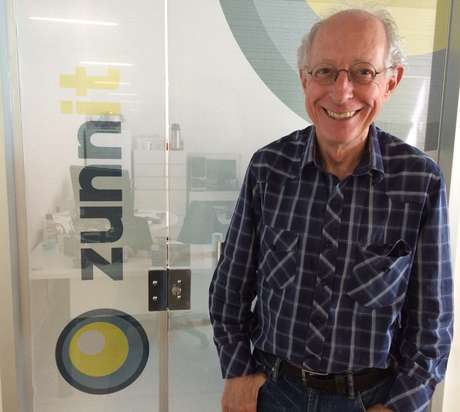
Desde 1982, o docente do departamento de Ciência da Computação já sabia da importância de aproximar universidade e mercado da maneira mais eficiente possível: aplicando o conhecimento em empresas produtivas. Estudante de graduação de engenharia mecânica da Universidade Federal de Minas Gerais (UFMG), na virada dos anos 70, ele foi monitor do primeiro computador da instituição, uma peça do tamanho de uma sala.
Sua vida mudou no começo dos anos 80, quando fez doutorado na Universidade de Waterloo, no Canadá, onde foi aluno de Gaston Gonnet, fundador de 11 empresas. “Ele me ensinou a importância de transformar resultados de pesquisa em riqueza para a sociedade, na forma de startups”, conta Nivio.
A expansão da internet, na década seguinte, facilitou o desenvolvimento de startups na UFMG. Em 1994, Nivio fundou o Laboratório para Tratamento da Informação, existente ainda hoje, com objetivo de gerar tecnologias com utilidade comercial. De dentro do campus mineiro surgiriam empresas como o Mercado Persa, um dos primeiros sites de comércio eletrônico do Brasil, e o projeto de computador popular que deu origem à empresa International Syst.
Foi nesta época que Nivio assumiu a frente de sua primeira empresa: a Miner surgiu em 1997, resultado de uma sociedade com um aluno de mestrado que pesquisava robôs eletrônicos capazes de realizar buscas na internet com maior eficiência. Nove meses depois do lançamento, a ferramenta tinha 30 mil consultas diárias. Foi vendida em 1999 por R$ 4 milhões.
Enquanto assinava a papelada de venda, o professor estava pronto para o próximo passo.
Profissionais de ponta
A Akwan, especializada em buscas muito específicas na internet, surgiu em 1999. Em 2005, chamou a atenção dos fundadores do Google, que no ano seguinte chegaram a visitar Nivio e sua equipe no Brasil. A compra da Akwan, por um valor nunca revelado, foi a segunda na história da empresa realizada fora dos Estados Unidos. Foi a partir da negociação que surgiu, em Belo Horizonte, o Centro de Pesquisa e Desenvolvimento do Google na América Latina. O Google não queria só a tecnologia desenvolvida pelo pesquisador: procurava também mão de obra extremamente qualificada que ele havia treinado.
A parceria da universidade com as empresas criadas dentro de seu polo de tecnologia continua se mostrando positiva para os dois lados. Depois da venda da Miner, Nivio doou R$ 100 mil à UFMG, uma forma de retribuir a instituição e demonstrar, de maneira concreta, o tipo de retorno que pode surgir da parceria entre acadêmicos e empreendedores. E mais: a universidade é hoje detentora de 5% das ações da Zunnit, o terceiro e mais recente empreendimento do professor.
A Zunnit é especializada em recomendação: a sugestão personalizada de notícias e produtos culturais para o usuário e o uso de técnicas de deep learning e big data para fornecer análises do comportamento dos internautas..
Para Nivio Ziviani, a geração de empresas da parte de universitários é uma necessidade. “No momento em que a sociedade passa a enxergar a universidade como geradora de riqueza, os ganhos podem ser enormes”, afirma. “Gostaria de ir muito mais longe e poder contribuir para a criação de um paradigma que possa ser seguido por muitos outros grupos de pesquisa.”