by @Chertograad

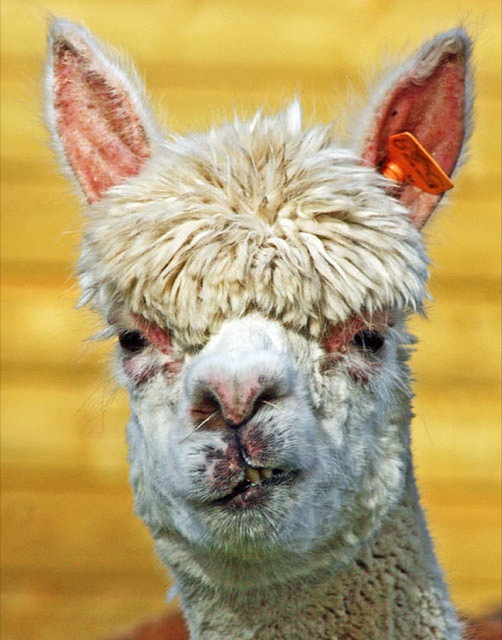
A Alpaca é um parente distante e baixinho das Lhamas. Também vivem na mesma região dos Andes, alí pelo Chile, Peru e Bolívia.
A vida de uma Alpaca é tranquila, tirando o dia do mico coletivo, quando seu criador aparece com uma tesoura de tosa na mão.
Aí – paciência – é ficar ridícula por alguns dias e esperar que o tempo faça a sua parte e a cubra sua triste figura mais uma vez com a macia lã, disponível em até 22 cores diferentes.
Mais dignidade para as Alpacas!
Essa é a ideia do casal de criadores Carina e Erwin Stadler, que resolveram dar um pouco mais de glamour ao triste dia da tosa. Tesouras em punho, transformam Alpacas nos animais mais descolados do planeta com franjinhas Emo Flips e jubas de Farrah Fawcett. Quer dizer, às vezes rola, às vezes não. Mas para quem é Alpaca, até um dia de cabelo ruim é lucro.
Nada como transformar uma coisa ordinária, em extraordinária.
As fotos são de Kerstin Joensson, George Lowther, Karen G., J Grace

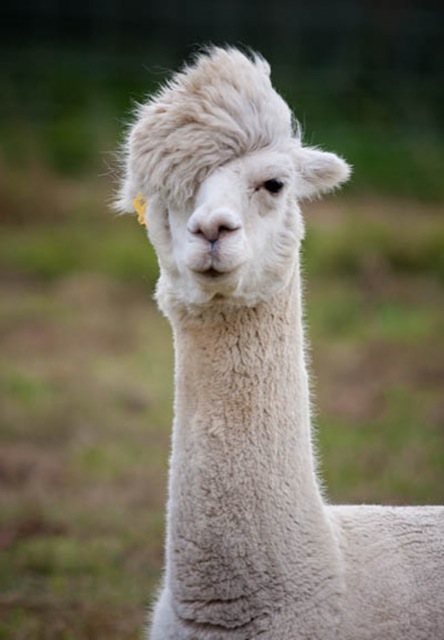






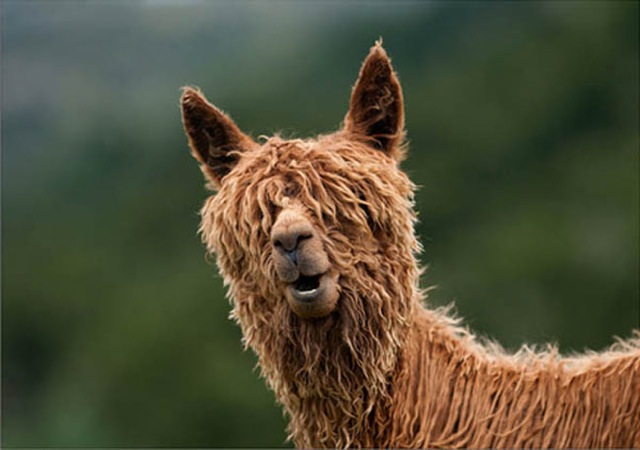


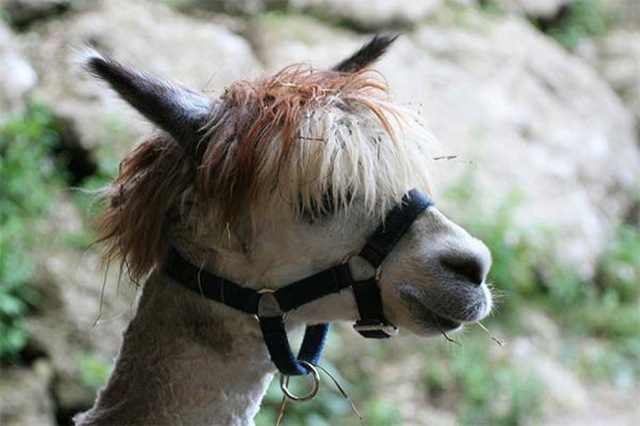
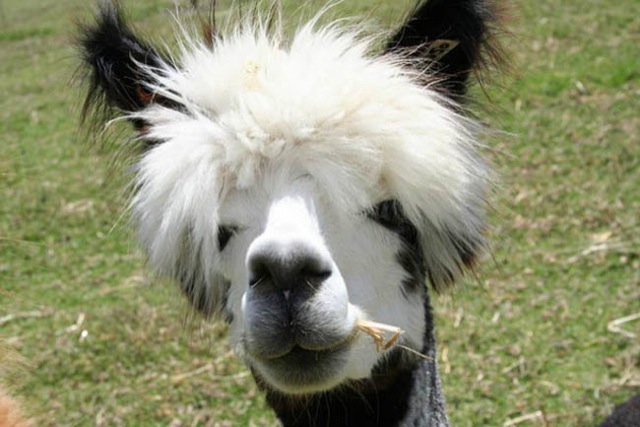

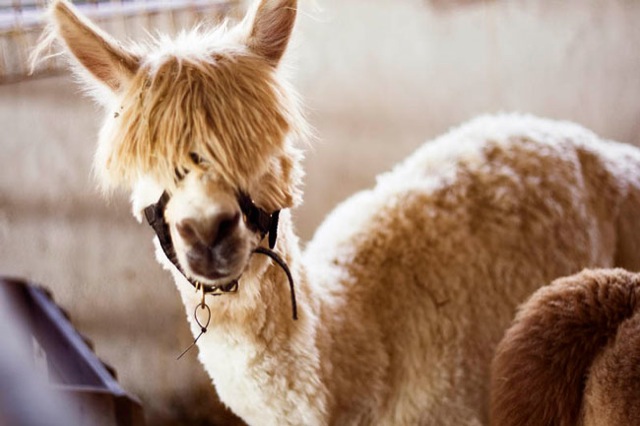
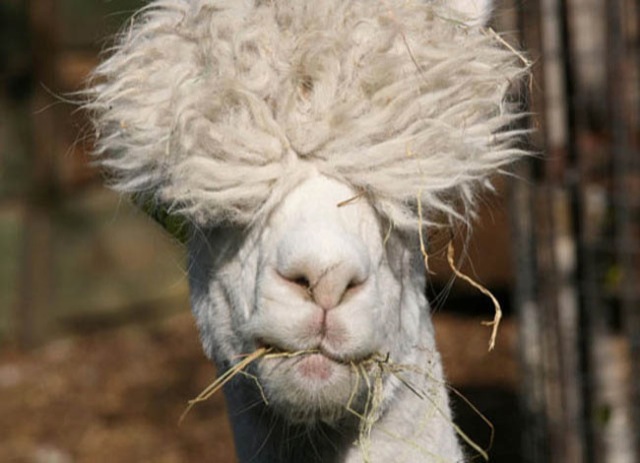

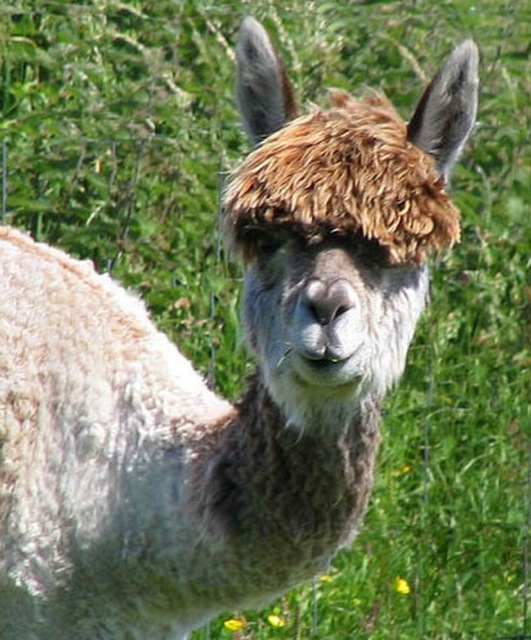
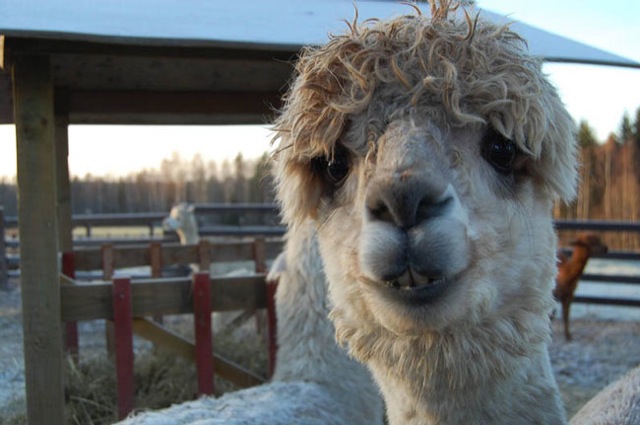
“Update or Die. ;) “


Os Gêmeos - Street art
Os Gêmeos are graffiti artist and identical twin brothers. Their work often features yellow-skinned characters taken from the yellow tinge both of the twins have in their dreams. Subjects range from family portraits to commentary on São Paulo’s social and political circumstances, as well as Brazilian folklore.
We’re all trying to switch to local produce these days and for Londoners, it doesn’t get much more local than the 2½ acre farm growing fresh veggies right under their feet.
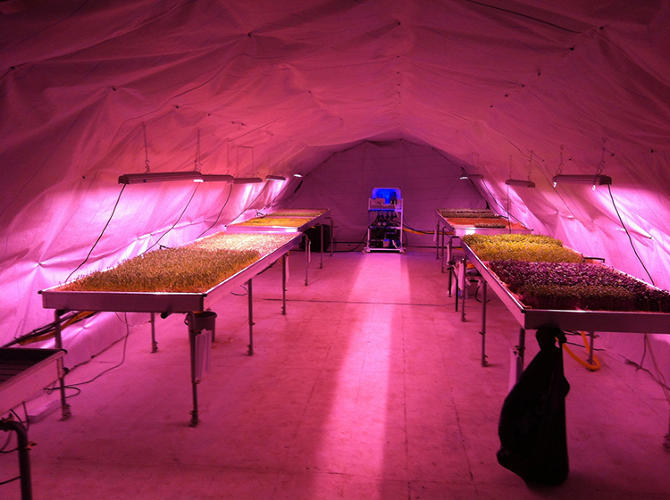
Growing leafy greens and herbs without any natural light 100 feet below the streets of central London in an abandoned air raid shelter is not your typical urban farming project, as you might have already concluded. The crazy idea came from two childhood friends who moved to the big city from the rural West Country of England and spent a lot of time arguing in the pub about the future of oil, energy, food and London. Richard Ballard and Steven Dring couldn’t get their minds off the fact that the population of their new city was going to increase by three million people within a decade, and it was this worrying little fact that got these two entrepreneurs out of the pub and into action.
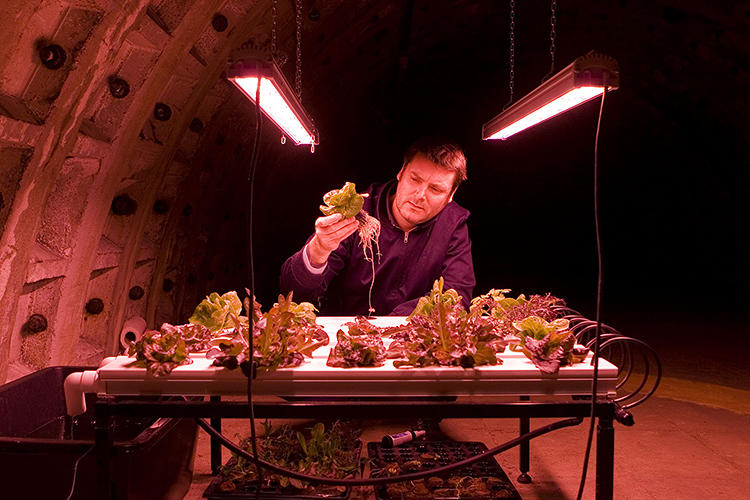
All too aware that the only way to feed London’s growing population was to do it without using any carbon and eliminating dependence on fossil fuels, the pair came up with a creative prototype for feeding London in the future. And so the story of Zero Carbon Food (ZCF) was born.
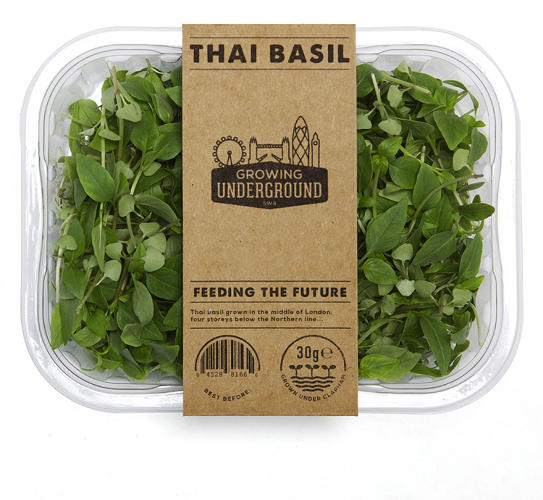
“We ain’t flying salad from Kenya,” says the pair who plan to grow locally on a commercial scale, reducing CO2 by cutting out food miles.
But why underground…?
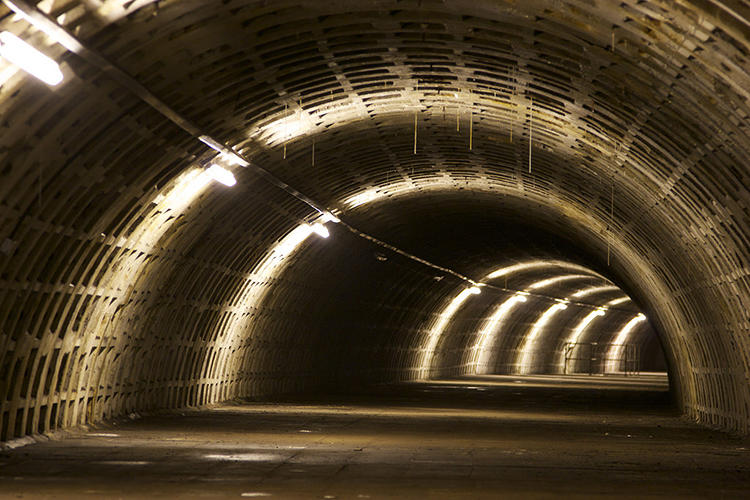
Above was the estate agent’s photograph of the South Clapham tunnels, which Steven assures were “a lot darker and dingier” when he first visited the site with a head torch stuck to his forehead two years ago.

Originally built as a WWII bomb shelter to protect Londoners from the worst excesses of the Blitz, there were plans in place to later convert the tunnel into an express Northern line tube service from Clapham to Camden town. While it appears to have made a very effective bomb shelter, the cash for the tunnel’s future in transport was never raised and the plans never materialised.
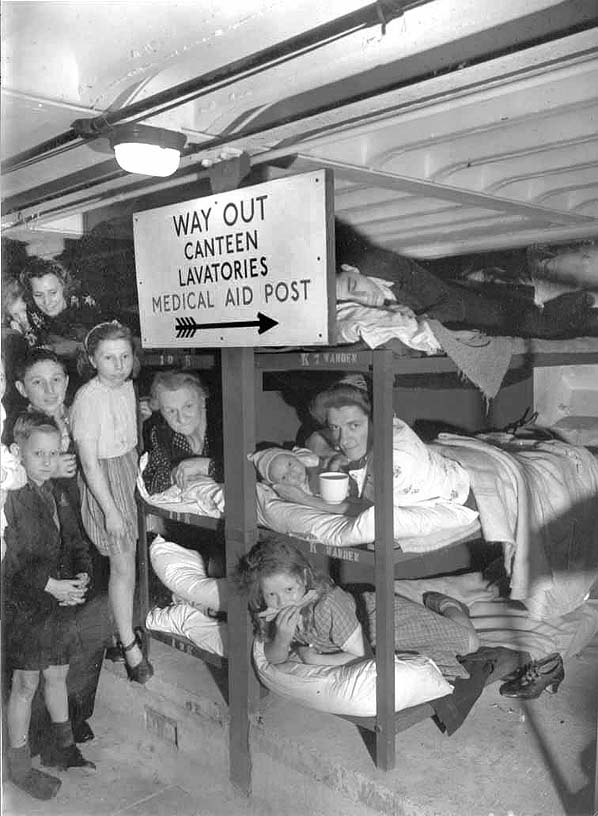
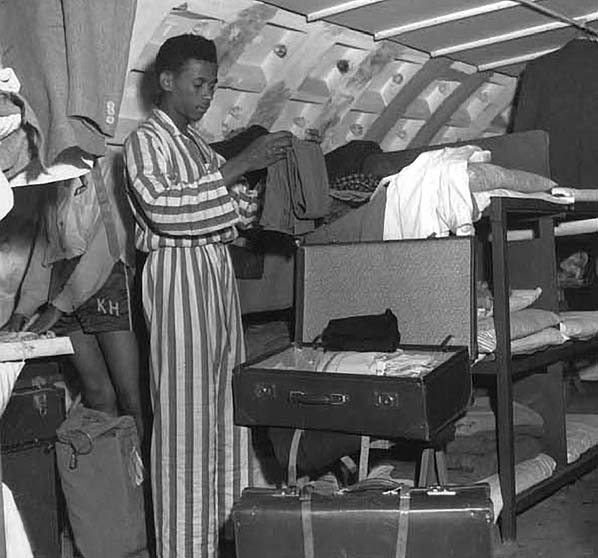
At the end of the war, London had a severe labor shortage and the tunnel found another use as temporary housing for the first large group of West Indian migrants promised work in the United Kingdom. In June 1948, 492 passengers from Jamaica arrived in England on the MV Empire Windrush.

Interestingly (especially for you Londoners reading), the decision to house the migrants in the tunnel would later shape the demographics of South London. The newcomers found work at the nearest labour exchange to their subterranean shelter and began settling in the districts of South London, which is how nearby Brixton and the surrounding areas came to be the heart of London’s Caribbean community.
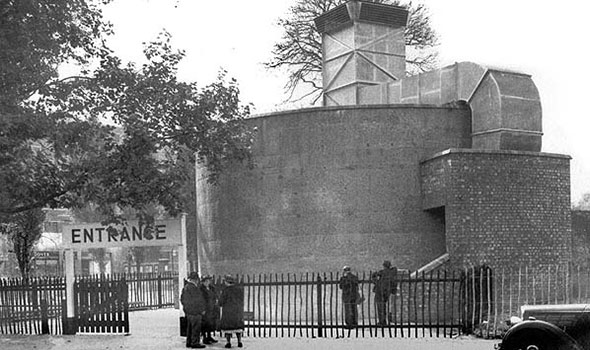
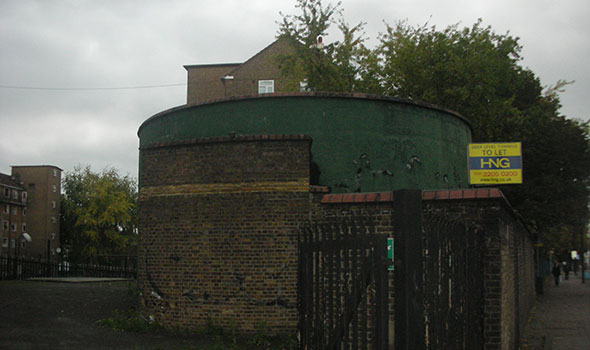
So remember that estate agent’s photograph we saw? Well this is how Steven and Rich actually found it more than 50 years after contributing to the cultural diversity of London.
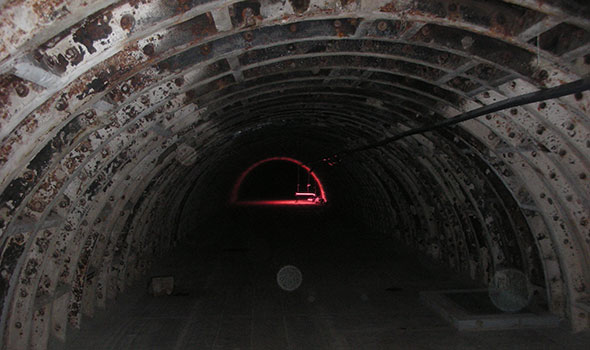
And so again, it begs the question, why underground?!
Well for one, there isn’t exactly an abundance of space for urban farming floating around the London real estate market. Looking into redundant spaces 100 feet underground certainly saves on rent. In a tunnel that stays at a stable 60 degrees all year, heating and cooling costs are reduced too. But more importantly, the lack of natural light means you get to use LED lights powered by renewable energy. Even better, broccoli, pea shoots, rocket, basil and mustard leaf among other greens, can grow without pesticides thanks to the tunnel’s lack of airborne pests.
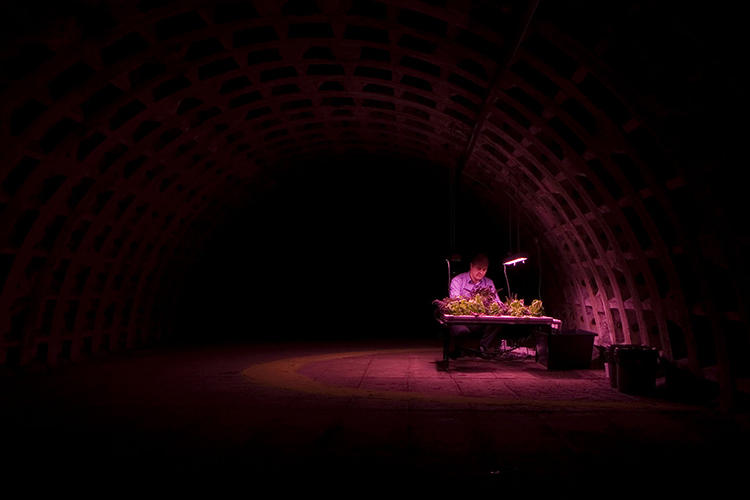
After a year of seemingly endless test phases with a veteran expert horticulturalist on board for the ride, Zero Carbon Food’s first brand Growing Underground is set to launch officially in March, selling produce to London’s supermarkets and restaurants.
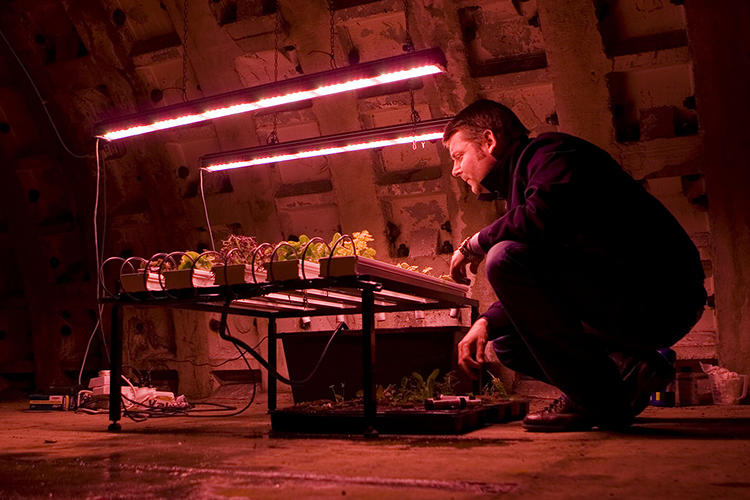
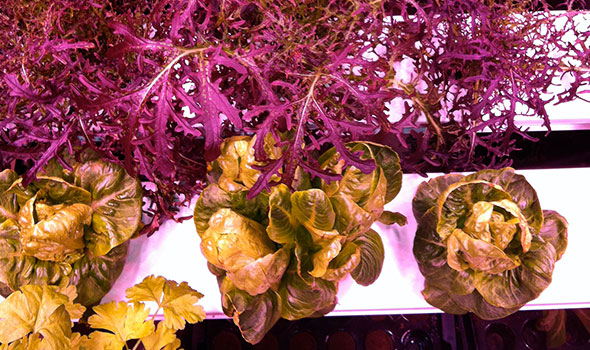
The entrepreneurs also enlisted the help of Michelin-starred chef Michel Roux Jr (of London’s Le Gavroche restaurant), who has joined the company as a director.
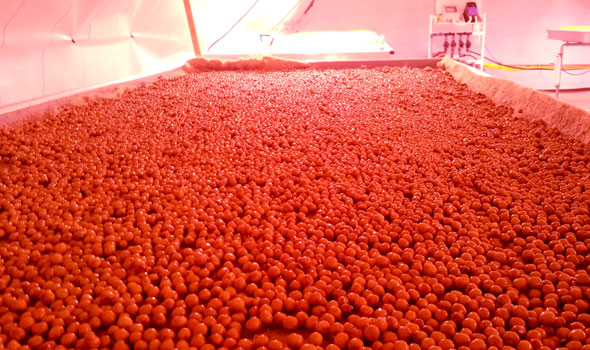
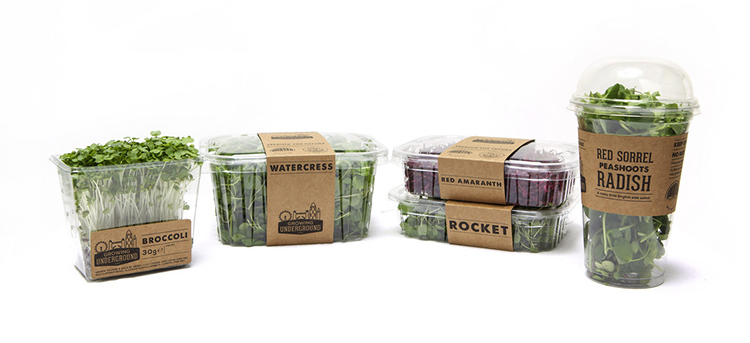
The innovative entrepreneurs have now begun a crowd-funding campaign to complete the last leg of their journey and accelerate the development of the project. For these guys, Zero Carbon Food isn’t just a fun urban farming experiment– they want to reduce London’s carbon footprint in a big way. Imagine a hidden city-wide subterranean network of eco-farming. Now that’s what I call thinking for the future …
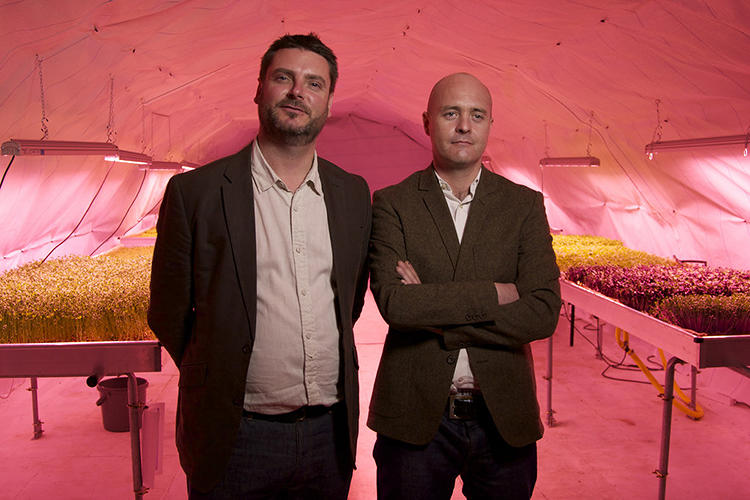
Click here to view the embedded video.
Discover Zero Carbon Food and follow their progress on Facebook / Twitter
via FastcoExist
:::
YOU MIGHT ALSO LIKE:



by @montanaflynn

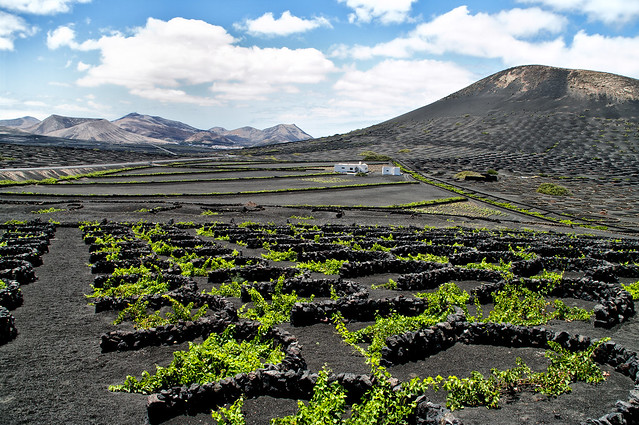
If aliens are out there somewhere and they happen to enjoy the occasional bottle of wine, this could be what their vineyards would look like. But alas, this is just plain ol’ planet earth being totally and completely awesome again.
Lead image (c) PepeLuz

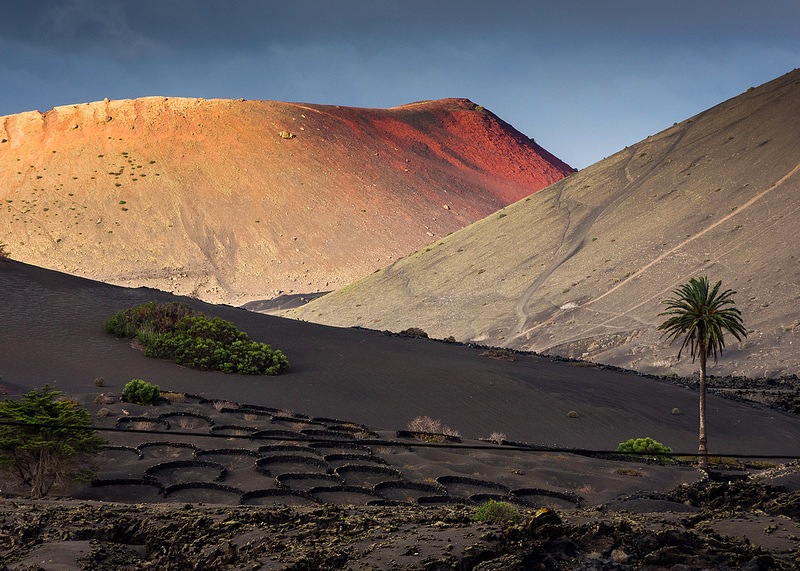
We’re in Lanzarote, the easternmost of the autonomous Spanish archipelago, the Canary Islands, a short distance from the north coast of Africa. Essentially formed after a bunch of volcanos erupted 15 million years ago, the entire island is made up of solidified lava streams, volcanic rock and a heck of a lot of black sand. It hardly rains– 16 days a year at best. In the vast black plains, the heat can reach up to 50 degrees celsius (120F).
So how does anyone even manage to plant a pansy here, let alone harvest wine that can produce anywhere between 400,000 to 600,000 bottles per year?


The Lanzarote winemakers are probably the hardest working winemakers on the planet– and their forefathers, the ones who discovered the technique to make wine in their barren landscape back in the 18th century– well, hats off to them…
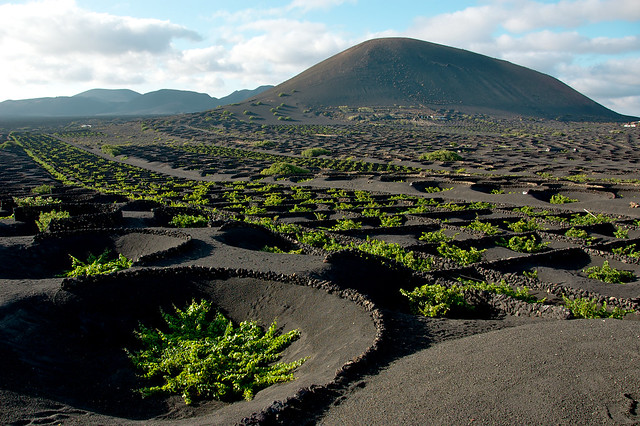
The last volcanic eruption on Lanzarote happened in 1730, until which time farmers had been happily producing wine, grain and cereal and generally making the most out of the arable farming land of the island. Then came an almighty eruption which lasted 2,053 days– that’s six whole years of endless hot lava, volcanic ash and gas pounding the island.
While many residents made the not-so-unwise decision to pack up and start new lives in Cuba and the Americas, amazingly, others were not ready to throw in the (hot) towel.
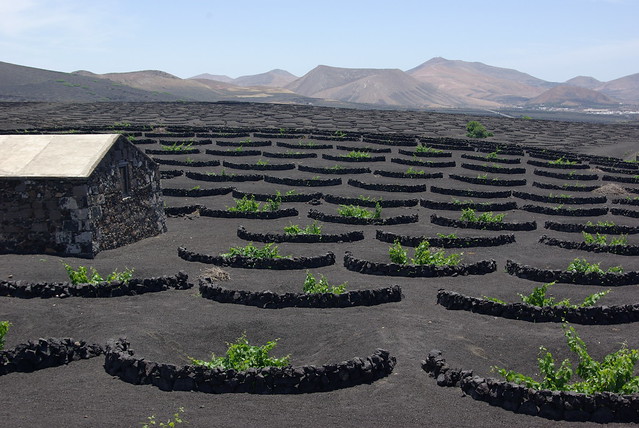
With only a harsh and alien landscape to work with, the farmers had to completely re-invent their techniques of cultivation, but it didn’t take long for the resourceful and resilient residents to figure out that against all odds, the newly deposited volcanic rock could actually be of use to them.
Known in spanish as picón, the volcanic soil was found to be highly efficient at absorbing moisture and rainfall (if any) and retaining it in the black earth. Lanzarote is the only place in the world where this unique method of dry (volcanic) cultivation is used.
But nobody ever said planting and harvesting vines on volcanos was going to be fun…
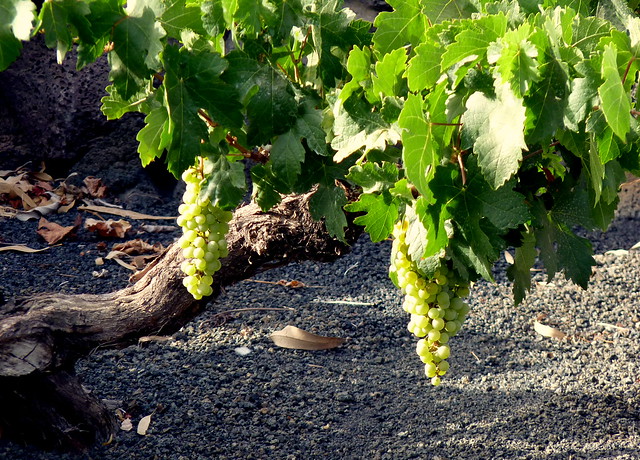
Every single vine requires its own three meter deep and five meter-wide pit, fortified by a semi-circle stone wall to protect the plant from the winds. Lanzarote now has nearly 2,000 hectares of active vineyards– so that’s quite a bit of digging and stone-stacking in a volcanic atmosphere.
But we haven’t even got to the harvest yet, where of course the island’s unique method of dry cultivation requires that everything has to be carefully done by hand– one person per vine pit, so as not to disturb the sensitive volcanic super soil.

A single vine will give a farmer up to 30 kilos of grapes per harvest which are transported by Lanzarote’s local camels– yes, camels. Camels and wine.
And don’t forget the farmers are working on land that’s heated up to temperatures you might slowly pre-heat your oven at.
Like I said, I’ll see your vintage Bordeaux and raise you a glass from the volcanic vineyards of Lanzarote.
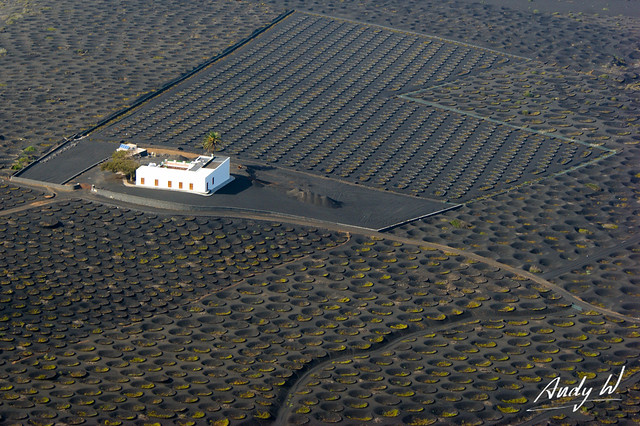
A few addresses I found in wine-producing La Geria region of Lanzarote…
This charming boutique guesthouse situated in the heart of La Geria. This hotel also overlooking the volcanic vineyards, with suites from €96. And one of the more notable wineries open for tours and tasting sessions.
(As Lanzarote wine is only left to mature for a maximum of two years, and is then perfect to drink, it is regarded as a young wine).
:::
YOU MIGHT ALSO LIKE:


kiiiiiiiiiiiiiiiiiiiiiiiiiiiiirk:
I THOUGHT IT WAS AN ACTUAL OWL SITING INSIDE A DRAGON FRUIT SKIN UNTIL I READ THE THING AT THE TOP
what the hell
what the hell
yeriSo, according to this, in a single movie of The Lord of Rings they had 836 deaths? Thats so much...


yeriNot sure if he is really fast or its broken.