Shared posts

22 May 03:33

Visually Stunning Nature Footage Edit Set to “Hello Tomorrow” by Karen O

by Christopher Jobson

Hey, Happy Earth Day! What better way to celebrate than watching remarkable footage of wildly random creepy crawly things in slow motion set to Hello Tomorrow by Karen O. You definitely need sound for this so turn up the volume for full effect. After a week of asking around I’ve learned only that the clip was edited together by Roen Horn using footage from somewhere I can’t identify.

nature-1

nature-2

nature-3

Update: Well that was quick. Almost all of these appear to be various BBC and National Geographic clips including BBC’s Life, World’s Weirdest, and BBC Weird Nature. (thnx, Tyler & Patricia)

24 Apr 12:13

St. Dunstan-in-the-East Church, London, England, UK


St. Dunstan-in-the-East Church, London, England, UK

24 Apr 11:54

Boia-fria que comprou 4 casas fala de mudanças na lavoura

MARCELO TOLEDO, EM GUARIBA (SP)

Ele chegou ao interior de São Paulo em 1987, apenas três anos após o chamado Levante de Guariba, movimento de boias-frias que resultou na melhoria das condições enfrentadas nas lavouras de cana-de-açúcar.

Enfrentou tempos difíceis nos canaviais de Guariba (a 337 km de São Paulo) e de cidades vizinhas, como Pontal e Pradópolis, como trabalhar sem registro em carteira, sem banheiro no campo e sem ao menos um lugar à sombra para descansar durante a jornada diária. Mas diz não se arrepender.

Aos 48 anos, Valdomiro Rodrigues ainda atua no corte da cana. É um dos poucos a persistir na atividade na macrorregião de Ribeirão Preto, que a cada ano emprega menos nas lavouras paulistas, devido ao avanço da mecanização.

Natural de Minas Novas, cidade de 30 mil habitantes no Vale do Jequitinhonha (MG), ele não se arrepende porque, graças à cana, comprou quatro casas em Guariba. Mora em uma delas e aluga as outras três –”pequeninas”, segundo ele–, que lhe rendem pouco mais de R$ 1.000 mensais.

Valdomiro Rodrigues ao chegar da colheita de cana - Silva Junior/ Folhapress

Valdomiro Rodrigues ao chegar da colheita de cana – Silva Junior/ Folhapress

O valor se soma aos cerca de R$ 1.000 que recebe por semana trabalhada durante o plantio da cana. Mas não é sempre que tem serviço.

“Muita coisa mudou. As condições de trabalho melhoraram bastante, mas, por outro lado, muitas usinas fecharam devido à crise e muitas pessoas ficaram desempregadas. Não são todos que sabem trabalhar com máquinas”, disse ele.

A maioria dos migrantes que chegou à região com ele na década de 80 foi embora, por não aguentar a extensa jornada de trabalho. “Não reclamo da cana, ela me deu o que tenho. Mas não é para todos.”

Como ele, Expedito Juarez da Silva, 48, deixou Alagoas em 2003 em busca de uma vida melhor. Viajou com o amigo Marcos Soares da Silva, 35, para Dobrada, cidade também da região de Ribeirão Preto.

“As usinas que existiam no Nordeste foram fechando ou não pagavam direito. Achamos emprego aqui e aqui estamos, apesar das dificuldades”, disse Expedito.

O principal problema do campo hoje, segundo ele, é a baixa oferta de emprego. “Usinas que empregavam mais de 20 equipes hoje têm três ou quatro”, disse.

Por causa da redução, nem sempre Francisco Mariano, 43, consegue trabalho nas lavouras de cana. Pernambucano, desde o ano 2000 deixa seu Estado para trabalhar na safra em Dobrada.

Mas nos últimos anos a rotina foi alterada, com o avanço das colheitadeiras de cana. “Está muito ruim de serviço”, afirmou.

MUDANÇAS SOCIAIS

Sem novos migrantes, acabaram também os enormes alojamentos que abrigavam trabalhadores rurais nas fazendas e o foco da Pastoral do Migrante mudou.

Após trabalhar 26 anos com migrantes em cidades como Dobrada e Guariba, além de Fernandópolis, a irmã Inês Facioli foi transferida para a capital do Estado, para atender imigrantes bolivianos, paraguaios e peruanos.

Além dela, padres que atuavam em Guariba foram transferidos para outras regiões.

“Mudou o foco da Pastoral do Migrante. A imigração hoje é mais forte. Quem migra no próprio país se sente mais seguro, mais perto da família. Já quem vem de outro país tem insegurança, medo, fora a questão de documentação, o receio de se sentir irregular. Em comum há o desejo de uma vida melhor”, disse a religiosa.

O trabalho da pastoral, muitas vezes, era feito nos alojamentos mantidos pelas usinas de açúcar e etanol para os migrantes. Esses locais também foram desativados com o avanço da mecanização.

A usina Bonfim, em Guariba, chegou a ter 14 alojamentos em 1983, no auge da migração, com capacidade média de 400 pessoas cada um. Hoje não tem nenhum em operação.

Esses migrantes passaram a atuar em outros setores, segundo a pastoral e a socióloga Maria Aparecida de Moraes Silva, como a citricultura, a construção civil e os frigoríficos.

“Em Fernandópolis, muitos atuaram na ampliação de uma rodovia e, depois, na construção de um conjunto habitacional”, disse Facioli.

24 Apr 11:40

Photo


24 Apr 11:40

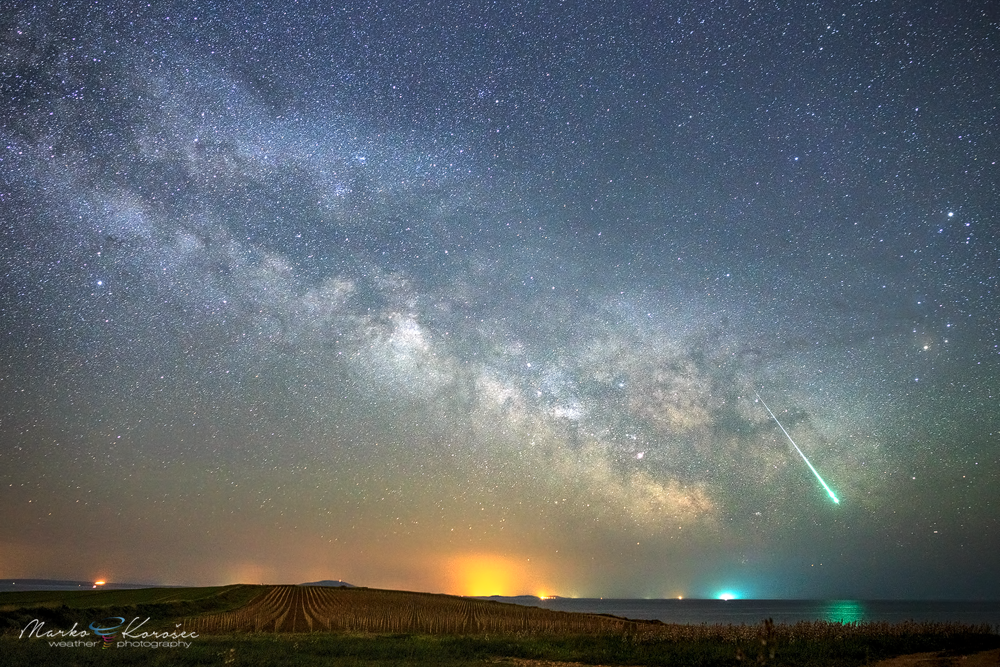
Meteor in the Milky Way

Discover the cosmos! Each day a different image or photograph of our fascinating universe is featured, along with a brief explanation written by a professional astronomer.

2015 April 23
See Explanation.  Clicking on the picture will download
 the highest resolution version available.

Meteor in the Milky Way
Image Credit & Copyright: Marko Korosec

Explanation: Earth's April showers include the Lyrid Meteor Shower, observed for more than 2,000 years when the planet makes its annual passage through the dust stream of long-period Comet Thatcher. A grain of that comet's dust, moving 48 kilometers per second at an altitude of 100 kilometers or so, is swept up in this night sky view from the early hours of April 21. Flashing toward the southeastern horizon, the meteor's brilliant streak crosses the central region of the rising Milky Way. Its trail points back toward the shower's radiant in the constellation Lyra, high in the northern springtime sky and off the top of the frame. The yellowish hue of giant star Antares shines to the right of the Milky Way's bulge. Higher still is bright planet Saturn, near the right edge. Seen from Istra, Croatia, the Lyrid meteor's greenish glow reflects in the waters of the Adriatic Sea.

Tomorrow's picture: Noctiluca scintillans < | Archive | Submissions | Search | Calendar | RSS | Education | About APOD | Discuss | >

Authors & editors: Robert Nemiroff (MTU) & Jerry Bonnell (UMCP)
NASA Official: Phillip Newman Specific rights apply.
NASA Web Privacy Policy and Important Notices
A service of: ASD at NASA / GSFC
& Michigan Tech. U.

Expanded from APOD by Feed Readabilitifier.
24 Apr 02:08

Colorful Star Clouds in Cygnus

Discover the cosmos! Each day a different image or photograph of our fascinating universe is featured, along with a brief explanation written by a professional astronomer.

2015 April 22
See Explanation.  Clicking on the picture will download
 the highest resolution version available.

Colorful Star Clouds in Cygnus
Image Credit & Copyright: André van der Hoeven

Explanation: Stars can form in colorful surroundings. Featured here is a star forming region rich in glowing gas and dark dust toward the constellation of the Swan (Cygnus), near the bright star Sadr. This region, which spans about 50 light years, is part of the Gamma Cygni nebula which lies about 1,800 light years distant. Toward the right of the image is Barnard 344, a dark and twisted dust cloud rich in cool molecular gas. A dramatic wall of dust and red-glowing hydrogen gas forms a line down the picture center. While the glowing red gas is indicative of small emission nebulas, the blue tinted areas are reflection nebulas -- starlight reflecting from usually dark dust grains. The Gamma Cygni nebula will likely not last the next billion years, as most of the bright young stars will explode, most of the dust will be destroyed, and most of the gas will drift away.

Explore a Virtual Universe: Random APOD Generator
Tomorrow's picture: explore an asteroid < | Archive | Submissions | Index | Search | Calendar | RSS | Education | About APOD | Discuss | >

Authors & editors: Robert Nemiroff (MTU) & Jerry Bonnell (UMCP)
NASA Official: Phillip Newman Specific rights apply.
NASA Web Privacy Policy and Important Notices
A service of: ASD at NASA / GSFC
& Michigan Tech. U.

Expanded from APOD by Feed Readabilitifier.
23 Apr 22:36

Stellar Caves: Immersive Tunnels of UV-Illuminated Thread Drawings by Julien Salaud

by Christopher Jobson

thread-1

Over the last year, French artist Julien Salaud has installed several new works as part of his “Stellar Cave” series involving elaborate thread drawings illuminated by ultraviolet light. The polygonal depictions of people, animals, and zoomorphic figures are meant to evoke the idea of star constellations with allusions to mythology and mysticism. Salaud works with cotton thread coated in ultraviolet paint wrapped around precisely placed nails on ceilings or gallery walls. One of his largest installations, Stellar Cave IV, was recently on view at the Hezliya Museum of Contemporary Art. More on Facebook. (via My Modern Met)

thread-9

thread-10

thread-2

thread-3

thread-4

thread-5

thread-6

thread-7

thread-11

23 Apr 22:34

When I have to explain the different jobs in IT

23 Apr 22:32

Where’s the justice!? (photo via skuse11)


Where’s the justice!? (photo via skuse11)

23 Apr 17:51

Photo


23 Apr 17:49

Homeless Millennials Are Transforming Hobo Culture

04_24_Vagabond_01

Culture

The vagabond ecosystem is changing thanks to cellphones, Wi-Fi, Craigslist and Google Maps. Michael Portugal

On Reddit, he’s /u/huckstah, an administrator on /r/vagabond, a subreddit with nearly 10,000 members—many of them identify as “homeless”—who trade skills and stories.  On “the road and the rails,” he’s Huck, and even after we speak twice by cellphone, he tells me he’d prefer I don’t print his real name. “People say, ‘Well, you chose to become homeless.’ But that’s wrong,” he says. Huck says he’s been a hobo for upward of 11 years and started hopping trains and hitching rides at 18. “I did not choose to become homeless. If you want to say I chose to become homeless and sleep on the streets, really all I have to say is fuck you. You’ve never experienced it.”

Or maybe you have experienced it, thanks to the recent Great Recession that caused a spike in homelessness—especially for families—with its tidal wave of foreclosures. And if you have, there’s a good chance you were probably one of the many homeless with a mobile device, a sight that has become increasingly common. The ubiquity of cheap phones and even cheaper data has prompted even longtime homeless to join the growing ranks of people with a cell connection but no house. “The day I started on the road, I had a flip phone, an iPod, a TomTom GPS, an atlas, a laptop, and free Wi-Fi wasn't very easy to find,” says a medic who’s been a hobo for four years and asks me to identify him as “Nuke.” (“I have a pretty decent amount of training and experience in treating combat trauma.”) He now lives out of a ’91 Ford pickup and says, “I have a smartphone, a laptop, and free Wi-Fi is everywhere.”

The rise of the mobile Internet has made a hobo’s life easier, Nuke says. But when I ask Huck about how he and fellow travelers use their smartphones, I get the sense that even for the digitally connected homeless, life is far from easy. “I keep my phone off a lot, or in airplane mode,” he says, “because we can only charge up for a short time—maybe once a day, or sometimes it will be two to three days between charges, maybe an hour of charge.” For Huck and his fellow itinerants, smartphone usage is measured in instants. “We check Google Maps and then we turn it off, or we make a quick phone call and then we turn it off.”

Try Newsweek for only $1.25 per week

That’s a pity because a smartphone can be even more useful for a homeless person than it is for those with a regular roof over their heads. Case in point: Smartphones provide on-the-go weather forecasts, convenient for an everyday life but essential for a homeless one. “You have to keep an eye on the weather when you're living outside,” says Mike Quain, a 22-year-old busker and percussionist. “If it's too cold somewhere, we'll get south any way we can. And no one likes to be surprised by rain. Rain isn't nearly as fun when you don't have a dry place to go.”

Piecemeal job-hunting sites like Craigslist are also required browsing if you’re trying to make a living with no permanent place to call home. “For the past 100 years of this lifestyle in America, we found our jobs by following seasonal schedules and asking around for jobs at farmers' markets and farming supply stores, looking at job ads in newspapers, asking door-to-door,” says Huck, adding that things are done very differently today. “I know thousands of hobos, and I don't know a single one that doesn't use Craigslist. It has completely changed how we find work.”

The uses don’t end there. Quain lists Google Maps, Couchsurfing.org and HitchWiki as “indispensable for vagabonds,” while Nuke is still in awe of his smartphone’s power. “I can fit an entire Radioshack from the ’90s and then some in my pocket now.”

Do a Google search for hobo culture and you’ll find a lot about decline: the death of the working-class itinerant, the fall of the Depression-era drifter who never stopped drifting and the end of the heroic hobo celebrated by the likes of the National Hobo Convention in Britt, Iowa. Vice released a documentary in 2012 called Death of the American Hobo. Those “graybeards,” Nuke will tell you, are on the way out, but there isn’t a dearth of culture left in their wake. Itinerants under the age of 35, he says, are forming their own kind of hobo society, one that overwhelmingly keeps up with technology and the times.

Where there used to be “jungles” and “hobohemias,” now the Internet is the place present-day hobos—many of them millennials—go to connect and build a community. Sites little-known among the safely homed—DumpsterMap.com (a map of dumpsters ripe for diving), WiFiFreeSpot.com (a list of free Wi-Fi hot spots), On-Track-On-Line.com (railroad digital scanner frequencies)—are common resources, says Huck, for the vast majority of the digitally connected homeless community. “Prior to 2005 or so, all of this was simply done word-of-mouth, which is how it was done for over 100 years.”

Huck is developing a new hobo code. In terms of the mythology surrounding the homeless, this is a big deal. Read about the romance of hobo culture and you’ll find tons of talk about hobo symbols: a face on the side of a barn means the building’s safe to sleep in; a caduceus on a doctor’s door means the doctor will treat homeless. But for hobos nowadays, that’s all outdated. Huck is part of a project to revamp the code completely and make it more useful for the digitally connected hobo by creating a new set of symbols for things such as “Wi-Fi networks and free outlets.” When I ask if I can publish any of the symbols, though, Huck balks: When hobo codes become commonly known by regulars, it’s a problem. “The codes are for us,” he says, “and if other people see it, they could have clues to our secrets, and the next thing you know, that outlet that was accessible to hobos is now locked up or completely gone.”

Conventional wisdom says the Internet and mobile technology keep us in our own little bubbles, isolated and insular. And while perhaps that’s true for those with homes, Quain says it’s the opposite for hobos. For the itinerant homeless, traveling in groups makes sense for a bevy of reasons: safety, company and economies of scale, especially when it comes to digital devices. “Lots of us travel in groups and share the expense of one phone,” Quain says.

Luckily for Quain and his ilk, the ubiquity of the Internet is making finding fellow “travelers” easier than ever. The curious can head to SquatThePlanet.com and TravelersHQ.org to find vagabonds forming groups, swapping stories and arranging meetings.

Squatters have also enthusiastically embraced the mobile Internet as a means of sharing knowledge—often as a way to fight for their place amid urban real estate development. Frank Morales is a former priest, former squatter and current activist with C-Squat, a squatter advocacy organization in New York. The group works with New York’s homeless men and women who park themselves in unused, often crumbling buildings and fix up the structures in an attempt to turn them into permanent homes.

To do this successfully, squatters need to learn how to bring amenities like electricity and running water into long-neglected buildings—and that, says Morales, is where the Internet becomes indispensable. Where before these skills needed to be shared in person (often at day-long squatter “skillshares”), now they can be digitally transmitted to anyone with a smartphone.

“Technology has really bridged the gap for a lot people around the world who are struggling for housing,” says Morales. Nowadays, activist movements use mass-texting platforms to coordinate occupations of neglected buildings for squatters to use. They also keep email lists that track what squats are in danger and distribute information about new laws that affect squatting. Activist homeless have used digital connections to form a movement that believes, in Morales’s words, “we have a moral obligation as individuals and as a society to support the occupation of spaces that are deteriorating and would otherwise just be rotting away to create housing.”

While no comprehensive survey of homelessness and mobile ownership has been done in the United States, small surveys provide a glimpse of how the trends have grown. A study by the University of Sydney found that 95 percent of Australia’s homeless own a mobile device, while Keith McInnes of the Boston School of Public Health’s study of homeless veterans in Massachusetts found that 89 percent own at least one device. (In Australia, mobile penetration in the general population is 92 percent; in the U.S., it’s 90.) However, “it’s hard to do truly representative studies of homeless persons,” says McInnes. For example, mentally ill homeless living under bridges, or in the woods, are probably less likely to have a cellphone and “less likely to be included in survey, because they are hard to find.”

But as McInnes points out, those who do possess a cellphone have a tool both for survival—and for restoring their sense of humanity.  While settled people are usually able to meet the wider world head-on and feel no shame, homelessness carries with it a pervasive, ugly stigma. “Having a mobile phone provides homeless persons with an outward-facing identity that can mask their homelessness,” explains McInnes. “With a cellphone, people you call or who call you don’t know you’re homeless.”

Some, like Huck, have taken this one step further, using their connectivity to promote their lives without a roof and walls as a source of pride. Near the end of our interview, Huck lets me know that he and several others on /r/vagabond have just been featured on an episode of Upvoted, Reddit’s weekly podcast, where they’re celebrated, not stigmatized.

“I’ve found a way to be homeless without starving or begging or sleeping in ditches,” he says. “I’ve become a professional vagabond, and this is the lifestyle that I love.”

23 Apr 14:38

Brasília não é uma cidade planejada

by Leonardo Monasterio
Claro que é. Reformulo: a Brasília real não seguiu fielmente plano original de Lúcio Costa.  Que bom.
O visitante que fica só no roteiro entre os setores hoteleiros e A Esplanada ou A UnB verá apenas a faceta Brasília olha-como-sou-muderna-stalinista-tropical-e-agora-tenho-shopping. A outra faceta, muito melhor, é a do improviso, da ordem espontânea, do mercado, da fuga do plano.
Esse plano geralmente só é visto por quem mora na cidade. Ao redor da minha quadra existe: barraca de frutas, costureira, chaveiro, trocador de palha dos móveis; tudo ilegal. (Tem até seus personagens públicas e um quê de vizinhança janejacobsiana ). No árido Setor Bancário Sul, há venda de saladas de frutas (ótimas),  pamonhas, sapateiros, relojoeiros e o escambau.
Daria para fazer um roteiro por Brasília apenas com serviços fora-do-plano, incluindo hospedagem. Só para ficar nos restaurantes, aí vai uma lista incompleta de dicas:
  • O excelente Jambu, o melhor restaurante da cidade, fica na Vila Planalto, um bairro de invasão, menos de 2 km distante do Palácio do Planalto. O bairro está sendo gentrificado e já tem vários restaurantes bons. Para comida popular, tem o da Tia Zélia- que eu acho apenas bom e meio superestimado.
  • O Quituart , um galpão com vários pequenos restaurantes (uns bem bons) também fica em uma local totalmente irregular do Lago Norte.
  • O boteco  Amigão , o preferido do Tyler Cowen quando aqui esteve, pode até estar dentro da lei, mas tem  pinta de que não está.
  • Mesmo os restaurantes das quadras ocupam áreas que não são deles. O Faisão Dourado (peça o espetinho completo de filé) ocupa irregularmente todo um jardim com mesas.

23 Apr 13:36

My Poem

by Grant

You can order a poster at my shop.

Further reading:
"My Poetry is Direct" by Yamamoto Taro (from Like Underground Water, The Poetry of Mid-Twentieth Century Japan)
23 Apr 13:04

Convenience

Old Asian Lady starter pack: poofy jacket, bucket hat, permanent hunch, folding shopping cart, and being Asian. and an old lady. dang, I&#039;m 5 out of 6. time for gender reassignment
Expanded from Cheer Up, Emo Kid by XPath Expander.

23 Apr 12:40

http://4erep-i-kosti.livejournal.com/4524253.html


23 Apr 12:21

Até vírus são desconsiderados como seres vivos. Quando encontrarem aliens, serão...

by Pai Osias
800px-Coturnix_coturnix_eggs_normal.jpg
Author: Pai Osias
Source: Facebook
Até vírus são desconsiderados como seres vivos. Quando encontrarem aliens, serão considerados vida? Serão mais diferente de nós do vírus.
23 Apr 12:18

Saturday Morning Breakfast Cereal - The Wolfman

by admin@smbc-comics.com
23 Apr 11:53

Jensen & Skodvin Architects dav.

by David Durand
Adam Victor Brandizzi

To the architecture branch from TOR followers


23 Apr 11:48

A lei da terceirização é positiva

Adam Victor Brandizzi

Esse PL me pegou de surpresa e assustou, mas parece bom. Por outro lado, eu achava que era possível fazer algo como a terceirização de colheitadeiras...

Um agricultor médio de Mato Grosso que deseja plantar soja terá dificuldades com a colheita.

A colheita é executada por imensas e moderníssimas colheitadeiras, vendidas ao preço de R$ 1 milhão a R$ 2 milhões cada uma.

O agricultor pode alugar a colheitadeira. Terá que contratar o tratorista –e não saberá o que fazer com ele no resto do ano- e será responsável por reparos de possíveis danos que ocorrerem quando estiver empregando o equipamento.

Finalmente o médio agricultor pode se associar a outros agricultores e comprar a colheitadeira em condomínio. Qualquer pessoa que já participou de reunião de condomínio pode imaginar as dificuldades. O equipamento danifica-se em uma propriedade. Quem é responsável pelo reparo? Quem assinará a carteira do tratorista? A lista é grande.

A dificuldade em contratar empresa terceirizada especializada no serviço de colheita e outros aspectos rígidos de nossa legislação acabam jogando o médio agricultor para a cidade. Ele arrenda ou vende a terra para um grande agricultor, que tem economia de escala para arcar com todos esses custos, e deixa o campo.

O projeto de lei 4.330 tem por objetivo permitir que empresas especializadas em colheita e outras especializadas na aplicação de inseticidas, e assim sucessivamente, possam ser criadas. Exemplifico com a agricultura para ser didático, mas evidentemente as implicações são para o conjunto da economia.

A colheita é atividade-fim. No entanto, como a narrativa nos parágrafos anteriores sugere, o custo de transação de o fazendeiro internalizar essa atividade-fim em seu próprio negócio é muito elevado. Ele terá que adquirir um equipamento caro, cuja manutenção é muito cara, terá que ter um profissional muito especializado, que operará o equipamento poucas semanas por ano etc.

Uma empresa especializada nessa atividade poderá ofertar o serviço de colheita de forma muito mais eficiente. A empresa será proprietária de inúmeras colheitadeiras, empregará pessoal especializado que poderá ser treinado na própria empresa, terá um relacionamento estreito com o fabricante do equipamento, poderá ter um setor de mecânica e manutenção etc.

Há muito tempo sabemos que a distinção entre atividade-meio e atividade-fim, além de difícil de ser feita, não é a distinção relevante para sabermos quais atividades devem ser internalizadas em uma mesma firma e quais devem ser adquiridas no mercado. A linha deve ser traçada levando em conta o custo da geração no interior da firma e o custo de aquisição no mercado.

É esse o objetivo do projeto de lei 4.330, em votação na Câmara. Por exemplo, é possível que uma montadora de automóvel considere que é mais eficiente terceirizar a atividade de pintura dos carros. Se esse for o caso –não tenho a menor ideia se é–, o PL permitirá que seja contratada uma empresa especializada de pintura automotiva que operará nas instalações da montadora.

Note que não será possível a contratação de empresa terceirizada para ofertar somente a mão de obra –o parágrafo 3º do artigo 4º é muito claro na vedação da intermediação de mão de obra– e o funcionário da empresa terceirizada terá os mesmos direitos de higiene, segurança e salubridade dos funcionários da contratante da terceirizada, como especificado no artigo 13.

Finalmente, o artigo 15 do PL estabelece que a "responsabilidade da contratante em relação às obrigações trabalhistas e previdenciárias devidas pela contratada é subsidiária, se ela comprovar a efetiva fiscalização de seu cumprimento, nos termos desta lei, e solidária, se não comprovada a fiscalização".

Os cuidados para evitar abusos foram tomados. O PL representa importante item na modernização das relações trabalhistas e visa aumentar a eficiência produtiva de nossa economia.

Difícil entender a grita contra a regulamentação dessa importante possibilidade contratual.

23 Apr 11:43

silverback420:thelesbianguide:unicornempire:the-real-goddamazon:T...

Adam Victor Brandizzi

Comigo é assim, apareceu die novo, compartilhei de novo.


silverback420:

thelesbianguide:

unicornempire:

the-real-goddamazon:

This post is so important.

This is the best post made in the history of ever. I’m so serious.

I just feel really strongly like this belongs on this blog

Lmfaoo!

22 Apr 18:39

Comic for April 22, 2015

22 Apr 18:33

New Large-scale Geometric Illusions in Paris by Felice Varini

by Christopher Jobson

varini-1
Photo © André Morin

Swiss artist Felice Varini (previously) recently opened a new solo exhibition titled “La Villette En Suites” featuring a number of anamorphic projections designed to be viewed from a single location creating an uncanny optical illusion. Varini is fascinated by architecture as backdrop for his artwork and seeks unusual spaces with varying planes of depth for his installations which can grow to be quite dramatic.

The new geometric pieces (which are technically paintings) are installed in both interior and exterior spaces around the Grande halle de la Villette within Parc de la Villette through September 13, 2015. You can see more views of the exhibition on StreetArtNews, and follow Varini directly on Facebook.

varini-2
Photo © André Morin

varini-3
Photo © André Morin

varini-9
Photo © André Morin

varini-4
Photo © André Morin

varini-5
Photo © André Morin

varini-6
Photo © André Morin

varini-7
Photo © André Morin

varini-8
Photo © André Morin

22 Apr 18:32

Amazon trial delivers packages directly to Audi cars

by Jon Fingas
Tired of having to stay home (or ship to the office) just to collect your online orders? If you live in Germany and drive the right car, you might not have to. In an expansion of what Volvo tried last year, Amazon is teaming up with Audi and DHL for ...
22 Apr 18:32

"The curious paradox is that when I accept myself just as I am, then I can change."

“The curious paradox is that when I accept myself just as I am, then I can change.”

- Carl Rogers (via bombtune)
22 Apr 18:31

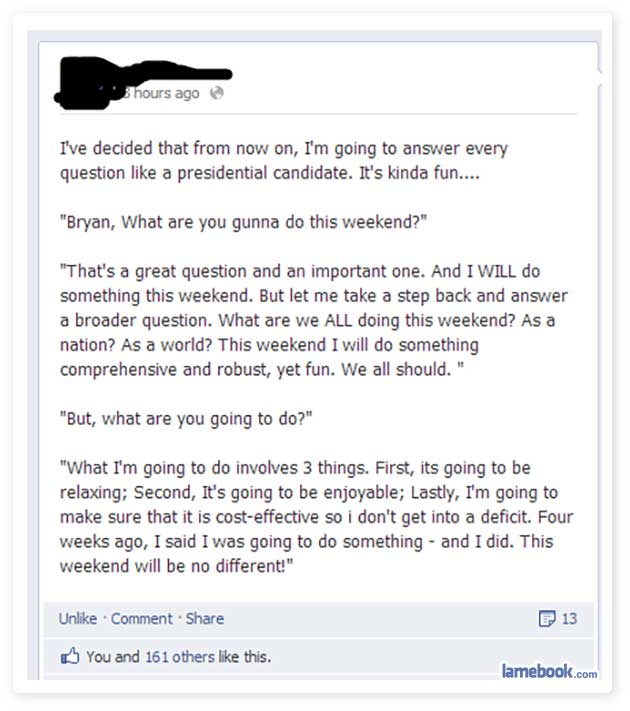
Talk like a politician

by admin

22 Apr 18:19

gifsboom: Video: Guy Saves Drone from Crashing Into Ocean at...

Adam Victor Brandizzi

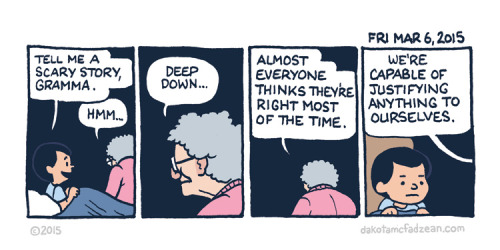
Deve ser planejado.

22 Apr 13:11

A New Line

by Greg Ross

https://commons.wikimedia.org/wiki/File:Thomas_Stearns_Eliot_by_Lady_Ottoline_Morrell_(1934).jpg

In 1948, as T.S. Eliot was departing for Stockholm to accept the Nobel Prize, a reporter asked which of his books had occasioned the honor.

Eliot said, “I believe it’s given for the entire corpus.”

The reporter said, “And when did you publish that?”

Eliot later said, “It really might make a good title for a mystery — The Entire Corpus.”

The post A New Line appeared first on Futility Closet.

22 Apr 12:56

sandandglass: The Simpsons s26e18


sandandglass:

The Simpsons s26e18

22 Apr 12:56

Michael Brown's memorial tree 'cut down' after one night in Ferguson

by Colin Daileda
Michael-brown-tree
Feed-twFeed-fb

One day after a Michael Brown memorial tree was planted in Ferguson, Missouri, someone appears to have slashed it in half.

A memorial stone placed at the foot of the tree is also missing, according to a local news channel, which was planted by members of the Black Caucus of the American Library Association

Caucus members had planted the tree in January Wabash Memorial Park on Saturday. But just one day later, community members found it cut. Police say they have no idea who desecrated the memorial.

Mike Brown tree dedicated yesterday, decimated today pic.twitter.com/JmyHBgtRbH

— Mo Costello (@mocostello60) April 20, 2015 Read more...

More about Memorial, Police, Shooting, Missouri, and Us World
22 Apr 12:55

Photo