Anatomy of Songs [wronghands]
For many people, the 16-bit Final Fantasy games — that is, Final Fantasies IV, V, and VI — represent the definitive essence of what role-playing games should be. And why not? Though not a trilogy in the narrative sense of the word, the series’ Super NES chapters stand apart as a cohesive whole. They work together as a set in a way that you rarely see in games; unmistakably cut from the same cloth, yet each progressing and innovating in its own way.
Squaresoft managed to walk a fine line with these games. Though unified stylistically and mechanically, the trilogy demonstrated a willingness to embrace change… but only where needed. Considering what a revolution Final Fantasy IV represented, it would have been all too easy for Hironobu Sakaguchi, Yoshinori Kitase, et al. to either wipe their hands at the creation of the Active-Time Battle System and say “good enough” or else continue pursuing design innovation. But thankfully, they understood where divergence would be valuable and where it would be detrimental. Final Fantasy V improved on the ATB system and made combat the centerpiece of the adventure while VI dialed back on the complexity and challenge in order to build a larger, more elaborate world and story around the polished mechanics.

I think it’s possible to overstate how much Final Fantasy IV changed console RPGs, but you’d really have to work at it. Look at all it did: It introduced the ATB concept that added a time-based component to turn-based mechanics, creating the sensation of a real-time battle system despite the fact that actions and turns were still technically turn-based. The idea of staggering individual turns for characters rather than executing turns by party wasn’t totally new, and it evolved out of the way most turn-based RPGs already worked by 1991. Agility and speed helped determine combat order in most RPGs once commands were queued up for all characters; all FFIV did was change the input process so that instead of issuing commands for every party member in a single go, you directed each party member when his or her turn came up according to that character’s speed stat.
A simple concept, but a brilliant one. Not only did it do away with that hoary old frustration in which multiple warriors would target the same enemy only for the first to kill it and the second to waste a turn attacking empty air, it also made abstract menu-driven combat feel tense and lively. Timing became a key factor in combat, as did knowing the possibilities of your party and the optimal action. Enemies would continue taking turns while you decided on a course of battle, so you needed to think ahead and be ready to change your tactics at a moment’s notice.
And you needed to concentrate in order to keep a mental index of your current skills handy, because — and this was FFIV‘s other big innovation — the game’s plot caused the player’s party to exist in a constant state of flux. Only the protagonist, Cecil Harvey, stood in as a permanent party member… and even then he undertook significant changes himself, completely switching out his skill set and resetting his experience to level 1 midway through the quest. Again, the concept of an RPG whose plot shaped its mechanics wasn’t entirely new, but previous notable examples of the form (Dragon Quest IV, Phantasy Star) didn’t take the idea nearly as far as FFIV.

On the other hand, Final Fantasy V had the thinnest trifle of a plot, and (barring a single notable yet materially insignificant swap late in the game) its party roster remained consistent throughout the entire adventure. Instead, it revisited the Final Fantasy III Job system in a greatly expanded form, allowing you to reinvent your team on the fly.
Of course, FFIV‘s party had represented an alternate interpretation of the Job system; each of its party members stood in for a different Job. Cecil the Dark Knight, Kain the Dragon Knight, Rosa the White Mage, Rydia the Evoker (later full Summoner), Tellah the Sage, etc., etc. By assigning names and personalities to those class roles, FFIV created a torrid drama. FFV put its characters in the service of the bare-bones plot, resulting a game whose overall feel was more akin to that of a playground for messing around with character builds and combat tactics. Occasionally the game would railroad you into playing one way or another — notably Fork Tower, where the party had to split into two groups and one side could use no magic while the other team could only use magic. Mostly, though, you could slug your way through however you wanted, whether that entailed capturing monsters to unleash on their peers, breaking rods to cast high-level magic, throwing money at bad guys, turning the very elements against the foe, or learning monster spells to cast at will.
In order to put the utter flexibility of the game mechanics to the test, the designers threw in the series’ first proper super-bosses. Don’t get me wrong, Final Fantasy had seen its share of ultra-powerful optional foes before; the Lunar Subterrane of Final Fantasy IV included a couple of nasty extra monsters, and the fight against the top-level summoned beasts could be a strain. But the finite limitations of FFIV‘s party builds in turn limited exactly how over-the-top its battles could go. Not so with FFV, which threw in two insanely difficult fights (Omega and Shinryuu) to put players’ understanding of the play mechanics to the test.

And finally, Final Fantasy VI.
Quite simply, FFVI tried to combine the best elements of both FFIV and FFV. Like the former, it featured a huge, revolving cast of characters with specific class traits. Like the latter, it gave every character equal access to a massive array of spells and allowed considerable customization. Like the former, its first half took the form of a linear, character-specific adventure; like the latter, the second half was more of a free-form journey undertaken according to the player’s whims.
FFVI wasn’t entirely perfect, but you can’t fault its scope, or its flexibility, or its visual punch, or its killer soundtrack. Though nowhere near as innovative as FFIV or FFV, it was stunningly polished (glitches caused by ROM size constraints notwithstanding). It was kind of easy, too, but even there Squaresoft did it right: FFVI managed to hit a sweet spot between populist appeal (an epic tale with cool graphics that wasn’t unapproachably difficult) and genuine substance.
Square tried, perhaps unintentionally, to mirror the style and evolution of the Super NES Final Fantasy games with their PlayStation sequels. But with considerably less success, it should be said. There’s just something about this trilogy that worked. I am definitely looking forward to getting to these bad boys over on Anatomy of Games.


As the smartwatch market has grown with entries from Qualcomm, Samsung, and Google, Apple has remained remarkably mum on the concept, in spite of long-standing rumors hinting at a wristwatch in the works in Cupertino. On Sunday, iWatch's hopes grew further with the unveiling and approval of a new smartwatch patent filed by Apple in July, 2011.
As reported by Wired UK, the US patent describes a "wrist-worn electronic device and methods therefor," and its description certainly resembles the features users have come to expect from recent smartwatches. In particular, the section about "information exchanges" between the watch and a user's phone describes a system of notifications and on-screen controls for everything from SMS to media playback (along with the naming of compatible Apple devices like iPhones and iPods).
The patent (which never uses the term "iWatch") mentions features like gyroscopes, accelerometers, and vibrating elements, along with a variety of models, including one whose base can very clearly be removed from the wristwatch band, iPod Nano-style. This patent's unveiling comes nearly two years after Google's own "smartwatch including flip-up display" patent, but Apple beat Google to the filing punch by three months—and included a far wider range of designs and functionality (e.g. gyroscopes) to boot.
Read 1 remaining paragraphs | Comments

 So far, HIV has eluded a cure because it installs its genome into human DNA so insidiously that it's impossible for our immune system to clear it out. While current treatments are effective, a lifetime of toxic drugs are required to prevent its...



There is surely an explanation, but just watch this for one moment, unadulterated by context, and enjoy it. It's wonderful. The inexplicable behavior from the host and Ronaldo's 1,00 yard stare momentarily interrupted by a blink that says what the actual fuck? Amazing.

Rick Astley's velvety vocals have been banished from YouTube. Well, sort of. The "original" copy of Astley's cheesy 1987 pop hit "Never Gonna Give You Up" — perhaps better known as the Rickroll video — has been pulled down from YouTube. It's unclear why the video was removed from the service some seven years and 70 million views after it was first uploaded.
If you've never heard of this video, you must be new in these parts. In a time before Twitter and Facebook dominated the internet, people used to get their kicks by fooling you into watching Astley's slick dance moves and listening to his dreamy voice. All hyperlinks were fair game.
"Never gonna say goodbye."
It seems very unlikely that Rick Astley himself is to blame for letting...
Here is a documentary called Emoji Among Us, now available on Dissolve.
This short documentary (more like a trailer for a documentary) declares that emoji have become infused in our lives and communication, but are not always fully understood. Not surprisingly, the footage makes ample use of emoji-style characters.

As the makers say: “Emoji have become an inescapable part of our daily lives. This short film examines the far-reaching impact these very special characters have had on our society. Made entirely with footage from Dissolve… and 68 of our emoji friends.”
British viewers will immediately note how the narration apes the David Attenborough style of nature documentary that have been such hits for the BBC over the years.
“Since they first appeared on our shores earlier this decade, these charming and versatile figures have capture our hearts,” as the opening intones.
Before you get too excited, we should point it’s not actually Sir David, though, but apparently a voice actor called James Gillies. However, as the narration heavily hints, this whole documentary is kind of a spoof of TV nature shows.
As opposed to the American-made emoticon, emoji are of course a Japanese invention. The name means “picture word” or “picture character”, and so emoji are typically pictographic. First created by Shigetaka Kurita at NTT Docomo for the pioneering i-mode platform in order to lure all-important young users back to the digital fold, emoji were a hit as they allowed users to inject some cuteness and fun into their messaging. Not just a gimmick for youngsters, though, emoji in fact could be very useful in helping navigate communication when Japanese can be ambiguous. What may sound formal or cold is nonetheless often a standard response to something, and with an emoji added, the intended warmth and friendliness properly comes through. Eventually emoji conquered the world.
While emoticons and emoji can be used in the same way and as names are sometimes used interchangeably, they are technically created in different ways (most obviously, emoticon come from user-generated text) and emoji are ultimately limited since they are predefined images in code form that your computer or phone reads.

Good stock photos can be hard to come by sometimes, especially if they’re of niche matters like child soldiers. So when a bustling newsroom intern tracks down a perfect photo of children wielding rifles and sitting on tanks, it’s too good to pass up. Even if the photo looks a little off.

The photo in question, though, is more than just doctored. It’s not even real. In fact, it’s a promotional image released by Konami for Metal Gear Solid V: The Phantom Pain.
Recently, however, it was used by TV network RT (previously Russia Today) to illustrate child soldiers in a SophieCo segment featuring former child soldier turned hip-hop artist Emmanuel Jal.

The full video can be found at RT; the camera pans across the image around 5:50.
Source: Gamespot via Kotaku via Tumblr
More from Anime News Network
 Related Stories
Origin: Metal Gear Solid V’s child soldiers make an accidental news cameo
Copyright© RocketNews24 / SOCIO CORPORATION. All rights reserved.

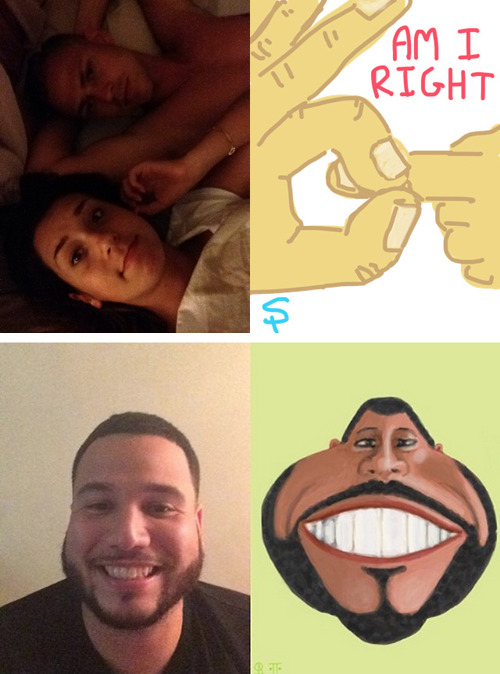


Creations from French Girls, an iPhone app where people draw portraits based on selfies of others. [via]
Related: Subway Snapchat Art
Vivendi’s leaders considered firing Activision Blizzard chief executive Bobby Kotick over matters related to the sale of the French company’s stake in the big video game company.
Court documents show that Vivendi’s leaders wanted to fire Kotick because he refused to approve the sale of Activision Blizzard to groups that did not include Kotick’s own investment group, Bloomberg reports. The documents offer a rare peek inside a boardroom battle in one of the biggest transactions in video game history.
In the lawsuit, filed by a shareholder, emails surfaced that showed the internal discussion. Ultimately, Kotick, who has run Activision for more than 20 years, wasn’t fired. He was able to retain control of the company that makes Call of Duty, Skylanders, and World of Warcraft in the wake of an $8.2 billion deal.
“I really wonder who’s going to fire him,” Vivendi’s then-CEO Jean-Francois Dubos asked in a May 31, 2013, email, Bloomberg said. “Myself, happily. Tomorrow if you want,” replied Philippe Capron, who was both Vivendi’s chief financial officer and Activision’s chairman at the time.
Shareholders allege that Kotick and current Activision Chairman Brian Kelly improperly benefited from the group that bought Vivendi’s stake for $2.34 billion. The shareholder lawsuit says that price was below the market value and that Kotick and Kelly benefited too much from the sale.
Activision’s board of directors “supports the ongoing leadership of the company by Bobby Kotick and Brian Kelly,” Maryanne Lataif, an Activision spokeswoman, said today in an emailed statement to Bloomberg. “The recent transaction restructuring the company’s ownership has received widespread market support.”
Kotick allegedly threatened to quit last year if the directors sold the Vivendi stock without his participation, according to the filings.
“I think Bobby is making the same bet he made three years back and that we wouldn’t dare letting him go,” Vivendi General Counsel Frederic Crepin said in an email in the court papers.
Simon Gillham, a Vivendi spokesman, didn’t immediately return a call for comment from Bloomberg. Capron indicated that Richard Sarnoff, an independent Activision director, was willing to side with Vivendi if it decided to fire Kotick. But Capron said that Kotick’s public image is “very strong.”
“We’ll put pressure on Bobby and if he continues to refuse, the market will understand his departure,” Capron said in the email. Capron left Vivendi in November.
In the end, Vivendi executives complied with Kotick’s wishes. Vivendi sold more of its stake in May for $850 million, leaving it with 41.5 million shares, or 5.8 percent of Activision Blizzard.

 GamesBeat 2014 — VentureBeat’s sixth annual event on disruption in the video game market — is coming up on Sept 15-16 in San Francisco. Purchase one of the first 50 tickets and save $400!

Microsoft has begun accepting requests to remove results on Bing for searches on some individuals in Europe. The move follows similar changes by Google, after a landmark ruling by the European Union Court of Justice determined that it's Google and Microsoft’s responsibility to remove outdated or "irrelevant" search results hosted by third parties. Microsoft’s request form includes questions about requestors roles in society, and requires ID to verify individuals.
While Microsoft has remained quiet on the EU ruling, Google has publicly stated its problems with the judgement, saying that it contradicts the information on freedom of expression in the UN's Universal Declaration of Human Rights, and that the language used by the court...
CollegeHumor returns for another round of a theoretical world where Google’s search engine is actually a person that everyone consults. In the latest video, Google takes a trip to the Deep Web, looks for pictures of Sonic the Hedgehog, and attempts to help someone determine if vaccines cause autism.
Part 1
Part 2
Al "Weird Al" Yankovic has been making music for 38 years. His newest CD—and probably his last traditional album—drops today. Here's Word Crimes, the wonderful video for his great send-up of Robin Thicke's Blurred Lines.
"You should never / write words using numbers / unless you're seven / or your name is Prince."
Hear that, video game title writers everywhere?
This entry passed through the Full-Text RSS service — if this is your content and you're reading it on someone else's site, please read the FAQ at fivefilters.org/content-only/faq.php#publishers.
 Planning to make it big in the music industry by releasing a hit album? Dream On. A long forgotten PC Mag article resurfaced this week to remind us that the music industry had changed drastically over the last decade. According to Activision chief...

Bic's Universal Typeface Project averages user-submitted handwriting samples to generate the most generic English language handwriting font in the world. (via Smithsonian)

Snapchat may be best known for its "ephemeral" messaging, but the company is experimenting with a new way to share live events. Just hours before the World Cup final between Argentina and Germany, all Snapchat users were given access to "Our Story" — a collection of curated Snaps from users in Brazil. The continuous stream of Snaps is an equally surreal and exciting way of experiencing an event. In a way, the masses of unknown faces allow you to live vicariously through World Cup visitors. However it makes you feel, it's clearly a new way of viewing a live event that's entirely discrete from both traditional media (like television) and other forms of social media like Twitter or Instagram.
This isn't the first time that Snapchat has...

During the second season of ‘Seinfeld’ – on Wednesday, December 12, 1990, to be more exact – the cast sat down to read through the script for what would be the fourth episode of the season and only the ninth episode of a series that would go on to produce a total of 180 episodes. The episode was titled ‘The Bet.’ Sets for the episode had been built. Guest characters had been cast. ‘The Bet’ would never film nor air.
The episode actually featured two bets as part of its plot. The subplot centered around Kramer’s (Michael Richards) claims that, on a flight back from Puerto Rico, he had slept with the flight attendant while in transit. George Costanza (Jason Alexander) doubted Kramer’s story, while Jerry (Jerry Seinfeld) believed it to be true. The story’s validity would determine who won a bet between George and Jerry. During the course of this episode, Kramer’s first name would be revealed — instead of when it was eventually revealed in the series’ sixth season (we’ll get to that, and his name wasn’t always Cosmo).
The other bet, which was the main focus of the episode, was whether or not Elaine (Julia Louis-Dreyfus) would purchase a gun for protection. During the episode, Kramer would take Elaine to meet a man named Mo Korn (played by Ernie Sabella, best known by ‘Seinfeld’ fans as the naked man on the subway) who still lives with his mother, and who also happens to be a black market gun salesman.
"We don’t want to do this episode. That cast and I do not want to do this."
‘The Bet’ was written by Larry Charles (who directed ‘Borat’ and, most recently, ‘The Dictator’) and was based on fellow-‘Seinfeld’ writer Elaine Pope’s real life experience. “I can’t remember if she was contemplating buying a gun or whether she had already bought a gun,” says Charles today, “but she felt very justified in buying the gun and would defend that position. And it was also at a time when that was a subject that was finding its way into the media: women buying guns. And I thought that was kind of fascinating. And I think it was as simple as me wondering, What if Elaine bought a gun?”
In the episode, Elaine buying a gun leads to an exchange in which she jokes about shooting herself in the head, then references “the Kennedy,” mimicking the bullet entry point of the assassinated president. This line became a sticking point for the cast and, led by Julia Louis-Dreyfus, they began to balk at the idea of filming the episode at all.
Also balking at the premise was the episode’s director, Tom Cherones — who would direct 81 episodes of ‘Seinfeld’ before the series ended. Cherones, now 75, remembers, “As I recall, there was some reference to make a joke called ‘a Kennedy.’ And that offended me. And I guess it offended the cast as well.” Cherones also remembers the cast taking a break from the read-through, and when he returned, there had been a mutiny of sorts. “I was told to go back to the stage and work on the episode, which is what normally happens,” Cherones remembers. “I went back to the stage and the actors looked at me and said, ‘We don’t want to do this episode.’ I said, ‘I agree with you. Guns are not funny, no matter what you say.’ I walked back before the network guys left and I said, ‘We don’t want to do this episode. That cast and I do not want to do this.’”
“It was an episode that was going to be shot,” says Charles, “but at a certain point, the critical mass started moving almost immediately from when it was brought to be an episode. The people around us thought it wasn’t the right episode at the right time.”
Again, this was only the ninth episode of ‘Seinfeld’ that was ever put into production. At the time, it was far from a ratings hit and the show was not just struggling for its identity, but struggling for its life. “It was barely hanging on,” remembers Charles. “This was one where it was maybe too much too soon.”
If ‘Seinfeld’ weren’t still in its infancy, would that episode have survived if it had been written, say, in the show’s fifth or sixth season? Charles thinks so, “Down the line, when we were golden and doing great in the ratings and we could tackle any subject that we wanted to, I’m sure some version of this episode could have been done.”
Cherones, for his part, disagrees, “I was a gunnery officer in the United States Navy. Guns aren’t funny.”
Speaking to both Charles and Cherones, it’s remarkable how much emotion both of these men still have for an episode of television that never aired over two decades ago. And it’s interesting to listen to two whip-smart comedy minds (albeit from a generation apart), talents who both helped create arguably the greatest television sitcom of all time, vehemently disagree over this particular episode.
Larry Charles: “There were no ideas that were off limits.”
Tom Cherones: “You can’t make a funny show about guns, in my opinion.”
Larry Charles: “I don’t agree with that, though. I respect his opinion, but I don’t think there’s anything that’s not funny, necessarily.”
Could the episode have made a statement about gun use or gun control?
Tom Cherones: “Well, I don’t know about that. It was a comedy show. We weren’t trying to make statements.”
Larry Charles: “It’s all a question of how you handle it. From ‘Pulp Fiction,’ ‘Blazing Saddles,’ you can draw from all kinds of sources where guns are used for comedic effect.”
Tom Cherones: “We didn’t have the gun violence then that we do now. Now, nobody would do it, I predict. Because now we know guns aren’t funny … I’m sure there was no malice on his part.”
Larry Charles: “If it were on ‘Louie,’ you wouldn’t think twice about it … I think ‘Louie’ has proven and ‘Curb Your Enthusiasm’ has proven as well that those subjects are worthy of exploration and comedy. I reject the idea that certain subjects should not be touched upon.”
Regardless, the show didn’t air and, obviously, it never will. Larry David and Jerry Seinfeld instead quickly wrote another episode titled ‘The Phone Message,’ centering on George leaving a message on his girlfriend’s answering machine that he regrets, leading to him switching the tape before she hears the message. We will never learn who won both bets…well, that’s not entirely true. Now, Charles doesn’t remember what Elaine eventually decided, “What I do remember is there’s almost a ‘Taxi Driver’ like scene in there, where she goes to the hotel room to meet a guy who was like the guy in ‘Taxi Driver’ who deals guns. And I think she buys the gun there, but to tell you the truth, in all honestly — and maybe I blocked it out for psychological reasons — I don’t remember what happened after that.”
But, Charles does confirm that, yes, Kramer did indeed join the mile-high club with his flight attendant on the way back from Puerto Rico so, yes, George did lose that particular bet to Jerry.
Cherones, who directed so many episodes, never encountered another episode that he thought was too controversial to air — even the infamous ‘Contest’ episode about masturbation, “Something we all do!,” adds Cherones. Though, there was one other episode thats airing he questioned, but not for any controversial reasons, “Early on in the second season, there’s an episode where Jerry had a pink lining in his jacket or something. I wondered, Who in the hell cares? But it was funny. That’s the only other one I really ever questioned. It wasn’t offensive, it was just stupid — but it wasn’t.” (He also adds that guest star Lawrence Tierney, who played Elaine’s father, scared him, “That guy was scary. He stole a kitchen knife out of Jerry’s set. Everybody knew he took it. I said, ‘I’m not going to take it away from him.’”)
And then there’s the issue of Kramer’s first name. It was eventually revealed as Cosmo in the 97th episode of ‘Seinfeld’ in an episode titled ‘The Switch’ – but had ‘The Bet’ aired as planned, we would have learned Kramer’s first, non-Cosmo name a lot earlier.
“And that might have been my biggest disappointment actually,” says Charles. “I had given him a first name in that episode and because the episode fell by the wayside, that also fell by the wayside at that time and didn’t come up again until later.”
And what was the name?
“It was Conrad. Because I was kind of thinking of Conrad Birdie from ‘Bye Bye Birdie.’ So, it was Conrad, actually. And then eventually it became Cosmo. I remember feeling mixed feelings because I had named him Conrad. Although, Cosmo is a great name. But Conrad was good, too.”
Though, all in all, Charles takes his lost episode in stride, “That was part of the price you paid for the experimentation. And the show wouldn’t have been the show without those misfires early on.”
Mike Ryan has written for The Huffington Post, Wired, Vanity Fair and GQ. He is the senior editor of ScreenCrush. You can contact him directly on Twitter.


Seinfeld, which turned 25 in 2014, is now available to stream online, in its entirety, thanks to Hulu. The series is self-evidently one of the most influential television programs ever made; when it debuted in 1989 it entered a sitcom landscape that was still shaking off the last cobwebs of the 1970s sitcom revolution, and it suggested, boldly, that sitcoms didn't need to be about important issues or even use traditional storytelling methods to be great. Instead, they could just focus on the minutiae of life, the little bits and pieces of larger things that add up to form our points of view. It was a show that reveled in detritus.
Easy to miss in all of that, however, were all of the ways that Seinfeld influenced TV via its underpinnings. Jerry Seinfeld's observational humor affected many other shows of the era (as well as many that premiered long after the series had ended). The "single people living in the big city" premise became the centerpiece of seemingly every other sitcom. But Seinfeld was so huge that it influenced television in many smaller ways, too. Here are five of them.
It's not terribly exciting to think about television in terms of its story structure — the storylines, scenes, and raw dramatic beats that make up any given episode of TV — but Seinfeld's impact on television comedy is actually most pronounced in this arena. The famous "show about nothing" pitch obscured just how much structural work was going on beneath the show's hood. Prior to Seinfeld, most sitcoms broke down into an A-story and a B-story, and the surrounding material could take the form of a so-called "runner," a joke that continued throughout the episode and told a very loose story but didn't do much more than that.
Particularly in its best episodes, Seinfeld blew all of that up. Even in an episode like the famous "The Contest" (the one with the competition to see which of the central foursome can go the longest without masturbating), each of the four characters has their own storyline, all four of which converge in the final moments to create a whole that's larger than its parts. The best Seinfeld episodes are marvels of story structure, with jokes and storylines dovetailing and tucking into each other in ways that can be as thrilling as any twist in a plot-heavy drama.
This approach has become incredibly common since Seinfeld left the air. In particular, it's useful to look at Arrested Development, one of the show's most obvious heirs and one where individual episodes could contain up to nine stories (one for each regular character) that collided by the time the episode ended. Not every show uses the Seinfeld structure (and some, like Everybody Loves Raymond, used structures that were deliberately as little like Seinfeld as possible), but the series gave other shows the option of pursuing far more than the typical two stories per episode.
Matt Zoller Seitz made this point ably over at Vulture last week: while much of the credit for the age of antiheroes — which TV is just exiting — often gets placed at the feet of The Sopranos, Seinfeld was just as much of an influence. Writes Seitz:
Seinfeld's impact resonated beyond comedy. Its serene belief that characters did not have to be likable as long as they were interesting foreshadowed a change in TV drama that wouldn't settle until the late '90s, when HBO turned a show about violent gangsters into an award-winning hit. We tend to forget that the first coldly expedient hero to anchor an influential, long-running series named after him wasn't Tony Soprano. It was Jerry Seinfeld.
Yet look beyond just Jerry, and you see that Seinfeld is filled with the sorts of self-involved jerks who would drive many of the best TV shows of the last decade. Seinfeld is perhaps the earliest series to essentially dare the audience to identify with its characters by seeing their own worst traits reflected in them. It believed it could do this simply by crafting characters who were as interesting and funny as possible. It was mostly right.
Take the character of George, perhaps the show's most compelling, most loathsome figure. We empathize with George because we recognize in his character all of the times we've been unable to escape our own limitations and weaknesses. But look at him from another perspective, and he's a ‘90s riff on what we might now call "nice guy syndrome." And the show endlessly mocks him for it!
George essentially believes he deserves to have sex with a beautiful woman because he's a white guy living in modern America, and when he doesn't succeed (but Jerry or Kramer does), he grows ever more petulant. He doesn't particularly want to strive to succeed. He just wants life handed to him on a silver platter. That was the kind of character TV hadn't really seen before Seinfeld hit the air, but it's also the kind of character who's everywhere now, and often on shows that don't realize Seinfeld worked because the joke was much more often on George (or Jerry or Kramer or Elaine) than it was on anybody else.
Funny women in control of their own destinies existed on television before Elaine, but Elaine was the first one who was simply allowed to unapologetically be whatever she wanted to be. Even a short year before Seinfeld debuted, a show like Murphy Brown had to essentially center everything on the fact that its protagonist was a single woman making her way through her life and work. Also worth considering is the Jamie Lee Curtis and Richard Lewis vehicle Anything But Love, which debuted a few months before Seinfeld and had much in common with it (including a large number of scenes set in diners during which Curtis and Lewis discussed the oddities of modern life), but constantly felt the need to make Curtis's arc largely about her romantic prospects or lack thereof.
Elaine was different. Many of her stories were about her love life, but she also had weird jobs and got just as involved in the shenanigans of a given episode as any of the male characters. Thanks to the work of Julia Louis-Dreyfus, one of the great comedic actresses of American television, Elaine could be both deeply weird and deeply feminine. TV hadn't known a character like her before, and she paved the way for everyone from Leslie Knope to Hannah Horvath.
Little of this is Seinfeld's fault; television's whiteness has far more to do with the Clinton-era repeal of the Financial Interest and Syndication Rules (a subject for another time). But it's worth pointing out that the centerpiece of NBC's very diverse 1980s Thursday sitcom lineup was The Cosby Show, while Seinfeld was the centerpiece of its very white 1990s Thursday sitcom lineup. It more or less made sense for Seinfeld to be as white as it was. The show was, after all, famously rejected by audience testers, and NBC's Brandon Tartikoff worried it was "too New York, too Jewish." It was, to a real degree, about four people who were incredibly limited in their perceptions and worldviews, so a certain amount of tunnel vision made sense.
But Seinfeld was also the unlikely beneficiary of the fact that the television landscape was changing. By its final season, the series was a mega-hit, watched by large numbers of people in all demographics. However, in its early years, it struggled in the ratings, kept alive by critical acclaim and awards attention, sure, but also because the people who were watching it were more demographically desirable to advertisers. And what that usually means is young white people with lots of money who live in cities.
As that demographic was targeted with more and more focus in years to come, it would lead to shows with fewer and fewer people of color, shows that could be good (Friends or Girls) or bad (the many, many Seinfeld clones of the mid-'90s) but still shows that were overwhelmingly about a bunch of white, affluent people who never had to worry about anything but the trivial details of life. What felt revolutionary on Seinfeld quickly curdled into something harder and harder to stomach on the many shows it inspired.
When television experts talk about a "multi-camera" sitcom, what they mean is a sitcom that functions almost as a filmed play, with multiple cameras (usually four) in fixed positions capturing the action of a sitcom taping, usually in front of a live audience. Think of the difference in presentation between Cheers (a very classical multi-camera sitcom) and Modern Family (which is what is usually called a "single-camera" sitcom and is presented much more cinematically than theatrically). The evolutionary history of the sitcom format can be split into two periods, with Seinfeld as a rough dividing line.
NBC actually forced creators Seinfeld and Larry David to make the show a multi-camera, but once the two were committed to doing so, they essentially broke all of the established rules of how multi-camera sitcoms worked, twisting and bending them so far that the multi-camera sitcom had essentially nowhere else to go if writers wanted to continue to innovate.
The longer the show ran, the more single-camera sequences it inserted into the action. (Think, for instance, of all of those scenes with characters walking down city streets, which were pre-taped and aired for the studio audience, instead of being presented live on stage.) And the longer it ran, the more it broke those stories up into smaller and smaller pieces, presaging the joke-a-second pace most single-camera sitcoms run at today.
And yet Seinfeld stands as a testament to how good multi-camera sitcoms can be at their best. Several of the show's sequences would only work in the more theatrical trappings of the multi-cam, and the performers' broadness was also given greater latitude by the format.
Think of the famous story George tells about removing a golf ball from a whale's blowhole. On a single-camera sitcom, that might be presented to the audience as it happened. On Seinfeld, which was limited in how much location filming it could do, the story becomes a yarn for Jason Alexander to spin, and that makes all the difference in terms of humor.
Seinfeld left big shoes for the sitcom to fill. Some (like Raymond) might have returned to a more deliberately classical vibe. But others pushed past it and found that the only territory left to explore involved finding new ways to film these sorts of shows. Seinfeld might have been something of an endpoint for lots of different sitcom techniques, but it was also the beginning of many, many others.

We’ve seen a lot of things here at RocketNews24, from unholy Thomas the Tank Engine doodles to Ladybear and Sailor Suit Old Man, but we’ve never seen anything quite like this before.
The following video needs no introduction, so sit back, relax, and enjoy footage of a young man from China putting on his own pants without using his hands to the tune of “The Final Countdown.”
As amazing as it is stupid…it’s almost like his pants-putting-on is a choreographed dance. Most user comments involved the words “epic” and “lol”, but there was one downer amongst the bunch:
“I don’t understand why people watch this.”
This commenter was promptly told to STFU and the rest of the 8 million+ viewers continued to enjoy the comically talented young man expertly put on his own trousers through shear force and a whole lot of wiggling. Well done, young man!
 Related Stories
Origin: This guy puts pants on like a champ…without using his hands
Copyright© RocketNews24 / SOCIO CORPORATION. All rights reserved.


.jpg)