"First and foremost, we're continuing to look more and more at doing things in the space that make sense on their own. Because we don't really control who in the mobile space is going to decide to play your game." ...
Fallout Shelter, Bethesda's new free-to-play mobile game, has added its first character from Fallout 4 today.
Preston Garvey, the leader of the Commonwealth Minutemen in Fallout 4, is now available in Shelter. Additionally, the Laser Musket weapon he uses in Fallout 4 (pictured above) is now available in the game for your Vault dwellers to brandish.
However, you won't find Garvey wandering around your Vault the next time you open up the game. He's categorized as a Legendary Dweller, and you'll need to open a lunchbox in order to obtain him.
Lunchboxes are special items rewarded to players from time to time that can also be purchased with real-world money. These are Bethesda's lone way of generating revenue from the game, but as it's already stated, Shelter "is not about making money."
Shelter is currently available only on iOS, though an Android version is in the works. Bethesda deliberately waited until after revealing Fallout 4 to announce it, as it worried that fans would react negatively if they assumed Shelter had been created at the expense of a proper Fallout follow-up.
Fallout 4 is due out on November 10 for Xbox One, PS4, and PC.
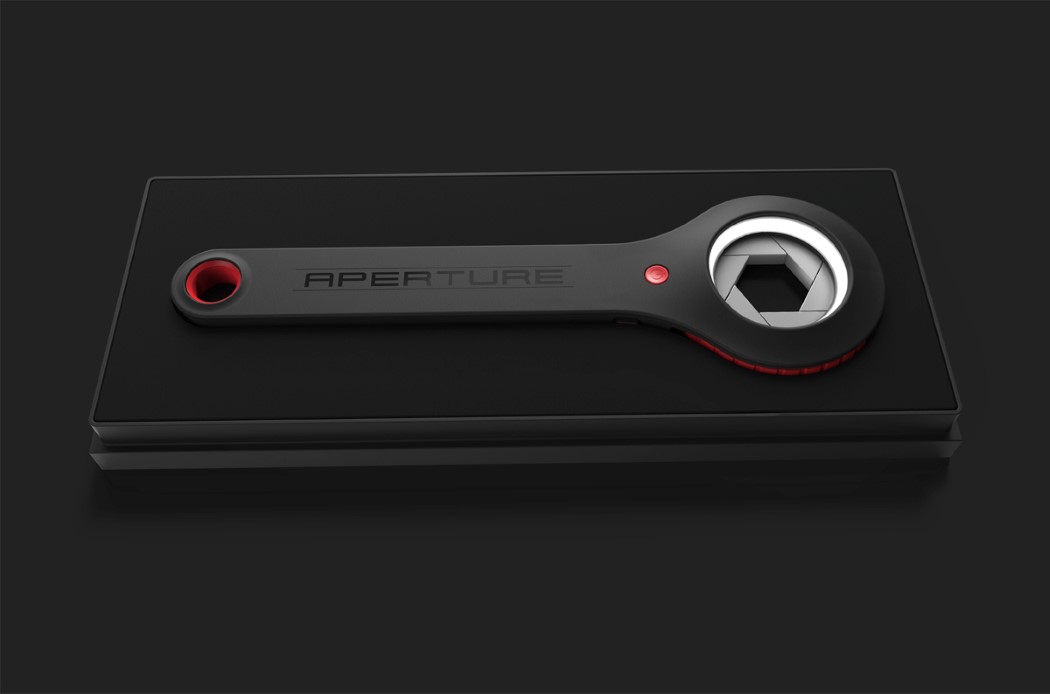
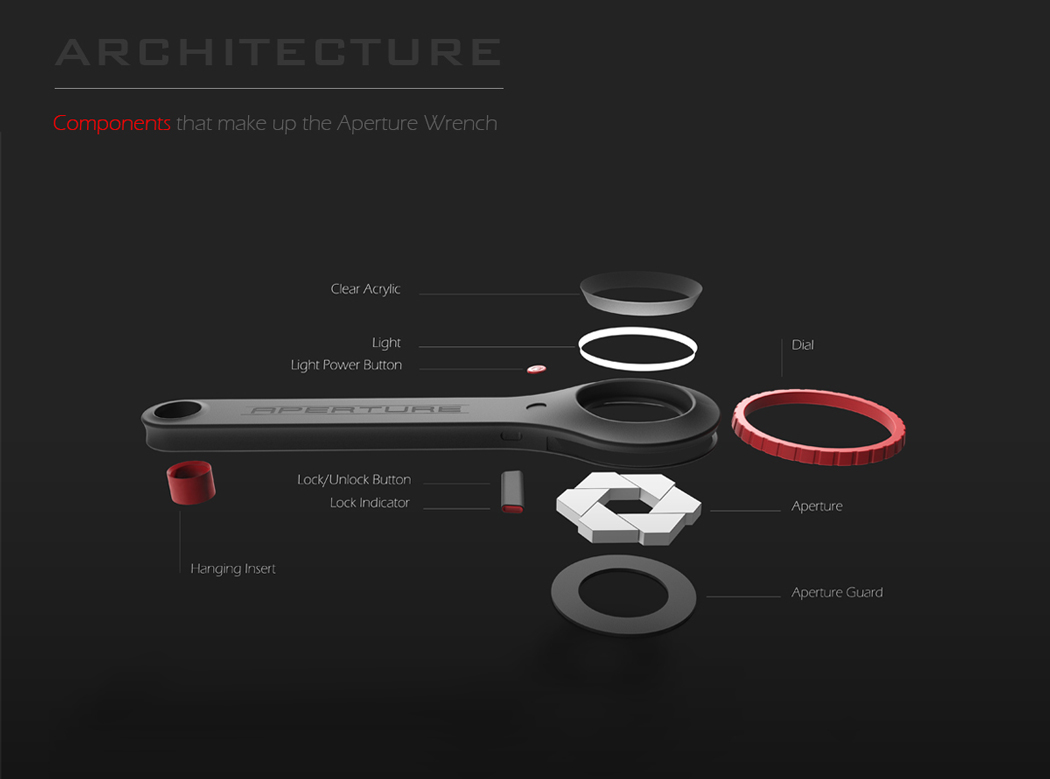
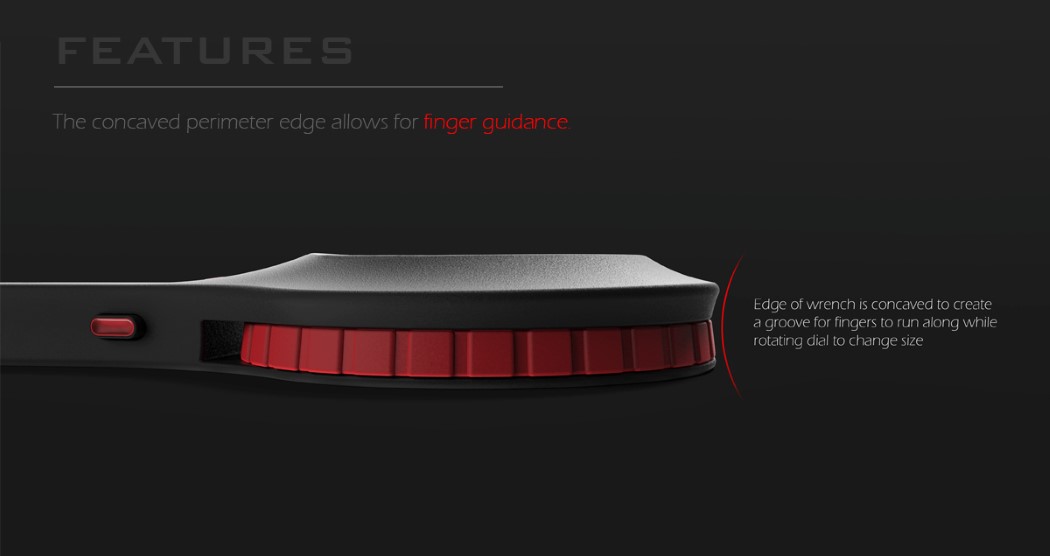
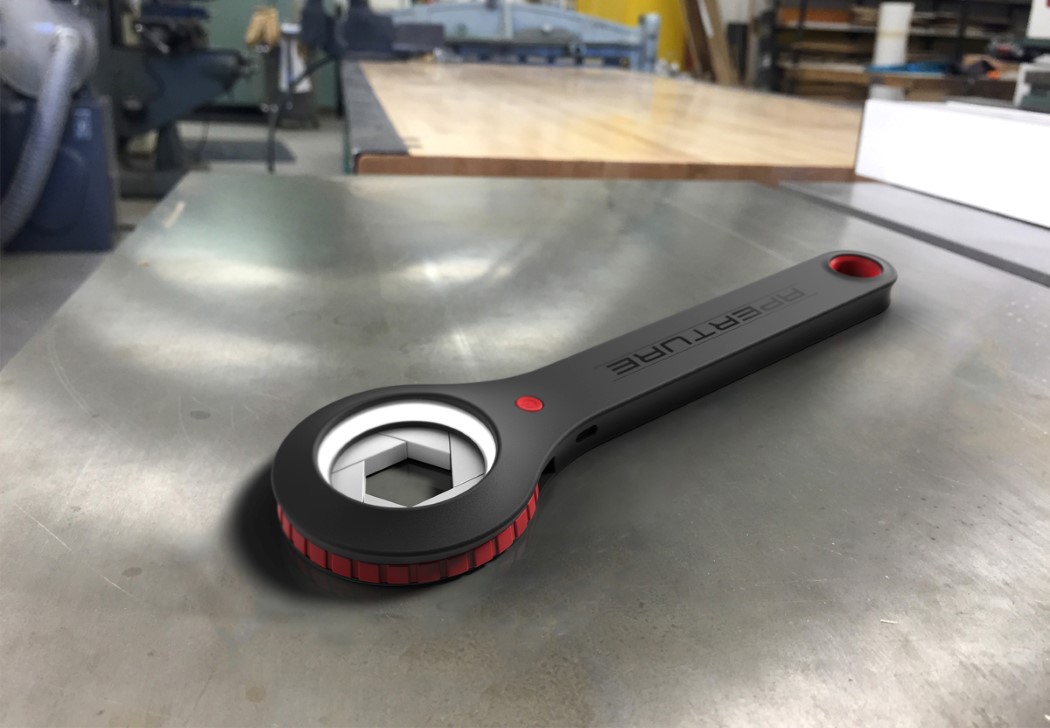
Every once in a while you come face to face with a product that redefines its standards in a way so simple, you wonder, “Why didn’t anyone every think of this before?” The Aperture Wrench is an aptly named wrench that takes inspiration from a camera’s aperture and the way it transforms. The wrench is designed around this awe-inspiring kaleidoscopic motion, allowing it to transform in size and fit around nuts and bolts of varying dimensions. It also includes a light ring around the aperture of the spanner, enabling you to work even in low light conditions.
The Aperture Wrench sure makes your everyday monkey-wrench look like it’s fit for primates!
Susanna Hesselberg, “When My Father Died It Was Like a Whole Library Had Burned Down” (2015) / Photo by Claire Voon for Hyperallergic
For her entry into the biannual Sculpture by the Sea in Aarhus, Denmark, Swedish artist Susanna Hesselberg installed this ominous library that plumments into the ground like a mining shaft. While visually arresting, the piece has a somewhat somber intention. Titled “When My Father Died It Was Like a Whole Library Had Burned Down,” the artwork makes reference to lyrics from Laurie Anderson’s song World Without End. The piece joins an additional 55 sculptures on display right now at the 2015 Sculpture by the Sea through July 5, 2015. (via Hyperallergic)
by Casey Chan on Sploid, shared by Chris Mills to Gizmodo
This is wild. When cameras try to capture guitar strings being played, they see wavelength-type movements from each string because of the camera’s rolling shutter effect. But it can only be seen on camera, the wild wiggly effect is totally blind to the naked eye. Not anymore! This Wobble Strings project recreates a camera’s rolling shutter effect to humans in real time through sweep line projection. It’s wild.
The twinkling lights dotting the ceiling of this dazzling cave system are the work of arachnocampa luminosa, a bioluminescent gnat larva (also called a glowworm) found throughout the island nation of New Zealand. It is believed that the light, emitted mostly from females, is how the insects find mates. These long-exposure photos by local photographer Joseph Michael capture small communities of worms amongst 30 million-year-old limestone formations on North Island. You can see more shots from the project titled Luminosity, here.
New submitter Patricbranson writes: The NSA, along with its British counterpart Government Communications Headquarters (GCHQ), spent years reverse-engineering popular computer security software in order to spy on email and other electronic communications, according to the classified documents published by the online news site The Intercept. With various countries' spy agencies trying to make sure computers aren't secure (from their own intrusions, at least), it's no wonder that Kaspersky doesn't want to talk about who hacked them.


 "First and foremost, we're continuing to look more and more at doing things in the space that make sense on their own. Because we don't really control who in the mobile space is going to decide to play your game." ...







 It is still not known why the Sun's light is missing some colors.