[glnito]

The average American cashier makes $20,230 a year, a salary that in a single-earner household would leave a family of four living under the poverty line. But if he works the cash registers at QuikTrip, it's an entirely different story. The convenience-store and gas-station chain offers entry-level employees an annual salary of around $40,000, plus benefits. Those high wages didn't stop QuikTrip from prospering in a hostile economic climate. While other low-cost retailers spent the recession laying off staff and shuttering stores, QuikTrip expanded to its current 645 locations across 11 states.

Many employers believe that one of the best ways to raise their profit margin is to cut labor costs. But companies like QuikTrip, the grocery-store chain Trader Joe's, and Costco Wholesale are proving that the decision to offer low wages is a choice, not an economic necessity. All three are low-cost retailers, a sector that is traditionally known for relying on part-time, low-paid employees. Yet these companies have all found that the act of valuing workers can pay off in the form of increased sales and productivity.
"Retailers start with this philosophy of seeing employees as a cost to be minimized," says Zeynep Ton of MIT's Sloan School of Management. That can lead businesses into a vicious cycle. Underinvestment in workers can result in operational problems in stores, which decrease sales. And low sales often lead companies to slash labor costs even further. Middle-income jobs have declined recently as a share of total employment, as many employers have turned full-time jobs into part-time positions with no benefits and unpredictable schedules.QuikTrip, Trader Joe's, and Costco operate on a different model, Ton says. "They start with the mentality of seeing employees as assets to be maximized," she says. As a result, their stores boast better operational efficiency and customer service, and those result in better sales. QuikTrip sales per labor hour are two-thirds higher than the average convenience-store chain, Ton found, and sales per square foot are over 50 percent higher.
Entry-level hires at QuikTrip are trained for two full weeks before they start work, and they learn everything from how to order merchandise to how to clean the bathroom. Most store managers are promoted from within, giving employees a reason to do well. "They can see that if you work hard, if you're smart, the opportunity to grow within the company is very, very good," says company spokesman Mike Thornbrugh.
The approach seems like common sense. Keeping shelves stocked and helping customers find merchandise are key to maximizing sales, and it takes human judgment and people skills to execute those tasks effectively. To see what happens when workers are devalued, look no further than Borders or Circuit City. Both big-box retailers saw sales plummet after staff cutbacks, and both ultimately went bankrupt.
As global competition increases and cheap, convenient commerce finds a natural home online, the most successful companies may be those that focus on delivering a better customer experience. Ton's research on QuikTrip and other low-cost retailers--now a Harvard Business School case--is applicable across a variety of industries, she says. Toyota's production system, for example, gives all employees--including workers on the assembly lines--a voice in improving products.
But for a publicly traded company under pressure to show quarterly earnings, it's tempting to show quick profits by cutting labor costs. The bad economy has also made workers willing to take lower-paid positions rather than join the ranks of the unemployed. New employer-sponsored health insurance requirements under the Affordable Care Act are only going to give employers an additional incentive to shift workers to a part-time schedule.
There are also trade-offs to investing in employees. Businesses that spend more on their workers have to cut costs elsewhere. Trader Joe's streamlines operations by offering a limited number of products and very few sale promotions. Costco stocks products on pallets, as a warehouse would. And the QuikTrip model requires investors to have the fortitude to accept possible short-term drops in profits. "You have to take a loss for a little bit," says Maureen Conway, executive director of the Economic Opportunities Program at the Aspen Institute. "You have to pay above market. You have to change how you do business."
At the upper echelons of the American workforce, salaries have soared. Companies are accustomed to thinking of their highest-level employees as "talent," and fighting to hire and reward people who will help grow the company. Now Trader Joe's and QuikTrip are proving that lower-level employees can be assets whose skills improve the bottom-line as well.

 |
 |
A dozen generations ago, there was no unemployment, largely because there were no real jobs to speak of. Before the industrial revolution, the thought that you’d leave your home and go to an office or a factory was, of course, bizarre.
What happens now that the industrial age is ending? As the final days of the industrial age roll around, we are seeing the core assets of the economy replaced by something new. Actually, it’s something old, something handmade, but this time, on a huge scale.
The industrial age was about scarcity. Everything that built our culture, improved our productivity, and defined our lives involved the chasing of scarce items.
On the other hand, the connection economy, our economy, the economy of the foreseeable future, embraces abundance. No, we don’t have an endless supply of the resources we used to trade and covet. No, we certainly don’t have a surplus of time, either. But we do have an abundance of choice, an abundance of connection, and an abundance of access to knowledge.
We know more people, have access to more resources, and can leverage our skills more quickly and at a higher level than ever before.
This abundance leads to two races. The race to the bottom is the Internet-fueled challenge to lower prices, find cheaper labor, and deliver more for less.
The other race is the race to the top: the opportunity to be the one they can’t live without, to be the linchpin we would miss if he didn’t show up. The race to the top focuses on delivering more for more. It embraces the weird passions of those with the resources to make choices, and it rewards originality, remarkability, and art.
The connection economy continues to gain traction because connections scale, information begets more information, and influence accrues to those who create this abundance. As connections scale, these connections paradoxically make it easier for others to connect as well, because anyone with talent or passion can leverage the networks created by connection to increase her impact. The connection economy doesn’t create jobs where we get picked and then get paid; the connection economy builds opportunities for us to connect, and then demands that we pick ourselves.
Just as the phone network becomes more valuable when more phones are connected (scarcity is the enemy of value in a network), the connection economy becomes more valuable as we scale it.
Friends bring us more friends. A reputation brings us a chance to build a better reputation. Access to information encourages us to seek ever more information. The connections in our life multiply and increase in value. Our stuff, on the other hand, becomes less valuable over time.
… [this riff is inspired by my new book...]
Successful organizations have realized that they are no longer in the business of coining slogans, running catchy ads, and optimizing their supply chains to cut costs.
And freelancers and soloists have discovered that doing a good job for a fair price is no longer sufficient to guarantee success. Good work is easier to find than ever before.
What matters now:
All six of these are the result of successful work by humans who refuse to follow industrial-age rules. These assets aren’t generated by external strategies and MBAs and positioning memos. These are the results of internal struggle, of brave decisions without a map and the willingness to allow others to live with dignity.
They are about standing out, not fitting in, about inventing, not duplicating.
TRUST AND PERMISSION: In a marketplace that’s open to just about anyone, the only people we hear are the people we choose to hear. Media is cheap, sure, but attention is filtered, and it’s virtually impossible to be heard unless the consumer gives us the ability to be heard. The more valuable someone’s attention is, the harder it is to earn.
And who gets heard?
Why would someone listen to the prankster or the shyster or the huckster? No, we choose to listen to those we trust. We do business with and donate to those who have earned our attention. We seek out people who tell us stories that resonate, we listen to those stories, and we engage with those people or businesses that delight or reassure or surprise in a positive way.
And all of those behaviors are the acts of people, not machines. We embrace the humanity in those around us, particularly as the rest of the world appears to become less human and more cold. Who will you miss? That is who you are listening to .
REMARKABILITY: The same bias toward humanity and connection exists in the way we choose which ideas we’ll share with our friends and colleagues. No one talks about the boring, the predictable, or the safe. We don’t risk interactions in order to spread the word about something obvious or trite.
The remarkable is almost always new and untested, fresh and risky.
LEADERSHIP: Management is almost diametrically opposed to leadership. Management is about generating yesterday’s results, but a little faster or a little more cheaply. We know how to manage the world—we relentlessly seek to cut costs and to limit variation, while we exalt obedience.
Leadership, though, is a whole other game. Leadership puts the leader on the line. No manual, no rule book, no überleader to point the finger at when things go wrong. If you ask someone for the rule book on how to lead, you’re secretly wishing to be a manager.
Leaders are vulnerable, not controlling, and they are racing to the top, taking us to a new place, not to the place of cheap, fast, compliant safety.
STORIES THAT SPREAD: The next asset that makes the new economy work is the story that spreads. Before the revolution, in a world of limited choice, shelf space mattered a great deal. You could buy your way onto the store shelf, or you could be the only one on the ballot, or you could use a connection to get your résumé in front of the hiring guy. In a world of abundant choice, though, none of these tactics is effective. The chooser has too many alternatives, there’s too much clutter, and the scarce resources are attention and trust, not shelf space. This situation is tough for many, because attention and trust must be earned, not acquired.
More difficult still is the magic of the story that resonates. After trust is earned and your work is seen, only a fraction of it is magical enough to be worth spreading. Again, this magic is the work of the human artist, not the corporate machine. We’re no longer interested in average stuff for average people.
HUMANITY: We don’t worship industrial the way we used to. We seek out human originality and caring instead. When price and availability are no longer sufficient advantages (because everything is available and the price is no longer news), then what we are drawn to is the vulnerability and transparency that bring us together, that turn the “other” into one of us.
For a long time to come the masses will still clamor for cheap and obvious and reliable. But the people you seek to lead, the people who are helping to define the next thing and the interesting frontier, these people want your humanity, not your discounts.
All of these assets, rolled into one, provide the foundation for the change maker of the future. And that individual (or the team that person leads) has no choice but to build these assets with novelty, with a fresh approach to an old problem, with a human touch that is worth talking about.
I can’t wait until we return to zero percent unemployment, to a time when people with something to contribute (everyone) pick themselves instead of waiting for a bureaucrat’s permission to do important work.
Submitted by: geha714
Tagged: candles , kludges , hot water , showers , g rated , there I fixed it Share on FacebookQuando Nina Horta e Danuza Leão começam a falar sobre empregadas domésticas se prepare que vai vir pérola. Essas duas senhoras formam hoje o núcleo duro do elitismo entre os colunistas da Folha. Esqueça Luiz Felipe Pondé, é nas colunas de Nina e Danuza que mora o elitismo hardcore, em seu estado bruto, sem disfarces ou elaborações. É lá que se confraternizam numa eterna conversa de elevador as madames decadentes da nossa classe média, rancorosa por ter perdido privilégios que antes eram quase direitos constitucionais de sua classe social, a exemplo da cobiçada empregada mensalista que dorme do serviço e vive às margens do patrão.
Nina e Danuza me fazem lembrar com tristeza dos tempos em que o Brasil tinha um outra cronista que gostava de falar de empregadas: Clarice Lispector. Vários de seus contos tinham empregadas como personagens centrais, a exemplo das histórias de “A Descoberta do Mundo”. Outros livros, como “A Paixão Segundo G.H” problematizavam a relação entre patroa e empregada.
Nos textos de Clarice a própria autora não se coloca como um exemplo a ser seguido, como a patroa ideal. Pelo contrário: vários deles deixam entrever seus preconceitos de classe e sua dificuldade em lidar com aquela pessoa estranha que vive em sua casa, para lhe servir.
Em “A Mineira Calada”, por exemplo, vemos o episódio em que uma das empregadas da escritora, Aninha, quer porque quer ler os livros da patroa, que menospreza sua capacidade intelectual:
“Um dia de manhã estava arrumando um canto da sala, e eu bordando no outro canto. De repente — não, não de repente, nada é de repente nela, tudo parece uma continuação do silêncio. Continuando pois o silêncio, veio até a mim a sua voz: ‘A senhora escreve livros?’ Respondi um pouco surpreendida que sim. Ela me perguntou, sem parar de arrumar e sem alterar a voz, se eu podia emprestar-lhe um. Fiquei atrapalhada. Fui franca: disse-lhe que ela não ia gostar de meus livros porque eles eram um pouco complicados. Foi então que, continuando a arrumar, e com voz ainda mais abafada, respondeu: ‘Gosto de coisas complicadas. Não gosto de água com açúcar’”. [Clarice Lispector]
Mesmo depois de ouvir que a empregada não gostava de água com açúcar, Clarice dá a ela um romance policial que ela havia traduzido — ou seja, uma aguinha com açúcar. Aninha lê, mas volta e responde: “Gostei, mas achei um pouco pueril. Eu gostava era de ler um livro seu”.
Nessa crônica, Clarice relativiza a diferença de classe entre patroa e empregada, desmascara seu próprio preconceito e mostra que a situação da escritora também não é a de uma vida feita somente de trabalhos intelectualizados: assim como Aninha limpa casas para viver e é mais do que uma trabalhadora manual, Clarice tem que traduzir livrinhos policiais para viver, mas não se resume a isso. Não sei que diabos Danuza e Nina fazem para viver, mas elas certamente se resumem a isso.
Ontem, em sua coluna no jornal, Danuza Leão atacou a “PEC das empregadas”, uma tentativa de assegurar mais direitos trabalhistas às empregadas domésticas. Ela compara o esquema brasileiro ao esquema de “países mais civilizados” [palavras dela], como Estados Unidos e França. Para a colunista, “a ideia de dar auxílio creche e educação para menores de cinco anos dos empregados é sonho de uma noite de verão, pois se os patrões mal conseguem arcar com as despesas dos próprios filhos, imagine com os da empregada”.
De onde Danuza tirou que uma pessoa que mal consegue prover educação para os próprios filhos deveria ter uma empregada mensalista? A única forma de assegurar a uma classe média falida o “direito essencial” a ter uma empregada doméstica é permitindo que mulheres pobres se sujeitem a remunerações pífias.
O emprego doméstico só deixou de ser a principal profissão das mulheres brasileiras em 2011. Eu e grande parte dos jovens de classe média da minha geração fomos parcialmente criados por mulheres que abdicaram de sua privacidade e vida individual para morar na casa de patrões, frequentemente sem carteira assinada. Muitas delas criaram seus filhos dentro do ambiente de trabalho, em condições pouco propícias para o desenvolvimento da autoestima de uma criança. Fico feliz em saber que se eu tiver filhos eles serão criados em um outro esquema. Será mais difícil e caro para mim e é também por isso que a minha geração tem filhos mais tarde, mas será indiscutivelmente melhor.
Quando era adolescente jantei na casa de um amigo cuja empregada tinha um filho de seis anos. Em dado momento a mãe do meu amigo disse que Vitor, filho da empregada, só vivia doente, até que se mudou para a casa dela e passou a beber “água boa”. Ela creditava a água de sua casa pela saúde de ferro que o menino apresentava. O comentário foi feito na frente do garoto e de sua mãe. Essa é uma criança que cresceu pensando que devia até sua falta de resfriados à patroa de sua mãe.
Em janeiro conheci uma garota de 17 anos com quem iniciei uma amizade — sou dessas que fazem amizades com garotas de 17. A menina era inteligente, tocava quatro instrumentos e era fã de Bob Dylan. No meio de uma conversa randômica ela contou que seus amigos caçoavam dos erros de português da empregada. “Mas caçoam de piada, sabe? Imitando e tal. Ela sabe que é brincadeira”.
A conversa evoluiu e descobri que a tal empregada ia na casa da garota todos os dias, mas não tinha carteira assinada. Ela achava normal porque era “um esquema de trabalho informal”. Ela não sabia que isso era fora da lei. Não sabia que se a empregada fosse mais de duas vezes por semana na casa dela a mãe era obrigada a pagar FGTS, férias e décimo terceiro. Ela achava que sua mãe tratava Maria muito bem e ficou surpresa quando eu disse que Maria poderia levar até o violão dela embora caso acordasse para a vida e fosse em busca de seus direitos.
O “sonho de uma noite de verão” de viver em um mundo do trabalho senão justo ao menos legalizado exige vigilância diária. Vivo em uma bolha de pessoas legais e inteligentes e frequentemente acho que questões como a empregada merecer ter os mesmos direitos que a faxineira de uma empresa já foram vencidas. Mas não foram. E é por isso que eu tenho um pequeno derrame cerebral cada vez que vejo o jornal ao qual dediquei dois anos da minha vida — sem carteira assinada, sem férias e sem décimo terceiro, como tantos jornalistas fazem — publicar uma besteirada dessas.
“Ser conservador em países que têm o que conservar é funesto, mas nos países novos é absurdo e criminoso”. [Manoel Bomfim]
Para ler em dias de coragem:
“Empregadas, mais um capítulo” — Para Nina Horta “empregada que veio do sertão” fala idioma estrangeiro
“Luta de classes” — Danuza Leão conta como teve de abdicar de seu espírito sonhador e reconhecer que empregado tem mesmo que se limitar à cozinha

In the largest false memory study to date, 5,269 participants were asked about their memories for three true and one of five fabricated political events. Each fabricated event was accompanied by a photographic image purportedly depicting that event. Approximately half the participants falsely remembered that the false event happened, with 27% remembering that they saw the events happen on the news.
Political orientation appeared to influence the formation of false memories, with conservatives more likely to falsely remember seeing Barack Obama shaking hands with the president of Iran, and liberals more likely to remember George W. Bush vacationing with a baseball celebrity during the Hurricane Katrina disaster.
A new paper.
Nicht nur, dass der junge Mann hier drei (!) Zauberwürfel auf einmal (!) beim Jonglieren löst, das Ende ist dann auch noch hervorragend getimte Comedy.
O artigo 40 bizarras semelhanças entre Toy Story e The Walking Dead faz parte do conteúdo do Byte Que Eu Gosto! - Nerd, Geek, Dicas, Cinema, Games e mais!.
JimmyLegs50 é o nome do usuário do Reddit que vai explodir sua cabeça em 40 imagens. Ele mostrou bizarras semelhanças entre Toy Story e The Walking Dead. Antes de ler, lembre-se: o que foi visto jamais pode ser desvisto!


Leia todas as imagens aqui.
O artigo 40 bizarras semelhanças entre Toy Story e The Walking Dead faz parte do conteúdo do Byte Que Eu Gosto! - Nerd, Geek, Dicas, Cinema, Games e mais!.
Osias Jotapraia do arpoador?
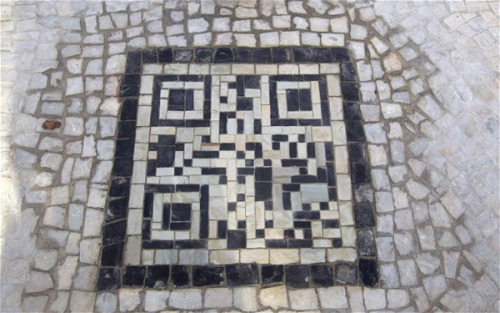

One of the most astounding mysteries of the world is this ancient tile pattern in Greece, dated to about 1,500 B.C.
It was little more than a curiosity until 2008 when its resemblance to a QR Code was recognized. First photographed in 1871 by the British Antiquities Society, they were known as the “Chinese Box Tiles” owing to the closest thing anyone had seen to the strange pattern. Little was known about the titles except that they were installed along with other beachfront roads on the isle of Igrigoria in ancient times.
In was in 2008 that QR codes became popular enough that a traveler recognized the tiles as bearing an unmistakable resemblance to the computer code which had only been developed 3,500 years after the tiles were first laid. It was another two years before anyone with a QR capable phone traveled to the island to attempt a capture.
The mystery only deepened when the phone was able to recognize the code, which lead to the original Nyan Cat video on youtube.
 New York blogger Rafi D’Angelo recently overheard a conversation on the subway between two “construction- worker types” who discovered they had something in common.
“I’ve been doing this for about six months now, trying to catch interesting things on the subway,” posted D’Angelo. “But I haven’t had any luck so far because I ride boring trains. Today was good, though.”
Guy #1: “My wife wants me to get fixed like a dog but I don’t see why she can’t just keep taking the pill.”
Guy #2: No more kids for you two?
Guy #1: No, she figures we’re both getting too old for a baby.
Guy #2: How is your boy anyway? Haven’t seen him in awhile.
Guy #1: Oh John’s good, pitching this year varsity.
Guy #2: He’ll definitely have the girls hanging around him now.
Guy #1: Yeah if he had any time for them.
Guy #2: Focused on baseball?
Guy #1: Focused on boys.
Guy #2: You’re shittin’ me!
Guy #1: I kid you not. Came out to me and Mary Ann bold as daylight last year.
Guy #2: Well I’ll be damned! I’m not supposed to know it but I overheard Patrick Jr. tell his sister he might be gay not two months ago.
Guy #1: We all saw that coming though.
Guy #2: You’re the second person to say that. How’d everybody see it but me?
Guy #1: It was just a feeling, Pat. He was always a little soft, ya know?
Guy #2: I guess you’re right. But damn Charlie, we both have gay kids. What do we do now? Both our sons are gay.
Guy #1: We don’t do anything. We let em be gay and if some kid calls ‘em a faggot we go to their house and raise hell with the parents like normal.
Guy #2: Well I guess John and Lucinda won’t be getting together like we thought awhile ago.
Guy #1: Guess not.
**long pause**
Guy #2: Hey Charlie, you thinkin’ what I’m thinkin’?
Guy #1: I was for about half-a-second then it got weird and I started thinkin’ about somethin’ else instead.
The future is here, folks.
Osias JotaMELDELS, MELHOR DO ANO!!!

A couple of years ago, Geoff Pullum put it this way:
Long-time Language Log readers will recall that we have often said here before that whenever someone says that the X people have no word for Y in their language you should put your hand on your wallet — to make sure it's still there. The people who witter on about who has a word for what hardly ever even know the languages they are talking about, and in the vast majority of cases (check out some of the cases on this list) their claim is false.
Yesterday, Tom Scocca was even more acerbic:
Whenever you hear someone explain that a concept is so foreign to this or that culture that people cannot even use their language to describe it, it is safe to assume your passport has just been stamped for entry into the Land of Bullshit.
Tom was talking about David Brooks' recent column on "The Learning Virtues", which claimed that "American high school students tease nerds, while there is no such concept in the Chinese vocabulary." As Tom notes,
There are multiple dictionary entries for "nerd" in Chinese, including terms for a dull and tasteless person (乏味的人, fáwèi de rén) and for someone excessively enthusiastic about computers (电脑迷, diànnǎomí).
The word for "nerd" in the sense Brooks means—"pedant" or "bookworm"—is "书呆子" (shūdāizi). If you're too shiftlessly American to have an English-Chinese dictionary handy, you can literally type "nerd" into Google Translate and find it.
I've already linked to a longer list of word-for-X debunking than any rational person would want to read, and I'm not in a position to evaluate the linguistic and cultural congruence of Chinese and English words for nerd-like states and actions, beyond repeating Geoff Pullum's advice to watch out for your conceptual wallet. So let me pick up on Tom's observation that "it wouldn't be a David Brooks column if he didn't try to reduce those complexities to a glib and shaky factoid".
In my opinion, David Brooks has an unparalleled ability to shape an intellectually interesting idea into the rhetorical arc of an 800-word op-ed piece. The trouble is, a central part of his genius is choosing the little factoids that perfectly illustrate his points. No doubt he's happy enough to use a true fact if the right one comes to hand, but whenever I've checked, the details have turned out to be somewhere between mischaracterized and invented.
The emblematic case remains Brooks' claim that it was impossible to spend $20 on dinner in Franklin County, PA, dissected in a Philadelphia Magazine article that Tom Scocca linked to ("Boo-Boos in Paradise", April 2004). Some examples from previous LL posts:
"David Brooks, Cognitive Neuroscientist", 6/12/2006
"David Brooks, Neuroendocrinologist", 9/17/2006
"David Brooks, Social Psychologist", 8/13/2008
"The butterfly and the elephant", 11/28/2009

Eu queria estar vivendo isso aí que todos vocês estão. Esse regozijo com a criatividade do aluno do ENEM. Na minha timeline (que é o lugar, agora, onde eu escuto as opiniões etc) todo mundo critica quem critica o aluno do ENEM. Mas eu não leio as críticas ao aluno do ENEM. Eu só leio as pessoas dizerem que os críticos são tristes etc. Acontece isso o tempo inteiro comigo. E eu acho até bom. Eu leio assim, na toda-poderosa timeline, "aqueles que concordam com Feliciano são assim e assado". Mas eu não entro em contato com aqueles que concordam com o Feliciano. Mas não sou tão tonta, sei que eles existem. Também não conheço a guarda imperial das normas ortográficas. Mas sei que existe. E sei que a minha timeline tá lutando contra ela. Parabéns a todos etc. Mas eu não achei a receita de miojo tão alegre assim. Porque eu já vinha triste, isso tem que ser dito. Teve uma peça de teatro aqui no campus. Uma daquelas. Experimental. Virando do avesso textos do padre Vieira. Pessoas peladas. Descascando a Igreja e tudo aquilo. O trem era revolucionário, ouvi dizer. E meus alunos vieram pedir. Se podiam faltar da aula pra assistir a revolução. E eu falei que pra fazer revolução, a gente não pede permissão. E eles, alunos que são, ficaram sem saber o que fazer. E inseguros a respeito de eu ter deixado ou não. Eu procuro não ser mais realista que o rei. Então tento bastante não ser mais rebelde que os meus alunos. E é bastante difícil. Porque olha. Enfim. Esperei tanto chegar esse dia e ele chegou. Eu posso agora dizer que no meu tempo as coisas eram tão melhores etc. Então pode ser só isso, minha implicância com o menino do ENEM. Mas o que eu li por aí sobre a rebeldia dele. Primeiro, ele não precisava passar na prova. Garoto todinho, papai paga faculdade de engenharia dele. Futuro garantido no cheque pré-datado, ele foi fazer a prova dos pobres de qualquer jeito, porque não precisava dela. Aí fez o truque da receita. Um elemento fundamental da mitologia estudantil. Colocar receita no meio do trabalho para desmascarar o professor. É esse o objetivo do expediente. Não é mostrar criatividade. É provar pro mundo que o trabalho não foi lido. Um jeito de ridicularizar professores cansados e que entopem os alunos de lições inúteis. A gente geralmente não conhece quem fez isso. Mas sabe que alguém fez. Um veterano, uma vez, fez isso na prova professor doutor fulano. E todo mundo fica óóóh. Porque existe essa certeza aí. Que o professor doutor fulano não lê porra nenhuma. E todos conhecem e compartilham essa história. Mas ninguém faz. Ou porque já foi feito ou porque não tem coragem. O nó é esse. Se você faz e não é pego, acerta uma estaca no coração do sistema. Se você é pego, vai tomar pau e ser perseguido pelo professor doutor fulano. E agora, hein rebeldia? Faz ou não faz? O risco é parte inerente do processo. Sem risco, não tem graça. Então o que eu vejo é a timeline dizendo que todos devem, sim, ser rebeldes. Mas que isso não deve acarretar risco nenhum. Mel dels. Daí não é rebeldia, pessoal. Daí não é nada. É só coisa de moleque mimado. Que soma receita de miojo ao cavalo de pau. Ele não precisava da vaga. E tava cagando pra prova. Provou o ponto dele, que é o mais importante da história toda: a redação NÃO foi corrigida. Isso é o mais importante. Isso que tinha que ser olhado.
Mas claro. Isso é só a opinião de uma professora cansada. Que não permite rebeldia mas que torce pra que ela aconteça.
Submitted by: Unknown
Tagged: sign , phone , texting , irony , fail nation , g rated Share on Facebook
Alguém já tentou jogar água no Chávez pra ver se ele volta?