Shared posts

31 Mar 11:41

Sobre o uso de Jargão

by Manoel Galdino

É frequente ouvir críticas ao uso desnecessário de jargão por especialistas, especialmente como uma forma de argumento de autoridade e para confundir, ao invés de explicar. Quem não já sentiu esse incômodo com o jargão alheio? Com médicos, advogados, economistas… A lista é grande.

Mas como as coisas não são tão simples, o jargão tem sua importância. Cito um trecho de um texto li sobre outro assunto, mas que expõe como a questão é mais complexa do que parece à primeira vista.

Wittgenstein, I recall, wrote to Russell that the Tractatus was so clear no one would understand it. How to understand such a paradox? What he meant was something like: there are no hints for beginners in this book. Consider the difference between a blueprint of a machine that is supposed to be read only by a highly-trained expert, and a blueprint that is supposed to be read by a novice just getting the hang of reading blueprints: oversimplified, cluttered with explanatory this-and-that. Which blueprint is clearer? The first is clearer to the expert, and that is what Wittgenstein meant. He had written a book for experts only; and – besides himself – there weren’t any. Arrogant joke, but you get it. The second blueprint is better for the beginner, but it causes the expert to tear his hair because it is oversimplified and misleading and he can’t tell which lines correspond to machine-parts and which lines are there to help the beginner figure out how to read the other lines. Clarity is in the eye of the beholder (grifos meus).

Assim, por exemplo, quando um economista fala em inflação do IPCA, ele se refere à inflação medida em certas regiões do país, numa dada cesta básica, com certos pesos, num dado período de tempo. Que o leigo ache que a inflação é a mesma para todos e com base nessa premissa errada faça críticas, apenas ilustra a importância de se definir precisamente os conceitos para que qualquer discussão possa avançar. É claro que o nível de precisão pode variar dependendo dos objetivos e do objeto, mas me parece claro que o jargão (e a teoria, mas deixo isso para outro post), tem um papel.

Como diferenciar o bom uso do jargão do mal uso, deixo para outro post. Mas sem um critério claro para diferenciar o bom uso do mal do mau uso, corre-se o risco de jogar o bebê com a água junto, como diz o ditado.


Arquivado em:ciência, english, Manoel Galdino, Política e Economia Tagged: jargão, teoria, Wittgenstein
30 Mar 12:30

A Flickr group about control panels.

25 Mar 14:30

Chinese Magic Mirrors

by Greg Ross

During China’s Han dynasty, artisans began casting solid bronze mirrors with a perplexing property. The front of each mirror was a polished, reflective surface, and the back featured a design that had been cast into the bronze. But if light were cast from the mirrored side onto a wall, the design would appear there as if by magic.

The mirrors first came to the attention of the West in the early 19th century, and their secret eluded investigators for 100 years until British physicist William Bragg worked it out in 1932. Each mirror had been cast flat with the design on the reverse side, giving the disk a varying thickness. As the front was polished to produce a convex mirror, the thinner parts of the disk bulged outward slightly. These imperfections are invisible to direct inspection; as Bragg wrote, “Only the magnifying effect of reflection makes them plain.”

Joseph Needham, the historian of ancient Chinese science, calls this “the first step on the road to knowledge about the minute structure of metal surfaces.”

The post Chinese Magic Mirrors appeared first on Futility Closet.

24 Mar 13:41

Offside

by Greg Ross

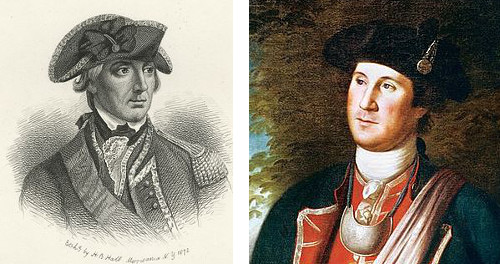
http://commons.wikimedia.org/wiki/File:Gen._Sir_William_Howe.jpg

After the Battle of Germantown in 1777, an American soldier approached the British line carrying a white flag, a fox terrier, and a note:

General Washington’s compliments to General Howe, does himself the pleasure to return him a Dog, which accidentally fell into his hands, and by the inscription on the collar, appears to belong to General Howe.

An officer conveyed the dog to British general Sir William Howe:

The General seemed most pleased at the return of the dog. He took him upon his lap, seemingly uncaring that the mud from the dog’s feet soiled his tunic. Whilst he stroked the dog, he discovered a tightly folded message that had been secreted under the dog’s wide collar. The General read the message, which seemed to have a good effect upon him. Although I know not what it said, it is likely to have been penned by the commander of the rebellion.

There’s no record of what this second note said, but Sir William later referred to the incident as “an honorable act of a gentleman.”

(Caroline Tiger, General Howe’s Dog, 2005.)

24 Mar 12:42

Cómo 'aparcar' un ferry antes de desguazarlo [VÍDEO]

by noreply@blogger.com (Antonio Martínez Ron)
THUMBFERRY

El barco que vais a ver en el vídeo es el M/F Ostend Spirit, también conocido como MS Pride of Calais, un ferry de 160 metros de eslora que durante años (entre 1987 y 2012) prestó servicio en el Canal de la Mancha llevando a la gente entre Dover y Calais. Hasta que en noviembre de 2013 lo llevaron hasta esta playa de Turquía. Atentos, porque merece la pena:


Esta maniobra de varado tan aparentemente salvaje debe de ser habitual en este tipo de áreas de desguace, a juzgar por la falta de reacción de los paisanos que se ven fugazmente en el vídeo. El barco se dirige intencionadamente hasta la arena a gran velocidad para que quede sobre el el terreno y allí se pueda proceder a su desmantelamiento. Tenía este vídeo guadado por ahí, pero es tan 'Fogonazos', que no me he resistido a recuperarlo ;)

Entrada publicada en Fogonazos http://www.fogonazos.es/
23 Mar 12:21

Photo


23 Mar 12:19

WIP - it’s funny to see how my colors work in grey....


WIP - it’s funny to see how my colors work in grey. loosing a lot of light and value seems to change too. I guess that is the reason why I never understand how to color something from grey maybe because I never use pure black too, I don’t know.

23 Mar 12:17

fight fight.


fight fight.

23 Mar 12:16

Simple 4


Simple 4

23 Mar 12:16

Simple.


Simple.

23 Mar 11:56

Step by step 10 pictures might not be enough but tumblr is...


Step by step 10 pictures might not be enough but tumblr is limited.

23 Mar 11:56

Photo


23 Mar 11:55

lemme-holla-at-you:Me

23 Mar 11:55

RT @rafacasal: @choracuica http://t.co/bAlLB4ylXp

by Osias Jota
19 Mar 13:16

20aliens:Andy Goldsworthy’s Ice and Snow Sculptures


20aliens:

Andy Goldsworthy’s Ice and Snow Sculptures

19 Mar 13:15

Motivos pra não comprar um carro

by Joe

bancos

Não sei se rio do mal entendido ou choro pela condição do rapaz que nunca vai abandonar o busão da felicidade.

19 Mar 13:13

Photo


19 Mar 13:08

RT @KaitlynHova: THIS IS THE MOST AMAZING BUSINESS CARD OF ALL TIME :D http://t.co/kJ7Ir4PeBt

by Osias Jota
800px-Coturnix_coturnix_eggs_normal.jpg
Author: Osias Jota
Source: Mobile Web (M2)
RT @KaitlynHova: THIS IS THE MOST AMAZING BUSINESS CARD OF ALL TIME :D http://t.co/kJ7Ir4PeBt
B_3n6C5UwAE3td3.jpg:large
19 Mar 13:08

montt en dosis diarias - 278

by noreply@blogger.com (montt)
Aventura%2Bcopy.jpg

montt?d=yIl2AUoC8zA montt?d=7Q72WNTAKBA montt?d=qj6IDK7rITs montt?d=ecdYMiMMAMM
19 Mar 13:07

nubbsgalore:elephant aerial shots by (click pic) michael...


brent stirton


michael poliza


michael poliza


michael poliza


michael nichols


michael poliza


tyler hicks


michael poliza


alex bernasconi

nubbsgalore:

elephant aerial shots by (click pic) michael nichols, tyler hicks, alex bernasconi, michael poliza and brent stirton over botswana’s okavango delta, namibia’s damaraland and soussusvlei, kenya’s masai mara and chad’s zakouma national park . 

consider that an african elephant is killed by poachers every 15 minutes, and if current trends continue unabated, they will be extinct in a decade.  

19 Mar 12:26

25 Green by Luciano Pia

by Matt Watts

25 Green by Luciano Pia

Green apartment complex designed in 2012 by Luciano Pia, located in the Italian city of Turin.

25 Green by Luciano Pia

More Images


Need hosting? Design You Trust is proudly supported and hosted by WebHostingBuzz Premium Infrastructure & Network.
19 Mar 12:26

Hydroklinika  Nicolas GrospierreThe balneological hospital of...


Hydroklinika  Nicolas Grospierre

The balneological hospital of Druskinnikai in Lithuania, designed by A. and R. Silinskas was built in 1976-81. Having served for merely 20 years, it was shut down and destoyed in 2005, to be replaced by a (probably more) profitable water-amusement park. 

Read More

18 Mar 20:06

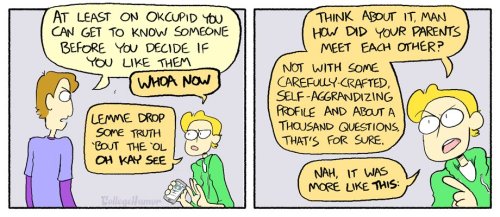
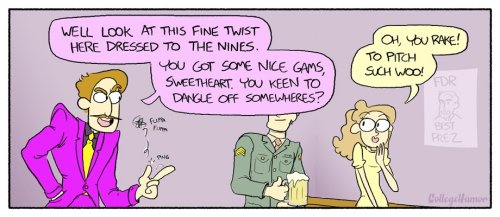
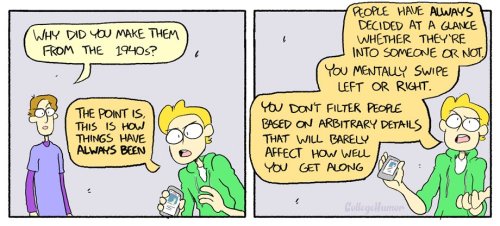
noobtheloser:collegehumor:The Real Difference Between Tinder and...

18 Mar 20:05

RT @HistoricalPics: These two books contain the sum total of all human knowledge...

by Osias Jota
800px-Coturnix_coturnix_eggs_normal.jpg
Author: Osias Jota
Source: Twitter Web Client
RT @HistoricalPics: These two books contain the sum total of all human knowledge http://t.co/QYJESP5IPT
CAF8e6aWQAAg6oD.jpg:large
18 Mar 20:05

Photo


18 Mar 20:04

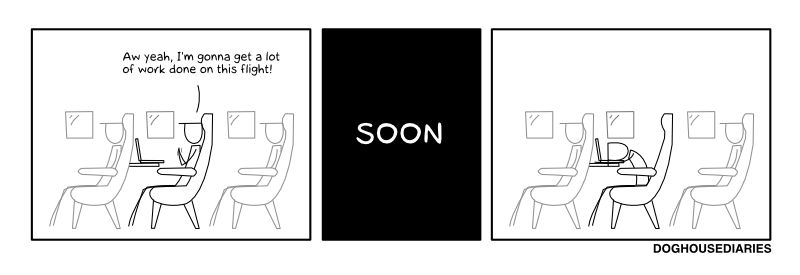
Productivity On Planes

by DOGHOUSE DIARIES

Productivity On Planes

The same thing holds true at work.

18 Mar 20:03

Man v machine (again)

by Tim Harford
Undercover Economist

‘The Luddite anxiety has been dormant for many years but has recently enjoyed a resurgence’

I’m writing these words in York, the city in which, two centuries ago, the British justice system meted out harsh punishments — including execution — to men found guilty of participating in Luddite attacks on spinning and weaving machines. By a curious coincidence, I’ve just read Walter Isaacson’s article in the FT explaining how wrong-headed the Luddites were. I’m not so sure.

“Back then, some believed technology would create unemployment,” writes Isaacson. “They were wrong.”

No doubt such befuddled people did exist, and they still do today. But this is a straw man: we can all see, as Isaacson does, that technology has made us richer while employment is as high as ever. (The least appreciated job-creating invention may well have been the washing machine, which helped turn housewives into women with salaries.)

The Luddites themselves had a more subtle view than Isaacson suggests, and one which is as relevant as ever. They believed that the machines were altering economic power in the textile industry, favouring factory owners and low-skilled labourers at the expense of skilled craftsmen. They wanted to defend their interests and they did so violently. As the historian Eric Hobsbawm put it, their frame-breaking activity was “collective bargaining by riot” and “simply a technique of trade unionism” in the days before formal unions existed.

To put it another way, the Luddites weren’t idiots who thought that machines would destroy jobs in general; they were skilled workers who thought that machines would devalue their specific jobs and their specific skills. They were right about that, and sufficiently determined that stopping them required more than 10,000 troops at a time when the British army might have preferred to focus on Napoleon.

The Luddite anxiety has been dormant for many years but has recently enjoyed a resurgence. This is partly because journalists fear for their own jobs. Technological change has hit us in several ways — by moving attention online, where (so far) it is harder to charge money for subscriptions or advertising; by empowering unpaid writers to reach a large audience through blogging; and even by introducing robo-hacks, algorithms that can and do extract data from corporate reports and turn them into financial journalism written in plain(ish) English. No wonder human journalists have started writing about the economic damage the robots may wreak.

Another reason for the robo-panic is concern about the economic situation in general. Bored of blaming bankers, we blame robots too, and not entirely without reason. Inequality has risen sharply over the past 30 years. Many economists believe that this is partly because technological change has favoured a few highly skilled workers (and perhaps also more mundane trades such as cleaning) at the expense of the middle classes.

Finally, there is the observation that computers continue to develop at an exponential pace and are starting to make inroads in hitherto unexpected places — witness the self-driving car, voice-activated personal assistants and automated language translation. It is a long way from the spinning jenny to Siri.

What are we to make of all this? One view is that this is business as usual. We’ve had dramatic technological change for the past 300 years but it’s fine: we adapt, we still have jobs, we are incomparably richer — and the big headache of modernity isn’t unemployment but climate change.

A second view is that this time is radically different: the robots will, before long, render many people economically valueless — simply incapable of earning a living wage in a market economy. There will be plenty of money around but it will flow to the owners of the machines, and maybe also to the government through taxation. In principle, all could be well in such a future but it would require a radical reimagining of how an economy could work. The state, not the market, would be the arbiter of who gets what. Such a world is probably not imminent but, by 2050, who knows?

 . . . 

The third perspective is what we might call the neo-Luddite view: that technology may not destroy jobs in aggregate but rather changes the demand for skills in ways that are real and troubling. Median incomes in the US have been stagnant for decades. There are many explanations for that, including globalisation and the decline of collective bargaining, but technological change is foremost among them.

If the neo-Luddites are right, then the challenge in front of us is simply to adapt. Individual workers, companies and the political system will have to deal with wrenching economic changes as old industries are destroyed and new ones created. That seems a plausible view of the near future.

But there is a final perspective that doesn’t get as much attention as it might: it’s that technological change is too slow, not too fast. The robo-booster theory implies a short-term surge in jobs, as all those lovely new machines are designed and built and installed, followed by a long-term surge in productivity as the robots make the economy ruthlessly efficient. It is hard to see much sign of either trend in the economic statistics. Productivity, in particular, has been disappointing in the US and utterly dismal in the UK. Where are the robots when we need them?

Written for and first published at ft.com.

16 Mar 02:27

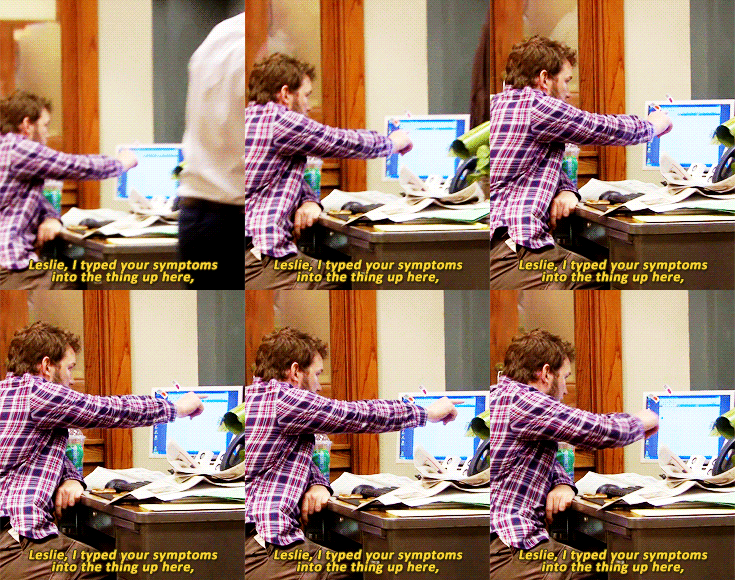
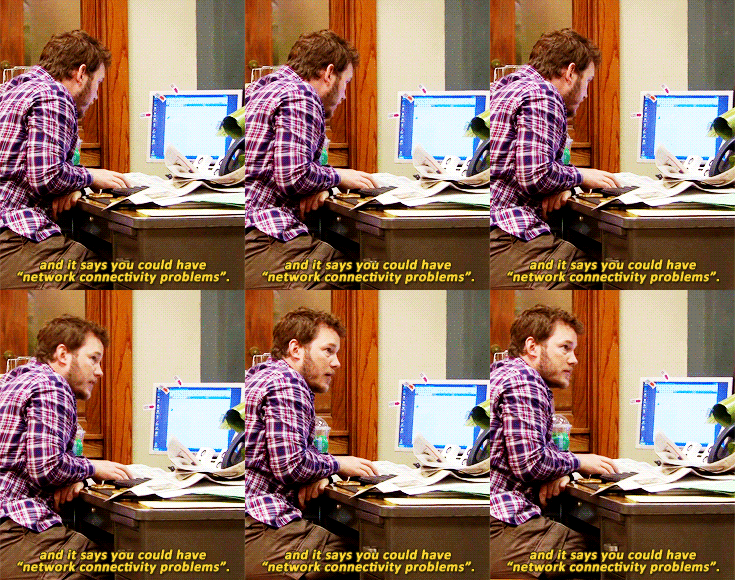
GREATEST IMPROVISED LINE EVER


GREATEST IMPROVISED LINE EVER

15 Mar 14:47

Contos eróticos da norma culta

by brunomaron

contos


HQ publicada no jornal SUPLEMENTO nº 3


Arquivado em:dinâmica de bruto
15 Mar 14:35

The Heel of Empire

http://oglaf.com/heel-empire/