Shared posts

22 Apr 13:06

An Unconventional Guide for Getting a Software Engineering Job

by Julia Grace
  Working the Tindie booth at PyCon 2014 (Python programming conference). There were 54 other companies hiring engineers there (yes, I counted).


Working the Tindie booth at PyCon 2014 (Python programming conference). There were 54 other companies hiring engineers there (yes, I counted).

BACKGROUND

At the time of this writing, I’ve been in Silicon Valley for 8 years.

I’ve worked at big companies and small startups. I've interviewed at many of the usual suspects (Facebook, Google, etc.), as well as several startups (some now defunct, some on the road to IPO).

I’m currently a Senior Engineering Manager at Slack and was previously the CTO of Tindie. I have interviewed dozens of engineering candidates and spent the past several years mentoring junior engineers and hearing feedback on their interview experiences at companies large and small.

This blog post details all the aspects of finding a job that I wish someone had told me years ago. The majority of the advice I give is targeted at those looking for software engineering roles, but some of it can be generalized to other positions as well.

This advice is based on my personal experiences, as well as the experiences of my close peers, my mentors, people I have mentored, and other startup CTOs I’ve been in close contact with. As usual, YMMV (your miles may vary).

All the stories are true, but some of the names have been changed.


WHERE DO YOU WANT TO WORK?

"So who is hiring?"

Reframe: Think about:

  • What industries am I passionate about?
  • What apps do I use on my phone everyday?
  • What websites/tools do I regularly visit? (browser history is your friend)

Early in my career I conducted very reactive job searches, rather than proactive, making it very hard for me to find a place I actually wanted to work.

I would let the jobs and recruiters come to me rather than keeping my eyes open for new opportunities. This often resulted in me interviewing at places I wasn’t interested in working, didn’t understand me or my career goals.

While interviewing at jobs you aren’t interested in can be good interview practice, it is not a good long term strategy for finding a job.

I got into the practice of asking peers that I respect and who know me well where they would work if they were going to leave their job tomorrow, and why. This yielded many great companies that weren’t on my radar.


Priorities, Priorities, Priorities

“I would consider any job!”

Reframe: What are your non-negotiables?

My first job at a startup required me to commute 3 hours total each day, and had almost no flexibility in terms of working from home.

As someone who is an avid runner, this was a disaster. I was working long days (10+ hours) so I would spend 13 hours away from home each day. I never had time to run, and if I did fit in a run before work I was exhausted. I’m much more productive after I run, and I often think through tough problems while I’m running. My quality of life suffered tremendously and I was a much less productive employee.

Write down a list of what is important to you for your next job. Consider factors such as:

  • Location: are you willing to relocate, what is your max commuting time, etc.
  • Big/small company: for small companies it helps to think in terms of the size of the engineering team: 5 engineers is a lot different than 50.
  • Minimum salary requirements
  • Flexibility to work from home
  • Job role: are you okay with starting off in support or customer service? If interviewing for a management position are you okay with starting off as an IC (individual contributor)?

You may not know if you want to work at a startup or big company, or you may not care where the job is physically located - that is fine. Just write down what is important to you. If you don’t do this, you’ll find yourself compromising on things you never thought you would (“Maybe commuting 3 hours a day won’t be that bad...”).


Resumes

“I have done a lot of front-end work, but I’m interested in full stack...but maybe I should apply to front-end jobs and tailor my resume to that.”

Reframe: Don’t put yourself prematurely in a box.

In the Spring of 2011 I had breakfast with DJ Patil. I was interviewing at various startups and trying to figure out how to best tailor my experience for each role. The problem is that I love doing front-end work, back-end work, databases, product, etc.

He gave me a great piece of advice:

“Instead of pigeon holing yourself, instead tell them what you’re great at, what you’re passionate about. Then see if there is a fit."

Don’t mold your interests to fit their job requirements.

Great companies (the ones you want to work for) won’t pass on an excellent candidate because s/he doesn’t have exactly the specific skill set they are looking for. For example, companies that say “she has written Python, but we are a Ruby shop, so we can’t hire her” don’t understand that great engineers can not only can pick up new technologies quickly, but these passionate engineers love learning new things!

There are times when deep knowledge about a particular language/infrastructure are needed, but for most roles (especially junior positions), hiring a software engineering generalist is just fine.

Experience is (generally) replaceable, passion and enthusiasm are not; show that you are excited about engineering.

Further Reading: Nicholas Zakas has a great blog post Generalists and specialists: thoughts on hiring that I have found useful to understand at what stage hiring a specialist vs generalist is useful.


Understand how companies source and hire talent

“I’ll just send my resume to their jobs@company.com email address”

Reframe: Companies get hundreds, if not thousands of resumes sent to their job email address each day (this is called "inbound"). That is a lot of noise, and they often miss good candidates.

To illustrate this point: I have a close friend who has a CS degree from MIT. She’s worked at several large public companies. She decided to apply for jobs at several "hot" San Francisco startups. I define "hot" as companies that have significant inbound interest to their job postings and are frequently written about in the tech press. They are often top of mind to engineers applying for jobs.

She emailed her resume to their jobs email address.

She was turned down for every job without even 1 interview. Later, she had a friend at one of these companies deliver her resume to the hiring manager; she had lunch with him and she was fast tracked through the hiring process.

Most people think that hiring processes are optimized to help a company hire great people. This is often not the case. They are optimized to help a company NOT hire less competent people.

The implication of this is that they are less willing to take a chance on someone. Venture capitalists work the same way: they would rather pass on a deal that later was a home run than do a deal that ends up a disaster. The repercussions of dealing with a bad hire (or a bad deal) are much worse that the repercussions of passing on someone or something great. It’s all about risk mitigation.


how to find a contact in a company

  • Have your resume/LinkedIn given to the company through an intro. Find someone in your network who knows someone at the company.
  • If you can’t do this, find someone at the company (search their About pages, which often have links to employees’ LinkedIn, Twitter accounts, etc.) and email that person asking about the company. I’m not saying you should harass them, just politely reach out, indicate you’re interested in the company, ask for advice on how to apply. Most people want to help.
  • If there are any women working there and you are a woman, specifically email them. If you are not a woman, don't do this. If there is someone at the company who went to the same university as you, that is also a way in.
  • Startups often sponsor hackathons, meetups, etc. Stalk the companies (not people) you’re interested in and go to those events. Talk face to face with employees and if you feel the conversation is going well, get their email address. Follow up with your resume/LinkedIn and why you want to work there.

Further Reading: Sara Mauskoph wrote a great post about her job search process: Landing your next gig, particularly around reaching out to companies.


LinkedIn

"Do people actually use LinkedIn? I don’t think so, the last time I updated my profile was 2 years ago and no one looks at it."

Reframe: People use LinkedIn all the time. Really, all the time, and I'm not just talking about recruiters (although they use it a lot). To see this phenomenon in action read Elaine Wherry's "The Recruiter Honeypot".

The goal of using LinkedIn is to be easily findable for new job opportunities. This is especially true early in your career when no one knows who you are or that you even exist. 

I'm not saying you should never maintain a Word/PDF/text resume outside of LinkedIn (especially if you have worked on projects you can't publicly discuss on LinkedIn). However, if the majority of people searching for candidates use LinkedIn, then it behooves you to have a profile where people are looking! Creating a personal website, a GitHub profile, etc. are all great too, but how will people know to search for your personal website and find your resume when they don't know you exist?

How I use LinkedIn: I know a lot of people, more than I can possibly keep track of. When I'm mentoring someone and they are looking for a new job, I used to brainstorm who I should intro them to. This took a non-trivial amount of time and I would inevitably forget someone. Now I point them to my LinkedIn profile and they let me know who in my contacts they want to meet (another trick I learned from DJ Patil).


Recruiters are not your friends

“A recruiter at company XYZ emailed me and says I look amazing. How awesome! This recruiter really likes me and has my best interests at heart!”

Reframe: Outside recruiters (also called contingency recruiters - in other words, recruiters that do not work in house for a company) are typically paid 20%+ of salary for anyone they source (meaning find) and are subsequently hired by the company. So if you’re hired for $100K, recruiter gets $20K+.

Recruiters want to get as many candidates in front of a company as possible to increase their chances of one getting hired, and thus getting paid. I’m not saying recruiters are ill-willed or malicious, they will just say anything (truthful or not) to get you to respond to them. Don’t fall for recruiter flattery. 

I know of many engineers who assume that to start their job search they should find a great recruiter to help them. Great recruiters do exist but they are hard to find, so I would instead suggest Angel List Jobs or HIRED (especially early in your career).

For every email from an engineering candidate interested in a job I posted, I get 5-10 emails from recruiters (whom I have never met or corresponded with) telling me about all the engineering candidates they want to send to me. I do not respond to these unsolicited emails.

Further Reading: Elaine Wherry's The Recruiter Honeypot gives a great description of how recruiters work.


Interview Prep

“Every interview is so different so how could I possibly prepare?”

Reframe: Most tech interviews - especially those that have generic whiteboard coding questions - are like taking the SAT. If you study, you’ll do better.

There are two facets to interview prep:

  • Educate yourself about the company. This sounds obvious and like a no-brainer, but you would be surprised how many people I have interviewed that really have no understanding of what my company does. Understand the technical challenges the company faces (a good place to start is the company's engineering blog).

To illustrate this point: Several years ago I interviewed at a San Francisco startup that was frequently in the news. I read all the articles about the company, including a couple in-depth pieces in WIRED magazine. I went through the CrunchBase profile of the founder. I read their blog, paying particular attention to the engineering challenges the company faced, and how they were approaching them.

In the interview they asked me how I would solve these exact challenges that I had read about. I was very glad I knew what they were beforehand and had spent some time thinking about these exact problems. It almost felt like cheating.

I asked them why they asked those questions, and they said that almost every person they had interviewed hadn’t read their press or their blog.

  • Do practice technical whiteboard questions. Go through Programming Interviews Exposed and do all the questions. This is an excellent reference and walks through common questions with in-depth solutions.

If you need more, then tackle Cracking the Coding Interview - this is more of a rapid fire book with tons of questions and short answers, hence why I think you should go through the more detailed book first.

Programming interviews very frequently use questions from these books (sometimes with only slight changes) so it helps to gain familiarity with these questions.

Further Reading: Lynn Root (software engineer at Spotify) has a great blog post about how she prepared for her tech interviews.

Pro tip: A friend once told me: “Whenever someone asked a question I didn’t know, I would ask the interviewer what the solution was. Nine times out of ten, at my next interview, someone would ask the exact same question."


Interviews

"I’ll just show up and they will ask me a bunch of questions."

Reframe: Always, always have a list of questions that you will ask the company!

For the interview the company will need to gauge your skill level of what you explicitly state you are good at. So even though you might not write JavaScript everyday, the company will get their best JavaScript engineer to interview you if you say your best language is JavaScript.

I suggest asking these questions (in addition to your own):

  • What are your expectations for a person in this role?
  • What does success look like?

If you are interviewed by 8 different people and receive 8 different answers to the above questions, this is a very bad sign and indicates the company is not on the same page internally about what they are hiring for. You will never be successful at a company where your manager wants you to do ABC, the CEO wants you to do XYZ and VP of Engineering wants you to do 123.

I have found that women are frequently too humble and volunteer discussion of their weaknesses (this also applies to men but I have seen it more often happen with women). Honesty is important, but remember, you’re being compared to people who might overstate their strengths and understate their weaknesses.

Don’t go into a job interview saying what you can’t do or have limited experience doing. Instead talk what you have done, what you love and what you’d like to explore more.

Further Reading: 

  • Julia Evans (software engineer at Stripe) has a great list of Questions I'm Asking In Interviews that she poses to potential employers.
  • Cate Huston offers the perspective of the technical interviewer in How I Interview (Cate has extensive experience interviewing candidates at Google).

Salaries

"The company wants to give me an offer, but before they do so they have asked for my salary history. I better give them this or else they won’t offer me a job..."

Reframe: Do not give out previous salary information.

Companies want this information for several reasons:

  • What other companies are paying their people (collecting data points for competitive analysis).
  • Seeing how low of an offer they can get away with giving you.

To illustrate this point: in the Spring of 2011 several of my colleagues from IBM Research were leaving for other large tech companies in the Valley.

One was about to receive an offer from another large company, but first he had to submit 5 years of salary and bonus information. He obliged and got what he thought was a competitive offer, but it was the only place he interviewed so he wasn't actually sure of this.

A year later another colleague was thinking of joining that same tech company. She refused to give salary numbers, even after being repeatedly asked for this information from the recruiter. She instead got a competing job offer from another large tech company and used that offer (which was much higher than her current compensation) as leverage in the negotiation. Her offer for a role similar to his was 30% higher.

Since women are typically underpaid (generally speaking they don’t aggressively negotiate their starting salaries as often as men), a way to continue to be underpaid in the future is to disclose your current and previous salaries. This is also true in general for people who are not aggressive negotiators.


Offer Negotiation

"Wow, the company has given me an offer. It’s more than I expected! I should just accept right now." (this is an actual quote from someone I mentored)

Reframe: Companies generally expect you to negotiate. They usually build in 20% wiggle room, so if you are offered $50K they will probably would easily be open to negotiating up to $60K (and probably more), but this varies greatly by role. I have seen senior execs negotiate for 50% more.

No one will get offended by you negotiating for more money or better benefits. I have regularly seen male applicants ask for 40% more and end up with 20% more, and women applicants ask for 20% more and end up with 10%. If the company does get offended, then it’s likely not a good fit for you anyway.

There are exceptions to this rule:

  • New grad positions, meaning people who have just graduated from college/university. Those salaries are often the same across the board at a company, but you can negotiate for things like relocation.
  • Entry level developer positions, meaning people who have graduated from developer bootcamps or are newer to programming. For the same reasons above, many companies will fix these salaries across the company.
  • There are some companies that don't allow for negotiation of their offers, but they will tell you that up front.

Negotiation is an important life skill, and people who do it come across as more senior and competent.


Which job should I choose?

"I have this great offer, I’ve negotiated up, so I should just take it!"

Reframe: Now that you have the money you want, will you be a cultural fit in the organization? In an ideal world you shouldn’t waste your time negotiating with a company that is obviously not a good cultural fit for you, but on the other hand it can be good practice.

Look at the managers/leaders of the company: CEO if it’s a startup, department head if it’s a larger company. The qualities that s/he exhibits are the qualities that will be valued in the company. For example, if they are aggressive, aggressive people will more often be promoted.

This is because of an intrinsic bias toward homophily - in other words, we like people more who are similar to us and often more frequently promote people who remind us of our “younger selves”.

At small startups, the background of the CEO generally dictates how decisions are made. Is s/he an engineer? Then most likely engineering will be more highly valued and have more of a say in decisions than other functions such as marketing, sales, business development, etc. This is because the CEO knows how engineering works and has innate biased towards it. In this case engineering is the CEO's “favorite child”.

I am not saying you should not take an engineering job at a company whose CEO used to be in sales, for example. However, if you do want to do this, ensure the technical leaders at the company are very strong and the CEO respects them.

There is a large downside to working at a company run by a former engineer: s/he will often be tempted to “help out” engineering since s/he feels most comfortable with that department because that is where s/he started.

This can be very dangerous because the CEO is likely very distracted with other very important tasks (like running the company) and so s/he might be very tempted to give “drive-by advice”: surface layer advice that well intentioned but not practical because it doesn’t come from a deep understanding of the intricacies of the problem. However, because the advice came from the CEO it is often taken very seriously (often too seriously) and can be very distracting.

The upside is you may have a lot of interaction with the CEO, the downside is you may have a lot of interaction with the CEO.


Equity

"The startup gave me an offer, but they are also giving me equity. I don’t know what this equity means! I guess it’s a reasonable amount and I should just accept."

Reframe: It is your responsibility to understand stock, options, vesting, etc. My good friend David Weekly has written a great guide that is targeted towards people that have no idea how this works: An Introduction to Stock Options for the Tech Entrepreneur or Startup Employee (long, but a good read). 

If you have never had a job offer that included equity before, then determining out how much the equity is worth can be very confusing. Do not be intimidated. Remember -- the value of your equity when you join the company might be very, very different from when you leave the company. It could be worth much more, or much less, but at the end of the day 10% (or any %) of $0 is $0 so just because the equity is worth something now doesn’t mean it always will be.

Further Reading: Offerletter.io has a great post about Understanding and Negotiating Startup Equity.


You've made it to the end! Thanks for reading. Please don't hesitate to contact me if you have feedback.



12 Apr 22:44

4gifs: Now they have our technology. [video]


4gifs:

Now they have our technology. [video]

12 Apr 03:30

What if it was all true?

by boulet


11 Apr 20:45

The Worst Internet Things bracket

There are millions of Internet things. Most of them are great! 64 of them are bad.

SB Nation 2015 March Madness Bracket

Midwest Region

This is by far the toughest region of the tournament.

SB Nation presents: The bracket of awful Internet things, Midwest Region

(1) SOMEONE IM'ING YOU ON FACEBOOK. As most recently passed along by Scientific Podcast Goes Boink: "Twitter is for loving people you've never met, and Facebook is for hating people you've always known." Facebook is largely an awful place, made more awful by the perpetual threat (before you disable instant messages) of your high school friend making your laptop ding and asking you to come see his prog-rock band with two drummers, no singer, and a rapper in a VOTE FOR PEDRO shirt.

It's made still more awful by the fact that the "read receipts" feature is on by default, so if you've read their IM and haven't answered, they know it. This is the top overall seed, because read receipts are the worst thing about the Internet. The right to ignore people must be preserved. Anyway, if you get one of these IMs, usher everyone out of the building in which you live, burn it to the ground, and live in the forest until you don't hear airplanes anymore.

(16) LOCAL TV STATION WEBSITES. These are especially wretched experiences if you're a freelance writer struggling to pay rent, because the half-done sentences and "they're/their/there" errors twist the knife ever deeper. Some TV station websites are perfectly fine. Some will ask you to take three surveys and watch a commercial from your local dentist and then dump you in an article full of Loren Ipsum.

(8) AD PLAYS, ACTUAL VIDEO DOESN'T. Out of principle, I don't use ad blockers. This is one reason I will never blame anyone for using them.

(9) ATHEISTS WHO LOVE TO ARGUE. Here's a fun one: tell them there's a gap in the fossil record and then immediately mute them. This will banish them to their own specialized Hell, thereby disproving their argument.

(5) KICKSTARTERS FOR WEDDINGS. I swear upon every shred of journalistic integrity I have that I have seen people do this.

(12) TINDER PHOTO IS A GUY IN OAKLEYS WITH A FISH HE CAUGHT. Lady friends tell me that easily a third of Tinder photos are of men, especially middle-aged men, showing off fish they caught. They presumably are gunning for the "rugged outdoorsman" aesthetic, but they're rocking M-frame Oakleys, which takes in more of an "I buy my pants at Home Depot" direction.

(4) FACEBOOK RE-ARRANGING YOUR FEED. If email or books or anything else used algorithms to bork around with the order of your consumption, we wouldn't stand for it. We put up with it on Facebook because Facebook does not matter.

(13) ANY TIME AOL DOES ANYTHING. don't buy vox don't buy vox don't buy vox don't buy vox don't buy vox don't buy vox don't buy vox don't buy vox don't buy vox don't buy vox don't buy vox don't buy vox don't buy vox don't buy vox don't buy vox don't buy vox don't buy vox don't buy vox don't buy vox don't buy vox

(6) GOOGLE KILLING GOOGLE READER. Google Reader was my favorite social media network of all time. It was essentially the best possible version of what Facebook could have been. Then Google trash-canned it in an apparent effort to herd us all to Google+. And look, you're reading this on Google+ right now! You're even wearing a Google+ T-shirt, and you flew a Google+ to work this morning!

(11) PERSON ON EVERY GOTOMEETING CALL WHO IS BANGING A POT AND SHRIEKING. One person's holding a crying baby. Another has a dog who won't shut up. The presenter is standing in the bathroom, towel over his face, speaking 35 feet away from a speakerphone made in 1996. Conference-calling is like swimming, in that human beings clearly aren't gonna get any better at it, no matter how much time we're given.

(3) LINKEDIN REQUEST FROM YOUR HIGH SCHOOL TEACHER. no

(14) JON BOIS' TWITTER FEED. 1. Jon works on ambitious project that takes him a month, meaning he'll give you, what, four pieces of content in that time? 2. Jon repeats the same eight or nine gags over and over. 3. Jon tweets like someone who's trapped in a room that won't unlock until he loses every one of his followers. It's insufferable.

(7) ALL INTERNET DISCOURSE ABOUT BACON. "I am on Team Bacon! I have no palate and I want to belong. Bacon pizza."

(10) MARCH MADNESS BRACKET REPURPOSING TROPES. Oh, so you're too precious to just list some things, God forbid. Yeah, leave that for BuzzFeed. You're not like them.

(2) ITUNES. I thought I was the only one who messed up a sync and ended up wiping an entire music library that I had spent years building, but multiple friends have told me that they did the exact same thing. iTunes is like having your hand held by a robot who wants to walk into the ocean and die.

(15) 23-YEAR-OLD BACHELOR INSTAGRAMMING HIS FRIED EGGS. "Made eggs. Giggity giggity! #ForemanGrill #FamilyGuyQuotes"

West Region

This is by far the toughest region of the tournament.

SB Nation presents: The bracket of awful Internet things, West Region

(1) POP-UP ADS ON ILLEGAL SPORTS FEEDS. They're manageable if you can fullscreen it, but otherwise, the game you're watching has to be Game 7 of the Super Bowl in order to possibly be worth it.

(16) PERSON WHO TYPES "WOW" IN FRONT OF RETWEET. Wow. Just wow.

(8) ROUGHLY 85 PERCENT OF INTERNET MEN. You're being yourselves and I wish you would stop.

(9) EVERYTHING LONGER THAN 4,000 WORDS. As someone who wrote a 43,000-word article last year, I am one of the worst offenders of all. I don't think we're interesting enough to be talking this much.

(5) VAPING. Yeah, I mean, vaping seems pretty silly and all, with the dumb custom-built vape-rigs and whatever. But ...

(12) PEOPLE WHO HATE VAPING. ... they're not trying to bother you, they're just some folks going off by themselves and dorking out over something they enjoy. They're over there having fun and you're over here clawing your damn eyeballs out in bitter anguish. Everything is fun and pretty good except for you.

(4). ANYONE WHO CHARGES MONEY FOR A "HOW TO BLOG" CLASS. Welcome to Jon's Blogging School!
1. Work very, very hard and be prepared to not make money for a while
2. Look for stuff nobody is doing, and do that; don't be afraid to aim high and fall short
3. Learn how to Photoshop and make video and do other stuff like that, there's lots of stuff for that on YouTube
4. Promote your stuff like you're proud of it, and if you're not proud of it, don't get too down about it, because failure is okay and probably necessary
5. Be nice

Thank you for attending Jon's Blogging School!

(13) EXPERT VILLAGE VIDEOS THAT ARE SPLIT INTO 14 PARTS. This actually would be a 1-seed if it still stood today as the colossal trash fire it once was. If y'all missed out on 2008-era Expert Village ... man, it's the stuff that should be taught in school.

For example, there might be a how-to video on how to make pancakes. This could be accomplished with a three-minute video, but Expert Village dragged the affair out into a 12-minute epic, split it up into 45-second videos, uploaded them all to YouTube, and dumped 30-second ads in front of each one. They never made playlists or linked to the rest of the videos, either, so watching them in order was nearly impossible. They're probably still out there somewhere. It's digital ruin porn.

(6) SOMEHOW ENDING UP ON ANSWERS.COM.
"Jesse Owens was born on September 12th, 1913."
[three rollover ads consume screen]
"You won't believe how many gold medals he"
[click to next slide]
"won! Jesse Owens won over one million gold"
[nine video ads start auto-playing; your laptop's processor melts and spills out of the USB ports]
"trophies."

(11) CRAIGSLIST DATING. Go use literally any other dating service. Go find romance literally anywhere else. Go meet someone on a Wikipedia talk page.

(3) PEOPLE WHO THREATEN TO UNFOLLOW CELEBRITIES. "Grandpa, how did you win this medal?" The old man's eyes welled with tears. "I followed Kanye West and found him annoying."

(14) YELP REVIEWER WHO QUOTES THE "NO TIPPING" SCENE FROM RESERVOIR DOGS. The rarest of Pokemon is the person who misattributes this quote to Tyler Durden.

(7) OFFICIAL LIVE TV STREAMS THAT PLAY THE SAME FOUR ADS OVER AND OVER. Over the last year, I have seen the Aaron Rodgers "pump you up" State Farm ad more than I have seen my family.

(10) PODCAST MUSIC IS PODCASTER'S BAND RECORDED FROM PHONE. It is a ska band.

(2) MANUAL RETWEETERS. I probably like you, but I definitely like you if you don't know what this means.

(15) BLOGGERS GOING ON CAMERA. When I went on camera to announce this bracket, I had to keep my cardigan on because there was a giant toothpaste stain on my shirt. We are irredeemable.

South region

This is by far the toughest region of the tournament.

SB Nation presents: The bracket of awful Internet things, South Region

(1) BRANDS. Every holiday eventually loses its intended spirit. Christmas has its commercialism, Easter has its Easter bunny, and Dr. Martin Luther King, Jr. Day has dozens of brands desperately crawling over one another to repurpose the Civil Rights Movement to sell stuff. They take turns throwing themselves upon the pyre every single year because they are stupid.

(16) ANYONE WHO STARTS ANYTHING WITH, "SORRY, FOLKS." We really don't need any more scolding on the Internet. Except for this bracket. We need this bracket, and then no more scolding after that.

(8) PEOPLE WHO COMPLAIN ABOUT BUZZFEED. I wish they would find a more prominent font/shade with which to credit folks, sure. By and large, though, they're making stuff that people enjoy, and unlike many sites of their kind, they don't carpet-bomb their pages with ads that make their pages unnavigable. Please note that you'll rarely, if ever hear a non-creating Internet user whine about BuzzFeed. If you're complaining about them, you're probably someone who creates Internet stuff yourself. You should be more like them, because people enjoy them a lot!

(9) MAYOR OF YOUR CITY CITES BUZZFEED. This is admittedly unfortunate, though. 14 Reasons Why Knoxville Is The Best City In The World!

(5) GCHATTERS WHO HIT ENTER AFTER EVERY THIRD WORD. You step away from your computer. From the other room, you hear it: DINK. DINK. DINK DINK DINK. DINK. DINK DINK. DINK. Maybe all your friends just saw the President tweet at you and ask you if you want to eat pizza and play Mario Kart! Or maybe Brandon from work is thinking about watching Chopped.

(12) PEOPLE WHO COMPLAIN ABOUT BLEACHER REPORT. it's a good site that i occasionally enjoy

(4) RESTAURANT WEBSITES. The lone exception is the website for my sandwich shop, of which I am very proud. We are closed.

(13) FUTURISTS. Spencer wanted me to put this one in. I don't remember why. Maybe they will understand why in the future.

(6) WRITERS WHO TRY TO BE MADDOX. This isn't the problem it used to be, I don't think, so it's only a 6-seed. In the earlier days of the Internet, Maddox was one of the only hugely visible Internet Writers. In a proto-Internet full of boring writing and useless crud, Maddox was doing his own thing, and doing it really well. He might not be your bag, and is only sometimes mine. In any case, thousands of Internet Dudes decided to try to be him without really understanding what made him good, and the results were metric tons of the most furious, obscene, offensive, and dull writing there's ever been.

(11) CROSSFIT MESSAGE BOARDS. Lemme expand this definition just slightly, because I feel like sharing this:

There's a bodybuilding dot com thread where two guys argue about how many days are in a week (via @katiebakes ) http://t.co/qeiZSlXdyZ

— SPENCER HALL (@edsbs) January 4, 2015

(3) COLLEGE FOOTBALL FANS WHO TWEET AT HIGH SCHOOL RECRUITS. no

(14) FOLLOW-UP EMAILS FROM PR PEOPLE. This is kind of a self-indulgent entry, which is why it's a 14-seed, but my phone buzzes 10 times a day on account of emails from PR people asking me to promote God-knows-what. Half of them are "I just wanted to follow-up" emails that drag the entrails of the original email behind them like a cloak. I once had a PR person email me, send four follow-up emails, and call me "unprofessional" for ignoring them.

(7) SOMEONE ASKING "DID YOU GET MY EMAIL" IN REAL LIFE. "No. I do not own a computer."

(10) ROLLOVER ADS THAT WON'T GO AWAY AND TELL YOU YOUR OPINION MATTERS. No it doesn't, as evidenced by the fact that I am trying to watch a video shot from someone's phone of the scene in Home Improvement when a kid tells Tim Taylor that "Tool Time" is more like "Fool Time." My opinion could not matter less.

(2) OBAMA'S TWITTER MENTIONS. bad

(15) NEW PARENTS ON FACEBOOK. Actually, I'm gonna call an audible and shift this to, "people who complain about new parents on Facebook." That is very entry-level "joyless Internet lump" material. I am the monster I hate.

East region

This is by far the toughest region of the tournament.

SB Nation presents: The bracket of awful Internet things, East Region

(1) R*DSK*NSFACTS.COM. That site is part of Dan Snyder's effort to prop up his racism and culture-marginalizing for long enough to sell a few more sweatshirts. I didn't link to the site. Instead, that link goes to what is probably my favorite video on YouTube. It's from a 1994 high school football game. If you haven't seen it, then ohhhh man, you will not regret the five minutes you give it.

(16) YOUTUBE LEGAL DISCLAIMERS UNDER UPLOADS OF "THRILLER" THAT SAY "I DID NOT MAKE THIS SONG." I actually love these. They're here because I wanted to bring them up.

(8) ANYTHING ABOUT STAR WARS. It's Star Wars night at the ballpark! Dress up like your favorite Star War! Every Star Wars movie is bad.

(9) SPOTIFY AD INTERRUPTS AQUEMINI. The $10 it takes to achieve an ad-free Spotify experience are the best $10 I spent every month.

(5) DR. HORRIBLE'S SING-ALONG BLOG. I feel like maybe we should grant amnesty for those among us who recommended Dr. Horrible's Sing-Along Blog to the rest of us. Some of us are lousy at math, some of us can't run fast, and some of us have terrible taste. Who among us, and all that.

(12) GOOGLE MAPS TELLS YOU TO TAKE THE C TRAIN. If you're trying to get home in New York and you're supposed to take the C, just take literally any other train. Get off at any stop with a name you like, knock on someone's door, and ask if you can live with them.

(4) GCHAT BREAKUPS. don't

(13) WEB-FUNDED DOCUMENTARIES WITH SOUNDTRACKS THAT ARE JUST WHISTLING. Either whistling, or acoustic-guitar strumming with some twentysomething doof singing "hey-oh! oh-oh-oh!" over it. I recently gave a few bucks to a Kickstarter for a documentary that looked really intriguing, only to find it was formed with the aesthetic touch of a bank commercial.

(6) YANKEES WRITING THINKPIECES ABOUT THE SOUTH. "The South is a land of many contrasts. I was in Atlanta's airport one time. Louisville is next to Memphis."

(11) HATE-FOLLOWING. It ain't good for you.

(3) BASEBALL TWITTER DURING SPRING TRAINING. It's mostly just fans getting in dumb fights and beat reporters sharing grainy, long-distance photos taken through a chain-link fence of David Freese like he's the dang Sasquatch.

(14) HOCKEY TWITTER DURING THE NBA FINALS. Insecurity issues abound. It's fine for a sport to be the third- or fourth-best sport! That means it's still a pretty good sport!

(7) COORS LIGHT REVIEWS ON BEERADVOCATE. Years ago I made a foray into beer-snobbery and found that it was deeply unrewarding. A growler of Old Man Inquisitor Excoriationist Old Sea Shipwater Man XLVIIIIIIII Ale Stoutale Nitro Interlocutor Behemoth Alestout is great, sure, but so is a can of crummy light beer on a hot day. Every beer is pretty good.

(10) COMMENTER ON EVERY DUNK VIDEO WHO SAYS "THAT WAS A TRAVEL." We in this field of work refer to them as "dunk truthers."

(2) WOMEN BEING ASKED THINGS AND THEN BEING CORRECTED WHEN THEY ANSWER. don't do this

(15) SPORTSWRITERS TWEETING FROM AIRPORTS. I've said this before, but we as sportswriters really need to keep on the low with our grievances. Just quietly do our work and not get noticed. When the inefficiencies of our society are rid of, our jobs will first on the chopping block. Who needs a bunch of jerkholes getting between them and the sports? Nobody, really. We need to very quietly ride this deal out until the wrong person notices and does away with this entire useless industry. I mean, do you know how to work a drill press? I don't!

SB Nation presents: The most important things in life

Bookmarked at brandizzi Delicious' sharing tag and expanded by Delicious sharing tag expander.
11 Apr 20:45

The First Schizophrenia Medication Was Developed As An Antihistamine

The First Schizophrenia Medication Was Developed As An Antihistamine

Thorazine, or chlorpromazine, was the first antipsychotic. It freed many people with severe schizophrenia from mental asylums, but that's not why it was developed. It was first tested because it's an antihistamine. Yes, like the allergy medications.

The incessantly itchy eyes and noses that some people get in the spring is the result of their body desperately trying to keep them alive. It senses an invader, and kicks into gear to fight this invader off. The fact that the invader happens to be harmless pollen cuts no ice with the body, so often the best way to tamp down the reactions is to tamp down the bodily system.

Antihistamines are good at that. They decrease the body's response to a lot of different signals. Sometimes this causes allergy sufferers more agita, as the antihistamines suppress body systems that are responsible for things such as salivation and alertness.

In 1949, a Henri Lavorit, a French doctor working in Tunisia, saw huge potential in antihistamine's suppression of bodily systems — including the autonomic nervous system responsible for many unconscious body responses. Too many patients were dying during surgery, due to the body's natural responses to being cut open, manipulated, and stitched back up. If Lavorit could suppress that response, he could save many lives.

One particular antihistamine, known as chlorpromazine, seemed to do a good job lowering blood pressure, but it also rendered patients utterly indifferent to their upcoming surgery. Lavorit wanted to use it on nervous surgical patients, but he was stymied when it did too good a job lowering blood pressure. The patients fainted.

Looking for a useful application for this drug, he tried psychiatrists treating schizophrenic patients. Up until then, the psychiatrists had been doing nothing more than knocking their patients out with sedatives, which were the only known way to treat mania and schizophrenia. When a schizophrenic patient took chlorpromazine, he was calm and rational in three weeks. In another few weeks, he went home. This was something that no one had ever seen before.

Today, the most popular theory is that chlorpromazine, better known as Thorazine, treats schizophrenia by doing just what antihistamines are meant to do — blocking an overactive bodily response. Too much dopamine can cause visual and auditory hallucinations. Thorazine blocks dopamine receptors. Some doctors disagree, and the "dopamine theory" of schizophrenia isn't universal, but few disagree with the notion that chlorpromazine was a revolution in psychiatric treatment at the time.

Top Image: Epsos.de

[Sources: Shrinks: The Untold Story of Psychiatry, Fifty Years of Chlorpromazine, Pharmacology Weekly.]

Bookmarked at brandizzi Delicious' sharing tag and expanded by Delicious sharing tag expander.
11 Apr 20:30

A Universal Language

by Greg Ross

The Swedish pop group Caramba has an odd claim to fame — their eponymous 1981 album consists entirely of nonsense lyrics. No one’s even sure who was in the band — the album sleeve lists 13 members, all using pseudonyms. It was produced by Michael B. Tretow, who engineered ABBA’s records, and singer Ted Gärdestad contributed some vocals, but these are the only two participants who have been named.

The band broke up (apparently) after the first album, so we’ll never get more of this. Here are the lyrics to the single “Hubba Hubba Zoot Zoot”:

Hubba hubba zoot zoot
Num
Deba uba zat zat
Num
A-hoorepa hoorepa a-huh-hoorepa a-num num
A-num
Hubba hubba zoot zoot
Num
Deba uba zat zat
Num
A-hoorepa hoorepa a-huh-hoorepa a-num num
A-num
Hubba hubba zoot zoot
Deba uba zat zat a-num num
Hubba hubba zoot zoot
Deba uba zat zat a-num num
A-hoorepa hoorepa a-huh-hoorepa a-num num
A-hoorepa hoorepa
HAH
A-huh-hoorepa a-num num
A-num
Hubba hubba zoot zoot
Deba uba zat zat a-num num
Hubba hubba zoot zoot
Deba uba zat zat a-num num
A-hoorepa hoorepa a-huh-hoorepa a-num num
A-hoorepa hoorepa a-huh-hoorepa
HAH
A-num num
A-num
Hubba hubba zoot zoot
A-huh zoot a-huh
Deba uba zat zat a-num num
Hubba hubba zoot zoot
Deba uba zat zat a-num num
A-hoorepa hoorepa a-huh-hoorepa a-num num
Num
A-hoorepa hoorepa a-huh-hoorepa a-num num
Deba uba zat zat
A-hoorepa hoorepa a-huh-hoorepa a-num num
a-num
Hubba hubba zoot zoot
deba uba zat zat
HAH
A-hoorepa hoorepa a-huh-hoorepa a-num num
A-num
Hubba hubba zoot zoot
Deba uba zat zat a-num num
Hubba hubba zoot zoot
Duuh
Deba uba zat zat a-num num
A-hoorepa hoorepa a-huh-hoorepa a-num num
HAH
A-num
Hubba hubba zoot zoot
Deba uba zat zat a-num num
Hubba hubba zoot zoot
Deba uba zat zat a-num num
A-hoorepa hoorepa a-huh-hoorepa a-num num
HAH
Hubba hubba zoot zoot
Deba uba zat zat a-num num
HOH
Hubba hubba zoot zoot
Hubba hubba mo-re mo-re
Deba uba zat zat a-num num
A-hoorepa hoorepa a-huh-hoorepa a-num num
A-num

(Thanks, Volodymyr.)

11 Apr 19:42

NGC 2903: A Missing Jewel in Leo

Adam Victor Brandizzi

Realmente é linda.

Discover the cosmos! Each day a different image or photograph of our fascinating universe is featured, along with a brief explanation written by a professional astronomer.

2015 April 10
See Explanation.  Clicking on the picture will download
 the highest resolution version available.

NGC 2903: A Missing Jewel in Leo
Image Credit & Copyright: Tony Hallas

Explanation: Barred spiral galaxy NGC 2903 is only some 20 million light-years distant. Popular among amateur astronomers, it shines in the northern spring constellation Leo, near the top of the lion's head. That part of the constellation is sometimes seen as a reversed question mark or sickle. One of the brighter galaxies visible from the northern hemisphere, NGC 2903 is surprisingly missing from Charles Messier's catalog of lustrous celestial sights. This colorful image from a small ground-based telescope shows off the galaxy's gorgeous spiral arms traced by young, blue star clusters and pinkish star forming regions. Included are intriguing details of NGC 2903's bright core, a remarkable mix of old and young clusters with immense dust and gas clouds. In fact, NGC 2903 exhibits an exceptional rate of star formation activity near its center, also bright in radio, infrared, ultraviolet, and x-ray bands. Just a little smaller than our own Milky Way, NGC 2903 is about 80,000 light-years across.

Tomorrow's picture: Venus in the west < | Archive | Submissions | Search | Calendar | RSS | Education | About APOD | Discuss | >

Authors & editors: Robert Nemiroff (MTU) & Jerry Bonnell (UMCP)
NASA Official: Phillip Newman Specific rights apply.
NASA Web Privacy Policy and Important Notices
A service of: ASD at NASA / GSFC
& Michigan Tech. U.

Expanded from APOD by Feed Readabilitifier.
11 Apr 19:04

Brain Sarcasm Centre "Totally Found"

A new study published in the journal Neurocase made headlines this week. Headlines like: “Sarcasm Center Found In Brain’s White Matter“. The paper reports that damage to a particular white matter pathway in the brain, the right sagittal stratum, is associated with difficulty in perceiving a sarcastic tone of voice.

witty-sarcastic-ecards-9

The authors,  studied 24 patients who had suffered white matter damage after a stroke. In some cases, the lesions included the sagittal stratum in the right hemisphere, and these individuals performed worse on a test in which they had to decide whether statements like “This looks like a safe boat!” were sincere or sarcastic, based on the tone of voice.

So – do these findings mean we’ve found the brain’s sarcasm center?

Yeah.

Here’s why. First off, the sagittal stratum isn’t a ‘center’. If it’s anything, it’s a bridge. It’s a white matter nerve bundle that relays information between two grey matter structures, the thalamus and the cerebral cortex. White matter doesn’t detect or process anything: grey matter does. White matter connects the grey matter areas. The detection and understanding of sarcasm probably happens somewhere in the cortex, since this is where most social and perceptual processing happens.

So if the sagittal stratum is required for sarcasm perception, its role is to relay information to and from the relevant part of the cortex – and we don’t know where that part is. There might be multiple areas involved in sarcasm detection, for that matter – there might not be “a center”.

Also, I’m not sure how solid the result is. The sample size was fairly small, and the authors considered the integrity of eight different white matter tracts as predictors of sarcasm impairment, finding one significant association at p = 0.039. This raises a multiple comparisons problem:

Untitled

ResearchBlogging.orgDavis CL, Oishi K, Faria AV, Hsu J, Gomez Y, Mori S, & Hillis AE (2015). White matter tracts critical for recognition of sarcasm. Neurocase, 1-8 PMID: 25805326

CATEGORIZED UNDER: funny, media, papers, select, Top Posts
11 Apr 19:01

Brain Sarcasm Centre "Totally Found"

A new study published in the journal Neurocase made headlines this week. Headlines like: "Sarcasm Center Found In Brain's White Matter". The paper reports that damage to a particular white matter pathway in the brain, the right sagittal stratum, is associated with difficulty in perceiving a sarcastic tone of voice. The authors,  studied 24 patients who had suffered white matter damage after a stroke. In some cases, the lesions included the sagittal stratum in the right hemisphere, and
10 Apr 21:57

"You can safely assume that you’ve created God in your own image when it turns out that God..."

“You can safely assume that you’ve created God in your own image when it turns out that God hates all the same people you do.”

- Anne Lamott, writer (b. 10 Apr 1954)
10 Apr 21:56

4gifs: You have the right to remain in stunned silence


4gifs:

You have the right to remain in stunned silence

10 Apr 13:42

How to Accept Your Limitations (rerun)

by Scott Meyer

As always, thanks for using my Amazon Affiliate links (USUKCanada).

10 Apr 12:12

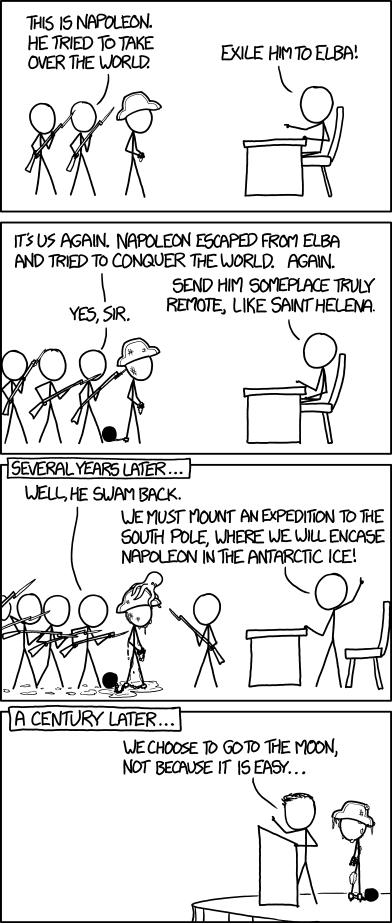
Napoleon

"Mr. President, what if the unthinkable happens? What if the launch goes wrong, and Napoleon is not stranded on the Moon?" "Have Safire write up a speech."
10 Apr 12:11

How To Survive A Shark Attack

by Doug

How To Survive A Shark Attack

Dedicated to Emlyn, who is celebrating a birthday tomorrow! Hope it’s a good one, Emlyn! :)

And here are more sharks.

10 Apr 11:33

Medidas Desesperadas

by Clara Gomes

bdj-150126-web

09 Apr 21:20

This Isn't a Chameleon, But 2 Women in Body Paint

by John Farrier

Johannes Stötter has incredible skill as a body painter. He composed and staged this elaborate scene. The two models are covered in paint. They work together perfectly to create the illusion that they are, together, a single chameleon climbing over a tree branch.


(Video Link)

Content warning: slightly NSFW due to artistic nudity at the end, when the two models stand up.

-via io9

09 Apr 21:19

(via cute-overload:source)

09 Apr 20:07

Summing Up

by Greg Ross

Artist Thomas Cole took up a grand theme in 1833 — The Course of Empire, a series of five paintings that depict the rise and fall of a civilization. The Savage State shows a prehistoric wilderness in which the only artificial note is a circle of teepees:

https://commons.wikimedia.org/wiki/File:Cole_Thomas_The_Course_of_Empire_The_Savage_State_1836.jpg

The Arcadian or Pastoral State shows the beginning of agriculture, with a primitive temple, farmers, and shepherds:

https://commons.wikimedia.org/wiki/File:Cole_Thomas_The_Course_of_Empire_The_Arcadian_or_Pastoral_State_1836.jpg

The Consummation of Empire shows a thriving city, with an imperial procession crossing a triumphal bridge:

https://commons.wikimedia.org/wiki/File:Cole_Thomas_The_Consummation_The_Course_of_the_Empire_1836.jpg

Destruction shows barbarians sacking the city and nature herself punishing human presumption:

https://commons.wikimedia.org/wiki/File:Cole_Thomas_The_Course_of_Empire_Destruction_1836.jpg

And Desolation shows the return of nature, with trees growing up through the ruins of the city:

https://commons.wikimedia.org/wiki/File:Cole_Thomas_The_Course_of_Empire_Desolation_1836.jpg

Interestingly, all five paintings depict the same scene: In the foreground is a natural port, and in the background is a distinctive mountain precipice. The time of day passes from dawn to dusk.

In 1836 more than 2,000 people attended the paintings’ exhibition at the National Academy of Design, an audience unprecedented in the United States. “The philosophy of my subject is drawn from the history of the past, wherein we see how nations have risen from the savage state to that of power and glory, and then fallen, and become extinct,” Cole had written to his patron Luman Reed. “You will perceive what an arduous task I have set myself; but your approbation will stimulate me to conquer difficulties.”

(Thanks, Cody.)

The post Summing Up appeared first on Futility Closet.

09 Apr 19:57

Kinetic Sand: A Magical Interactive Glass Sphere Installation

by Christopher Jobson

balls

Here’s a tantelizing preview clip of Kinetic Sand, an interactive table that responds to touch by creating plumes of sand that seem to whirl and dance around objects placed on top of it. The table is the latest creation from Adrien M / Claire B Company who also created the wildly popular Pixel dance performance shared here earlier this year. Both ideas center around the idea of people interacting with digitally responsive surfaces in new and elegant ways. This new kinetic table accepts input from up to 32 simultaneous touches and responds by creating different kinds of animation using small dust-like particles. The table will be on view starting in June at the Palais de la Découverte in Paris.

09 Apr 19:48

Photo


09 Apr 19:46

Minha vida: O neurologista diante da morte - 22/02/2015 - Ilustríssima - Folha de S.Paulo

Adam Victor Brandizzi

E que legal, traduziram o artigo do Oliver Sacks!

RESUMO Autor prolífico de livros populares de divulgação científica, o neurologista Oliver Sacks descobriu recentemente metástases, não tratáveis, de um câncer que tem há nove anos. Neste texto, ele fala de como quer viver seus últimos meses e dos esforços necessários para fazer o que chama de um acerto de contas com a vida.

Um mês atrás, eu me sentia gozando de boa saúde; diria até que de uma saúde de ferro. Aos 81, ainda nado 1.600 metros por dia. Mas minha sorte se esgotou –há algumas semanas, soube que tinha múltiplas metástases no fígado. Nove anos atrás, descobri que eu tinha um tumor de olho raro, um melanoma ocular. Apesar de as radiações e do laser para eliminar o tumor terem me deixado cego daquele olho, era muito improvável que um tumor daquele tipo se alastrasse. Eu estou entre os 2% desfavorecidos pela sorte.

Sinto-me grato pelos nove anos produtivos e de boa saúde que tive após o diagnóstico original, mas agora estou cara a cara com a morte. A doença tomou um terço de meu fígado e, ainda que seja possível atrasar seu passo, o avanço desse tipo particular de câncer não pode ser impedido.

Sahm Doherty - 1.jun.86/The LIFE Images Collection/Getty Images
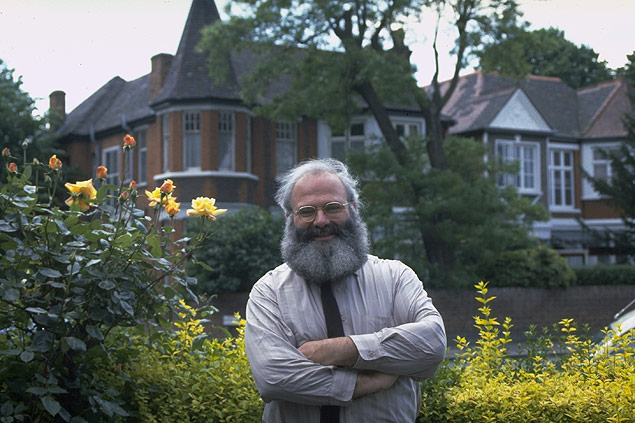
Oliver Sacks em frente à casa onde passou sua infância, na Inglaterra

O que me cabe agora é decidir como viverei os meses que me restam. Devo vivê-los da maneira mais rica, profunda e produtiva que puder. Nisso sou encorajado pelas palavras de um de meus filósofos favoritos, David Hume, que, aos 65 anos, sabendo-se acometido por uma doença mortal, escreveu, em um só dia de abril de 1776, uma breve autobiografia. Ele a intitulou "Minha Vida".1

"Conto agora com uma morte rápida", ele escreveu. "Tenho sofrido pouquíssima dor advinda de minha doença e, o que é mais estranho, apesar do rápido declínio de meu corpo, meu espírito nunca se abateu um momento sequer. [...]Possuo o mesmo ardor de sempre pelos estudos, e a mesma alegria na companhia de outras pessoas."

Tive muita sorte de poder passar dos 80, e os 15 anos que me foram concedidos além das seis décadas e meia que viveu Hume, eu os vivi de forma tão plena de trabalho e amor quanto ele. Nesse período, publiquei cinco livros e terminei uma autobiografia, um bocado mais extensa que a dele, a sair nos próximos meses;2 tenho vários outros livros quase concluídos.

Hume seguia: "Sou [...] um homem de disposição cordial, senhor de si mesmo, de humor franco, social e jovial, capaz de amizade, mas pouco suscetível a inimizades e de grande moderação em todas as suas paixões".

Nesse ponto minha experiência se afasta da dele. Embora eu tenha vivido amores e amizades e não tenha inimizades reais, não posso dizer (nem ninguém que me conhece poderia) que sou um homem de disposição cordial. Ao contrário, meu caráter é veemente, sou capaz de me entusiasmar de forma violenta e sou extremamente imoderado no que diz respeito a qualquer de minhas paixões.

Ainda assim, uma linha do ensaio de Hume me parece especialmente verdadeira: "É difícil", escreve, "sentir maior distanciamento da vida do que este que sinto neste momento".

Ao longo dos últimos dias, eu pude ver minha vida como se a observasse desde uma grande altitude, como se ela fosse uma espécie de paisagem, e com a percepção cada vez mais aguda da conexão entre todas as suas partes. Isso não quer dizer que eu tenha dado minha vida por encerrada.

Ao contrário: sinto-me intensamente vivo, e quero e espero que, no tempo que resta, eu possa aprofundar minhas amizades, dizer adeus aos que amo, escrever mais, viajar, se tiver força para tanto, alcançar novos graus de entendimento e de discernimento.

Isso vai requerer audácia, clareza e franqueza; é uma tentativa de acertar as contas com o mundo. Mas haverá tempo, também, para diversão (e até mesmo para um tanto de tolices).

Sinto uma súbita nitidez de foco e de perspectiva. Não há tempo para nada que não seja essencial. Preciso me concentrar em mim, no meu trabalho, nos meus amigos. Não vou mais assistir ao noticiário na televisão toda noite. Não darei mais atenção alguma à política ou ao aquecimento global.

Isso não é indiferença, mas distanciamento –eu ainda me preocupo muito com o Oriente Médio, aquecimento global, o crescimento da desigualdade, mas esses assuntos não me cabem mais; eles cabem ao futuro. Eu me alegro quando encontro gente jovem e talentosa –inclusive a que fez a biópsia que constatou minhas metástases. Eu sinto que o futuro está em boas mãos.

Fiquei mais e mais atento, nos últimos dez anos, à morte de contemporâneos meus. Minha geração está de saída, e cada uma dessas mortes eu senti de forma abrupta, como se uma parte de mim me fosse arrancada. Não haverá mais ninguém como nós quando todos nós tivermos ido embora, mas é um fato que não há no mundo ninguém igual a outra pessoa, nunca. Quando alguém morre, não existe um substituto possível. Cada um deixa um vazio que não pode ser preenchido, pois é o destino –genético e neural–de cada humano ser um indivíduo único, que deve achar seu próprio caminho, viver sua própria vida e morrer sua própria morte.

Não posso fingir não ter medo. Mas o sentimento que predomina em mim é a gratidão. Eu amei e fui amado; tive muito e dei muito em troca; eu li, e viajei, e pensei, e escrevi. Eu tive com o mundo o relacionamento especial que os escritores e os leitores têm com ele.

Acima de tudo, eu fui um ser senciente, um animal pensante sobre este belo planeta, o que, por si só, já foi um enorme privilégio e uma aventura.

Notas

1. O ensaio autobiográfico de David Hume (1711-76) foi publicado no Brasil no livro "Da Imortalidade da Alma e Outros Textos Póstumos" (ed. Unijuí, 2006). Os trechos citados por Oliver Sacks seguem, aqui, a tradução de Daniel Swoboda Murialdo para o citado volume, salvo quanto ao termo "detachment". Lá traduzido como "desinteresse", tem também a acepção de "distanciamento", mais apropriada ao que descreve Sacks.

2. A autobiografia de Oliver Sacks será publicada pela Companhia das Letras em data a definir, ainda em 2015.

OLIVER SACKS, 81, é médico neurologista e escritor.

FRANCESCA ANGIOLILLO, 42, é editora-adjunta da "Ilustríssima".

Bookmarked at brandizzi Delicious' sharing tag and expanded by Delicious sharing tag expander.
09 Apr 19:45

Oliver Sacks on Learning He Has Terminal Cancer

Adam Victor Brandizzi

ICYMI a farewell article from Oliver Sacks. I can't even be sad after it.

A MONTH ago, I felt that I was in good health, even robust health. At 81, I still swim a mile a day. But my luck has run out — a few weeks ago I learned that I have multiple metastases in the liver. Nine years ago it was discovered that I had a rare tumor of the eye, an ocular melanoma. The radiation and lasering to remove the tumor ultimately left me blind in that eye. But though ocular melanomas metastasize in perhaps 50 percent of cases, given the particulars of my own case, the likelihood was much smaller. I am among the unlucky ones.

I feel grateful that I have been granted nine years of good health and productivity since the original diagnosis, but now I am face to face with dying. The cancer occupies a third of my liver, and though its advance may be slowed, this particular sort of cancer cannot be halted.

It is up to me now to choose how to live out the months that remain to me. I have to live in the richest, deepest, most productive way I can. In this I am encouraged by the words of one of my favorite philosophers, David Hume, who, upon learning that he was mortally ill at age 65, wrote a short autobiography in a single day in April of 1776. He titled it “My Own Life.”

“I now reckon upon a speedy dissolution,” he wrote. “I have suffered very little pain from my disorder; and what is more strange, have, notwithstanding the great decline of my person, never suffered a moment’s abatement of my spirits. I possess the same ardour as ever in study, and the same gaiety in company.”

I have been lucky enough to live past 80, and the 15 years allotted to me beyond Hume’s three score and five have been equally rich in work and love. In that time, I have published five books and completed an autobiography (rather longer than Hume’s few pages) to be published this spring; I have several other books nearly finished.

Hume continued, “I am ... a man of mild dispositions, of command of temper, of an open, social, and cheerful humour, capable of attachment, but little susceptible of enmity, and of great moderation in all my passions.”

Here I depart from Hume. While I have enjoyed loving relationships and friendships and have no real enmities, I cannot say (nor would anyone who knows me say) that I am a man of mild dispositions. On the contrary, I am a man of vehement disposition, with violent enthusiasms, and extreme immoderation in all my passions.

And yet, one line from Hume’s essay strikes me as especially true: “It is difficult,” he wrote, “to be more detached from life than I am at present.”

Over the last few days, I have been able to see my life as from a great altitude, as a sort of landscape, and with a deepening sense of the connection of all its parts. This does not mean I am finished with life.

On the contrary, I feel intensely alive, and I want and hope in the time that remains to deepen my friendships, to say farewell to those I love, to write more, to travel if I have the strength, to achieve new levels of understanding and insight.

This will involve audacity, clarity and plain speaking; trying to straighten my accounts with the world. But there will be time, too, for some fun (and even some silliness, as well).

I feel a sudden clear focus and perspective. There is no time for anything inessential. I must focus on myself, my work and my friends. I shall no longer look at “NewsHour” every night. I shall no longer pay any attention to politics or arguments about global warming.

This is not indifference but detachment — I still care deeply about the Middle East, about global warming, about growing inequality, but these are no longer my business; they belong to the future. I rejoice when I meet gifted young people — even the one who biopsied and diagnosed my metastases. I feel the future is in good hands.

I have been increasingly conscious, for the last 10 years or so, of deaths among my contemporaries. My generation is on the way out, and each death I have felt as an abruption, a tearing away of part of myself. There will be no one like us when we are gone, but then there is no one like anyone else, ever. When people die, they cannot be replaced. They leave holes that cannot be filled, for it is the fate — the genetic and neural fate — of every human being to be a unique individual, to find his own path, to live his own life, to die his own death.

I cannot pretend I am without fear. But my predominant feeling is one of gratitude. I have loved and been loved; I have been given much and I have given something in return; I have read and traveled and thought and written. I have had an intercourse with the world, the special intercourse of writers and readers.

Above all, I have been a sentient being, a thinking animal, on this beautiful planet, and that in itself has been an enormous privilege and adventure.

Correction: February 26, 2015

Because of an editing error, Oliver Sacks’s Op-Ed essay last Thursday misstated the proportion of cases in which the rare eye cancer he has — ocular melanoma — metastasizes. It is around 50 percent, not 2 percent, or “only in very rare cases.” When Dr. Sacks wrote, “I am among the unlucky 2 percent,” he was referring to the particulars of his case. (The likelihood of the cancer’s metastasizing is based on factors like the size and molecular features of the tumor, the patient’s age and the amount of time since the original diagnosis.)

Bookmarked at brandizzi Delicious' sharing tag and expanded by Delicious sharing tag expander.
09 Apr 19:44

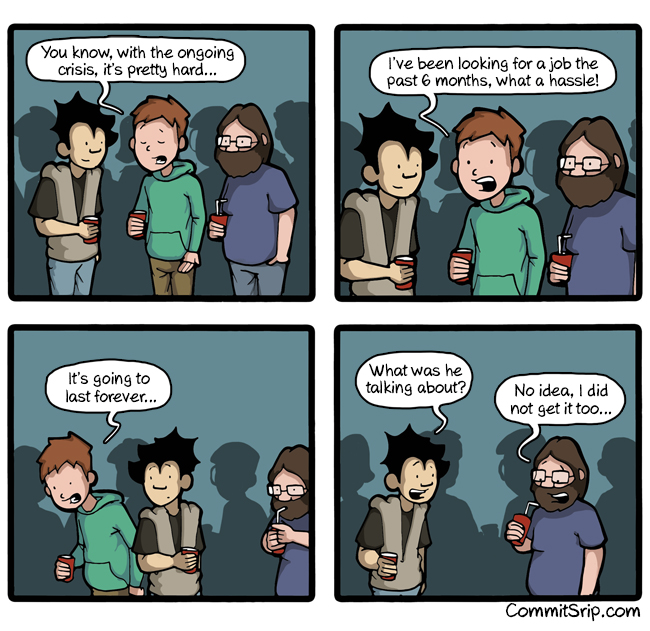
Crisis? What crisis?

09 Apr 13:50

The Rescue

by Doug

The Rescue

More Lassie.

09 Apr 13:36

(via pleatedjeans:via)


(via pleatedjeans:via)

09 Apr 13:36

praduhhh:unofficiallylegit:🙏🙏🙏 WOW


praduhhh:

unofficiallylegit:

🙏🙏🙏

WOW

09 Apr 13:34

soc1alism:sixpenceee:This is a particularly elegant explanation...


soc1alism:

sixpenceee:

This is a particularly elegant explanation of why why we don’t fill blimps with Hydrogen anymore.

Source: Business Inider

We can’t have hydrogen blimps because there’s a very strong chance that a car with a sparkler taped on it will dukes of hazard style ramp up into it and destroy everything
I finally understand

09 Apr 13:33

dwellerinthelibrary:Fantastic photos of the “astronomical...


dwellerinthelibrary:

Fantastic photos of the “astronomical ceiling” at the Temple of Dendera, posted on LiveJournal by aksanova.

09 Apr 13:33

Police turn to pepper-spraying drones in congested Indian city

by Mona Lalwani
Adam Victor Brandizzi

Vai dar merda.

Drones are popping up everywhere. They've been largely unfamiliar in India, but that's changing. The police department in Lucknow, a populous city in the country, is the first to purchase five weaponized drones that can spray pepper on a rioting mob....
09 Apr 13:32

oddbagel:rushfalknor:Waves Crashing Piano Chords sets up and...


oddbagel:

rushfalknor:

Waves Crashing Piano Chords sets up and performs at a show he’s not even playing, then falls and breaks his leg in less than a minute.

This is the best thing I’ve ever seen.

there is justice in this world