Shared posts

11 Apr 17:22

Infografía sobre los tres tipos de eclipses conocidos [Actualizado] Ahora con emoticonos

by Troy

[Actualizado] Ahora con emoticonos (Visto en Microsiervos)

tipos-eclipse-apocalipse-emoticonos

Entender los diferentes tipos de eclipse que se pueden producir en el planeta Tierra es complicado para muchas personas, pero este gráfico lo explica muy bien.

Eclipse de Luna
El eclipse lunar ocurre cuando la Tierra se interpone entre el Sol y la Luna. La Luna se oscurece debido a la sombra que la Tierra proyecta sobre ella.
Puede ser total, parcial o penumbral y es el menos espectacular de los tres.

Eclipse de Sol
Cuando la Luna se interpone entre la Tierra y el Sol estamos ante un eclipse solar. Es el segundo eclipse más espectacular que podemos contemplar. Su ocurrencia no es habitual y solo se puede observar en pequeñas zonas del planeta cuando se produce. También puede ser total, parcial o penumbral.

Apocalipsis (o Eclipse de Tierra)
Ocurre cuando el Sol se interpone entre la Tierra y la Luna. Solo pasa una vez en la historia, y en la Tierra no ha sucedido todavía. Se piensa, con bastante fundamento, que este es el más espectacular de los tres tipos de eclipse conocidos. Sabremos cuándo se producirá el apocalipsis cuando Deep Thought, el ordenador que lo está calculando, obtenga una respuesta.
Los apocalipsis no son parciales ni penumbrales. Son tremendamente totales.

Consejo para estudiantes: Si has llegado aquí buscando información sobre "eclipses" no hagas copy & paste de esto.

Visto en imgur

Ver más: apocalipsis, eclipse, emoticonos
Síguenos: @NoPuedoCreer - @QueLoVendan - @QueLoVendanX


08 Apr 14:19

Photo


08 Apr 13:31

Handmade Wood & Paper Birds by Zack Mclaughlin

by Christopher Jobson

bird-new-1

London-based artist Zack Mclaughlin constructs uncannily realistic birds made from wood and cut paper leaves. A lifelong fascination with the natural world lead Mclaughlin to explore different kinds of 3d model making, first starting with wire and then moving into the more realistic sculptures you see here. You can see more of his recent work on DeviantArt and in his shop. (via Lustik)

bird-new-2

bird-new-3

bird-new-4

bird-new-5

bird-new-6

bird-new-7

bird-new-9

08 Apr 13:11

Jon, you’re always talking about how you don’t have any friends....


Jon, you’re always talking about how you don’t have any friends. This is why. [x]
08 Apr 13:09

Após anos de abandono, estúdio Herbert Richers tem acervo doado - Rio - O Dia

Rio - As plantas já cresceram a ponto de cobrirem parte do terreno e toda a fachada. Insetos e morcegos ocupam corredores sombrios. Um cheiro de material incendiado toma conta do ar. O silêncio é quebrado em ritmo aleatório pelo som distante dos carros e das telhas que estalam no que restou do telhado fragilizado

O imóvel que ocupa o número 1.331 da Rua Conde de Bonfim, na Usina, em nada lembra os dias de atividade da Herbert Richers, estúdio que foi um dos principais da chanchada — gênero que dominou a cinematografia nacional nas décadas de 1940 e 1950 — e que chegou a dominar 80% do mercado de dublagem no Brasil.

Garcia Júnior, Isaac Bardavid e Nizo Neto foram alguns dos dubladores que fizeram história no estúdio

Foto:  Arte O Dia

A atividade, a qual Herbert Richers passou a se dedicar, no fim da década de 1950, foi sugestão do amigo Walt Disney, o midas da animação americana. Na quinta-feira, quando alunos do curso de Cinema da Universidade Federal Fluminense (UFF) estiveram no local para levar o que restou do acervo da empresa, uma voz importante da história do cinema e da dublagem brasileira se silenciou.

Universitária ajuda na catalogação de vídeos

Foto:  Daniel Castelo Branco / Agência O Dia

Silêncio que ganhou materialização nas bancadas que, durante mais de 40 anos, foram usadas por atores que emprestaram as vozes a personagens que capturaram a imaginação dos fãs — hoje, assim como o restante do edifício, elas estão destruídas por infiltrações, mofo e por parte do teto que veio abaixo, durante um incêndio que quase destruiu as instalações em 2012.

O imóvel que abrigava o estúdio — abandonado desde 2009, quando seu fundador morreu — foi comprado pela Sukyo Mahikari, uma instituição religiosa japonesa, cujas raízes são comuns à Igreja Messiânica. Ao encontrar o imenso acervo que ainda permanecia no edifício, uma das representantes da igreja entrou em contato com a UFF para que o material ganhasse um destino apropriado.

Milhares de negativos, películas, fitas e registros de ex-empregados foram transportados de caminhão para a Cinemateca do Museu de Arte Moderna (MAM), onde passarão por um extenso processo de análise e catalogação, trabalho que não deverá levar menos de um ano. “Já o mobiliário será levado para a universidade”, explicou Fabián Núñez, professor da cadeira de Conservação e que coordenou a ação dos estudantes no resgate do material.

“Boa parte das pessoas associa a Herbert Richers apenas à dublagem. Mas, nos anos iniciais de funcionamento, a firma foi um dos principais estúdios de cinema do Brasil. Teve um papel fundamental na consolidação da chanchada e dos cinejornais. Acredito que hoje encerramos um capítulo da história do cinema brasileiro”, avaliou o conservador-chefe da Cinemateca do MAM, Hernani Heffner.

Nome do empresário virou marca associada à dublagem

A expressão ‘Versão brasileira, Herbert Richers’ se tornou tão popular que associou de forma permanente o estúdio à dublagem. Por isso, é difícil imaginar que alguém sinta mais o fim da casa que os dubladores.

“É lamentável. Passei 14 anos da minha vida ali. Era um lugar que te dava segurança profissional. Uma pena acabar dessa maneira”, lamentou Garcia Júnior, cuja voz se tornou popular ao dublar o desenho He-Man e o ator Arnold Schwarzenegger.

Herbert Richers: pioneiro da dublagem no Brasil morreu em 2009

Foto:  Pedro Andrade / Arquivo Agência O Dia

“Moro na Barra e passo em frente ao prédio quando vou ao Centro. Sempre fico triste ao ver um lugar onde vivi tantas experiências importantes abandonado daquela maneira”, diz Nizo Neto, dono da voz do Presto de ‘A Caverna do Dragão’.

“É muito ruim ver que os herdeiros não conseguiram levar o legado do Herbert à frente”, finaliza Isaac Bardavid, conhecido pelas vozes do Esqueleto e do Wolverine.

Bancada de dublagem em estado precário

Foto:  Daniel Castelo Branco / Agência O Dia

Decadência teve início em 2003 com flexibilização de lei trabalhista

A morte lenta da Herbert Richers começou em 2003, quando, por meio de um acordo trabalhista, os dubladores passaram a poder gravar em outros estúdios, sem vínculo empregatício. A partir dali, várias outras empresas de dublagem — algumas abertas por ex-funcionários da HR — começaram a surgir no mercado, oferecendo serviços a preços bem mais baixos. O lucro do estúdio começou a cair em razão inversa aos gastos para manter a folha de pagamento dos cerca de 300 funcionários, todos com carteira assinada.

A empresa passou a funcionar de forma deficitária — os depósitos de salários e do FGTS dos empregados começaram a atrasar, o que gerou várias ações trabalhistas. Em 2009, Herbert Richers morreu e o prédio na Usina deixou de operar. Três anos depois, o imóvel foi à leilão por R$ 1,7 milhão, sendo arrematado, à época, por um grupo de empresários. A verba acabou usada no pagamento de débitos com ex-funcionários e também na quitação de impostos atrasados.

Bookmarked at brandizzi Delicious' sharing tag and expanded by Delicious sharing tag expander.
08 Apr 13:08

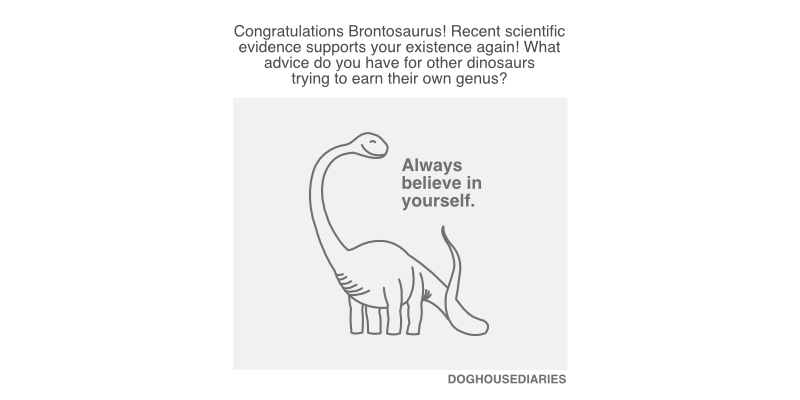
Brontosaurus Advice

by DOGHOUSE DIARIES
Adam Victor Brandizzi

Not sure it is true or not (there are some clickbaits such as http://www.scientificamerican.com/article/the-brontosaurus-is-back1/ saying that) but the comic is good anyway.

Brontosaurus Advice

Glad to have you back old buddy.

08 Apr 13:04

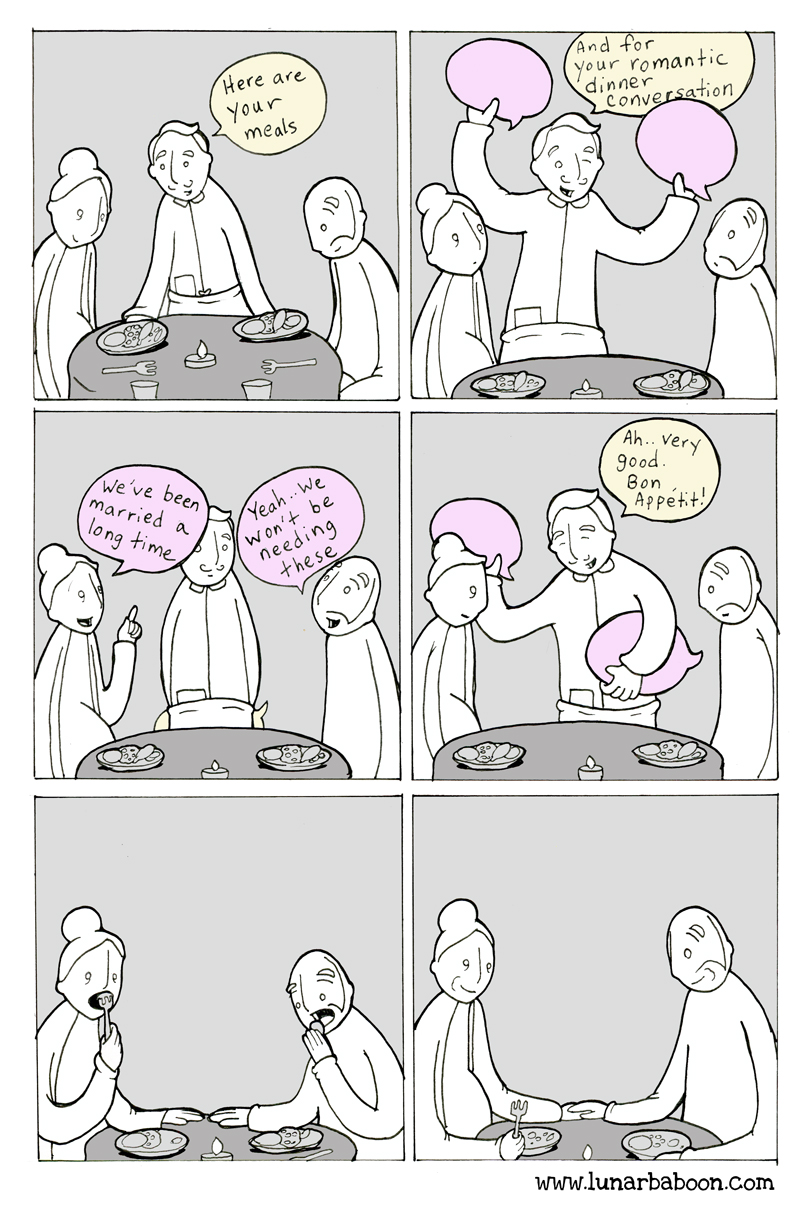
Silence

by Lunarbaboon

08 Apr 13:03

Photo


08 Apr 13:03

Comic for April 08, 2015

07 Apr 21:03

Photo


07 Apr 18:50

Logging in to an old server to update bash

by sharhalakis

by @dbl

07 Apr 14:39

The Best Way to Defeat Social Media Induced Depression

Social Media Induced Depression? Is that a real thing?

Good question. Let me Google that for you. Yes, yes it is. I think most of us have experienced it in some form or another. It has to do with the anxiety people feel while being away from social media or general feelings of despair brought on while using social media.

The problem I have with social media is that it isn’t enriching. I feel responsibility to wish people happy birthdays, like their posts, and attend their events. And, of course, it can inspire feelings of jealousy. I could live with those side effects if social media also enriched my life in some way. But it’s rare that Facebook turns me on to a great article that is relevant to my interests or leads to any inspiration.

For me and a lot of people I know, there’s a much better way to fill your empty moments than to hop on a social media app. It’s reading. I don’t always have the time or energy to open up a book. The great thing about RSS feeds is that they take up little time, much like social media, but are endless sources of enriching and inspirational information. You can get smarter and better informed even if you only have 5 minutes to spare. With The Old Reader, there are social elements too. But instead of Happy Birthdays or photos of myself at the beach, we’re sharing posts that enrich our lives. 

So the best way I know to defeat social media-induced depression is to forego that visit to Facebook and spend a few minutes with your favorite blogger. Mine is probably Kottke, or Daring Fireball. Who’s yours?

07 Apr 14:29

DAVE GROHL Praises SEPULTURA On 'The Late Late Show With James Corden'

FOO FIGHTERS mainman and former NIRVANA drummer Dave Grohl spoke about his love of SEPULTURA during an appearance on last night's edition of "The Late Late Show With James Corden". He said (see video below): "You know what's crazy? One of my favorite heavy metal bands of all time is from Brazil. This band called SEPULTURA. I mean, SEPULTURA, they're amazing, but one of the crazy things they did, they made this album called 'Roots'. But they incorporated crazy Brazilian instrumentation into, like, the heaviest music you've ever heard in your life. It kind of, like, changed the game. It was the heaviest thing ever." Grohl wrote the foreword to "My Bloody Roots: From Sepultura To Soulfly And Beyond", the autobiography of former SEPULTURA frontman Max Cavalera. Cavalera told Phoenix New Times: "Dave Grohl did an awesome intro. He tells a story about how he bought a $50,000 speaker for his studio sound system, and he pops in [SEPULTURA album] 'Roots' and it blew up the whole fucking thing. [Mimicking Grohl] ''Roots' blew up my whole system.' I love that story. If your album can blow up a $50,000 system, you're doing something right."
07 Apr 14:23

Outrage of the Day: Utah City Orders Takedown of Kid’s Cardboard Fort

by TDW

040615cardboard_fi

Welcome to Utah, where creativity is a crime.

Jeremy Trentelman recently built his 3-year-old son an epic fort made out of cardboard boxes. The castle-like structure was erected on his front lawn, and apparently the city thought it was just a piece of garbage.

A few days later, an Ogden City official posted a notice on his door saying that the fort needed to be removed within 15 days or else he would be forced to pay a $125 fine. According to the city, it violated Code 12-4-2, which prohibits waste material or junk on your lawn.

Trentelman posted a photo of the notice to Facebook along with a message expressing his outrage.

“Are you freakin’ kidding me?” he wrote. “‘Waste materials or junk’ it says… what about totally awesome fun zone. What a joke!”

His story has since spread online, and he’s been inviting strangers to come over to his house and check it out while it’s still there.

“Hey everyone, I’m home for the rest of the day,” he wrote. “Anyone wanna come play in the box fort?”

After the news broke, someone also created a Facebook page so people should show their support and build forts of their own in protest.

Calling on all the citizens of Ogden to stand in solidarity with Jeremy Trentelman by building cardboard forts in all the front yards throughout the entire city of Ogden.

The moral of the story: Stick to your iPad’s and video games, kids, and don’t even think about recycling. That stuff belongs in the trash.

Here’s the message he received from the city:

040615cardboardnote

Via: Standard

The post Outrage of the Day: Utah City Orders Takedown of Kid’s Cardboard Fort appeared first on The Daily What.

07 Apr 12:55

RT @camilatxc: "sobras dos ovos de pascoa podem virar mousse veja receita" HAHAHAHAHAHAHHAHA...

by Pai Osias
800px-Coturnix_coturnix_eggs_normal.jpg
Author: Pai Osias
Source: Twitter Web Client
RT @camilatxc: "sobras dos ovos de pascoa podem virar mousse veja receita" HAHAHAHAHAHAHHAHA SOBRAS SOBRAS ELE DISSE
07 Apr 12:54

10 Years of Git: An Interview with Git Creator Linus Torvalds | Linux.com

Adam Victor Brandizzi

Great interview.

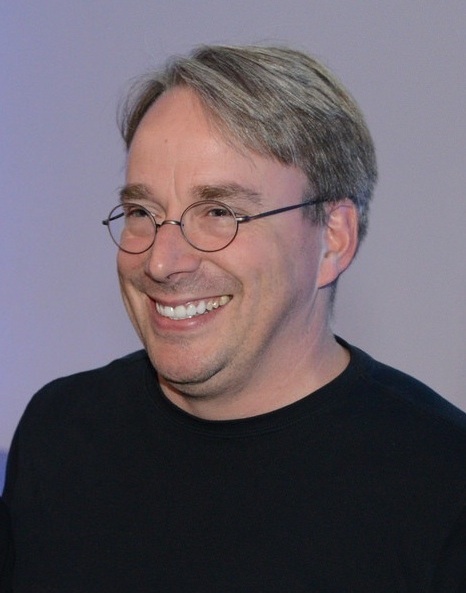
Linus-Torvalds-LinuxCon-Europe-2014Ten years ago this week, the Linux kernel community faced a daunting challenge: They could no longer use their revision control system BitKeeper and no other Source Control Management (SCMs) met their needs for a distributed system. Linus Torvalds, the creator of Linux, took the challenge into his own hands and disappeared over the weekend to emerge the following week with Git. Today Git is used for thousands of projects and has ushered in a new level of social coding among programmers.

To celebrate this milestone, we asked Linus to share the behind-the-scenes story of Git and tell us what he thinks of the project and its impact on software development. You'll find his comments in the story below. We'll follow this Q&A with a week of Git in which we profile a different project each day that is using the revision control system. Look for the stories behind KVM, Qt, Drupal, Puppet and Wine, among others. 

Why did you create Git?

Torvalds: I really never wanted to do source control management at all and felt that it was just about the least interesting thing in the computing world (with the possible exception of databases ;^), and I hated all SCM's with a passion. But then BitKeeper came along and really changed the way I viewed source control. BK got most things right and having a local copy of the repository and distributed merging was a big deal. The big thing about distributed source control is that it makes one of the main issues with SCM's go away - the politics around "who can make changes." BK showed that you can avoid that by just giving everybody their own source repository. But BK had its own problems, too; there were a few technical choices that caused problems (renames were painful), but the biggest downside was the fact that since it wasn't open source, there was a lot of people who didn't want to use it. So while we ended up having several core maintainers use BK - it was free to use for open source projects - it never got ubiquitous. So it helped kernel development, but there were still pain points.

That then came to a head when Tridge (Andrew Tridgell) started reverse-engineering the (fairly simply) BK protocol, which was against the usage rules for BK. I spent a few weeks (months? It felt that way) trying to mediate between Tridge and Larry McVoy, but in the end it clearly wasn't working. So at some point I decided that I can't continue using BK, but that I really didn't want to go back to the bad old pre-BK days. Sadly, at the time, while there were some other SCM's that kind of tried to get the whole distributed thing, none of them did it remotely well.  I had performance requirements that were not even remotely satisfied by what was available, and I also worried about integrity of the code and the whole workflow, so I ended up just deciding to write my own.

How did you approach it? Did you stay up all weekend to write it or was it just during regular hours?

Torvalds: Heh. You can actually see how it all took shape in the git source code repository, except for the very first day or so. It took about a day to get to be "self-hosting" so that I could start committing things into git using git itself, so the first day or so is hidden, but everything else is there. The work was clearly mostly during the day, but there's a few midnight entries and a couple of 2 a.m. ones. The most interesting part is how quickly it took shape ; the very first commit in the git tree is not a lot of code, but it already did the basics - enough to commit itself. The trick wasn't really so much the coding but coming up with how it organizes the data.

So I'd like to stress that while it really came together in just about ten days or so (at which point I did my first *kernel* commit using git), it wasn't like it was some kind of mad dash of coding. The actual amount of that early code is actually fairly small, it all depended on getting the basic ideas right. And that I had been mulling over for a while before the whole project started. I'd seen the problems others had. I'd seen what I wanted to avoid doing. 

Has it lived up to your expectations? How is it working today in your estimation? Are there any limitations?

Torvalds: I'm very happy with git. It works remarkably well for the kernel and is still meeting all my expectations. What I find interesting is how it took over so many other projects, too. Surprisingly quickly, in the end. There is a lot of inertia in switching source control systems;  just look at how long CVS and even RCS have stayed around, but at some point git just took over.

Why do you think it's been so widely adopted?

Torvalds: I think that many others had been frustrated by all the same issues that made me hate SCM's, and while there have been many projects that tried to fix one or two small corner cases that drove people wild, there really hadn't been anything like git that really ended up taking on the big problems head on. Even when people don't realize how important that "distributed" part was (and a lot of people were fighting it), once they figure out that it allows those easy and reliable backups, and allows people to make their own private test repositories without having to worry about the politics of having write access to some central repository, they'll never go back.

Does Git last forever, or do you foresee another revision control system in another 10 years? Will you be the one to write it? 

Torvalds: I'm not going to be the one writing it, no. And maybe we'll see something new in ten years, but I guarantee that it will be pretty "git-like." It's not like git got everything right, but it got all the really basic issues right in a way that no other SCM had ever done before.

No false modesty ;)

Why does Git work so well for Linux?

Torvalds: Well, it was obviously designed for our workflow, so that is part of it. I've already mentioned the whole "distributed" part many times, but it bears repeating. But it was also designed to be efficient enough for a biggish project like Linux, and it was designed to do things that people considered "hard" before git - because those are the things *I* do every day.

Just to pick an example: the concept of "merging" was generally considered to be something really quite painful and hard in most SCM's. You'd plan your merges, because they were big deals. That's not acceptable to me, since I commonly do tens of merges a day when in the merge window, and even then, the biggest overhead shouldn't be the merge itself, it should be testing the result. The "git" part of the merge is just a couple of seconds, it should take me much longer just to write the merge explanation message.

So git was basically designed and written for my requirements, and it shows.

People have said that Git is only for super smart people. Even Andrew Morton said Git is "expressly designed to make you feel less intelligent than you thought you were." What's your response to this?

Torvalds: So I think it used to be true but isn't any more. There is a few reasons people feel that way, but I think only one of them remains. The one that remains is fairly simple: "you can do things so many ways."

You can do a lot of things with git, and many of the rules of what you *should* do are not so much technical limitations but are about what works well when working together with other people. So git is a very powerful set of tools, and that can not only be overwhelming at first, it also means that you can often do the same (or similar) things different ways, and they all "work." Generally, the best way to learn git is probably to first only do very basic things and not even look at some of the things you can do until you are familiar and confident about the basics.

There's a few historical reasons for why git was considered complicated. One of them is that it was complicated. The people who started using git very early on in order to work on the kernel really had to learn a very rough set of scripts to make everything work. All the effort had been on making the core technology work and very little on making it easy or obvious. So git (deservedly) had a reputation for requiring you to know exactly what you did early on. But that was mainly true for the first 6 months or a year.

The other big reason people thought git was hard is that git is very different. There are people who used things like CVS for a decade or two, and git is not CVS. Not even close. The concepts are different. The commands are different. Git never even really tried to look like CVS, quite the reverse. And if you've used a CVS-like system for a long time, that makes git appear complicated and needlessly different. People were put off by the odd revision numbers. Why is a git revision not "1.3.1" with nice incrementing numbers like it was in CVS? Why is it that odd scary 40-character HEX number?

But git wasn't "needlessly different." The differences are required. It's just that it made some people really think it was more complicated than it is, because they came from a very different background. The "CVS background" thing is going away. By now there are probably lots of programmers out there who have never used CVS in their lives and would find the CVS way of doing things very confusing, because they learned git first.

Do you think the rate of Linux kernel development would have been able to grow at its current rate without Git? Why or why not?

Torvalds: Well, "without git," sure. But it would have required that somebody else wrote something git-equivalent: a distributed SCM that is as efficient as git is. We definitely needed something *like* git.

What's your latest opinion of GitHub?

Torvalds: Github is an excellent hosting service; I have nothing against it at all. Now, the complaints I've had is that GitHub as a development platform - making commits, pull requests, keeping track of issues etc - doesn't work very well at all. It's not even close, not for something like the kernel. It's much too limited.

That's partly because of how the kernel is developed, but part of it was that the GitHub interfaces were actively encouraging bad behavior. Commits done on GitHub had bad commit messages etc, because the web interfaces at GitHub were actively encouraging bad behavior. They did fix some of that, so it probably works better, but it will never be appropriate for something like the Linux kernel.

What is the most interesting use you've seen for Git and/or GitHub?

Torvalds: I'm just happy that it made it so easy to start a new project. Project hosting used to be painful, and with git and GitHub it's just so trivial to do a random small project. It doesn't matter what the project is; what matters is that you can do it.

Do you have side projects up your sleeve today? Any more brilliant software projects that will dominate software development for years to come?

Torvalds: Nothing planned. But I'll let you know if that changes.

---

Atlassian is also helping to celebrate the anniversary of Git. Click on the image below to take a walk down memory lane. 

AtlassianGit10year

Bookmarked at brandizzi Delicious' sharing tag and expanded by Delicious sharing tag expander.
07 Apr 12:53

A Woman Named Beyoncé Gets Help From All the Other Unfortunately-Named on the Internet

funny-facebook-pic-humans-of-new-york-beyonce-name

Beyoncé was featured on the long-running blog project Humans of New York, where she discussed the blessing (everyone remembers your name!) and curse (no one will stop singing "Single Ladies"!) of having a famous moniker. And just like that, the rest of the internet joined in to share their woes. Some of these names almost seem too good to be true. 

Hopefully now she knows that she isn't alone!

Submitted by: (via POWTV)

07 Apr 12:51

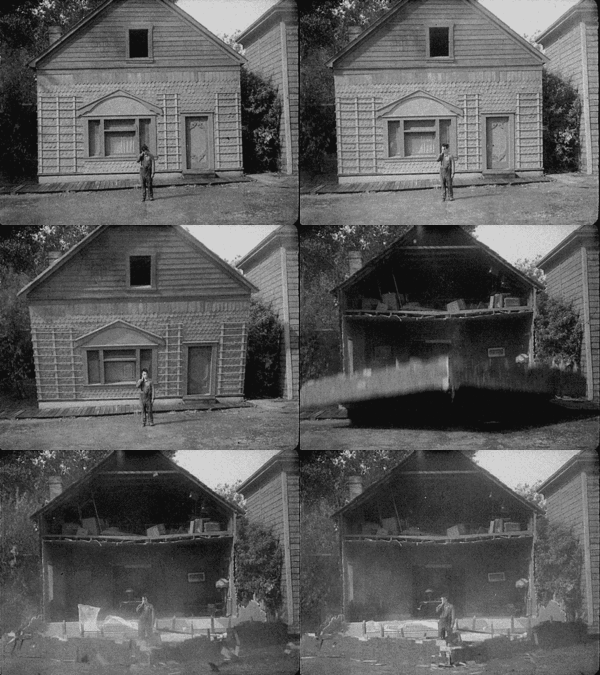
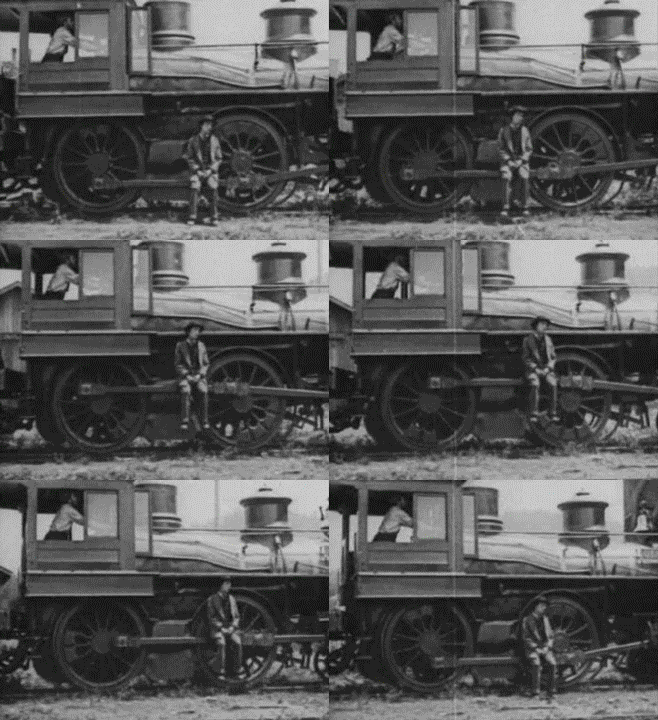
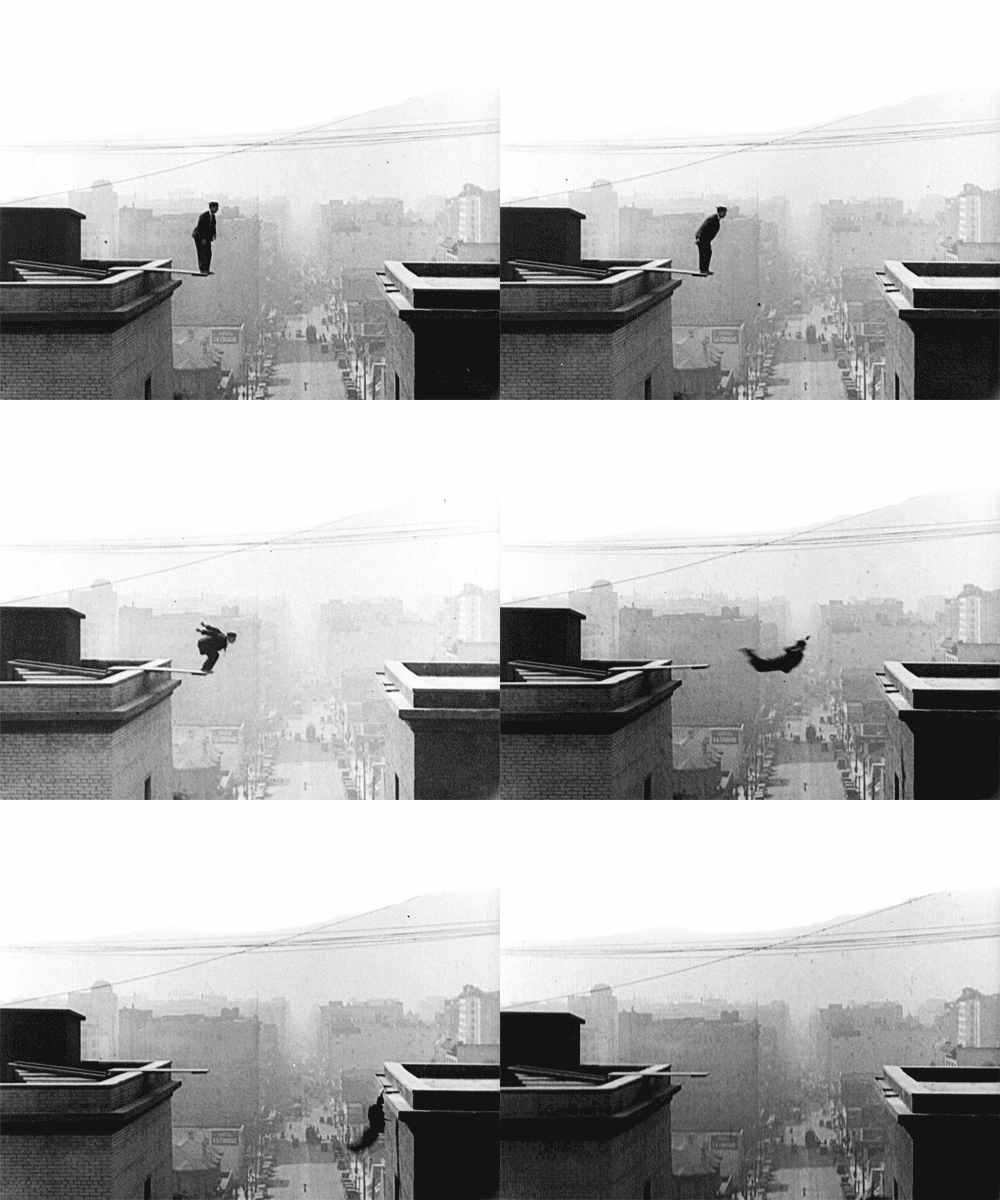
carry-on-my-otp: If Stuntmen from the old movies don’t have...


carry-on-my-otp:

If Stuntmen from the old movies don’t have your full respect then I just don’t know what to say to you


07 Apr 12:51

Comic for April 07, 2015

07 Apr 12:45

Roller Coaster

by Doug
06 Apr 21:48

fencehopping: Giant balloon popping in slow motion.


fencehopping: Giant balloon popping in slow motion.

06 Apr 20:24

Artists secretly install 100-pound Edward Snowden statue in Brooklyn park

Adam Victor Brandizzi

Impressionante

NEW YORK — Dressed in reflective yellow construction gear while working under the cover of darkness early Monday, a small group of artists installed a tribute to NSA-leaker Edward Snowden in a Brooklyn park.

The Snowden bust stands atop a column at the Prison Ship Martyrs Monument in Fort Greene Park, a site built to honor more than 11,000 American prisoners of war who died aboard British ships during the American Revolutionary War.

See also: The 10 Biggest Revelations From Edward Snowden's Leaks

The location is no coincidence.

Speaking to Mashable on the condition of anonymity, the artists said they chose the spot because it is "loaded with significance and meaning and reverence of others." It positions Snowden, they said, "as a continuation of a story that began at the beginning of this country" — one represented in the plight of the captured Americans.

Snowden Sculpture Full

A sculpture of Edward Snowden stands atop a column in Brooklyn's Fort Greene Park on Monday, April 6, 2015.

Image: Aymann Ismail/ANIMALNewYork

snowdenbust-apr6-5531

Image: Aymann Ismail/ANIMALNewYork

"We feel that Snowden's actions really continue that story," said the artists. "It is built upon a set of ideals to live freely, not be confined or surveilled or monitored by your government. You can’t have freedom of expression to pursue liberty if you feel like you're doing it under a watchful eye."

The three artists — two of whom who planned the idea while a third created the "museum-quality" sculpture itself — spent the better part of year on the project.

Their hard work paid off: Animal New York's Bucky Turco, who exclusively documented the installation Monday morning, said it looks so official that "over a dozen people walking their dogs passed by the new bust on Monday morning without noticing the unsanctioned piece."

While they originally considered other locations to install the sculpture — Belvedere Castle was one of them — they felt the Martyrs Monument offered them the best chance to convey the ideals that Snowden's revelations are all about.

"It gives the whole thing so much more meaning," they said. "It’s not just about Snowden. It’s about the ideals that he was trying to work towards and push others to care about." The monument to the POWs, "who were fighting for the same ideals that Snowden is fighting for" gave them a bridge to make their case.

"This is a guy who some of the traditional mass media has portrayed as a traitor, or a terrorist, and the very same thing would have been said about these POWs in the Revolutionary War times," they said. "But with 200 years of perspective, we realized they were fighting for something all of us are very grateful for. We hope it will shift people’s perceptions, or open their eyes, that there could be a different story than what they’e been told."

While others have created Snowden statues before, they've primarily been mobile installations. The sculpture that now stands in Fort Greene Park is permanent — or at least until the Parks Department removes it.

Snowden Monument Google Maps

Image: Google Maps

The artists said they hope the city will considering leaving the sculpture where it is — they said it was designed specifically for its current location, so it "feels organic" and doesn't ruin the "vibe and the flow" — though they recognize that's probably not going to happen.

Ideally, for the artists, the city would preserve the statue and make it accessible to people, allowing New Yorkers to continue the conversation that began when Snowden leaked batches of NSA documents to Glenn Greenwald.

In a statement, they appealed to the city to "embrace and protect" the piece, much like the Wall Street Bull:

NYC has a long history of welcoming artists and the challenging discourse their works usher in. In keeping with this tradition, we hope New York will embrace and protect this piece, much as when the “Wall Street Bull” was granted a permanent public home after its guerilla placement. Even though it's already on it's way towards being removed, the possibility exists for the city to make the piece available for public viewing in a sanctioned way. Our additional hope is this gift has brought a renewed cultural relevance to the space, inspiring more visitors to ponder the sacrifices made for their freedoms and their responsibility to ensure our liberties last long into the future.

"If you look at history, the people we honor with statues now — certainly the people rebelling against the British rules — were criminals one day," the artists told Mashable. "Now they're heroes."

"We’re wondering if on the long arc of time Snowden will be considered a hero, too."

Update 11:45 a.m. ET: Instagram user Justine Williams says park rangers had already removed the "Snowden" sign from the monument. We've reached out to the Parks Department to see if they have plans to remove the sculpture, too.

Update: 12:30 p.m. ET: Vine's Jeremy Cabalona has video of NYC Parks Department workers covering up the Snowden statue with a blue tarp.

Update: 12:45 p.m. ET: A spokeswoman for New York's Parks Department tells Mashable they are "currently looking into" removal of the sculpture.

Update: 2:40 p.m. ET: The Snowden sculpture has been removed and the NYPD is on it.

Have something to add to this story? Share it in the comments.

Bookmarked at brandizzi Delicious' sharing tag and expanded by Delicious sharing tag expander.
06 Apr 18:25

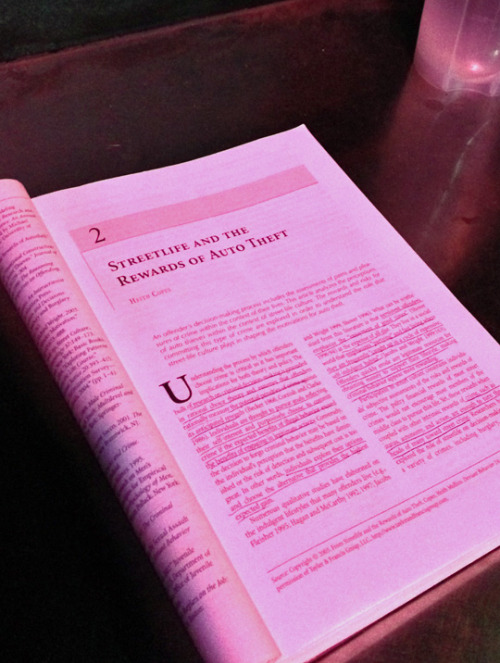
“He’s taking a criminology course. When he got back we jokingly...


“He’s taking a criminology course. When he got back we jokingly pointed it out to him and he got bright red when he realized the page he left it on.” - mcdngr

06 Apr 18:24

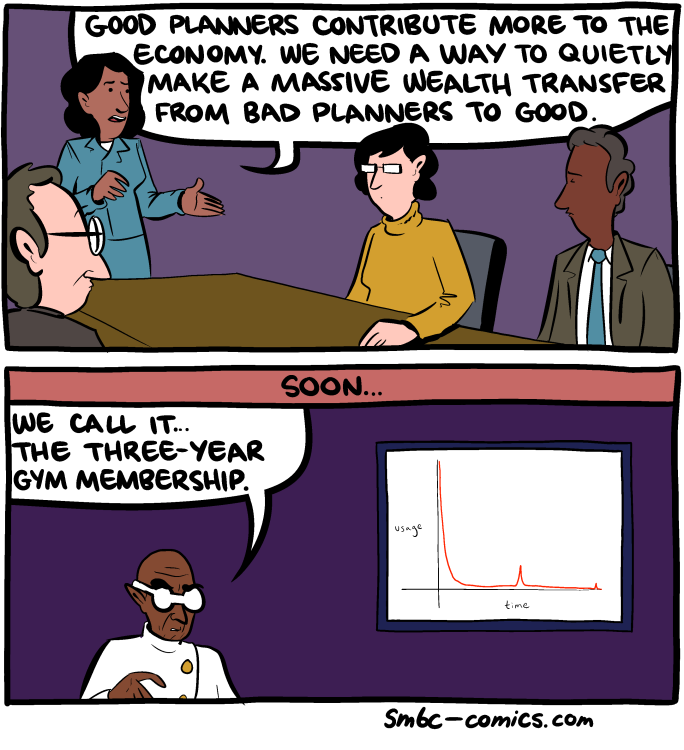
Saturday Morning Breakfast Cereal - Planned Economics

by admin@smbc-comics.com
06 Apr 14:28

Ēostre or Ostara; The Germanic Easter Goddess?

by Edward Le Prieur
Ostara by Johannes Gehrts

Ostara by Johannes Gehrts

You’ve probably yourself wondered why eggs, rabbits are symbols of Easter and the origin of Easter itself. Long before the Christianization of European tradition and other cultures there was celebration for the rite of spring. Before Christianity (Ēostre or Ostara Old English: Ēastre, Old High German: Ôstara, and Austrō in Proto-Germanic language) itself derives from prefix of the Proto-Indo-European root *aus-, meaning ‘to shine’. Linguists have also connected this name to one of the most important goddesses of reconstructed Proto-Indo-European religion. She is the personification of dawn named Hausōs in reconstructed Proto Indo-European.

The first reference to such a goddess is attributed to Eostre is written by a Christian Monk by the name of Bede in Monkwearmouth, Northumbria, England. His book The Reckoning of Time (De temporum ratione) (725) when discussing the English months.

“Nor is it irrelevant if we take the time to translate the names of the other months. … Hrethmonath is named for their goddess Hretha, to whom they sacrificed at this time.  Eosturmonath has a name which is now translated “Paschal month”, and which was once called after a goddess of theirs named Eostre, in whose honour feasts were celebrated in that month.  Now they designate that Paschal season by her name, calling the joys of the new rite by the time-honoured name of the old observance.  Thrimilchi was so called because in that month the cattle were milked three times a day…” (Bede .53-54)

So it can be inferred that she is a literal personification of the first light from the rising of the sun in the spring equinox, consequently light, and fertility. The month of April or Ōstar-mānod (Ostermonat, Easter month) on the Germanic Calendar; the goddess the very namesake of the month. Of course this conclusion is not exempt from some conjecture. Whether or not she was indeed simply a fertility goddess, or rather a goddess of sunrise. I think it’s abundantly clear that she is the latter, as even her name is the akin the direction of dawn. It’s then unavoidable to be associated with the sun, growth, fertility.

The connection for rabbits to the old tradition is also often contested by scholars on the subject. Charles J. Billison in Folk Lore Vol.III (1892) cites that there are many references to folk customs in Northern Europe during this period involving hares…

“whether there ever was a goddess named Eostre, or not, and whatever connection the hare may have had with the ritual of Saxon or British worship, there are good grounds for believing that the sacredness of this animal reaches back into an age still more remote, when it probably played a very important part at the great Spring Festival of the prehistoric inhabitants of this island. It appears likely that the hare was originally a totem, or divine animal among the local aborigines, and that the customs at Leicester and Hallaton are relics of the religious procession and annual sacrifice of the god.” ( Billison. 448)

Rabbits as well have always been a strong symbol of fertility, and fecundity. Prolific for their reproductive ability, even being able to conceive one litter of offspring while still being pregnant with the first. Eggs of course are laid by birds in the spring, and the Easter Rabbit or Easter Hare goes about in a literal way giving new life and birth, in a symbolic representation of the goddess. German immigrants brought the Easter Hare to Sweden in the late 19th century, However, due to a misunderstanding of the Swedish word for the Easter Hare, Påskharen, which sounds very similar to Påskkarlen, meaning the Easter Man or the Easter Wizard, the Swedish tradition of the Easter Wizard. The Easter Wizard was seen a suitable symbol for the pagan Easter traditions of Sweden (which I think is pretty neat) where still today children dress up as witches at Easter.

Whether or not it’s clear that there ever was a goddess in Europe dedicated alone to the celebration of the spring Equinox. Tacitus described in Germania or (De Origine et situ Germanorum) (98) that the early Germanic peoples only celebrated three seasons equivalent to spring, summer, and winter. Although much of what the Romans wrote about the Germanic peoples is considered with prudence. Íslendingabók or (The Law Book of Iceland) states Germanic Icelanders divided the year into only summer and winter. (I believe this could however be related to the geographic conditions of Iceland itself.) 

Whether this was an actual deity goddess that was worshiped by early Germanic peoples is under a lot of conjecture; very littler is written in reference to her. As well much of what is written could have been done so to create an image of the pagan Europeans from the perspective of Christians. So rather than give definitive answers; instead you can yourself look on it critically as I myself do, and I encourage you draw your own conclusions on the subject.


06 Apr 14:04

Graphene: Fast, Strong, Cheap, and Impossible to Use | The New Yorker

Adam Victor Brandizzi

IMpressionante história.

One atom thick, graphene is the thinnest material known and may be the strongest. One atom thick, graphene is the thinnest material known and may be the strongest. Credit Illustration by Chad Hagen

Until Andre Geim, a physics professor at the University of Manchester, discovered an unusual new material called graphene, he was best known for an experiment in which he used electromagnets to levitate a frog. Geim, born in 1958 in the Soviet Union, is a brilliant academic—as a high-school student, he won a competition by memorizing a thousand-page chemistry dictionary—but he also has a streak of unorthodox humor. He published the frog experiment in the European Journal of Physics, under the title “Of Flying Frogs and Levitrons,” and in 2000 it won the Ig Nobel Prize, an annual award for the silliest experiment. Colleagues urged Geim to turn the honor down, but he refused. He saw the frog levitation as an integral part of his style, an acceptance of lateral thinking that could lead to important discoveries. Soon afterward, he began hosting “Friday sessions” for his students: free-form, end-of-the-week experiments, sometimes fuelled by a few beers. “The Friday sessions refer to something that you’re not paid for and not supposed to do during your professional life,” Geim told me recently. “Curiosity-driven research. Something random, simple, maybe a bit weird—even ridiculous.” He added, “Without it, there are no discoveries.”

On one such evening, in the fall of 2002, Geim was thinking about carbon. He specializes in microscopically thin materials, and he wondered how very thin layers of carbon might behave under certain experimental conditions. Graphite, which consists of stacks of atom-thick carbon layers, was an obvious material to work with, but the standard methods for isolating superthin samples would overheat the material, destroying it. So Geim had set one of his new Ph.D. students, Da Jiang, the task of trying to obtain as thin a sample as possible—perhaps a few hundred atomic layers—by polishing a one-inch graphite crystal. Several weeks later, Jiang delivered a speck of carbon in a petri dish. After looking at it under a microscope, Geim recalls, he asked him to try again; Jiang admitted that this was all that was left of the crystal. As Geim teasingly admonished him (“You polished a mountain to get a grain of sand?”), one of his senior fellows glanced at a ball of used Scotch tape in the wastebasket, its sticky side covered with a gray, slightly shiny film of graphite residue.

It would have been a familiar sight in labs around the world, where researchers routinely use tape to test the adhesive properties of experimental samples. The layers of carbon that make up graphite are weakly bonded (hence its adoption, in 1564, for pencils, which shed a visible trace when dragged across paper), so tape removes flakes of it readily. Geim placed a piece of the tape under the microscope and discovered that the graphite layers were thinner than any others he’d seen. By folding the tape, pressing the residue together and pulling it apart, he was able to peel the flakes down to still thinner layers.

Geim had isolated the first two-dimensional material ever discovered: an atom-thick layer of carbon, which appeared, under an atomic microscope, as a flat lattice of hexagons linked in a honeycomb pattern. Theoretical physicists had speculated about such a substance, calling it “graphene,” but had assumed that a single atomic layer could not be obtained at room temperature—that it would pull apart into microscopic balls. Instead, Geim saw, graphene remained in a single plane, developing ripples as the material stabilized.

Geim enlisted the help of a Ph.D. student named Konstantin Novoselov, and they began working fourteen-hour days studying graphene. In the next two years, they designed a series of experiments that uncovered startling properties of the material. Because of its unique structure, electrons could flow across the lattice unimpeded by other layers, moving with extraordinary speed and freedom. It can carry a thousand times more electricity than copper. In what Geim later called “the first eureka moment,” they demonstrated that graphene had a pronounced “field effect,” the response that some materials show when placed near an electric field, which allows scientists to control the conductivity. A field effect is one of the defining characteristics of silicon, used in computer chips, which suggested that graphene could serve as a replacement—something that computer makers had been seeking for years.

Geim and Novoselov wrote a three-page paper describing their discoveries. It was twice rejected by Nature, where one reader stated that isolating a stable, two-dimensional material was “impossible,” and another said that it was not “a sufficient scientific advance.” But, in October, 2004, the paper, “Electric Field Effect in Atomically Thin Carbon Films,” was published in Science, and it astonished scientists. “It was as if science fiction had become reality,” Youngjoon Gil, the executive vice-president of the Samsung Advanced Institute of Technology, told me.

Labs around the world began studies using Geim’s Scotch-tape technique, and researchers identified other properties of graphene. Although it was the thinnest material in the known universe, it was a hundred and fifty times stronger than an equivalent weight of steel—indeed, the strongest material ever measured. It was as pliable as rubber and could stretch to a hundred and twenty per cent of its length. Research by Philip Kim, then at Columbia University, determined that graphene was even more electrically conductive than previously shown. Kim suspended graphene in a vacuum, where no other material could slow the movement of its subatomic particles, and showed that it had a “mobility”—the speed at which an electrical charge flows across a semiconductor—of up to two hundred and fifty times that of silicon.

In 2010, six years after Geim and Novoselov published their paper, they were awarded the Nobel Prize in Physics. By then, the media were calling graphene “a wonder material,” a substance that, as the Guardian put it, “could change the world.” Academic researchers in physics, electrical engineering, medicine, chemistry, and other fields flocked to graphene, as did scientists at top electronics firms. The U.K. Intellectual Property Office recently published a report detailing the worldwide proliferation of graphene-related patents, from 3,018 in 2011 to 8,416 at the beginning of 2013. The patents suggest a wide array of applications: ultra-long-life batteries, bendable computer screens, desalinization of water, improved solar cells, superfast microcomputers. At Geim and Novoselov’s academic home, the University of Manchester, the British government invested sixty million dollars to help create the National Graphene Institute, in an effort to make the U.K. competitive with the world’s top patent holders: Korea, China, and the United States, all of which have entered the race to find the first world-changing use for graphene.

The progress of a technology from the moment of discovery to transformative product is slow and meandering; the consensus among scientists is that it takes decades, even when things go well. Paul Lauterbur and Peter Mansfield shared a Nobel Prize for developing the MRI, in 1973—almost thirty years after scientists first understood the physical reaction that allowed the machine to work. More than a century passed between the moment when the Swedish chemist Jöns Jakob Berzelius purified silicon, in 1824, and the birth of the semiconductor industry.

New discoveries face formidable challenges in the marketplace. They must be conspicuously cheaper or better than products already for sale, and they must be conducive to manufacture on a commercial scale. If a material arrives, like graphene, as a serendipitous discovery, with no targeted application, there is another barrier: the limits of imagination. Now that we’ve got this stuff, what do we do with it?

Aluminum, discovered in minute quantities in a lab in the eighteen-twenties, was hailed as a wonder substance, with qualities never before seen in a metal: it was lightweight, shiny, resistant to rust, and highly conductive. It could be derived from clay (at first, it was called “silver from clay”), and the idea that a valuable substance was produced from a common one lent it a quality of alchemy. In the eighteen-fifties, a French chemist devised a method for making a few grams at a time, and aluminum was quickly adopted for use in expensive jewelry. Three decades later, a new process, using electricity, allowed industrial production, and the price plummeted.

“People said, ‘Wow! We’ve got this silver from clay, and now it’s really cheap and we can use it for anything,’ ” Robert Friedel, a historian of technology at the University of Maryland, told me. But the enthusiasm soon cooled: “They couldn’t figure out what to use it for.” In 1900, the Sears and Roebuck catalogue advertised aluminum pots and pans, Friedel notes, “but you can’t find any of what we’d call ‘technical’ uses.” Not until after the First World War did aluminum find its transformative use. “The killer app is the airplane, which didn’t even exist when they were going all gung ho and gaga over this stuff.”

Some highly touted discoveries fizzle altogether. In 1986, the I.B.M. researchers Georg Bednorz and K. Alex Müller discovered ceramics that acted as radically more practical superconductors. The next year, they won a Nobel, and an enormous wave of optimism followed. “Presidential commissions were thrown together to try to put the U.S. out in the lead,” Cyrus Mody, a history-of-science professor at Rice University, in Houston, says. “People were talking about floating trains and infinite transmission lines within the next couple of years.” But, in three decades of struggle, almost no one has managed to turn the brittle ceramics into a substance that can survive everyday use.

CartoonBuy the print »

Friedel offered a broad axiom: “The more innovative—the more breaking-the-mold—the innovation is, the less likely we are to figure out what it is really going to be used for.” Thus far, the only consumer products that incorporate graphene are tennis racquets and ink. But many scientists insist that its unusual properties will eventually lead to a breakthrough. According to Geim, the influx of money and researchers has speeded up the usual time line to practical usage. “We started with submicron flakes, barely seen even in an optical microscope,” he says. “I never imagined that by 2009, 2010, people would already be making square metres of this material. It’s extremely rapid progress.” He adds, “Once someone sees that there is a gold mine, then very heavy equipment starts to be applied from many different research areas. When people are thinking, we are quite inventive animals.”

Samsung, the Korea-based electronics giant, holds the greatest number of patents in graphene, but in recent years research institutions, not corporations, have been most active. A Korean university, which works with Samsung, is in first place among academic institutions. Two Chinese universities hold the second and third slots. In fourth place is Rice University, which has filed thirty-three patents in the past two years, almost all from a laboratory run by a professor named James Tour.

Tour, fifty-five, is a synthetic organic chemist, but his expansive personality and entrepreneurial brio make him seem more like an executive overseeing a company’s profitable R. & D. division. A short, dark-eyed man with a gym-pumped body, he greeted me volubly when I visited him recently at his office, in the Dell Butcher building at Rice. “I mean, the stuff is just amazing!” he said, about graphene. “You can’t believe what this stuff can do!” Tour, like most senior scientists, must concern himself with both research and commerce. He has twice appeared before Congress to warn about federal budget cuts to science, and says that his lab has managed to thrive only because he has secured funding through aggressive partnerships with industry. He charges each business he contracts with two hundred and fifty thousand dollars a year; his lab nets a little more than half, with which he can hire two student researchers and pay for their materials for a year. Much of Tour’s work involves spurring the creativity of those researchers (twenty-five of whom are devoted to graphene); they’re the ones who devise the inventions that Tour sells. Graphene has been a boon, he said: “You have a lot of people moving into this area. Not just academics but companies in a big way, from the big electronics firms, like Samsung, to oil companies.”

Tour brings a special energy to the endeavor. Raised in a secular Jewish home in White Plains, he became a born-again Christian as a freshman at Syracuse University. Married, with four grown children, he rises at three-forty every morning for an hour and a half of prayer and Bible study—followed, several times a week, with workouts at the gym—and arrives at the office at six-fifteen. In 2001, he made headlines by signing “A Scientific Dissent from Darwinism,” a petition that promoted intelligent design, but he insists that this reflected only his personal doubts about how random mutation occurs at the molecular level. Although he ends e-mails with “God bless,” he says that, apart from a habit of praying for divine guidance, he feels that religion plays no part in his scientific work.

Tour endorses a scattershot approach for his students’ research. “We work on whatever suits our fancy, as long as it is swinging for the fences,” he said. As chemists, he noted, they are particularly suited to quick experiments, many of which can yield results in a matter of hours—unlike physicists, whose experiments can take months. His lab has published a hundred and thirty-one journal articles on graphene—second only to a lab at the University of Texas at Austin—and his researchers move rapidly to file provisional applications with the U.S. Patent and Trademark Office, which give them legal ownership of an idea for a year before they must file a full claim. “We don’t wait very long before we file,” Tour said; he urges students to write up their work in less than forty-eight hours. “I was just told by a company that has licensed one of our technologies that we beat the Chinese by five days.”

Many of his lab’s recent inventions are designed for immediate exploitation by industry, supplying funds to support more ambitious work. Tour has sold patents for a graphene-infused paint whose conductivity might help remove ice from helicopter blades, fluids to increase the efficiency of oil drills, and graphene-based materials to make the inflatable slides and life rafts used in airplanes. He points out that graphene is the only substance on earth that is completely impermeable to gas, but it weighs almost nothing; lighter rafts and slides could save the airline industry millions of dollars’ worth of fuel a year.

In Tour’s laboratory, a large, high-ceilinged room with tightly configured rows of worktables, a score of young men in white lab coats and safety goggles were working. Tour and I stopped at a bench where Loïc Samuels, a graduate student from Antigua, was making a batch of graphene-based gel, to be used in a scaffold for spinal-cord injuries. “Instead of just having a nonfunctional scaffold material, you have something that’s actually electrically conductive,” Samuels said, as he swirled a test tube in a jeweller’s bath. “That helps the nerve cells, which communicate electrically, connect with each other.” Tour showed me videos of lab rats whose back legs had been paralyzed. In one video, two rats inched themselves along the bottom of a cage, dragging their hind legs. In another video, of rats that had been treated, they walked normally. Tour warned that it takes years before the F.D.A. approves human trials. “But it’s an incredible start,” he said.

In 2010, one of Tour’s researchers, Alexander Slesarev, a Russian who had studied at Moscow State University, suggested that graphene oxide, a form of graphene created when oxygen and hydrogen molecules are bonded to it, might attract radioactive material. Slesarev sent a sample to a former colleague at Moscow State, where students placed the powder in solutions containing nuclear material. They discovered that the graphene oxide binds with the radioactive elements, forming a sludge that could easily be scooped away. Not long afterward, the earthquake and tsunami in Japan created a devastating spill of nuclear material, and Tour flew to Japan to pitch the technology to the Japanese. “We’re deploying it right now in Fukushima,” he told me.

Working at one of the benches was a young man with a round, open face: a twenty-five-year-old Ph.D. student named Ruquan Ye, who last year devised a new way to make quantum dots, highly fluorescent nanoparticles used in medical imaging and plasma television screens. Usually made in tiny amounts from toxic chemicals, such as cadmium selenide and indium arsenide, quantum dots cost a million dollars for a one-kilogram bottle. Ye’s technique uses graphene derived from coal, which is a hundred dollars a ton.

“The method is simple,” Ye told me. He showed me a vial filled with a fine black powder: anthracite coal that he had ground. “I place this in a solution of acids for one day, then heat the solution on a hot plate.” By tweaking the process, he can make the material emit various light frequencies, creating dots of various colors for differentiated tagging of tumors. The coal-based dots are compatible with the human body—coal is carbon, and so are we—which suggests that Ye’s dots could replace the highly toxic ones used in hospitals worldwide. In a darkened room next to the lab, he shone a black light on several small vials of clear liquid. They fluoresced into glowing ingots: red, blue, yellow, violet.

Tour usually declines to take credit for the discoveries in his lab. “It’s all the students,” he said. “They’re at that age, their twenties, when the synapses are just firing. My job is to inspire them and provide a credit card, and direct them away from rabbit holes.” But he acknowledged that the quantum-dot idea originated with him: “One day, I said, ‘We gotta find out what’s in coal. People have been using this for five thousand years. Let’s see what’s really in it. I bet it’s small domains of graphene’—and, sure enough, it was. It was just sitting right there. A twenty-five-per-cent yield. And, remember, it’s a million dollars a kilogram!”

Tour turned to his lab manager, Paul Cherukuri, and said, “We’re going to be rich someday, aren’t we?” As Cherukuri laughed, Tour added, “I’m going to come in here and count money every day.”

Perhaps the most tantalizing property described in Geim and Novoselov’s 2004 paper was the “mobility” with which electronic information can flow across graphene’s surface. “The slow step in our computers is moving information from point A to point B,” Tour told me. “Now you’ve taken the slow step, the biggest hurdle in silicon electronics, and you’ve introduced a new material and—boom! All of a sudden, you’re increasing speed not by a factor of ten but by a factor of a hundred, possibly even more.”

The news galvanized the semiconductor industry, which was struggling to keep up with Moore’s Law, devised in 1965 by Gordon Moore, a co-founder of Intel. Every two years, he predicted, the density—and thus the effectiveness—of computer chips would double. For five decades, engineers have managed to keep pace with Moore’s Law through miniaturization, packing increasing numbers of transistors onto chips—as many as four billion on a silicon wafer the size of a fingernail. Engineers have further speeded computers by “doping” silicon: introducing atoms from other elements to squeeze the lattice tighter. But there’s a limit. Shrink the chip too much, moving its transistors too close together, and silicon stops working. As early as 2017, silicon chips may no longer be able to keep pace with Moore’s Law. Graphene, if it works, offers a solution.

Cartoon“Five more minutes and I’m all yours, Mr. Antsy.”Buy the print »

There’s a problem, though. Semiconductors, such as silicon, are defined by their ability to turn on and off in the presence of an electric field; in logic chips, that switching process generates the ones and the zeros that are the language of computers. Graphene, a semi-metal, cannot be turned off. At first, engineers believed that they could dope graphene to open up a “band gap,” the electrical property that allows semiconductors to act as switches. But, ten years after Geim and Novoselov’s paper, no one has succeeded in opening a gap wide enough. “You’d have to change it so much that it’s no longer graphene,” Tour said. Indeed, those who have managed to create such a gap learned that it kills the mobility, rendering graphene no better than the materials we use now. The result has been a certain dampening of the mood at semiconductor companies.

I recently visited the Thomas J. Watson Research Center, the main R. & D. lab for I.B.M., a major fabricator of silicon semiconductor chips. A half hour north of New York City, the center is housed in a building designed by Eero Saarinen, in 1961. A vast arc of glass with an upswept front awning, it is a kind of monument to the difficulty of predicting the future. Saarinen imagined that transformative ideas would emerge from groups of scientists working in meeting areas, where recliners and coffee tables still sit beside soaring windows. Instead, the scientists spend much of the day hunched over computer screens in their offices: small, windowless dens, which seem to have been created as an afterthought.

In one cramped office, I met Supratik Guha, who is the director of physical sciences at I.B.M. and who sets the company’s strategy for worldwide research. A thoughtful man, as precisely understated as Tour is effusive, Guha lamented the “excessive hype” that has surrounded graphene as a replacement for silicon, and talked mournfully about how the effort to introduce a band gap is, at best, “one major innovation away.” He hastened to add that I.B.M. has not written off graphene. In early 2014, the company announced that its researchers had built the first graphene-based integrated circuit for wireless devices, which could lead to cheaper, more efficient cell phones. But in the quest to make graphene a replacement for silicon, Guha admits, they hold little hope.

For now, I.B.M.’s focus remains the single-walled carbon nanotube, which was developed at Rice by Tour’s mentor and predecessor, Rick Smalley. In the eighties, Smalley and his colleagues discovered that molecules of carbon atoms arrange themselves in a variety of shapes; some were spheres (which he called “buckyballs,” for their resemblance to Buckminster Fuller’s geodesic domes) and others were tubes. When the researchers found that the tubes can act as semiconductors, the material was immediately suggested as a potential replacement for silicon. Along with his collaborators, Smalley was awarded the Nobel Prize in Chemistry in 1996, and he persuaded Rice to build the multimillion-dollar nanotechnology center that Tour later took over. Yet carbon nanotubes have resisted easy exploitation. They have the necessary band gap, but building a chip with them entails maneuvering billions of minute objects into precise locations—a difficulty that has bedevilled scientists for almost two decades. Without quite admitting that he has lost interest in carbon nanotubes, Tour told me that they “never really commercialized well.”

At I.B.M., which has invested more than a decade of research and tens of millions of dollars in the material, there is great reluctance to admit defeat. Guha introduced me to George Tulevski, who helps lead I.B.M.’s carbon-nanotube research program. When I mentioned graphene, he evinced the defensiveness that might be expected of a scientist who has devoted nearly ten years to one recalcitrant technology only to be told about a glamorous new one. “Devices have to turn on and off,” Tulevski said. “If it doesn’t turn off, it just consumes way too much power. There’s no way to turn graphene off. So those electrons are going superfast, and that’s great—but you can’t turn the device off.”

Cyrus Mody, the historian, is equally cautious. “This idea that there’s a form of microelectronics that is theoretically much, much faster than conventional silicon is not new,” he told me. He points to the precedent of the Josephson-junction circuit. In 1962, the British physicist Brian David Josephson predicted that electricity would flow at unprecedented speeds through a circuit composed of two superconductors separated by a “weak link” material. The insight led to a Nobel Prize in Physics—and to dreams of exponentially faster electronics.

“A lot of people thought we’d be switching over to superconducting Josephson-junction microelectronics soon,” Mody said. “But when you actually get down to manufacturing a complex circuit with lots and lots and lots of logic gates, and making lots and lots of such circuits with very large yields, the manufacturing problems really make it impossible to keep going. And I think that’s going to be the hurdle that people haven’t really considered enough when they talk about graphene.”

But other scientists argue that the obstacle is not graphene’s physical properties. “The semiconductor industry knows how to introduce a band gap,” Amanda Barnard, a theoretical physicist who heads Australia’s Commonwealth Scientific and Industrial Research Organization, told me. The problem is business: “We’ve got a global investment on the order of trillions of dollars in silicon, and we’re not going to walk away from that. Initially, graphene needs to work with silicon—it needs to work in our existing factories and production lines and research capabilities—and then we’ll get some momentum going.”

Tour has little sympathy for the semiconductor industry’s disappointment with graphene. “I.B.M. is all bummed out because they’re single-minded,” he said. “They’ve got to make computers—and they’ve got Moore’s Law. But that’s their own fault! What other industry has challenged itself with doubling its performance every eighteen months? In the chemical industry, if we can get a one-per-cent-higher yield in a year we think we’ve done pretty well.”

Perhaps the most expansive thinker about the material’s potential is Tomas Palacios, a Spanish scientist who runs the Center for Graphene Devices and 2D Systems, at M.I.T. Rather than using graphene to improve existing applications, as Tour’s lab mostly does, Palacios is trying to build devices for a future world.

At thirty-six, Palacios has an undergraduate’s reedy build and a gentle way of speaking that makes wildly ambitious notions seem plausible. As an electrical engineer, he aspires to “ubiquitous electronics,” increasing “by a factor of one hundred” the number of electronic devices in our lives. From the perspective of his lab, the world would be greatly enhanced if every object, from windows to coffee cups, paper currency, and shoes, were embedded with energy harvesters, sensors, and light-emitting diodes, which allowed them to cheaply collect and transmit information. “Basically, everything around us will be able to convert itself into a display on demand,” he told me, when I visited him recently. Palacios says that graphene could make all this possible; first, though, it must be integrated into those coffee cups and shoes.

As Mody pointed out, radical innovation often has to wait for the right environment. “It’s less about a disruptive technology and more about moments when the linkages among a set of technologies reach a point where it’s feasible for them to change lots of practices,” he said. “Steam engines had been around a long time before they became really disruptive. What needed to happen were changes in other parts of the economy, other technologies linking up with the steam engine to make it more efficient and desirable.”

For Palacios, the crucial technological complement is an advance in 3-D printing. In his lab, four students were developing an early prototype of a printer that would allow them to create graphene-based objects with electrical “intelligence” built into them. Along with Marco de Fazio, a scientist from STMicrolectronics, a firm that manufactures ink-jet print heads, they were clustered around a small, half-built device that looked a little like a Tinkertoy contraption on a mirrored base. “We just got the printer a couple of weeks ago,” Maddy Aby, a ponytailed master’s student, said. “It came with a kit. We need to add all the electronics.” She pointed to a nozzle lying on the table. “This just shoots plastic now, but Marco gave us these print heads that will print the graphene and other types of inks.”

The group’s members were pondering how to integrate graphene into the objects they print. They might mix the material into plastic or simply print it onto the surface of existing objects. There were still formidable hurdles. The researchers had figured out how to turn graphene into a liquid—no easy task, since the material is severely hydrophobic, which means that it clumps up and clogs the print heads. They needed to first convert graphene to graphene oxide, adding groups of oxygen and hydrogen molecules, but this process negates its electrical properties. So once they printed the object they would have to heat it with a laser. “When you heat it up,” Aby said, “you burn off those groups and reduce it back to graphene.”

When that might be possible was uncertain; she hoped to have the device working in three months. “The laser needs more approval from the powers that be,” she said, glancing balefully at the printer’s mirrored base—the kind perfect for bouncing laser beams all over a room. De Fazio suggested that they cover it with a silicon wafer.

“That could work,” Aby said.

Cartoon“Of course, this could also be confirmation bias from me wanting you to get sick.”Buy the print »

Palacios recognizes that millennial change comes only after modest, strategic increments. He mentioned Samsung, which, according to industry rumor, is planning to launch the first device with a screen that employs graphene. “Graphene is only a small component, used to deliver the current to the display,” he said. “But that’s an exciting first application—it doesn’t have to be the breakthrough that we are all looking forward to. It’s a good way to get graphene into everyone’s focus and, that way, justify more investment.” In the meantime, one of his students, Lili Yu, has been working on a prototype for a flexible screen.

Palacios, in his office, told me that his most ambitious goal is “graphene origami,” in which sheets of the material are folded to mimic organelles, minuscule structures inside a biological cell. “It’s not that different from what nature does with DNA, a material that is a one-dimensional structure that gets folded many, many, many times to make the chromosomes.” If the method works, it could be used to pack huge amounts of computing power into a tiny space. There might be applications in medicine, he says, and in something he calls smart dust—“things that are just as tiny as dust particles but have a functionality to tell us about the pollution in the atmosphere, or if there is a flu virus nearby. These things will be able to connect to your phone or to the embedded displays everywhere, to tell you about things happening around you.”

For the moment, the challenges are more earthbound: scientists are still trying to devise a cost-effective way to produce graphene at scale. Companies like Samsung use a method pioneered at the University of Texas, in which they heat copper foil to eighteen hundred degrees Fahrenheit in a low vacuum, and introduce methane gas, which causes graphene to “grow” as an atom-thick sheet on both sides of the copper—much as frost crystals “grow” on a windowpane. They then use acids to etch away the copper. The resulting graphene is invisible to the naked eye and too fragile to touch with anything but instruments designed for microelectronics. The process is slow, exacting, and too expensive for all but the largest companies to afford.

At Tour’s lab, a twenty-six-year-old postdoc named Zhiwei Peng was waiting to hear from a final reviewer of a paper he had submitted, in which he detailed a way to create graphene with no superheating, no vacuums, and no gases. (The paper was later approved for publication.) Peng had stumbled on his method a few months before. While heating graphene oxide with a laser, he missed the sample, and accidentally heated the material it was sitting on, a sheet of polyimide plastic. Where the laser touched the plastic, it left a black residue. He discovered that the residue was layers of graphene, loosely bonded with oxygen molecules, which—like the residue on Geim’s tape—could easily be exfoliated to single-atom sheets. He showed me how it worked, the laser tracking back and forth across the surface of a piece of polyimide and leaving with each pass a needle-thin deposit of material. Single layers of graphene absorb 2.5 per cent of available light; as layers pile up, they begin to appear black. After a few minutes, Peng had produced a crisp, matte-black lattice—perhaps an inch wide, and worth tens of thousands of dollars. Cherukuri, Tour’s lab manager, pointed at it and said, “That is the race.”

The tech-research firm Gartner uses an analytic tool that it calls the Hype Cycle to help investors determine which discoveries will make money. A graph of the cycle resembles a cursive lowercase “r,” in which a discovery begins with a Technology Trigger, climbs quickly to a Peak of Inflated Expectations, falls into the Trough of Disillusionment, and, as practical uses are found, gradually ascends to the Plateau of Productivity. The implication is not (or not only) that most discoveries don’t behave as expected; it’s that a new thing typically becomes useful sometime after the publicity fades.

Nearly every scientist I spoke with suggested that graphene lends itself especially well to hype. “It’s an electrically useful material in a time when we love electrical devices,” Amanda Barnard told me. “If it had come along at a time when we were not so interested in electronic devices, the hype might not have been so disproportionate. But then there wouldn’t have been the same appetite for investment.” Indeed, Henry Petroski, a professor at Duke and the author of “To Engineer Is Human,” says that hype is necessary to attract development dollars. But he offers an important proviso: “If there is too much hype at the discovery stage and the product doesn’t live up to the hype, that’s one way of its becoming disappointing and abandoned, eventually.”

Guha, at I.B.M., believes that the field of nanotechnology has been oversold. “Nobody stands to benefit from giving the bad news,” he told me. “The scientist wants to give the good news, the journalist wants to give the good news—there is no feedback control to the system. In order to develop a technology, there is a lot of discipline that needs to go in, a lot of things that need to be done that are perhaps not as sexy.”

Tour concurs, and admits to some complicity. “People put unrealistic time lines on us,” he told me. “We scientists have a tendency to feed that—and I’m guilty of that. A few years ago, we were building molecular electronic devices. The Times called, and the reporter asked, ‘When could these be ready?’ I said, ‘Two years’—and it was nonsense. I just felt so excited about it.”

The impulse to overlook obvious difficulties to commercial development is endemic to scientific research. Geim’s paper, after all, mentioned the band-gap problem. “People knew that graphene is a gapless semiconductor,” Amirhasan Nourbakhsh, an M.I.T. scientist specializing in graphene, told me. “But graphene was showing extremely high mobility—and mobility in semiconductor technology is very important. People just closed their eyes.”

According to Friedel, the historian, scientists rely on the stubborn conviction that an obvious obstacle can be overcome. “There is a degree of suspension of disbelief that a lot of good research has to engage in,” he said. “Part of the art—and it is art—comes from knowing just when it makes sense to entertain that suspension of disbelief, at least momentarily, and when it’s just sheer fantasy.” Lord Kelvin, famous for installing telegraph cables on the Atlantic seabed, was clearly capable of overlooking obstacles. But not always. “Before his death, in 1907, Lord Kelvin carefully, carefully calculated that a heavier-than-air flying machine would never be possible,” Friedel says. “So we always have to have some humility. A couple of bicycle mechanics could come along and prove us wrong.”

Recently, some of the most exciting projects from Tour’s lab have encountered obstacles. An additive to fluids used in oil drilling, developed with a subsidiary of the resource company Schlumberger, promised to make drilling more efficient and to leave less waste in the ground; instead, barrels of the stuff decomposed before they could be used. The company that hired Tour’s group to make inflatable slides and rafts for aircraft found a cheaper lab. (Tour was philosophical about it, in part because he knew he’d still get some money from the contract. “They’ll have to come back and get the patent,” he said.) The technology for the Fukushima-reactor cleanup stalled when scientists in Japan couldn’t get the powder to work, and the postdoc who developed the method was unable to get a visa to go assist them. “You’ve got to teach them how it’s done,” Tour said. “You want the pH right.”

Tour’s optimism for graphene remains undimmed, and his group has been working on further inventions: superfast cell-phone chargers, ultra-clean fuel cells for cars, cheaper photovoltaic cells. “What Geim and Novoselov did was to show the world the amazingness of graphene, that it had these extraordinary electrical properties,” Tour said. “Imagine if one were God. Here, He’s given us pencils, and all these years scientists are trying to figure out some great thing, and you’re just stripping off sheets of graphene as you use your pencil. It has been before our eyes all this time!” ♦

Bookmarked at brandizzi Delicious' sharing tag and expanded by Delicious sharing tag expander.
06 Apr 14:04

O fracasso de um modelo violento e ineficaz de polícia - 08/02/2015 - Ilustríssima - Folha de S.Paulo

Adam Victor Brandizzi

Excelente trabalho da Folha.

RESUMO Num quadro de violência social e falhas institucionais, as polícias brasileiras matam demais, ignoram direitos, prestam serviços deficientes e não têm a confiança dos cidadãos. A reportagem faz um diagnóstico da situação e expõe as propostas de reformas, que vão desde mudanças estruturais a melhorias localizadas.

Os meninos começaram a chorar mal foram trancados na caçamba do carro de polícia.

"A gente nem começou a bater em vocês e já tão chorando?", gritou um policial para os adolescentes negros capturados como suspeitos de praticar furtos na região central do Rio. O camburão subia as curvas da floresta da Tijuca, na capital fluminense.

Para os garotos, aquele desvio de percurso, da delegacia para a mata, seria um passeio fúnebre, registrado por câmeras instaladas no veículo -determinação de lei estadual de 2009, criada para vigiar os vigilantes e fornecer provas tanto de ações policiais legítimas como das consideradas ilegais.

Em uma parada no morro do Sumaré, contudo, a gravação é interrompida. Dez minutos depois, câmeras religadas, as imagens mostram os oficiais sozinhos no carro, descendo as mesmas curvas.

"Menos dois", diz um deles ao parceiro. "Se a gente fizer isso toda semana, dá pra ir diminuindo. A gente bate meta, né?", completa.

Emmanuel Nassar

Dias depois, o corpo de Matheus Alves dos Santos, 14, foi encontrado no local graças a informações de M., 15, que levou dois tiros, mas sobreviveu porque conseguiu se fingir de morto mesmo ao ser chutado por um dos policiais.

Só em 2013, 2.212 pessoas foram mortas pelas polícias brasileiras, segundo o Anuário Brasileiro de Segurança Pública. Isso quer dizer que ao menos seis foram mortas por dia, ou uma a cada 100 mil brasileiros ao longo do ano. No mesmo período, a polícia norte-americana matou 409 pessoas. Já as corporações do Reino Unido e do Japão não mataram ninguém.

O ano de 2014 promete elevar ainda mais o patamar dessa barbárie: mortes cometidas por policiais paulistanos subiram mais de 100% em relação ao ano anterior. No Rio, o aumento foi de 40%, na comparação com números de 2013.

No Brasil, como se sabe, não há pena de morte. O furto, infração não violenta que teriam cometido os meninos do Sumaré, tem como pena máxima oito anos de reclusão. Apenas juízes podem determinar as penas, após processo que contemple o direito de defesa.

O marco jurídico, porém, parece não coibir ações como a dos cabos Vinícius Lima e Fábio Magalhães: a naturalidade com que desaparecem com os dois adolescentes na mata deixa claro que o procedimento não era excepcional. A falta de pudor com que comentam a ação diante da câmera levanta outra hipótese perversa: a de que contavam com a impunidade.

"Não podemos dizer que esses sejam casos de desvio individual de policiais", avalia Renato Sérgio de Lima -professor da FGV-SP, ele integra o Fórum Brasileiro de Segurança Pública, que produz o anuário estatístico. "Trata-se de um padrão institucional. É uma escolha encarar o crime como forma de enfrentamento."

Para o coronel José Vicente da Silva, da reserva da Polícia Militar de São Paulo, o número de mortos por policiais não pode ser visto isoladamente. "É desonestidade intelectual dizer que a polícia brasileira mata cinco vezes mais que a dos EUA porque aqui temos seis vezes mais homicídios do que lá. E nossos policiais morrem mais que os de qualquer outro lugar do mundo", protesta ele, citando dados: só no ano passado, diz, 1.500 PMs pediram demissão motivados pelos baixos salários e pelo constante risco de morte.

Nessa dinâmica, 490 policiais civis e militares foram mortos em serviço ou durante folgas em 2013.

Editoria de Arte/Folhapress

"Para outras sociedades é inadmissível que se mate um policial, porque quer dizer que ninguém respeita mais nada", diz Alexandre de Moraes, secretário de Segurança Pública de São Paulo. "No Brasil, quem mata policial tatua um palhaço para mostrar para quem quiser ver que matou um tira ou um PM", compara ele, favorável a alteração no Código Penal que aumente em 50% as penas para crimes contra autoridade pública.

Os números de ambos os lados se inscrevem num contexto aterrador: o Brasil é um campeão mundial de homicídios. Em 2013, 54.269 pessoas foram assassinadas no país. O número corresponde a um estádio do Itaquerão lotado, como no jogo de abertura da Copa do Mundo -só que de cadáveres. Trata-se de uma taxa de 26,9 mortes por 100 mil habitantes, quase seis vezes a dos EUA, de 4,7.

FORA DE CONTROLE

A Organização Mundial da Saúde considera epidêmica, ou fora de controle, a violência que faz mais de 10 vítimas por 100 mil habitantes. Em rankings elaborados pela OMS e pelo Banco Mundial, o Brasil ocupa as primeiras posições em taxa de homicídios, ao lado de países como Honduras, Venezuela, Jamaica, El Salvador e África do Sul.

Somam-se aos números estatísticas que ilustram a relação negativa dos brasileiros com suas polícias: segundo o Índice Confiança da Justiça, realizado pela FGV em 2012, 70% da população do país não confia na instituição, e 63% se declaram insatisfeitos com a atuação da polícia.

O medo diante da polícia também é registrado em cifras: um terço da população teme sofrer violência policial, e índice semelhante receia ser vítima de extorsão pela polícia -os dados são da Pesquisa Nacional de Vitimização (Datafolha/Centro de Estudos de Criminalidade e Segurança Pública da Universidade Federal de Minas Gerais, 2013).

Especialistas em segurança pública dos mais diversos matizes ideológicos convergem em seus diagnósticos: salvaguardados alguns avanços pontuais e localizados, seja na diminuição de certos crimes, seja no aumento da coordenação e da transparência em um ou outro aspecto, a polícia mata demais, é ineficiente no atendimento à população e nas investigações, tem setores racistas e corruptos, além de outros que desprezam leis e regulamentos. Como se não bastasse, as corporações perdem tempo e desperdiçam recursos com rivalidades entre si.

"A polícia tem vícios e defeitos inegáveis", afirma José Mariano Beltrame, secretário de Segurança Pública do Rio de Janeiro. "Só que existe um reducionismo no conceito de segurança pública, que hoje é sinônimo de polícia, quando deveria englobar controle de fronteiras, Ministério Público, Tribunal de Justiça e sistema carcerário", afirma.

"A situação que vivemos é resultado de uma série de políticas descontinuadas e de uma tradição brasileira de falta de diálogo entre as instituições. É cada um na sua. E tudo vira jogo de poder e vaidade."

As polícias, de fato, não se encontram sós nesse quadro tenebroso, em cujo verso estão os baixos salários, o treinamento deficiente, a falta de equipamentos e o duro enfrentamento de criminosos cada vez mais organizados e armados, que não vacilam em atirar, na certeza de que, ao escaparem vivos de um cerco, dificilmente serão pegos por uma investigação.

O embrutecimento dessa polícia é também o da sociedade brasileira, um país em que se banalizaram o assassinato, o racismo, o desrespeito às leis e a corrupção. O que deveria causar assombro e repúdio virou folclore ou "coisa do Brasil".

"Apesar de 26 anos de democracia, os brasileiros são capazes de se mobilizar mais pelos simpáticos cartunistas mortos em Paris [na sede do 'Charlie Hebdo'] do que pelas centenas ou milhares de negros já mortos pelas polícias militares nas favelas e periferias", diz o cientista político Paulo Sérgio Pinheiro, ex-secretário de Estado de Direitos Humanos do governo FHC e um dos coordenadores da Comissão Nacional da Verdade (CNV).

Uma situação bem diferente da de Nova York, onde milhares foram às ruas no final do ano passado para protestar contra a decisão da Justiça de não indiciar um policial responsável pela morte, na cidade, de Eric Garner, um negro.

O episódio do morro do Sumaré é emblemático porque, ainda que a ação tenha chocado parte dos telespectadores do "Fantástico", que revelou o caso num domingo à noite, na segunda-feira a Secretaria de Segurança Pública do Rio de Janeiro já havia sido inundada por e-mails de apoio à ação criminosa dos policiais.

DESCOMPASSO

Sem alarde, o Ministério da Justiça criou no fim do ano passado um grupo de especialistas para estudar as raízes e os remédios do morticínio brasileiro.

A discrição da iniciativa reitera o descompasso entre a ausência de um debate público, amplo e propositivo, e o fato de segurança pública ser a segunda maior preocupação dos brasileiros, segundo pesquisa Datafolha de 2014.

Isso sem falar nos custos sociais da violência, estimados em 5,4% do PIB (Produto Interno Bruto) ou R$ 258 bilhões em 2013, segundo cálculos de Daniel Cerqueira, do Instituto de Pesquisa Econômica Aplicada, registrados no Anuário Brasileiro de Segurança Pública.

A relevância do tema se reflete na produção cinematográfica brasileira do ano passado, quando ao menos oito produções colocaram a polícia como protagonista (não exatamente no papel de mocinho) ou pano de fundo de ações e debates. É o caso de documentários como "Sem Pena", "À Queima-Roupa" e "Junho" e de ficções como "Branco Sai, Preto Fica", vencedor do prêmio de melhor filme na última edição do Festival de Brasília.

"O Brasil está estático nessa área. Os partidos que pretendem representar as classes populares são incapazes de reconhecer a prioridade desse tema que, por outro lado, é absolutamente central no cotidiano das massas, para as quais essa é questão de vida ou morte, de chegar ou não vivo em casa", avalia o antropólogo Luiz Eduardo Soares, ex-secretário nacional de Segurança Pública (2003) do primeiro governo Lula.

Mobilizações de vítimas do crime comum ou daquele cometido pelas forças do Estado parecem se resumir a slogans como "queremos Justiça", sem traduzir esse sentimento em propostas concretas. "É nessa fonte que bebem os demagogos e os oportunistas que advogam por penas mais duras e mais armas para as polícias. Isso é mais do mesmo e não rompe o ciclo vicioso", avalia Soares.

O artigo 144 da Constituição de 1988 dispõe, genericamente, sobre as atribuições das instituições responsáveis por prover a segurança pública no país. A Carta herdou um sistema bipartido, com duas polícias, uma militar e outra judiciária ou civil, cada uma executando uma parte do trabalho. Um quarto de século depois, o artigo ainda aguarda regulamentação.

"Os constituintes, por temor ou convicção, não mudaram uma vírgula da estrutura da segurança pública herdada do regime militar", explica Paulo Sérgio Pinheiro, que, durante o trabalho da CNV, contou 434 mortos e desaparecidos nas mãos de agentes da ditadura. "O resultado é que temos esse traste, e 15 projetos de reforma que nunca são tocados pelos congressistas."

"Nos Estados Unidos, a coisa começou a mudar quando os governos passaram a perder processos e a pagar boas indenizações para vítimas de violência policial. Pegou no bolso", conta Julita Lemgruber, coordenadora do Centro de Estudos de Segurança e Cidadania da Universidade Candido Mendes.

Com esse arranjo institucional, a União tem pouca responsabilidade nos rumos da segurança pública, municípios se limitam a criar guardas civis, enquanto cabe aos Estados o desenho das políticas e o controle das polícias. Nesse contexto, entre os que pensam perspectivas para a segurança pública e para as polícias, emergiram duas correntes conflitantes.

REFORMAS

A primeira corrente prega reformas que envolvam mudanças de arquitetura do sistema legal e das instituições. Nesse vetor se inscrevem as propostas de desmilitarização e de unificação das polícias militar e civil em uma nova corporação, sem sobrenome.

A proposta mais completa nessa linha está na PEC 51, desenhada pelo antropólogo Luiz Eduardo Soares e apresentada pelo deputado Lindbergh Farias (PT-RJ).

Emmanuel Nassar

Ela inclui o fim do vínculo e do espelhamento organizacional entre PM e Exército e cria o ciclo completo, quando uma só polícia faz o trabalho preventivo, ostensivo e investigativo. Cada Estado poderia eleger um modelo próprio, seja ele o de corporações divididas por território ou por tipos criminais. "Mudanças significativas não podem ser feitas sem reformas do modelo, que pedem alterações estruturais e constitucionais", avalia Soares.

A bandeira da desmilitarização da polícia, proposta pela PEC, foi resgatada após junho de 2013, quando parte das manifestações foi reprimida com violência exacerbada pelas PMs de São Paulo, Rio e Minas, principalmente. O relatório da CNV trouxe também essa recomendação, que ficou em segundo plano, porém, em meio ao tímido debate gerado pelo trabalho final do grupo que investigou os crimes da ditadura militar.

Há variações no entendimento sobre o que é desmilitarizar as polícias, mas todas compreendem a mudança do regime disciplinar, que permite prisão administrativa para questões ligadas à hierarquia, à vestimenta e à administração, além da extinção das instâncias estaduais da Justiça Militar, que julga policiais em crimes graves, como o homicídio de um PM por outro. A Justiça Militar Federal seria mantida como tribunal voltado a membros das Forças Armadas.

Segundo a pesquisa Opinião dos Policiais Brasileiros sobre Reformas e Modernização das Polícias, da FGV, quase 64% dos policiais defendem o fim da Justiça Militar, 74% apoiam a desvinculação do Exército e quase 94% querem a modernização dos regimentos e códigos disciplinares. Essas vozes interessadas, porém, parecem sub-representadas no debate.

"A desmilitarização é importante, mas não é uma panaceia e ainda depende de pressão popular, porque o Congresso funciona por inércia e tem muita representação de setores que são contrários a isso", diz o sociólogo Ignácio Cano, coordenador do Laboratório de Análise da Violência da Universidade Estadual do Rio de Janeiro.

O surgimento da "bancada da bala", formada por parlamentares que pregam medidas como redução da maioridade penal, recrudescimento das penas e até pena de morte, promete barrar o andamento de mudanças estruturais.

Outra proposta dessa linha, baseada na crença de que cada território tem necessidades muito específicas que só um administrador local conhece, é a municipalização das polícias. Seus opositores argumentam que, por questões orçamentárias, esse tipo de reforma aumentaria muito a desigualdade no serviço policial além de dificultar sua coordenação. Afirmam também que o município já tem papel fundamental na segurança pública ao cuidar da iluminação, das calçadas e da coleta de lixo.

Mas há, ainda, outros caminhos. "Na Colômbia, por exemplo, há um modelo em que a polícia é nacional, mas as prefeituras podem investir nela e influenciar seu trabalho sem que a corporação seja municipal", informa Cano.

CHOQUES

A segunda corrente de pensamento sobre segurança pública e polícia é a das reformas gerenciais, que se propõem a incrementar a eficiência dos processos valendo-se de choques de gestão. Nessa linha entram o aumento de recursos e de pessoal, a valorização das carreiras, a melhoria da formação, a maior participação da sociedade civil nas políticas de segurança pública e a integração do trabalho das duas polícias.

Na opinião de Leandro Piquet Carneiro, do Núcleo de Pesquisas de Políticas Públicas da USP, "dá-se muita ênfase a reformas estruturais quando existem aspectos de microgerenciamento que podem ser implantados com mais rapidez". "São medidas de alteração de procedimentos e regras e de cobrança de resultados feitas dentro do marco institucional atual."

Marcos Fuchs, diretor da ONG Conectas Direitos Humanos, prega o envolvimento da população por meio de conselhos -mecanismo que funciona com muito efeito em metrópoles como Nova York.

Emmanuel Nassar

"É preciso ampliar o debate e envolver a sociedade civil, seja com audiências públicas ou no âmbito dos Conseg [Conselhos Comunitários de Segurança], que já vêm se reunindo em cada bairro de São Paulo para discutir soluções para problemas locais, algo incentivado pela gestão passada da Segurança Pública do Estado", avalia.

Ainda nessa chave, estão medidas como a que chegou a tirar das ruas de São Paulo policiais que cometiam a terceira morte em serviço, supostamente em legítima defesa ou de um terceiro -além da formação continuada e da melhoria dos sistemas de controle interno, via corregedorias, e externo, por meio das ouvidorias de polícia.

Na qualidade de ex-ouvidora do Rio, a socióloga Julita Lemgruber defende que as ouvidorias tenham poder de investigação. "Sem isso, recebem as denúncias, mas ficam amarradas", argumenta.

Há ainda experiências de georreferenciamento, em que estatísticas sobre ocorrências, com o local de cada uma delas, permitem um planejamento mais racional das equipes de investigação e patrulha, otimizando recursos.

Entre esses extremos, no entanto, há uma terceira via. "Essas propostas não são excludentes. É possível avançar em reformas normativas que garantam a continuidade de determinadas políticas e implementar reformas gerenciais para dar mais eficiência às polícias", avalia Renato Sérgio de Lima, do Fórum Brasileiro de Segurança Pública.

Comum às duas pontas do debate é o imperativo de que as polícias trabalhem juntas, seja unificando-as em uma nova corporação, seja com processos graduais de integração -medida com o qual 75% dos policiais civis e militares concordam, segundo a pesquisa realizada pela FGV.

"Ter duas polícias é um acidente histórico. Desenvolvemos essa duplicidade institucional, criando ineficiência. Uma só polícia seria mais racional e econômica em pelo menos 20%", estima o coronel José Vicente da Silva. Com 52 anos de serviço, ele viveu em 1970 a fusão, imposta pela ditadura, da Força Pública, então com 25.000 homens, com a Guarda Civil, que tinha 9.000 membros -daí nasceu a atual PM. "Houve mal-estar, houve dúvida sobre quem iria mandar, se o inspetor ou o coronel, mas tudo foi, aos poucos, se acomodando."

Os exemplos de ineficiência na divisão do trabalho policial são cristalinos. Enquanto a Polícia Militar atua na prevenção e no patrulhamento, a Polícia Civil ou Judiciária investiga, tudo com troca de informações mínima. A simples criação de bancos de dados conjuntos revelou-se uma epopeia.

"As polícias se detestam no Brasil inteiro, então a coisa não funciona", avalia o especialista em segurança pública Guaracy Mingardi. A PM é a primeira a chegar ao local do crime e é quem o resguarda para a Polícia Civil e a perícia. "Mas, quando elas chegam, não conversam com a PM porque acham que não tem nada a ver. Então muito PM não preserva direito o local dos crimes, já que é uma atividade desvalorizada", explica ele, que trabalhou por dois anos na Polícia Civil em São Paulo, coletando dados para seu mestrado.

FORMAÇÃO

Em 2010, foi inaugurada a Academia Estadual de Segurança Pública do Ceará. Celebrada como uma experiência exitosa, ela aposta na integração entre policiais civis e militares logo na formação, para que aprendam desde os primeiros treinamentos a trabalhar juntos.

Para José Mariano Beltrame, "quando não há entendimento entre as polícias, há temor, e cada uma se fecha do seu lado". A solução não virá de uma "canetada".

"Tem de mudar a cultura, e isso se obtém mudando práticas", diz o secretário da Segurança Pública do Rio, que vê na valorização salarial um fator fundamental para aperfeiçoar o serviço prestado pelas polícias. "Enquanto a diferença salarial entre polícia e Judiciário for oceânica, como é hoje, o resultado do trabalho deixará a desejar. Você tem de levantar essa polícia, pagar bem, dar condições, e ela entregará um resultado melhor."

Nas polícias da maioria dos Estados verificam-se diferenças salariais entre as carreiras, o que alimenta ainda mais as rivalidades. Pior: cada corporação é fraturada internamente. As carreiras civil e militar têm duas entradas, numa espécie de sistema de castas, em que status e salários são diferentes entre si e entre os Estados.

Na Polícia Militar, ingressa-se como soldado ou tenente. Mas o soldado nunca chegará a ser tenente por progressão ou mérito. Enquanto um soldado gaúcho pode ganhar apenas R$ 1.375,71, o salário de um coronel, topo da carreira iniciada como tenente, pode ser de até R$ 21.531,36 no Paraná.

Na Polícia Civil, o concurso é para investigador ou delegado, e o melhor investigador do país jamais se tornará um delegado, a não ser que preste novo concurso, para o qual é necessário ser bacharel em direito. O soldo de investigador varia de R$ 1.863,51 no Rio Grande do Sul, a R$ 7.514,33 no Distrito Federal. Já um delegado pode ganhar R$ 8.252, 59 em São Paulo, o salário mais baixo da categoria no país, ou R$ 22.339,75 no Amazonas.

"Isso faz da polícia um lugar em que não se entra pensando em construir carreira", opina Mingardi, para quem a corporação atrai ou gente pouco qualificada ou "concurseiros profissionais" à espera de oportunidade melhor.

A Polícia Federal, que hoje tem plano de carreira e salário inicial de mais de R$ 7.500, exige como pré-requisito o diploma de ensino superior e coleciona em seus quadros médicos, contabilistas, engenheiros e advogados.

"Se as carreiras das polícias civil e militar são, na maior parte dos casos, desprestigiadas, como é que você mantém um sujeito lá ganhando pouco?", pergunta ele, que responde: "Simples: você permite o bico e cria uma escala de trabalho que acomode atividade extra". Essa é uma das explicações para escalas como as de 12 horas de trabalho para 24 ou 36 de folga.

Emmanuel Nassar

São agentes de segurança pública atuando no setor de segurança privada -serviço que só faz sentido onde as polícias falham. O conflito de interesses é evidente.

"Trata-se de um 'gato' orçamentário, um acordo entre o Estado e a ilegalidade. O Estado faz vista grossa para manter a estabilidade de um orçamento que é irreal", avalia Luiz Eduardo Soares. "Há, dessa forma, uma autorização tácita para a criação de agências de segurança privada que estão na base das milícias."

Segundo a pesquisa da FGV, 95% dos policiais afirmam que a falta de integração entre as diferentes polícias torna seu trabalho menos eficiente, 99,1% avaliam que os baixos salários são causa deste problema e 93,6% apontam a corrupção como causa do mau serviço prestado à sociedade. Outro problema quase unânime nas corporações, segundo a avaliação dos próprios policiais, é a formação deficiente (98,2%).

PACTO

Em 2007, Pernambuco criou um programa de redução de homicídios que previa metas, premiações e trabalho conjunto das várias instâncias da segurança pública. No Pacto pela Vida, elaborado pelo sociólogo José Luiz Ratton, o então governador Eduardo Campos (1965-2014) passou a coordenar pessoalmente reuniões entre as duas corporações, o Ministério Público, a Defensoria Pública, o Tribunal de Justiça e secretarias de Desenvolvimento Social e Direitos Humanos, entre outras, no combate aos homicídios que sangravam o Estado -então um dos campeões em mortes violentas do Nordeste.

"É impossível pensar no desenvolvimento do país com taxas de homicídio como as que temos. É uma tragédia que, para ser combatida, precisa de um esforço interinstitucional. É preciso ter uma visão sistêmica da violência no Brasil e articular áreas de desenvolvimento social com polícia e Justiça", diz o mineiro Ratton, que é professor do departamento de sociologia da Universidade Federal de Pernambuco.

Desde o pacto, as mortes por agressão no Estado caíram 39%, e o índice de elucidação dos crimes contra a vida subiu para mais de 60% -a média brasileira é de míseros 8%. No Reino Unido, 90% dos homicídios são esclarecidos. Na França, 80%. Nos EUA, 65%.

O índice brasileiro é quase todo fruto de prisões em flagrante, e não de investigações -cujo resultado pífio é produto não só do caldo de rivalidades, corrupção e má formação das polícias mas também de uma fraca participação do Ministério Público. O MP falha tanto na função de controle externo da atividade policial como na cobrança por diligências específicas. Na prática, pouco tem feito para cobrar ação da polícia, limitando-se a concordar com a extensão dos prazos regulamentares sem exigir qualidade na investigação.

"Não sei o que aconteceu com a promotoria criminal", comenta Alexandre de Moraes, secretário da Segurança paulista, que trabalhou no Ministério Público. "Parece que a área perdeu o charme. Vemos a promotoria do meio ambiente, por exemplo, fazendo ótimo trabalho, mas não a criminal."

Trata-se de um sistema que, além de pouco eficiente, favorece a famigerada lentidão da Justiça brasileira. Pesquisa recém-divulgada pelo Ministério da Justiça, que monitorou o tempo de trâmite de casos de homicídio doloso em cinco capitais brasileiras, não deixa dúvidas: a fase de inquérito policial, que leva ao menos 30 dias, chega a 700 dias em Belo Horizonte, onde a duração de um processo de assassinato intencional, da descoberta do crime à sentença, é de mais de nove anos.

TRABALHO DOBRADO

Uma parte dessa lentidão se deve ao fato de o delegado de polícia funcionar como espécie de juiz de instrução ou de primeiríssima instância. Isso quer dizer que todos os procedimentos feitos na delegacia durante a investigação, como o depoimento de vítimas e testemunhas, são repetidos no Judiciário, fase do processo em que a defesa pode se manifestar.

"O delegado brasileiro é uma figura 'sui generis' porque é um operador de direito dentro da polícia e, como seus atos são feitos fora da estrutura do Judiciário, tudo tem de ser repetido quando o caso chega à Justiça", explica o delegado Orlando Zaccone. Trabalho dobrado demora, claro, o dobro do tempo, o que ajuda a girar a máquina da impunidade, por um lado, e a punição desproporcional dos desprivilegiados, por outro.

Pesquisa do Núcleo de Estudos da Violência da USP monitorou casos de prisão em flagrante feitas com base na Lei de Drogas, que determina reclusão para traficante e prestação de serviços para usuários. Dois casos acompanhados pelo estudo ilustram bem essa lógica.

Um homem de 30 anos, desempregado, primeiro grau completo, com uma passagem por roubo e sem residência fixa foi preso em flagrante por dois PMs com 8,5 gramas de maconha e R$ 20. Na delegacia, apesar da pequena quantidade de droga, ele foi enquadrado como traficante. Aguardou seis meses para ser ouvido por um juiz, respondeu ao processo preso e foi condenado a cinco anos e dez meses em regime fechado.

Dois jovens de 19 e 25 anos, universitários, moradores dos bairros de Perdizes e Lapa, zona oeste de São Paulo, sem antecedentes criminais foram presos em flagrante por dois PMs com 475,2 gramas de maconha, mais porções separadas que somavam 25,8 gramas e uma balança de precisão. Na delegacia, foram enquadrados como traficantes. Seus advogados obtiveram sua liberdade provisória um dia após o flagrante, sob o argumento de que a droga era para uso pessoal. Eles respondem ao processo em liberdade e, passados nove meses do flagrante, a sentença ainda não havia sido proferida.

Segundo estudo do Instituto Sou da Paz, 37% dos detentos de São Paulo são presos provisórios que aguardam julgamento. Desses, apenas 3% foram presos após alguma investigação. A maior parte das prisões foi feita por abordagem, que se baseia no discernimento do policial para eleger quem é ou não parado e revistado.

"A falência da investigação é endêmica. Como as polícias são sobrecarregadas, são seletivas, e essa seletividade abre espaço para critérios discricionários e para a corrupção", explica Ignácio Cano. "Além disso, a polícia ostensiva sempre recebeu preferência em relação à polícia de investigação. As PMs têm um contingente sempre maior que o da Polícia Civil."

Para o antropólogo Luiz Eduardo Soares, a prevalência do flagrante sobre a investigação gera uma distorção. Ele explica que "os crimes passíveis de flagrante são aqueles que acontecem nas ruas, portanto, sob um filtro social, territorial e racial".

Abordagens policiais em São Paulo resultam, segundo estudo, na prisão preferencial de jovens (62,9% têm de 18 a 25 anos) e, apesar de ocorrerem em sua maioria em locais públicos e durante o dia, 76,6% têm como únicas testemunhas policiais militares.

A polícia de São Paulo fez 15 milhões de abordagens em 2013 (mais de um terço da população do Estado, estimada em 44 milhões em 2014). Segundo a pesquisadora Tânia Pinc, major da PM paulista, que já comandou a Força Tática, "em Nova York, a polícia aborda 2,3% da população da cidade ao ano".

Para ela, as abordagens são uma prática rotineira banalizada. Basta ver seu resultado: enquanto os policiais do Estado de São Paulo fazem 100 abordagens para cada prisão, a polícia de Nova York faz 12. "Abordagem conta como indicador de desempenho policial, e tanto a polícia como o governo usam esses números para dizer que estão trabalhando."

Premiar desempenho é o tipo de política que tem de ser feita com cautela e critérios bem pensados. O maior absurdo nessa área foi apelidado de "gratificação faroeste". Criada em 1995 no Rio de Janeiro, premiava policiais por "atos de bravura", o que incluía envolvimento em casos nos quais a ação policial terminava com o corpo do suspeito no chão. A partir do prêmio, o número de óbitos pelas polícias fluminenses, em casos registrados como resistência à prisão seguida de morte, aumentou até atingir, em 2007, o pico de 1.330 mortos. Desde então, esse número vem caindo, apesar de ter subido, simultaneamente, o registro de homicídios a esclarecer no Estado.

A maior parte dos casos de mortes envolvendo policiais é arquivada ao chegar ao Ministério Público, que muitas vezes acata procedimentos de exceção como quebra de sigilo e invasão de domicílio. Hoje, 98% das prisões realizadas em residências são feitas sem mandado judicial -expedido apenas quando uma investigação comprova que a prisão é necessária. Invade-se a casa sem autorização, o que é ilegal, não raro com base em denúncias anônimas.

O caso das mortes, no entanto, segue como o mais grave. Em uma pesquisa na qual avaliou 300 processos de óbito por intervenção policial, o delegado Orlando Zaccone identificou que 99% dos autos que chegavam ao MP foram arquivados em menos de três anos.

"O Judiciário tem de ser mais rigoroso com essas mortes, porque hoje participa delas", diz. Segundo ele, a condição de vida de quem morreu, o local onde se deram os fatos ou a existência ou não de antecedentes criminais já são suficientes para que o Ministério Público identifique a morte como legítima e arquive o caso.

"Como vamos reformar as polícias se a ideia de que o criminoso é matável não é só dela, mas do promotor, do jornalista e da sociedade como um todo?", avalia ele. "Policial bom, no Brasil, é aquele treinado como guerreiro. Nossos ídolos são os operadores da guerra."

Não é coincidência, portanto, que o segundo deputado estadual mais votado em São Paulo, coronel Telhada (PSDB), seja aquele que, ao ser entrevistado pelo correspondente do jornal "The New York Times", sorri para dizer que matou 30 "bandidos" ao longo de sua carreira na Polícia Militar.

De acordo com pesquisa realizada pelo Ministério da Justiça em 2009, 44% dos brasileiros concorda com a máxima que diz que "bandido bom é bandido morto".

GUERRA E PAZ

O quartel-general da Polícia Militar do Rio de Janeiro é uma construção fortificada de 1740, no centro da cidade. A sisudez das escadas de madeira escura, das bandeiras e dos brasões destoa dos objetos escolhidos para a decoração de uma sala em particular.

Naquelas paredes, um quadro vermelho com a imagem de Lênin faz par com uma imagem de Nossa Senhora das Dores. Sobre a mesa larga, um pequeno porta-retratos com a foto de Nelson Mandela e a citação "Aprendi que coragem não é ausência de medo, mas o triunfo sobre ele" divide espaço com pilhas de livros, entre os quais "A República", de Platão, "Guerra e Paz", de Tolstói, e outros de Nietzsche, Fernando Pessoa e Simone Weil.

Sentado atrás dos livros e diante das fotos dos 48 oficiais que o antecederam no posto de chefe de gabinete, o coronel Íbis Pereira da Silva se vangloria de duas ações ocorridas quando esteve no comando da PM do Rio, em dezembro do ano passado. "Fizemos duas desocupações de prédios para reintegração de posse sem usar uma bomba de efeito moral nem disparar uma bala de borracha sequer. Tenho o maior orgulho disso", gaba-se.

Para ele, uma das tragédias do modelo atual de segurança pública é que, nele, "a polícia tem de prender, e não proteger as pessoas -e a polícia que não promove nem protege direitos, sejam eles das vítimas ou dos criminosos, é uma ameaça à cidadania e à democracia".

O coronel Íbis integra a primeira geração de policiais treinados no apagar das luzes do regime militar que chega aos comandos da corporação. Quando ingressou na Academia de Polícia, em 1982, estava sendo descontinuado o manual de segurança interna e defesa territorial cuja capa estampava a imagem de um vietcongue, comunista vietnamita, sentado sobre um mundo que sangrava. Sua primeira aula foi de direitos humanos.

"Mas houve uma coincidência terrível e desastrosa. No momento em que saíamos da ditadura e da visão ideológica de guerra contra os comunistas, o presidente [norte-americano] Ronald Reagan declarou a guerra às drogas", conjectura Íbis. "Então, o sistema de segurança que vinha operando contra um inimigo apenas mudou sua figura, mas a máquina continuou a rodar com as mesmas violações de direitos e a mesma lógica de combate", avalia o coronel.

Para ele, a dinâmica da guerra altera os marcos morais e a noção de certo e errado. "Quem acha que está em combate, como é o caso das nossas polícias, é capaz de cometer atos brutais e ofensivos porque acredita que é aquilo que se espera dele. Isso acontece comigo, com você, com um monge", diz.

A peculiaridade do trabalho policial, que pede resoluções imediatas para situações complexas e imprevisíveis, contribui para desvios de conduta e uso excessivo de armas de fogo, pondo tanto policial como suspeito em perigo.

Quando começou a pesquisar abordagem policial, a major Pinc identificou problemas no treinamento. Havia protocolos e métodos, mas não eram seguidos. Propôs, então, um supertreinamento para uma equipe e comparou seu trabalho com o de outra. "Descobri que a premissa de que treinamento resolve está furada", revela.

Ela classificou os oficiais em diferentes padrões, quanto ao quesito letalidade. Vão do primeiro, que só age dentro da legalidade, ao quarto, o de policiais que matam intencionalmente. "São pessoas doentes, transformadas, que, se não têm oportunidade para matar, criam. Esses têm que sair", diz.

No meio estão os que devem ser objeto de programas que combinem treinamento com estratégias de supervisão, monitoramento por câmeras e premiação de boas práticas. O segundo é o tipo despreparado, que mata para se defender, mas não assume que atirou no susto. O terceiro é aquele que atira por sucumbir à pressão. "Ele tem controle da situação, mas sabe que, se não atirar, vai chegar no quartel e um colega vai dizer: 'Pô, você teve a chance e não matou, por quê?'", diz a major, que entrevistou centenas policiais. "Se esse tipo de ideia existe na sociedade, é claro que existe na polícia também."

"As polícias matam porque trabalham em locais violentos; porque há nas corporações uma doutrina do combate, e combate se faz atirando; porque não há fiscalização eficiente de suas atividades; e, sejamos sinceros, porque, na sociedade brasileira, isso responde a uma demanda social", avalia Ignácio Cano, da Uerj. "A polícia é violenta desde a sua formação."

"Ainda que consideravelmente melhorada, a polícia não goza de grande prestígio junto à população, sem dúvida por causa da lembrança de antigos abusos. É aliás difícil conseguir que os policiais façam uma distinção perfeita entre a razão e o erro, e sobretudo lhes fazem falta o tato e a amenidade no trato." O diagnóstico foi registrado em 1912 pelo viajante francês Paul Walle.

Mais de cem anos depois, ele permanece atual.

FERNANDA MENA, 37, é repórter especial da Folha.

EMMANUEL NASSAR, 66, é artista plástico.

Bookmarked at brandizzi Delicious' sharing tag and expanded by Delicious sharing tag expander.
06 Apr 14:02

Saturn, Tethys, Rings, and Shadows

Discover the cosmos! Each day a different image or photograph of our fascinating universe is featured, along with a brief explanation written by a professional astronomer.

2015 April 5
See Explanation.  Clicking on the picture will download
 the highest resolution version available.

Saturn, Tethys, Rings, and Shadows
Image Credit: Cassini Imaging Team, SSI, JPL, ESA, NASA

Explanation: Seen from ice moon Tethys, rings and shadows would display fantastic views of the Saturnian system. Haven't dropped in on Tethys lately? Then this gorgeous ringscape from the Cassini spacecraft will have to do for now. Caught in sunlight just below and left of picture center in 2005, Tethys itself is about 1,000 kilometers in diameter and orbits not quite five saturn-radii from the center of the gas giant planet. At that distance (around 300,000 kilometers) it is well outside Saturn's main bright rings, but Tethys is still one of five major moons that find themselves within the boundaries of the faint and tenuous outer E ring. Discovered in the 1980s, two very small moons Telesto and Calypso are locked in stable locations along Tethys' orbit. Telesto precedes and Calypso follows Tethys as the trio circles Saturn.

Tomorrow's picture: huge balls of light < | Archive | Submissions | Index | Search | Calendar | RSS | Education | About APOD | Discuss | >

Authors & editors: Robert Nemiroff (MTU) & Jerry Bonnell (UMCP)
NASA Official: Phillip Newman Specific rights apply.
NASA Web Privacy Policy and Important Notices
A service of: ASD at NASA / GSFC
& Michigan Tech. U.

Expanded from APOD by Feed Readabilitifier.
06 Apr 13:38

Being good at programming competitions correlates negatively with being good on the job

by Peteris Krumins
Adam Victor Brandizzi

Realmente, de primeira é uma surpresa.

A few days ago I watched How Computers Learn talk by Peter Norvig. In this talk, Peter talked about how Google did machine learning and at one point he mentioned that at Google they also applied machine learning to hiring. He said that one thing that was surprising to him was that being a winner at programming contests was a negative factor for performing well on the job. Peter added that programming contest winners are used to cranking solutions out fast and that you performed better at the job if you were more reflective and went slowly and made sure things were right.

Watch the relevant video fragment from the lecture:

Peter Norvig says that being good at programming competitions correlates negatively with being good on the job at Google.
Video URL: https://www.youtube.com/watch?v=DdmyUZCl75s.

You can watch the full lecture here:

How Computers Learn - Vienna Gödel Lecture 2015 by Peter Norvig.
Video URL: https://www.youtube.com/watch?v=T1O3ikmTEdA.

I extracted the fragment from the QA session at 1h 11m 50s.

06 Apr 11:44

Comic for 2015.04.06

Explosm.net - Home of Cyanide and Happiness


More from Explosm

Loading...


Advertisement

Did you know by creating an account you can favorite comics and shorts, automatically bookmark the last one you saw, and more? Learn more about it here!

All content is Copyright © 2000–2015 of Explosm, LLC.

Log in or Register

This entry passed through the Full-Text RSS service - if this is your content and you're reading it on someone else's site, please read the FAQ at fivefilters.org/content-only/faq.php#publishers.