Map of a survey asking the world who they sees as the biggest threat to world peace, 2013.
just gonna put this out there
Map of a survey asking the world who they sees as the biggest threat to world peace, 2013.
just gonna put this out there

Illustration from “The Queen Mary Psalter,” f.190v (1310–20) (via British Library)
Although it only started in March, the Twitter account @MedievalReacts has soared to over 270,000 followers — all because it takes images without attribution from libraries and other sources and pairs them with punchy, modern text. Unlike most of the rapid-image Twitter accounts out there, @MedievalReacts has been upfront about its commercial angle from the beginning. That’s rightly rankled the historians and academics who promote digitization and the availability of medieval manuscripts, as it strips the images of both their context and sources.
Earlier this month Vice interviewed 19-year-old Cathal Berragan, who runs @MedievalReacts as part of the Social Chain, which, per its website, “own[s] and manage[s] almost all of the biggest social media pages in the UK across Twitter, Instagram and Facebook.” The Social Chain builds viral accounts like @MedievalReacts and slips in advertising periodically in a way that its account manager, Michael Heaven Jr, described to Vice as “seamless.” The medieval-themed account has already inspired a flurry of mimics, although Berragan did have this to say about copycats: “People do get very angry when they have great ideas and they’re copied, but I sort of think it’s fair game.”
For the medievalists, it’s less an issue about the use of the content, which is largely public domain; it’s that not even the slightest effort is made at attribution. Behind each of the images are a person and an institution that digitized it and made it available, as well as a place in art and time. As Kate Wiles wrote in an essay last week at History Today, adding dates and sources might clutter the tweet, but “wouldn’t it be nice if these huge audiences had the choice between investigating them further or not, and if libraries and archives received due credit for making this wealth of material available.” Not to mention that many of the images seem lifted from accounts that do regularly cite their sources, without lessening the impact. Compare these tweets, the first by @discarding_imgs, the second by @MedievalReacts:


Why not just tag the Beinecke Library at the end of the joke? It’s as if @MedievalReacts is afraid of any distraction from their base humor, when it could use comedy and the past to bring people into art history, or at least give a shout-out to the libraries that make these images part of our online dialogue. The issue of image attribution hardly starts and ends with @MedievalReacts, of course; Twitter, Pinterest, Tumblr, and other social media platforms encourage a speedy exchange of images in which sources often get lost, and Creative Commons levels can be confusing. However, the account’s fast rise, widespread media coverage from the likes of Vice, Metro.co.uk, and Huffington Post, and its blatant borrowing of images — including lifting work from artists like James Kerr (aka Scorpion Dagger) — for monetary gain deserves attention.
The most infamous of these types of accounts — which pretend to embrace history but are really just tossing it out for endless attention — is @HistoryInPics, which has over two million followers. As TechCrunch reported in December, the three founders behind it and the equally viral @EarthPix have raised $2 million in investments — despite their regular sharing of doctored or inaccurate images. Matt Novak of Paleofuture and Factually regularly points out their errors, like a random baby erroneously labeled as Charles Manson or a photoshop of Che Guevara’s head to make it look like he once jammed with John Lennon. Paulo Ordoveza’s @PicPedant is also diligent in calling out @HistoryInPics and its clones. Yet that hasn’t affected their popularity.


Last year, Rebecca Onion of Slate Vault wrote a smart and thorough essay on the issue of history pictures accounts, stating that “[b]y failing to provide context, offering a repetitive and restricted view of what ‘history’ is, and never linking to the many real historical resources available on the Web, these accounts strip history of the truly fun parts: curiosity, detective work, and discovery.” Likewise, @MedievalReacts is a dead end, offering a quick laugh without the opportunity to explore further. It turns strange images, like a 13th-century elephant illustrated by Matthew Paris from Corpus Christi College, Cambridge, into static objects rather than portals of discovery. Why stop there when you could revel in the whole weird world of misshapen medieval elephants that evolved as the animal was brought to Europe? Sarah Werner of the Folger Shakespeare Library wrote in a post on her blog last year that “[t]hese accounts capitalize on a notion that history is nothing more than superficial glimpses of some vaguely defined time before ours, one that exists for us to look at and exclaim over and move on from without worrying about what it means and whether it happened.”
@MedievalReacts could be discouraging libraries and other institutions from making their collections available, knowing that even with Creative Commons licensing that requires attribution, the images could be used to support commercial endeavors. Worse is this presentation of history as an island. Unfortunately, their wild popularity means these accounts have no reason to change. Yet that very popularity also shows that people are curious about historic images. Each represents a book, a collection, a long-dead artist— history that needs attention to be preserved. This is something these accounts could support, rather than disregard as if it doesn’t exist.
 Today I found out the red juice in raw red meat is not blood. Nearly all blood is removed from meat during slaughter, which is also why you don’t see blood in raw “white meat”; only an extremely small amount of blood remains within the muscle tissue when you get it from the store.
So what is that red liquid you are seeing in red meat? Red meats, such as beef, are composed of quite a bit of water. This water, mixed with a protein called myoglobin, ends up comprising most of that red liquid.
In fact, red meat is distinguished from white meat primarily based on the levels of myoglobin in the meat. The more myoglobin, the redder the meat. Thus most animals, such as mammals, with a high amount of myoglobin, are considered “red meat”, while animals with low levels of myoglobin, like most poultry, or no myoglobin, like some sea-life, are considered “white meat”.
Myoglobin is a protein, that stores oxygen in muscle cells, very similar to its cousin, hemoglobin, that stores oxygen in red blood cells. This is necessary for muscles which need immediate oxygen for energy during frequent, continual usage. Myoglobin is highly pigmented, specifically red; so the more myoglobin, the redder the meat will look and the darker it will get when you cook it.
This darkening effect of the meat when you cook it is also due to the myoglobin; or more specifically, the charge of the iron atom in myoglobin. When the meat is cooked, the iron atom moves from a +2 oxidation state to a +3 oxidation state, having lost an electron. The technical details aren’t important here, though if you want them, read the “bonus factoids” section, but the bottom line is that this ends up causing the meat to turn from pinkish-red to brown.
Pro-tip: when searching for non-copyrighted pictures for an article, don’t search for “white meat” or really any variation of that on Google Image Search.
If you liked this article and the Bonus Facts below, you might also enjoy:
Bonus Facts:
Expand for References
 |
 |
 |
| Share the Knowledge! |
           
|
Enjoy this article? If so, get our FREE wildly popular Daily Knowledge and Weekly Wrap newsletters:
Subscribe Me To: Daily Knowledge | Weekly Wrap


Ok the reason this is one of the best scenes I have ever seen in a movie is because they immediately establish Colette’s tough personality as traits of a boss NOT a bitch. Unlike far too many films (children’s and adults), this lead female doesn’t try to make herself stand out by saying something that undermines other women like “I’m not like most women who spend half the day worrying what they look like” or “I don’t sit around playing with makeup and dolls”. I am so sick of seeing female characters that are written as being proud of being strong, brave, or courageous despite them being a woman. AS IF BEING A WOMAN IS A HANDICAP AND THEY BEAT THE ODDS. Colette straight out calls the patriarchy and establishes the system between her and her subordinate. At the end she isn’t portrayed as bitchy, but as a leader, and Linguine is impressed, not put off. If a man is tough and takes no bullshit, he is admired and considered a strong leader and boss. If a woman does the same she is considered out of line, bossy, and bitchy.
Here, Colette is an immediate leader, and does not try and undermine herself or other women in order to prove that she is charge.
Colette is seen as the boss, not seen as bossy.


Gypsy kids react to discriminatory spanish definition of “gypsy”
“BUT THE DICTIONARY SAYS THE MEANING OF THE WORD IS … ”
sound familiar, racists?
 So if you follow me on Twitter or Facebook, you might know that this weekend I had my first gallery opening last night!
SideQuest Gallery in Oakland is doing a Femme 4Ever show for the next month, and I was asked to be a part of it. I’m still fresh to photographing people, but I really wanting to use this as an opportunity to remind folks that femme is more than white, cis, curvy women, but a huge variety of folks. I also contributed to a femme zine by Sonya Mann which you can see here.
Many of my femme inspirations when I was young weren’t white cis women, but androgynous dandies, genderfucking men, and people playing with drag in different ways. Yet I feel a lot of femme representation I’ve come across (anywhere except tumblr) can be pretty narrow. While masculinity seems to be fine for people to play with, femmeness is still kind of pushed aside, scorned, made fun of and made invisible.
I had hoped for it to be a 12 image project initially with femmes I adore like Mattie Brice, Toni Rocca, Virgie Tovar, Jetta Rae, and Cinnamon Maxxine, but it was a busy couple of months and hard to schedule. I still have my fingers crossed though, and I’m so grateful to the models I did get to photograph so far for sharing of themselves and their time! Once I’ve expanded this, my hope is to show it as a collection again, maybe even at the same gallery.
Each photo is displayed with a written statement from the model about what femme means to them. You can see the images and the statements at the end of this post.
The framed images are for sale and will be available for pickup after May 11th, when the show is over. They’re $60 each – $12 goes to the gallery, $12 goes to me to cover the frames/printing, and the rest goes to the models as a thank you for their initially unpaid labour (they also got all the images from the shoot for their use). 8X10 signed prints will also be available for $10 each plus shipping and handling.
If you’re interested in a framed image, please contact SideQuest Gallery at sidequestgallery@gmail.com.
Want a print? Email me at miss.kitty.stryker@gmail.com.
Are you femme identified, in the Bay, and want to be a part of this project? Also feel free to email me at the above address!
*****************************************************************************************************************************

Artist Statement

Chelsea Poe: “Femme, to me, means being able to act out what is natural to me. I think femme is much an identity as it is an aesthetic. My femme identity was something that was so repressed being trans in the Midwest - it became something I had to really fight for.”

Jacques LeFemme: “Femme is how I move through the world. Even when I'm naked, with no make-up, full of testosterone- I am femme. But I do enjoy an outrageous costume once and a while!”

Courtney Trouble: “Femme is just who I am and I feel like the world constantly asks me to defend it or define it, and that's why I know it's perfect for me." 

Ruckus: “For me, femme is how I'd describe my inner comfort zone: all the standards and dichotomies of a very binary sex industry melt away and no longer affect me. It means feeling safe and seen, regardless of how I look.”

Mandaryn Crush: “To me, part of femme is being able to throw on some skates, and defy what it typically means to be ‘girly’ out on the track. I don't wear makeup often, but I love to glam it up on the track. Getting myself all dolled up is a big part of my pre-game ritual, and an important part of channeling my fierce femme self."

Ned Would: “Growing up as a boy with no female siblings, I was confused and intrigued by the masochistic delicacy of femme. The performance was titillating because of its mystery, but it all seemed so perplexing and forbidden that it was difficult to understand the experience of girls and women around me. Now as an adult, I am having a blast and learning a ton as I integrate some pieces of femme performance into my own style and thereby learn how silly some of my assumptions about femmes have been all of these years.”

Above photos by Kitty Stryker : this photo of the artist by Courtney Trouble
Nowadays the Silicon Valley is either celebrated as a hotbed of creativity or condemned as a cauldron of greed and wealth inequality.
While there are certainly some talented and even idealistic people in the Valley, there’s also an excess of shallow libertarianism, from people who have enriched themselves with government-created technology who then decide they’re being held back by government. That’s shortsighted and vain. And yes, there are serious problems with sexism and age discrimination – problems which manifest themselves with some ugly behavior.
But such ethical problems aren’t solely, or even primarily, the product of individual character defects. They’re the result of self-reinforcing cultural norms at work. Anthropologists and sociologists could do worse than study the tech culture of the Silicon Valley. It would be important work, in fact, because this insular culture is having a deep and lasting impact on our economy and society.
Here, to star them off, are five socially destructive aspects of Silicon Valley culture:
1. Tech products become the byproducts of a money-making scheme rather than an end unto themselves.
It’s almost inevitable when big money enters the picture: Smart or talented people are drawn to a field for the chance to get rich, not necessarily because it’s where their greatest talents or dreams lie. The same thing has happened to fields as diverse as film, pop music, and the financial sector. There’s nothing wrong with getting rich, but it should be the byproduct of a happy marriage between talent and inspiration.
But here’s how it works instead: The goal of entrepreneurs and innovators was once summed up in the cliched phrase, “build a better mousetrap.” But for many Silicon Valley products and services, including services like Uber and AirBnB, the goal now is to build a product which can be hyped into a multi-billion-dollar valuation – preferably by winning as much market share as possible, and then using that market position to engage in the kinds of practices usually reserved for monopolies and monopsonies (markets in which there is only one buyer). This process is described in more detail here.
Instead of building a better mousetrap, the new Silicon Valley business model works like this:
i. Give your “mousetrap” away for free, or as close to free as you can make it. (Since you’re working with digital signals transmitted over a government-invented network, that can usually be done at minimal cost. In other cases it pays to benefit from a government tax loophole (see Amazon) or make an end run around the regulations your competitors must follow (see Uber, Lyft, and AirBnB).
ii. Use these government-conferred advantages, along with your own aggressive market moves, to gain a large or decisive marketshare. (See Amazon, Facebook, etc.) In exceptional cases, actually build brilliant and superior software to win your market share. (See Google.)
iii. Use your newfound market share to a) bend government to your will wherever possible, b) screw down your suppliers’ prices, c) hit your customers with increased prices and/or new ads or other profit-making devices, and d) manipulate your customers without their knowledge. (See Uber, Amazon, Google, Facebook, et al.)
This business model has directed much of the Valley’s efforts away from inventing genuinely creative new products – and toward the kinds of aggressive tactics that, as we’ve written before, would be very familiar to the Robber Barons of the 19th century.
2. Even inspired leaders internalize a worldview which places profits over humane behavior.
Steve Jobs is a prime example of this phenomenon. As an early innovator in the tech field, Jobs – however interested he was in making money – was not drawn to the field for the sake of money alone. Nor was he following in the footsteps of others, seeking to replicate the successes of a Zuckerberg or a Sergey Brin, as newcomers to the field are now. Jobs possessed a genuinely inspired design vision, from the earliest days of his career to his last.
And yet, for all his gifts, the pursuit of wealth led Jobs to commit some morally reprehensible deeds. As “white collar criminologist” William K. Black Jr. told me in a 2012 radio interview, Jobs’ drive to maximize profits – and his craving to get new products to market as quickly as possible – almost certainly led him to knowingly ignore abuses and safety threats to the Chinese workers who built his products. That, in turn, led to dormitory-based workers being forced to work under extreme conditions. These unheeded warnings also led to the horrific burning deaths of several workers.
Amazon’s Jeff Bezos is also unquestionably an innovator. But the working conditions which Amazon’s warehouse workers endure would seem familiar to their Apple counterparts in China. As documented by Simon Head in his book “Mindless: Why Smarter Machines Are Making Dumber Humans” (excerpt here), Amazon’s American warehouse workers are subjected to ever-harsher production expectations and invasive measurement techniques. Head documents the case of a Pennsylvania employee who worked 11-hour shifts and was ultimately fired for “unproductive periods” which lasted only minutes. GPS devices in an England warehouse tell workers which routes they must travel – inside the warehouse – and their expected travel time.
Amazon’s German operations employed “a security firm with alleged neo-Nazi connections that … intimidated temporary workers lodged in a company dormitory … with guards entering their rooms without permission at all times of the day and night.” An Allentown facility which lacked air conditioning repeatedly reached temperatures of more than 100 degrees one summer. More than fifteen workers collapsed, but supervisors refused to open garage doors. Reports Head: “Calls to the local ambulance service became so frequent that for five hot days in June and July, ambulances and paramedics were stationed all day at the depot.”
A number of Silicon Valley CEOs were also implicated in a widespread conspiracy to illegally suppress wages and prevent job-seeking from engineers and other key employees. Mark Ames, who has reported extensively on the conspiracy, wrote that “confidential internal Google and Apple memos … clearly show that what began as a secret cartel agreement between Apple’s Steve Jobs and Google’s Eric Schmidt to illegally fix the labor market for hi-tech workers, expanded within a few years to include companies ranging from Dell, IBM, eBay and Microsoft, to Comcast, Clear Channel, Dreamworks, and London-based public relations behemoth WPP.”
These incidents are by no means exceptions in the Silicon Valley culture. The most generous way to interpret behavior like this is to assume that Steve Jobs and operated in a culture whose worldview downplayed the human impact of business practices. That, in fact, is reinforced by other aspects of Silicon Valley’s leadership society.
3. The culture encourages a solipsistic detachment from reality, even as its brute economic strength colonizes everything it touches.
A dispassionate observer might be tempted to wonder how a culture filled with so many smart people can remain so unaware of, and/or disinterested in, their effect on other people’s lives?
For many of them, the evidence is literally right before their eyes: San Francisco’s richness and diversity is being drained away, as the city becomes unaffordable for more and more of its citizens. They are all good with numbers, so the statistics on growing wealth inequality should not be hard for them to understand. And their arguments – e.g., that the “sharing economy” will benefit struggling Americans – are easily punctured by even a superficial look at US demographics. (Are struggling Milwaukee residents going to get rich driving tourists around their battered town, or renting out their inner-city apartments on AirBnB?)
Most of the tech executives I’ve known aren’t bad guys. (To be clear, I haven’t met Uber’s leadership – with the exception of a brief encounter with former Obama advisor David Plouffe – and they certainly appear to be an exception.) But even many of the “good” ones seem oblivious to the effect of their own behavior.
To a certain extent that’s an occupational hazard. I’ve spent just enough time hammering out software in the glow of a computer screen to see how easily a synthetic world can replace the one inhabited by other human beings.
But there are correctives for that: reading, contemplation, speaking with human beings from different walks of life. The Valley’s tech culture doesn’t seem to encourage that – to its detriment, and that of society as a whole.
4. The Valley gets fixated on lame (and sometimes antisocial) buzzwords.
“Move fast and break things,” said Mark Zuckerberg in a much-repeated quotation. Other tech types prattle on about “the next Big Idea.” And almost everyone wants to “disrupt” an existing industry.
Why is it good to “move fast and break things”? Isn’t it usually wiser to move carefully and build things? There may be times when it’s wise to act rapidly, or break with conventional ways of doing things. But there are also times when a hastily-executed rollout dooms a product. Sometimes it makes sense to improve the established ways of doing things, rather than upend them altogether.
When you think about it, what does this expression even mean? It’s only repeated because a) it sounds smart, and b) it was spoken by someone who is extremely wealthy, and such people are to be imitated whenever possible in the hope that some of their magic will rub off.
As for “Big Ideas”: do they really correlate with tech success? Google was a smarter search engine, but search engines were no longer a new or “big” idea by the time it came along. Craigslist? It’s online classified ads. Facebook was originally conceived as the online version of the printed “facebooks” traditionally given to incoming freshmen so they could get to know their classmates. Neither Zuckerberg nor those Harvard twins knew what it would someday become. There is surprisingly little correlation between tech success and actual “Big Ideas.”
Disruption’s overrated, too. Sure, it can work. Instagram disrupted home photography, for example. But Twitter, one of the smarter ideas to come from the Valley in recent years, didn’t disrupt anything. Instead it created a new market and a new medium. Sometimes “disruption” is a euphemism, whose real meaning is “use tax loopholes to undercut law-abiding vendors” or “employ Robber Baron business practices to cut suppliers prices.”
Sometimes it means nothing at all.
5. Silicon Valley’s culture is hurting our economy.
Politicians like to celebrate the tech industry as a boon to the economy, but for most Americans the opposite is true. As economist Joseph Stiglitz and others have documented, monopoly practices exert a significant drag on the economy. The economy becomes increasingly capital-driven, rather than labor-driven. Monopolies suppress wages, overcharge consumers, mistreat suppliers, and drive the economy increasingly off-course.
There’s also a price to be paid for product inefficiency. Monopolies can sometimes squander human capital – that is, waste people’s time – by forcing them to struggle with inefficient products like Microsoft’s operating system or Facebook’s user interfaces. (More on this topic here.) Multiply every minute wasted on a Windows inefficiency or Facebook’s privacy settings by millions of users, and the cost begins to add up.
The Valley’s hurting our economy in another way, too. Somehow, some of the titans of tech have gotten the misguided idea that they are exemplars of libertarian self-created success. Nothing could be further from the truth. The Silicon Valley runs on government-subsidized technology, from microchips to the Internet itself. Corporations like Amazon used government-created tax breaks to build near-monopoly leverage and turn it against their suppliers.
And now, having enriched themselves through government generosity, some of the Valley’s billionaires are using their publicly-assisted wealth to back political candidates and organizations under a “libertarian” label that is better described, at least economically, as a far-right agenda. These candidates and organizations push our political dialogue in a more conservative direction – which in turn creates a political climate which tends to permit more of the things that have already wounded our economy, like deregulation and lower taxes for the wealthy and corporations.
All of the Valley’s cultural traits, from the profound to the trivial, reflect a culture that is urgently in need of maturation and change. One thing’s for sure: If I hear another tech titan say he plans to “disrupt” an industry, I’m going to move fast and break something.
Representation in Fiction
Seanan McGuire discusses representation in fiction.
storify.com
Seanan McGuire@seananmcguire I’m always confused when people say “but characters need REASONS to be things other than straight/white/cis so it’s a MESSAGE STORY.” Wed, Jan 29 2014 09:39:36 ReplyRetweetFavorite
Sometimes I yell about stuff strictly to get it out of my system, not because I think there’s the slightest chance of changing anyone’s mind. This is one of those posts.
First of all, when I talk about dick pics on dating sites like collarspace (originally collarme) or Fetlife, I’m talking specifically about avatars/profile pictures. If you want to have a non-dick avatar and fill the rest of your profile with your dick, that’s a separate issue and not what I’m talking about today. I’m also also (this may come as a shock) a dominant woman talking about submissive men using dick pics, so if you’re not submissive this may or may not be at all relevant to you.
One of the many reasons dick pics annoy me so much is that I mostly see them in the context of the owners of said dicks whining and crying about how they keep messaging dominant women and don’t get any replies. Part of that is undoubtedly because I’ve very rarely seen well-written and interesting profiles attached to disembodied penises, but part of it is because it’s extremely common for women to dislike dick pics and these guys either don’t care or don’t know (which is basically the same as not caring, let’s be honest).
So, why is it so common for women to dislike dick pics?
For starters, using a dick pic as your avatar tells me you don’t care whether or not I wanted to see your dick. Or that you never thought about whether I wanted to see your dick, which is just as bad. All of the advice about unsolicited cock shots applies to cock avatars as well. I promise if a dominant woman wants to see your dick, she will tell you so.
Unless you’re Mr_Cocky, a dick pic tells me nothing about you besides that you have a dick and you think it’s important. Unless I know and like you in the sexy way, I don’t fucking care what your genitals look like, and if you think your dick is the most important thing about you, I am never going to like you enough to want to see it. You can show so much about yourself with a good profile pic, and this is the pointless bullshit you chose to waste it on?
While I’m at it, most dick pics I’ve seen are frankly terrible photos. Lighting and personal grooming will not cause your balls to shrivel up and fall off, I promise. The total lack thereof, however, will almost certainly turn off whoever ends up looking at your gloomily lit blurry shot of your poorly framed dick. Go to critiquemydickpic.tumblr.com and do some reading. Or admit that you don’t give two shits what women think of your dick pic and are only interested in making us non-consensually look at it.
Another thing that absolutely baffles me is this bizarre false dichotomy between face shots and cock shots. I’ve seen people say, when asked why the fuck they have a picture of their dick (or, god forbid, their asshole) as their avatar, that they didn’t feel comfortable putting up a picture of their face. What the fuck people? If you are seriously that fucking terrible at thinking of interesting body parts to take pictures of, here are some ideas: hands, forearms, shoulders, chest, back, stomach, ass (but for fuck’s sake not the proctologist’s eye view), literally anything but your dick. Seriously, I’d rather see a picture of your ear or your elbow. Also, there is such a thing as photos taken from behind you or with your face turned away or covered.
Finally, if you’re one of those sad little shitstains who accuses women who want to choose whether or not they see someone’s dick of being horrible sex hating prudes who should leave Fetlife forever and only hang out on ravelry.com, put yourself in the garbage where you belong.
Fetlife in particular is a fucking social site, you ignorant jackass. I’m here to have interesting discussions and find things on Kinky & Popular to inspire angry blog posts. This is going to come as a terrible shock to you assclowns, but my purpose in life is not to be the non-consenting audience in your exhibition scene. How about you fuck off and do some thinking about why it is you want to force women to look at your dick (protip: it’s misogyny).
If you want to put pics of your dick all over the rest of your profile, I don’t particularly care (although I will judge the shit out of you if you contact me with a profile that’s basically a shrine to your dick). I don’t have to look at your profile, and if I do then it’s my own damn fault if I see something I didn’t want to. If you’re actually just an exhibitionist and don’t get off on forcing people to look at your dick whether or not they want to, there are only 114 groups on Fetlife for that.
When it comes right down to it, it’s not about the dick, it’s about the attitude behind it. If you don’t care about whether or not I wanted to see your dick, why I should give even half a shit about what you want?


Read more of this story at Slashdot.
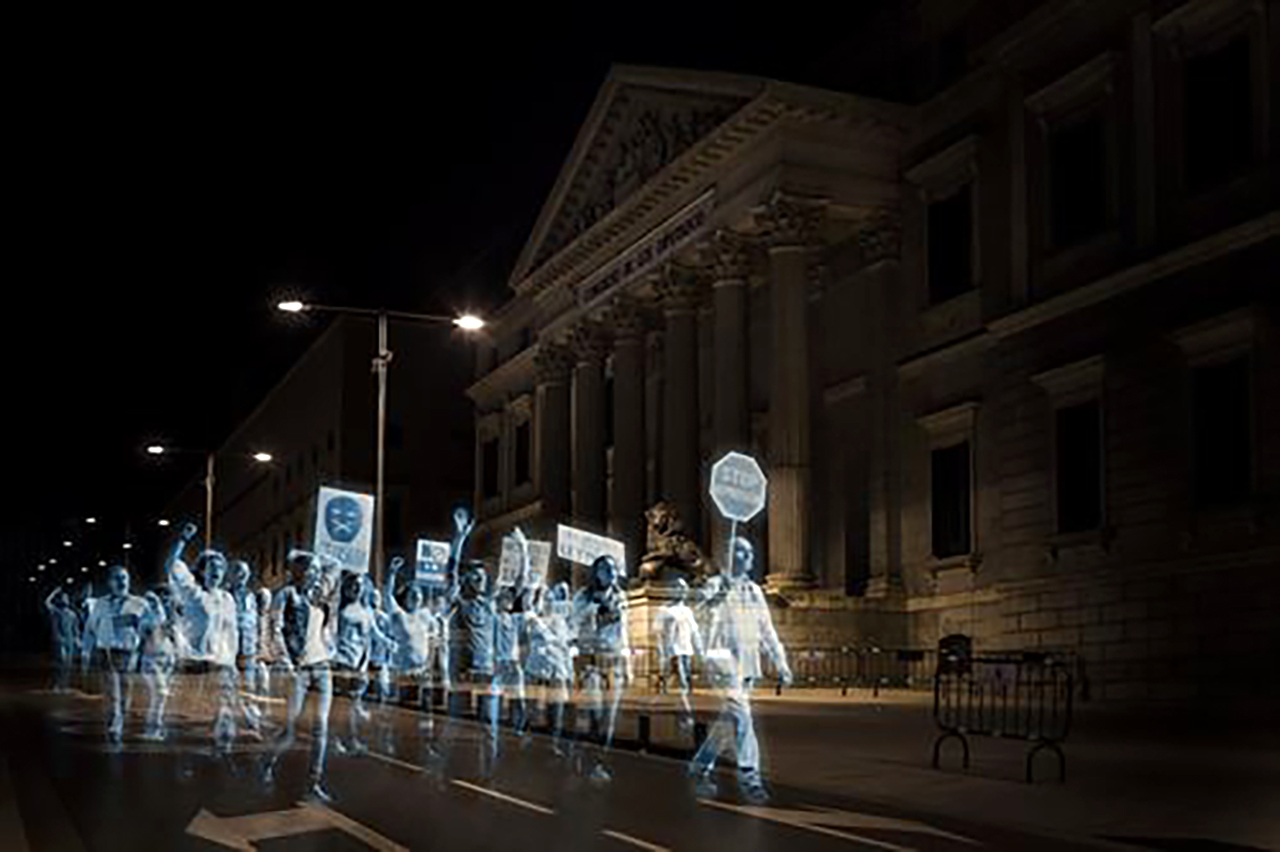
An image related to the protests via @isabelgalvin
Thousands took part in a virtual march in the streets of Madrid last Friday night to protest the new Citizens’ Securities Law’s Reform law that will have a chilling effect on public protests. Hailed as a “Hologram” protest, even though the technology used seems more akin to a projection, the event is part of a larger campaign called Hologramas por la libertad (Holograms for Freedom) that hopes to overturn the law before it goes into effect on July 1, 2015.
 Under the new Citizen Safety Law, which human rights advocates have renamed Ley Mordaza (Gag Law), Spanish citizens cannot protest against the Congress or hold meetings in public spaces and they would have to ask permission from the authorities whenever they wish to protest publicly. Organizers of unauthorized demonstrations could be fined up to €600,000 (~$636,000) for their protests, with possible fines of €600 (~$636) for disrespecting police officers, and €30,000 (~$32,000) for filming or photographing the events.
The “hologram” protest, which was organized by an umbrella organization of 100 groups named No Somos Delito (We are not crime), invites people to submit video messages that would be transformed into digital projections on the streets of Spanish cities. Over 2,000 people took part in the nearly hourlong demonstrations, according to El Pais newspaper. The idea was partly inspired by the Kate Moss hologram at Alexander McQueen’s 2006 “Widows of Culloden” show in Paris.
One of the organizers’ spokespeople, Carlos Escano, explained the concept for the protest to the El Mundo newspaper:
Our protest with holograms is ironic. With the restrictions we’re suffering on our freedoms of association and peaceful assembly, the last options that will be left to use in the end will be to protest through our holograms.
This is the second “holographic” protest in the last few days, as last week The Illuminator temporarily revived the guerrilla Edward Snowden sculpture that was placed in a Brooklyn park.
In the last two years, there have been more than 87,000 demonstrations in Spain and, according to data provided by the Spanish Ministry of the Interior to El Pais, there have been incidents in fewer than 1% of them.
Hologram protest in Madrid against the Gag Law. “As we can’t protest as free citizens, we protest as free holograms.” pic.twitter.com/mjE9j4SBNe
— Giedre P. (@GiedreP) April 10, 2015
Happy Easter, readers. No, I don’t mean happy Easter from last week, it’s Easter today. Here’s some links.
Outraged About Purvi Patel Case? Four Things to Do Now (Deepa Iyer)- Purvi Patel was imprisoned for having a miscarriage. Here’s some actions you can take.
Who cares about the vulnerable when there’s a fight to manufacture? (CN Lester)- CN exposes dodgy tactics at the BBC.
Rad American Women A-B-C– Some fab illustrations of awesome women here.
We need to talk about Ivan (Sturdy Blog)- Old post, but salient again as the election is upon us: how Cameron exploits his dead child.
A Case of Cis Regret (Lola Olson)- An agender activist writes about the hormone therapy they were pressured to take.
An Intersectional Feminist against Imperial Feminism (Julie Hall)- Against white saviours. An important read.
What They Really Mean When They Say They’re Not a Feminist (Ronnie Ritchie)- Comic illustrating what’s really going on.
Everything The Police Said About Walter Scott’s Death Before A Video Showed What Really Happened (Judd Legum)- Documenting the lies. Never trust a copper.
Ferguson officials’ racist emails released– More police racism exposed.
Why being ‘overweight’ means you live longer: The way scientists twist the facts (Malcolm Kendrick)- Hugely important article, highlighting the hidden bits in science.
Actual harm (UnCommon Sense)- What the transmisogynist bigot feminists claim to be “just debate” leads to real world harm. Here’s just one way.
And finally, here’s The Rock lipsynching Taylor Swift and it is absolutely delightful.


Most wingnuts prolly can’t tell you why they’re pro-Gator; after all, I’m guessing most of them have no idea what GamerGate is. But they have a vague sense that it makes feminists head-splodey so they know they can’t be aginnit. My favorite wingnut Gator is Robert Stacy McCain. That’s right–the other *shittier* McCain. One of the Gators’ biggest bogeyman is Randi Harper, who genocided free speech by creating a blockbot that, well, blocks Gators on twitter. Gators and poseur-Gators alike–not understanding what “free speech” means–thinks this exactly like Hitler taking a dump in their mouths. Here McCain takes potshots at Randi by being ableist (all liberals are mentally ill), fat-shaming her and just generally being a horrible human being. It really is a delightful Sunday morning read. (Note: please don’t read it.)
But my favorite part of McCain’s word-vomit is the side by side comparison of Harper’s avatar and photo. You see, they don’t look exactly alike. It’s almost as if avatars are supposed to be fun, vague representations of their owners rather than painstakingly-rendered exact likenesses. But since the subject has been broached, I feel I should be honest with you all: I am not Steve Dallas. It’s true, I’m not Steve Dallas. I know some of you are saying “We know, b. We’ve seen pictures of you.” So, for some of you, the secret’s out–I’ve transcended by human form and am now a being of pure energy. It’s good to get that off my chest. Still, if you don’t mind, I’m going to continue being Steve Dallas here because its hard to photograph pure energy, as anyone who has ever tried to take a picture of my son knows.

Not bspencer

bspencer enjoying a beverage
But listen, I know this must be confusing for McCain. And, honestly, I feel sorry for the guy because he’s going to be really disappointed when he finds out all his new twitter pals aren’t actually anime characters.


Above: Illinois governor Bruce Rauner
There’s nothing good happening to the American worker in 2016, but it is even more discouraging than usual that Republican governors are trying to outdo each other in unionbusting as a way to gather national prominence and perhaps a presidential nomination. Scott Walker is of course the most prominent example of this, but it is also basically Illinois governor Bruce Rauner’s entire agenda.
Rauner’s efforts in Illinois are getting the closest scrutiny. That state is an unlikely launch pad for a crusade against union power. It has been a solidly blue state in presidential elections since 1992 and had not elected a Republican governor since 1998 until Rauner, a longtime friend of Rahm Emanuel, the Chicago mayor who had also worked in private equity, won office last year. Conservative journalist Stephen Moore called the political newcomer’s campaign “the biggest election of 2014.“ Illinois, he wrote in National Review, “could become a laboratory experiment about whether conservative ideas can work in a state that has been ruled by…unions and a self-serving political machine in Springfield and Chicago.”
Once in office, Rauner issued a “Turnaround Agenda” that begins with this premise: “Government union leaders are funding politicians who negotiate their pay and benefits.” To put an end to that, Rauner issued an executive order challenging collective bargaining agreements with state employees and urged municipalities and counties to create their right-to-work zones.
Rauner frames the issue as one of freedom and local control. The governor says he wants Illinois communities to decide whether “their businesses should be subject to forced unionism or employee choice.” Forced unionism is a familiar phrase among opponents of collective bargaining, but it’s also a misleading one. If a majority of workers vote to form a union, then it’s customary for workers to be compelled to pay dues as a price for being in a union. Those who don’t want to join the union are required to pay something so they aren’t getting a free ride. By giving workers the prerogative not to pay union dues, right-to-work laws undercut the power of unions.
Hoping to spur municipalities to take on public-employee unions, Rauner sent right-to-work resolutions to all of Illinois’s cities and villages. A municipality can just insert its name and vote on it. It’s a smart strategy since the Illinois statehouse is solidly Democratic and won’t pass a right-to-work law. Setting fires in small towns might arouse anti-union sentiment, and it will surely inflame the unions. Last week, unions packed a meeting of the Oswego County board in northern Illinois, where the nonbinding resolution was up for discussion. Scott Roscoe, president of the Fox Valley Building Trades Council in Aurora, told a local journalist, “If we don’t stop anti-worker schemes like right-to-work, more families will fall behind.”
I’d say it’s fairly likely that if Hillary Clinton wins in 2016 than Rauner is setting himself up nicely for the nomination in 2020. Certainly his friends the Koch Brothers are happy with him. “Right to Work a Person a Death” should just become the central agenda on the Republican agenda. And Rauner would probably even have good buddy Rahm Emanuel on his side!


No matter how many lanes of traffic governments build, they will never solve traffic problems because they incentivize more driving and more traffic, effectively subsidizing the problem they are meant to fix. Subsidizing public transportation and both dense and affordable urban living are far more effective ways to combat traffic.


It’s hard to see how this goes bad:
Kenya has given the United Nations three months to remove a camp housing more than half a million Somali refugees, as part of a get-tough response to the killing of 148 people by Somali gunmen at a Kenyan university.
Kenya has in the past accused Islamist militants of hiding out in Dadaab camp which it now wants the U.N. refugee agency UNHCR to move across the border to inside Somalia.
“We have asked the UNHCR to relocate the refugees in three months, failure to which we shall relocate them ourselves,” Deputy President William Ruto said in a statement on Saturday.
“The way America changed after 9/11 is the way Kenya will change after Garissa,” he said, referring to the university that was attacked on April 2.
Emmanuel Nyabera, spokesman for the UNHCR in Kenya, said they were yet to receive formal communication from the government on the relocation of Dadaab and could not comment.
The complex of camps hosts more than 600,000 Somali refugees, according to Ruto, in a remote, dry corner in northeast Kenya, about an hour’s drive from Garissa town.
A national security state based around making the terrible lives of over a half-million people significantly worse will surely protect Kenyans. There’s no doubt that the response of the U.S. government after 9/11 that included the invasion of two nations, one of which had nothing to do with the attacks, both endeared the United States to the world, preserved the freedom of Americans inside the nation, and protected its citizens abroad. Clearly, what Kenya needs is to call in Paul Wolfowitz for consultation.

Read more of this story at Slashdot.


ted:
Meet the most successful tech entrepreneur you’ve never heard of.
In 1962, Dame Stephanie Shirley decided she was sick of hitting the glass ceiling for women in the tech industry. So she founded an all-female software startup called Freelance Programmers, and she hired women who had left the workplace after getting married or having children. To get business, she often signed her name “Steve” instead of “Stephanie” in letters. “In those days, I couldn’t open a bank account without my husband’s permission,” Dame Stephanie says. “My generation of women fought the battles for the right to work and the right for equal pay.”
Freelance Programmers was ultimately valued at $3 billion, making Dame Stephanie and 70 of her employees millionaires.
That looks like a lady I want to hang out with.
yes ma
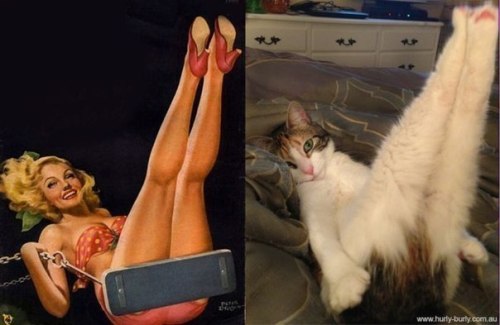
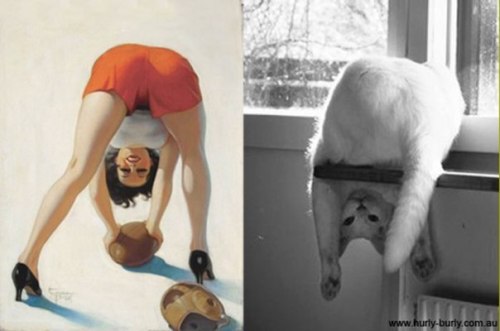

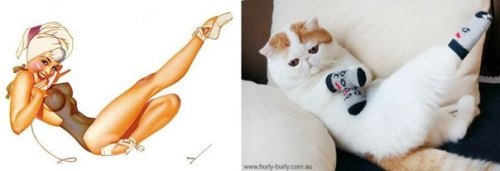
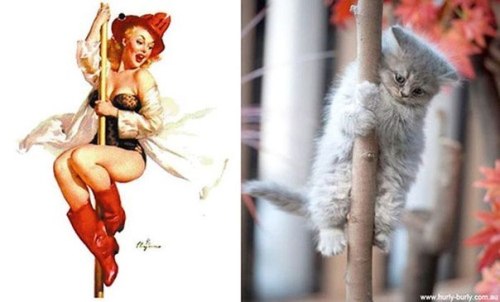
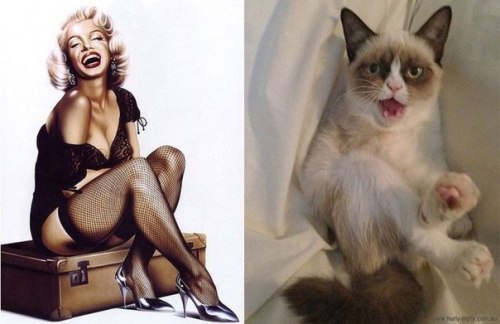

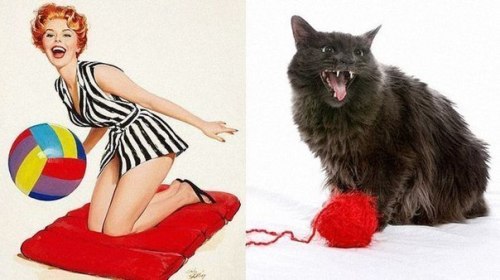
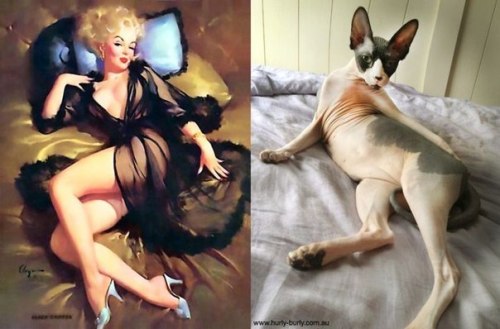

This post is so important.
This is the best post made in the history of ever. I’m so serious.
I just feel really strongly like this belongs on this blog
Lmfaoo!