Shared posts

19 Apr 10:49

"Yeah, but who's going to pay for it?"

by Scott Santens

"Money, Guilt, and the Machine" by Alan Watts

(The following text is what I personally transcribed from the above video uploaded to YouTube by AlanWattsLectures of a lecture given by philosopher Alan Watts circa late '60s)


So this goes very deep into us. It goes deep, deep, deep into a problem we have about guilt. I wonder often if there's any relationship between guilt and gold - that the love of money is the root of evil. It's a very true saying. Because you see I was saying yesterday that the difference between having a job and having a vocation is that a job is some unpleasant work you do in order to make money, with the sole purpose of making money. And there are plenty of jobs because there is still a certain amount of dirty work that nobody wants to do and that therefore they will pay someone to do it. There is essentially less and less of that, that kind of work because of mechanization. But if you do a job, if you do a job with the sole purpose of making money, you are absurd. Because if money becomes the goal, and it does when you work that way, you begin increasingly to confuse it with happiness - or with pleasure.

Yes, one can take a whole handful of crisp dollar bills and practically water your mouth over them. But this is a kind of person who is confused, like a Pavlov dog, who salivates on the wrong bell. It goes back you see to the ancient guilt that if you don't work you have no right to eat; that if there are others in the world who don't have enough to eat, you shouldn't enjoy your dinner even though you have no possible means of conveying the food to them. And while it is true that we are all one human family and that every individual involves every other individual... while it is true therefore we should do something about changing the situation.

The one way of not doing anything about a situation is feeling guilty about it, because when people feel guilty about a situation they most usually, instead of doing something practical to change it, they resort to all sorts of symbolic methods of expiation. They go to confession. They see an analyst. They do all kinds of things which will be ways of actually not doing anything about the problem, but feeling all right about it instead. And guilt invariably produces that sort of reaction. It is a destructive emotion. And instead we need to have a different attitude to our mistakes and to our misdeeds.

Walt Whitman always admired animals because they do not lie awake at night and weep for their sins. Animals are practical in the real sense as are children who haven't been taught this extraordinary hang-up of guilt. Because if you have done something wrong and you've made a mistake and somebody makes you ashamed of it and guilty, you run around licking the sores of your wounded ego because you feel your pride has been hurt. The first thing to understand is that it is not a serious failing in a human being to make mistakes. Everybody has to make mistakes. There is no way out of it. You can't learn anything unless you make mistakes.

We find for example in Japan the Japanese have a terrible hang-up about making mistakes. They therefore never have the courage to practice their English properly. They've had seven years of English in school, most it very, very, badly taught. And it's irrelevant English. They learn all about Shakespeare and Dickens and Thackery and Thomas Hardy and so on, and therefore they can't carry on an everyday conversation. It's like the way the English study French - all about pens of gardeners' aunts and things like that. And so they are ashamed to try out their English unless drunk. So if you want to get into conversation with the Japanese in English you have to go to bars and then they say university students and so on there will loosen up and talk, because they no longer have the inhibition, the shame of saying the wrong thing.

So likewise I know a very great anthropologist who was taught music, playing the piano in the same way I was. When I was taught music the school mom who taught me used to put an India rubber, an eraser it's called in this country, on the top of each hand so that I would have my hands in good posture. And every time I'd play a wrong note she'd hit my fingers with a pencil. And this great anthropologist that had a similar thought about musical education, and when confronted with the piano in the presence of an absolutely marvelous teacher in San Francisco, she said she was amazed he was completely incapable of reading notes. He blocked out everything. So another great teacher of the piano I knew said simply:

“You must not be afraid of playing wrong notes. Just forget it. Play it wrong and then eventually go over it again and you'll eventually get it right. But you must not block. Always keep the same rhythm going, even if you have to slow it down. But keep the proportionate rhythm of one note to another and if it's the wrong note, play the wrong note, as long as you play something, in the right rhythm.”

So you know this is a way of taking away peoples' blockage, peoples' guilt and shame about making mistakes. So you absolutely... freedom means basically the freedom to make mistakes, the freedom to be a damn fool. And then not to recriminate with yourself when you do finally realize that it was a mistake, but simply don't do it again. Or at least do it less often. So you know this is the puzzle when you go to confession in the Catholic Church, which is an enormous method of inculcating a sense of guilt, very subtle. One says of course that Catholics are on the whole less guilty than Protestants. They're more relaxed, and there's some truth in that, but only some. Protestants of course have chronic guilt, and you can work this out by a very simple little formula. That when the Protestants in England abandoned what is called auricular confession, to a priest, they inserted in their prayer book a general confession in which the congregation all made its confession together. Now what does a Catholic say when he makes his confession? The formula is:

"I confess to God Almighty, the Blessed Mary of a virgin, Blessed John the Baptist, the Holy Apostles Peter and Paul and all the Saints that I have sinned exceedingly in thought, word, and deed, by my fault, by my own fault, by my own most grievous fault. Wherefore I beg Blessed Mary etcetera and you Father to pray for me to the Lord our God."

And the priest says:

"Almighty God, have mercy upon you forgive you your sins and bring you to everlasting life by the authority of our Lord Jesus Christ committed unto me I absolve thee from all thee sins in the name of the Father, the Son, and the Holy Spirit."

Now instead of that, what they had to introduce into the Anglican formulary was instead of this very simple confession of sins and before the whole company of Heaven, an absolute grovel wherein they say that they have sinned so horribly and that the remembrance of these sins is grievous unto us. The burden of them is intolerable. Have mercy upon us. Have mercy upon us, most merciful Father. And all this cringing and crying, breast-beating and wallowing in guilt, and then the priest instead of saying a simple formula of absolution, quotes all kinds of scriptural texts to prove from the Bible that those who DO truly and earnestly repent will be forgiven by God. (Cause they're very uncertain about it therefore they have to quote all of the authorities.) And this absolutely groveling form of confession replaces the old one because they were a little bit scared about abandoning direct confession of sins to the priest.

And now going back to the Catholic problem about guilt, you say when you have confessed after saying this formula about and to all the saints, you confess the specific sins you've committed and you know I stole something, committed adultery three times and so on whatever it was, and then you say at the end for these and all my sins (which I cannot now remember), I firmly purpose amendment and humbly ask pardon of God, and of you Father, absolution. Now I firmly purpose amendment… that is where the fly in the ointment consists because the doctrine is that you have made a true confession if at the same time you have a sincere intention of acting differently in the future.

Now no sensitive Catholic can say that without having grave doubts as to whether actually he isn't going to do some of these things again. So if you're a work-a-day Catholic, like a Mexican peasant or something like that, you know that the confession is just a safety valve. You're going to go on living just as lackadaisically as ever but you go to church every so often and you get rid of the guilt and the evil. It's like going to the bathroom. But when you get to get thoughtful about these things then you wonder whether you do really mean what you say, whether your motive is pure and your intention is right. You get into a frightful hang-up.

And one of the reasons that our technology is impeded and prevented from feeding the world properly is the failure of one of our networks. It's an information network and it's called money, about which we have the most unbelievable superstitions and psychological blocks which have been gone into at some length by Freud who equates our valuation of money with our attitude to excrement and a very complicated lot of complexes grow up around that. But money and our psychological attitude to money is a major obstacle to a proper development of technology enabling it to do what it is supposed to do - that is to save labor, and to produce goods, services, and so on adequately. So I must introduce this with a story which is entirely legendary, indeed quite apocryphal.

The great banks of the world at one time got absolutely sick of the expense and security measures involved in shipping consignments of gold from one bank to another and so they decided that all the chief banks of the world would open offices on a certain island in the South Pacific which was balmy and comfortable and there they would store all the gold in the world. And they put it in great subterranean vaults reached by deep elevator shafts and then all they had to do when one bank, one country owed gold to another was to trundle it across the street. And this was very efficient. It went on beautifully for five or six years. And then the presidents of the world banks got together and said, "Let's have a convention out on this island and take our wives and families.”

So about seven years from the date of opening, all those presidents and their wives and families went out to this Pacific island and they inspected the books. And everything was beautifully in order. Then the children said, "Oh Daddy can't we see the gold?" They said, "Of course you may see the gold." And they said to the managers, "Let's take our children down to the vaults and show them the gold."And the manager said, "Well it's a... it's a little bit inconvenient at this time and perhaps the children would not really be very interested, after all it's just only old plain gold." And the president said, "Oh no, no, come now, they'd be thrilled. Let's go down and see."And there was further humming and hawing and delays and finally it came out that a few years before there had been a catastrophic subterranean earthquake and all the vaults had been swallowed up and all the gold had disappeared. But so far as the bookkeeping was concerned everything was in perfect order.

What this means then is that money is nothing but bookkeeping. It is figures. It is a way of measuring what you owe the community and what the community owes you. It is of course as you all know a substitute for barter. If you worked on a farm and the farmer paid you in terms of ears of corn, onions, cabbages, and other vegetables, and yet you wanted a pot and pan of some kind, then you took a few vegetables over to the man who so made pots and pans and you swapped. Some people used cowry shells to stand for money so that you wouldn't have to barter and carry around all these inconvenient loads of goods and then of course gold was used because gold was rare and because gold was supposed to have a constant value. You might ponder the question when a banker buys gold with what does he pay for it? The answer is a mystery called credit.

Credit is bookkeeping and as the economy of the Western world developed it was found that there was not enough gold around, if it were to remain constant in value, to exchange goods and services. You could of course have changed the picture by putting down the price of goods and services to keep pace with the amount of gold in circulation, but nobody will ever put down the price. There's something in our psychology whereby prices always tend to go up. But at the same time therefore because the amount of gold in the world did not provide an adequate channel for the circulation of goods and services, all great industrial nations went heavily into debt. They created a thing called the national debt which year by year gets bigger and bigger and bigger to the horror and consternation of old-fashioned Republicans who pay their bills. But the reason for the increase of the national debt is extremely obvious. It is that with an expanding gross national product there needs to be more and more money, that is to say tokens of exchange, in order to circulate the amount of goods produced, which is ever increasing.

Now I'm not an economist, and I can refer you to the work of those who really are, but any fool can see certain extremely fundamental principles about this whole situation. And I'm speaking of the thought today of a man called Robert Theobald who sort of ties in with the general picture of people like McLuhan and Buckminster Fuller in having very far-out thoughts and very adventurous thoughts about what we should do about money. But he is in the following of a man like Frederick Soddy, who was a Nobel Prize chemist, who was one of the first people to think really freshly about economics. Or people like Silvio Gesell in Austria and Major Douglas in England, he's in that following. And the proposition that he puts forward is very simple - that money is a circulation of information and in itself has no value. Gold of course has some value. It has some value for industry and some value for dentistry and some value for jewelry. But as a means of exchanging the goods and services of the world it is as primitive as post horses for carrying the mail. We must recognize then that money is a pure abstraction.

I was on a television show a little while ago with Ted Sorensen and Raymond Moley and they were having a long, long discussion which sounded like something that goes on in a smoke-filled backroom of party bosses, where they were talking about the prospects for Republican-Democratic parties in 1968. And then they got onto the question of automation and the problems of unemployment that it was making and the difficulties of transferring workers from this to that when they were only trained for this. Finally I said, "The trouble with you gentlemen is you still think money is real.” And they looked at me and sort of said, "Oh ha ha ha, someone who doesn't think money is real. Cause everybody knows money is money and it's very important." But it just isn't real at all because it has the same relationship to real wealth, that is to say to actual goods and services, that words have to meaning - that words have to the physical world. And as words are not the physical world, money is not wealth. It only is an accounting of available energy - economic energy.

Now what happens then when you introduce technology into production? You produce enormous quantities of goods by technological methods but at the same time you put people out of work. You can say, "Oh but it always creates more jobs. There will always be more jobs." Yes, but lots of them will be futile jobs. They will be jobs making every kind of frippery and unnecessary contraption, and one will also at the same time have to beguile the public into feeling that they need and want these completely unnecessary things that aren't even beautiful. And therefore an enormous amount of nonsense employment and busy work, bureaucratic and otherwise, has to be created in order to keep people working, because we believe as good Protestants that the devil finds work for idle hands to do. But the basic principle of the whole thing has been completely overlooked, that the purpose of the machine is to make drudgery unnecessary. And if we don't allow it to achieve its purpose we live in a constant state of self-frustration.

So then if a given manufacturer automates his plant and dismisses his labor force and they have to operate on a very much diminished income, (say some sort of dole), the manufacturer suddenly finds that the public does not have the wherewithal to buy his products. And therefore he has invested in this expensive automative machinery to no purpose. And therefore obviously the public has to be provided with the means of purchasing what the machines produce.

People say, "That's not fair. Where's the money going to come from? Who's gonna pay for it?" The answer is the machine. The machine pays for it, because the machine works for the manufacturer and for the community.

This is not saying you see that a... this is not the statist or communist idea that you expropriate the manufacture and say you can't own and run this factory anymore, it is owned by the government. It is only saying that the government or the people have to be responsible for issuing to themselves sufficient credit to circulate the goods they are producing and have to balance the measuring standard of money with the gross national product. That means that taxation is obsolete - completely obsolete. It ought to go the other way.

Theobald points out that every individual should be assured of a minimum income. Now you see that absolutely horrifies most people. “Say all these wastrels, these people who are out of a job because they're really lazy see... ah giving them money?” Yeah, because otherwise the machines can't work. They come to a blockage.

This was the situation of the Great Depression when here we were still, in a material sense, a very rich country, with plenty of fields and farms and mines and factories...everything going. But suddenly because of a psychological hang-up, because of a mysterious mumbo-jumbo about the economy, about the banking, we were all miserable and poor - starving in the midst of plenty. Just because of a psychological hang-up. And that hang-up is that money is real, and that people ought to suffer in order to get it. But the whole point of the machine is to relieve you of that suffering. It is ingenuity. You see we are psychologically back in the 17th century and technically in the 20th. And here comes the problem.

So what we have to find out how to do is to change the psychological attitude to money and to wealth and further more to pleasure and further more to the nature of work. And this is a formidable problem. It requires the best brains in public relations, in propaganda, in all that kind of thing, in all the media: television, radio, newspapers, everything...to try to get across a message to the vast general public about what money is. You see the difficulty is this. When the public suspects that the money that is being issued, the dollar bills being issued by the government are only paper, and stand only for paper, they start putting up prices so you get an inflationary situation where the more paper money there is, the higher and higher and higher the prices go… which is a very stupid psychological maneuver. And people have to be persuaded.

The least effective way of persuading people is passing laws, but they have to be persuaded somehow not to put up the prices, but to play fair with each other and keep some sort of standard correspondence between how much is produced and how much credit is issued.

(Alan Watts, you are missed. Thank you for your wisdom, wherever you are. And to whoever reads this, you might also now be interested in reading a paper about the option of funding a basic income using a "citizen-centered monetary regime" aka distributed seigniorage.)


Silvrback blog image

Like my blog? Please subscribe and also consider making a monthly pledge of support.


Want to crowdfund a basic income? Take The BIG Patreon Creator Pledge.

Subscribe to my blog | Follow me on Twitter | Like me on Facebook | Follow me on Tumblr
12 Apr 06:22

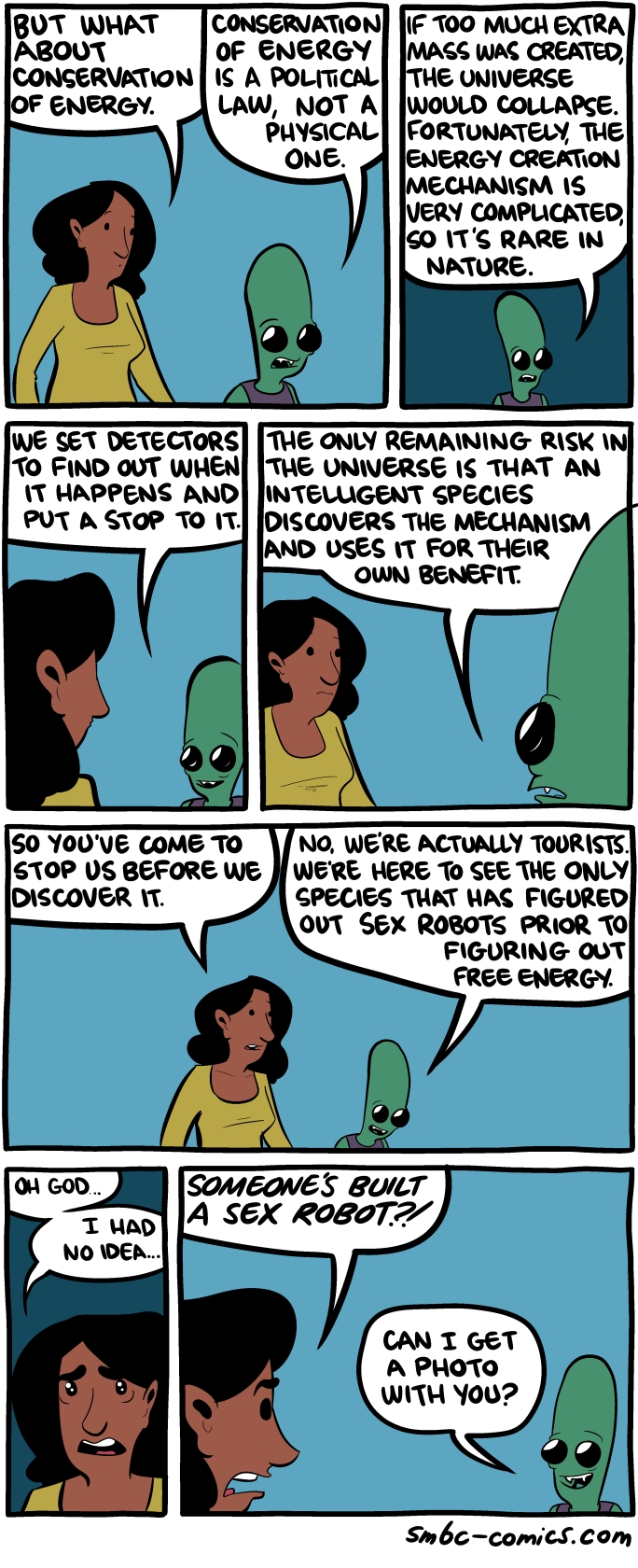
Saturday Morning Breakfast Cereal - Conservation of Energy

by admin@smbc-comics.com

Hovertext: Keep your hands above my waist, human.


New comic!
Today's News:

 Only three days left to get your monocle!

12 Apr 06:21

"You can safely assume that you’ve created God in your own image when it turns out that God..."

“You can safely assume that you’ve created God in your own image when it turns out that God hates all the same people you do.”

- Anne Lamott, writer (b. 10 Apr 1954)
11 Apr 18:27

Saving Us From Ourselves

by Zandar
The FBI sure has this knack for allowing twenty-something losers to pretend to carry out terrorist fantasies, then catching them in the act for long, long prison sentences. Booker was charged with one count of attempting to use a weapon of mass destruction (explosives), one count of attempting to damage property by means of an explosive and one count of attempting to provide material support to
11 Apr 18:27

A First Stab at Defining Feminist Porn

by kittystryker

I’m going to be brief. I don’t know if you can make truly feminist porn marketable to the capitalist patriarchy. In many ways I think these goals are contradictory, and I think one of the biggest excuses for not implementing feminist ideals in porn is “marketability” i.e. money and catering to the male gaze, which is, again, the complete opposite of the feminism I subscribe to.

I get it- making money is important!

But I also don’t think “making money” is more important than abolishing sweatshop labour, or protecting what’s left of our environment, or the myriad other ways we critique capitalism being raised above compassion and care.

Here’s what, in my mind, feminist porn would reflect in terms of values. I imagine this will be a living document as my feminism is informed and critiqued further, and that’s how it should be, I hope. Feminism is, to me, ultimately a process more than a destination.

Worker’s Rights on Set – I would expect feminist porn performers to be paid equally, contracts to be clear and reviewed thoroughly, performers to be allowed to use safer sex techniques that work for them without being rewarded/penalized for those choices, performers to be paid on time, in full. I believe performers should be allowed to safeword out of a scene if they need a moment, and they should be able to voice complaints about unsafe treatment by fellow performers without being blacklisted for it. This also means having a comprehensive and transparent process for dealing with sexual assault on and off set.

Representation –  I feel feminist porn should take on board the various ways in which white, slender, cis femme women are deified under the male gaze, and not perpetuate that harm further. Ethnic diversity (including shades of Blackness), size diversity, gender diversity, orientations across the board, people with various disabilities, all of these things should reflect in our pornographic landscape – not as a token, or as a fetish, but as part of the rich tapestry that is human sexuality. I also think this means showing BDSM, rough sex, creampies, erotic humiliation, double penetration, porn with and without plot. Far too often “feminist porn” gets stuck in the “porn for women” rut… as prescribed, again, by the capitalist patriarchy, which values feminine virtues over what women actually find sexy.

Politics –  Look I’m going to be brutally honest here and say no, I don’t think you get to call porn feminist and also say porn isn’t political. Of course it’s fucking political, otherwise you wouldn’t use a political movement to differentiate your porn from the mainstream. I don’t think that means your porn needs to embrace political themes all the time, but I think that to make feminist porn is to critique your work through the lens of multiple feminisms, including anti-porn feminism.

Understanding Sex Work is Work –  ”Authenticity” is another branding bullshit scam. Porn performers perform. Stop pressuring us to express “genuine” pleasure when you already have an idea of what pleasures are allowed to be genuine. It’s silencing, it’s belittling, it’s reductive, and it’s gross.

Marketing – Using slurs to market your porn is not challenging the status quo, it’s perpetuating and supporting it. I suppose that means you can’t be lazy about your marketing by humiliating your performers, but instead have to maybe even coin new terminology. It’ll be an uphill and often seemingly thankless battle (as is feminism generally, mind). You should be doing it anyway.

I’m off to go talk about porn all day- expect this to be added to. What else should be included? Comment below!

11 Apr 18:25

More Double-Speak from Schrödinger’s Candidate

by tengrain
In which we once more wonder what Rand Paul actually believes. Continue reading →
11 Apr 03:39

Middle class

by Paul Campos

h armstrong roberts

The Times has an interesting series on the changing nature of middle class identity in the US, in an age of increasingly precarious economic status, and a widening gap between the very rich and everybody else. One of the themes of the series is that even very well off people in America generally identify as “middle class,” in part because there’s always somebody much richer nearby to compare themselves with. That point makes this statistical error at the end of the latest installment of the series especially unfortunate:

The feeling of comparative deprivation and the ultrarich separating themselves from the rest of society helps explain why only 1 percent of Americans accept the rich or upper-income label. Even most people earning over $250,000 — the top 5 percent of wage earners — identify as middle class. There’s always someone wealthier around.

In fact someone earning $250,000 is at just about exactly the 99th percentile of wage earners, not the 95th, which is a pretty enormous difference, i.e., one in 100 Americans earns $250,000 per year or more, not one in 20. (To be in the 95th percentile you “only” need to earn about half that much). . . To be more precise, these are the percentiles of earnings among wage earners, not Americans, or even adult Americans. Nearly 40% of adult Americans earned no wages at all in 2013. So the statement “one in 100 Americans earns $250,000 per year” is a considerable overstatement, even if limited to adults.

Still, it’s a good series and well worth checking out.


10 Apr 05:35

White House opens first gender-neutral restroomThe White House...


White House opens first gender-neutral restroom

The White House has opened its first gender-neutral restroom in what is seen as a symbolic step by President Barack Obama to protect the rights of the lesbian, gay, bisexual and transgender (LGBT) community in the workplace.

White House spokesman Jeff Tiller said the “all-gender restroom” is in the Eisenhower Executive Office Building where many employees have meetings and offices and is next door to the West Wing which houses the president’s offices. [story]

say what you will, this was not the direction we were headed before january 20, 2009.

10 Apr 05:06

jynx maze sexually broken

by admin
Sophianotloren

Beautiful :) <3

Jynx_Maze-SexuallyBroken_2014-07-19-10_02_59 Jynx_Maze-SexuallyBroken_2014-07-19-10_03_12 Jynx_Maze-SexuallyBroken_2014-07-19-10_03_21 Jynx_Maze-SexuallyBroken_2014-07-19-10_03_29 Jynx_Maze-SexuallyBroken_2014-07-19-10_03_48 Jynx_Maze-SexuallyBroken_2014-07-19-10_04_29

The post jynx maze sexually broken appeared first on droolingfemme.

10 Apr 05:06

Glimpses of a Pastoral Dystopia

by Erin Joyce
Postcommodity, "Pollination" (2015) (all images courtesy the Scottsdale Museum of Contemporary Art unless otherwise noted)

Postcommodity, “Pollination” (2015) (all images courtesy the Scottsdale Museum of Contemporary Art unless otherwise noted)

SCOTTSDALE, Ariz. — Comprised of Kade Twist, Raven Chacon, Cristóbal Martínez, and Nathan Young, the artist collective Postcommodity is an interdisciplinary group. Working in a variety of media, Postcommodity (who, full disclosure, I am curating in an upcoming exhibition) engages with contemporary culture, notions of postcolonialism, what it means to be an indigenous person, and more specifically, what it means to be an indigenous artist working today. Their work is unflinching, often involving uncomfortable and challenging pieces that can set the viewer on edge. In their current exhibition at the Scottsdale Museum of Contemporary Art (SMoCA), they dive headfirst into the idea of a dystopic future, the fragility of the human experience, and the ramifications of global capitalism.

Curated by Sara Cochran, the exhibition features two pieces. The first, titled “Promoting a More Just, Verdant and Harmonious Resolution,” premiered at Contour 2011 in Belgium and is making its United States debut in Scottsdale. The piece is comprised, in this iteration, of a five-channel video and sound installation. The video imagery volleys back and forth between footage of pastoral, utopian scenes and jarring, dystopic visuals inspired by the 1973 film Soylent Green. The juxtaposition of beautiful, bucolic imagery with the horror of an apocalyptic future filled with pollution, overpopulation, and the decay of the natural world creates a powerful tension, between what is inevitable and what we cling to in denial.

Postcommodity-Promoting3

Postcommodity, “Promoting a More Just, Verdant and Harmonious Resolution” (2011) (click to enlarge)

The sound component of the installation depends on the viewer for activation: while walking through the gallery space, you detonate an audio land mine hidden beneath the floorboards. The experience is quite jolting, even when you’re expecting it. This aspect of the piece references the IEDs (improvised explosive device) that were employed to horrific effect in the recent wars in Afghanistan and Iraq. Postcommodity’s sonic IED is a loud compilation of pop music. It seems to comment on the role that Western popular music plays in shaping the global world and the violent and disorienting effects of war and capitalism.

IMG_2741

Postcommodity, “Pollination” (2015) (photo by the author for Hyperallergic)

The second piece on view, “Pollination” (2015), was developed for the SMoCA show. Upon entering the museum, you are given a token. Upon entering the exhibition gallery, you confront a smaller constructed space that looks something like a bathroom, made up of gray walls and eight doors, each numbered. You select a door, although one is intentionally out of order and another permanently occupied. Inside your quiet, compact room are a stool or chair, a window with a closed shade, a box of tissues, and a slot in which to place the token. Once you do so, the shade slides up to reveal a garden contained by mirrored walls and illuminated by clinical, artificial light. Music begins to play as a series of floral and woody scents wafts by.

The effect is at once intriguing and unsettling. Playing on the idea of the peep show and the fetishized female form — which throughout art history and literature has been implicitly and explicitly linked to the garden — Postcommodity comments on fantasy, objectification, and the male gaze. Yet by presenting an actual garden, the piece also speaks to the powerlessness of nature in the face of mankind’s domination and abuses. The incorporation of the “pay-to-play” model, meanwhile, brings in capitalism’s role in the devastation of the natural world, global market systems, land development, and the exploitation of natural resources, all of which suggest Western colonial endeavors in what is thought to be a postcolonial world. Though the piece only requires the viewer to insert her token to participate — a small gesture — it implicates her as she sees her reflection in the garden room’s mirrors.

The exhibition is strong, with installations that are intriguing but beguiling, appealing but deeply troubling. It builds on the collective’s history of works that involve the viewer. In “Promoting a More Just, Verdant and Harmonious Resolution,” we are the victim who has detonated the IED; in “Pollination,” we are the perpetrator, objectifying and fetishizing the landscaped nature before us. We engage with and participate in a mosaic of tensions, between beauty and destruction, power and powerlessness, the ideal of a prosperous future and one drenched in destruction.

Postcommodity, "Pollination" (2015)

Postcommodity, “Pollination” (2015)

southwestNET: Postcommodity continues at the Scottsdale Museum of Contemporary Art (7374 E 2nd Street, Scottsdale, Arizona) through April 26.

Correction: This review originally stated that the artwork “Promoting a More Just, Verdant and Harmonious Resolution” uses footage from the film Soylent Green. It is, in fact, footage inspired by the film. The error has been fixed.

10 Apr 05:02

Social Media You Can Wear as a T-shirt

by Becca Rothfeld
Social Textiles (all images courtesy Fluid Interfaces and Tangible Media Group)

Social Textiles (all images courtesy Fluid Interfaces and Tangible Media Group)

At more than one recent party, I’ve found myself uttering the same awkward phrase: “I know you from Twitter.” Our social media presences, it seems, precede us, but we’ve yet to find a way to work our prior knowledge elegantly into IRL conversation (or at least, I’ve yet to).

Social Textiles, a project from the Tangible Media Group and Fluid Interfaces group at MIT, attempts to rectify this problem, integrating interpersonal and online interactions more seamlessly than ever before. The initiative, headed by students working in the MIT Media Lab, creates wearable social media. Using thermochromatic ink, a soft circuit, and Bluetooth, Social Textiles link items of clothing to their wearers’ smartphones and alert them when other Social Textiles users with similar interests are in close proximity. If one user touches the person with whom he or she has shared interests, the clothing lights up. So far, Social Textiles has only been put into practice as in T-shirt form, but the technology could be integrated with other clothing items in the future, FastCoDesign reported.

VuqbZES76vVl-lbmKn00NDtsJ3G5-jgPbszcWJ4qZQI

How Social Textiles work.

On their website, the Fluid Interfaces team writes that they hope their projects will create more continuity between virtual and face-to-face interactions, closing the gap between digital and “real” friendship. “We rely on computers and smart mobile devices for nearly every aspect of our lives, yet the way we interact with them has not changed significantly since personal computers were first invented,” they explain. “The Fluid Interfaces research group radically rethinks human-computer interaction with the aim of making the user experience more seamless, natural and integrated in our physical lives.” With the Internet of Things and projects like Microsoft’s holographic computing headset on the horizon, Social Textiles is one more step towards the convergence of the virtual and the physical.

10 Apr 04:58

The Gale Force is Strong with This One

dogs,dock,star wars,the force,sailing

Submitted by: Unknown

Tagged: dogs , dock , star wars , the force , sailing
10 Apr 04:58

Closets

by Robot Hugs

New comic!

This comic was originally posted on Everyday Feminism on March 18, 2015. Closets are kind of a thing for me because anytime someone asks me when i ‘came out of the closet’ i want to be like CLOSETS ARE SOCIAL CONSTRUCTS BASED ON OPPRESSIVE NORMS AROUND ACCEPTABLE IDENTITIES but that isn’t the answer people generally want.


10 Apr 04:54

Photos of famous rock bands represented by a single composite of all the band members' faces

by Mark Frauenfelder

rock"By George," said John. "I think Paul's lost his ringo." [via]

10 Apr 04:52

Breast Laugh I Had All Day

by Matthew Rettenmund

Tumblr_inline_nme1t0wacC1r4lzpo_500

10 Apr 04:52

"Fight 215" Takes Aim at the Patriot Act

by Don
A7d

The Electronic Frontier Foundation has launched the “Fight 215” online campaign, which calls for United States citizens to urge their elected representatives to allow Section 215 of the Patriot Act to expire in June.

10 Apr 04:52

Measure 91 Backers Join Bus Project in Campaign to Expunge Weed Convictions

The effort by Rep. Lew Frederick (D-Portland) to let Oregonians expunge marijuana convictions from their criminal records is gaining allies.

Backers of Measure 91, which voters passed to legalize recreational weed last November, have joined forces with the Bus Project, Portland's get-out-the vote nonprofit, to back Frederick's bill with a campaign called "Fresh Start Oregon."

"We built a powerful organization to legalize marijuana, and we plan to use it to make sure these bills are passed," Measure 91 chief sponsor Anthony Johnson said Wednesday in a statement. "Let's stop ruining lives by treating marijuana as a crime and start saving money by getting people out of jail and giving them a fresh start."

WW first reported in February that House Bill 3372 would allow people convicted of nonviolent marijuana crimes to expunge them from their criminal histories, and reduces sentences for people currently jailed for nonviolent weed crimes.

But nearly two months later, the bill hasn't been scheduled for a hearing in the House Judiciary Committee. Rep. Jeff Barker (D-Aloha), who chairs the committee, could not immediately be reached for comment.

Since Frederick introduced his bill, the Senate has passed its own legislation on expunging pot crimes. Senate Bill 364 doesn't go as far as Frederick's bill. It requires courts to use the lower levels of criminal classification for weed offenses passed in 2013, when considering clearing the record of a person who committed those crimes before 2013.

Similar bills to expunge pot convictions are being considered in Washington, Maryland and Missouri.

Weekly newspaper Street Roots took a closer look at Frederick's proposal last week. It says the ramifications are unclear:

It’s hard to say just how many people would be affected by the passage of the proposed bills: According to data released by the Oregon Department of Corrections, as of 2014 just over 200 people were incarcerated statewide for nonviolent marijuana offenses only (including several for offenses that will still be illegal when Measure 91 takes effect, such as selling to minors).
10 Apr 04:52

Photo


10 Apr 04:51

Where Minority Populations Have Become the Majority

by Tanvi Misra
Image Pew Research Center
Pew Research Center

By 2040, the country's white population will no longer be the majority. But for many regions around the country, this demographic shift has already arrived. A new map created by the Pew Research Center pinpoints the 78 counties in 19 states where, from 2000 to 2013, minorities together outnumbered the white population.

Pew crunched Census numbers from the 2,440 U.S. counties that had more than 10,000 residents in 2013. Whites made up less than half the population in a total of 266 counties. Even though these 266 counties made up only 11 percent of the counties analyzed, they contained 31 percent of the country's total population, with many of them home to dense urban areas.

Most of these counties are sprinkled around the Sun Belt states in southern part of the country (below).

Of the 25 counties with the largest total populations, 19 now have non-white majorities. As of 2000, six of these (four in California and two in Florida) had white majorities. The most dramatic change within the last decade can be seen in counties in Georgia. The share of white residents in Henry County, for example, fell from 80 percent in 2000 to a little less than 50 percent in 2013.

Overall, while the white population is still the largest racial group in the United States (63 percent), its share is certainly declining—more rapidly in some parts of the country than others. In fact, only two relatively small counties—one in South Carolina and one in Louisiana—have gone from being majority-non-white to majority-white in the last decade.


10 Apr 04:50

I guess I need to study up on more Normandy cuisine. I like...


I guess I need to study up on more Normandy cuisine. I like Calvados and setting things on fire! “In Normandy you can find a similar concept, called a Gateau a la Normande, in which an apple purée is made of sweetened cider apples and Calvados, then chilled and spread between a dozen or so crepes. Chopped hazelnuts or almonds are sprinkled over the ‘stack cake’, and it is baked for a quarter hour until it’s been heated through. The final touch comes at the table when a half cup of hot Calvados is poured over the cake and set afire.” From Frank Browning’s book, “Apples: The Story of the Fruit of Temptation.”

09 Apr 22:17

YALL.  The Obama Administration responded to our petition to end...


YALL.  The Obama Administration responded to our petition to end LGBTQ conversion therapy - and they’re supporting it! 

THIS.

IS.

HUGE!!!!!!

09 Apr 22:17

The Sad Puppies are goddamned idiots

by PZ Myers

amazingstories

The Sad Puppies are what the gomers who undermined the Hugo nominations are calling themselves. I’m interested in seeing how they defend themselves…or was, until I read their arguments. And all I can conclude is that these are really pathetic, brainless people.

For example, this guy Brad R. Torgersen. He tries to explain their cause by first setting up an analogy.

Imagine for a moment that you go to the local grocery to buy a box of cereal. You are an avid enthusiast for Nutty Nuggets. You will happily eat Nutty Nuggets until you die. Nutty Nuggets have always come in the same kind of box with the same logo and the same lettering. You could find the Nutty Nuggets even in the dark, with a blindfold over your eyes. That’s how much you love them.

Then, one day, you get home from the store, pour a big bowl of Nutty Nuggets . . . and discover that these aren’t really Nutty Nuggets. They came in the same box with the same lettering and the same logo, but they are something else. Still cereal, sure. But not Nutty Nuggets. Not wanting to waste money, you eat the different cereal anyway. You find the experience is not what you remembered it should be, when you ate actual Nutty Nuggets. You walk away from the experience somewhat disappointed. What the hell happened to Nutty Nuggets? Did the factory change the formula or the manufacturing process? Maybe you just got a bad box.

OK…I can understand that. Sometimes you just want your comfort food, and you want it to be prepared the same way, every time. This is the force that drove McDonald’s to world domination — the same food available everywhere, all the time, nice and greasy. I understand, but I don’t think that way; I want something different, I like exploring new flavors. I go to our local Mexican restaurant and pick a completely different meal each time. But wanting the same thing? Fine. My wife discovered her favorite thing on the menu early on, and she gets it always. No problem!

Except the analogy he’s setting up is to justify books. He wants them predictable. He wants to look at the cover and know exactly what he’s going to get when he reads it.

And he’s an author.

Well, at least I know I’d only have to read one of his books, if I felt like it (I do not), and then I could skip the rest.

But you’re reading this and saying, no, that can’t be. Books are supposed to be different from each other. Just imagine if every time you picked one up it would just be a retelling of Harry Potter, over and over again. No author could seriously propose such a justification.

Really, he did.

That’s what’s happened to Science Fiction & Fantasy literature. A few decades ago, if you saw a lovely spaceship on a book cover, with a gorgeous planet in the background, you could be pretty sure you were going to get a rousing space adventure featuring starships and distant, amazing worlds. If you saw a barbarian swinging an axe? You were going to get a rousing fantasy epic with broad-chested heroes who slay monsters, and run off with beautiful women. Battle-armored interstellar jump troops shooting up alien invaders? Yup. A gritty military SF war story, where the humans defeat the odds and save the Earth. And so on, and so forth.

These days, you can’t be sure.

The book has a spaceship on the cover, but is it really going to be a story about space exploration and pioneering derring-do? Or is the story merely about racial prejudice and exploitation, with interplanetary or interstellar trappings?

There’s a sword-swinger on the cover, but is it really about knights battling dragons? Or are the dragons suddenly the good guys, and the sword-swingers are the oppressive colonizers of Dragon Land?

A planet, framed by a galactic backdrop. Could it be an actual bona fide space opera? Heroes and princesses and laser blasters? No, wait. It’s about sexism and the oppression of women.

Finally, a book with a painting of a person wearing a mechanized suit of armor! Holding a rifle! War story ahoy! Nope, wait. It’s actually about gay and transgender issues.

Or it could be about the evils of capitalism and the despotism of the wealthy.

AN AUTHOR WROTE THAT. Unbelievable. He wants purity of the genre: books with rockets on the cover must be entirely about machines and traveling. Books with a guy and an axe on the cover must be about barbarians killing monsters. Don’t you dare change the formula. These books are not allowed to be about race, or colonialism, or sexism, or oppressive social structures. He thinks those are bad things to bring up in a science fiction book.

Our once reliable packaging has too often defrauded our readership. It’s as true with the Hugos as it is with the larger genre as a whole. Our readers wanted Nutty Nuggets because (for decades) Nutty Nuggets is what we gave them. Maybe some differences here and there, but nothing so outrageously different as to make our readers look at the cover and say, “What the hell is this crap??”

Apparently, he stopped reading the genre with Hugo Gernsback.

Maybe he opened The Left Hand of Darkness, published in 1969, expecting a shoot-em-up with aliens, and got a story about culture and gender.

The Martian Chronicles, published in 1950…surely, that one is about brave Americans conquering a planet? There’s a story or two in there that turns that trope on its ear. Brad Torgerson’s response was probably “What the hell is this crap??”

Let’s try Dhalgren, from 1975 — nope, that sends poor Brad screaming off to find some fantasy. Swords, half-naked slave girls, bloody battles.

Hey, The Book of the New Sun has a guy with a big sword on the cover, and it’s new — it came out 35 years ago. But then it’s a massive allegorical series of books on this far future world, using words from a language Wolfe invented.

Lord of Light? An amazing melding of Hindu gods and high technology. Stanislaw Lem? He’s old school, certainly his books must be straightforward space opera. I know, Phillip K. Dick! Nothing twisty and weird there, no sir!

I guess his only recourse is Robert Heinlein. Conservative politics, a bit of militarism, hyper-competent engineers solving mechanical problems all over the place. Like in Stranger in a Strange Land. There wouldn’t be any of that freaky social consciousness crapola in a book from 1961, would there?

I first started reading fantasy when I was six or seven years old, and my father gave me a copy of Tarzan of the Apes. I was eight or nine years old when my father again infected me: I was sick and stuck in bed for a few days, and he brought me a copy of Childhood’s End from the library and totally blew my mind. I didn’t want Nutty Nuggets again and again…I wanted that experience of surprise and insight and strangeness again. That’s why I read science fiction ferociously for years afterward.

And science fiction has always been this way. It’s always been a genre of new ideas and experimentation. It’s not like all of a sudden in the 2000s a few social radicals have hijacked the field and sent it off into wild new directions, discombobulating all of their readers. They’ve always done that. It’s got a readership that loves being discombobulated and twisting their brains around strangeness.

I see someone accusing authors of “defrauding” their readership because they are creative and explore novel ideas and think about more than just the gobbledygook pseudomechanics they’ll use to make their spaceships fly, and I see the real fraud: that is a person who does not understand science fiction and fantasy in the slightest.

Maybe the sad puppies should just pick up a copy of one of their own books and read it over and over again everyday. No surprises. They’d get exactly what they expect every time. And they’ve probably already got a rocket on the cover.


George RR Martin has spoken, at length and in great detail (Hey! Like his books!). He goes through the history of the Hugos and shows, with the evidence, that there is no pattern of discrimination against Conservative White Dudes.

09 Apr 19:53

atmidnightcc:We carved out 10 plots for our favorite Hashtag...


atmidnightcc:

We carved out 10 plots for our favorite Hashtag Wars entries, but only one of these will be Tweet of the Day! Watch tonight’s show to see which wins!

08 Apr 23:01

rebecca blue deepthroat

by admin

rebecca-blue-let-me-suck-you-063rebecca-blue-let-me-suck-you-064rebecca-blue-let-me-suck-you-065rebecca-blue-let-me-suck-you-068rebecca-blue-let-me-suck-you-069rebecca-blue-let-me-suck-you-070

Originally posted 2015-04-06 23:24:35. Republished by Blog Post Promoter

rebecca blue deepthroat source: droolingfemme.

07 Apr 22:16

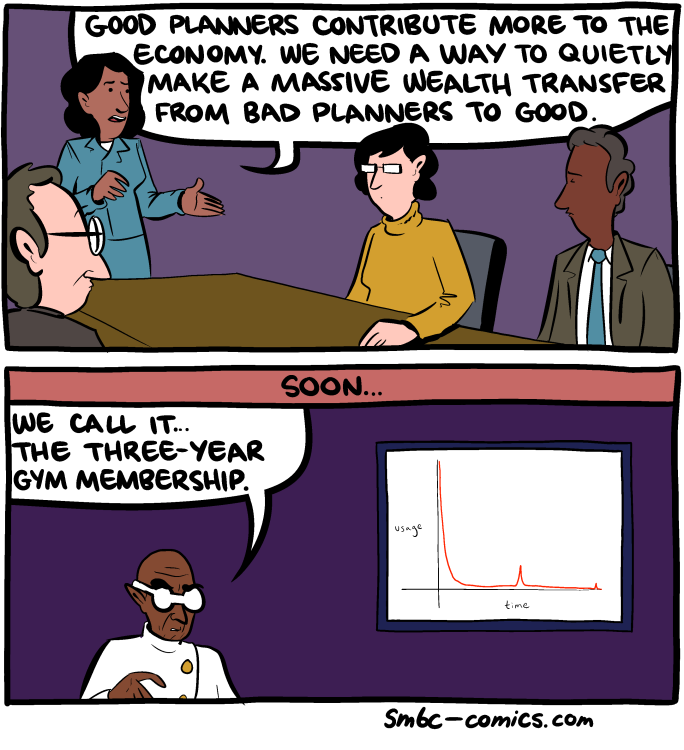
Saturday Morning Breakfast Cereal - Planned Economics

by admin@smbc-comics.com

Hovertext: You want a one-month membership? I bow to your self-awareness.


New comic!
Today's News:

 Only 9 days left!

07 Apr 22:16

Sports

by tga

sports

07 Apr 22:16

sexxxisbeautiful:lindsayetumbls: arielvioletgillooly: A post...


sexxxisbeautiful:

lindsayetumbls:

arielvioletgillooly:

A post that brilliantly explains why “Men’s Rights Activists” are misguided and why the oppression that men face in our culture is not a result of “misandry” but of misogyny.

“You’re fighting for the right to contain and control misogyny, and direct it back at women, where you think it belongs.”

And there it is.

Damn.

07 Apr 22:15

hellooo, i saw your post where you said "historical accuracy = no creator accountability" and it was smthg you said you always referred to--can you please expand or point me to your other posts? i'd like to understand more about this! thanks :D

So, say someone makes a show set in Victorian London. There are no characters of color on the show.

Someone watches the show and says, “Hey, why is everyone on this show white?”

The creators of the show, rather than accepting responsibility for 1. choosing the setting of the show in the first place or 2. their own casting choices, say, “Hey! That’s just historically accurate, there WERE no PoC ‘back then’!!” 

Basically, it’s about trying to pass the buck onto “history” for creative choices they made. Like: “OH, I didn’t WANT to exclude anyone, but I HAVE to be loyal and accurate to the true history!”

And everyone just accepts that as if it’s true, and as if that is a good reason to make a show that consists entirely of white people. 

This is about dodging accountability in that they chose a setting they assumed would have only white people in it, and then made that true. And that has happened so many times that the myth just keeps perpetuating itself. Rather than consulting actual history or demographics, they base this idea on TV shows, books and movies that have already recreated some version of “Victorian London” that contains nothing but white citizens (in much the same way the citizens of supposed “New York City” in countless sitcoms are inexplicably white); media from ten years ago, 20 years, 50 years, and so on.

That establishes the context. Now, the facts.

London is one of the most diverse cities on Earth, and it didn’t get that way in the last ten minutes.

image

Black London: Life Before Emancipation by Gretchen Gerzina (1995)

A glimpse into the lives of the thousands of Africans living in eighteenth century London. 

image

The UCL Equiano Centre has an Interactive Map with information about various Black Londoners 1800-1900.

image

Photograph of John Archer, Mayor of Battersea, South London. England, 1913

When he was elected Mayor of Battersea, John replied to press speculation about where he might have come from with the remark that he had been born - “in a little obscure village in England probably never heard of until now - the city of Liverpool”. He went on to declare - “I am a Lancastrian bred and born”.

Characteristically pugnacious, but he had been stung by reports which, guessing wildly, said that he had been born in Rangoon or somewhere in India. He was actually part of the already well-established black population in Liverpool.

image
image

[more about Peter Jackson]

image

Lady Sarah Forbes Bonetta, goddaughter to Queen Victoria herself.

London is and was a vastly multicultural and diverse city. Even before the 1800s and photography, surviving artworks depict a massively diverse populace:

image
image
image
image
image

[The Royal Sport, Pit Ticket]

Here’s a link to the British Library’s resources on people of Asian descent living in Britain. The history of the Chinese community in London goes back for centuries. 

You also have:

image

Sailors of South Asian origin (known as Lascars) based out of London, for the most part:

I could keep going.

But the point I’m making here is that claiming your whitewashed media is somehow “historically accurate” is total bunk.

If someone creates something that has nothing but white characters, it is that way because they CHOSE to make it that way. There is every opportunity and every reason to create media with characters of color in it, and trying to blame history for whitewashing is about dodging accountability.

07 Apr 22:13

thebroodingatheist:And then you ask why people are angry


thebroodingatheist:

And then you ask why people are angry

07 Apr 22:13

Human Shields, Cabals and Poster Boys

by John Scalzi

I’m awake too early to leave for the airport but too late to go back to sleep, so as long as I’m up, some additional thoughts on the recent Hugo-related drama.

* I’m feeling increasingly sorry for the nominees on the Hugo award ballot who showed up on either Puppy slate but who aren’t card-carrying Puppies themselves, since they are having to deal with an immense amount of splashback not of their own making. And to this you may say, well, but the Puppies maintain that everyone on their slate was notified, so they knew what they were getting into. But as it turns out, we know that at least some of the people on the Puppy slates weren’t contacted before the nominations came out — see Andromeda Spaceways In-flight Magazine on this — so this is not a 100% sure thing.

Also, let me suggest that when Brad Torgersen (or whomever) went off notifying people of their presence on the slate, he probably did not lead with “Hi, would you like to be part of a slate of nominees whose organizers whine darkly and incessantly about the nefarious conspiracies of the evil social justice warriors to infiltrate all levels of science fiction, and which will also implictly tie you and your work to at least one completely bigoted shitmagnet of a human being?” Rather more likely he played up the “we’re trying to get stuff on the ballot we think is cool that doesn’t usually get on it” angle and downplayed, you know, that other stuff.

And you might think, well, how can you miss that other stuff? The short answer to that is that, as difficult as it might seem, not everyone actually spends a lot of time following the Hugo and the controversies therein. It was, until very recently, kind of an insider sport. So it’s possible to have missed this stuff and/or not fully grasped the implications of it until after the awards came out. Not for me, clearly, and possibly not for you. But it is possible.

It’s difficult to miss them now, of course. But this increases my sympathy for these nominees. The whole reason the Puppies are so transparently covetous of the Hugos is that they are a big deal in a (relatively) small community. So imagine being part of this community, being told that you’ve gotten a Hugo nomination, and then finding out that there’s this metric load of toxicity around it, manufactured by the people who got you the ballot — or at least claim that they did.

It’s easy to say, well, they should just withdraw. Speaking as a past Hugo nominee, I’m here to tell you that the emotions around that decision are likely not to be that simple, especially because at least some of that work and some of those people are (in my opinion) deserving of the sort of recognition the Hugos offer.

Thus the irony of this being an excellent year not to be on the Hugo ballot, because you get to pass on the entire shitshow around it. To be clear, some of the nominees affirmatively signed up for a shitshow, hoped for a shitshow and are now reveling in the shitshow that’s happening. That’s their karma. Give some thought to the ones who didn’t sign on for it, or might have not fully realized that it was coming. I think of them as the human shields of the Puppy campaigns. Personally, I’m cutting them a bit of slack.

* Matthew Foster, husband of the late and missed Eugie Foster, has a nice two-part recap of the Puppies situation (1, 2) and the personalities involved on the Puppies lists, and makes a cogent observation about the Puppy assertion of a SJW cabal, which is that it’s complete nonsense:

Eugie and I were acquainted with, or friends with most of the people the Puppies point out as leftist leaders. We were both directors at Dragon Con, just about the biggest genre convention around, and know the organizers of many other conventions. Eugie was a Nebula winner, female, and Asian American. Trust me Puppies, if there was an organized society or just a clique working against you, we’d have been in it.

Yes, this. The entire paranoid theory of a social justice warrior cabal is predicated on the rather narcissistic hypothesis the Puppies have that those they see having opposing political and social view spend countless hours thinking of ways to thwart politically conservative writers and keep them off award ballots, for reasons.

Speaking as someone who the Puppies have a rather disturbing hate-boner for (yeah, I know, think how I feel about it) and who is certainly a high poobah of whatever cabal they imagine: Honestly, who has time for that? I’m busy enough! Thwarting the careers of people I don’t know or care about is not actually high on my list of things to do, be they conservative or otherwise. The idea I am going to take any time out of my schedule to do that is ridiculous. I barely have time for people I like.

But look at these statistics that show — show! — that Scalzi and Charles Stross gamed the Hugos! (Yes, this is an actual thing.) Dudes. You give me soooooo much more credit for personal industry, and also, you don’t know how to read the numbers. I mean, I get it: When you want to do something obnoxious in furtherance of your own personal agenda, you want to be able to say other people did it first; when you want to front a slate of nominations with an explicit sociopolitical goal, you want to assert that you’re just doing what other people have already done. You want to posit bad behavior to rationalize your own, as if other people being assholes excuses you being one, too. But there is no SJW cabal, and this is on you.

Saying there’s no cabal is just what a cabal member would say! Well, yes.

* Continuing the personal aspect of this, it’s been noted by several that the Puppies have a rather unseemly interest in me: I’m accused of creating my own slates (I didn’t), of gaming the Hugos in some manner (I haven’t) and Redshirts is used as an example of how the SJW cabal is secretly controlling the Hugo voting, because how else could a bestselling, widely-liked book by a well-known author who had nine previous Hugo nominations and a Campbell Award possibly have taken an award in a popular contest? It beggars the mind, people. The idea that this particular book, by a straight white male, that might not even pass the Bechdel Test, is somehow the perfect vehicle for an SJW cabal Hugo win is its own case study in just how poorly constructed the logical underpinnings of the “SJW Cabal” hypothesis really are.

These accusations are generally accompanied by a rather lot of spittle, enough so that people are beginning to mock the Puppies for it; the best joke of this I’ve seen comes here, in a comment on a File 770 post (the post, appropriately enough, speaking of paranoid hypotheses having no relation to reality, about a Puppy assertion that Terry Pratchett never being nominated for a Hugo shows how the system is gamed being undermined by Pratchett turning down a Hugo nod in 2005):

Q: How many Sad Puppies does it take to change a light bulb?
A: 100, one to change the bulb and 99 to say, “Gosh, I hope this makes Scalzi’s head explode!”

I think it’s pretty evident why I’m a poster boy for Puppy hate: The primary drivers of the Puppies (Beale, Correia and Torgerson) don’t think warmly of me for their own personal reasons, I have politics and social positions they oppose, and I strongly suspect the fact I have a successful career in science fiction confounds them, which is, among other things, why they and other Puppy partisans spend so much time trying to assert that I don’t actually sell any books, and so on.

I’m a useful target for them, in other words, and someone they can use to whip up their partisans: Scalzi’s the problem! There’s no way Scalzi could be successful without a shadowy conspiracy! He’s been doing what we’re doing all along! A victory for the Puppies will make Scalzi weep salty tears! And off they and their lackeys go, to the comment threads and to Twitter, to use me as justification, in so many ways, for the stupid and tiresome things they do. Not just me and not just my work, mind you. The Puppies have a full enemies list. But on that list, I’m top five, easy.

I have no control over this, although I do find the Puppy version of me interesting. He appears to simultaneously live in a volcano lair, evilly stroking a cat whilst planning the next SJW pogrom against the valiant writers of pure and true science fiction, and also lives on the streets, giving handjobs for a nickel and raving how he used to be somebody. I should like to meet this John Scalzi; I would give him a hot cup of soup and a warm jacket, and then ask him if I could borrow his laser cannon.

Be aware that me writing about their obsession about me will be viewed as proof that it is really me that has the obsession, hah ha! I’m also aware that some people think this is a thing where the Puppies and I are two sides of a coin. Again, not much I can do about that, except to say I didn’t make the coin or be asked to be put on a side. If I’m on the enemies list, fine. Just ask why it is I’m on the list, and for what reasons. And ask what that says about the Puppies.