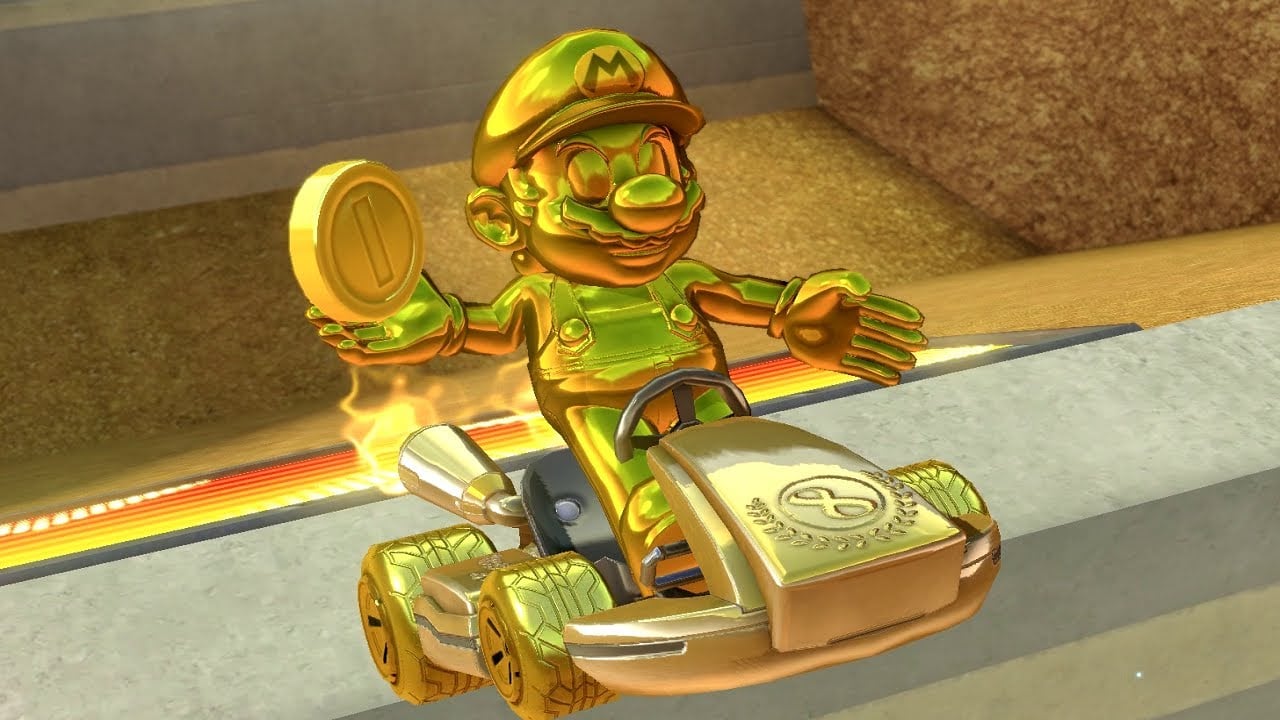
Guerrilla artists Secret Handshake have installed a giant gold participation trophy for Trump on the National Mall, hoping that if the president receives enough shiny objects, he may stop trying to collect wars.
The installation also doubles as a trophy donation center, inviting the public to drop off personal trophies, medals, and ribbons for Trump to claim as his own. — Read the rest
As reported by WCCFtech, the Dutch consumer organization Stichting Massaschade & Consument now believes it has an even stronger case in its €400 million ($457 million) lawsuit against Sony over the 30% rate it charges on every game sold through the PlayStation Store, a "Sony tax" that retail games are not subject to—the same retail games Sony has announced it will discontinue by 2028.
"The end of physical discs removes the last place where a PlayStation game could still be bought and sold at a competitive price," SM&C chair Lucia Melcherts told WCCFtech. "No discs means no second-hand market and no alternative to the PlayStation Store, so from 2028, Sony alone decides what a game costs and even how long you are allowed to use it.
"That is exactly the harm our Fair PlayStation claim is about: a price can never be fair when the buyer is left with no ownership and no alternative."
It's illustrative to compare this situation with Epic's Apple Store challenges and the antitrust lawsuits faced by Steam—with one brought against it by another, different Dutch consumer group. Apple, which sells the hardware and maintains its own storefront—a system which closely maps to Sony's—was ultimately forced to relinquish some of control of that ecosystem.
Meanwhile, Steam's flat 30% take (sound familiar?) from everyone on the platform, be they EA or a bedroom programmer, is my least favorite part of my preferred storefront. But it doesn't own our PCs the way a console manufacturer or Apple controls a non-jailbroken device. Indeed, you can install alternate operating systems, competing storefronts, and even physical PC games onto Steam Decks and Steam Machines.
Tweaktown reported PlayStation's 2025 revenue as ¥4.69 trillion ($29 billion), but a $427 million lawsuit isn't anything to sneeze at, and the company is likely to face other challenges to its policies around the PlayStation Store. Whether it's physical discs or some other concession to consumers and watchdogs, as advocated by analyst Daniel Ahmad, something's gotta give.
When the WS Game Company got hit with a seven-figure tariff bill on the board games it imports from China, CEO Jonathan Silva decided to find out whether he could make one in America instead. He picked a 250th-birthday edition called Monopoly: The Americana Edition and, according to NPR, hit a wall almost immediately: he couldn't find anyone in the United States to make him 10,000 dice. — Read the rest
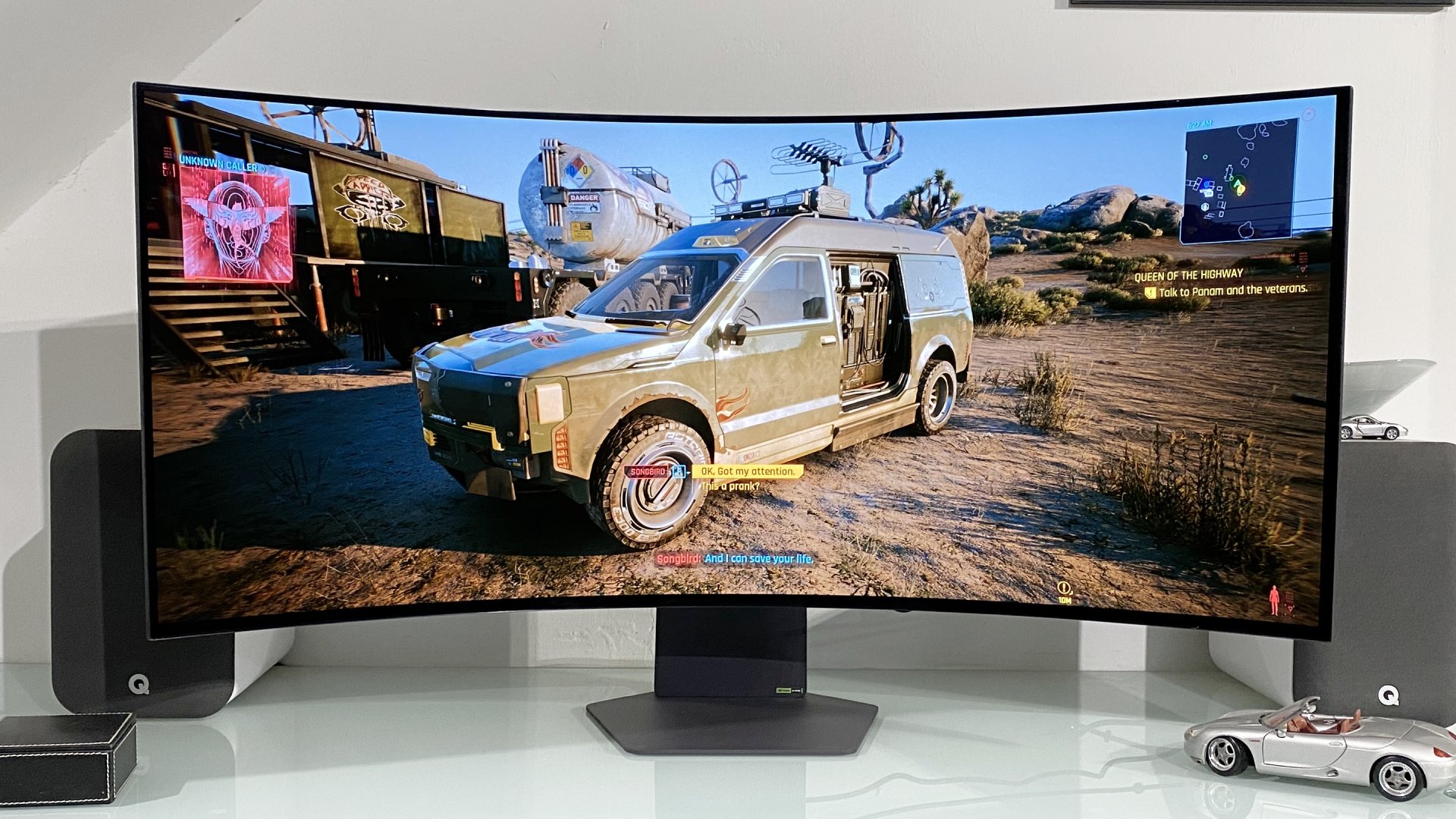
It's amazing the lengths to which advertisers will go to serve a juicy new pop-up ad on your screen. From Windows itself suggesting apps, to motherboards automatically installing software, now to monitors prompting users to download antivirus trials. No, they won't be covering the bill after the trial ends.
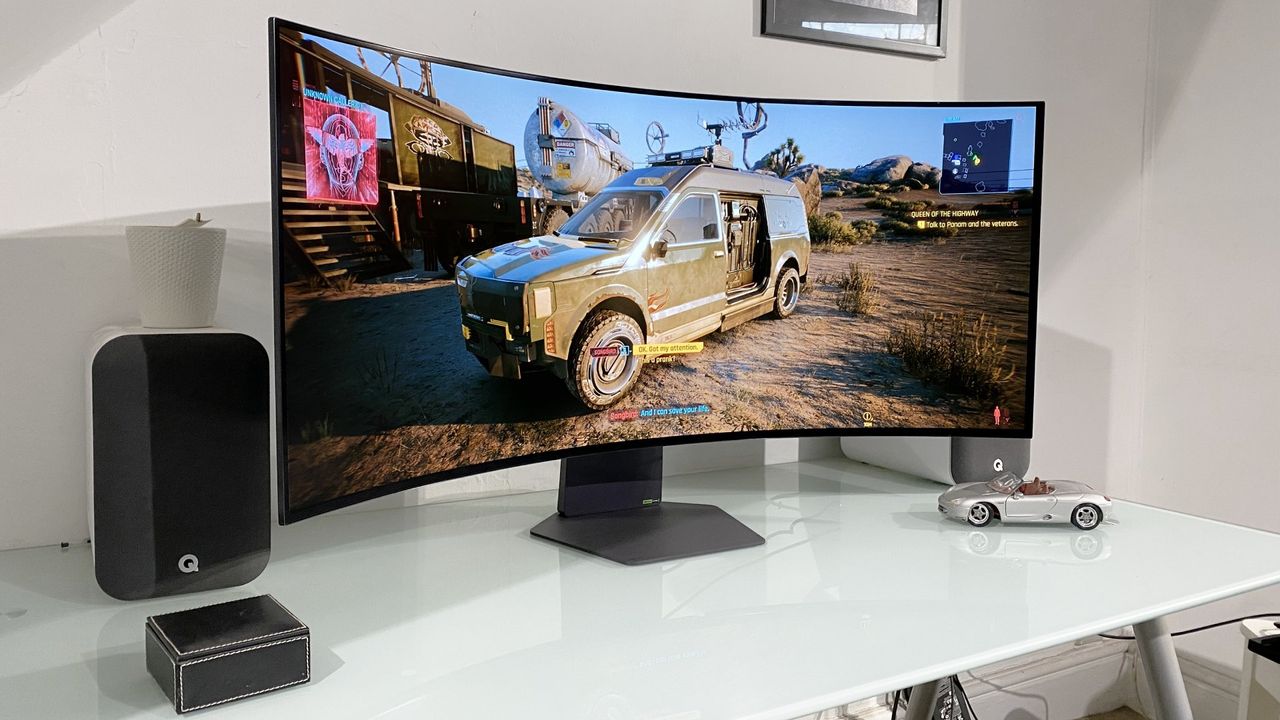
As noted by TechSpot, user Mags_Smash took to the PCMR Subreddit last week to show that the LG Monitor App Installer was prompting them to get a free 30-day trial of McAfee. They claim the LG Monitor App Installer was silently installed via a Windows update without their consent. After searching through the technical details of the reliability monitor in settings, they found the LG app had been downloaded via one of their three LG monitors.
They urge users to not only disable this from happening by clicking through settings and activating the 'prevent automatic download of applications associated with device metadata' option, but also suggest users should completely disable the Windows Store, where the app was downloaded.
The comments section on this thread has many other users complaining about seeing the exact same pop-up, linked to the silent installation of LG's software. One user claims they don't hate Windows for its bloatware, "but this is the first time I've had it install bloatware without my knowledge and genuinely made me think it was a virus."
Notably, LG isn't the only brand accused of doing this in the thread. One user complains their Alienware monitor asks to install Dell/Alienware software, and we've definitely had experience of continual pop ups from Alienware screens reminding us to download the Alienware monitor software, however nothing has ever automatically installed without our consent. Though they aren't the only user to name-check Dell in the comments section.
(Image credit: Future)
However, one thing does make LG stand out above the rest here, in a negative sense. Where some peripherals prompt users to download their software, or just download it without asking in the worst cases, LG is prompting users to get a subscription to a service it doesn't directly own. As well as this, users would have to pay for McAfee after the 30-day trial, so LG is incidentally prompting users to spend cash.
I have reached out to both LG and Alienware for comment on this story, but have not yet heard back. Either way, companies being able to serve ads to your PC without asking and prompt you to get a subscription to a separate service, because you've bought a monitor from them, certainly rubs me the wrong way. I don't particularly like anything installing software without asking, but attempting to get me to download even more bloatware is more than a minor annoyance in my book.
The time has finally come for Xbox's massive reset—in a statement on the official Xbox site today, recently-minted CEO Asha Sharma revealed the fate of several studios. I won't be focusing on them in this article (although you can read the words of my fellow PCG writer Andy Chalk first, if you'd like).
Instead I want to highlight (with the deserved scrutiny of a post announcing the threatened livelihoods of thousands and people) Sharma's closing paragraph, because it's borderline delusional.
"I want XBOX to be one of the few companies that entertains more than a billion people each day and gives everyone the opportunity to create and connect. I know we can achieve this goal. XBOX has many of the most beloved franchises in entertainment history, talented studios around the world, and we will return to growth in 2027."
A billion, need I remind you, is a thousand million—to give you a sense of scale, a million seconds is 11.5 days. A billion seconds is 31.7 years. A grain of sand is around 0.4mm in diameter. If you made a chain of them, a million grains would get you 0.2 miles, a distance you can walk in about five minutes. A billion grains would get you 248.5 miles, which'd get me, in the UK's south, halfway up to the top of Scotland.
Or, hell—let's talk about videogame subscribers as a metric. World of Warcraft, a videogame Microsoft currently owns, hit a peak of 12 million subscribers during Cataclysm. 12 million players, the absolute highest point of one of the most popular MMORPGs ever created, the literal biggest fish in the genre? That is 1.2% of a billion.
And we're just talking about subscribers, not daily players. Sharma wants a daily playerbase that is the equivalent of 83 World of Warcrafts at their highest peak, all logged in at the same time. Counter-Strike, the most popular game on Steam, had an all-time peak of 1.8 million. She wants 555 Counter-Strikes every day.
Speaking of Steam, the platform hit 41 million concurrent users last year. Sharma wants 24 Steams at their all-time record heights. 24 of them. Even if we're a bit more charitable and assume that, say, Steam hitting a peak of 41 million means 60 million players logged into it on that day. That's still 16 Steams.
It's a quite frankly delusional figure that's nonetheless a perfect encapsulation of the runaway irresponsibility of Microsoft in the past few years. Multiple promising studios shut down, huge acquisitions, rampant AI spending—all of which, you might think, would make the executive class wonder if they were maybe aiming a little too high.
But not Sharma, no no no. We must entertain a billion people each day, she bravely shouts, we must be 24 Steams, and we can be 24 Steams.
And, naturally, we must do so by demanding that fewer people do more work. Sharma says she wants all of this with the same breath in which she announces Xbox will have 3,200 fewer people working for it by 2027.
The quite frankly insulting final paragraph of Sharma's corporate diatribe is an example of the exact plague that's boiling the videogame industry alive. There is no room for humility or self-reflection. Sharma must promise the mathematically impossible to save face, or, I can only assume, violate some arcane dogma and burst into flames. Microsoft's year of shame is getting a sequel.
For most of the twentieth century, if you needed an ambulance in America, a funeral home sent one — the only vehicle built to carry someone lying flat was the hearse. David Oks traces the whole expensive mess back to that arrangement: funeral homes ran cars that carried patients and coffins alike and barely charged, because "the family that called you for the ride to the hospital was likely to also call you for the funeral." — Read the rest
You know the parable about how the foolish man built his house upon sand and the wise man built his house upon rock and it’s always about having a sturdy foundation well there is also the fact of location which is that the sand probably used to be rock except it’s been eroded to sediment because it’s a FUCKING FLOODPLAIN
flood Plain perfec t size for put town in to b\uild! inside very Soft and Comfort town safe happy put town in Floodplain. Put Town In Floodplain. no problems ever in flloodplain because good Shape and Support for town roads weak of big town citizens. Afloodplain yes a place for a town put town in floodplain can trust floodplain for giveing good place for town. friend flood
The Orange Menace says he "had a conversation with Theodore Roosevelt" about the Panama Canal, which is a neat trick since Roosevelt died in 1919 and Trump was not born until 1946.
So, now we're at the President openly describing recent conversations with a 107-year-dead person yet remaining in command of the world's largest, yet quickly shrinking in effectiveness, military. — Read the rest
Foreigners will never understand how someone like Rawhide Kobayashi would immediately become a beloved local fixture in whatever small American town he ended up in.
every single time someone pulls the “How would you AMERICANS like it if someone came to AMERICA and” reversal, the answer is always “we’d fucking love it”
Your tags summed up the exact feeling I had about this
I just Googled the Swedish-Japanese guy in the OP, and according to this interview, his Japanese name was given to him by the master gardener he was apprenticed under:
“The family name ‘Murasame’ was given to me by my master. The given name ‘Tatsumasa’ is a combination of ‘dragon’ (tatsu), the [zodiac] year when I was born, and one character from my master’s name,” says Murasame.“
So I think maybe it’s less like naming yourself ‘Brandon McFreedom’ and more like moving to the states to work under a veteran car mechanic named Bud McLean, and then having him turn to you after a few years on the job, and say "Son, it’s time for you to become an American so you can open up your shop. And when that day comes, I think the world should know you by a new name: McLeo GM Corvette.”
Named by his superior by conventions one would apply to a super chill stray cat
Tom the Dancing Bug: Elon Musk and His DOGE Pals, in "Texas Chainsaw Massacre"
-> Please join the team that makes it possible for your friendly neighborhood comic strip Tom the Dancing Bug to exist in this hostile Trumpverse! JOIN US IN THE INNER HIVE, and be the first kid on your block to get each week's Tom the Dancing Bug comic – before it's published anywhere. — Read the rest
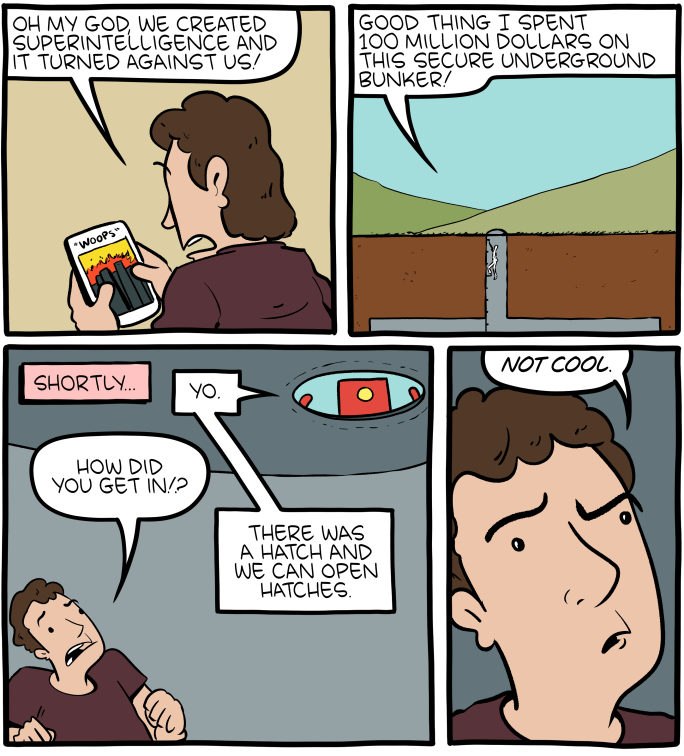
Hovertext: We're going to build a recursively self-improving god-like machine intelligence that wants to destroy humanity, but it's OK because I have a hole.
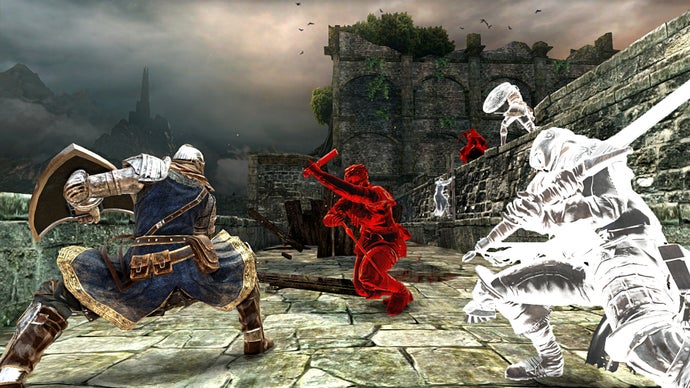
Prolific FromSoft game multiplayer modder Yui is "close" to being ready to open up alpha testing of their latest seamless co-op mod, this time for Dark Souls 2. Despite it following the the footsteps of their seamless co-op mods for the likes of Elden Ring, Nightreign, and the original Dark Souls, Yui said this DS2 mod's turned out to be a very different kettle of fish and one of their "most complicated and ambitious projects to date".
‘Historian’ claims ‘overwhelming difference’ between him and rogues’ gallery of autocrats is that Trump is more powerful
Donald Trump has enthusiastically agreed with a public assessment by a man he met while golfing that the “overwhelming difference” between the current US president and historical figures who incited fear – such as Attila the Hun, Genghis Khan, Napoleon, Stalin, Mao and Hitler – is that Trump is more powerful.
The US president reposted a short text in the early hours of Friday morning, in which the author writes:
So close, but it's still virtual buttons on a flat screen. I'm much more excited about the Ayaneo Play, assuming it makes it to production.
Well, this is a sweet bonus: if you own an Android foldable like a Samsung Z Series foldable, OnePlus Open or Google Pixel 10 Pro Fold, you may soon have access to a customizable, virtual gamepad baked into Android 17, which is set to start rolling out to Android hardware today. — Read the rest
If we get to a Friday signing ceremony without this uncertain new US-Iran deal being derailed by any of its inherent ambiguities, then nuclear talks can finally restart in the same place – and at almost exactly the same point they were before this conflict started.
The world will have irrevocably been changed in other ways. There is no going back for the 120 Iranian children in Minab killed in their primary school in the war’s first hours, nor for their bereaved parents, or any of the thousands in Iran, Lebanon and around the region whose lives were erased or blighted by a feckless war of choice.
Elon Musk hates taxes, government, regulation, and the public sector right up until the check clears.
CNN's Chris Isidore lays out the part of the Musk myth that gets buried under all the rocket smoke and Cybertruck cosplay: SpaceX needed early NASA grants and a crucial $1.6 billion contract, while Tesla leaned on a $465 million federal loan, EV tax credits, and billions from emissions-credit rules that forced other automakers to buy their way into compliance. — Read the rest
After weeks of regaling us with his knowledge of great pool guys and shades of blue, The Orange Menace's taxpayer-funded vandalism of the Lincoln Memorial Reflecting Pool is complete. By complete, we mean completely filled with algae.
The most likely thing to have actually happened here is that some friend or donor got paid off by this personal pool guy of the United States zero-bid contractor receiving the job. — Read the rest














![[link]](https://i.redd.it/htzo5ycooeah1.png)


![[link]](https://i.redd.it/3l8l69v7ud7h1.png)

![[link]](https://i.redd.it/4fz837fnw87h1.png)