Want to get an ambulance through urban environments faster? Give it propellers and space for one passenger.
For Body Week, Co.Design asked a select group of design firms: What one thing in the health care industry desperately needs to be redesigned, and how would you redesign it? Here, argodesign imagines the flying ambulances of the future.—Eds
Not going to make it out tomorrow. But here's the next best thing.
A large asteroid, called 2004 BL86 by astronomers, swept just outside 3 lunar distances of Earth on January 26, 2014. It’s the closest asteroid of its size known to pass Earth between now and 2027. It was close enough that observers on Earth could see it fleeing in front of the fixed star background. It was close enough that observers noticed a moon orbiting the asteroid! Here are some of the best images so far!
The movie of the asteroid’s pass – above – is from Alessandro Marchini of the Osservatorio Astronomico Università di Siena, in Italy. He emailed EarthSky with word of this video, saying:
… A video of the ride of asteroid 2004 BL86 through the stars. It’s the animation of 71 frames just captured in 16 minutes by our telescope, with the asteroid crossing our field of view (40 arc minutes). Taken from 20:28 to 20:44 UTC.
Telescope Maksutov-Cassegrain 30cm f/5.6, CCD Sbig STL-6303, field of view 58×39 arcmin.
Thank you, Alessandro!
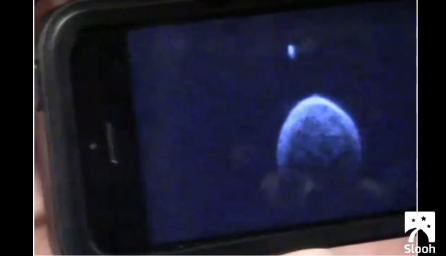
Wow! Scientists working with NASA’s Deep Space Network antenna at Goldstone, California have released the first radar images of asteroid 2004 BL86. The radar images show that the asteroid has its own small moon!
A video still of asteroid 2004 BL86 and its newly discovered moon from Goldstone Solar System Radar. The image is from last night (January 25). Looks like it shows the moon, too. Image via Slooh.com. View the video segment.
Cool! The passage of asteroid 2004 BL86 – passing closer today than any large asteroid of its size until 2027. Jean Paul Mertens just sent it and said it was seen through the telescope of Slooh.com in Chile.
Bottom line: We’re starting to receive images and video of asteroid 2004 BL86, which swept about 3 times the moon’s distance from Earth on Monday, January 26. Check back! We’ll post them as we see them …
If I could leave with a fraction as much grace and wisdom.
A MONTH ago, I felt that I was in good health, even robust health. At 81, I still swim a mile a day. But my luck has run out — a few weeks ago I learned that I have multiple metastases in the liver. Nine years ago it was discovered that I had a rare tumor of the eye, an ocular melanoma. Although the radiation and lasering to remove the tumor ultimately left me blind in that eye, only in very rare cases do such tumors metastasize. I am among the unlucky 2 percent.
I feel grateful that I have been granted nine years of good health and productivity since the original diagnosis, but now I am face to face with dying. The cancer occupies a third of my liver, and though its advance may be slowed, this particular sort of cancer cannot be halted.
It is up to me now to choose how to live out the months that remain to me. I have to live in the richest, deepest, most productive way I can. In this I am encouraged by the words of one of my favorite philosophers, David Hume, who, upon learning that he was mortally ill at age 65, wrote a short autobiography in a single day in April of 1776. He titled it “My Own Life.”
“I now reckon upon a speedy dissolution,” he wrote. “I have suffered very little pain from my disorder; and what is more strange, have, notwithstanding the great decline of my person, never suffered a moment’s abatement of my spirits. I possess the same ardour as ever in study, and the same gaiety in company.”
I have been lucky enough to live past 80, and the 15 years allotted to me beyond Hume’s three score and five have been equally rich in work and love. In that time, I have published five books and completed an autobiography (rather longer than Hume’s few pages) to be published this spring; I have several other books nearly finished.
Hume continued, “I am ... a man of mild dispositions, of command of temper, of an open, social, and cheerful humour, capable of attachment, but little susceptible of enmity, and of great moderation in all my passions.”
Here I depart from Hume. While I have enjoyed loving relationships and friendships and have no real enmities, I cannot say (nor would anyone who knows me say) that I am a man of mild dispositions. On the contrary, I am a man of vehement disposition, with violent enthusiasms, and extreme immoderation in all my passions.
And yet, one line from Hume’s essay strikes me as especially true: “It is difficult,” he wrote, “to be more detached from life than I am at present.”
Over the last few days, I have been able to see my life as from a great altitude, as a sort of landscape, and with a deepening sense of the connection of all its parts. This does not mean I am finished with life.
On the contrary, I feel intensely alive, and I want and hope in the time that remains to deepen my friendships, to say farewell to those I love, to write more, to travel if I have the strength, to achieve new levels of understanding and insight.
This will involve audacity, clarity and plain speaking; trying to straighten my accounts with the world. But there will be time, too, for some fun (and even some silliness, as well).
I feel a sudden clear focus and perspective. There is no time for anything inessential. I must focus on myself, my work and my friends. I shall no longer look at “NewsHour” every night. I shall no longer pay any attention to politics or arguments about global warming.
This is not indifference but detachment — I still care deeply about the Middle East, about global warming, about growing inequality, but these are no longer my business; they belong to the future. I rejoice when I meet gifted young people — even the one who biopsied and diagnosed my metastases. I feel the future is in good hands.
I have been increasingly conscious, for the last 10 years or so, of deaths among my contemporaries. My generation is on the way out, and each death I have felt as an abruption, a tearing away of part of myself. There will be no one like us when we are gone, but then there is no one like anyone else, ever. When people die, they cannot be replaced. They leave holes that cannot be filled, for it is the fate — the genetic and neural fate — of every human being to be a unique individual, to find his own path, to live his own life, to die his own death.
I cannot pretend I am without fear. But my predominant feeling is one of gratitude. I have loved and been loved; I have been given much and I have given something in return; I have read and traveled and thought and written. I have had an intercourse with the world, the special intercourse of writers and readers.
Above all, I have been a sentient being, a thinking animal, on this beautiful planet, and that in itself has been an enormous privilege and adventure.
A letter to our old friend Conor, with scathing critique of the "world conservatism made"! I hope Conor picks up on this and responds. via Sophianotloren.
Back in early 1990s, when I was still an un-defrocked technology guy, the corporation I worked for was aggressively courted by an East Coast technology company. Among the many earthly delights they showed us during the pitching of the woo, was, at the time, a genuinely startling revelation about what kind of personal information was available on public and subscription databases, and how detailed and personal a profile of almost anyone could be built up by cross-referencing the right files (I remember our president was visibly discomfitted at the sight of how much detail on her personal life could be deduced from the available data pool and, upon reflection, I am not entirely sure that what we witnessed wasn't both of a dazzling display of cutting edge technology and a genteel threat leveled at our carefully-closeted boss because who knows what else we know about you?)
Since then, the situation has gotten ever so much worse at an exponential rate by search algorithms which have reached near-sentient sophistication and hundreds of millions of social media users' who have been suckered into (and have pressured their peers into) backing their personal lives up to the digital trough and dumping terabytes of shockingly personal stuff into the web.
So you can imagine what a hearty and refreshing laugh at Young Conor Friedersdorf's call for a New Birth of Internet Freedom, in which corporations neither bow to outside pressure nor use the tools with which the times have provided them to pry into your private life and use that knowledge to your detriment:
...
Meanwhile, I propose a new social norm. My strong suspicion is that we'd all be better off if Americans developed a broad aversion to people being fired for public missteps that have nothing to do with their jobs. That norm would do more good than bad even if you think some people deserve to be fired. Sure, I'd advise against taking flip photographs at a military cemetery. But whatever one thinks of that error in judgment, there's no reason it should cause a woman to lose her job helping developmentally disabled adults.
An insensitive Halloween costume may justify a dirty look or scolding or even shaming. It should not deprive someone of their livelihood! It's strange when you think about it, this notion of getting sacked as a general purpose punishment that an angry faction of the public demands of an at-first-reluctant employer. The target, the mob demands, should have to find a new job, or go on welfare, or move back in with their mom, or perhaps starve. It's not even clear what's meant to happen. Let's rethink this.
People should usually feel ashamed of themselves for thinking, "I should get that stranger fired." Companies should be left alone when one of their employees does something offensive while "off-duty." Since some Internet trolls will break that rule, here's another: Companies should expect to get more criticism for caving to the demands of trolls than for letting a briefly unpopular employee keep performing his or her duties, even amid an episode of obsessive public shaming. After all, these things always blow over, the attention span of the Internet being short, while losing one's job is, for many, a setback with consequences that last years. And have any of these firings achieved any social good? I defy anyone to produce hard evidence to that effect.
Here's what corporations should say in the future: "Sorry, we have a general policy against firing people based on social media campaigns. We're against digital mobs."
But note the one exception built into what I propose. Sometimes people do stupid things in the public eye that relate directly to their jobs. If, say, a DEA agent writes a Facebook post bragging about how many innocent black people he's going to lock up for drug trafficking next month, then it's obviously legitimate to demand his immediate termination. But generally speaking, Americans ought to be averse to the notion of companies policing the speech and thoughts of employees when they're not on the job. Instead, many are zealously demanding that companies police their workers more, as if failing to fire someone condones their bad behavior outside work. Few general standards work out best in every last circumstance. But the one I suggest would be better than what we've got.
I feel for anyone who has been whacked because of a digital mob which, like the wind, "...blows where it wishes, and you hear its sound, but you do not know where it comes from or where it goes", but comtemporize, man!
In a very real sense, Young Conor, this is the world conservatism made. A world in which corporations have been encouraged to systematically erase any concept of "off the clock". Where you are always on screaming, white-hot deadline. Where assigning you to do more in a week than you can possibly get done in a month is the new normal. A world of "What do you mean you haven't had time to finish the Gundersen presentation yet? You sure seem to have plenty of time to stay up until all hours arguing tax policy online! "
A world where peeing into a cup, polygraphs, credit checks, criminal background checks and a deep dive into your online life have become SOP in HR.
Where "at will" employment laws have been created specifically so employers can sack your ass for any reason or no reason at all.*
And since our dominant corporate culture has all but abolished the boundaries between home and work, this is now a world where anything you say or do anywhere at any time can be sufficient grounds for termination or never getting the job in the first place.
Agreed about the tone, and also that it's fascinating. I have a question for Lev: Is magical thinking bias as much of a problem to society as inherent racial bias?
Robin Davey
A visitor once asked the Nobel Prize–winning physicist Niels Bohr whether he really believed that the horseshoe he’d hung at his country home was lucky. “Of course not,” Bohr said. “But I understand it’s lucky whether you believe in it or not.”
If Bohr couldn’t resist magical thinking, can anyone? One recent study found that even physicists, chemists, and geologists at MIT and other elite schools were instinctively inclined to attach a purpose to natural events. When the researchers subjected the scientists to time pressure (reasoning that this could expose a person’s uncensored biases), they were twice as likely to approve of statements such as “Trees produce oxygen so that animals can breathe” than they were when they had time to respond more deliberately [1]. Such bias may well be deep-seated: another recent study found that, regardless of their parents’ religiosity, 5-to-7-year-old children preferred explanations of events that involved lessons—like “Maggie’s house burned down to teach her not to play with fire anymore” [2].
Even atheists seem to fear a higher power. A study published last year found that self-identified nonbelievers began to sweat when reading aloud sentences asking God to do terrible things (“I dare God to make my parents drown”). Not only that, they stressed out just as much as believers did [3]. Belief in the soul also appears widespread. One psychologist found that among people who said that consciousness ends at death, a third nonetheless attributed ongoing thoughts and feelings to characters in a fictional story after those characters had died [4].
Expressions of subconscious religious belief seem to increase when we are reminded of our own mortality—as they say, there are no atheists in foxholes. In one study, writing about death increased subjects’ implicit associations between words for supernatural entities (God, soul, hell) and synonyms for real (true, factual). The effect was equally strong in Christians and in people who described themselves as nonreligious [5].
Magical thinking is not just a result of ignorance or indoctrination—it appears to be a side effect of normal, socially adaptive thinking: we attribute intentions to the natural world in much the same way that we attribute intentions to other people. Indeed, a recent paper from a lab at the University of British Columbia reported that the better study participants were at reading others, the more strongly they believed in God, the paranormal, and the notion that life has a purpose [6]. Meanwhile, one of the few true avenues to atheism may be autism. The same lab found that the more autistic traits a person had, the less likely he or she was to believe in God [7].
Fear is another driver of irrationality. In a British study, students imagined an encounter with a self-professed witch who offered to cast an evil spell on them. About half said a scientist should accept the hex without concern. Yet each of them said that, personally, they’d decline the offer [8].
The Studies:
[1] Kelemen et al., “Professional Physical Scientists Display Tenacious Teleological Tendencies” (Journal of Experimental Psychology: General, Nov. 2013)
[2] Banerjee and Bloom, “ ‘Everything Happens for a Reason’ ” (Child Development, published online Oct. 2014)
[3] Lindeman et al., “Atheists Become Emotionally Aroused When Daring God to Do Terrible Things” (International Journal for the Psychology of Religion, 2014)
[4] Bering, “Intuitive Conceptions of Dead Agents’ Minds” (Journal of Cognition and Culture, 2002)
[5] Jong et al., “Foxhole Atheism, Revisited” (Journal of Experimental Social Psychology, Sept. 2012)
[6] Willard and Norenzayan, “Cognitive Biases Explain Religious Belief, Paranormal Belief, and Belief in Life’s Purpose” (Cognition, Nov. 2013)
[7] Norenzayan et al., “Mentalizing Deficits Constrain Belief in a Personal God” (plos One, 2012)
[8] Subbotsky, “The Permanence of Mental Objects” (Developmental Psychology, March 2005)
Sia has wormed her way into my ear. And this performance is a great take-off on the original.
Kristen Wiig floored Grammy viewers when she hopped onstage to dance to Sia's "Chandelier." Wiig and Maddie Ziegler did their best impressions of a chandelier, while Sia stood with her back toward the crowd — because Sia. Naturally, Wiig is hilarious, but also somehow not entirely ridiculous. Maybe interpretive dancing is the next career move; she's a stellar hopper.
Here are some GIF(t)s for you to relive some of the glory on loop:
Oh thank god they're bringing nuclear energy back to Japan. I haven't followed this closely, but I can't imagine what they're currently paying for electricity after they shut down !48! nuclear reactors. Bring as many back as possible, as soon as possible, for the love of pragmatism.
Japan is considering re-starting two idled nuclear power reactors located in the southwestern city of Sendai.
Sendai has a population of more than one million people.
The Sendai reactors, which are operated by the Kyushu Electric Power Company, were the first reactors in the country to be approved under the new safety standards.
All 48 commercial reactors in Japan, including the two at the Sendai complex, were idled in the wake of the Fukushima disaster.
As soon as the local authorities give Kyushu Electric the green light, the Sendai reactors are set to be the first nuclear facilities to return to service in four years.
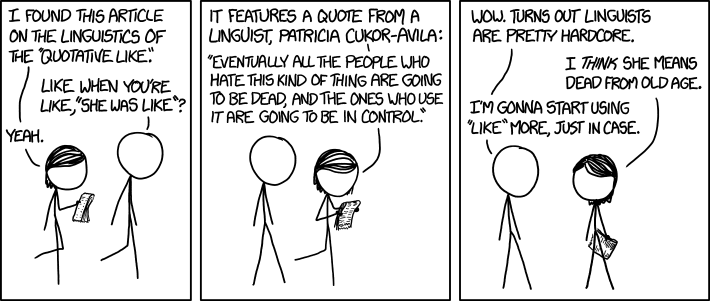
I was also fascinated with fire and fireworks, but never to the same degree. I never thought to take them apart and look at them. An excellent how things work post from bewarethewumpus. Extra points for it being his dad.
By Mark Wilcox
I was in about the first grade when my parents came to the conclusion that what me and my brothers really needed more than anything was a set of World Book Encyclopedias.
I don't recall any high pressure salesmen or anything like that, but I do remember mom and dad anxiously awaiting their arrival. And they came. And they were heavy. And we devoured them. They were beautiful books with white leather binding and green and gold trim, and gilded edges on the pages. Almost like beloved scriptures.
In fact, it was completely normal for me to take one to church on Sunday and read during the talks. Years later one neighbor lady told me that she thought it was funny that I would read the encyclopedia right there in church. Well, it was interesting and I learned such amazing things. Honestly, I didn't care for the history very much; what I wanted was information on how things worked.
Our family wasn't particularly poor, we just didn't have much extra money, so it was incumbent on me to make my own fun. I took televisions and radios apart and made other circuits with their parts. But what I really craved was information on how fireworks and explosives work. I could not get enough.
It may be difficult for kids today to understand, but information was hard to come by back then. We had books and television and radio, but not much else. So, when I learned from the "G" encyclopedia that gun powder was composed of a mixture of 75% saltpeter (potassium nitrate), 15% charcoal, and 10% sulphur, I was all over it.
I made my first batch in the fifth grade. I logically assumed that one would mix these together in the proper amounts and VOILA! Well that first batch sputtered and sparked a little and that was all there was to it. I knew my process needed refinement, but how? I proceeded to take fireworks apart and analyze the contents. I learned that there was a variety of pyrotechnic compositions, but many fireworks or parts of fireworks use black gun powder or basic black powder that had been slightly modified.
When firework shows came around, I paid attention. I was even privileged one year to personally know one of the city firemen and I asked if I could just look at one of the fireworks before it was lit. He was happy to show me and my brother Keith a box full of them as they were setting up. It was a highlight of my life. I could hardly contain my excitement. They looked a lot like soup cans wrapped in brown paper, with long folded fuses attached to one end. I never looked at firework shows the same again. I would watch the show operators light the fuses, watch the lift charges go off, count the seconds until the shells broke, and try to figure out how that effect or the color was created.
During my lifetime Utah has had fairly stringent laws as to what fireworks citizens can use and when, so I had to wait a long time between firework shows. So in the meantime, I thought and analyzed. I had the proper ingredients, but I knew something was missing from my equation because my black powder just didn't behave the way I wanted it to.
I recall one day I took a bottle rocket apart and closely examined the composition. The fuel in a bottle rocket is a modified black powder. I examined it closely and I even ground some up and looked at it under a microscope. I then examined some of mine under a microscope. The difference was immediately obvious and unmistakable.
My composition had visible pieces of saltpeter and chunks of charcoal. The bottle rocket composition was completely uniform. Regardless of how finely I ground it, I could not see individual ingredients under the microscope. Part of the problem, I concluded, was that I did not grind my ingredients fine enough to begin with.
@Lev and CC. I referenced this heavily in our American Sniper discussion.
American Sniper, the Clint Eastwood movie about the late Navy SEAL Chris Kyle, is expected to make more than $200 million in ten days, CNN reports. That's something only a handful of R-rated movies have done before.
The film is in large part an action movie set in the Iraq war, but it also depicts the sacrifices Kyle and his family made as he served four tours of duty. That said, the film has a major history problem: It deeply misrepresents why America went to war in Iraq and how the war actually went down. These inaccuracies aren't peripheral problems; they do a disservice to Iraqis and American veterans alike. See how in the video above.
On Monday, Elite Daily’s Clementine Ford tweeted out out an innocuous, albeit pointed, question about sexism. She asked
men if they received blowback for vocally expressing their thoughts on
social media. The question was based off her own experience that has little to do with the merits of her work but
everything to do with her gender.
Ok, this doesn't make any sense. R S T L N E are always given. Someone's trying to be clever, but they blotted out the R. So that's lame. So close to greatness, but someone had to mess up being clever.
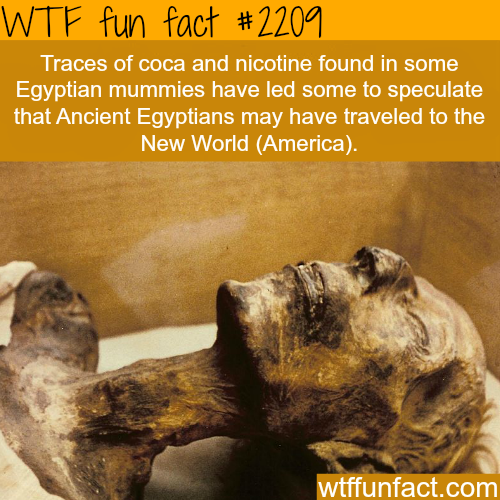
I misunderstood the authenticity of the post by thinking this meant to say that ancient Egyptians visited contemporary US to smoke cigarettes and do lines of coke. I now realize it was an earnest Fun Fact, that I honestly hadn't heard before.
Traces of coca and nicotine found in Egyptian mummies - WTF fun facts
well DUH. a lot of historians are still trying to process the fact that ancient egyptians knew how to build boats, which is ridiculous. why would they not be seafarers and explorers?
this is not new or surprising information at all. it pretty much day one of any african-american studies course.
the egyptians knew that if they put their boats in front of the summer storm winds it’d blow them right across the sea to the Americas and they shared that with the greeks.
It’s really hard for people to understand that everyone had boats, exploration, and trade interactions without the same level of murder, colonization, and violence that the Europeans did. It’s really hard for people to get that.
The only plausible explanation for these findings is that a considerable number of transoceanic voyages in both directions across both major oceans were completed between the 7th millennium BC and the European age of discovery. Our growing knowledge of early maritime technology and its accomplishments gives us confidence that vessels and nautical skills capable of these long-distance travels were developed by the times indicated. These voyages put a new complexion on the extensive Old World/New World cultural parallels that have long been controversial.
White people: Egyptians had boats?????
People of Color: It’s not like they lived IMMEDIATELY BESIDE A RIVER OR ANYTHING, fuck.











 Super Opinionated.