NASA’s yearly budget as % of federal budget


Fictional Photographs Of Real Buildings by Filip Dujardin
You Can Also Find Me -:
Skumar’s :- Twitter | Facebook | We Heart It | Pinterest | Subscribe
Other Blog :- India Incredible | Facebook


For many, reading a good book can be a religious experience, but this new bookstore in Zwolle, The Netherlands takes that idea to a whole new level. Architects BK. Architecten were tasked with converting this 15th century Dominican church into a modern bookstore with the addition of 700 square meters of shopping space. But there was one major catch: all the historical elements of the 547-year-old building including stained glass windows, pipe organ, ceiling paintings and expansive arches had to remain intact.
Incredibly, BK. Architecten managed to add three levels of retail space to the side wings of the church in a manner that the entire structure can one day be removed in order to restore the church to its original design. In addition only three colors of building materials were used to mimic the existing palette of the cathedral’s interior to further ensure that the bookstore would pay reverence to the original space.
Waanders in de Broeren opened earlier this summer and you can see many more views on the architect’s website. Photos by Joop van Putten and Hans Westerink. If you liked this you might also enjoy reading about a Walmart being converted into the largest single-story library in the United States. (via Arch Daily)


Best Adult Costumes of Halloween 2013 (Part 3) [submit]
Previously: Part 2, Part 1, Best Kid Costumes, Best Pet Costumes

Amy & Joe

Cody & Molly

Daruma & Toko

Elliot & Reya

Genta & Kurara

Hugues & Lykke

Jackie & Mayumi

Janis & Ken

Javan & Brenna

Sammy & Maggie

Sheldon & Brittney

Yo & Reina
Switcheroo is an ongoing portrait project by Canadian photographer Hana Pesut where fashionably dressed couples are asked to swap clothing for a pair of portraits sent against an identical backdrop. While the premise is pretty simple, the results are often highly amusing because of all the subtle details and unusual juxtapositions. Giant feet crammed into tiny high heeled shoes, the seemingly nervous faces of cross-dressing in public, or even the genuine grins of subjects who clearly enjoy the project as much as the photographer.
The portraits shown here are among the most recent from a trip to Japan, and you can see many more on her Tumblr. Pesut also gathered many of the best portraits into a book. (via My Modern Met)


/* by domas */
when you start rewatching your favorite show


Using feathers acquired from zoos and private aviaries, artist Chris Maynard creates delicately constructed shadowboxes that play with aspects of light and negative space. The artist admits to being “feather obsessed” and is fascinated not only with birds and flight, but with the color and texture of their plumage which he explores through his small dioramas. You can see much more on his website and Gerald Peters Gallery in Santa Fe will soon be showing some of Maynard’s larger work. (via Colossal Submissions)
“As a kid, I liked sneaking into abandoned places and haunted houses,” says photographer Troy Paiva, known on Flickr as Lost America. ”It’s that spooky factor.”
“I guess I just never grew out of that,” he tells The Weekly Flickr in the accompanying video. “Everyday, there’s a never-ending list of unique, strange… or access-sensitive locations for me to shoot… and I love that!”
Wandering the deserted backroads of the American Southwest, Troy has explored the abandoned underbelly of America since the 1970s.
“When I was a kid, my family made road trips all over the West,” Troy says. ”I witnessed firsthand the demise of all these little roadside towns. I was only 12 years old, but was amazed people would just walk away from a whole city like that. Once I began driving myself, I began to explore these sites on my own in a much deeper way.”
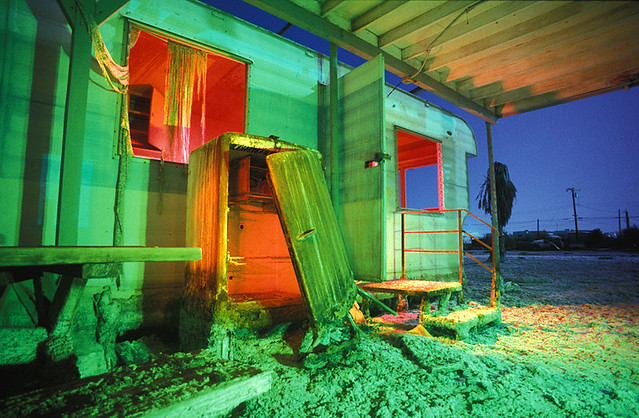
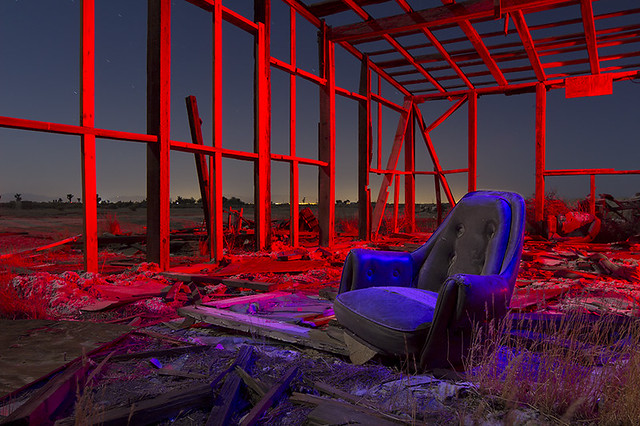
Troy started taking pictures of these abandoned towns at night in 1989. He calls his method ‘night photography’ — timed exposures out in the desert, under a full moon.
“There’s only 12 full-moon weekends a year, so there’s a very limited number of days that you can actually do this kind of photography,” Troy says. “I think that’s part of the attraction for me; the rarity of it.”
His technique is very simple. Troy uses a DSLR on a tripod and locks the lens open for two to eight minutes. Many of the subjects he shoots are already gone: bulldozed, burned down, melted for scrap or simply vanishing beneath the shifting desert sand. Mobility is important, because most of the time, he’s sneaking in and out of these locations.
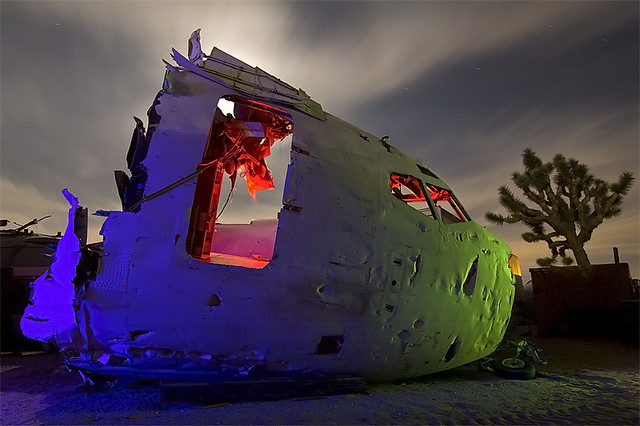
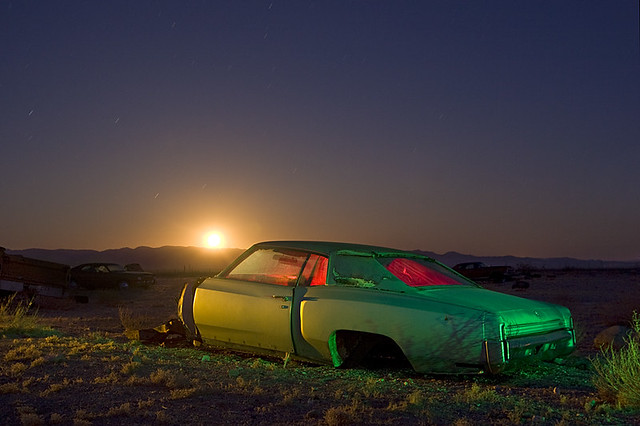
“I have to work fast and light,” Troy explains. “I’ve come close to being arrested dozens of times. I’ve been rousted by every kind of security, from minimum-wage guards to border patrol to even federal agents, but I’ve always been able to talk my way out of it. Once they see what I’m doing, and that I’m just a harmless weirdo taking pictures, usually they’ll say, ‘Alright, have fun. Weirdo.’”
Troy’s colored lighting is done with either flashlights or strobe flashes masked with theatrical lighting gels. While he does minor digital adjustments to some of the photographs, most of the lighting effects are all done on site during the exposure. These images are not Photoshop creations.
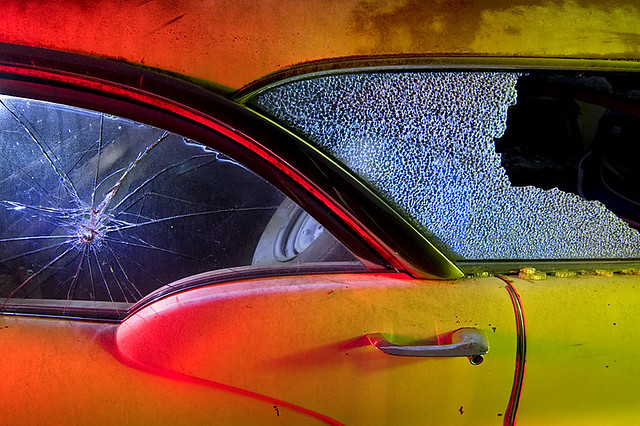
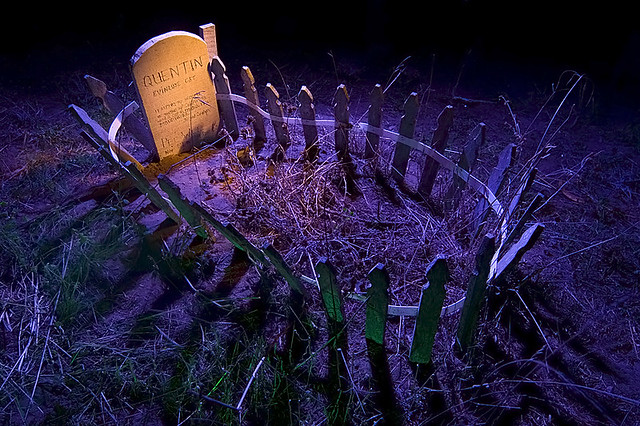
“With my lighting, I’m trying to create something that really isn’t there,” Troy explains. “I’m always trying to tell a story, create a mood, and I’m trying to just make people go, ‘Wow’.”
One of Troy’s favorite images is called Mrs. B’s Dirty Washcloth. It’s of a Cadillac interior in a junkyard.
“The thing that caught my eye here is obviously the dirty washcloth,” Troy explains. “I love the mystery and the incongruity of it. Why is the washcloth on the steering wheel in the first place? I’m just fascinated by these weird kind of mysteries and things that you find in abandoned places and junkyards.”
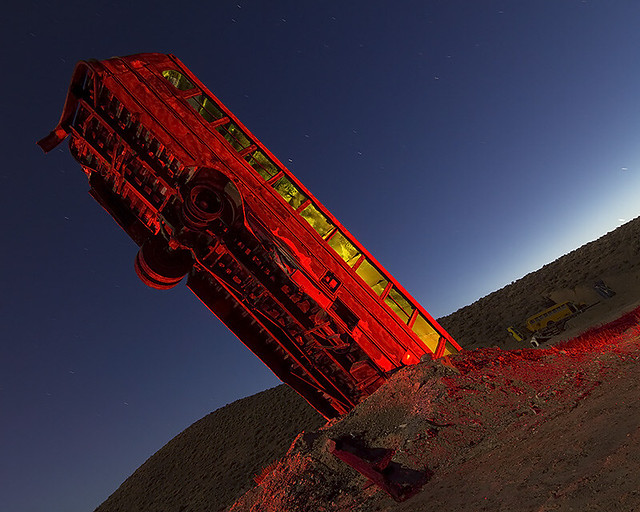
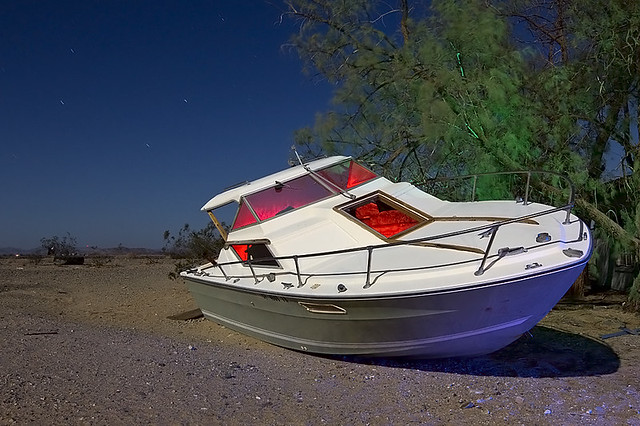
Troy isn’t the only one who has this fascination. His work and style has gained worldwide attention, appearing in major publications and in several foreign museums/galleries. The attraction and interest to his “Lost in America” series has captivated many; a reason, he says, is innately human.
“I think it’s a normal feeling for humans to be mystified and curious in abandoned places,” Troy explains. “You look at the history of humanity and our attraction to places like Machu Picchu, Angkor Wat, the Greek, Roman and Egyptian ruins. They’re all pointing to the fact that we’re obsessed with ruins as a species.”
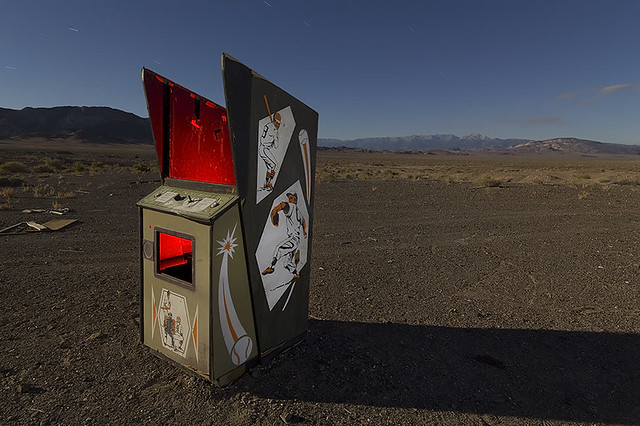
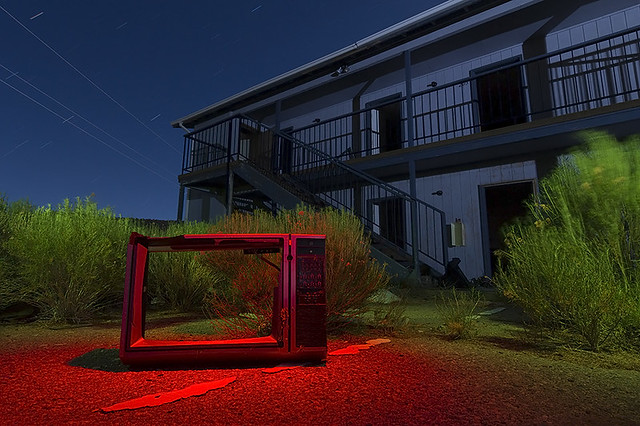
More than anything, Troy loves the serenity he feels in these places. He explains, “I love that feeling of being alone in a place that was crawling with people but is now empty and filled with their ghosts. And the ghosts of a culture.”
When asked how much longer he’ll continue night photography, his answer is quite simple.
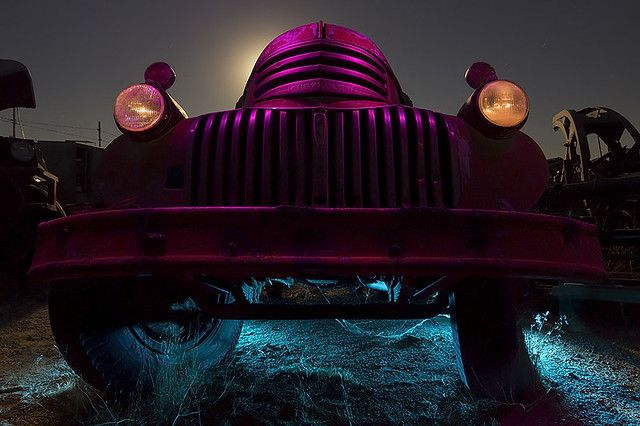
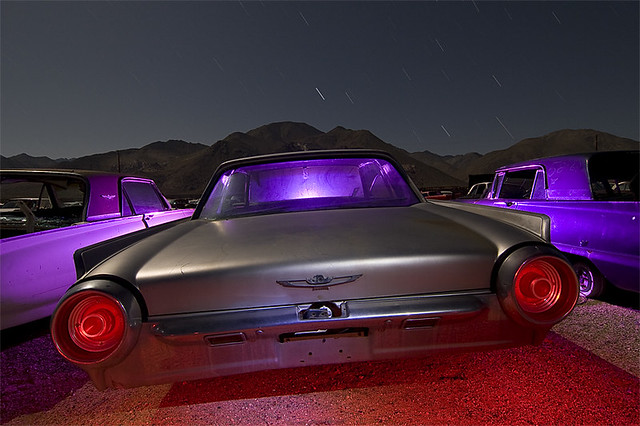
“I’ve been doing this for 24 years now, and I still have the approach of an amateur. I don’t do this to please anyone. I do it because I’m passionate about it, and this is what I love to do.”
Follow Troy’s photostream to see more of his photography.
Watch a previous episode, featuring a risk-taking photographer shooting urban decay.
 Do you want to be featured on The Weekly Flickr? We are looking for your photos that amaze, excite, delight and inspire. Share them with us in the The Weekly Flickr Group, or tweet us at @TheWeeklyFlickr.


Untitled (2008), dimensional lumber (2×4′s), 82″ x 18″ x 12″

Untitled (2008), dimensional lumber (2×4′s), 82″ x 18″ x 12″

Copper Gate (2011), wood, 32″ x 19″ x 12″

Copper Gate (2011), wood, 32″ x 19″ x 12″

Untitled (Knight)

Untitled (Knight)

“Globe” 2010, Pine 2×4′s, Figure is life-size.

“Globe” 2010, Pine 2×4′s, Figure is life-size.
Based in Richmond, Virginia artist Morgan Herrin transforms the most humble material—laminated construction grade 2x4s—into spectacularly detailed figurative sculptures. His choice of imagery is surreal: a noble 15th century knight melts into a network of dripping stalagmites or a classical marble bust that is overgrown with parasitic sea creatures. The resulting works are a fascinating juxtaposition of material and subject matter that require up to a year of labor to produce. Of the untitled knight piece Herrin says:
Untitled (Knight) is the product of the combination of two subjects: 15th century plate armor, and geological cave structure. Studied separately, these two subjects are completely unrelated. The manmade geometric precision of plate armor is formally opposite of the flowing, organic stalactites and stalagmites. Seen together, these two parts present a striking contrast in form and create a theme of time and the effects of nature. The pose of the figure and the general composition are references to the classical sculpture “The Dying Gaul” of ancient Roman antiquity. Rendered entirely in laminated construction-grade 2 by 4s, the material itself irreverently contradicts this classical allusion, and at the same time draws attention to our own culture’s reliance on the fast, cheap, and impermanent.
You can learn more about Herrin’s work at ADA Gallery, and Mulherin + Pollard. All images courtesy ADA Gallery. (via My Modern Met)
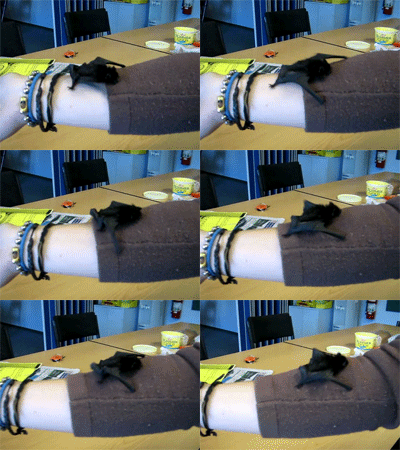




batsbatsbats
I SCREAMED IM SO HAPPY
Ahhhh my heaaaart! I can’t handle the cute!

St. Albertus

St. Valerius in Weyarn

Hand of St. Valentin

St. Benedictus

Skull of St. Getreu in Ursberg

St. Friedrich at the Benedictine abbey in Melk

St. Valentinus in Waldsassen

Relic of St. Deodatus in Rheinau

In 1578 word spread of the discovery in Rome of a network of underground tombs containing the remains of thousands of early Christian martyrs. Many skeletons of these supposed saints were soon removed from their resting place and sent to Catholic churches in Europe to replace holy relics that were destroyed during the Protestant Reformation. Once in place the skeletons were then carefully reassembled and enshrined in costumes, wigs, jewels, crowns, gold lace, and armor as a physical reminder of the heavenly treasures that awaited in the afterlife.
Over the past few years photographer Paul Koudounaris who specializes in the photography of skeletal reliquaries, mummies and other aspects of death, managed to gain unprecendented access to various religious institutions to photograph many of these beautifully macabre shrines for the first time in history. The photos have been collected into a book titled Heavenly Bodies released by Thames & Hudson early next month. (via Hyperallergic)
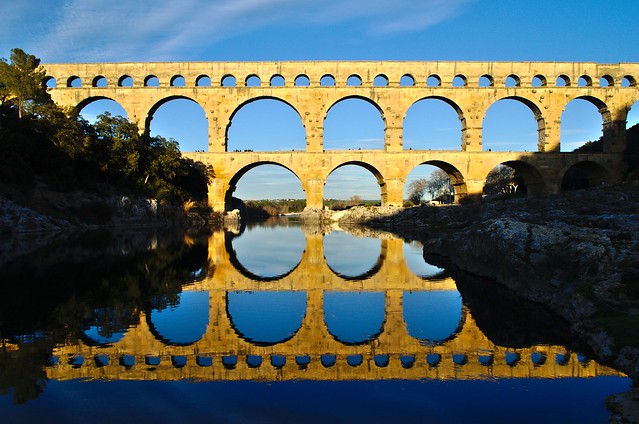
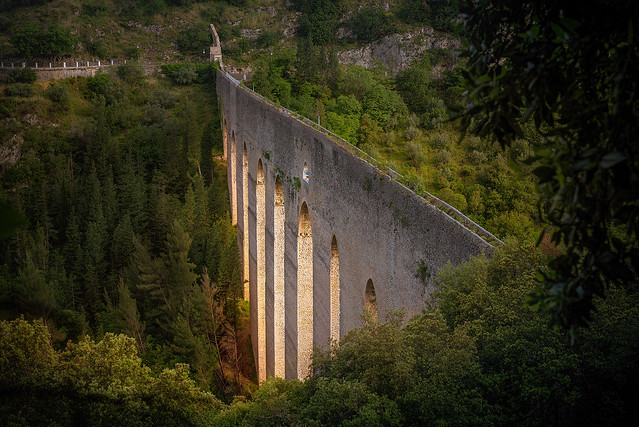

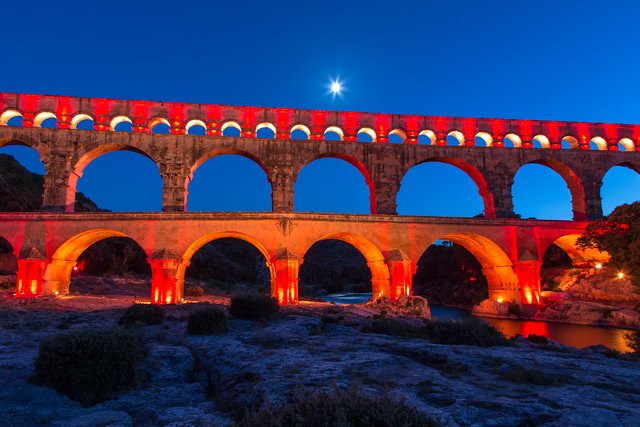
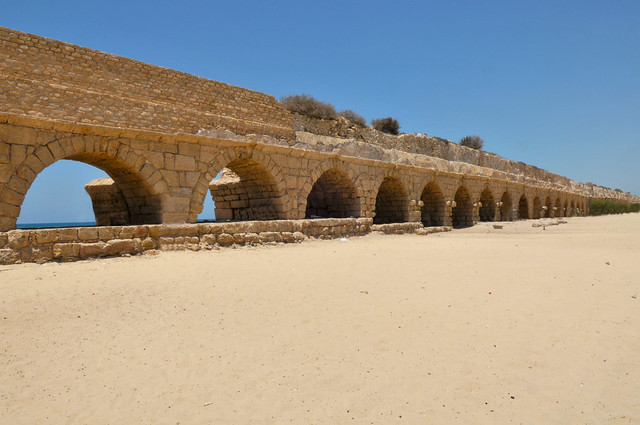
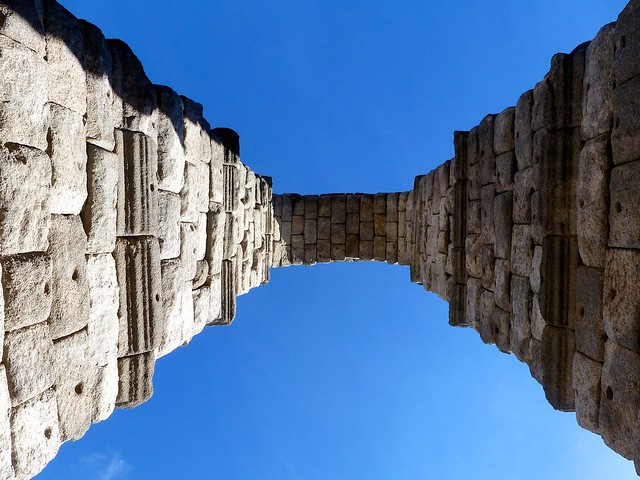
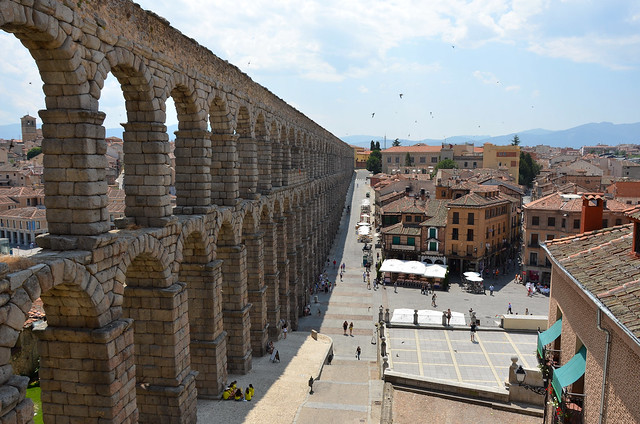
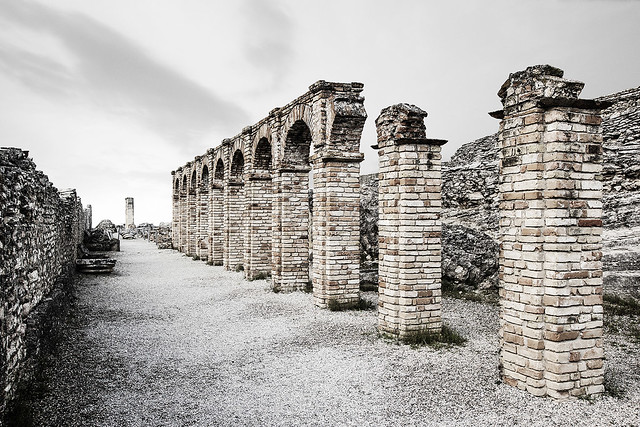
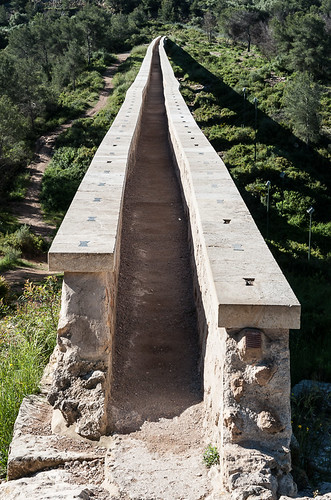
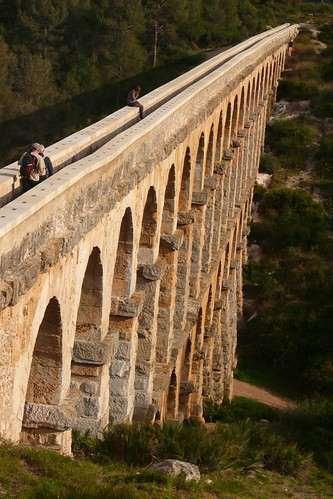
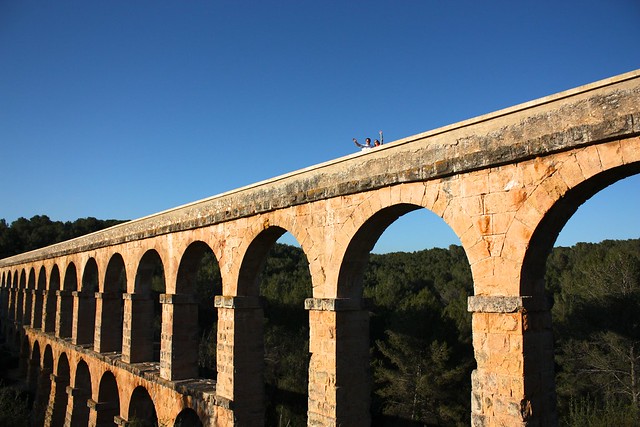
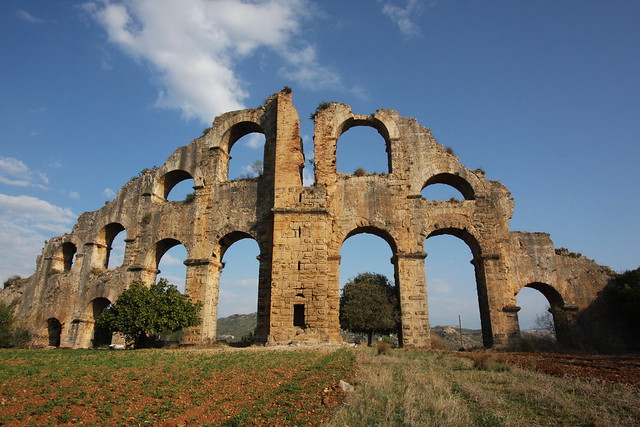
The Romans built hundreds of bridges and conduits to deliver water via gravity across their empire, and many of these marvels of civil engineering still remain in varying conditions.
See more photography in the Ancient Aqueducts gallery and Aqueducts group.
Photos from dkilim, Goutkin, mathrong, sebastien.barre, questforfire2010, temte_mc, Le Monde1, -keka-, jacqueline_poggi, calafellvalo, urban_lenny, and nkarabiber.