Shared posts

01 May 23:03

Fascinating Satellite Photos of Seaweed Farms in South Korea

by Christopher Jobson

seaweed-4

NASA’s Goddard Space Flight Center just shared these fascinating satellite photos taken in January 2014 over the shallow waters around Sisan Island, South Korea. The tiny patchwork of small squares are entire fields of seaweed that are held in place with ropes and buoys to keep the plants near the surface during high tide but off the seafloor in low tide. Via NASA Earth Observatory:

Since 1970, farmed seaweed production has increased by approximately 8 percent per year. Today, about 90 percent of all the seaweed that humans consume globally is farmed. That may be good for the environment. In comparison to other types of food production, seaweed farming has a light environmental footprint because it does not require fresh water or fertilizer.

You can see much more of what’s happening at NASA lately by following the Goddard Space Flight Center on Flickr.

seaweed-6

seaweed-1

seaweed-2

seaweed-3

30 Apr 16:21

Unconditional

reasons I am not allowed in the kitchen anymore:
- forgot to turn oven off, nearly set apartment on fire
- ate rotten egg salad
- sliced thumb open with bread knife
- dropped rice on the cat
Expanded from Cheer Up, Emo Kid by XPath Expander.
30 Apr 15:50

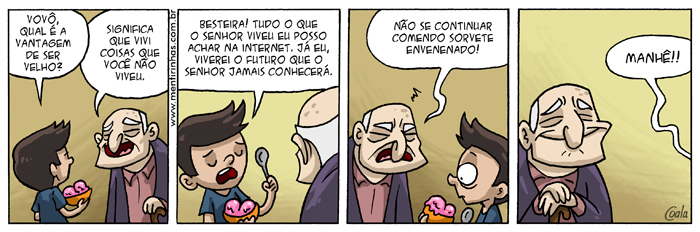
Mentirinhas #813

by Fábio Coala

mentirinhas_801d

Vai filar comida no domingo e ainda fica de desaforo.

O post Mentirinhas #813 apareceu primeiro em Mentirinhas.

30 Apr 11:04

5 Women On Why They Changed Religion To Get Married

by Ben Reininga
Adam Victor Brandizzi

Actually, only the last one changed religion *to* get married. Awesome article nonetheless.

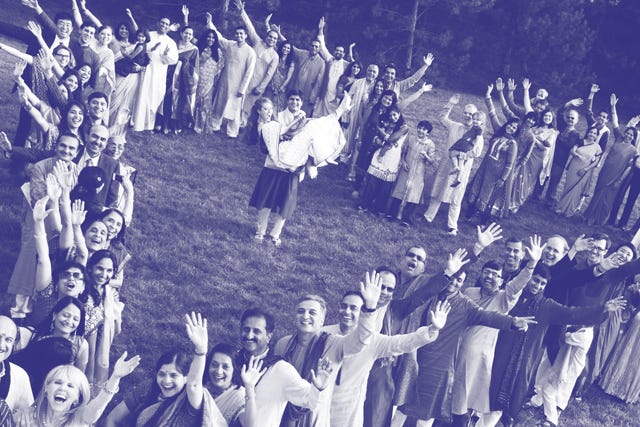
ConvertingForMarriage_IntroSlidePhoto: Courtesy of Liberty Tillemann-Dick.

Edlyn Sammanasu, 34, is very clear that she didn’t convert to Islam as some sort of precondition for getting married. She fell in love with a man and also discovered an affinity for his religion.

“My husband didn’t  say that I had to become Muslim for us to be together; I wanted to be Muslim," she says. Edlyn is one of a group of American women who are converting to their partners’ religions when they get married, but not — as you might assume — because a rigid doctrine or dogmatic parents demand it. They're doing it because they want to. 

Religion in America is losing its rigidity. More of us than ever have no affiliation at all, and those who do are more likely to change. A recent Pew study found nearly half of adults now change religions in their lifetimes. The vast majority of those who switch are young adults, growing up into an increasingly secularized world and leaving their parents' beliefs behind. 

That leaves a cohort who grew up religious, but have no contemporary religious practice. As they fall in love and get married, many are re-introduced to religion via the faith of their partners — and some end up converting. 

“In the previous generations, the majority of conversions were for the sake of the parents,” says Mayan Sands, a rabbi and religious scholar. “But now, fewer people are marrying young, and people in their 30s are less likely to be influenced by their parents — at that point, they’re more concerned with general human compatibility.”

We talked to five such women, all of whom, in one way or another, adopted the faith of their husbands as part of getting married. Their stories are different, but they share strains in common: Each talked about missing the religion they'd had as a child, and all described feeling connected to the teachings of their new faiths — of falling in love with a person and with a practice.

Kelsey Osgood
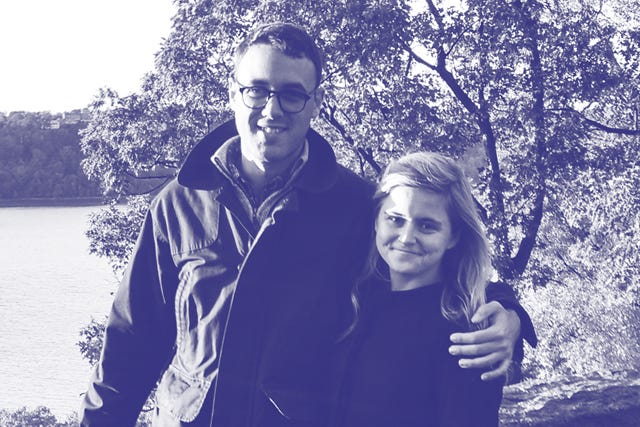
ConvertingForMarriage_Slide02Photo courtesy of Kelsey Osgood.

My fiance and I have been dating for four and a half years. He was born Jewish. I was not, but I’d become really interested in Judaism for a couple reasons. I’ve always been fascinated by things that are different than me, and also communities that are very tight and insular, people who have a strong sense of religious and cultural identity. I think I was a little bit jealous of that.

My parents are secular; I’m not sure they would go so far as to say they are atheists, but they certainly don’t have a great attraction to faith. They didn’t raise us in a very secular way; we just thought we were really low-grade Christians. 

My fiance and I met in Miami, we were both living there temporarily for work, and we started dating really quickly. He comes from a Reform background. Reform is not the most liberal kind of Judaism, but it’s on the left end on the spectrum. They are very active in social justice, but tend to be less observant in other ways, like keeping Sabbath or keeping kosher. 

When I first started to consider the idea of converting, I didn’t want to tell my fiance — I wanted him to think it was a decision I came to on my own, not to feel like I had an ulterior motive. He never would have said, “I need you to do this; I want you to do this.”
convertquotes_slide7v2Illustrated by Elliot Salazar.


I went to see a million rabbis all over New York. I knew I didn’t want to convert Reform, so I saw mostly Conservative rabbis, none of whom I liked that much. It became clear that I felt like I wanted to do an Orthodox conversion — because of my nature, that was the only way I was going to feel good about it. When I told him this, we got in a big fight.

A lot of people think it’s a big deal for me to convert — but it’s really a huge jump for him. He essentially grew up in a completely different religion; there are so many day-to-day activities that the Reform tradition doesn’t do. 

After a while, I found a rabbi to do the conversion. Now, it’s just timing: The rabbi would prefer that we don’t live together for too long in between my conversion and our marriage. It sounds old school, but I see where they are coming from.

Being a good Jew means you’re really supposed to be scholarly, to advance your knowledge. There’s a lot to learn, and some of it can be very overwhelming, but there’s also a lot of stuff that seems so logical — the idea of taking a day off and spending it with your family. Now, the weekend isn’t the weekend anymore, and I think it’s really smart that we have this thing built in that says you have to slow down, not worry so much about your phone.

convertquotes_slide8v2Illustrated by Elliot Salazar.
I do worry that there are lifestyle changes that are going to make it more difficult, like not being able to do things on Saturdays. Even once you tell people that's the way it is, it still doesn’t register. 

Judaism understands that it is difficult and complicated to be a human being. It’s a really earth-based religion that is about what you do when you’re alive as opposed to what happens to you after you die. 

There are a lot of mitzvahs that are really concrete — you have to give to charity, you don’t eat meat and milk together — and, even though cheeseburgers are very good, that one's easier to do than learning to love people who are different from you, to treat people kindly even if it makes you uncomfortable. Being in a position that other people think is strange has actually given me a lot more respect for people who make weird decisions.

Karen Hunt-Ahmed 
ConvertingForMarriage_Slide03Photo: Courtesy of Karen Hunt-Ahmed.

I grew up Methodist in Tennessee. My family was very involved in the church, but it was a social community. Now, you think of churches as evangelical, but it was more of a social service community: We fixed houses in the Appalachian Mountains, did projects with inner-city kids. 

When I was thinking of getting married to my then-boyfriend who was Muslim, I learned that Islam is very social-service and community oriented and less about proselytizing. That’s what made me say I can convert to Islam — I saw my service background in Islam. I educated myself; I read the entire Quran. I had several friends who were Muslim. It’s not that we talked about religion all the time, but I liked how they lived and I respected how they lived. This was in the ‘80s and early ‘90s, when Iran and Iraq’s invasion of Kuwait was going on. There were starting to be some stereotypes out in the world about Muslims, but I didn’t see any of those stereotypes. The people I knew were just nice, normal people.

We lived in Dubai for the first five years that we were married; Islam was much more a part of our lives there. There, the holidays are major holidays. His family is there, and they observed the major holidays, went to prayers every Friday, and fasted for Ramadan. Fasting was kind of fun, actually. It was difficult sometimes, but everyone else was doing it; I’d go to work and half the workplace was fasting. 
convertquotes_slide9v2Illustrated by Elliot Salazar.

In Dubai, everybody accepted me, I did not feel anybody questioning why I had converted, whether I was a real Muslim, or anything like that. In America, I feel people questioning. Not everybody — the imam I’m closest to is fully supportive of me — but I do feel like sometimes the average person is maybe judging me. That combined with the fact that I converted, and now I’m divorced — I think people are kind of confused about what I’m doing.

I’m continuing to practice — it’s been really interesting. I personally need a spiritual home, and since Islam is my spiritual home, it was pretty normal for me. For a while, after the divorce, I was actually going to the mosque more often than I did when I was married. After the divorce, my Muslim friends were the most supportive. A lot of my American friends dropped me. My Muslim friends were more open, they'd say things like, "Everyone goes through something."

convertquotes_slide10v2Illustrated by Elliot Salazar.
A lot of American men think that Muslim men oppress Muslim women — and I’m an anthropologist, so I can say that. The only thing I’d say is that it’s really all cultural — it doesn’t come from the religion. My Muslim women friends have jobs. They don’t have to come home and cook all the time. The men pick up the kids from school. Most of those stereotypes are more cultural than religious.

The hijab part of it — I do not think the hijab is repressive. I think it’s a way women choose to express themselves religiously. I do agree with people who say that a woman covering her body gives her a lot of freedom that she doesn't have if she’s dressed in a more skimpy fashion. I’m not as strict of a practicing Muslim and that’s why I choose not to wear a hijab, but I think it’s actually a good thing.

Liberty Tillemann-Dick 
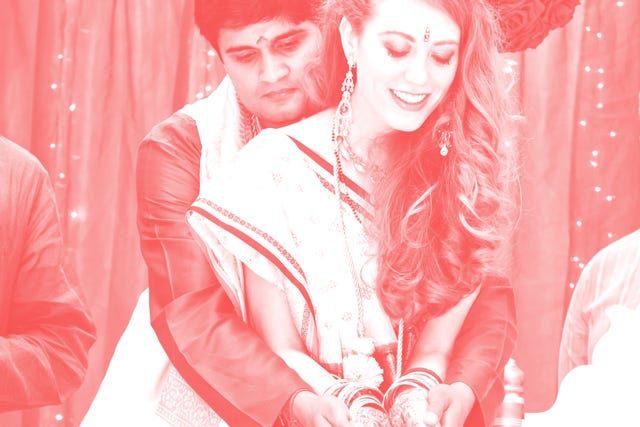
ConvertingForMarriage_Slide01Photo: Courtesy of Liberty Tillemann-Dick.

My religious upbringing paved the way for my embrace of Hinduism. I was raised Mormon but my mom’s family was Jewish. Her Jewish heritage was very present in our upbringing, as well — we always did Hanukkah and Sukkot and Passover. There were just a lot of festivals and faith going on in our home. 

Mormons have early morning scripture study, and during high school I had perfect attendance. I was pretty onboard, until I went to college. Then, I think it’s just what happens in college where you’re encouraged to start asking questions and really dig deeper into a whole range of topics. Faith and religion have always been some of the biggest things in my life.

In college, I started not just doing ritual (going to church and praying and reading my scripture) but trying to have some thought and purpose behind my actions. When I started thinking all of that through, I realized there were big pieces of it that I just didn’t believe. My husband was born in India. He’s very Western now, but his parents are pretty traditional. He was the first person of his family to date outside of his regional ethnicity — let alone contemplate marriage. He has younger cousins who have arranged marriages, and that was definitely along the lines of what his parents had envisioned for their oldest son. 

The second year we dated, I read the Bhagavad Gita and learned how to cook Indian food. I realized there was already a significant amount of pushback when it came to our relationship from his family, and so I wanted to do what I could to move that process along. 
convertquotes_slide4v2Illustrated by Elliot Salazar.


I converted to make it clear that I wasn’t a total “other,” that we could move toward that common ground instead of focusing on the things that make us different. And, there were little things — I’ve been a vegetarian since I was four years old, which is very important to his family and to their culture. Little things like that really helped to make them see that this would not be such a huge change for them. 

I had had a difficult time with my family around leaving the Mormon faith. I think “renounce” is too strong of a word; I’d had a “conscious uncoupling” with Mormonism many years prior. My mother’s hopes for me were for a white wedding tied to very specific rituals within the Mormon faith, and I’d already made the decision that I didn’t want them. And so, for my mother to see that I was embracing some sort of faith structure was encouraging and comforting. 
convertquotes_slide3v2Illustrated by Elliot Salazar.

My family is wonderful, and I think for them, this was just adding on to that patrimony that we had as a family of just embracing and bringing in more joy and fun and festivals. And, an Indian wedding — who can’t get behind that? My family were all thrilled to wear saris and eat really good Indian food. Even my brothers dressed up in Indian clothes.

We’re definitely going to have kids — we’ve settled on Hin-Jews. My grandparents were holocaust survivors, and I think Judaism and Hinduism mesh pretty easily. It’s all about the widening of the canopy and so we just want to make sure that both of our family traditions get play with our kids. And, I have a huge family that is very involved in Mormonism, so we know our kids will get a healthy dose of that without doing anything on our part.

Edlyn Sammanasu 
ConvertingForMarriage_Slide04Photo: Courtesy of Edlyn Sammanasu.

I was born and raised Catholic, before I became Muslim. I was raised in a religious family and very active in the church. My dad is well-read, but he’d say weird things, like “If I ever had to change religions, Islam would be the last one I’d ever pick,” or something like that. 

Growing up, I had questions about the Trinity or my faith, and I’d get answers from a priest or my parents that didn’t make sense. But, in my head, I had my own idea of God and religion. When I started to learn about Islam, it really started to come together.

I met my future husband one summer during a college internship. We ended up falling in love and around that time I started learning more about Islam. In college, they’d just started offering a few classes about Islam, and I took whatever classes were available. At some point during those classes, I felt like I was already Muslim. Of course, I don’t think I would have taken those classes if my boyfriend wasn’t in the picture, but it really felt like all of these puzzle pieces were just coming together.

I knew my parents would be against me having a future with my husband. I grew up in a pretty conservative household; I don’t think even the most religious Catholic boyfriend would have been welcomed, either. But, my parents knew I was going to visit this friend, and eventually my mom came out and asked if I was in love with this person. I started crying; there was a lot of drama.
convertquotes_slide5v2Illustrated by Elliot Salazar.


Eventually, they met my boyfriend and told him that he needed to convert. In the most respectful way possible, my boyfriend said, "Heck no, that’s not going to happen. It’s not negotiable for me." So, my parents commanded us to stop seeing each other. We tried it — we broke up for a couple of months, but we were just too heartbroken and started seeing each other again in secret. 

Fast-forward to after I graduated from college and was living back at home with my parents. I hated having to hide my relationship from them and I didn’t want to convert until I could practice freely. At some point that summer I told my boyfriend that we had to tell my parents what was going on and that we wanted to get married eventually. I knew it wouldn’t go over lightly. 

I grabbed all the things I thought I’d need if my parents weren’t happy — my contacts, glasses, passport — and packed it up and went to talk to my parents.

They called 911 and said a guy was trying to kidnap their daughter. The police asked how old I was, and when they heard, they said they couldn’t do anything — but they came anyway and just stood outside. That was a Friday. I spent the night at a friend’s place and two days later we arranged to get married at a mosque. I had converted five minutes before we got married.
convertquotes_slide6v2Illustrated by Elliot Salazar.


The marriage process is just signing papers with representatives of both parties. My parents definitely did not come, but I didn't exactly tell them. The whole marriage-in-48-hours-thing was out of necessity.

Now, 12 years later, things are a lot better. They still do not acknowledge the fact that I am Muslim. They’ll send my husband emails that say “Eid Mubarak!” and I’ll be cc’d on the email, but they won’t say it to me. I wear a hijab now, but I don’t wear it with them. They might know that I wear it; my mom saw me once at a park with it and my dad has seen my work ID card with it.

I’m trying my best to practice Islam, but I’m also trying my best to keep my relationship with my parents. It’s important that my husband didn’t say that I had to become Muslim for us to be together; I wanted to be Muslim.

 Tiffani Brooks 
ConvertingForMarriage_Slide05Photo: Courtesy of Tiffani Brooks.

I grew up in a very Christian, mostly white community in Washington State, where I wasn’t really exposed to other religions. Then, I moved to L.A. to go to grad school, where I ended up meeting my now-husband.

He’s Reform Jewish, not very religious, but as we started to date, the conversation definitely came up pretty early. “Hey, I’m Jewish; you’re not. This could work, but you gotta convert.” It’s a huge thing to say to someone. It was extremely uncomfortable. You could say something like, “My Judaism is really important to me. I’d love for you to learn about it; will you come to temple with me?” But no, that wasn’t the conversation.

He got very lucky, though: I’m really open, and I didn’t grow up in a religious household. We had values and traditions, but we weren’t religious, so, in my eyes, I wasn’t making a huge sacrifice. I thought: I’m bringing something new into my life, instead of giving something up. But, when you’re imagining marrying someone after two months, it’s all kind of hypothetical.

The awkward piece came when his mother sat me down. We’d been dating six months. His dad took him in his office, and his mom took me in the breakfast room, and she sat me down and said, “You have to convert; it’s not an option. We want the grandchildren to be Jewish.” We had the full sit-down. Apparently, his last girlfriend was also not Jewish and they told him, “If you marry her, we’re not going to give you the family business.”
convertquotes_slide1v2Illustrated by Elliot Salazar.

So, I did an introduction to Judaism class at the temple, and he did it with me, and he ended up proposing to me after that.

My family is very understanding and welcoming. They didn’t know anything about it. But, when we got married, my mom and my grandma educated themselves. It was never an issue with my family — my mom was mostly concerned about what the right thing to do at Christmas was. (“Can I still get the kids stockings, can I use Christmas paper?”)

Currently, I’m actually going through a divorce. When that all went down, I started to explore. How does Judaism stay in my life or not stay in my life? I felt like I was never fully accepted. Like, they didn’t care if I embraced it or accepted it, just that I did it. 

And, I understand, it’s not their job to teach me about their religion. Here I was walking in as a 32-year-old woman, and playing catch-up. Now it’s really hard and I’m in a funky place. It’s not that I disliked it or like I’m glad that over. But to be honest with you, because I wasn’t exposed to it, I don’t really understand it.
convertquotes_slide2v2Illustrated by Elliot Salazar.

There’s this family feel to Judaism, togetherness. I liked all that. And, I absolutely 100% love and adore the temple that we belong to. When you talk about family feel, these are the people who have embraced me from the very beginning, not judgmental. They know a lot about my current situation and have become my family. My son will stay in this preschool and my kids will go to Hebrew school and they’ll be bar and bat-mitzvahed. They are Jewish. Do I see myself increasing my participation? No. I don’t see myself in temple every night.

There are definitely certain aspects that I love. There’s a piece of it. There were a lot of sacrifices in my life, but things I wanted to do. I was in love. But it’s not — I think when you deal with divorce, there’s a lot of ugliness and bitterness, so there’s a piece that’s like "screw them," but it’s important to my children and ultimately I know it’s important to him and I’m not a vindictive person.

I have a lot of Jewish friends and community, people that I enjoy being with. It is something that’s very present in my life. The driving force will be the kids.
30 Apr 10:45

Por que Baltimore (EUA) é três vezes mais violenta do que São Paulo?

by gustavochacra

Costumamos sempre ouvir que Nova York hoje é uma das metrópoles mais seguras do mundo, depois de, nos anos 1970 e 80, ter sido uma das mais violentas. A redução na criminalidade começou na administração de Giuliani, continuou com Bloomberg e atingiu seu patamar mais baixo no ano passado com o atual prefeito Bill De Blasio, com um dos anos  com menos assassinatos da história.

Mas nem todas as cidades americanas são seguras. Algumas são mais violentas do que a média brasileira. Um exemplo é Baltimore, onde vemos a recente onda de choques entre a polícia e manifestantes depois de um negro ter sido morto após ser detido pelos policiais na semana passada. A taxa de homicídios por 100 mil habitantes de Baltimore é de 33,9no Brasil a média é 32,4 por 100 mil, segundo a Organização Mundial de Saúde. E isso porque houve uma melhora na última década na maior cidade de Maryland – em 2003, era de 41,9, de acordo com o FBI.

Das grandes cidades americanas, apenas New Orleans e Detroit são mais violentas do que Baltimore, com taxas de homicídio para cada 100 mil habitantes em 43,4 e 39,8 respectivamente – números similares a El Salvador e Guatemala e superiores à da África do Sul. Nova York, por sua vez, tem um índice de apenas 3,9 por 100 mil. Em Chicago, é 15,4 – superior a São Paulo, com 10,4 (um terço de Baltimore).

Além disso, Baltimore é uma cidade que perdeu cerca de um terço de sua população nas últimas décadas, com desindustrialização da região. Sem indústrias, boa parte da classe média imigrou. O padrão de vida caiu e o mesmo se aplica à arrecadação, afetando a administração da cidade. Há bairros onde a maioria da população jovem não tem emprego. E a polícia, majoritariamente branca, tem atritos com a população em algumas destas áreas majoritariamente negras. Esta tensão racial existe há décadas. Em 1968, Baltimore foi palco de levantes depois da morte de Martin Luther King Jr.

Guga Chacra, comentarista de política internacional do Estadão e do programa Globo News Em Pauta em Nova York, é mestre em Relações Internacionais pela Universidade Columbia. Já foi correspondente do jornal O Estado de S. Paulo no Oriente Médio e em NY. No passado, trabalhou como correspondente da Folha em Buenos Aires

Comentários islamofóbicos, antissemitas, anticristãos e antiárabes ou que coloquem um povo ou uma religião como superiores não serão publicados. Tampouco são permitidos ataques entre leitores ou contra o blogueiro. Pessoas que insistirem em ataques pessoais não terão mais seus comentários publicados. Não é permitido postar vídeo. Todos os posts devem ter relação com algum dos temas acima. O blog está aberto a discussões educadas e com pontos de vista diferentes. Os comentários dos leitores não refletem a opinião do jornalista

Acompanhe também meus comentários no Globo News Em Pauta, na Rádio Estadão, na TV Estadão, no Estadão Noite no tablet, no Twitter @gugachacra , no Facebook Guga Chacra (me adicionem como seguidor), no Instagram e no Google Plus.

30 Apr 10:26

nevver:“I’m not in the business. I am the business.”

30 Apr 10:25

theartofanimation:Michal Lisowski

30 Apr 10:23

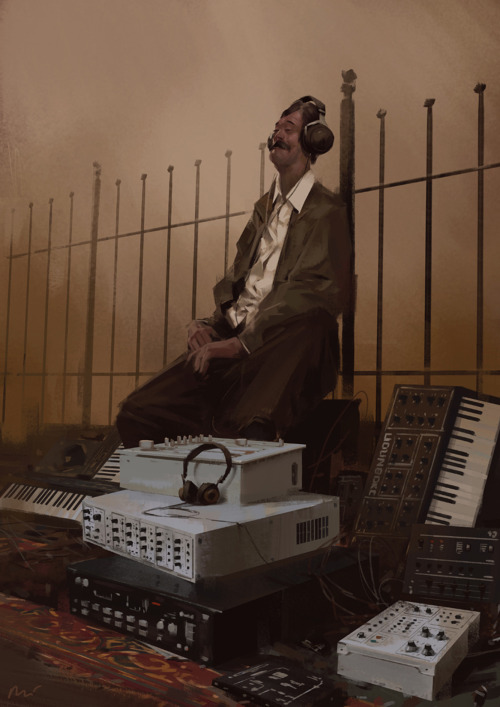
azertip:Eytan Zana

30 Apr 10:23

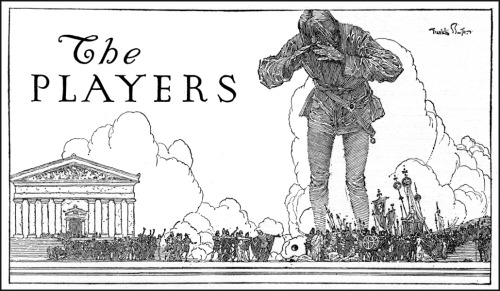
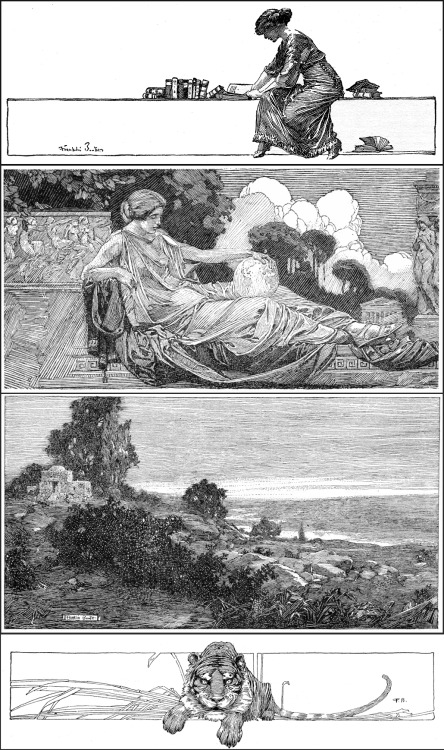
Franklin Booth

30 Apr 10:23

sketcholivia:Let’s kick this off with some recent portfolio...


sketcholivia:

Let’s kick this off with some recent portfolio work!  Hi all and welcome.  I’ll be using this to post daily sketches and finished art work.  Feel free to ask me anything you’d like and thanks for stopping by!

30 Apr 10:21

When you start to follow a stranger on The Old Reader and the...


When you start to follow a stranger on The Old Reader and the next shared thing is impressively awesome.

(via YDna5.gif (imagem GIF, 235 × 240 pixels))

30 Apr 09:01

Knut Ekvall


Knut Ekvall

30 Apr 08:58

Comet Churyumov Gerasimenko in Crescent

Discover the cosmos! Each day a different image or photograph of our fascinating universe is featured, along with a brief explanation written by a professional astronomer.

2015 April 29
See Explanation.  Clicking on the picture will download
 the highest resolution version available.

Comet Churyumov Gerasimenko in Crescent
Image Credit: ESA, Rosetta, NAVCAM; processing by Giuseppe Conzo

Explanation: What's happening to Comet 67P/Churyumov–Gerasimenko? As the 3-km wide comet moves closer to the Sun, heat causes the nucleus to expel gas and dust. The Rosetta spacecraft arrived at the comet's craggily double nucleus last July and now is co-orbiting the Sun with the giant dark iceberg. Recent analysis of data beamed back to Earth from the robotic Rosetta spacecraft has shown that water being expelled by 67P has a significant difference with water on Earth, indicating that Earth's water could not have originated from ancient collisions with comets like 67P. Additionally, neither Rosetta nor its Philae lander detected a magnetic field around the comet nucleus, indicating that magnetism might have been unimportant in the evolution of the early Solar System. Comet 67P, shown in a crescent phase in false color, should increase its evaporation rate as it nears its closest approach to the Sun in 2015 August, when it reaches a Sun distance just a bit further out than the Earth.

Tomorrow's picture: open space < | Archive | Submissions | Index | Search | Calendar | RSS | Education | About APOD | Discuss | >

Authors & editors: Robert Nemiroff (MTU) & Jerry Bonnell (UMCP)
NASA Official: Phillip Newman Specific rights apply.
NASA Web Privacy Policy and Important Notices
A service of: ASD at NASA / GSFC
& Michigan Tech. U.

Expanded from APOD by Feed Readabilitifier.
29 Apr 23:16

Anti Cop?

by helenboyd

One of the issues that always comes up when police brutality becomes visible – as it has been consistently for this past year – and especially when that police brutality is expressed racially – is that somehow being for justice and against racism makes a person anti-cop.

I grew up white working class so I grew up with men (and maybe some women) who became cops. They were good guys, brave guys, often guys who weren’t scared of a whole lot. They have my unending respect for being willing to step up and try to do some good in the world. Some of my crossdressing friends are police officers or are in other law enforcement. I went to HS with a federal agent whose job scares the fuck out of me, but I’m glad he’s the kind of smart, brave man who can do it.

I’ve worked with the Appleton PD on quite a few occasions. A few of them I count as friends but certainly as colleagues in community building. We throw everything, as a culture, that we don’t want to deal with at them – racism, poverty, domestic violence, addiction, theft, and – as was pointed out to me recently – all of the mental health issues our system isn’t acknowledging, much less dealing with. They are given precious few resources to “solve” a whole swath of problems, and if we listened to compassionate police more about what is needed, we’d hear a lot about educational opportunity, community participation, access to mental health services, even social justice. They know it. They see it.

But I really really dislike having it assumed that as someone whose heart breaks over the broken spine of a young, poor, disenfranchised man of color in Baltimore that somehow I don’t care about cops. I’ve personally had both good experiences — I am, after all, white, currently middle class & newly middle aged — and not so good ones (because I am also queer, female, and have been, many times in my life, a protestor). That is, I am assumed to be on the side of law & order because of some of my identity, and assumed to be suspect because of other parts of myself.

Freddie Gray had pretty much of nothing about him that told the cops he might be on the side of law & order. We create these binaries of identity, assume kinds of legitimacy or don’t, but the issue is that we tend to put an awful lot of muscle and guns and power on the side of those who have more power.

To me the issue isn’t the cops the same way the issue isn’t the media. Both are reflections of our current systems of order and power – who, in a nutshell, is assumed to be okay, who is assumed to be a good citizen, who might be given a second chance, and who gets the benefit of the doubt.

The thing is, poor people live in public. Their lives are, as a result, seen more easily, examined more closely, judged more often. Mental health issues go untreated – even undiagnosed. Addiction likewise.

And so we send in the cops to clean up the messes we’ve created, created not because we’re bad people, not because we’re Republican or Democrats, but that we’ve created in letting these systems that assume some people are okay and some people aren’t, often based on their gender or orientation or race or immigration status.

But no, the fault is not often with the police except for when they – as their own community – protect and defend practices that prey on the least of us. And the least of us, in the US, are still black and poor with less access to good educations, who are often living in families rife with addiction, mental health, disability, and untreated and undiagnosed medical conditions. And maybe it’s because sometimes it’s obvious to me that the only thing separating me and them, my family’s ancestors from theirs, is the color of my skin.

Stay safe, Baltimore: and by that I mean not just the protestors but the police too.

29 Apr 23:12

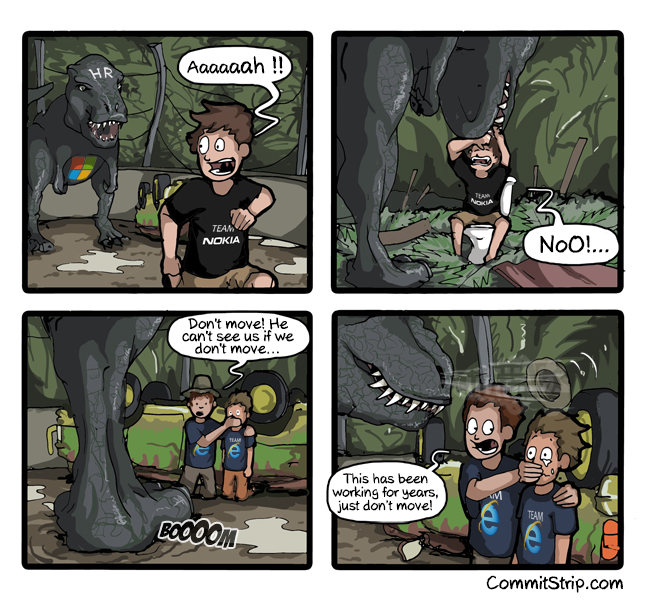
Microsoft: 18.000 layoffs, but were they the right ones?

by CommitStrip

29 Apr 23:11

10 Amazing Bets You Will Always Win

Adam Victor Brandizzi

Compartilhando mais por causa do sotaque britânico mesmo.

Submitted by: (via Quirkology)

Tagged: bets , Video , g rated , win
29 Apr 23:06

Self Reflection

Self Reflection
29 Apr 23:02

The Coder and the Beast

by CommitStrip

29 Apr 22:58

A batalha do Proer não acabou, 20 anos depois

by João Villaverde

Imagine, caro leitor, que sete dos maiores bancos privados do País estão quebrados. Literalmente: quebrados. Diante disso, o governo decide injetar dinheiro público – e muito, muito dinheiro público – nessas instituições financeiras para evitar que a falência leve o sistema ao chão. Ao mesmo tempo em que coloca o dinheiro nos bancos, o governo toma o controle dessas instituições para si e as divide em duas partes. A parte boa, com ativos, é colocada à venda para outros bancos. A parte ruim… bem, a parte ruim de três desses sete desses bancos existe até hoje, 20 anos depois.

Este foi o Proer, o mais polêmico programa de nossa história econômica. Seu nome completo, como foi criado em novembro de 1995 pelo governo federal, é Programa de Estímulo à Reestruturação e ao Fortalecimento do Sistema Financeiro Nacional.

Em valores da época, o Banco Central injetou nada menos do que R$ 16 bilhões em dinheiro público nos seguintes bancos: Nacional, Econômico, Mercantil, Bamerindus, Banorte, Pontual e Crefisul. Pelo site do Banco Central, clicando aqui, é possível ao leitor atualizar esse patamar para valor presente.

Sede do Banco Central em Brasília

Sede do Banco Central em Brasília

Desde janeiro, o autor deste blog e o repórter Murilo Rodrigues Alves, levantamos, por meio da Lei de Acesso à Informação e do Banco Central, mais de 500 páginas em documentos do Proer. Diante de documentos que nunca tinham sido revelados foi possível acessar uma parte dessa história que ainda não acabou, mesmo 20 anos depois.

O resultado foi publicado no Estadão do último domingo.

Três dos 7 bancos que receberam dinheiro público ainda devem ao Banco Central nada menos do que R$ 28,8 bilhões, em valores atualizados a fevereiro de 2015. A maior parte da dívida pertence ao Banco Nacional, da família Magalhães Pinto. O Nacional ainda precisa pagar ao governo R$ 21 bilhões. Outros R$ 7,7 bilhões são devidos pelo Banco Econômico, do banqueiro baiano Ângelo Calmon de Sá. O restante, um valor menor, de R$ 26,3 milhões, é devido ainda pelo banco Crefisul, do empresário Ricardo Mansur, que fora o fundador das extintas redes Mesbla e Mappin (lembra delas, caro leitor?).  Os demais bancos já quitaram suas dívidas com o governo.

Nacional, Econômico e Crefisul tem mais 13 anos para pagar o que resta de dívida com o governo. Ou seja, somados ao que vivemos de 1995 para cá, o Proer poderá ter seu acerto de contas final somente 33 anos após sua criação.

Quando foi anunciado, o Proer imediatamente causou grande polêmica. O então presidente Fernando Henrique Cardoso (1995-2002) vendeu a ideia de que o programa era a “única forma” de “salvar” o sistema bancário brasileiro de um colapso: a metade dos principais bancos relevantes à época quebrou entre 1994 e 1995. Por que? Foi uma combinação de fatores. O principal foi o fim da hiperinflação, que ao mesmo tempo em que permitia ganhos às instituições financeiras, também mascarava grandes problemas nesses bancos. Diversas fraudes foram realizadas nessas instituições para benefício de seus controladores, como depois ficou comprovado. Com fraudes e sem a inflação, os bancos ficaram de joelhos e uma quebradeira ficou iminente. O BC, então, preparou o plano polêmico, de injeção de dinheiro e separação das instituições em duas. No fim de 1995, FHC autorizou.

Os bancos que não tinham salvação entraram em liquidação extrajudicial. Outros, com ativos como agências e clientes, foram vendidos sem que as dívidas e cobranças judiciais fossem no mesmo pacote. O Nacional – que foi o maior dos bancos a quebrar – teve sua parte boa vendida ao Unibanco (que depois, em 2008, seria vendido ao Itaú). O Bamerindus foi comprado pelo HSBC. O Econômico foi vendido ao Excel, depois incorporado ao Bradesco, que também tinha adquirido o Pontual.

As partes podres de Nacional, Econômico e Crefisul existem até hoje e, como vimos, ainda devem quase R$ 30 bilhões ao governo federal.

O caso do Banco Nacional

Como que o Nacional quebrou? Sim, aquele mesmo banco que estava, nas manhãs dos domingos, na figura do grande ídolo nacional, que também aparecia nas capas das principais revistas e jornais, todas as semanas, ao longo de dez anos: Ayrton Senna.

Quando Senna sofreu seu acidente fatal, na curva Tamburello, durante o Grande Prêmio de San Marino, no campeonato de Fórmula 1 de 1994, o Nacional já estava em situação gravíssima, mas ninguém sabia. Senna morreu no dia 1º de maio de 1994, dois meses antes do início do Plano Real e um ano inteiro antes da crise do Nacional realmente começar a se tornar pública.

Publicidade de 1991 do Banco Nacional com Ayrton Senna

Publicidade de 1991 do Banco Nacional com o piloto Ayrton Senna

O banco era não só um dos maiores bancos privados do Brasil naquele instante, mas um dos maiores bancos da América Latina. Da noite para o dia, no fim de 1995, o banco foi dividido em dois, vendido ao Unibanco e sofrido intervenção do Banco Central.

O que aconteceu?

O Estadão teve acesso aos relatórios finais produzidos pela comissão de inquérito do Banco Central, que investigou todos os balanços e documentos do Nacional, em 1996 (logo após a intervenção do Proer, portanto), para tentar explicar como que o próprio BC, responsável pela fiscalização do sistema financeiro brasileiro, tinha deixado passar por debaixo de seu nariz um conjunto de fraudes tão grandes que deixara quebrado um banco daquele porte.

As revelações da comissão de inquérito do Banco Central são impressionantes mesmo aos olhos de hoje, 2015.

Capa do relatório final feito pela comissão de inquérito do Banco Central sobre o caso do Nacional. É possível ler que o Nacional estava em regime de administração especial "temporária". Mas isso já dura 20 anos.

Capa do relatório final feito pela comissão de inquérito do Banco Central sobre o caso do Nacional. É possível ler que o Nacional estava em regime de administração especial “temporária”. Mas isso já dura 20 anos

Os documentos apontam que as fraudes no Nacional começaram em 1987, com as operações de crédito de “natureza 917″. Este era o código para empréstimos concedidos a “empresas falidas, concordatárias, desaparecidas” e que, em vez de serem transferidos para a rubrica “crédito em liquidação”, permaneciam em aberto, como créditos normais, inflando artificialmente o balanço do banco. Não foi só isso: a partir de 1988, as “operações 917″ foram crescendo em ritmo desenfreado, ano a ano, atingindo o auge em 1994-95. Quando o Nacional quebrou e o BC conduziu a intervenção no banco, no âmbito do Proer, em novembro de 1995, as operações “de natureza 917″ acumulavam um impressionante saldo bilionário, que o BC estimou a época em R$ 5,367 bilhões, que inflavam as receitas do banco. Este valor, atualizado pelo IGP-M, corresponde hoje a R$ 24,9 bilhões.

Sim, caro leitor, as fraudes do Nacional somavam, em valores de hoje, vinte e cinco bilhões de reais.

Segundo os investigadores do Banco Central, não havia dúvida. Anotaram no documento obtido pelo Estadão o seguinte: “Temos a indicação que o procedimento de apropriar receitas visava unicamente melhorar as demonstrações financeiras do Banco Nacional S.A., procedimento este comumente conhecido como enfeitar ou maquiar o balanço, permitindo, desta forma, que a instituição financeira mantivesse uma boa imagem de credibilidade no mercado financeiro e, por outro lado, ilaquiasse o Banco Central, a CVM, a auditoria externa, acionistas e clientes“.

Justamente neste período, a partir de 1987, a exposição do Nacional aumentou muito, graças ao desempenho de Ayrton Senna na Fórmula 1. Em 1987, Senna, que ainda pilotava a Lotus, conseguiu duas vitórias (uma delas em Mônaco), e brigou pelo título de pilotos. Em 1988, Senna, já pilotando a inesquecível McLaren branca e vermelha, foi campeão do mundo após vencer 8 das 16 corridas e bater o rival Alain Prost. Em 1989, Senna foi vice-campeão após disputa acirrada com Prost. Em 1990 e 1991, Senna foi campeão, batendo Prost e o inglês Nigel Mansell. Entre 1992 e 93, dispondo de uma McLaren inferior às Williams, Senna ainda mostrou genialidade e fez corridas históricas debaixo de chuva. Em 1994, foi para a Williams e faleceu em San Marino.

Durante todo esse período, o boné azul do Nacional acompanhou o piloto. Senna, é evidente, nada sabia do que ocorria nos gabinetes do Nacional.

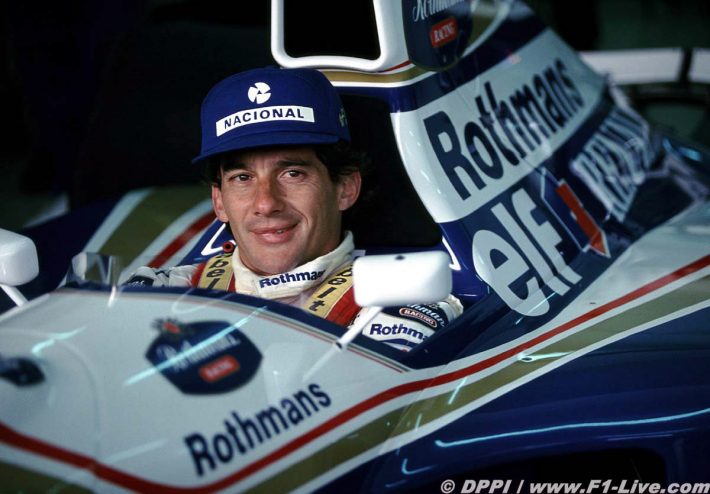
Ayrton Senna fotografado dentro da Williams, em 1994

Ayrton Senna fotografado dentro da Williams, em 1994

Um dado impressionante coletado pelo BC na comissão de inquérito aponta para a ramificação das operações de “natureza 917″. Das 335 agências que o Nacional tinha no momento de criação do Proer, nada menos do que 187 delas foram utilizadas para abrigar essas operações. Ao final, o BC afirma: “Considerando as suspeitas desta comissão de inquérito de que, pelos valores envolvidos, os ex-administradores conheciam as operações e a elas não se opuseram“.

****

A história do Proer ainda revela surpresas sobre um capítulo dramático – e ainda muito polêmico – da travessia econômica dos últimos anos no País.


29 Apr 22:54

Undeserved Reputation? Aspartame, The Artificial Sweetener

by Compound Interest
Last week, Pepsi announced they will be removing aspartame, the artificial sweetener, from Diet Pepsi (in the US), and replacing it with another artificial sweetener, sucralose. This reignited the discussion on aspartame, probably one of the most maligned substances in fizzy drinks – but what does the science say on its safety? This graphic looks at the […]
29 Apr 22:42

Garoto de 7 anos encontra primo vegetariano do tiranossauro rex

Adam Victor Brandizzi

Ainda bem que era vegetariano, então.

O chileno Diego Suárez, filho de geólogos, tinha sete anos de idade quando, durante um passeio pela Patagônia com os pais e a irmã, disse que ia procurar fósseis. Após martelar algumas rochas, ele não apenas cumpriu a promessa como também acabou achando um dos dinossauros mais esquisitos já registrados pela ciência. Leia mais (04/29/2015 - 02h00)
29 Apr 22:42

Love Slick

29 Apr 22:42

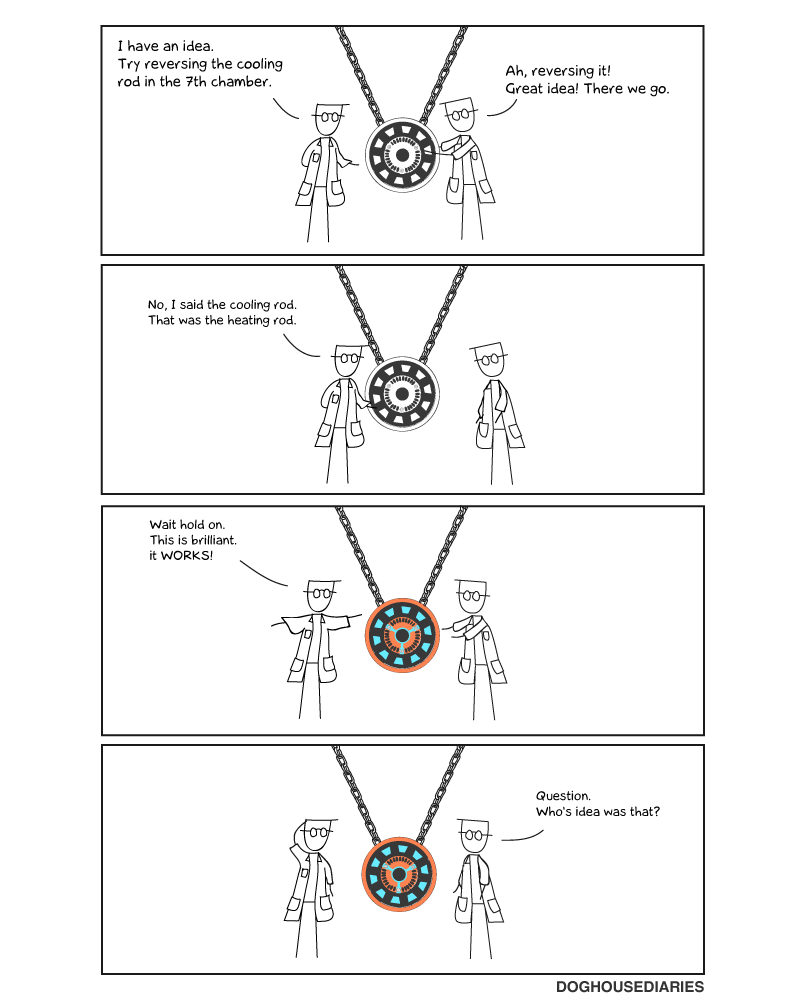
Breakthrough Idea

by DOGHOUSE DIARIES

Breakthrough Idea

So this idea came from a parallel situation where a friend and I mistakenly discovered that ice cream is delicious on top of pizza. I took the liberty of portraying us as physicists discovering unlimited energy. But on a serious note: if you do happen to be someone trying to figure out Zero-point energy, maybe try turning around a heating rod or two.

29 Apr 22:19

The backwards bike will break your brain

by Jason Kottke

Do you think you could ride a bicycle that steers backwards...aka it turns left when you turn right and vice versa? It sounds easy but years of normal bike riding experience makes it almost impossible. Destin Sandlin of Smarter Everyday taught himself how to ride the backwards-steering bike; it took months. Then he tried riding a normal bicycle again...

Loved this video...great stuff. (via ★interesting)

Tags: cycling   Destin Sandlin   science   video
29 Apr 22:14

The Big Picture, Baltimore


(JOHN TAGGART/EPA)


(SAIT SERKAN GURBUZ)


(Patrick Semansky/Associated Press)


(SHANNON STAPLETON/Reuters)


(NOAH SCIALOM/EPA)


(SHANNON STAPLETON/Reuters)


(NOAH SCIALOM/EPA)


( Chip Somodevilla/Getty Images)


(Mark Makela/Getty Images)


(Mark Makela/Getty Images)

The Big Picture, Baltimore

29 Apr 14:49

Modern languages show no trace of our African origins

by Cathleen O'Grady

The evolution of human culture is often compared to biological evolution, and it’s easy to see why: both involve variation across a population, transmission of units from one generation to the next, and factors that ensure the survival of some variants and the death of others. However, sometimes this comparison fails. Culture, for instance, can be transmitted “horizontally” between members of the same generation, but genes can’t.

“Little is known about whether human demographic history generates patterns in linguistic data that are similar to those found in genetic data,” write the authors of a recent paper in PNAS. Both linguistic and genetic data can be used to draw conclusions about human history, but it's vital to understand how the forces affecting them differ in order to be sure that the conclusions we're drawing are accurate.

By conducting a large-scale analysis on global genetic and linguistic data, the researchers found that languages sometimes behave in ways very unlike genetics. For instance, isolated languages have more, not less, diversity, and languages don't retain the echo of a migration out of Africa—unlike our genomes.

Read 9 remaining paragraphs | Comments

29 Apr 14:29

Photo


29 Apr 14:29

4gifs: Scottish Fold…morlike Scottish Bowld. [video]


4gifs:

Scottish Fold…morlike Scottish Bowld. [video]

29 Apr 09:00

Typical Morning Routine

Hang on, I've heard this problem. We need to pour water into the duct until the phone floats up and ... wait, phones sink in water. Mercury. We need a vat of mercury to pour down the vent. That will definitely make this situation better and not worse.
29 Apr 06:42

Comic for April 29, 2015