Shared posts

07 May 18:28

Stumbling and Mumbling: The voter turnout paradox

One of the many issues which hasn't had the attention it deserves in this election campaign is the paradox of voter turnout: the people most likely to vote are those with least at stake, whilst those least likely to vote have the most at stake.

I mean this in two ways.

First, the rich are more likely to vote than the poor; the IPPR has said (pdf) that in 2010 turnout in the highest-income quintile was 22.7 percentage point higher than that for the lowest quintile - implying that the rich are 35% more likely to vote than the poor. But the poor have (proportionately) more to lose than the rich. Any intelligent person on a six-figure salary should be able to afford the slightly higher taxes they'll pay under a Labour government without much discomfort. The policies that impose genuine suffering are benefit sanctions, the bedroom tax and the petty tyrannies of the DWP of the sort documented by the great Kate Belgrave. And this is not to mention the £12bn of unspecified benefit cuts planned by the Tories; these are equivalent to £45 per working age benefit recipient per week - a cut which cannot be imposed without huge suffering.

Secondly, the old are more likely vote than the young; in 2010, 74.7% of over-65s voted compared (pdf) to just 51.8% of 18-24 year-olds.

But again, the young have more at stake than oldsters. No main party plans to make big changes to pensioner benefits. But governments can greatly shape the lives of younger people, not least because youth unemployment can have long-lasting scarring effects upon future incomes, job prospects and health.

What explains this paradox? Why will I vote even though the election will make very little material difference to me whilst millions of my fellow citizens won't even though it does matter more to them?

I suspect that part of the story lies in Maslow's hierarchy of needs. We older, richer people have a higher demand for self-actualization than those who are struggling just to get by. We therefore want a government that doesn't too badly offend our sense of justice and propriety, so we take more interest in party politics than the poor who have more pressingly immediate material concerns.

This, though, isn't the whole story because, as the IPPR pointed out, turnout inequality is a relatively new phenomenon; it was small in the 1980s.What has also happened is what the IPPR calls a "vicious cycle of disaffection and under-representation" among the young and poor:

As policy becomes less responsive to their interests, more and more decide that politics has little to say to them.

What we're seeing is a form of learned helplessness in which people have resigned themselves to inequality.

Unequal turnout, though, surely matters not just because it undermines the democratic principle that citizens should have equal political power but also because it is itself a cause of material inequality; Sean McElwee points out that, in the US, "states with higher turnout inequality (more rich people voting than poor people) have higher income inequality."

So, what can be done about this? The IPPR recommends compulsory voting and Matthew Flinders advocates increasing political literacy. I'm not sure these are complete solutions. A few weeks ago Labour's Rachel Reeves said:

We are not the party of people on benefits. We don’t want to be seen, and we’re not, the party to represent those who are out of work.

If Labour has that attitude, doesn't benefit recipients' reluctance to vote become more understandable?

Perhaps we are reverting to the pre-democratic age, in which politics consisted of the rich debating among themselves how best to deal with the poor whilst the poor themselves were excluded from that debate.

Bookmarked at brandizzi Delicious' sharing tag and expanded by Delicious sharing tag expander.
07 May 16:31

Giz de Cera de fabricante brasileira traz 12 cores de pele para a sala de aula

by Jacqueline Lafloufa
giz-de-cera-cor-de-pele

Muito antes de eu aprender o que significava a palavra ocre, eu conhecia aquele como o lápis “cor de pele”. O que pra mim não fazia o menor sentido. Tá, algumas pessoas que eu conhecia até tinham a pele daquele jeito, mas aquela não era a cor da minha pele.

Eu sempre fui branquinha, e representar a minha cor sempre foi complicado. O mais próximo que eu chegava da realidade era com o lápis salmão, e isso era quase que a minha cara de vergonha, não o meu real eu.

Se você já teve esse problema, ou conhece alguma criança que já lidou com isso, vai automaticamente entender a importância dessa caixa de giz da UniAfro. São 12 “cores de pele”, desde as mais claras até as mais diversas variações de cor de pele negra e mulata.

A ideia é parte de uma ação para escolas infantis, que distribuiu as caixas de giz para os professores do Rio Grande do Sul, em um curso sobre história e cultura africana, focado no corpo docente de escolas públicas.

A iniciativa foi tão bem recebida que agora a fabricante do giz de cera, a Koralle, colocou o item a venda na sua loja virtual. Cada caixinha com 12 cores de pele sai por 18 reais, e você pode comprar nesse link.

O bacana é que as crianças parecem ter curtido a ideia, e rapidamente perceberam que o novo kit de giz de cera melhorava a representação que eles queriam fazer.

lapis-desenhos

Brainstorm9Post originalmente publicado no Brainstorm #9
Twitter | Facebook | Contato | Anuncie

07 May 13:22

Mosaicos romanos de 2 mil anos são encontrados

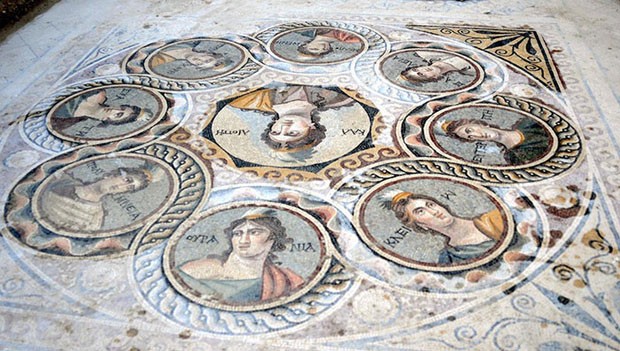
Mosaicos de Zeugma (Foto: Zeugma Archaeology Project/Divul)Os arqueólogos turcos escavaram os surpreendentes mosaicos em casas da cidade antiga de Zeugma

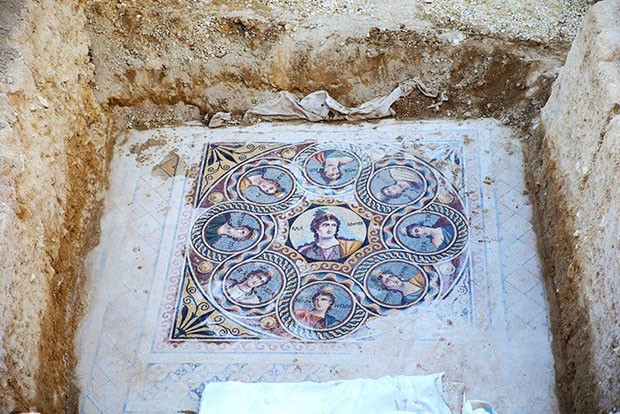
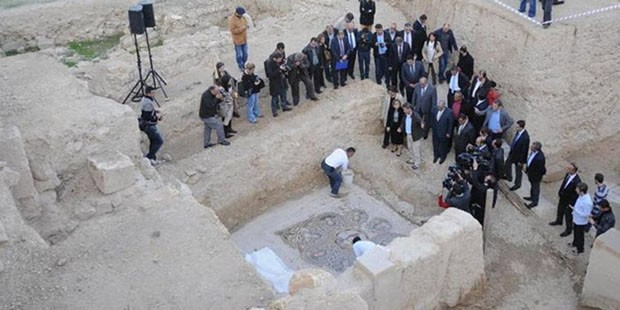
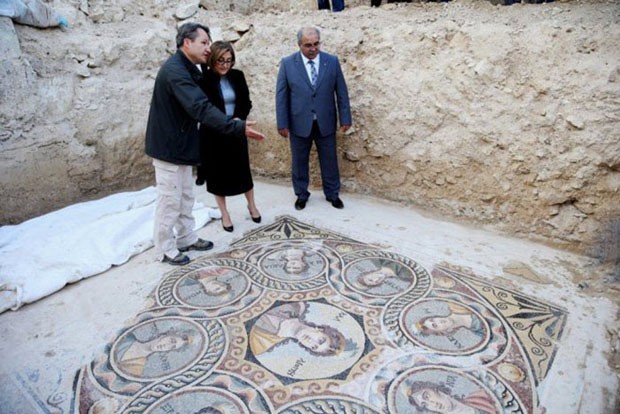
Arqueólogos descobriram três novos mosaicos de vidro da época do Império Romano na cidade de Zeugma, no sul da atual Turquia. O anúncio foi feito no início do mês de novembro por Kutalmış Görkay, diretor do projeto de escavações e professor da Universidade de Ancara.

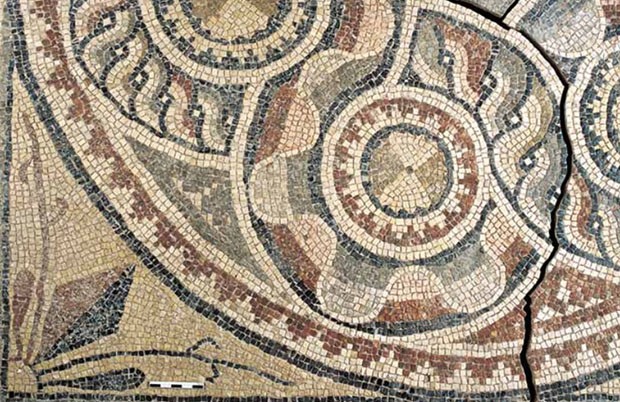
A descoberta é a oportunidade para ver arte de gregos e romanos escondida há cerca de 2 mil anos. Os mosaicos, que decoravam o piso das casas de luxo, conta com a imagens de deuses, musas e cenas da literatura. O plano dos arqueólogos é restaurar e conservar o trabalho de agora em diante.

O local da escavação quase foi destruído no ano 2000, quando o governo começou a construir uma represa nas proximidades. O resultado da busca é um apanhado de obras de arte extremamente bem preservadas. Veja fotos abaixo: 

Mosaicos de Zeugma (Foto: Zeugma Archaeology Project/Divul)Personagens da mitologia grega decoravam pisos das casas luxuosas
Mosaicos de Zeugma (Foto: Zeugma Archaeology Project/Divul)"Eles eram produtos da imaginação do dono da casa", contou o chefe das escavações Kutalmış Görkay ao site Archaelogy.org. "Não era como escolher a partir de um catálogo"
Mosaicos de Zeugma (Foto: Zeugma Archaeology Project/Divul)“Eles pensavam em cenas específicas para causarem impressões específicas", conta o arqueólogo. "Por exemplo, se você estivesse no nível intelectual de discutir literatura, poderia selecionar uma cena com as Três Musas"
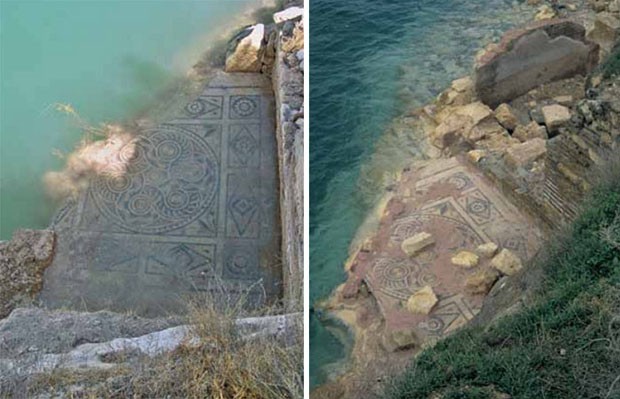
Mosaicos de Zeugma (Foto: Zeugma Archaeology Project/Divul)Os arqueólogos passaram a pesquisar a cidade depois que ela foi ameaçada de destruição por uma enchente
Mosaicos de Zeugma (Foto: Zeugma Archaeology Project/Divul)

A foto mostra uma das peças antes do salvamento

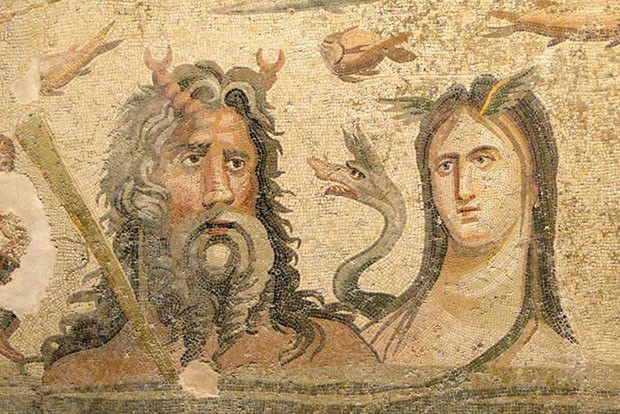
Mosaicos de Zeugma (Foto: Zeugma Archaeology Project/Divul)Oceanus e Thetys, duas divindades greco-romanas 
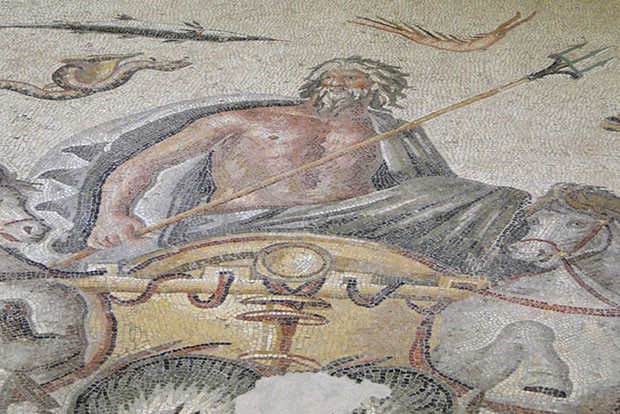
Mosaicos de Zeugma (Foto: Zeugma Archaeology Project/Divul)Imagem do deus do mar Posseidom em sua carruagem marinha
Mosaicos de Zeugma (Foto: Zeugma Archaeology Project/Divul)Os gregos conquistaram a cidade no século 3 a.C.
Mosaicos de Zeugma (Foto: Zeugma Archaeology Project/Divul)Os romanos a conquistaram no ano 64 a.C. e mantiveram até 253 d.C., quando ela foi tomada pelo Império Sassânida 
Mosaicos de Zeugma (Foto: Zeugma Archaeology Project/Divul)O nome Zeugma significa "Ponte" ou "Cruzamento" em grego antigo
Mosaicos de Zeugma (Foto: Zeugma Archaeology Project/Divul)Imagem representa Thalia, a musa da poesia e comédia
Mosaicos de Zeugma (Foto: Zeugma Archaeology Project/Divul)Essa imagem mostra um mosaico que estava debaixo d'água após o salvamento e restauro

TERMO DE AUTORIZAÇÃO DO USO E DE PUBLICAÇÃO DE TEXTOS E IMAGENS

Os termos e condições abaixo se referem à utilização dos textos e imagens disponibilizados pelo visitante/ usuário ao site da Casa Vogue,que se declara apto a participar de interatividades, visando contribuir com o envio de material, tais como fotos, conteúdo, informações,textos, frases, entre outros, e que por iniciativa própria aceita e se responsabiliza pela autoria e originalidade do material enviado ao site de CASA VOGUE, bem como pela obtenção de autorização de terceiros que eventualmente seja necessária para os fins desejados, respondendo dessa forma por qualquer reivindicação que venha a ser apresentada à Casa Vogue, judicial ou extrajudicialmente, em relação aos direitos intelectuais e/ou direitos de imagem, ou ainda por danos morais e/ou materiais, causados a Casa Vogue, Editora Globo ou a terceiros por força da presente autorização. Assim, por ocasião do acesso ao site e do envio de informações e imagens, o visitante/ usuário autoriza e está ciente que o site de Casa Vogue, bem como a Revista Casa Vogue, poderão utilizar, em caráter irrevogável, irretratável, definitivo, gratuito, seu nome, sua imagem, bem como dos textos enviados, no site e na revista impressa, em fotos, cartazes, filmes e/ou spots, jingles e/ou vinhetas, em qualquer tipo de mídia, peças promocionais e campanhas on-line, para a divulgação do site e do Portal, no Brasil e no exterior, bem como para outros fins que desejar, sem limitação de vezes ou número de vezes, bem como o de autorizar sua utilização por terceiros, no todo ou em parte. Entre os direitos da Casa Vogue incluem-se, também, os de adaptação, condensação, resumo, redução, compilação e ampliação dos textos e imagens objeto deste termo. Todas as informações de usuários coletadas pela equipe de Casa Vogue são confidenciais, sendo intransferíveis, e somente poderão ser fornecidas a terceiros mediante orientação legal ou a terceiros, devidamente autorizados pela Revista Casa Vogue e Editora Globo. Os termos da autorização do uso e de publicação de textos e imagens entre as partes serão regidos e interpretados de acordo com as Leis da República Federativa do Brasil. O visitante/ usuário concorda expressamente em submeter-se à competência única e exclusiva dos tribunais brasileiros e, em especial, ao Foro da Comarca de São Paulo, Estado de São Paulo, para dirimir quaisquer questões oriundas deste instrumento.

Bookmarked at brandizzi Delicious' sharing tag and expanded by Delicious sharing tag expander.
07 May 13:22

Centuries of Italian History Are Unearthed in Quest to Fix Toilet

LECCE, Italy — All Luciano Faggiano wanted when he purchased the seemingly unremarkable building at 56 Via Ascanio Grandi was to open a trattoria. The only problem was the toilet.

Sewage kept backing up. So Mr. Faggiano enlisted his two older sons to help him dig a trench and investigate. He predicted the job would take about a week.

If only.

“We found underground corridors and other rooms, so we kept digging,” said Mr. Faggiano, 60.

His search for a sewage pipe, which began in 2000, became one family’s tale of obsession and discovery. He found a subterranean world tracing back before the birth of Jesus: a Messapian tomb, a Roman granary, a Franciscan chapel and even etchings from the Knights Templar. His trattoria instead became a museum, where relics still turn up today.

Italy is a slag heap of history, with empires and ancient civilizations built atop one another like layers in a cake. Farmers still unearth Etruscan pottery while plowing their fields. Excavation sites are common in ancient cities such as Rome, where protected underground relics have for years impeded plans to expand the subway system.

Luciano Faggiano and his sons recently excavated a new area beneath their building in Lecce.

Situated in the heel of the Italian boot, Lecce was once a critical crossroads in the Mediterranean, coveted by invaders from Greeks to Romans to Ottomans to Normans to Lombards. For centuries, a marble column bearing a statue of Lecce’s patron saint, Orontius, dominated the city’s central piazza — until historians, in 1901, discovered a Roman amphitheater below, leading to the relocation of the column so that the amphitheater could be excavated.

“The very first layers of Lecce date to the time of Homer, or at least according to legend,” said Mario De Marco, a local historian and author, noting that invaders were enticed by the city’s strategic location and the prospects for looting. “Each one of these populations came and left a trace.”

Severo Martini, a member of the City Council, said archaeological relics turn up on a regular basis — and can present a headache for urban planning. A project to build a shopping mall had to be redesigned after the discovery of an ancient Roman temple beneath the site of a planned parking lot.

“Whenever you dig a hole,” Mr. Martini said, “centuries of history come out.”

Ask the Faggiano family. Mr. Faggiano planned to run the trattoria on the ground floor and live upstairs with his wife and youngest son. Before they started digging, Mr. Faggiano’s oldest son, Marco, was studying film in Rome. His second son, Andrea, had left home to attend college. The building was seemingly modernized, with clean white walls and a new heating system.

“I said, ‘Come, I need your help, and it will only be a week,’ ” Mr. Faggiano recalled.

But one week quickly passed, as father and sons discovered a false floor that led down to another floor of medieval stone, which led to a tomb of the Messapians, who lived in the region centuries before the birth of Jesus. Soon, the family discovered a chamber used to store grain by the ancient Romans, and the basement of a Franciscan convent where nuns had once prepared the bodies of the dead.

If this history only later became clear, what was immediately obvious was that finding the pipe would be a much bigger project than Mr. Faggiano had anticipated. He did not initially tell his wife about the extent of the work, possibly because he was tying a rope around the chest of his youngest son, Davide, then 12, and lowering him to dig in small, darkened openings.

“I made sure to tell him not to tell his mama,” he said.

His wife, Anna Maria Sanò, soon became suspicious. “We had all these dirty clothes, every day,” she said. “I didn’t understand what was going on.”

After watching the Faggiano men haul away debris in the back seat of the family car, neighbors also became suspicious and notified the authorities. Investigators arrived and shut down the excavations, warning Mr. Faggiano against operating an unapproved archaeological work site. Mr. Faggiano responded that he was just looking for a sewage pipe.

A year passed. Finally, Mr. Faggiano was allowed to resume his pursuit of the sewage pipe on condition that heritage officials observed the work. An underground treasure house emerged, as the family uncovered ancient vases, Roman devotional bottles, an ancient ring with Christian symbols, medieval artifacts, hidden frescoes and more.

The relics Mr. Faggiano and his sons recently excavated are displayed on site.

“The Faggiano house has layers that are representative of almost all of the city’s history, from the Messapians to the Romans, from the medieval to the Byzantine time,” said Giovanni Giangreco, a cultural heritage official, now retired, involved in overseeing the excavation.

City officials, sensing a major find, brought in an archaeologist, even as the Faggianos were left to do the excavation work and bear the costs. Mr. Faggiano also engaged in extensive research into the eras tiered below him. The two older sons, Marco and Andrea, found their lives interrupted by their father’s quest.

“We were kind of forced to do it,” said Andrea, now 34, laughing. “I was going to university, but then I would go home to excavate. Marco as well.”

Mr. Faggiano still dreamed of a trattoria, even if the project had become his white whale. He supported his family with rent from an upstairs floor in the building and income on other properties.

“I was still digging to find my pipe,” he said. “Every day we would find new artifacts.”

Years passed. His sons managed to escape, with Andrea moving to London. City archaeologists pushed Mr. Faggiano to keep going. His own architect advised that digging deeper would help clear out sludge below the planned bathroom, should he still hope to open his trattoria. He admits he also became obsessed.

“At one point, I couldn’t take it anymore,” he recalled. “I bought cinder blocks and was going to cover it up and pretend it had never happened.

“I don’t wish it on anyone.”

Today, the building is Museum Faggiano, an independent archaeological museum authorized by the Lecce government. Spiral metal stairwells allow visitors to descend through the underground chambers, while sections of glass flooring underscore the building’s historical layers.

His docent, Rosa Anna Romano, is the widow of an amateur speleologist who helped discover the Grotto of Cervi, a cave on the coastline near Lecce that is decorated in Neolithic pictographs. While taking an outdoor bathroom break, the husband had noticed holes in the ground that led to the underground grotto.

“We were brought together by sewage systems,” Mr. Faggiano joked.

Mr. Faggiano is now satisfied with his museum, but he has not forgotten about the trattoria. A few years into his excavation, he finally found his sewage pipe. It was, indeed, broken. He has since bought another building and is again planning for a trattoria, assuming it does not need any renovations. He has no plans to lift a shovel.

“I still want it,” he said of the trattoria. “I’m very stubborn.”

Bookmarked at brandizzi Delicious' sharing tag and expanded by Delicious sharing tag expander.
07 May 13:22

¿El fin del giro a la izquierda?

Ante los graves problemas que enfrentan los gobiernos de Bachelet, Kirchner, Maduro, y Rousseff, muchos comentaristas prevén el fin del giro a la izquierda latinoamericano.  La ola sin precedentes de triunfos izquierdistas que empezó con la elección de Hugo Chávez en 1998 se agota.

No todos los gobiernos de izquierda están en crisis.  Siguen más o menos fuertes en Bolivia, Ecuador, El Salvador, Uruguay, y Nicaragua.   Sin embargo, es probable que la izquierda sufra una serie de derrotas electorales en los años que vienen.  Se iría primero en Argentina, donde ninguno de los candidatos presidenciales serios es kirchnerista (Macri, Massa, y Scioli son pragmáticos del centro o centro-derecha).  Aunque no haya elecciones presidenciales cercanas en Brasil y Venezuela, Dilma Rousseff ha sufrido una fuerte caída de popularidad y podría enfrentar un juicio político.  Y el gobierno de Nicolás Maduro está atrapado en un callejón sin salida.   

Después de una década de triunfos sin precedentes, entonces, parece que la izquierda latinoamericana está perdiendo fuerza.  La ola empieza a retroceder.

El retroceso de la izquierda tiene dos causas principales. El primero es el desgaste natural después de haber gobernado por tres o cuatro periodos presidenciales. Pocos partidos ganan más de tres elecciones presidenciales consecutivas (en EEUU, la última vez fue hace casi 70 años), y en democracia, casi ninguno gana más de cuatro.  Después de tres periodos, los gobiernos pierden los reflejos políticos; se distancian de la gente, y muchas veces, crece la corrupción.  Aun cuando no son muy corruptos (como en el caso de la Concertación en Chile), la gente se cansa.  Tarde o temprano, el desgaste afecta a todos los gobiernos. Doce años (Argentina) o 13 años (Brasil) en el poder es mucho.  Nada es permanente en la democracia.   Nadie gobierna para siempre.   

El segundo factor que debilita  a la izquierda latinoamericana es el fin del boom de las materias primas.  El tremendo éxito electoral de la izquierda en Brasil (reelecto en 2006 y 2010), Chile (reelecto en 2006), Venezuela (reelecto en 2006 y 2012), Argentina (reelecto en 2007 y 2011), Bolivia (re-electo en 2009 y 2014), Ecuador, (re-electo en 2009 y 2013), y Uruguay (re-electo en 2009 y 2014) fue facilitado por el boom económico que empezó en el 2002. El boom se acaba, y algunas economías han caído en recesión.  Las crisis económicas –serias en Brasil y Argentina, infernal en Venezuela–generan descontento. Y los electores descontentos no suelen reelegir a sus gobiernos.    

Es probable, entonces, que el desgaste natural y el fin del boom económico pongan fin al giro a la izquierda. El proceso ya está en marcha en Argentina y Brasil, pero llegará también a países como Bolivia y Ecuador. En política nada dura para siempre.
Pero la década izquierdista ha sido un tremendo éxito para las fuerzas progresistas latinoamericanas.  Con la excepción del chavismo venezolano (que dejará el país en ruinas), los gobiernos de izquierda latinoamericanos dejarán dos legados positivos.

Primero, demostraron que la izquierda puede gobernar. La imagen de una izquierda incapaz de gobernar había estado ampliamente difundida en América Latina.  Debido a los fracasos de Allende en Chile, Siles Suazo en Bolivia, el sandinismo en Nicaragua, y Alan García en el Perú, la izquierda regional estaba asociada con crisis fiscal, hiper- inflación y desgobierno.

Esa imagen cambió en los 2000.  En Chile, Ricardo Lagos y Michelle Bachelet gobernaron bien, espantando el fantasma de Allende. Lula gobernó bien en Brasil.  Tabaré Vázquez y Pepe Mujica gobernaron bien en Uruguay.    El FMLN ha gobernado bien en El Salvador.  En Bolivia, las políticas macroeconómicas del gobierno de Morales han sido bastante responsables  –y bastante exitosas.   
Los gobiernos de Lagos y Bachelet, Lula, Funes, y Vázquez y Mujica destrozaron la imagen de una izquierda incapaz. En Brasil, Chile, y Uruguay, la tasa de crecimiento económico aumentó con los gobiernos de izquierda. Y según los Indicadores de Gobernancia del Banco Mundial, los tres países mejoraron en términos de rendición de cuentas, estado de derecho, y corrupción.   

El segundo legado de los gobiernos de izquierda son las políticas redistributivas. La redistribución desapareció de la agenda pública en América Latina en los años ochenta y noventa. Quedó fuera del Consenso de Washington. Los viejos estados de bienestar –casi todos disfuncionales– fueron desmantelados pero no reconstruido, y la política social se limitó a las políticas antipobreza focalizadas.

La izquierda colocó el tema de la redistribución en la agenda. En Argentina, Brasil, Chile, y Uruguay, gobiernos izquierdistas aumentaron el salario mínimo, expandieron los sistemas salud y seguridad social, ofreciendo pensiones y seguro médico a millones de personas –informales, desempleados, y pobres rurales– que jamás los habían recibido, y mejoraron los ingresos de millones de familias a través de programas de transferencias condicionales.  Las consecuencias de estos programas han sido enormes.  En Brasil, 20 millones de personas salieron de la pobreza bajo el gobierno de Lula. Y el nivel de desigualdad cayó.  

Aunque la pobreza disminuyó en toda America Latina, la economista Nora Lustig y sus colegas muestran que los gobiernos social democráticos  en Brasil, Chile, y Uruguay lograron reducir la pobreza y la desigualdad más que en otros países.

El buen rendimiento de los gobiernos de izquierda se ve en los resultados electorales: entre 2000 y 2014, los gobiernos de izquierda fueron reelectos en 19 de 20 oportunidades (la única derrota fue en Chile en 2010, donde el candidato, Eduardo Frei, no era de izquierda). La izquierda ganó cuatro veces consecutivas en Brasil, tres veces en Argentina, Bolivia, Ecuador, y Uruguay, y dos veces en El Salvador.

Estos triunfos se deben, en parte, al boom económico.   Pero también se deben a la democracia.   Por la primera vez en la historia, la izquierda latinoamericana puede ganar y gobernar hoy sin golpes de Estado.  

La izquierda no debe olvidar esta lección.  El giro a la izquierda fue posible porque la consolidación de las instituciones democráticas abrió caminos al poder que no existían antes. Para la izquierda, apoyar a gobiernos (como el venezolano) que pisotean a estas instituciones sería sabotear a su propio futuro.

Bookmarked at brandizzi Delicious' sharing tag and expanded by Delicious sharing tag expander.
06 May 19:59

Elle illustre ces petits moments amoureux

by Julien

L’artiste Coréenne Puuung illustre à la perfection l’amour dans son quotidien. Dans une ambiance légère et colorée, elle réussit à saisir ces instants de la vie de couple, ces petits moments amoureux.  “Love is something that everybody can relate to. And Love comes in ways that we can easily overlook in our daily lives. So, I try to find the meaning of love in our daily lives and make it into artworks ». Une série d’illustrations adorable qui nous apporte un peu de douceur dans ce monde de brutes. Cute!

love-is-illustrations-Puuung-1 love-is-illustrations-Puuung-2 love-is-illustrations-Puuung-3love-is-illustrations-Puuung-11v love-is-illustrations-Puuung-4 love-is-illustrations-Puuung-5love-is-illustrations-Puuung-11b love-is-illustrations-Puuung-6 love-is-illustrations-Puuung-7 love-is-illustrations-Puuung-8 love-is-illustrations-Puuung-9 love-is-illustrations-Puuung-10love-is-illustrations-Puuung-11love-is-illustrations-Puuung-14love-is-illustrations-Puuung-15love-is-illustrations-Puuung-18love-is-illustrations-Puuung-71love-is-illustrations-Puuung-72love-is-illustrations-Puuung-116love-is-illustrations-Puuung-40love-is-illustrations-Puuung-41love-is-illustrations-Puuung-42Puuung

La série complète se trouve sur le site Grafolio.com
All images by ©Puuung

06 May 19:05

batsvsupes: got emm


batsvsupes:

got emm

06 May 17:59

The Ultimate List You Should Follow To Have A Better Life

by Jelly Wong
Adam Victor Brandizzi

What I really like here is that this is no shallow recommendation. In fact, the first items (specially the two first ones) are quite easy to follow, do get results but yet many people are not aware of their effectiveness.

The Ultimate List
  1. Get more sleep
  2. Drink more water
  3. Get more exercise
  4. Read more
  5. Get more organized
  6. Clean more often
  7. Explore more
  8. Have more patience
  9. Forget doing ‘more’

The post The Ultimate List You Should Follow To Have A Better Life appeared first on Lifehack.

06 May 17:04

There are too many studies, new study finds

In a paper entitled 'Attention decay in science', professors from universities in Finland and California conclude that "the exponential growth in the number of scientific papers makes it increasingly difficult for researchers to keep track of all the publications relevant to their work.

"Consequently," the say, "the attention that can be devoted to individual papers, measured by their citation counts, is bound to decay rapidly."

While this particular study relates to the booming number of academic papers and journals, it's a trend we can probably all relate to.

Content is snowballing in the information age, its volume weakening the impact and longevity of each individual thing, be it a study, opinion, fact, tweet or utterance.

While this disposability of content is usually talked about with regards to culture - music, films, TV etc - the study shows the insidious effect it could have on science.

With the exponential growth in the number of scientific literature inevitably accelerating the turnover of papers due to the finite capacity of scholars to keep track of it, important data, research and theories could be overlooked.

Bookmarked at brandizzi Delicious' sharing tag and expanded by Delicious sharing tag expander.
06 May 17:03

Mathematician's anger over his unread 500-page proof - physics-math - 07 January 2015 - New Scientist

Adam Victor Brandizzi

Pô, chato quando isso acontece...

Bookmarked at brandizzi Delicious' sharing tag and expanded by Delicious sharing tag expander.
06 May 17:02

Doxing victim Zoe Quinn launches online “anti-harassment task force”

On Friday, Depression Quest developer and doxing victim Zoe Quinn launched an online "anti-harassment task force" toolset, staffed by volunteers familiar with such attacks, to assist victims of a recent swell of "doxing" and "swatting" attacks.

The Crash Override site, built by Quinn and game developer Alex Lifschitz, offers free services from "experts in information security, white hat hacking, PR, law enforcement, legal, threat monitoring, and counseling" for "victims of online mob harassment." According to the site, those experts are "mostly former clients" who have faced similar online threats, and their efforts will not include "retaliatory action against abusers."

In addition to a contact form and a lengthy summary of Crash Override's pre- and post-harassment services, the site includes links to a guide to help people control how much personally identifiable information appears on the Internet, along with a Twitter feed containing public statements from two users claiming to have used Crash Override's services to mitigate the effects of online harassment.

“Knock with your hand, not your boot”

In a conversation with Ars, Quinn said that she and Lifschitz continue to constantly monitor a variety of chat rooms, forums, and imageboard sites where doxing targets and activities are coordinated. Information gleamed from those public and private sites has been used to preemptively warn at least one victim of a swatting attempt in Enumclaw, Washington, which the victim in question has publicly confirmed. Crash Override stated via Twitter that their efforts have additionally "prevented several potentially deadly swatting and secured more people against hacking and doxxing attempts."

Ars was able to confirm via police report that Enumclaw's police department had been warned nearly a week in advance before a false tip was issued to that department on January 9. As a result, that department's head e-mailed the entire department to ask any police sent to the address in question to "knock with your hand, not your boot." That report also included the full text of the anonymous, false tip sent via an Internet tip service to Enumclaw's department, containing claims of a "cylinder thing with duct tape wrapped around it" and a disclaimer that "I don't think he would do anything or I would call 911."

The Enumclaw officers who searched the house in question concluded that the swatting victims "were very cooperative and allowed us to search their residence, and we found nothing."

Crash Override's Twitter feed states that as of now, the project is neither asking for donations nor asking victims to pay for services. "If we choose to seek funding based on our future needs, we will make it known," the Twitter feed added. Quinn told Ars that she continues to accept Patreon donations to cover the cost of making and releasing small, free video games.

Bookmarked at brandizzi Delicious' sharing tag and expanded by Delicious sharing tag expander.
06 May 15:34

kellyangel: Finders keepers.(read the next comic | support the...

06 May 15:26

Seb Lester Perfectly Renders Ten Famous Brand Logos with Calligraphy Pens

by Christopher Jobson

Over the past few months, London-based designer and illustrator Seb Lester (previously) shared a number of hand-lettered logos on Instagram. Using only calligraphy pens, some minor preparation coupled with years of experience, the identities for brands like Coca Cola, Converse, and the New York Times seem to spring forth, perfectly formed, from his exquisitely controlled hand. Lester just released this video featuring ten of his favorite attempts. See many more here.

06 May 13:27

‘É uma mágoa muito grande’, diz professor do PR que levou bala de borracha no rosto

POR ESTELITA HASS CARAZZAI, DE CURITIBA

O professor Lúcio Roberto Vaisvila, 58, viajou nove horas de ônibus para participar dos protestos contra o projeto que mudaria a previdência dos servidores públicos do Paraná. Docente na rede estadual há 18 anos, Vaisvila leciona em Cianorte, no norte do Paraná. E quase perdeu a visão no confronto com policiais na última quarta (29).

“Nunca pensei que pudesse ser tratado dessa forma”, disse ele ao blog, na sexta-feira (1º). “A gente forma o ser humano, trabalha para a transformação dele, e acaba apanhando desse jeito.”

Ele levou um tiro de bala de borracha na lateral no olho. A bala arrebentou seus óculos, mas não chegou a descolar a retina, nem estourar o globo ocular. “Foi por sorte.”

Estudantes e professores participam de ato na Assembleia Legislativa do Paraná e no Palácio do Governo, em Curitiba - Paulo Lisboa - 30.abr.2015/Brazil Photo Press/Folhapress

Estudantes e professores participam de ato na Assembleia Legislativa do Paraná e no Palácio do Governo, em Curitiba – Paulo Lisboa – 30.abr.2015/Brazil Photo Press/Folhapress

O professor afirma que estava muito longe da área do confronto e diz que ao seu redor não havia ninguém armado com paus ou pedras, como argumenta o governo de Beto Richa (PSDB).

Leia o relato dele abaixo.

*

Eu sou professor desde 1997. É o que eu mais gosto de fazer na vida. Fui para Curitiba na segunda à noite, e na terça acampamos no Centro Cívico [em frente à Assembleia Legislativa do Paraná].

Já na terça-feira (28), teve um enfrentamento, porque não deixavam passar o caminhão de som. Perto do que aconteceu depois, foi tranquilo.

Na quarta (29), a gente foi almoçar e depois voltou para acompanhar a votação [do lado de fora da Assembleia]. Eu não estava muito próximo, bem em cima da grade [do isolamento policial]. Estava distante. Nós estávamos reunidos, conversando. Estávamos muito preocupados, porque aquilo era muito grande, o aparato policial era enorme.

Foi quando começou a cair bomba [de gás] na gente. As bombas caíram igual chuva.

No primeiro momento, eu corri para o acampamento, para ver meus colegas. Quando eu cheguei ali, não tinha mais ninguém. E as bombas caindo. Uma professora de idade correu atrás de uma árvore e não conseguia mais se mexer. Caía bomba do lado dela. Eu carreguei ela pro outro lado. Tinha um senhor de idade ali também, perdido.

Depois de um tempo, começou todo mundo a falar: vamos resistir, vamos resistir, vamos voltar. A indignação era grande. Todo mundo falando: por quê? Pra quê? Pra que isso tudo? Nós só queremos preservar nossos direitos. Nós somos professores, não somos bandidos.

Aí, nós tentamos voltar. Fomos voltando lentamente. Nisso é que eu levei o tiro [de borracha]. Eu estava longe da Assembleia, perto das barracas. O tiro veio do lado esquerdo, na lateral. Eu levei o impacto, agachei e caí. Aí não enxerguei mais nada.

Chegou um rapaz e eu perguntei: como está meu olho? Está sangrando? Eu não conseguia me localizar, era fumaça pra todo lado, eu com lenço na boca. Eu já não estava enxergando nada, nada, nada. Corri pro acampamento, abri um copinho de água e joguei no olho, tentei mexer nele. O meu medo era que tivesse furado o globo ocular. O meu amigo não conseguia ver. Aí a gente atravessou todo aquele campo de guerra pra achar uma ambulância.

O oftalmologista disse que não houve perfuração do globo ocular. Estou tomando anti-inflamatório de três em três horas. Ainda vou ter que fazer um mapeamento da retina e uma tomografia do fundo do olho, para checar se está tudo bem.

Ainda não está muito legal. Não consigo enxergar nitidamente. O olho está todinho roxo, inchado, dilatado. Aquele branco do globo ocular está vermelho.

[Sobre manifestantes que revidaram os ataques com paus e pedras] Eu não vi nada, nem eu, nem meus companheiros. Se isso aconteceu, foi algo pontual. E se houve, então que [os policiais] pegassem eles. Tinha um monte de policiais infiltrados no protesto. E eles não localizaram esse pessoal? Por que não pegaram eles? Por que foram bater em professor?

Tinha pessoa com mais de 70 anos ali, professores aposentados. Você acha que essas pessoas vão agredir alguém? Não tem cabimento falar isso.

Dentro de mim tem uma mágoa muito grande. É impossível alguém apagar isso de mim. Ver um Estado que eu ajudo a construir me agredir… É a mesma coisa que levar uma apunhalada nas costas. Isso não vai apagar nunca.

Nós simplesmente estávamos defendendo nossos direitos.

06 May 13:26

Especial Reforma Política: sistema distrital

Adam Victor Brandizzi

Bom sumário EMHO.

Em meio às discussões sobre reforma política, sempre é levantada a opção de implantar no Brasil um sistema eleitoral de base distrital. O PSDB é o maior partido defensor da ideia, na sua variante chamada “distrital misto”. Adotado por várias democracias, o sistema não é algo trivial para a maioria dos brasileiros. Entender suas vantagens e desvantagens é necessário para posicionar-se com mais clareza no debate.

Entendendo o sistema distrital

No Brasil, consideramos que os estados são a base do sistema de eleição dos deputados e alocamos as vagas proporcionalmente aos resultados dos partidos ou coligações. Ou seja, cada estado tem direito a um número prévio de deputados e distribui as vagas de acordo com os resultados eleitorais em todo o estado. Assim, pouco importa se um candidato é o mais votado em uma cidade: o que determina a eleição o conjunto de votos que ele obteve no estado.

No sistema distrital, a base do sistema muda. Em vez de basearmo-nos somente nos estados, são criadas unidades territoriais menores, usualmente chamadas de “distritos”. Não se deve confundi-los com as zonas eleitorais que já existem, pois estas servem mais à organização do pleito e não interferem no resultado no sistema atual. O número de vagas de cada estado passa a ser preenchido de acordo com os resultados obtidos dentro desses distritos, que possuiriam eleitorados de tamanhos similares.

Os proponentes da ideia apontam algumas vantagens do sistema distrital que seriam bem-vindas para nosso sistema eleitoral. As principais são o aumento da representatividade dos deputados em relação aos eleitores e a diminuição dos custos de campanha.

No caso da primeira vantagem, o raciocínio é o seguinte: elegendo o deputado diretamente em sua região o eleitor saberá exatamente quem o representa (mesmo que seja de partido diferente do seu) e terá maiores incentivos para fiscalizar sua atuação e pressioná-lo para fazer seus interesses serem ouvidos. No sistema atual, qualquer deputado de um estado o representa, tornando essa relação eleitor-deputado um tanto difusa. Os defensores do voto distrital acreditam que, mais pressionado, o deputado voltará sua atuação para atender às demandas de toda a população de seu distrito, em vez de atender a demandas setoriais.

No geral esse ponto faz sentido, mas esbarra em duas considerações necessárias. A primeira é que se faz um juízo prévio de que a representação geográfica é mais legítima, ou mais necessária, do que a representação setorial. E isso é no mínimo controverso: um lojista que mora no Capão Redondo teria mais a ver com seus vizinhos do que outros lojistas no resto do estado? A resposta não é evidente pois envolve preferências ideológicas subjetivas sobre qual deve ser o papel da representação congressual.

A segunda vantagem, sobre o custo das campanhas, se baseia no fato de que os deputados hoje “são obrigados” a fazer campanha no estado inteiro para coletar votos onde quer que possam, a fim de melhorar suas chances de eleição. No sistema distrital, a campanha seria confinada ao distrito, diminuindo sensivelmente o universo de eleitores. Além disso, é de se esperar que o número de candidatos reduza sensivelmente e não existam mais “Tiriricas” (é difícil imaginar um distrito dando maioria a candidatos folclóricos, cujos votos tendem a se espalhar muito pelo estado).

No entanto, não é garantido que as campanhas ficariam mais baratas individualmente. Afinal, em vez de brigar por todas as vagas ao mesmo tempo, os candidatos teriam de brigar por apenas uma vaga em um determinado espaço geográfico, tornando a eleição ainda mais competitiva. O valor total das campanhas, somando todos os candidatos e não apenas os eleitos, deve cair. Mas a média de gastos daqueles que conseguem se eleger pode até subir. Falaremos mais sobre custo de campanhas na próxima semana.

Além disso, não encontramos registros de um país que tenha utilizado um sistema proporcional como o nosso e o substituído por um distrital. Uma coisa é certa: uma mudança desse porte seria um laboratório do maior interesse para cientistas políticos.

Problemas do sistema distrital

Como todos os modelos eleitorais, o sistema distrital não é isento de problemas, frequentemente ignorados nas defesas feitas por políticos, defensores leigos ou mesmo cientistas políticos. Os três principais são os seguintes:

1) Tendência à eliminação de minorias e ao bipartidarismo. Como o nome do sistema proporcional diz, este pretende produzir uma relação direta entre a proporção de votos obtidos por um partido e sua representação em número de deputados e vereadores. Embora diversos métodos de contagem possam ser utilizados (e no Brasil a coligação de partidos nas proporcionais distorce bastante a representação), grosso modo o partido que recebe 30% dos votos terá aproximadamente 30% das cadeiras.

No sistema que ficou chamado “distrital puro”, a proporcionalidade desaparece. O motivo é simples: se cada distrito elegerá apenas um deputado, os candidatos menos votados estão simplesmente fora de consideração. Isso faria com que partidos pequenos, que dependem da proporcionalidade para obter cadeiras, tivessem muitas dificuldades: seus candidatos teriam de vencer distritos individualmente, o que nem sempre é possível – especialmente no caso de partidos fortemente ideológicos ou setoriais, cujos votos não estão concentrados geograficamente.

O movimento Eu Voto Distrital defende o sistema distrital puro, mas poucos políticos concordam: a defesa feita pelo PSDB é por um sistema misto, nos moldes do utilizado na Alemanha. Isso reduz o problema de eliminação das minorias, mas ainda torna mais difícil para estas obter representantes. Muitos diriam que isto não é um problema, considerando a quantidade absurda de partidos nanicos com representação congressual no Brasil. Mas isso não leva em conta o fato de que soluções mais simples, como a cláusula de barreira, atacam diretamente o problema sem que seja necessário alterar todo nosso sistema.

Outro efeito plausível é a tendência de levar o sistema político interno do distrito ao bipartidarismo, provocado pela chamada “lei de Duverger”. Disputas nas quais somente um candidato será eleito levam os eleitores a se coordenar para escolher as alternativas mais favoráveis a suas convicções, enfraquecendo as terceiras vias. É impossível calcular o quanto esse efeito produziria em termos de redução dos partidos, aumento de coordenação entre eleitores, etc. Uma forma de reduzir o efeito é realizar um segundo turno entre os dois candidatos mais votados, algo que não costuma ser proposto ou realizado em sistemas distritais, embora exista em alguns casos.

2) Gerrymandering. Um problema em todo sistema distrital está no desenho dos distritos. Nem sempre a divisão é óbvia: um distrito do Rio de Janeiro contaria Ipanema, Leblon e Lagoa dentro do mesmo distrito? Ou dividiria os três (Ipanema ficaria junto com Cantagalo, Lagoa com Jardim Botânico e Leblon com Gávea)? Essa indecisão teria de ser resolvida e fatalmente alguns seriam beneficiados e outros prejudicados.

Retirado da Wikipedia

Gerrymandering original. Retirado da Wikipedia

Nos EUA, cada estado define os limites de seus distritos, usualmente em comitês bipartidários. A união de republicanos e democratas, no entanto, não assegura isenção: ao contrário, é comum que o desenho dos distritos privilegie os atuais deputados de forma absurda. No século XIX, uma comissão partidária em Massachusetts redesenhou os distritos estaduais para seu benefício, e o governador Elbridge Gerry aprovou o desenho. Um dos distritos ficou com o formato inusitado de uma salamandra, o que levou à criação do termo gerrymandering (que o jornalista José Roberto Toledo sugeriu traduzir por “salamandragem”).

No link acima para a Wikipédia diversos exemplos de desenhos esquisitos para distritos podem ser encontrados. Embora nem sempre esteja tão clara, a manipulação pode se dar de diversas formas, a ponto de estados com resultados majoritariamente favoráveis a um partido produzirem representantes de outros partidos. A segunda imagem que ilustra este texto apresenta três possibilidades de desenhos de uma dada população.

Exemplo de gerrymandering

Exemplo de gerrymandering. Retirado da Wikipedia.

Na figura (a) o desenho provoca a vitória dos quadrados nos três distritos: com 60% dos votos no conjunto, os quadrados ganham 100% dos distritos. Na figura (b) o desenho dá uma vitória aos círculos; na figura (c) são duas vitórias, apesar de haver clara minoria dos círculos no conjunto dos três distritos. Como se vê, nenhum dos desenhos é necessariamente justo ou injusto, estranho (talvez o ‘c’, um pouco figurativo demais) ou incorreto, mas os três provocam distorções e podem ser manipulados para facilitar a eleição deste ou daquele.

Como no caso da eliminação de minorias, a persistência de um elemento proporcional no sistema ajuda a reduzir o efeito (e o prêmio) de uma eventual manipulação de distritos. O órgão que faria o desenho no Brasil muito provavelmente seria o TSE, que é independente dos poderes executivo e legislativo (algo inexistente na maior parte dos países que utilizam o sistema distrital), o que talvez representasse um freio, ainda que temporário, à sanha manipulativa dos deputados.

3) Safe districts, ou “distritos assegurados”. Uma qualidade dos sistemas proporcionais é que estes são fluidos e permitem que partidos novos se estabeleçam e cresçam conforme seu sucesso eleitoral. Nos sistemas distritais, tende a haver forte estabilidade. Alguns distritos, não importa o que aconteça, tenderão sempre a reeleger o mesmo partido. No Reino Unido, por exemplo, calcula-se que 56% dos distritos têm seu resultado assegurado de antemão. O distrito de East Worthing (que passou por vários redesenhos ao longo dos anos) é mantido pelo Partido Conservador desde 1841, em um exemplo quase ridículo do problema.

Como o Brasil utiliza o sistema proporcional desde 1946, não é garantido que teríamos tantos distritos assegurados. Mas alguns exemplos podem ser imaginados. Um distrito em torno de Sobral, por exemplo, dificilmente elegeria algum opositor da família Gomes; outro distrito em Sorocaba provavelmente elegeria um tucano (a cidade é governada pelo PSDB desde 1997); o distrito de São Bernardo muito provavelmente elegeria um petista ou no mínimo um sindicalista. A falta de competição eleitoral acabaria reforçando o que foi mencionado acima sobre a lei de Duverger.

Considerando todos os pontos, não dá para descartar a alternativa distrital totalmente. O teste com vereadores proposto pelo senador José Serra e aprovado inicialmente pela CCJ do Senado pode servir como laboratório para identificar melhor a dimensão dos problemas e das vantagens do sistema distrital. O que não se pode fazer é tratar a alternativa apenas por suas virtudes; a mudança seria muito radical para ser tratada sem analisar apropriadamente as várias objeções já tratadas pela literatura científica a respeito.

06 May 13:08

Tell Me, O Muse

by Greg Ross
Adam Victor Brandizzi

Implausível mas interessante

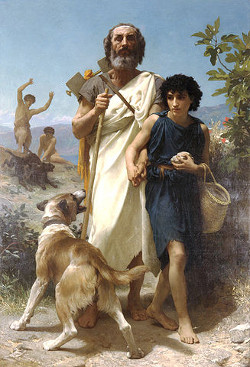
http://commons.wikimedia.org/wiki/File:William-Adolphe_Bouguereau_(1825-1905)_-_Homer_and_his_Guide_(1874).jpg

Samuel Butler believed Homer was “a very young woman” living in Sicily. In his 1897 book The Authoress of the Odyssey he argues that the events in the poem fit neatly onto the province of Trapani and its islands. And a careful reading of the action, he says, reveals “jealousy for the honour and dignity of woman, severity against those who have disgraced their sex, love of small religious observances, of preaching, of white lies and small play-acting, of having things both ways, and of money.”

I have touched briefly on all the more prominent female characters of the ‘Odyssey.’ The moral in every case seems to be that man knows very little, and cannot be trusted not to make a fool of himself even about the little that he does know, unless he has a woman at hand to tell him what he ought to do. There is not a single case in which a man comes to the rescue of female beauty in distress; it is invariably the other way about.

“Moreover there are many mistakes in the ‘Odyssey’ which a young woman might easily make, but which a man could hardly fall into — for example, making the wind whistle over the waves at the end of Book ii., thinking that a lamb could live on two pulls a day at a ewe that was already milked (ix. 244, 245, and 308, 309), believing a ship to have a rudder at both ends (ix. 483, 540), thinking that dry and well-seasoned timber can be cut from a growing tree (v. 240), [and] making a hawk while still on the wing tear its prey — a thing that no hawk can do (xv. 527).” He didn’t find many supporters, but Robert Graves took up the idea in his 1955 novel Homer’s Daughter.

The post Tell Me, O Muse appeared first on Futility Closet.

06 May 13:06

143 - Antelope

Walt is looking at his phone.
Cube Drone: Hey, Walt - why did we take a telecom contract?
| Walt: When a lioness chases a herd of antelopes, she doesn't
chase the strong ones - she chases the slow, weak, old ones
who are no longer useful to the pack.
| Cube Drone: So we're the lionesses?
Walt: What? I was just watching Animal Planet on my phone.
We're really more like hyenas.
06 May 12:50

Birthday Gift Suggestions

by Doug

Birthday Gift Suggestions

Happy birthday, birthday people of all ages!

06 May 12:35

What a radical Conservative government could do

by Tim Harford
Undercover Economist

‘Scrap all mainstream benefit payments — jobseeker’s allowance, child benefit, housing benefit and even the state pension’

Last week I described Anthony Atkinson’s proposals for reducing inequality. Atkinson — a professor of economics at Nuffield College, Oxford — proposes substantially higher income tax rates for everyone earning more than £65,000, a much higher minimum wage, guaranteed public employment, an expansion of universal benefits and much else. It is the agenda one would expect of a courageous Labour party, which of course places it a long way from the agenda that the actual Labour party is proposing.

It seems only fair, then, to offer the same service to the Conservatives: on the off chance that we ever see an economically radical Tory party, what policies might I suggest they embrace?

Step one is to replace the benefit system with a more libertarian form of redistribution. Scrap all the mainstream benefit payments — for example, child benefit, jobseeker’s allowance, housing benefit, winter fuel allowance and even the state pension. Scrap the income tax allowance too. Give all long-term UK residents a taxable basic income of £8,000 a year and charge a flat 40 per cent income tax rate on every penny. The basic income can be phased in on a residency basis over 10 years, ensuring that recent immigrants pay a larger net contribution to the exchequer.

This policy targets poverty rather than inequality. It abolishes much of the bureaucracy that surrounds benefit eligibility, promotes individual responsibility and reduces the stigma of collecting money from the state. It gives everyone, rich and poor, a clear incentive to work. Compared to the current system, it redistributes to the working poor and to the highest earners — both groups of people who are likely to produce more taxable income in response. It is simple, discouraging tax avoidance. And, despite the flat headline rate, the average income tax contribution is progressive: negative for those on low incomes, 10-25 per cent for those on average incomes and approaching 40 per cent for the rich.

People with unusual needs — the severely disabled, for instance — would be helped by a multibillion-pound fund with considerable discretion to make direct cash payments or commission assistance from charities.
A second policy is to privatise the entire school system. Children would receive a £10,000 basic income in a tax-sheltered educational account controlled by parents but usable only for childcare, school or university fees. Compulsory schooling would end at the age of 14 and educational institutions would be competing to attract these pots of tax-free cash with engaging and practical training courses. Any unspent money would be taxed and handed over to the child at the age of 21.

Third, scrap the personal pension system. Both the logic for and the reputation of the existing system is in tatters. With the new flat tax and universal basic income it would also be superfluous. People can save for their retirement in more flexible Isa-style savings accounts and could be nudged into doing so by a default payroll deduction.

A fourth policy must involve the housing market. The current cluster of housing policies (“cluster” is a polite abbreviation for a more appropriate term) ensures slow growth, resentment of immigrants, a crippling housing-benefit bill, inequality growing through luck rather than hard work and innovation, and the direction of potentially productive savings into accumulating unproductive housing wealth. This is a multifunctional policy indeed.

Given that housing benefit is to be abolished by this radical government, there is an urgent need to build large numbers of houses. This would boost the economy and reduce the price of new homes. One possibility, proposed by the Centre for Policy Studies, is the establishment of “pink zones” with lighter planning regulation (the colour represents a dilution of red tape). In these zones, substantial increases in housing could be achieved by a coalition of local authorities, community groups and developers.

However the trick is pulled off, the government must create the conditions for a housing boom — 400,000 new homes a year for five years would do to begin with. It’s ambitious, but necessary after decades of insufficient building.

A final idea: look to broaden the tax base and lower tax rates. Abolishing all VAT exemptions would be a good start, and would provide substantial revenue. A carbon tax would also be well worth introducing, as would more proportionate taxation of housing wealth. The proceeds of these taxes would be needed at first to pay for the universal basic income but the aim would be to reduce universal income tax rate too. A future leftwing government could redistribute within the same framework by increasing the basic income.

That should do the trick for the first term but a Conservative government should also commit to staying in the European Union, which stands in favour of trade, business and hard money; and to leaving the National Health Service alone for a few years just to see how it performs when not being incessantly prodded by politicians.

There you have it: a smaller, less bureaucratic state, innovation in education, redistribution to the poorest, a lower but more transparent income tax to attract the rich, an economic boom on the back of much-needed home-building and affordable housing for all.

Conservative Central Office can thank me later.

Written for and first published at ft.com.

06 May 12:05

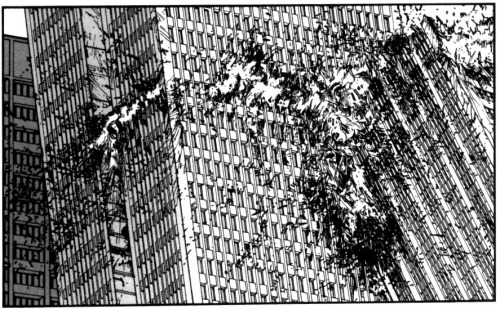
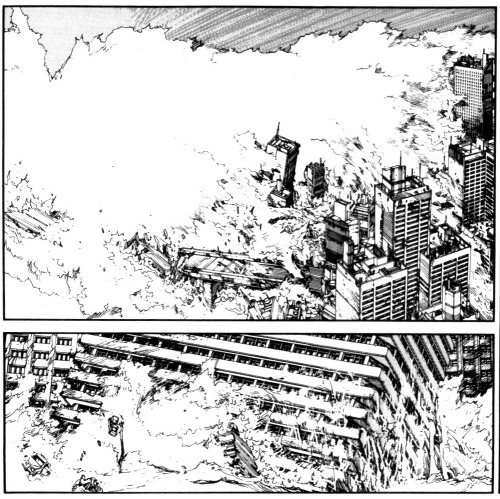
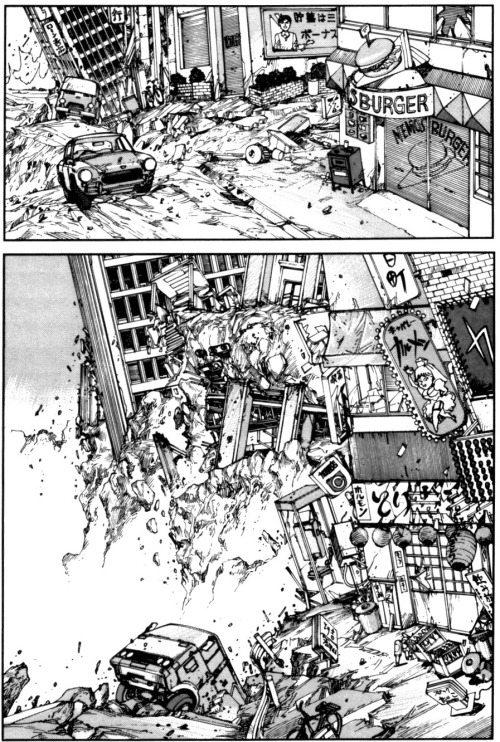
usemelikeacow: Destruction of Neo-Tokyo, CE 2019


usemelikeacow:

Destruction of Neo-Tokyo, CE 2019

06 May 12:04

Wait for it…Video showing just how good the brakes are on...


Wait for it…

Video showing just how good the brakes are on the Leopard main battle tank. I don’t know about you but I’m sure someone in that group needed a change of pants. You can see the 3rd guy, second row from the left, looking over his shoulder thinking its going to slam into them. (GRH)

06 May 12:02

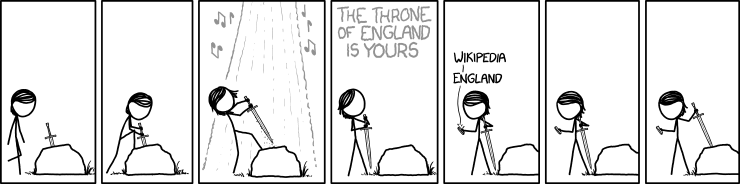
Sword in the Stone

That seems like an awful lot of hassle when all I wanted was a cool sword.
06 May 12:02

nevver: Rokeby Venus by Valezquez, Audrey Wollen


nevver:

Rokeby Venus by Valezquez, Audrey Wollen

06 May 11:55

Language of World Bank Reports

Adam Victor Brandizzi

Mas que coisa ESPETACULAR. Enorme, mas cada palavra vale.

Summary

What can be gleaned from a linguistic analysis of World Bank reports? That the language – and reality – of global finance grows ever more opaque…


New Left Review 92, March-April 2015


The Language of World Bank Reports

What can quantitative linguistic analysis tell us about the operations and outlook of the international financial institutions? At first glance, the words most frequently used in the World Bank’s Annual Reports give an impression of unbroken continuity. [1] Two scholars working in different disciplines don’t usually have the opportunity to learn about each other’s research, and the mental freedom to imagine a long-term project together. This is however exactly what happened to us, at the Wissenschaftskolleg in Berlin, in the spring of 2013; after which, the researchers of the Stanford Literary Lab helped us turn a vague idea into a series of solid findings. To all those who made this study possible, our heartfelt thanks. Seven are near the top at any given time: three nouns—bank, loan/s,development—and four adjectives: fiscal, economic, financial, private. This septet is joined by a handful of other nouns: ibrd, countries, investment/s, interest, programme/s, project/s, assistance, and—though initially less frequent—lending, growth, cost, debt, trade, prices. There is also a second, more colourless set of adjectives—other, new, such, net, first, more, general—plus agricultural, partly replaced from the 1990s by rural. [2] Our corpus consists of the full text of the World Bank Annual Reports, 1946–2012, excluding the budgets and all financial tables. The word bank as used in the Reports generally refers to the World Bank. The International Bank for Reconstruction and Development (ibrd) was the original World Bank institution, established in 1944 at Bretton Woods; it is now subsumed within the World Bank Group, which includes an agency for private investment, an insurance agency, an arbitration forum and the International Development Association, established in 1960 to offer concessional loans to the poorest countries. For an introduction to the history of the World Bank written from the inside, see Devesh Kapur, John Lewis and Richard Webb, eds, The World Bank: Its First Half Century, 2 vols, Washington, dc 1997; among the many critical histories, see Michael Goldman, Imperial Nature: The World Bank and Struggles for Social Justice in the Age of Globalization, New Haven, ct 2005. The message is clear: the World Bank lends money for the purpose of stimulating development, notably in the rural South, and is therefore involved with loans, investments and debts. It works through programmes and projects, and considers trade a key resource for economic growth. Being concerned with development, the Bank deals with all sorts of economic, financial and fiscal matters, and is in touch with private business. All quite simple, and perfectly straightforward.

And yet, behind this façade of uniformity, a major metamorphosis has taken place. Here is how the Bank’s Report described the world in 1958:

The Congo’s present transport system is geared mainly to the export trade, and is based on river navigation and on railroads which lead from river ports into regions producing minerals and agricultural commodities. Most of the roads radiate short distances from cities, providing farm-to-market communications. In recent years road traffic has increased rapidly with the growth of the internal market and the improvement of farming methods.

And here is the Report from half a century later, in 2008:

Levelling the playing field on global issues

Countries in the region are emerging as key players on issues of global concern, and the Bank’s role has been to support their efforts by partnering through innovative platforms for an enlightened dialogue and action on the ground, as well as by supporting South–South cooperation.

It’s almost another language, in both semantics and grammar. The key discontinuity, as we shall see, falls mostly between the first three decades and the last two, the turn of the 1990s, when the style of the Reports becomes much more codified, self-referential and detached from everyday language. It is this Bankspeak that will be the protagonist of the pages that follow.

i. semantic transformations

Nouns are at the centre of World Bank Reports. During the first two decades, 1950–70, the most frequent among them can be grouped in two main clusters. The first, obviously enough, encompasses the economic activities of the Bank: loan/s, development, power (in the sense of electricity), programme, projects, investment, equipment, production, construction, plant; further down the list are companies, facilities, industry, machineries, followed by a string of concrete terms like port, road, steel, irrigation, kWh, river, highway, railway—and then timber, pulp, coal, iron, steam, steel, locomotives, diesel, freight, dams, bridges, cement, chemical, acres, hectares, drainage, crop, cattle, livestock. All quite appropriate for a bank which offers loans and investments (the only explicitly financial terms in this long list) to promote a variety of infrastructural development projects. [3] Adjectives are rare, in the solidly ‘material’ universe of the Bank’s early decades: aside from fiscal, economic and financial, only electric and hydroelectric have a significant presence, later joined by dairy, which signals a concern with health, agriculture, and family life.

The second noun cluster is much smaller (just a dozen words), and describes how the Bank actually operates. Confronted with existing demands, its experts analyse numbers, but they also pay visits, realize surveys and conduct missions in the field; the classic ingredients of a scientific approach to a complex situation, which requires the active presence of experts to collect and elaborate the data. Afterwards, the Bank proceeds to advise countries, suggest solutions, assist local governments and allocate its loans. Rhetorically, investment programmes are defined by the needs of the local economy, according to the basic idea that investment in infrastructure will lead to economic development and social well-being. At the end of every cycle, the Bank specifies what has been lent, spent, paid and sold, and describes the equipment—dams, factory, irrigation systems—that has been put into operation. A clear link is established between empirical knowledge, money flows and industrial constructions: knowledge is associated with physical presence in situ, and with calculations conducted in the Bank’s headquarters; money flows involve the negotiation of loans and investments with individual states; and the construction of ports, energy plants, etc., is the result of the whole process. In this eminently temporal sequence, a strong sense of causality links expertise, loans, investments, and material realizations.

Apart from the Bank, three types of social actors appear in the texts during this period: states and governments; companies, banks and industry; engineers, technicians and experts. This social ontology confirms the standard account of post-war reconstruction as industrial, Fordist and Keynesian. The protagonists of economic growth are businessmen and bankers, working with industrial companies, economists and engineers to implement projects within a national framework presided over by a state. What has to be managed is the economy—‘the self-contained structure or totality of relations of production, distribution and consumption of goods and services within a given geographical space’, as Timothy Mitchell has put it—whose results are optimized by a ‘modern apparatus of calculation and government’. [4] Timothy Mitchell, Carbon Democracy: Political Power in the Age of Oil, London and New York 2011, pp. 125, 123. With the help of the Bank, governments adjust investments and financial parameters so as to modernize countries: that is to say, to industrialize them, beginning with basic material infrastructures. It’s the legacy of Walt Whitman Rostow, author of The Stages of Economic Growth: A Non-Communist Manifesto (1960) and a key policy advisor to American administrations from Eisenhower to Johnson. Development proceeds in stages, and its ‘take-off’ is triggered by the production of raw materials, the creation of infrastructures and an agricultural sector oriented towards exports.

Let us pause briefly on a specific passage from 1969. It appears in the general introduction of the Report, in a section on agricultural loans, and its language is so simple, it seems almost featureless:

Many developing countries need to transform their agriculture . . . the Bank Group continues to encourage these trends through its lending for general agricultural development, which totalled $72.2 million in the 1969 financial year. Diversification into new crops which provide a source of cash income, or improved production of existing ones, was encouraged by loans or credits to support traditional coffee production in Burundi at its normal level, palm oil development in Cameroon, Dahomey, the Ivory Coast and Papua, afforestation in Zambia, and mechanization of sorghum, sesame and cotton farming in the Sudan . . . A $13 million Bank loan to India will finance the production of seeds of new high-yielding varieties of foodgrains; at full development the project will produce enough seeds to plant seven million acres with the new varieties. This is the first loan the Bank has made for seed production.

Aside from the initial injunction that agriculture ‘needs’ to change, the dominant note is one of factual precision: amounts, countries, materials, productive activities, objectives of the investments. Nouns are frequent and adjectives rare: things are being described, not advertised. Verbs specify the type of action involved: to encourage, provide, improve, support, diversify, produce, finance. The present tense reports what is happening now (the bank continues to encourage); when a project has not yet been launched the tense shifts to the future (the credit will finance seed production), while the past accounts for what has been completed (diversification was encouraged, lending totalled $72.2 million). Clearly demarcating past accomplishments, current actions, necessary policies and future projects, this temporal structure reinforces the sense of factuality of the early Reports.

Finance, management, governance

Let’s now shift to the most recent decades. Three new semantic clusters characterize the language of the Bank from the early 1990s on. The first—and most important—has to do with finance: here, alongside a few predictable adjectives (financial, fiscal, economic) and nouns (loans, investment, growth, interest, lending, debt), we find a landslide of fair value, portfolio, derivative, accrual, guarantees, losses, accounting, assets; a little further down the list, equity, hedging, liquidity, liabilities, creditworthiness, default, swaps, clients, deficit, replenishment, repurchase, cash. In terms of frequency and semantic density, this cluster can only be compared to the material infrastructures of the 1950s–60s; now, however, work in agriculture and industry has been replaced by an overwhelming predominance of financial activities. Figure 1 is a good illustration of the Bank’s new priorities.


Click here to open a larger version of this picture in a new window

The second cluster has to do with management—a noun that, in absolute terms, is the second most frequent of the last decade (lower than loans, but higher than risk and investment!). In the world of ‘management’, people have goals and agendas; faced with opportunities, challenges and critical situations, they elaborate strategies. To appreciate the novelty, let’s recall that, in the 1950s–60s, issues were studied by experts who surveyed and conducted missions, published reports, assisted, advised and suggested programmes. With the advent of management, the centre of gravity shifts towards focusing, strengthening and implementing; one must monitor, control, audit, rate (Figure 2); ensure that everything is done properly while also helping people to learn from mistakes. The many tools at the manager’s disposal (indicators, instruments, knowledge, expertise, research) enhance effectiveness, efficiency, performance, competitiveness and—it goes without saying—promote innovation.


Click here to open a larger version of this picture in a new window

To better understand this ‘management discourse’, as Boltanski and Chiapello have called it in The New Spirit of Capitalism, we decided to run a little experiment. We took two related expressions—‘poverty’ and ‘poverty reduction’—and followed their occurrences from 1990 to 2010, comparing their respective ‘collocates’: that is to say, the words that tend to occur most often in their immediate proximity. Near poverty, the dominant note was one of straightforward economic realism: bank was the most frequent word; million, the second; and then total, cost, population, incomes, services, problems, work, production, employment, resources, food, health, agriculture. Which makes perfect sense, because these are indeed the terms that define the perimeter of poverty. What doesn’t make sense, on the other hand, is that only four of them—services, work, resources, health—should reappear near poverty reduction. Poverty is the problem, poverty reduction the policy that should address it; they should have plenty of core terms in common. And instead, the most characteristic collocates of poverty reduction are not cost, population, income—let alone production or employment—but strategies, programmes, policies, focus, key, management, report, goals, approach, projects, framework, priorities, papers. ‘Management discourse’, in all its glory. Never mind employment and income: focus, key, approach, framework—these are the critical terms in reducing poverty. Policy turned into paperwork, with goals and priorities and papers inching their way through the department that—in the acronym-obsessed language of the Reports—is known as prem: Poverty Reduction and Economic Management.

The third semantic cluster of the last two decades comprises governance and moral behaviour. [5] Dominique Pestre, ed., Le gouvernement des technosciences: Gouverner le progrès et ses dégâts depuis 1945, Paris 2014. Governance, first of all: this shibboleth of World Bank language first showed up in a crowded sentence of the 1990 Report—‘the strength of managerial institutions and personnel and the quality of governance also determine how well reform policies are actually put into practice’—and then increased its presence to the point that it is now as frequent as ‘food’, occurring ten times more often than ‘law’ and a hundred times more than ‘politics’ (Figure 3). [6] When a word becomes so pandemically frequent, its uses multiply out of control, and before long no one knows what it means any longer. Here is the chief economic commentator of the Financial Times, Martin Wolf, writing about the Indian elections on 21 May 2014: ‘[Modi’s] motto—“less government and more governance”—has caught the public mood. Yet it is not clear what this will mean in practice.’ And Robert Zoellick, himself a former president of the World Bank, writing on Chinese policy in the same newspaper: ‘The reforms will focus on economic governance and modernization. These terms may seem ambiguous to westerners . . . ’ (13 June 2014). In a delightful twist of language, the term brandished by the World Bank to chastize developing economies is now used by those very economies as defensive camouflage against Western scrutiny.


Click here to open a larger version of this picture in a new window

Three adjectives have been shadowing governance in its irresistible progress: global, environmental, civil. They are complemented by dialogue,stakeholders, collaboration, partnership, communities, indigenous people, accountability—plus climate, nature, natural, forest, pollution. Even health and education have ended up near the orbit of governance (Figures 4 and 5).


Click here to open a larger version of this picture in a new window

Finally, the semantic cluster of governance includes a series of terms which express a sense of compassion, generosity, rectitude or empathy with the world’s problems. Virtually absent in previous decades, these ethical claims emerge in the mid-1980s, and become second nature by the early 1990s, when responsible,responsibility, effort, commitment, involvement, sharing, care are suddenly everywhere. [7] The expression ‘fair value’—where the ethically inflected adjective mitigates the businesslike realism of the noun—is particularly interesting in this respect. Nor is the Bank blind to fragile and vulnerable people, to poverty (revitalized in 1995 by the new Director General James Wolfensohn), and to all that is human (Figure 6). This cluster also includes rights, law, justice and (anti-)corruption. People, behaviour and results are outstanding, significant, relevant, consistent, strong, good, better. Enhancing and promoting what is appropriate, equitable and sound: this is the Bank’s credo. The overall effect is one of dedication and commitment; the Bank’s sense of responsibility is as admirable as its efficiency.


Click here to open a larger version of this picture in a new window

Let us again pause on a specific passage to add some texture to our analysis. Here is the opening of the 2012 Report:

The World Bank is committed to achieving and communicating results.

In its ongoing dedication to overcoming poverty and creating opportunity for people in developing countries, the Bank is making progress both internally and in the field, and it continues to improve the way it serves its client countries.

A place full of ‘opportunities’ that the poor may seize in order to change their condition: this is how the Bank sees the world. Within this scenario, its activity consists in establishing the legal and cultural framework necessary for a variety of initiatives to flourish; still investment in infrastructures, in a sense—except that they’re no longer made of stone and steel. The Bank is dedicated and committed, thoughtful, invested in a better world. It is forward-looking, its dedication ongoing, constantly thinking about improving and serving the poor countries that are its . . . clients.

Clients? At first, the word is jarring: if dedication suggests a universe of moral justice, client refers to business, rational interests, and power relations. In deliberately linking them within a single sentence, though, the Bank suggests that the two are no longer in opposition: nowadays, business is as attentive to stakeholders as to shareholders; like civil society and the Bank itself, it is socially and environmentally responsible, and engaged in durable governance made of multiple partnerships. Ethics is at the heart of the business world, and of its contractual relationships.

Complexity and crisis

Having established the two contrasting paradigms of World Bank discourse, let us briefly sketch the process that led from the one to the other. A few adjustments aside, the intellectual framework that defined the Bank’s operations in the 50s and 60s remained fundamentally in place up to the late 1970s: irrigation, chemical inputs, the Green Revolution and the industrial–infrastructural synergy continue to be the key ingredients of economic take-off. But the belief in a linear approach is losing its force: as the 1960s come to a close, it becomes clear that, if building infrastructure is relatively simple, its reliable long-term operation is not: it requires specialists, qualified workers and the regular supply of key products like electricity—none of which can be taken for granted in the countries of the South. To make things worse, international exchanges seem to respect neither the Bank’s hopes, nor the theories of development à la Rostow. The prices of agricultural raw materials—crucial for the economies of the South—are far from stable and undergo major falls, from which recovery is difficult. The consequences of such instability can be dramatic: as prices drop, developing countries cannot afford to persevere on the virtuous path by which the export of raw materials finances the growth of infrastructure . . . and the repayment of foreign loans. Mindful of its investments, the Bank is worried.

The language of the Reports adapts to the changing environment; words like commodities, or improvements, raise the analysis to a higher level of abstraction than, say, hydroelectric plants and cement. And since leading the world by relying merely on material infrastructures no longer seems enough, other ‘factors’ are taken into account: the market, of course, but especially the ‘human factor’. On becoming the Bank’s president in 1967, Robert McNamara places lbj’s ‘war on poverty’ at the centre of its strategy. It’s the time of small-scale farms and cooperatives (faint echoes of decolonization and social unrest); of farmers (previously marginal to the Bank’s policy); of families (and soon of women). Education is now seen as indispensable in maintaining progress, along with school, primary, secondary, educational, training. It’s the time of the explosion of towns (and shantytowns); of rural emigration, and the deterioration of the urban (a ubiquitous adjective) way of life; whence a long list of new problems—housing, drainage,sewers.

In the second half of the 1970s, the oil crisis introduces new exogenous elements. Words like debt, borrowed and borrowing become increasingly frequent, along with those that refer to a country’s reliability (or lack thereof): cost/s, exports, co-financing. The discourse of reform—destined for unimaginable success—begins to take shape. And since debt is linked to the evolution of prices, these, too, become more visible in the Reports (in fact, it’s amazing how invisible they had previously been). The crisis reveals the World Bank as, indeed, a bank—and one that finds it difficult to recover its loans: a fact that may seem obvious, but that, until then, had been largely muted.

In response to all this, the causal chain linking loans and development, investments and economic progress, is lengthened to include families and education, small farmers and sewers. This is hardly an unfeasible adjustment, and even the logic behind the debt continues to appear reasonably simple: there are loans, faltering exports, problematic reimbursements—the inter-connections are clear, comprehensible. But the world as seen through the World Bank Reports is becoming less linear than it used to be; socio-economic dynamics are harder to disentangle, and there is a faint surprise in the face of events that aren’t following the expected course. At times, the surprise seems genuine; if this were so (but is it possible?) it would speak volumes about the delusions of development in the post-war period. As the policy of infrastructural growth becomes partially destabilized, a sense of indecision and even openness emerges—in sharp contrast with the previous decades, when everything was self-evident and almost automatic. But the openness will not last; at the end of the 1970s, the auto-pilot will be reinserted—this time, en route to ‘structural adjustment’.

Debts and restructuring

The Reports of the 1980s are dominated by the debts of the South, and by the structural adjustments that are the keyword of the decade. The semantics of crisis is omnipresent—deterioration, deficit, decline, indebted, issues, difficult—and defines the parameters that must be met before granting any country a new loan: balance of payments, current account, debt services. The hope of recovery, for its part, is heard far less often. It’s the ‘development philosophy’ of the times: liberal recipes that will ensure the only thing that matters, the return to growth. This means expanding trade, expanding the private sector, raising competitiveness; the rules of economic activity must be redefined (making it freer), and the role of the state reduced. It’s the moment of the liberalization of the public sector. People must learn to be efficient and cost-effective, care about performance, develop incentives. The Bank outlines the solutions, and demands that they be implemented, leaving little room for negotiation. Restructuring and rescheduling are the only way to reassure the creditors.

A few chronological details. In the years 1982–89, the main semantic cluster is still a melancholy one: slowdown, stagnation, degradation, depreciation, devaluation, fall/fell, exacerbated, severe. In the 1990s, there is a shift toward private sector, privatization, privatized, financial sector, creditworthiness, along with market-oriented activities and institution building, a code word for the liberalization/privatization of public institutions. The lexicon of global finance has not yet emerged, although that of nature, the environment and civil society is beginning to circulate. Meanwhile, management leaves its imprint on a series of verbs which express the harsh policies prescribed by the Bank: to address, target, accelerate, support, restructure, implement, improve, strengthen, aim, achieve . . .

Aside from individual words, it’s the nature of the Bank’s language that is changing: becoming more abstract, more distant from concrete social life; a technical code, detached from everyday communication and pared down to the economic factors crucial to the repayment of the debt. Solutions are disengaged from any specificity: they are the same for everybody, everywhere. Faced with the potentially devastating consequences of default, the Bank’s chief objective is no longer development, but, more simply, the rescue of private lenders (Harpagon: ‘My casket! My casket!’). The banker must be saved before the client: doubts have disappeared, and the Bank’s core beliefs are hammered home over and over again: the economy must be strengthened by making it leaner; the public sector must be restructured to create favourable conditions for private business and the market; the state must shrink and become more efficient. Such ‘solutions’ transcend the need to respond to the debt crisis: they aim at social transformation through the return to an uncompromising liberalism.

ii. grammatical patterns

So far, our findings have been rather straightforward: as the economic situation evolves, policy changes, and language too; yet the Bank itself remains the same. We will now shift our attention to aspects of language that change very little, and very slowly. A ‘bureaucratization’ of the Bank’s discourse, one could call it—except that it’s more than that: it’s a style that self-organizes around a few elements, then starts generating its own message. Let us try to explain, by returning to the two passages we quoted at the beginning of this essay. The one from 1958, on ‘the Congo’s present transport system’, was full of rivers, farms, markets, railroads, ports, minerals, cities . . . It couldn’t have been clearer. The second passage, from 2008, was different. Here it is again:

Levelling the playing field on global issues

Countries in the region are emerging as key players on issues of global concern, and the Bank’s role has been to support their efforts by partnering through innovative platforms for an enlightened dialogue and action on the ground, as well as by supporting South–South cooperation.

Issues, players, concern, efforts, platforms, dialogue, ground . . . ‘The whole tendency of modern prose is away from concreteness’, wrote Orwell in ‘Politics and the English Language’, and his words are as true today as they were in 1946. The Bank stresses the importance of what it’s saying—key, global, innovative, enlightened—but its words are hopelessly opaque. What is it really trying to say—or to hide?

‘A mass of Latin words falls upon the facts . . . ’

Opacity is hard to understand, so we will break it down into smaller units, beginning with its movement ‘away from concreteness’. In the passage from 2008, the terms action and cooperation belong to a class of words usually known as ‘nominalizations’, or ‘derived abstract nouns’; derived, in this case, from verbs: to ‘act’, to ‘cooperate’. [8] On nominalizations, see Douglas Biber, Susan Conrad and Randi Reppen, Corpus Linguistics: Investigating Language Structure and Use, Cambridge 1998, p. 60ff; and Douglas Biber, Stig Johansson, Geoffrey Leech, Susan Conrad and Edward Finegan, Longman Grammar of Spoken and Written English, London 1999, p. 325ff. In English, such terms are recognizable by their typical ending in -tion, -sion and -ment (implementation, extension, development . . . ); so, we extracted from the Reports all the words with such an ending and hand-checked the top 600 (to eliminate ‘station’, ‘cement’, and the like). Figure 7 presents the results. According to corpus linguistics, in academic prose the average frequency of nominalizations derived from verbs is 1.3 per cent. In the World Bank Reports, the frequency is near 3 per cent from the start, with a higher peak around 1950, and it keeps growing, slowly but steadily, plateauing at 4 per cent between 1980 and 2005, and dropping slightly thereafter.


Click here to open a larger version of this picture in a new window

A class of words that is used two or three times more often than in comparable discourses. [9] This of course doesn’t mean that every nominalization increases its frequency. In parallel with the semantic shifts described in the previous pages, many terms related to political processes [legislation, representation], inter-state diplomacy [agreement, negotiation], or forms of critical vigilance [examination, investigation] have become markedly less frequent over the years: agreement was the 5th most frequent nominalization in the early Reports, and is now the 15th; legislation has dropped from 31st to 99th, and so on. By contrast, other terms have enjoyed a lightning ascent: management was only the 18th most frequent nominalization at the beginning of the Bank’s activity, and is now the second; implementation, adjustment, evaluation, commitment and assessment, none of which were among the 100 most frequent nominalizations, are now in 8th, 9th, 11th, 13th and 14th place. See also Figure 9, below. Why? What do nominalizations do, that the Reports should use them with such insistence? They take ‘actions and processes’ and turn them into ‘abstract objects’, runs a standard linguistic definition: [10] Biber et al, Corpus Linguistics, p. 61ff. you don’t support countries which are cooperating with each other; you support ‘South–South cooperation’. An abstraction, where temporality is abolished. ‘The provision of social services and country assessments and action plans which assist in the formulation of poverty reduction policies’, writes the Report for 1990—and the five nominalizations create a sort of simultaneity among a series of actions that are in fact quite distinct from each other. Providing social services (action one) which will assist (two) in formulating policies (three) to reduce poverty (four): doing this will take a very long time. But in the language of the Report, all these steps have contracted into a single policy, which seems to come into being all at once. It’s magic.


Click here to open a larger version of this picture in a new window

And then—the authors of Corpus Linguistics continue—in nominalizations, actions and processes are ‘separated from human participants’: [11] Biber et al, Corpus Linguistics, p. 61ff. cooperation, not states which cooperate with each other. ‘Pollution, soil erosion, land degradation,deforestation and deterioration of the urban environment’, mourns another recent Report, and the absence of social actors is striking. All these ominous trends—and no one is responsible? ‘Prioritization’ enters the Reports as debt crisis looms; meaning, quite simply, that not all creditors would be treated equally: some would be reimbursed right away, others later; some in full, and others not. Of course, the criteria according to which X would be treated differently from Y had been decided by someone. But prioritization concealed that. Why X and not Y? Because of prioritization. In front of the word, one can no longer see—one can no longer even imaginea concrete subject engaged in a decision. ‘Rendition’: an American secret agency kidnaps foreign citizens to hand them over to another secret service, in another country, that will torture them. In ‘rendition’, it’s all gone. It’s magic. [12] Black magic, in this case, consistent with the fact that ‘political speech and writing are largely the defence of the indefensible’, as Orwell put it in his 1946 essay. Interestingly, Orwell himself had found nominalizations—‘a mass of Latin words falls upon the facts like soft snow, blurring the outline and covering up all details’—to be entwined with the phenomena he was describing: ‘Defenceless villages are bombarded from the air’, he writes, and ‘this is called pacification. Millions of farmers are robbed of their farms . . . this is called rectification of frontiers. People are imprisoned for years without trial, or shot in the back of the neck or sent to die of scurvy in Arctic lumber camps: this is called elimination of unreliable elements.’ (‘Politics and the English Language’, 1946, now in The Collected Essays, Journalism and Letters of George Orwell, vol. iv, 1945–50, Harmondsworth 1968, p. 166). The politico-military cast of Orwell’s examples makes them of course quite unlike the typical World Bank nominalizations; unsurprisingly, ‘pacification’, ‘rectification’, and ‘elimination’ are never used in the Reports. Our thanks to Dallas Liddle for pointing out this aspect of Orwell’s essay.

This recurrent transmutation of social forces into abstractions turns the World Bank Reports into strangely metaphysical documents, whose protagonists are often not economic agents, but principles—and principles of so universal a nature, it’s impossible to oppose them. Levelling the playing field on global issues: no one will ever object to these words (although, of course, no one will ever be able to say what they really mean, either). They are so general, these ideas, they’re usually in the singular: development, governance, management, cooperation. It’s the ‘singularization’ that Reinhart Koselleck discovered in late eighteenth-century thought: ‘histories’, which had ‘previously existed in the plural, as all sorts of histories which had occurred’, becoming ‘history in general’; the ‘progresses’ of the various technical and intellectual branches converging into a single ‘progress’, and so on. [13] Reinhart Koselleck, ‘On the Disposability of History’, and ‘Neuzeit: Remarks on the Semantics of Modern Concepts of Movement’, in Futures Past: On the Semantics of Historical Time, Cambridge, ma 1985, pp. 200, 264.

For Koselleck, singularization was the result of the ‘growing complexity of economic, technological, social and political structures’, which forced social theory to increase the ‘degree of generality’ of its categories. [14] It is of course far from irrelevant that ‘histories’ became ‘history in general’ in the specific context of late eighteenth-century Europe, which was increasingly imposing its rule over the other continents. In this respect, singularization created knowledge and hierarchies at once, subjecting the world system to a single European perspective. Which is true: singular abstract nouns allow us to synthesize and generalize, and are thus indispensable to the construction of knowledge. But World Bank Reports are not primarily about knowledge: they are about policy; and in policy, singularization suggests not a greater generality, but a stronger constraint. There is only one way to do things: one development path; one type of management; one form of cooperation. It’s hard to believe, but the verb todisagree never appears in the Reports; disagreement, twice in seventy years. [15] So hard to believe, that three separate people checked on four separate occasions—always with the same result. As for ‘agree’ and ‘agreement’, they appear 88 and 1,773 times respectively. It’s the formula made famous by Margaret Thatcher: There Is No Alternative. And singularizations assert this, not with arguments, but with the unspoken ‘fact’ of a recurrent grammatical pattern. World Bank policies change, as we have seen, but singularization does not: each new policy is the only possible one (Figure 8). [16] The fact that, in nominalizations, actions are entirely absorbed into the noun, increases the sense of a one-dimensional world. If one speaks of ‘managers’, one can (at least in theory) imagine them acting in more than one way; if one speaks of ‘management’, a specific form of activity is already inscribed in the term, and pre-determined by it.


Click here to open a larger version of this picture in a new window

The transition from semantic clusters to grammatical structures—from the first to the second part of this essay—entails, so to speak, a certain loss of momentum: compared to the dramatic trajectories of Figures 1–6, with their five- or ten-fold increases, the mild incline of Figure 7 is hardly impressive. But its slowness tells us something which is just as important: behind all the changes, the first element of an institutional ‘style’ had successfully crystallized. Nominalizations remained unusually frequent because they ‘worked’ in so many interconnected ways: they hid the subject of decisions, eliminated alternatives, endowed the chosen policy with a halo of high principle and prompt realization. Their abstraction was the perfect echo of a capital that was itself becoming more and more deterritorialized; their impossible ugliness—‘prioritization’: come on!—lent them a certain pedantic reliability; their ambiguity allowed for the endless small adjustments that keep the peace in the world order. And so, this mass of Latin words became a key ingredient of ‘how one talks about policy’. Specific semantic fields rise and fall with their referents; they are, one could almost say, the histoire événementielle of political language. Grammar is made of rules and repetition, and its politics is in step with longer cycles: structures, more than events. It defines, not a policy of the Bank, but the way in which every policy is put into words. It is the magic mirror in which the World Bank can gaze, and recognize itself as an institution.

And . . . and . . . and . . .

We briefly discussed the collocates of governance in the caption to Figure 3, but we didn’t mention that the biggest surprise came with the most frequent collocate of all: and. ‘And’? The most frequent word in English is ‘the’: everybody knows that. So, what is ‘and’ doing at the top of the list? Two passages from the 1999 Report may help to explain:

promote corporate governance and competition policies and reform and privatize state-owned enterprises and labour market/social protection reform

There is greater emphasis on quality, responsiveness, and partnerships; on knowledge-sharing and client orientation; and on poverty reduction

The first passage—a grammatico-political monstrosity—is a small present to our patient readers; the second, more guarded, is also more indicative of the rhetoric in question. Knowledge-sharing has really nothing to do with client orientation; poverty reduction, nothing to do with either. There is no reason they should appear together. But those ‘ands’ connect them just the same, despite the total absence of logic, and their paratactical crudity becomes almost a justification: we have so many important things to do, we can’t afford to be elegant; yes, we must take care of our clients (we are, remember, a bank); but we also care about knowledge and partnership and sharing and poverty!

‘Bankspeak’, we have written, echoing Orwell’s famous neologism; but there is one crucial difference between the lexicographers of 1984 and the Bank’s ghost writers. Whereas the former were fascinated by annihilation (‘It’s a beautiful thing, the destruction of words . . . every year fewer and fewer words, and the range of consciousness always a little smaller’), the latter have a childish delight in multiplying words, and most particularly nouns. The frequency of nouns in academic prose is usually just below 30 per cent; in World Bank Reports it has always been significantly higher, and has increased slowly and regularly over the years. It is the perfect rhetoric to bring the ‘world’ inside the ‘bank’: a ‘chaotic enumeration’ of disparate realities—to quote an expression coined by Leo Spitzer—that suggests an endlessly expanding universe, encouraging a sense of admiration and wonder rather than critical understanding.

The last passage we quoted—on ‘client orientation’ and ‘poverty reduction’—is a good example of another tic of World Bank discourse: using a noun to modify another noun. Here are some examples of these ‘adjunct nouns’, as they are usually called, from the 2012 Report:

the Bank’s operations effectiveness, including the quality and results orientation of its operations and knowledge activities, the performance of its lending portfolio, the mainstreaming of gender in its operational work, client feedback, and its use of country systems.

Our agenda has included gender equality, food security, climate change and biodiversity, infrastructure investment, disaster prevention, financial innovation, and inclusion.

Adjunct nouns, the Longman Grammar explains, are a form of pre-modification: in ‘poverty reduction’, for instance, ‘poverty’ modifies ‘reduction’ by coming before it (whereas in ‘the reduction of poverty’ it does so by appearing after it, a case of post-modification). There is a difference: being ‘consistently more condensed than postmodifiers’, the Longman authors explain, premodifiers are hence also ‘much less explicit in identifying the meaning relationship’. [17] Biber et al, Longman Grammar of Spoken and Written English, pp. 588, 590. More condensed, and less explicit: this is it. Condensed, first of all: this is a brisk rhetoric, succinct, even a little impatient; the language of those who have a lot to say and no time to waste. And then, there’s the matter of explicitness. In the case of ‘the reduction of poverty’, to keep using that example, if you know what the individual words mean, you also know what the expression means: the whole is just the sum of its parts. But ‘poverty reduction’, like ‘disaster prevention’, or ‘competition policies’, is not just the sum of its parts; as we have seen, it is an expression in code—the code of ‘management discourse’—whose meaning has more to do with ‘approaches’ and ‘frameworks’ than with ‘employment’ and ‘income’. ‘Food security’, writes the 2012 Report; and what exactly is that? It’s the opposite of ‘food insecurity’, first of all; which, in turn, is a un neologism—half conceptual refinement, half bureaucratic euphemism—for what used to be called ‘hunger’. If you don’t know the new code, individual words are useless. [18] And the point is, the World Bank wants to communicate in code. We mentioned above the experiment conducted on the collocates of ‘poverty’ and ‘poverty reduction’; but the initial idea was slightly different: we meant to compare ‘poverty reduction’ and ‘the reduction of poverty’, to see if there was any semantic difference between pre- and post-modification. However, we had to abandon our idea when it turned out that there were 1,198 occurrences of ‘poverty reduction’, and only 38 of ‘the reduction of poverty’. Which of course is crazy, but at least makes perfectly clear that for the World Bank pre- and post-modification are not equivalent, and that its preference goes unabashedly to the more cryptic of the two constructions.

Here, the process initiated with the advent of nominalizations (which have a clear elective affinity with adjunct nouns: ‘operations effectiveness’, ‘results orientation’, ‘disaster prevention’ . . . ) reaches its zenith: the ‘mass of Latin words’ joins forces with the insider code of ‘management discourse’, making social reality increasingly unrecognizable. But one question remains. How could such a tortuous form of expression become a leading discourse on the contemporary world?

From here to eternity

In their book Laboratory Life, Bruno Latour and Steve Woolgar wonder about the strange fate of scientific hypotheses: ideas that begin their existence as ‘contentious statements’, besieged by all sorts of objections, yet at some point manage to ‘stabilize’, and are accepted as ‘facts’ pure and simple. How do they do that—how do the World Bank’s contentious ideas become accepted as the ‘natural’ horizon of all possible policies? The key move, write Latour and Woolgar, consists in ‘freeing’ a statement from ‘all determinants of place and time, and all reference to its producers’. [19] Bruno Latour and Steve Woolgar, Laboratory Life: The Construction of Scientific Facts, Princeton 1986, pp. 106, 105, 175. Figures 10–11 show how decisively the World Bank has dealt with such ‘determinants’.


Click here to open a larger version of this picture in a new window

The growing indifference to space and time is not just a matter of quantity. If one looks at the paragraphs in which the Reports are articulated, one detail leaps to the eye: their endings have completely changed. Here are some instances from 1955:

A modern coffee-processing plant, financed by the Development Bank, was completed near Jimma, the centre of an important coffee-producing area.

Automatic telephone exchanges have been installed in Addis Ababa and Gondar, and manual exchanges in other towns.

This has encouraged investment in industries such as metals and chemicals which are large consumers of power, and has led Norway to develop more generating capacity per head than any other country.

Jimma, Addis Ababa, Gondar, Norway: in these sentences, a strong geographical specificity goes hand in hand with an equally strong sense of time. The coffee-plant ‘was completed’; the telephone exchanges ‘have been installed’; investment ‘has led’. The focus is on results; the paragraph comes to an end when the process comes to an end; the relevant grammatical category (the ‘aspect’ of the verb’s tense) is the ‘perfect’, which indicates that an action has been completed. This is true even in more complex cases, like this one from 1948:

The mission’s conclusions pointed out that the factors which had produced a favourable foreign exchange position in the Philippines were temporary, and stressed the need to conserve foreign exchange, restrict inflationary local financing, take measures to lessen the impact of the expected reduction in dollar receipts, and secure technical aid in the planning of specific development projects.

Here, the initial sense of achievement (‘pointed out’, ‘had produced’) leads into the horizon of the present (‘conserve’, ‘restrict’), and then into a many-layered future: the Philippines will have to ‘take measures’ (soon) ‘to lessen the impact’ (later) of an ‘expected reduction in receipts’ (somewhere in between those two futures). The temporality is complex, but its dimensions are clear: the past is the realm of results; the present, of decisions; the future, of prospects and possibilities. In recent years, though, this difference has been diluted. Here is a paragraph ending from 2007:

ida has been moving toward supporting these strategies through programme lending.

Whatever programme lending is, ida has not actually done it; it ‘has been moving’, yes, but that’s all; and not even moving towards doing, only towards ‘supporting’ doing. We’ve heard so many philippics on ‘accountability’, in recent years, we would expect a landslide of past tenses in the Bank’s language; after all, accountability can only be assessed with reference to what has been done. Instead, however, for the Reports the tenses of the past are no longer the right way to ‘conclude’ a statement; in their place we find the blurred, slightly amorphous temporality of the progressive and the gerund (whose frequency has increased about 50 per cent over the years). Some other recent examples:

The Second Kecamatan Development Project is benefiting 25 to 30 million rural Indonesians by giving villagers tools for developing their own community. (2003)

The Bank significantly accelerated its efforts to help client countries cope with climate change while respecting another aspect of its core mission: promoting economic development and poverty reduction by helping provide modern energy to growing economies. (2008)

The Bank has accelerated—but only its efforts; and all these efforts will do is—help; and all those helped will do is—cope; and the helping and coping will have to respect the promoting of the helping (again!) provided to growing economies. But there is no point in looking for the meaning of these passages in what they say: what really matters, here, is the proximity established between policy-making and the forms ending in -ing. It’s the message of the countless headlines that frame the text of the Reports: ‘Working with the poorest countries’, ‘Providing timely analysis’, ‘Sharing knowledge’, ‘Improving governance’, ‘Fostering private sector and financial sector development’, ‘Boosting growth and job creation’, ‘Bridging the social gap’, ‘Strengthening governance’, ‘Levelling the playing field on global issues’. All extremely uplifting—and just as unfocused: because the function of gerunds consists in leaving an action’s completion undefined, thus depriving it of any definite contour. An infinitely expanding present emerges, where policies are always in progress, but also only in progress. Many promises, and very few facts. ‘Everything has to change, in order for everything to remain the same’, wrote Lampedusa in The Leopard; and the same happens here. All change, and no achievement. All change, and no future.


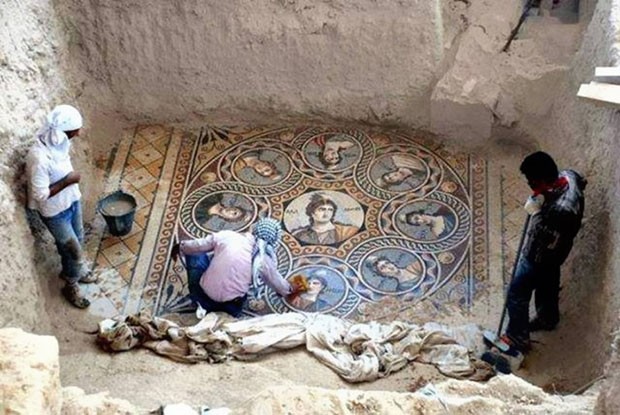
05 May 21:32

A Corunha

TIL that A Corunha


  • has skulls and crossbones in its coat of arms
  • its motto is “a cidade onde ninguén é forasteiro.“

That really sounds as a cool city.

05 May 18:50

let’s go to the movies!!

by kris

20150504-badmovie

the whole time i was in the theater, i was just trying to come up with a pun on the title to tweet. i guess i didn’t have to go, since i already knew what the title was. i didn’t actually see the movie

05 May 18:47

Not-A-Kludge: That's Just Unsettling

awesome product,clever,lightbulb,not a kludge

The perfect accessory for all my sideways ideas. ~Not-So-Handy Andy

Submitted by: Unknown

04 May 21:49

Confronto

by Daniel Lafayette

tirinha---despadrao---confronto

04 May 20:30

Handmade Kraft Paper Animations by Nancy Liang

by Christopher Jobson

liang-1

From time to time we love to stop and marvel at the mathematical wizardry of artists and designers who make GIFs with code, but Sydney-based illustrator Nancy Liang takes an old-school approach with her imaginative scenes made almost entirely by hand. There isn’t a single element in her animations that doesn’t begin as a physical drawing or object. Liang works mostly with kraft paper cutouts and pencil drawings, all of which is carefully planned in copious sketches before each element is scanned and animated in Photoshop. Seen here are a few of her most recent pieces, you can see more on her Tumblr: Over the Moon.

liang-2

liang-3

liang-4

liang-5

04 May 19:37

Photo