Shared posts

12 Jun 16:26

Surprise Appearance

by Greg Ross

Suppose we put eight white and two black balls into a bag and then draw forth the balls one at a time. If we repeat this experiment many times, which draw is most likely to produce the first black ball?

Most people answer 4, but in fact the first black ball is most likely to appear on the very first draw:

surprise appearance table

By symmetry, the second black ball is most likely to appear on the final draw.

(A.E. Lawrence, “Playing With Probability,” Mathematical Gazette, vol. 53 [December 1969], 347-354.)

Please support Futility Closet on Patreon!

12 Jun 16:23

Daily OverviewOur project was inspired, and derives its name,...


Brasilia Urban Plan


Gold Coast Sand Pumping Jetty


Seaweed Farms


Shivaji Nagar No: 1 and No: 2


Pyramids of Giza


Interchange construction


Evaporation ponds of Intrepid Potash mine


Brøndby Haveby


Soekarno-Hatta International Airport


Central Park NYC

Daily Overview

Our project was inspired, and derives its name, from an idea known as the Overview Effect. This term refers to the sensation astronauts have when given the opportunity to look down and view the Earth as a whole. They have the chance to appreciate our home in its entirety, to reflect on its beauty and its fragility all at once. That’s the cognitive shift that we hope to inspire.

From our line of sight on the earth’s surface, it’s impossible to fully appreciate the beauty and intricacy of the things we’ve constructed, the sheer complexity of the systems we’ve developed, or the devastating impact that we’ve had on our planet. We believe that beholding these forces as they shape our Earth is necessary to make progress in understanding who we are as a species, and what is needed to sustain a safe and healthy planet.

Photographs and text by Daily Overview

11 Jun 21:54

Art in a time of tyranny

Summary
Art in a time of tyranny. Most art produced under the Third Reich has been destroyed or hidden. Is it time to give those pieces a museum of their own?

from nytimes.com

LONDON — We live in turbulent and frustrating times: In the Middle East, parts of our most precious cultural heritage are being wiped out while we watch, while in Europe an unwanted bequest has suddenly resurfaced, and its rightful owners — the German government — are at a loss for how to respond.

What have arisen from the past are various exterior ornaments from Hitler’s monumental Chancellery in Berlin, which opened in January 1939. After the Russians took the city in May 1945, the sculptures were confiscated as trophies by the Red Army, which decided against shipping them back to the Soviet Union and deposited them on the sports field of a barracks at Ebersfelde, near Berlin on the Oder River. There they remained for more than 40 years, until shortly before the East German regime keeled over in 1989 and men with fistfuls of cash appeared and the sculptures were taken away. That was the last anyone saw of them until the middle of last month, when they were found in a storage facility in Bad Dürkheim in the Pfalz region.

Sculptures that adorned Hitler’s Chancellery were recovered in a police raid last month.

When the news of this discovery broke, it was assumed that the sculptures in question were just fixtures from the Chancellery’s garden facade: two massive bronze horses by Josef Thorak, a large relief by Arno Breker and a couple of nudes by Fritz Klimsch. But since the police found the horde and made a series of arrests, two more Breker works have been mentioned, and there have been unconfirmed reports that the police may have recovered one or both of perhaps the most famous Nazi sculptures of all: Die Wehrmacht and Die Partei, two male nudes by Breker that flanked the front door to Hitler’s haunt. Apparently some of Hermann Göring’s treasures have surfaced, too, sculptures from his country house at Carinhall that was blown up as the Russians approached that spring.

Much of the art produced in the 12-year life of the Third Reich was destroyed by bombs or lost in the chaos of defeat. Thousands of others were burned (particularly in the American-controlled zone) as a result of a Joint Chiefs directive that targeted the trappings of Nazism and militarism. Another 8,722 works were collected by Captain Gordon W. Gilkey and shipped to the Pentagon as trophies. (Most of them have now been returned to Germany.)

Few regimes in history devoted as much thought to the arts as the Third Reich. With a failed painter at the helm and several other ministers who felt they knew what was what, the Third Reich encouraged conformist painters, offering them huge prizes and incentives, and discouraged any who took liberties with their canon. During the regime’s heyday, many works were acquired by the state or by its leading lights, who had impressive budgets to spend on works at the annual art show in Munich and who scattered money like confetti.

These official collections were nevertheless often left to fester: Hitler himself didn’t like modern painting much and preferred 19th-century German masters or genre paintings of monks. What he bought he chiefly donated to provincial museums. Some of this official art was found lying around when the Allies invaded, and a little has survived, buried in the cellars of German museums. The works returned by the Pentagon were taken to the Bavarian Army Museum in Ingolstadt where, it seems, they are kept in storage, away from prying eyes.

Although there are a few private museums dedicated to artists who flourished during the Third Reich (Breker, for example), there is no official tolerance of Nazi art; the state does not wish to display it. The result is that there is no market or price guide for works of this sort. Collectors (and they exist) prefer to remain anonymous, lest their motives be questioned.

It has been suggested that the men involved in the Chancellery heist were big batters in Germany’s underworld. That they were able to hang onto the goods for a quarter-century (the works aren’t exactly miniatures) is a testament to the enduring embarrassment surrounding the regime — evidence that the art world would rather turn its back on the whole period.

It has now been 70 years since the end of the Third Reich, and almost all of those who lived through that time as adults are dead. Young or old, Germans are nonetheless reminded of what happened wherever they go. On the site of Gestapo Headquarters in Berlin, the Topography of Terror exhibition informs visitors of the mechanics of Nazi murder and genocide. But if photographs of atrocities are not considered risky, why should neo-Classical nudes, landscapes or peasant scenes be liable to corrupt? Or indeed why should the more politically loaded pictures of the period be considered too dangerous to set before modern Germans?

Once the police have concluded their elephantine process of checking the booty they seized in Bad Dürkheim and establishing ownership (which has to be the German state), what will they do with the sculptures? Will they put them back in storage, opening up only to those with genuine academic credentials?

It is true some Nazi works are on display at the German Historical Museum in Berlin, but they are not presented as art. As several national newspapers and Culture Minister Monika Grütters have said in recent weeks, what Germany needs now is a museum in which a collection could be shown: Artworks by party members (very few German artists were actually Nazis), fellow travelers (there were many), war artists, portrait painters, nonpolitical painters, painters forbidden to paint (including the universally admired but convinced Nazi, Emil Nolde), and those branded as “degenerate” by the regime who are more likely to find favor with art lovers today. Some contemporary artists — Breker, Franz Eichhorst, Albert Birkle, the etcher A.P. Weber — were excellent, and if the quality of the official works only rarely touches the sublime, this might simply prove the point that it is hard to make great art in a time of tyranny.

The prospective museum should not, however, resort to the cheap trick of adding derogatory labels to the paintings on display. That was, after all, what the Nazis did at their own Degenerate Art show in 1937. Let us see the art of the Third Reich at last — and in all its colors.

Giles MacDonogh is the author of several books on European history, including “After the Reich: The Brutal History of the Allied Occupation.” He is currently working on “Inside Hitler’s Germany: Life and Death in the Third Reich.”

11 Jun 11:33

Good Boy

11 Jun 11:32

Photo


11 Jun 11:28

HTC Smooches the Pooch, Takes a Picture of Their New Android Phone With an iPhone

funny-twitter-fail-htc-iphone

Take a look at the bottom right-hand corner of that phone, the reflection tells the story of a guy who's going to get a severe talking to.

Submitted by: (via Venturebeat)

11 Jun 11:26

her

by Lunarbaboon

Support the comic by donating 1 dollar a month... https://www.patreon.com/user?u=82761&ty=h

11 Jun 11:25

Comic for June 11, 2015

11 Jun 11:24

Historical Photos and Artworks Set in Motion by Nicolas Monterrat

by Christopher Jobson

gif-8

One of my new favorite Tumblrs to follow is Un gif dans ta gueule… (roughly ‘A gif in the mouth…’) run by French photographer and animator Nicolas Monterrat who brings his surreal sense of humor to historical photos, paintings, and other borrowed imagery by creating bizarre and humorous animations. Collected here is just a sampling, do yourself and dive into his archive, you won’t regret it. (via Lustik)

gif-1

gif-2

gif-3

gif-4

gif-5

gif-7

11 Jun 11:23

intersectionalfascism: Large groups of slavs frighten me because you don’t know if they’re a...

intersectionalfascism:

Large groups of slavs frighten me because you don’t know if they’re a spetsnaz Precursor  to an invasion 

image

Or this

But these two things are exactly the same????

11 Jun 11:19

Photo


11 Jun 11:18

gifsboom: Video: Capybara Patiently Tolerates Rowdy Husky...

11 Jun 02:52

Por que o Ocidente não entende que os cristãos do Oriente gostam Assad?

by gustavochacra

Os líderes cristãos do Oriente gostam de Bashar al Assad. Hoje mesmo, em Damasco, estão reunidos os patriarcas cristãos grego-ortodoxo, grego-católico (melquita), siríaco-ortodoxo, siríaco católico e maronita. No ano passado, estes mesmo patriarcas estiveram reunidos em Washington para dizer ao presidente Barack Obama que o líder sírio é a única proteção que eles têm contra o radicalismo islâmico de grupos como a Al Qaeda e o ISIS, também conhecido como Grupo Estado Islâmico ou Daesh.

No Ocidente, aos poucos, as pessoas começam a entender que, se o regime de Assad acabar, independentemente do que fala a oposição, o cristianismo na Síria estará em risco. O Líbano, basicamente, sobrará como o único bastião dos cristãos no mundo árabe – no Egito, os cristãos sempre foram uma espécie de segunda classe; na Palestina, é um pouco mais complicado.

E por que os cristãos gostam de Assad e por que Assad os defende? Porque Assad é o último líder arabista do Oriente Médio. Arabista é diferente de islâmico. A identidade árabe, por não ser religiosa e sim étnica, sempre facilitou a assimilação de cristãos. Basta ver que o número dois de Saddam Hussein, Tariq Aziz, que morreu nesta semana, era cristão – e o ditador iraquiano, assim como Assad, era arabista.

A Síria se chama República Árabe Síria. É árabe, não necessariamente islâmica, embora o islamismo esteja no caldeirão da identidade árabe. Na Síria, cristãos historicamente sempre puderam exercer sua religião sem problemas.

Quando alguns menos informados dizem que cristãos não podem ter igrejas em países de maioria islâmica, talvez não saibam que Damasco é a cidade do mundo com o maior número de Patriarcados – Três (Ortodoxo de Damasco, Melquita e Síriaco-Ortodoxo). Na capital síria, viveram 12 apóstolos, incluindo São Paulo, que dá nome à maior cidade do Brasil.

Antes de terminar, noto que a Síria tem cristãos que não são árabes, como os assírios e os armênios, embora estes também sempre tenham sido protegidos pelo regime.

Isso não isenta, de forma alguma, Assad de crimes contra a humanidade, segundo a ONU (e tampouco o isenta de crimes cometidos durante a ocupação do Líbano). Significa apenas que os cristãos se sentem mais seguros com o atual regime, independentemente do que a máquina de propaganda da Arábia Saudita diga no exterior. Os sauditas, afinal, patrocinam milícias ligadas à Al Qaeda no Jeysh al Fatah, e possuem um regime de Apartheid contra mulheres e outras religiões, como a cristã.

Guga Chacra, comentarista de política internacional do Estadão e do programa Globo News Em Pauta em Nova York, é mestre em Relações Internacionais pela Universidade Columbia. Já foi correspondente do jornal O Estado de S. Paulo no Oriente Médio e em NY. No passado, trabalhou como correspondente da Folha em Buenos Aires

Comentários islamofóbicos, antissemitas, anticristãos e antiárabes ou que coloquem um povo ou uma religião como superiores não serão publicados. Tampouco são permitidos ataques entre leitores ou contra o blogueiro. Pessoas que insistirem em ataques pessoais não terão mais seus comentários publicados. Não é permitido postar vídeo. Todos os posts devem ter relação com algum dos temas acima. O blog está aberto a discussões educadas e com pontos de vista diferentes. Os comentários dos leitores não refletem a opinião do jornalista

Acompanhe também meus comentários no Globo News Em Pauta, na Rádio Estadão, na TV Estadão, no Estadão Noite no tablet, no Twitter @gugachacra , no Facebook Guga Chacra (me adicionem como seguidor), no Instagram e no Google Plus.

11 Jun 00:26

Por que é deplorável a Turquia convocar o embaixador no Brasil?

by gustavochacra

A Turquia, em atitude deplorável, convocou seu embaixador em Brasília para protestar contra o reconhecimento, por parte do Senado do Brasil, do Genocídio Armênio, que ocorreu há cem anos e foi cometido pelo então Império Otomano. Cerca de 1,5 milhão de armênios foram massacrados pelas forças otomanas ou expulsos para o deserto de Deir Ez Zour, hoje na Síria, onde dezenas de milhares morreram de fome.

Alguns conseguiram chegar a Damasco e Beirute, onde foram abrigados pelas comunidades sírias e libanesas. Parte deles seguiu viagem e, junto com sírios e libaneses, imigrou para outros países, especialmente Estados Unidos, Argentina, Brasil e França. Esta Diáspora, há décadas, pede o reconhecimento internacional do genocídio. Franceses, argentinos, uruguaios, libaneses, sírios e até o Papa Francisco, entre outros, reconhecem. Lamentavelmente, muitos países ainda formalmente não o fazem.

No caso do Brasil, o reconhecimento não é do Poder Executivo, mas do Senado. Ainda assim, um avanço. A decisão da Turquia é grotesca e visa usar o Brasil para dar um sinal aos EUA e a Israel sobre qual será a postura do governo de Ancara casos estes ajam como os brasileiros. Tanto os governos americanos como o israelense não reconhecem o Genocídio – o primeiro pela OTAN e o segundo por ser um dos raros países na região com quem mantêm (ou mantinha) boas relações. E falo dos dois porque os EUA são a maior potência mundial e Israel é o país do povo que sofreu o maior genocídio do século 20. Como curiosidade, antes de prosseguir, o cidadão Barack Obama reconhece o genocídio, enquanto o presidente Barack Obama, não.

Voltando à disputa Brasil-Turquia, negar o Genocídio Armênio equivale a negar o Holocausto ou os genocídio no Camboja e em Ruanda. Há ampla documentação histórica comprovando. Imaginem se a Alemanha convocasse seu embaixador em Brasília porque o Senado brasileiro reconheceu o Holocausto? Assim como Mahmoud Ahmadinejad, presidente do Irã, foi corretamente condenado por questionar o genocídio de judeus, romas (ciganos) e outras minorias na Segunda Guerra, o mesmo deve ocorrer com quem questionar o Genocídio Armênio.

EUA, Israel e todos os países devem reconhecer o quanto antes. A Turquia que reclame, convoque embaixadores e siga negando a história. Aliás, o ideal seria a Turquia agir como a Alemanha e reconhecer que houve genocídio. Quem não tem mancha no passado? Os EUA e o Brasil tiveram escravidão. Jé pensou convocarmos embaixadores porque disseram ter havido escravidão no Brasil? A França, há 50 anos, teve a Guerra da Argélia. Faz 100 anos que ocorreu o genocídio. E era Império Otomano, não Turquia. Por que os turcos ainda brigam tanto por esta questão?

Para completar, o Itamaraty, em vez de dar explicações ao governo turco, tem mais é de convencer a presidente Dilma a seguir o Senado e reconhecer o Genocídio Armênio.

Guga Chacra, comentarista de política internacional do Estadão e do programa Globo News Em Pauta em Nova York, é mestre em Relações Internacionais pela Universidade Columbia. Já foi correspondente do jornal O Estado de S. Paulo no Oriente Médio e em NY. No passado, trabalhou como correspondente da Folha em Buenos Aires

Comentários islamofóbicos, antissemitas, anticristãos e antiárabes ou que coloquem um povo ou uma religião como superiores não serão publicados. Tampouco são permitidos ataques entre leitores ou contra o blogueiro. Pessoas que insistirem em ataques pessoais não terão mais seus comentários publicados. Não é permitido postar vídeo. Todos os posts devem ter relação com algum dos temas acima. O blog está aberto a discussões educadas e com pontos de vista diferentes. Os comentários dos leitores não refletem a opinião do jornalista

Acompanhe também meus comentários no Globo News Em Pauta, na Rádio Estadão, na TV Estadão, no Estadão Noite no tablet, no Twitter @gugachacra , no Facebook Guga Chacra (me adicionem como seguidor), no Instagram e no Google Plus.

10 Jun 13:42

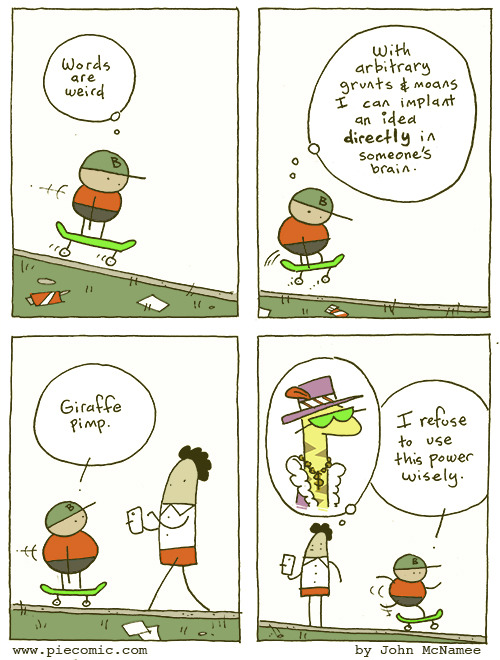
by Pie Comic

10 Jun 13:32

Photo


10 Jun 13:30

Photo


10 Jun 13:29

Of Mice and Men

by boulet
10 Jun 13:20

(tweet by Jasmine Milton)


(tweet by Jasmine Milton)

09 Jun 22:02

“Me recuso a usar este poder com sabedoria”


“Me recuso a usar este poder com sabedoria”

09 Jun 22:01

micdotcom: Watch: ‘The Daily Show’ brilliantly points out the...

09 Jun 22:00

thebyrchentwigges: On the set of Mad Max: Fury Road, the stunt...


thebyrchentwigges:

On the set of Mad Max: Fury Road, the stunt actor for Furiosa and one of the stunt actors for Max fell in love

“We’ve said it before and it’s quite cheesy, but it really was love at first sight. While we were punching each other we were falling for each other – quite rapidly.”

09 Jun 20:49

Alberto Bustos’ Paperlike Ceramics Imitate Sprouting Blades of Grass

by Kate Sierzputowski

alberto-1

Inspired by forms of vegetation, Spanish artist Alberto Bustos' pieces appear like blades of grass sprouting from the earth, stretching and curling upwards towards an imagined sun. At first glance the pieces look delicate enough to be paper, layered works that exude a dual sharp and fragile quality. However, after a closer inspection one can see that the works are indeed porcelain, adding another dimension to their soft initial appearance.

Bustos lives and work in Spain and his work will be included in Mas De Les Gralles with 40 other international artists on June 13th just outside of Barcelona. Hundreds more images of his work can be found on his Facebook page here. (via Ron Beck Designs)

alberto-2

alberto-3

alberto-4

alberto-5

alberto-6

alberto-7

alberto-8

alberto-9

alberto-10

working

09 Jun 19:38

“Ouch!”“Shut up I’m saving you.” [video]


“Ouch!”

“Shut up I’m saving you.” [video]

09 Jun 19:37

Miho Museum I.M. Pei GIF Image found here.Photographs by Miho...


Miho Museum I.M. Pei

GIF Image found here.

Photographs by Miho Museum.

09 Jun 19:31

Saturday Morning Breakfast Cereal - Saving Myself

by admin@smbc-comics.com
09 Jun 19:31

What Did You Do Today?

What Did You Do Today?
09 Jun 15:13

Photo

Adam Victor Brandizzi

Ô BICHO BURRO!


09 Jun 14:49

by Pie Comic

09 Jun 14:42

Credentials

by Jason Poland

v important study in progress

Had a blast at the New South Fest in Austin this past weekend! Thanks everyone who made it out to the show, especially in that Texas heat.

Blank Hill Zine, the zine about Hank Hill’s face is open for pre-order! Check that out HERE.

image (1)