Shared posts

04 Jun 00:24

Cleopatra and Antony Go Fishing

by AdrienneMayor

10_scorpionfishCREDSBy Adrienne Mayor (Wonders and Marvels contributor)

Cleopatra had a thousand ways of flattering Mark Antony, remarked Plutarch in his biography of the Egyptian queen’s Roman lover. With a raptor’s vigilance she monitored Antony’s moods day and night and was always ready with some new diversion or novel adventure to distract and charm  him. Cleopatra was his drinking buddy and his gambling partner at dice; she accompanied him whenever he exercised, hunted, and practiced with his weapons. Dressed in disreputable disguises, the couple enjoyed rambling recklessly around town in the middle of the night like hooligans, pounding on people’s doors and shouting insults at their windows.

One day Cleopatra took Antony fishing on the Nile on her barge, accompanied by a flotilla of smaller fishing boats. Everyone pulled up a good number of Nile perch on their lines that day except Anthony. Feeling humiliated in front of his mistress and determined not to be skunked again, Anthony devised a plan. The next day he secretly paid several fishermen to dive underwater and place their own freshly caught fish on his hook. Over the next hour or so Antony drew up fish after fish. The Egyptians marveled at the heap of silvery blue fish on the deck and wondered at the speed at which the perch were taking the Roman’s bait.

Cleopatra immediately figured out Antony’s ruse but she feigned great admiration, crowing over what a natural fisherman he was. Boasting that his haul would be even more impressive tomorrow, she invited everyone back for another day of fishing.

The next day Cleopatra arranged her own trick. As soon as Anthony let down his line, she had her servants “dive down and affix a large salted fish from the Black Sea on Anthony’s hook.” Feeling the tugging on the line Anthony quickly landed the heavy fish. As everyone stared at his catch it was instantly obvious that he’d pulled up a big fish that was not only long dead but definitely not a denizen of the Nile. As Plutarch comments, you can imagine the guffaws and hoots that ensued. Cleopatra, giggling mischievously, diverted Antony’s irritation with flattery: “Better to leave fishing to us poor Egyptians—your game is conquering kingdoms.”

Nile perch (Lates niloticus) have a high fat content so they were preserved by smoking instead of drying and salting. Black Sea fisheries exported vast stores of salted fish around the ancient Mediterranean world. The large salt-cured fish from the Black Sea “caught” by Antony in the Nile was most likely a tuna. Great schools of Atlantic bluefin tuna (Thunnus thynnus) used to dominate the Black Sea but went extinct there in antiquity; today they are endangered in the Atlantic.

About the author: Adrienne Mayor is a Research Scholar in Classics and History of Science, Stanford University. She is the author of “The First Fossil Hunters: Dinosaurs, Mammoths, and Myths in Greek and Roman Times” (2011), “The Poison King: The Life and Legend of Mithradates, Rome’s Deadliest Enemy,” a nonfiction finalist for the 2009 National Book Award, and “The Amazons: Lives and Legends of Warrior Women across the Ancient World” (fall 2014).
 

29 May 11:22

Sea explorer: Alexander Semenov

by Arnold Chao

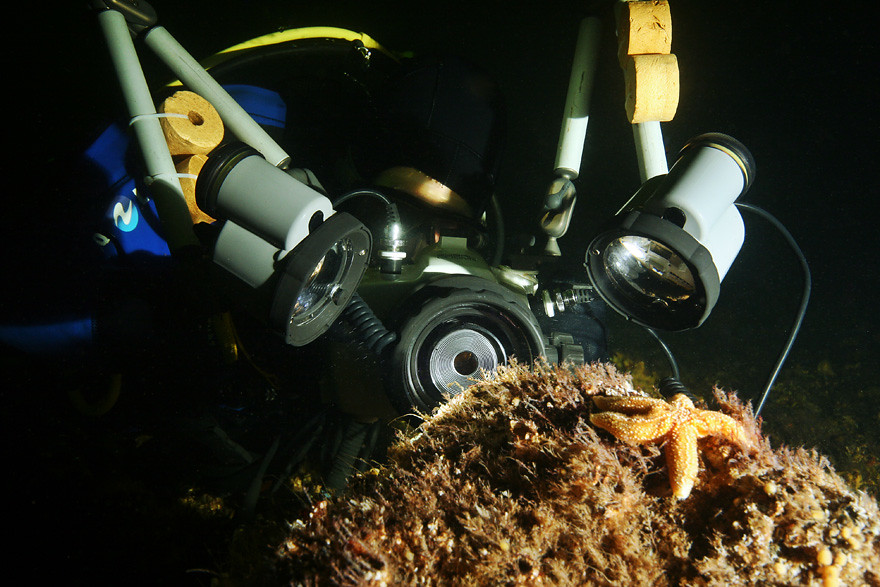
According to aquatilis.tv, Alexander Semenov has a wish “to grow gills so that he doesn’t have to leave the water and perform cumbersome tasks, such as changing oxygen tanks.” And when you take a look at the photography from his research, you’ll understand what his wish is all about.

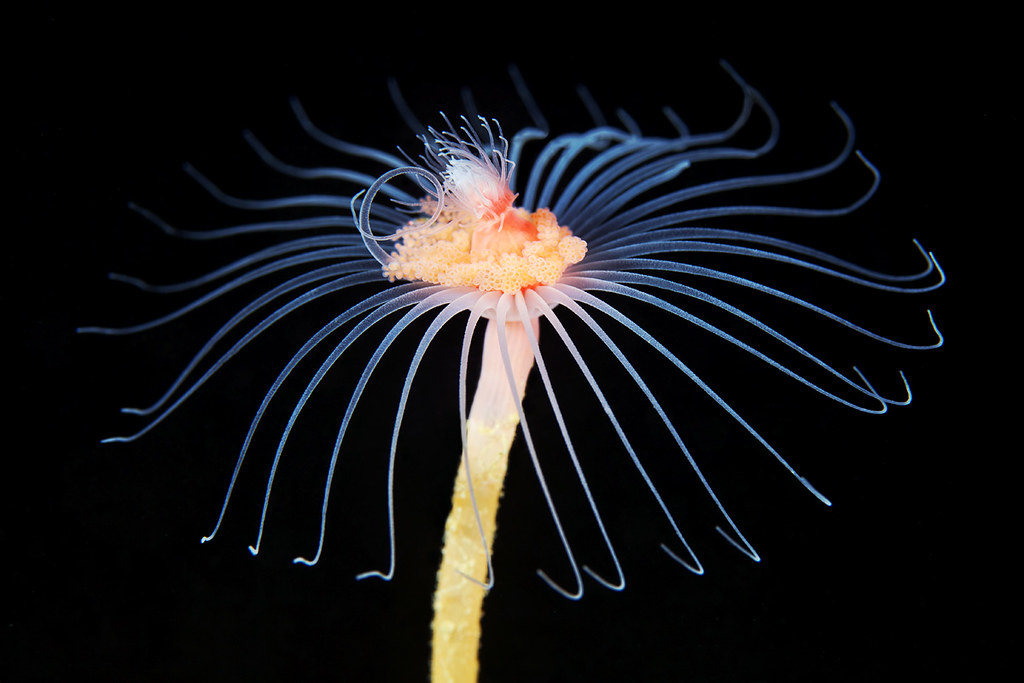
Tubularia indivisa
Alexander SemenovTubularia indivisa
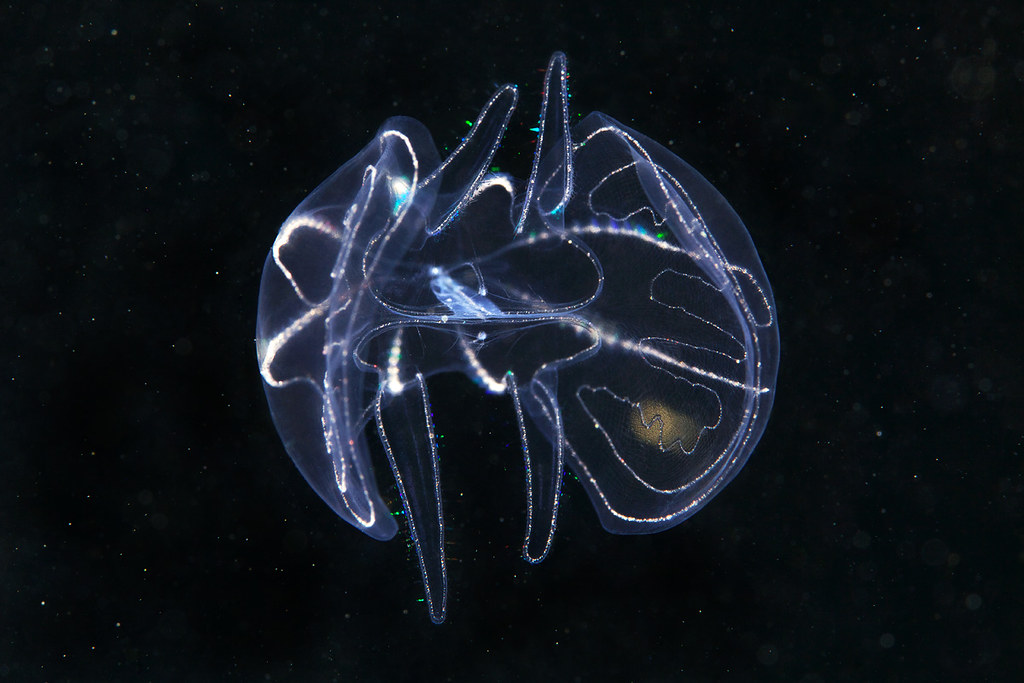
Bolinopsis infundibuliformis
Alexander SemenovBolinopsis infundibuliformis

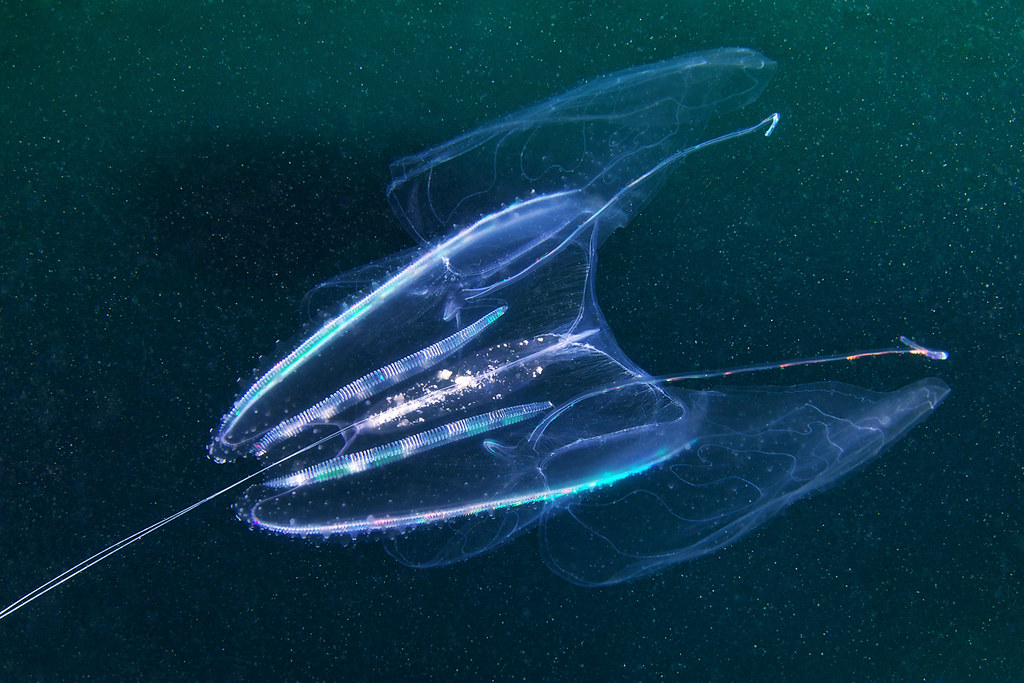
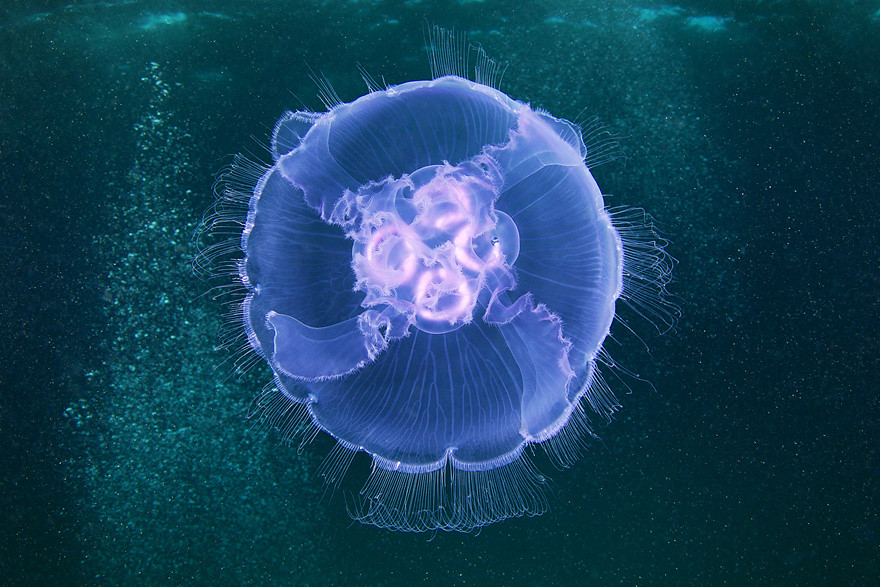
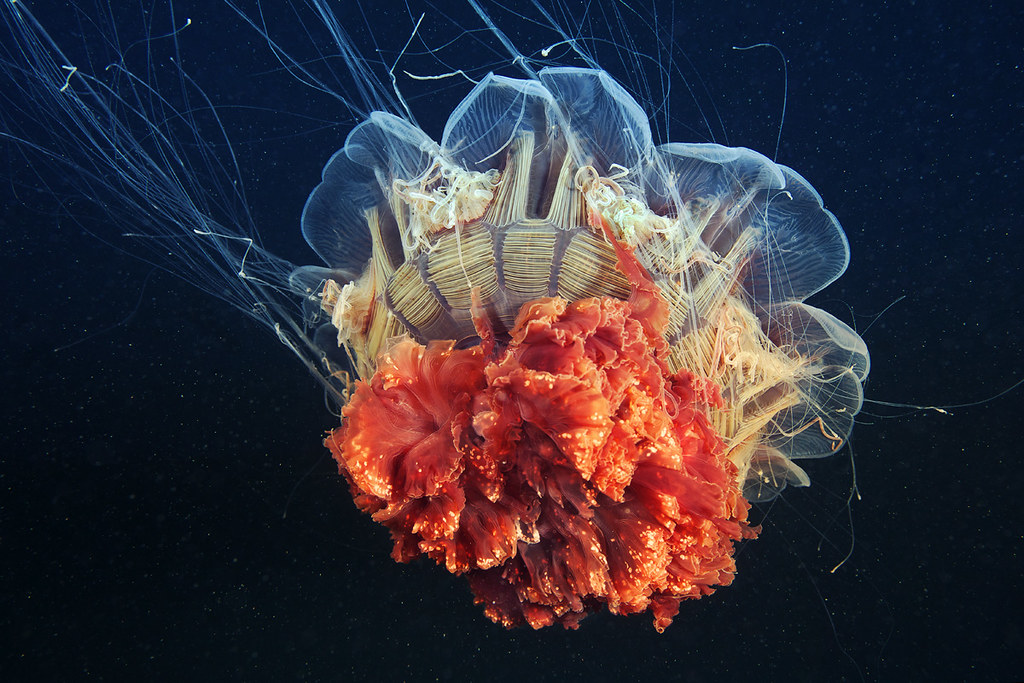
As the Head of the Divers’ team at Moscow University’s White Sea Biological Station, he’s been a photographic contributor for the Discovery Channel, National Geographic, and major magazines. His extraordinary photos of jellyfish and other fascinating organisms of Russia’s White Sea give us a glimpse of an underwater world that seems alien to us.

Hyperia kid on the Baloon
Alexander SemenovHyperia kid on the Baloon
Leucothea sp.
Alexander SemenovLeucothea sp.

Alex is also the squad leader of the Aquatilis Expedition, a diving project to find and study the unknown creatures of the deep sea. The expedition has yet to begin because the required funding to launch the squad’s journey — a proposed 30,000 nautical miles in three years — hasn’t been acquired. He’s fundraising via Indiegogo and hopes to pursue soon what the expedition’s website states as the staggering 80% of marine life living in our oceans that have yet to be discovered.

Aurelia aurita
Alexander SemenovAurelia aurita
Cyanea capillata
Alexander SemenovCyanea capillata
Lophius sp. probably?
Alexander SemenovLophius sp. probably?

These photos show only a small sample of what’s available from Alex. Take a gander at Alex’s underwater album to view nearly 1,000 outstanding shots of sea life.


29 May 11:20

World War I: Unseen Images from the front

A viscount in the Armoured Cavalry Branch of the French Army left behind a collection of hundreds of glass plates taken during World War I that have never before been published. The images, by an unknown photographer, show the daily life of soldiers in the trenches, destruction of towns and military leaders. This summer marks the 100th anniversary of the start of the WWI. --Reuters (18 photos total)

A French officer stands near a cemetery with recent graves of soldiers killed on the front lines of World War I at the Saint-Jean-sur-Tourbe on the Champagne front, eastern France on Dec. 19, 1916.
27 May 11:39

Wild Koala House

by Reza

wild-koala-house

27 May 01:55

Awe-inspiring landscapes

by Arnold Chao
马蹄湾
c3sunfan马蹄湾
Lagangarbh - Glencoe
Phil Hunter (VividVista)Lagangarbh – Glencoe
Garden of the Gods on May 14th, 2014
Tycho's NoseGarden of the Gods on May 14th, 2014
Ipponzakura
windy peak
dretwindy peak
New Mexico
grobinetteNew Mexico

We thought you’d appreciated a weekday break by viewing this selection of serene places that beckon photographers.

Explore more photos of these locations: Horeshoe Bend, Arizona | Glencoe, Scotland | Garden of the Gods, Colorado | Shizukuishi, Japan | Canton of Bern, Switzerland | Kasha-Katuwe Tent Rocks National Monument, New Mexico

Enjoy, and share, more photography in the Lovely landscapes gallery.


18 May 23:36

Never Give Flat Stanley to a Cartoonist

by Adam

You guys ever heard of this thing called “Flat Stanley”? It’s this class project for elementary school students where they mail a paper doll to an adult and instruct him or her to show the doll around town, take photographs, and send the whole thing back to the students can so they can, most likely, be bored to tears.

Well last month I learned something about my six-year old niece – she apparently has my home address.

0 Flat Blake in the mail

Boom! There it was, waiting for me in my mailbox – an envelope containing the paper doll (named “Flat Blake” by the class), a letter of request by some kid in my niece’s class (horrible penmanship BTW), and a form for me to fill in, detailing our adventure. It was like being the biographer for a tiny comatose man.

So, rather than putting any effort into it, I decided instead to just scan Flat Blake, do a little Photoshop nonsense, and print the whole shebang on photo paper. Here’s what I sent back to the class:


1 Letter 2 cow 3 airplane-seat 4 plane-window-1 5 beach 6 beach 7 beach 8 godzilla 9 blake-meets-iron-man 10 blake-and-iron-man 11 blake-flies-with-iron-man-2 12 blake-flies-with-iron-man 13 iron-man-vs-godzilla-1 14 godzilla-leaves-hawaii 15 blake-and-iron-man-celebrate

The initial letter I received said the class would put my pictures on display. Not too long ago my mom visited my niece’s school and I asked her to look for it. Here’s the photo she sent back:

16 Class display

18 May 16:13

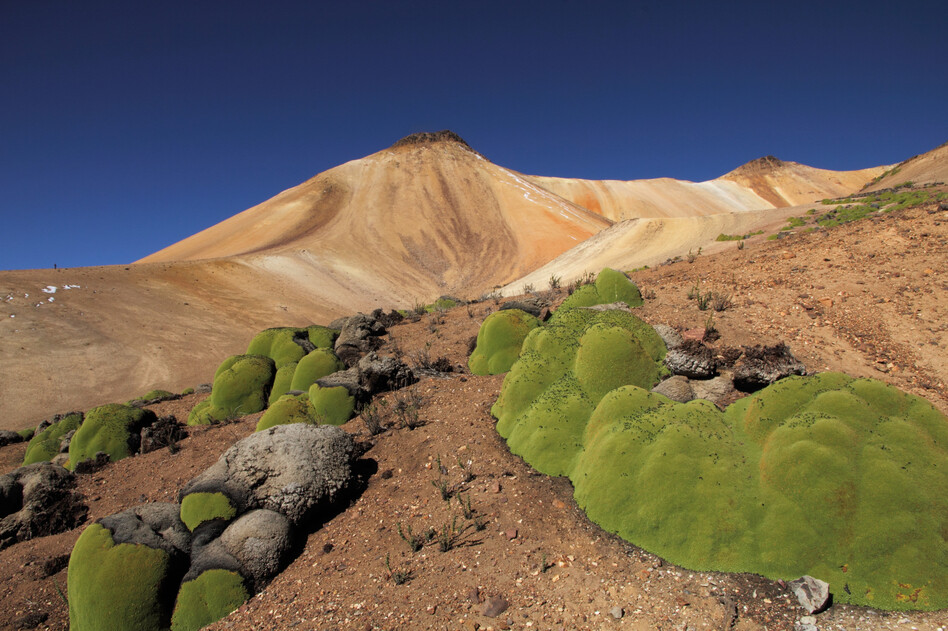
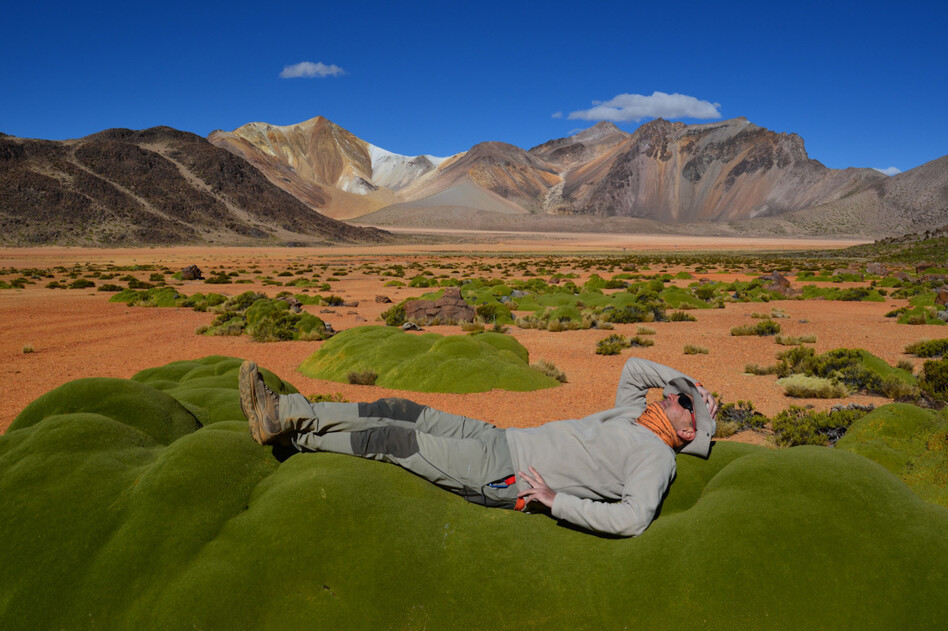
Intriguing Lime Green Blobs Appear In The Andes Mountains. Are They Alive?

Intriguing Lime Green Blobs Appear In The Andes Mountains. Are They Alive?

Oops.

Someone dropped lime sherbet on the desert — and it's melting. Who's going to clean this up?

Nobody. Because this — believe it or not — is a plant. It may look like a glob of goo, but it's not at all gooey. It's solid to the touch, so solid that a man can lie on top of it and not sink in, not even a little.

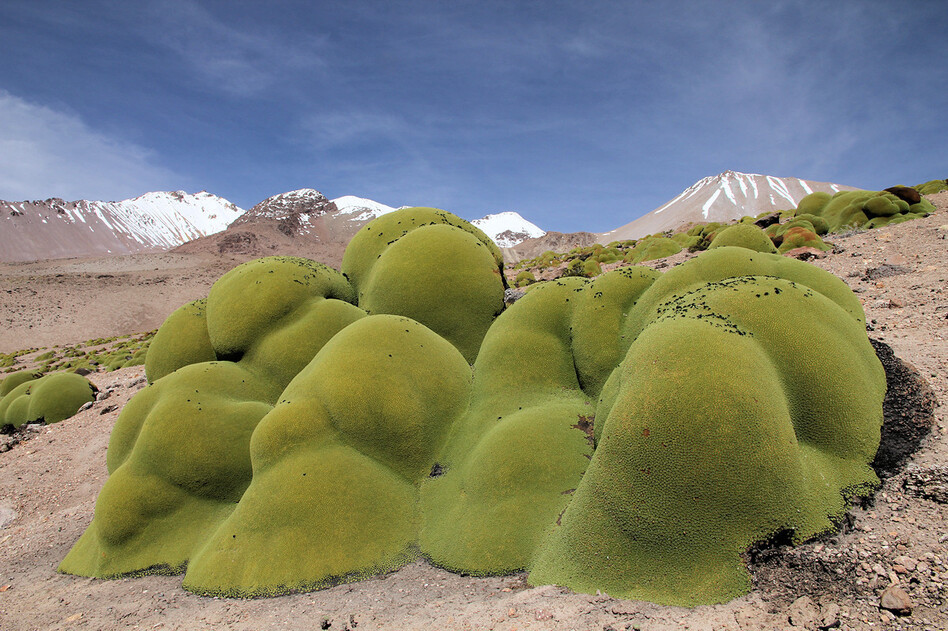
What kind of plant is this? In Spanish it's called llareta, and it's a member of the Apiaceae family, which makes it a cousin to parsley, carrots and fennel. But being a desert plant, high up in Chile's extraordinarily dry Atacama, it grows very, very slowly — a little over a centimeter a year.

Think about that. If you asked one of these plants, "What did you do during the 20th century?" it would answer, "I grew a meter bigger." At that rate, plants rising to shoulder height (covering yards of ground, lump after lump) must be really, really old. In fact, some of them are older than the Giant Sequoias of California, older than towering coast redwoods. In Chile, many of them go back 3,000 years — well before the Golden Age of Greece.

They look like green gift-wrapping. One imagines that they are mold-like, wrapping themselves around boulders. But that's wrong. The truth is much weirder. That hard surface is actually a dense collection of tens of thousands of flowering buds at the ends of long stems, so densely packed, they create a compact surface. The plant is very, very dry, and makes for great kindling.

As the Bolivian guide explains in the video below (the plant can be found throughout the Andes), llareta is such good fuel that, even though it's very ancient, people regularly use it to start campfires and even, back in the day, to run locomotives. (That's 3, 000 to 4,000 years of captured sunshine thrown into a steam engine for a quick ride — I'm trying not to think about that.) It's also good for muscle pain.

ea1calendula/YouTube

The best thing about llareta is what it looks like. It's like nothing else. You climb 10,000 to 15,000 feet up into the Andes; there are boulders, loose rocks, jagged edges all about, and suddenly you come upon this soft-looking round thing that resembles a lime-green beach ball, and you think, "What is this?" When artist/photographer Rachel Sussman saw her first llareta, she apparently did a little happy dance. As she writes in her new book, "Every once in a while you see something so ludicrously beautiful that all you can do is laugh."

Me too.


Artist/photographer Rachel Sussman has some pretty nice photos of llareta in her new book, The Oldest Living Things in the World. You can see and hear Rachel talking about her photos here. Our llareta photos come courtesy of the Terrace Lodge, in Putre, Chile, very near Lauca National Park where, due to melting ice and water vapor floating in, there's just enough moisture to keep the plants growing.

Copyright 2014 NPR. To see more, visit http://www.npr.org/.
16 May 21:49

Kaija’s painfully funny self-portraits

by Ameya Pendse

When we first came across a self-portrait by Kaija Straumanis, we couldn’t help but scratch our heads in wonder. “Who, what, how, and ouch” were popular reactions among our team. We later learned that we weren’t alone. Nearly 3 million people had similar responses — making Kaija’s photography a viral sensation.

“The reaction I’m trying to get from my photography is pretty much amusement, laughter, and the sense of being entertained,” Kaija tells The Weekly Flickr in the accompanying video. “If I can achieve that — or even have someone ask ‘Hey, did it hurt?’ — then I’m happy and know I got what I set out to do!”

Kaija’s love for photography began in college when she embarked on a 365 project to take a self-portrait every day for a year. Throughout this time, she sought out inspiration from other photographers on Flickr.

1:365 she's back.
kleine_moewe1:365 she's back.

“I learned a lot from them, and they gave me lots of advice,” Kaija says. “I also spent a lot of time outdoors, which works as a general inspiration both for settings and props … for what you can and can’t do in your photo. As far as specific ideas go, I think I just liked being a little goofy, and wanted to make people laugh.”

Kaija’s Shots-to-the-Head series happened spontaneously in 2011.

24:365 page turner.
kleine_moewe24:365 page turner.

“It was just another entertaining idea to think up and execute in front of the camera,” Kaija says. “I wanted to do something bigger than I had done before, sort of step out of my own boundaries. The first picture with a kickball was my very first picture [from the series]. I’d found the ball as a prop and thought the image of getting hit in the face would get some laughs from family and friends.”

The shots are composites; taken frame by frame. Kaija spent a couple weeks sitting in front of her bathroom mirror, holding the ball against her face, trying to figure out the best placement and angles to make the perfect photo.

75:365 happy halloween.
kleine_moewe75:365 happy halloween.

“Mimicking physics and self-injury apparently requires some practice and research,” Kaija admits. “Once I had my frames ready, I went out and shot with my camera. Later, I piece the photos together in Photoshop by cleaning up the parts I don’t need.”

Kaija posted the photo on Flickr, and it received positive reactions from her family and friends.

“After that point, I thought this is a nice idea that you can reuse; it’s very easily recycled,” Kaija explains. “The rest of the pictures were just a matter of the right place and the right time. It was definitely fun just sort of going out and doing that on a whim, so I kept doing it.”

47:365 hard headed.
kleine_moewe47:365 hard headed.

Despite the fact that Kaija’s photos were posted three years ago, they were posted on Tumblr about a month ago and became an instant hit — a complete shock to Kaija.

“It was kind of amusing,” Kaija says. “Over the course of a weekend, I’m getting 800 thousand, a million, and then three million hits on my Flickr account. It was insane. I’ve never had that much attention. I’ve never had a 15-minutes-of-fame … but I got it, and that was great … and I really appreciated it.”

“It’s nice to know that you’ve done something that, initially, you just wanted to do it for yourself and for a group of friends, because you thought it would be funny,” Kaija says. “And now people are looking at it in the middle of their work day, cracking up, and it’s added some sort of minute of laughter to their lives.”

62:365 the corner.
kleine_moewe62:365 the corner.

Visit Kaija’s photostream to see more of her photography.

Previous episode: Invisible girl self-portrait goes viral overnight

WeeklyFlickr LogoDo you want to be featured on The Weekly Flickr? We are looking for your photos that amaze, excite, delight and inspire. Share them with us in the The Weekly Flickr Group, or tweet us at @TheWeeklyFlickr.


16 May 02:01

What you see in the mirror

by Matthew Inman
16 May 01:58

Dreamcatcher

Dreamcatcher
16 May 01:56

A forest of porous dreaming

by vaughanbell

A fascinating section of the book How Forests Think by anthropologist Eduardo Kohn where he describes how dreaming is much more porous among the Runa people of Ecuador.

This is both because of how they understand dreams, but also because of the way sleep happens in their culture – it being a more social and frequently interrupted activity, meaning that dreams and the outside world interact much more intensely.

From page 13:

Sleeping in Ávila is not the consolidated, solitary, sensorially deprived endeavour it has often become for us. Sleep – surrounded by lots of people in open thatch houses with no electricity and largely exposed to the outdoors – is continuously interspersed with wakefulness. One awakens in the middle of the night to sit by the fire and ward off the chill, or to receive a gourd full of steaming huayusa tea, or on hearing the common potoo call during a full moon, or sometimes the distant hum of a jaguar. And one awakens also to the extemporaneous comments people make throughout the night about those voices they hear.

Thanks to these continuous disruptions, dreams spill into wakefulness and wakefulness into dreams in a way that entangles both. Dreams – my own and those of my housemates, the strange ones we shared, and even those of their dogs – came to occupy a great deal of my ethnographic attention, especially because they so often involved the creatures and spirits that people the forest. Dreams too are part of the empirical, and they are kind of real. They grow out of and work on the world, and learning to be attuned to their special logics and their fragile forms of efficacy helps reveal something about the world beyond the human.

Interestingly, if your sleep is interrupted by people giving you huayasa tea you are also likely to sleep rather differently as it contains caffeine, meaning you may sleep more lightly and be more sensitive to your environment as a result.

I’m still getting to grips with the book which sounds lovely but is actually about how the theory of anthropology as a study of humans is challenged by societies where whole ecosystems form part of cognitive systems.

As with any book about deep theory, it is both difficult and intriguing, and sometimes I feel like I am lost in a forest myself.
 

Link to more details of How Forests Think.


07 May 12:02

#1027; The Import of Being Earnest

by David Malki

We are all of us static props in the psychodramas of others

07 May 11:56

“Dragons” of Ancient India

by AdrienneMayor

By Adrienne Mayor i-3509115939838ea51612a1726517d6b2-Sivatherium-skull-Nicholson-1876-wikipedia-April-2011(Wonders and Marvels contributor)

“Dragons of enormous size and variety infest northern India,” concluded Apollonius of Tyana who traveled through the southern foothills of the Himalayas in the first century AD. “The countryside is full of them and no mountain ridge was without one.” Locals regaled visitors with fantastic tales of dragon hunting, using magic to lure them out of the earth in order to pry out the gems embedded in the dragons’ skulls.

Trophies of these quests were displayed in Paraka at the foot of a great mountain, “where a great many skulls of dragons were enshrined.” Ancient Paraka has never been identified, but linguistic clues suggest it was the ancient name for Peshawar. In later times a famous Buddhist holy place near Peshawar was known as “the shrine of the thousand heads.”

Apollonius traveled through the pass at Peshawar and southeast on a route that skirted the Siwalik Hills below the Himalayas. The barren foothills of the Siwalik range boast vast and rich fossil beds with rich remains of long-extinct bizarre creatures. On these eroding slopes and marshes from Kashmir to the banks of the Ganges, people in antiquity would have observed hosts of strange skeletons emerging from the earth: enormous crocodiles (20 feet long); tortoises the size of a Mini Cooper; shovel‑tusked gomphotheres, stegodons, and Elephas hysudricus with its bulging brow; chalicotheres and anthracotheres; the large giraffe Giraffokeryx; and the truly colossal Sivatherium (named after the Hindu god Siva), a moose‑like giraffe as big as an elephant and carrying massive antlers. It seems safe to guess that the “dragon” heads exhibited at Paraka included the skulls of some of these strange creatures from the Siwalik Hills.

Several details in the ancient descriptions catch the eye of a paleontologist. The dragons of the high ridges were said to be larger than dragons of the marshes, which had sharp twisted tusks. The marsh dragons fought elephants to the death; to find their entwined bodies was a great discovery. The dragons of the ridges were frightening: they had long necks and very prominent brows over deep, staring eye sockets. Huge crests grew on their heads, of moderate size on the young but reaching towering proportions on the adults. Men set out to hunt these creatures for the precious jewels—iridescent, “flashing out every hue”—inside their skulls.

People also claimed that the dragons made a great clashing noise and shook the earth when they burrowed in the ground, relating them to the severe earthquakes of the Siwaliks. The lowland dragons with distorted tusks jumbled with the remains of familiar elephants could have referred to fossil assemblages of early elephants with oddly formed jaws and tusks. Glowering brow ridges over deep‑sunk eyes would fit the appearance of the Giraffokeryx and  Sivatherium giganteum. Both skulls have two pairs of prominent bony projections behind and over the eye sockets. The gigantic Sivatherium’s palmated antlers were extremely massive, while the longer‑necked Giraffokeryx’s four ossicones projected back laterally from its long, dragon-like skull.

What about the gems in the dragons’ skulls? The Indian lore about glittering gems prised out of “dragon” skulls appears to describe the sparkling crystals that can form on mineralized bones. Indeed, paleontologists confirm that impressive calcite and selenite crystals are very common in the fossilized bones of the Siwalik Hills.

About the author: Adrienne Mayor is a Research Scholar in Classics and History of Science, Stanford University. She is the author of “The First Fossil Hunters: Dinosaurs, Mammoths, and Myths in Greek and Roman Times” (2011), “Fossil Legends of the First Americans,” (2005), and “The Poison King: The Life and Legend of Mithradates, Rome’s Deadliest Enemy,” a nonfiction finalist for the 2009 National Book Award.


06 May 11:34

Cool Small Cat

by Reza

cool_small_cat

06 May 11:23

Yes

by Justin Boyd
Scott Akerman

At Lowes Hardware the other day I needed an eyehook but whenever the guy asked what I was looking for I blanked and asked for "those uhh, hook...like (curves finger into hook), hook screws?"

Yes

Nothing like that joy you feel when someone else helps you fill in the blanks.  Squish that face.

–ALSO–

The book bundle deal ends tomorrow, so you better get on that if that’s a thing you want to get on!


bonus panel
06 May 01:57

haha yeah i can give you a sexual education in six panels NO PROBLEM

archive - contact - sexy exciting merchandise - search - about
← previous May 5th, 2014 next

May 5th, 2014: What is sex? We just don't know.

– Ryan

06 May 01:49

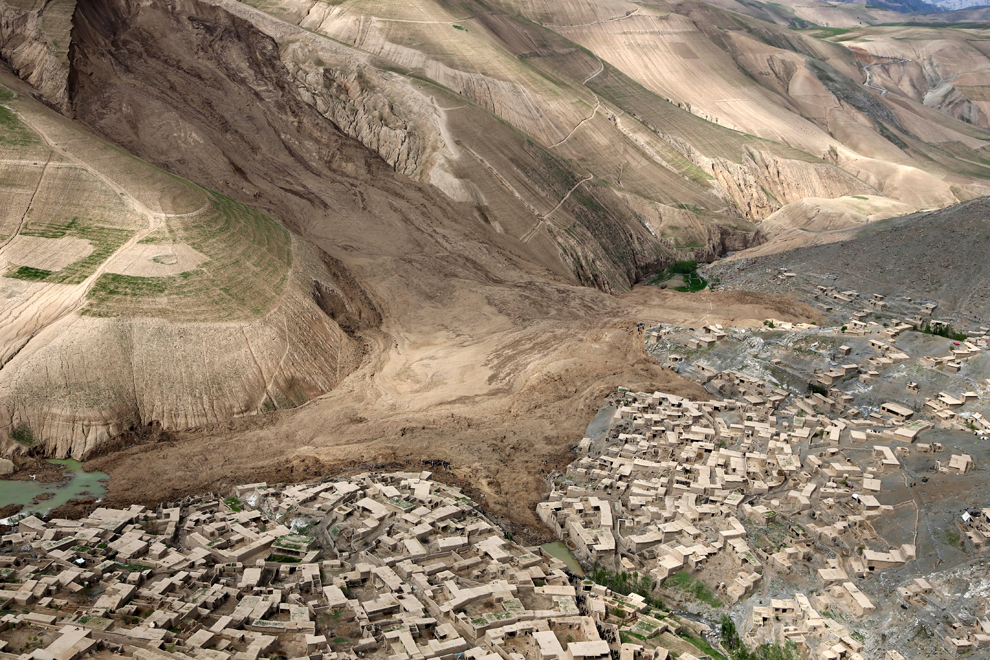
Afghanistan landslide: Rescuers give up hope of survivors

2,100 people are thought to be buried by the landslides that hit a remote area in northern Afghanistan. Officials say the site has become a mass grave for the village of Abi Barak. After the landslide struck on Friday, residents from a nearby village rushed to the scene to help dig people out and the second landslide struck, killing many of the rescuers. Rescue efforts on now focused on the displaced survivors. --Thea Breite (18 photos total)

An aerial view shows the site of Friday's landslide that buried Abi Barak village in Badakhshan province, northeastern Afghanistan, Monday, May 5, 2014. (Rahmat Gul/AP)
01 May 00:54

“Mrs. Robinson, you’re trying to seduce me.”  


“Mrs. Robinson, you’re trying to seduce me.”


01 May 00:54

first ride


18 Apr 23:12

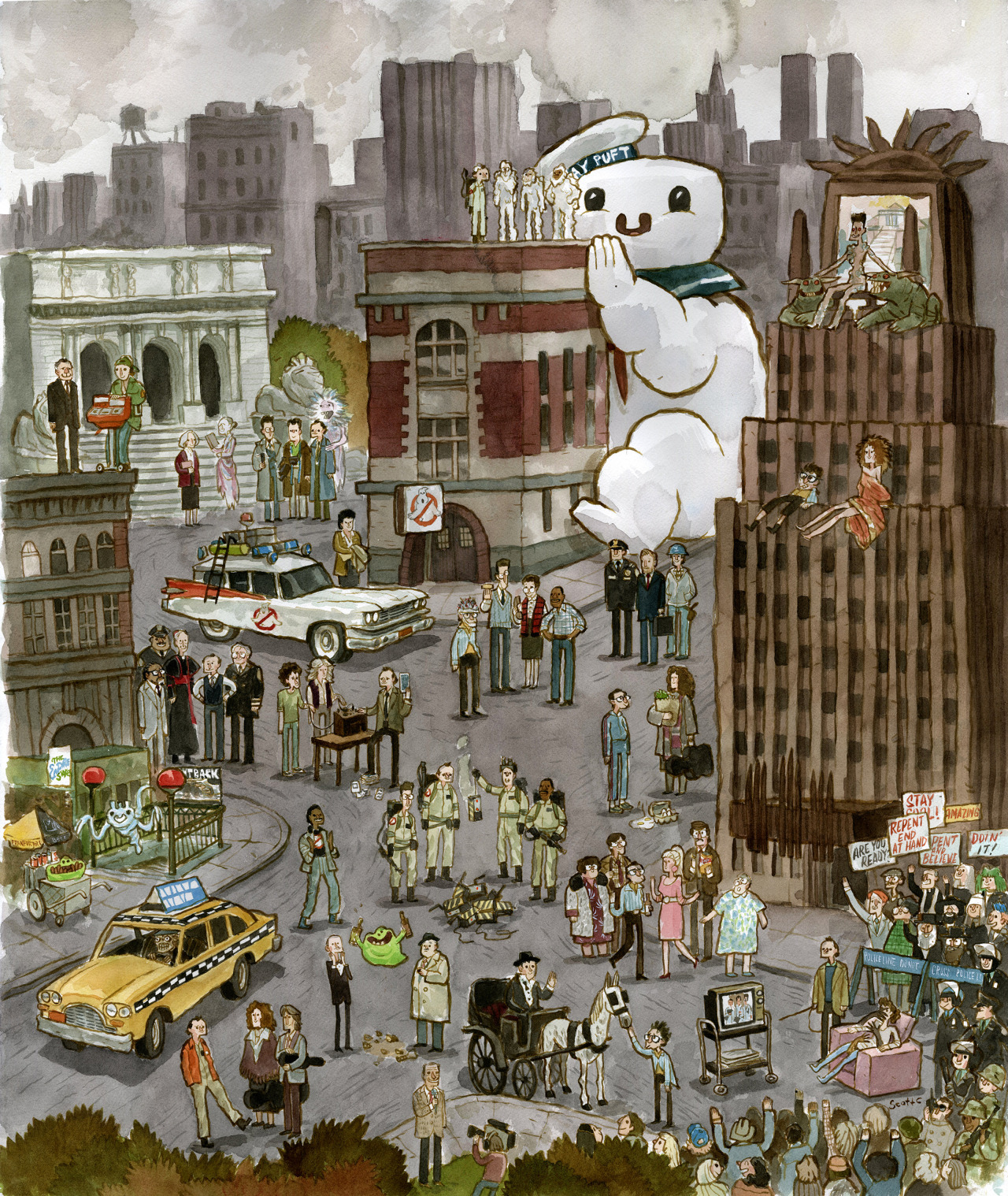
GHOSTBUSTLAND

by Scott Campbell


“Ghostbustland”

My contribution to Gallery 1988’s Ghostbusters 30th Anniversary Show, starting in NYC! (It travels to some more cities, but i am unsure of the details, you guys)

Opening April 19 …runs through 26th

@ 69 Leonard Street in lower manhattan.  (Right around the corner from the Ghostbusters Firehouse)


15 Apr 02:28

Tax Time

by nedroid

Tax Time

12 Apr 02:25

Slow Burn

by Adam

2014-04-11-Slow-Burn

30 Mar 00:20

Small Business

by Reza

small-business

30 Mar 00:18

One of my favourite podcasts is Titanium Physicists, run by Ben...

Scott Akerman

This sounds pretty rad


One of my favourite podcasts is Titanium Physicists, run by Ben Tippet (who you may remember for when he scientifically explains Superman’s powers or used physics to figure out How To Build A TARDIS).
The premise of TP is that Ben collects two Titanium Physicists (ie: rad physicists) and every episode they go over some really cool physics concept. But! There is also a layperson, who is there to call them out when they make assumptions a regular non-physics person wouldn’t get or use terms they haven’t explained.
I’ve been that layperson a few times, mostly because HOW AWESOME IS IT to have some insane physics concept personally explained to you by people who know it really well? It’s really awesome.

I’m the guest on the most recent episode, The Thumbprint Of Creation, where we go over that super big ORIGIN OF THE UNIVERSE news you may have heard about the other week. If you weren’t fully certain what it meant or what the ramifications were, give it a listen!

27 Mar 01:10

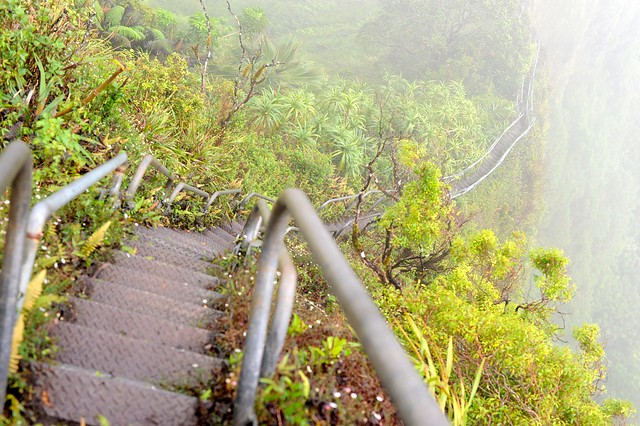
Hawaii’s forbidden ‘Stairway to Heaven’

by Arnold Chao

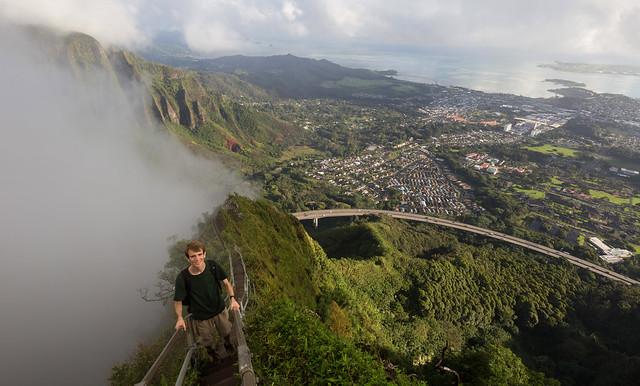
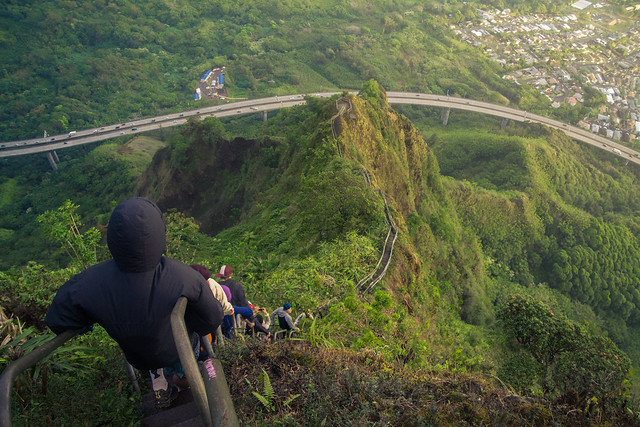
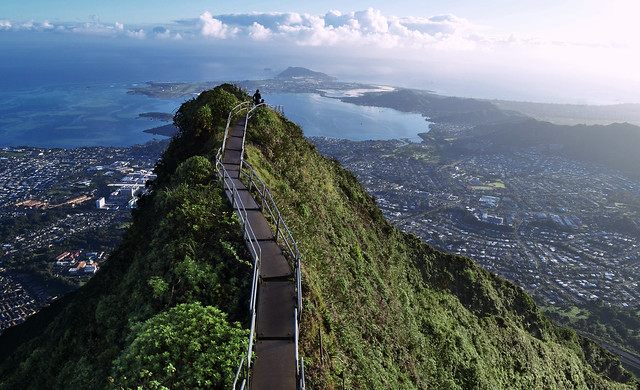
What began as a rickety wood pathway to install antenna cables over a cliff in 1942 has become a hiker’s enigma often called the “Stairway to Heaven.”

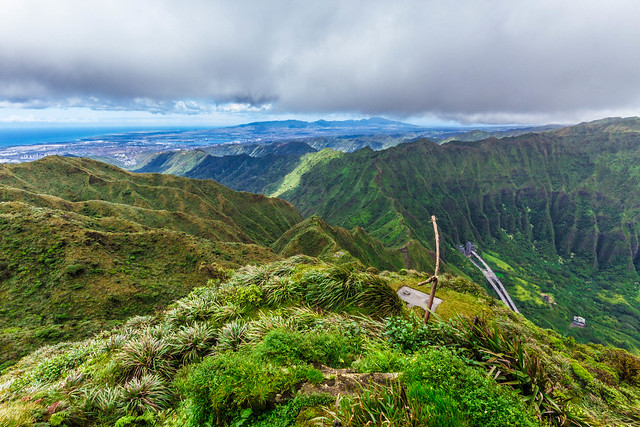
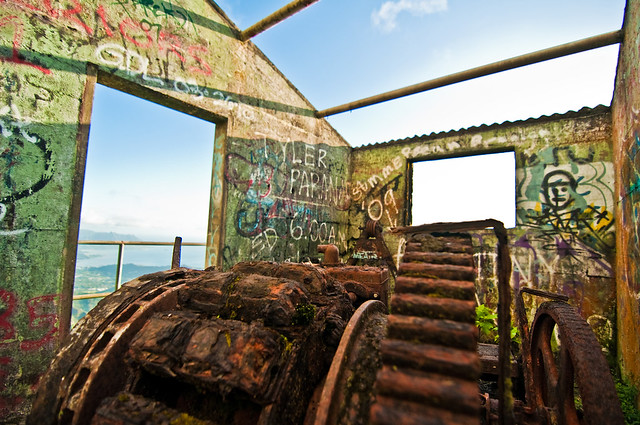
World War II motivated the U.S. military to build a radio transceiver station atop Hawaii’s Puʻukeahiakahoe mountain. The station sent low-frequency signals to communicate with submarines navigating around Japan. The Haiku Stairs (Haʻikū means “sharp break” in Hawaiian) offers a steep 2,500-foot ascent on Oahu that reaches the now abandoned station. Despite receiving an $875,000 metal renovation in 2003, according to to-hawaii.com, the trail is forbidden to many visitors wanting to endure the series of steps. The prohibition, nevertheless, hasn’t held back everyone from the climb and arriving at its wonderful island landscape views.

Stairway to Heaven

Stairway to Heaven

Haiku Stairs

We asked the Friends of Haiku Stairs (FHS) volunteer organization to get the inside scoop on the popular attraction:

What’s the current status and future of the Haiku Stairs?

FHS: Climbing on the stairs is illegal without consent from the owners — there are several, and they asked us not to share all of their names. The Friends of Haiku Stairs have a working agreement with all of the owners and are trying to obtain the newly required $1 million insurance policy that one of the owners is requiring us to have before we can even access them again, and that is only for maintenance and not recreation.

There is a continued movement to demolish the stairs altogether that is being fueled by people accessing them illegally. We believe there’s a better solution: Open the stairs to allow people to climb in safe conditions and that will alleviate the trespassing. To get there, we need political will.

Is it safe to climb the stairs?

FHS: The stairs are safe to climb if conditions are favorable, with caution, and in the daylight. People continue to access them illegally through the neighborhoods; or worse, they try to access them from the back side which is a treacherous, dangerous hike. The result is a surge in emergency calls and a strain on efforts from police and rescue teams.

View from the Omega station 2

Haiku Pump Station

☲

Photos from jselanikio, geekyrocketguy, thejoltjoker, Kyle Ford, John.Mccluskey, Michael Keany, bennyboie, and ERiN SiTT.


27 Mar 01:08

i'm just kidding. facebook will store all the information you give it even when you use a fake name.

archive - contact - sexy exciting merchandise - cute - search - about
← previous March 26th, 2014 next

March 26th, 2014: EXCITING THINGS HAPPENING TODAY:

One year ago today: i am a sentient mouth on legs, and if that is chocolate you've got, know that i want to shove it in me

– Ryan

25 Mar 01:53

Beginning

by Reza

beginning

24 Mar 01:13

The World and Mr. Duck

by Reza

the-world-and-mr-duck

21 Mar 12:35

A Softer World

21 Mar 12:31

A Softer World