Osias Jota
Shared posts
13 Jun 17:59
Eu sei que Doutor Quem não é uma série de ficção a sério, mas na hora que aparecem aliens que nunca foram vistos... http://t.co/v2ZHrWX1yJ
by OsiasJota (Osias Jota)
Eu sei que Doutor Quem não é uma série de ficção a sério, mas na hora que aparecem aliens que nunca foram vistos... http://t.co/v2ZHrWX1yJ
11 Jun 19:08
RT @penoveiders: infelizmente quem não trouxer cola colorida não vai poder participar do twitter de amanhã
by OsiasJota (Osias Jota)
RT @penoveiders: infelizmente quem não trouxer cola colorida não vai poder participar do twitter de amanhã
11 Jun 12:32
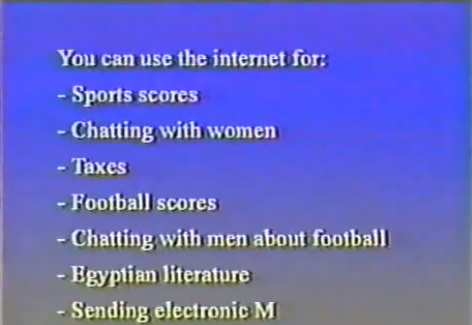
Quero almoçar com a Claudia e ela está calculando impostos. Imagina na copa.
by OsiasJota (Osias Jota)
Quero almoçar com a Claudia e ela está calculando impostos. Imagina na copa.
10 Jun 21:01
Rose Tyler me dando VA Alheia na frente da rainha. Saudade da Rose Walker.
by OsiasJota (Osias Jota)
Rose Tyler me dando VA Alheia na frente da rainha. Saudade da Rose Walker.
10 Jun 17:15
Que ridículos esse rabinos aí, parecendo criança esperneando, eles não tem noção de que o mundo todo os estão... http://t.co/eu2JwbrIUD
by OsiasJota (Osias Jota)
Que ridículos esse rabinos aí, parecendo criança esperneando, eles não tem noção de que o mundo todo os estão... http://t.co/eu2JwbrIUD
10 Jun 13:50
Diamante do livro Spharion (série vaga lume) aparecendo em Doctor Who. Sim, é uma série britânica.
by OsiasJota (Osias Jota)
Diamante do livro Spharion (série vaga lume) aparecendo em Doctor Who. Sim, é uma série britânica.
09 Jun 18:10
shutupismelldonuts:
Osias Jotavia firehose
Osiasjota, Viktoria Martsenyuk and one other like this
09 Jun 14:37
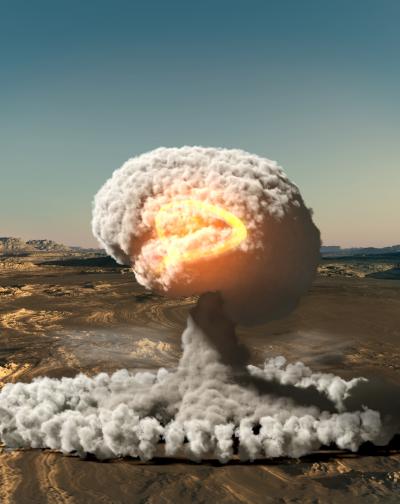
Atomic bombs help solve mystery: does the adult human brain produce new neurons?
Osias Jotavia Tadeu
isso é muito diabólico
Radioactive carbon-14 atoms released by atomic bomb tests are helping scientists determine new neurons produced in the brain (credit: Spalding et al./Cell)
A study in the journal Cell reveals that a significant number of new neurons in the hippocampus — a brain region crucial for memory and learning — are generated in adult humans.
“It was thought for a long time that we are born with a certain number of neurons, and that it is not possible to get new neurons after birth,” says senior study author Jonas Frisén of the Karolinska Institute.
But no one could check this, because there was no way to date the birth of neurons in humans.
Carbon-dating neurons
To do that, Frisén and his team developed an innovative method for dating the birth of neurons that takes advantage of the elevated atmospheric levels of carbon-14, a nonradioactive form of carbon, caused by above-ground nuclear bomb testing more than 50 years ago.
Since the 1963 nuclear test ban treaty, atmospheric levels of “heavy” 14C (carbon-14) have declined at a known rate.
When we eat plants or animal products, we absorb both normal and heavy carbon at the atmospheric ratios present at that time, and the exact atmospheric concentration at any point in time is stamped into DNA every time a new neuron is born. Thus, neurons can be “carbon dated” in a similar way to that used by archeologists.
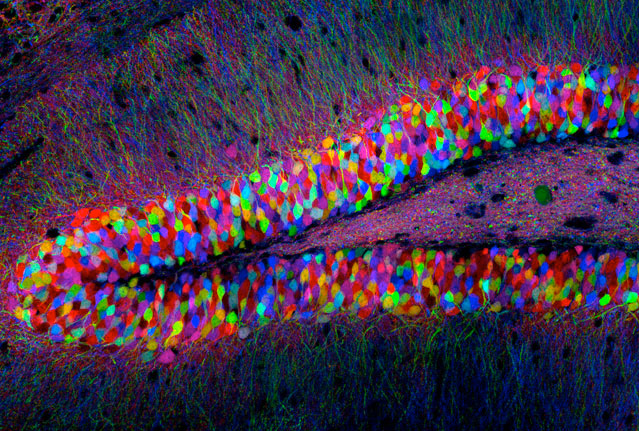
To count neurons in the hippocampus, Swedish researchers injected a substance that made them glow in different colors to distinguish non-neuronal cells from neurons. Shown here: an image of a transgenic mouse hippocampus (credit: Nikon Small World Gallery)
The researchers measured the carbon-14 concentration in DNA from the hippocampal neurons of deceased humans. They found that 1,400 new neurons in the dentate gyrus.area are added each day — 1.75% per year — during adulthood, and that this rate declines only modestly with age, suggesting that adult hippocampal neurogenesis may contribute to human brain function.
Adam Victor Brandizzi, Osiasjota likes this
08 Jun 19:24
Glen Weldon knows what makes Superman soar
by Michael May
Osias Jotavia Adam

When Wiley wanted to publish a history of Superman in time for this month’s Man of Steel, they contacted the right guy to write it. Glen Weldon covers comics for NPR’s Monkey See blog and is also the resident comics expert on the Pop Culture Happy Hour podcast. He’s insightful and funny, the perfect person to guide someone through the confusing, 75-year history of the Man of Tomorrow, which is what he does in Superman: The Unauthorized Biography.
Superman’s history isn’t just confusing because of the legal battle between his creators and the publisher whose marketing and licensing made the character a household name, although there is that, too. There are also the countless (well, I would have said countless; Weldon proves me wrong by counting them) retcons and reboots and reinterpretations that have affected the Last Son of Krypton and his supporting cast for three quarters of a century. Weldon navigates all of that in his book and finds the through-line that defines Superman and what he really stands for.
This is something I’ve been thinking about myself lately, so I was eager to not only read Weldon’s book, but to talk to him about it and get some more insight. I learned a lot in the process, including the true meaning of Kryptonite, the importance of Electric Superman, and the real failure of Superman Returns.
Michael May: I want to start with something that’s going to sound like a statement, but I promise there’s a question at the end. Superman’s fathers play an important role in shaping the man he becomes. In the comics, Jonathan Kent is traditionally the primary force in grounding Clark to humanity and giving him his moral code, but the trailers for Man of Steel are playing up Jonathan’s fear that people won’t understand or accept a superman.
In contrast, it’s Russell Crowe’s Jor-El in the recent trailers who talks about his son’s moral responsibility. And of course there’s Marlon Brando’s “my only son” speech in Superman: The Movie. I’m not asking you to pass judgment on a movie you haven’t seen, but I’m wondering if you could talk a bit about Superman’s two dads and the role each plays in his development.
Glen Weldon: I wrote a piece for Monkey See when that (second?) trailer came out, showing Pa Kent expressing fear. My reaction then stands — I kind of like it. It makes sense to me. Ma and Pa Kent have always been treated as secondary characters whose role, in the hero’s journey, is to instill Midwestern values in him, outfit him with a few homespun homilies, and send him on his way. Which is fine — you need to surround your protagonist with characters that help define and delineate him.
But what if they weren’t secondary, flat characters? What if they had internal conflicts of their own, conflicts that served to complicate the wisdom they impart as parents? Smallville touched on this, a little, in its way. It may not work, but it certainly serves to make Pa Kent a character in his own right.
 In the ’78 film, Jor-El and Pa Kent represented head and heart, respectively. Jor-El supplied him with knowledge, and a respect for the rules. Pa Kent taught him that he has the power to help people – to save them – and that’s what matters. So his final decision, in the last act, to hit the temporal reset button is effectively a rejection of his cold, Kryptonian heritage and an embrace of his status as a child of Earth.
Years later, in the Man of Steel miniseries, Bryne would turn that subtext into the explicit text. And years after that, Waid’s Birthright would invert it again. It will continue to see-saw back and forth, as new writers put their spin on the guy.
You talk in the book about Kryptonite as a symbol of Superman’s past. If his powers and attitude are metaphors for unlimited potential and looking to the future, the harmful relic of his old home represents the ability of the past to hold us back and potentially even to harm us. That’s a brilliant way of looking at it. It also raises the question: How important should Krypton continue to be to Superman? Is the character damaged by stories in which he wallows in grief or nostalgia for his homeworld? Or is there value in revisiting that concept every so often?
The Weisinger Silver Age was obsessed with Krypton, because it effectively infused the stories with the primal, Freudian emotions of early kid-hood that readers felt in their guts: loneliness, fear of abandonment, etc.
 When Kryptonite was introduced in the movie serial, on the radio, and (years later) in the comics, it did more than just weaken Superman – it was the means by which he learned who he was and where he came from, for the very first time. That was information the audience knew well, but not Superman himself.
So this relic of the past, this thing that can kill you, is the thing that literally tells you who you are. That is some heady symbolism – if we were to break into response groups to unpack it all, it’d take days.
For the first 20 or so years of his existence, Krypton wasn’t a particularly big deal. Then, during the Silver Age, it became his melancholy obsession. That diminished a bit in the Bronze Age, as the pursuit of Relevance had writers struggling to make Superman more Earth-bound and “relatable.” Byrne turned Krypton into a cold technological nightmare world to be shunned, and Waid turned it back into a science-fiction utopia.
All of these interpretations seem equally valid to me, inasmuch as they provide fodder for interesting stories – I have my personal preferences, but they have more to do with me than they have to do with the character.
Another surprising observation in your book is the importance of Electric Superman. A lot of fans would love to pretend that phase of Superman’s career never happened, but it uniquely illustrates a vital part of Superman’s character.
 I admit I would have loved it if Superman’s electric phase look didn’t evoke “Olympic Figure Skater” as strongly as it did, but that bold experiment helped me understand that Superman isn’t his costume, or his powers.
What makes a firefighter a hero isn’t his flame-retardant uniform. It’s what he does, and why he does it. Superman: Same deal.
So all the outward signifiers – costume, powers, spit-curl, etc. – are just that.
Superman: 1. Puts the needs of others over those of himself, and 2. Never gives up. Those are the two elements that any story about Superman require. As I detail in the book, when either or both of those elements are missing, we instinctively reject it — it feels wrong, off-base; just not Superman.
Superman is a powerful character because he symbolizes the best of humanity. He gives us something to aspire to. But as you point out in the book, the specific ideal that he represents has changed over the years and decades. In the ‘30s, he was all about social justice, but during the ‘40s he came to represent World War II patriotism. In the ‘50s and early ‘60s, he turned into a defender of conservative domesticity and the status quo. I’ll ask about the late ‘60s and beyond in a minute, but which of those early decades is your favorite from the standpoint of Superman’s symbolizing an ideology?
 Personally, I like the progressive reformer Superman, the defender of the little guy. Those early stories have a raw, propulsive, rough-around-the-edges energy; this Superman is looking out for us, but he’s not safe.
Again, that progressive aspect to his character is what makes him the Man of Tomorrow – he inspires us forward, like the Socio-Realist murals of the time, into the golden, sunlit future.
Is it fair to say that Superman’s representation of human perfection reflects a distinctly American perspective?
In one sense, he’s the ultimate Immigrant Who Makes Good, and that aspect resonates strongly with the can-do American psyche. And certainly, Superman is powered by an ideological fuel mixture that strikes me as uniquely American – our noblest ideals (Truth! Justice!), our propensity for violence (and our struggle to rein it in), and our unabashed love of garish spectacle (the guy’s basically a July 4 fireworks display stuffed into a pair of blue long johns).
But after all, one of his creators was Canadian. And the idea of him – that of a powerful protector who does the right thing because it is the right thing – isn’t unique to America. It’s one of the oldest ideas in the world, and it appears in every culture’s myths and folklore.
Starting in the late ‘60s, Americans became divided about what the ideal American should look like. As large parts of the country lost trust in the government, how well do you think Superman functioned as a symbol of perfection?
 The mood of the country soured with Vietnam and Watergate, and Superman came to represent the capital-E Establishment. But keep in mind his primary audience was young kids, who seek assurance that Good will triumph over Evil, that their place in the world is secure.
As I note in the book, the late-sixties was a time when parodies of Superman and super-heroes proliferated (Batman! Underdog! Super Chicken! Mighty Heroes! Atom Ant! Captain Nice! etc etc) because older kids and adults found the whole notion of a costumed do-gooder – at least one without some kind of psychological hangup — ridiculous.
What do you think prevented him from keeping up with the times?
As I touched on above, Superman was written for young kids – by middle-aged men. DC didn’t know what to do about what the newsmagazines were calling “the growing youth culture” – so they simply peppered their usual stories with references to “hip” things like “the Beatles rock music”. It was fine for kids, but suddenly kids weren’t buying as many comics as they used to – teenagers were.
Marvel had taken another tack – adopted by writers who were just as middle-aged as their DC counterparts, but who were savvy enough to pitch their comics to adolescents. They made comics about angst-ridden, hormonal teens FOR angst-ridden, hormonal teens. Bingo.
 DC, convinced that they needed to make Superman more relatable and relevant, did what they thought they should, though it didn’t work. Denny O’Neil wrote a more grounded, less powerful Superman in the ’70s, Swan and Anderson adopted a more photorealistic, Neal-Adams-esque style, and there were repeated, earnest, well-intentioned attempts to get Superman to address issues of race, poverty, sexism, etc. But it’s a mug’s game: Such stories don’t bridge the distance between his simple, iconic, four-color world and our own – they only serve to widen it.
Has Superman ever found his way back to being a consistent, ideal representation of humanity (American or otherwise)?
There’s the idea of Superman that exists in the public consciousness, and there’s the Superman of the comics. In 1978, with the appearance of Superman: The Movie, the comics lost what little ability they’d retained to shape the notion of Superman that exists in the cultural ether. When it comes to what my sweet, silver-haired Aunt Fay thinks of Superman, it’s about the movies, not the comics.
In that regard, the fragmentation of media means that many different versions of Superman, new and old, are available at any one time. Smallville, the animated series, Superman IV, Superboy, Justice League, the comics, the Elseworlds, the trade paperbacks of old storylines … they all exist, ready for sampling. On one hand, this lowers the barriers that keep new audiences from sampling his adventures, but it also makes the prospect more overwhelming and confusing: Where to start?
 Me, I always suggest Superman: The Animated Series – an effective synthesis of classic iconography and contemporary concerns.
Also, they are awesome.
What was your introduction to Superman?
Super Friends, I think. Or that cartoon short of him on Sesame Street, in which teaches kids about the letter S. Which led me to the old Superman TV cartoons (voiced by Bud Collyer, of the original radio show), which led me to George Reeves, and that was it.
It seems like a lot of fans get to Superman through a similar route. I know I’ve logged many many more Superman hours in movies and TV than I have in reading his comics. How important are comics to Superman stories? Can people get the same experience from other media?
As I’ve mentioned, one of the most important things I learned in writing the book was how pervasive — how important — the movies (and to a lesser extent the TV shows) have been to ensconcing Superman in the public mind.
The engagement I feel to the Superman of the comics is strong and binding. But, on a population level, there’s only a handful of people like me. There are trillions of non-comics readers in the world, and most of them have a pretty good idea of who Superman is. Their level of engagement is nowhere near as deep as mine, but it is real, and in many ways theirs is a cleaner, purer vision of him, as its unencumbered by the decades of trivia and reboots and retcons I carry around with me. For them, he’s simply an icon. For me, he’s a character.
 Speaking of Superman in other media, you mention in the book that Phyllis Coates was working on a sitcom that prevented her from returning to Adventures of Superman as Lois Lane in Season 2. This is a totally self-indulgent question, but do you know what sitcom that was? She’s probably my favorite Lois, so I’m curious.
Michael J. Hayde’s book Flights of Fantasy, a much deeper dive into the Adventures of Superman era, tells me she left to co-star with Jack Carter in a sitcom called Here Comes Calvin. IMDb says it never went to series, though.
One of the complaints people make about Superman is that they can’t buy altruism as a motive for doing heroic things. That probably says more about readers than about the character, but what’s your response to that?
I feel like I shouldn’t have to point this out, but people who do the right thing unquestioningly do exist. As Greg Rucka pointed out in the wake of the Boston bombing, amid all the horror captured in those videos, you see people running to help out, people whose instinct was to step in and do what they can.
True, most of us would run. But some of us wouldn’t. Some of us don’t. Some of us never do. Superman is a guy who does the right thing because it’s right – but also because he knows he can. That doesn’t make him any less a hero. It makes him a guy who does what he firmly believes is his job.
 That brings to mind the section of your book where you write about Superman Returns. Most of the criticism I hear of that movie is about the lack of action or the idea that Superman and Lois have a son or that it’s just too similar to previous movies. You have a different complaint, though.
The theatrical cut of the film shows Superman returning to Earth after abandoning it for five years, as he went in search of his people.
No. Sorry. Wouldn’t happen.
He puts the needs of others over those of himself. He never gives up. Spider-Man? He’d leave. He often has. He’s the reluctant hero. Superman isn’t. You can try to graft a self-centered motivation onto his character, but we won’t buy it.
Superman Returns shows us a Man of Steel who turns his back on the people he’s sworn to protect, out of a desire to find his people. This is what the screenwriters want to explore – what would happen when a hero lets us down. The film proceeds to punish him for his betrayal – he is rejected by Lois, brought low by Luthor.
But the movie never bothers to provide an emotionally satisfying explanation for why he let us down in the first place. His departure is treated as a plot point – we don’t see him making the decision to leave, so when we watch him get punished for a crime we never witnessed, that crime hangs in the air between us and the story.
 Before we finish, let’s talk about endings for a bit. Superman’s probably never been more popular than he was when he died in the ‘90s and most of the general public thought he wasn’t coming back. Is there a message in that? Do people just want the end of the story? Is the continuing nature of corporate-owned superhero comics a drawback in bringing in new readers?
Like soap opera characters, a mainstream and heavily licensed comics property like Superman is denied the one thing that turns a series of events into a story – he is denied an ending.
Endings shape narrative, but Superman’s narrative is simply endless, Sisyphean iteration. That’s why the Silver Age started churning out Imaginary Stories – many of which found Lois and Superman attaining some measure of suburban domestic bliss, in an age when the American Dream consisted of backyards, barbecues and bridge nights.
It’s why Elseworlds became a whole thing, why we hunger to imagine an ending, any ending for a character like Superman.
As for new readers, the wealth of stories in all kinds of media can be daunting. I think they just want a good story. It’s nerds like me, who’ve seen the same stories iterated again and again and again, who are forever seeking closure, often unconsciously.
You close the book by talking about how Superman will always endure. This is a controversial question, but do you have an opinion on how that should happen? Should Superman stay in the sole custody of DC or would you like to see him eventually enter the public domain?
 The idea of Superman long ago transcended the various media that deliver him to us. As a thought experiment, I love the idea of Superman as a public domain character like Sherlock Holmes and Dracula. But one of the reasons he’s managed to pervade the culture is all the heavily licensed transmedia cross-platform synergistic revenue stream blah de blah that DC and Warners will never let go of. I’d like to see it happen, but I’m not holding my breath.
What Superman comic book stories would you recommend to someone interested in learning why he’s so awesome?
All-Star Superman is a fantastic Superman story, but I think it makes a lousy introduction to the character. It’s a feat of synthesis that taps into Superman’s Jungian archetypal blah blah blah, and it’s got a nice solid ending (and a tremendous characterization of Luthor). But the whole thing is fed by a substrata of Superman’s comics history; without even a passing understanding, it’d be like reading a poorly translated book of poetry. You’d miss the music.
So I’d start with Action Comics #5, in which, for the first time, all the classic Superman elements come together. Big huge set-piece – a dam is threatening to burst, Superman must race a train to stop it, all depicted in Shuster’s raw, kinetic linework.
I love that first Mxyzptlk comics story [Superman #30], which shows Superman outwitting a foe, not simply relying on his amazing strength.
 I’d want something from the Silver Age. I’m a sucker for “The Red Headed Beatle of 1,000 BC” but that’s a Jimmy Olsen story, technically. Either “Superman’s Return to Krypton” [Superman #141] or “The Death of Superman” [Superman #149], then, which is filled with high weirdness (a rocket with a warhead the shape of Luthor’s head) and the salty (Choke! Sob!) emotionalism of the age.
“Whatever Happened to the Man of Tomorrow” [Superman #123; Action Comics #583] provides a nice if deeply melancholic walking tour of classic Superman, and “For The Man Who Has Everything” [Superman Annual #11] is smart about a lot of things, and somehow got me to like Jason Todd.
Man of Steel is of interest to show how Byrne overhauled the character to suit the Reagan era.
I’m not a fan of the ’90s “Death of Superman”, so I’d skip that in favor of the entire run of Superman Adventures, which told a lot of great, kid-friendly stories with economy, style and humor.
Round it out with Birthright, Secret Identity, and Greg Rucka’s Adventures of Superman run.
 What’s your greatest fear and greatest hope for the Man of Steel movie?
Snyder makes great trailers, but soulless films. Nolan fully imagines the worlds he puts on screen, but lends them all the same chilly, distant, brooding tone. I worry that the marriage of the two filmmakers will exacerbate the worst traits of both.
In other words: Superman doesn’t brood. We’ve got a guy who does that. Superman isn’t him.
I’m cautiously optimistic, however. The quotes from Birthright and All-Star Superman are encouraging. Hearing the word “hope” mentioned: Yes. The way Pa Kent reacts when Clark ask if the boy can keep pretending to be his son: Also good.
I’m a pretty cynical d-bag in most areas of my life, but when it comes to Superman I’m a romantic. A Superman film needs heart, needs hope, needs earnestness – you catch a glimpse of it in that shot in the trailer, showing the kid running around his backyard with a towel around his neck, putting his hands on his hips. Boom. That’s the moment. The Superman Shot. That’s what I, and many thousands of nerdlings like me, have been doing in our backyards for 75 years. That’s Superman.
If the film can capture that, I’m in.
Tertiarymatt, firehose and one other like this
08 Jun 18:47


The Tricky Battle With Procrastination
by Annie Colbert
Osias Jotavia Andréa Espíndola

The Procrastination Troll knows you'd rather peruse cute animal videos on the Internet than do the laundry. No matter what you do to trap and dispose of him, you still end up browsing Facebook when work deadlines loom
SEE ALSO: More Comics on Mashable
In this comic, Josh Mecouch of Formal Sweatpants reveals that the Procrastination Troll is totally BFFs with Game of Thrones. Good luck getting anything done!
Comic illustration by Josh Mecouch, Formal Sweatpants. Published with permission; all rights reserved. Read more...
More about Comics, Game Of Thrones, and Watercooler
08 Jun 08:32


Two Steps Back
by Jon
Osias Jotavia Bewarethewumpus

I love my XBox 360. I never get to play it but it represents a sort of hypothetical freedom to me. Someday I hope to enjoy a video game again.
The Xbox One, however, looks more like a console of despair. It has been designed mostly to make you frustrated, which is an interesting approach for an entertainment center.
The new Scenes From A Multiverse book, BUSINESS ANIMALS, is available for pre-order! Order before June 14th and you can choose to get your book signed and sketched and it will come with a free MYSTERY GIFT! You can also order a discount bundle with the first book and get ‘em both scribbled in at the same time. It is up to you!
This is my major release this year and I really, really hope it does well and that you guys enjoy it. If you love SFAM and want to support the strip, please consider pre-ordering a copy or three so I can keep doing this job and drawing comics for you. Thanks!

firehose and -1 others like this
07 Jun 15:00
porque na África sempre se falam "dialetos", né? http://t.co/QXAcf39rg4
by OsiasJota (Osias Jota)
porque na África sempre se falam "dialetos", né? http://t.co/QXAcf39rg4
06 Jun 23:01
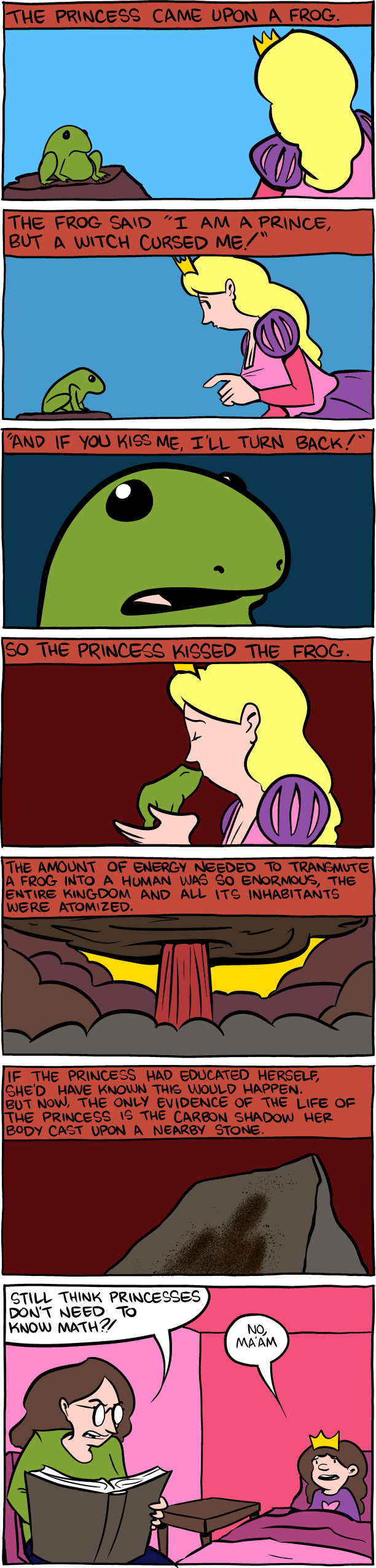
WOOH. Technically, there are some glitches in the early archives, so I don't actually know which comic this is. BUT, the longer I do this, the closer the large round numbers get to being correct.
Thanks for giving me the best job ever, geeks.
June 06, 2013
Osias Jotavia Snorkmaiden
WOOH. Technically, there are some glitches in the early archives, so I don't actually know which comic this is. BUT, the longer I do this, the closer the large round numbers get to being correct.
Thanks for giving me the best job ever, geeks.
esmeyny, Claes Mogren likes this
06 Jun 20:49
Os Stark são tão genre blind que os vilões ficam com dó e dão dicas... e nem assim!
by OsiasJota (Osias Jota)
Os Stark são tão genre blind que os vilões ficam com dó e dão dicas... e nem assim!
06 Jun 12:48
Sadistic time-traveler out to ruin the 20th Century
Osias Jotavia José Bruno Barbaroxa
It was this latter concern that led Charles Kettering, director of General Motors Research, to write a 1929 magazine article called “Keep the Consumer Dissatisfied.”Whoa, whoa, whoa. Hold up. Charles Kettering was also the guy who put lead into gasoline and invented CFCs. Are you telling me he’s also to blame for our toxic consumer culture?
At this point, are we certain that this guy wasn’t some sadistic time-traveler out to ruin the 20th Century?
Osiasjota and -1 others like this
06 Jun 12:39



The creation of a fractal Brownian tree. Particles move around...
Osias Jotavia Kentaro
The creation of a fractal Brownian tree. Particles move around on random walks, but can become stuck starting at a seed in the centre. This creates intricate patterns similar to those created in certain chemical reactions and electric discharges. [more] [code]
Russian Sledges, firehose and one other like this
05 Jun 01:32
Ditador odeia Tuíter. Como não amar? http://t.co/3KtEugbhHr
by OsiasJota (Osias Jota)
Ditador odeia Tuíter. Como não amar? http://t.co/3KtEugbhHr
05 Jun 00:43
Gorilla Research
by Doug
Osias Jotavia Albener Pessoa

More gorillas.
Albener Pessoa, Rachelcurioso and 2 others like this
04 Jun 23:42
Será que tem uma comunidade orkut "Eu torço pros Lannisters"?
by OsiasJota (Osias Jota)
Será que tem uma comunidade orkut "Eu torço pros Lannisters"?
Tadeu likes this
04 Jun 23:29
é um capixaaaaba!! http://t.co/4I2HBr7Bet
by OsiasJota (Osias Jota)
é um capixaaaaba!! http://t.co/4I2HBr7Bet
04 Jun 14:46


Do we look like the kind of store that sells “I Just Called to Say I Love You?”
by Kerry
Osias Jotavia Ana Arantes
Kay spotted these signs while shopping for CDs at a store named JB Hi-Fi in Melbourne. “I personally agree with everything said on there,” Kay says, “but the two 17-year-olds who brought the note to my attention clearly didn’t. (One of them actually said ‘Who the fuck is Johnny Rotten?’) I thought it was priceless.”
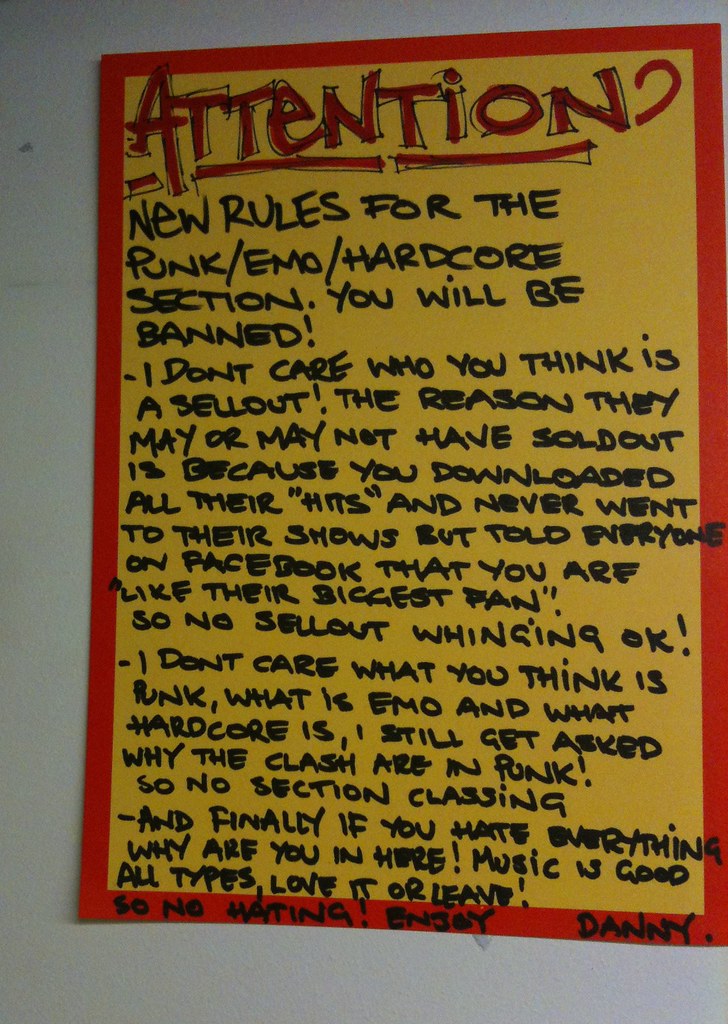
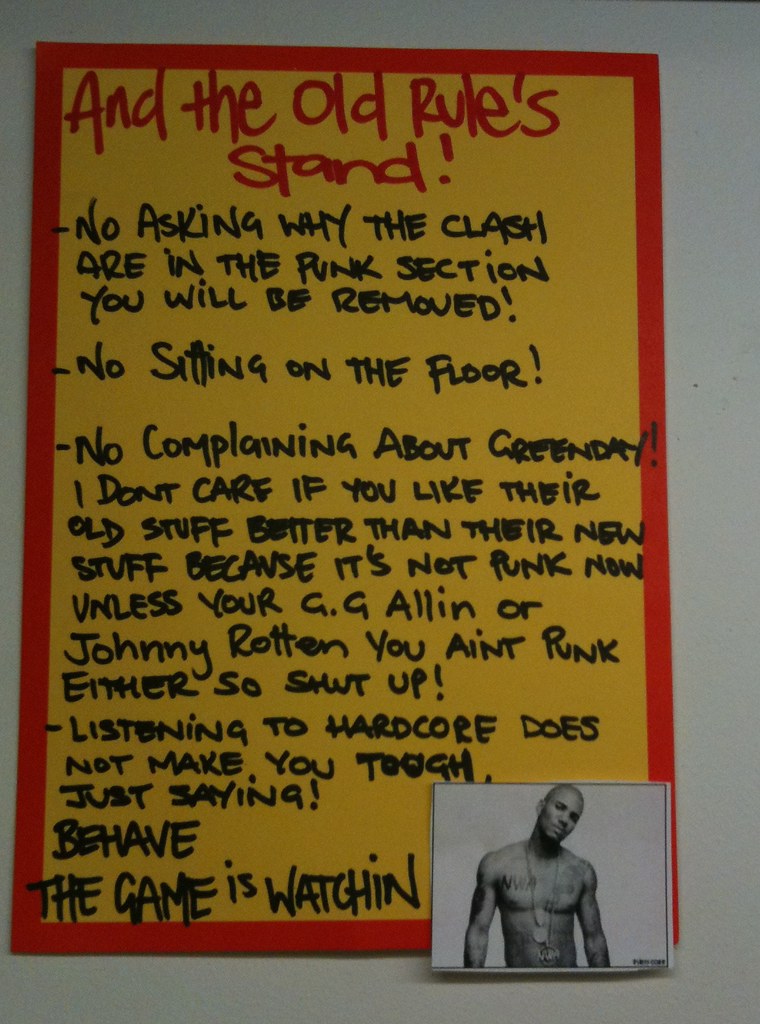
related: Top five musical crimes perpetrated by record store customers in the 90s and 2000s
Andreidignart, Claudia.kierig and 4 others like this
04 Jun 12:52
Um guia para entender as manifestações em Istambul
by Gustavo Chacra
Osias Jotavia Adam
Erdogan no poder
O governo de Recep Tayyp Erdogan assumiu o poder há cerca de dez anos. Seu partido, o AKP, tem um viés conservador religioso. A Turquia, por outro lado, desde o colapso do Império Otomano e a Revolução de Mustafa Kemal Ataturk, havia se transformado em uma nação laica, embora majoritariamente muçulmana sunita, com minorias judaicas, armênias e cristã ortodoxa.
Ao longo das décadas de 1980 e 90, a Turquia passou por ditaduras militares seculares. Conservadores islâmicos eram perseguidos e praticamente banidos da política. A chegada de Erdogan ao poder foi, portanto, uma transformação no cenário turco. Os religiosos passaram a ser aceitos.
Reformas econômicas, mas desrespeito à democracia
Inicialmente, Erdogan foi elogiado. Respeitou as regras democráticas e melhorou a economia turca. Inclusive, em 2010 e 2011, a Turquia cresceu mais de 8%, embora no ano passado a taxa tenha sido bem menor, pouco superior a 2%. O premiê também sempre manteve uma boa aliança com os EUA, seja com George W. Bush ou com Barack Obama, de quem é amigo. Os turcos, vale lembrar, são integrantes da OTAN.
Ao mesmo tempo em que a economia e a aliança com os EUA seguiam bem, Erdogan, com o passar do tempo, começou a desrespeitar alguns pilares da democracia turca. A imprensa foi reprimida e militares foram presos. A boa relação militar com Israel foi praticamente jogada no lixo para defender o Hamas o Gaza. Ações também violaram o caráter laico da Turquia.
Classe média religiosa versus classe média laica
Uma nova classe média emergente e religiosa do interior também passou a assustar os tradicionais turcos da elite e mesmo a classe média de Istambul, Ancara e outras grandes cidades turcas..
Nos últimos meses, a imagem de Erdogan se deteriorou muito. Primeiro, sua aposta na queda de Bashar al Assad e o apoio à oposição trouxeram um conflito sangrento para a fronteira com a Turquia. Parte da população, especialmente a mais laica, não entende o motivo de o premiê ter rompido com Assad, um líder secular e entusiasta de investimentos turcos, para apoiar os rebeldes. A resposta, para muitos, seria o caráter religioso da oposição síria, similar ao de Erdogan.
O diálogo com os curdos do PKK tem um impacto menor. Assim como na rejeição do genocídio armênio e na ocupação ilegal do Chipre, a questão curda é uma das de menor atrito entre Erdogan e os opositores.
Hoje a Turquia possui três grupos. Os laicos, defensores do kemalismo, os religiosos, defensores de Erdogan, e os liberais, que são laicos, mas toleram a liberdade religiosa.
Os protestos e a repressão
A decisão de construir prédios otomanos e um shopping, destruindo um parque ao lado da praça Taksin, serviram de símbolo para o antagonismo entre estes grupos da sociedade turca. De um lado, o neo-otomanismo religioso de uma classe média emergente ligada a Erdogan. De outro, o tradicionalismo laico dos kemalistas, aliados aos liberais. É a Turquia religiosa de Erdogan, aliada dos EUA, contra a Turquia laica.
Erdogan, repetindo líderes que ele tanto critica, como Assad e Hosni Mubarak, ex-ditador do Egito, reprimiu com violência os protestos e prendeu mais de mil pessoas ao redor do país. Verdade, está longe de ser como na Síria. Além disso, Erdogan está legalmente no poder, em eleições vencidas justamente, diferentemente de Mubarak.
A praça Takzsin
Mas nada justifica a violência do governo contra o direito de os turcos se manifestarem pacificamente. Se Erdogan realmente se diz um democrata, deveria ouvir as demandas dos manifestantes e ver qual a melhor solução. Convenhamos, Istambul não precisa de réplicas de prédios otomanos. Basta cruzar o Chifre de Ouro, que separa a parte moderna de Istambul da antiga, onde fica o bairro de Sultanahmet, para ver suas históricas e magnificas construções otomanas. E para que um shopping se ao lado da Taksin está a charmosa e comercial rua Istklal?
Guga Chacra, comentarista de política internacional do Estadão e do programa Globo News Em Pauta em Nova York, é mestre em Relações Internacionais pela Universidade Columbia. Já foi correspondente do jornal O Estado de S. Paulo no Oriente Médio e em NY. No passado, trabalhou como correspondente da Folha em Buenos Aires
Comentários islamofóbicos, antisemitas e antiárabes ou que coloquem um povo ou uma religião como superiores não serão publicados. Tampouco ataques entre leitores ou contra o blogueiro. Pessoas que insistirem em ataques pessoais não terão mais seus comentários publicados. Não é permitido postar vídeo. Todos os posts devem ter relação com algum dos temas acima. O blog está aberto a discussões educadas e com pontos de vista diferentes. Os comentários dos leitores não refletem a opinião do jornalista
Acompanhe também meus comentários no Globo News Em Pauta, na Rádio Estadão, na TV Estadão, no Estadão Noite no tablet, no Twitter @gugachacra , no Facebook Guga Chacra (me adicionem como seguidor), no Instagram e no Google Plus. Escrevam para mim no gugachacra at outlook.com. Leiam também o blog do Ariel Palacios
Tadeu, Julianamarques likes this
04 Jun 01:13
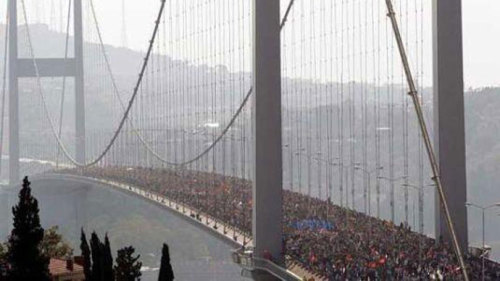
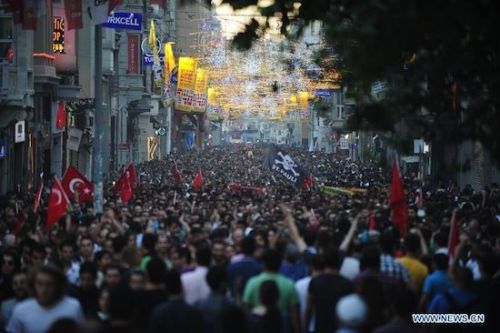
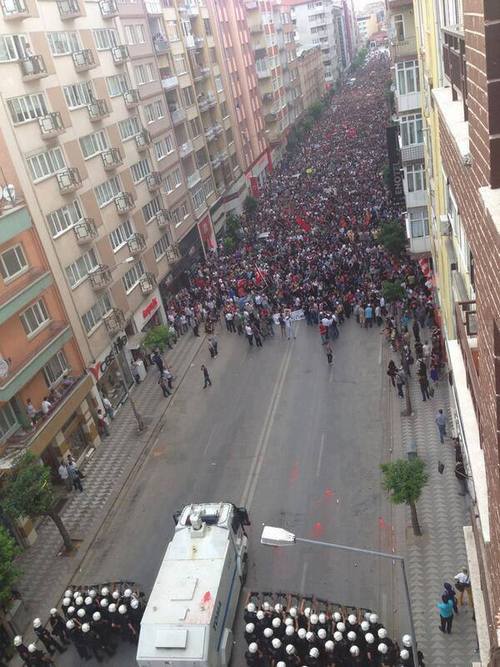
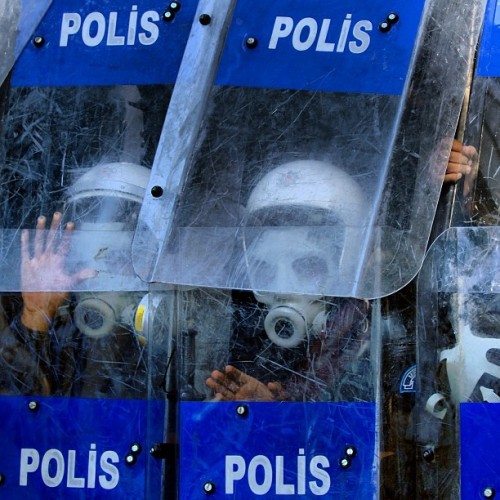
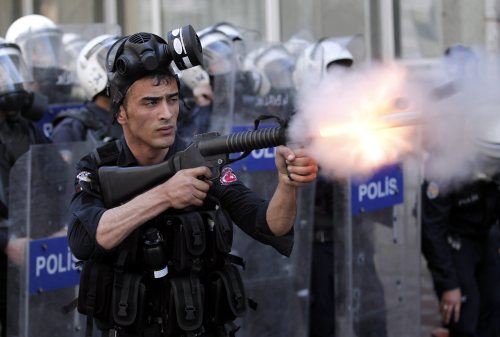

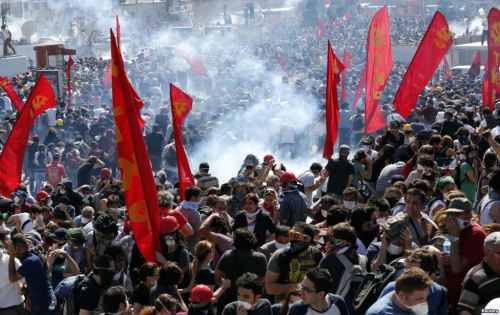
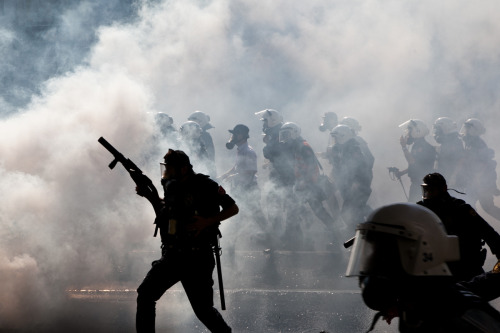
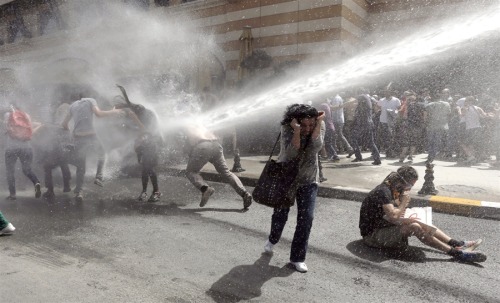
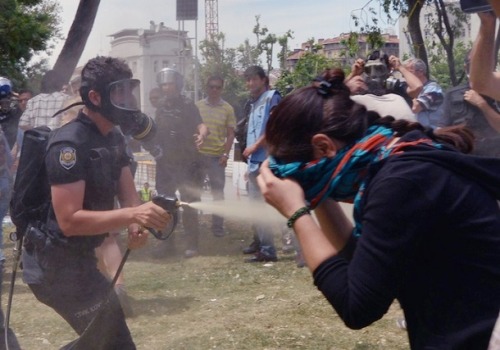
girlgoesgrrr: TODAY IN TURKEY National Protest: Istanbul:...
Osias Jotavia Russian Sledges, via firehose
TODAY IN TURKEY
National Protest: Istanbul: 01-02JUNE2013
ACAB Worldwide
WAKE UP — SIGNAL BOOST
02 Jun 17:36
Poetic software
by John
Osias Jotavia Marco Almada
Osiasjota, Dmitry Krasnoukhov and 4 others like this
01 Jun 23:56
lolzpicx: Windows version of Google’s Project Glass
Osias JotaAlan Porto


Jamesthollowell, Albener Pessoa and one other like this
01 Jun 18:55
RT @bitcoininfo: A Virtual Weimar - Hyperinflation in Diablo 3 http://t.co/w1h0smjl1b #bitcoin
by OsiasJota (Osias Jota)
Tadeu likes this
01 Jun 03:02
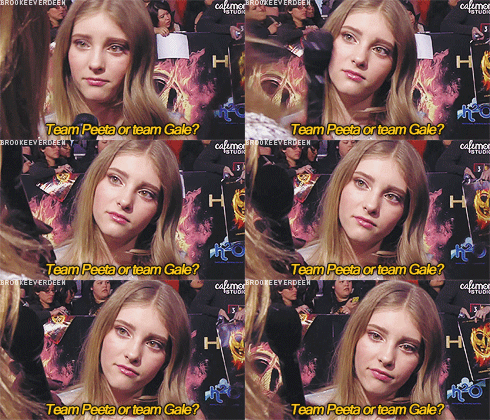

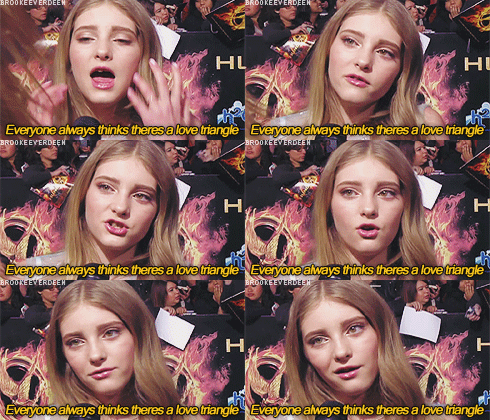
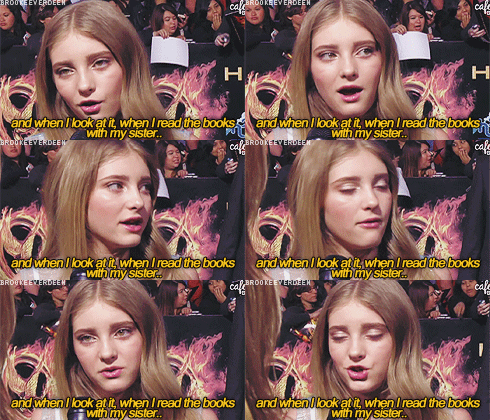
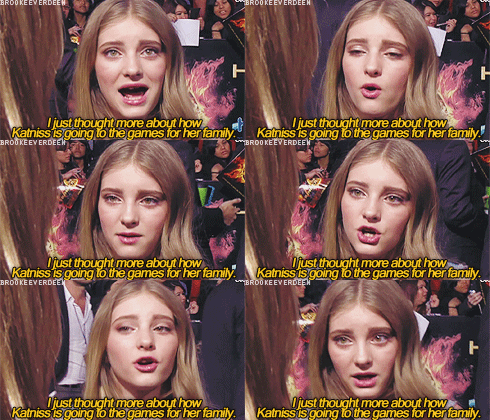
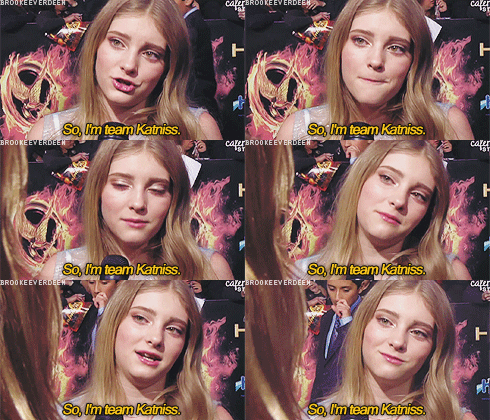
peetaslongbun: Oh hey look, a 12 year-old just grasped the main...
Osias Jotavia Lori. ACabei de ler hoje e é isso aí
Oh hey look, a 12 year-old just grasped the main concepts of The Hunger Games more accurately than most media networks.
Fpviper, Jeffchisholm and 2 others like this
31 May 22:41


Sequestro na madrugada
by Cora
E não é que os bandidos continuam ligando dos presídios? Acabei de receber a ligação de uma voz chorosa:
– Mãe… mãe…
Fiquei com vontade de dizer uns palavrões, mas me contive. Estava curiosa em ver como é a conversa dos caras.
– O que foi?
– Eu fui assaltada. Me roubaram tudo.
– Onde é que você está?
– Estou no carro com eles, eles estão com uma arma…
– Não estou entendendo nada, fala direito!
– Eles estão com uma arma apontada para a minha cabeça.
– Ah, tá. Mas para de chorar porque não estou entendendo nada do que você está dizendo.
– Eu vou passar pro cara que me assaltou e que está com a arma.
– OK.
– Boa noite, senhora. Fica calma
– Eu estou calma.
– Nós estamos aqui com a sua filha.
– Isso eu já entendi.
– Nós fizemos um assalto, a coisa não foi bem para nós e infelizmente tivemos que pegar ela e mais dois rapazes. Posso confiar na senhora?
(Achei o pedido meio esquisito vindo de quem vinha; estava me segurando para não cair na risada, afinal os coitados estavam se esforçando no teatrinho.)
– Depende. Confiar como?
– Nós não queremos polícia no caso.
– Ah, OK. Onde vocês estão?
– A senhora está me perguntando isso para mandar polícia, não é?
– Não, estou perguntando por curiosidade. mesmo.
– Nós estamos com ela e com os rapazes no carro. Precisamos marcar um encontro com a senhora para entregar a sua filha. Nós estamos com ela aqui…
– Sei, isso eu já entendi.
– É a sua filha. Eu estou ligando para a senhora do celular dela, não estou?
– Como é que eu posso saber? Você ligou para o meu fixo, eu não vi o número. Qual é a marca do aparelho?
(Voz ao fundo, aos prantos: “Mãe, socorro mãe!”)
– Minha senhora, eu não estou querendo machucar a sua filha…
– Tá certo, mas qual é a marca do aparelho dela?
(“Mãeeeeeeee… Socorro, mãeeeeeeee!”)
– É a senhora que vem pegar a sua filha?
– Claro que não.
– Quem é, então? É a polícia? Já falei que a gente não quer polícia!
– Não, nada de polícia.
– Quem é que está aí com a senhora?
– Como assim?
– Quem é que está escutando essa conversa?
– A minha família, ué.
– Mas quem, porra?!
– Ah, você é muito mal educado! Pode ficar com essa moça.
Quando desliguei, vi o número no meu aparelho. Deixei passar um tempinho, peguei um celular que está aqui para teste e liguei para lá. Tocou, tocou e acabou sendo atendido pelo cara que falou comigo. Desliguei. Comecei a escrever este post, e daqui a pouco o tal celular começou a tocar, chamado pelo indigitado número. É claro que não atendi. Em vez disso, telefonei para o 190, onde me informaram que não era com eles (!) e sim com a Polícia Civil. Liguei para a 14ª, expliquei o que houve, passei o número dos “sequestradores” e fui fazer um café.