Shared posts

31 Oct 11:58

Fantasy-Driven Photography Inspired by Fears and Dreams

by Pinar


Photographer Chiara Fersini aka Himitsuhana captures a sense of liberation with her portfolio of dreamy photography. Her carefree images feature nymph-like subjects in elaborate, flowing gowns. In some instances the women in Himitsuhana's scenes are gracefully being swept by a breeze, while in other shots their attire is dramatically taking on a shape of their own. The photographer also extends garments with images of feathered wings or flocks of birds to further accentuate a sense of freedom.

There's a surreal quality about the photographer's growing collection of work that plays with different silhouettes of the female form. Himitsuhana combines themes of nature with the human form and manmade fashion. Whether her images are of women within concrete barriers or out in an open landscape, they are fantasy-driven shots that merge numerous elements of "her fears, dreams, her sorrow and joy."


Himitsuhana website
via [Empty Kingdom]

11 Sep 19:01

Empathy + Placebo = Healing?

by Neuroskeptic

Psychotherapy, voodoo, and complementary/alternative medicine (CAM) are all cut from the same cloth; they are ‘healing methods’ that relieve symptoms because they provide two key things: empathy and the placebo effect (E&P).

That’s according to Belgian physicians Mommaerts and Devroey in a new paper: From “Does it work?” to “What is it?”

They say that, given that E&P are a powerful psychological force, it makes little sense to ask of any particular CAM, “Does it work?”.  So long as it provides non-specific E&P, just about any intervention will work – there is nothing surprising about the fact that any particular CAM does.

We can ask whether the specific aspects of the treatment do anything, but the answer here is almost always “no”, and often “obviously not”, as in the case of homeopathy.

Even in psychotherapy, it is debatable whether any therapy is specifically effective although many have prima facie plausible theories behind them.

E&P is often the only thing people need. But it can be hard to find it in mainstream medicine. The authors write:

CAM represents a failing of scientific medicine, in that CAM seeks to address patients’ needs that are lost in the technologically focused interactions of modern medicine. CAM represents many patients’ search for empathy.

Perhaps there’s a solution: more empathy in mainstream medicine, or in general, some kind of ‘pure’ E&P that doesn’t rely on unscientific foundations? This is what the authors suggest.

They even discuss the possibility of a future “profoundly rational EP treatment”.

But I have to wonder, could this work? Can empathy and hope (placebo) ever be purely rational, or are they only able to enter the human mind by stealth, not through the front door?

To put it another way, if you set up shop and sold sessions of Empathy and Placebo, would anyone pay for it? Wouldn’t that lack the romance that makes the whole thing work…?

Interestingly, Jean-Luc Mommaerts is himself in the healing business. Here’s his vehicle for E&P: Aurelis® (“AUtosuggestion RELaxation Inner Strength”) product.

ResearchBlogging.orgJean-Luc Mommaerts, & Dirk Devroey (2013). From “Does it work?” to “What is it?”: Implications for Voodoo, Psychotherapy, Pop-Psychology, Regular, and Alternative Medicine Perspectives in Biology and Medicine, 56 (2) DOI: 10.1353/pbm.2013.0015

The post Empathy + Placebo = Healing? appeared first on Neuroskeptic.

11 Sep 18:46

Why the student learning aspect matters in the Wikipedia Education Program

by Jami Mathewson

Editor’s note: The following is an op-ed, meaning the views expressed herein are the personal views of the author.

Jami Mathewson

I’ve been working with the Wikipedia Education Program in the United States and Canada for almost two years. In the program, university professors assign their students to edit Wikipedia as a part of the coursework. Typically, professors do away with a traditional research paper and instead train students to complete the same research and summarize it into a Wikipedia article.

If you’re unfamiliar with the concept of using Wikipedia in the classroom, your first thought may be that this is a great way to “legitimize” Wikipedia and bring “good writers and researchers” into the project as editors. I hear this all the time. But Wikipedia doesn’t need help being legitimized, which I explain to newcomers fairly often. And I find that students, for the most part, are not good writers and researchers; I think most professors would likely agree. In a more perfect world, our high school students would graduate with a solid understanding of academic scholarship, and of how to find it, reproduce it, and cite it. As of now, this is a skill many students don’t pick up until graduate school.

But in our world of information—where so much is accessible at the click of a button, in the palm of our hand, in an instant—these research skills are more important than ever. We need to teach our students how to read a news source, assess its origin, and analyze its reliability. We need to teach our students when they should take something with a grain of salt, even when—or especially when—it’s on the internet.

This is what the Wikipedia Education Program offers its participants every term. Student editors learn how to consume information by producing it. Rather than use Wikipedia solely as a reference point, they engage in a participatory assignment and learn the intricacies of knowledge dissemination. With 500 million people accessing Wikipedia every month, it is important to determine what they are accessing Who decides what is important enough to make it into an article? What scholarship is referenced, and what newspapers are cited?

We’ve already done two research projects and the results prove that student editors are not only capable of improving the quality of Wikipedia articles, they actually do so almost 9 out of 10 times. This isn’t shocking to me. The students are working toward getting a good grade; they have access to reliable sources through their university libraries; and their professors can identify gaps in the scholarship on Wikipedia through their own expertise, even if they don’t take the time to edit themselves.

While we’ve shown that these contributions to Wikipedia articles are significant, I don’t think that is the only reason the Wikipedia Education Program has the potential to be so world-changing. The ideal outcome I see for the program is this: Student editors have a positive learning experience and, in the meantime, they improve the quality of Wikipedia. Perhaps the student editor makes a minor textual contribution but improves her understanding of how to cite research from a peer-reviewed journal. Perhaps the entire class edits “only” two articles, but they achieve Good Article status and learn about information literacy and critical thinking. Or maybe a student editor significantly edits just one article, learning how to evaluate and expand a topic’s coverage, and that improved article on, for example, infant mortality reaches at least 20,000 viewers every month.

Famously, Jimmy Wales asked us to “imagine a world in which every single person on the planet is given free access to the sum of all human knowledge.” I believe that the sum of all human knowledge is not limited to a compilation of events, biographies, theories, etc. Isn’t information literacy a part of that knowledge? What about writing skills and research skills? The ability to work collaboratively, to compromise, to remain open-minded to changing your opinion as you widen your perspective? I believe our community of editors is learning these skills, and it’s important to share this with as much of the world as possible.

The quantitative and qualitative impacts to Wikipedia are not the only impacts when a student edits Wikipedia. I hope we can establish some reliable, realistic metrics to assess the student learning outcomes within the program, so we can evaluate our efficacy through this lens. I look forward to seeing the use of Wikipedia in the classroom grow to give even more people the opportunity to gain so much from editing Wikipedia.

Jami Mathewson
Wikipedia Education Program, United States and Canada

11 Sep 17:29

Between love and madness lies... Obsession.™

archive - contact - sexy exciting merchandise - cute - search - about
← previous September 11th, 2013 next

September 11th, 2013:

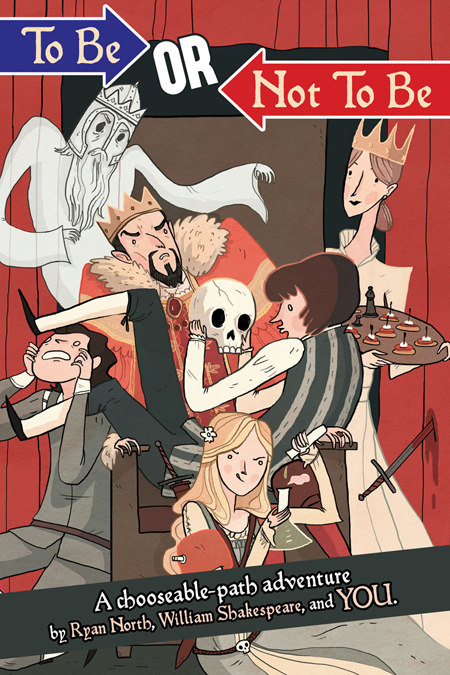
Today To Be or Not To Be, my choose-your-own-path version of Hamlet, is out for real! If you missed out on the crazu-awesome Kickstarter you can get the book at your local book store, or on Amazon, or digitally, or basically in a zillion other ways. Check out hamletbook.com for more details, and I hope you like my crazy book! It is a really good book if I do say so myself!

One year ago today: baby, given infinite chances i totally would've made that dunk

– Ryan

11 Sep 12:29

Conheça a vila totalmente adaptada pra realidade de pacientes com Alzheimer

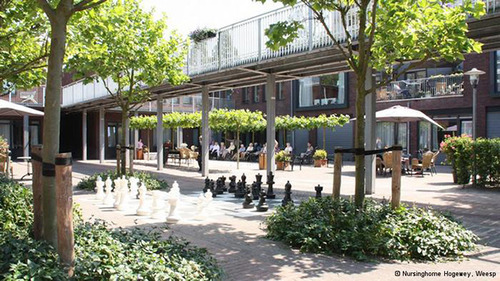
É como um micro-mundo e é também uma forma pioneira de abordar uma doença sem cura. O Alzheimer é dos mais poderosos males que afetam o cérebro humano, levando à demência e à perda progressiva de faculdades mentais e motoras. Em Hogewey Village, na Holanda, os pacientes não ficam entre corredores e cheiro de hospital. Eles levam uma vida normal, tanto quanto for possível, em um mundo que se adaptada às suas próprias fantasias.

Na vila todo mundo tem ligação com o Alzheimer: se não é doente, é porque é médico, enfermeiro ou assistente social. São 23 casas em toda a vila, divididas por 140 internos e 30 profissionais. Mas o mais curioso é o que vem depois – Hogewey tem tudo o que as pessoas podem querer, como salão de beleza, restaurante, café, clube cultural ou mercado. Mas então quem atende os pacientes nesse tipo de estabelecimentos? Isso mesmo, os profissionais de saúde.

Uma enfermeira rapidamente vira cabeleireira, uma assistente social passa a ser dona de banca em segundos e um médico psiquiatra é garçom com naturalidade. “Pelo menos aqui os doentes têm uma vida normal dentro do mundo criado pela mente deles. E nós procuramos respeitar a individualidade de cada um. Todos, ao seu modo, são felizes”, conta a diretora da clínica, espécie de prefeita dessa mini-cidade.

Na Hogewey Village, em Weesp, Holanda, os pacientes não ficam curados e não deixam de perder a memória dos dias felizes. Mas a verdade é que, até aos últimos momentos de suas vidas, eles uma coisa não vão perder – o prazer de uma vida digna.

Esse tipo de atitude é mais um exemplo que demonstra a evolução cultural e de mentalidade de uma nação, que já passou por diversos problemas que passamos hoje no Brasil, mas que encontrou uma forma de fazer diferente, e de realmente criar um sistema social feito para a população. Quando chega no Brasil?

Ler a matéria na íntegra | Curta A Boa Notícia do Dia | Siga no Twitter

11 Sep 12:28

a senilidade, ela não tem limites

by Patricia C.
Estou resfriada (gripada? jamais saberemos) há mais de duas semanas e não melhoro em nada. Até descobrir hoje que, RYSOS, estava tomando atroveran no lugar do fluviral.

Lembrei de uma vez que confundi a cartela do anticoncepcional com a cartela do dramim. Sorte minha que ninguém me come, do contrário tava aí com filho.

E ainda, de quando achei um "m&m's" na bolsa, fui comer e era neosaldina. Etc.

11 Sep 12:24

Photo


11 Sep 11:54

Bad Abstracts

by Neuroskeptic

In an ideal world, scientific papers wouldn’t have abstracts.

There’d be no need for them, because every ideal scientist would have the time to read every published paper in full, and a perfect memory for all of the details.

Sadly we don’t inhabit such a world, so abstracts are perhaps the most important part of a manuscript – certainly so, in proportion to the word count.

The bottom line is, if you as an author want citations for your paper, you need a good abstract. Yet abstracts often go wrong. In my opinion (and I read a lot of the things), an abstract should not contain…

Prologue. Many good abstracts begin in media res, describing the methods with no introduction at all. Alternatively, a concise intro can work, but this should be limited to explaining the question that the study set out to answer. A list of prior findings is not called for. A paper should start with a review of previous literature – but an abstract is not a paper, nor is it the beginning of one. It’s a whole art form in itself.

Footnotes. A paper’s abstract [1,2] just doesn’t need [3] these [4]. I think they generally end up there because of hasty copy-and-pasting from conference abstracts, where they’re common. Anyway, avoid doing this. But if you insist on having them, at least make sure the notes they refer to are included at the end of the abstract!

Promises: An abstract should make the reader want to see the full paper. It shouldn’t tell them to do so – rather an abstract should show readers how interesting the paper is, by being interesting itself. So avoid empty phrases like “Implications will be discussed…” or “Several results were observed…”. If a result is interesting, describe it; if not, don’t mention it.

Mistakes. You might get away with a few English language errors or typos in the main text, but you just can’t afford even one in the abstract. Anyone who notices it won’t bother to read (or cite) you; the rest of the paper could be perfect, but that’s no good, if no-one reads it. Oh, and make sure the statements in the abstract match the ones in the paper.

The post Bad Abstracts appeared first on Neuroskeptic.

11 Sep 11:52

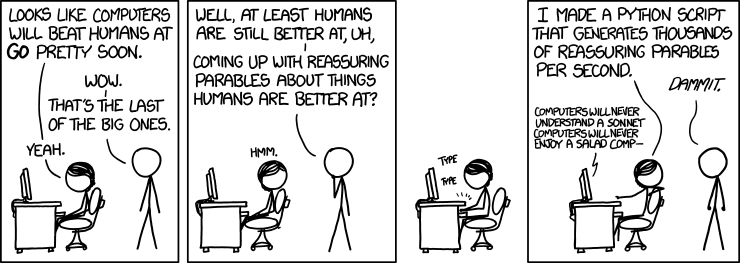
Reassuring

'At least humans are better at quietly amusing ourselves, oblivious to our pending obsolescence' thought the human, as a nearby Dell Inspiron contentedly displayed the same bouncing geometric shape screensaver it had been running for years.
11 Sep 11:51

Gif based web comics, Stephen Vuillemin


Gif based web comics, Stephen Vuillemin

11 Sep 11:28

Try Harder

by Doug

Try Harder

Here’s more language.

11 Sep 01:02

A teoria do Cisne Negro resolveu a crise da Síria?

by Gustavo Chacra

Leia também

Teoria dos Jogos para entender o dilema de Assad

Por que os cristãos sírios apoiam Assad?

Entenda a batalha da Síria no Congresso dos EUA

O dicionário de Obama para a Síria

O Argumento dos libertários do Partido Republicano contra uma intervenção na Síria

Como Obama conseguirá convencer o Congresso a autorizar uma intervenção?

Por que a Rússia apoia Assad?

Uma tentativa de explicar a crise das armas químicas na Síria

Por que Assad teria usado armas químicas? Respostas curiosas neste post

Uma intervenção militar contra Assad será péssima para os cristãos sírios

Como seria a resposta de Assad a bombardeios dos EUA e seus aliados

Um resumo das armas químicas na Síria

Qual estratégia de Obama para a Síria? Um bombardeio punitivo, sem derrubar Assad

A teoria do Black Swan (Cisne Negro), do milionário libanês e professor da NYU, Nicholas Nassim Taleb, se aplicou perfeitamente à crise síria. Há semanas, a discussão era se os EUA, com o apoio de alguns aliados, deveriam intervir ou não na Síria em resposta ao ataque químico atribuído às forças de Bashar al Assad pelo governo americano – o regime sírio nega e não há confirmação independente.

Tudo mudou ontem quando o secretário de Estado dos EUA, John Kerry, afirmou, em entrevista coletiva, que a única opção para evitar um ataque seria a Síria abdicar imediatamente das armas químicas. Mas, segundo o chefe da diplomacia americana, isso seria impossível de acontecer.

Surpreendentemente, isso aconteceu. Horas depois de Kerry falar, o chanceler da Rússia, Sergey Lavrov, encampou a ideia. Disse que governo russo apoiava. Imediatamente, o ministro das Relações Exteriores da Síria afirmou receber bem a proposta. À noite, embora mantendo a cautela, o presidente Barack Obama já celebrava a ideia. Hoje veio a resposta oficial, e positiva, do regime em Damasco.

A próxima etapa será uma resolução no Conselho de Segurança, que já começou a ser redigida pela França. A Rússia tende a apoiar, pois foi a idealizadora da proposta. O consenso chega à comunidade internacional. O Congresso dos EUA, por enquanto, não precisará decidir sobre uma intervenção.

Quase todos saem beneficiados. A Rússia por ter idealizado a proposta. Os EUA por, pelo menos agora, não precisarem se envolver em uma mais uma guerra no Oriente Médio. Obama por não correr o risco de perder no Congresso. Deputados e senadores por não terem a necessidade de adotar posições em um conflito impopular nos EUA. Assad porque não será bombardeado e manterá o apoio da Rússia, além de seguir sem restrições no uso de armamentos convencionais. A oposição perde por não ver um bombardeio que alteraria a balança de poder, mas ganha ao ver seu adversário sem armas químicas.

Claro, o ceticismo deve ser elevado nesta questão. Não dá para confiar no regime de Assad. Mas, se a Rússia estiver séria, Damasco precisará colaborar.

Agora, o que me pergunto é – Por que ninguém teve esta ideia antes? Nenhum diplomata, nenhum militar, nenhum analista, nenhum deputado, nenhum presidente? Na verdade, muitos até tiveram. Mas ninguém imaginou que a Rússia e a Síria aceitariam tão facilmente. É o Cisne Negro.

Guga Chacra, comentarista de política internacional do Estadão e do programa Globo News Em Pauta em Nova York, é mestre em Relações Internacionais pela Universidade Columbia. Já foi correspondente do jornal O Estado de S. Paulo no Oriente Médio e em NY. No passado, trabalhou como correspondente da Folha em Buenos Aires

Comentários islamofóbicos, antisemitas e antiárabes ou que coloquem um povo ou uma religião como superiores não serão publicados. Tampouco ataques entre leitores ou contra o blogueiro. Pessoas que insistirem em ataques pessoais não terão mais seus comentários publicados. Não é permitido postar vídeo. Todos os posts devem ter relação com algum dos temas acima. O blog está aberto a discussões educadas e com pontos de vista diferentes. Os comentários dos leitores não refletem a opinião do jornalista

Acompanhe também meus comentários no Globo News Em Pauta, na Rádio Estadão, na TV Estadão, no Estadão Noite no tablet, no Twitter @gugachacra , no Facebook Guga Chacra (me adicionem como seguidor), no Instagram e no Google Plus. Escrevam para mim no gugachacra at outlook.com. Leiam também o blog do Ariel Palacios

11 Sep 01:00

Photo


10 Sep 22:13

nevver: The Pool

10 Sep 22:12

dat-chem-nerd: tonialforehead: stupidfuckingquestions: The...


dat-chem-nerd:

tonialforehead:

stupidfuckingquestions:

The Australian Sex Party Campaign Ad 2013 (x)

meanwhile, in australia.

Omg

10 Sep 22:10

viagrah: undercover-witch: You do know the one with the...


viagrah:

undercover-witch:

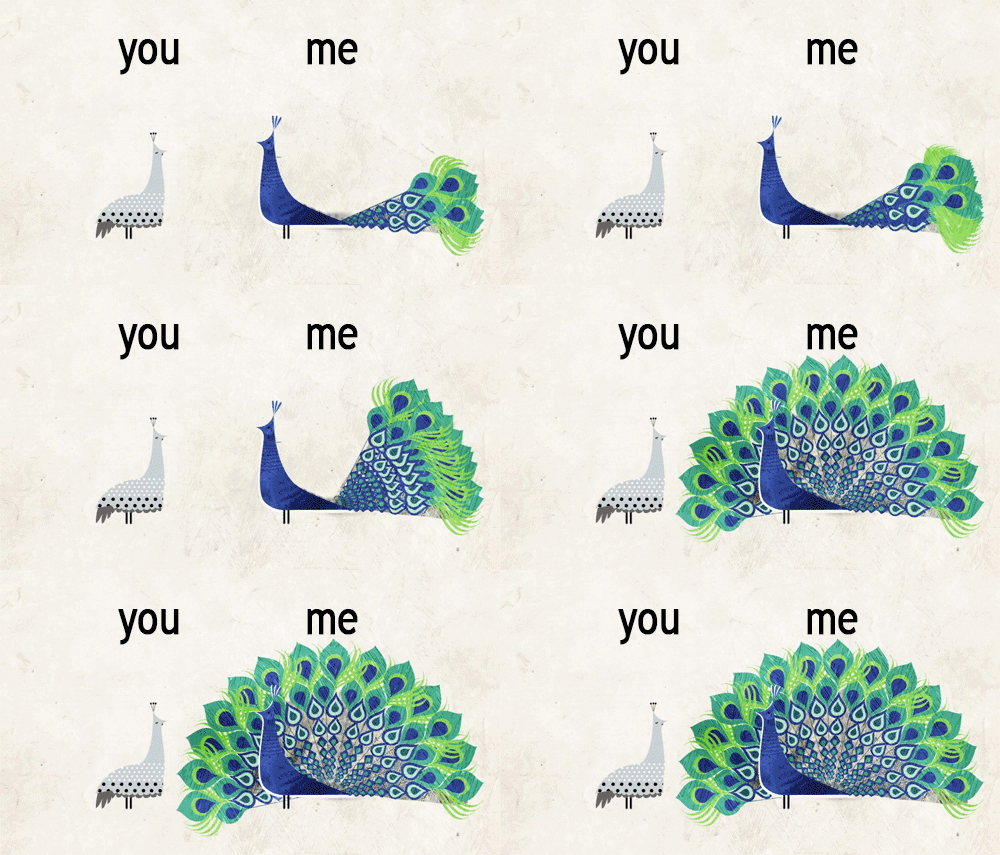
You do know the one with the beautifully colored plumage is the male peacock and it only presents itself like that to attract the plain colored female, right?

So basically the only role your fabulousness has is to impress the plain ol’ me. And I may or may not give a fuck.

image

image

image

the last one omfg im so done

10 Sep 22:09

Photo


10 Sep 14:45

Photo


10 Sep 13:17

Baralho inspirado pelos campos de concentração

by Alessandro Martins

Boris Kobe (1905-1981) foi um arquiteto e pintor esloveno que foi prisioneiro político no campo de concentração de Allach, um sub-campo de Dachau, perto de Munique, na Alemanha.

Estas imagens são reproduções das cartas originais fornecidas por cortesia da delegação eslovena à Conferência Internacional do Fórum Estocolmo no ano de 2000. 

campo de concentração 01

Como um todo, esta obra de arte representa um resumo visual da vida num campo de concentração, com sequências trágicas e humilhantes de Kobe, temperadas com humor amargo. Este conunto é uma crônica em miniatura do crepúsculo da humanidade provocada pelo nazismo, que considerava um ser humano e, portanto, o próprio artista, como um mero número.

Não há nenhum significado oculto nessas cartas. Devem ser lidas como um livro de memórias visuais dramático da vida horrível dos campos de concentração nazistas.

campo de concentração 02

campo de concentração 03

campo de concentração 04

campo de concentração 05

campo de concentração 06

campo de concentração 07

campo de concentração 08

campo de concentração 09

campo de concentração 10

campo de concentração 11

campo de concentração 12

campo de concentração 13

campo de concentração 14

campo de concentração 15

campo de concentração 16

campo de concentração 17

campo de concentração 18

campo de concentração 19

campo de concentração 20

campo de concentração 21

campo de concentração 22

campo de concentração 23

campo de concentração 24

campo de concentração 25

campo de concentração 26

campo de concentração 27

campo de concentração 28

campo de concentração 29

campo de concentração 30

campo de concentração 31

campo de concentração 32

campo de concentração 33

campo de concentração 34

campo de concentração 35

campo de concentração 36

campo de concentração 37

campo de concentração 38


Encontrei no Center For Holocaust and Genocidie Studi

10 Sep 12:42

Us and Them

by Greg Ross

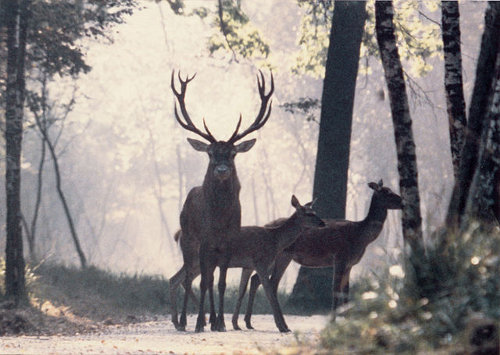
http://commons.wikimedia.org/wiki/File:Red_Deers_on_a_path_in_a_forest_of_Haute-Normandie.jpg

Red deer still honor the Iron Curtain. During the Cold War, barbed wire and an electric fence divided Eastern Europe from the West, separating the deer population into two groups. Deer follow traditional trails, which are taught to each generation by its forebears. Now that the fence is gone, red deer range on both sides of the border but refuse to cross it.

“In the past, the deer didn’t go to the Czech side because of the fence,” German biologist Marco Heurich told the Wall Street Journal in 2009. “Now the fence is gone but they still stop at the border.” Film producer Tom Synnatzschke added, “The wall in the head is still there.”

As with humans, it’s the young deer who are testing the old ways. “Our data showed that the animals behaved very traditionally,” said zoologist Pavel Sustr. “The former border was in the minds of the animals. But some of the young animals are searching for new territory. They are more and more deleting the border behavior that was there before.”

10 Sep 11:26

September 09, 2013


Hey! I did a bonus card drawing for this Kickstarter card game project. That's another childhood geek fantasy checked off the list!
09 Sep 21:12

fer1972: Sakke Soini

09 Sep 20:33

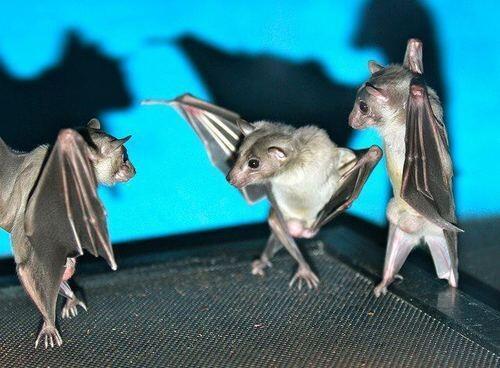
phdebaecque: If you flip a photo of bats hanging upside down,...


phdebaecque:

If you flip a photo of bats hanging upside down, they look like they’re having a wicked dance-off.

09 Sep 20:32

SNAP SNAP SNAP                 SNAP            SNAP        SNAP ...


SNAP SNAP SNAP
                 SNAP
            SNAP
        SNAP
    SNAP
SNAP SNAP SNAP

09 Sep 01:11

unimpressedcats: what is libra doing with that toilet?


unimpressedcats:

what is libra doing with that toilet?

09 Sep 01:09

nevver: Bo Dahlbom

08 Sep 14:06

LOLA 120

by Laerte

07 Sep 21:51

fer1972: Animal in Me by  Oscar Delmar


fer1972:

Animal in Me by  Oscar Delmar

07 Sep 21:51

nevver: Charles Burns


Björk, 2005


Tina Fey, 2003


Dr. Strangelove, 2009


Phiip Seymour Hoffman, 2004


Ice Cube, 2004


Gas Mask, 2010


Amy Winehouse, 2011


Mark E. Smith, 2005

nevver:

Charles Burns

07 Sep 13:16

Post Chase

by Greg Ross

concrete arrow

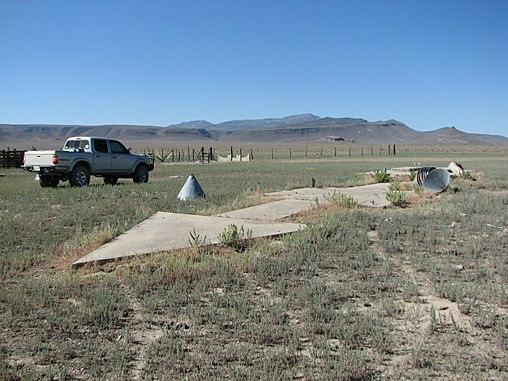
In 1924, air mail pilots were having trouble finding their way across the featureless American southwest, so the Post Office adopted a brutally low-tech solution: Every 10 miles they built a large concrete arrow illuminated by a beacon. Each arrow pointed the way to the next, so that a pilot could stay on course simply by connecting the dots.

The system was finished by 1929, permitting mail planes to find their way all the way to San Francisco. It was quickly superseded by more sophisticated navigation methods, but today the arrows still dot the American desert, ready to confuse hikers and, probably, future archaeologists.

(Thanks, Ron.)