Adam Victor Brandizzi
Shared posts
The Same City Should Host The Olympics Every Year
September 06, 2013

Hey Gaymers! My pals at GaymerX are having a sale until Monday (9/9). Items are already discounted, but if you have an order over $20 and you enter the code "smbc15" and you stand on one leg, you get 15% off.


A Coptic Exodus From Egypt
Adam Victor BrandizziUma entrevista instrutiva. Considere, claro, as posições das pessoas.
In the aftermath of President Mohammed Morsi’s overthrow earlier this summer, Egypt’s Coptic Church has faced an onslaught of persecution. Pro-Morsi supporters vented their anger by burning Christian homes and shops, and when the military staged an August 14 crackdown on protesters, the repercussions for Copts were enormous and tragic: at least 42 churches were assailed, looted, and demolished. Mobs destroyed Christian convents, orphanages, schools, shops, and homes.
This is the culmination of several years of rising persecution for the Copts, whose freedoms were already significantly threatened under President Morsi’s rule. In this volatile situation, the ancient church is increasingly faced with a sobering choice: stay and be persecuted, or leave.
Hudson Institute fellow Samuel Tadros explains this dilemma along with its historical context in his new book Motherland Lost: The Egyptian and Coptic Quest for Modernity. The book offers timely background on this religious persecution, demonstrating how the Copts’ encounters with modernity and Islam have shaped their role in Egyptian society. Now facing religious repression and violence, Copts’ best option, says Tadros, may be to leave Egypt—ending a 2,000-year sojourn in the country. Tadros sees this as detrimental both to the church’s traditions and history and to the future of Egypt itself.
TAC: What is the historical Islamic attitude toward Coptic Christians?
TADROS: Islamism has adopted this clear language towards Christians. As I explain in the book, the Islamist goal for the Copts is not massacre. We’re not talking about complete genocide or Holocaust … but they want Copts to accept the idea that they are second-class citizens, that they are dhimmis in the land of Islam and acknowledge the supremacy of Islam. The lack of acknowledgement of this, a Coptic attempt to ask for or demand equality, is viewed by the Islamists as an assault, and leads to all the attacks.
The Islamist discourse on Copts is that of the “lucky minority”: they were rescued from Byzantine persecution by the Muslim army, they lived happily ever after under the rule of Islam, and they should be thankful for that. They are the ones trying to destroy Egypt with their foreign conspiracies, but they don’t have equal rights in the country at all.
TAC: Do you think, keeping in mind the Muslim Brotherhood’s history, that Morsi could have eventually delivered a more liberal, representative government?
TADROS: The Muslim Brotherhood was always geared to outside pressure, and not to internal change of hearts and minds. So due to outside pressure, the Muslim Brotherhood was forced to be more pragmatic in its efforts and its approach. But once they no longer needed to do that–once they had free hand over the country, and understood that the American president was not going to crack down on them … the army was not that big of a challenge, and they went for getting everything at once. So I don’t think there would have been any internal cooperation.
On the other hand, I don’t think they would have been able to create a sharia-based system, simply because Egypt is not organized enough for anyone to actually build a centralized system of any sort … There’s simply too much chaos and anarchy. The country really doesn’t function on a daily basis. You have a massive bureaucracy with a mind of its own, which was unwilling to work for Morsi’s government. You’ve also got an army that thinks for itself.
TAC: Now the army is back in power, what challenges do you predict for Egypt’s political future?
TADROS: The army’s popularity is enormous. There is no doubt that there is majority support for the army’s action. There has been talk of a military coup, but it really isn’t so. The people really do show a majority support for the army. Part of it is understandable; the army has always been a respected institution. The army has maintained this image of being a national institution that enjoys popular support. So they have this support, the question is: What happens in the future?
Today the army is excluding Islamists from their government, and whatever one thinks of them, they are a huge [percentage] of the Egyptian population. So the system in place [has] within it a seed of instability. The army [is] likely to face pushback, especially as the economic situation continues to deteriorate, especially as politicians don’t have any solution for Egypt’s structural economic problems. As the crackdown continues, they’re likely to face a more resistant population.
TAC: What do you think can be done to help alleviate the persecution Copts have undergone lately?
TADROS: Something to ponder and really think about is that regimes in Egypt have changed, but the persecution of Copts has not.
Mubarak went from the palace to prison, Morsi from the prison to palace to prison again—a lot of things have changed in Egypt, but the plight of the Copts has not. Under Mubarak… there was the Nag Hammadi massacre. Under Morsi, they were under attack and forced evacuation. And then you get this horrific attack on Coptic churches on the 14th of August, which is really unprecedented in Egyptian history. You have to go back to the 14th century to find another attack of this size on Coptic Christians in Egypt. So it’s something to think about. Regimes might change in Egypt, the country might adopt democracy or it might not, but the plight of Copts is not changing, the situation is still the same. It’s a huge problem.
It’s likely that the wave of immigration that we’re seeing is going to continue. It also tells us something that no matter how much they try to change things on the national level, the main threat to Copts today is on the local level. It’s a fact that their very neighbors are the ones attacking them. There was some excellent reporting by Human Rights Watch International on attacks on Copts in the village of Luxor, on the 4th of July this year. In it, they interviewed some of the victims, who told them, “We could hear the voices of the people attacking our homes from the outside. They were the voices of our neighbors.” That’s where things need to change, because changing constitutions and laws is good, but changing the hearts and minds of men when they’ve been filled with hate—that is very hard.
So whatever is to be done, one has to keep in mind that we’re not only talking about government actions to protect a community or change the constitution of a nation, we’re also talking about a culture that’s becoming extremely anti-Christian, where people are attacking their Christian neighbors. Hatred is a very hard thing to change.
TAC: Would you say that Copts’ only choice is to leave?
TADROS: It’s a personal and individual choice each person is making. If you’re my age, you’re still young, you’re thinking about your kids’ future … But if you’re older, the formula is different. It depends on the individual level of persecution. In depends on how much you have in the country that you’re willing to leave behind. It’s a combination of factors.
But there’s no doubt that many Copts today are asking whether the country is still likely to be a home for them and their children. We’re seeing this massive wave of emigration, unlike anything we’ve seen before, over the last several years. As I mention in the book, my local church here in Fairfax, Virginia has really grown by about 50 percent in two years. We had a community of about 3,000 Copts before the revolution, and now we have an extra 1,500 new immigrants in the past two and a half years. So it’s a massive wave, it’s going to make the United States a place where Copts want to move.
TAC: If there is a massive exodus of Coptic Christians from Egypt, do you think Egypt’s secularists will be able to mount any resistance to the Islamization of the country?
TADROS: So far non-Islamists have depended on the state’s power to stop the growth of Islam. The problem for them, of course, is that the state has a mind of its own. The state likes to use the non-Islamists at certain points, to use them as a nice image for the West, but the state is not like Turkey, which has rejected the Islamist project. While the state might include liberal or secular politicians within its government, the general Islamization of society is taking place on the local level.
Egypt’s religious [makeup] is very different from what you would have seen 20 or 30 years ago. Look at any image of the graduates of Cairo University in the year 1970 and the year 2011, and you’ll see huge differences. In the year 1970, only one or two girls in that photo of graduates would have been veiled. Today, you can really pinpoint the unveiled girls, and they’re likely to be Christian girls. This Islamization of the country has been going on for some time, and it is going to continue.
This is part of a wave we’re seeing across the Middle East … the Middle East at the turn of the 20th century, in the year 1900, had about 25 percent non-Muslims among its population, including a variety of Christian sects and Jewish communities. That religious mosaic has survived for about a century.
But today when we talk about the Middle East, we’re talking about a region that’s now—outside of the state of Israel—3 percent Christian. [The Copts in Egypt] are the vast majority of those numbers, plus the Maronites in Lebanon and what remains of Iraq’s Christians and Syria’s Christians. So we’re talking about an enormous demographic change that is largely going unnoticed, one that will have a profound impact. We have to remember that they’re a religious minority that has always taken the role of the link with the West. They are the bridge between two civilizations. If that no longer exists, then we’re talking about a huge problem in the link between two worlds.
TAC: Do you think the Coptic Church can become global without losing its tradition and character?
TADROS: I think it’s a huge challenge. I don’t think I have an answer. It’s a humongous challenge. But you cannot approach Coptic history without this dual sense of the decline and the survival. It’s striking. You see the loss of the Coptic Church after the climb, from a majority of the country to a less than 10 percent community and the loss of everything. But you also realize that of all the North African churches, this is the only one that remains standing. The places where Saint Augustine walked are no longer home to Christianity. It is only in Egypt in all of North Africa that Christianity has survived. That tells us something about the survival of this church.
As I think about the church’s future, I have to return to this theme of the dual nature of decline and survival. There might be decline in some areas; the church might lose its traditional home in Egypt, but we’re seeing a flourishing of the church outside of Egypt. We’re seeing half a million sub-Saharan Africans join the Coptic Church … Because it doesn’t have the ugly history of colonialism associated with Western European churches, you’re seeing this tremendous growth of the Coptic Church in Africa. We’re seeing a growth of Coptic communities all around the world. We can talk about a Coptic church that is African, a Coptic church that is European, a Coptic church in Fiji, and a Coptic church in Sweden: the Church has become a global one in reality.
Gracy Howard is associate editor at TAC.
Follow @gracyhoward


Labor Day Links
Adam Victor BrandizziReparem na história do cara que ganha dinheiro por receber ligação de telemarketing.

Sweet Tooth
Adam Victor BrandizziISSO É UMA VERDADE

How to Convince Someone to Do the Right Thing


A Helping Hand
In 1978 a bottlenose dolphin at California’s Marine World swallowed a 3-inch bolt. When the frustrated veterinarian complained that his arms were too short to reach it, the park’s president, Mike Demetrios, had a brainstorm. He called 6’9″ Golden State Warriors center Clifford Ray, whose arms are 45 inches long.
Ray reached into the dolphin’s second stomach and retrieved the bolt while a Los Angeles vet instructed him via intercom (photos here).
“They are a very smart animal and I think he realized he was in trouble,” Ray told the Chicago Tribune. “He was pretty much cooperative through the whole thing.”
Demetrios rewarded him with the bolt mounted on a bronze plaque, plus lifetime passes to the park, and he named a new tiger cub “Clifford Ray” in his honor. For his part, Ray was convinced the dolphin was grateful. “After that whole incident, whenever I would go to the park, he would always recognize me,” he told sportswriter Howard Beck in 2006. “He would come right up to me without being prompted.”
Amazon Tightens Grip Through Great New Feature
Adam Victor BrandizziMas que EXCELENTE NOTÍCIA. O problema é que já tõ pensando o que vou comprar...
It was Christmas season 1996, and you had dialed up on your AOL account, powered past the adrenaline-pumping anticipation of being informed that “You’ve Got Mail,” and navigated to cutting-edge online book seller Amazon.com to order Nicholas Sparks’s newest bestseller, The Notebook. (for your wife.)
The years have now passed, a movie adaptation was made (you cried in the cineplex as a testament to the security of your manhood), and you sent the kids off to college. Now you could use an old guilty pleasure for your Kindle commute, but refuse to pay full price for an e-edition of a book you already own and have on the shelf (some shelf, maybe in the garage).
Scrappy upstart no more, online shopping behemoth Amazon announced yesterday that it was here to help you out, launching Kindle MatchBook. Under the program, any books from a participating publisher you’ve bought since Amazon’s inception will be available for a discounted Kindle price, not to exceed $2.99. Amazon calls ebook bundling one of their most requested features, as it allows readers to combine the portability and searchable features of e-books with the spacial memory and familiar touch of deceased plant matter. Moreover, it would allow Amazon to collect a little bit more revenue on sales it already made, and make a little bit more going forward. When you work with the scale that Amazon does, those little bits can add up in a hurry.
According to Laura Hazard Owen of PaidContent, however, “Publishers have been reluctant to bundle print and ebooks, both because they usually don’t have the technology and because they fear giveaways will cut into paid sales.” To help prod the publishers along, Amazon is giving them the flexibility to run promotional bundles with limited timeframes, perhaps as part of a book’s launch, or even a “Nicholas Sparks Classics” week.
Announced in concert with an upgraded version of the Kindle Paperwhite, Brad Stone at Bloomberg BusinessWeek says they “really show how Amazon Chief Executive Officer Jeff Bezos is, link by link, constructing a wall around his digital-reading ecosystem that manages to be both alluring to readers and virtually insurmountable for competitors.”
Bezos has built his behemoth to be able to deliver more books, at lower prices, possibly faster, than any potential competitor, without even the need to make a profit while doing it. The Kindle MatchBook bundling program further consolidates Amazon’s appeal as the first and last place to buy a book by adding one more weight to the scales of consumer calculation. No matter how the program precisely shakes out with publishers, any potential book buyer will know that there is no chance of getting their discounted Kindle edition down the line should they buy from Barnes and Noble, or their local bookstore.
German Children Seized From Parents for Crime of Homeschooling
Adam Victor BrandizziOs homeschoolers que geralmente conhecemos não nos causam muita empatia, discordamos demais. Mas nisso concordo: esse deve ser um direito dos pais - para ver por que, apenas imagine o dia em que não serão as suas ideias que constarem no currículo. Deve ser um direito, no mínimo, para evitar barbaridades como essa. O último parágrafo diz tudo.
The German government forcibly seized four children from their parents in a raid last Thursday in Darmstadt, Germany. Why? Because the Wunderlich children were home schooled – an illegal activity viewed by the German government as “child endangerment.”
Reports by World Net Daily and The Daily Mail said the police were armed with a battering ram, and held father Dirk Wunderlich to a chair while they removed the children. A team of 20 social workers, police, and special agents entered the home. According to a report by the Home School Legal Defense Association (HSLDA), an organization that advocates for parental choice in education, the children were taken to unknown locations and officials told the parents they would not be seeing their children “anytime soon.”
In a phone interview, Wunderlich called the episode a “nightmare.” He said that for several days, he has felt “very down and crushed,” but is trusting that “this terrible thing is one piece in God’s big plan.”
Michael Donnelly, lawyer for HSLDA, said, “This shouldn’t happen in Germany. This is a very peaceful family.”
Not only did the German government seize the children – they seized the children’s passports as well. This prevents the family from attempting to move to another country where homeschooling is permissible. According to Wunderlich, the children could be taken from them permanently if they made such an attempt. “Our children are prisoners of the German government,” he said.
The Wunderlich family has been trying to homeschool their family legally for years, and attempted moving to other countries with greater educational freedoms. Although they found refuge in France, Mr. Wunderlich was unable to find a job. They had to return to Germany.
For the Wunderlichs, homeschooling is preferable for both religious and educational reasons. Wunderlich believes school can be a rather “artificial place for learning.” Via homeschooling, their children can immediately pursue and study specific interests. He also believes homeschooling has bolstered family relationships. But living in Germany has been hard for them. There are few homeschooling families in Germany. “In America, it’s perfect,” Wunderlich said. “But here in Germany, most parents are alone … if people were gentle and nice, it would be better, but society and authorities are against homeschoolers.”
German law states children must attend school from age six to 18. Homeschooling is not permissible. Two German Supreme Court rulings on the subject have given the state equal authority as parents over children’s education. The law is meant to ensure children receive the appropriate socialization, Donnelly said.
But according to Donnelly and other homeschooling advocates at HSLDA, this law is in direct contravention of the International Covenant on Civil and Political Rights (ICCPR), which Germany has signed. The ICCPR gives the following permissions to parents: “The States Parties to the present Covenant undertake to have respect for the liberty of parents and, when applicable, legal guardians to ensure the religious and moral education of their children in conformity with their own convictions.” This parental liberty, Donnelly says, includes the right to homeschool.
In addition, Germany has signed the International Covenant on Economic, Social, and Cultural Rights (ICESCR), which says states party to the covenant “undertake to have respect for the liberty of parents … to choose for their children schools, other than those established by the public authorities, which conform to such minimum educational standards as may be laid down or approved by the State and to ensure the religious and moral education of their children in conformity with their own convictions.”
However, Germany is also party to the European Union Convention on Human Rights: a document less sympathetic toward parental choice. The European Court of Human Rights ruled against a German homeschooling family in the 2006 Konrad case, after the parents petitioned for the ability to homeschool their children.
The Wunderlich’s lawyers will argue their case on the basis that the current education law is too vague. They are also arguing on the basis of the international treaties Germany has signed, since they appear to be violating those treaty obligations. HSLDA is helping support the Wunderlich’s lawyers on the ground, raising funds for their legal defense and bolstering awareness for their case. Although the Wunderlichs are hoping for a court date in September, they are still waiting.
Mr. and Mrs. Wunderlich have had no contact with their children since the raid one week ago.
Germany is a liberal democracy. Yet the actions of the state in this instance are antithetical to democratic government. The raid seems overtly harsh towards a family that—the state has already acknowledged—treats their children well. There are no allegations of abuse or neglect. According to HSLDA, the government hasn’t even claimed that the parents are providing an inadequate education.
Although the government should have the ability to monitor a child’s education, it should not control it entirely. Parental freedom and choice are also necessary and important factors in the equation—especially when a family’s ethical and religious convictions are involved. Without such educational freedoms, children truly become “prisoners of the state” and its teaching methods.

Comic for September 4th: photo
Adam Victor BrandizziSubnormality, a melhor """"tirinha"""" da internet.
jumpushfall: That’s it that’s the whole country


jtotheizzoe: If this humpback whale could speak, it would say...
If this humpback whale could speak, it would say “Thank you”
(via SeaMonster)
If your eyes are dry when the little girl speaks at the end, you smell and are not allowed near me.
kittymaverick: mr-egbutt: helioscentrifuge: i love...

i love banannaaaaAAAAAAAAAAAAAAAAA
AAAAAAAAAAAAAAAAAAAAAAAAAAAAAAAAAAAAAAAA
AAAAAAAAAAAAAAAA
Oh would you babies relax it is just a harmless little huntsman. They’re very gentle animals, really.
And I’m pretty sure the poor little guy is dead anyhow. :(
And this, ladies and gentlemen, is a prime example of the difference between people not from Australia, and people from Australia.


Ultimate Busker
Adam Victor BrandizziEsse eu quero ver

Here’s more entertainment.
Uma dica de texto para entender toda a crise a Síria
Adam Victor BrandizziFui mencionado lá no #UpperWestSide. Ah, e o texto é excelente mesmo.
Eu queria escrever um texto explicando toda a situação na Síria. Mas, graças à dica do seguidor @brandizzi no Twitter, me deparei com um fantástico texto da The Atlantic, uma das publicações mais respeitadas dos Estados Unidos. O autor é William R. Polk, um dos principais especialistas em política externa dos EUA, tendo trabalhado na administração de Kennedy. Infelizmente, o texto é inglês e longo demais para a tradução. Mas, com o Google Translator, dá para passar para o português, caso tenham dificuldade com o inglês
O link é este Your Labor Day Syria Reader, Part 2: William Polk
Leia também
O dicionário de Obama para a Síria
O Argumento dos libertários do Partido Republicano contra uma intervenção na Síria
Como Obama conseguirá convencer o Congresso a autorizar uma intervenção?
Uma tentativa de explicar a crise das armas químicas na Síria
Por que Assad teria usado armas químicas? Respostas curiosas neste post
Uma intervenção militar contra Assad será péssima para os cristãos sírios
Como seria a resposta de Assad a bombardeios dos EUA e seus aliados
Um resumo das armas químicas na Síria
Qual estratégia de Obama para a Síria? Um bombardeio punitivo, sem derrubar Assad
Guga Chacra, comentarista de política internacional do Estadão e do programa Globo News Em Pauta em Nova York, é mestre em Relações Internacionais pela Universidade Columbia. Já foi correspondente do jornal O Estado de S. Paulo no Oriente Médio e em NY. No passado, trabalhou como correspondente da Folha em Buenos Aires
Comentários islamofóbicos, antisemitas e antiárabes ou que coloquem um povo ou uma religião como superiores não serão publicados. Tampouco ataques entre leitores ou contra o blogueiro. Pessoas que insistirem em ataques pessoais não terão mais seus comentários publicados. Não é permitido postar vídeo. Todos os posts devem ter relação com algum dos temas acima. O blog está aberto a discussões educadas e com pontos de vista diferentes. Os comentários dos leitores não refletem a opinião do jornalista
Acompanhe também meus comentários no Globo News Em Pauta, na Rádio Estadão, na TV Estadão, no Estadão Noite no tablet, no Twitter @gugachacra , no Facebook Guga Chacra (me adicionem como seguidor), no Instagram e no Google Plus. Escrevam para mim no gugachacra at outlook.com. Leiam também o blog do Ariel Palacios
Well done, LG. 4gifs: LG HDTV job interview prank. [video]


Planning Big

When Germany invaded the Soviet Union in 1941, it interrupted one of the most ambitious building projects in history. Situated near the Kremlin, the Palace of the Soviets would have commemorated the founding the U.S.S.R. with a 21,000-seat congress hall, 100 stories of administrative offices, and a crowning statue of Lenin 75 meters tall.
It would have been both the largest and the tallest building in the world. But only the foundation had been built when the war intervened, and the frame was disassembled for its steel. Construction never resumed, and in the 1960s the site was turned into an open-air swimming pool. This must symbolize something.
Descrevendo os japoneses em 10 palavras (de acordo com os estrangeiros)
Não há um país no mundo imune a estereótipos. Todas as pessoas formam opiniões sobre os lugares e seus habitantes com base em tudo o que conhecem sobre o local, culinária, turismo, arte, e cultura . Claro que nem todas as generalizações são verdades, até porque existem as exceções.
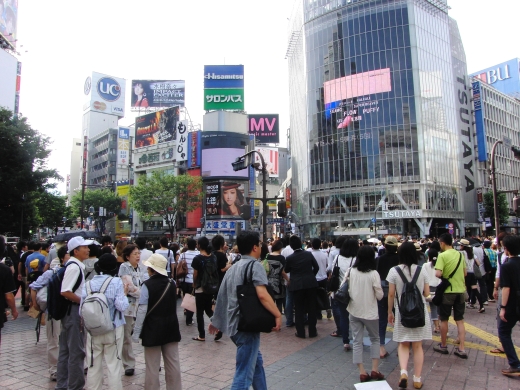
Os resultados sobre o pedido “palavras perfeitas para descrever o povo japonês ” foram surpreendentemente positivo, só os amigos nativos que poucos conseguiram ver o lado positivo, mas não vamos analisar os brasileiros aqui.
Depois de algumas semanas de mensagens, emails e algumas tuitadas, eis aqui os adjetivos mais comuns que os ocidentais escolheram para caracterizar os japoneses .

1º Educados/polidos
Já esperava que a educação ficaria no top . Todo mundo já ouviu falar da tradicional maneira japonesa usada como uma saudação, quando as pessoas curvam-se para o cumprimento. Embora o aperto de mãos sejam perfeitamente comum atualmente no Japão, eles muitas vezes curvam-se duas ou três vezes para cumprimentar, despedir-se, ou pedir desculpa a alguém. Para a mentalidade ocidental , este estilo de saudação parece muito mais polido do que um simples aperto de mão, high-five, ou qualquer outra maneira que costumamos usar para cumprimentar um amigo. Serem polidos demais as vezes aparenta deixar as pessoas mais distantes, por mais amigos que sejam, então nem sempre é visto de uma maneira tão positiva.

2º Pontuais
Japão leva o seu tempo de gestão muito a sério. A Japan Railway (JR ) e outros metrôs de ligação e sistemas de trem são bem conhecidos por seus horários extremamente pontuais, claro que há contra-tempos quando acontece algum acidente. Como tal, quando existe um atraso de até uma hora , todo o sistema é desativado. As empresas que administram os trens frequentemente emitem boletos para os passageiros comprovando o atrado, para que possam levar para seus empregadores se seus trens foram afetados pelo atrasado . Afinal de contas, ele deixa uma impressão muito ruim se você está atrasado para o trabalho.

3º Gentis/bonzinho
Ao contrário de educado/polido, que pode ter suas desvantagens , gentil é uma palavra genuinamente positivo. Em japonês, palavras com conotações semelhantes à frase são ” yasashii” ou ” omoyari no aru “, que significa “que pensa nos outros. ” Um excelente exemplo disso é o costume de levar um presente (geralmente alimentos) quando visita outra a casa de pessoa no Japão, é o famoso omiyage, inclusive as cidades sempre tem lojas que vendem essas lembrancinhas em geral comidas com temas que são atrações na cidade, as lojas normalmente ficam nas estações de trem ou aeroportos. A maioria dos ocidentais só levam presentes se é um aniversário.

4º Trabalhadores/Esforçados
Um trabalhador ou ” hataraki -mono ” é definitivamente uma palavra comum que classifica a mentalidade japonesa. Em uma cultura onde o seu trabalho deve ser prioridade até mesmo sobre sua família , é surpreendente que alguns estrangeiros ás vezes se apegam a esta descrição particular. Existe até uma palavra para “morte por excesso de trabalho” em japonês ( ” karoushi ” ) . Não é incomum para as pessoas aqui trabalhare mais algumas horas após seu expediente, os brasileiros mesmo como a maioria vem para guardar dinheiro e voltarem para o Brasil, fazer hora-extra é algo normal .
5º Respeitosos
Outra que se assemelha com educado, respeitoso ou ” tanin ni taishite Keii hyou wo suru ” para descrevê-lo livremente em japonês , é uma palavra principalmente positiva. No entanto, por vezes, pode ser associado com a distância. Com a epidemia de idolatria no Japão, se é para estrelas pop ou veteranos, também é possível ter respeito um pouco longe demais. Muitos ocidentais acham o conceito de ser tão respeitoso com os mais velhos um pouco anormal. Mas no Japão, quanto mais você envelhece, é considerado mais sábio e quanto mais velho e mais sábio mais tratado com respeito . Você vai ter um grande problema se você usar uma linguagem informal com uma pessoa mais velha que você, a menos que eles sejam da família. Mesmo assim, alguns parentes ainda esperam linguagem mais formal.

6º Tímidos
Uma impressão geral dos cidadãos do Japão é que eles são pessoas muito tímidas , ou “hazukashigariya”. Isso pode estar ligado com seu foco em educação e respeito . É verdade que nem sempre é assim, especialmente turistas japoneses em países estrangeiros, ou japoneses que convivem com estrageiros ou que moraram e estudaram fora do país.

7º Inteligentes
Há um estereótipo definido de pessoas de países asiáticos, sendo a nata inteligente da cultura. Se isso é de fato verdade ou não, não era tecnicamente relevante para o segmento de pesquisa, mas certamente foi um bom elogio. A palavra japonesa para o inteligente é ” kashikoi . ”

8º Coletividade
Os japoneses sempre pregam a coletividade para o sucesso. O trabalho em equipe é sempre exaltado na sociedade japonesa, e isso acontece desde criança, com desenhos de super-heróis, o anpaman é um exemplo, onde ele tem um grupo de amigos super-heróis. Eles preferem não ter de expressar suas opiniões sozinhos, preferem trocar idéias com os colegas e tomar uma decisão em grupo.
9º Formais
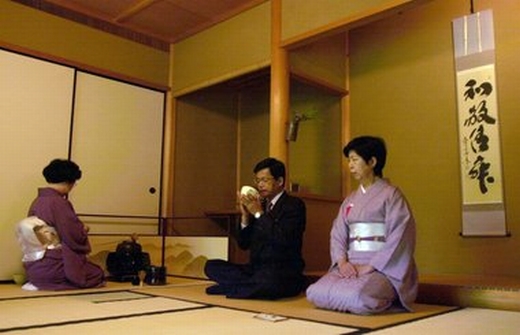
Mais um adjetivo que está ligado com educação, o Japão tem uma reputação de ser muito formal. Este manifesta-se tanto em forma e linguagem. Japoneses tem muitos níveis de formalidade diferentes, dependendo de quem você está se dirigindo. Isso pode ser complicado para as pessoas que tentam aprender a língua, e também pode causar embaraços entre amigos, especialmente no caso de estrangeiros e japoneses. Mas o uso dos pronomes formais(san, chan) entre amigos são pouco usados, mas pode parecer rude caso seja com um superior no trabalho.

10º Limpos
Muitos usuários da Internet têm visto turistas japoneses recolherem o lixo de todos parques de camping e paradas para descanso, mesmo quando eles não fizeram a bagunça. Este hábito e outros adicionado a descrição de limpeza entraram na lista. Você sabia que os estudantes japoneses é quem limpam suas escolas? Não são zeladores, os estudantes carregam os sacos de lixo, varrem os degraus, e limpam as salas com panos por cerca de 30 minutos por dia. A maioria dos proprietários de lojas também varrem as calçadas e ruas ao redor de suas lojas. Manter o espaço onde fica seu comércio limpo é uma atitude comum, também nos bairros é comum existir um revezamento entre os moradores para fazerem a limpeza na região, nos prédios prédios também existe o revezamento na limpeza ao redor dos edifícios, normalmente no fim de semana, bem diferente de alguns países ocidentais. Basta olhar as ruas brasileiras, americanas ou de qualquer país ocidental.
Gostei do resultado das respostas, eu mesmo acho que eles são bem esforçados e focados, e a educação ficou evidente, mas essa visão de uma maneira geral não está errada, e é de acordo com o que cada um vive e vê. Ninguém classificou os japoneses como divertidos ou algo do tipo, e acho que isso tem a ver com a cultura e educação deles, por se preocuparem em serem polidos e tudo mais, mas isso não quer dizer que não possam ser pessoas legais.
E você, como descreveria os japoneses em 10 palavras?