



"Puerto Rico has more American citizens than 21 U.S. states, but less voting rights than any of them."
"Puerto Rico has more American citizens than 21 U.S. states, but less voting rights than any of them."

It’s being reported that Sir Terry Pratchett has died. Which means that it’s a very sad day for lovers of fantasy and science fiction. Sir Terry (which I will call him here rather than “Pratchett” because, hey, have you been knighted?) had been dealing with Alzheimers for some time now, and his public journey with it, I think, did more to demystify the disease than anything else has in recent times.
More selfishly, he was the co-author of one of my favorite fantasy books of all time: Good Omens. I love that book insensibly.
I met Sir Terry only once and that fleetingly, but that encounter left me with a good story to tell, and I will share it now. It was at the 2004 Worldcon in Boston, where Sir Terry was the Guest of Honor. He was on a panel called “Looking Backward: the 20th Century,” along with Esther Friesner, Craig Gardner and me. I was definitely the junior member of this crew — Old Man’s War had not been published yet — and in retrospect I vaguely wonder whose idea it was to put a complete unknown on a panel with the convention’s GoH (whoever it was — thank you).
The discussion was far-ranging, and because we were talking about the 20th Century in the past tense, we started talking about what future archeologists would make of the century, with the notation that trash heaps were invaluable for acheological purposes; after all, everything everyone uses sooner or later is turned into trash. This prompted Sir Terry to note that archeologists in Jerusalem very recently came across two thousand year old cloacae (i.e., latrines), which, because they were in an anaerobic enviroment, their contents were perfectly preserved from when they were, uh, deposited, two millennia ago.
To which I replied, “Holy shit.”
And for which I was rewarded with still the largest laugh I’ve ever gotten at a convention, much less a Worldcon.
Mind you, the reason I got a laugh that large was because hundreds of people filled a room to see Sir Terry, not me. But for that moment, I got to share. And if memory serves, Sir Terry gave me a little duck of the head after I said it, as if to say, well played.
It’s one of my favorite moments of all my time in science fiction and fantasy, and it would not have happened without him. For that alone, he would be forever enshrined fondly in my memory. It is not that for that alone that he is fondly enshrined there.
My good thoughts and condolences to Sir Terry’s family, friends and fans. He is not replacable, but we were gifted by the time he was here. May his memory, and his writing, be a comfort to all.


Ahmet Öğüt, “Anti-Debt Monolith” (2014) (courtesy the artist and the Fiction Factory, all photos courtesy Aaron Word)
EAST LANSING, Mich. — On the sprawling grounds of Michigan State University, the Eli and Edythe Broad Art Museum is a sleek, modernistic storehouse amidst the dull brick buildings that populate the campus. The museum, designed by renowned architect Zaha Hadid, opened in November 2012 and points to a modernization of the campus as a whole, as well as a hope for new revenue streams for the school.
Day After Debt: A Call For Student Loan Relief is one of the museum’s current exhibitions, co-organized between the Broad and mission-driven arts organization Protocinema, and featuring five art-as-response pieces to the student loan crisis and its effects on graduates. Originally conceived by Kurdish artist Ahmet Öğüt, the exhibit features newly commissioned works by Öğüt as well as a mixed bag of international artists: Natascha Sadr Haghighian, Superflex, Dan Perjovschi, and Martha Rosler.

Ahmet Öğüt, “Anti-Debt Monolith” (2014) (courtesy the artist and the Fiction Factory) (click to enlarge)
All of the works provide incisive and provocative statements on the unsettling (and all too common) issues surrounding student loan debt. Specifically, the art on display confronts the private luxury that pervades many museum settings, including the Broad, which was jumpstarted by a $26 million dollar contribution by Mr. Broad in 2010 (he is also known for bailing out the Los Angeles Museum of Contemporary Art to the tune of $30 million in late 2008).
Day After Debt is not contained to the galleries but expands into the museum’s public spaces — corridors, entranceways, and the like. Öğüt’s work, “Anti-Debt Monolith,” met me first. A large, rectangular structure drenched in black paint stood as an oversized coffin, looming over the otherwise welcoming entrance area — is this where post-graduate dreams go to die? At closer view, the towering frame has a money deposit slot for patrons to donate at their will, a common factor amongst all the works in this exhibit; a jazzy interlude played when I inserted my coin. “Anti-Debt Monolith” is the black void that simultaneously displays and houses the seemingly exponential accumulation of student debt. Öğüt’s work was partly inspired by Stanley Kubrick’s 2001: A Space Odyssey, in which extraterrestrial species are responsible for building society’s most sophisticated artifacts. The sculpture appears to have magically descended, rather than to have been the hardened work of an artist. Öğüt credits only aluminum, paint, and sound as the sum of its parts — pointing more toward creativity born of scarcity than of boundless resources, a familiar reality to today’s post-graduate members of the creative class.

Natascha Sadr Haghighian, “Donation Tower (former value $10,000)” (2014) (courtesy the artist)
Iranian artist Natascha Sadr Haghighian’s “Donation Tower” set-up adjacent to the museum’s welcome desk, contains eleven stacked brick-shaped blocks and is built entirely out of shredded U.S. currency. The money, deemed “imperfect” by the government, comes from the United States Federal Reserves where the bills are stored to later be sold as souvenirs for larger artistic and commercial purposes. Using $10,000 of this defective currency, Haghighian’s piece re-commodifies the un-commodifiable — something the artist satirizes with the right amount of wit and intelligence. I could not help but circle back to the government’s influence on the bureaucracy of higher education and how, in the States, all of those forces are offset by the ever-increasing tuition and student loans this exhibit so fairly challenges.

Natascha Sadr Haghighian, “Donation Tower (former value $10,000)” (2014) (courtesy the artist) (click to enlarge)
In “Academic Square Cap upside down,” Copenhagen-based artist trio Superflex (Jakob Fenger, Rasmus Nielsen, and Bjørnstjerne Christiansen) dismantles the very center of post-grad iconography: the graduation cap. Placed on its square surface underneath a grand description of Eli and Edythe Broad in the museum’s entryway, the overturned cap serves as the most stark, sad reminder of the unavoidability of student debt. The vast economic hierarchy set in place is so blatant that it’s amusing.
A hierarchy of a slightly different sort comes through in Perjovschi’s “Bag It!” A large plastic bag, intended for money donations and haphazardly placed in the windows of one of the main entrances plays on the ridiculous rhetoric surrounding donation levels. Levels progress from “You are responsible” up through “You are a friend” to “You are my God” —Levels progress from “You are responsible” up through “You are a friend” to “You are my God” — language that more specifically evokes poor artists’ plea for money than student loan debt. However, Perjovschi shows debt and art-making as an unfortunate concurrence: a vicious cycle that keeps artists asking for money while their debts mount higher and higher.

Superflex, “Academic Square Cap upside down” (2014) (courtesy the artist)
Brooklyn-based artist Martha Rosler engages in a spirit of humor and play with her contribution, “Coin Vortex for Student Debt.” As a sort of coin wishing well, Rosler posits her own thoughts on the debt crisis alongside a myriad of troubling (and all-too-familiar) statistics. I released many coins into the vortex to watch them spin continuously before being swallowed whole by the cavernous funnel. If loan collectors are able to make giving up money this fun, I am sure we would have a little less of a crisis on our hands. Or, at least, that’s what Rosler seems to be playing with: the line between amusement and obligation. Pseudo-inspirational phrases, like “We owe each other everything” or “You are not a loan,” are displayed amidst chilling statistics reminding us, for example, that 6.7 million Americans are more than 90 days delinquent on a student loan. These sobering truths cannot be ignored — in art or in life, it seems. Rosler’s work was certainly the most didactic of all the pieces, but no less enjoyable in its compelling necessity.
Another aspect of the exhibition is a letter of agreement, drafted by Öğüt and art lawyer Sergio Munoz Sarmiento, for potential buyers of the works on display. The pieces range in price from $5,000 to $25,000, with 100 percent of the proceeds going directly toward student debt initiative, Strike Debt.

Martha Rosler, “Coin Vortex for Student Debt” (2014) (courtesy the artist)
The fact that this art is on the grounds of a major university is undeniably important — that the organizers would target university museums at all is both essential and utterly bold in its activism. Student loan debt is an issue that undoubtedly hits those in creative fields the hardest; it is only apt to use art to communicate this wide-ranging crisis.
As of March 12, 2015, with just a month to go in the five-month exhibition, none of the art works had been sold.
Day After Debt: A Call For Student Loan Relief continues at the Eli and Edythe Broad Art Museum (547 East Circle Drive, East Lansing, Michigan) through April 12.
by @just_hank_moody, andreibkn and necessaryaegis
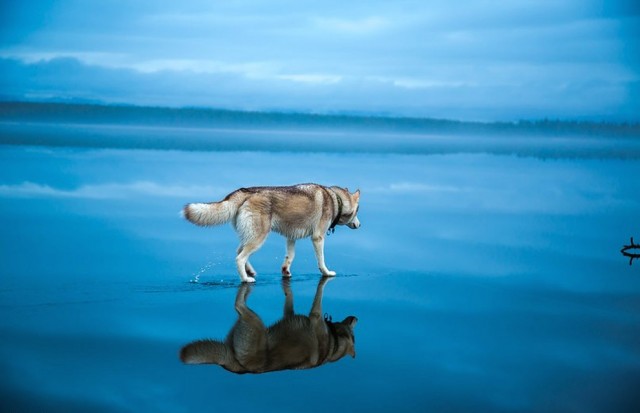
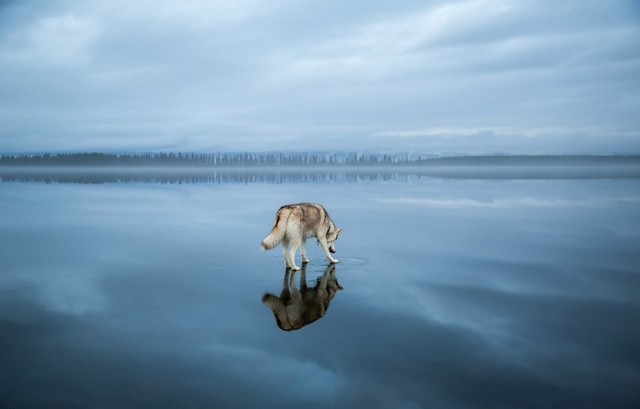
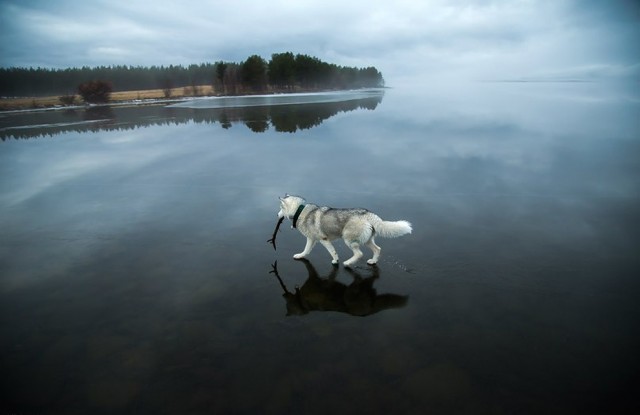
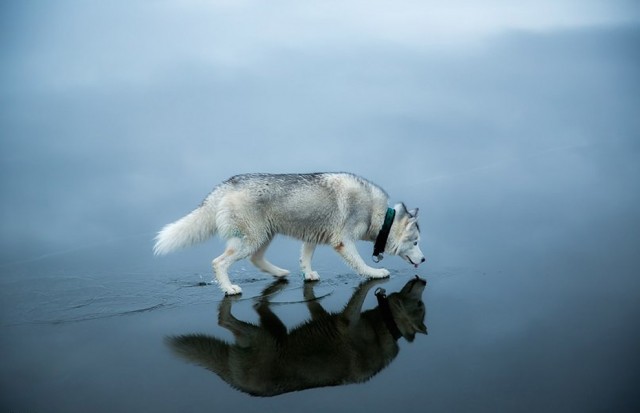
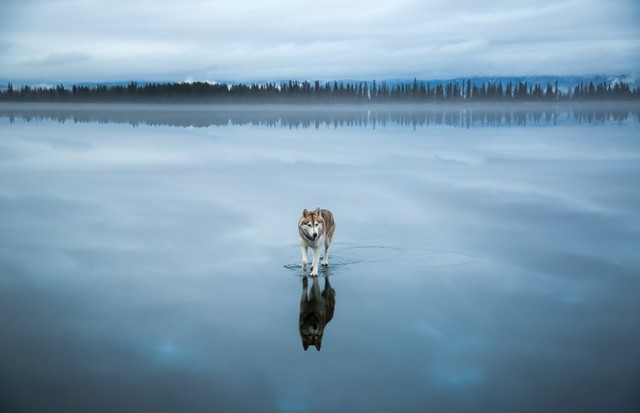
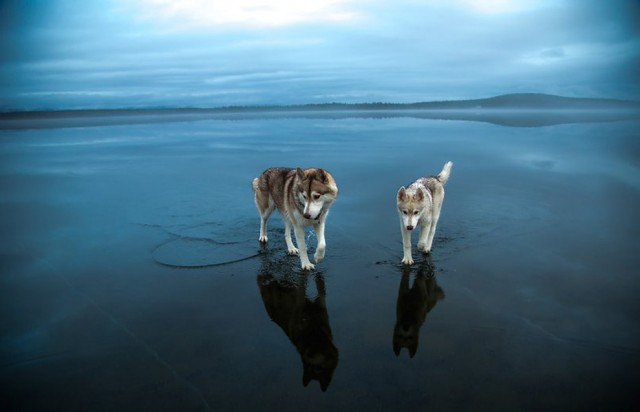
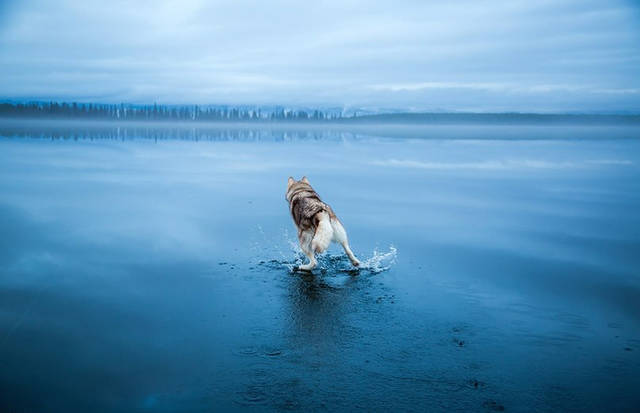
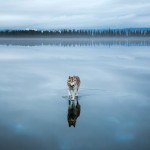
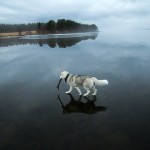
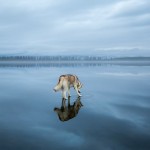
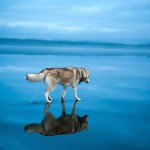
Fox Grom est un photographe russe né à Kirovsk. L’artiste détient deux magnifiques Husky qu’il s’amuse à photographier dans toutes sortes de situations. Dans cette série, l’homme s’est promené avec ses deux adorables bêtes sur un lac gelé. A découvrir en images dans la suite de l’article.
















Joshua Harmon’s The Annotated Mixtape is an essay collection on the nature of obsession. Early in the book, Harmon says he owns more than 4,000 records, and that his collection continues to grow. Reflecting back on a particularly costly record-buying binge, Harmon writes, “I was buying music at such a rate—I continue buying it at such a rate—that I didn’t have time to listen to it all, or to get well acquainted with what I did listen to.”
The nature of collecting music—rather than, say, books, visual art, or PEZ dispensers—is importantly distinct in this way. Harmon quotes the French writer Jacques Attali, who says, “Music remains a very unique commodity; to take on meaning, it requires an incompressible lapse of time, that of its own duration… People buy more records than they can listen to. They stockpile what they want to find time to hear.” In this way, Harmon collects records and neurotically tracks labels, bands, and songs oftentimes as a proxy for actual experience, and The Annotated Mixtape traces the tension between the ways this doesn’t work, and the ways that it does. Harmon writes about the time he listened to “Outdoor Miner” on Walkman as he strolled down a snow-packed South Flagg Street in Worcester, Massachusetts. He remembers being twelve years old, getting hot chocolate in a college student center as “Baba O’Riley” played from the speakers in the rafters. Harmon writes, “All of this music seems inseparable from these recollections, or at least from certain moments; the records themselves seem almost the physical forms of memories, accessible by dropping a stylus onto grooved vinyl… when I replay certain songs, my unconscious mind summons these constellations of associations.”
Throughout the collection, Harmon conveys the deep connection between music and memory. With each chapter—typically framed by an artist, song, label, and release year—he takes vivid snapshots of personal and historical moments in time. Harmon is much more than a music connoisseur; he’s a fanatic, and there’s a thrilling texture to each reflection and recollection.
Early in the book, he describes how, as a teenager, he pressed his cassette recorder to the speaker of a portable radio to record the songs the DJ played. He did this so he could use those songs on mixtapes. “Fidelity was irrelevant given the fuzziness of the FM signal and the cheapness of my recording devices,” Harmon writes. “What mattered to me as I taped music from the airwaves was what I might learn from these songs I preserved—about music as a pop-cultural entry point and schoolyard currency, and about myself as auditor.”

Joshua Harmon
Built like a mixtape, The Annotated Mixtape is incredibly specific to the passions and particularities of its creator. The chapter “A Certain Ratio: ‘All Night Party” is largely about Harmon’s somewhat reckless move to live in an apartment with his friends while still in high school. “Movietone: ‘Late July’” is a short reflection on accumulating multiple copies of the same record in anticipation of vinyl degradability. In “The Minders: ‘Hand-Me-Downs’”, Harmon reflects on Reagonomics and his father’s unemployment in the early 80’s. In one chapter, Harmon’s friend remarks to him that the song playing on the tape deck of his car is “soundtrack music.” Harmon writes, “though I don’t realize it then, my friend is right: here is another song in the soundtrack to all the incidental memories that measure my life.”
Harmon details with a curator’s eye the relevance of his library to his life. Sometimes he recalls stretches of angst: “Listening to vague, insipid lyrics like those in New Order’s “Temptation” allowed me to fill that dumb lyrical template with all the dumb drama of being fifteen.” Sometimes he remembers moments of self-conscious elitism: “[She] told me that Codeine and Galaxy 500 and the Pale Saints and the Swirlies—or whoever else I mentioned listening to—were pretentious.” In a chapter framed by “Love Will Keep Us Together” by The Captain and Tennille, Harmon writes, “I unwittingly consumed the pop music of the early and mid 1970s. These songs became the soundtrack to my primordial memories not because I liked them, not because my parents necessarily liked them, but simply because one of my parents had turned on the radio while we drove.”
Harmon is sensitive to the tic in his brain that makes him process the world in this music-based way, particularly in regard to his obsession with owning records. He writes, “My binge record-buying may suggest my insecurity about the size of my own collection, my anxieties about losing touch with my own past, the pathetic comfort I find in material things, a frequent desire to escape ‘boredom,’ or all of the above.” Harmon traces the beauty and complications of the human compulsion to catalog life—whether it is through music, movies, books, photography, travel, or even social media—in an attempt to make sense of how we fit into the world. Some feeling of drawing closer to an understanding keeps us going, as does the failure to ever arrive at a definitive point.
As the Italian writer Umberto Eco said, “The list is the origin of culture. It’s part of the story of art and literature. What does culture want? To make infinity comprehensible.” Infinity, though, is inherently incomprehensible, and so we keep creating and consuming. In the case of Joshua Harmon, his record collection continues to grow.
This week has been a week of complete non-surprises.
Today, we’ve seen shocking revelations that Nigel Farage, leader of UKIP, is a massive racist who thinks protections against racism should be scrapped. I use the word “shocking” because that’s the word Labour’s press officer used, apparently having not paid any attention to thing this opposition politician has said until today. I doubt anyone who has been following Farage and didn’t learn politics from late night talk radio will be particularly surprised that the leader of the most respectable fascist party is a racist, but the way the media are going on is certainly acting as though this is news.
In other dreadful bigots, Jeremy Clarkson’s been having a less-than-brilliant week. It turns out that a man who has made his fortune saying ghastly bigoted nonsense is a bit of a spoilt brat who punched a producer over not getting a sirloin steak and fondant potatoes (whatever that is) for his tea. Nonetheless, humourless men have been getting their knickers in a twist about his employer’s decision to suspend him, believing a rich man’s right to fondant potatoes to be absolute. I suggest, out of solidarity, they all go and punch their own colleagues in a temper tantrum over dinner.
These two clowns were the obvious awful men, but a special mention goes to Tim Lott, who joins the ranks of Clarkson and Farage in a persecution complex of the dreadful bigot who has noticed the world has moved on past him. Poor Tim is sad because people challenge him when he spouts crap. Poor Tim is so silenced that he is continuing to be paid for parping out the same column for a decade, because ten years ago you also couldn’t be racist about Muslims.
These men are representative of a breed which is, hopefully, dying. They growl and whine that you can’t say anything any more when implicit in their words is the acknowledgement that the world moved on without them. They self-identify as a silent majority, when in fact it’s a small circle of wankers getting paid to be wankers, with a small army of sockpuppets barking like sealions. I am surprised at how few people signed Clarkson’s petition or will vote UKIP, given how this lot seem to imagine themselves as representative of a population.
They’re not, that’s why. They’re a gobby little minority who feel threatened as they awaken to a world that doesn’t want them any more. And that can only be a good thing. I hope it terrifies them.


Please, please, please don’t just drop an ad/PR bit for your product into my tweet stream. One, it’s not nice, even if you didn’t intend not to be nice. Two, an ad/PR bit sent cold to my tweet stream will likely get you muted or blocked because you’ve shown me that you consider me a mark, which I don’t appreciate. Three, if you do it to enough people other than me, then you’re spamming. Which will likely get you blocked and reported by a number of people.
Which is to say that your ad/PR pitch will fail, which is the opposite of what you want.
This does not mean that your business account can’t tweet at me or talk to me — I get that all the time, and mostly it’s fun, and indeed a good corporate Twitter presence goes a long way with me (see: here, where a nicely laconic response to my frustration with a company’s product was on my mind when I bought the replacement product, also from that company (the replacement product works just fine)). But there is a difference between conversing with me — even while promoting your product — and just dropping an ad/PR pitch into my tweet stream.
If you’re a company who is hoping for me to promote a product of yours, via retweet or mention, first, read my policy on retweets, and second, outside of retweets the best way to reach me in terms of product awareness is through email. Yes, lots of businesses and publicists already do this, you won’t be alone. Dropping an ad/PR bit into my Twitter stream doesn’t work because I will mute it. I don’t mute PR pitches in my email. Email is where the pitches are supposed to be. In fact, I even have a publicity policy.
(Don’t send ads to my email, however. Those will just get shunted into the spam folder.)
In short: My tweet stream is not for company ads or pitches. Don’t make me mute or block you, it’ll just annoy the both of us. Thanks.


 I have always had a tense relationship to money. As a child, I was deeply self conscious of the class divide that was apparent in my clothing and in my bagged lunches, and in the amount of work I was expected to put in for my allowance compared to my peers. I remember desperately wanting a pair of a.d.i.d.a.s tearaway pants, the only thing that would make going to gym worthwhile, and my parents bought me similar pants… but with four stripes instead of three, and a zip that went up the calf instead of fully unsnapping. I felt embarrassed by these pants, and chose to pretend they didn’t exist, sitting out PE instead of wearing something that I was certain would get me laughed at.
I felt strongly, as I browsed the delia’s catalog and wished desperately to one day be able to afford those denim skirts and platform sneakers, that what I needed for success was more dollars. I would’ve sold my soul for a pair of shoes from Candies because I believed they would make me popular. Lacking that I made do with the clearance rack at Hot Topic and thrift stores, going Goth just as much because I could find clothes that fit than because I actually loved the style. I knew, somewhere in my gut, that if I just had more money so many of my problems would be solved.
I still believe that’s true a good portion of the time- more than people want to admit. People say all the time that money doesn’t buy happiness, but say that to poor people and they’ll laugh in your face. Money may not buy happiness directly, but it does buy security, safety, health, access, all things that help one be a happier person.
Before I did sex work, when working three minimum wage retail jobs at a mall an hour and a half walk away, any money I made went automatically to rent, then cat food, then my food, then anything else if there was any left. Any free time went to playing computer games late into the night and masturbating while chatting with my long distance lover because, as I often said, “masturbation is free entertainment”. I didn’t go out much, didn’t really have friends, quit school because getting up at 5am to get ready, make breakfast, and take the bus an hour to be at school at 7:00am wasn’t practical or possible while also juggling these jobs.
I started doing sex work when I was 18, though I probably wouldn’t have called it that. A local stranger I was chatting with on AOL (back when that was a thing) asked me on a date, and I told him I couldn’t because of my work schedule. So, he offered me a day off- he’d pay me whatever my daily take would’ve been, and I’d get a vacation AND a date. Because I was a little on the impulsive side, I agreed.
He was cute, though now I’d question how much older he was- about 15 years. And he was true to his word, putting some money on a side table as we chatted very casually. Now I wonder if he had seen sex workers before, my cynical mind curious if this was his Thing. Anyway, he gave me a really lovely massage, ate me out with my full consent, and we had a meal and that was that. Afterwards I pocketed the money and thought idly about how easy it had seemed. I went back to my jobs and didn’t think much about it.
But then the working nonstop and the lack of social time with humans began to destroy me. I found myself contemplating suicide just to be done with the constant fear of how I’d pay the next bill, and I’d stay quiet about my thoughts because I knew I couldn’t afford a trip to the psych ward. A friend from the internet gifted me with a plane ticket to California, and my grandmother – without that boost of money there is no doubt in my mind I would be dead right now. I moved, I transferred my job, I tried to restart my life.
The money was still a problem, though. Still undiagnosed for my anxiety issues and overmedicated for depression, I was still struggling with self harm and suicidal thoughts often centered around my fear I was not meant to survive adulthood. I didn’t know how I could make ends meet when I wasn’t yet back in school and I didn’t have the emotional energy to handle a full time job. Everything I was struggling with came down to a need for financial stability. I needed a car? Money. I needed social time with friends? Money. I needed to pursue interests and hobbies? Money.
To go to school and have a life, I needed to find a better way to make money. That’s why I got into sex work – not because of my love of sex, or because I enjoyed the attention, though those things did help, but because I was in dire need of cold hard cash in order to survive. I was teetering precariously on the edge of being homeless and I knew I needed to find a way of making fast and easy under the table cash. Being as I was straight edge at the time, drug dealing was not going to be my savior. So I turned to sex work.
I found an ad for professional domination, figured that as someone who liked kinky sex I could probably hack it, and I tried for a couple months. The woman in charge seemed to hate BDSM, hate sex work, resent her clients and allowed copious drug use on the premises… between that and her obvious disgust at having hired a fat woman (I was perhaps a size 16 at the time), it ended up not being the job for me. So I went independent, started to learn how to advertise on the internet (I had a Moonfruit site I believe, back in the day, and advertised carefully on Craigslist) and didn’t look back. I made more in an hour than I used to in a week after taxes. I also did fetish modeling, cam shows, custom written smut, anything I could find.

Post sex work, I learned to keep my living expenses low, that even a small cushion could be vital. I went to school finally. I started to learn how to save money, how to budget for practicalities and the occasional fancy thing, because I had money enough to make actual decisions with. I could go on vacations, I could take care of my medical needs, I could buy clothes that were more cute than practical. Suddenly I could afford to engage in self care, because I had the things I needed- time and money. And I began, secretly, to fall a little in love with those bills in my wallet.
There’s a lot of judgment when you’re a broke activist queer who decides to fight tooth and nail to eke out a living, maybe even a comfortable living. I’ve been accused of being capitalist scum because I don’t want to ever be homeless again, because I am unapologetic in my love of making money and having a safety net, however tiny. While I have survived in part because of people being generous with my money, and part of what I love about money is being able to share it with others (huh, kinda like polyamory), having cold hard cash as an interest is often frowned upon. But exposure doesn’t shelter your head, and goodwill doesn’t clothe you.
I wouldn’t be here without the kindness of others, not just through positive thoughts but through resource redistribution. And I wouldn’t be able to help my friends in turn if I didn’t work to make money for my own education to better serve, to create sustainable resources, to upkeep a car so I could see them or help them out. I can fight capitalism and hate it, but at the end of the day I live under it, benefit from it and am crushed by it, same as everyone else. I can’t realistically opt out and also take care of my mental and physical health.
So I’m done with feeling uncomfortable with my desire to make money. This photo shoot, by Courtney Trouble, was done on the floor of the TROUBLEfilms office, surrounded by money I was about to use for rent on a new apartment. Call it an intention, call it a spell, but this year I am done with living hand to mouth. Survival is self care.
I invoke the Power of the Hustle. For me, for you, my readers, for your loved ones.
May 2015 be prosperous for us all, both financially and emotionally.
 Dark days: welcome to the age of because as recognized preposition.
Why didn’t anyone tell me space architect was a job you could have?
The desertification of Mongolia (hurray for dioramas).
So, what happens when the queen dies?
Bauhausify the web is your very stupid thing of the day.

In the wake of the Supreme Court’s disgusting Shelby decision, Representatives Keith Ellison (D-Minn.) and Mark Pocan (D-Wisc.) have proposed a new Congressional Constitutional Amendment, which has been endorsed by the Democratic National Committee. The text of their proposed amendment:
Section 1. Every citizen of the United States, who is of legal voting age, shall have the fundamental right to vote in any public election held in the jurisdiction in which the citizen resides.
Section 2. Congress shall have the power to enforce and implement this article by appropriate legislation.
Although many Americans don’t realize this (although I think most “Alas” readers do), the Constitution does not explicitly protect a right to vote.
There’s no chance of the Right to Vote Amendment (RIVA?) passing Congress (let alone two thirds of Congress) anytime soon, because virtually all elected Republicans oppose it.
In Slate, Jamelle Bouie argues that Democrats should fight for a constitutional right-to-vote amendment.
…the Constitution allows voter suppression as long as it doesn’t trip any of its race or gender wires.
The goal of a right-to-vote amendment is to change the dynamic and place the burden on restrictionists. In a sense, it would make the pre–Holder v. Shelby Voting Rights Act a standard for the entire country. States and localities would have to make voting as accessible as possible, with a high standard for new barriers.
And while the odds of winning a right-to-vote amendment are low—one reason Democrats should invest more effort in state elections—there’s tremendous value in mobilizing around the issue. A movement for a right-to-vote amendment could encourage laws and norms that expand participation irrespective of an amendment in that direction.
Scott Lemieux argues that such a Constitutional Amendment wouldn’t do much good:
The framers of the Fourteenth Amendment… thought that bad judges were a much bigger problem than textual lacunae, and there’s a great deal of truth in this. It’s very likely that the Roberts Court would uphold most contemporary vote-suppression laws even if a right-to-vote amendment was passed.
Moreover, in all likelihood these vote-suppression techniques already violate the existing text of the Constitution. A federal district judge, for example, found that Texas’ draconian voter ID law was racially discriminatory in both effect and purpose, and also functions as a poll tax. If these findings are accurate, the Texas law already violates the Fourteenth, Fifteenth, and Twenty-Fourth Amendments.
None of this is to deny that changes in textual language could matter at the margin. I can imagine certain judges, particularly moderate Democratic nominees, who would uphold voter ID requirements under the current constitution, but not under an amended one. However, the track record of textual protections for the right to vote is generally poor.
Derek Muller, a law professor at Pepperdine, raises some interesting issues, including:
1. Can felons and ex-felons convicted of election-related crimes be prohibited from voting? The proposed amendment would probably extend the right to vote to all felons imprisoned (currently disenfranchised in 48 states) and all those paroled, on probation, or ex-felons (currently disenfranchised to varying degrees in many states), extending the right to vote to five or six million new voters. […]
2. Could the state prevent the mentally handicapped from voting? Most states have some kind of rule preventing the mentally handicapped from voting. Once voting is deemed a “fundamental right,” will these laws, as they presently exist, stand? What kind of rewriting or retailoring would be necessary?
A couple of thoughts:
1) How infuriating is it that one of the two major parties will not support a Constitutional Right to Vote?
2) Even though the Amendment can’t pass in the immediate future – and that’s a shame, I’d love to see felon disenfranchisement ended – it is still worth fighting for, as a mobilization tool to help build support for state-level voting-rights laws.

As you may know, Rahm Emanuel closed a whole bunch of schools and mental health clinics in Chicago, leading to the classic “YOU’RE GONNA RESPECT ME!” exchange. What does Rahm’s Chicago envision replacing these horrible institutions? Gourmet mac and cheese shops.
Grant kept the concept for his new mac and cheese restaurant simple Tuesday: “Carryout only,” he said. “Gourmet mac and cheese. Good food. Good price. Good time.”
Located in the same building as his most recent Logan Square business, East Room, the yet-unnamed restaurant will feature gourmet mac and cheese by chef Laura Piper, owner and executive chef at Downtown’s One North Kitchen and Bar, 1 N. Wacker Drive.
The new restaurant will be on the first floor of the Logan Square building, which will be built in a 383-square-foot area, according to city records. The same building formerly served as a mental health clinic that shut down in 2012, followed by a series of citywide protests and a more recent hearing before the City Council.
The mac and cheese spot, led by Piper, joins a slew of new and upcoming bars and restaurants on the booming block, including East Room, Owen + Alchemy, Q-tine, Slippery Slope, The Radler, Emporium Logan Square and Chicago Distilling Company, along with some established local outlets like Revolution Brewing, Café Mustache and Gaslight Coffee Roasters.
Makes sense. Get rid of public institutions where rich white people might have to see people who make them feel uncomfortable, replace them with private institutions where rich white people will only see other rich white people and maybe just enough people of color (i.e. 1) to make themselves feel diverse and hip. That’s Rahm’s New Gilded Age Chicago in a nutshell.

Can’t be bothered to rank things, so here’s a list based mostly on obsessive replays:
Faxanadu
Silent Hill
Tales of Destiny
Castlevania: Symphony of the Night
Castlevania 2
Puyo Puyo
Tetris
Pokemon in general
Legend of Zelda: a Link to the Past
Crusader of Centy
Super Mario Bros. 3
The Secret of Mana
Final Fantasy IV
Skies of Arcadia Legends
Mirror’s Edge
Portal 2
Capcom vs. SNK 2
Goldeneye
Teenage Mutant Ninja Turtles 4: Turtles in Time
Sonic Adventure
I know that’s a bit of a weird list. I normally don’t rank all of these games this high if it’s an “all time best” list where I try to weigh the quality of the game, as well as the impact of the game, but in terms of favourites, these have given me some of my best gaming memories and experiences. :)
(My personal rule for these lists is that games need a 2 year waiting
period before being allowed to be on it, so I can properly appreciate
how much I like it. The high after playing all sorts of games for the
first time is often “OH MY GOD THIS IS THE GREATEST THING EVER”, so I
like to give it some time. For the non-personal lists (i.e. ones like
THE 100 GREATEST GAMES OF ALL TIME, I think there should be a similar
waiting period, like 3-5 years after release, to really appreciate where a game ranks “all
time”, much like how sports halls of fame have 5 year waiting periods for the same reason. So many of those lists have the top 20 filled with games released that year.) )

An LA County Sheriff’s Department deputy talking on the phone while driving — which is illegal in California. (photo by Heather Anne Campbell/Flickr)
In the resolution of a lawsuit brought by the American Civil Liberties Union (ACLU) of Southern California, Los Angeles County will pay three photographers who were harassed by members of the LA County Sheriff’s Department (LASD) a total of $50,000 in damages. The LASD has also begun implementing training for its deputies in an effort to teach them to respect people’s right to take pictures in public.
The lawsuit against LA County and the LASD was brought more than three years ago by the ACLU on behalf of three photographers: Greggory Moore, Shawn Nee, and Shane Quentin. All experienced separate incidents of harassment at the hands of deputies for photographing in public areas. From the ACLU announcement of the case in 2011:
Plaintiff Greggory Moore, a reporter for the Long Beach Post, was on a public sidewalk taking pictures of passing drivers for a story on Distracted Driving Awareness month, when eight sheriffs deputies surrounded, frisked, and interrogated him, saying that because he was taking pictures across the street from the Long Beach courthouse, his behavior was suspicious.
… LASD deputies detained and searched Shawn Nee for photographing turnstiles on the Los Angeles Metro, asking if he planned to sell the photos to al-Qaeda and threatening to put his name on the FBI’s “hit list.” On another occasion, deputies ordered Nee not to photograph on the sidewalk outside the W Hotel at Hollywood Boulevard and Vine Street on the Hollywood Walk of Fame. LASD deputies detained and searched Shane Quentin, a photographer with an M.F.A. from UC Irvine, while he was photographing brilliantly lit refineries in south Los Angeles at night, frisking him and placing him in the back of a squad car for about forty-five minutes before releasing him.
The ACLU charged that such behavior violated the plaintiffs’ first and fourth amendment rights, the former guaranteeing freedom of speech, the latter protecting citizens from unreasonable searches.
The case appears to have been settled last year, but the settlement only approved by the LA Board of Supervisors — and thus announced by the ACLU — last week. It binds the County to pay the plaintiffs a collective $50,000 “in damages for physical injury and emotional distress” as well as $340,000 in legal fees and costs.
The settlement also institutes photography-related training for LASD members, in the form of a newsletter. “Photography and the recording of video are common activities and are neither crimes nor indications of criminal activity, in themselves,” the document states. “Neither photography nor the recording of video, standing alone, can form the basis for a detention, arrest, or warrantless search.” The newsletter explicitly prohibits deputies from “interfering, threatening, intimidating, blocking or otherwise discouraging a member of the public” from shooting photography or video, so long as the person is not breaking any laws by being present at the site they are photographing or filming.
According to the terms of the settlement, the LASD must issue the newsletter to all employees, provide training on its content to department members, and incorporate its content into regular LASD training. Additionally, the department may not change the newsletter for the next three years without first consulting with the ACLU.
The settlement is certainly a victory, but many more like it will be necessary to protect photographers from being arrested and labeled terrorists in an age when countless police departments and even the US Department of Justice view taking pictures — something we all do all the time now — as a suspicious activity.
h/t PDN Pulse
In 2003, a reporter asked candidates for the mayor of San Francisco questions from the Voight-Kampff test. Most of them failed.
Someone needs to administer this test to the Republican presidential candidates, and to Hillary Clinton*, as soon as possible. I fear we’ve been overrun by replicants, and most of them are crude, older models.
*Is there any other Democratic candidate? We seem to be drifting towards a mediocre non-choice.
(via Skippy)

 facebook
 reddit
What may be the most exhaustive review yet of the evidence for homeopathy has come to a very strong conclusion: the treatment doesn't work, and people should stop wasting their time, money, and potentially their health on what amounts to junk science.
In 2012, the Australian government set out to examine all the best available research evidence on homeopathy as part of a look into the effectiveness of alternative therapies commonly used by Aussies. Homeopathy is extremely popular in the US, too: at last count, Americans spent a whopping $3 billion on the treatment.
The main ideas behind homeopathy are that extremely diluted versions of a substance that's causing someone to be sick can actually make them better, and that these watered-down potions retain a "memory" of the original substance. Scientists have long taken umbrage with these claims, since, when examined, homeopathic treatments do not actually contain traceable amounts of the original plant or animal material they were supposedly diluting.
This week, the Australian government published its findings based on the results of 176 studies on the health impact of homeopathy.
The conclusions?
"There was no reliable evidence from research in humans that homeopathy was effective for treating the range of health conditions considered," researchers wrote. They added: "Homeopathy should not be used to treat health conditions that are chronic, serious, or could become serious."
The Australian study found numerous problems with the research on homeopathy. To start, many of the studies were poorly designed: they didn't include enough participants to have meaningful results, or the researchers failed to limit bias and control for confounding factors.
But even the high-quality studies did not find that homeopathy performed better than a placebo or another available treatment for a range of health conditions, including asthma, anxiety, chronic fatigue syndrome, colds, and ulcers. The studies that reported homeopathy had some health benefit were so flawed and poorly designed they were unreliable.
This means that not only did homeopathy treatments perform no better than other medicines, but they also failed to outdo sugar pills. This isn't entirely surprising, considering that homeopathy tablets and potions are essentially sugar pills or drops.
"People who choose homeopathy may put their health at risk if they reject or delay treatments for which there is good evidence for safety and effectiveness," the report reads. "People who are considering whether to use homeopathy should first get advice from a registered health practitioner. Those who use homeopathy should tell their health practitioner and should keep taking any prescribed treatments."
This isn't the first report to come to such dismal conclusions about homeopathy. There have been numerous studies, books, and investigations demonstrating that this therapy is bogus.
In fact, there's so much evidence on homeopathy's failure to help people that some researchers have wondered when enough will be enough and we will finally stop investing our research funding on this alternative therapy in favor of putting it into treatments that might actually help people.


So this is what the folks at Monte Cook games think of indigenous people.
The level of willful ignorance and desire to profit off the genocide of indigenous people is astounding. The amount of stereotypical amalgamating of such diverse cultures into one RIDICULOUS group that is both plains native and pacific northwest is vomit inducing.
I need, NEED, to know… What the HELL are these white people thinking?!
PLEASE tweet at them and tell them this is NOT acceptable!
@montecookgames is their handle on twitter.
Also @thestrangerpg for the game itself.
I have been blocked from BOTH ACCOUNTS bc they refuse to listen.
And of course shannagermain has been so amazingly unaccommidating..
@brucecordell too
Apparently ive been blocked by ALL associated accounts
ruthhopkins plz help
Please help
This is a pen & paper RPG made by a compan founded by one of the foremost names in tabletop RPGs. Monte Cook is a game developer and wrote EXTENSIVELY for Wizards of the Coast, most notably on Dungeons & Dragons.
So this isn’t some indie company. This is a few big names pushing this like candy to eager nerds worldwide.
This is a HUGE FUCKIN DEAL.
I’ve been contacting them ALL for months and have been blocked and ignored and, most notably by Shanna germain, ridiculed for speaking out out name-called.
This is NOT FUCKING ACCEPTABLE.
 It’s easy to get caught up in big ideas and brand new worlds… and forget to laugh.
Douglas Adams—born today, March 11, in 1952—was not convinced of his own worth as a writer, a comedian, and thinker of remarkably thinky thoughts. Whenever there was a dry patch in his working life, he tended to question his abilities, to fall into spates of depression and low self-worth. It’s odd to think that the man responsible for Zaphod “if there’s anything more important than my ego around, I want it caught and shot now” Beeblebrox would fail to realize his own relevance in a world that so desperately required his special brand of madness.
After all, without him, who would have told us the answer to life, the universe, and everything?
[Life. Don’t talk to me about life.]
Douglas Adams was a practical giant at six foot five (that’s 1.96 meters). Not exactly the first thing you would expect to learn about him at random, but it apparently made an impression on his behalf at as a young man, while he wrote and wrote all the time. He was the only student to receive a ten out of ten in creative writing from his form master at Brentwood School. After completing university—where he insisted he had done very little work—he was determined to break into television and radio writing.
Though it wasn’t always steady work, Adams’ singular voice landed him gigs with Monty Python’s Graham Chapman and various radio sketches. He became a script editor for Doctor Who during the Tom Baker era, writing a few stories himself, and his influence on Who is arguably still felt in the show’s current incarnation. Between his writing jobs in the 70s, Adams filled in with odd paychecks gained from barn building to bodyguard-ing for a wealthy family of oil moguls. When he was writing, he reportedly took forever to complete his projects; so long that his editor once locked them together in a hotel suite for three weeks to assure that So Long and Thanks For All the Fish was finished.
Adams was best known for his Hitchhiker’s Guide to the Galaxy series, which was first brought to life via radio, and later via book, television, and film. With a joyful blend of wit and absurdity, he proved beyond a doubt that genre fiction had a great capacity for humor and satire. There are others who have followed in his footsteps, still others who have made their own contributions in this manner (Terry Pratchett’s first Discworld novel would be released four years after the first Hitchhiker’s book), but no one has ever quite duplicated the timing of Adams’ prose, his particular insights. There is funny, and then there is Adams funny.
Those deeper insights likely came from the many other loves and causes Douglas Adams pursued in his life. He was an avid traveler, an environmentalist, a musician who played the guitar left-handed, and he was a great advocate of technological innovation. He never shied away from what computers, the internet, and new inventions could bring to humanity. He never demonized progress, but rather, he offered himself up to try new things, to see where we were headed. In fact, his ability to take on these changes with ease and good-natured amusement was nothing short of inspirational. As he so succinctly put it to anyone concerned over the (at the time) very new world wide web:
1) everything that’s already in the world when you’re born is just normal;
2) anything that gets invented between then and before you turn thirty is incredibly exciting and creative and with any luck you can make a career out of it;
3) anything that gets invented after you’re thirty is against the natural order of things and the beginning of the end of civilisation as we know it until it’s been around for about ten years when it gradually turns out to be alright really.Apply this list to movies, rock music, word processors and mobile phones to work out how old you are.
Or to put it simply, in other words that he would use elsewhere in large, friendly letters: DON’T PANIC.
It is perhaps the cruelest irony of all that Adams did not live to see what the world of technology has become in recent years. Having access to his wisdom in this digital age would have likely been a comfort and intriguing to boot. But more than that, we are missing out on the stories he never had the opportunity to regale us with. Myself and many others, we owe our sense of humor to Adams, at least in part. He was a very real, shaping factor in our persons.
It’s easy to forget that comedy is just as difficult as drama. It’s easy to ignore the fact that humor is complex as mathematics and learning to laugh is not a mindless task. And it’s also easy to get comfortable with our favorite tropes and tales—with serious stories—and neglect the fact that any and all situations can (and often should) be hilarious. Thank goodness we had Douglas Adams to show us how.