Shared posts

12 Mar 08:05

The destruction of public legal education in America: A case study

by Paul Campos

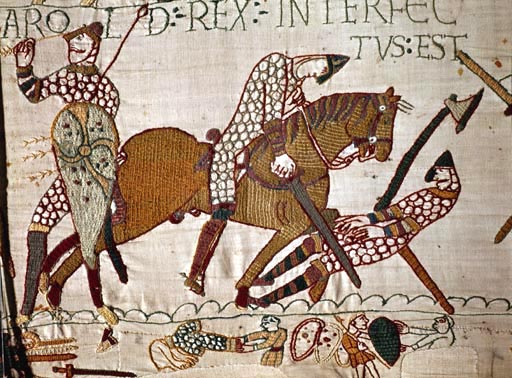
tapestry

Yesterday I linked to a talk given last week by UC Irvine dean Erwin Chemerinsky on the future of legal education, in which Chemerinsky criticized Brian Tamanaha’s claim that law schools can and should spend much less money than they’re currently spending. Chemerinsky’s argument is that law schools cost as much as they do almost wholly because of personnel costs. Thus, according to him, the only way to cut costs significantly would be to have a law school with a small full-time faculty and a lot of part-time adjuncts, and that, in Chemerinsky’s words, “wouldn’t be a very good law school.”

This is because full-time faculty are better teachers than part-timers, and because full-time faculty are around the building a lot more, and thus are more easily available to answer student questions outside of class (This is actually his argument, in case you’re wondering if the will to sarcasm is getting the best of me).

In other words, a good legal education is by its nature extremely expensive, and indeed there’s just nothing that can be done about that (Again, this really is what he’s arguing).

Chemerinsky is a well-known con law professor of a generally liberal-left orientation. I suspect that if somebody made a similar argument to support the status quo in regard to the extremely expensive American health care system, he would simply laugh in that person’s face, given that many nations with excellent health care systems spend far less than the US does on health care.

Now for various reasons it’s somewhat more difficult to compare legal education systems across nations than it is to compare national health care systems. On the other hand, it’s much easier to compare the same legal education system across time within the same country.

Let us go now, you and I, to gaze upon the financial history of one law school over the past 55 years. This sort of micro-analysis of a single institution within a much larger institutional system has its limitations, of course, but it also offers a vivid particular glimpse of one piece of the general story of what has happened to legal education, to public education, and to public legal education, in this country over the course of the past half century.

The law school whose finances I’m going to look at in some detail is the University of California Hastings. I chose Hastings for this exercise because it’s a free-standing public law school: the state’s oldest law school, Hastings is part of the UC system, but unlike the other UC law schools, it’s not part of a larger university campus, which means that the school’s finances are more easily accessible than those of the other California publics.

In addition, the history of the public financing of California’s higher education system is both complex, and, given the state’s economic and political prominence, of particular importance within national debates regarding the financial structure of public colleges and universities.

Everyone of a certain age, and/or who is a fan of Rick Perlstein’s books, is familiar with how Ronald Reagan employed attacks on California public universities as a key element in his rise within the Goldwater wing of the GOP. According to Reagan, the UC system was a breeding ground for subversion, in which the spoiled children of the latte-sipping elites (OK nobody in the US was sipping lattes in the 1960s — the Julia Child-watching elites? The feckless parents of Benjamin Braddock and his ilk elites?) indulged in mob-like long-haired dope-smoking rock music-listening protests, while paying zero tuition for the privilege of being indoctrinated by the likes of Herbert Marcuse and Dr. Spock, all courtesy of the overburdened California taxpayer.

Now one of the fascinating things about Reagan is the extent to which his political rhetoric was often not merely at odds with, but literally in an inverse relationship to, what the governments that he led actually did. Reagan was governor of California from 1967 to 1975. What happened to the state’s budget for higher ed during his tenure?

graph(10)

If that line looks like it was going pretty much straight up during the years when Reagan was in Sacramento, that’s because it was (Note that these numbers are inflation-adjusted, and that I’m not pulling the classic stat graph trick of showing only a small range of values, to give the impression of a rapid rise).

Between the early 1960s and the late 1980s, California’s funding for higher ed increased at a truly remarkable rate, essentially without a pause, rising in constant dollars from $1.56 billion to $11.1 billion. For all his big talk, Reagan ultimately did nothing to even slow this process down, let alone reverse it. (A good illustration of how much the American political landscape has changed over the past 40 years is that California’s budget for higher ed rose at a breakneck pace under conservative icon Ronald Reagan, and has actually declined significantly over the course of conservative bete noire Jerry Brown’s second governorship).

Over the past 25 years funding for higher ed in California has seen two cycles of sharp declines, in the wake of the recessions of the early 1990s and the late aughts, with the net result being that the state’s total higher ed spending this fiscal year is only slightly higher, in constant dollars, than it was in 1990.

The effect of these long-term trends on the finances of the University of California Hastings Law School have been pronounced:

graph(7)

During the golden era, school’s total state support grew even faster the average for schools in the California system, rising in constant dollars from less than $3 million in 1960 to $25 million in 1989. But when the lean years finally came, they hit Hastings particularly hard: during down cycles for state funding the school’s state support has been slashed severely, and the school’s taxpayer subsidy has recovered only very partially when overall state funding has climbed again, relative to the rest of the UC system. The net result is that Hastings’ overall state appropriation is now less than half of what it was at its peak in the late 1980s, in constant dollars.

Based on these numbers, the classic defense administrative defense for rising tuition at state institutions seems especially germane to Hastings. But the real story is quite a bit more complicated than that.

The following graph represents the combined total of UC Hastings’ annual tuition revenue and state appropriation, between 1960 and the present, again in constant, inflation-adjusted dollars:

graph(9)

Lawyers may be no good at math, but you don’t need a Nobel prize in economics to figure out how the numbers in the last graph can be reconciled with those in the previous one:

graph(8)

It’s true that, in the first five years of the present decade, Hastings has received an average of $12 million per year less in state funding than it received on average during the 1980s, in constant dollars. But the flip side of this particular coin is that the school has been collecting an average of $45 million per year more in tuition than it did 25 years ago, again in constant dollars.

Now to be strictly accurate, the disparity between the school’s average tuition in the 1980s and today is not quite this grotesque, because after “scholarships” — cross-subsidized tuition discounts — the average yearly difference in net tuition collected at the school between the 1980s and today is “only” around $36 million, in constant dollars. After crunching all the relevant numbers, including resident and out of state tuition, and total enrollment, it turns out that the average Hastings law student today is paying, after tuition discounts, about $37,000 per year more in tuition alone than the average Hastings student was paying in the late 1980s, again in constant, inflation-adjusted dollars (I have to keep repeating the latter phrase because sometimes even I find these figures difficult to believe).

This in turn means more than two-thirds of the rise in net tuition at the school between then and now is due to factors other than the — quite severe — cuts in state funding UC Hastings has suffered. (In other words, if the school’s state appropriation had never been cut from its historical high in the 1980s, average tuition in constant dollars at Hastings would be only five times higher than it was 25 years ago, as opposed to the seven-fold increase that’s actually taken place. Note this is average tuition for all students, resident and out of state, after tuition discounts. For in-state students, the average increase has actually been quite a bit higher).

How exactly did we get from there to here? That will be the subject of another post.

_____

SOURCES

For funding of California higher ed system 1960-2014, and Hastings state appropriations 1960-2007
.

Hastings annual state appropriations from 2008 forward are from internal documents and California budget summaries.

Hastings annual tuition and scholarship discounting is from ABA Annual Guides from 1996 onward, and from various sources prior to then, including the school’s annual magazine.


12 Mar 07:55

Museum Wants Other Half of Cranach’s John the Baptist Painting

by Laura C. Mallonee
The restoration of "Bowl With the Head of John the Baptist" by Lucas Cranach the Elder (Image courtesy of Gotha Info)

The restoration of “Bowl With the Head of John the Baptist” by Lucas Cranach the Elder (image courtesy Gotha Info)

Last month, the Friedenstein Foundation proclaimed its desire to reunite two estranged halves of a 16th-century painting by Lucas Cranach the Elder, the German newspaper Monopol reported. The announcement came ahead of Picture and Message, Cranach at the Service of the Court, and the Reformation, opening March 28 at the Herzoglichen Museum in Gotha. The exhibition coincides with the 500th birthday of Cranach’s son, Lucas Cranach the Younger.

In 1936, an art dealer inexplicably sawed off the upper half of Cranach’s “Bowl With the Head of John the Baptist.” The lower half, showing the prophet’s severed head, found its way into the museum at Castle Friedenstein in Germany, where it was recently restored and authenticated. The upper half, depicting Salome, hasn’t been seen since it surfaced briefly on the market in the 1970s.

Paolo Veronese, "Wedding Feast at Cana" (1563) (Image via Wikimedia)

Paolo Veronese, “Wedding Feast at Cana” (1563) (image via Wikimedia)

It’s not quite clear why the art dealer mutilated the painting to begin with. Some say he believed the bloody head might put off prospective buyers, though much more gruesome art has been bought and sold — even displayed in churches — without ruffling too many feathers.

Where money’s involved, anything’s possible. Paolo Veronese’s “The Wedding Feast at Cana” was cut in half so that it would travel better after being plundered by Napoleon; it was eventually sewn back together. And in the late 1920s, an avaricious Parisian dealer named Hodebert divided up two large paintings by Henri de Toulouse-Lautrec and tried to sell each fragment off as individual paintings. They were later reunited and now hang in the Musée d’Orsay.

But other dissected paintings have not been so lucky. After Eugène Delacroix’s death, a dealer cut up his painting of Frédéric Chopin and George Sand, thinking he could make more by separating the lovers. Chopin’s portrait now hangs in the Louvre, while Sand’s is in the Ordrupgaard Collection — seemingly divorced for eternity.

Henri de Toulouse-Lautrec, "Panneaux pour la baraque de la Goulue, à la Foire du Trône à Paris" (Image via Wikimedia)

Henri de Toulouse-Lautrec, “Panneaux pour la baraque de la Goulue, à la Foire du Trône à Paris” (1895) (image via Wikimedia)

Delacroix's portrait of Frédéric Chopin (Image via Wikimedia)

Delacroix’s portrait of Frédéric Chopin (1838) (image via Wikimedia)

Delacroix's portrait of George Sand (Image via Wikimedia)

Delacroix’s portrait of George Sand (1838) (image via Wikimedia)

12 Mar 07:54

Strange Days in Victor Moscoso’s 1960s and ’70s Psychedelic Drawings

by Allison Meier

Victor Moscoso_ Camel, (Zap Comix No. 2), [set of 2], 1968 Ink on paper 14 x 11 inches (35.6 x 27.9 cm) Inv #VM7431A

Victor Moscoso, “Camel,” (Zap Comix No. 2), [set of 2] (1968), ink on paper, 14 x 11 inches (courtesy Andrew Edlin Gallery)

Victor Moscoso picked up color theories while studying with Josef Albers at Yale University in the late 1950s, and soon turned that abstract harmony into a psychedelic friction. Pairing intense hues in a way that almost shakes your eyes — a “vibration” of colors — he majorly influenced the aesthetic of the acid-hued 1960s and ’70s. In Victor Moscoso: Psychedelic Drawings, 1967–1982, which opened earlier this month at Andrew Edlin Gallery in Chelsea, you mostly see things in black and white, with the exhibition revealing the intense preparatory drawings for his comics, posters, graphic design, and album art.
Victor Moscoso_ Color study for cover of Zap Comix no. 4, 1969 Watercolor on paper 14 x 11.25 inches (35.6 x 28.6 cm) Inv #VM7441

Victor Moscoso, Color study for cover of Zap Comix no. 4 (1969), watercolor on paper, 14 x 11.25 inches (courtesy Andrew Edlin Gallery) (click to enlarge)

Curated by Norman Hathaway and Dan Nadel, the retrospective is the first to look at this range of work. It’s a show worth leaning in close to, as Moscoso’s art for the influential Zap Comix, for which he was invited to collaborate in 1968 by R. Crumb, reveals a meticulous draftsman in the crosshatching and stippling that went into his often hundreds of drawings in preparation for a comic. Like much of Zap Comix, known for its band of joyfully scandalous artists like Robert Williams and S. Clay Wilson, Moscoso’s work had an underground subversion, taking relics of pop culture such as old-school Mickey Mouse and Little Nemo and morphing them through a strange world of the upside-down logic that fueled M.C. Escher and Dalí. His work for Zap is a flow of transformations, with no dialogue or punchlines — one where the Camel cigarette dromedary disappears into clouds and Mr. Peanut wafts into floating shapes from his top hat and briefly becomes a woman.

Hathaway writes in the accompanying 96-page catalogue:

Zap became a sensation, not only when it was busted and tried for obscenity in 1969, but by serving as an inspirational example of the other paths that were available for those who had no desire to work for traditional publishers or galleries. Moscoso’s work — unlike that of his Zap brethren — wasn’t pessimistic; it was imbued with a sense of wonder and an eager willingness to follow any visual wandering that he could envisage which awarded it with the ability to appeal to a much wider audience.

Moscoso, now based in California, is shown in the exhibition to have the same skilled hand for all his work, whether it was a Doors concert poster in which he sampled from Thomas Edison’s film “Annabelle” and gave the image a border of negative space around hand-drawn lettering, or an especially bizarre album piece for Jerry Garcia, in which tiger-striped and leopard-spotted dinosaurs race like stallions. It would be informative if the pieces were joined by examples of the completed work, but the drawings are worth exploring for their meticulous psychedelic narratives that still feel fresh today.

Victor Moscoso_ Mr. Peanut Metamorphosis (Zap Comix no. 2), 1968 Ink on paper 12.75 x 10 inches (32.4 x 25.4 cm) Inv #VM7430

Victor Moscoso, “Mr. Peanut Metamorphosis” (Zap Comix no. 2) (1968), ink on paper, 12.75 x 10 inches (courtesy Andrew Edlin Gallery)

Installation view of Victor Moscoso's 'Psychedelic Drawings, 1967-1982' at Andrew Edlin Gallery (photo by the author for Hyperallergic)

Victor Moscoso’s ‘LUNA TOON’ (Zap no. 2) (1968), ink on paper (photo by the author for Hyperallergic)

Installation view of Victor Moscoso's 'Psychedelic Drawings, 1967-1982' at Andrew Edlin Gallery (photo by the author for Hyperallergic)

Victor Moscoso, ‘February’ (1968), ink on paper, 14 x 14 inches (photo by the author for Hyperallergic)

Victor Moscoso_ Miller Blues Band (Neon Rose no.2), [set of 5], 1967 Ink and photostat on paper 18.5 x 13 inches (47 x 33 cm) Inv #VM7458

Victor Moscoso, “Miller Blues Band (Neon Rose no.2)” (1967), set of 5, ink & photostat on paper, 18.5 x 13 inches (courtesy Andrew Edlin Gallery)

Installation view of Victor Moscoso's 'Psychedelic Drawings, 1967-1982' at Andrew Edlin Gallery (photo by the author for Hyperallergic)

Victor Moscoso, ‘Run for the Roses’ (Jerry Garcia album cover) (1982), ink & animation cel paint on acetate (photo by the author for Hyperallergic)

Installation view of Victor Moscoso's 'Psychedelic Drawings, 1967-1982' at Andrew Edlin Gallery (photo by the author for Hyperallergic)

Installation view of ‘Psychedelic Drawings, 1967-1982, with ‘Two Tan Mustard Seed’ (unpublished poster) (1967) in the foreground. (photo by the author for Hyperallergic)

Installation view of Victor Moscoso's 'Psychedelic Drawings, 1967-1982' at Andrew Edlin Gallery (photo by the author for Hyperallergic)

Victor Moscoso, ‘Hocus Pocus’ preliminary drawings (1969), ink & colored pencil on paper (photo by the author for Hyperallergic)

Victor Moscoso: Psychedelic Drawings, 1967–1982 continues at Andrew Edlin Gallery (134 10th Avenue, Chelsea, Manhattan) through April 25.

12 Mar 07:53

Feds Say They Have Accused Fraudster's Ankle Bracelet in Custody

by Kevin

BraceletUnfortunately, he's not in it at the moment.

Paul Ceglia, who once sued Mark Zuckerberg claiming half of Facebook, and who last appeared here back in Assorted Stupidity #39 after his ninth set of lawyers withdrew from that case, has disappeared. His case against Zuckerberg was, surprisingly, dismissed after the judge found it was based on fabricated evidence, and Ceglia was later charged with fraud. Ceglia denounced that move, indignantly pleading not guilty. "I have no interest in a plea deal of any sort," he told Ars Technica in August, facing a May trial date. "The very idea of it suggests that I have done something wrong. Of course I intend to go to trial," he said.

He seems to have changed his mind, or else he went on an unapproved vacation and forgot to take his electronic-monitoring bracelet along. Maybe he was just concerned about tan lines?

Ceglia had been released on $250,000 bond and was required to give up his passport, so most likely he has gone to ground somewhere in the United States. A federal marshal was unable to confirm that, though, telling a reporter that he did not know whether Ceglia was still in the country. "Our responsibility is to locate him," he told the reporter, which at first seemed like stating the obvious but now seems like a polite answer to what was probably a stupid question.

"I can confirm that the suspect has disappeared."

"Do you know whether he's still in the country?"

"We don't know where he is. That's what 'disappeared' means."

The judge presiding over the case said he was "cautiously optimistic" that Ceglia would return to the jurisdiction in the near future, though he didn't say why. Since Ceglia most likely is still in the U.S., because he doesn't have a passport and our borders are hermetically sealed, it probably is just a matter of time before he is recaptured. Although it could take a while if he were to do something especially sneaky like, let's say, get a job with the Homeland Security Department. That's the last place they'd look, or at least it used to be.

11 Mar 13:09

An Outsider Art Born of Fantasy

by Laura C. Mallonee
Kyla.

Jamie Diamond, “Mother Kyla” (2012), archival pigment print, 32 x 40 in

Four years ago, Jamie Diamond was looking for a realistic doll to use in her photographic series I Promise to Be a Good Mother. The project would be a performance piece in which she would act out scenes between a mother and child based on her own memories. Searching eBay, Diamond stumbled upon a trove of hyperrealistic dolls known as Reborn babies. “I purchased my first one a few weeks later and knew that I had found my next project,” she told Hyperallergic.

For her series Mother Love, Diamond traveled across the US photographing the subculture that has grown up around Reborn dolls. Artists and collectors known as “Reborners” nurture the babies as they would real children — holding them, dressing them, washing their hair, and buckling them into strollers for a walk through the park.

Such women find themselves frequently scrutinized and judged by those who find their fake children creepy. Media outlets have reported that they use the dolls as a coping mechanism for dealing with miscarriages, the loss of a child, or an empty nest. Diamond wanted a fuller understanding of what drove these women to spend sometimes more than $10,000 on a life-like but utterly lifeless infant (the photographer bought the cheapest she could find, used and damaged, for $350). What was it like to be a Reborner?

Ping 002

Jamie Diamond, “Mother Ping” (2014), archival pigment print, 32 x 40 in (click to enlarge)

“I decided that the only way I could fully understand this community and the art making that went into it, was to become a Reborner myself, and I did,” Diamond explained about the point when the project took a decidedly different turn. Over the next nine months, the artist created her own Reborn babies and and put them up for “adoption” in her eBay shop, Bitten Apple Nursery. One listing introduced a smiling doll named Coco Malu. “She comes to you dressed in a 1 piece sleeper and a headband,” it read. “She has very realistic feel skin which is textured and very squeezable and snuggly. Her eyes are real glass and her hair is red/orange rooted mohair.”

The laborious process of creating Coco Malu required up to 80 individual layers of painted veining, blushing, mottling, and toning, each cured with heat. Strands of hair had to be individually attached to the scalp, and the doll had to be weighted to feel like a real baby in one’s arms. Before putting Coco Malu up for sale on eBay, Diamond photographed her with a large format camera, as she did all the Reborn babies she created.

Diamond said the series allowed her to explore the murky waters of reality mixed with artifice, where Reborners create relationships with inanimate objects — an art form born of fantasy. It’s clear it gave her greater empathy for the women. She continued exploring the subject through the Amy Project and a portrait series before moving on. Though she no longer calls herself a Reborner, she’s still planning to sell the remaining dolls on eBay, essentially funding the entire endeavor — although “I’ll probably keep one of the dolls for myself,” she admitted.

Karen

Jamie Diamond, “Mother Karen” (2013), archival pigment print, 30 x 40 in

Marilyn

Jamie Diamond, “Mother Marilyn” (2013), archival pigment print, 32 x 40 in

Brenda's Nursery

Jamie Diamond, “Brendas Nursery” (2014), archival pigment print, 48 x 70 in

Jamie Diamond, "Nine Months of Reborning" (2013-2014), 24 x 30 in each. Archival Pigment Print

Jamie Diamond, “Nine Months of Reborning” (2013–14), archival pigment print, 24 x 30 in each

Jamie Diamond, "The Amy Project" (2014), 37.5 x 50 in each. Archival Pigment Print

Jamie Diamond, “The Amy Project” (2014), archival pigment print, 37.5 x 50 in each

Jamie Diamond, "Bitten Apple Nursery/Perugino Jesus" (2014), 32 x 30 in. Archival Pigment Print

Jamie Diamond, “Bitten Apple Nursery/Perugino Jesus” (2014), archival pigment print, 32 x 30 in

11 Mar 09:52

An Ornate Truck Spot-Welded from Thousands of Reflective Steel Disks by Valay Shende

by Christopher Jobson

truck-8

truck-1

truck-2

truck-3

truck-4

truck-5

truck-6

truck-7

Transit is a 2010 sculpture by Mumbai-based artist Valay Shende depicting a life-size work truck that carries figures of 22 people. Created over a period of 18 months, the piece was constructed from thousands of reflective stainless steel disks that have been individually spot welded together. Shende conceived of Transit as commentary on a dramatic rash of farmer sucides in India over the last decade. The truck’s rearview mirrors display video footage of roadways in London, Mumbai and Dubai, as if the vehicle is moving from the perspective of the driver’s seat but in reality it remains stationary. Transit is currently on view at the Mumbai City Museum, and you can read more about it on Indian Express. Images courtesy Sakshi Gallery. (via Jeremy Mayer)

11 Mar 09:51

Facebook Deleting Inactive Likes?

by snopes@snopes.com
Rumor: Facebook is deleting likes generated by now-inactive accounts.
11 Mar 09:50

A Softer World: 1212


buy this comic as a print!
Or share on: facebookreddit
If you enjoy the comic, please consider supporting A Softer World on Patreon
11 Mar 09:49

How the CIA planned to hijack Apple's developer tools

by James Trew
That your government will spy on you should, sadly (by now) come as no surprise. But, some of the ways they go about it still trigger disbelief. The Intercept claims to have received documents outlining methods the CIA has considered to access data o...
11 Mar 07:57

Anita Sarkeesian: “What I Couldn’t Say”

by bspencer

Anita Sarkeesian discusses what it’s like to be under constant scrutiny, what it’s like to be harassed, and how women respond to harassment. It’s moving without being maudlin…yet still inspires so much haaaaaaate.

UPDATE: The original video appears to have been removed by the user. I’m replacing it with this video (link supplied by The Temporary Name. Thank you, Temporary!). advocatethis says she comes in at 26:00.


11 Mar 07:57

The Stories of Minors Sentenced to Life in Prison

by Lisa John Rogers
Installation view of Tirtza Even's 'Natural Life' at MOCAD (all photos by Corine Vermeulen, courtesy MOCAD)

Installation view of Tirtza Even’s ‘Natural Life’ at MOCAD (all photos by Corine Vermeulen, courtesy MOCAD)

DETROIT — Tirtza Even’s experimental documentary film Natural Life, currently playing at the Museum of Contemporary Art Detroit, explores the stories of five adults who were sentenced to life without parole in Michigan for crimes they committed as minors. The US is the only country in the world that sentences children to life without parole, also known as “natural life,” for crimes they committed before they could quit school, drive, or vote.

More than 100 of the juveniles sentenced to natural life in the state of Michigan did not commit homicide themselves, but were convicted for taking orders from adult co-defendants or acting as lookouts, as is the case for three of the subjects in Even’s film. Kevin M. Boyd gave his mother the keys to his father’s apartment. Always used as a pawn in his parents’ tumultuous relationship, he was used to hearing his parents threaten each other. Barbara P. Hernandez was coerced into helping her boyfriend steal a car, which she thought would help take her far away from her physically and sexually abusive father. Jennifer M. Pruitt ran away from her abusive home and the older friend with whom she was staying suddenly and repeatedly stabbed an elderly neighbor while they were robbing him. All three of these prisoners had no idea murder was going to take place during these wrongdoings.

Installation view of Tirtza Even's 'Natural Life' at MOCAD

Installation view of Tirtza Even’s ‘Natural Life’ at MOCAD

Even tells these stories through reenactments, recorded phone calls with the inmates, and interviews with their families, victims of their crimes, police officers, lawyers who worked on their cases, civil rights attorneys, juvenile justice experts, community members, and Donald Logan. Logan was sentenced to life without parole at age 17 but the governor of Michigan pardoned his sentence when he was 55. Shots of him looking out the window, fidgeting, and reading from a dictionary all give an eerie sense of someone who still feels trapped, perhaps a result of entering adulthood in adult prison.

Like any good storyteller, Even seems to know that there is never just one side to a story, and that there is an exception to every rule. This is clear in her contextualizing of the inmates’ stories with legal facts — Natural Life‘s most difficult crime, Matthew Scott Bentley’s 1997 home invasion and first-degree murder at age 14, is presented first — and the installation that accompanies the film, designed by Ivan A. Martinez. The exhibition starts on the far right side of a long wall, spreading to the left with two graphs that illustrate the age and race of juvenile natural lifers (below) and five concrete casts of standard-issue bedding presented atop a row of steel pedestals. The projection spans the corner at the left end of the wall, echoing the split-screen format of the narrative. The installation divides the two halves of the film onto the two connecting walls, while a thick black border frames the projection. The corner installation, manipulation of black and white on the gallery’s walls, V-shaped viewing bench, and lighting all force viewers’ eyes forward.

Installation view of Tirtza Even's 'Natural Life' at MOCAD

Installation view of Tirtza Even’s ‘Natural Life’ at MOCAD

As I watched Natural Life, there was never anything in my periphery but the film — the rest of the installation was behind me, and so it became very three-dimensional, very real. It also made it very hard to turn away when the film became too difficult, like when Hernandez’s sisters recall crying and hoping to be rescued from their abusive father whenever an airplane would fly over their childhood home, or when Pruitt’s brothers wiped tears from their faces while talking about how their sister was raped by prison guards while also dealing with untreated PTSD from the murder. Even if in those instances my natural instinct was to look away, I couldn’t because some related footage was playing in the only other place my eyes could go.

Between the interviews, Natural Life features a series of long takes breaking up the heavy content and the interviews. They also act as metaphors for the injustices of the juvenile justice system: a fawn running away from the camera on one side of the screen while a young inmate lies in his bed on the other. Another juxtaposition underlines the fact that the young black boys playing in a neighborhood on the left side of the screen do not have the same experiences of childhood as the young white boys playing on the right.

The images of boys playing leads up to the case of Efren Paredes, Jr., who was convicted of armed robbery and murder at age 15 even though he was allegedly home at the time of the incident. According to Paredes’s high school teacher the press wrongfully made him out to be a “troubled teen,” and another source said that he “embraced the white community.” One juvenile justice expert interviewed by Even explains that in the 1980s and ‘90s there was a shift toward demonizing teenagers, depicting them as remorseless, and that the language became very color-coded. According to State Department of Corrections data for 2011–12, 1,409 out of Michigan’s 2,319 natural lifers are black. Through her film’s combination of statistics, interviews, and long takes, and the physical space of the installation, Even allows viewers a break if they need it, but they certainly are not allowed to forget.

Installation view of Tirtza Even's 'Natural Life' at MOCAD

Installation view of Tirtza Even’s ‘Natural Life’ at MOCAD

After I left the film I thought a lot about timing. How, in 2014, hits like Serial and How To Get Away With Murder explored the potential (and extreme) manipulation of stories within court and have called what we considered “fair trials” into question. I was reminded of This American Life‘s interview with Mike Anderson, another story that illustrates how important rehabilitation should be within the justice system. I remembered the recently released Straight Outta Compton trailer, in which Ice Cube says: “The same thing that we was going through in the ’80s with the police, people going through right now.” These injustices are not new issues in the US, but for those whose lives they don’t always directly affect, popular culture can shed light on such problems.

Art can seem so tangential to the process of social activism motivating real political change, but Natural Life transcends that. The third part of the project will be a web-based archive and interactive exhibition, to be completed by May, breaking the stagnant time barrier of activist art or the duration of an exhibition in a gallery or museum, which can make issues feel just as temporary. What Natural Life shows is that truth cannot be proved solely through process and facts, and that these stories — like the lives they chronicle — don’t just end when the film does.

Natural Life is on view at the Museum of Contemporary Art Detroit (4454 Woodward Avenue, Midtown, Detroit) through March 28.

11 Mar 07:55

The CIA is giving its surveillance tech to US law enforcement

by Andrew Tarantola
The Justice Department's newest electronic dragnet--plane-mounted "dirtboxes" that can slurp thousands of cellular phone ID's from the air -- was originally developed by the CIA to hunt terrorists in the Middle East, The Wall Street Journal reports. ...

11 Mar 07:54

Photo


11 Mar 07:54

King Cotton: Party Like It's 1862 -- UPDATE

by driftglass

The last time a mob of seditious Conservatives goofs tried to nullify the foreign policy of the United States government and cut a separate-but-equal deal with foreign powers on behalf of their government they called themselves Confederate States of America.

And, after much backing-and-forthing (and arm-bending by the Lincoln administration) England decided to tell them to go piss up a rope:
"Her Majesty's government heard the other day that the Confederate States have issued letters of marque, and to-day we have heard that it is intended there shall be a blockade of all the ports of the Southern States ;" and after stating that some of the questions had been submitted to the law-officers of the Crown, he said: " We have not been involved in any way in that contest, by any act or giving any advice in the matter, and, for God's sake, let us, if possible, keep out of it."

-- Foreign Minister Lord John Russell
Every other major power followed suit, declining to take sides in what was clearly America's internal problem.

Today these goofs call themselves Republicans or Tea Partiers or Independents or Constitutional Conservatives or Libertarians or whatever, depending on which way the wind is blowing and how strong the reek is coming off of their latest disaster, but here we are, once again met on yet another  battlefield of this country's endless struggle between the shallow, paranoid, racist end of America's gene pool, and the rest of us:
...
While Cotton's letter created divisions on the margins for the Republican Party, within Democratic circles there was uniform disdain, bordering on disgust.

Officials at the White House and the State Department confirmed to HuffPost that the freshman senator did not give them advance warning that he would be reaching out on congressional Republicans' behalf to a foreign government. They did not comment on whether Cotton's move violated the Logan Act, which prohibits unauthorized Americans from negotiating with foreign governments in relation to U.S. policy, but that suggestion has been floated in social media. Instead, they treated the letter as a dangerous piece of naivete.

"The erroneous and misconceived claims in this letter put at risk the basic conduct of American foreign policy, ignoring over two centuries of precedent and the ability of any President of the United States to secure political commitments or reach agreements with other nations," a State Department official told HuffPost in an email Monday afternoon.

"This letter is not a serious foreign policy critique," the official concluded. "It is an effort to score political points in ways that are profoundly dangerous.”
...
And once again, they will lose.  

Just as they lost in 1865.  In 1964.  In 2008.

But while their puppeteers and paymasters always have darker and more explicitly fascistic designs, for the Base, winning and then actually governing has never really been the point.  Humiliating the Kenyan Usurper at all costs, stomping the moochers, making Liberals cry and then rending the country ungovernable on purpose so that something something Freedumb! is as far as their little lizard brains can travel.

Which is why it is pointless to try and reason with them.


UPDATE:

I almost forgot to mention this modern example of Republican treachery from the godfather of the Southern Strategy himself:
Did Richard Nixon’s campaign conspire to scuttle the Vietnam War peace talks on the eve of the 1968 election to capture him the presidency?

Absolutely, says Tom Charles Huston, the author of a comprehensive, still-secret report he prepared as a White House aide to Nixon. In one of 10 oral histories conducted by the National Archives and opened last week, Huston says “there is no question” that Nixon campaign aides sent a message to the South Vietnamese government, promising better terms if it obstructed the talks, and helped Nixon get elected.

Nixon’s campaign manager, John Mitchell, “was directly involved,” Huston tells interviewer Timothy Naftali. And while “there is no evidence that I found” that Nixon participated, it is “inconceivable to me,” says Huston, that Mitchell “acted on his own initiative.”

Huston’s comments—transcribed and publishedon the web site of the Richard Nixon Presidential Library in Yorba Linda, California on Wednesday—are the latest twist in a longstanding tale of political skullduggery involving Nixon and his predecessor, Lyndon Johnson. It is a tale that features a secret “X-file,” a mysterious “Dragon Lady” and reports of wiretaps and bugging that has captured the imagination of scholars and conspiracy theorists for half a century.

Like many of Nixon’s actions, this particular transgression was born of paranoia. As the 1968 election approached, Nixon and his aides feared that Johnson would try to help the Democratic nominee—Vice President Hubert Humphrey—by staging an October surprise. When LBJ announced to the nation, just days before the balloting, that he was calling a halt in the bombing of North Vietnam to help fuel progress in ongoing peace talks, the Republicans thought their fears were realized.

Anna Chennault, a Republican activist with ties to the South Vietnamese government, sent word to Saigon that it would get better terms if Humphrey lost and Nixon took office, the FBI would discover. The South Vietnamese dragged their feet, infuriating LBJ who, in a taped conversation released by the Johnson presidential library several years ago, can be heard denouncing Nixon for “treason.”
...
This is who they are.

This is how they roll.

And they will never stop until they are forced to stop.

Read more: http://www.politico.com/magazine/story/2014/06/yes-nixon-scuttled-the-vietnam-peace-talks-107623.html#ixzz3U3VqxEJ5


driftglass
11 Mar 07:52

Wikimedia is suing the NSA over its mass surveillance program

by Steve Dent
The Wikimedia Foundation is suing the US National Security Agency (NSA) for breaching Wikipedia users' privacy with mass surveillance techniques. It said that the aim of the suit is to "end (the NSA) mass surveillance program in order to protect the ...

11 Mar 07:52

bigblueboo:spinsphere


bigblueboo:

spinsphere

11 Mar 07:45

The Logan Act is an illiberal anachronism

by djw

To state the obvious, the Republican letter to Iranian leaders is ridiculous and awful on both procedural and substantive grounds, and they deserve all kinds of scorn and criticism for it. But to attempt to suggest the letter is constitutes a criminal seems to have inspired some breathless pundits to revive the Logan Act (last seen in the hands of Ronald Reagan, threatening Jesse Jackson with persecution), an illiberal, speech-limiting anachronism that hasn’t actually been used in a prosecution in over 200 years. Here’s the relevant text:

Any citizen of the United States, wherever he may be, who, without authority of the United States, directly or indirectly commences or carries on any correspondence or intercourse with any foreign government or any officer or agent thereof, with intent to influence the measures or conduct of any foreign government or of any officer or agent thereof, in relation to any disputes or controversies with the United States, or to defeat the measures of the United States, shall be fined under this title or imprisoned not more than three years, or both.

There’s a case to be made that Cotton letter appears to be in technical violation of this law. But there’s a much more important case to be made that this law deserves to stay dead and buried. Consider the following crank-penned missive, adorned with sufficient postage to make it to Sofia: “As a proud Bulgarian-American, I am dismayed to learn of the ongoing negotiation of the Bulgarian-American blah blah blah treaty. This policy would be a tragic, short-sighted mistake for both countries for reasons XYZ and I encourage you to abandon this plan.” The notion that sending this letter ought to be a felony is indefensible, but it’s as much a violation of the above standard as the letter.

I don’t know enough about first amendment jurisprudence to know if this statute would stand up to scrutiny. It shouldn’t, though, and given its longstanding disuse it would be a strong candidate for desuetude. Since obviously prosecution isn’t going to happen, there’s little to be gained to try to revive a terrible law like this. The Cotton letter can be criticized on several other less problematic but devastating grounds; there’s no need to revive sort of thing.

See also Brian Beutler.


….to clarify, since some commenters are missing this point, I am not making the argument that my cranky Bulgarian letter and the Cotton letter are ought to be seen as “equivalent.” There’s are important distinctions between them, all of which clearly make the Cotton letter more objectionable. My point is merely that as written the Logan Act fails to make this distinction. It’s not my suggestion they are equivalent, it’s the implication of this terrible, unconstitutional law that they are. If the Cotton letter should be illegal (and I don’t think it should, probably, but I take no argument on that here) we need a less overbroad, unduly speech-restricting statute.


10 Mar 23:23

It's Just a Flesh Wound

by Kevin

How do you know it's time to give up and dismiss your claim? Well, if the judge is comparing you to the Black Knight from Monty Python and the Holy Grail, now's probably a good time:

Black Knight

Actually, the good time was probably a while back.

Wallace v. Hayes, No. DV 01-0882 (Mont. 13th Jud. Dist. Ct. (Yellowstone County), Jan. 30, 2013) (thanks, Paul).

10 Mar 23:19

Saturday Morning Breakfast Cereal - Potential Mates

by admin@smbc-comics.com

New comic!
Today's News:

 Whee!

10 Mar 23:18

The Egg of Fear pg 12

10 Mar 23:17

See, Alanis, THIS Is Ironic

by Jen

It's like "celabrate"
On your literacy day:


It's a "great job"

On a depressing cake.


It's the good advice

That you just didn't take couldn't spell!


And who would have thought?


It figures!


Thanks to Melissa S., Wilma S., M.K., Teresa, & Jennifer B. for our daily recommended dose of irony.

*****

Thank you for using our Amazon links to shop! USA, UK, Canada.

10 Mar 23:17

handsoffmydinosaur:Monster Issues - An ongoing project :) You...


handsoffmydinosaur:

Monster Issues - An ongoing project :) 

You can find more on my Facebook page 

10 Mar 23:16

Coder’s childhood : when you absolutely need free space

by CommitStrip

10 Mar 23:16

"When I was a student at Cambridge I remember an anthropology professor holding up a picture of a..."

“When I was a student at Cambridge I remember an anthropology professor holding up a picture of a bone with 28 incisions carved in it. “This is often considered to be man’s first attempt at a calendar,” she explained. She paused as we dutifully wrote this down. “My question to you is this – what man needs to mark 28 days? I would suggest to you that this is woman’s first attempt at a calendar.”
It was a moment that changed my life. In that second I stopped to question almost everything I had been taught about the past. How often had I overlooked women’s contributions? How often had I sped past them as I learned of male achievement and men’s place in the history books? Then I read Rosalind Miles’s book “The Women’s History of the World” (recently republished as “Who Cooked the Last Supper?”) and I knew I needed to look again. History is full of fabulous females who have been systematically ignored, forgotten or simply written out of the records. They’re not all saints, they’re not all geniuses, but they do deserve remembering.”

- Sandi Toksvig, 'Top 10 unsung heroines' (via ninestories)
10 Mar 23:15

Too Far

by Reza

too-far

10 Mar 23:14

hoodfuturism:simpleescapism:flavorcountry:Dr. Mae Jemison, MD,...


Onboard shuttle Endeavour in 1992


As Lt Palmer in TNG s06e24, "Second Chances"

hoodfuturism:

simpleescapism:

flavorcountry:

Dr. Mae Jemison, MD, the first black woman in space and first actual astronaut to appear on a Star Trek show, one of the very few people on this planet of whom two pictures can be posted depicting them doing their job on a spaceship with entirely different contexts.

Holy shit this is a serious contender for the best post I’ve ever seen on tumblr.

my hero

10 Mar 23:14

Seven Studies That Prove Mansplaining Exists

misandry-mermaid:

1. Women get interrupted more than men. Both men and women interrupt women more often than they interrupt men, according to a paper published earlier this year in the Journal of Language and Social Psychology. In that study, two researchers at George Washington University reported on an experiment where they put 20 women and 20 men in pairs, then recorded and transcribed their conversations. The result: Over the course of each three-minute conversation, women interrupted men just once, on average, but interrupted other women 2.8 times. Men interrupted their male conversation partner twice, on average, and interrupted the woman 2.6 times.

2. Men interrupt women to assert power. Not all interruptions are the same, of course—sometimes we interrupt people to be encouraging about what they’re saying. But a 1998 meta-analysis of 43 studies by two researchers at the University of California at Santa Cruz from 1998 found that men were more likely to interrupt women with the intent to assert dominance in the conversation, meaning men were interrupting to take over the conversation floor.  In mixed groups rather than a one-on-one conversation, men interrupted even more frequently.

3. Men dominate conversations during professional meetings. A study by Brigham Young University and Princeton researchers in 2012 showed that women spoke only 25 percent of the time in professional meetings, meaning men took up 75 percent of an average meeting. The study also found that when women were left out of the conversation, it was harder for them to have an effect on decisions and discussions during majority votes on issues.

4. Men and boys dominate conversation in classrooms. A 2004 study of Harvard Law School classrooms found that men were 50 percent more likely than women to volunteer at least one comment during class, and 144 percent more likely to speak voluntarily at least three times. Another study of Harvard classrooms, back in 1985, found that in classes with a male instructor, men spoke two and a half times longer than their female classmates. However, when female instructors led classrooms, the study found they had “an inspiring effect on female students,” leading women to speak three times as much as they did with a male instructor.  This problem occurs in elementary and middle school as well, according to research by Myra and David Sadker from 1994. In classroom discussions, boys called out answers eight more times than girls and were more likely to be listened to, while girls who shouted out answers were instructed to raise their hands. Boys also raised their hands in more disruptive ways by jumping out of their chair and making noise, pleading for the teacher to respond.  

5. Patients are more likely to interrupt female doctors than male doctors. According to a 1998 study by Candace West, a sociology professor at University of California Santa Cruz, doctors who are women are more likely to be interrupted by their patients than male doctors. The study looked at the number of times patients and doctors interrupted each other and found that patients were more than twice as likely to interrupt a female doctor than a male doctor.

6. Men get more space in print and online journalism. Men don’t just talk more in face-to-face conversations, but in our media conversations. According to a 2012 study by the OpEd Project, women write 20 percent of traditional opinion pieces, 33 percent of online opinion pieces, and 38 percent of college newspaper opinion pieces. Bylines on literary reviews and creative nonfiction also skew male, according to the annual VIDA count. And when it comes to coverage of politics, a 4th Estate analysis of 2012 election coverage showed women were vastly underquoted.

7. On Twitter, men are retweeted more often than women. The tendency to give more conversational space to men is a reality on social media, too. A tool named Twee-Q creates a score based on the amount of men and women retweeted by twitter users. Women make up 62 percent of Twitter users, but according to Twee-Q’s statistics on retweets, men are retweeted almost twice as often as women, with close to 63 percent of all retweets belonging to male users.

[compiled by Lucy Vernasco]

10 Mar 23:14

Photo


10 Mar 23:12

Why I won’t mourn Mozilla

by Eric Raymond

An incredibly shrinking Firefox faces endangered species status, says Computerworld, and reports their user market share at 10% and dropping. It doesn’t look good for the Mozilla Foundation – especially not with so much of their funding coming from Google which of course has its own browser to push.

I wish I could feel sadder about this. I was there at the beginning, of course – the day Netscape open-sourced the code that would become Mozilla and later Firefox was the shot heard ’round the world of the open source revolution, and the event that threw The Cathedral and the Bazaar into the limelight. It should be a tragedy – personally, for me – that the project is circling the drain.

Instead, all I can think is “They brought the fate they deserved on themselves.” Because principles matter – and in 2014 the Mozilla Foundation abandoned and betrayed one of the core covenants of open source.

I refer, of course, to the Foundation’s disgraceful failure to defend its newly promoted Mozilla CEO Brendan Eich against a political mob.

One of the central values of the hacker culture from which Mozilla sprang is that you are to be judged by the quality of your work alone. We aspire to be a pure meritocracy, casting aside irrelevancies of race, sex, nationality, and of political and sexual preferences.

Brendan Eich lived those values. Though he was excoriated for donating to California Proposition 8, it was never even claimed – let alone established – that he judged gay hackers on the Firefox project by anything but their code.

Another central value of the hacker culture, intertwined with judgment only by the work, is free expression – the defense of people holding and expressing unpopular opinions. It must be this way, because suppression of dissent prevents us from discovering and acknowledging that our beliefs do not align with reality. That hinders the work.

When Brendan Eich was attacked, the correct response of the Mozilla Foundation from within hacker and open-source values would have been, at minimum “His off-the-job politics are none of our business.” Ideally, it would have continued with an active defense of Eich’s right to hold and express unpopular opinions, including by donating to the causes of his choice.

That’s not what happened. Instead, the Foundation truckled to that political mob, putting Eich under enough pressure that he felt he had no alternative but to resign. By failing to defend and support Eich, the Mozilla Foundation wronged a man who had every right to expect that he, too, would be judged by his work alone.

There, are of course, also technological factors in the decline of Mozilla – an aging codebase and failure to rapidly deploy to mobile devices are two of the more obvious. But in any market-share battle, hearts and minds matter too. It’s a significant advantage to be universally thought of as the good guys.

The Mozilla Foundation threw that away. They abandoned the hacker way and trashed their own legitimacy. It was a completely unforced error.

That is why I can only think, today, that they brought their end on themselves. And hope that it serves as a hard lesson: to thrive you must, indeed judge by the work alone.

10 Mar 23:10

echoboots:Please do me a favor and reblog or like this post if you are a cis person who feels 100%...

echoboots:

Please do me a favor and reblog or like this post if you are a cis person who feels 100% okay about sharing restrooms, changing rooms, and other public spaces with folks who are trans.

(Sometimes I don’t know how to help the folks in my life who are trans and have to put up with bigoted shit like this all the time, but I thought seeing lots of notes on this post might help at least a tiny bit.)