 What do you do if you want to 3D print in any direction, but can't buy a pre-made pen like the 3Doodler? If you're Vimal Patel, you build your own. He melded a hot glue gun with a powered Lego mechanism (really, Technic) to extrude filament in any ax...
Sophianotloren
Shared posts
17 Mar 00:45
What do you do if you want to 3D print in any direction, but can't buy a pre-made pen like the 3Doodler? If you're Vimal Patel, you build your own. He melded a hot glue gun with a powered Lego mechanism (really, Technic) to extrude filament in any ax...
Here's how you make a 3D printing gun using Lego
by Jon Fingas
What do you do if you want to 3D print in any direction, but can't buy a pre-made pen like the 3Doodler? If you're Vimal Patel, you build your own. He melded a hot glue gun with a powered Lego mechanism (really, Technic) to extrude filament in any ax...
17 Mar 00:40
New comic!
Today's News:
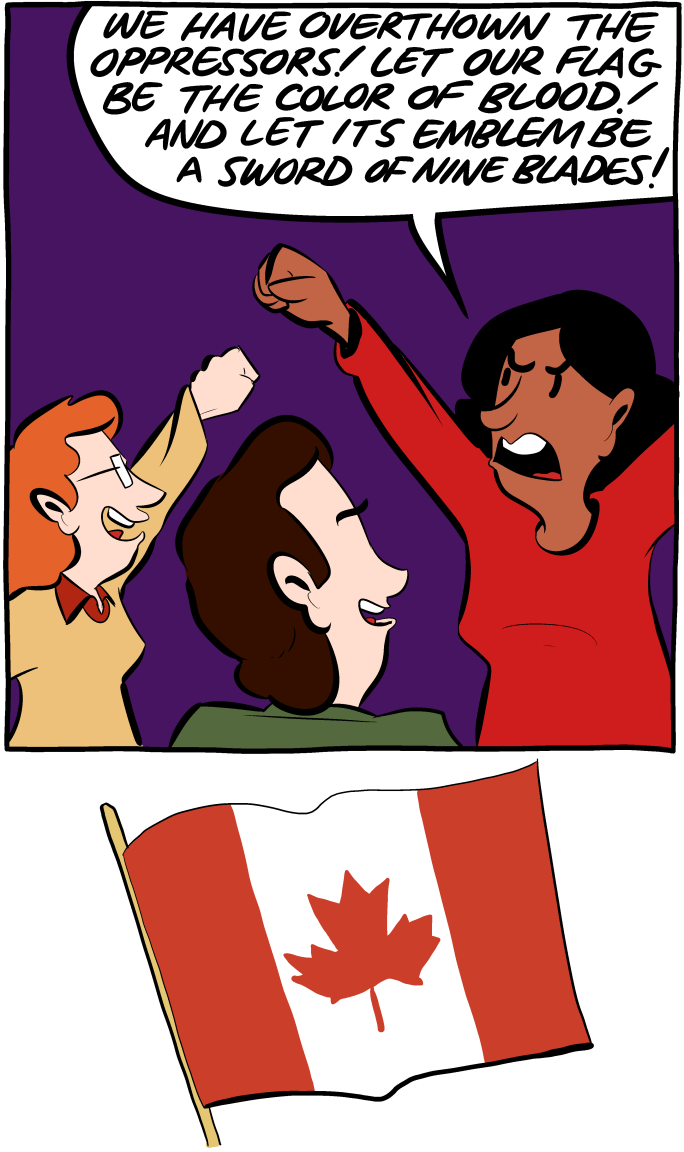
Saturday Morning Breakfast Cereal - DIE OPPRESSORS!
by admin@smbc-comics.com
 |
popular
shared this story
from  Saturday Morning Breakfast Cereal. Saturday Morning Breakfast Cereal.
|
New comic!
Today's News:
OH MY GOD IT'S HAPPENING
solipsista.inconformista, Tadeu and 4 others like this
17 Mar 00:40

These are the silly URLs the NSA uses for cyber espionage
by Dante D'Orazio
Security researchers this week discovered an NSA cyber espionage program that installs malware in hard drive firmware, making it hard to detect or delete. It's serious stuff, but there's a light side to this story.
Kaspersky's researchers also published a list of URLs that the malware uses to "phone home" and pass information back to agents. Now, the NSA could use random, gibberish domains, but those look suspicious. So, instead, the agency registered and ran second-rate domains like newjunk4u.com and nickleplatedads.com. (Aside: Is that nickel plate dads or nickel-plated ads?)
Of course, these URLs have now been compromised, which means the NSA has no use for them. That does raise the possibility that the government could sell the domains off like the other unused gear it accrues. That's quite unlikely, but Wired got an expert to survey the list and generate an estimate. Domains like xLiveHost.com could be turned into a porn site, and might be worth up to $7,000, according to domain broker Dave Evanson. But CustomerScreenSavers.com is the best of the lot, and could net $40,000. He estimates the total list of over a hundred URLs could be worth up to $200,000.
Which ones are you interested in? Here are some of our top picks.
- thesuperdeliciousnews.com
- goodbizez.com
- coffeehausblog.com
- islamicmarketing.net
- adsbizsimple.com
- amazinggreentechshop.com
- suddenplot.com
Tadeu, Sophianotloren and 2 others like this
17 Mar 00:39
When a Song Becomes a Threat: SAE and “Speech”
by Chris Hall


I’m pretty sure that although intent might not be magic, we white people must surely be magic. The proof is in the media response to the SAE lynching chant. Most of it magically turns white racism into something that’s black peoples’ fault. That’s amazing. It can’t be done with rationality or anything else of this world, so it must be magic. For an antidote to all that, here’s a great summary by Ellie Mystal on how the words of the chant go beyond simply being “speech” and turn into a threat when looked at through black history:
Now, I get how a white listener wouldn’t take the threat as a true threat. They weren’t threatening Eugene Volokh. And, I don’t know, maybe when white people are by themselves, they talk like this and they all understand that they don’t actually intend to solicit a lynch mob to go after the black people on campus. Who knows what you say when I’m not around. Maybe white people are just used to chants about hanging people from trees, and intuitively know that the drunk frat boys weren’t serious?
But that’s not really an objective reading of the situation, at least if we dispense with the notion that the white perspective is the only objective one. Objectively, a bus of drunk white people were singing about hanging people. Buses of drunk white people singing about hanging folks is a true threat, because sometimes buses of drunk white people then actually go out and hang people. IT’S HAPPENED BEFORE.
In fact, I’m getting pretty sick of white people telling me how I’m supposed to perceive threats from white people. Of course I perceive the chant as an attempt to solicit a criminal act. How could I not? Don’t most hate crimes committed against African-Americans start with drunk douchebags talking about n***ers?
The post When a Song Becomes a Threat: SAE and “Speech” appeared first on Literate Perversions.
ThePrettiestOne, Tertiarymatt and 2 others like this
16 Mar 08:58

Age of Discovery-style map of modern submarine cables
by Cory Doctorow
SophianotlorenI'm more mind-boggled at the fact that we have ALL THESE WIRES running through huge amounts of water, and that you may well be able to read this message because of that fact. Like, woah!

You can explore it interactively for free and download a jumbo wallpaper JPEG, but the print edition is $250.
Read the rest
Erin, Sophianotloren and one other like this


16 Mar 08:54
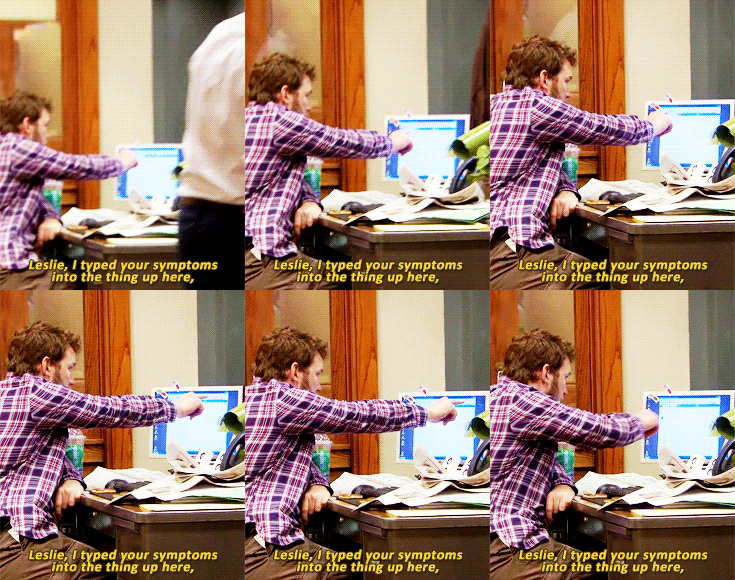
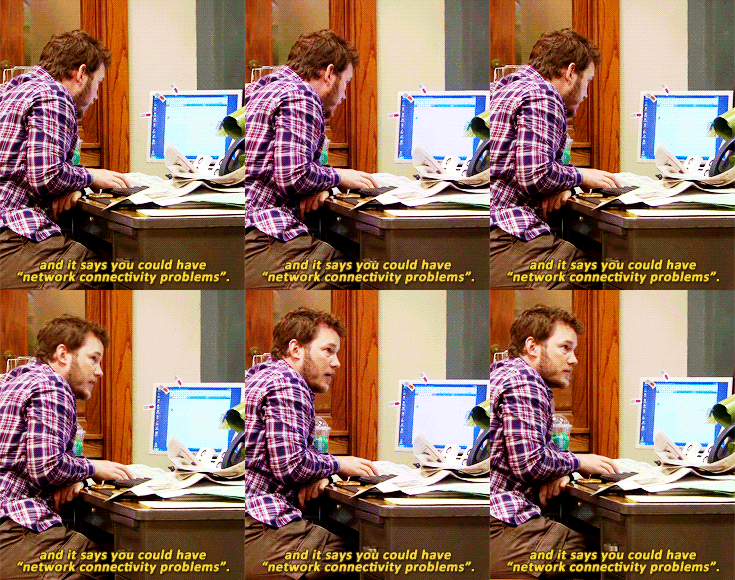
GREATEST IMPROVISED LINE EVER
GREATEST IMPROVISED LINE EVER
RC, ThePrettiestOne and 16 others like this

16 Mar 06:52
"Yesterday, I spent 60 dollars on groceries, took the bus home, carried both bags with two good arms..."
“Yesterday, I spent 60 dollars on groceries,
took the bus home,
carried both bags with two good arms back to my studio apartment
and cooked myself dinner.
You and I may have different definitions of a good day.
This week, I paid my rent and my credit card bill,
worked 60 hours between my two jobs,
only saw the sun on my cigarette breaks
and slept like a rock.
Flossed in the morning,
locked my door,
and remembered to buy eggs.
My mother is proud of me.
It is not the kind of pride she brags about at the golf course.
She doesn’t combat topics like, ”My daughter got into Yale”
with, “Oh yeah, my daughter remembered to buy eggs”
But she is proud.
See, she remembers what came before this.
The weeks where I forgot how to use my muscles,
how I would stay as silent as a thick fog for weeks.
She thought each phone call from an unknown number was the notice of my suicide.
These were the bad days.
My life was a gift that I wanted to return.
My head was a house of leaking faucets and burnt-out lightbulbs.
Depression, is a good lover.
So attentive; has this innate way of making everything about you.
And it is easy to forget that your bedroom is not the world,
That the dark shadows your pain casts is not mood-lighting.
It is easier to stay in this abusive relationship than fix the problems it has created.
Today, I slept in until 10,
cleaned every dish I own,
fought with the bank,
took care of paperwork.
You and I might have different definitions of adulthood.
I don’t work for salary, I didn’t graduate from college,
but I don’t speak for others anymore,
and I don’t regret anything I can’t genuinely apologize for.
And my mother is proud of me.
I burned down a house of depression,
I painted over murals of greyscale,
and it was hard to rewrite my life into one I wanted to live
But today, I want to live.
I didn’t salivate over sharp knives,
or envy the boy who tossed himself off the Brooklyn bridge.
I just cleaned my bathroom,
did the laundry,
called my brother.
Told him, “it was a good day.”
-
took the bus home,
carried both bags with two good arms back to my studio apartment
and cooked myself dinner.
You and I may have different definitions of a good day.
This week, I paid my rent and my credit card bill,
worked 60 hours between my two jobs,
only saw the sun on my cigarette breaks
and slept like a rock.
Flossed in the morning,
locked my door,
and remembered to buy eggs.
My mother is proud of me.
It is not the kind of pride she brags about at the golf course.
She doesn’t combat topics like, ”My daughter got into Yale”
with, “Oh yeah, my daughter remembered to buy eggs”
But she is proud.
See, she remembers what came before this.
The weeks where I forgot how to use my muscles,
how I would stay as silent as a thick fog for weeks.
She thought each phone call from an unknown number was the notice of my suicide.
These were the bad days.
My life was a gift that I wanted to return.
My head was a house of leaking faucets and burnt-out lightbulbs.
Depression, is a good lover.
So attentive; has this innate way of making everything about you.
And it is easy to forget that your bedroom is not the world,
That the dark shadows your pain casts is not mood-lighting.
It is easier to stay in this abusive relationship than fix the problems it has created.
Today, I slept in until 10,
cleaned every dish I own,
fought with the bank,
took care of paperwork.
You and I might have different definitions of adulthood.
I don’t work for salary, I didn’t graduate from college,
but I don’t speak for others anymore,
and I don’t regret anything I can’t genuinely apologize for.
And my mother is proud of me.
I burned down a house of depression,
I painted over murals of greyscale,
and it was hard to rewrite my life into one I wanted to live
But today, I want to live.
I didn’t salivate over sharp knives,
or envy the boy who tossed himself off the Brooklyn bridge.
I just cleaned my bathroom,
did the laundry,
called my brother.
Told him, “it was a good day.”
-
(via
)
you fucking go, you bad ass bitch 🙌
(via heysaba)
16 Mar 01:53
Trying to make your partner dominant is not submissive
by Stabbity
To quote Male Submission Art:
Dear “Submissive” BDSM’ers: trying to “make your boy/girlfriend into a Dominant” is an intensely dominant act involving severe behavior modification, and you should at least own up to that.
I sympathize with people who wish their partners were dominant, but there is nothing submissive or ethical about trying to make someone into something they aren’t without any thought to what’s best for them.
It should be obvious to anyone who isn’t a sociopath that trying to rebuild your partner without their ongoing enthusiastic consent like some sort of cartoon mad scientist is evil. Being remade into something better, or getting to shape someone into your perfect partner are both common fantasies, and if you’re very careful and have your partner’s full support they can be done ethically, but there is simply nothing okay about deciding for them that you’re going to rebuild them to suit you better.
I can’t fucking believe I have to say this, but people who are not dominant are still people and deserve to make their own choices about who they want to be. Whether your partner is submissive, or not interested in power exchange, or not interested in your type of power exchange, they have the right to be that way. I don’t understand what’s so complicated about this.
Issues of being a decent human being aside, it’s just not submissive to try to make your partner dominant. Submission is about giving control/authority to your partner, not about deciding for them who they should be. How can you call yourself submissive when you won’t even let your partner decide whether or not they want to be dominant? Am I supposed to believe that after showing that level of contempt for who your partner is as a person, you’re going to turn around and do what they tell you to do if it’s inconvenient or you’re tired or you’re not turned on? Do you care at all what your partner wants?
If you somehow magically succeeded in making your partner dominant, they would most likely end up leaving you for someone who was actually halfways competent at submission. Why would a dominant want to stay with someone who clearly doesn’t give a shit what they want?
You’re allowed to want what you want, but stop pretending it’s remotely submissive to try to make a person into a dom.
Sophianotloren likes this

16 Mar 00:32
Síguenos: @NoPuedoCreer - @QueLoVendan - @QueLoVendanX
¡Descubre nuestras tiendas!
Un 5% de descuento para ti usando el cupón NPC_EN_RSS
QueLoVendan.com, regalos originales, frikis y divertidos
QueLoVendanX.com, (+18) juguetes eróticos ¡El placer será tuyo!
Cosplay de navegadores muy realista
by Troy

Este grupo de adorables chicas geek se han disfrazado de los cuatro navegadores de internet más populares hoy en día: de zorrita la de Firefox, de parchís la de Chrome, de aventurera la de Safari y, finalmente, de anciana medio inválida la del inefable iExplorer de Microsoft.
Realmente, pocas veces un cosplay se ha ceñido tanto a la realidad como en esta ocasión.
Visto en @elAmigoInformatico
Ver más: cosplay, navegadoresSíguenos: @NoPuedoCreer - @QueLoVendan - @QueLoVendanX
¡Descubre nuestras tiendas!
Un 5% de descuento para ti usando el cupón NPC_EN_RSS
QueLoVendan.com, regalos originales, frikis y divertidos
QueLoVendanX.com, (+18) juguetes eróticos ¡El placer será tuyo!
16 Mar 00:31

Every goddamn time.
Every goddamn time.
Roumen.ganeff, Sofía Henao and 4 others like this

16 Mar 00:30

Denmark, the land of LEGO, in LEGO, featuring LEGOLAND
by Iain
Danish builder Lasse Vestergård has created this gigantic microscale map of Denmark, featuring tiny versions of many of its landmarks. Not as much Viking stuff as I’d expected – but they sure have a lot of cathedrals! And of course, LEGOLAND Billund is in there too – can you locate it?

Check out the entire album for closeups and explanations of all the landmarks, including Roskilde Cathedral, which Lasse has created in LEGO before…

claudzim, Sophianotloren likes this
16 Mar 00:30

Chocolate dessert blooms like a flower right before you eat it
by Casey Chan
I like food that's as close to being alive (or fresh, depending on your perspective) as possible. That's partly because it tastes better but also because it's tingly to see food move when you don't expect it too. This blooming chocolate dessert is a mover, all right. As you pour the cream onto the dish, the chocolate strip opens up like a flower.
Rosalind, Tomas Kissík and 4 others like this
16 Mar 00:29


Piracy Is Just Another Copyright Industry Scapegoat
by Rick Falkvinge
 The year was 1929. Ruined stock brokers were throwing themselves out of windows on Wall Street in desperation from the horrible stock market crash. The economy was in a shambles. People were literally starving, something that had been inconceivable just a few years back.
That same year, record sales in the USA plummeted along with Wall Street brokers – from $75 million to a mere $5 million. The copyright industry was certain: it was all the fault of the broadcast radio. Certainly so.
It couldn’t possibly be their own business failure or the fact that the entire economy had gone belly-up. No, it was definitely the fault of broadcast radio. They went to politicians and policymakers and demanded (and got!) fees from broadcast radio to compensate for the damage done to the copyright industry by the new medium, as evidenced by the fact that sales were down from $75 million in the mid-1920s to $5 million in 1929. And so, politicians thought it was a good idea to hamper the promising new medium of broadcast radio in order to benefit the old record industry and their sales.
Fast forward to the 1940s, when television arrived. The copyright industry was furious: who would possibly pay to go to the movies, if you could watch a movie for free at home? The decade had barely started when the U.S. FCC adopted the television standard NTSC, and at the same time, people almost stopped buying movie tickets. The copyright industry was certain: in 1941 through 1944, it was definitely television’s fault that they didn’t sell as many movie tickets as they used to. They complained to politicians and policymakers as they always do, but these particular years, politicians were busy doing something else, something that might just have affected the overall economy. Nevertheless, it was the perfect scapegoat – again – for the copyright industry’s own business failures: who would possibly pay to see a movie at the cinema when they could see it for free at home?
Then, a decade later, in the 1950s, cable television arrived. By now, the copyright industry had learned to profit off of broadcast TV, and they were absolutely furious at the new cable TV medium. They were required to broadcast for free, after all. How could they possibly be expected to compete with a paid service? This was grossly unfair and they went to politicians and demanded the new cable TV medium to be hindered, hampered, and regulated.
Skipping some twenty episodes of the same pattern, we arrive at the Internet.
Unlicensed home manufacturing of copies had started with the cassette tape, but took off with the net. The copyright industry, once their business failed for completely unrelated reasons, had the perfect scapegoat: young people who didn’t respect their distribution monopoly. Damned be civil liberties, damned be the internet, damned be jobs, entrepreneurship, innovation, and progress: by blaming unlicensed manufacture, they didn’t have to face the music of a business failure toward their board and shareholders, but – again – had a convenient external scapegoat for their own damn utter incompetence.
(We can easily observe, that now that unlicensed home manufacturing of music has practically ceased, copyright industry sales of music still hasn’t changed a bit. Unlicensed manufacturing was never the business problem or a cause. But it was a very convenient scapegoat.)
The copyright industry has managed to kill civil liberties for their own children, ushering in a dystopian surveillance machine, merely to avoid taking responsibility for their own business failures. I lack words to quantify my contempt for these utter parasites.

About The Author
Rick Falkvinge is a regular columnist on TorrentFreak, sharing his thoughts every other week. He is the founder of the Swedish and first Pirate Party, a whisky aficionado, and a low-altitude motorcycle pilot. His blog at falkvinge.net focuses on information policy.
Book Falkvinge as speaker?
Source: TorrentFreak, for the latest info on copyright, file-sharing, torrent sites and anonymous VPN services.
Sophianotloren, Luke.stirling likes this
16 Mar 00:27

Smug Scandinavians tell us what’s wrong with America
by PZ Myers
Yeah, we know.

The anti-intellectualism of the American citizenry is just killing us. They won’t be impressed: they’ll just point to the 13th panel and say, “Haw haw, we can kick your ass.”
clmzim, Strain.lindseyj and 5 others like this

16 Mar 00:25
theladydamfino:THIS SPECIAL IS SO IMPORTANT.


claudzim, Sophianotloren and 3 others like this
16 Mar 00:24
jean-luc-gohard:“When did slavery end in America?”If you ask a white teenager, you might get the...
“When did slavery end in America?”
If you ask a white teenager, you might get the answer, “Four hundred years ago.” But that’s not the answer. Four hundred years ago was 1615, when the Jamestown colony had only existed for eight years and chattel slavery was just beginning.
Others might say, “When Lincoln signed the Emancipation Proclamation, of course.” But that’s not right either. That only freed slaves in Confederate territory seized by the Union. The Union slave states—Missouri, Kentucky, Maryland, Delaware, and the then-in-formation West Virginia—were exempt and allowed to keep their slaves, along with Tennessee, which had more or less been returned to the Union, and Union-loyal areas of Louisiana (including New Orleans) and coastal Virginia. Because it was unenforceable in most of the Confederate states, only about 1-2% of slaves were freed by the Emancipation Proclamation.
“Well, then,” they might say, “it was definitely when the Thirteenth Amendment was passed.” And still, they would be wrong. While that pivotal law did free the vast majority of America’s slaves, the text of the law is this: “Neither slavery nor involuntary servitude, except as a punishment for crime whereof the party shall have been duly convicted, shall exist within the United States, or any place subject to their jurisdiction.“
So when did slavery end in America? The answer is, “Never.”
As discussed in the PBS documentary Slavery By Another Name (available in full by clicking the link), as the federal government withdrew funding and support for Reconstruction, the South began a system of leasing prisoners—allowed by law to be used as slaves—to the plantations to replace their free labor. Those affected by this system were treated even worse than those held in bondage under slavery before the Civil War, as slaves were an expensive investment—the $800 average cost of a slave in 1860 is roughly $21,000 in today’s dollars—but leased prisoners were replaced by the prison if killed and payment continued as scheduled, deincentivizing what little humane treatment was afforded slaves.
It was so profitable and in such high demand that, within ten years of its implementation, the stereotype of black people in America had changed. Prior to the Civil War, the stereotype of black people was that we were inherently docile, servile, and loyal. This only makes sense, because if we were viewed as inherently violent and thieving and criminal like we are today, why would they have trusted us with their livelihoods, their crops, and their children? (Side note: this is also where the stereotype of black people loving watermelon came from—the idea that if we were just given a cool slice of watermelon on a hot day, we would work forever). But once they were no longer allowed to own us outright and had to lease us from prisons, police and judges did everything in their power to make sure they had a robust source of free labor. Black people were arrested on false or trumped-up charges, and within ten years, the recorded arrest and conviction rate for black people had skyrocketed so much that the stereotype was entirely inverted from what it had been previously.
The prison system may have stopped leasing prisoners to plantations, but they still lease prison labor to corporations and local governments. Prisoners—primarily black, of course, because we are targeted—are forced to fight wildfires, manufacture consumer goods, and even make goat cheese for Whole Foods. Our economy was built on slave labor, and it still runs on it to a disconcerting extent. And to make that work, black and Latino neighborhoods are targeted by law enforcement and manipulated through things like school closings and schools being unfathomably underfunded to ensure an ever-growing population of prisoners, an ever-growing population of slaves.
So the next time someone asks you when slavery ended in America, tell them the truth. Tell them, “Never.”
clmzim, Sophianotloren and one other like this
16 Mar 00:23

 Defensive architecture: keeping poverty unseen and deflecting our guilt:


"Warning: This bench becomes red-hot between 1 AM and 7 AM. No sleeping."
 "This bench releases level 8 virus 10 PM - 6 AM."
 "Warning: Writing graffiti on these walls will induce a chemical spray causing blindness."
"WARNING: This bench becomes red hot between 1 AM and 7 AM."
by jwz
Defensive architecture: keeping poverty unseen and deflecting our guilt:Defensive architecture is revealing on a number of levels, because it is not the product of accident or thoughtlessness, but a thought process. It is a sort of unkindness that is considered, designed, approved, funded and made real with the explicit motive to exclude and harass. It reveals how corporate hygiene has overridden human considerations, especially in retail districts. It is a symptom of the clash of private and public, of necessity and property.Pavement sprinklers have been installed by buildings as diverse as the famous Strand book store in New York, a fashion chain in Hamburg and government offices in Guangzhou. They spray the homeless intermittently, soaking them and their possessions. The assertion is clear: the public thoroughfare in front of a building, belongs to the building's occupant, even when it is not being used. [...]
Defensive architecture acts as the airplane curtain that separates economy from business and business from first class, protecting those further forward from the envious eyes of those behind. It keeps poverty unseen and sanitises our shopping centres, concealing any guilt for over-consuming. It speaks volumes about our collective attitude to poverty in general and homelessness in particular. It is the aggregated, concrete, spiked expression of a lack of generosity of spirit.
Ironically, it doesn't even achieve its basic goal of making us feel safer. There is no way of locking others out that doesn't also lock us in. The narrower the arrow-slit, the larger outside dangers appear. Making our urban environment hostile breeds hardness and isolation. It makes life a little uglier for all of us.
Lots of good stuff at the Dismal Garden gallery (I think this is what used to be the "Anti-Sit archives" -- many of the photos look similar, anyway.)
And, one of my favorite background gags from Transmetropolitan, 1999. It took me a little while to dig these out. Can you believe that these images aren't googleable?
"Warning: This bench becomes red-hot between 1 AM and 7 AM. No sleeping."
"This bench releases level 8 virus 10 PM - 6 AM." "Warning: Writing graffiti on these walls will induce a chemical spray causing blindness."
Sophianotloren, Luke.stirling and 2 others like this
16 Mar 00:20


Things I read this week that I found interesting
by stavvers
Hi everyone. Let me begin with a PSA. Don’t, for the love of god, drink pina colada. Ever. It’s like an evil scientist tried to create a drink that tastes exactly the same on the way back up as it does to drink. This is why the round-up has come so much later in the day than usual.
Anyway, let’s get on with some links.
Casual Love (Carsie Blanton)- This article articulates so many feelings I’ve had about love and romance which I haven’t been able to articulate and it’s excellent.
Boring (Robot Hugs)- Cute comic about how lovely negotiation is.
The Bad Blood: My Life With Sickle Cell Anaemia (Sara Bivigou)- Beautiful, heartbreaking piece about life with sickle cell.
HIV-Positive LGBT Women Are Discounted, Miscounted, and Uncounted (Jeff Krehely and Tari Hanneman)- Important article about a largely-invisible group.
Beyond Indian Wells: Serena Williams has been consistently disrespected for her entire career (Jenée Desmond-Harris)- Overview of misgynoir aimed at the tennis star.
Queen Sabrina, Flawless Mother (Hugh Ryan)- Biography of a remarkable LGBT hero.
How the Home Office keeps getting it wrong on LGBTQ asylum seekers (Ray Filar)- On the homophobic mess that is the Home Office.
And finally, my friend Elaine is doing a very exciting challenge. She’s visiting every embassy in London while dressed as Carmen Sandiego to raise money for people for whom borders aren’t so easy to cross. Read more and sponsor her here.
Sophianotloren likes this
16 Mar 00:20


Why Does Douthat Think the Poor Exist?
by Erik Loomis

That idea makes some people on the left angry. As they see it, it’s money and only money that Murray’s Fishtown and Putnam’s hometown lack and need. And it’s unchecked capitalism and Republican stinginess, not the sexual revolution, that has devastated working-class society over the last few decades. Fight poverty, redistribute wealth, and you’ll revive family and community — it’s as simple as that.
Actually, it’s not quite that simple Ross, but whatever. The sexual revolution is responsible for today’s poor! Why? Who knows! In Ross’ world, the fact that the poor have cable and cell phones is why they aren’t actually poor. They are lazy, shiftless, and too horny. In other words, Douthat is in many ways the prime columnist of the New Gilded Age, blaming the poor for their own poverty by taking an elitist, paternalistic, and strongly disapproving view of working class moral behavior. All they need is religion, sobriety, and to listen to their betters and Horatio Alger lives.
But only if their betters also live moral lives. Which they are not because of too much sex.
The post-1960s cultural revolution isn’t the only possible “something else.” But when you have a cultural earthquake that makes society dramatically more permissive and you subsequently get dramatic social fragmentation among vulnerable populations, denying that there is any connection looks a lot like denying the nose in front of your face.
But recognizing that culture shapes behavior and that moral frameworks matter doesn’t require thundering denunciations of the moral choices of the poor. Instead, our upper class should be judged first — for being too solipsistic to recognize that its present ideal of “safe” permissiveness works (sort of) only for the privileged, and for failing to take any moral responsibility (in the schools it runs, the mass entertainments it produces, the social agenda it favors) for the effects of permissiveness on the less-savvy, the less protected, the kids who don’t have helicopter parents turning off the television or firewalling the porn.
Sure, the “cultural revolution” (nice touch Ross) isn’t the only possible something else. In fact, it’s not even remotely connected to modern poverty. But let’s ignore that only possible part of the equation for me to shame people for sex, rich or poor. Meanwhile, let me go back to my mythologized vision of the 1950s that exists in only my brain.
Finally, what did Leonard Cohen do to deserve citation in this column?
Sophianotloren likes this
16 Mar 00:18


Are Seattle Restaurants Closing in “Record Numbers”? (Spoiler: No.)
by djw
Since the initial story about Seattle restaurant closings is making its way through the right wing blogs at the moment, prompting one wingnut outlet to declare that Seattle restaurants are closing “in record numbers,” let’s take a loot at the actual evidence provided in the story that launched the chain reaction. Before we begin let’s note despite long having one of the highest minimum wages in the country, while being located in one of only a handful of states with no ‘tip credit’ for wages, Seattle still manages to have the highest density of restaurants anywhere in the country, except for San Francisco and the greater New York City area.
What’s the evidence? The Seattle Magazine article that started this game of telephone identified four (4) restaurants that have closed or will close between February and May 2015. (A 5th restaurant is seeing its award winning chef resign to move to Spain; the alleged relevance here is unclear.) Included in these four restaurants is one that remains open at its original location, shifting its focus back to their original model, another is owned by one of Seattle’s most successful and celebrated restaurateurs, who continues to own five thriving establishments and is in the process of opening two new restaurants. The owner of the third closing restaurant (easily the most over-hyped Indian restaurant openings I’ve ever seen), identifies the reason for closing as a poor fit between format and location, which seemed pretty obvious to me when they opened. The space the fourth restaurant occupies will be immediately replaced by another new restaurant.
What isn’t included is any analysis to suggest openings are failing to keep pace with closings. Given the short typical lifespan of a restaurant and the size of Seattle, we should expect annual openings and closings to be in the hundreds in a typical year. Identifying four closing restaurants over a four month period is evidence for the thesis in the same way finding a bunch of Democratic voters who don’t want to vote for Hillary Clinton is ‘evidence’ her campaign is in trouble. Indeed, the right wingers are hoping you don’t read the original article, which closes by refuting its own highly speculative thesis:
Despite these serious challenges, however, brave restaurateurs continue to open eateries in Seattle, which, remembering basic supply and demand, also naturally accounts for closures we’ve already seen and more that will come. Capitol Hill alone is carrying on an unprecedented dining boom, and in mid January, Capitol Hill Seattle announced that Nue, Chris Cvetkovich’s modernist global street food joint, was the neighborhood’s 100th food and drink opening in three years.
Other major Capitol Hill additions from the last few months include Stateside, (Eric Johnson’s long-awaited French-Vietnamese outpost), Tallulah’s (Linda Derschang’s [of Smith and Oddfellows] casual neighborhood café) and Serious Pie Pike (Tom Douglas’s third location of his pizza joint, now open in the new Starbucks Roastery). Moreover, just this week on the Hill, we’ve got news of Lisa Nakamura opening the Gnocchi Bar in the Packard Building on 12th Avenue (formerly the Capitol Hill D’Ambrosio Gelateria Artigianale) at the end of March.
Those keeping score at home will note that the article identifies more restaurants opening than closing.
I have no idea what impact, if any, Seattle’s minimum wage increase will have on total employment in the restaurant industry. It’s well worth watching, because knowing at what point more aggressive minimum wage increases have this kind of impact may be useful for shaping future policy. It’s also important because business owners and ideological opponents of the minimum wage will lie and obfuscate to create a false impression of negative impacts, whether they exist or not.
Sophianotloren likes this
15 Mar 11:11


Rosalyn Drexler’s Noir Paintings
by John Yau
Rosalyn Drexler, “Money Mad” (1988), acrylic and paper collage on canvas, 26 x 30 inches (all images courtesy Garth Greenan Gallery)
I wonder if the reason Rosalyn Drexler isn’t better known is because she is so good at so many different things. We recognize such mastery in men, but rarely in women. Drexler is a novelist, whose books include I Am the Beautiful Stranger (1965) and the critically acclaimed To Smithereens (1972), based on her experience as a professional wrestler, Rosa Carlo, aka “The Mexican Spitfire” — a book that I reprinted in 2011. She has also received an Emmy Award for her screenwriting and several Obie Awards for her plays. Finally, Drexler is a painter whose work of the 1960s is central to Pop art.
Even as Drexler’s paintings from this period were getting rediscovered, most recently in Rosalyn Drexler: I Am the Beautiful Stranger, Paintings from the 1960s at Pace/Wildenstein (March 16–April 21, 2007), which I reviewed for The Brooklyn Rail, and in the important group show Seductive Subversion: Women Pop Artists, 1958–1968 (2010–11), whose tour included stops at the Brooklyn Museum and the Sheldon Museum in Lincoln, Nebraska, her work seemed to disappear from the public.
Rosalyn Drexler, “Marilyn Pursued by Death” (1963), acrylic and paper collage on canvas, 50 x 40 inches
And yet, she never stopped painting, and the current exhibition, Rosalyn Drexler: Vulgar Lives at Garth Greenan (February 19–March 28, 2015) goes a long way towards setting the record straight. By including paintings and collages from 1959–65, the heyday of Pop Art, and from 1988–89, when many were lamenting painting’s fallen status, the exhibition suggests that Drexler has been painting all along, and that we know only a small fraction of her work. Although nearly a quarter of a century separates the two bodies of work, there are certain stylistic continuities and thematic preoccupations, even as the work shifts in unexpected ways. One continuity for Drexler, a self-taught artist, has to with her aesthetics. According to the artist:
I adored my coloring books […] I was addicted to outlining the pictures in contrasting colors, and enjoyed staying within the lines. Needed the control. My work begs for control. After all, I captured the images and buried them: now they want to escape. They lie layered and still, unable to move. They are contained and I can breathe a sigh of relief.
In her paintings from the 1960s, Drexler’s coloring book aesthetics led her to apply areas of flat color, which evoked the paintings of Barnett Newman as well as the film posters of Saul Bass. The isolation of the figures against a bright monochromatic ground also suggested stage sets and film stills. As I wrote in my review in The Brooklyn Rail (April 2007):
Drexler’s sense of placement and space is always on the mark. In “Marilyn Pursued By Death” (1963), Monroe is striding towards the right hand corner, trying to escape a paparazzo, who is just a step or two behind her. Both are wearing sunglasses and their bodies—a single two-headed form—are outlined by a red aura. They are dressed alike, a white blouse and shirt, blue skirt and blue pants. Derived from a photograph, Drexler reduces the figures to lights and darks, their faces to gray and greenish-gray; they exist somewhere between photograph and cartoon, but always in paint.
While Drexler derives her figures from the mass media, her placement of them animates the composition. In this regard, they differ from the paintings of Warhol, which exude an aura of stillness, of an arrested moment.
Rosalyn Drexler, “Self-Defense” (1963), acrylic and paper collage on canvas, 16 x 12 inches
In the lurid painting “Self-Defense” (1963), in which a woman, whose breasts are exposed, is on top of a man, pushing down on his head with one hand while trying to fire a pistol with the other, the noir sensibility seems inspired both by film and hardboiled novelists such as James M. Cain, Jim Thompson and Cornell Woolrich. One of the central motifs of film noir and hardboiled crime fiction is the woman of questionable virtue. The gun-toting woman in “Self-Defense” shares something with Drexler’s other women; they are tough as nails, even when they are at the mercy of a vampire or mobster.
In a later painting, “Money Mad” (1988), with its allusion to the phrase “mad money,” which women carried in case a date ended badly, the placement of three figures against the abstract ground evokes a stage on which a violent melodrama is being played out. Greatly outsized in comparison to the three figures, the two one-dollar bills floating above them, one crumpled and the other flat, become props, a key to the narrative. Meanwhile, two overlapping hands in the foreground, one white and the other gray with red fingernails, add another layer of complexity into the melodrama. This is one of Drexler’s great strengths. For all their luridness and violence, her narratives remain open-ended; viewers can speculate about the story, but that is all they can do because the story never reveals itself.
Rosalyn Drexler, “Night Visitors” (1988), oil on canvas, 24 x 30 1/8 inches
In another painting from the 1980s, “Night Visitors” (1988), a figure on a couch faces a large black, rectangular opening, where a group of four men in suits walk down a winding path towards her. Is it a dream, a memory or something she has seen? Again, a stage is suggested. I am reminded of William Shakespeare line from As You Like It: “All the world’s a stage,/ And all the men and women merely players.” We want to know what is going on, but there is no answer forthcoming.
It seems to me that Drexler’s knowledge of theater and film influenced her painting, that there was a cross pollination going on in among the various disciplines she worked in. What is also evident is that even though her paintings were largely unknown, Drexler was making a terrific work in the late 1980s that doesn’t align with any of the styles of that period. Given the small but revelatory group of later paintings included in this exhibition, isn’t time a museum put on an exhibition devoted to Drexler, who is now in her late 80s. Isn’t it time we find out what she has been up to all these years?
Rosalyn Drexler: Vulgar Lives continues at the Garth Greenan Gallery (529 West 20th Street, Chelsea, Manhattan) through March 28.
Cary Renquist, Sophianotloren likes this
15 Mar 10:44


The White Supremacist Origin of Right to Work Laws
by Erik Loomis

Vance Muse is the founding father of the right to work movement. Not surprisingly, he was also a virulent racist, saying, among other things about unions:
“From now on, white women and white men will be forced into organizations with black African apes whom they will have to call ‘brother’ or lose their jobs.”
Meanwhile, right to work gets rejected for this legislative session in West Virginia, but it probably won’t be much longer given the types of politicians West Virginians now vote into office. I feel terrible about the declining work freedoms in West Virginia, but at the same time, given how hard right and racist the state has gone, in a sense voters are going to get what they asked for, even if not in 2015.
Sophianotloren likes this
15 Mar 10:43


The “We” in U.S. History
by Erik Loomis

Elizabeth Yale has an interesting essay arguing that the real conservative outrage over the AP U.S. History standards is that AP is avoiding the “we” in history, not taking a stand that our past celebrates a glorious narrative of heroism and progress that defines “us” today. Of course, such narratives of “we” and “us” are automatically exclusionary and thus should be avoided since they inevitably imply a “you” and “them” that are not part of this grand historical narrative.
Yet, perhaps these questions don’t belong in a U.S. history classroom—or, at the very least, in that space, their answers should not be assumed. The AP framework seems to take this stance; this may be one of the reasons it so frustrates its critics. In its discussion of the early history of settlement, warfare, and colonial expansion in the territory that became the United States, the new framework resists saying “we.” On the religious roots of the American Revolution, it reads, “Protestant evangelical religious fervor strengthened many British colonists’ understandings of themselves as a chosen people blessed with liberty, while Enlightenment philosophers and ideas inspired many American political thinkers to emphasize individual talent over hereditary privilege.”
This is hardly neglect: evangelical fervor is right there, strengthening British colonists’ resolve when confronted with challenges to their liberties. But in speaking of “British colonists’ understandings of themselves,” the language also sets up a distance between us and them. They understood themselves as a chosen people blessed with liberty; we can adopt that view if we wish, but we don’t have to take it on uncritically. The framework creates this measure of historical distance not only between us and early American Protestants, but between us and each of the many different kinds of colonial Americans it discusses—enslaved Africans, Indians, and colonists, traders, missionaries, and adventurers from France, Spain, Portugal, and the Netherlands. It presents colonial history as a diverse space inhabited by many different kinds of people, with many different kinds of aims. Students of a range of backgrounds might see themselves here—though the framework certainly doesn’t force them to.
…
How do we acknowledge and move forward from the sins of the past? The historical “we” in place, the distance between past and present falsely collapsed, we can only understand them as our own. Here is where the historical distance created by the AP U.S. framework, with its careful locutions, pays off. For, of course, in seeing that U.S. history has been shaped by racism, one may be lead to reflect upon our inheritance of that history, and how it plays out in daily life, in ways big and small, across the United States. Our history, properly told, should push students towards these kinds of reflections (though it won’t dictate their outcomes). But such thoughts may be particularly painful—too painful to confront—for those who look back on the “Founding Fathers,” and say, “Them. Those are my people. Those are our people.”
That so many of the conservative critics of AP U.S. History standards are also deeply invested in exclusionary politics of other types–including repealing the meaningful sections of the Voting Rights Act–suggests that “we” is just as contested when talking about 2015 as it is about 1775.
Rosalind, Sophianotloren likes this
15 Mar 08:54
$80 Billion
That’s the expected cost to taxpayers over 10 years from Obama’s proposed free tuition plan, the White House admitted Friday.
That’s about the cost of 8 months of war in Iraq. Seems like a much better investment of my tax dollars to me.
I bolded
It’s amazing how 80 billion isn’t worth mentioning when it’s about killing people, but is suddenly a huge, horrifying barrier when it’s about improving lives.
Tertiarymatt, Sophianotloren likes this

