
Sophianotloren
Shared posts
16 Mar 00:26


#1108; Alone in the Crucible
by David Malki
Scott Akerman, clmzim and 6 others like this

15 Mar 10:45


Best Dad Ever
by John Scalzi
So this happened tonight:
T-shirt, pajama pants and bathrobe. Ladies and gentlemen, I have gone Full Dad.
— John Scalzi (@scalzi) March 15, 2015
@scalzi double bonus points if Athena has friends over.
— Lynne M Thomas (@lynnemthomas) March 15, 2015
In fact she does! RT @lynnemthomas: @scalzi double bonus points if Athena has friends over.
— John Scalzi (@scalzi) March 15, 2015
@scalzi congrats on winning tonight's most embarrassing dad contest Up next: ukulele concert!
— Lynne M Thomas (@lynnemthomas) March 15, 2015
And thus:

Oh, yeah. Best dad ever.
JoeA, Sophianotloren likes this




14 Mar 21:31


Happy Pi Day
by John Scalzi
Consider this our annual holiday card to you.

And of course I scheduled this to post at 9:26am.
Sophianotloren, firehose likes this
14 Mar 21:30
Filed under: Education, Work & Organizations


Beyond “Bossy” or “Brilliant”?: Gender Bias in Student Evaluations
by gendsocumass
by Tristan Bridges, Kjerstin Gruys, and Christin Munsch, and C.J. Pascoe
Originally posted at Girl W/ Pen! here. Cross-posted with permission.
Not surprisingly, the new interactive chart Gendered Language in Teacher Reviews, drawn from RateMyProfessor.com (produced by Ben Schmidt—a history professor at Northeastern), has been the subject of a lot of conversation among sociologists, especially those of us who study gender. For example, it reminded C.J. of an ongoing conversation she and a former Colorado College colleague repeatedly had about teaching evaluations. Comparing his evaluations to C.J.’s, he noted that students would criticize C.J. for the same teaching practices and behaviors that seemed to earn him praise: being tough, while caring about learning.
 We’ve long known that student evaluations of teaching are biased. A recent experiment made headlines when Adam Driscoll and Andrea Hunt found that professors teaching online received dramatically different evaluation scores depending upon whether students thought the professor was a man or a woman; students rated male-identified instructors significantly higher than female identified instructors, regardless of the instructor’s actual gender. Schmidt’s interactive chart provides a bit more information about exactly what students are saying when evaluating their professors in gendered ways. Thus far, most commentaries have focused on the fact that men are more likely to be seen as “geniuses,” “brilliant,” and “funny,” while women, as C.J. discovered, are more likely to be seen as “bossy,” “mean,” “pushy.” These discrepancies are important, but in this post, we’ve used the tool to shed light on some forms of gendered workplace inequality that have received less attention: (1) comments concerning physical appearance, (2) comments related to messiness and organization, and (3) comments related to emotional (as opposed to intellectual) work performed by professors.
Physical Appearance
The results from Schmidt’s chart are not universally “bad” or “worse” for women. For instance, the results for students referring to professors as “hot” and “attractive” are actually mixed. Further, in some fields of study, women are more likely to receive “positive” appearance-based evaluations while, in other fields, men are more likely to receive these evaluations. A closer examination, however, reveals an interesting pattern. Here is a list of the fields in which women are more likely to be referred to as “hot” or “attractive”: Criminal Justice, Engineering, Political Science, Business, Computer Science, Physics, Economics, and Accounting. And here is a list of fields in which men are more likely to receive these evaluations: Philosophy, English, Anthropology, Fine Arts, Languages, and Sociology.
 Notice anything suspicious? Men are sexualized when they teach in fields culturally associated with “femininity” and women are sexualized when they teach in fields culturally associated with “masculinity.” Part of this is certainly due to gender segregation in fields of study. There are simply more men in engineering and physics courses. Assuming most students are heterosexual, women teaching in these fields might be more likely to be objectified. Similarly, men teaching in female-dominated fields have a higher likelihood of being evaluated as “hot” because there are more women there to evaluate them. (For more on this, see Philip Cohen’s breakdown of gender segregation in college majors.)
Nonetheless, it is important to note that sexual objectification works differently when it’s aimed at men versus women. Women, but not men, are systematically sexualized in ways that work to symbolically undermine their authority. (This is why “mothers,” “mature,” “boss,” and “teacher” are among men’s top category searches on many online pornography sites.) And, women are more harshly criticized for failing to meet normative appearance expectations. Schmidt’s chart lends support to this interpretation as women professors are also almost universally more likely to be referred to as “ugly,” “hideous,” and “nasty.”
Level of (Dis)Organization
Christin and Kjerstin are beginning a new research project designed to evaluate whether students assess disorganized or “absent-minded” professors (e.g., messy offices, chalk on their clothing, disheveled appearances) differently depending on gender. Schmidt’s interactive chart foreshadows what they might find. Consider the following: women are more likely to be described as “unprepared,” “late,” and “scattered.” These are characteristics we teach little girls to avoid, while urging them to be prepared, organized, and neat. (Case in point: Karin Martin’s research on gender and bodies in preschool shows that boys’ bodies are less disciplined than girls’.) In short, we hold men and women to different organizational and self-presentation standards. Consequently, women, but not men, are held accountable when they are perceived to be unprepared or messy. Emphasizing this greater scrutiny of women’s organization and professionalism is the finding that women are more likely than men to be described as either “professional” or “unprofessional,” and either “organized” or “disorganized.”
Emotional Labor
Finally, emotional (rather than intellectual) terms are used more often in women’s evaluations than men’s. Whether mean, kind, caring or rude, students are more likely to comment on these qualities when women are the ones doing the teaching. When women professors receive praise for being “caring,” “compassionate,” “nice,” and “understanding,” this is also a not-so-subtle way of telling them that they should exhibit these qualities. Thus, men may receive fewer comments related to this type of emotion work because students do not expect them to be doing it in the first place. But this emotional work isn’t just “more” work, it’s impossible work because of the competence/likeability tradeoff women face.
There are all sorts of things that are left out of this quick and dirty analysis (race, class, course topic, type of institution, etc.), but it does suggest we begin to question the ways teaching evaluations may systematically advantage some over others. Moreover, if certain groups—for instance, women and scholars of color (and female scholars of color)—are more likely to be in jobs at which teaching evaluations matter more for tenure and promotion, then unfair and biased evaluations may exacerbate inequality within the academy.
Filed under: Education, Work & Organizations
Rosalind, Sophianotloren likes this
14 Mar 21:29

Saturday Creature Feature Links
by bspencer
- A new species of anomalocaridid has been discovered-it’s 480 million years old and 7-feet-long!
- Would I link to a story simply so I’d have an excuse to post the “Mad Pooper” song from “Bob’s Burgers?”
YesNo. - It’s not often I laugh out loud at something. It’s rarer still that I’ll nearly scare neighbors with my most obnoxious witch’s cackle…but this story about the –“it must be satire”– fanfiction “My Immortal” (a completely random Harry Potter/vampire mashup) had me laughing maniacally.
- I’m finally–yes, really, this time–bidding adieu to the cancer on my life that is Gamergate. With this:
-

“If I don’t get pants, nobody gets pants” by Theamat
Rosalind, Sophianotloren likes this

14 Mar 21:27

Anti-vaxxer ordered to pay EUR100K to winner of "measles aren't real" bet
by Cory Doctorow

Stefan Lanka, a "vaccination skeptic" who claims that measles are a psychosomatic condition brought on by "traumatic separations," publicly challenged people to prove that measles was caused by a virus.
Read the rest
Sophianotloren, Luke.stirling likes this
14 Mar 21:26
Because You Never Know
by Juanita Jean
I think I may have told you the story about me being a young reporter at a city council meeting where the fire department was presenting their projected budget. Among other fancy pants things the fire chief wanted in this small town was an eight story fire ladder.
A councilwoman was confused and asked, “Chief, why do you need an eight story fire truck ladder when the tallest building in town is two stories?” She asked it nicely because she assumed it was something she didn’t understand about fire ladders.
The chief puffed himself up all tall, smug, and knowledgeable and answered, “Because you never know.”
Well, I had to write a straight news story about that answer and it was the hardest writing I have ever done. You never know. Only sometimes you do. You kinda know you won’t have to have an eight story ladder to fight a two story fire.
“You never know” happens about as often as you’d suspect in Texas. However, there are some examples of you-absolutely-do-know.
Texas Republican State Representative J M Lozano is a man of vision. And that vision is drones. HB 3429
As soon as practicable after the effective date of this Act, the office of the governor shall adopt the policies and procedures, establish the unmanned aircraft program, and acquire unmanned aircraft for state agency use as required by Section 490G.001, Government Code, as added by this Act.

The drones will be operated by the “Office of the Governor.”
We can’t pay for education. We can’t pay for health care. We can’t build or fix roads. But, bygawd, we can let the Gov and JM have a drone to play with on the the weekends to crash-land on the roof of my house. Fortunately, my house is only two stories so the fire chief has got that covered if we need to put out the subsequent fire.
A drone. Somebody who can find Austin on a map and has the good sense to get there wants Texas to have drones because … you never know.
Heads up to Glen Maxey, who is forced to work with the guys.
Sophianotloren, mturovskiy likes this
14 Mar 21:24
emilyvgordon:lunarbaboon: Lunarbaboon Book Facebook Twitter Patr...
SophianotlorenI *want* to like this, but I get caught up on the fact that his "compliment" is a lie. If he thinks the hat is ugly, why tell the guy it's awesome? Find something you can genuinely compliment; it makes a huge difference, and people can tell when you mean it (and when you're talking shit through a smile.) Take this from someone who uses their powers for good every single day -- I have a lot of practice with this one!

Sophianotloren, Tertiarymatt and -1 others like this
14 Mar 21:20
McDonald's menu, 1973
by Minnesotastan

Rosalind, Sophianotloren and one other like this



14 Mar 06:20


itsnawtmywallet: riordam: council-ofahn: riordam: this is...
this is just a few what I have seen lately
tumblr
whY
I’M A GUMMY BEAR, YES I’M A GUMMY BEAR, I’M A YUMMY TUMMY LUCKY FUNNY GUMMY BEAR.
oh hell no
Oh hell yeah
Sophianotloren, firehose likes this
14 Mar 06:18


I love Sophie Campbell’s work so, so much.
I love Sophie Campbell’s work so, so much.
Sophianotloren, Tertiarymatt likes this
14 Mar 06:18

itsthecatspajamas:weed-boob:weed-boob: I PUT GIANT GOOGLY EYES...
I PUT GIANT GOOGLY EYES ON MY BOOBS
come on this is funny
boobly eyes
14 Mar 06:17

let-itbebabygirl:opulentes: ABUSE Information Love Is Respect...
ABUSE
Information
- Love Is Respect (Digital Abuse)
- Love Is Respect (Emotional/Verbal Abuse)
- Love Is Respect (Financial Abuse)
- Love Is Respect (Physical Abuse)
- Love Is Respect (Sexual Abuse)
- Love Is Respect (Stalking)
- Help Guide
Coping
Chat Rooms
ADD/ADHD
Information
- Help Guide
- Attention Span Test
- Attention Quiz
- Concentration Quiz
Coping
- Coping Tips for Attention Deficit Disorder
- 12 Best Tips for Coping with ADHD
- 50 Tips On The Management of Adult Attention Deficit
Medication
- ADHD Medication Chart: Compare Drugs for ADD and ADHD
- Drugs Used to Treat ADHD/ADD
- ADD/ADHD Medications: Are ADHD Drugs Right for You
- ADHD Medication Side Effects, Drug Types, Precautions
ADDICTION
Information
Coping and Recovery
- Tools of Recovery: Addiction Coping Skills
- 5 Ways to Deal With Urges and Cravings
- After Rehab: 5 Ways for Addicts to Cope
- Addiction Recovery
- Coping With Urges
- Dealing With Cravings
ANGER
Coping
- strategies to keep anger at bay
- Anger management: 10 tips to tame your temper
- Anger Management: Tips and Techniques
- Feeling Angry
- Controlling Anger — Before It Controls You
- Dealing With Anger
- How To Cope With Anger
- Anger management: What works and what doesn’t
- Ten Commandments of Anger Regulation
ANXIETY
Information
- Anxiety Quiz
- Social Anxiety Test
- What are your stress triggers?
- Coping Skills Quiz
- Anxiety disorders explained
- Help Guide (Anxiety Attacks & Anxiety Disorder)
- Understanding and managing anxiety
- learn more about anxiety
- Anxiety Self-Assessment
- Help Guide (General Anxiety Disorder)
- Help Guide (Social Anxiety Disorder & Social Phobia)
- Explanation of anxiety and self help tips
Coping
- a list of stress relievers
- Identifying and Managing Anxiety
- 11 Assorted Anxiety Tips for Anxiety Sufferers
- How to work through feelings of isolation
- Tips and tricks for dealing with anxiety
- Anti-stress breathing tips
- How to stay under control with severe social anxiety
- Coping with social anxiety
- Managing Stress
- how to help a friend with anxiety
- Help Guide (Therapy)
- Half of Us
- Job interviews and social anxiety
- Dealing with anxiety
- Coping with test anxiety
- Tips for flying anxiety
- Grounding techniques
- More grounding techniques
- Even more grounding techniques
- Mindfulness
- Belly breathing
- Living with anxiety
- Social anxiety disorder self help tips.
- Coping with flashbacks
- What anxious racing thoughts are like for me
- Using a thought diary
Panic Attacks
- How to handle panic attacks
- Exploring and coping with panic attacks
- 10 Rules for Coping with Anxiety and Panic
- Tips to cope with panic attacks
- Rules for coping with anxiety and panic
- Understanding and coping with panic attacks
- Understanding and helping panic attacks and panic disorders
- Help Guide (Panic Attacks & Panic Disorder)
- Coping with panic attacks workbook
- Rules for coping with panic
- Panic attack workbook 2
Interactives
- Emotional baggage check
- The Dawn Room
- The quiet place
- The thoughts room
- Stress Analyst
- cloudflowing
- imagination
- planetarium
- weavesilk
- calm
- make sand art online
- lifeinneon
- dolldivine
- barcinski-jeanjean
- rainymood
- do nothing for 2 minutes
- stars
- Muscle Relaxation
- Mood chart
Medication
- Help Guide (Anxiety Medicine)
- Common Medications for Anxiety Disorders
- Guidelines for Medication Use
Chat Rooms
BIPOLAR DISORDER
Information
Coping
- Bipolar disorder and self-help
- Living with bipolar disorder
- How to deal with bipolar disorder without medication
- 10 ways to cope with bipolar disorder
- Coping skills
- Help Guide (Self Help)
- Bipolar Support tumblr
Medication
Chat Rooms
DEPRESSION
Information
- depression information
- Depression Infographic
- Help Guide (Depression: Signs, Symptoms, Causes & Help)
- Help Guide (Teenage Depression: A Guide for Parents)
- Half of Us
- Depression Quiz
Coping
- How to cope with depression
- How to cope with depression 1
- Natural depression treatments
- Ways to deal with depression/stress
- Tips to help overcome loneliness
- 10 Tips on How to Work Through Feelings of Social Isolation
- 8 Tips to Overcome Loneliness
- Ways to deal with depression/stress
- having a bad day?
- Make a comfort box
- 10 Things to Do When You Feel Like Crap
- how to find a new normal in the middle of depression
- you are not alone in the way you think you are
- reasons to stay alive
- how to stop trying to think yourself into happiness and actually arrive there
- cheer me up
- Help Guide (Dealing with Depression)
- Help Guide (Helping Someone with Depression)
Medication
Chat Room
EATING DISORDERS
Recovery
- 281 Reasons to Recover
- Eating Disorders and Emotional Eating Test
- Relapse Prevention
- Bloating, Indigestion, & Feeling too full
- Why You Must Eat
- Learning to Love Your Body
- Tips to Stop Restricting
- Dealing With Weight Gain
- 10 Steps to Bulimia Recovery Workbook
- Coping with Exercise Addiction
- Tips to help with bulimia recovery
- Help Guide (Emotional Eating)
- Help Guide (Binge Eating)
- Help Guide (Bulimia)
- Help Guide (Helping Someone With an Eating Disorder)
- Help Guide (Treatment and Recovery)
- Stop Hating Your Body
- Body Positive Zone
- Self Care 101
- self esteem
- 30 day self esteem challenge
- developing positive self esteem
- learning-to-love-yourself
- Something Fishy
- Ways of coping with eating disordered behaviors
- The addiction help center
FRIENDS WITH ILLNESS
- How to deal/talk with bipolar and depressed people
- What to do when your friend is talking about suicide
- What to do if someone you know is overdosing
- What to do if your friend is hurting themselves
- How to help someone who is suicidal
- here’s what you tell someone who wants to commit suicide
- tips for looking after someone with depression
- Friends with metal illness?
- What to do when someone is suicidal
- Help Guide (Helping Someone with Depression)
GENERAL RESOURCES
- Feelings Wheel
- PsychForums
- Psych Central
- Lets Recover Together
- How to find a Support Group
- DailyStrength
GRIEF AND LOSS
- Help Guide (Coping with a Breakup or Divorce)
- Help Guide (Coping with Grief & Loss)
- Help Guide (Coping with Pet Loss)
- Help Guide (Supporting a Grieving Person)
- Help Guide (The Five Stages of Grief)
HOTLINES
- Crisis Text Line: Text “SUPPORT” to 741741
- Crisis Call Center Call 1-800-273-8255 (24/7) Text ANSWER to 839863 (24/7)
- Thursday’s Child Call 1-800-872-5437 (24/7)
- The Trevor Project Call 866-488-7386 (24/7)
- National Safe Place Text SAFE and your current location to the number 69866
- National Runaway Safeline Call 1-800-786-2929 (24/7)
- National Domestic Violence Hotline Call 1-800-799-7233 (24/7)
MEDITATION
- Tips to Start Meditating
- 8 Ways to Make Meditation Easy and Fun
- 18 Minute Guided Meditation: Blissful Deep Relaxation
- 1 Hour Universal Mind Meditation
- Guided Meditation for Sleep and Good Dreams
- Guided Meditation and Progressive Muscle Relaxation
- Progressive Muscle Relaxation
- Guided Relaxation
- Foundations in Flow Yoga Class
- Heart Opening 30min Yoga Class
- 10min Shoulder Yoga Routine
- 9min Yoga Breathing Exercise (Pranayama)
- Kundalini Yoga Breathing Exercises (3 min)
- Yoga Poses
OCD
Information
- Specific Symptoms of OCD
- Distinguishing OCD From Other Conditions
- The Course of Obsessive-Compulsive Disorder
- How do Obsessive Compulsive People Think?
Coping and Treatment
- Natural Treatment Options
- Treatments for Obsessive-Compulsive Disorder (OCD)
- Additional Treatment Options for OCD
- Residential Treatment for OCD
- Medications for Obsessive-Compulsive Disorder (OCD)
- A New Relationship to Your Obsessions
- How to Find Help for OCD
- OCD: Exposure Therapy Versus Medication
- Cognitive Therapy for OCD
Chat Rooms
PERFECTIONISM
Information
- Perfectionism Resources
- Perfectionism - a double-edged sword
- Type-A Personality Quiz
- Perfectionism Test
- Procrastination Test
- Perfectionism: the road to failure
- perfectionism and procrastination
Coping
- How to Overcome Perfectionism
- LEARN TO MANAGE PERFECTIONISM
- How to Overcome Perfectionism & Procrastination
- Perfectionism - Stress Management
- 10 Steps To Conquer Perfectionism
- perfectionists coping with failure
PTSD
Information
- Help Guide (Traumatic Stress)
- Help Guide (PTSD)
- Help Guide (Emotional & Psychological Trauma)
- Mental Help
- PTSD Infographic
- Understanding PTSD
- What is PTSD?
Coping
- Coping with flashbacks
- Self Help Strategies for PTSD
- Coping with Traumatic Stress Reactions
- Post-Traumatic Stress - Self-help Guide
- Understanding and Coping with PTSD
- Coping with PTSD
SCHIZOPHRENIA
Information
- Schizophrenia: What’s in my head?
- Help Guide
- schizophrenia
- Symptoms of Schizophrenia
- Types of Schizophrenia
- Causes of Schizophrenia
Coping
- Living with Schizophrenia
- Coping With Schizophrenia
- Schizophrenia Coping and Recovery
- Schizophrenia: Coping with Delusions and Hallucinations
- Paranoid schizophrenia Coping and support
Treatment
- An Introduction to the Treatment of Schizophrenia
- Treatment of Schizophrenia
- Drugs to Treat Schizophrenia
- Common Drugs and Medications to Treat Schizophrenia
- Treating Schizophrenia Successfully
SELF-HARM
- Cut something that’s not real skin
- Half of Us
- Help Guide
- Recover Your Life
- Self-Injury Outreach & Support
- How to care for cuts
- Resisting cutting
- 25 ways to avoid self injury and prevent self harm
- Tips to help stop cutting
- 99 Coping Skills: Things to do Instead of Cutting
- What to do when someone sees
- How to fade/cover scars
- Alternatives For Cutting 1
- Alternatives For Cutting 2
- Alternatives For Cutting 3
- Alternatives For Cutting 4
- Alternatives For Cutting 5
SELF-LOVE
- how to stop putting yourself down
- Self confidence
- how to improve your self-esteem
- How to be ok with yourself
- tips on self-love
- Confidence
- Learn to love yourself
- when told you are not pretty
- emergency compliment
- lessons for self-love
SUICIDE
- Coping with Suicidal Thought
- What to do when someone is suicidal
- How to help someone who is suicidal
- here’s what you tell someone who wants to commit suicide
- Help Guide (Suicide Prevention)
- Help Guide (Dealing with Suicidal Thoughts & Feelings)
THERAPY
This masterpost needs so many more notes. You might save someone’s life, or make their day, or you can turn their life around by showing them this. When I’m not so sick, I’m going over the links I need because this is hella helpful right now.
Sophianotloren and -1 others like this
14 Mar 06:17
mydogsnokes:i wish the internet was still this innocent


Sophianotloren, firehose and -1 others like this
14 Mar 06:17
cloudofpurple:The talk white kids never have with their parents…

Sophianotloren, Tertiarymatt likes this


14 Mar 06:16
screengeniuz:sandandglass:John Lewis on The Daily ShowI have...


Sophianotloren, Tertiarymatt and -1 others like this
14 Mar 06:15
bibibellatrixx:cutie3pnt14159:alimarko:lyndez:wellsuckmesideways:...
Ok i didn’t expect that

This has been on my dash all day and I finally watched it and ajdjfksk


lol wuttt
Sophianotloren, firehose likes this

14 Mar 06:11
Young Adult Psychological Outcome After Puberty Suppression and Gender Reassignment
by Zoe Brain
SophianotlorenGee, never would have expected THAT!
Young Adult Psychological Outcome After Puberty Suppression and Gender Reassignment De Vries et al Pediatrics peds.2013-2958; published ahead of print September 8, 2014,
RESULTS: After gender reassignment, in young adulthood, the GD was alleviated and psychological functioning had steadily improved. Well-being was similar to or better than same-age young adults from the general population. Improvements in psychological functioning were positively correlated with postsurgical subjective well-being.
14 Mar 06:10
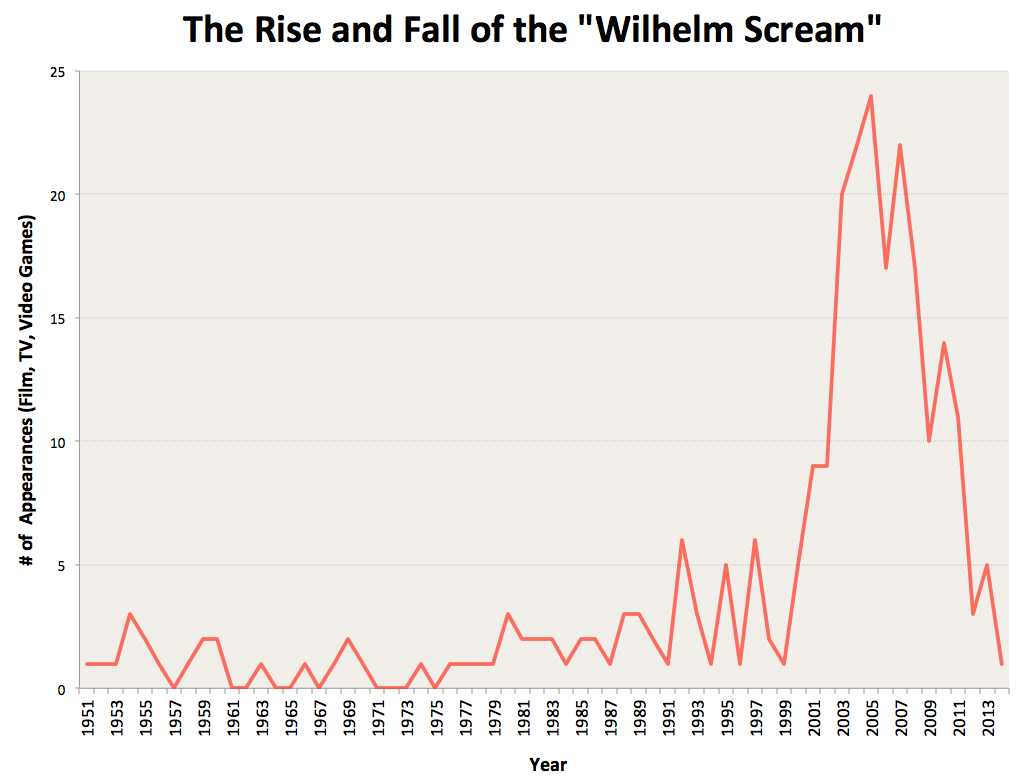
- showing that the Wilhelm scream seems to have fallen out of favor.
The "Wilhelm Scream"
by Minnesotastan
"The Wilhelm scream is a stock sound effect first used in 1951 for the film Distant Drums. Actor-singer Sheb Wooley is considered to be the most likely voice actor for the scream, having appeared on a memo as a voice extra for the film.Addendum: Reposted from 2008 (!) to embed an updated video compilation and this graph -
The Wilhelm scream has been featured in many films and television programs since. Alongside a certain recording of the cry of the Red-tailed Hawk, the "Universal telephone ring", the Goofy holler, the Tarzan yell and "Castle thunder", it is probably one of the best-known cinematic sound clichés.
- showing that the Wilhelm scream seems to have fallen out of favor.
“[The Wilhelm] was something that was so below the radar, that the only people who noticed were the ones who knew,” reminisces Ben Burtt, the man who rediscovered the scream nearly 45 years ago. “Now that it's above ground, it isn’t nearly as much fun to use anymore.”The Priceonomics link above has a list of several hundred uses of the scream in movies.
Rosalind, Sophianotloren and one other like this
14 Mar 06:09

A thumb drive designed to fry a computer
by Minnesotastan
An article about the bomb-drive, first posted on the Russian website Habrahabr.ru by its designer, describes its design and intended effect:Scary. Of course, anyone who picks up a thumb drive and pops it into their computer is asking for trouble."The basic idea of the USB drive is quite simple. When we connect it up to the USB port, an inverting DC/DC converter runs and charges capacitors to -110V. When the voltage is reached, the DC/DC is switched off. At the same time, the filed transistor opens. It is used to apply the -110V to signal lines of the USB interface. When the voltage on capacitors increases to -7V, the transistor closes and the DC/DC starts. The loop runs till everything possible is broken down."
Serafin.shane, Mbanfi and 4 others like this

