Osias Jota
Shared posts
21 Apr 18:10

class-struggle-anarchism: cheskasmagicshire: nerthos: geoffsays...
Osias Jotaisso a globo não divulga
The African Renaissance Monument in Senegal, larger that the Eiffel tower and the statue of liberty .. Things you don’t see in mainstream media.
@KrystVegaNeteruThis is beautiful.
I think this picture better illustrates the size of that monument.
I never even knew this existed this makes me so happy to find out about it
Nah it’s awful
Have you ever spoken to a Senegalese person about this monument to macho megalomania? They hate it.
This statue cost the same as the public debt of Senegal’s hospitals. It’s a big strong man sweeping a scantily clad woman along behind him - they’re all half naked which is extremely insensitive in a country with a 92% Muslim majority …it’s supposed to signify the future and progress but it looks like a throwback to Stalin era politics, it’s supposed to signify African “renaissance” but African people neither designed nor built it.
We can marvel at the size of it, but people in Senegal are pretty adamant that they’d prefer electricity that stays on and surfaces on the roads, books for schools.
It’s a monument to the ego of President Abdoulaye Wade, who, by the way, has claimed 35% of the revenue generated by tourists thanks to this thing, on the basis that he had the idea to build it 20 years ago. He’s 83.
oh
D G, Cary Renquist and 5 others like this
21 Apr 15:16
RT @Psythor: So #Daredevil is a Catholic in a world where Thor literally turned up in New York.
RT @Psythor: So #Daredevil is a Catholic in a world where Thor literally turned up...
by Pai Osias

|
|
firehose, Adam Victor Brandizzi likes this
21 Apr 15:16

a-storm-for-every-spring:fuckyesdeadpool:Deadpool’s official...
Deadpool’s official movie twitter follows only one other account
They’re already doing it right


20 Apr 21:56
RT @andreiferreira_: "Nova temporada de Game of Thrones dará spoilers dos futuros livros"
PARECE QUE O JOGO VIROU NÃO É MESMO
RT @andreiferreira_: "Nova temporada de Game of Thrones dará spoilers dos futuros...
by Osias Jota
|
|
|
Lori, Adam Victor Brandizzi likes this
20 Apr 21:34
 You may have never heard of it, but if you are a Chrome user, chances are you’ve used Google’s QUIC protocol already. As Google disclosed this week, about half of all requests from Chrome to Google’s servers are now served over QUIC. So what’s the big deal here? QUIC is Google’s experimental, low-latency Internet transportation protocol over UDP, a protocol… Read More


Google Wants To Speed Up The Web With Its QUIC Protocol
by Frederic Lardinois
You may have never heard of it, but if you are a Chrome user, chances are you’ve used Google’s QUIC protocol already. As Google disclosed this week, about half of all requests from Chrome to Google’s servers are now served over QUIC. So what’s the big deal here? QUIC is Google’s experimental, low-latency Internet transportation protocol over UDP, a protocol… Read More
Cary Renquist likes this
20 Apr 18:21

The Sad Puppies are goddamned idiots
by PZ Myers

The Sad Puppies are what the gomers who undermined the Hugo nominations are calling themselves. I’m interested in seeing how they defend themselves…or was, until I read their arguments. And all I can conclude is that these are really pathetic, brainless people.
For example, this guy Brad R. Torgersen. He tries to explain their cause by first setting up an analogy.
Imagine for a moment that you go to the local grocery to buy a box of cereal. You are an avid enthusiast for Nutty Nuggets. You will happily eat Nutty Nuggets until you die. Nutty Nuggets have always come in the same kind of box with the same logo and the same lettering. You could find the Nutty Nuggets even in the dark, with a blindfold over your eyes. That’s how much you love them.
Then, one day, you get home from the store, pour a big bowl of Nutty Nuggets . . . and discover that these aren’t really Nutty Nuggets. They came in the same box with the same lettering and the same logo, but they are something else. Still cereal, sure. But not Nutty Nuggets. Not wanting to waste money, you eat the different cereal anyway. You find the experience is not what you remembered it should be, when you ate actual Nutty Nuggets. You walk away from the experience somewhat disappointed. What the hell happened to Nutty Nuggets? Did the factory change the formula or the manufacturing process? Maybe you just got a bad box.
OK…I can understand that. Sometimes you just want your comfort food, and you want it to be prepared the same way, every time. This is the force that drove McDonald’s to world domination — the same food available everywhere, all the time, nice and greasy. I understand, but I don’t think that way; I want something different, I like exploring new flavors. I go to our local Mexican restaurant and pick a completely different meal each time. But wanting the same thing? Fine. My wife discovered her favorite thing on the menu early on, and she gets it always. No problem!
Except the analogy he’s setting up is to justify books. He wants them predictable. He wants to look at the cover and know exactly what he’s going to get when he reads it.
And he’s an author.
Well, at least I know I’d only have to read one of his books, if I felt like it (I do not), and then I could skip the rest.
But you’re reading this and saying, no, that can’t be. Books are supposed to be different from each other. Just imagine if every time you picked one up it would just be a retelling of Harry Potter, over and over again. No author could seriously propose such a justification.
Really, he did.
That’s what’s happened to Science Fiction & Fantasy literature. A few decades ago, if you saw a lovely spaceship on a book cover, with a gorgeous planet in the background, you could be pretty sure you were going to get a rousing space adventure featuring starships and distant, amazing worlds. If you saw a barbarian swinging an axe? You were going to get a rousing fantasy epic with broad-chested heroes who slay monsters, and run off with beautiful women. Battle-armored interstellar jump troops shooting up alien invaders? Yup. A gritty military SF war story, where the humans defeat the odds and save the Earth. And so on, and so forth.
These days, you can’t be sure.
The book has a spaceship on the cover, but is it really going to be a story about space exploration and pioneering derring-do? Or is the story merely about racial prejudice and exploitation, with interplanetary or interstellar trappings?
There’s a sword-swinger on the cover, but is it really about knights battling dragons? Or are the dragons suddenly the good guys, and the sword-swingers are the oppressive colonizers of Dragon Land?
A planet, framed by a galactic backdrop. Could it be an actual bona fide space opera? Heroes and princesses and laser blasters? No, wait. It’s about sexism and the oppression of women.
Finally, a book with a painting of a person wearing a mechanized suit of armor! Holding a rifle! War story ahoy! Nope, wait. It’s actually about gay and transgender issues.
Or it could be about the evils of capitalism and the despotism of the wealthy.
AN AUTHOR WROTE THAT. Unbelievable. He wants purity of the genre: books with rockets on the cover must be entirely about machines and traveling. Books with a guy and an axe on the cover must be about barbarians killing monsters. Don’t you dare change the formula. These books are not allowed to be about race, or colonialism, or sexism, or oppressive social structures. He thinks those are bad things to bring up in a science fiction book.
Our once reliable packaging has too often defrauded our readership. It’s as true with the Hugos as it is with the larger genre as a whole. Our readers wanted Nutty Nuggets because (for decades) Nutty Nuggets is what we gave them. Maybe some differences here and there, but nothing so outrageously different as to make our readers look at the cover and say, “What the hell is this crap??”
Apparently, he stopped reading the genre with Hugo Gernsback.
Maybe he opened The Left Hand of Darkness
The Martian Chronicles
Let’s try Dhalgren
Hey, The Book of the New Sun
Lord of Light

I guess his only recourse is Robert Heinlein. Conservative politics, a bit of militarism, hyper-competent engineers solving mechanical problems all over the place. Like in Stranger in a Strange Land
I first started reading fantasy when I was six or seven years old, and my father gave me a copy of Tarzan of the Apes

And science fiction has always been this way. It’s always been a genre of new ideas and experimentation. It’s not like all of a sudden in the 2000s a few social radicals have hijacked the field and sent it off into wild new directions, discombobulating all of their readers. They’ve always done that. It’s got a readership that loves being discombobulated and twisting their brains around strangeness.
I see someone accusing authors of “defrauding” their readership because they are creative and explore novel ideas and think about more than just the gobbledygook pseudomechanics they’ll use to make their spaceships fly, and I see the real fraud: that is a person who does not understand science fiction and fantasy in the slightest.
Maybe the sad puppies should just pick up a copy of one of their own books and read it over and over again everyday. No surprises. They’d get exactly what they expect every time. And they’ve probably already got a rocket on the cover.
George RR Martin has spoken, at length and in great detail (Hey! Like his books!). He goes through the history of the Hugos and shows, with the evidence, that there is no pattern of discrimination against Conservative White Dudes.
20 Apr 16:41

Boom or bust for bitcoin?
by Tim Harford
Osias Jota"Two stories about the future, and most likely neither one will come true. These are interesting times for cryptocurrencies."
Bitcoin appeals to libertarians on the basis that governments cannot arbitrarily make more of it
In a moment, I’ll gaze into the crystal ball and foretell the future of the world’s most famous cryptocurrency, bitcoin. I should first explain what’s happening now.
It was developed in 2008 by an unknown programmer or programmers. Confusingly, bitcoin is both a payment technology and a financial asset. The asset called bitcoin has no intrinsic value but it has a market price that fluctuates wildly. Like digital gold, it appeals to libertarians on the basis that governments cannot arbitrarily make more of it.
The payment technology called bitcoin is what you might get if you ran the Visa network over a peer-to-peer network of computers. In case that description doesn’t help, it’s a way of sending money anywhere in the world but instead of relying on the authority of a financial intermediary such as Visa or Western Union, it uses a decentralised network to verify that the transaction has occurred. The record of all previous transactions is called the blockchain; it, too, is stored on a decentralised network. The entire process relies on cryptographic techniques to prevent fraud, which is why bitcoin and other currencies like it are called cryptocurrencies.
This may all seem very esoteric but the internet was esoteric once and it turns out to have become important. So what lies ahead for bitcoin?
Here’s one scenario.
Bitcoin has enjoyed many booms and busts in value, and later in 2015, the price surges again. This will be the biggest yet, drawing more and more people into the market. As the dotcom bubble and railway mania proved, even revolutionary technologies can be overvalued; with Bitcoins selling for $2,000, $5,000 and eventually $10,000 each, nemesis is around the corner.
The first sign of trouble will be the scams. A recent research paper by computer scientists Marie Vasek and Tyler Moore identified almost 200 bitcoin scams, in which about 13,000 victims lost $11m. Such scams will only become more common as the stakes become higher and the pool of naive investors deeper. Soon they will be the stuff of mainstream consumer rights phone-ins.
Arguably, scams are a sign that Bitcoin has matured — after all, nobody proposes abandoning the dollar because con artists like to be paid in dollars. But they are just a foretaste of what is to come — Bitcoin will be gutted by predatory monopolists.
The Bitcoin system has always relied on a crowd of people putting their computers to work verifying transactions and writing them into the blockchain, a task which costs money and energy. In a rather confusing analogy with gold, these people are called “miners” and they are compensated in Bitcoins, of course. Yet there is a basic inconsistency at the heart of this system, as the economist Kevin Dowd has observed: Bitcoin mining needs to be done by a decentralised crowd but is more efficiently done by large arrays of computers owned by a few players. Or possibly just a single one.
Even today, Bitcoin mining is a game for the big boys. As the Bitcoin mining industry becomes a tight, self-serving oligopoly, the stage is set for Bitcoin counterfeiting on a massive scale. In 2018, 10 years after the invention of Bitcoin, the system collapses under the weight of its own contradictions.
It’s an intriguing story — but of course, it is just a story. We could give it a name: “BitCon”.
. . .
If you don’t believe that, I have another story for you. The title is “Daisy Chains”. Throughout 2015 and 2016, the price of Bitcoins continues to collapse. Speculators lose interest and some of the big miners sell off their computers at a heavy loss. The spotlight moves elsewhere but the true believers in the power of decentralised blockchain processing continue to develop the system.
Bitcoins aren’t the only things that can be transferred using a peer-verified network, after all — you could transfer the digital lock to a smart car; or a financial contract, with pay-offs and penalties automatically adjudicated and paid for by the blockchain. The question is whether the effort of doing all this is more efficient than the current centralised systems using interbank payments.
The answer is yes but only in certain circumstances. A blockchain is a ledger of every digital transaction ever made on the system. This proves far too unwieldy for a universal means of payment. Yet specialised niche systems evolve: by 2018, block-chain processing is common for remittances; by 2019, block-chain processing pays for and controls self-driving taxis. You can even download an out-of-the-box blockchain app for your local babysitting circle — or your prostitution ring. Blockchain approaches don’t replace Western Union and Visa everywhere but they squeeze margins and make inroads for certain applications.
The only disappointment for the true Bitcoin enthusiasts is that Bitcoin itself, the currency that started it all, fails to catch on. Most people prefer a trusted brand. When a standard of value is used on these disparate blockchain processes, the most popular by far is “FedCoin” — more commonly known by its correct name, the US dollar.
Two stories about the future, and most likely neither one will come true. These are interesting times for cryptocurrencies.
Written for and first published at ft.com.
Cary Renquist likes this
20 Apr 12:49
RT @Manz: ¿Cómo puedo aprender a programar en una sola noche? http://t.co/UJWinW387L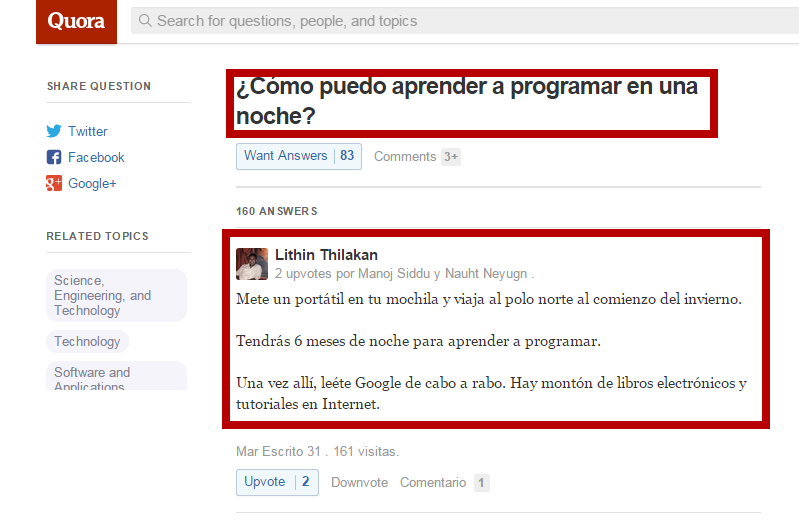
RT @Manz: ¿Cómo puedo aprender a programar en una sola noche? http://t.co/UJWinW387L
by Pai Osias
|
|
|
20 Apr 12:49
RT @scharlab: Overheard on Twitter: 'I'm in love with the aggressiveness of the Brazilian visa application form' — by @caddington11 http://…
RT @scharlab: Overheard on Twitter: 'I'm in love with the aggressiveness of the Brazilian...
by Pai Osias
|
|
|
firehose likes this


20 Apr 02:28
RT @GreenScreenDays: It's all starting to make sense now..
#RetroGaming #Pacman http://t.co/JNIXnXnzX4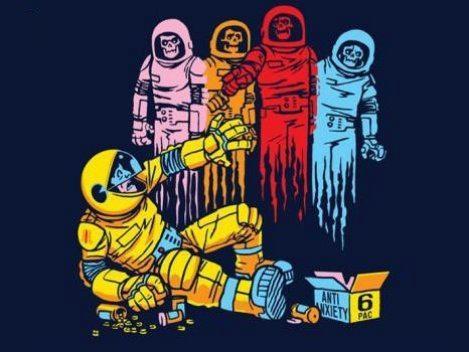
RT @GreenScreenDays: It's all starting to make sense now.. #RetroGaming #Pacman http://t.co/JNIXnXnzX4
by Pai Osias
|
|
|
Adam Victor Brandizzi, Cary Renquist and one other like this
20 Apr 01:13
Este cara inventou um sistema que permite tocar música bem alto sem incomodar os vizinhos
Osias Jotaele inventou o headphone?
Xergio Córdoba é um engenheiro de masterização espanhol. Ele patenteou um sistema que usa psicoacústica para permitir que salas de show e clubes noturnos aumentem o som mantendo o mesmo dBA. A invenção, que se chama Masn´live©, é basicamente um processador que, uma vez inserido em qualquer sistema de som, permite ouvir música em sua qualidade pretendida sem desobedecer nenhuma lei de controle sonoro.
Leia mais (04/19/2015 - 09h34)
19 Apr 21:24
Old Dude seeing me on my phone: Why don't you read the news instead of tweeting and texting.
 |
Courtney
shared this story
from  Super Opinionated. Super Opinionated.
|
Old Dude seeing me on my phone: Why don't you read the news instead of tweeting and texting.
Me: I'm actually reading an article from The Economist on my phone about Kazakhstan and Uzbekistan's mock elections. What are your thoughts on the topic?
Old Dude taken aback: I don't know.
Me: Well then why don't you read the news instead of chastising teenagers on their phones?
Vvicked, Sophianotloren and 5 others like this
19 Apr 21:10
RT @FriedHardt: vcs ja pensaro o tuiter na vida real tipo o cara para no meio da rua fala uma bobage sem graça aí as pessoa começa a seguir…
RT @FriedHardt: vcs ja pensaro o tuiter na vida real tipo o cara para no meio da...
by Pai Osias
|
|
|
19 Apr 21:10
RT @NaoInviabilize: tava lá no fluxo
avistei a novinha no grau
sabe o que ela quer?
escolher um canal
que não tenha Jornal Nacional http://…
RT @NaoInviabilize: tava lá no fluxo avistei a novinha no grau sabe o que ela quer? escolher...
by Pai Osias
|
|
|
19 Apr 21:09
RT @iva_cafe: WTF RT: @Prof_Viaro: Postei na outra rede:
#Machismo http://t.co/3QEwdCcOr2
RT @iva_cafe: WTF RT: @Prof_Viaro: Postei na outra rede: #Machismo http://t.co/3QEwdCcOr2
by Pai Osias
|
|
|
19 Apr 17:30

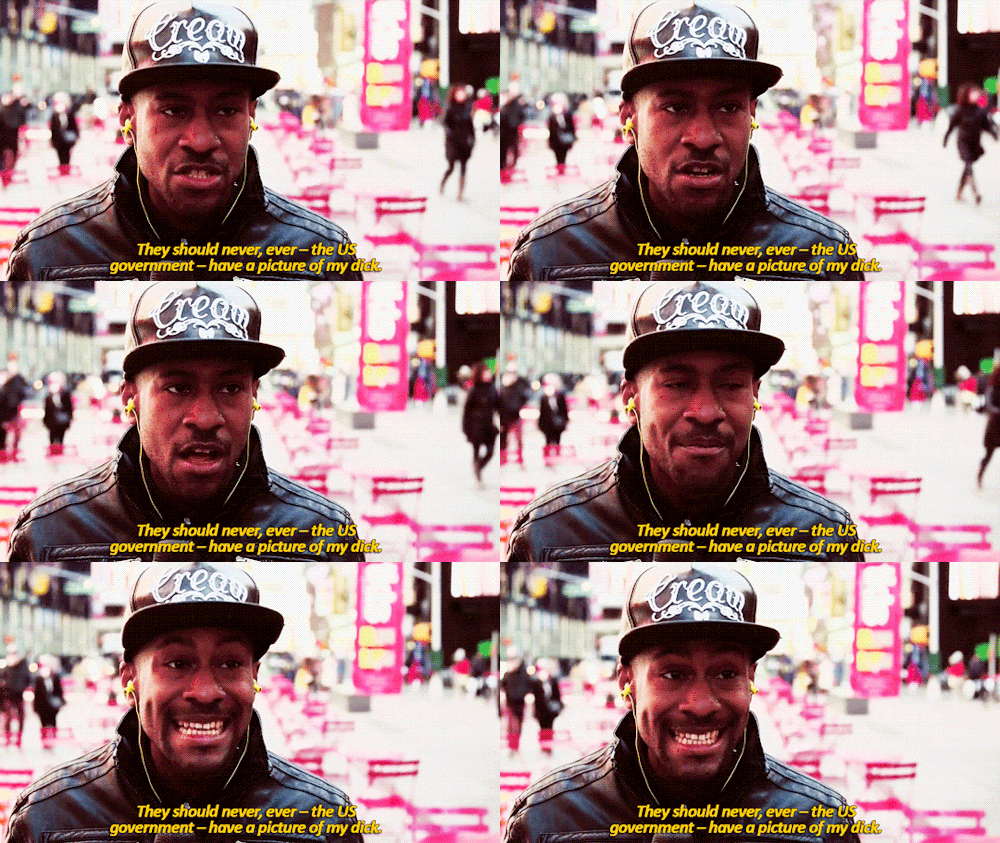


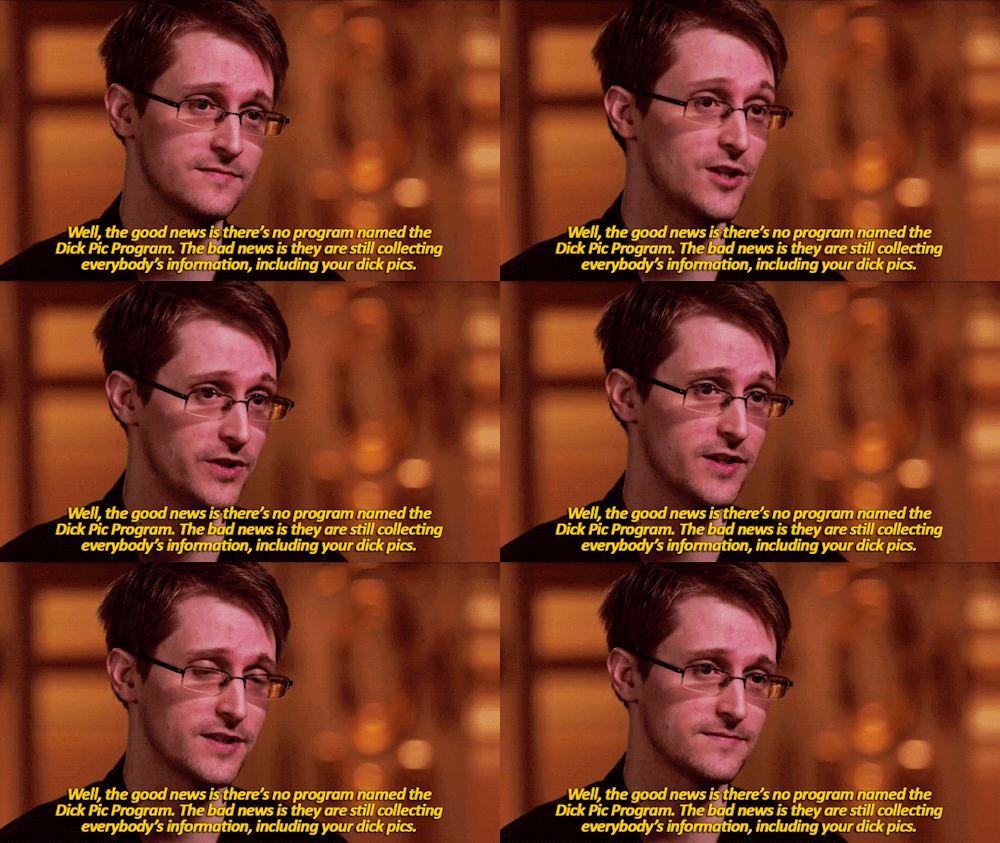
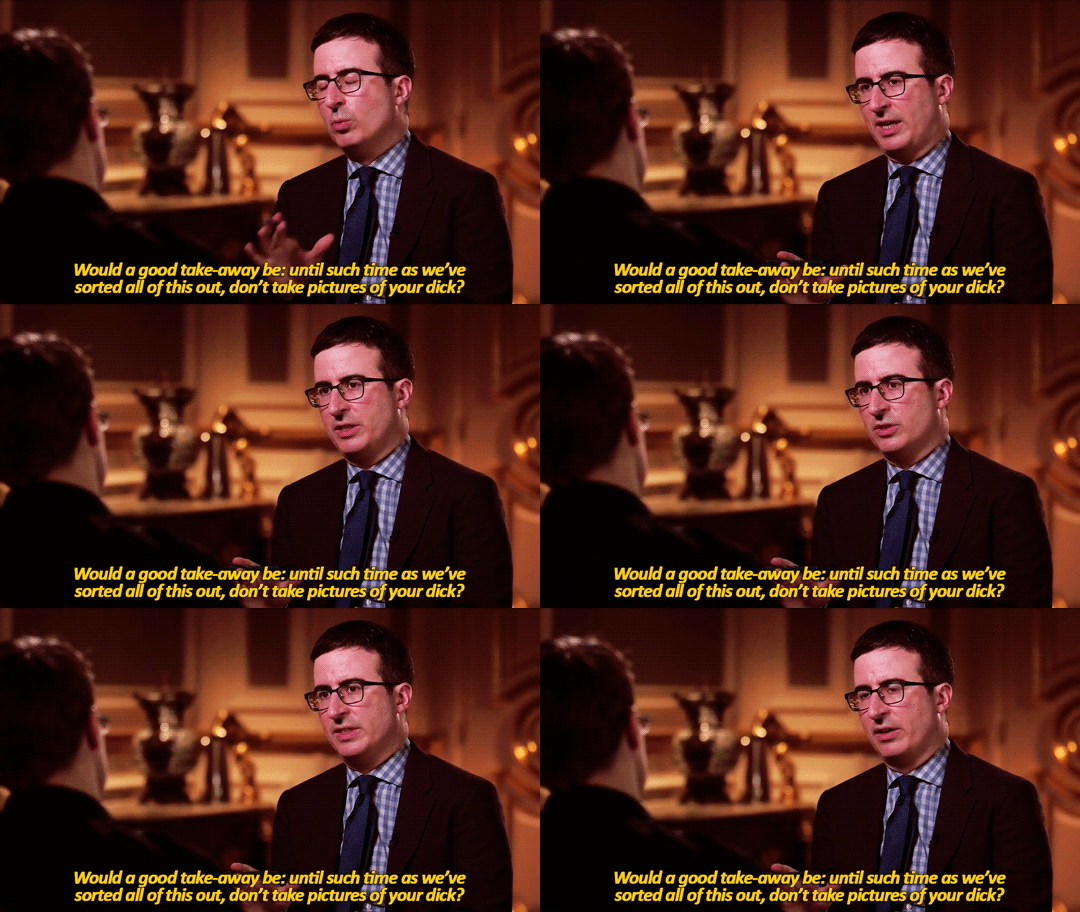
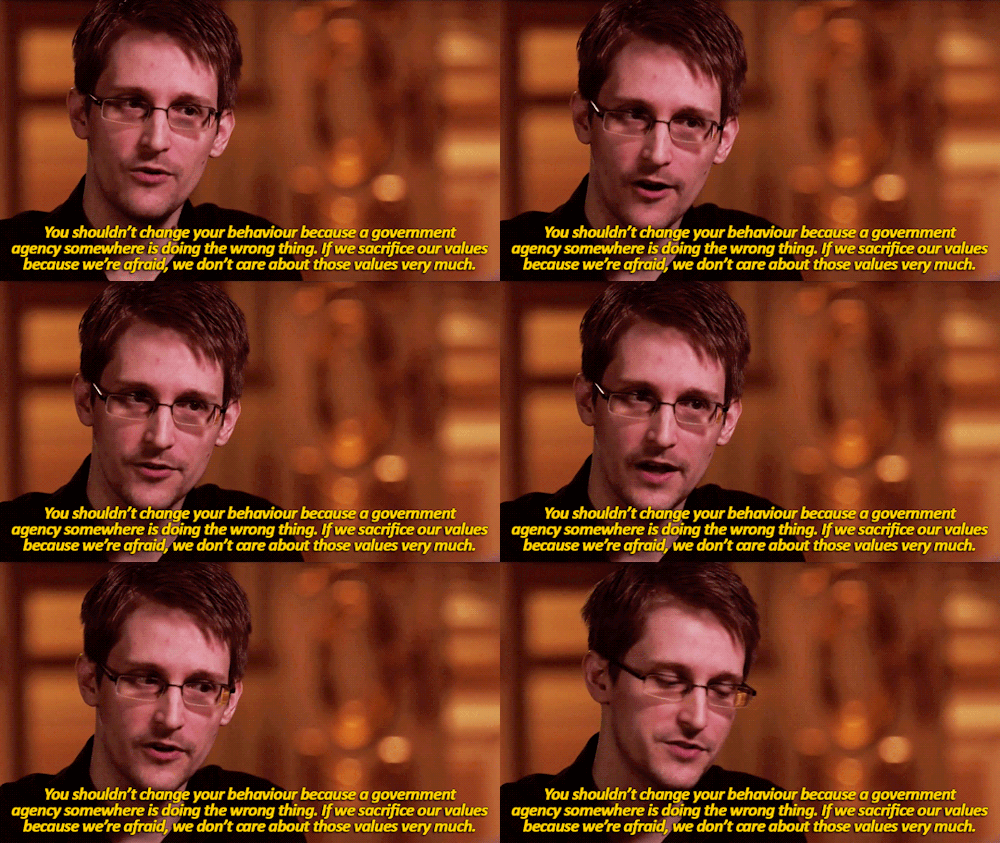
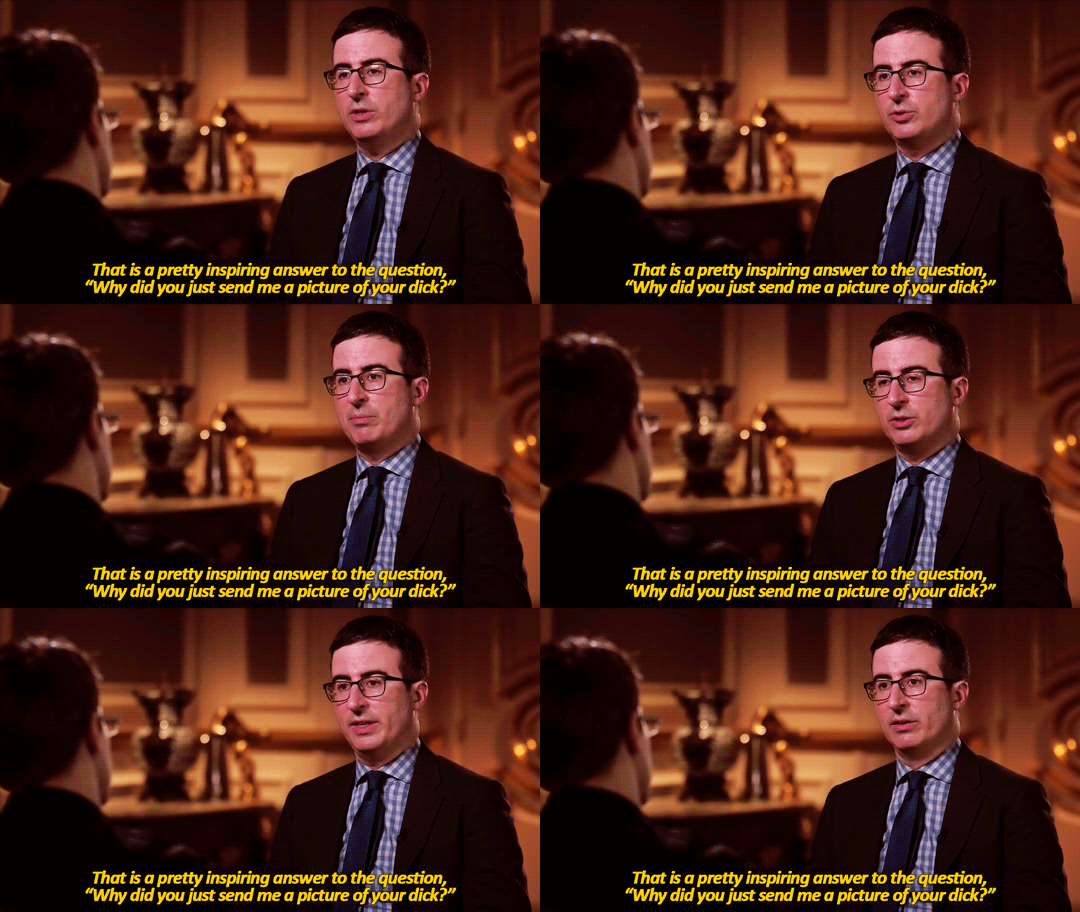

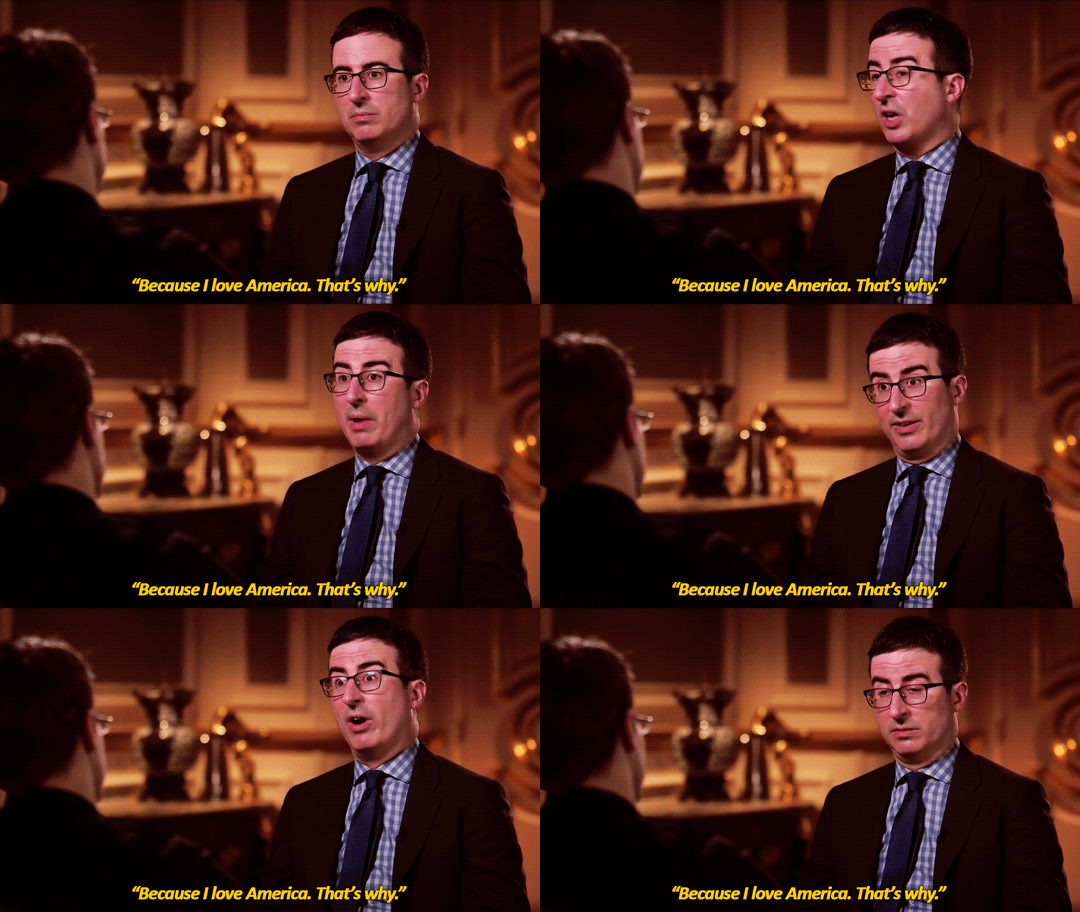
gameraboy: jusslittlestoner: Apparently the US government...
Osias JotaNunca que ele pensou nessa resposta ali na hora.
Apparently the US government has a lot of naked pictures of people
Vvicked, Adam Victor Brandizzi and one other like this
19 Apr 16:52
Twitter Moves Non-US Accounts To Ireland, and Away From the NSA
by timothy
Osias Jotase for isso mesmo, parabéns (não que eu poste nada secreto lá)
Mark Wilson writes Twitter has updated its privacy policy, creating a two-lane service that treats U.S. and non-U.S. users differently. If you live in the U.S., your account is controlled by San Francisco-based Twitter Inc, but if you're elsewhere in the world (anywhere else) it's handled by Twitter International Company in Dublin, Ireland. The changes also affect Periscope. What's the significance of this? Twitter Inc is governed by U.S. law; it is obliged to comply with NSA-driven court requests for data. Data stored in Ireland is not subject to the same obligation. Twitter is not alone in using Dublin as a base for non-U.S. operations; Facebook is another company that has adopted the same tactic. The move could also have implications for how advertising is handled in the future.


Read more of this story at Slashdot.
Luke.stirling, ken.elwell and 3 others like this
18 Apr 20:13

Awwww, fee fees. #sadtrombone #THECLOUDISALIE (at Teh Interwebs)
Osias Jotaentão... é isso!
Awwww, fee fees. #sadtrombone #THECLOUDISALIE (at Teh Interwebs)
Cooper Griggs, Tadeu and 8 others like this
18 Apr 15:37

OASIS - Porque hasta en las peores condiciones la vida encuentra una manera
Cary Renquist likes this
18 Apr 15:21


Doctor Who’s Christopher Eccleston speaks about onscreen inequality
by Caroline Siede
Osias JotaWrong, he is the only Doctor
Christopher Eccleston is one of the best (and most underrated) Doctors in Doctor Who history. Read the rest
18 Apr 14:31

Just the tip, Clippy. Just the...
Just the tip, Clippy. Just the tip.
Source: http://www.amazon.com/Conquered-Clippy-Erotic-Digital-Desires-ebook/dp/B00UJ01WBW/
Rosalind likes this
18 Apr 14:30
RT @fabiohamaya: MANO HAHAHAHAHAHAHAHAHAHHAA #DoYouBleed http://t.co/NY0D4Cpsc5
RT @fabiohamaya: MANO HAHAHAHAHAHAHAHAHAHHAA #DoYouBleed http://t.co/NY0D4Cpsc5
by Pai Osias
|
|
|