Shared posts

18 Jun 21:19

OK Go’s New Music Video for ‘The Writing’s on the Wall’ Loaded with Four Minutes of Live Optical Illusions

by Christopher Jobson

OK Gos New Music Video for The Writings on the Wall Loaded with Four Minutes of Live Optical Illusions  optical illusion music video

OK Gos New Music Video for The Writings on the Wall Loaded with Four Minutes of Live Optical Illusions  optical illusion music video

OK Gos New Music Video for The Writings on the Wall Loaded with Four Minutes of Live Optical Illusions  optical illusion music video

OK Gos New Music Video for The Writings on the Wall Loaded with Four Minutes of Live Optical Illusions  optical illusion music video

After a two year hiatus from creating their visually brilliant music videos, alternative rock band OK Go are finally back with their latest mind-blowing clip for ‘The Writing’s on the Wall,’ a single from their forthcoming album Hungry Ghosts. The video is 4-minute barrage of optical illusion techniques performed live in-camera (primarily anamorphic projection) that borrow ideas from artists like Bernard Pras, Felice Varini, Bela Borsodi and maybe even a nod to Jay-Z’s Blueprint 3 album cover. All of the scenes are performed one after another in a single take, but probably took untold months of preparation. Love the last shot that reveals the crew.

Update: A bit more about how they did it over on Rolling Stone.

18 Jun 20:51

Plastic Dinosaurs

by xkcd

Plastic Dinosaurs

As plastic is made from oil and oil is made from dead dinosaurs, how much actual real dinosaur is there in a plastic dinosaur?

Steve Lydford

I don't know.

Coal and oil are called "fossil fuels" because they formed over millions of years from the remains of dead organisms buried underground. The standard answer to "what kind of dead stuff does the oil in the ground come from?" is "marine plankton and algae." In other words, there are no dinosaur fossils in those fossil fuels.

Except that's not quite right.

Most of us only see oil in its refined forms—kerosene, plastics, and the stuff that comes out of gas pumps—so it's easy to imagine the source as some uniform black bubbly material.

But fossil fuels bear fingerprints of their creation. The various characteristics of these fuels—coal, oil, and natural gas—depend on the organisms that went into it and what happened to them. It depends on where they lived, how they died, where their bodies ended up, and what kinds of temperature and pressure they experienced.

The dead matter carries its story—altered and jumbled in various ways—for millions of years. After we dig it up, we spend a lot of effort stripping the evidence of this story away, refining the complex hydrocarbons into uniform fuels. When we burn the fuels, their story is finally erased, and the Jurassic sunlight that was bound up in them is released to power our cars.[1]Through photosynthesis, organisms used sunlight to bind carbon dioxide and water into complex molecules. When we burn their oil, we finally return that CO2 and water to the atmosphere—liberating millions of years worth of stored carbon dioxide all at once. This has some consequences.

The story carried by rocks is a complicated one. Sometimes pieces are missing, discarded, or transformed in a way that misleads us. Geologists—both in academia and the oil industry—work patiently to reconstruct different aspects of these stories and understand what the evidence is telling us.[2]My favorite book about Earth science, Walter Alvarez's T. rex and the Crater of Doom, is a firsthand account of the research that determined what killed the dinosaurs. The story is told not as a contest between rival academic theories, but as the unraveling of a mystery through detective work.

Most oil comes from ocean life buried on the seabed. But the poetic idea that our fuels contain dinosaur ghosts is in some ways true as well. There are a few things required for oil to form, including quick burial of large amounts of hydrogen-rich organic matter in a low-oxygen environment.[3]Because, in a sense, oxygen will cause the fuel to burn.

These conditions are most often met in shallow seas near continental shelves, where periodic nutrient-rich upwellings from the deep sea cause blooms of plankton and algae. These temporary blooms soon burn themselves out, dying and falling to the oxygen-poor seabed as marine snow. If they're quickly buried, they may eventually form oil or gas. Land life, on the other hand, is more likely to form peat and eventually coal.

This paints a picture like this:

But hydrocarbon formation is a multi-step process[4]You can read more about it here. and lots of things can affect it. A huge amount of organic material washes into the ocean, and while most of it doesn't end up in oil-producing sediments, some of it does.[5]If you want to spend a day reading a bunch of articles on hydrocarbons and ocean sedimentation, you can check out a few here, here, here (paywall), here, and here. If you get tired halfway through, like I did, and want a change of pace, you can instead read an insane conspiracy theory website claiming that oil is not dead organic matter and that there's actually an infinite supply of it. This fact is apparently concealed from us by the New World Order and/or the Illuminati. Some oil fields—like Australia's—seem to have a lot of terrestrial sources. Most of this is plants, but some is certainly animals.[6]And it's worth noting that there were some aquatic dinosaurs—like Spinosaurus.

No matter where it came from, only a small fraction of the oil in your plastic dinosaur could be directly from real dinosaur corpses. If it came from a Mesozoic-era oil field fed heavily by land matter, it might contain a slightly larger share of dinosaurs; if it came from a pre-Mesozoic field sealed beneath caprock, it might contain no dinosaur at all. There's no way to know without painstakingly tracing every step of the manufacturing process of your particular toy.

In a broader sense, all water in the ocean has at some point been part of a dinosaur. When this water is used in photosynthesis, bits of it are used to build the fats and carbohydrates in the food chain—but a lot more of that water is in your body right now.

In other words, your plastic toys contain a lot less dinosaur than you do.

18 Jun 20:19

Gravity’s strength still an open question after latest measurement

by John Timmer

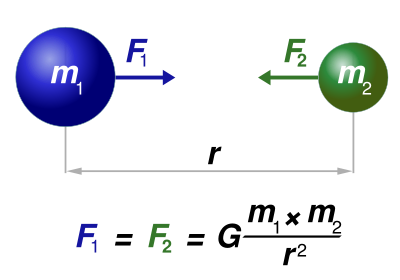
You might expect that, all these years after Newton, we might have a good measure of his gravitational constant, G. As the authors of a new paper on the topic note, there are plenty of reasons to want a good measure of G "given the relevance of the gravitational constant in several fields ranging from cosmology to particle physics, and in the absence of a complete theory linking gravity to other forces."

Yet most of our measurements of G come from an updated version of a device designed by Henry Cavendish back in the 1700s. And rather annoyingly, these measurements don't agree with each other—they're all close to a single value, but their error bars don't consistently overlap. Now, researchers have made a new measurement of G using a method that certainly wasn't available in the 1700s: interference between clouds of ultracold atoms. And the value that they have come up with doesn't agree with many of the other measurements, either.

The gravitational attraction being studied here is that between a cloud of cold rubidium atoms and a 500 kg tungsten weight. The tungsten was arranged in a cylinder that surrounded the device that contained the rubidium atoms. It could be shifted up to pull the atoms back against the downward force of the Earth's gravity or shifted down to accelerate the atoms further.

Read 6 remaining paragraphs | Comments

13 Jun 21:14

TED: AJ Jacobs: The world's largest family reunion … we're all invited! - AJ Jacobs (2014)

by TEDTalks
You may not know it yet, but AJ Jacobs is probably your cousin (many, many times removed). Using genealogy websites, he’s been following the unexpected links that make us all, however distantly, related. His goal: to throw the world’s largest family reunion. See you there?
10 Jun 22:45

TED: Keren Elazari: Hackers: the Internet's immune system - Keren Elazari (2014)

by TEDTalks
The beauty of hackers, says cybersecurity expert Keren Elazari, is that they force us to evolve and improve. Yes, some hackers are bad guys, but many are working to fight government corruption and advocate for our rights. By exposing vulnerabilities, they push the Internet to become stronger and healthier, wielding their power to create a better world.
09 Jun 22:04

mathani: Get you best paper, cut a circle and fold it so that...


mathani:

Get you best paper, cut a circle and fold it so that the circumference falls on a fixed point inside. Repeat, using random folds. Now see the creases. This is how you paper-fold an ellipse.

09 Jun 11:54

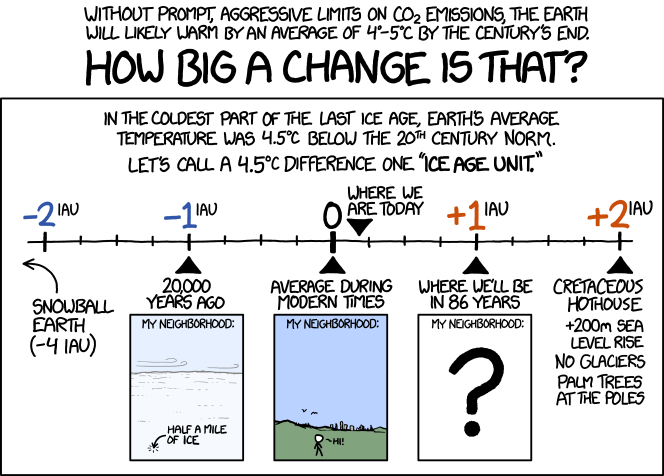
4.5 Degrees

The good news is that according to the latest IPCC report, if we enact aggressive emissions limits now, we could hold the warming to 2°C. That's only HALF an ice age unit, which is probably no big deal.
06 Jun 21:21

the-misha-metalocalypse: expl0sive-cucumber: skinnymini-13: my...


the-misha-metalocalypse:

expl0sive-cucumber:

skinnymini-13:

myresin:

THIS VIDEO

WATCH THIS VIDEO

WORDS CANNOT EXPRESS HOW WELL DONE THIS VIDEO WAS DONE TO SPREAD AWARENESS.

Everyone watch this

I WANT TO BREAK MY MOUSE WITH REBLOG

SERIOUSLY, EVERYONE REBLOG THIS.

29 May 23:22

Not my pic, but an important message never the less...

23 May 22:26

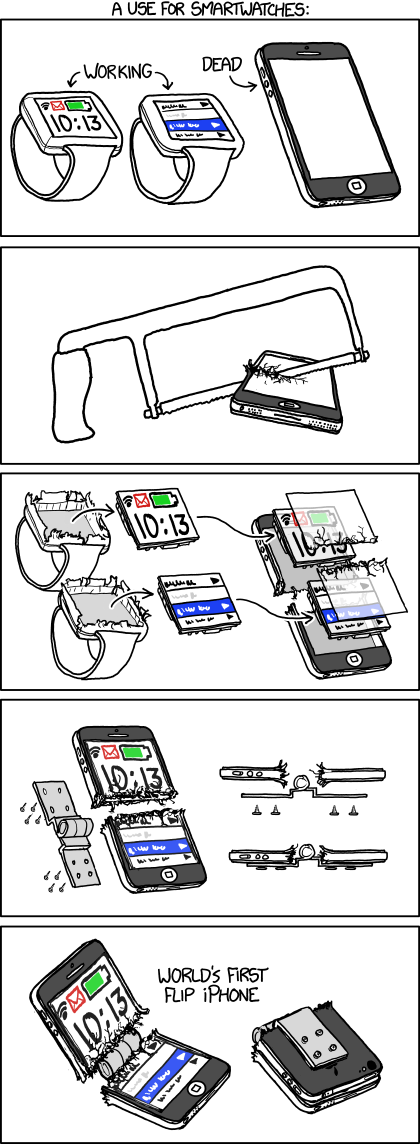
Smartwatches

This is even better than my previous smartphone casemod: an old Western Electric Model 2500 desk phone handset complete with a frayed, torn-off cord dangling from it.
20 May 00:15

“Supernova in a bottle” could help create matter from light

by Akshat Rathi
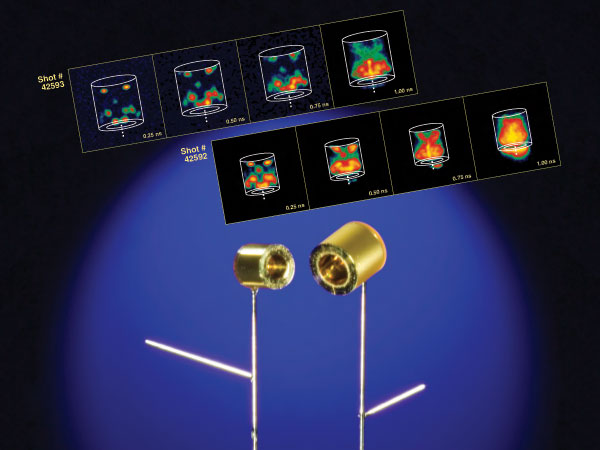
Two hohlraums, along with images of what happens to them when they're blasted with laser light.

In 1934, two physicists came up with a theory that describes how to create matter from pure light. But they dismissed the idea of ever observing this effect in the laboratory because of the difficulties involved in setting up such an experiment.

Now, Oliver Pike of Imperial College London and his colleagues have found a way to achieve this dream 80 years after US physicists Gregory Breit and John Wheeler explained their theory. This group hopes to use high-energy lasers aimed at a specially designed gold vessel to convert photons into matter/antimatter particle pairs, recreating what happens in some exceptional stellar explosions.

Pike, who led the research published in the journal Nature Photonics, said, "The idea is that light goes in and matter comes out." To be sure, the matter created won't be everyday objects; instead the process will produce sub-atomic particles. "To start with, the matter will consist of electrons and its antimatter equivalent positrons," Pike said. "But with higher energy input in the lasers, we should be able to create heavier particles."

Read 12 remaining paragraphs | Comments

19 May 23:58

Urine and the bladder are not sterile, contain bacteria

by Casey Johnston

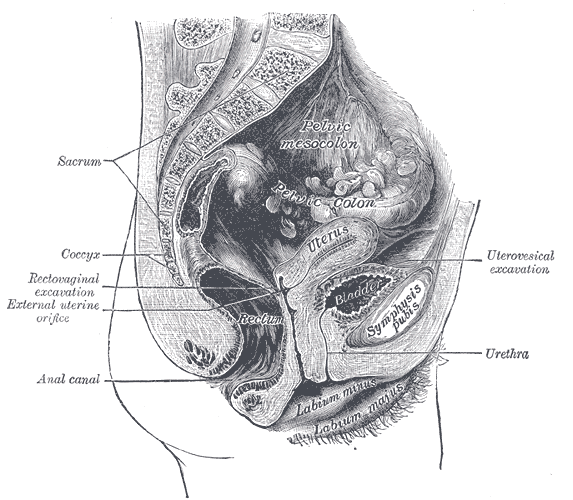
No, urine is not sterile, according to a study presented this week by researchers from the Stritch School of Medicine at Loyola University. Instead, the bodily excretion does contain a diverse array of bacteria that can vary depending on bladder condition. Up until now, the types of bacteria present have been hard to detect because they don't grow in urine cultures.

That urine is not sterile is not actually news; the same medical school reported findings in 2012 suggesting that urine can contain bacteria when drawn directly from the bladder. But the study may surprise many due to the deeply entrenched belief, even in the medical community, that urine is bacteria-free and thus safe to use in a number of activities, from drinking to rinsing wounds in a pinch. A commonly traded rule of thumb is that, while the initial part of a stream of urine contains bacteria washed from the urethra, the "mid-stream" is safely sterile. This is not so, or at least it's not entirely reliable information.

The two studies, from 2013 and 2012, looked only at samples from women. The 2013 study compared samples from women with and without overactive bladder disorder (OAB) and found different types of bacteria in both types of samples, including Streptococcus and Staphylococcus. The authors of the study suggested that the presence of certain types of bacteria in women with OAB could be causing their symptoms, and treating their presence could help with their condition.

Read 2 remaining paragraphs | Comments

17 May 23:49

Russian roulette

by CommitStrip

12 May 20:54

Installing

But still, my scheme for creating and saving user config files and data locally to preserve them across reinstalls might be useful for--wait, that's cookies.
11 May 02:37

TED: Mark Ronson: How sampling transformed music - Mark Ronson (2014)

by TEDTalks
Sampling isn't about "hijacking nostalgia wholesale," says Mark Ronson. It's about inserting yourself into the narrative of a song while also pushing that story forward. In this mind-blowingly original talk, watch the DJ scramble 15 TED Talks into an audio-visual omelette, and trace the evolution of "La Di Da Di," Doug E. Fresh and Slick Rick's 1984 hit that has been reimagined for every generation since.
09 May 20:42

TED: Randall Munroe: Comics that ask "what if?" - Randall Munroe (2014)

by TEDTalks
Web cartoonist Randall Munroe answers simple what-if questions ("what if you hit a baseball moving at the speed of light?") using math, physics, logic and deadpan humor. In this charming talk, a reader’s question about Google's data warehouse leads Munroe down a circuitous path to a hilariously over-detailed answer — in which, shhh, you might actually learn something.
30 Apr 22:58

Your Life’s Work

by Doug
28 Apr 09:57

Google Announcement

The less popular 8.8.4.4 is slated for discontinuation.
25 Apr 10:23

Final Moments

by Doug

Final Moments

Here are more apocalypses.

And a reminder to Vancouver folks: I’ll be at the Carded! art show tomorrow night. You should go too – it looks like fun!

24 Apr 19:04

April 24, 2014


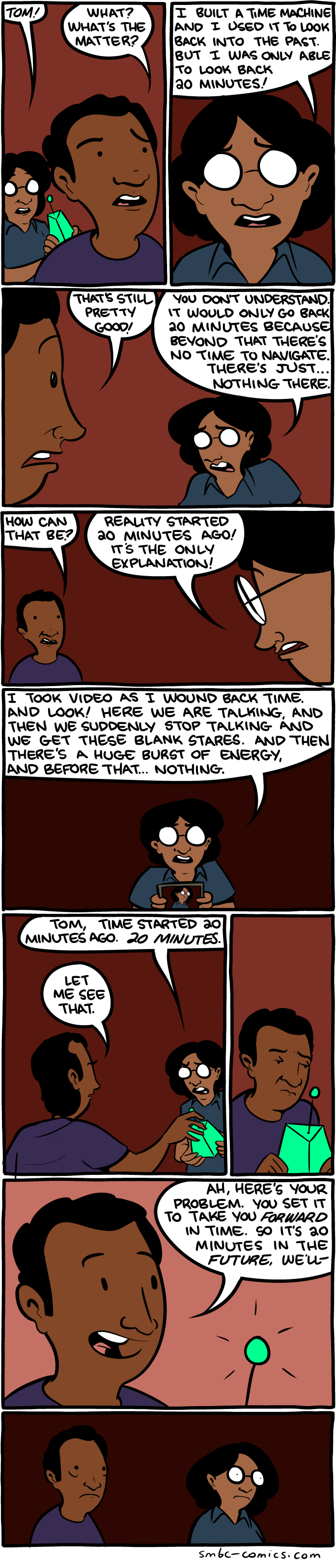
From now on, only time travel jokes.
19 Apr 04:35

Open source comes to farms with restriction-free seeds

by Casey Johnston

There are now 29 kinds of plant varieties that are available under an open source license, reports NPR. On Thursday, a group of scientists at the University of Wisconsin-Madison debuted the Open Source Seed Initiative (OSSI), a set of seeds that can be used by anyone so long as they don't restrict use by others through patents or IP protection.

The initiative is one answer to the heated battle between farmers and companies like Monsanto, which holds patents on plants that have features like resistance to certain herbicides or seeds that produce slightly different plants if they are resown from a first-generation crop. Soybeans in particular have been a point of contention, with both organic farmers who want to keep Monsanto's products out of their farms and commercial farmers who want the right to multiple generations from one soybean seed purchase.

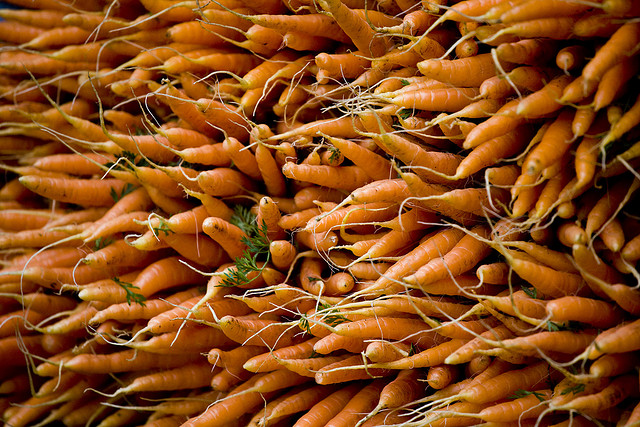
The OSSI includes 14 different crops with 29 total varieties, including carrots, quinoa, kale, and broccoli. The open pledge that growers must make to use the seeds covers both the current and future generations. NPR notes that the initiative is likely to have more impact for plant breeders, particularly at educational institutions, than for farmers.

Read on Ars Technica | Comments

17 Apr 21:53

Это было сложно признать, но он смог :)

12 Apr 20:29

April 12, 2014


09 Apr 03:21

subfield

by lcfr
nontrivial_subfield
29 Mar 17:00

Researchers replace one of yeast’s chromosomes with a synthetic one

by John Timmer
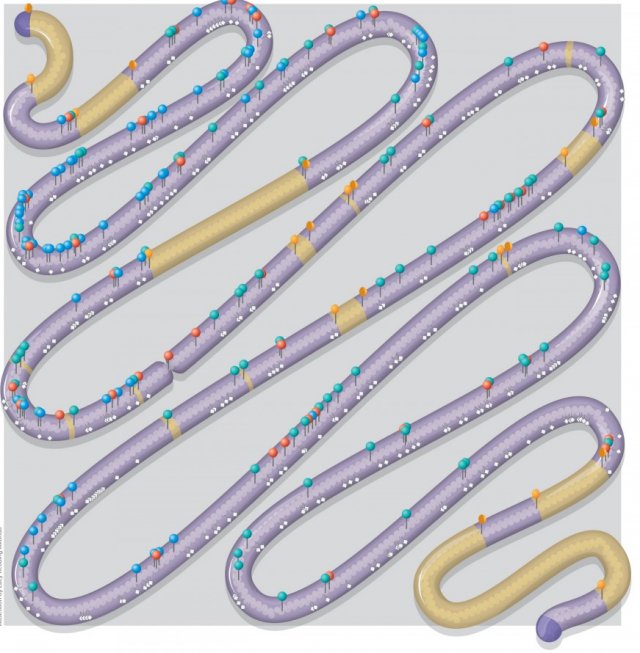
The synthetic chromosome, with the site of every single change marked. Areas denoted in tan were deleted entirely.
Illustration by Lucy Reading-Ikkanda

A few years ago, researchers managed a technical tour-de-force: starting with short DNA sequences that were chemically synthesized in a machine, they built up an artificial bacterial genome and used it to replace the normal copy in living bacteria. But their artificial genome had only minor differences from the original, mostly tags that allowed its presence to be detected.

Today, a large international team of researchers took a major step beyond that. Like the team that worked in bacteria, they started with nothing but short, chemically synthesized pieces of DNA. Using those, they built up an entire chromosome in yeast, eventually replacing the yeast's normal copy. Although this involved less DNA than the bacterial genome, the team made radical changes to the DNA normally found in yeast, deleting most of the sequences that might be considered non-essential. Despite the elimination of 15 percent of the chromosome, the synthetic version worked fine, and the resulting yeast were difficult to distinguish from their normal peers.

In many ways, baker's yeast is a bit like a eukaryotic version of bacteria. Although it's got a collection of linear chromosomes in its nucleus (bacteria lack a nucleus and have a single, circular chromosome), the genome is very compact, with little in the way of the superfluous sequences that seem to make up the majority of the vertebrate genomes. It also has some of the features that make genetics so convenient in bacteria: it can carry extra genes in short, circular pieces of DNA called plasmids, and it's easy to shuffle DNA from these plasmids into the yeast's chromosomes.

Read 9 remaining paragraphs | Comments

27 Mar 00:33

Engineering vs. Management

26 Mar 23:24

TED: Ed Yong: Suicidal crickets, zombie roaches and other parasite tales - Ed Yong (2014)

by TEDTalks
We humans set a premium on our own free will and independence ... and yet there's a shadowy influence we might not be considering. As science writer Ed Yong explains in this fascinating, hilarious and disturbing talk, parasites have perfected the art of manipulation to an incredible degree. So are they influencing us? It's more than likely.
26 Mar 11:31

amethystdisaster: REBELLION!!!


amethystdisaster:

REBELLION!!!

26 Mar 11:14

Cat Revenge

by Doug

Cat Revenge

Dedicated to Clydene – happy birthday to you!

Here are more cat adventures.

20 Mar 02:26

TED: Edward Snowden: Here's how we take back the Internet - Edward Snowden (2014)

by TEDTalks
Appearing by telepresence robot, Edward Snowden speaks at TED2014 about surveillance and Internet freedom. The right to data privacy, he suggests, is not a partisan issue, but requires a fundamental rethink of the role of the internet in our lives — and the laws that protect it. "Your rights matter,” he says, "because you never know when you're going to need them." Chris Anderson interviews, with special guest Tim Berners-Lee.