Shared posts

02 Nov 13:03

Contra Simler on Prestige

by Scott Alexander

su3su2u1 challenged status/signaling theories of human behavior: can they make any real-life predictions? His example was a recent medical conference that threw together three groups of people – high-status top professors, medium-status established doctors, and low-status new residents. The women in one group (female doctors + male doctors’ wives/girlfriends) were wearing conspicuous fancy jewelery. The women in the other groups weren’t. Which group had the jewelery?

His point was that status/signaling theories don’t answer this question for us with any degree of confidence. Maybe the high-status top professors wear the jewelery to signal wealth and dominance. Maybe the low-status new residents wear it aspirationally and because they need to impress. Maybe the medium-status established doctors wear it, because the residents can’t afford it and the professors countersignal that they don’t need it.

Now, in fact su3su2u1 was a no-good sneaky sneak, because the residents had all just attended a wedding that gave out the fancy jewelery as gifts and this was probably all that was going on. But his point is well-taken. Status and signaling theories are hard to use in practice. So it’s always nice when people try to do some theoretical work on them and tease them apart into their different components. This is the task Kevin Simler takes on in Social Status: Down The Rabbit Hole.

His theory (which he adopts from various psychologists and animal behaviorists) is that status separates neatly into two systems: dominance and prestige. Dominance is “respect me because I’ll kill you if you don’t.” Prestige is “Respect me because I’m awesome”. The two systems have different origins and different behavioral effects; conflate the two and you’ll end up very confused.

If you hate your boss, but you do what she says anyway because she’ll fire you if you don’t, that’s dominance. If you’re very respectful to a police officer because he has a gun and you don’t, that’s dominance too. Principals have dominance, parents have dominance, psychiatrists keeping you in a hospital against your will have dominance. Prestige is different. A rock star has prestige. He can’t hurt you. You don’t necessarily need anything from him. But you still want his autograph, want to meet him, maybe want to sleep with him. Star athletes have prestige. Actors and actresses. Good bosses who you work hard for not because you’re afraid of them but because you don’t want to let them down. Your parents, if you do what they say out of respect/love and not out of fear of punishment. Heroic leaders like George Washington (except more alive).

Having prestige can be better than being dominant. If you’re dominant, your subordinates will do exactly as much as necessary to avoid your wrath; if you’re prestigious, they may go above and beyond to help you. On the other hand, sometimes good old-fashioned dominance does the trick; your boss can ask you to drop everything and spend a week of long nights on a sudden project, but if your favorite rock star asked you to spend a week doing his taxes for him you might politely decline.

Dominance has clear animal analogies (alpha chimps, chicken pecking orders, etc), and we can pretty well guess why it evolved. The evolutionary origins of prestige are murkier, and this is the focus of Simler’s piece.

First he flirts with the theory of a guy called Henrich, who says prestige comes from a desire to learn. I admire and flatter my favorite rock star because I’m hoping I can hang out around him, some of his genius will rub off on me, and I’ll be able to play a wicked guitar riff and win a couple of Grammies myself. This theory makes no sense to me. It’s not just that there’s zero chance of Bowie teaching me, or that I might not have the talent anyway. Maybe in the environment of evolutionary adaptedness that didn’t matter so much. It’s that I don’t want to be a rock star, and if Bowie offered to train me, I’d say I wasn’t interested.

Simler doesn’t like this much either, so he moves on to the theory of two guys named Zahavi and Dessalles. I’ll quote him at length:

Unlike Henrich, whose account of prestige is unique to our species, Zahavi and Dessalles find analogues among non-human animals — most vividly, in the Arabian babbler.

The Arabian babbler is a small brown bird found in the arid brush of the Sinai Desert and (you guessed it) the Arabian Peninsula. It spends most of its life in small groups of three to 20 members. These groups lay their eggs in a communal nest and defend a small territory of trees and shrubs that provide much-needed safety from predators.

When it’s living as part of a group, a babbler does fairly well for itself. But babblers who get kicked out of a group have much bleaker prospects. These “non-territorials” are typically badgered away from other territories and forced out into the open, where they often fall prey to hawks, falcons, and other raptors. So it really pays to be part of a group. (Keep this in mind; it’ll be crucial in a moment.)

Within a group, babblers assort themselves into a linear and fairly rigid dominance hierarchy, i.e., a pecking order. When push comes to shove, adult males always dominate adult females — but mostly males compete with males and females with females. Very occasionally, an intense “all-out” fight will erupt between two babblers of adjacent rank, typically the two highest-ranked males or the two highest-ranked females. This is the babblers’ version of a Wild West showdown, as if one babbler suddenly turns to the other and says, “This town ain’t big enough for the both of us.” A showdown always results in death or permanent exile for one of the combatants.

Most of the time, however, babblers get along pretty well with each other. In fact, they spend a lot of effort actively helping one another and taking risks for the benefit of the group. They’ll often donate food to other group members, for example, or to the communal nestlings. They’ll also attack foreign babblers and predators who have intruded on the group’s territory, assuming personal risk in an effort to keep others safe. One particularly helpful activity is “guard duty,” in which one babbler stands sentinel at the top of a tree, watching for predators while the rest of the group scrounges for food. The babbler on guard duty not only foregoes food, but also assumes a greater risk of being preyed upon, e.g., by a hawk or falcon.

Helpfulness, bravery, heroism: these birds seem like regular Boy Scouts. At least on the surface.

But here’s where things take a turn for the weird. Babblers don’t just passively or occasionally offer to help each other. Instead they compete intensely for the privilege of doing so.

Unlike chickens, who compete to secure more food and better roosting sites for themselves, babblers compete to give food away and to take the worst roosting sites. Each tries to be more helpful than the next. And because it’s a competition, higher-ranked (more dominant) babblers typically win, i.e., by using their dominance to interfere with the helpful activities of lower-ranked babblers. This competition is fiercest between babblers of adjacent rank. So the alpha male, for example, is especially eager to be more helpful than the beta male, but doesn’t compete nearly as much with the gamma male. Similar dynamics occur within the female ranks.

Now: what in Darwin’s name is going on here? Why are babblers so eager to help each other?

The naive answer is that they’re simply doing what’s best for the group — because when the group succeeds, everyone ends up better off. But this kind of straightforward altruism simply isn’t found in nature.[1] It’s not game-theoretically stable, thanks to the free-rider problem. Also note that babblers actively interfere with the helpful behavior of their rivals. If their ultimate goal were the success of the group, interfering with others would be entirely counter-productive.

So the logic of natural selection compels us to ask, “What selfish motive does an individual babbler have to help others?”

The answer, in a word, is prestige. A second form of social status that lives alongside the babblers’ dominance hierarchy — a kind of “credit” reflecting the amount of good each individual has done for others. So when two babblers compete to stand guard duty, for example, they’re actually jockeying, selfishly, for prestige within the group.

And suddenly the intense competition makes sense.

But as in our species, so too in babblers: prestige means nothing without admiration. If other babblers weren’t willing to defer and pay respect to prestigious individuals, there’d be no incentive to compete for prestige.

But other babblers are willing to pay respect to prestigious individuals, in two main ways. The first is mating opportunities.[2] Babblers are constantly trying to interfere with their rivals’ mating attempts — but when a babbler has high prestige, his or her rivals interfere less. Among males, this translates to more mating opportunities; among females, it translates to earlier mating opportunities (giving one’s offspring a head start in the communal nest)

The other perk of high prestige is a reduced risk of being challenged to an all-out showdown. The higher a babbler’s prestige, the less likely its rivals are to pick a fight — even if they stand a good chance of winning.

All of which brings us, finally, to the point. Why do other babblers voluntarily defer to prestigious ones? The answer is simply(!) that babblers with lots of prestige are useful to the group, and therefore useful to keep around.[3] This is how it ends up being in the selfish interest of other babblers to defer to those with high prestige.

When a babbler is useful enough, in other words, it’s in the self-interest of others to “suck up” or pay respect to that babbler (by backing down from fights and interfering less in its mating attempts) in order to keep it happily in the group.

Bottom line: Prestige-seeking and admiration (deference) are complementary teaming instincts. They help babblers stay attached to a group, keep groupmates happy, and secure a larger share of the group’s reproductive “spoils.”

I hope this account of the babbler prestige system sounds familiar, because it’s more or less equivalent to the prestige system found in our own species; both are derived from the same Platonic form.

This is better. It sort of makes sense as an evolutionary explanation. But I think extending it from there to modern human prestige is a big stretch.

Take the rock star again. Let’s say David Bowie. When people admire Bowie, are they trying to get him to not leave the group? Is that why people scream and throw themselves at him? What would it even mean for Bowie to leave the group? If he doesn’t have enough groupies, will he defect to North Korea?

And don’t we sometimes admire people who we do want to leave the group? Suppose that for some reason I was stuck on a plane sitting next to the Koch Brothers – maybe all their private jets broke down at once. I would probably treat them in the classic way someone treats prestigious people. I’d feel really nervous striking up a conversation with them because they’re high-status and important. If I did strike up a conversation with them, I’d be really deferential and overthink everything they said. After the flight was over, I would immediately post to Twitter “I SPENT A WHOLE FLIGHT TALKING TO THE KOCH BROTHERS!” and then post the photo I’d roped them into taking with me. But none of this is because I don’t want them to leave the group. If the Koch Brothers defected to North Korea, that would be great.

And what about prestigious people who don’t bring any special talents to the group? Helen Keller, for example, can do less than most other people. We admire her not because we need to make use of her mad skillz, but because given all her handicaps it’s amazing that she can do anything at all.

We could potentially dismiss all of these by saying that evolved instincts don’t have to work in the present day. If there were no cavemen like David Bowie (probably a safe bet), then maybe our evolutionary instincts don’t apply to his case. But even in evolutionary time, admiration has a free-rider problem. Suppose that we want to make sure David Bowie stays in the West rather than North Korea, but he’ll defect unless at least three people flatter him per day. Assuming that flattering David Bowie involves some kind of cost – maybe you have to buy the t-shirt with his face on it – why should I pay the cost when there are millions of other Westerners invested in the same project? Should we be more impressed with the altruistic spirit of people who have sex with famous rock stars, seeing as they are sacrificing their bodies to the project of keeping their heroes out of Kim Jong-un’s clutches?

I think I might be straw-manning the babbler hypothesis here, so let’s skip down a few paragraphs to the next time Simler explains it:

The point is, we want to be friends, allies, and teammates with people who do good things for their friends, allies, and teammates. It’s in our self-interest to cultivate access to such people — which we do, in part, by paying them respect and granting them the perks of prestige.

More generally, however, we admire not only those who actually do good things for their teammates, but also those who show the potential to do good things, i.e., by demonstrating useful skills. The student who gets straight As from a good college, for example, is advertising her value to future employers, and her prestige makes her highly sought-after on the job market. She’ll be actively courted by hiring managers and given various perks (a better starting salary, more time to make her decision) that aren’t accorded to her less-impressive classmates.

Simler treats this as a summary of his previous point, but this is a very different theory!

The previous point was that prestigious people do good things for their community. The new point is that prestigious people do good things for their flatterers in particular. It’s a tit-for-tat relationship: show David Bowie your tits, and he gives you some tat. Money? Access to the best clubs? A copy of his latest album?

This makes sense except that it’s not the way most admiration-interactions actually work.

Forget David Bowie. Let’s talk about Justin Bieber. I see about a zillion teenage girls hanging posters of Justin Bieber in their room, fighting for the last ticket to Justin Bieber concerts, buying magazines with Justin Bieber on the cover. But the chance that Justin Bieber gives any tat for all of these tits is practically nil.

And we can’t dismiss this as a form of irrationality restricted to teenage girls. A lot of people I know geek out about Elon Musk; I’ve been to more than one party/meetup where the topic of conversation turns to how great Elon Musk is. I don’t hang posters on my wall, but if I did, they would probably have his face on them. But I don’t expect any repayment from him; I doubt he even knows about my flattery. What about all those Catholics who obsess over the Pope? What about people who obsess over J.K. Rowling or Neil Gaiman or LeBron James or Derek Jeter?

And what about me on that airplane with the Koch Brothers? Am I thinking to myself “If I ever need an entire field of science discredited, now I’ve got an in with some people who are really good at it”? What about Helen Keller? “If the world is plunged into eternal darkness, and also there’s some global super-loud hum that makes it impossible to hear anything, now I’ll have a friend who can operate regardless?” Even in evolutionary times, we should have some need to reflect on “can this person actually help me?”

I worry no one theory can completely explain prestige. It seems to me to be a combination of several different things:

1. Group signaling. The people I admire say a lot about me. If I admire Elon Musk, it means that I’m really into space, technology, and maybe the free market. If I admire the Pope, it means I’m really into Catholicism. If I admire David Bowie, it means I’m fabulous. Learning about these people, celebrating their accomplishments, and joining their Official Fan Clubs is an important method of bonding with other peopel.

2. Coattail riding. If a prestigious person becomes more prestigious, I might “look good” for having supported them “before they got big”. It suggests that I’m a good judge of character, or “hip” enough to know which acts will take off and which ones will never achieve broader appeal. Just as a fan feels good when his sports team wins the Superbowl, and a patriot feels good every time her country wins a war, so being a known Elon Musk fan means I get to feel a tiny fragment of the glory whenever Elon Musk invents a new rocket.

3. Prestige by association. Prestigious people hang out with other prestigious people. Nonprestigious people hang out with other nonprestigious people. If I have access to prestigious people, even in some boring trivial way, that makes me seem more prestigious. I think this is what’s going on with the hypothetical airplane conversation with the Koch brothers. Yes, in some sense it’s sheer coincidence that I run into them on a flight. In another sense it isn’t; at the very least, it probably means I was flying first class, and I must have had some rudimentary level of social skills to engage them in conversation. I’m signaling that I’m the sort of person who, at least when everything goes right, can shmooze with billionaires. Even if deep down people know that it was mostly a coincidence, on some gut level that’s kind of impressive.

4. Tit for tat. Yes, in some cases we will be close enough to prestigious people that we can expect rewards for our support. It’s probably easier to flatter my boss or my favorite teacher effectively than to flatter Justin Bieber or the Koch brothers, and you can reasonably expect special treatment. This is a good way of forging an alliance. If I praise my boss, she benefits from my elevation: having a nobody admire you is boring, but having a somebody admire you is both flattering practically useful. Therefore, the more I admire and support my boss, the more she is incentivized to help me become a somebody.

5. Virtuous cycles. Suppose that, for reasons 1 through 4, people want to be associated with prestigious people. Note that this is different from “associate with prestigious people” in the sense of meeting them directly; anything that gets their name linked to the prestigious person will work. In fact, suppose that specifically, there are a bunch of conservatives who are really into the Koch brothers and are jockeying for position as Koch brother fan #1. Some of these people might play the strategy of according me prestige for having met the Koch brothers as a way of better signaling their own respect for the Koch brothers to third parties. That gives me a separate incentive to seek such prestige by association.

This is still woefully incomplete, especially by “predict which of these doctors will wear jewelery”-level standards. Maybe prestige shouldn’t be treated as a single thing at all. Maybe the admiration I feel for my boss (a real person in my social circle who I interact with daily) comes from a totally different part of the brain and has totally different evolutionary origins from the admiration I feel for Elon Musk (who I expect never to meet).

But I think separating dominance from prestige is a good start. Do consider reading the full Melting Asphalt essay, as well as Simler’s follow-up thoughts.
31 Oct 13:35

The Last Prisoner

by Greg Ross

http://www.nps.gov/apco/learn/education/upload/Surrender%201a.pdf

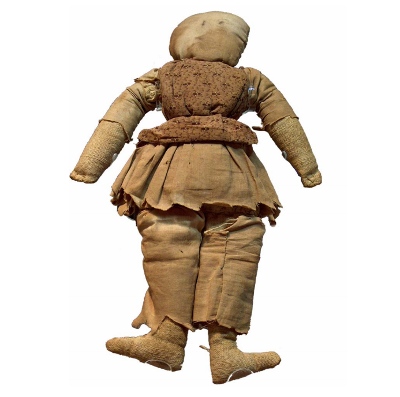
After Robert E. Lee formally surrendered to Ulysses Grant in the parlor of Virginia grocer Wilmer McLean, relic hunters descended on the house. “Large sums were offered Major Wilmer S. McLean for the chairs in which the generals sat during the meeting — for the tables on which the writing was done — for substantially every article of furniture,” wrote correspondent Sylvanus Cadwallader. Many souvenirs were taken without McLean’s permission — including the rag doll belonging to his 8-year-old daughter, Lula, “which the younger officers tossed from one to the other, and called the ‘silent witness.'”

In a 1951 Saturday Evening Post article, “The Lost Rag Doll of Appomattox,” Dorothy Kunhardt wrote, “Eighty-six years ago a little girl lost her rag doll. It was a very much hugged and slept with and beloved rag doll, homemade; no china head and kid-glove fingers and lacy dress, but stumpy burlap arms and legs, clothes assembled from the family rag bag and a small, potato-shaped head with not much stuffing on it.”

Philip Sheridan’s aide-de-camp Thomas William Channing Moore took the doll home with him to New York, and it was passed down within his family for 128 years. Finally, in 1993, when Moore’s grandson Richard died, his wife called the Appomattox park authorities to say that they were ready to return it. “The men in our family never wanted to give her up,” Marjorie Moore said. “The women thought Appomattox would be the best place for her.”

The doll resides today in the Appomattox visitors’ center, but perhaps that’s too late to redress the harm. Years earlier, after ranger Cynda Carpenter had told the story to one group of visitors, an older woman approached her and identified herself as Lula McLean’s great-granddaughter. “She said that Lula never got over the hurt caused by the loss of her doll,” she said. “She said that Lula told her, ‘The Yankees stole my doll.'”

Please support Futility Closet on Patreon!

31 Oct 13:33

Por que não falamos mais da desastrosa intervenção na Líbia?

by gustavochacra

Hillary Clinton, nesta quinta, ficou 11 horas depondo para uma comissão parlamentar que investiga atentado em Benghasi. Para quem não se recorda, aquele ataque terrorista matou 4 americanos, incluindo o embaixador dos EUA na Líbia. A então secretária de Estado sempre foi criticada por republicanos por não ter feito o suficiente para proteger os diplomatas – mais ou menos como Reagan, herói republicano, não impediu que centenas de americanos morressem em atentados contra a embaixada dos EUA em Beirute e o quartel dos marines no Líbano nos anos 1980.

Mas, sem me aprofundar nesta questão da Hillary e Benghasi, queria apenas lembrar que a Líbia vive em uma sangrenta guerra civil, possui dezenas ou centanas de milícias, observa o crescimento do ISIS (Grupo Estado Islâmico ou Daesh) e da Al Qaeda, tem dois governos paralelos que não exercem controle sobre o território, vê a explosão do terrorismo e sem perspectiva de resolução.

O governo reconhecido pelo Ocidente fica em uma cidade média perto da fronteira com o Egito chamada Tobruk. Tem como integrantes milícias laicas e outras religiosas. O líder é o general Hifter, que quer ser uma espécie de “Sissi” da Líbia. Ex-aliado de Kadafi, ele viveu anos nos EUA como consultor da CIA posteriormente. Com a eclosão da guerra, voltou para a Líbia.

O outro governo, em Trípoli, a capital do país, é uma salada de milícias extremistas islâmicas similares aos grupos rebeldes da Síria. A ONU tentou negociar um governo de união nacional, mas os dois lados não chegam a um acordo. E continuam se matando, especialmente em Benghasi. Enquanto isso, o ISIS cresce a partir de Sirte.

A intervenção na Líbia foi um fiasco total, algo grotesco, que deve ser colocado na conta da França, que idealizou o projeto, de países como os Emirados Árabes e de algumas outras nações europeias e árabes. Os EUA erraram ao apoiar esta patética intervenção idealizada por Bernard Henry Levy, que convenceu Sarkozy. Rússia, Brasil, Alemanha e China se abstiveram de apoiar esta intervenção.

Lembro bem de, cobrindo o Conselho de Segurança da ONU, ver os franceses idealizando uma Líbia “democrática” pós Kadafi. Deu completamente errado. Imaginem a gritaria se fosse uma intervenção dos EUA? Dois pesos e duas medidas. Não sei o motivo, mas muita gente vê os franceses como os “maduros racionais pacifistas” e os americanos como “broncos que só gostam de guerra”. A Guerra da Argélia que o diga…

Guga Chacra, blogueiro de política internacional do Estadão e comentarista do programa Globo News Em Pauta em Nova York, é mestre em Relações Internacionais pela Universidade Columbia. Já foi correspondente do jornal O Estado de S. Paulo no Oriente Médio e em NY. No passado, trabalhou como correspondente da Folha em Buenos Aires

Comentários na minha página no Facebook. E comentários islamofóbicos, antissemitas, anticristãos e antiárabes ou que coloquem um povo ou uma religião como superiores não serão publicados. Tampouco são permitidos ataques entre leitores ou contra o blogueiro. Pessoas que insistirem em ataques pessoais não terão mais seus comentários publicados. Não é permitido postar vídeo. Todos os posts devem ter relação com algum dos temas acima. O blog está aberto a discussões educadas e com pontos de vista diferentes. Os comentários dos leitores não refletem a opinião do jornalista

Acompanhe também meus comentários no Globo News Em Pauta, no Twitter @gugachacra , no Facebook Guga Chacra (me adicionem como seguidor) e no Instagram 

24 Oct 17:52

Being Poor Is Too Expensive

by Eric Ravenscraft

Some think that being poor is simple. You don’t have enough money to buy a lot of stuff, so you’re forced to buy less stuff. But that’s not really how it works. When you’re broke, you can’t do all the little things that will improve your budget over the long run. It actually costs more to be poor.

Read more...


24 Oct 13:00

I Want to Believe

by boulet


24 Oct 02:57

prostheticknowledge: What is Real? Project from Bİ'ŞEYLER...


prostheticknowledge:

What is Real?

Project from Bİ'ŞEYLER combines projection mapping and fashion using a dress as a performance canvas:

Perception is the first creation of fashion designer Ece Özalp, who is inspired not by what is observed in nature but by perceptions created by exceeding her own perceptions.
The project created based on Perception is a quest both of her and of her illusion… 

Link

24 Oct 02:57

pleatedjeans: via

24 Oct 02:57

Cão deselegante

by Carlos Ruas

41

24 Oct 02:56

collegehumor: 6 Comics that Perfectly Describe Life with...

23 Oct 16:54

Handmade Blown Glass Flora and Fauna by ‘Glass Symphony’

by Christopher Jobson

glass-4

Ukrainian glass artist Nikita Drachuk of Glass Symphony creates all manner of glass spiders, octopi, and other critters by hand. He uses a method called lampworking, where a lamp or torch is used to melt rods of colored glass. Once in a molten state, the glass can be formed by blowing and shaping with various tools and small movements. You can see more of their delicate glass critters here.

glass-1

glass-2

glass-3

glass-5

glass-6

glass-7

glass-8

glass-9

glass-10

23 Oct 16:33

Humorous Street Signs and Other Contextual Street Art Interventions by Michael Pederson

by Christopher Jobson

marquez-1

Across the urban cityscape of Sydney, in parks, suburban streets, and industrial zones, you’re likely to encounter a plethora of signs and placards while going about your day: warnings, traffic regulations, helpful guides, and city services. But, look closer, and you might find an intervention by artist Michael Pederson who delights in creating humorous and thoughtful signs that blend into the city backdrop. Pederson makes use of pre-existing elements like park benches or abandoned furniture to share messages meant to snap a viewer out of their daily routine and see the world from a more contemplative or even childlike perspective, if only for a moment. You can see more of his installations dating back to 2012 on his Tumblr. (via Lustik, Junk Culture)

marquez-2

marquez-3

marquez-4

marquez-5

marquez-6

marquez-7

marquez-8

marquez-9

marquez-10

23 Oct 16:31

How Surgeons Reattached a Toddler's Head

by brandizzi

When Rylea Taylor pulled her son Jaxon from the wreckage of their family car on September 15, she knew instantly that his neck was broken—an injury that usually leaves victims paralyzed or dead. The force of the 70-mile-per-hour head-on collision had fractured Jaxon’s top two vertebrae and torn apart the ligaments that stabilize them. His top vertebra and skull were completely detached from the rest of his spinal column. The spinal cord itself was bent at a 45-degree angle and dangerously vulnerable to further movements that could sever critical nerves.

Yet just three weeks later, the 16-month-old was stepping along with the wobbly gait common to toddlers, relying on nothing more for support than a chubby hand grasping his mother’s finger.

How did Jaxon make such a dramatic recovery? He was fortunate to survive and to come under the care of Geoffrey Askin, senior spinal surgeon at the Lady Cilento Children’s Hospital in Brisbane and the man known as Australia’s godfather of spinal surgery. The soft-spoken surgeon and a team of more than 20 doctors, nurses and support specialists planned a six-hour operation to put Jaxon’s skull back onto his spine.

Unattached
Gruesomely nicknamed internal decapitation, this kind of injury often kills by severing the spine, impeding signals sent by the brain that tell the lungs to breathe from reaching their destination.

The prognosis for what is medically termed a C1–C2 dislocation is dire: A 2010 study of upper-neck dislocations found that 68 percent of victims die before the dislocation could even be diagnosed, often at the scene of the accident; another 22 percent die at the hospital. Even if patients are resuscitated and brought to the hospital in time, they may remain so severely paralyzed that they are permanently unable to breathe on their own. C1–C2 and other upper-neck dislocations most commonly occur in very young children, whose relatively heavy heads are not strongly stabilized by their extra-flexible ligaments. High-speed motor vehicle accidents cause 80 percent of these injuries, Askin says, often when the child’s body is securely strapped into their car seat and their head is flung forward.

The physician’s job is further complicated because even making a full assessment of the damage can be problematic. Regular x-rays have difficulty revealing the full extent of the injury, because the scanner stays still and the patient must be moved around to examine various angles—not ideal for a patient with a spinal injury who needs to be kept as still as possible.

To overcome the limitations of traditional x-rays, physicians turn to computed tomography (CT). At Moree District Hospital, near the crash site, Jaxon was placed on a platform inside a CT scanner where an x-ray beam rotated around him. The resulting 3-D images revealed the appalling extent of his injury. “They were pretty alarming,” says Askin, who received the images while Jaxon was being airlifted to Lady Cilento. “I thought, he can’t possibly be moving or breathing, he must have been resuscitated.” He was surprised to learn that Jaxon was still breathing by himself—which meant astonishingly that the nerves in the spinal cord had remained intact.

Once at Lady Cilento, doctors also used a magnetic resonance imaging (MRI) machine to further investigate the injury. In MRI radio waves and powerful magnets detailed a picture of swelling and ligament damage to confirm that Jaxon’s spinal cord was still intact. While Jaxon spent the night in intensive care, staff rallied for the next-day surgery. They even constructed necessary contraptions on the spot including a custom-fabricated halo brace that would hold Jaxon’s head and neck in the correct position for both the surgery and a time afterward.

Askin who routinely performs operations lasting more than six hours, likens the preparations to a military operation. “You’ve got to have a plan B in your preoperative plan—you’ve got to have every scenario nutted out,” he says. Because, despite the ever-more detailed images provided by modern CT and MRI scans, there’s no telling the true extent of the damage until a patient’s body is opened up in the theater.

Bolts, wires and bone grafts
Jaxon’s surgery began with bolting the custom-made halo brace into the bone of his skull with eight screws. Although it is the most rigid splint available, a halo is light enough even for a fussy toddler to tolerate. Named for the aluminum hoop that encircles the patient’s head, a halo is anchored to a vest worn on the patient’s body so that the neck cannot turn or bend in any direction. First, though, the broken neck must be properly aligned.

Guided by live x-ray images, Askin maneuvered Jaxon’s head until the cracked vertebrae and the spinal cord within were in the correct position. It’s a treatment fraught with risk: the area is grossly unstable and often contains sharp fragments of shattered bone. With one wrong move, critical nerves can be irreparably damaged, leaving the patient with partial or total paralysis. “It’s a pretty adrenaline-producing sort of operation,” Askin says. “You don’t know if the spinal cord is still working till the patient wakes up the next day.”

Only the most senior surgeons, who have honed their craft for years on less precarious injuries, perform these operations. Askin’s registrars, young doctors training to specialize as spinal surgeons, come to the operating theater to observe the 25-year veteran in this most delicate of operations. Askin operates on just one or two C1–C2 dislocations each year.

That’s not because the injury is so rare, but because it is so deadly that victims are more likely to die on the roadside than make it to the ER, let alone the operating room. Still, in the last decade advances in every step of medical care—from the time emergency responders arrive up to the moment the patient is wheeled into recovery—have increased survival chances so much that Askin is now contributing to a manual on standard-care practices for similar injuries in children. “Anesthetics are much safer, instruments for exposing the spine or passing wires are more sophisticated [and] preoperative imaging with CT scans provide much more information before we even make an incision,” Askin says. The CT scans can even be used to make a silicon 3-D model of the injury site to aid planning the operation.

Still, the improvements in tools were not quite enough in Jaxon’s case. Once the spine was properly aligned and Askin had made the 10-centimeter-long incision to expose the fractures, the team found that even the smallest surgical screws were too large to use on Jaxon’s tiny vertebrae. Using a microscope, Askin resorted to a long-superseded method: using wire to join the fractured bones together, a technique he describes as “primitive.”

Under the weight of Jaxon’s head, wires were not enough to keep the top C1 vertebra stacked correctly on top of the rest of the vertebrae. In a healthy spine a network of ligaments keeps the vertebrae properly stacked, but once torn or overstretched they never recover their former strength. Instead, Askin finished the surgery by grafting a 7.6-centimeter fragment of one of Jaxon’s ribs onto the joint.

The rib bone, laid against the back of the vertebrae with one end over each to form a bridge over the in-between joint, will continue to grow into the two vertebrae and eventually fuse them together. They will no longer be able to move independently of one another but children’s necks are so flexible that Jaxon’s other vertebral joints will compensate, and with continuous use will keep the ligaments flexible. His rib will grow back, too.

From hospital to home
Just three weeks after the devastating accident, Jaxon was able to not only leave the hospital, but even leave Brisbane for his home in the small town of Moranbah. His hometown’s tiny 12-bed hospital will regularly send x-rays to Askin to verify that Jaxon’s spine is staying in the correct position while he wears the halo brace for three months. After that, Jaxon should need no physiotherapy or extra treatment. Aside from not being able to play rugby or engage in other activities that could cause whiplash-style injuries, he should be able to live a normal life

No one knows why Jaxon’s spinal cord bent instead of tearing. Askin says it was the worst case of C1–C2 dislocation he has seen, and he has trouble imagining the separation between the vertebrae at the crash scene, which was undoubtedly worse than the extent of injury he encountered when Jaxon arrived at the hospital before emergency responders immobilized the child’s neck. “How the spinal cord managed to go around that corner and survive is a miracle really,” he says. “He’s just really, really lucky.”

see also:

This entry passed through the Full-Text RSS service - if this is your content and you're reading it on someone else's site, please read the FAQ at fivefilters.org/content-only/faq.php#publishers.

23 Oct 16:30

Breakthrough

by Doug
23 Oct 16:29

Look at this cat.

Adam Victor Brandizzi

Veja o vídeo.


Look at this cat.

23 Oct 16:25

Photo


23 Oct 16:24

Avoiding Procrastination

by Grant

23 Oct 16:11

Hidden cameras capture real reactions to girls imagining...


Hidden cameras capture real reactions to girls imagining everything they might one day become. FIND OUT MORE: http://bit.ly/1NkhPoh SUBSCRIBE: http://bit.ly/…

(via Imagine The Possibilities | Barbie)

23 Oct 16:04

Photo


23 Oct 16:03

Comic for October 23, 2015

by Scott Adams
Stress Typo On Website - Dilbert by Scott Adams

This entry passed through the Full-Text RSS service - if this is your content and you're reading it on someone else's site, please read the FAQ at fivefilters.org/content-only/faq.php#publishers.

23 Oct 16:03

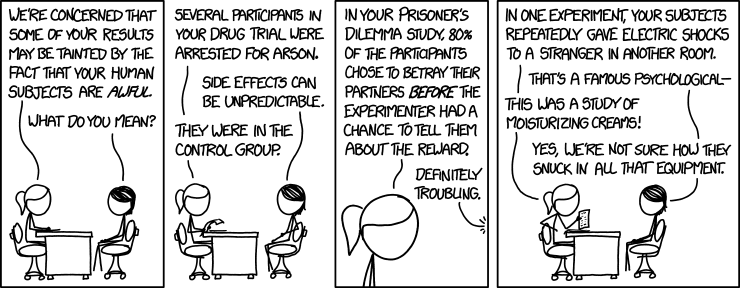
Human Subjects

After meeting with a few of the subjects, the IRB actually recommended that you stop stressing out so much about safety guidelines.
23 Oct 16:00

blazepress: 40 Amazing Perfectly Looped Ambient GIFs

23 Oct 15:59

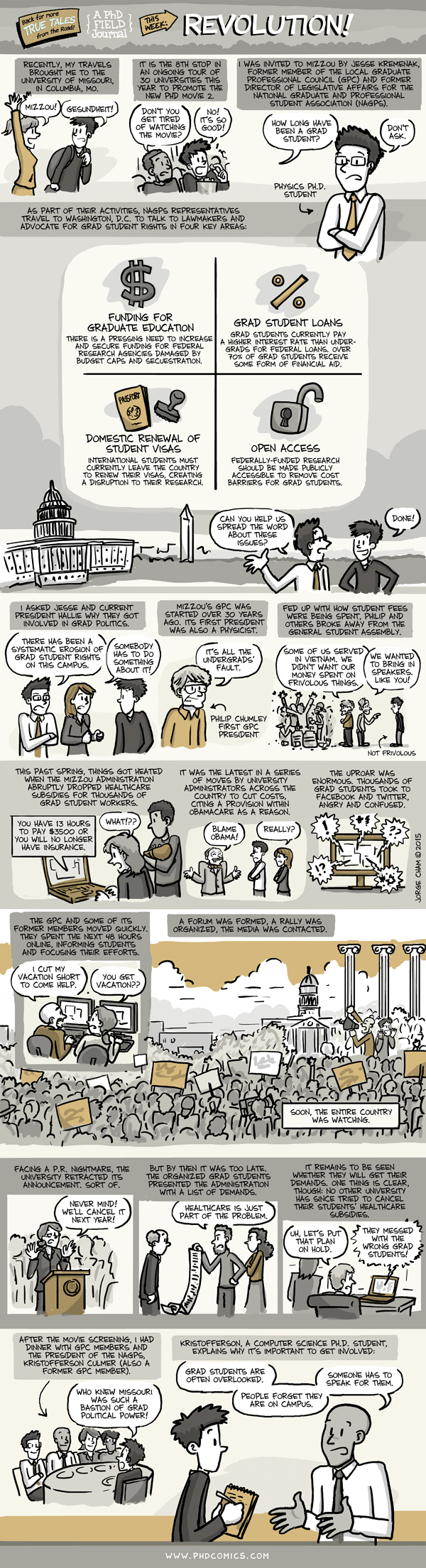
10/21/15 PHD comic: 'A grad student revolution'

Piled Higher & Deeper by Jorge Cham
www.phdcomics.com
Click on the title below to read the comic
title: "A grad student revolution" - originally published 10/21/2015

For the latest news in PHD Comics, CLICK HERE!

22 Oct 11:56

Saturday Morning Breakfast Cereal - Religion: Ruining Everything Since 4004 BC

by admin@smbc-comics.com

Hovertext: Time for the HATEMAIL BONANZA


New comic!
Today's News:

At long last, we release our second theme collection. 


22 Oct 01:58

One day, I just stopped interrupting | Experience Design at Hello Erik

by brandizzi

A few years ago, I was in a work environment where there was a habit of people interrupting people and talking over them, “steamrolling them”, in meetings constantly.

You probably are familiar with the pattern: person A is making a statement, and person B feels the need to jump in. So person B starts to make their point and talk over person A, and both continue talking now at the same time. At this point, you have two adults both making their statements at eachother and to the room, both just talking as if the other person isn’t there. Like 2 radio stations on at the same volume. Then it’s a grudge match of steamrollers on who is going to abruptly stop and let the other win the battle. Maybe it’s a seniority thing, maybe it’s a assertiveness thing, maybe it’s a rudeness thing. I don’t have any certain theory on this I need to project here. It’s just a thing that happens.

There’s another version of this where person A is making their statement, and person B starts to talk each time person A takes a breath or has the slightest of pauses, but person A starts again. Person B only ever gets out the first syllable of a word, again and again. “yeah-“, “but-“, “yeahbut-“. Person A keeps going until they’ve gotten their entire idea out uninterrupted, ignoring or disregarding person B’s attempts to interject. The steamroll is unchallenged.

I had this habit as well. Not nearly as bad as others modeling it to me, but it became a “steamroll or die!” situation.

I made a commitment

One day, after watching a pair of co-workers who seemed to be habituated into having steamroll battles every meeting, I made 2 commitments to myself

Commitment 1: I will not talk “at the same time” as someone else, regardless of who was talking first. If I’m in the middle of presenting an idea, argument, opinion, or whatever else and someone jumps in and starts talking “over” me in that steamroll fashion, I stop and just let them go. Typically, the person gets out their thought/rebuttal/opinion, and I can continue on. Or if it’s worthy of debate, I can take a detour from whatever I was saying and address it.

I could choose to hold my ground and keep talking louder as if the other person doesn’t exist, but when I watch others do it, it just doesn’t feel right to me. If I were to continue talking, I feel like now neither party will really be heard and it becomes an ego war. The rest of the room probably can’t follow two voices at once, and likely the ego war is making them roll their eyes or tune out. But what I think is most important is that successfully winning the battle in that moment probably doesn’t matter in the slightest. Trying to win the interruption arms-race is purely a function of ego, or obliviousness – or both.

It is like a freight train passing by. I just letting rumble though, make its noise, and then pass by. There’s no need for me to try and speak over the train; I know that it will soon be finished and I can continue.

Or – maybe the point I was personally trying to make didn’t matter that much anyways. I am constantly finding that upon reflection in the moment, I wasn’t saying something so important that it needed to be heard at all costs.

This commitment doesn’t just apply to work, even though that is where it started. I try to do the same thing with family and friends. Let people talk. When I feel myself start, the effect is even more apparent when with a friend. I feel so selfish and disconnected when I start to talk over someone. So I just don’t.

Commitment 2: When someone is talking, I stay silent until they finish or find a long enough pause where I won’t be getting into a steamroll battle. This one is harder to do. Sometimes, people simply have a fair amount of information to convey and it takes a while. Other times, someone might like to hear themselves talk and may have a habit of talking way too long, or repeating themselves and explaining the same idea in multiple ways, all linked into one big verbal chain.

When I’m in these types of situations, it’s hard to know when it’s clear to jump in. I still find myself not knowing when a pause is really a pause and starting to speak, only to have to clap my trap shut. After the first time, I usually am able to stay quiet until the person is definitely done with their idea, or have paused long enough that it doesn’t become a steamroll battle.

This is similar to commitment 1, the difference being that in commitment 1, I am the one talking first. In commitment 2, someone else is talking. Both of them are essentially the same core principle: don’t talk while others are talking.

A Question I Ask Myself

I read something somewhere, and I sadly can’t cite it as I don’t remember where, but it was about a startup founder and his partners talking about if working more hours, or working a weekend, would “effect the yearly numbers.” If the answer was “it probably won’t”, then don’t kill yourself to finish something that really doesn’t impact the bigger picture goal in either direction.

I find myself asking this in my head more and more: does what I have to say really effect the larger outcome we’re working towards? Or conversely: will staying silent really effect the larger outcome? If the answer is yes, then I find a way to work it in without violating the commitments. If the answer is no, I find myself either writing it down, or just letting it pass by like my own mental freight train.

Here’s what I’ve learned.

  1. Since I don’t engage in steamroll battles, I don’t feel dumb/bad/mad when I lose (since you can’t lose a game you don’t play).
  2. Talking over friends is selfish and unnecessary, and one of the biggest reasons to try letting people finish.
  3. I get to find out if what I am saying is important to me, or if it’s my ego just needing to hear itself.
  4. Once you stop, it really highlights how disruptive and counterproductive it is to meetings and conversations.
  5. Most of what I have to say (and you too), isn’t that important in the moment. And if it is, it can wait the few minutes until the other person has stopped talking.
  6. By not engaging in an activity I find counterproductive, I am able to have more influence over how, if, or when, I respond.

Out of all these, there is one more realization that is the hardest to accept, but the most helpful. The biggest realization of all is: Once someone is able to get their strong, possibly ego driven thought expressed, they usually settle down and don’t feel the need to interrupt any longer.

Mind over matter – If you don’t mind, it don’t matter

I am not sure I would say that these commitments bring me more inner peace or any other sort of tangible benefit. I do know that I would have felt like an ass in the past by steamrolling people, so saving myself from that is nice. Most of all, I just didn’t like when other people did it, either directly to me, or to others in the room. It felt like a bad habit and one day (I still remember the exact meeting, and even the chair I was sitting in) I just said “I’m not going to do that any more.”

Maybe try it for a month. I like it. If for nothing else, it saves me from having to feel the negative emotion around both winning or losing the steamroll. The medium is the message, and trying to overpower others verbally is a poor medium, and only corrupts your message.

This entry passed through the Full-Text RSS service - if this is your content and you're reading it on someone else's site, please read the FAQ at fivefilters.org/content-only/faq.php#publishers.

22 Oct 01:57

http://imgur.com/JcuSs5W

22 Oct 01:57

Organisations advance by asking "what went wrong" rather than "who is to blame"

by brandizzi

Public confidence in banks and in pharmaceutical companies has evaporated. The cost of medical negligence claims has spiralled. The Volkswagen emissions scandal is doubly disturbing because VW was such a widely admired company.

But things go wrong even in the best run organisations. Traders take foolish risks. Doctors make mistakes. Emissions levels are falsified. When this comes to light what is the nature, and level, of individual and corporate responsibility — and of legal liability, whether civil or criminal.

Anyone observing these areas of law and regulation in recent years will be confused. Banks have paid large fines and penalties. London-based “rogue trader” Kweku Adoboli, who lost UBS $2.3bn, was sentenced to seven years in jail; Bruno Iksil, the “London whale” whose activities led to $6.2bn on losses at JPMorgan Chase, will not face charges. And the investigation into phone hacking by the UK press has mostly ended in acquittals.

Also in the UK, the Mid Staffordshire National Health Service hospital trust was last year fined for breaking health and safety regulations; and the Maidstone and Tunbridge Wells trust is being prosecuted for corporate manslaughter following the death of a patient in a caesarean. But what purpose is achieved when taxpayers, by fining state-funded hospitals, in effect fine themselves?

The UK Treasury is watering down the “senior managers regime” designed in the wake of the financial crash to establish personal responsibility in financial services firms. But Sally Yates, US deputy attorney-general, has set out a new policy on corporate wrongdoing that will target individuals rather than the companies themselves.

It is a natural human tendency to ask “who is to blame?” — and for victims of events to want retribution. But if we ask “who is to blame”, rather than “what went wrong”, we encourage concealment and evasion of responsibility. To cover up malfeasance is in the long run often more damaging than malfeasance itself because it prevents the identification of lessons that will prevent similar events. Increasingly widespread attempts by senior managers to distance themselves from the actions of subordinates, as in the Libor scandal, corrodes honest organisational culture.

The most thoughtful and perhaps successful attempt to deal with this is the aviation in­dustry’s “just culture”. This starts with the recognition that mistakes happen and that organisations advance by learning from them. Its core principle is that individuals should ack­nowledge, and will not be penalised for, honest (but not reckless) mistakes consistent with their skill and experience.

Yet the concept does not sit particularly well with the traditions of criminal law, in which retribution for the harm someone’s action has caused plays an unavoidable role. It sits even more uneasily with the traditions of civil law, in which compensation for loss depends on the attribution of blame.

We are all negligent every day, as we cross the road without looking or forget to buy milk on the way home. Honest mistakes are part of life — and of work. The doctor should not have made that incision, the banker should not have made that deal. Yet our culture and our legal system make it hard to say “ I was wrong”, and encourage us to invent retrospective justification.

Bad events in organisations are generally the product of bad systems rather than bad people. So, while it is right to place responsibility for the VW scandal with the chief executive rather than the individuals who falsified emissions tests, we need to go on and ask what it is about modern corporate life that has made such misbehaviour not only possible but appear increasingly common.

The decline of public trust in corporations today threatens the legitimacy of global corporate activity.

This article was first published by the Financial Times on October 21st, 2015.

This entry passed through the Full-Text RSS service - if this is your content and you're reading it on someone else's site, please read the FAQ at fivefilters.org/content-only/faq.php#publishers.

22 Oct 01:57

Duas lindas pinturas de John Brack, um artista que descobri...


Collins St., 5pm


The Bar

Duas lindas pinturas de John Brack, um artista que descobri ontem:

22 Oct 01:57

It is financial crashes we should fear, not those in aeroplanes - FT.com

by brandizzi

Air travel is safe and its investigation process transparent — the contrast with finance could hardly be greater

Journalists wait on March 25, 2015 on a air base in Seyne, French Alps a day after a Germanwings Airbus A320 smashed into the French Alps, killing all 150 people on board. Search and rescue operations restarted on Wednesday at the site, helicopters took over from an improvised base, heading for the remote area of the Alps where the plane crashed. AFP PHOTO/BORIS HORVAT (Photo credit should read BORIS HORVAT/AFP/Getty Images)©AFP

Journalists wait at an airbase in Seyne, in the French Alps, as the recovery operation following the Germanwings air crash resumes

Having just booked a flight to Berlin in June with Germanwings, I thought it might be useful to explain why.

Air travel is extraordinarily safe. About 1,300 people died in commercial aviation accidents last year, the highest figure in a decade. Almost half of these were victims of the two incidents involving Malaysia Airlines. Tyler Brûlé has described the fear of flying that led him to abandon a flight to London after hearing about last week’s Germanwings Airbus crash in the French Alps. The chances of a man of Mr Brulé’s age, 46, dying in any two-hour interval is about one in 1m. There is an additional one in 5m chance of being killed during a two-hour flight. On the other hand, sitting in an aircraft protects you from many more common causes of death, such as a car crash or a fall down stairs.

More

On this story

On this topic

John Kay

Despite the continued growth in traffic, aviation deaths have been declining. Improvements in aircraft design have reached a stage at which it is almost inconceivable that a major incident will be the result of a mechanical failure. Modern Airbus and Boeing models “fly by wire”, which means that every action by a pilot is mediated by a computer and most of the time aircraft literally fly themselves. Chesley Sullenberger’s 2009 “miracle on the Hudson” landing was an exceptional feat of skilled aviation — but as his Airbus landed on the river it was the machine, not the pilot, that had selected the gliding speed and angle.

The dangerous moments onboard an aircraft are when the pilot is overriding the electronic systems. They may do so for good reason but with bad outcomes, as when the crew of Air France 447 from Rio to Paris misjudged their response to adverse weather conditions and lost the plane in the Atlantic; or with malevolent intent, as in the Germanwings incident. Passengers should worry, not that the crew are not in control but that they are.

But another reason modern air travel is reassuringly safe is that investigation into accidents is honest and thorough. Airlines and aircraft manufacturers do not like the public exposure of defects in their products; but they have tended to respond by addressing the defects rather than resisting the exposure. And generally accident investigators have been allowed to do a thorough job without political interference.

The most notable exception was the attempt by Egypt, under the dictatorship of Hosni Mubarak, to influence the findings of US investigators into the loss of EgyptAir 990 in 1999. The passenger jet disappeared into the north Atlantic under the control, like the Germanwings aircraft, of a pilot widely thought to have been suicidal . And the full truth of the downing of Malaysia Airlines MH17 over Ukraine is never likely to emerge. But when French President François Hollande, German Chancellor Angela Merkel and Spanish Prime Minister Mariano Rajoy travelled to the crash area last week, they went to show concern and establish what had happened rather than to deflect blame.

This is the behaviour we are entitled to expect in any industry: but it is not what we generally see. The bodies that regulate drug safety do not enjoy the same protection from lobbying as air accident investigators. And so the pharmaceutical industry has largely lost the public trust achieved by the “just culture” of the airline industry, which is more concerned to encourage openness than to attribute blame.

And the contrast with finance could hardly be greater. It is unimaginable that we might have had a dispassionate investigation of the financial crash of 2008. Nobody died in that crash — but to avoid mistakes in the future it is first necessary, in any given situation, to undertake honest assessment of the mistakes of the past. That is why our planes are growing safer and our finances are not.

johnkay@johnkay.com

Copyright The Financial Times Limited 2015. You may share using our article tools.
Please don't cut articles from FT.com and redistribute by email or post to the web.

This entry passed through the Full-Text RSS service - if this is your content and you're reading it on someone else's site, please read the FAQ at fivefilters.org/content-only/faq.php#publishers.

22 Oct 01:54

I love you, Maru-chan.image | twitter | facebook | patreon


I love you, Maru-chan.

image | twitter | facebook | patreon

22 Oct 01:53

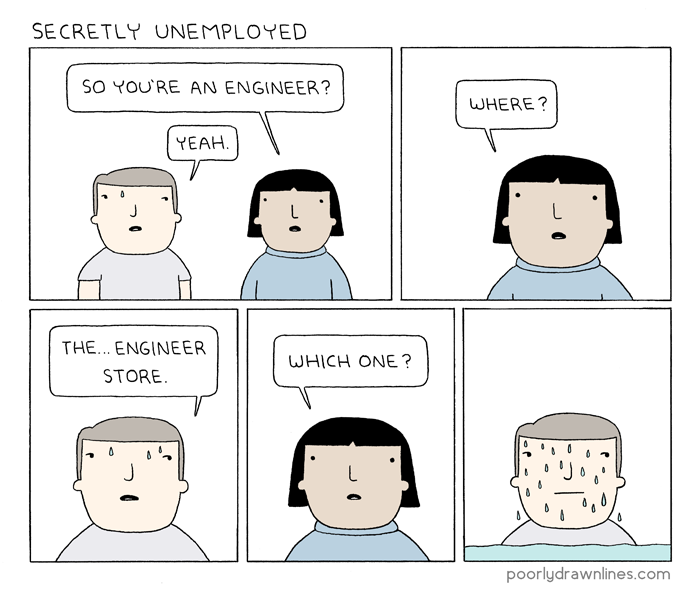
Secretly Unemployed

by Reza

secretly-unemployed