Shared posts

07 Aug 12:26

How the Hunt Brothers Cornered the Silver Market and Then Lost it All

How the Hunt Brothers Cornered the Silver Market and Then Lost it All

Until his dying day in 2014, Nelson Bunker Hunt, who had once been the world’s wealthiest man, denied that he and his brother plotted to corner the global silver market. 

Sure, back in 1980, Bunker, his younger brother Herbert, and other members of the Hunt clan owned roughly two-thirds of all the privately held silver on earth. But the historic stockpiling of bullion hadn’t been a ploy to manipulate the market, they and their sizable legal team would insist in the following years. Instead, it was a strategy to hedge against the voracious inflation of the 1970s—a monumental bet against the U.S. dollar.

Whatever the motive, it was a bet that went historically sour. The debt-fueled boom and bust of the global silver market not only decimated the Hunt fortune, but threatened to take down the U.S. financial system. 

The panic of “Silver Thursday” took place over 35 years ago, but it still raises questions about the nature of financial manipulation. While many view the Hunt brothers as members of a long succession of white collar crooks, from Charles Ponzi to Bernie Madoff, others see the endearingly eccentric Texans as the victims of overstepping regulators and vindictive insiders who couldn’t stand the thought of being played by a couple of southern yokels.

In either case, the story of the Hunt brothers just goes to show how difficult it can be to distinguish illegal market manipulation from the old fashioned wheeling and dealing that make our markets work.

The Real-Life Ewings

Whatever their foibles, the Hunts make for an interesting cast of characters. Evidently CBS thought so; the family is rumored to be the basis for the Ewings, the fictional Texas oil dynasty of Dallas fame.

Sitting at the top of the family tree was H.L. Hunt, a man who allegedly purchased his first oil field with poker winnings and made a fortune drilling in east Texas. H.L. was a well-known oddball to boot, and his sons inherited many of their father’s quirks.

For one, there was the stinginess. Despite being the richest man on earth in the 1960s, Bunker Hunt (who went by his middle name), along with his younger brothers Herbert (first name William) and Lamar, cultivated an image as unpretentious good old boys. They drove old Cadillacs, flew coach, and when they eventually went to trial in New York City in 1988, they took the subway. As one Texas editor was quoted in the New York Times, Bunker Hunt was “the kind of guy who orders chicken-fried steak and Jello-O, spills some on his tie, and then goes out and buys all the silver in the world.”

Cheap suits aside, the Hunts were not without their ostentation. At the end of the 1970s, Bunker boasted a stable of over 500 horses and his little brother Lamar owned the Kansas City Chiefs. All six children of H.L.’s first marriage (the patriarch of the Hunt family had fifteen children by three women before he died in 1974) lived on estates befitting the scions of a Texas billionaire. These lifestyles were financed by trusts, but also risky investments in oil, real estate, and a host of commodities including sugar beets, soybeans, and, before long, silver. 

The Hunt brothers also inherited their father’s political inclinations. A zealous anti-Communist, Bunker Hunt bankrolled conservative causes and was a prominent member of the John Birch Society, a group whose founder once speculated that Dwight Eisenhower was a “dedicated, conscious agent” of Soviet conspiracy. In November of 1963, Hunt sponsored a particularly ill-timed political campaign, which distributed pamphlets around Dallas condemning President Kennedy for alleged slights against the Constitution on the day that he was assassinated. JFK conspiracy theorists have been obsessed with Hunt ever since. 

In fact, it was the Hunt brand of politics that partially explains what led Bunker and Herbert to start buying silver in 1973.

Hard Money

The 1970s were not kind to the U.S. dollar.

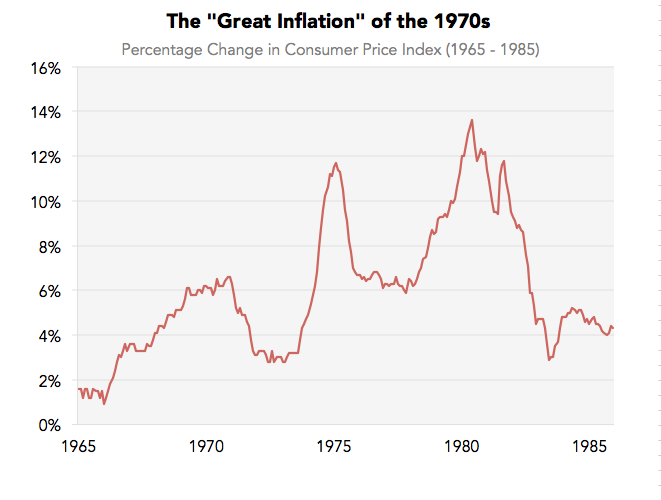
Years of wartime spending and unresponsive monetary policy pushed inflation upward throughout the late 1960s and early 1970s. Then, in October of 1973, war broke out in the Middle East and an oil embargo was declared against the United States. Inflation jumped above 10%. It would stay high throughout the decade, peaking in the aftermath of the Iranian Revolution at an annual average of 13.5% in 1980.

Over the same period of time, the global monetary system underwent a historic transformation. Since the first Roosevelt administration, the U.S. dollar had been pegged to the value of gold at a predictable rate of $35 per ounce. But in 1971, President Nixon, responding to inflationary pressures, suspended that relationship. For the first time in modern history, the paper dollar did not represent some fixed amount of tangible, precious metal sitting in a vault somewhere.

For conservative commodity traders like the Hunts, who blamed government spending for inflation and held grave reservations about the viability of fiat currency, the perceived stability of precious metal offered a financial safe harbor. It was illegal to trade gold in the early 1970s, so the Hunts turned to the next best thing.

Data from the Bureau of Labor Statistics; chart by Priceonomics

As an investment, there was a lot to like about silver. The Hunts were not alone in fleeing to bullion amid all the inflation and geopolitical turbulence, so the price was ticking up. Plus, light-sensitive silver halide is a key component of photographic film. With the growth of the consumer photography market, new production from mines struggled to keep up with demand.

And so, in 1973, Bunker and Herbert bought over 35 million ounces of silver, most of which they flew to Switzerland in specifically designed airplanes guarded by armed Texas ranch hands. According to one source, the Hunt’s purchases were big enough to move the global market. 

But silver was not the Hunts' only speculative venture in the 1970s. Nor was it the only one that got them into trouble with regulators.

Soy Before Silver

In 1977, the price of soybeans was rising fast. Trade restrictions on Brazil and growing demand from China made the legume a hot commodity, and both Bunker and Herbert decided to enter the futures market in April of that year.

A future is an agreement to buy or sell some quantity of a commodity at an agreed upon price at a later date. If someone contracts to buy soybeans in the future (they are said to take the “long” position), they will benefit if the price of soybeans rise, since they have locked in the lower price ahead of time. Likewise, if someone contracts to sell (that’s called the “short” position), they benefit if the price falls, since they have locked in the old, higher price.

While futures contracts can be used by soybean farmers and soy milk producers to guard against price swings, most futures are traded by people who wouldn’t necessarily know tofu from cream cheese. As a de facto insurance contract against market volatility, futures can be used to hedge other investments or simply to gamble on prices going up (by going long) or down (by going short).

When the Hunts decided to go long in the soybean futures market, they went very, very long. Between Bunker, Herbert, and the accounts of five of their children, the Hunts collectively purchased the right to buy one-third of the entire autumn soybean harvest of the United States.

To some, it appeared as if the Hunts were attempting to corner the soybean market.

In its simplest version, a corner occurs when someone buys up all (or at least, most) of the available quantity of a commodity. This creates an artificial shortage, which drives up the price, and allows the market manipulator to sell some of his stockpile at a higher profit.

Futures markets introduce some additional complexity to the cornerer’s scheme. Recall that when a trader takes a short position on a contract, he or she is pledging to sell a certain amount of product to the holder of the long position. But if the holder of the long position just so happens to be sitting on all the readily available supply of the commodity under contract, the short seller faces an unenviable choice: go scrounge up some of the very scarce product in order to “make delivery” or just pay the cornerer a hefty premium and nullify the deal entirely.

In this case, the cornerer is actually counting on the shorts to do the latter, says Craig Pirrong, professor of finance at the University of Houston. If too many short sellers find that it actually costs less to deliver the product, the market manipulator will be stuck with warehouses full of inventory. Finance experts refer to selling the all the excess supply after building a corner as “burying the corpse.”

“That is when the price collapses,” explains Pirrong. “But if the number of deliveries isn’t too high, the loss from selling at the low price after the corner is smaller than the profit from selling contracts at the high price.”

The Chicago Board of Trade trading floor. Photo credit: Jeremy Kemp

Even so, when the Commodity Futures Trading Commission found that a single family from Texas had contracted to buy a sizable portion of the 1977 soybean crop, they did not accuse the Hunts of outright market manipulation. Instead, noting that the Hunts had exceeded the 3 million bushel aggregate limit on soybean holdings by about 20 million, the CFTC noted that the Hunt’s “excessive holdings threaten disruption of the market and could cause serious injury to the American public.” The CFTC ordered the Hunts to sell and to pay a penalty of $500,000.

Though the Hunts made tens of millions of dollars on paper while soybean prices skyrocketed, it’s unclear whether they were able to cash out before the regulatory intervention. In any case, the Hunts were none too pleased with the decision. 

“Apparently the CFTC is trying to repeal the law of supply and demand,” Bunker complained to the press.

Silver Thursday

Despite the run in with regulators, the Hunts were not dissuaded. Bunker and Herbert had eased up on silver after their initial big buy in 1973, but in the fall of 1979, they were back with a vengeance. By the end of the year, Bunker and Herbert owned 21 million ounces of physical silver each. They had even larger positions in the silver futures market: Bunker was long on 45 million ounces, while Herbert held contracts for 20 million. Their little brother Lamar also had a more “modest” position.

By the new year, with every dollar increase in the price of silver, the Hunts were making $100 million on paper. But unlike most investors, when their profitable futures contracts expired, they took delivery. As in 1973, they arranged to have the metal flown to Switzerland. Intentional or not, this helped create a shortage of the metal for industrial supply.

Naturally, the industrialists were unhappy. From a spot price of around $6 per ounce in early 1979, the price of silver shot up to $50.42 in January of 1980. In the same week, silver futures contracts were trading at $46.80. Film companies like Kodak saw costs go through the roof, while the British film producer, Ilford, was forced to lay off workers. Traditional bullion dealers, caught in a squeeze, cried foul to the commodity exchanges, and the New York jewelry house Tiffany & Co. took out a full page ad in the New York Times slamming the “unconscionable” Hunt brothers. They were right to single out the Hunts; in mid-January, they controlled 69% of all the silver futures contracts on the Commodity Exchange (COMEX) in New York.

Source: New York Times

But as the high prices persisted, new silver began to come out of the woodwork.   

“In the U.S., people rifled their dresser drawers and sofa cushions to find dimes and quarters with silver content and had them melted down,” says Pirrong, from the University of Houston. “Silver is a classic part of a bride’s trousseau in India, and when prices got high, women sold silver out of their trousseaus.”

According to a Washington Post article published that March, the D.C. police warned residents of a rash of home burglaries targeting silver. 

Unfortunately for the Hunts, all this new supply had a predictable effect. Rather than close out their contracts, short sellers suddenly found it was easier to get their hands on new supplies of silver and deliver.

“The main factor that has caused corners to fail [throughout history] is that the manipulator has underestimated how much will be delivered to him if he succeeds [at] raising the price to artificial levels,” says Pirrong. “Eventually, the Hunts ran out of money to pay for all the silver that was thrown at them.”

In financial terms, the brothers had a large corpse on their hands—and no way to bury it.

This proved to be an especially big problem, because it wasn’t just the Hunt fortune that was on the line. Of the $6.6 billion worth of silver the Hunts held at the top of the market, the brothers had “only” spent a little over $1 billion of their own money. The rest was borrowed from over 20 banks and brokerage houses.

At the same time, COMEX decided to crack down. On January 7, 1980, the exchange’s board of governors announced that it would cap the size of silver futures exposure to 3 million ounces. Those in excess of the cap (say, by the tens of millions) were given until the following month to bring themselves into compliance. But that was too long for the Chicago Board of Trade exchange, which suspended the issue of any new silver futures on January 21. Silver futures traders would only be allowed to square up old contracts.

Predictably, silver prices began to slide. As the various banks and other firms that had backed the Hunt bullion binge began to recognize the tenuousness of their financial position, they issued margin calls, asking the brothers to put up more money as collateral for their debts. The Hunts, unable to sell silver lest they trigger a panic, borrowed even more. By early March, futures contracts had fallen to the mid-$30 range.

Matters finally came to a head on March 25, when one of the Hunts’ largest backers, the Bache Group, asked for $100 million more in collateral. The brothers were out of cash, and Bache was unwilling to accept silver in its place, as it had been doing throughout the month. With the Hunts in default, Bache did the only thing it could to start recouping its losses: it start to unload silver.

On March 27, “Silver Thursday,” the silver futures market dropped by a third to $10.80. Just two months earlier, these contracts had been trading at four times that amount.

The Aftermath

After the oil bust of the early 1980s and a series of lawsuits polished off the remainder of the Hunt brothers’ once historic fortune, the two declared bankruptcy in 1988. Bunker, who had been worth an estimated $16 billion in the 1960s, emerged with under $10 million to his name. That’s not exactly chump change, but it wasn’t enough to maintain his 500-plus stable of horses,.

The Hunts almost dragged their lenders into bankruptcy too—and with them, a sizable chunk of the U.S. financial system. Over twenty financial institutions had extended over a billion dollars in credit to the Hunt brothers. The default and resulting collapse of silver prices blew holes in balance sheets across Wall Street. A privately orchestrated bailout loan from a number of banks allowed the brothers to start paying off their debts and keep their creditors afloat, but the markets and regulators were rattled.

Silver Spot Prices Per Ounce (January, 1979 - June, 1980)

Source: Trading Economics

In the words of then CFTC chief James Stone, the Hunts’ antics had threatened to punch a hole in the “financial fabric of the United States” like nothing had in decades. Writing about the entire episode a year later, Harper’s Magazine described Silver Thursday as “the first great panic since October 1929.”

The trouble was not over for the Hunts. In the following years, the brothers were dragged before Congressional hearings, got into a legal spat with their lenders, and were sued by a Peruvian mineral marketing company, which had suffered big losses in the crash. In 1988, a New York City jury found for the South American firm, levying a penalty of over $130 million against the Hunts and finding that they had deliberately conspired to corner the silver market.

Surprisingly, there is still some disagreement on that point.

Bunker Hunt attributed the whole affair to the political motives of COMEX insiders and regulators. Referring to himself later as “a favorite whipping boy” of an eastern financial establishment riddled with liberals and socialists, Bunker and his brother, Herbert, are still perceived as martyrs by some on the far-right. 

“Political and financial insiders repeatedly changed the rules of the game,” wrote the New American. “There is little evidence to support the ‘corner the market’ narrative.”

Though the Hunt brothers clearly amassed a staggering amount of silver and silver derivatives at the end of the 1970s, it is impossible to prove definitively that market manipulation was in their hearts. Maybe, as the Hunts always claimed, they just really believed in the enduring value of silver.

Or maybe, as others have noted, the Hunt brothers had no idea what they were doing. Call it the stupidity defense.

“They’re terribly unsophisticated,” an anonymous associated was quoted as saying of the Hunts in a Chicago Tribune article from 1989. “They make all the mistakes most other people make,” said another.

When the Hunts were dragged before the CFTC a few months after the crash, Commissioner David G. Gartner wondered out loud: “Do you think there’s any possibility that the Hunts are just having fun, just horsing around?”

In their civil trial against the South American mineral firm, the Hunt brothers’ decision to begin accepting delivery on their enormous holdings in silver futures was considered a red flag. A market participant would only take the actual metal, rather than cash in on highly profitable futures contracts, if their plan was to remove the bullion from circulation and artificially inflate the price. That decision, it was argued, was consistent with market manipulation.

But one could argue that it is also consistent with having an irrational fixation on shiny metal and way more money than sense.

In his New York Times obituary in 2014, it was reported that towards the end of his life, Bunker Hunt had scrounged up enough to start buying horses again. 

“I don’t know really know anything,” said Bunker, offering a synopsis of his horse trading strategy that could have just as easily applied to his entire career as an investor. “I am just trying to win a few races.”

Our next article explores how women's turnout for presidential elections has increased since the 1960—and why Trump would beat Hillary handedly if it hadn't. To get notified when we post it    join our email list.

The cover image comes from Dnn87.

Want to write for Priceonomics? We are looking for freelance contributors.


Let's block ads! (Why?)

06 Aug 13:44

The Case Against Everyone’s Favorite Tax Break: The Mortgage Interest Deduction

The Case Against Everyone’s Favorite Tax Break: The Mortgage Interest Deduction

Once upon a time, the federal income tax did not exist.

It first appeared in 1861, born out of a necessity for Civil War funding, and in 1913, Congress made the income tax a permanent part of American life.

The tax code grew over time. But while the government took in more taxes with one hand, it doled out exceptions with the other. 

One of the best known tax breaks is the child tax credit, which aims to reduce child poverty by offering tax breaks of up to $1,000 per child. The largest tax break relates to health care: it makes the premiums paid by companies that offer health insurance exempt from payroll taxes. Americans can also reduce their tax bill by installing solar panels, giving to charity, or using their money in innumerable other ways. 

All these tax breaks add up to a kind of “shadow budget” that "cost" $1.2 trillion—more than the cost of Medicare and Medicaid. 

It may seem odd to think of tax breaks as part of the budget. But for each tax break, the government needs to increase the overall tax rate or issue more debt to “pay” for the tax break and whatever it subsidizes (charitable giving, health care, solar panels). For this reason, organizations like the Congressional Budget Office treat tax breaks and government spending as essentially equivalent

Like with any government program, the merits of these tax breaks is up for debate. The third largest of these tax breaks—the mortgage interest tax deduction, which, at an annual estimated cost of $77 to $100 billion, allows people to deduct the cost of paying interest on a home loan—is a unique case. 

The mortgage interest deduction is popular with the public, and perceived as helping the middle class afford homes. Yet nearly every government official who doesn’t hold elected office, whether Republican, Democrat, or technocrat, believes that the mortgage interest deduction is a terrible policy that does more to subsidize the wealthy’s vacation homes than to help the middle class. It influences how we invest our money and where we live, often in a negative way. 

Its existence is also a complete and utter accident—a holdover from the days when most mortgages were for farms. 

The Accidental Tax Break

The mortgage interest deduction is now recognized as an important government program that helps more Americans afford homes. In 1984, President Reagan even described the mortgage interest deduction as symbolic of the American dream. 

But the deduction began as an unplanned technicality. 

When the federal government first levied income taxes in 1913, Congress allowed Americans to deduct from their taxes the cost of all interest payments. This is standard policy for corporations: the government only wants to tax profits—not money spent on loans for tractors or a new office. In 1913, the government allowed deductions on all interest—probably because all interest payments were business-related. No one took out car loans in 1913 or paid interest on credit card debt, and the majority of mortgages were for farms

In his recounting of the history of the mortgage interest deduction, law professor Dennis Ventry, Jr., notes that Congress did not mention any effort to boost homeownership through the tax code in 1913 or in housing reports published decades later. Nor did Congress view the mortgage interest deduction as a special program. 

Through the 1940s, the mortgage interest deduction had a modest impact on America’s finances. But after the Great Depression decimated America’s housing industry, the government created a new Federal Housing Administration to guarantee mortgage payments. This allowed lenders to offer significantly more mortgages at lower rates, and after World War II, this helped returning soldiers move into newly built suburbs, boosting the homeownership rate from 45% to 62%

This defined postwar American life, including its terrible racial legacy: the Federal Housing Administration excluded minority neighborhoods from the federal guarantees, creating a chasm in wealth and living standards between African-Americans and their white neighbors. Historians refer to this practice as redlining

The boom in construction and mortgages had another effect: the government realized how much tax revenue it was losing due to the mortgage interest deduction. By the mid to late 1950s, the preferential tax treatment of housing cost the Treasury somewhere between $8 billion and $30 billion in 2016 dollars. 

Very few other countries allow taxpayers to deduct the cost of their mortgage payments. Countries including Iceland, Luxembourg, and Switzerland, in fact, tax homeowners for “imputed rent”: the amount of income homeowners would earn if they rented out (rather than lived in) their home. 

This is the oddity of the mortgage interest deduction. If you rent a $500,000 apartment, you’ll pay income tax, and then spend some of the money you have left on rent. But if you buy a $500,000 house, every dollar you spend on mortgage interest will reduce your tax bill. 

Since the 1950s, government technocrats have advocated that the U.S. reform or eliminate the deduction. It was originally seen as fixing a technicality. But politicians and lobbyists soon created a justification for the mortgage interest deduction: it boosted the homeownership rate by helping the middle class afford homes. 

"The tax code properly encourages home ownership through the deduction of mortgage interest," Congressman Henry Reuss said in 1975. Similarly, a 1973 op-ed described the mortgage interest deduction as a benefit for the “average taxpayer,” and a 1978 poll found that 90% of Americans supported the mortgage interest deduction. As one taxpayer wrote of its appeal, “Every year when I'm doing my taxes and I get to the step in the software where you enter in your mortgage interest, a wave of relief just washes over me.”

The problem is that researchers and administrators nearly unanimously agree that all of this is wrong. 

An Upper Class Subsidy

American politicians have a long tradition of trying to boost the homeownership rate in America. 

During his presidency, Bill Clinton said that “One of the great successes of the United States in this century has been the partnership forged by the National Government and the private sector to steadily expand the dream of homeownership to all Americans.” President Bush, too, promoted a “homeownership society”

Economists, technocrats, and political scientists, however, feel ambivalent about this preference for homeownership. Defenders of the tax code point out that homeowners tend to take better care of their property, volunteer at the town library, meet the local congresswoman, and support long-term investments in the community. In short, they take care of the place.

On the other hand, encouraging homeownership creates sprawl and makes workers less likely to move for a better job. And those local, “long-term investments” include resisting racial integration and the construction of new housing that would lower property values. $75 billion is also a lot to pay for people gardening and painting their homes bright colors.

But this argument is not very relevant to the mortgage interest deduction, because the pitch that it helps more people afford homes simply does not check out. 

Few countries have a mortgage interest deduction, and yet, a greater or equal share of Australians and Brits own homes than Americans. Moreover, despite fluctuations in the relative value of the deduction, the homeownership rate in America has stayed fixed between 63% and 68% since 1960. 

How can a $75 billion subsidy not help people buy homes? Let’s consider the case of a fictional father of two on the cusp of being able to afford a mortgage on a $100,000 home. If he’s making minimum payments at current interest rates, he might pay $3,200 in interest the first year of his mortgage. Since he earns $50,000 a year—and, as a single parent, pays a 15% federal income tax rate—he can deduct $440 from that year’s taxes. (Note: this simplifies the IRS calculation.)

Now consider the case of a father of two who makes $200,000 a year and is buying a million dollar lake house. (Individuals can typically claim the mortgage interest deduction on up to two homes for a tax break worth up to $1.1 million.) Mike pays a 28% federal income tax rate, which means that he can deduct 28% of his $32,200 annual payments. That comes out to $9,020. 

A tax break is a really poor way to help people struggling to afford a home, because people with large incomes and major expenses gain the most from tax breaks.  

Data from the Joint Committee on Taxation and the Center on Budget and Policy Priorities; chart by Priceonomics 

Almost 40% of the Americans who claim the deduction make a six-figure salary or better, and because they buy larger houses and pay higher taxes, they receive over 75% of the benefits of the program. As former IRS commissioner Charles Rossotti once commented, "Why would you want an abnormally large subsidy for people who have abnormally large mortgages?" 

One could argue that this isn’t so bad. The $50,000 a year family can still potentially save a few hundred dollars, and it’s not terribly unfair for people who pay high taxes to receive larger tax breaks. 

There are a few problems with this line of thinking. 

One is that while the deduction does not help more people afford homes, it does incentivize people to invest their money in a larger mortgage—a policy that proved disastrous when the housing bubble burst. There may be no better symbol of the mortgage interest deduction than the endless tracts of foreclosed homes in the suburbs of Las Vegas. They still have not recovered.

The Las Vegas sprawl. Photo credit: ulybug

The other is that everyone involved in selling houses knows that buyers receive tax breaks on their mortgages, which allows them to raise prices. Researchers estimate that lenders and realtors capture a chunk of the subsidy—perhaps 9-17% in the case of mortgage providers. So the tax break offers homebuyers less than they think. 

What seems like a tax break for homeowners is better understood as a subsidy for the construction and real estate industry. Which is why they’ve successfully defended the mortgage interest deduction for decades. 

The American Dream, by Tax Break

Since the 1950s, reformers have suggested eliminating tax breaks like the mortgage interest deduction and using the savings to lower everyone’s tax rates. It sounds great: a fairer tax code and tax cuts!

The problem, of course, is once you suggest specific changes, the people who benefit defend their interests. In 2012, Alex Blumberg, then of NPR, asked a former lobbyist for the realtor association what he would do if Congress considered ending the mortgage interest deduction. 

“I would declare war,” he responded. The lobbyists would run ads, encourage America’s million realtors to make phone calls, and ask members of Congress on the relevant committees—for whom the lobby regularly holds fundraisers—“Do you really want to go down this path? That’s just not a really smart way to run for re-election.” 

The biggest weapon of interest groups like realtors and the construction industry, however, is their talking points: that removing the reduction would cause a housing-driven recession and be a tax hike on the middle class. The public largely believes that the deduction is a benefit for the middle class, and polls typically find that a majority of Americans support the mortgage interest deduction. 

In 2005, Jeffrey Kupfer was on the receiving end of this rhetoric. President Bush had appointed him as the Executive Director of a bipartisan panel charged with suggesting reforms to the tax code. The panel did not recommend killing the mortgage deduction—President Bush had a policy of increasing homeownership. But they did recommend changes.

Kupfer says they were all aware that they’d face pushback—and they experienced it when they received public feedback and when they ran into colleagues and lobbyists in Washington. When they released the report, Kupfer recalls doing a television interview and being followed by a member of a real estate or construction association who “blasted away that what we’d do would be terrible for the economy.”

The rest of the industry mobilized to make similar comments. Donald Trump helpfully chimed in to say that changing the deduction “will lead to a major recession, if not a depression."

It didn’t matter that the panel’s recommendations addressed all the usual criticisms: They suggested replacing the tax break with a credit whose value would be 15% of interest payments for all homeowners and capped based on the average home price in the region. That meant the mortgage deduction would target middle class homeowners more effectively. 

But the subtler argument is usually the losing argument. Nancy Pelosi, for example, called the mortgage interest deduction “untouchable.” 

Whether due to the bruising politics of the deduction, or due to Katrina and the Iraq War occupying the president, Bush did not pursue his panel’s recommendations. The mortgage interest deduction lived on.

Photo credit: Jeff Turner

But it’s not just special interests that keep the mortgage interest deduction alive. It’s that politicians view it differently from the experts.

Tax code reformers point out that many politicians understand that the deduction is perceived as helping the middle class—and that it does help a bit by supporting the construction industry and giving some money to non-wealthy families. Politicians love showing support for the middle class. 

Moreover, while economists might argue that a nation of renters is more efficient than a nation of homeowners, politicians know that the way people feel about owning a house has nothing to do with economic efficiency. 

Bill Clinton described homeownership as “about more than money and sticks and boards and windows.” George W. Bush made helping people afford a home a key element of his “compassionate conservatism.” 

Among policy wonks, there is a bipartisan consensus that the mortgage interest deduction is a horribly unfair and inefficient tax break that subsidizes the wealthy and distorts the economy. But for many politicians, there is a bipartisan sense that the appeal of owning a home is too powerful to do anything about it. 

Our next article explores the efforts of two brothers to corner the silver market in 1980. To get notified when we post it    join our email list.

This article was updated on August 4, 2016, to include the comments of Jeffrey Kupfer.

Note: If you’re a company that wants to work with Priceonomics to turn your data into great stories, learn more about the Priceonomics Data Studio 


Let's block ads! (Why?)

06 Aug 12:39

Quadro Vivo em Stars Hollow <3

by maryw1

4a Temporada. 7o Episódio.

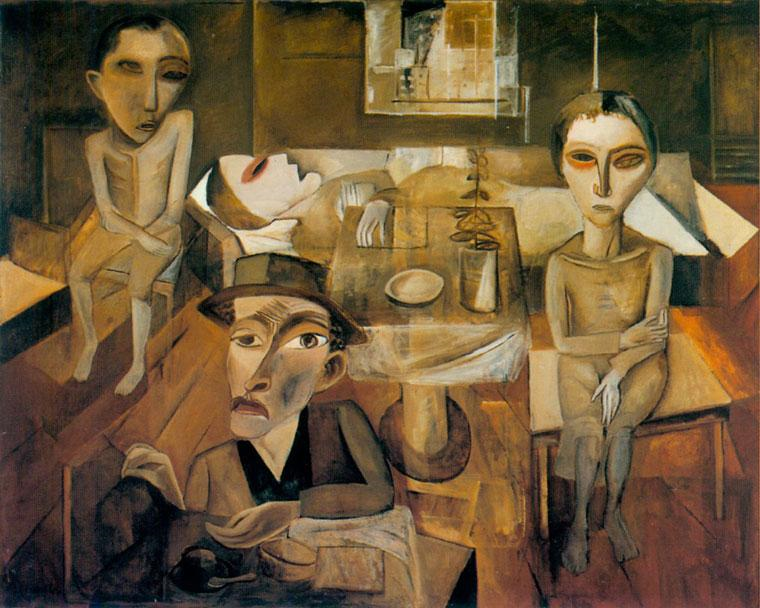
Eu nem fui atrás de saber em qual temporada que era. Porque o impacto que me causou esse episódio foi material. Eu quis fazer um quadro vivo, com meus alunos. Propus, para a semana de licenciatura. Ninguém botou fé. Apenas uma professora de Educação Artística aposentada (que me ajudou horrores). Queria fazer igual da série. Um quadro após o outro. Tínhamos 23 classes, era inviável. Propus fazermos ao ar livre. Um museu ao ar livre. Mimimi da direção, não cabe, não pode usar estacionamento. O clube da cidade estava alugado para uma palestra da mesma semana. Me cederam o clube por uma noite. Fui medir o clube. Não fui sozinha, levei minha mãe. Dividimos todo o espaço interno em 23 stands (“molduras”, no caso). Os alunos pegaram um fogo que eu nunca imaginei. Padronizei os stands. Todos tinham que estar empacotados de lona preta. Chegamos cedo. Minha mãe inclusa. Forramos um salão gigante. Os alunos do Gaughin levaram um peixe imenso, de verdade. Subornamos o dono da lanchonete. O peixe tinha que passar o dia no freezer, que estava com as bebidas que seriam vendidas à noite. Os alunos do Segall levaram milhares de pomadas e vic vaporub. “Passaram” no stand deles. Era um quadro com um enfermo, queriam emular o cheiro da morte. Ao lado tinha um Hopper, do outro lado um Munch. Ambos fediam junto. Reclamações infinitas. Mas nada se compara à chegada da Última Ceia. O quadro simplesmente não cabia. Pensei em improvisar mais um stand. Ainda não cabia. Tivemos que fazer no meio do salão. Não me lembro onde os alunos conseguiram uma escada quase de bombeiros. GRAMPEAMOS a lona preta NO TETO. Eu jamais abriria mão do efeito de moldura. Quando “abrimos” o museu (sim, os quadros funcionaram simultaneamente – 23, veja bem), as pessoas não sabiam o que fazer. Ficaram embasbacadas. O presidente da Fundação, da qual a faculdade fazia parte, me puxou pelo braço quase bravo. “Menina, quando você for fazer um negócio assim, avisa com antecedência para eu poder divulgar da maneira adequada“. Os alunos amaram fazer. Sofreram, porque teve premiação. Choraram (Lição de Anatomia), xingaram (A Última Ceia, Frida Kahlo Pegando em Armas). Outros fizeram mal feito e estouraram as bexigas do cenário (O Clube da Jardinagem/Botero). Teve graça também. Aluno vestido de cachorro nA Refeição dos Camponeses (Le Nain). Aluna vestida de gato em Mulata com Gato Preto (DiCavalcanti). Teve vinho de verdade nO Triunfo de Baco. Fingi que não vi. A coordenadora pedagógica não teve a mesma bossa. Meu favorito foi esse do vídeo. Lição de Anatomia do Dr. Tulp. Era a minha turma favorita naquele ano (Biologia, veja você). Ontem falei sobre o negócio de ser/não ser educadora. É isso. Acho que a gente fica muito afoito para mostrar coisas para os alunos. Ainda mais alunos que tiveram uma formação muito carente de capital cultural. Sempre faço isso. Coloco quadro em slides. E conto de Guimarães Rosa em alguma disciplina que eu acho que encaixa. Coloquei até um ensaio do David Foster Wallace na minha disciplina de Classe Social. Aquele do navio. Enfim. Não quero também dizer que sou *a* educadora nem nada. Tô meio Luke. Se não querem mais que a gente faça isso, foda-se. Dá um trabalho lancinante. E é isso. Eu dou o que eu tenho. Pois é. Esses quadros são os que eu gosto. Teve um Portinari perdido no meio. Porque, né? Não ia deixar de fora. Mas não gosto muito não. Enfim. Foda-se. Mas que incrível ver esse episódio hoje. Acabei vendo todos os vídeos (fiz um pra cada turma). E me emocionando demais. Se A Lição de Anatomia suscita debates sobre religião X  ciência, o que eu devo fazer? Fingir que nunca existiu esse debate? Deixar os pais decidirem se os filhos devem ver ou não ver um quadro do Rembrandt? Enfim. Que bom que tem gente disposta a entrar nesse debate. Porque pra mim é o caso mesmo de descansar o estojo e encarnar o Luke. Bando de caipiras. Fodam-se.

06 Aug 12:02

Fossil fuels have had an aeon’s head start

by Tim Harford
Undercover Economist

Will we ever stop using fossil fuels? The question matters because fossil fuels are the largest contributor to climate change. Although finding better ways to produce cement, combat deforestation or even reduce the flatulence of cows and sheep would all be welcome, our only hope of dramatically cutting greenhouse gas emissions is by finding cleaner methods of generating power.

This won’t be easy. Coal, gas and oil are wonderfully concentrated sources of energy, neatly synthesising aeons of solar radiation. The late Professor David MacKay, author of the remarkable Sustainable Energy — Without the Hot Air (2008), underlined that truth with the book’s pointed dedication “to those who will not have the benefit of two billion years’ accumulated energy reserves”. The concentrated nature of fossil fuels means that alternative energy sources are competing against a formidable head start; the head start is lengthened by the fact that our entire existing energy system revolves around fossil fuel.

Despite all this, there are two obvious scenarios in which we might replace fossil fuels with alternative energy sources for purely commercial reasons. The first is grim: we begin to run out of fossil fuels and they become too expensive to use as a source of bulk energy. The second, more benign possibility, is that alternative energy sources become so cheap as to outcompete coal, gas and oil at almost any price; as the former Saudi oil minister Sheikh Yamani once commented, the Stone Age did not end because we ran out of stones.

The grim scenario is unlikely, because we are unlikely to run out of fossil fuels any time soon. According to the BP Statistical Review of World Energy, we have used up all the proven oil reserves that existed in 1980, yet have more than we started with. Gas reserves aren’t falling either. (Coal reserves are but from immense levels.) This shouldn’t be too surprising: “proven reserves” are resources that have been identified, measured, and look profitable. As old reserves are exhausted, new reserves are sought to replace them, and so far we have had little trouble in finding more fossil fuels whenever we wish to.

Another way to observe this is to look at economic behaviour. If the supply of oil was limited and known, owning an oilfield would be like owning any other investment. Producers would have to decide when exactly to sell their finite barrels of oil, and the only logical path for the oil price would be a gentle upward trend, matching the rate of return on other assets such as shares or bonds. (Any other price-path would be self-defeating: a lower price tomorrow would provoke a rush to sell immediately; a sharply higher price tomorrow would mean no oil was sold today.) This well-known theory, demonstrated by the economist Harold Hotelling in 1931, is, of course, in contradiction to the actual behaviour of oil and gas prices: fossil-fuel producers are clearly not treating oil and gas as though they were non-renewable resources.

But the cheerier scenario, in which low-carbon energy sources become very cheap, may be unlikely too. At first glance the signs seem promising — Denmark, Germany and Portugal have all reported occasions this year when their entire electricity grid was fuelled from renewable energy sources. And photovoltaic solar power, in particular, has become dramatically cheaper, largely for the simple reasons that China has over-subsidised production of the panels, which now come in easy-to-install kits.

But it is too soon to declare victory. On a commercial basis, renewable energy sources must do more than outcompete fossil fuels on price. Solar and wind deliver power when the sun shines or the wind blows. Fossil fuels deliver power when people need it. That is a big advantage.

And because fossil fuels pack a lot of energy into a small space, they’re ideally suited for transport. Electric cars are not competitive. A recent survey in the Journal of Economic Perspectives by the economists Thomas Covert, Michael Greenstone and Christopher Knittel estimates that current fuel cells would only be cheaper than gasoline at an oil price of $425 a barrel, eight times current levels. Fuel cells will fall in price, of course, but that figure gives a sense of the scale of the challenge.

And nuclear energy? Economist Lucas W Davis, again in the Journal of Economic Perspectives, concludes that there is little prospect of a nuclear renaissance because nuclear power stations simply cost too much to build. It would require a large upward shift in the price of fossil fuels, not to mention a change in the political winds, to see the technology return at scale.

Overall, there is little prospect of running out of fossil fuels, and it seems unlikely that alternative energy sources will outcompete them. And yet we must make the shift, or risk catastrophic climate change. Our reserves of fossil fuels may be no constraint but the atmosphere’s capacity to safely absorb carbon dioxide is.

There is some space for optimism. Renewable energy sources are no longer impossibly costly. Nor is nuclear power, even though the costs have moved in the wrong direction. We cannot wait for the market to make the switch unaided — but the gap is no longer so wide that sensible policy cannot bridge it. The centrepiece of such a policy would be to raise the price of carbon dioxide emissions, using internationally co-ordinated taxes or their equivalent. Such a tax would make renewable energy sources more attractive — as well as encouraging energy efficient technologies and behaviour. Market forces can do the rest. Low carbon energy is not free — but it is worth paying for.

Written for and first published on FT.com.

Free email updates

(You can unsubscribe at any time)

Email Address

05 Aug 10:36

Anésia # 294

by Will Tirando

ANÉSIA-DOLORES-POKEMON-GO

05 Aug 10:15

Life Is Too Short

by Doug
04 Aug 17:13

Uma transexual não aceita que sua condição seja vista como transtorno

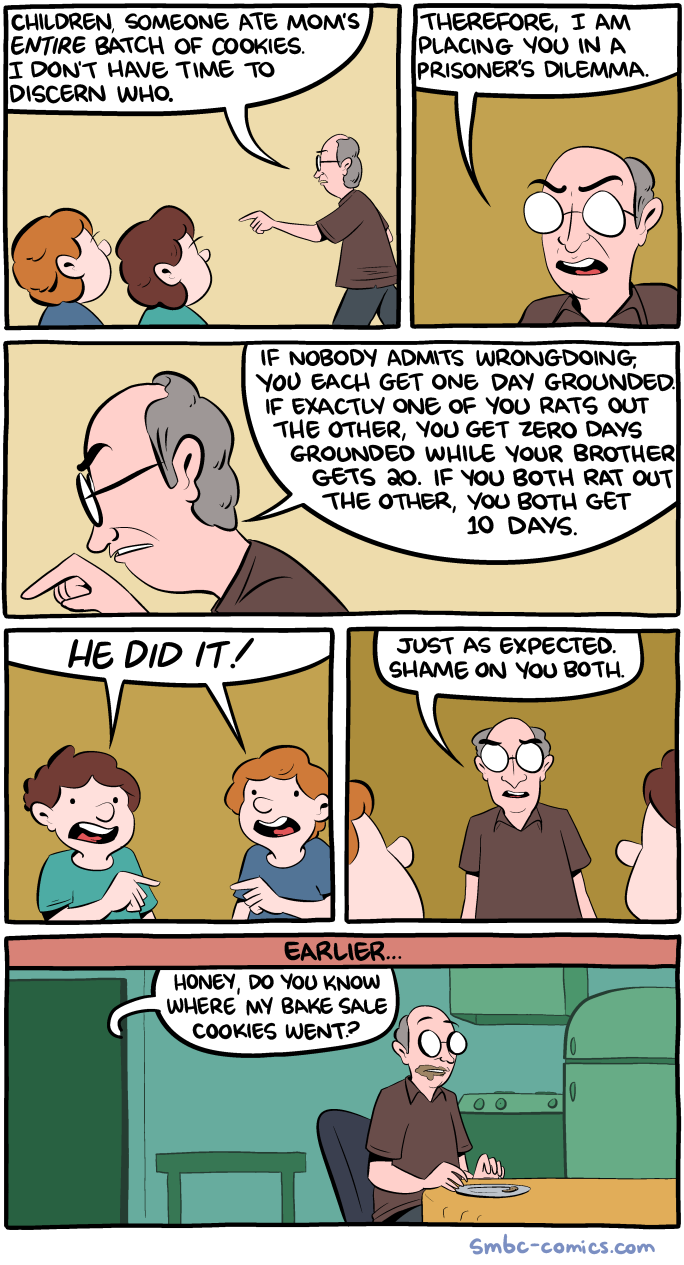
Você é acusado de um crime que não cometeu e está na prisão na espera do processo. Há uma alternativa.

Você pode persistir em se declarar inocente, como de fato você é; neste caso, você será julgado, correndo o risco de perder o processo –e, com ele, o que você mais almeja: sua liberdade.

Ou, então, você pode se declarar culpado, admitindo um crime que não cometeu; neste caso, você será liberado porque o Ministério Público, em troca de sua "confissão", garante que sua pena será igual ao tempo que você já passou na prisão até agora.

Ilustração Contardo Calligaris de 4.ago.2016

Não é um dilema fácil. Talvez eu escolhesse o segundo caminho, injusto, inglório e aparentemente vantajoso, desistindo de proclamar minha inocência para sair da prisão já.

De qualquer forma, admiro quem optar por proclamar sua inocência, por arriscada que seja essa escolha.

Uma tocante reportagem de Chico Felitti na Folha de 30/7, apresenta a história de Neon Cunha, 44, transexual.

Cunha, que se sente menina desde os dois anos e meio de idade, pede hoje a retificação de seu registro civil –ou seja, a mudança do nome de batismo e do gênero. A decisão jurídica é dificultada por duas razões.

Primeiro, Cunha não planeja amputar seu sexo anatômico masculino, que não a incomoda. Isso não constitui um caso raro, mas é uma escolha que pode confundir os magistrados.

Segundo, e mais complexo, Cunha recusa o diagnóstico de "disforia de gênero": ela não quer "passar por um processo de patologização". Ela declara: "Eu não tenho essa disforia, nunca tive. Uma mulher pode nascer com um falo e não se incomodar com isso".

Em tese, o diagnóstico de disforia de gênero é uma condição para a Justiça autorizar a retificação do registro civil. Ou seja, para mudar de identidade, é necessário ser diagnosticado como portador de um transtorno que é a tal "disforia de gênero".

A definição da disforia de gênero (302.85 no DSM V, e F64.1 na Classificação Internacional das Doenças –CID) implica em 1) uma incongruência entre o sexo anatômico do indivíduo e o gênero ao qual ele sente pertencer, 2) angústia e desconforto clinicamente significativos, por causa dessa incongruência.

O DSM V, por exemplo, reconhece que, em grande parte, angústia e desconforto têm sua origem nas dificuldades de viver socialmente quando sexo e gênero discordam. Mas, de qualquer forma, por mais que o sofrimento seja causado pela rejeição social, a "disforia de gênero" está na lista dos transtornos mentais.

Agora, Neon Cunha poderia dizer "tudo bem, estou doente, mudem minha identidade", mas ela quer poder ser quem ela é, com registro de identidade feminino, mas sem o carimbo de um desvio patológico. Ela se recusa a deixar que sua condição seja reconhecida como um transtorno listado no DSM ou na CID.

Neon resiste contra a versão mais opressiva do poder contemporâneo: o biopoder, que, no caso, estabelece normas e molda comportamentos invocando "apenas" a pretensa neutralidade da "ciência".

Ora, "The Lancet Psychiatry" acaba de publicar uma pesquisa de campo, de Rebeca Robles e outros, em que os autores se perguntam "se existem provas para sustentar a classificação da incongruência de gênero como uma condição psiquiátrica". Muito parece indicar "que a aflição e a disfunção que numerosos participantes da pesquisa lembram ter experimentado na sua primeira adolescência eram associadas com suas lembranças de rejeição social e violência naquele período da vida, muito mais do que com fatores diretamente relacionados com a incongruência de gênero".

A conclusão da pesquisa é que as dificuldades dos indivíduos transgêneros deveriam ser excluídas da lista dos transtornos mentais e de comportamento.

Sem isso, os indivíduos transgêneros continuarão sofrendo um duplo estigma: o de ser transgênero e o de ter um diagnóstico de transtorno mental. A conclusão dos autores responde à demanda da maioria dos clínicos, para quem as identidades de gênero dos transgêneros não são psicopatológicas, a não ser pelos efeitos de sua exclusão social.

Seria maravilhoso se os magistrados que examinam o pedido de Neon lessem a pesquisa de Robles e, no mesmo número de "The Lancet Psychiatry", o comentário de Griet De Cuypere e Sam Winter (Hospital Universitário de Gante, Bélgica, e da Universidade Curtin, de Perth, Austrália).

Let's block ads! (Why?)

04 Aug 14:26

Best Seller

by Daniel Lafayette

autoajuda

04 Aug 10:36

Direction

by Doug
04 Aug 00:07

Mentirinhas #1020

by Fábio Coala

mentirinhas_1012:(

O post Mentirinhas #1020 apareceu primeiro em Mentirinhas.

04 Aug 00:04

Binha

by ricardo coimbra
Clique na imagem para aumentar
03 Aug 19:03

The Time Everyone “Corrected” the World’s Smartest Woman

Adam Victor Brandizzi

If I could choose a superpower, it would be an intuition compatible with the Monty Hall problem.

The Time Everyone “Corrected” the World’s Smartest Woman

587,078 views

By all accounts, Marilyn vos Savant was a child prodigy.

Born in St. Louis, Missouri in 1946, the young savant quickly developed an aptitude for math and science. At age 10, she was given two intelligence tests -- the Stanford-Binet, and the Mega Test -- both of which placed her mental capacity at that of a 23-year-old. She went on to be listed in the Guinness Book of World Records for having the “World’s Highest IQ,” and, as a result, gained international fame.

Despite her status as the "world’s smartest woman,” vos Savant maintained that attempts to measure intelligence were “useless,” and she rejected IQ tests as unreliable. In the mid-1980s, with free rein to choose a career path, she packed her bags and moved to New York City to be a writer.

Here, she caught a break: when Parade Magazine wrote a profile on her, readers responded with so many letters that the publication offered her a full-time job. Shortly thereafter, she established “Ask Marilyn,” a now-famous weekly column in which she answered (and continues to answer, to this day) a variety of academic questions and logic puzzles. It was in the body of one of these columns that vos Savant ignited one of the most heated statistical battles of the 21st century.

When vos Savant politely responded to a reader’s inquiry on the Monty Hall Problem, a then-relatively-unknown probability puzzle, she never could’ve imagined what would unfold: though her answer was correct, she received over 10,000 letters, many from noted scholars and Ph.Ds, informing her that she was a hare-brained idiot.

What ensued for vos Savant was a nightmarish journey, rife with name-calling, gender-based assumptions, and academic persecution.

The Monty Hall Problem: A Brief History


Imagine that you’re on a television game show and the host presents you with three closed doors. Behind one of them, sits a sparkling, brand-new Lincoln Continental; behind the other two, are smelly old goats. The host implores you to pick a door, and you select door #1. Then, the host, who is well-aware of what’s going on behind the scenes, opens door #3, revealing one of the goats.

“Now,” he says, turning toward you, “do you want to keep door #1, or do you want to switch to door #2?”

Statistically, which choice gets you the car: keeping your original door, or switching? If you, like most people, posit that your odds are 50-50, you’re wrong -- unless, of course, you like goats as much as you like new cars, in which case you'll win 100% of the time.

Loosely based on the famous television game show Let’s Make a Deal, the scenario presented above, better known as the “Monty Hall Problem,” is a rather famous probability question. Despite its deceptive simplicity, some of the world’s brightest minds -- MIT professors, renowned mathematicians, and MacArthur “Genius” Fellows -- have had trouble grasping its answer. For decades, it has sparked intense debates in classrooms and lecture halls.

Historically, the Monty Hall Problem was predated by several very similar puzzles.

In Joseph Bertrand’s box paradox (1889), three boxes are presented -- one containing two gold coins, one containing two silver coins, and the final containing one of each. Assuming the participant draws one gold coin from a box, the problem then asks what the probability is that the other coin in that box is gold. Bertrand, who concluded that the probability was ⅔, was lauded for his ability to look beyond the obvious.

A second iteration of this paradox, the Three Prisoners Problem (1959), presents a statistically identical scenario, with the same outcome. “[It’s] a wonderfully confusing little problem," its creator, Scientific American columnist Martin Gardner, later wrote, smugly. "In no other branch of mathematics is it so easy for experts to blunder as in probability theory."

First presented in a letter to the editor of The American Statistician in 1975, the Monty Hall Problem was also counterintuitive. In this letter, Steve Selvin, a University of California, Berkeley professor, splayed out the situation in the intro of this article, and contended that switching doors yields a ⅔ chance of winning the car, whereas keeping the original door results in winning only ⅓ of the time. 

Over the next decade or so, the Monty Hall Problem made several appearances, first in a Journal of Economics Perspectives puzzle by Barry Nalebuff, and subsequently in a 1989 issue of Bridge Today, by Phillip Martin. Neither man’s logic was refuted, and the problem generated relatively little attention.

Then, after 15 years without incident, the Monty Hall Problem was resurrected by Marilyn vos Savant -- and an absolute shit-storm ensued.

Marilyn vos Savant’s Debacle

In September 1990, Marilyn vos Savant devoted one of her columns to a reader’s question, which presented a variation of the Monty Hall Problem:

“Suppose you’re on a game show, and you’re given the choice of three doors. Behind one door is a car, behind the others, goats. You pick a door, say #1, and the host, who knows what’s behind the doors, opens another door, say #3, which has a goat. He says to you, "Do you want to pick door #2?" Is it to your advantage to switch your choice of doors?”

“Yes; you should switch,” she replied. “The first door has a 1/3 chance of winning, but the second door has a 2/3 chance.”

Though her answer was correct, a vast swath of academics responded with outrage. In the proceeding months, vos Savant received more than 10,000 letters -- including a pair from the Deputy Director of the Center for Defense Information, and a Research Mathematical Statistician from the National Institutes of Health -- all of which contended that she was entirely incompetent:

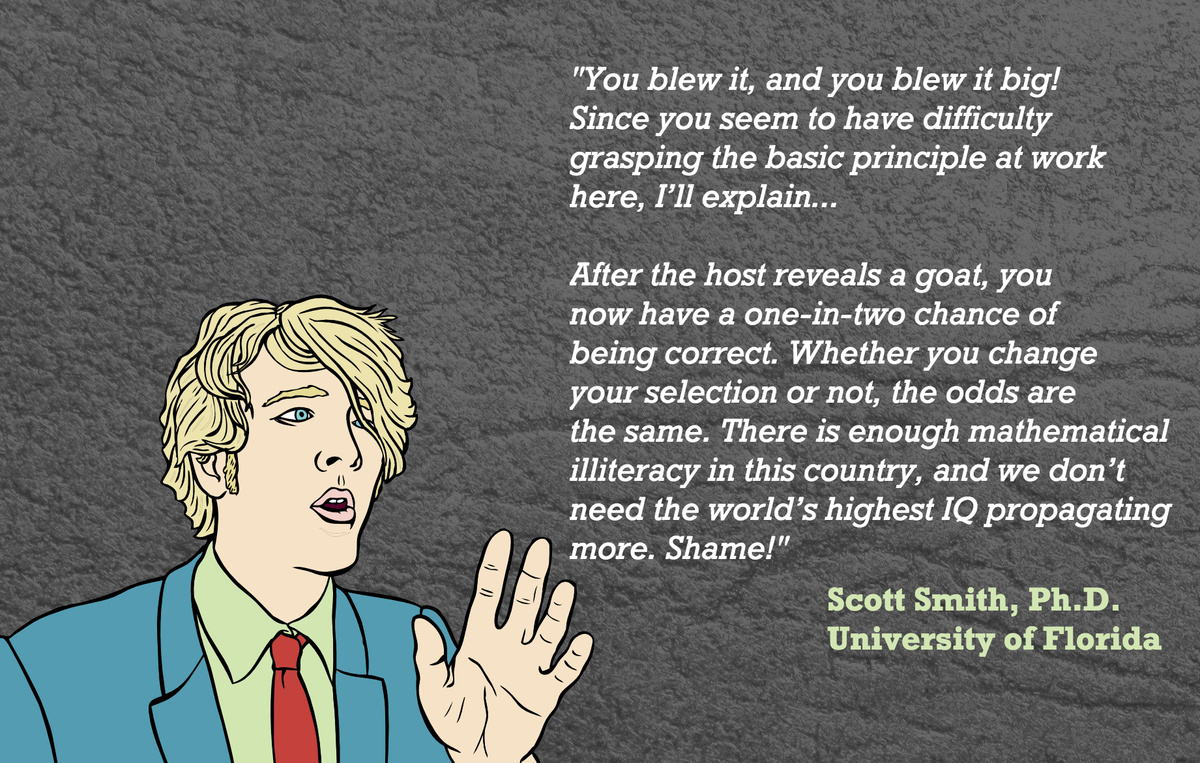
You blew it, and you blew it big! Since you seem to have difficulty grasping the basic principle at work here, I’ll explain. After the host reveals a goat, you now have a one-in-two chance of being correct. Whether you change your selection or not, the odds are the same. There is enough mathematical illiteracy in this country, and we don’t need the world’s highest IQ propagating more. Shame!
Scott Smith, Ph.D.
University of Florida

May I suggest that you obtain and refer to a standard textbook on probability before you try to answer a question of this type again?
Charles Reid, Ph.D.
University of Florida

I am sure you will receive many letters on this topic from high school and college students. Perhaps you should keep a few addresses for help with future columns.
W. Robert Smith, Ph.D.
Georgia State University

You are utterly incorrect about the game show question, and I hope this controversy will call some public attention to the serious national crisis in mathematical education. If you can admit your error, you will have contributed constructively towards the solution of a deplorable situation. How many irate mathematicians are needed to get you to change your mind?
E. Ray Bobo, Ph.D.
Georgetown University

You made a mistake, but look at the positive side. If all those Ph.D.’s were wrong, the country would be in some very serious trouble.
Everett Harman, Ph.D.
U.S. Army Research Institute

You are the goat!
Glenn Calkins
Western State College

Maybe women look at math problems differently than men.
Don Edwards
Sunriver, Oregon

The outcry was so tremendous that vos Savant was forced to devote three subsequent columns to explaining why her logic was correct. Even in the wake of her well-stated, clear responses, she continued to be berated. “I still think you’re wrong,” wrote one man, nearly a year later. “There is such a thing as female logic.”

Yet, the numbers behind vos Savant's conclusion don't lie.

Debunking the Monty Hall Problem

Since two doors (one containing a car, and the other a goat) remain after the host opens door #3, most would assume that the probability of selecting the car is ½. This is not the case.

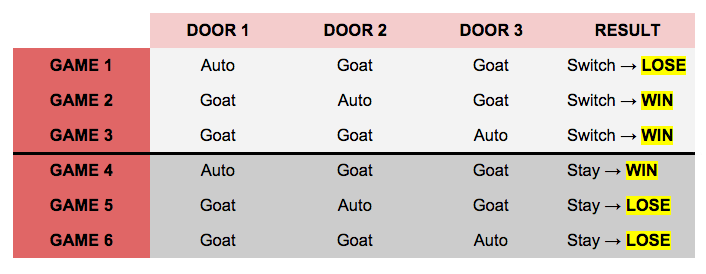
“The winning odds of 1/3 on the first choice can’t go up to 1/2 just because the host opens a losing door,” writes vos Savant. Indeed, if you map out six games exploring all possible outcomes, it becomes clear that switching doors results in winning two-thirds (66.6%) of the time, and keeping your original door results in winning only one-third (33.3%) of the time:

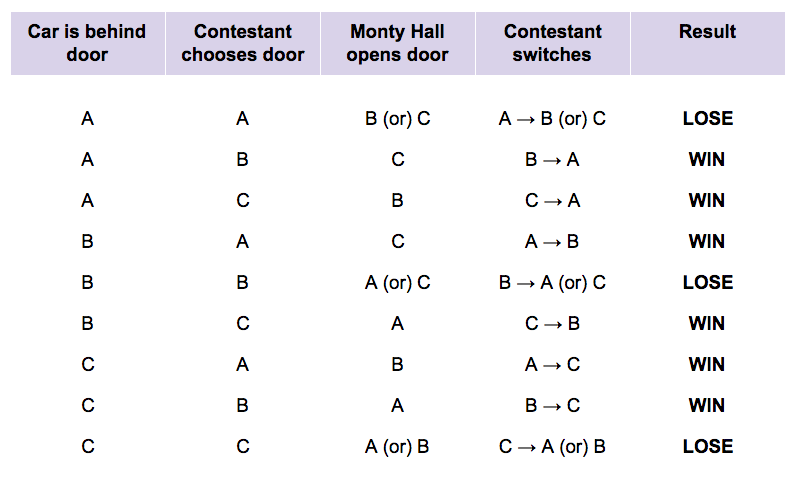
Another way to look at this is to break down every door-switching possibility. As we’ve delineated below, 6 out of the 9 possible scenarios (two-thirds) result in winning the car: 


These results seem to go against our intuitive statistical impulses -- so why does switching doors increase our odds of winning?

The short answer is that your initial odds of winning with door #1 (⅓) don’t change simply because the host reveals a goat behind door #3; instead, Hall’s action increases the odds to ⅔ that you’ll win by switching.

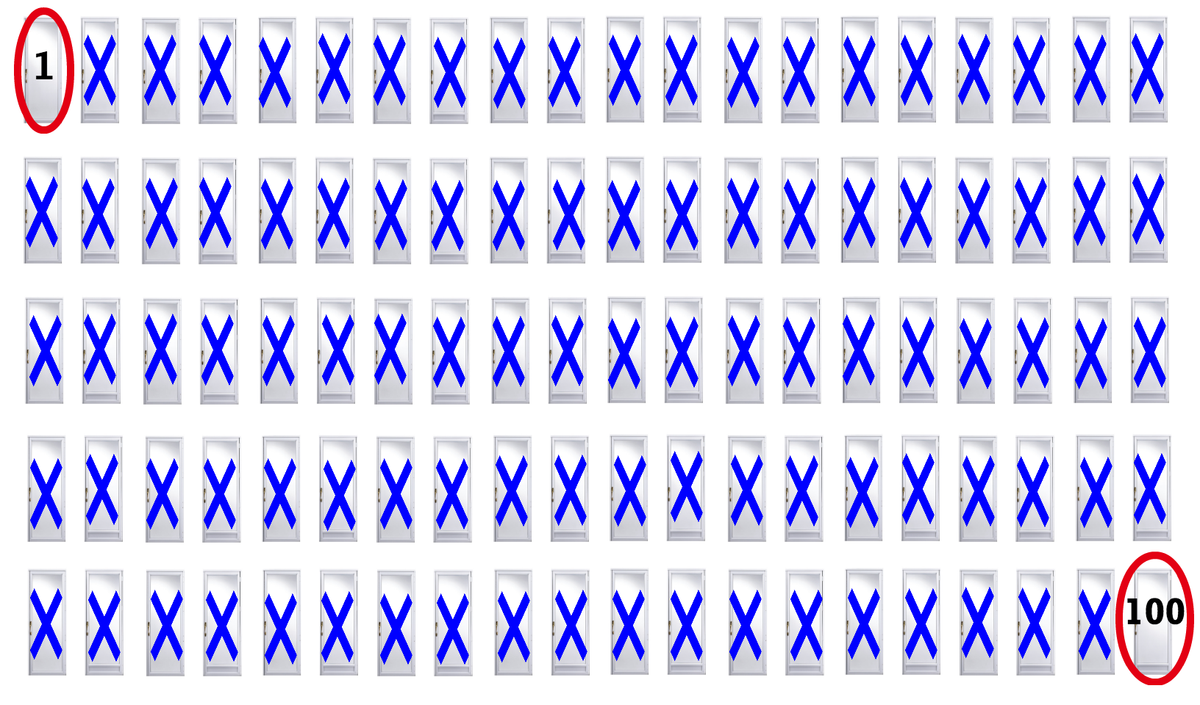
Here’s another way to visualize this. Imagine that instead of three doors, Monty Hall presents you with 100 doors; behind 99 of them are goats, and behind one of them is the car. You select door #1, and your initial odds of winning the car are now 1/100:

Then, let’s suppose that Monty Hall opens 98 of the other doors, revealing a goat behind each one. Now you’re left with two choices: keep door #1, or switch to door #100:

When you select door #1, there is a 99/100 chance that the car is behind one of the other doors. The fact that Monty Hall reveals 98 goats does not change these initial odds -- it merely "shifts" that 99/100 chance to door #100. You can either stick with your original 1/100 odds pick, or switch to door #100, with a much higher probability of winning the car.

Still, while the math and numbers back up vos Savant’s assertion -- that the odds of winning increase to ⅔ when you switch doors -- one must consider other factors she doesn’t address in her answer.

The Psychology of Rationalization

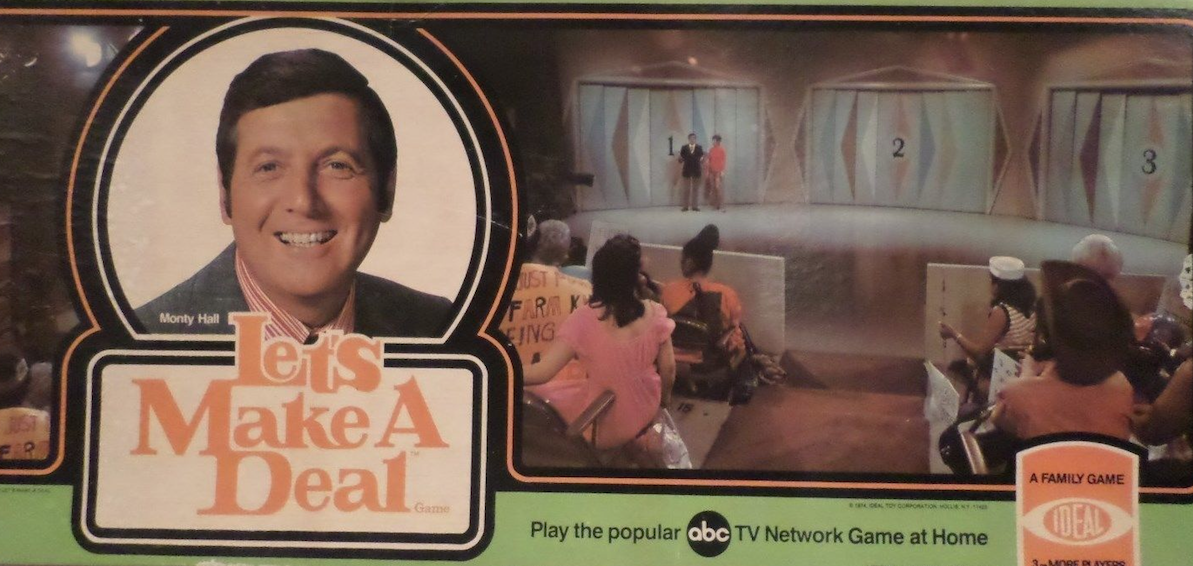
Monty Hall, host of 'Let's Make a Deal'

In 1992, while the controversy over vos Savant’s answer brewed, Monty Hall -- the game show host, and namesake of the problem -- sat down for an interview with the New York Times.

Hall clarified that things worked a bit differently than the scenario presented by the Parade reader in vos Savant’s column. In the real show, for instance, he retained the authority to offer the contestant cash NOT to switch. Details like this, he said, altered the contestant's mindset:

"[After I opened a door with a goat], they'd think the odds on their door had now gone up to 1 in 2, so they hated to give up the door no matter how much money I offered...The higher I got, the more [they] thought the car was behind [the other door]. I wanted to con [them] into switching there. That's the kind of thing I can do when I'm in control of the game. You may think you have probability going for you when you follow the answer in her column, but there's the psychological factor to consider."

The “psychological factor” Hall mentions carries over from the show’s rules to the variation of the problem we’ve presented in this article. For contestants and problem-solvers alike, the Monty Hall Problem causes cognitive dissonance, a term psychologists use to describe the “mental stress experienced by an individual who holds two or more contradictory beliefs, ideas, or values at the same time, or is confronted by new information that conflicts with existing beliefs, ideas, or values.” 

When people are confronted with evidence that is “inconsistent with their beliefs” (ie. the odds of winning by switching doors being ⅔, instead of ½), they first respond by refuting the information, then band together with like-minded dissenters and champion their own hard-set opinion. This is precisely the mentality of vos Savant’s thousands of naysayers.

***


More than 25 years later, arguments over the Monty Hall Problem’s semantics and vos Savant’s response still pervade -- mainly centering around the intricacies of the host’s actions. 

“Our brains are just not wired to do probability problems very well, so I'm not surprised there were mistakes,” Stanford stats professor Persi Diaconis told a reporter, years ago. “[But] the strict argument would be that the question cannot be answered without knowing the motivation of the host."

Eventually though, many of those who’d written in to correct vos Savant’s math backpedaled and ceded that they were in error.

An exercise proposed by vos Savant to better understand the problem was soon integrated in thousands of classrooms across the nation. Computer models were built that corroborated her logic, and support for her intellect was gradually restored. Whereas only 8% of readers had previously believed her logic to be true, this number had risen to 56% by the end of 1992, writes vos Savant; among academics, 35% initial support rose to 71%.

Among the new believers was Robert Sachs, a math professor at George Mason University, who’d originally written a nasty letter to vos Savant, telling her that she “blew it,” and offering to help "explain.” After realizing that he was, in fact, incorrect, he felt compelled to send her another letter -- this time, repenting his self-righteousness.

“After removing my foot from my mouth I'm now eating humble pie,” he wrote. “I vowed as penance to answer all the people who wrote to castigate me. It's been an intense professional embarrassment.”

Priceonomics has written two books. One is for skeptics, the other optimists. Choose your adventure → Everything is Bullshit or Hipster Business Models.

This post was written by Zachary Crockettyou can follow him on Twitter here.

To get occasional notifications when we write blog posts, please sign up for our email list.


Published Feb 19, 2015


Let's block ads! (Why?)

03 Aug 16:48

Impromptu

by Greg Ross
https://commons.wikimedia.org/wiki/File:REMEMBERING_BRENDAN_BEHAN_(PUBLIC_ART_BESIDE_LOCK_2_ON_THE_ROYAL_CANAL)--111891_(24746426639).jpg
Image: Wikimedia Commons

Poet Brendan Behan began his career as a housepainter. While in Paris, he was asked to paint a sign on the window of a café to attract English-speaking tourists. He painted:

Come in, you Anglo-Saxon swine
And drink of my Algerian wine.
‘Twill turn your eyeballs black and blue
And damn well good enough for you.

“At least I got paid for it,” he said later. “But I ran out of the place before the patron could get my handiwork translated.”

(From his wife Beatrice’s My Life With Brendan, 1973.)

03 Aug 16:47

Planning To Have Kids

by Brian
03 Aug 16:45

Viva Intensamente # 270

by Will Tirando
03 Aug 14:50

How the Silent Episode 'BoJack Horseman' Got Made – How 'BoJack Horseman' Created the Boldest Cartoon Episode in Decades

by brandizzi
Adam Victor Brandizzi

Este episódio foi uma das melhores coisas que já assisti.

The show's creator, writers, and designer reveal how they created a new world for the third season's nearly silent episode.

Most Popular
Netflix
Created with Sketch.

BoJack Horseman is no stranger to strangeness—that's practically the entire point of the bleak Netflix comedy, which focuses on an anthropomorphic celebrity horse voiced by Will Arnett dealing with depression and life in Los Angeles. BoJack has done several off-format episodes in its first two seasons, including an extended drug trip, a disastrous walkabout trip to New Mexico, and a time-bending look at three different groups leaving a party. But "Fish Out of Water," the fourth episode of the show's third season, which landed on Netflix last Friday, is perhaps its oddest yet: It's mostly silent.

Advertisement - Continue Reading Below

"Fish Out of Water" finds BoJack being sent to the Pacific Ocean Film Fest to promote Secretariat, the biopic he filmed over the course of the second season (and his longtime dream project). In the underwater city where the festival takes place, BoJack has two primary encounters. First, he sees director Kelsey Jannings (usually voiced by Maria Bamford), who he abandoned when she was fired from Secretariat, and tries to find the right words to apologize to her. Then, after being swept onto a bus by a pack of sardines, he finds himself alone with a baby seahorse and spends much of the episode trying to return it to its father (who works in a saltwater taffy factory far outside the city).

GIF
Netflix
Most Popular

Much of BoJack's formal restlessness comes from creator and showrunner Raphael Bob-Waksberg, who had decided he was interested in doing a silent episode while working on the show's second season. "At first, it was really hard to figure out how to justify it," he says, recoiling at the thought of a gimmicky episode where BoJack just doesn't talk for no reason, or even worse–uses title cards. "I didn't want to do something that was just silent for the sake of being silent,"

Luckily for the BoJack team, the silent episode problem dovetailed with separate conversations about doing an underwater episode initiated by supervising director Mike Hollingsworth, who had been pushing to explore that part of the show's world since the beginning of the series. "One night, in the middle of the night I woke up and shouted, 'Eureka! These questions answer each other!'" Bob-Waksberg recalls. "And everyone in the writer's room was like, 'Of course, did you not get that?'"

There is a long tradition of animated silent comedy.

It's not like this was a totally new story-telling approach: There is a long tradition of animated silent comedy—Bob Waksberg points to, among others, Wile E. Coyote, Wall-E, and Shaun the Sheep. But his most recent televised examples of dialogue-free episodes are not only live action, they're also a little older: Buffy the Vampire Slayer's "Hush" and Two Guys, a Girl and a Pizza Place's "The One Without Dialogue," which aired in 1999 and 2000, respectively. There's a reason for that: The challenges of doing a silent episode are substantial.

[embedded content]

To start, there's the basic problem of writing to convey information without dialogue—and the format change meant that the show couldn't rely on the considerable voice acting talents of its cast, including Will Arnett, Aaron Paul, Alison Brie, and Amy Sedaris. Even the procedures for making the show had to change—BoJack is usually dialogue-heavy and produced based on scripts, but production for "Fish Out of Water" had to develop from storyboards instead, reversing the process.

GIF
Netflix
Advertisement - Continue Reading Below

This was less of a problem for credited writers Jordan Young and Elijah Aron, who each started their careers in animation (as an animator and development executive at Disney, respectively–both also worked on Comedy Central's reality TV spoof Drawn Together). "Coming from animation, we both have a very visual style of writing, so when it was time to write this stuff out, we were very specific about what we wanted," Young says. "We probably overwrote it because we saw it."

BoJack may be a lonely character, but he's rarely by himself.

Most Popular

Young and Aron were tasked with handling most of the plot difficulties, but many of these wound up being assets. The Kelsey story (and, more broadly, the entire Lost in Translation vibe of the episode, pushed by Bob-Waksberg) relies heavily on BoJack's contingent solitude. "If he could talk, he would have pawned that burden off as quickly as possible," Young notes. Aron adds that it would be almost impossible to figure out how to get BoJack by himself above sea level, a state "that's not easy for a celebrity." BoJack may be a lonely character, but he's rarely by himself.

GIF
Netflix

And beyond the dialogue-free conceit, "Fish Out of Water" opens up the underwater part of BoJack's world. Figuring out how this new culture would look fell to production designer Lisa Hanawalt. Hanawalt, who is in charge of the show's backgrounds, designs, and overall look (and is also a successful and talented cartoonist in her own right), found that moving the show to its temporary underwater home presented its own difficulties: "If you just lay blue on top of everything, it just makes everything look like mud," she explains. Even something as simple as adding bubbles to the backgrounds added up, in what she estimates was three to four times as much work as a normal episode.

While the BoJack animators can usually rely on the established backgrounds of BoJack's house, his restaurant, or Princess Carolyn's office, "Fish Out of Water" also required all new settings and background design. In the same way an episode of Friends becomes vastly more expensive if it films outside the standing sets of Central Perk or one of the apartments, animated series also need to create new settings—from scratch.

Netflix

That's part of why the look of the episode is so simple, but the underwater city is still a specific locale that feels like it has a thriving culture—even if BoJack never puts in the effort to understand it. The show's designers created a new, slightly unsettling font for the underwater signs, the city has its own currency, and the walls and TV stations and convenience stores are littered with ads that strongly evoke a loud, Japanese or Korean sensibility. (BoJack's frenemy Mr. Peanutbutter appears in several of these ads for seahorse milk, though he has no connection to seahorse culture.) Hanawalt and the writers freely admit the influence, though Bob-Waksberg is a bit more cautious about treating it as a one-to-one comparison. Citing the Bill Murray-starring Sofia Coppola film, he takes pains to avoid the suggestion that there is anything "weird" about this new culture. Instead, he says, "BoJack is the ugliest American there is."

"BoJack is the ugliest American there is."

Advertisement - Continue Reading Below

For Hanawalt, "Fish Out of Water" wasn't ugly at all. "It was a chance to really go nuts putting every underwater creature I love in the background," she says with evident joy. "I was like, 'We need a rainbow parrot fish.'" There were five different designs for the sardines that sweep BoJack away, randomized to prevent the appearance of too much sameness. In one particularly memorable moment, BoJack and the baby seahorse stumble onto a large collection of eyes, which turn out to belong to a giant scallop slurping a soda. (Hanawalt took some liberty with the design of the scallop, but it was the only creature she could find that had the right number of eyes for the gag.)

GIF
Netflix

But her favorite design for the episode is, of course, the adorable baby seahorse. All of the baby seahorses in the episode are designed to look like "alien babies," but this one in particular was lavished with attention. "[Raphael] specifically wanted it to be a naked one, so you see his little penis," she says, laughing. "It doesn't have to be grotesque—it's just nature." Hanawalt also points out the design is reminiscent of Harper, the fictional baby BoJack envisions for himself while on an extended drug trip in the show's first season.

This subtle connection goes a long way toward helping unpack the episode's highlight, a scene where BoJack and the baby seahorse bounce from sea anemone to anemone, activating natural bioluminescence and haunting, solitary notes in the process. Everyone involved in "Fish Out of Water" expresses awe at the way this scene turned out while downplaying their own contributions. Aron and Young took pains to specify the rough timing of the bounces and how the light would happen, while Bob-Waksberg highlights the contributions of Jesse Novak, the show's composer. "He's just as comfortable writing a goofy sitcom piece for Horsin' Around as he is writing these really subtle, almost unnoticeable heartbreaking stings for our emotional scenes. And in this episode, he really enjoyed diving in and letting the music tell the story."

GIF
Netflix

Bob-Waksberg's idea of committing to the story is part of why, though the ensuing sequence in the taffy factory contains an obvious homage to Charlie Chaplin's classic Modern Times (and there are several echoes of moments from movies like Willy Wonka and the Chocolate Factory and North by Northwest), there's no shot of BoJack stuck in gears. "One thing I'm proud of on the show is that we tend not to do direct references and parodies so often," he says. "There are other shows that do that really well, but we like our world to feel like our world. Even when the truth is a horse wearing a helmet underwater trying to save a baby seahorse from getting crushed to death in a freshwater taffy factory, we want you to believe in the integrity of that moment."

That "Fish Out of Water" manages to consistently nod to classic film without distractingly calling attention to it might help explain why the episode has received such thunderous critical praise. Though the BoJack crew doesn't anticipate doing another silent episode, they're (of course) pleased by the reception. Aron puts it in the simplest terms possible: "It's kind of nice to have an episode where you're forced to just stop and really focus on the show," to which Young replies, "That's frustrating, because I love to text while watching TV."

Most Popular

But the effect of having pulled off the silent episode seems even stronger for the crew. When asked about the anemone sequence, Hanawalt becomes verklempt: "It looked exactly as I first imagined it. The greatest satisfaction as an artist, and something I've wanted since I was a little kid, is to picture something in my head and then be able to execute it. It's exactly what I was thinking, I don't know how else to say it."

'BoJack' Is the Most Hilarious and Sad Show on TV
Read Next:

Let's block ads! (Why?)

03 Aug 14:49

How to Confound your Alien Captor

by Scott Meyer

I’m not nearly as into hot wings as I used to be. Really, they were more of a social thing than anything else. Ric and I would eat hot wings at a place called the Wing Dome, which is in Seattle, and is built in an old Vespa garage. Then we’d go to one of our places and watch some obscure sci-fi movie, like ZARDOZ or Colossus: The Forbin Project.

Hmm. We’d eat painful food, served in a loud, cold, drafty environment, then watch movies we knew to be bad. It’s entirely possible that Ric and I are masochists.

That would explain our friendship, given that he spent a decade enduring my public ridicule, and that I never, in that entire decade, ran out of material.


You can comment on this comic on Facebook.

As always, thanks for using my Amazon Affiliate links (USUKCanada).

03 Aug 14:15

Like a springboard.image / twitter / facebook / patreon


Like a springboard.

image / twitter / facebook / patreon

03 Aug 14:15

Photo


02 Aug 22:17

When the world crumbles

by boulet
02 Aug 20:58

Know Your Wolves

by Doug

Know Your Wolves

Nature is fascinating.

02 Aug 20:58

Trump

by maryw1


Tem uma coisa que eu ando pensando e anda me incomodando. Que é o fato de que as pessoas estão me soando contraditórias. Pode ser que eu também esteja. Pode ser pior. Pode ser que eu esteja sendo meio blasé nas minhas conversas. O que eu não quero de jeito nenhum.

Enfim. Hoje circulou um cartaz dizendo que “professor não é educador”. E o pessoal de esquerda chiou. E não tiro a razão porque obviamente o cartaz é parte dessa patética (porém perigosa) campanha de escola sem partido. Nem vou falar disso. Porque uma coisa óbvia nesses debates é que quem os conduz não sabe mais o que é uma escola nem uma universidade brasileira. E muita gente legal tem tentado explicar a multiplicidade do sistema. Mas enfim. O cartaz era pra isso aí. Queria dizer que os filhos da pátria não devem ser educados mas professorados. Sei lá o que significa.

O caso é que uma das grandes dúvidas que eu tive na vida foi a respeito disso. Eu cresci temperando meu toddynho com “hey, teacher, leave the kids alone”. E Bourdieu estava muito, muito na moda quando eu me graduei. E eu ensino meus alunos que a escola não liberta, ela reproduz as desigualdades. Claro que também dou a visão durkheiminiana de educação. Porque eu não sei o que as pessoas acham que se passa numa aula de sociologia. Mas a gente dá todo mundo. Bourdieu, entretanto, é um autor mais atual e várias análises contemporâneas acabam usando os seus conceitos. Ele é um autor importante. Não sei o que seria do Bourdieu na escola sem partido. Dá, não dá, corta uns pedaços? Mas eu tenho isso aí. De detestar o meu papel na sala de aula a priori. E discuti-lo com os alunos o tempo inteiro. Tenho PAVOR de me pensar como educadora. Quem me acha educadora é uma madame tomando chá. A Emilly Gilmore. “Você precisa dar exemplo para essa garotada, Mary W., você não é apenas uma professora”. Enfim. Esse papo educadora me remete ao conservadorismo.

Por que? Porque seria o pensamento quase “intuitivo”.  Professor=educador. E me parece que isso foi um pouco desmontado já. E aí eu chego no ponto do post. Nós, de esquerda, trabalhamos muito esse “contra-intuitivo”. Pegamos os saberes estabelecidos e desmontamos. Nossas ideias, muitas vezes, precisam de elaboração justamente por isso. Então, ficamos viciados no desmonte. E hoje estamos num momento, me parece, de tanto desmonte, que as ideias podem se transformar em qualquer coisa. Sem qualquer risco. Porque desmontamos também qualquer autoridade sobre cada ideia. Outro dia entrei num “debate”. Sobre uma charge da Graça Foster. A charge era uma paródia das imagens de protestos feministas. Trocaram o “eu não mereço ser estuprada” do movimento por “eu não mereço ser investigada”. Na charge a Foster estava nua e o rosto dela mostrava uma mulher idosa. Quem postou a charge, gostou. E disse que não achava machista. Bem, eu expliquei que era machista e dei várias razões. A pessoa continuou dizendo que não era. Eu expliquei de novo. A pessoa disse que discordávamos e que o meu feminismo não era o dela. Veja que equívoco. Ela achou que estava num debate comigo. E não estava. Eu estava EXPLICANDO para ela. Que maravilha o mundo conectado. Você está ali, falando uma groselha, encontra uma especialista no assunto e tem uma aula grátis. Mas ela não viu assim. Ela considera até que venceu o debate, vai ver. E aí a gente fica olhando, né? Porque quão antipático pode ser isso que eu falei de aula grátis etc.? É muito. E aí temos que aceitar os termos. Porque nós criamos os termos. Então meus 20 anos de pesquisa e ensino não podem ser usados. E eu não usei. Mas no dia seguinte quero ser educadora? É esquisito. E esse desmonte serve à direita, à esquerda, ao anarquismo. Pega quem quer. Qual parte do argumento?, você pode perguntar. Qualquer uma. Cada um pega um pedaço qualquer.

Digo isso mais pelo Trump mesmo. Porque eu tenho lido umas entrevistas esquerdinhas que simplesmente não conseguem se opor ao Trump. Porque foram pegos no desmonte e encurralados por ele. Daí colocam o Trump como um outsider. Listam como qualidade ele negociar com Putin (!?!). E não podem teoricamente combatê-lo. Porque desmontaram o sistema político norte-americano. Espertos que são, descobriram que os democratas também tem como plataforma a hegemonia dos EUA. E aí está comum ler debates sobre prós e contras do Trump. Tão se acostumando ao Trump. Ele não tem causado mais horror. Vai ficar cada vez mais comum na paisagem. (vale falar das análises brasileiras. que criou o padrão eleição de 2014. todas as análises brasileiras, sobre qualquer coisa, são assim agora. alguém é a dilma. alguém é o aécio. alguém é a marina. golpe turco, eleição americana, strangers things. tudo pode ser explicado pelo elo perdido que é 2014. vi até matéria dizendo que a marina é a hillary. claro que temos também matérias que nos explicam que nem tudo é 2014. anyway, continuamos falando de 2014).

Pra terminar. Eu queria dizer que acho que a direita tem apelos próprios. Não é tudo culpa da esquerda. E que acho que continuar pensando dentro desses parâmetros pode ser um erro. Mas eu não consigo evitar. E que eu acho que a esquerda não está acuada. O grande derrotado me parece ser o centro mesmo. Mas muita gente já acha isso. Talvez a diferença é que eu não acho que tudo está apenas polarizado. Eu acho que o centro está acuado. E que pode reagir. Pensei isso porque minha Amiga Gata (dscp) me perguntou se podíamos perder as esperanças, hoje de tarde. Falei que podíamos. Aí depois pensei que acho que há uma legião silenciosa e quieta. E que se ela reagir, podemos ter um pouco de esperança.
Uso desmonte e não desconstruçao por motivos óbvios. Há uma evidente vulgarizacão da desconstrução como método etc.

PS: achei a charge. postei depois por isso a redundância da explicacão.


02 Aug 20:50

Vacas marcianas

by Will Tirando

JOVENS-E-IDIOTICES-NA-INTERNET

02 Aug 09:08

Rich and poor teenagers use the web differently – here's what this is doing to inequality | World Economic Forum

by brandizzi

In many countries, young people from wealthy and poor backgrounds spend roughly the same amount of time online. But it’s how they’re using the internet, not how long they’re using it that really matters.

This is according to new research from the OECD, which found that richer teenagers were more likely to use the internet to search for information or to read news rather than to chat or play video games.

Image: OECD

The report, based on data from more than 40 countries, concludes that even when all teenagers, rich and poor, have equal access to the internet, a “digital divide” remains in how they use technology.

In 2012, disadvantaged students spent at least as much time online as their wealthier peers, on average across OECD countries. And in 21 out of 42 countries and economies, they spent more time on the internet.

In five Nordic countries, as well as in Hong Kong, the Netherlands and Switzerland, more than 98% of disadvantaged young people have internet access at home.

By contrast, in some low- and middle-income countries the most disadvantaged teenagers are only able to get online at school, if at all. This applies to 50% of students in Turkey, 45% in Mexico, 40% in Jordan and 38% in Chile and Costa Rica.

But in all countries, what students do with computers, from using e-mail to reading news, is directly linked to their “socio-economic status” with inequality continuing, even in countries where all young people have easy access to the internet.

“Equal access does imply equal opportunities,” says the report, which goes on to point out that while anyone can use the internet to learn about the world, improve their skills or apply for a well-paid job, disadvantaged students are less likely to be aware of the opportunities that digital technology offers.

“They may not have the knowledge or skills required to turn online opportunities into real opportunities,” the report says.

The data for the study was gathered as part of the OECD’s Programme for International Student Assessment (PISA), a worldwide study of 15-year-old students’ performance in mathematics, science and reading.

PISA results show that socio-economic differences in how young people use the internet are strongly related to their academic performance.

While the report acknowledges efforts to close gaps in internet access, it argues that developing all young people’s literacy skills would help to reduce digital inequality.

"Ensuring that every child attains a baseline level of proficiency in reading will do more to create equal opportunities in a digital world than will expanding or subsidising access to high-tech devices and services," it says.

Share

Written by

Rosamond Hutt, Senior Producer, Formative Content

The views expressed in this article are those of the author alone and not the World Economic Forum.

Let's block ads! (Why?)

02 Aug 01:52

Diagnosis

by itsthetie

james bond

bonus

02 Aug 01:43

Volcano Types

It's hard living somewhere with antlions, because every time you find one of their traps, you feel compelled to spend all day constructing a tiny model of Jabba's sail barge next to it.
02 Aug 01:41

Just One Bite

by Brian

just one bite

Bonus Panel

The post Just One Bite appeared first on Fowl Language Comics.

02 Aug 01:38

Too Late

by Greg Ross

https://commons.wikimedia.org/wiki/File:Geoffrey_Chaucer_-_Illustration_from_Cassell%27s_History_of_England_-_Century_Edition_-_published_circa_1902.jpg

For 500 years it was thought that Geoffrey Chaucer had written The Testament of Love, a medieval dialogue between a prisoner and a lady.

But in the late 1800s, British philologists Walter Skeat and Henry Bradshaw discovered that the initial letters of the poem’s sections form an acrostic, spelling “MARGARET OF VIRTU HAVE MERCI ON THINUSK” [“thine Usk”].

It’s now thought that the poem’s true author was Thomas Usk, a contemporary of Chaucer who was accused of conspiring against the duke of Gloucester. Apparently he had written the Testament in prison in an attempt to seek aid — Margaret may have been Margaret Berkeley, wife of Thomas Berkeley, a literary patron of the time.

If it’s aid that Usk was seeking, he never found it: He was hanged at Tyburn in March 1388.

31 Jul 20:33

The Ideology Is Not The Movement | Slate Star Codex

by brandizzi

I.

Why is there such a strong Sunni/Shia divide?

I know the Comparative Religion 101 answer. The early Muslims were debating who was the rightful caliph. Some of them said Abu Bakr, others said Ali, and the dispute has been going on ever since. On the other hand, that was fourteen hundred years ago, both candidates are long dead, and there’s no more caliphate. You’d think maybe they’d let the matter rest.

Sure, the two groups have slightly different hadith and schools of jurisprudence, but how many Muslims even know which school of jurisprudence they’re supposed to be following? It seems like a pretty minor thing to have centuries of animus over.

And so we return again to Robbers’ Cave:

The experimental subjects — excuse me, “campers” — were 22 boys between 5th and 6th grade, selected from 22 different schools in Oklahoma City, of stable middle-class Protestant families, doing well in school, median IQ 112. They were as well-adjusted and as similar to each other as the researchers could manage.

The experiment, conducted in the bewildered aftermath of World War II, was meant to investigate the causes—and possible remedies—of intergroup conflict. How would they spark an intergroup conflict to investigate? Well, the 22 boys were divided into two groups of 11 campers, and —

— and that turned out to be quite sufficient.

The researchers’ original plans called for the experiment to be conducted in three stages. In Stage 1, each group of campers would settle in, unaware of the other group’s existence. Toward the end of Stage 1, the groups would gradually be made aware of each other. In Stage 2, a set of contests and prize competitions would set the two groups at odds.

They needn’t have bothered with Stage 2. There was hostility almost from the moment each group became aware of the other group’s existence: They were using our campground, our baseball diamond. On their first meeting, the two groups began hurling insults. They named themselves the Rattlers and the Eagles (they hadn’t needed names when they were the only group on the campground).

When the contests and prizes were announced, in accordance with pre-established experimental procedure, the intergroup rivalry rose to a fever pitch. Good sportsmanship in the contests was evident for the first two days but rapidly disintegrated.

The Eagles stole the Rattlers’ flag and burned it. Rattlers raided the Eagles’ cabin and stole the blue jeans of the group leader, which they painted orange and carried as a flag the next day, inscribed with the legend “The Last of the Eagles”. The Eagles launched a retaliatory raid on the Rattlers, turning over beds, scattering dirt. Then they returned to their cabin where they entrenched and prepared weapons (socks filled with rocks) in case of a return raid. After the Eagles won the last contest planned for Stage 2, the Rattlers raided their cabin and stole the prizes. This developed into a fistfight that the staff had to shut down for fear of injury. The Eagles, retelling the tale among themselves, turned the whole affair into a magnificent victory—they’d chased the Rattlers “over halfway back to their cabin” (they hadn’t).

Each group developed a negative stereotype of Them and a contrasting positive stereotype of Us. The Rattlers swore heavily. The Eagles, after winning one game, concluded that the Eagles had won because of their prayers and the Rattlers had lost because they used cuss-words all the time. The Eagles decided to stop using cuss-words themselves. They also concluded that since the Rattlers swore all the time, it would be wiser not to talk to them. The Eagles developed an image of themselves as proper-and-moral; the Rattlers developed an image of themselves as rough-and-tough.

If the researchers had decided that the real difference between the two groups was that the Eagles were adherents of Eagleism, which held cussing as absolutely taboo, and the Rattlers adherents of Rattlerism, which held it a holy duty to cuss five times a day – well, that strikes me as the best equivalent to saying that Sunni and Shia differ over the rightful caliph.

II.

Nations, religions, cults, gangs, subcultures, fraternal societies, internet communities, political parties, social movements – these are all really different, but they also have some deep similarities. They’re all groups of people. They all combine comradery within the group with a tendency to dislike other groups of the same type. They all tend to have a stated purpose, like electing a candidate or worshipping a deity, but also serve a very important role as impromptu social clubs whose members mostly interact with one another instead of outsiders. They all develop an internal culture such that members of the groups often like the same foods, wear the same clothing, play the same sports, and have the same philosophical beliefs as other members of the group – even when there are only tenuous links or no links at all to the stated purpose. They all tend to develop sort of legendary histories, where they celebrate and exaggerate the deeds of the groups’ founders and past champions. And they all tend to inspire something like patriotism, where people are proud of their group membership and express that pride through conspicuous use of group symbols, group songs, et cetera. For better or worse, the standard way to refer to this category of thing is “tribe”.

Tribalism is potentially present in all groups, but levels differ a lot even in groups of nominally the same type. Modern Belgium seems like an unusually non-tribal nation; Imperial Japan in World War II seems like an unusually tribal one. Neoliberalism and market socialism seem like unusually non-tribal political philosophies; communism and libertarianism seem like unusually tribal ones. Corporations with names like Amalgamated Products Co probably aren’t very tribal; charismatic corporations like Apple that become identities for their employees and customers are more so. Cults are maybe the most tribal groups that exist in the modern world, and those Cult Screening Tools make good measures for tribalism as well.

The dangers of tribalism are obvious; for example, fascism is based around dialing a country’s tribalism up to eleven, and it ends poorly. If I had written this essay five years ago, it would be be titled “Why Tribalism Is Stupid And Needs To Be Destroyed”. Since then, I’ve changed my mind. I’ve found that I enjoy being in tribes as much as anyone else.

Part of this was resolving a major social fallacy I’d had throughout high school and college, which was that the correct way to make friends was to pick the five most interesting people I knew and try to befriend them. This almost never worked and I thought it meant I had terrible social skills. Then I looked at what everyone else was doing, and I found that instead of isolated surgical strikes of friendship, they were forming groups. The band people. The mock trial people. The football team people. The Three Popular Girls Who Went Everywhere Together. Once I tried “falling in with” a group, friendship became much easier and self-sustaining precisely because of all of the tribal development that happens when a group of similar people all know each other and have a shared interest. Since then I’ve had good luck finding tribes I like and that accept me – the rationalists being the most obvious example, but even interacting with my coworkers on the same hospital unit at work is better than trying to find and cultivate random people.

Some benefits of tribalism are easy to explain. Tribalism intensifies all positive and prosocial feelings within the tribe. It increases trust within the tribe and allows otherwise-impossible forms of cooperation – remember Haidt on the Jewish diamond merchants outcompeting their rivals because their mutual Judaism gave them a series of high-trust connections that saved them costly verification procedures? It gives people a support network they can rely on when their luck is bad and they need help. It lets you “be yourself” without worrying that this will be incomprehensible or offensive to somebody who thinks totally differently from you. It creates an instant densely-connected social network of people who mostly get along with one another. It makes people feel like part of something larger than themselves, which makes them happy and can (provably) improves their physical and mental health.

Others are more complicated. I can just make motions at a feeling that “what I do matters”, in the sense that I will probably never be a Beethoven or a Napoleon who is very important to the history of the world as a whole, but I can do things that are important within the context of a certain group of people. All of this is really good for my happiness and mental health. When people talk about how modern society is “atomized” or “lacks community” or “doesn’t have meaning”, I think they’re talking about a lack of tribalism, which leaves people all alone in the face of a society much too big to understand or affect. The evolutionary psychology angle here is too obvious to even be worth stating.

And others are entirely philosophical. I think some people would say that wanting to have a tribe is like wanting to have a family – part of what it means to be human – and demands to justify either are equally wrong-headed.

Eliezer thinks every cause wants to be a cult. I would phrase this more neutrally as “every cause wants to be a tribe”. I’ve seen a lot of activities go through the following cycle:

1. Let’s get together to do X
2. Let’s get together to do X, and have drinks afterwards
3. Let’s get together to discuss things from an X-informed perspective
4. Let’s get together to discuss the sorts of things that interest people who do X
5. Let’s get together to discuss how the sort of people who do X are much better than the sort of people who do Y.
6. Dating site for the sort of people who do X
7. Oh god, it was so annoying, she spent the whole date talking about X.
8. X? What X?

This can happen over anything or nothing at all. Despite the artificial nature of the Robbers’ Cove experiment, its groups are easily recognized as tribes. Indeed, the reason this experiment is so interesting is that it shows tribes in their purest form; no veneer of really being about pushing a social change or supporting a caliph, just tribes for tribalism’s sake.

III.

Scholars call the process of creating a new tribe “ethnogenesis” – Robbers’ Cave was artificially inducing ethnogenesis to see what would happen. My model of ethnogenesis involves four stages: pre-existing differences, a rallying flag, development, and dissolution.

Pre-existing differences are the raw materials out of which tribes are made. A good tribe combines people who have similar interests and styles of interaction even before the ethnogenesis event. Any description of these differences will necessarily involve stereotypes, but a lot of them should be hard to argue. For example, atheists are often pretty similar to one another even before they deconvert from their religion and officially become atheists. They’re usually nerdy, skeptical, rational, not very big on community or togetherness, sarcastic, well-educated. At the risk of going into touchier territory, they’re pretty often white and male. You take a sample of a hundred equally religious churchgoers and pick out the ones who are most like the sort of people who are atheists even if all of them are 100% believers. But there’s also something more than that. There are subtle habits of thought, not yet described by any word or sentence, which atheists are more likely to have than other people. It’s part of the reason why atheists need atheism as a rallying flag instead of just starting the Skeptical Nerdy Male Club.

The rallying flag is the explicit purpose of the tribe. It’s usually a belief, event, or activity that get people with that specific pre-existing difference together and excited. Often it brings previously latent differences into sharp relief. People meet around the rallying flag, encounter each other, and say “You seem like a kindred soul!” or “I thought I was the only one!” Usually it suggests some course of action, which provides the tribe with a purpose. For atheists, the rallying flag is not believing in God. Somebody says “Hey, I don’t believe in God, if you also don’t believe in God come over here and we’ll hang out together and talk about how much religious people suck.” All the atheists go over by the rallying flag and get very excited about meeting each other. It starts with “Wow, you hate church too?”, moves on to “Really, you also like science fiction?”, and ends up at “Wow, you have the same undefinable habits of thought that I do!”

Development is all of the processes by which the fledgling tribe gains its own culture and history. It’s a turning-inward and strengthening-of-walls, which transforms it from ‘A Group Of People Who Do Not Believe In God And Happen To Be In The Same Place’ to ‘The Atheist Tribe’. For example, atheists have symbols like that ‘A’ inside an atom. They have jokes and mascots like Russell’s Teapot and the Invisible Pink Unicorn. They have their own set of heroes, both mythologized past heroes like Galileo and controversial-but-undeniably-important modern heroes like Richard Dawkins and Daniel Dennett. They have celebrities like P.Z. Myers and Hemant Mehta. They have universally-agreed-upon villains to be booed and hated, like televangelists or the Westboro Baptist Church. They have grievances, like all the times that atheists have been fired or picked on by religious people, and all the laws about pledging allegiance to one nation under God and so on. They have stereotypes about themselves – intelligent, helpful, passionate – and stereotypes about their outgroups – deluded, ignorant, bigoted.

Dissolution is optional. The point of the previous three steps is to build a “wall” between the tribe and the outside, a series of systematic differences that let everybody know which side they’re on. If a tribe was never really that different from the surrounding population, stops caring that much about its rallying flag, and doesn’t develop enough culture, then the wall fails and the members disperse into the surrounding population. The classic example is the assimilation of immigrant groups like Irish-Americans, but history is littered with failed communes, cults, and political movements. Atheism hasn’t quite dissolved yet, but occasionally you see hints of the process. A lot of the comments around “Atheism Plus” centered around this idea of “Okay, talking about how there’s no God all the time has gotten boring, plus nobody interesting believes in God anymore anyway, so let’s become about social justice instead”. The parts of atheism who went along with that message mostly dissolved into the broader social justice community – there are a host of nominally atheist blogs that haven’t talked about anything except social justice in months. Other fragments of the atheist community dissolved into transhumanism, or libertarianism, or any of a number of other things. Although there’s still an atheist community, it no longer seems quite as vibrant and cohesive as it used to be.

We can check this four-stage model by applying it to the Sunni and Shia and seeing if it sticks.

I know very little about early Islam and am relying on sources that might be biased, so don’t declare a fatwa against me if I turn out to be wrong, but it looks like from the beginning there were big pre-existing differences between proto-Shia and proto-Sunni. A lot of Ali’s earliest supporters were original Muslims who had known Mohammed personally, and a lot of Abu Bakr’s earliest supporters were later Muslims high up in the Meccan/Medinan political establishment who’d converted only after it became convenient to do so. It’s really easy to imagine cultural, social, and personality differences between these two groups. Probably members in each group already knew one another pretty well, and already had ill feelings towards members of the other, without necessarily being able to draw the group borders clearly or put their exact differences into words. Maybe it was “those goody-goodies who are always going on about how close to Mohammed they were but have no practical governing ability” versus “those sellouts who don’t really believe in Islam and just want to keep playing their political games”.

Then came the rallying flag: a political disagreement over the succession. One group called themselves “the party of Ali”, whose Arabic translation “Shiatu Ali” eventually ended up as just “Shia”. The other group won and called itself “the traditional orthodox group”, in Arabic “Sunni”. Instead of a vague sense of “I wonder whether that guy there is one of those goody-goodies always talking about Mohammed, or whether he’s a practical type interested in good governance”, people could just ask “Are you for Abu Bakr or Ali?” and later “Are you Sunni or Shia?” Also at some point, I’m not exactly sure how, most of the Sunni ended up in Arabia and most of the Shia ended up in Iraq and Iran, after which I think some pre-existing Iraqi/Iranian vs. Arab cultural differences got absorbed into the Sunni/Shia mix too.

Then came development. Both groups developed elaborate mythologies lionizing their founders. The Sunni got the history of the “rightly-guided caliphs”, the Shia exaggerated the first few imams to legendary proportions. They developed grievances against each other; according to Shia history, the Sunnis killed eleven of their twelve leaders, with the twelfth escaping only when God directly plucked him out of the world to serve as a future Messiah. They developed different schools of hadith interpretation and jurisprudence and debated the differences ad nauseum with each other for hundreds of years. A lot of Shia theology is in Farsi; Sunni theology is entirely in Arabic. Sunni clergy usually dress in white; Shia clergy usually dress in black and green. Not all of these were deliberately done in opposition to one another; most were just a consequence of the two camps being walled off from one another and so allowed to develop cultures independently.

Obviously the split hasn’t dissolved yet, but it’s worth looking at similar splits that have. Catholicism vs. Protestantism is still a going concern in a few places like Ireland, but it’s nowhere near the total wars of the 17th century or even the Know-Nothing-Parties of the 19th. Consider that Marco Rubio is Catholic, but nobody except Salon particularly worries about that or says that it will make him unsuitable to lead a party representing the interests of very evangelical Protestants. Heck, the same party was happy to nominate Mitt Romney, a Mormon, and praise him for his “Christian faith”. Part of it is the subsumption of those differences into a larger conflict – most Christians acknowledge Christianity vs. atheism to be a bigger deal than interdenominational disputes these days – and part of it is that everyone of every religion is so influenced by secular American culture that the religions have been reduced to their rallying flags alone rather than being fully developed tribes at this point. American Sunni and Shia seem to be well on their way to dissolving into each other too.

IV.

I want to discuss a couple of issues that I think make more sense once you understand the concept of tribes and rallying flags:

1. Disability: I used to be very confused by disabled people who insist on not wanting a “cure” for their condition. Deaf people and autistic people are the two classic examples, and sure enough we find articles like Not All Deaf People Want To Be Cured and They Don’t Want An Autism Cure. Autistic people can at least argue their minds work differently rather than worse, but being deaf seems to be a straight-out disadvantage: the hearing can do anything the deaf can, and can hear also. A hearing person can become deaf at any time just by wearing earplugs, but a deaf person can’t become hearing, at least not without very complicated high-tech surgeries.

When I asked some deaf friends about this, they explained that they had a really close-knit and supportive deaf culture, and that most of their friends, social events, and ways of relating to other people and the world were through this culture. This made sense, but I always wondered: if you were able to hear, couldn’t you form some other culture? If worst came to worst and nobody else wanted to talk to you, couldn’t you at least have the Ex-Deaf People’s Club?

I don’t think so. Deafness acts as a rallying flag that connects people, gives them a shared foundation to build culture off of, and walls the group off from other people. If all deaf people magically became able to hear, their culture would eventually drift apart, and they’d be stuck without an ingroup to call their own.

Part of this is reasonable cost-benefit calculation – our society is so vast and atomized, and forming real cohesive tribes is so hard, that they might reasonably expect it would be a lot of trouble to find another group they liked as much as the deaf community. But another part of this seems to be about an urge to cultural self-preservation.

2. Genocide: This term is kind of overused these days. I always thought of it as meaning literally killing every member of a certain group – the Holocaust, for example – but the new usage includes “cultural genocide”. For example, autism rights advocates sometimes say that anybody who cured autism would be committing genocide – this is of course soundly mocked, but it makes sense if you think of autistic people as a tribe that would be dissolved absent its rallying flag. The tribe would be eliminated – thus “cultural genocide” is a reasonable albeit polemical description.

It seems to me that people have an urge toward cultural self-preservation which is as strong or stronger as the urge to individual self-preservation. Part of this is rational cost-benefit calculation – if someone loses their only tribe and ends up alone in the vast and atomized sea of modern society, it might take years before they can find another tribe and really be at home there. But a lot of it seems to be beyond that, an emotional certainty that losing one’s culture and having it replaced with another is not okay, any more than being killed at the same time someone else has a baby is okay. Nor do I think this is necessarily irrational; locating the thing whose survival you care about in the self rather than the community is an assumption, and people can make different assumptions without being obviously wrong.

3. Rationalists: The rationalist community is a group of people (of which I’m a part) who met reading the site Less Wrong and who tend to hang out together online, sometimes hang out together in real life, and tend to befriend each other, work with each other, date each other, and generally move in the same social circles. Some people call it a cult, but that’s more a sign of some people having lost vocabulary for anything between “totally atomized individuals” and “outright cult” than any particular cultishness.

But people keep asking me what exactly the rationalist community is. Like, what is the thing they believe that makes them rationalists? It can’t just be about being rational, because loads of people are interested in that and most of them aren’t part of the community. And it can’t just be about transhumanism because there are a lot of transhumanists who aren’t rationalists, and lots of rationalists who aren’t transhumanists. And it can’t just be about Bayesianism, because pretty much everyone, rationalist or otherwise, agrees that is a kind of statistics that is useful for some things but not others. So what, exactly, is it?

This question has always bothered me, but now after thinking about it a lot I finally have a clear answer: rationalism is the belief that Eliezer Yudkowsky is the rightful caliph.

No! Sorry! I think “the rationalist community” is a tribe much like the Sunni or Shia that started off with some pre-existing differences, found a rallying flag, and then developed a culture.

The pre-existing differences range from the obvious to the subtle. A lot of rationalists are mathematicians, programmers, or computer scientists. The average IQ is in the 130s. White men are overrepresented, but so are LGBT and especially transgender people. But there’s more. Nobody likes the Myers-Briggs test, but I continue to find it really interesting that rationalists have some Myers-Briggs types (INTJ/INTP) at ten times the ordinary rate, and other types (ISFJ/ESFP) at only one one-hundredth the ordinary rate. Myers-Briggs doesn’t cleave reality at its joints, but if it measures anything at all about otherwise hard-to-explain differences in thinking styles, the rationalist community heavily selects for those same differences. Sure enough, I am constantly running into people who say “This is the only place where I’ve ever found people who think like me” or “I finally feel understood”.

The rallying flag was the Less Wrong Sequences. Eliezer Yudkowsky started a blog (actually, borrowed Robin Hanson’s) about cognitive biases and how to think through them. Whether or not you agreed with him or found him enlightening loaded heavily on those pre-existing differences, so the people who showed up in the comment section got along and started meeting up with each other. “Do you like Eliezer Yudkowsky’s blog?” became a useful proxy for all sorts of things, eventually somebody coined the word “rationalist” to refer to people who did, and then you had a group with nice clear boundaries.

The development is everything else. Obviously a lot of jargon sprung up in the form of terms from the blog itself. The community got heroes like Gwern and Anna Salamon who were notable for being able to approach difficult questions insightfully. It doesn’t have much of an outgroup yet – maybe just bioethicists and evil robots. It has its own foods – MealSquares, that one kind of chocolate everyone in Berkeley started eating around the same time – and its own games. It definitely has its own inside jokes. I think its most important aspect, though, is a set of shared mores – everything from “understand the difference between ask and guess culture and don’t get caught up in it” to “cuddling is okay” to “don’t misgender trans people” – and a set of shared philosophical assumptions like utilitarianism and reductionism.

I’m stressing this because I keep hearing people ask “What is the rationalist community?” or “It’s really weird that I seem to be involved in the rationalist community even though I don’t share belief X” as if there’s some sort of necessary-and-sufficient featherless-biped-style ideological criterion for membership. This is why people are saying “Lots of you aren’t even singularitarians, and everyone agrees Bayesian methods are useful in some places and not so useful in others, so what is your community even about?” But once again, it’s about Eliezer Yudkowsky being the rightful caliph it’s not necessarily about anything.

If you take only one thing from this essay, it’s that communities are best understood not logically but historically. If you want to understand the Shia, don’t reflect upon the true meaning of Ali being the rightful caliph, understand that a dispute involving Ali initiated ethnogenesis, the resulting culture picked up a bunch of features and became useful to various people, and now here we are. If you want to understand the rationalist community, don’t ask exactly how near you have to think the singularity has to be before you qualify for membership, focus on the fact that some stuff Eliezer Yudkowsky wrote led to certain people identifying themselves as “rationalists” and for various reasons I enjoy dinner parties with those people about 10000% more interesting than dinner parties with randomly selected individuals.

nostalgebraist actually summed this up really well: “Maybe the real rationalism was the friends we made along the way.” Maybe that’s the real Shia Islam too, and the real Democratic Party, and so on.

4. Evangelical And Progressive Religion: There seems to be a generational process, sort of like Harold Lee’s theory of immigrant assimilation, by which religions dissolve. The first generation believes everything literally. The second generation believes that the religion might not be literally true, but it’s an important expression of universal values and they still want to follow the old ways and participate in the church/temple/mosque/mandir community. The third generation is completely secularized.

This was certainly my family’s relationship with Judaism. My great-great-grandfather was so Jewish that he left America and returned to Eastern Europe because he was upset at American Jews for not being religious enough. My great-grandfather stayed behind in America but remained a very religious Jew. My grandparents attend synagogue when they can remember, speak a little Yiddish, and identify with the traditions. My parents went to a really liberal synagogue where the rabbi didn’t believe in God and everyone just agreed they were going through the motions. I got Bar Mitzvahed when I was a kid but haven’t been to synagogue in years. My children probably won’t even have that much.

So imagine you’re an evangelical Christian. All the people you like are also evangelical Christians. Most of your social life happens at church. Most of your good memories involve things like Sunday school and Easter celebrations, and even your bittersweet memories are things like your pastor speaking at your parents’ funeral. Most of your hopes and dreams involve marrying someone and having kids and then sharing similarly good times with them. When you try to hang out with people who aren’t evangelical Christians, they seem to think really differently than you do, and not at all in a good way. A lot of your happiest intellectual experiences involve geeking out over different Bible verses and the minutiae of different Christian denominations.

Then somebody points out to you that God probably doesn’t exist. And even if He does, it’s probably in some vague and complicated way, and not the way that means that the Thrice-Reformed Meta-Baptist Church and only the Thrice-Reformed Meta-Baptist Church has the correct interpretation of the Bible and everyone else is wrong.

On the one hand, their argument might be convincing. On the other, you are pretty sure that if everyone agreed on this, your culture would be destroyed. Sure, your kids could be Christmas-and-Easter-Christians who still enjoy the cultural aspects and derive personal meaning from the Bible. But you’re pretty sure that within a couple of generations your descendents would be exactly as secular as anyone else. Absent the belief that serves as your culture’s wall against the outside world, it would dissolve without a trace into the greater homogeneity of Western liberal society. So, do you keep believing a false thing? Or do you give up on everything you love and enjoy and dissolve into a culture that mostly hates and mocks people like you? There’s no good choice. This is why it sucks that things like religion and politics are both rallying flags for tribes, and actual things that there may be a correct position on.

5. Religious Literalism: One comment complaint I heard during the height of the Atheist-Theist Online Wars was that atheists were a lot like fundamentalists. Both wanted to interpret the religious texts in the most literal possible way.

Being on the atheist side of these wars, I always wanted to know: well, why wouldn’t you? Given that the New Testament clearly says you have to give all your money to the poor, and the Old Testament doesn’t say anything about mixing meat and milk, maybe religious Christians should start giving everything to the poor and religious Jews should stop worrying so much about which dishes to use when?

But I think this is the same mistake as treating the Sunni as an organization dedicated to promoting an Abu Bakr caliphate. The holy book is the rallying flag for a religion, but the religion is not itself about the holy book. The rallying flag created a walled-off space where people could undergo the development process and create an independent culture. That independent culture may diverge significantly from the holy book.

I think that very neurotypical people naturally think in terms of tribes, and the idea that they have to retool their perfectly functional tribe to conform to the exact written text of its holy book or constitution or stated political ideology or something seems silly to them. I think that less neurotypical people – a group including many atheists – think less naturally in terms of tribes and so tend to take claims like “Christianity is about following the Bible” at face value. But Christianity is about being part of the Christian tribe, and although that tribe started around the Bible, maintains its coherence because of the Bible, and is of course naturally influenced by it, if it happens to contradict the Bible in some cases that’s not necessarily surprising or catastrophic.

This is also why I’m not really a fan of debates over whether Islam is really “a religion of peace” or “a religion of violence”, especially if those debates involve mining the Quran for passages that support one’s preferred viewpoint. It’s not just because the Quran is a mess of contradictions with enough interpretive degrees of freedom to prove anything at all. It’s not even because Islam is a host of separate cultures as different from one another as Unitarianism is from the Knights Templar. It’s because the Quran just created the space in which the Islamic culture could evolve, but had only limited impact on that evolution. As well try to predict the warlike or peaceful nature of the United Kingdom by looking at a topographical map of Great Britain.

6. Cultural Appropriation: Thanks to some people who finally explained this to me in a way that made sense. When an item or artform becomes the rallying flag for a tribe, it can threaten the tribe if other people just want to use it as a normal item or artform.

Suppose that rappers start with pre-existing differences from everyone else. Poor, male, non-white minority, lots of experience living in violent places, maybe a certain philosophical outlook towards their condition. Then they get a rallying flag: rap music. They meet one another, like one another. The culture undergoes further development: the lionization of famous rappers, the development of a vocabulary of shared references. They get all of the benefits of being in a tribe like increased trust, social networking, and a sense of pride and identity.

Now suppose some rich white people get into rap. Maybe they get into rap for innocuous reasons: rap is cool, they like the sound of it. Fine. But they don’t share the pre-existing differences, and they can’t be easily assimilated into the tribe. Maybe they develop different conventions, and start saying that instead of being about the struggles of living in severe poverty, rap should be about Founding Fathers. Maybe they start saying the original rappers are bad, and they should stop talking about violence and bitches because that ruins rap’s reputation. Since rich white people tend to be be good at gaining power and influence, maybe their opinions are overrepresented at the Annual Rap Awards, and all of a sudden you can’t win a rap award unless your rap is about the Founding Fathers and doesn’t mention violence (except Founding-Father-related duels). All of a sudden if you try to start some kind of impromptu street rap-off, you’re no longer going to find a lot of people like you whom you instantly get along with and can form a high-trust community. You’re going to find half people like that, and half rich white people who strike you as annoying and are always complaining that your raps don’t feature any Founding Fathers at all. The rallying flag fails and the tribe is lost as a cohesive entity.

7. Fake Gamer Girls: A more controversial example of the same. Video gaming isn’t just a fun way to pass the time. It also brings together a group of people with some pre-existing common characteristics: male, nerdy, often abrasive, not very successful, interested in speculation, high-systematizing. It gives them a rallying flag and creates a culture which then develops its own norms, shared reference points, internet memes, webcomics, heroes, shared gripes, even some unique literature. Then other people with very different characteristics and no particular knowledge of the culture start enjoying video games just because video games are fun. Since the Gamer Tribe has no designated cultural spaces except video games forums and magazines, they view this as an incursion into their cultural spaces and a threat to their existence as a tribe.

Stereotypically this is expressed as them getting angry when girls start playing video games. One can argue that it’s unfair to infer tribe membership based on superficial characteristics like gender – in the same way it might be unfair for the Native Americans to assume someone with blonde hair and blue eyes probably doesn’t follow the Old Ways – but from the tribe’s perspective it’s a reasonable first guess.

I’ve found gamers to get along pretty well with women who share their culture, and poorly with men who don’t – but admit that the one often starts from an assumption of foreignness and the other from an assumption of membership. More important, I’ve found the idea of the rejection of the ‘fake gamer girl’, real or not, raised more as a libel by people who genuinely do want to destroy gamer culture, in the sense of cleansing video-game-related spaces of a certain type of person/culture and making them entirely controlled by a different type of person/culture, in much the same way that a rich white person who says any rapper who uses violent lyrics needs to be blacklisted from the rap world has a clear culture-change project going on.

These cultural change projects tend to be framed in terms of which culture has the better values, which I think is a limited perspective. I think America has better values than Pakistan does, but that doesn’t mean I want us invading them, let alone razing their culture to the ground and replacing it with our own.

8. Subcultures And Posers: Obligatory David Chapman link. A poser is somebody who uses the rallying flag but doesn’t have the pre-existing differences that create tribal membership and so never really fits into the tribe.

9. Nationalism, Patriotism, and Racism: Nationalism and patriotism use national identity as the rallying flag for a strong tribe. In many cases, nationalism becomes ethno-nationalism, which builds tribal identity off of a combination of heritage, language, religion, and culture. It has to be admitted that this can make for some incredibly strong tribes. The rallying flag is built into ancestry, and so the walls are near impossible to obliterate. The symbolism and jargon and cultural identity can be instilled from birth onward. Probably the best example of this is the Jews, who combine ethnicity, religion, and language into a bundle deal and have resisted assimilation for millennia.

Sometimes this can devolve into racism. I’m not sure exactly what the difference between ethno-nationalism and racism is, or whether there even is a difference, except that “race” is a much more complicated concept than ethnicity and it’s probably not a coincidence that it has become most popular in a country like America whose ethnicities are hopelessly confused. The Nazis certainly needed a lot of work to transform concern about the German nation into concern about the Aryan race. But it’s fair to say all of this is somewhat related or at least potentially related.

On the other hand, in countries that have non-ethnic notions of heritage, patriotism has an opportunity to substite for racism. Think about the power of the civil rights message that, whether black or white, we are all Americans.

This is maybe most obvious in sub-national groups. Despite people paying a lot of attention to the supposed racism of Republicans, the rare black Republicans do shockingly well within their party. Both Ben Carson and Herman Cain briefly topped the Republican presidential primary polls during their respective election seasons, and their failures seem to have had much more to do with their own personal qualities than with some sort of generic Republican racism. I see the same with Thomas Sowell, with Hispanic Republicans like Ted Cruz, and Asian Republicans like Bobby Jindal.

Maybe an even stronger example is the human biodiversity movement, which many people understandably accuse of being entirely about racism. Nevertheless, some of its most leading figures are black – JayMan and Chanda Chisala (who is adjacent to the movement but gets lots of respect within it) – and they seem to get equal treatment and respect to their white counterparts. Their membership in a strong and close-knit tribe screens off everything else about them.

I worry that attempts to undermine nationalism/patriotism in order to fight racism risk backfiring. The weaker the “American” tribe becomes, the more people emphasize their other tribes – which can be either overtly racial or else heavily divided along racial lines (eg political parties). It continues to worry me that people who would never display an American flag on their lawn because “nations are just a club for hating foreigners” now have a campaign sign on their lawn, five bumper stickers on their car, and are identifying more and more strongly with political positions – ie clubs for hating their fellow citizens.

Is there such a thing as conservation of tribalism? Get rid of one tribal identity and people just end up seizing on another? I’m not sure. And anyway, nobody can agree on exactly what the American identity or American tribe is anyway, so any conceivable such identity would probably risk alienating a bunch of people. I guess that makes it a moot point. But I still think that deliberately trying to eradicate patriotism is not as good an idea as is generally believed.

V.

I think tribes are interesting and underdiscussed. And in a lot of cases when they are discussed, it’s within preexisting frameworks that tilt the playing field towards recognizing some tribes as fundamentally good, others as fundamentally bad, and ignoring the commonalities between all of them.

But in order to talk about tribes coherently, we need to talk about rallying flags. And that involves admitting that a lot of rallying flags are based on ideologies (which are sometimes wrong), holy books (which are always wrong), nationality (which we can’t define), race (which is racist), and works of art (which some people inconveniently want to enjoy just as normal art without any connotations).

My title for this post is also my preferred summary: the ideology is not the movement. Or, more jargonishly – the rallying flag is not the tribe. People are just trying to find a tribe for themselves and keep it intact. This often involves defending an ideology they might not be tempted to defend for any other reason. This doesn’t make them bad, and it may not even necessarily mean their tribe deserves to go extinct. I’m reluctant to say for sure whether I think it’s okay to maintain a tribe based on a faulty ideology, but I think it’s at least important to understand that these people are in a crappy situation with no good choices, and they deserve some pity.

Some vital aspects of modern society – freedom of speech, freedom of criticism, access to multiple viewpoints, the existence of entryist tribes with explicit goals of invading and destroying competing tribes as problematic, and the overwhelming pressure to dissolve into the Generic Identity Of Modern Secular Consumerism – make maintaining tribal identities really hard these days. I think some of the most interesting sociological questions revolve around whether there are any ways around the practical and moral difficulties with tribalism, what social phenomena are explicable as the struggle of tribes to maintain themselves in the face of pressure, and whether tribalism continues to be a worthwhile or even a possible project at all.

EDIT: I’ve been informed of a very similar Melting Asphalt post, Religion Is Not About Beliefs. Everyone has pre-stolen my best ideas 🙁

Share this:

Let's block ads! (Why?)

31 Jul 18:50

Saturday Morning Breakfast Cereal - Parenting Game Theory

by tech@thehiveworks.com


Hovertext:
Who says game theory isn't useful in real life?

New comic!
Today's News: