Adam Victor Brandizzi
Shared posts
17 Jun 16:48
Recycling
by DOGHOUSE DIARIES
Adam Victor BrandizziSempre.
...
Ok, só às vezes.

Hartman.marcus, Kyylick and one other like this
17 Jun 16:46
Why Finnish babies sleep in cardboad boxes
Adam Victor BrandizziTão lindo e perfeito que dá até vontade de chorar...

Adam Victor Brandizzi likes this


17 Jun 13:37

On Time
by Greg Ross
In Max Beerbohm’s 1916 short story “Enoch Soames,” an unsuccessful poet sells his soul to the devil for the chance to travel 100 years into the future to see how time has favored his work.
Under the agreement, Soames is transported to the Reading Room of the British Museum at 2:10 p.m. on June 3, 1997. He searches for references to his work but finds himself mentioned only once, as an “imaginary character” in a story by Max Beerbohm, and is whisked off to hell.
But, Beerbohm writes, “You realize that the reading-room into which Soames was projected by the devil was in all respects precisely as it will be on the afternoon of June 3, 1997. You realize, therefore, that on that afternoon, when it comes round, there the selfsame crowd will be, and there Soames will be, punctually. … The fact that people are going to stare at him and follow him around and seem afraid of him, can be explained only on the hypothesis that they will somehow have been prepared for his ghostly visitation.”
On June 3, 1997, about a dozen onlookers collected in the Reading Room of the British Museum to see what would happen. To their surprise, at precisely 2:10 p.m. a man matching Soames’ description — “a stooping, shambling person, rather tall, very pale, with longish and brownish hair” — appeared and began to search catalogs and speak with the librarians. Dejected, he finally disappeared among the stacks.
Among the onlookers was Teller, of the magician duo Penn & Teller.
John.boddie, Vvicked and 3 others like this
17 Jun 13:30


How to Use Feedback
by Scott Young
If you want to improve your skills, products or performance, you need feedback. Without feedback, you’re limited to only your perspective, and that’s rarely the one that counts.
The tricky part is that feedback can be misleading. Henry Ford famously remarked that if he had asked people what they wanted, they would have said faster horses, not the automobile. What people say they want and what they actually respond to can be quite different things.
Navigating this puzzle, that you require feedback but the feedback you get may be systematically biased and misleading, has lead me to hunt for methods that can make feedback more reliable.
Method One: Do What They Do, Not What They Say
The first heuristic for getting more reliable feedback is to study people’s actions, not their advice. This tip is broad ranging and I’ve found it generally provides better feedback, or at the very least, complimentary feedback to the advice you’ll receive.
Some examples:
- Selling a product? Watch someone using the product, don’t just ask them what features they want.
- Learning a language? Notice how people speak—not just the explanation they give. For example, most English speakers pronounce ‘water’ with a ‘d’ sound not a ‘t’ sound (but most would deny that).
- Want more dates? Look at how women or men respond to your actions, not the reasoning they give. Both men and women are notorious for having a disconnect between what they claim to want and how they respond.
- Improve your career? Look at what career moves people actually made, not just the retrospective lessons they shared after. (Hint: Steve Jobs didn’t actually follow the advice he gave in his famous Stanford commencement address.)
This doesn’t mean all advice is bad, but simply that it’s dangerous to rely on exclusively. Because advice, as opposed to observable actions, is the easiest feedback to receive, many people stop there and fail to consider that it may be wrong.
Why This Works
When you ask someone for advice a couple things happen which potentially taint the advice. First is that, even if we’re not proselytizing, we’re always trying to maintain a coherent narrative and identity. When the facts don’t add up to the story we need, we ignore them.
The second reason is that we think in terms of principles and ideas, but operate in more pragmatic terms. When someone says “follow your passion” but spent most of their life following cost-benefit calculations, you can see the disconnect. One story is what we choose to believe, one is of reality.
Method Two: Decide What Feedback You Can’t Get
Another mistake is failing to realize that feedback might only be possible at certain levels of your performance. By pretending that all feedback you receive is all that needs improvement, you may end up tweaking details when more fundamental problems need addressing.
Some examples:
- Improving your resume? Friends and family will tell you to change the font or word order. They won’t tell you what experiences you need to stand out.
- Writing a book? People will point out the typo on page 124, but won’t tell you the writing is dull.
- Building a product? Your customers will tell you a small feature is broken, but they can’t tell you that the product is unremarkable.
I spent last month offering a pilot version of a new course for deliberate practice in a career context with Cal Newport. The course went well and we gathered thousands of data point in feedback. Despite this volume, it was important to keep this rule in mind because most of the feedback would have had us make small tweaks to improve the course rather that deeper changes which will ultimately have a bigger impact.
Why This Works
With creative endeavors, nobody has your vision of a product but you. All people can see is what you’ve placed before them, not what it has the potential of becoming.
Method Three: Learn Which Haters to Ignore (and Which to Listen To)
Popular wisdom says to ignore the haters. Focus your product on people who love you instead of trying to please the people who don’t. This is the most dangerous advice I’ve encountered because it’s a plausible half-truth.
Yes, finding a niche and picking a particular audience is important. Justin Bieber is far from universally loved, but he’s selling albums to teenage girls, not thirtysomething music critics. The fact that I don’t enjoy his music doesn’t mean he should change it to appeal to me (which likely wouldn’t work anyhow).
But completely ignoring your critics isn’t wise either. Sometimes a critic is really someone who has the potential to love what you do, but is holding you to a higher standard than you’re currently able to meet. Many of the improvements I made in my business came from outsiders pointing out the real flaws in the way I do things.
Some examples:
- Want to write better? Ignore the person who writes a poorly worded hate letter. Listen to the person who thoughtfully criticizes your research or arguments.
- Grow your company? Ignore the complaints from the free-trial freeloader. Listen to the complaints from the person who spends money on products like yours, but opted for a competitor.
- Improve your communication skills? Ignore the negative comments from people on the sidelines. Listen to the critiques from the people you’re trying to reach.
Why This Works
There’s some proportion of the world who is the intended audience for your products, services or message. Then there’s a much smaller segment who is your current audience. The first mistake is to pay too much attention to people who are not inside any of the audiences you need to reach or care about. The second mistake is to ignore people who are inside your intended audience but haven’t been won over into your actual audience yet.
Method Four: Get Feedback from the Absence of Feedback
Silence can also be feedback, just ask a stand-up comedian. In my writing, I know an article failed not because it generated a lot of negative comments, but because it generated few comments at all. There are exceptions to that rule, but it’s a good proxy to live by—the worst comments to get are no comments.
When I was building my blog, I would look at bloggers who had enormous growth, and examine their early days. Where did they get their traffic? Which articles built their reputation? What was their style?
The negative space here was seeing the feedback they generated with similar resources, at similar points in time, and compared it to my own. Comparing their abundant feedback to my lack of feedback helped me isolate which characteristics my blog lacked.
Some Examples:
- Giving a speech? Does your test audience get excited at the points you want them to? Do they laugh at your jokes?
- Writing an article? If they want to talk about it after with you that’s a good sign. If they say “good article” and move to talk about other things, that’s bad.
- Telling people what you do for a living? Do they say, “that’s nice”, or do they immediately want to ask you questions about what you do?
Why This Works
Sometimes feedback isn’t available. Especially in the beginning phases of a business or project, you might not have access to the people whose opinion matters to you. Negative feedback, or looking at what feedback you’re not getting, can help you make hard decisions instead of coasting blind until real feedback comes.
Should You Use Feedback at All?
Feedback is important, but it isn’t a panacea. In creative fields, having tons of feedback can’t make up from a lack of vision. Nobody can tell you anything about the book you could potentially write, only the one you did.
Sometimes I’ve found it beneficial to ignore feedback entirely. This applies when the feedback is distracting, or I know (from method #2) that the area it applies to isn’t what I’m trying to work on.
Most of the time, however, intelligent feedback beats ignoring feedback. By filtering the feedback you don’t need and constraining the feedback you do, you can get a lot more out of the responses you get without succumbing to their inherent biases.
Learn Faster, Achieve More
Get the ideas I don't share on the blog. Join my private newsletter and I'll give you my free rapid-learning ebook.
Adam Victor Brandizzi, Steven Davis and -1 others like this
17 Jun 13:18
Adiós Pret a Porter, adiós Brastemp?
by noreply@blogger.com (Philipe Maciel)
Em 2011 comprei um aparelho Brastemp Pret a Porter. Falei dele neste post aqui.
Infelizmente, ela deu defeito após (apenas) dois anos de uso. A assistência técnica me informou que não possível consertar, que o defeito seria na "placa eletrônica" (o equivalente, em produtos eletroeletrônicos, às "viroses" médicas ou as "panes hidráulicas" do Rubinho) e que ela não poderia ser trocada pois o produto não está mais em linha.
Mandei uma reclamação via Reclame Aqui. Vamos ver qual vai ser a postura da empresa. Um aparelho de apenas dois anos estragar e não haver mais peças de reposição me faz lembrar da hipótese (da qual não comungo) da obsolescência programada com um pouco mais de carinho.
A depender do resultado... Brastemp nunca mais.
É por essas e outras que gosto cada vez mais do iFixit.
Infelizmente, ela deu defeito após (apenas) dois anos de uso. A assistência técnica me informou que não possível consertar, que o defeito seria na "placa eletrônica" (o equivalente, em produtos eletroeletrônicos, às "viroses" médicas ou as "panes hidráulicas" do Rubinho) e que ela não poderia ser trocada pois o produto não está mais em linha.
Mandei uma reclamação via Reclame Aqui. Vamos ver qual vai ser a postura da empresa. Um aparelho de apenas dois anos estragar e não haver mais peças de reposição me faz lembrar da hipótese (da qual não comungo) da obsolescência programada com um pouco mais de carinho.
A depender do resultado... Brastemp nunca mais.
É por essas e outras que gosto cada vez mais do iFixit.

17 Jun 13:09
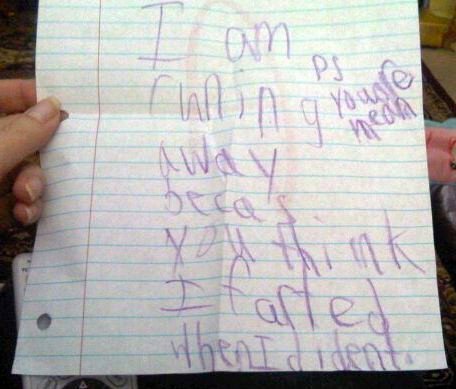
9 Hilariously Distressing Letters From Kids
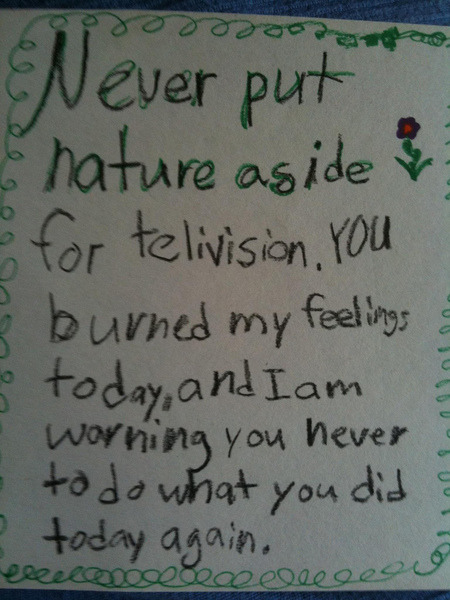
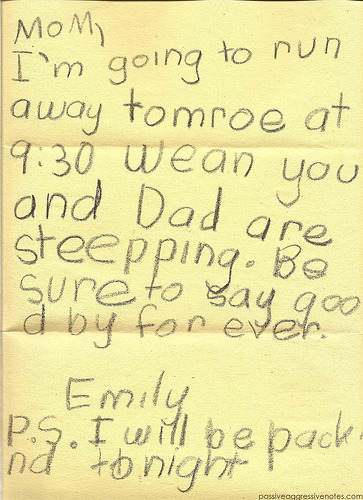
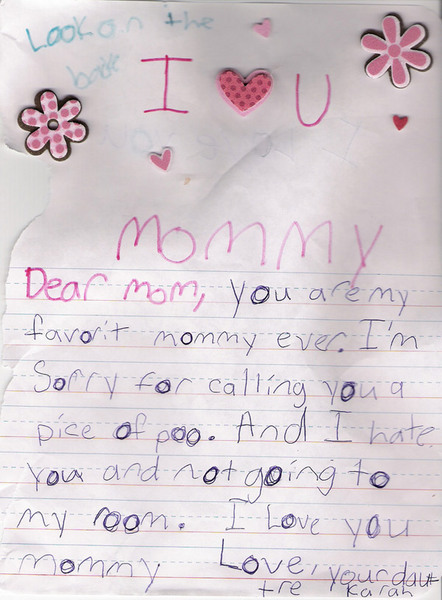
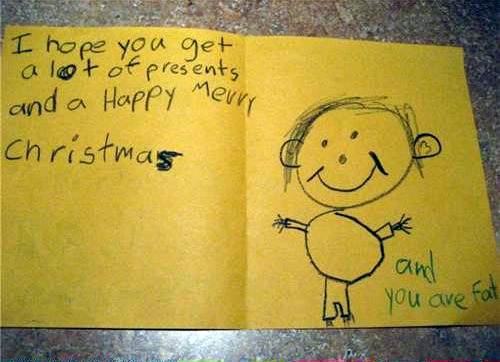
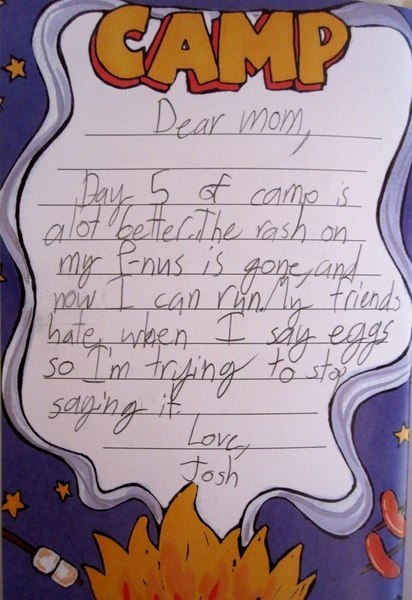
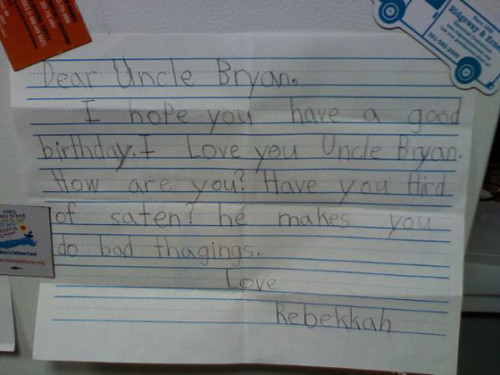
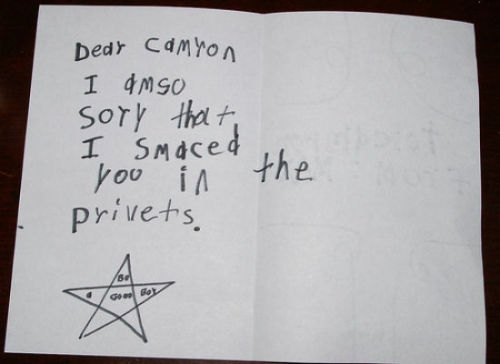
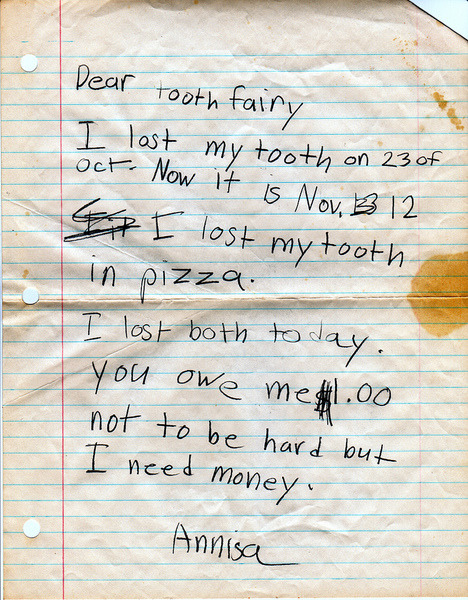
taengthehero: lego-batmann: 9 Hilariously Distressing Letters...
9 Hilariously Distressing Letters From Kids
9 Hilariously Distressing Letters From Kids
“Not to be hard but I need money.” Classic
Adam Victor Brandizzi and -1 others like this
17 Jun 13:06

Red and Black
by Greg Ross
Jokes from the Soviet Union, from University of Louisville historian Bruce Adams’ 2005 collection Tiny Revolutions in Russia:
A man is walking along the road wearing only one boot. ‘Did you lose a boot?’ a passerby asks sympathetically. ‘No, I found one,’ the man answers happily.
What is it that doesn’t knock, growl or scratch the floor?
A machine made in the USSR for knocking, growling, and scratching the floor.
It is the middle of the night. There is a knock at the door. Everyone leaps out of bed. Papa goes shakily to the door. ‘It’s all right,’ he says, coming back. ‘The building’s on fire.’
A shopper asks a food store clerk, ‘Are you all out of meat again?’ ‘No, they’re out of meat in the store across the way. Here we’re out of fish.’
Why doesn’t the Soviet Union send people to the Moon?
They are afraid they won’t come back.
A man fell asleep on a bus. When someone stepped on his foot, he woke with a start and applauded. ‘What are you doing, citizen?’ ‘I was dreaming I was at a meeting.’
‘What is the difference between Pravda [Truth] and Izvestia [The News]?’
‘There is no truth in The News, and no news in the Truth.’
“In the Soviet Army,” said Stalin, “it takes more courage to retreat than advance.”
Vvicked, Adam Victor Brandizzi and 2 others like this
17 Jun 12:43
Welcome To Someday 1982 Edition
by noreply@blogger.com (Joanne Casey)

Adam Victor Brandizzi and -1 others like this



17 Jun 12:40

Why Cut Down That Tree in Your Yard? Instead, Carve It into a Dragon.
by John Farrier
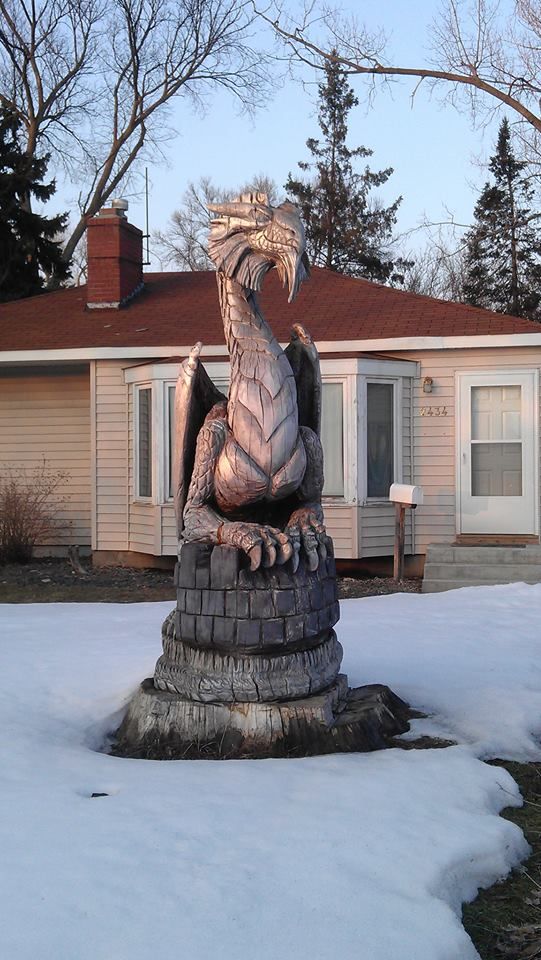
Redditor Aboiement writes that his neighbor "paid an artist to sculpt a dragon into a tree that had to be cut down." Wonderful! And it's better than a guard dog. No one will dare try to rob a house protected by a dragon.
Link -via Nerd Approved
Rmahmud77, Adam Victor Brandizzi likes this
17 Jun 12:38
Fui hoje comprar um conector P2 pra arrumar meu fone de ouvido que está com mal contato no plug. Eu cursei automação/mecatrônica por 2 anos e meio e conheci bem de perto o preconceito pelo fato de ser mulher (sim, eu sei, é ridículo), mas ainda me sinto triste quando coisas assim acontecem. Fui em 3 lojas hoje e os seguintes diálogos aconteceram:
Loja 1
— Oi, preciso de um conector P2 — apontei para o fone.
— ...
— É, olha, meu fone está com mal contato...
— A gente não faz consertos.
— Não, moço, só quero o conector.
— O teu namorado que vai trocar pra você? — risos.
— Não, eu mesma vou e não quero mais, tchau.
Loja 2
— Oi, preciso de um conector P2 — apontei para o fone — quero arrumar meu fone.
— A gente tem esse aqui da Santo Ângelo.
— Pode ser.
— Eu posso fazer o conserto pra você... de graça. — olhando diretamente pro meu decote.
— Não, valeu, e não quero mais, tchau.
Na terceira loja eu pedi, o cara pegou o conector pra mim, cobrou e eu fui embora. Precisava disso?
.Não preciso do seu machismo pra arrumar o meu fone de ouvido
by Ana C. Nemes
Fui hoje comprar um conector P2 pra arrumar meu fone de ouvido que está com mal contato no plug. Eu cursei automação/mecatrônica por 2 anos e meio e conheci bem de perto o preconceito pelo fato de ser mulher (sim, eu sei, é ridículo), mas ainda me sinto triste quando coisas assim acontecem. Fui em 3 lojas hoje e os seguintes diálogos aconteceram:
Loja 1
— Oi, preciso de um conector P2 — apontei para o fone.
— ...
— É, olha, meu fone está com mal contato...
— A gente não faz consertos.
— Não, moço, só quero o conector.
— O teu namorado que vai trocar pra você? — risos.
— Não, eu mesma vou e não quero mais, tchau.
Loja 2
— Oi, preciso de um conector P2 — apontei para o fone — quero arrumar meu fone.
— A gente tem esse aqui da Santo Ângelo.
— Pode ser.
— Eu posso fazer o conserto pra você... de graça. — olhando diretamente pro meu decote.
— Não, valeu, e não quero mais, tchau.
Na terceira loja eu pedi, o cara pegou o conector pra mim, cobrou e eu fui embora. Precisava disso?
Tadeu, Adam Victor Brandizzi likes this

17 Jun 12:33


Protesters embrace to protect each other from tear gas as Brazil bus fare demo turns ugly
Tasso Marcelo / AFP - Getty Images
Two demonstrators hug each other tightly as they are surrounded by riot police using tear gas during a student protest in Rio de Janeiro on Thursday.
Thousands of people took to the streets of Brazil's two biggest cities to protest 10-cent hikes in bus and subway fares.
-- Agence France-Presse, The Associated Press
Police in Brazil fire rubber bullets and tear gas at demonstrators who are angry about an increase in bus, train and subway fares. NBCNews.com's Dara Brown reports.
Nicolas Tanner / AP
People protest the increase in bus and subway fares in Rio de Janeiro on June 13, 2013.
Nelson Antoine / AP
Police fire rubber bullets at demonstrators protesting a price increase for public transportation in Sao Paulo on June 13, 2013.
Previously on PhotoBlog: Amorous protesters, lost in the heat of Vancouver riots
Adam Victor Brandizzi, Tadeu and -1 others like this

17 Jun 12:31
A descrição possível
by beneduvida
O que aconteceu na Paulista no 13/06/2013 foi uma ação concertada de quase tudo que tomamos por poder no Brasil: grande imprensa, município, União, estado e polícia. Um concerto, cada qual em seu setor. A polícia fazia o violino de frente, varado em fúria. O estado soava os outros violinos, de base. A União assegurava os metais, garantindo. O município respondia por uma bancada de cellos hesitantes, ainda que cumpridores. A grande imprensa embalava tudo na percussão, batendo “basta” no couro de seus editoriais. O resultado foi a música violenta de nossas conciliações, em apoteose.
O que aconteceu na Paulista no 13/06/2013 é incompreensível sem a revisão do Grande Dia dos Namorados do Brasil, a véspera. Nunca se esqueçam do 12/06/2013, durmam com ele, caminhem de mãos dadas com ele no shopping. Naquela data, fizeram serenata os dois grandes sócios do poder no Brasil, os dois partidos que, de tanto dominarem a conversa desde 1994, não admitem que exista a possibilidade de um “bom dia” sem o beneplácito ou a participação deles. Diante de um agente novo, esses sócios velhos clamaram por “ação decisiva”, com o eco de simpatizantes prolongados em sua estridência pela medicina e pela falta de imaginação: colunistas, comentaristas, partidários de corte psiquiátrico: velhos, quase todos eles. E a ação decisiva veio, na forma de um tiro no olho.
O que aconteceu na Paulista no 13/06/2013 foi também a explosão do movimento: não “um” movimento, nem “os” movimentos, mas do ato mesmo de se mover, do ato represado. Se o tema era o preço de passagens de ônibus, o grito polvorado ali também falava de si mesmo: do gritar após duas décadas irmãs: uma década de “inevitáveis” e de uma década de “repelegamento”. Na década de inevitáveis, um discurso e uma ação hegemônicas se apresentavam como a única via, enquanto os movimentos sociais tentavam provar, na marra, que a banda tocava diferente. Na década do repelegamento, a vitória de forças aliadas a esses movimentos acabou por roubar-lhes o ímpeto, por meio da cooptação e da resultante letargia. Na Paulista, a irmandade das décadas explodiu numa panela com vinagre.
(Dois apertos de corda: nessas décadas, a política se deslocou no discurso e no espaço.
No discurso, a política se moveu para um tópico que a esvazia: para a corrupção ou, melhor ainda, para o apontamento de qual sócio fez primeiro ou o pior.
No espaço, a política restante gravitou para arenas alheias à representação popular. Com a judicialização, o tapetão se transformou no jogo.)
O que aconteceu na Paulista no 13/06/2013 merece todos os selos, e nenhum deles. Enquanto a deficiência do transporte público permanece como um detonador, e apenas um detonador, a corrupção e a inflação explicam o acontecido como a força da gravidade dá conta da queda de um avião: são dados de realidade, e não o norte dela. Para além de qualquer leviandade explicadora, resta o fato do movimento e do seu (re)nascimento num contexto de confronto urbano. Isso basta para o momento.
O que aconteceu na Paulista no 13/06/2013 ainda mora no turbilhão. A tarefa presente, a tarefa possível, é de descrição. Não há respostas para acalmar os tocadores de trombeta que fizeram carreira nas décadas irmãs. Sobra um truísmo, insuficiente para consolar os camelôs da certeza: o movimento movimenta o movimento. É a miséria dos colunistas. Não há respostas para ninguém, só o retrato daquela noite: de um lado, a Polícia Militar, esse arcaísmo armado, atuando em nome dos titulares de projetos legitimados como de transformação; do outro, um novo-novo, a desafiar em sua novidade.
O que será do novo em 13/06/2022?
(Tinha feito o compromisso mental comigo mesmo de não comentar assuntos correntes. Apesar de ter firmado o pacto numa encruzilhada dentro da minha cabeça, numa dessas madrugadas do pensamento, o que estourou a partir da Paulista me obriga a renegar a promessa.
Já encontrei uma desculpa: num sentido amplo, o que se expôs ali foi tudo menos um assunto corrente: instaurou uma quebra cognitiva, a tal ponto que não me sinto capaz de levantar nenhum “eu já sabia” diante do que aconteceu desde então.)
******

Comentário de Marcelo Parreira Júnior:
Há, de fato, algo novo por aí. Não uma Primavera Árabe tupiniquim, como comemoram os mais empolgados, nem algo completamente apolítico, como pregam os que não entendem o que é política. Mas é, sim, algo novo. Algo que partidos acomodados não têm total controle, que a polícia não entende e a imprensa não conhece: os três grandes geradores de medo. E a gente sabe que existem duas respostas instintivas ao medo: a fuga ou a violência. E a violência é sempre a opção adotada quando se presume superioridade.
Mais virão. Me parece que mesmo que a tarifa baixe, que a inflação caia, que o transporte melhore, mais virão. Porque esta geração é a geração que cresceu em um ambiente plenamente democrático, com liberdade para tomar decisões. E que por isso não conhece os limites da anterior, que viveu o medo da ditadura. E isso é bom. Vai ter muito olho machucado no caminho, é verdade, mas talvez isso faça parte do processo de abrí-los.
Oto Vale:
Ninguém perguntou se a bala de borracha custa menos que os 20 centavos (valor do aumento, “ressalte-se,abaixo da inflação”).
Tampouco perguntaram se uma bomba de gás lacrimogênio custa mais ou menos do que os 20 centavos.
Mas, ao contrário do que diziam, a revolução está sendo tele-visionada. Não pela televisão,essa transmissora de novelas, mas por um monte de iPhones e Androids que transmitem para o mundo inteiro. Justo esses iPhones que servem para que colunistas digam que vinte centavos não é nada para quem tem um.
Ninguém entende ainda pra onde isso vai. É só o começo de … do que mesmo?
Ninguém lembrava que era o dia de Santo Antonio, a primeira das três grandes fogueiras de junho.
Hoje o time joga agora em Arena. Ninguém se lembra do que era a Arena, nem do que era Arena.
Vai ter alguém pra pegar o touro pelos cornos? Ou vamos continuar com a conversa pra boi dormir?

Igor Barbosa:
O problema está em descrever o que se esconde. A Polícia Militar e os grupos de manifestantes, se têm visibilidade, já não são relevantes. Se o governador e prefeito aparecem, não é com eles que me preocupo. A instituição PRESIDÊNCIA DA REPÚBLICA dá a cara a vaia e só não rola a bola inicial por sabe Deus que motivos; essa aí passou por debaixo da cordinha. O ponto nevrálgico, o cerne, o âmago da questão é o que não está visível, não está sendo discutido, não está tomando vaia nem bomba de gás lacrimogêneo.
Eu não tenho receita, nessa de atirar no escuro a solução que prefiro é rezar; pelo menos, quando as religiões se dizem revelações, elas estão oferecendo algo realmente necessário pra aguentar esses rojões.
Ao autor: Se não publicar este comentário, abro um Tumblr denunciando a perseguição que a religião sofre por parte da grande, da média e da pequena mídia, também, e faço uma manifestação na sua rua.
Ao leitor: Se não gostar deste comentário, abro um Tumblr denunciando a má vontade com que a filosofia é encarada pela classe alta, pela classe média e pela classe baixa e mando a polícia te descer o cacetete.
Aos astrólogos: Expliquem porque o autor escolheu o ano de 2022 como marca de seus questionamentos para o futuro (0,5 pt).
Aline Lima:
A Orquestra dos Poderes Constituídos, em sua prepotência, não se importou muito quando notou uns rostos descontentes, uns pigarros e talvez até um excesso de bundas a trocar de posição nos assentos da plateia. O que pegou, mesmo, e a deixou momentaneamente atônita, foi quando as pessoas começaram a se levantar e gritar que aquela música, meu deus, a música é horrorosa. Uma jovem resolveu pixar a porta de entrada, outra pôs-se de pé no assento, foi seguida por outro homem, e depois um rapaz, e antes que o terceiro estivesse a esfolar a camurça com suas solas, diante de tal insubordinação, os integrantes da Orquestra dos Poderes Constituídos só conseguiram acusar, usando uma oração na voz passiva: “as cadeiras estão sendo quebradas! as cadeiras estão sendo quebradas!”
Ronaldo Pelli:
Eu vou fazer um comentário transversal ao seu texto, ou uma pequena sugestão aos movimentos-que-se-movimentam para aceitar negociar com os homens públicos das três esferas de poder: tomem um ônibus. Só depois que prefeitos, governadores e presidentas tomarem um ônibus para se locomover para os seus respectivos palácios, é que eles deveriam começar a conversar.

Leandro Godinho:
Enquanto isso, estupefatos, parte da população que ainda não se recuperou do choque de lidar com gente negra na fila do check-in de seu voo para Orlando começa a temer pelo dia em que o prefeito de Londres resolva aumentar a passagem do metrô.

17 Jun 12:18


Metal from 12 year olds
by Cory Doctorow
Unlocking the Truth is an an awesome heavy metal band made up of 12-year-old schoolkids who've been playing together since they were five. They totally, utterly rock.
Videos - Unlocking the Truth (Thanks, Lachlan!) 
    
|
Luke.stirling, Jobim likes this
17 Jun 12:15
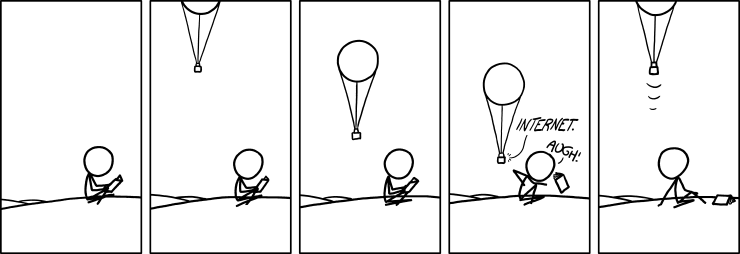
Balloon Internet
Adam Victor Brandizzi~obg~ Gooogle :-/
arcturus, Shel Kennon and one other like this
17 Jun 12:14
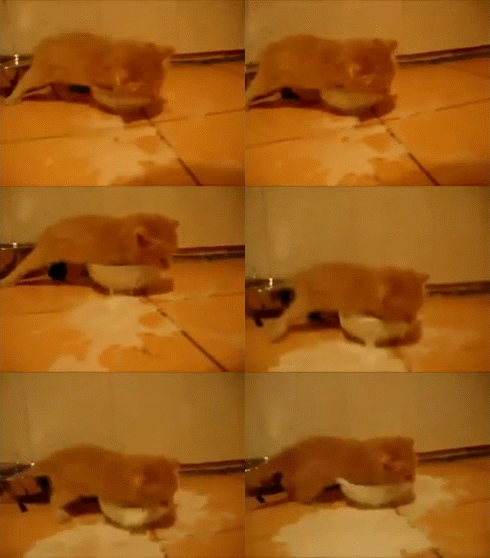



sweet-land-of-libertea: thackerybinxx: shinga-tumblr: It’s...
It’s okay kitten, I too have been that drunk
OH my GOD
infomercial kitten.
why is no-one willing to sell him a special kitten straw for $19.95
Sthevens, Adam Victor Brandizzi and -1 others like this
17 Jun 12:09
toxicnotebook: KNAPP The Post-War collection A/W 2012/2013
Adam Victor BrandizziNossa, mas eu acho essas roupas lindas.










Alexander Gagin, Ivan Diuldia and 2 others like this
14 Jun 21:24

“Do you mind if I take your photograph?”“Are...
“Do you mind if I take your photograph?”
“Are you working for Obama?”
14 Jun 17:09

Photo
Adam Victor BrandizziE o pior de tudo é que é um labrador, então nem dá para ficar com raiva depois.
14 Jun 16:59
Arte com livros: Errata, de Ekatarina Panikanova
by Alessandro Martins

Em sua série “Errata“, a artista Ekaterina Panikanova cria pinturas de grande escala usando grades de livros abertos como tela.
As pinturas apresentam imagens inquietantes, beirando aos pesadelos de infância, memórias desconexas ou mesmo evocando algum tipo de doença mental.
As grades de livros permitem às pinturas serem misturadas e combinadas ao folhear das páginas. (via)


Adam Victor Brandizzi and -1 others like this