Shared posts

13 Jun 21:20

whatsthedaily: faerielandcorgi: colormedisturbed: poupon: sin...


whatsthedaily:

faerielandcorgi:

colormedisturbed:

poupon:

sinvraal:

persian-slipper:

anathemarmotqueen:

Hello tumblr allow me to present you the swedish vallhund

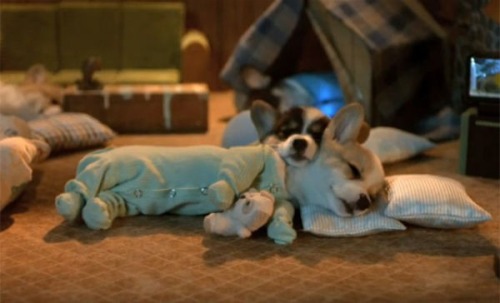
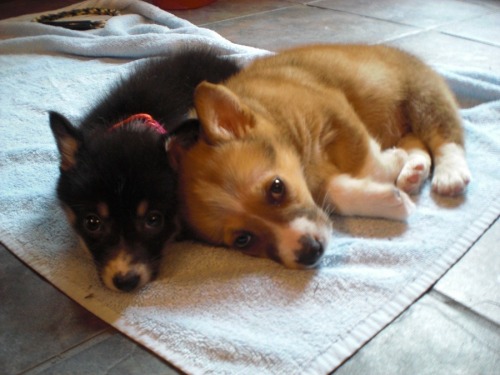
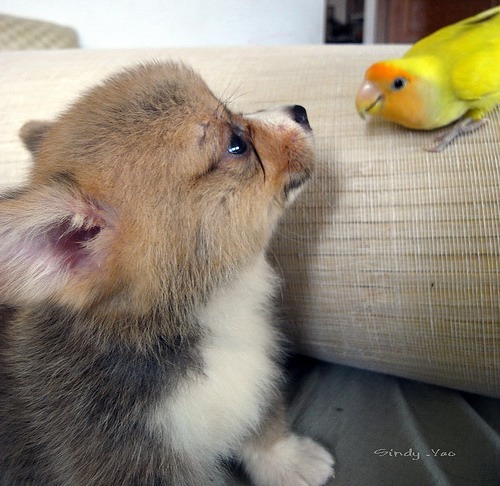
i´m VERY confused as you guys are not freaking out about these little guys yet since they´re basically WOLF CORGIS.

I swear to god, I thought it was a photoshop at first.

Oh my Glob, it’s “the little cattle dog of the Vikings”. Not only is it a wolf corgi, but it’s a Viking wolf corgi.

VIKING WOLF CORGI

VIKING WOLF CORGI

The Swedish Vallhund, also know as the Västergötland, is an ancient Spitz breed that was breed and raised as basically an everything dog. Even though their main purpose is to herd (mainly cattle, their small size allows them to dart between the cattle’s legs, but also sheep and goats), they were also expected to be ratters and guard dogs. 

It is said by many breed historians that after groups of Vikings broke off from Scandinavia to settle in warmer climate farther south, in places like Wales, that they brought the Vallhunds with them and that is where you get your Pembroke and Cardigan Corgis.

The breed was nearly lost during the world wars, but was brought back from the brink of extinction by K. G. Zettersten and Björn von Rosen and five dogs they were able to find while riding bikes in the Swedish country side.

The dog featured in this post’s name is Trilure Missy, whom her owner calls Misty. She lives Texas at Osafin kennels, though she originally came from a kennel in Canada, which was when this picture was taken, she was so much more fluffy then.

She’s also my puppy, Nea’s, maternal aunt.

Nea at Vallejo dog show

The Swedish Vallhund is a wonderful little breed, they’re smart and tenacious, and make great family pets. They have similar temperament to the corgis, but don’t have quite the same nippy attitudes as corgi females and the males are all love bugs.

To see more of Misty, check out Osafin.com

To learn more about the breed, swedishvallhund.com

And to see more of Nea, neatheswedishmeatball.com

Viking Wolf Corgis, I love it! That is what I am calling Fae from now on!!!

Sadly, no, the Vallhund does not appear to share a recent lineage with Welsh Corgis. There’s a temptation to make up plausible stories explaining Vallhunds and Corgis. The dogs have similar shapes, and dog enthusiasts have suggested a relationship between the breeds as long ago as the 18th century, based entirely on morphological comparison.

But morphology can lie — Viceroy and Monarch butterflies are not particularly closely related species, despite looking virtually identical, and sharks and dolphins are animals separated by 100s of millions of years of evolution, despite their many similarities.

Recent attempts at using dog genetic data to build a “breed tree,” if you will, have shown the Vallhund is an ancient breed with few unique genetic elements in common with either breed of Welsh Corgi.

Since these breeds are all the same species (dog), it is possible and even likely that genes from Vallhunds have snuck into Corgi lines, and vice versa, but the phylogenetics shows the amount of gene flow has been very low. I should add that phylogenetics is usually used to compare species, not populations of the same species, but here it can be effectively used to exclude close relationships. It just can’t confirm them.

Fae is a combiner of worlds, a real cutie, and a VIKING WOLF LIMEY DWARF DOG.

This is also a Swedish vallhund appreciation blog
13 Jun 19:44

Photo


13 Jun 19:40

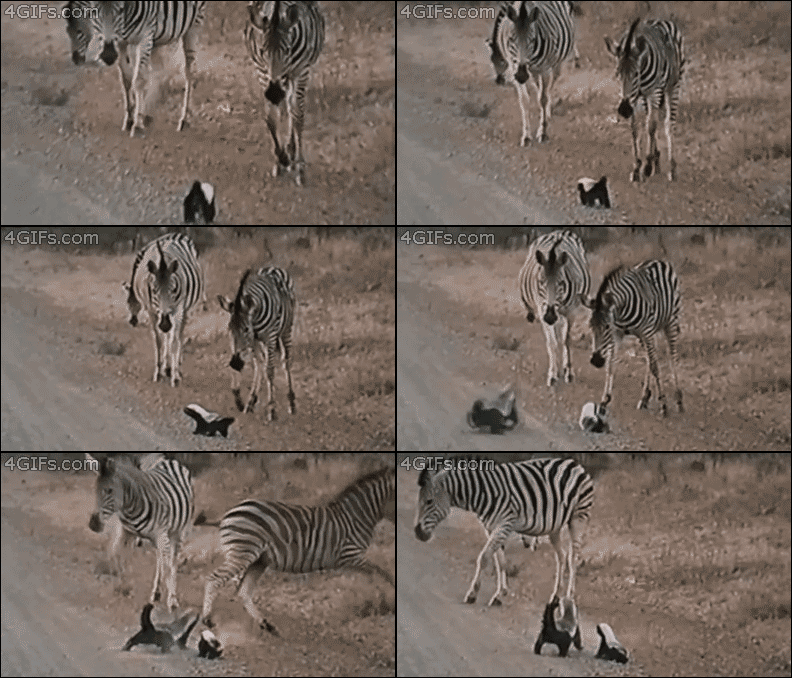
Honey Badger Don't Care

Mother Honey Badger protects baby from Zebra

What’s black, white, & red all over? A Zebra that effs with a honey badger’s baby.

13 Jun 19:35

Competitive Dad

by Reza

competitive-dad

13 Jun 15:42

A "arenização" do Brasil

by Drunkeynesian
Arena Amazônia, vulgo Elefantão Quem tem o mau hábito de acompanhar o mercado financeiro ou o fluxo de notícias econômicas, provavelmente nos últimos dias se perguntou, tal qual os personagens do fabuloso Conversa na Catedral: em que momento o Brasil se fodeu (neste ciclo, claro, não vai ser a primeira vez, nem a segunda, terceira, quarta, etc)? Pois bem, amigos, minha resposta é: o Brasil se
13 Jun 15:36

via


via

12 Jun 17:40

where “nothing to hide” fails as logic

by zephoria

Every April, I try to wade through mounds of paperwork to file my taxes. Like most Americans, I’m trying to follow the law and pay all of the taxes that I owe without getting screwed in the process. I try and make sure that every donation I made is backed by proof, every deduction is backed by logic and documentation that I’ll be able to make sense of three to seven years later. Because, like many Americans, I completely and utterly dread the idea of being audited. Not because I’ve done anything wrong, but the exact opposite. I know that I’m filing my taxes to the best of my ability and yet, I also know that if I became a target of interest from the IRS, they’d inevitably find some checkbox I forgot to check or some subtle miscalculation that I didn’t see. And so what makes an audit intimidating and scary is not because I have something to hide but because proving oneself to be innocent takes time, money, effort, and emotional grit.

Sadly, I’m getting to experience this right now as Massachusetts refuses to believe that I moved to New York mid-last-year. It’s mindblowing how hard it is to summon up the paperwork that “proves” to them that I’m telling the truth. When it was discovered that Verizon (and presumably other carriers) was giving metadata to government officials, my first thought was: wouldn’t it be nice if the government would use that metadata to actually confirm that I was in NYC not Massachusetts. But that’s the funny thing about how data is used by our current government. It’s used to create suspicion, not to confirm innocence.

The frameworks of “innocent until proven guilty” and “guilty beyond a reasonable doubt” are really really important to civil liberties, even if they mean that some criminals get away. These frameworks put the burden on the powerful entity to prove that someone has done something wrong. Because it’s actually pretty easy to generate suspicion, even when someone is wholly innocent. And still, even with this protection, innocent people are sentenced to jail and even given the death penalty. Because if someone has a vested interest in you being guilty, it’s often viable to paint that portrait, especially if you have enough data. Just watch as the media pulls up random quotes from social media sites whenever someone hits the news to frame them in a particular light.

It’s disturbing to me how often I watch as someone’s likeness is constructed in ways that contorts the image of who they are. This doesn’t require a high-stakes political issue. This is playground stuff. In the world of bullying, I’m astonished at how often schools misinterpret situations and activities to construct narratives of perpetrators and victims. Teens get really frustrated when they’re positioned as perpetrators, especially when they feel as though they’ve done nothing wrong. Once the stakes get higher, all hell breaks loose. In “Sticks and Stones”, Emily Bazelon details how media and legal involvement in bullying cases means that they often spin out of control, such as they did in South Hadley. I’m still bothered by the conviction of Dharun Ravi in the highly publicized death of Tyler Clementi. What happens when people are tarred and feathered as symbols for being imperfect?

Of course, it’s not just one’s own actions that can be used against one’s likeness. Guilt-through-association is a popular American pastime. Remember how the media used Billy Carter to embarrass Jimmy Carter? Of course, it doesn’t take the media or require an election cycle for these connections to be made. Throughout school, my little brother had to bear the brunt of teachers who despised me because I was a rather rebellious students. So when the Boston marathon bombing occurred, it didn’t surprise me that the media went hogwild looking for any connection to the suspects. Over and over again, I watched as the media took friendships and song lyrics out of context to try to cast the suspects as devils. By all accounts, it looks as though the brothers are guilty of what they are accused of, but that doesn’t make their friends and other siblings evil or justify the media’s decision to portray the whole lot in such a negative light.

So where does this get us? People often feel immune from state surveillance because they’ve done nothing wrong. This rhetoric is perpetuated on American TV. And yet the same media who tells them they have nothing to fear will turn on them if they happen to be in close contact with someone who is of interest to – or if they themselves are the subject of – state interest. And it’s not just about now, but it’s about always.

And here’s where the implications are particularly devastating when we think about how inequality, racism, and religious intolerance play out. As a society, we generate suspicion of others who aren’t like us, particularly when we believe that we’re always under threat from some outside force. And so the more that we live in doubt of other people’s innocence, the more that we will self-segregate. And if we’re likely to believe that people who aren’t like us are inherently suspect, we won’t try to bridge those gaps. This creates societal ruptures and undermines any ability to create a meaningful republic. And it reinforces any desire to spy on the “other” in the hopes of finding something that justifies such an approach. But, like I said, it doesn’t take much to make someone appear suspect.

In many ways, the NSA situation that’s unfolding in front of our eyes is raising a question that is critical to the construction of our society. These issues cannot be washed away by declaring personal innocence. A surveillance state will produce more suspect individuals. What’s at stake has to do with how power is employed, by whom, and in what circumstances. It’s about questioning whether or not we still believe in checks and balances to power. And it’s about questioning whether or not we’re OK with continue to move towards a system that presumes entire classes and networks of people as suspect. Regardless of whether or not you’re in one of those classes or networks, are you OK with that being standard fare? Because what is implied in that question is a much uglier one: Is your perception of your safety worth the marginalization of other people who don’t have your privilege?

12 Jun 17:35

Robot evolution

by Emily Monosson

A quadrupedal robot used to help evolve gaits.  Courtesy Cornell Creative Machines LabIn a laboratory tucked away in a corner of the Cornell University campus, Hod Lipson’s robots are evolving. He has already produced a self-aware robot that is able to gather information about itself as it learns to walk. Like a Toy Story character, it sits in a cubby surrounded by other former laboratory stars. There’s [...]

The post Robot evolution appeared first on Aeon Magazine.

12 Jun 16:37

Frozach Submitted

12 Jun 15:24

In search of the human mind

by thuudung

An octopus experiences the world as bright and tasty. Or so we think. Does imagining yourself as an alien creature reveal something about your own mental life?… more»

12 Jun 13:12

Gostei mesmo do doodle do dia dos namorados.


Gostei mesmo do doodle do dia dos namorados.

12 Jun 13:07

Photo


12 Jun 11:51

O rebelde sem risco

by beneduvida

O rebelde sem risco é um tipo contemporâneo: quer a transgressão, mas não o perigo. Quer o sexo “cauteloso” e “discreto” na escada: o bolo sem o preço, a luta sem o golpe. Quando abandonado a si mesmo, o rebelde sem risco sonha com uma rebelderia, um espaço gourmet da rebeldia para curtir uma transgressão asséptica e sofisticada.

Da criança mais velha ao ladrão, o transgressor vai à luta, sabe do perigo. O rebelde sem risco também, mas quimera como se não precisasse saber: na falta da tal rebelderia, ainda não-inaugurada no pavilhão dos nossos confortos, indica: encontraria uso numa camisinha social, numa camada entre seu corpo que frui e o mundo que o emperiga.

image

O rebelde sem risco salta e dispensa a queda. Se encontrar o chão, culpará a gravidade, denunciará a física como opressora. Por não ter vocação mística, nem contemplará a possibilidade de que, em outro plano, talvez nem tenha saltado – no lugar disso, insistirá na matéria, no concreto e se amarrará a qualquer causa de liberação para defender o seu conforto de insurgente tranquilo, num egoísmo militante. “É ridícula essa situação de hipocrisia/moralismo/autoritarismo”,  “fui penalizada pelo universo”.

(O dia acordou sem risco. Na cidade, não havia perigo. O custo da vontade era só o do ingresso. Houve festa, houve apoteose, durou pouco. No fastio das semanas, amadurecia a saudade do revés. Os exauridos pensavam numa via, mas, na ágora do seu cansaço, mal chegavam a conversar, dormiam.)

image

O rebelde sem risco é também um tipo imperial. Avança, conquista e declara soberania sobre a insurreição, qualquer insurreição: a partir do momento em que se instala, o rebelde sem risco não admite que exista qualquer outra forma digna de rebeldia – como se todas as outras escorregassem para a impostação ou para a loucura.

O rebelde sem risco cava fundo nos canteiros rasos, e exige reconhecimento por isso. Não dispensa a credencial de sua rebeldagem: deseja guardá-la para exibi-la quando, do alto da sua torre de cerco ao nada, for pontificar sobre os riscos e as inconveniências da ação alheia.

O rebelde sem risco não é um rebelde de sofá – pelo contrário: em tempos muito sentados, rebeldes de sofá, sim, correm riscos. Nos dias de hoje, algumas das maiores rebeldias, daquelas a serem pagas com vida e reputação, se perpetram no assento, diante da tela. O vazamento do que não se admite revelado, a denúncia do arbítrio, a confissão do erro: resistências em casa, na escola, no trabalho, todas obras bem possíveis e de fato cada vez mais erguidas a partir do andaime de uma cadeira. Aaron Swartz, Bradley Manning, Edward Snowden, para ficar aí.

O rebelde sem risco diz repugnar o rebelde de sofá, e nessa repugnância ele faz o papel de batedor da ordem, de frente avançada do mesmo. O rebelde sem risco é, assim, um agente de conservação, ainda que não atue sozinho. Ao criticar o rebelde de sofá, o rebelde sem risco o faz sob o estandarte dos rebeldes velhos.


image

Tudo é uma relação de trabalho. Nas manhãs, o rebelde sem risco passeia com dedicação os cachorros dos gerontorrebeldes, a ponto de latir por eles. Com afinco canino, o rebelde sem risco cobra dos rebeldes novos as escolhas e as armas de seus senhores e madames: “aja e reaja como em 1968”, “lute pelo seus direitos à moda do sindicalismo dos anos 1980”, “meça tua fúria pela régua do teu pai”: a voz do rebelde sem risco, a mesma que late, é a de um mordomo de luva vermelha.

(Aí correu a notícia: a gasolina ainda era perigosa. Demorou pouco a aparecerem bebedores de gasolina e, com eles, toda uma cultura de consumo no limite da intoxicação. A imprensa se escandalizou com as “Gasolândias”, fez capas com as faces de crianças abandonadas pelos pais gasólatras e editorializou para pedir ímpeto ao poder público, que agiu conforme: além de reprimir as bocas-de-gole, lançaria um edital para que inventores criassem uma gasolina potável.)

As rebeldias dos antigos, suas formas, suas armas, escravizam os novos. Foi assim com os rebeldes velhos quando jovens, quando ainda eram desprezados como “sem causa” – como se precisassem colocar gravatinha na sua fúria para que, diante de uma banca, ela fosse auditada. Hoje, já velhos em sua rebeldia, os antigos “sem causa” formam a banca e formarão por mais tempo ainda, por graça da medicina. Os mordomos de luva vermelha têm emprego garantido.


image

(Saiu o resultado do edital. Venceu a fórmula de uma gasolina injetada de Vitamina C, sem veneno, boa para a dieta do atleta. A gasolina velha sumiu do mercado, banida como um suco de amianto. Os gasólatras sorveram até o último gole, antes de vagarem como fantasmas. Sem gasolina, eram então só riscólatras, puros homens de ideias. Suas reuniões eram cúpulas de desespero bem no meio de um reino de esperança onde, de novo, não havia perigo. Da última vez que soube deles, os riscólatras contemplavam a possibilidade de comer pedras e costurar a saída. Só precisavam encontrar a agulha certa.)

******

Comentário de Laurianne Franco:

O rebelde sem risco caminha um pouco por dentro de nós até o dia em que  a camisinha social fura. Quando o risco não mais pode ser evitado - e os imperativos do perigo nos jogam da assepsia ao caos do envolvimento – há uma escolha. Escolher transgredir seria tocar o “foda-se” para a polícia interna da alma e abrir espaços para a vida. Escolher continuar, usar dois preservativos para a boneca inflável.  

image

Luiz Carlos Pontes:

Abraços coletivos, uso massivo de narizes de palhaço, flashmobs e toda uma gama de manifestos ditos pacíficos que confortam, e não confrontam, a ordem. Seria o legado destes rebeldes à humanidade?

Roberto Machado:

Aguardo a continuação: "O conformado com risco".

11 Jun 23:34

Succinct

by Greg Ross
Adam Victor Brandizzi

Podia ser assim sempre.

In 2011 M.V. Berry et al. published “Can apparent superluminal neutrino speeds be explained as a quantum weak measurement?” in Journal of Physics A: Mathematical and Theoretical.

The abstract read “Probably not.”

In 1978 John C. Doyle published “Guaranteed margins for LQG regulators” in IEEE Transactions on Automatic Control.

The abstract read “There are none.”

(Thanks, Dre.)

11 Jun 21:39

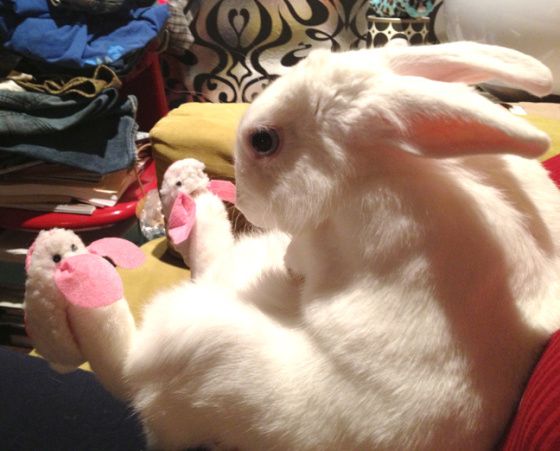
A Bunny In Bunny Slippers

by Jill Harness

Sure, Bini can play basketball, but I'd much rather be friends with Alibi, who knows how to relax and take a load off. We could enjoy avocado face masks together while we munch on some popcorn and watch a cheesy rom-com. You can follow Albi on his daily adventures on his website, AlbiRabbit.com.

Link 

11 Jun 21:32

Cooper (by bonnie5649)


Cooper (by bonnie5649)

11 Jun 21:15

119. JOHN GREEN: Make gifts for people

by Zen Pencils

119. JOHN GREEN: Make gifts for people

John Green (1977-) is an American author and video-blogger extraordinaire. He has written best-selling young adult novels including Looking For Alaska, Paper Towns and the recent The Fault in our Stars, which was named Time magazine’s best fiction book of 2012.

John and his brother, Hank, are the Vlogbrothers. They helped pioneer video blogging when they communicated only through YouTube videos for a year. They’ve since produced a wide variety of video series and have attracted a devoted army of fans known as the Nerdfighters.

I discovered John Green when a reader sent me the link to the awesome Crash Course World History series, which Green hosts and co-writes. The series tells the entire history of civilisation in over forty, very entertaining 10-minute videos. I was totally addicted to it and I highly recommend it. There have since been a Literature series and Green is currently updating a series on American History. For you science buffs, John’s brother Hank has done a biology, chemistry and ecology series. All the videos can be seen on the Crash Course YouTube channel.

This quote is taken from a 2009 Vlogbrothers video. Thanks to Kaley for submitting it :)

RELATED COMICS: Advice for Beginners by Ira Glass. Make Good Art by Neil Gaiman.

- Green’s official website.
- DFTBA!

UPDATE: You can pre-order this comic as a poster at DFTBA.COM!

11 Jun 18:39

Video

Adam Victor Brandizzi

Me sinto mal rindo de buldogues, porque são uns bichos bem sofridos. Mas como não fazê-lo?


11 Jun 17:58

In praise of American English

by thuudung
Adam Victor Brandizzi

Tá divertido o texto.

English might soon be used in French universities. Cue the outrage – “linguistic assassination!” The future belongs to American English, at least for now… more»

11 Jun 16:58

iprotectthethingsilove: this is the best


iprotectthethingsilove:

this is the best

11 Jun 16:00

Philip

by Greg Ross

In 1972 the Toronto Society for Psychical Research set out to create a ghost. They invented a character named Philip, an English nobleman from the 17th century, and tried to contact him through sittings in which they discussed his life, to see whether they could induce a “collective hallucination.”

When a year of this produced no results, they adopted the trappings of a more formal séance, introducing colored lights, singing songs, and reciting poetry while trying to conjure Philip’s spirit. After three or four of these sessions, surprisingly, “the group felt a vibration within the table top, somewhat like a knock or rap.”

Philip had, apparently, shown up. After some initial confusion, the group established a convention by which he could express himself — one rap meant yes, two meant no. And he was quite willing to talk:

‘Did you have your own regiment?’ Sid asked.

(Rap) ‘Yes.’

‘Were you wounded in the fighting?’

(Rap, rap) ‘No.’

‘I wonder which battles he fought in,’ Lorne asked. ‘Philip, did you fight at Naseby?’

(Rap, rap) ‘No.’

‘Did you fight at Marston Moor?’

(Rap) ‘Yes.’

‘I wonder what weapons they used?’ Al asked. ‘Did you use pikemen?’

(Rap) ‘Yes.’

‘Would they have had guns of any kind then?’ someone asked.

‘They would have had muskets,’ Lorne said.

(Immediate confirmatory rap) ‘Yes.’

That’s from Conjuring Up Philip, a 1976 account by Iris Owen, a member of the group. With time the rappings grew stronger, and the table would occasionally move around the room and even levitate. Owen wrote, “In addition to sliding across the floor (which incidentally was covered with a thick pile carpet), the table would tilt in various ways, lifting one, two, or three legs, and pivot, sometimes almost dancing.”

It’s hard to know what to make of this. On the one hand, most of Philip’s verbal communications were simply those that the group expected to receive. For example, he said that Charles I had loved cats but not horses or dogs; this isn’t historically accurate, but the questioner was a cat lover. Owen called Philip “a composite of [the group's] own invented imaginations … a character born of their own desire to bring him as much to actuality as they could.”

But the physical tricks are harder to understand. The simplest explanation is that some in the group were deliberately creating the “supernatural” effects, a possibility that all strongly denied. Or perhaps the group really had stumbled into some sort of collective, or wishful, hallucination. Whatever the case, the whole episode shows that even supernatural explorations that are known to be groundless can produce convincingly “otherworldly” effects for a receptive audience. To that extent, Philip was a ghost who helped to disprove his own existence.

11 Jun 15:54

Photo


11 Jun 15:51

when you realise your phone sex is actually a threesome


when you realise your phone sex is actually a threesome

11 Jun 15:51

9gag: This happened when they went on a road trip together. 😸👶


9gag:

This happened when they went on a road trip together. 😸👶

11 Jun 15:48

Please tell me this is true


Please tell me this is true

11 Jun 15:46

Photo


11 Jun 15:45

Photo


11 Jun 15:45

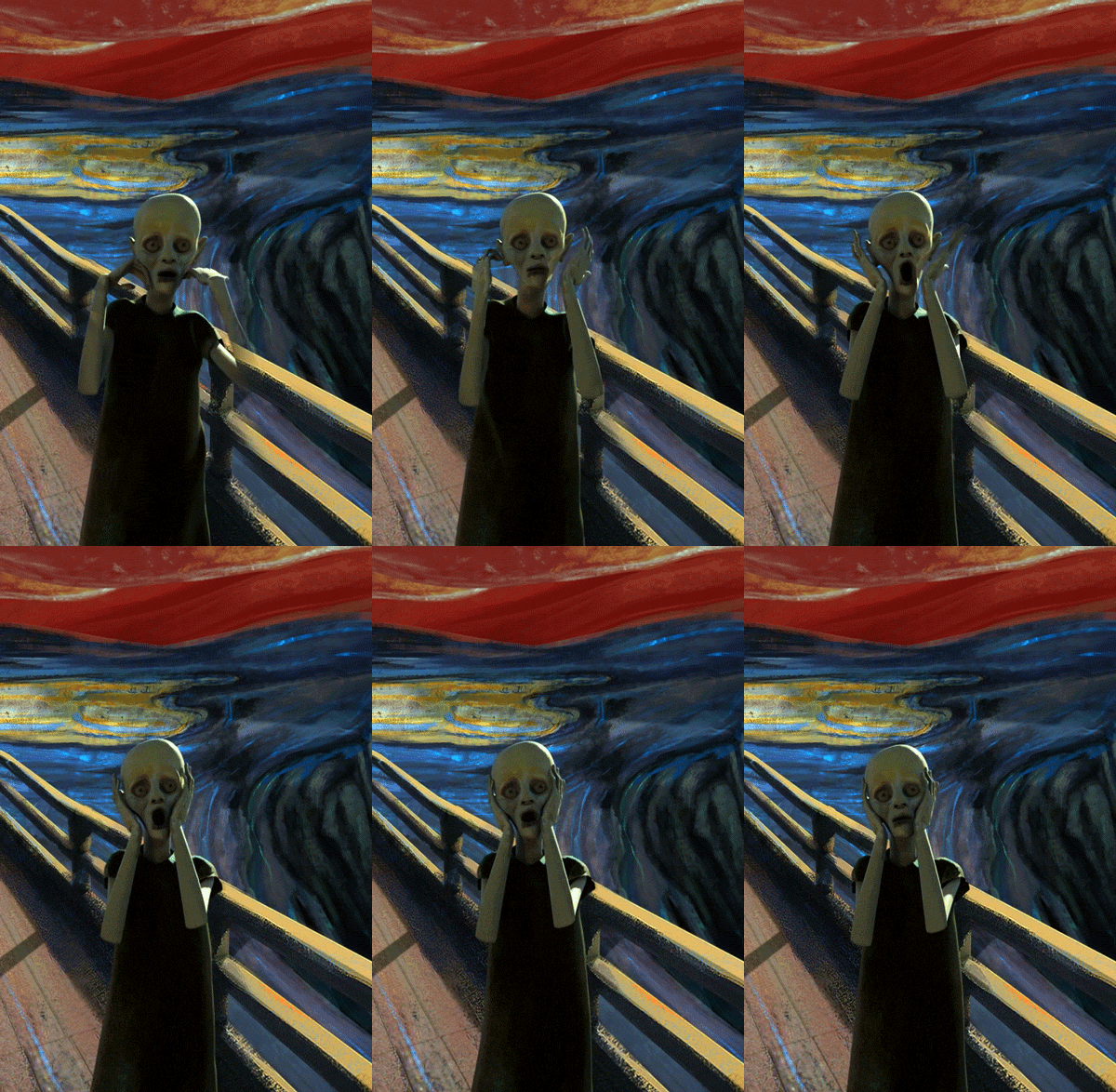
munch150: You can see Edvard Munch’s work in a beautiful new...


munch150:

You can see Edvard Munch’s work in a beautiful new documentary by Phil Grabsky. http://www.exhibitiononscreen.com/

11 Jun 15:44

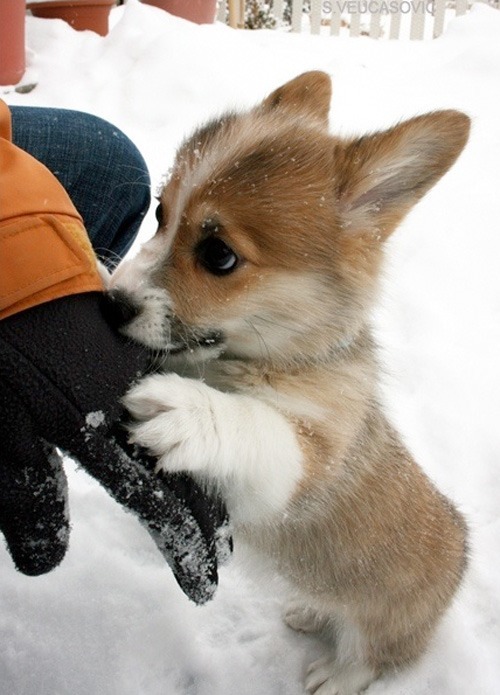
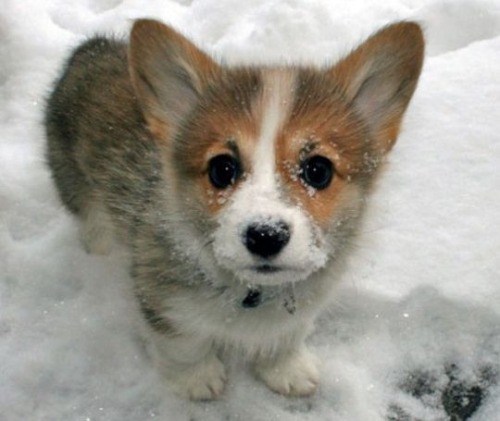
smoshrox87: If you don’t think Corgis are one of the most...


smoshrox87:

If you don’t think Corgis are one of the most adorable things on the planet you’re wrong

11 Jun 15:42

Can You Do This?

wtf,mindwarp,gifs,critters,owls,funny

Submitted by: (via Youtube)

Tagged: wtf , mindwarp , gifs , critters , owls , funny