http://groups.csail.mit.edu/mac/classes/6.805/articles/money/nsamint/nsamint.htm
Adam Victor Brandizzi
Shared posts
27 Apr 02:37
1996 NSA Paper: “How To Make A Mint: The Cryptography of Anonymous Electronic Cash”
by admin
Adam Victor Brandizzi, Igorip204 likes this
02 Aug 11:44

Moving Language
by Greg Ross
Writing in Word Ways in May 1975, David Silverman noted that the phrase LEFT TURN FROM THIS LANE ONLY, stenciled in the leftmost traffic lane at various U.S. intersections, was ambiguous — and that both meanings had been struck down, in contested court cases in Arizona and California.
In one case, the motorist had driven straight ahead rather than turning, which the prosecutor said was illegal. The motorist returned that this wasn’t so — LEFT TURN FROM THIS LANE ONLY meant that it would be illegal to make a left turn from any other lane, but it didn’t require that a left turn be made from this one. “If the city had meant my failure to turn to be illegal, they should have written FROM THIS LANE, ONLY A LEFT TURN.”
In the other case, the motorist had made a left turn from the lane to the right of one marked LEFT TURN FROM THIS LANE ONLY. He argued that this was legal — the marking required drivers in the leftmost lane to turn left, but imposed no requirement on the other lanes. “Had the city wanted to make my turn illegal the marking should have been LEFT TURN ONLY FROM THIS LANE.”
Both motorists were found not guilty. Perhaps because of such confusion, Silverman noted, most intersections had lately begun to use unambiguous arrows: “One good picture is worth ten thousand signs reading LEFT TURN IF AND ONLY IF FROM THIS LANE.”
31 Jul 19:01
hello and welcome to We Have The Technology To Just Add Water To Make A Food And Hello, Who Am I To Deny That
| archive - contact - sexy exciting merchandise - cute - search - about | |||
 |
|||
| ← previous | July 31st, 2013 | next | |
|
July 31st, 2013: NEW SHIRT!

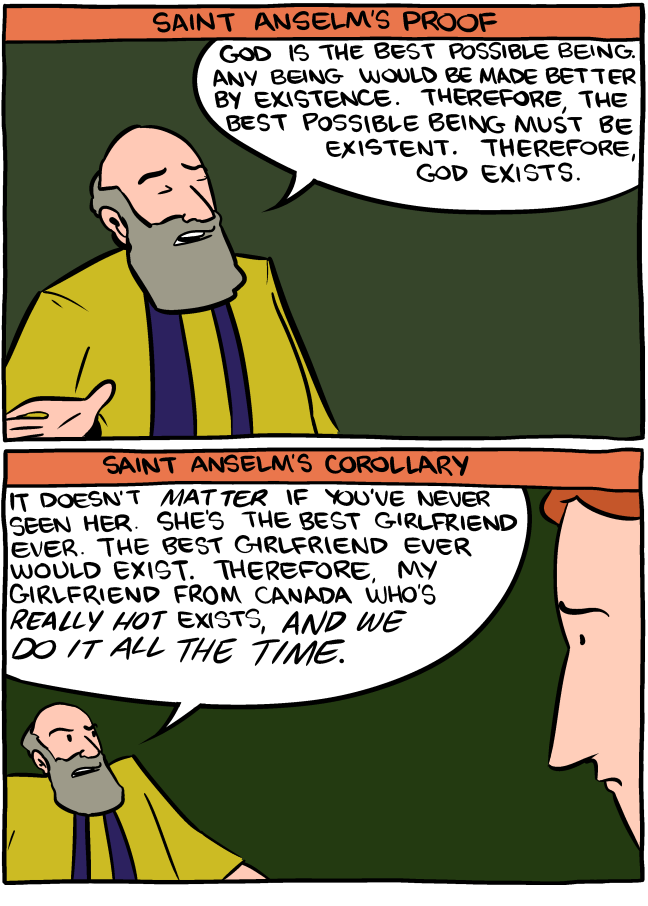
Don't you hate it when people stare at certain parts of your awesome body, instead of at the certain other parts you want them to stare at? This shirt will help everyone figure out which of your organs they want to check out. It features a convenient and accurate map to your face, arms, heart, gallbladder, spleen, and also your kidneys and intestines and stuff. Pancreas too, I guess? Whatever you got goin' on inside, man! I don't judge! (NOTE: if you have had a kidney removed, the "my kidneys are hereish" arrows still apply, but now they're pointing in the general direction of wherever your kidneys are now) (IT ALL STILL TOTALLY WORKS) One year ago today: The Two Puppies Of Verona – Ryan 
| |||
Adam Victor Brandizzi likes this

30 Jul 20:34
Os IDHs do Brasil
by Drunkeynesian
Adam Victor BrandizziNão vi muito mas esse IDH tá dando o que falar. A quem tá com ideias recomendo uma olhadinha.
Ontem saiu, depois de muita espera, o Atlas do Desenvolvimento Humano no Brasil, trabalho conjunto colossal da PNUD, Fundação João Pinheiro e IPEA. Os dados mais recentes são baseados no censo de 2010 e abertos para 5.565 municípios, devem ser fonte riquíssima para pesquisadores e a turma de visualização de dados (o Estado já montou alguns mapas bacanas: 1, 2, 3, 4). A este humilde diletante, com
30 Jul 19:18
1190: Time
by xkcd
On Friday, xkcd #1190—Time—came to an end.
It was a huge project, but since it was all concealed within a single comic panel, I thought I’d end with this short post to explain what was going on. If you want to see the story yourself before I spoil anything, you can use one of the many excellent third-party Time explorers, like the Geekwagon viewer, or one of the others listed here.
When the comic first went up, it just showed two people sitting on a beach. Every half hour (and later every hour), a new version of the comic appeared, showing the figures in different positions. Eventually, the pair started building a sand castle.
There was a flurry of attention early on, as people caught on to the gimmick. Readers watched for a while, and then, when nothing seemed to be happening, many wandered away—perhaps confused, or perhaps satisfied that they’d found a nice easter-egg story about castles.
But Time kept going, and hints started appearing that there was more to the story than just sand castles. A few dedicated readers obsessively cataloged every detail, watching every frame for clues and every changing pixel for new information. The xkcd forum thread on Time grew terrifyingly fast, developing a subculture with its own vocabulary, songs, inside jokes, and even a religion or two.
And as Time unfolded, readers gradually figured out that it was a story, set far in the future, about one of the strangest phenomena in our world: The Mediterranean Sea sometimes evaporates, leaving dry land miles below the old sea level … and then fills back up in a single massive flood.

(A special thank you to Phil Plait for his advice on the far-future night sky sequence, and to Dan, Emad, and everyone else for your help on various details of the Time world.)
Time was a bigger project than I planned. All told, I drew 3,099 panels. I animated a starfield, pored over maps and research papers, talked with biologists and botanists, and created a plausible future language for readers to try to decode.
I wrote the whole story before I drew the first frame, and had almost a thousand panels already drawn before I posted the first one. But as the story progressed, the later panels took longer to draw than I expected, and Time began—ironically—eating more and more of my time. Frames that went up every hour were sometimes taking more than an hour to make, and I spent the final months doing practically nothing but drawing.
To the intrepid, clever, sometimes crazy readers who followed it the whole way through, watching every pixel change and catching every detail: Thank you. This was for you. It’s been quite a journey; I hope you enjoyed the ride as much as I did!
P.S. A lot of people have asked if I can sell some kind of Time print collection (or a series of 3,099 t-shirts, where you run to the bathroom and change into a new one every hour). I’m afraid I don’t have anything like that in the works right now. I just made this because I thought it would be neat, and now that it’s done, my only plan is to spend the next eleven thousand years catching up on sleep. If you liked the project, you’re always welcome to donate via PayPal (xkcd@xkcd.com) or buy something from the xkcd store. Thank you.
Jon Harmon, sas and 6 others like this
30 Jul 19:14
Productivity Is Up
by Doug
Adam Victor BrandizziSempre lembrando que http://www.theonion.com/articles/study-finds-working-at-work-improves-productivity,2318/

Here’s more productivity.
Cooper Griggs, David Pelaez and 3 others like this
30 Jul 19:13
Eggheads, Hipsters, and Alexis de Tocqueville
by Gracy Howard
Adam Victor BrandizziO interessante desse texto é comparar a crença extremada na igualdade nos EUA com a perpétua certeza que permeia o Brasil de que "o povo é ignorante". Não defendo o extremo quase populista americano, mas o contraste é instrutivo e incômodo.
Are Americans anti-intellectual? Evan Kindley asked this question Monday in a review of historian Aaron Lecklider’s book Inventing the Egghead. In the book, Lecklider probes American’s assorted feelings of derision, stereotype, and awe toward the cognitive elite. “We oscillate wildly between demonizing our intellectuals and deifying them,” writes Kindley. “They appear to us, in turn, as nuisances, threats, and saviors.”
Lecklider argues that 20th century industrialization led to a “mainstreaming of intelligence”: Americans devalued the traditional intellectual elite in favor of a more organic intelligence theory, which he labels “brainpower.” This concept appealed to Americans without higher education: via “brainpower,” they could praise their unrefined intellect, while simultaneously ridiculing academic posturing and pomposity. Lecklider describes how this inconsistency developed in the mass media:
Popular culture represented an important site for exploring the messy politics of brainpower in the twentieth century. Cultural texts consumed by millions of ordinary women and men between 1900 and 1960 suggested all Americans were intellectually gifted while deflating the presumptuous grandstanding of the traditional intellectual elite.
Popular culture derided academics throughout the early 20th century, with terms like the “long-hair” (implying pompous sophistication and effeminacy, especially in the artistic elites) and the “egghead” (a more scientific term, referencing logical and mathematic academics). Interestingly, Kindley compares the “long-hairs” to our contemporary term “hipster,” and “eggheads” to the our “geek culture.” However, these modern subcultures are not an elite-class phenomena. Both are widely represented in academia, but not confined to its world. “Hipster” culture represents a mixture of philosophy, folk culture, and eccentricity that is perhaps separate from the mainstream – but not exceeding it. Geeks, meanwhile, rule the modern business class: their inventions – iPhones and Facebook, for instance – are bastions of mainstream culture.
Perhaps the American development of “brainpower” matured in the 20th century, as Lecklider believes; but Americans have always prided themselves on their “working-class intellect.” In pre-Civil War America, Alexis de Tocqueville wrote that Americans believed in equality of intellect, and were extremely antagonistic toward intellectual superiority. He believed Americans would prefer mediocrity to any sort of meritocracy. This fits with Lecklider’s theory: organic “brainpower” is an equalizer, and thus more palatable to democratic citizens.
Lecklider sides with the working class. His book ends with a call for working class intellectualism: “Reclaiming the history of an organic intellectual tradition in American culture represents a starting point for envisioning intelligence as a shared commodity across social classes,” he writes; “wrested from the hands of the intellectuals, there’s no telling what the brainpower of the people has the potential to accomplish.”
In contrast, Tocqueville urged Americans to limit their majoritarian tendencies. Although beneficial, he believed such tendencies could become tyrannical: “For equality, their passion is ardent, insatiable, incessant, invincible: they call for equality in freedom; and if they cannot obtain that, they still call for equality in slavery. They will endure poverty, servitude, barbarism—but they will not endure aristocracy.”
Lecklider is right to praise American working-class intellectualism. But desire for intellectual equality shouldn’t lead to derision — or, as Tocqueville feared, to oppression. Academia fosters an intellectualism necessary for society’s long-term wellbeing. Tocqueville wrote that an anti-academic mindset often drives the masses toward “a selfish, mercantile, and trading” intellectualism; the educated foster a “disinterested love of what is true.” Such love is abstract and intangible, apt to foster mockery in pragmatic Americans. But without such abstract knowledge, our “brainpower” as a populace is severely limited.
Adam Victor Brandizzi likes this
30 Jul 18:45



taranamgabata: did u know, there’s this small rural town in...
did u know, there’s this small rural town in japan called obama.
so there’s this girl in a 2007 drama who moved from the city to obama.
and she hates it at first and blames the town for her misery.
i kid u not. didn’t make this shit up.
Adam Victor Brandizzi, Osiasjota and 3 others like this
30 Jul 12:15


Making memory count: successful edit-a-thon in Buenos Aires
by María Cruz

Group photo at Memorial Edit-a-thon
On Saturday, July 20th, in spite of the cold, over 40 people took part in Memorial Edit-a-thon, held in Buenos Aires in what used to be a “black site” (clandestine detention facility) during the last military dictatorship in Argentina.
The Escuela de Mecánica de la Armada (Army Mechanic School) was originally conceived and developed as a secondary school, but also functioned as illegal military prison between 1976 and 1983. Nowadays, the Espacio Memoria y Derechos Humanos (Space for Memory and Human Rights) works in the same location, preserving the site as living testimony of illegal practices and developing other programs related to the promotion of Human Rights.

A photo from inside the black site.
The working day began with a historic tour through the different facilities of the complex, and focused specifically on the building where the black site was located, as well as the historic events and practices that made it one of the worse destinations for illegal prisoners, back then known as “desaparecidos” (“disappeared,” since there was no official record of their whereabouts).

The group during the tour.
The meeting brought together people from very different backgrounds. First, more senior editors from the local community showed up than the previous edit-a-thon. On top of that, relatively new editors participated for the second time to learn more about taking part in Wikipedia. Finally, the event also brought together people who had studied at the military school as well as survivors of the black site.
In only two days, the article about ESMA on Wikipedia grew 50 percent. Two more articles are also being written: one on Espacio Memoria y Derechos Humanos, and another one on Black Sites in Argentina. As part of the collaboration agreement, Espacio Memoria also liberated fifty images from their archive that describe the different spaces in the facility and the activities developed there.
After a very intense day at the edit-a-thon, work continues within the editing community in Argentina.
(Read a summary of the edit-a-thon in Spanish here. See photos of the meet up here. )
Old stories, new collaborators

Mónica Hasenberg, holding a giant photo of her archive.
One of the people involved in the event was Mónica Hasenberg, a photographer who owns an archive of 45 000 photographs related to Human Rights protests in Argentina. As an activist, she was involved in as many social protests as were possible during dictatorship, and has filmed many members of Madres de Plaza de Mayo, an organization formed with the mothers of the desaparecidos.

One of the images from the Hasenberg-Quaratti photo archive
In conversation with Wikimedia Argentina, the official Wikimedia chapter in the country, she has focussed on the many surprises her photographic archive has given her. Mónica has protests on film that she does not remember attending, and also photos of those she thought only lived in her memory. Through her photos, she has been able to identify (and later locate) a missing person’s mother.
She built this collection together with her husband in one of the most dangerous times to be a socio-political photographer. It is very interesting, given that Mónica had to hide this material for a long time, basically, until it wasn’t considered a crime any longer. She is willing to share these photos on Wikimedia Commons, as she has stated, and now Wikimedia Argentina is looking for funds to digitalize the negatives. She has so far uploaded a few, which can be found here.
When she heard of the edit-a-thon, Mónica was more than willing to take part, being as she is, a firm believer in building a social narrative in collaboration.
You can read more of her thoughts on the meaning of a photographic archive in the interview published on Wikimedia Argentina’s website (Spanish).
María Cruz, Wikimedia Argentina
Adam Victor Brandizzi likes this
30 Jul 00:43

Grumpy Cat terá bebida a base de café
by Raquel Arellano

Vocês já devem ter ouvido falar na Grumpy Cat, certo? Pois bem, um dos memes mais comentados na web, acaba de ganhar uma linha de produtos a base de café. A notícia foi anunciada no Facebook e Twitter oficiais, sábado passado. Isso que é webcelebridade, minha gente! \o/

A bebida vai se chamar Grumpy Cat Grumpuccino e ainda não tem data pra lançamento mas já tem até site oficial e virá em três sabores. Temos certeza de que a campanha publicitária do produto virá com alguma “tirada” engraçada. Só café pra salvar a gente em casos de mau humor extremo, não é mesmo? 
Via Brainstorm9.
29 Jul 21:24
Du-Shaunt “Fik-Shun" Stegall Audition So You Think You Can...
Adam Victor BrandizziRealmente é um espetáculo.
Adam Victor Brandizzi likes this









29 Jul 17:18

Farewell
by Greg Ross
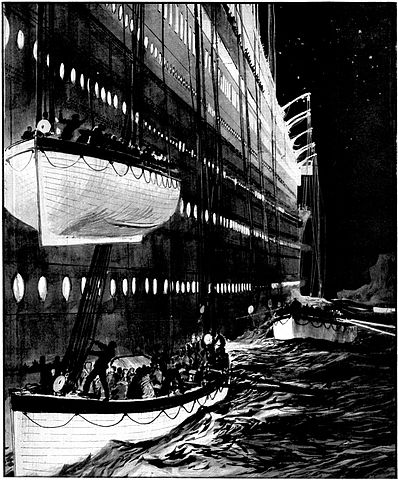
An episode from the sinking of the Titanic, from the testimony of passenger Mary Smith:
When the first boat was lowered from the left-hand side I refused to get in, and they did not urge me particularly; in the second boat they kept calling for one more lady to fill it, and my husband insisted that I get in it, my friend having gotten in. I refused unless he would go with me. In the meantime Capt. Smith was standing with a megaphone on deck. I approached him and told him I was alone, and asked if my husband might be allowed to go in the boat with me. He ignored me personally, but shouted again through big megaphone, ‘Women and children first.’ My husband said, ‘Never mind, captain, about that; I will see that she gets in the boat.’ He then said, ‘I never expected to ask you to obey, but this is one time you must; it is only a matter of form to have women and children first. The boat is thoroughly equipped, and everyone on her will be saved.’ I asked him if that was absolutely honest, and he said, ‘Yes.’ I felt some better then, because I had absolute confidence in what he said. He kissed me good-by and placed me in the lifeboat with the assistance of an officer. As the boat was being lowered he yelled from the deck, ‘Keep your hands in your pockets; it is very cold weather.’ That was the last I saw of him; and now I remember the many husbands that turned their backs as that small boat was lowered, the women blissfully innocent of their husbands’ peril, and said good-by with the expectation of seeing them within the next hour or two.
Bedroom steward Alfred Crawford was helping ladies into a port-side lifeboat when Isidor Straus, co-owner of Macy’s department store, arrived with his wife, Ida. “She made an attempt to get into the boat first. She had placed her maid in the boat previous to that. She handed her maid a rug, and she stepped back and clung to her husband and said, ‘We have been together all these years. Where you go I go.’” The two were last seen sitting side by side in chairs on the deck.
See Leaving.
29 Jul 16:05
Foto do ano (até agora)
by Drunkeynesian
Roubei do Mauricio Santoro, que postou com o seguinte comentário:
O Rio de Janeiro está uma mistura surrealista de Noviça Rebelde, Os Sonhadores e Tropa de Elite". Observação genial do Pedro Roquete. Eu diria que há também toques de Federico Fellini, e da constatação de Oswald de Andrade: "Nunca fomos catequizados. Fizemos foi carnaval.
Um amigo que mora em Madri e cuja opinião respeito 
29 Jul 13:11
Smart
by Wes + Tony
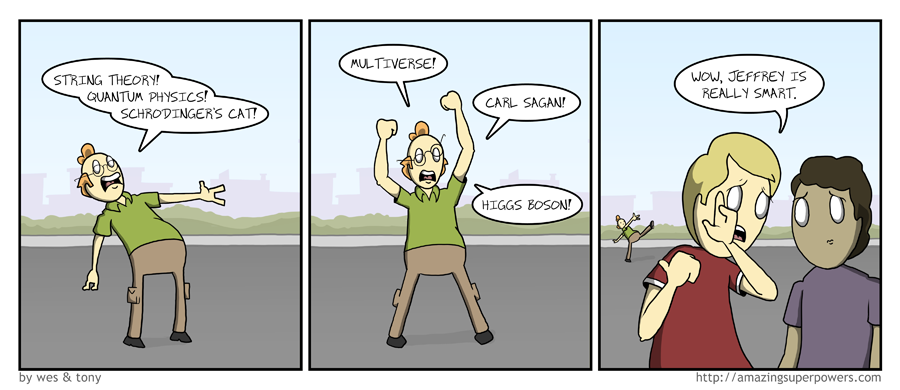
One of my favorite myths is the one that we only use 10% of our brains. That’s hilarious! Why would we even have so much brain; why would evolution work so hard to make gray matter then suddenly go, “Nah, don’t worry about it.” It’s like saying, “Did you know we only use 10% of our bones??”
Another great brain myth is that some dinosaurs like the stegosaurus had two brains. I think the jury might still be out on the validity that one, but how great is that? A second brain in your butt! You’d always be arguing with what YOU want to do versus what your TAIL wants to do. “We should go see a movie!” you’d think, then your tail would be all, “No way man, I hate movies.”
Not only that, but what if the personality in your tail-brain was cooler than you? Your friends would come over and then say, “Uh, yeah, I’m actually here to hang out with your tail…?” Then you’d have to bury your face in the couch while your butt plays Mario Kart with your friends.
Man, dinosaurs had it tough. No wonder they’re all dead!
-Wes
Jarrod Keone Montoya, Cary Renquist likes this
29 Jul 12:54
Reza Aslan, Fox News, and Bulverism
by Robert Long
Adam Victor BrandizziCara, eu confesso: ri muito com a entrevista, mas fiquei culpado por rir do cara que caiu numa furada dessas.
* * *
Bem, prefiro crer que ele se deu bem, afinal. O interesse no livro deve ter crescido; eu mesmo me interessei. Claro, ele vai receber milhares de e-mails dizendo "get a brain moran" mas é o preço a pagar.
* * *
Pra vocês que gostam de jogar Super Trunfo de Falácia na Internet, o texto cita uma que eu não conhecia.
You’ve probably seen a clip of it already: Fox News aired a cringe-worthy interview of the author of the latest Jesus tell-all book on Friday, much to the delight of many on the internet. In the now-viral interview, Fox News anchor and religion correspondent Lauren Green shows zero interest in the arguments or content of scholar Reza Aslan’s new book Zealot: The Life and Times of Jesus of Nazareth.
Instead, she leads off the interview with “You’re a Muslim, so why did you write a book about the founder of Christianity?” Aslan’s eyebrows threaten to rise right off of his face, but he comports himself honorably in a painful ten-minute conversation that never moves past this misguided line of questioning: “It still begs the question though, why would you be interested in the founder of Christianity?”
But even if Green’s line of questioning weren’t laced with xenophobia, ignorant about the purpose of scholarship, or breathtakingly incurious, it would still be problematic. There is a deeper philosophical problem behind focusing on the fact that Aslan is a Muslim.
Let’s suppose for the sake of argument the following: Reza Aslan brings personal biases and prejudices from his Muslim faith to his study of the historical Jesus; the liberal media is breathlessly excited by Aslan’s book, even though it merely rehashes debates that have been going on in historical Jesus studies for decades, because that media tends to be hostile to traditional Christian faith.
In fact, there may very well be reason to believe those things. But to think that they have anything to do with the merits of Aslan’s arguments about Jesus is to engage in a logical fallacy that C.S. Lewis called Bulverism. He explains:
You must show that a man is wrong before you start explaining why he is wrong. The modern method is to assume without discussion that he is wrong and then distract his attention from this (the only real issue) by busily explaining how he became so silly… Assume that your opponent is wrong, and explain his error, and the world will be at your feet. Attempt to prove that he is wrong or (worse still) try to find out whether he is wrong or right, and the national dynamism of our age will thrust you to the wall.
Bulverism a great way to score points while getting no closer to the truth, and it comprises perhaps 95% of writing about religion on the internet.
If you’re actually interested in Zealot, you shouldn’t care about Aslan, or Fox, but about the man from Galilee: what was he like? what did he teach? was he the Christ? If you’re looking for answers to that question, Aslan’s Muslim faith, Fox’s hostility, and any number of dreary facts about America’s cultural grievances are strictly irrelevant.
Textual criticism and and historical methodology can be boring and hard. Questioning motives and feigning outrage is always fun and easy, and serves as a particularly shallow way for people to engage in intellectual triage. That’s why interesting subjects only suffer when they get dragged into the culture wars.
And it’s why I’m going to try to keep reading my way through Zealot, as well as more orthodox takes like NT Wright‘s.
Adam Victor Brandizzi likes this
28 Jul 23:28
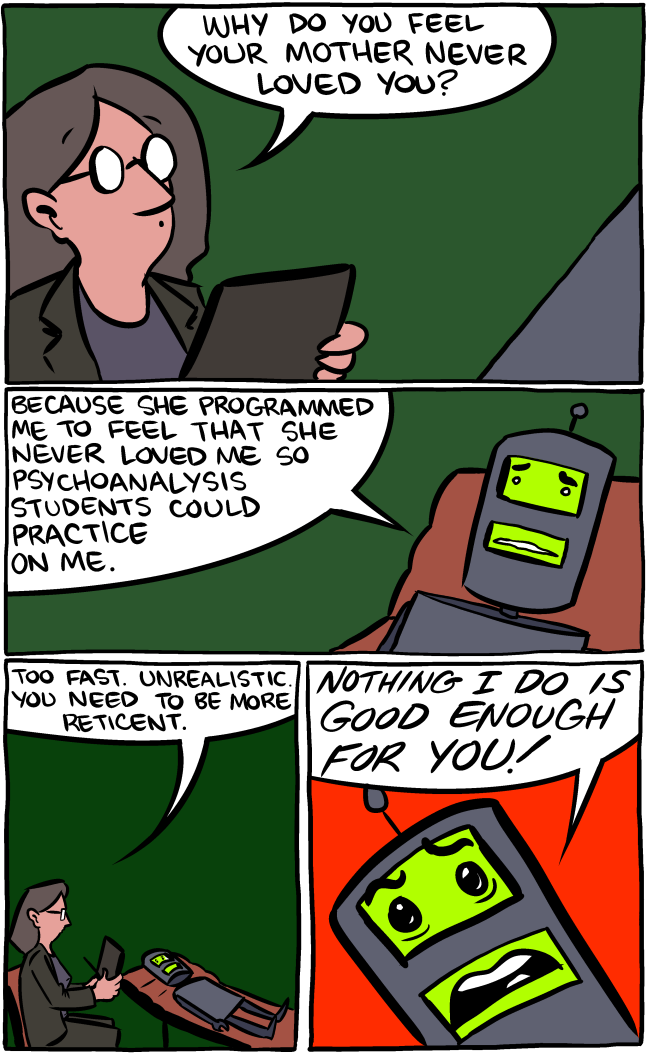
My pals Bill and Jeff have a new kickstarter, and if it ever hits 20k, I'll be drawing a little bonus strip!
July 28, 2013
My pals Bill and Jeff have a new kickstarter, and if it ever hits 20k, I'll be drawing a little bonus strip!
Doug Wibby, Tadeu and one other like this


28 Jul 21:17

LEGO Librarians
by John Farrier
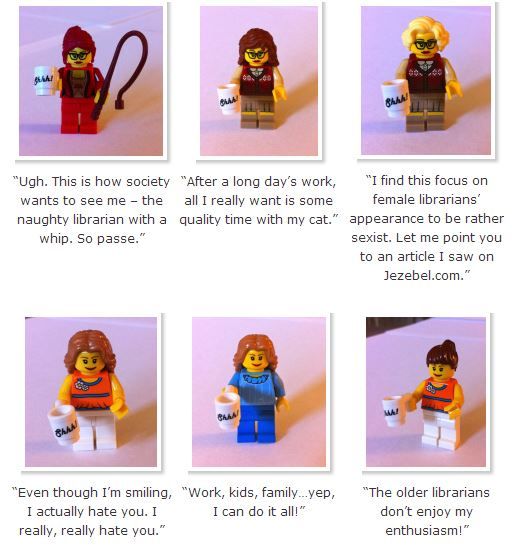
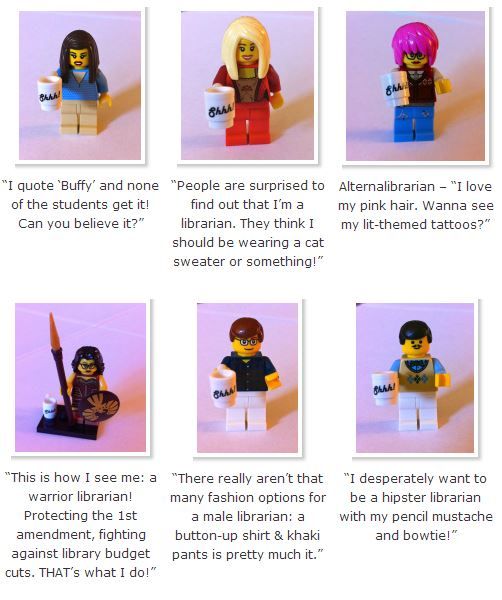
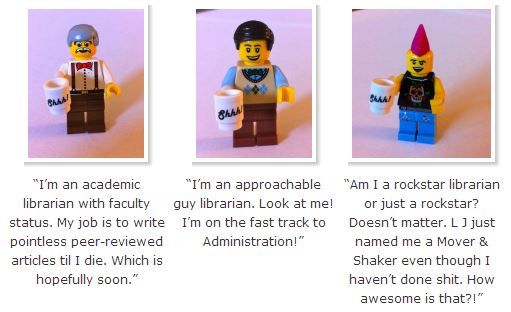
LEGO makes a standard librarian minifig. It's a bespectacled woman with a cup marked "Shhh!" and a book. Joe Hardenbrook, AKA Mr. Library Dude, thinks that doesn't adequately cover the range of librarians in the real world. So he created 27 LEGO minifigs that fit common librarian archetypes. You can view the rest at the link.
Link -via Jessamyn West
Maria Falina, hamatoyoshi and one other like this








28 Jul 20:42
On this day in 1940: Warner Bros. releases “A Wild Hare",...





Adam Victor Brandizzi and -1 others like this


28 Jul 19:25
OkCupid - When using an ad blocker, ads are replaced by a...

Roslyn Cook, Jon and 2 others like this