

Adam Victor BrandizziMas será?
O novo regime do Egito começa a se tornar patético. Há três semanas mantém o presidente deposto Mohammad Morsy preso e incomunicável. Inicialmente, os generais diziam que era para a própria segurança dele em argumento por si só absurdo. Diante das pressões dos EUA, que contribuem com uma mesada de US$ 1,5 bilhão anual para os militares, mudaram a história.
Agora, de acordo com um promotor ligado ao Exército, Morsy estaria preso devido à sua associação com o grupo palestino Hamas nos dias seguintes à queda do regime de Hosni Mubarak, do qual o atual governo é herdeiro. De acordo com esta mirabolante história, o presidente deposto teria agido em conluio com os palestinos para realizar ataques terroristas no Egito.
Vamos aos fatos. O Hamas realmente tem inspiração na Irmandade Muçulmana. As duas organizações, sem dúvida, mantiveram uma ligação estreita ao longo dos anos e, no mandato de Morsy, se aproximaram. Mas vamos desmontar cada uma destas questões que associariam o presidente deposto ao terrorismo.
Primeiro, o Hamas cometeu sim dezenas de atentados contra Israel ao longo das últimas duas décadas. Nos anos recentes, mudou de tática e passou a utilizar o lançamento de foguetes contra cidades no sul de Israel para aterrorizar a população civil. Jamais, porém, a Irmandade foi acusada mesmo por Israel de colaboração com os palestinos em ataques terroristas.
Além disso, a Irmandade, há décadas, abdicou do terrorismo para lutar contra o regime militar do Egito. Apesar de atuar na clandestinidade, mantinha apenas a resistência civil. O Hamas, por sua vez, nunca se envolveu com terrorismo no Egito e mantinha um diálogo com Mubarak.
Vocês poderão argumentar que o Sinai havia se tornado terra de ninguém durante o mandato da Irmandade. Na verdade, mesmo nos últimos anos de Mubarak a região havia se transformada em um território hostil a israelenses. Há anos jovens de Israel já temiam ir mergulhar no Mar Vermelho. Em 2004, houve um mega atentado contra o Hilton em Taba, na fronteira entre Egito e Israel.
Depois da queda de Mubarak, quando os militares do general Sisi estavam coordenando a transição, o Sinai estava até pior do que no período de Morsy, isso apesar de as Forças Armadas terem sabotado o governo da Irmandade.
Os túneis usados para levar armamento do Sinai para Gaza foram construídos no regime de Mubarak. Tanto que a Guerra de Gaza aconteceu no início de 2009. Quem estava no poder na época no Egito? Mubarak. Aliás, Israel evitou outra guerra no ano passado graças ao envolvimento de Morsy, negociando uma trégua entre os israelenses e o Hamas. O presidente deposto egípcio foi elogiado ao redor do mundo por sua ação. Ele também conseguiu afastar o grupo palestino do Irã, da Síria e do Hezbollah, inimigos de Israel.
Conforme escrevi aqui ontem, dá para discutir se a deposição de Morsy foi ou não golpe, assim como ocorreu com Lugo no Paraguai e Zelaya em Honduras. Mas o período pós deposição no Egito demonstra que os militares, mesmo com seus fantoches civis em cargos de presidente e premiê, incluindo autoridades como o hipócrita Nobel da Paz Mohammad El Baradei, estão implementando uma ditadura repressiva que já matou em três semanas mais de cem pessoas e mantém a prática de prisões ilegais.
Para completar, mais uma vez, criticar os militares no Egito não significa apoiar a Irmandade. O governo de Morsy foi horroroso na administração da economia, desrespeitou instituições democráticas ao querer se sobrepor ao poder judiciário, e, assim como regime de Mubarak e o dos militares que o sucederam, manteve a opressão às mulheres e aos cristãos.
Os militares, com todo o apoio popular das ruas, poderiam ter tomado outro rumo. Optaram, porém, por manter o regime de Mubarak sem Mubarak. Uma atitude deprimente.
Guga Chacra, comentarista de política internacional do Estadão e do programa Globo News Em Pauta em Nova York, é mestre em Relações Internacionais pela Universidade Columbia. Já foi correspondente do jornal O Estado de S. Paulo no Oriente Médio e em NY. No passado, trabalhou como correspondente da Folha em Buenos Aires
Comentários islamofóbicos, antisemitas e antiárabes ou que coloquem um povo ou uma religião como superiores não serão publicados. Tampouco ataques entre leitores ou contra o blogueiro. Pessoas que insistirem em ataques pessoais não terão mais seus comentários publicados. Não é permitido postar vídeo. Todos os posts devem ter relação com algum dos temas acima. O blog está aberto a discussões educadas e com pontos de vista diferentes. Os comentários dos leitores não refletem a opinião do jornalista
Acompanhe também meus comentários no Globo News Em Pauta, na Rádio Estadão, na TV Estadão, no Estadão Noite no tablet, no Twitter @gugachacra , no Facebook Guga Chacra (me adicionem como seguidor), no Instagram e no Google Plus. Escrevam para mim no gugachacra at outlook.com. Leiam também o blog do Ariel Palacios
Most have greeted the new sci-fi action movie “Pacific Rim” as mindless entertainment, and it certainly is that. But the movie is about much more than just computer generated action sequences and campy dialogue. In fact, it’s an allegory about the effects of globalization on manufacturing employment.
First, some important spoilers. “Pacific Rim” is a film about giant robots fighting giant sea monsters. For reasons that are not clear to begin with, these lizard-like creatures begin to emerge from an inter-dimensional breach deep in the Pacific Ocean, whereupon they attack various port cities. Emerging from the heart of the region most closely associated with globalization anxiety, these monsters represent the forces of creative destruction unleashed: they are unthinking, mysterious, and utterly disruptive.
Today there is growing anxiety about globalization and what it means for many individuals. The ratio of global imports to world GDP has risen from 14 percent in 1970 to just under 30 percent in 2008. At the same time, American manufacturing employment as a percentage of total employment has steadily fallen from 26.5 percent to 9.25 percent over roughly the same time period. Even in absolute terms, manufacturing employment has fallen by more than two million since 2000.
While some of this decline is no doubt due to increases in the productivity of American manufacturing, the recent events in Detroit illustrate the fraught consequences of increased global competition. It’s only natural that these anxieties—like the anxieties of previous times and places—should find expression in seemingly unrelated works of popular culture.
When traditional military forces prove less than adequate against the rising tide of monsters, nations naturally respond by building 250-foot tall robots, controlled by a pair of pilots using a kind of next generation Wii system. As the film explicitly notes, these robots were initially developed using DARPA funding, and represent a kind of industrial policy, each nation deploying its own robot champions. There is a Russian robot team, a Chinese team, an Australian team, and of course an American one, each protecting its home country.
But while the robots are initially successful, the monsters keep growing and invading at an ever-faster pace, overwhelming the efforts of the local industries. In response, the world’s leaders decide to abandon their industrial robot program in favor of literally building giant walls around all of their ports. It is explicitly mentioned that this has cut off trade and forced rationing and other hardships on the population—though it does seem to create a fair number of short-term blue collar jobs actually building the wall. The one city that doesn’t succumb to protectionism is Hong Kong (which happens to be an oft-cited example of free trade success in real life), where the remaining robots all relocate.
Along with the robot teams are two scientists who hope to solve the monster problem. The first, representing the neoclassical school of economics, believes that the behavior of the monsters can be explained and predicted based on mathematical models that he developed (when the models initially appear inaccurate, he gives the standard explanation that his theory was right but the timing was wrong). The second scientist is more of a behavioralist, who thinks that to understand the monsters you have to examine them, how they are, rather than working from deductive theories about them.
Combining their wisdoms, the scientists are able to discover that what appear to be unthinking “market forces” are actually being controlled and manipulated by a race of lizard-like aliens who hope to take over the planet. These lizard-aliens represent an amalgamation of multinational corporations, international finance, and so forth. The rise of trans-national corporations and magnates seemingly detached from any loyalties save global commercial conquest has long been decried, and giant lizards have long been used as a symbol for international bankers (conspiracist David Ickies imagines an international plot of actual shapeshifting lizard aliens). The most recent controversies over multinational misdeeds include accusations of Apple hiding international profits, Facebook co-founder Eduardo Saverin renouncing his American citizenship to move to Singapore (and avoid paying millions of dollars in taxes), and massive global price-fixing conspiracies.
While I won’t give away the ending, unfortunately the heroes eventually defeat the aliens in a way that doesn’t offer much guidance for today’s macroeconomic situation.
Searching for deeper meaning in a Hollywood movie about giant lizards may seem a stretch, but it certainly isn’t unprecedented. The original “Godzilla” movie was a clear allegory for the atomic bombing of Japan, while “Cloverfield” dealt with post-9/11 psychic traumas. Today there is growing anxiety about globalization as a huge, destructive force beyond the control of individuals, and so it’s only natural that this should find expression is popular culture.
Plus, watching giant robots fight is pretty cool.
Josiah Neeley is a Policy Analyst at the Texas Public Policy Foundation in Austin, Texas. His views on giant lizards are not necessarily those of his employer.
I’ve been a sleepwalker for as long as anyone in my family can remember.
I talk in my sleep, sometimes at length, and usually in a sort of slow-motion narrative or series of questions posited to a sleepy bed-mate who’d almost certainly rather not be up, answering stupid questions, at three in the morning.
My old window unit air conditioner used to make a little buzzing sound, so subtle you’d almost miss it, but in my sleep, I’d hear it and get up, get out my toolbox, clear a space, and carefully dismantle the unit, laying out the pieces one by one as I dug down into the guts of the machine.
"Joe, come back to bed."
"I need to get this opened up. There’s another bird caught in the air conditioner."
"There’s not another bird in the air conditioner, Joe."
"Yeah, there is. Don’t you hear it? I don’t want it to get hurt."
"I think I heard it fly back out again. Come back to bed."
"Are you sure?"
"Yes."
"That’s good. I don’t want that bird to get hurt."
That air conditioner finally wore out after twenty years of interrupted service. By the end, it was all held together with duct tape and drywall screws, where the original parts had fallen apart from being unscrewed and screwed back in. The new one is nice, and does not have a bird in it, as far as I can tell. I’ve left this one alone for two years now.
I spent years, in the nineties, back when I had my last ongoing serious relationship, waking up, shaking my partner awake, and telling him my pet ground squirrel, Alice, was in bed with us, running around in the bed linens, and that I had to get her out so we wouldn’t roll over and crush her. He’d sigh and follow the drill, climbing out of bed with a pillow, to watch me while I meticulously unfurled each sheet and blanket, shaking them out and smoothing them over with my hands. At some time in this process, Alice would always look over, sitting in her tank, and would then start running on her wheel, which made a long, whining squeak that never failed to alert me to her true status.
"Alice isn’t even in the bed. She’s in her cage."
"Yes, Joe, I know."
"Was she in there all along?"
"Yes, Joe. She is always in there.”
"Really? That’s a hell of a thing. Well, at least the bed’s all tidy now."
"Get back in bed, please."
Most of what happens is sort of standard obsessive-compulsive cleaning, tidying, and preparation, but sometimes, I get up and assemble things into strange tableaus—spice jars in circles and little pyramids in the kitchen, the shower curtain folded into inexplicable origami. Sometimes, I leave myself useful signs and symbols. Mostly, I am the ghost haunting my own house.
I’ve been lucky, I guess, in that the Sleeper is benign and helpful, albeit in odd ways. Back in college, I’d get stressed out over tests, studying until the wee hours and keeling over, surrounded by books and papers, sideways on the bed, and then I’d wake up to find that I’d tidied up, packed my knapsack for the morning, showered, shaved, and dressed. As satisfying as the time savings were back then, I could not help but feel somewhat alarmed that I could stand in a shower and not wake myself up.
You wonder, I suppose, about what could happen. It’s like the fear I used to have about going on school field trips to Washington, D.C., where we’d all get off the bus and pile onto the Metro. I’d stand there at the platform, looking down at the third rail, and worry that I’d get some wild, uncontrollable impulse, just as the train was coming in, and jump onto the tracks. I’ve since learned that that’s a pretty common fear, and has a name, which escapes me at the moment, but you wonder about those things, about if you have the capacity of doing something sudden and destructive for no obvious reason.
I think, in a way, I’m lucky in that my Sleeper has had a patient series of trainers, from my family to my two ex-partners, all of whom, once over the obnoxious novelty of finding me wandering around at night, managed to respond in ways that cultivated more self-regulation and introspection. It’s all conjecture, of course—I barely know the guy, even though he’s bathed me and made me breakfast and made sure all my squirrels and birds are okay—but I suspect we have a good working relationship. If the Sleeper represents some sort of inner aspiration or ambition, I have to be glad that my secret desire is to have OCD and take care of animals and spice jars and not go on a bloodcurdling hacking spree or something worse.
The doubt, though, is why I so often follow the old gay seventies motto—in bed by midnight, home by two. It’s just easier than explaining to some strange person, or to someone I’d dated a time or two, exactly why I’m taking their air conditioner apart in the middle of the night.
"Did you hear a bird in there?"
"Holy shit! GET OUT!"
Adam Victor BrandizziTentando repetir a popularidade do Lula usando a mesma técnica: torcer para um time alvinegro?
A presidenta Dilma Rousseff parabenizou, nesta quinta-feira (25), o Clube Atlético Mineiro pelo título da Copa Libertadores da América, conquistado com vitória sobre o Olímpia, do Paraguai, por 2 x 0. Segundo Dilma, o Brasil acordou alvinegro.
Confira a íntegra:
“O Brasil acordou alvinegro com o título do meu querido Clube Atlético Mineiro de campeão da Taça Libertadores. Aprendi a gostar de futebol indo, ainda criança, ao estádio do Mineirão assistir aos jogos do Atlético.
Parabéns aos jogadores, à comissão técnica e a nossa torcida, que conquistou a admiração de todos os brasileiros.
Parabéns não apenas pela vitória. Parabéns por, mesmo diante de um resultado adverso, não desistirem, não esmorecerem e, por isso mesmo, se superarem.”
Dilma Rousseff
Presidenta da República Federativa do Brasil

Rare Albino Wallaby Joey Grows Up at Linton Zoo
When keepers at the United Kingdom’s Linton Zoo first saw the oddly-colored joey peeking out of Red-necked Wallaby Kylie’s pouch on February 8, they affectionately named it ALF (Alien Life Form). But as the pale-colored joey grew, they realized its dramatic white coloring was truly stunning!
Check out more photos and a video of the beautiful little joey and learn about albino animals at ZooBorns!


For New York based artist, David Lee, what began as a series of straightforward anatomical illustrations transcended into a deeper view of the human experience and what it means to live outside of the body.
I originally planned my series to be a more scientific view of humans, organized and divided into sterile diagrams. As I painted, I couldn’t help but to continue thinking about humans and their place in the universe, and as my perspective changed so did my work…as I believed that the human spirit transcended the physicality of the body, my work took on a more whimsical feeling. What stayed was the anatomical element as in both cases, the exposure of the inner human body became a symbol for honesty.
Adam Victor BrandizziEu gosto bastante desse projeto musical. Meus amigos gamers dizem que tem inspiração em videogames, mas não consigo ver a inspiração...
Recuerdos de la Alhambra


While Nikki the Siberian Tiger was under anesthesia for her physical, the Oregon Zoo allowed visually impaired children to feel her fur and paws.
 |
Courtney
shared this story
from  fuck yeah, hard femme!: fuck yeah, hard femme!:
|
| / |










Joan Crawford in Possessed (1931)
82 years later and it’s still relevant
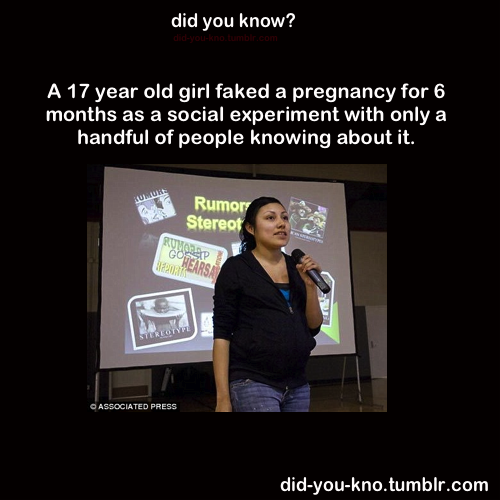
I saw a news report about this on T.V., she was a straight A Student who had perfect attendance and everything. Everyone loved and respected her for her skills, but when she started this experiment and people thought she was pregnant, they started treating her like garbage. Even her teachers started looking down on her like she was scum of the earth. The only people who knew she was doing this as an experiment were her school principle, her health care teacher and her father. Her own mother thought she was pregnant.
I mean even her friends turned on her, it was horrid. Very very sad, and as soon as she revealed during an assembly that the pregnancy was false, a lot of people were in shock as she brought up all the horrible things they said and did to her because they thought she was pregnant.
The reason for the experiment was to see how people would react and treat her if they thought she was pregnant, as opposed as to treating her as the straight A “Perfect” student they usually did. And it proved that people were horrible scumbags to her as soon as they thought she was.holy shit. this is fucking awesome
mad respect for her to keep it going for 6 months. like can you imagine everyone turning on you like that holy fuck
Adam Victor BrandizziAutopromoção, apenas ignore :P
Since AlloyUI became a base component for Liferay, various amazing tools became available for the Liferay developer.
One of these are the JavaScript components such as Liferay.Store. This component allows the developer to store user-related data quickly on the server. To see how it works, let's consider a portlet which stores how the user prefers her coffee: black, sweet or with milk. We can just create a select input with the options (github):
How do you like your coffee?

<select id="<portlet:namespace/>coffeePref" name="<portlet:namespace/>coffeePref">
    <option value="black">Black</option>
    <option value="sweet">Sweet</option>
    <option value="milk">With milk</option>
</select>
As one would expect, the choice will be lost when the page is reloaded. Here enters Liferay.Store: it asynchronously saves any information on the server, relating it to the authenticated user. In this case, when the select input changes we will store the new value. First, we open a new <aui:scipt> element, which should declare the use of the liferay-store module:
<aui:script use="liferay-store">

</aui:script>
In it, we retrieve the input using the YUI API and bind a function to its change event:
<aui:script use="liferay-store">
    A.one('#<portlet:namespace/>coffeePref').on(
        'change',
        function(event) { }
    );
</aui:script>
Now comes the beef: the function retrieves the current value of the select input and stores it using the Liferay.Store component (github):
<aui:script use="liferay-store">
    A.one('#<portlet:namespace/>coffeePref').on(
        'change',
        function(event) {
            var instance = this;

            Liferay.Store('<portlet:namespace/>coffee-preference', instance.val());
        }
    );
</aui:script>
In this case, we store the value of the input in a key composed by the portlet namespase followed by the coffee-preference suffix.
One can retrieve this value from JavaScript but it is a common pattern to fetch it on the server side, since it avoids unnecessary requests and slowdowns. This is what we'll do; for that, we use the get() method from the com.liferay.portal.util.SessionClicks class:
<%

String coffeePreference = SessionClicks.get(request, renderResponse.getNamespace() + "coffee-preference", "");

%>
<select id="<portlet:namespace/>coffeePref" name="<portlet:namespace/>coffeePref">
    <option value="black" <%= "black".equals(coffeePreference) ? "selected" : "" %>>Black</option>
        <option value="sweet" <%= "sweet".equals(coffeePreference) ? "selected" : "" %>>Sweet</option>
    <option value="milk"  <%= "milk".equals(coffeePreference) ? "selected" : "" %>>With milk</option>
</select>

Wikipedia Zero is now available in India
It is our mission to provide free access to knowledge for everyone in the world. It’s only fitting then that today we announced our first Wikipedia Zero partnership launch in India, the world’s second most populous country with over 1.2 billion people. Our new partnership with Aircel will give 60 million mobile subscribers in India the potential to access Wikipedia at no data cost, bringing the program’s global partnership footprint to 470 million subscribers.
While mobile penetration in India is over 70 percent (867 million subscribers), the total Internet audience of India is only 77 million people (Comscore, June 2013), roughly the same as Japan (73 million, Comscore June 2013) – a country with 1/10th the population. Infrastructural and economic barriers in India, where income per capita is 1/30th that of Japan, have led to this divide in information access. However, the proliferation of mobile – and programs like Wikipedia Zero – will change that. Already, India has passed Japan to become the third largest smartphone market in the world.
The challenge in enabling knowledge access in India is not just about distribution and cost, though; it’s also about language. India has no national language, but there are 22 recognized official languages in the country. Many Indians are not only accessing the internet for the first time on mobile, but also non-English content is becoming accessible for the first time via mobile.
Hindi Wikipedia, for example, currently has 22.1 percent of page views globally coming from mobile compared to 17.3 percent for all other languages .[1] We hope to further catalyze this transformation as Wikipedia users on Aircel can access English, Hindi, Tamil or any of the other 17 Indic language Wikipedias without being charged data fees .[2]
To meet our commitment to bringing free knowledge to everyone in the world, we need to break down the barriers that prevent access. With Wikipedia Zero officially available today on Aircel in India, we’re one step closer to that objective.
Amit Kapoor
Senior Manager, Mobile Partnerships, Wikimedia Foundation
IDEA: rental ghosts to create “cold spots” in houses during heat waves.
– KenJennings
I’m a morning person. Then, around noon, I turn into a horse.
– mikeleffingwell
spiders are just wee furry eight-leggedy things; think of them as two kittens taped together and you’ll be fine
– Friend of xJane’s seen via FB
Literally thousands of chameleons in your house right now and you don’t even know it.
– weinerdog4life
PREQUEL: “Goddamned Mohicans Everywhere.”
– MiahSaint
did you know? goths have 50 different words for despair
– IamEnidColeslaw
a baby’s laughter is one of the most beautiful sounds you will ever hear, unless it’s 3 am and you’re home alone and you don’t have a baby.
– iphone420s
You never hear about a new ghost. “Oh yeah, this place is haunted since Jeff died last Tuesday.”
– juliussharpe
the movie “se7en” but each murder is based on a different dwarf
– twice_mustard
SEX TIP: keep track of multiple orgasms in the voice of The Count from Sesame Street.
– KenJennings
Adam Victor Brandizziexplainxkcd ajuda agora, mas por pura preguiça, já de dava para procurar tudo isso um a um..
Adam Victor BrandizziMinha sobrinha me acha parecido com o Gru. Todo mundo concorda com ela. Agora, isso aí. Eu realmente sou ele.

Quem sempre?