Shared posts

31 Oct 18:01

Can Quantum Encryption Protect Your Data?

by Marina Olson

In our post-Snowden world, we can no longer deny what was always implicit in digital communication: someone, somewhere can find and read your data, if they are determined enough or have special government clearance. For Americans who value their privacy, fourth amendment rights, and believe it unnecessary for the government to have access to our every digital stroke, the question they must ask is who can “you trust with sensitive data these days?”

Since 1976, public key, or asymmetric-key, encryption has been the  default method of private and secure digital communication. Public key encryption works through employing two keys, a public key encryption key and a private decryption key employed by the two computers. This technology remains secure because it employs extremely large numeric combinations: for example, Lavabit, the secure email service run by Ladar Levison and used by Edward Snowden, used “Elliptical Curve Cryptography (ECC) with 512 bits of security to encrypt messages. The private, or decryption, key is then encrypted with a user’s password using the Advanced Encryption Standard (AES) and 256 bits of security,” which is the level of security the NSA has approved for government work. Yet, as we have seen, even those most committed to protecting privacy (like Levison) can be thwarted by more conventional means. This occurred with Lavabit when the US government demanded Lavabit give them the private SSL keys after being refused access to “information about each communication sent or received by the account, including the date and time of the communication, the method of communication, and the source and destination of the communication.” More problematic is that, if the September 5th leak from Edward Snowden is correct, “the HTTPS and SSL encryption used by most email and banking services offers little to no protection against NSA surveillance.”

A further potential threat to public key encryption, beyond compromised keys and eavesdroppers, is quantum computers. Quantum computers rely on atomic properties that allow the machine to compute at speeds currently out of practical reach. This is not because quantum machines compute faster, but because they can take mathematical shortcuts rather than sequentially calculating each possibility as computers today do. At Computer World,  Michele Mosca, deputy director of the Institute for Quantum Computing at the University of Waterloo in Ontario, explains:

Breaking a symmetric code…is a matter of searching all possible key combinations for the one that works. With a 128-bit key, there are 2128 possible combinations. But thanks to a quantum computer’s ability to probe large numbers, only the square root of the number of combinations needs to be examined — in this case, 264.

As many tech journals have highlighted lately, the very technology that now poses a threat to our security could also pose a solution. Quantum cryptology, a word that sounds more like something out of science fiction than a science journal, could be the next move for information privacy. Quantum Key Distribution (QKD) works very much like public key distribution, with added protection provided by particle physics. As David Holmes describes it:

The first part is the same: Data is encrypted using an algorithm. But then the data itself is encoded on a light particle known as a photon. Because photons are smaller than atoms, they behave in some pretty crazy ways. For example, you can “entangle” two photons so their properties correlate with one another. A change to one photon (which can occur as easily as by someone observing it) will cause a change in the other photon, even if the two are a universe apart.

After entanglement occurs, the sender transmits the first photon through a fiber cable to the receiver. If anyone has measured or even observed the photon in transit, it will have altered one of the properties of photon no. 1, like its spin or its polarization. And as a result, entangled photon no. 2, with its correlated properties, would change as well, alerting the individuals that the message had been observed by a third party between point A and point B.

Quantum cryptography relies on the observable traits of quantum physics, the aspect that Einstein referred to as “spooky action at a distance” to offer added protection: the knowledge of when data has been compromised by an attempted third-party observation.

The problem with this technology is its practical application. So far, the technology is still in its infancy, while physicists and tech experts try to solve problems such as distance, transmission, and integration with cloud based technologies. But as Snowden and Glenn Greenwald release more leaks, greater demand for digital security will pressure scientists to solve these problems. Quantum mechanics, with all its strange, fascinating, and downright unbelievable properties, could provide us with a myriad of innovative technological advancements. For those who only think about the effects of quantum physics when the Nobel prize in physics is announced, hold on: the study of quantum physics is about to get a lot more practical.

19 Oct 00:43

Far From Home

by Greg Ross

Two or three of them got round me and begged me for the twentieth time to tell them the name of my country. Then, as they could not pronounce it satisfactorily, they insisted that I was deceiving them, and that it was a name of my own invention. One funny old man, who bore a ludicrous resemblance to a friend of mine at home, was almost indignant. ‘Ung-lung!’ said he, ‘who ever heard of such a name? — ang-lang — anger-lang — that can’t be the name of your country; you are playing with us.’ Then he tried to give a convincing illustration. ‘My country is Wanumbai — anybody can say Wanumbai. I’m an ‘orang-Wanumbai; but, N-glung! who ever heard of such a name? Do tell us the real name of your country, and then when you are gone we shall know how to talk about you.’

– Alfred Russel Wallace, “The Aru Islands,” The Malay Archipelago, 1869

17 Oct 17:39

Honorable Prisoners

by Greg Ross

After John II of France was captured by the English in 1356, he paid 1 million gold crowns for his ransom and promised to pay 2 million more. As a guarantee he offered his son Louis as a hostage. When word came that Louis had escaped, John voluntarily returned to captivity in England, citing reasons of “good faith and honor.” He died there in 1364.

In 1916, after two years in a German prisoner-of-war camp, British Army captain Robert Campbell received word that his mother was dying of cancer. He wrote to Kaiser Wilhelm II asking permission to visit her, and was given two weeks’ leave on condition that he return afterward. Campbell went to England, spent a week with his dying mother, then returned to confinement in Germany, where he remained until the war ended.

“Captain Campbell was an officer, and he made a promise on his honor to go back,” said historian Richard Van Emden, who uncovered the episode while researching his book Meeting the Enemy. “Had he not turned up there would not have been any retribution on any other prisoners. What I think is more amazing is that the British Army let him go back to Germany.”

17 Oct 17:07

The F Problem With The P-Value Sciences

by Neuroskeptic

There is a problem in science today. I’ve written a lot about how to cure it, but in this post I want to outline the nature of the disease as I see it.

The problem goes by many names:

So I’m going to call it the f problem for short.

I like to visualize f as a forking path. Given any particular set of raw data, a researcher faces a series of choices about how to turn it into a ‘result’.

There are choices over which statistical tests to run, on which variables, after excluding which outliers, and applying which preprocessing… and so on:

f_neuroskeptic_science

The f problem is that researchers can try multiple approaches in private, and select for publication the most desirable ones.

Most often, it’s statistically significant effects, that match with prior hypotheses, that are desired. Even if there are no real effects of interest in the data, some comparisons will be ‘positive’ just by chance.

Researchers today face pressure to publish ‘good results’ and are rewarded for doing so – this is what turns f from a theoretical concern into a real one.

Yet f is not a problem for all of science. Broadly, f only affects research in which the results take the form of p-values. Thus fields like mathematics, where results are proofs, are immune.

But even some p-value sciences manage to escape f. This is because in these fields, the nature of the enterprise means that ‘everyone knows’ what experiments are being carried out, and how the data ought to be analyzed – in advance.

In particle physics, for example, it was public knowledge that CERN was looking for the Higgs Boson, and it was also known exactly how they planned to look for it in the data. Openness meant that was no room for f, because f is all about the scope for hidden flexibility.

The post The F Problem With The P-Value Sciences appeared first on Neuroskeptic.

17 Oct 13:46

10 Books Children Should Read

by Gracy Olmstead
Adam Victor Brandizzi

Esqueceram http://9gag.com/gag/638690
* * *
Falando sério, tem esses dois que adorei quando era criança e comprei para meu filho: http://brandizzi.tumblr.com/post/57358040759/comecando-a-montar-a-biblioteca-do-luciano E tem A Bolsa Amarela também, que preciso comprar também.

Should parents control what children read? Writer Neil Gaiman says no: in a lecture published in Tuesday’s Guardian, he argues the idea of “bad books” for children is “tosh,” “snobbery and foolishness”:

There are no bad authors for children, that children like and want to read and seek out, because every child is different. They can find the stories they need to, and they bring themselves to stories. A hackneyed, worn-out idea isn’t hackneyed and worn out to them. This is the first time the child has encountered it. Do not discourage children from reading because you feel they are reading the wrong thing. Fiction you do not like is a route to other books you may prefer. And not everyone has the same taste as you. Well-meaning adults can easily destroy a child’s love of reading: stop them reading what they enjoy, or give them worthy-but-dull books that you like, the 21st-century equivalents of Victorian “improving” literature. You’ll wind up with a generation convinced that reading is uncool and worse, unpleasant.

Gaiman has a point. Many parents take comics away from their children, fearing they’ll never read “real stuff”—yet often comics serve as a bridge into deeper material. Victorian morality tales usually present cardboard, cookie cutter pictures of childhood life. Little girls and boys don’t want to read it—they can see it’s fake.

But should children have free rein over reading material? While exploration is key to fostering imagination, it is also true that strong ingredients build a healthy mind: just as most parents won’t allow their children to only eat junk food, so children should not be allowed to only consume sugar-coated reads. Parents should encourage children to pick up substantive books. This encouragement needn’t “destroy a child’s love of reading,” as Gaiman writes. The very best books merge excellent content with delightful style. They foster knowledge while appealing to the imagination.

In case it might be helpful to readers, here is a list of 10 titles—many Newbery winners and classics—that seem to fit this description. The books are organized loosely by complexity.

The Little Prince, by Antoine de Saint-Exupéry
This book tells the story of a stranded airplane pilot, who meets an otherworldly little prince in the Sahara desert. The little prince is a fascinating character, and the author’s watercolor illustrations are beautiful. There is a gorgeous pop-up book version.

The Phantom Tollbooth, by Norman Juster
The Phantom Tollbooth was a personal childhood favorite. Its protagonist, Milo, is a bored little boy who discovers a “phantom tollbooth”—and with it, an imaginative world in which numbers, words, music, and sounds come to life.

A Wrinkle In Time, by Madeleine L’Engle
This work is another imagination-stretching tale: Meg Murray’s father, a government scientist, has disappeared. Along with her little brother Charles, Meg sets out on an intergalactic adventure to find him.

At the Back of the North Wind, by George MacDonald
George MacDonald has written several other lovely children’s books—The Princess and the Goblin is a must-read. But this book is perhaps his sweetest. A little boy named Diamond meets the mysterious lady North Wind one blustery night, and she brings him on many adventures through the night sky.

The Tale of Desperaux, by Kate DiCamillo
DiCamillo’s book was recently adapted for film, but of course the book is better. It has lovely, interesting characters: perhaps most notably, the deeply conflicted rat Chiaroscuro.

Carry On, Mr. Bowditch, by Jean Lee Latham
This excellent book explores the world of sea travel and colonial England through its protagonist, Nat Bowditch. Nat has to gives up dreams of Harvard to become an indentured servant. Nonetheless, he teaches himself advanced mathematics, and grows up to become captain of his own ship.

The Witch of Blackbird Pond, by Elizabeth George Speare
After growing up in the Barbados islands, Kit Tyler must accustom herself to the Puritan lifestyle of her New England relatives. The story explores superstition, virtue, and love within this context.

Little Britches, by Ralph Moody
Moody shares memories of his own childhood, after his family moved from New Hampshire to a Colorado ranch in 1906. The book is full of excitement, adventure, and heartbreak.

Laddie: A True Blue Story, by Gene Stratton Porter
This book is another personal favorite. Porter shares the story of love, family, and community from the perspective of a nine-year-old girl. It is a humorous and heart-touching read.

Holes, by Louis Sachar
Hole’s plot and characters are excellently crafted. Despite being a good-hearted kid, Stanley Yelnats has terrible luck. When he ends up wrongfully at a juvenile detention facility, he begins to unlock clues to an incredible mystery.

These are just a few books that came to mind after reading Gaiman’s article (I excluded some “obvious” but wonderful titles, like Charlotte’s Web or The Jungle Book). It is senseless for parents to let children exclusively read the Captain Underpants collection simply because “they want to.” Children “want to” because they don’t know better—they are ignorant of countless treasures to be enjoyed. A child might love the idea of eating Lucky Charms for breakfast for the rest of their life. But if you let them, they’ll never know the joy of homemade cinnamon rolls or eggs benedict.

17 Oct 12:34

The Battle to Lose the Independent Vote

by Tim Urban


Like Wait But Why? Subscribe by entering your email address (no spam, ever)
Tweet


Like this post on Facebook:

Like Wait But Why on Facebook:
17 Oct 11:58

The Guy who Shrunk his 1950s Hometown

by MessyNessy

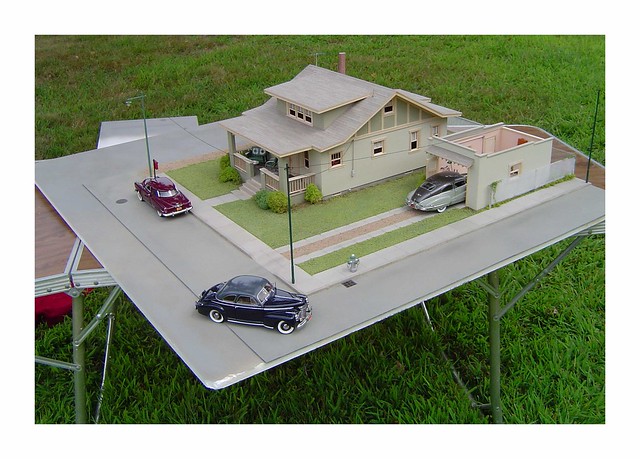
'55 Oldsmobile-with-Bungalow

This could be a snapshot from a mid-century suburban town, taken by a proud new car owner who just came home from the dealership. Perhaps he dashed straight inside his house at number 239 to grab the camera and capture the moment he achieved the American dream …

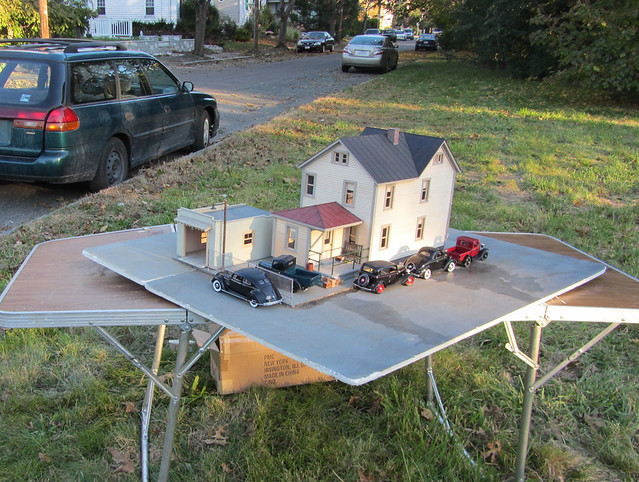
Sense of scale 1

Or not…

 Sense of scale 2

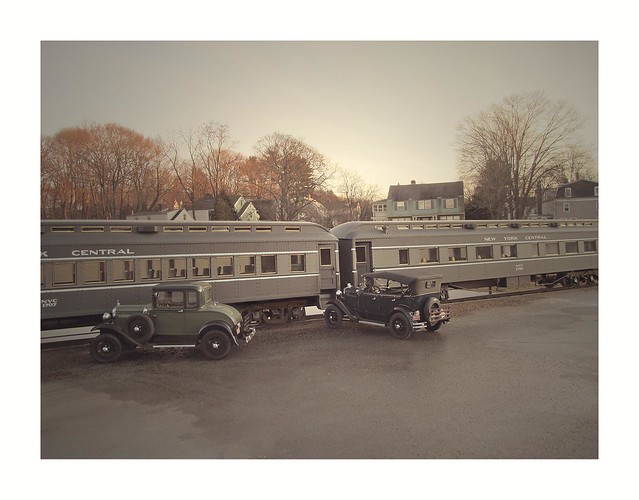
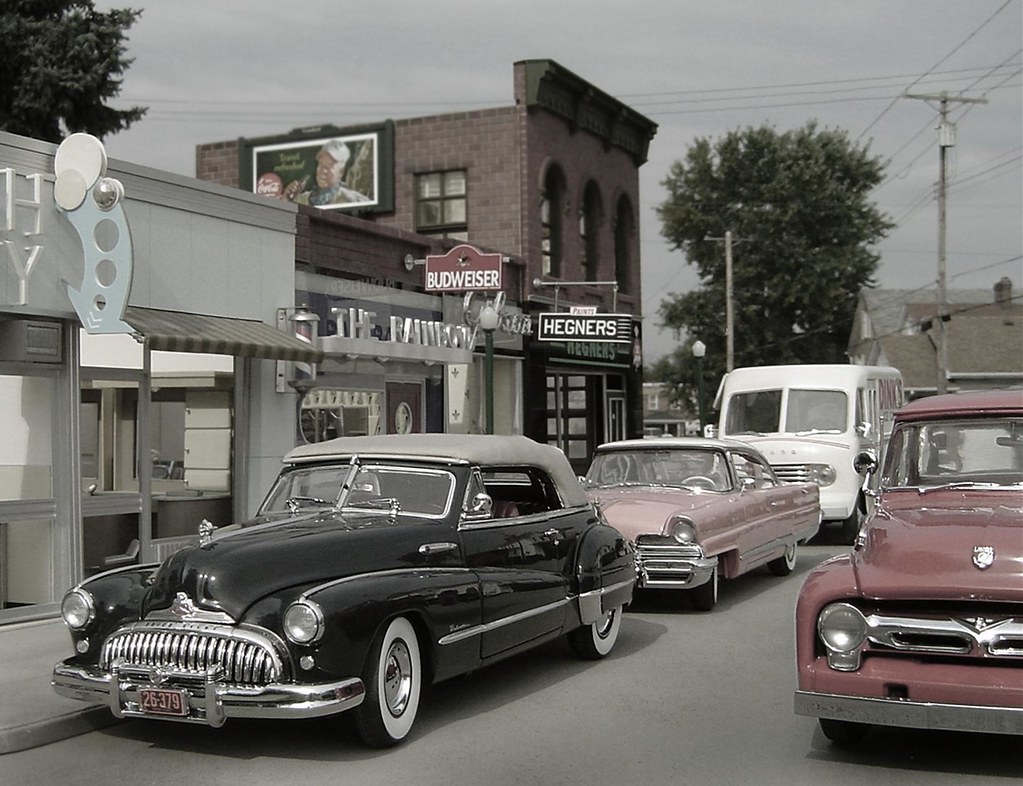
You’re looking at the work of Michael Paul Smith who makes dream-like reconstructions of the town he grew up in. “It’s not an exact recreation, but it does capture the mood of my memories,” says Michael, who was born in Pennsylvania in 1950.

The Delivery of the New Bendix Washing Machine

Setup Shot for Bendix Washer Delivery

He has named his ongoing project, “Elgin Park“, an imaginary town (inspired by his boyhood memories of Pittsburgh) where time has stopped in the era of beautiful automobiles. To achieve a vintage look, he applies retro filters but Michael stresses that none of his pictures have been manipulated with Photoshop and they all come ‘straight from the camera’.

Ala Cushman

DIVCO Sense of Scale

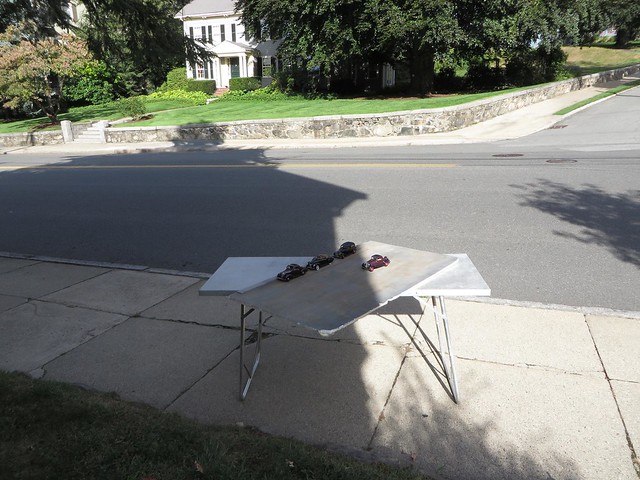
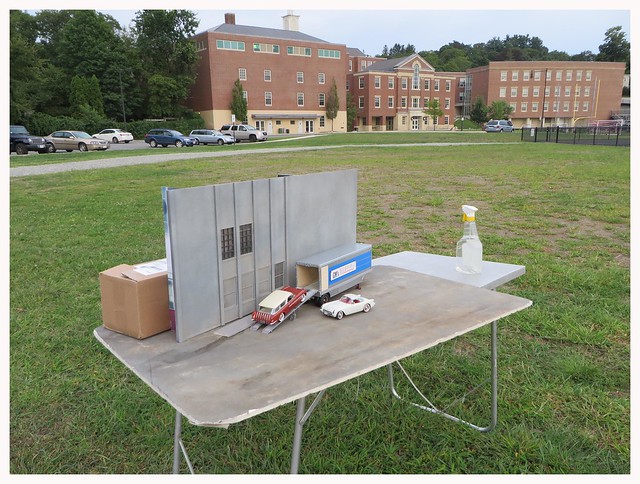
“It’s the oldest trick in the special effects book: line up a model with an appropriate background and shoot,” explains Mr. Smith. At 1/24th scale, however, the job is no walk in the park and can often take hours and hundreds of clicks of the camera before Michael finds the perfect perspective for his shot.

The Doctor's '34 Airflow

Photo Shoot Set-Up

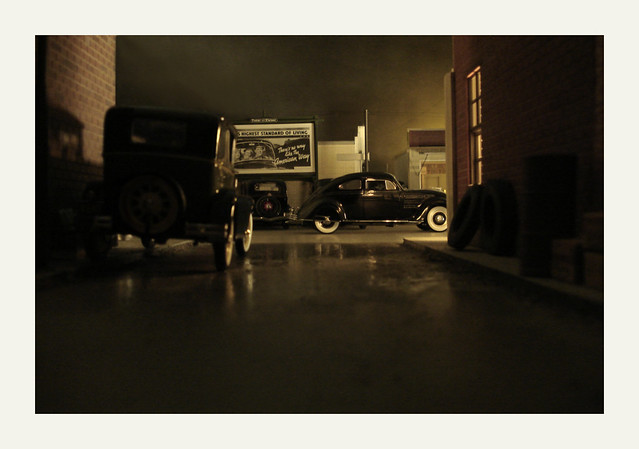
He photographs his sets against outdoor backdrops in and around where he lives today in Winchester, Massachusetts, and make use of various backgrounds, trees, houses, old/ abandoned/ architecturally dated buildings that remind him of where he grew up. When weather conditions prohibit him from using the outdoors, Michael places his sets inside and brings Elgin Park alive at night.

Tornado in the mid-west 1936

Another Giant Head

Mr. Smith makes his buildings and interiors from scratch from Gator board, styrene plastic and numerous found objects. And it’s probably safe to say that his previous lives as a wallpaper hanger, illustrator, painter, museum display designer, advertising art director, architectural model builder, amateur historian and photographer, have all come in handy in creating Elgin Park.

“Freedom Pennsylvania”

Freedom-Pennsylvania

Behind the scene mess


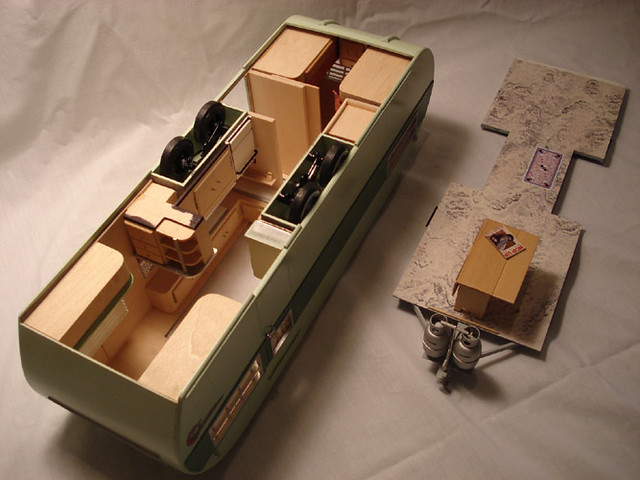
 ”Darrel Dink’s Mobile Home”

Darrell Dink's Mobile Home

Upside-down-view

Browsing through his Flickr photo stream, you can also find some of Michael’s photo descriptions, written as if the places he has created in Elgin Park were once very real and very much a part of his childhood memories. A photograph he took of one of his sets in front of an abandoned building in Winchester becomes, “Research building parking lot, 1958″…

Research Building parking lot 1958

Bandit Photographer- How it was done

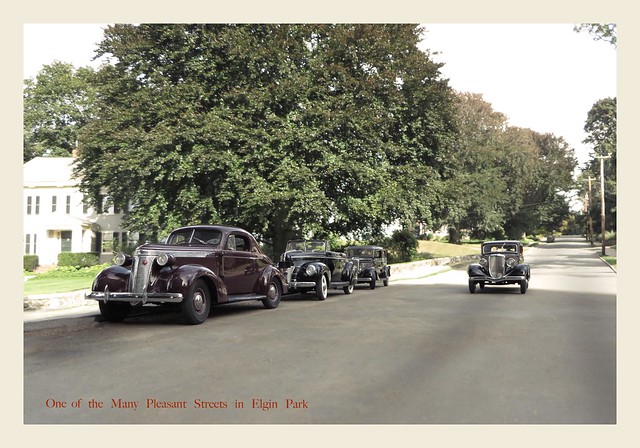
From another scene Michael set up one block from where he lives in Winchester, the finished photographed is watermarked like a postcard; “One of the many pleasant streets in Elgin Park.” Underneath, Smith adds a fictitious description to further bring the photograph’s story alive:

“This Post Card was donated to the Historical Society recently and the post mark on the back reads: August 1941. The street is not identified and there is still speculation as to where this photo was taken. It was suggested it might be Ruth Avenue, one of the older roads in town which has a number of colonial homes similar to the one that can be seen on the left hand side of the picture.”

One of the Many Pleasant Streets in Elgin Park

The tiny reality of “Elgin Park”….

SETUP for Plesant Street in Elgin Park


“View from a second story window”

View from a Second Story Window

The Reality Behind the Magic


 ”The Arrival of the Corvette Show cars”

The Arrival of the Corvette Show Cars

Corvette Show Cars SETUP SHOT


“News Happens in Elgin Park, 1935″

1935 - News Happens in Elgin Park

Setup for Tow Truck Shot


“1950s Corvettes in near perfect condition uncovered in the Elgin Park Tucker’s dealership.”

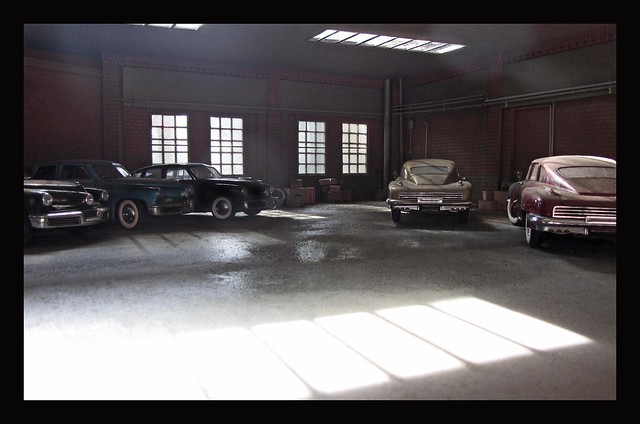
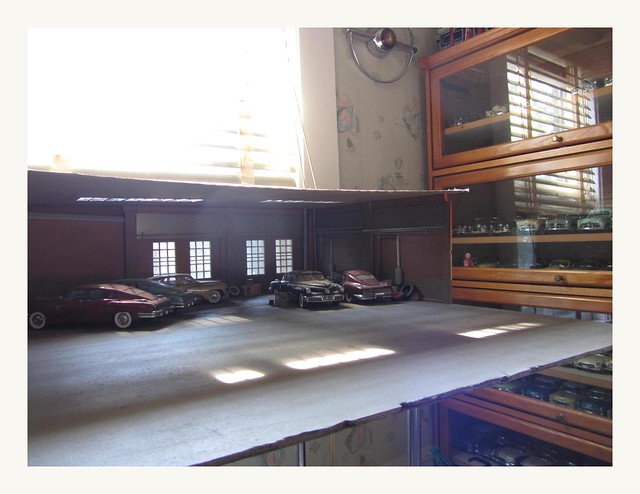
5 Tuckers in the Mist

Photo Setup for Tuckers in the Mist

You can tell Mr. Smith certainly has a soft spot for toy model cars from the 40s, 50s and 60s, which he began assembling from kits at the age of twelve.

Faded Coraopolis

So, what have we learned today? If you can’t build a time machine, build a miniature vintage world? Or I suppose you could just escape to Elgin Park.

Elaine's Beauty Salon

It has all the amenities you could possibly need during your time traveling adventure…

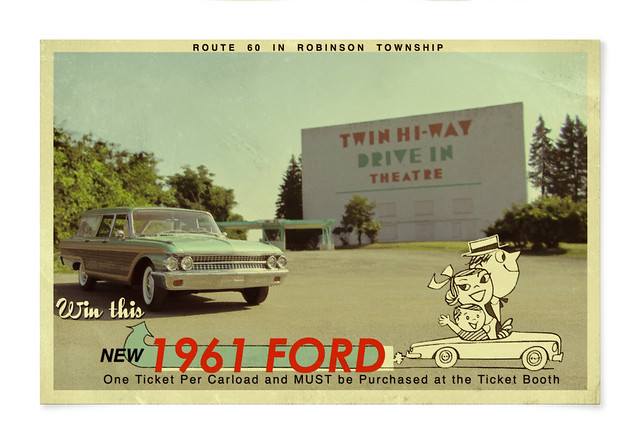
Hey, they're raffling off a new Ford!

A drive-in !

Merchants row

A laundromat …

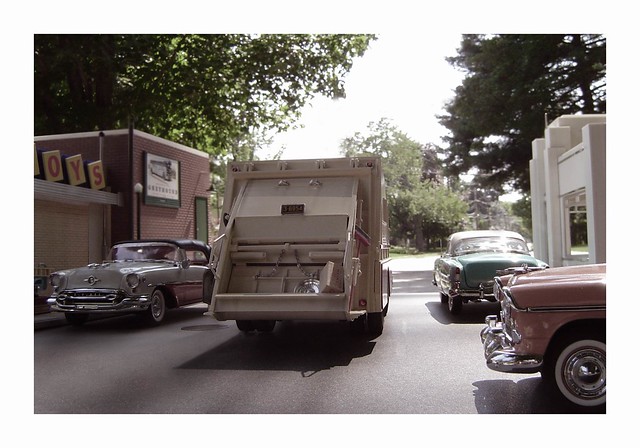
Department of Sanitation

Even sanitation services!

Discover Michael Paul Smith’s Elgin Park.

:::

YOU MIGHT ALSO:

.

17 Oct 11:56

Pinturas mostram uma Suécia de ficção científica

by Samanta Fluture

Um pensamento sobre o futuro: uma vez que ele chega, já não parece mais tão futurista assim. Apesar de tanto avanço, ao olhar em volta, tudo parece bastante normal. Não há carros voando, robôs andando pelas ruas, máquinas confundidas com arranha-céus. Pelo menos é essa a sensação que tenho quando olho para as pintaras digitais do sueco Simon Stålenhag.

Mostrando um universo único, suas artes carregam o dia a dia dos humanos e suas atividades rotineiras, porém tem como pano de fundo máquinas gigantescas e tecnologias que ainda desconhecemos. E é justamente esse sentimento comum, de uma paisagem até que natural – onde ninguém parece tão impressionado com o mundo das máquinas que os rodeia – que faz as obras de Simon Stålenhag tão impressionantes.

O trabalho de Stålenhag é dominado por um ar utópico, influenciado pelas paisagens suecas a serem exploradas. As construções e máquinas aqui são apenas um adendo, esquecidas em gramados, beirando à ferrugem e decadência enquanto a natureza continua viva.

Antes coisa de ficção científica, hoje os avanços tecnológicos são quase invisíveis aos nossos olhos, tão acostumados a viver no futuro.

21-klovsjorelaet_1920_badge
19-bridge_1920_badge
18-signalen_1920_badge
16-badplatsen_1920_badge
9-decoy_1920_badge
10-varselklotet_1920_badge
3-akersnuten_1920_badge
1-percyswalk_1920_badge
6-ilandaringarna_1920_badge
“Comecei pintando com guache e aquarela. Hoje me esforço para preservar esse ar natural e analógico nas artes digitais .” – Simon Stålenhag, para Wired

Desde criança, Stålenhag conta que já se interessava por filmes de ficção científica. Mas foi depois de descobrir artistas como Ralph McQuarrie (que fez as artes de E.T. e da trilogia de Star Wars) e Syd Mead (design conceitual de Blade Runner e Alien) que decidiu se aventurar a pintar sobre isso.

Além de trabalhar ilustrando e criando conceitos para games, filmes e comerciais, Simon Stålenhag recentemente criou um jogo de 16-bit, o Ripple Dot Zero.

Brainstorm9Post originalmente publicado no Brainstorm #9
Twitter | Facebook | Contato | Anuncie

17 Oct 09:04

Por que os municípios querem se dividir?

by Leonardo Monasterio
Três letrinhas: FPM, o Fundo de Participação dos Municípios. O projeto que regulamenta a criação de novos municípios, aprovado ontem no Senado, é melhor do que a bagunça vigente em alguns estados até 1996. O projeto impõe limites populacionais por região e outras restrições. Até aí, tudo bem.
Porém, a distorção do sistema de transferências que incentiva a emancipação municipal permanece. As regras vigentes, que remontam a 1981, definem faixas populacionais que favorecem os micro municípios  (ver tabela VII, p. 8).
Assim, a divisão de um  município de 50 mil pessoas gera um aumento de 40% no seu FPM (Uns R$6 milhões extras por ano). E se a partição for em oito novos municípios, cada um com 6.250 pessoas? Bem, aí as prefeituras terão mais 140% de FPM (uns R$ 22 milhões)!
Sim, eu sei que existem boas razões econômicas para criar um município. O meu ponto é o seguinte: só consertando as distorções das transferências se poderia distinguir as emancipações legítimas das que se aproveitam de tais falhas.
17 Oct 08:16

c0ssette: John Collier,Sleeping Beauty,1921,detail.


c0ssette:

John Collier,Sleeping Beauty,1921,detail.

16 Oct 20:23

Explicações básicas sobre o sistema político brasileiro – parte 2

by Manoel Galdino
Adam Victor Brandizzi

"Se mais reformas que muitos desejariam não foram aprovadas, que tal considerar a possibilidade real de que, afinal, talvez a sociedade simplesmente não as quisesse?"

Excelente.

Falei anteriormente sobre o sistema presidencialista e o federalismo brasileiro, além de um pouquinho sobre a constituição. Era pra ser uma série, após as manifestações, visando a esclarecer um pouco sobre o sistema político brasileiro. Mas as coisas demoraram muito pra sair, e a série ficou prejudicada. Mas creio que esse post é útil, ainda assim, pois volta e meia algumas confusões reaparecem.

Segundo algumas estimativas disponíveis, o eleitorado no Brasil na época do Império variava entre 5% e 10% da população. E aproximadamente 1% da população comparecia para votar. A fraude generalizada, contudo, infla bastante esses números nas estatísticas oficiais. A criação da república, ao que tudo indica, não mudou muito esses números de participação. Foi após a revolução de 30 e a criação do código eleitoral de 1932 que observamos mudanças significativas no Brasil, como o direito de voto para as mulheres. Após a redemocratização em 1945, vários avanças aconteceram, como a garantia do voto secreto e a obrigatoriedade quase que geral do voto para alfabetizados. Além disso, foi nesse período que se criou no Brasil o chamado sistema eleitoral proporcional de lista aberta. Vale notar que Chile e Finlândia também adotaram sistemas similares - depois do Brasil.

Os sistemas eleitorais podem ser divididos entre majoritários e proporcionais, lista fechada ou aberta, e distritos uninominais ou plurinominais. O distrito nada mais é que a unidade terriotorial para eleger um candidato representante daquela unidade. No caso do Brasil, os distritos se confundem com os estados (no caso da eleição federal e estadual) e municípios nas eleições para vereador. Nos EUA, por exemplo, pequenas regiões são considerados um distrito. Assim, dentro de um mesmo estado, há mais de um distrito. E um deputado eleito por um distrito ‘A’ representa os eleitores do distrito ‘A’.

Um sistema majoritário é aquele em que apenas o candidato com maioria (simples, absoluta ou qualificada) é eleito. Isso significa que se um candidato ‘A’ tem 10% dos votos, um ‘B’ 9% e assim por diante, então apenas o candidato ‘A’ é eleito, representando todos os eleitores que votaram nele ou em outros candidatos. Na eleição proporcional, busca-se garantir que os candidatos eleitos tenham tanto poder quantos votos ele obteve. Assim, um partido que obtém 10% dos votos deveria ter direito a aproximadamente 10% das cadeiras. Aqui, torna-se óbvia a necessidade de pensar em coletividades (partidos) que representem o voto do eleitor. Ou seja, a princípio não faz muito sentido um sistema proporcional com votos em candidatos sem partidos. Pois, se um candidato receber 20% dos votos, e outro 10% dos votos, e ambos forem eleitos, então o primeiro candidato têm tanta influencia quanto o segundo e, portanto, a proporcionalidade inexiste. A lógica do sistema proporcional é que o peso do candidato eleito (ou do partido) nas votações no congresso sejam proporcionais ao montante de votos obtidos. Esse sistema permite representar minorias que de outra forma não seriam eleitas. Assim, teoricamente, quanto maior a diversidade (étnica, linguística ou regional) de um país, mais importante seria ter um sistema proporcional, para garantir a representação de cada grupo.

As vantagens do sistema majoritário, teoricamente falando, é que na esfera do congresso é mais fácil formar maiorias que permitam a aprovação de leis. Segundo a “lei de durveger” (que não é tanto uma lei quanto uma tendência geral, observada empiricamente), sistemas majoritários tendem a produzir bipartidarismo. De fato, nos EUA temos apenas dois grandes partidos, na Inglaterra também (raramente há um terceiro partido lá, como agora) e é a regra geral em países com sistemas majoritários uninominais.

E temos por fim a lista fechada e lista aberta. A lista fechada ocorre quando um partido pré-ordena seus candidatos. O eleitor vota no partido e se um partido tem direito a dez cadeiras, então são selecionados os dez primeiros da lista pré-ordenada pelo partido. Teoricamente isso estimularia o voto mais no partido e menos pessoal. Eu não sei exatamente porque isso seria uma vantagem, mas as pessoas parecem considerar que isso seja uma vantagem em si. O problema é o risco das oligarquias partidárias controlarem todo o processo político. Afinal, um deputado mais independente corre o risco de ser punido com uma posição ruim na lista pré-ordenada. Obviamente, isso também pode criar incentivos para se criar partidos mais democráticos. Mas é incerto (pelo menos no meu nível de conhecimento) saber o que esperar.

O que me parece claro, porém, é que no Brasil se pretende suprimir conflitos reais com reforma política. Peguemos a reforma tributária. às vezes o discurso dá a entender que todos são favoráveis a ela, e que só não sai porque nossas instituições são ruins. Mas vejam o tanto de reformas (constitucionais inclusive) feitas no Brasil nos últimos 30 anos, e ficará óbvio que não é difícil mudar as coisas no Brasil. O culpado, portanto, deve estar em outro lugar. Ora, a reforma tributária implica em grandes redistribuições políticas e econômicas. Não é uma medida simplesmente melhor. E quem ganhará e perderá dependerá de qual reforma será implementada. É natural, portanto, que as partes se mexam para impedir que saiam derrotadas. E a falta de aprovação reflete justamente um conflito não resolvido no interior da sociedade.  Querer mudar as instituições para promover uma reforma qualquer é favorecer alguns ganhadores de forma não democrática. Eu não quero aqui discutir em detalhes teses como a do pemedebismo, de Marcos Nobre, mas atento apenas para o contorcionismo necessário para explicar o tanto de reformas aprovadas no Brasil nos últimos 30 anos (listo aqui apenas algumas, abertura comercial no Collor, Plano Cruzado no Collor, Criação do Mercosul no Sarney, Plano Real, lei de patentes no FHC, Reeleição, Privatizações, Lei de responsabilidade fiscal, Reforma da Previdência no Lula, Programas Sociais no Lula, Aumento da fiscalização de contratos de trabalho (formalização), Criação de Impostos como CPMF e extinção da mesma, criação do SUS, Fim da Sudene, Reforma da lei de falências, Reforma da Carreira Universitária da Dilma etc.). Se mais reformas que muitos desejariam não foram aprovadas, que tal considerar a possibilidade real de que, afinal, talvez a sociedade simplesmente não as quisesse?


Filed under: Política e Economia
16 Oct 19:29

CIA’s Deadly Cultural Ignorance

by Philip Giraldi
Adam Victor Brandizzi

O problema não é só interferir - é interferir burramente também.

When the British ran an empire they did it the right way, if one is into imperial management. They created an entire bureaucracy, the Colonial Service, which was manned by officers who were expected to go out to foreign posts for extended periods, to learn the local language, and to acquire an understanding of the indigenous culture. The knowledge gained was invaluable, enabling John Bull to skillfully manage a polyglot empire upon which the sun never set. Understanding the interplay of local ethnicities enabled London to play off one group against another, often empowering a minority which would remain loyal to the crown because to do otherwise would be suicidal. The formula worked in places like Iraq, where the minority Sunnis, initially propped up by Britannia, held sway over the more numerous Shi’ites until the Baath regime was toppled by U.S. forces in 2003.

Washington, failing to understand the formula, moved quickly in Iraq to disband all vestiges of Sunni hegemony and sought to impose democracy. Ethnic cleansing of the Sunni in Baghdad followed, the disempowered Sunni not surprisingly rose in revolt, the Kurdish region exploited the power vacuum to obtain de facto autonomy and start its own ethnic cleansing program, and al-Qaeda entered the country. Today, terrorist bombings occur nearly every day, killing scores of Iraqis, and while it would be a stretch to call the situation a civil war, the deep divisions in the country suggest that all-out conflict along sectarian lines might well be the next stage. U.S. forces were compelled to leave at the end of 2011, their legacy consisting of a ruined Iraqi infrastructure, a huge war debt, 4,500 dead Americans, and scores or even hundreds of thousands of dead Iraqis. Politically, Baghdad continues to move ever closer to neighboring Iran, underlining a complete policy failure for Washington.

Washington’s inability to generate a modicum of stability in the places that it has come to dominate militarily is characteristic of the delusional nature of the American imperial experience itself. Even as early as the conquest of the Philippines and Cuba, Washington claimed that it was delivering liberty, not seeking to acquire colonies. As many as one million Filipinos died as the United States imposed its freedom agenda, which included the use of the water cure, today referred to as waterboarding.

American missteps are deeply rooted in hubris and ignorance, compounded by the reality of a series of U.S. presidents who did not rise through any genuine cursus honorum and instead have had to learn how to conduct foreign policy through on-the-job training. When Clintons, Bushes and Obamas win the Oval Office they tend to reward loyal supporters with important positions relating to national security which they are in no way prepared for. How else to explain the amateurism bordering on cluelessness evident in Bill Clinton’s appointment of trade attorney Sandy Berger as his National Security Adviser, the Bush White House’s Scooter Libby, and Obama’s Thomas Donilon?

So where are the American counterparts of the British Colonial Service expatriates who, convinced of the superiority of their imperial mission, dedicated their lives to the colonies they administered?

They do indeed exist in the form of U.S. born employees of charities, religious groups, and other transnational organizations committed to working in the world’s forgotten regions, but they are largely absent from government. Organizations like the Foreign Service and the Central Intelligence Agency have a deep institutional prejudice against their employees “going native,” rotating officers every two or three years to avoid someone’s becoming too identified with local interests and cultures. CIA has long had an endemic problem in training its officers in foreign languages up to basic proficiency levels, partly due to the not unreasonable perception that in 18 months to two years, one might well find oneself in another country confronting yet another foreign language. Senior Agency officers, who are disproportionately minimally language capable, generally excuse themselves by arguing “an op is an op is an op,” meaning that spying is not culture specific. They are wrong. Not “going native” means that the United States government relies on a recurring cycle of foreign and intelligence officers who arrive ignorant and leave just as they are starting to figure things out.

Pakistani Dr. Shakil Afridi, who was involved in the search for bin Laden, reported that his CIA case officers would change every few months. None of his contacts spoke local languages, and meetings consisted of his being searched and stuffed behind the front seat of an SUV by two armed security men before being driven to where another car was parked so he could be debriefed by the waiting case officer.

As the inexperienced officers rise in the ranks they ultimately become the advisers to policy makers on the countries they served in, but they are still essentially ignorant, relying on the assessments of others to render their judgments and frequently simplistically substituting threats to use force for diplomacy. In his recent book on the CIA’s secret wars, Mark Mazzetti describes how ignorance of local traditions and conditions works out in practice.

In the 1990s the United States became concerned about the appearance of Islamic radicals in Somalia. The threat was insignificant before the United States got involved. Ignoring the reality that Somalis embrace a Sufi form of Islam which is antithetical to the harsh Salafist version promoted by bearded foreign radicals from Pakistan and Afghanistan, Washington used the CIA to arm and fund local warlords to attack the Islamists. But the Agency-empowered warlords created their own fiefdoms within Mogadishu and also in the countryside, reducing the ability of ordinary Somalis to move about or earn a living, so they then turned to the Islamists, who did indeed drive out the warlords and unify the capital Mogadishu. The next solution from Washington was to encourage an invasion of Somalia from neighboring Ethiopia, which had a long history of antipathy towards the Somalis. The Ethiopians drove out the Islamists, but they also engaged in massacres of civilians, rapes, and looting. They were also Christians. So the U.S. series of responses to a perceived problem that was not really a problem has triggered a 20-year conflagration that remains unresolved.

The pattern was repeated in Libya, where there was nearly complete ignorance in Washington about tribal divisions between the country’s west and east, and the only information regarding the political orientation of the anti-Gaddafi insurgency proved to be inaccurate. And there were inevitable unintended consequences of the action, as weapons from Libyan arsenals made their way south to ignite Mali in central Africa. Is today’s Libya a better place for Libyans and vis-à-vis the international community that has to interact with it? Almost certainly not, and the eruption last year in Benghazi that took the lives of four American officials continues to reverberate and raise questions about what kind of country Libya has become.

Syria is another prime example of American hubris leading to engagement in a conflict in which little is known about the rebels seeking to overthrow the government. Estimates of the number of extremists in the insurgency range from 20 to 80 per cent—and many observers would concede that they are the most effective fighters. Would a rebel-ruled Syria end the bloodshed? No. Would it further destabilize the region? Almost certainly. And no one in the Obama administration is asking what it would mean for the Christian and Alawite minorities in the country, which are protected by the regime and are being blamed by the rebels for their support of al-Assad.

Bureaucratic paranoia arising from universally poor results frequently comes full circle when the institution involved begins to devour itself. I note a recent article in the Washington Post that attracted little attention, “U.S. intelligence agencies spend millions to hunt for insider threats, document shows.” The article, based on an Edward Snowden-leaked document, describes how NSA and CIA are diverting an increasing percentage of their resources to finding employees who are unreliable. At CIA, “among a subset of job seekers whose backgrounds raised questions, one out of five had ‘significant terrorist and/or hostile intelligence connections’.” A related New York Times story describes them as “high-risk, high-gain applicants and contractors.” For those who are already employed, that means frequent security reviews and also monitoring of computer activity to discover “anomalies.”

The CIA subset of potential employees is described in vague terms but is a manifestation of the “going native” phobia. It is referring to possible hires who possess the language skills and cultural awareness that would enable them to operate in areas where most CIA case officers dare not tread, which means they are mostly first- and second-generation Muslim Americans whose views on groups like Hezbollah and Hamas might not exactly coincide with the bullets displayed on Susan Rice’s White House power point presentations. They might see the groups in a more complex way, as resistance movements first and potential terrorists second.

Political vetting is something quite new at the intelligence agencies, where one was normally free and even sometimes encouraged to embrace unconventional viewpoints. This litmus test for complete reliability is part of the ongoing witch hunt to root out those who are disloyal to administration policies and therefore are potential leakers, leaving behind only “yes men.” Those guilty of being potential “insider threats” will be carefully weeded out, and the same record of institutional failure in their countries of origin will continue as the CIA grapples with its self-inflicted inability to run old fashioned HUMINT—”human intelligence”—operations to collect the kind of information that policymakers should have. No one will know what is happening and why and it will all turn out badly.

Philip Giraldi, a former CIA officer, is executive director of the Council for the National Interest.

16 Oct 18:04

Cinemagraphs | 83a.gif

83a.gif
16 Oct 15:46

TED talks are lying to you - Salon.com

by gguillotte
What our correspondent also understood, sitting there in his basement bathtub, was that the literature of creativity was a genre of surpassing banality. ... Those who urge us to “think different,” in other words, almost never do so themselves.
16 Oct 10:59

voyaager:  

Adam Victor Brandizzi

A foto é legal, mas o cara deveria estar com as mãos no volante!

15 Oct 22:58

5+1 Sentences on The Walking Dead s4e1 “30 Days Without An Accident”

by TheLastPsychiatrist

walking dead 30


To an American audience that is disillusioned with for-the-other-guy capitalism but hasn’t really thought the alternatives through, the opening scene is what their fantasy vision of Central Planning looks like: smiles, local produce and from each according to his ability, yay, though when Crazy Eye Patch Guy tried it last season it seemed fascist and stifling, and when Old Man Bible tried it the season before that we were worried the women weren’t being actualized and empowered, but you should observe that in every version it’s a puppet council run by  a dictator, high fences, no babies for anyone but the ruling class, and lots and lots of guns.

Rick tells his son “don’t name the pig, it’s not a pet, it’s our food,” which is translated, “don’t get too attached to living things, they will die” which is good advice when you want to disavow its living-ness so you can eat it, but then the son reverses this advice (“don’t name the walkers, we’re their food”) and these mirror images suggest the original repressed statement that was distorted into the other two: death never bothers to name us.

What’s been disavowed in this show has always been the inevitability of death, which is why it’s depicted as a temporary shuffling aberration you can fight against, or “An Accident”, or the utopian fantasy of “starting over”; and the couple’s relief that she’s not pregnant “in a world like this” requires the unique logic: “my fussy brain requires everything to be adjusted so, a checklist run, nothing out of place, in order for me to act (or fall asleep at night), and anyway ordinarily I live forever but right now things are bleak, how can I raise my replacement when I could actually be replaced at any moment– sort of tempting fate, no?”

A fetish isn’t something you want but something that substitutes for what has been irrevocably lost (like looks),  so that while you are fully aware of the reality of the loss you get to disavow it, live like “a part of it is still here;” and in the case of the episode the pig is the fetish permitting the disavowal of death all around them, and when it dies NOT by zombies or bullets the disavowal disintegrates and Rick sees all too clearly that everything dies anyway, and he cries, first time in four seasons he took death seriously, no yelling, no rages, no hallucinations, no me me me– for fifteen seconds only he saw reality: you can’t come back again.

“You call them ‘walkers’,” says a crazy woman with quiet disgust and incredulity, call them by their living name or call them what they are, but bless me St. Patrick what kind of denial do you have to be in to pretend you don’t know exactly what it is you’re looking at– and that it is inevitable?

And yet still they do not call them zombies.


Related posts:

  1. 5+1 Sentences On The Walking Dead “18 Miles Out” s2e10
  2. 5+1 Sentences On The Walking Dead: “Triggerfinger” s2e9
  3. 5+1 Sentences On The Walking Dead s3e6 “Hounded”
15 Oct 15:50

Sitting Protest

by Greg Ross

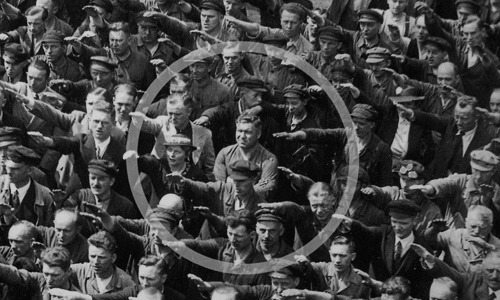
http://en.wikipedia.org/wiki/File:August_Landmesser.jpg

German shipyard worker August Landmesser openly loved a Jewish woman under the gathering cloud of Nazism in the 1930s. He had joined the party hoping it would help him to find a job, but was expelled when he became engaged to Irma Eckler in 1935. Unwilling to renounce their love, the two were forbidden to marry, prevented from fleeing to Denmark in 1937, and eventually sent to concentration camps.

The photograph above was taken at the launch of the naval training vessel Horst Wessel on June 13, 1936, a year after their engagement. The man in the center, the only one not giving the Nazi salute, is believed to be Landmesser.

15 Oct 12:22

A Dangerous Game

by Doug

A Dangerous Game

Here are more games.

15 Oct 10:03

Algo totalmente diferente para a sexta

by Drunkeynesian
Anúncio na seção "Personals" da New York Review of Books. Tente não torcer por um belo desfecho pra história: July 4, midsummer night swing. I was sitting, listening to the music, and you came into view: café au lait complexion, unapologetically white close-cropped curls, elegant stance. I said to my brother: "Now, there's a rarity, a truly beautiful older woman." You turned, I smiled at you,
15 Oct 00:51

magnificentruin: Do the right thing


magnificentruin:

Do the right thing

14 Oct 19:54

Heróis apenas por um dia

by Leonardo Monasterio
Mestre Duílio, que tudo sabe, contou uma história ótima no comentário de um post do blog. Richard Stone, antes de ter  inventado a Contabilidade Social*, foi trabalhar no Ministério da Guerra britânico. Ele percebeu que todos os navios mercantes italianos estavam rumando para portos neutros. Fez a previsão da data em que eles chegariam em tais portos e antecipou para os seus superiores que a Itália declararia guerra em 10 de Junho de 1940. Os superiores não o ouviram e a Itália declarou guerra no dia 10 de Junho de 1940.
Para outras contribuições dos economistas durante a II Guerra, ver o excelente:
 MARK GUGLIELMO (2008). The Contribution of Economists to Military Intelligence During World War II. Journal of Economic History, 68, pp 109-150. doi:10.1017/S0022050708000041. 

* Sim, crianças, alguém teve que inventar as contas nacionais. Isso rendeu um Nobel mais do que merecido para Sir Richard Stone.
14 Oct 18:12

Where Are You From?

by DOGHOUSE DIARIES

Where Are You From?

Fun Fact.  If you flipped Mount Everest over and placed it on top of the Mariana Trench, it’s peak would fall 7,000 feet short of the bottom. It would also be the single largest waste of human effort in history.

14 Oct 17:33

Ayn Random

In a cavern deep below the Earth, Ayn Rand, Paul Ryan, Rand Paul, Ann Druyan, Paul Rudd, Alan Alda, and Duran Duran meet together in the Secret Council of /(b[plurandy]+b ?){2}/i.
14 Oct 13:58

Sensible shoes

Adam Victor Brandizzi

ALERTA AOS SENSÍVEIS: contém pr0n
ALERTA AOS INSENSÍVEIS: a pr0n é softcore
* * *
Compartilhando porque parece justificativa para as roupas femininas em videogames.

http://oglaf.com/sensibleshoes/

14 Oct 13:03

Realistic Art

drawing,gifs,bags,funny

Submitted by: ToolBee

Tagged: drawing , gifs , bags , funny
14 Oct 13:02

October 13, 2013


Whee!
14 Oct 12:58

Desejos

by Daniel Lafayette


14 Oct 12:58

turner-d-century: wabisabiforrobots: pulpflesh: Captain...

14 Oct 12:51

The Adventures of Flatman

a_romance_in_n_dimensions
13 Oct 11:47

“Vencereis…mas não convencereis!”: Unamuno e a razão contra a força

by Ariel Palacios
Adam Victor Brandizzi

Mas que história foda!

Esta postagem é sobre um pensador. E sobre um governo que desprezava os pensadores e os livros. Isto é, em resumo, é sobre a liberdade de expressão versus o uso da força. É sobre algo que ocorreu há exatamente 77 anos.

Os protagonistas: o filósofo e reitor de Salamanca, Miguel de Unamuno; o general Millán Astray, líder da Legião Estrangeira, braço-direito do generalíssimo Francisco Franco; uma multidão de militares e civis falangistas-franquistas.

O cenário: o recinto de cerimônias da Universidade de Salamanca, cidade que havia tornado-se capital provisória dos rebeldes.

O contexto: a guerra civil espanhola (1936-1939). Mais especificamente, seus primeiros meses, quando as tropas de Franco e seus aliados avançavam pela Espanha, tomando as principais cidades e realizando massacres de civis, aprisionando e torturando os intelectuais, impondo uma censura sem precedentes desde os tempos da Santa Inquisição.

O ano: 1936

O dia: 12 de Outubro, data na qual celebrava-se o “Dia da Raça” (mais tarde denominado de “Dia da Hispanidade”), uma das principais datas nacionais na Espanha.

No dia 18 de julho de 1936, o reitor e filósofo Miguel de Unamuno, que havia colaborado intensamente para a instauração da República em 1931, decidiu respaldar o golpe militar que imediatamente foi monopolizado pelo general Francisco Franco. No entanto, ao ver a repressão desatada que os rebeldes aplicavam contra a população civil e a instalação de um regime autoritário, Unamuno começa a perceber que o grupo que havia apoiado não era o que havia imaginado. Sua mesa em seu escritório na Universidade fica coberto de cartas de amigos e conhecidos que pedem que salve centenas de pessoas que estavam sendo detidas na cidade.

Seu amigo Prieto Carrasco, prefeito republicanode Salamanca,e José Andrés yManso, deputado socialista, haviam sido assassinados. Na prisão, à espera do fuzilamento, estavam seus amigos pessoais Filiberto Villalobos, médico,e o jornalista JoséSánchez Gómez. Outro amigo, o pastor anglicano e maçom Atilano Coco, estava ameaçado de morte. Dezenas de alunos seus na Universidade haviam sido levados à prisão.

O septuagenário escritor vai até o palácio episcopalde Salamanca, onde Franco estava hospedado, para pedir clemência para um grupo de pessoas que tentava salvar da morte. É inútil. Franco fuzila todos.

Arrependido de ter respaldado os rebeldes com seus prestígio internacional, Unamuno participa – sem previsão de discurso algum – da abertura solene do ano acadêmico no dia 12 de outubro de 1936 no salão de cerimônias da Universidade.

Na tribuna estavam sentados a mulherde Franco, Carmen Pólo, o bispode Salamanca, Enrique Plá y Deniel,e o chefe do Departamentode Imprensa e Propaganda de Franco,o general JoséMillán Astray, fundador da Legião Estrangeira Espanhola, que havia perdido o braço esquerdo e o olho direito nos combates no Marrocos. E além deles, ali sentado estava Unamuno, nascido no país basco, uma das grandes figuras da “Geração de 98”, que haviam revitalizado a cultura da Espanha nas primeiras décadas depois da guerra hispano-americana, que havia mergulhado o país na depressão.

Toda a alta cúpula franquista estava presente. Menos Franco, que estava representado por um imenso retrato pendurado em uma das paredes, ao qual a multidão realizava a saudação fascista (nas quatro décadas seguintes a imagem de Franco estaria presente em todos os lugares públicos e seu nome seria usado para rebatizar ruas e avenidas).

Millán Astray começou os discursos afirmando que “o fascismo seria o cirurgião que extirparia a “falsa Espanha”, constituída pelos “bascos, catalães e comunistas. O fascismo é o remédio da Espanha, os exterminará, cortando na carne viva como um frio bisturi”.

Seu discurso foi interrompido por seus simpatizantes, que começaram a gritar o slogan da Legião:“Viva a morte!”.

Millán Astray, tal como o pavovliano cachorro, gritou três vezes seguidas “Espanha!”

Os simpatizantes ficaram em pé, estenderam seus braços direitos à moda fascista e gritaram em coro: “Uma, grande, livre!”.

O entourage rebelde: no centro da turma, o general Francisco Franco Bahamonde (o mais baixinho) e seu amigo e general Millán Astray.

Não estava previsto que Unamuno fosse discursar. Mas, o velho filósofo considerou que tudo o que estava acontecendo era demasiado.

“Serei breve. A verdade é mais verdade quando manifesta-se nua, livre de adornos e palavreados…Falou-se aqui de guerra internacional em defesa da civilização cristã; eu próprio o fiz outra vezes. Mas não, a nossa é apenas uma guerra incivil”, disse Unamuno.

“Me conhecem bem e sabem que não sou capaz de ficar em silêncio. Às vezes, ficar calado é o mesmo que mentir, pois o silêncio pode ser interpretado como aceitação”.

“Gostaria comentar o discurso, para chamá-lo de algum modo, do general Millán Astray, que se encontra aqui entre nós. Vencer não é convencer e é preciso convencer, principalmente, e não pode convencer o ódio que não deixa lugar para a compaixão. Vou ignorar a afronta pessoal da súbita onda de vitupérios que ouvi contra bascos e catalães. Eu mesmo, que dúvida cabe disso, nasci em Bilbao. O bispo, goste ou não, é catalão de Barcelona. Ele ensina a doutrina cristã que o sr (dirigindo-se a Millán Astray) não aprende. E eu, que sou basco, passei a vida ensinando a vocês o idioma espanhol, que o sr não conhece”.

Vestido de preto, com presença majestosa com sua barba branca, disse com voz firme, mas serena: “acabo de ouvir o necrófilo grito de ‘viva a morte!’, que para mim é como gritar ‘morte à vida’ ”.

Um close up na dupla: o cara da esquerda governaria a Espanha durante 4 décadas, mergulhando o país no atraso tecnológico e econômico, além de atrasar a vida cultural do país (e isolando o país durante longo tempo). O sujeito da direita seria o encarregado da propaganda oficial e imprensa durante certo tempo. Sem querer parecer preconceituoso contra as aparências físicas…mas se vocês derem de cara com um dos dois na rua, a partir das 19:00 hs, não sairiam correndo?

Na seqüência, indignado e enojado com os crimes, a censura e a perseguição cultural que os rebeldes estavam protagonizando, Unamuno diz:

“E eu, que passei toda a vida a criar paradoxos que provocaram a reprovação e a zanga daqueles que não os compreenderam, tenho que lhes dizer, com autoridade na matéria, que este ridículo paradoxo me parece repelente. Uma vez que foi proclamada em homenagem ao último orador, entendo que foi a ele dirigida, se bem que de uma forma excessiva e tortuosa, como testemunho de que ele próprio é um símbolo da morte. E outra coisa (Unamuno, nesse momento, começa a exaltar-se com as próprias palavras)…o general Millán-Astrayé um inválido. Não é preciso que o diga em tom mais baixo. É um inválido de guerra. Também o foi Cervantes. Porém os extremos não servem como norma. Desgraçadamente, hoje em dia há demasiados inválidos. E depressa haverá mais se Deus não nos ajudar. Me dói o fato de pensar queo general Millán-Astray possa ditar normas de psicologia de massas. Um inválido que não tenha a grandeza espiritual de Cervantes, que era um homem, não um super-homem, viril e completo apesar das suas mutilações, um inválido, como disse, que não possua essa superioridade de espírito, costuma sentir-se aliviado vendo como aumenta o número de mutilados em seu redor.O general Millán-Astray gostaria de criar uma Espanha nova, criação sem dúvida negativa, à sua própria imagem. Por isso ele desejaria uma Espanha mutilada”.

Millán Astray – que detestava Unamuno – fica encolerizado e grita “Morte à inteligência!”. O público completa aos brados: “viva a morte!”. Os militares da Legião sacam suas armas dos coldres. Unamuno, aparentemente sozinho nesse recinto, não se intimida. Millán Astray continua gritando“morte à inteligência!” e de repente ficam sem voz, afônico.

Subitamente, após os gritos dos falangistas, um silêncio aparentemente interminável toma conta do recinto da velha universidade. Todos olham na direção de Unamuno.

Ele fica em pé. E concluiu sua derradeira lição magistral:

“Este é o templo da inteligência! E eu sou o seu supremo sacerdote! Vocês estão profanando o seu recinto sagrado. Sempre fui, apesar do que diz o provérbio, profeta em meu próprio país. Vencereis, mas não convencereis. Vencereis porque possuem a força bruta de sobra. Mas não convencereis, porque convencer significa persuadir. E para persuadir precisam de uma coisa que lhes falta – razão e direito na luta. E parece-me inútil pedir-lhes que pensem na Espanha”.

Unamuno só conseguiu sair vivo do recinto de cerimôniasde Salamanca porque Carmen Polo Franco deu o braço a Unamuno e – depois de passar pela massa que apontava seus revólveres contra a cabeça do filósofo, no meio de vaias e gritos – o acompanhou até sua casa, para protegê-lo da fúria dos falangistas, que o queriam linchar. Carmen, mais tarde, foi recriminada por Franco, que durante horas reclamou de sua atitude e por não ter permitido que executassem o filósofo “traidor” após o discurso.

Unamuno, na saída da Universidade, com os falangistas cercando o filósofo antes de entrar no carro.

No dia 22 Franco o destitui do cargo de reitor.

Dias depois, recebe o escritor grego Nikos Kazantzakis, a quem diz: “um dia, em breve, me levantarei e começarei uma luta pela liberdade, eu sozinho. Não sou fascista nem bolchevique. Sou um solitário”.

No dia 31 de dezembro de 1936, enquanto as tropas de Franco avançavam pela Espanha, Unamuno falece.

hirschfeldfarrago3PERFIL: Ariel Palacios fez o Master de Jornalismo do jornal El País (Madri) em 1993. Desde 1995 é o correspondente de O Estado de S.Paulo em Buenos Aires. Além da Argentina, também cobre o Uruguai, Paraguai e Chile. Ele foi correspondente da rádio CBN (1996-1997) e da rádio Eldorado (1997-2005). Ariel também é correspondente do canal de notícias Globo News desde 1996.

Em 2009 “Os Hermanos recebeu o prêmio de melhor blog do Estadão (prêmio compartilhado com o blogueiro Gustavo Chacra).

passaro4 Acompanhe-nos no Twitter, aqui.

blog1vinhetalendonewsstand4 …E leia os supimpas blogs dos correspondentes internacionais do Estadão:

E, the last but not the least, siga o @inter_estadãoo Twitter da editoria de Internacional do estadão.com.br .
Conheça também os blogs da equipe de Internacional do portal correspondentes, colunistas e repórteres.
E, de bonus track, veja o Facebook  da editoria de Internacional do Portal do Estadão,aqui.
.………………………………………………………………………………………………………………………………………………….
Comentários racistas, chauvinistas, sexistas, xenófobos ou que coloquem a sociedade de um país como superior a de outro país, não serão publicados. Tampouco serão publicados ataques pessoais aos envolvidos na preparação do blog (sequer ataques entre os leitores) nem ocuparemos espaço com observações ortográficas relativas aos comentários dos participantes. Propaganda eleitoral (ou político-partidária) e publicidade religiosa também serão eliminadas dos comentários. Não é permitido postar links de vídeos. Os comentários que não tiverem qualquer relação com o conteúdo da postagem serão eliminados. Além disso, não publicaremos palavras chulas ou expressões de baixo calão (a não ser por questões etimológicas, como background antropológico).