Shared posts

29 Oct 18:33

Como a Constituição afeta o crescimento econômico?

by Marcos Mendes

A transição democrática ancorada pela Constituição de 1988 representou a passagem de um modelo político fechado e centralizado, para uma democracia descentralizada.

Na arena política houve maior pressão por aumento dos gastos públicos. Era preciso recuperar os precários indicadores sociais herdados do governo militar e atender grupos organizados, que adquiriram capacidade de reivindicação no novo ambiente democrático. Ademais, a elite econômica foi capaz de manter os privilégios que adquiriu durante o governo militar, tais como financiamentos subsidiados junto a bancos públicos, estudo universitário gratuito, aposentadorias de alto valor em tenra idade.

No campo fiscal e tributário ampliou-se o poder do Congresso na definição do orçamento e o repasse de receitas aos estados e municípios.

A maior participação do Congresso no orçamento se fez de forma desequilibrada. Por um lado, os parlamentares têm interesse em aumentar a despesa, para conquistar votos. Por outro lado, a responsabilidade política (e o ônus eleitoral) pelo desequilíbrio fiscal recai sobre o Poder Executivo, responsável pelo controle da inflação. Daí o viés do Legislativo a favor de mais gastos.

A descentralização fiscal também estimulou o gasto público, além de levar à má alocação de recursos. Primeiro, porque os estados e municípios são financiados primordialmente por transferências federais. Dinheiro que “vem de fora”, e não sai do bolso do contribuinte local, induz baixa responsabilidade fiscal. Segundo porque as regras de transferências induziram a criação de pequenos municípios (e seus respectivos custos administrativos), sem escala mínima para operar de forma eficiente, apenas para receber transferências.

Recursos em excesso mandados aos pequenos municípios geraram falta de verbas nas metrópoles. Elas passaram a acumular graves problemas, sem ter verbas para enfrentá-los.

A maior autonomia dos estados na gestão do ICMS, por sua vez, gerou uma guerra fiscal em busca de atração de investimentos. Isso corrói a receita dos estados e aumenta a dependência de verbas federais.

Criou-se, então, um ambiente hostil ao crescimento econômico. Para financiar o gasto corrente crescente, ampliou-se a carga tributária e cortaram-se os investimentos em infraestrutura, além de se produzir aumento no déficit público. A carga tributária alta e complexa reduz a rentabilidade das empresas. Para fugir do fisco muitas empresas permanecem pequenas e informais, o que as torna menos produtivas. A falta de estradas, portos e aeroportos eleva os custos das empresas e impede o acesso a novos mercados no país e no exterior. O financiamento do déficit público drena poupança do país, que poderia estar sendo investida na expansão da produção.

O caos nos grandes centros urbanos gera perda de produtividade da indústria e dos serviços. A guerra fiscal gera insegurança jurídica às empresas e aos estados, devido às contestações judiciais que enseja. Além disso, os estados compensam a perda de receita gerada pelos incentivos com maior tributação sobre setores como energia elétrica e telefonia, o que se converte em altos custos de produção das empresas.

Ao atender demandas de todos os estratos sociais e níveis de governo, a nova constituição colocou panos quentes nos conflitos sociais e federativos, criando harmonia política necessária à consolidação da democracia. Também ajudou a reduzir a miséria e a desigualdade.

Todavia, criou travas ao crescimento que podem interromper a queda da desigualdade e, até mesmo, fraturar o sistema democrático, pois, enquanto a farinha do PIB escasseia, todos continuam querendo engrossar o seu pirão.

(Texto publicado com pequenas modificações na edição eletrônica da Folha de S. Paulo de 6/10/2013)

Download:

  • veja este artigo também em versão pdf (clique aqui).
14 Oct 13:08

Billy Cote

by Greg Ross

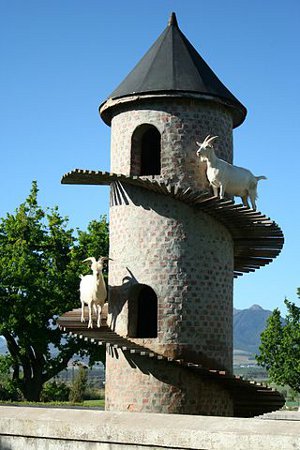
How do you occupy a goat? Build a tower for it. Portuguese winemaker Fernando Guedes da Silva da Fonseca built the first “torre das cabras” in the 1820s, a three-story stone tower surrounded with a spiral ramp made of logs.

Inspired by Fonseca, vintner Charles Back built a tower of his own at the Fairview Wine and Cheese Farm in South Africa in 1981 (shown here). Goats are intelligent, gregarious, and curious, and they like to climb, so Fairview offers the tower to a select few of the 1,000 goats in its winelands.

Inspired in turn, Illinois farmer David Johnson built a 31-foot tower in Findlay, Ill., for his 34 Saanen milk goats. “Goats love it, and people driving by can’t believe it,” Johnson told Farm Show magazine. “Goats are the most curious animals in the world, so they use the tower a lot. They come and go, passing each other on the ramp as needed.”

“People often ask if any goats ever fall off the tower, and I always tell them the answer is no because goats are very sure-footed. Once in a while we do get freezing rain, and then I use a portable torch to melt the ice from the steps.”

The South African tower has also been replicated in Norway and Argentina. Let’s hope they’re not planning a takeover.

13 Oct 11:37

Passei!


Passei!

13 Oct 11:35

Tenório

by Daniel Lafayette


13 Oct 11:35

Out of the Frying Pan

by Doug

Out of the Frying Pan

Life is fraught with danger.

11 Oct 15:50

Por que, de repente, esquecemos das guerras na Síria, Iraque e Líbia? O Nobel vai ajudar?

by Gustavo Chacra

Os EUA retiram as tropas do Iraque e parece que a guerra acabou. Kadafi é derrubado do poder na Líbia e parece que a guerra acabou. Fazem um acordo para o regime de Bashar al Assad entregar as suas armas químicas e parece que a guerra acabou.

Mas, na verdade, o Iraque segue em guerra civil. Os últimos meses foram alguns dos mais violentos desde 2003. Bagdá ainda é a capital mundial de atentados terroristas. A Líbia está controlada por milícias que chegaram ao ponto de realizar um sequestro relâmpago do premiê. A violência na Síria segue a todo vapor, como ficamos sabendo hoje de um massacre levado adiante por rebeldes da oposição contra alauítas – e as Forças de Assad também prosseguem com suas operações militares.

A diferença é que não prestamos mais atenção. Os libaneses eram manchetes de todos os jornais do mundo entre no início dos anos 1980, quando Israel ocupou Beirute e os EUA enviaram marines. Mas quando os israelenses recuaram para o sul do rio Litani e os americanos se retiraram depois de mega atentados contra o quartel-general dos marines e sede da embaixada no corniche, o Líbano ficou esquecido para o resto do mundo. O número de morte, porém, não diminuiu.

Portanto, apenas para ficar claro, a Síria, Líbia e Iraque ainda estão em guerra civil. Mas, e quiser esquecer, basta ouvir uma última notícia, como a queda e morte de Kadafi, e achar que a Líbia virou uma Noruega. Com a escolha da Organização para Proibição de Armas Químicas para o Nobel, muitos devem achar que o conflito na Síria se solucionou, Assad entregará os armamentos e agora basta esperar um pouco para a Síria se transformar na Dinamarca.

Guga Chacra, comentarista de política internacional do Estadão e do programa Globo News Em Pauta em Nova York, é mestre em Relações Internacionais pela Universidade Columbia. Já foi correspondente do jornal O Estado de S. Paulo no Oriente Médio e em NY. No passado, trabalhou como correspondente da Folha em Buenos Aires

Comentários islamofóbicos, antisemitas e antiárabes ou que coloquem um povo ou uma religião como superiores não serão publicados. Tampouco ataques entre leitores ou contra o blogueiro. Pessoas que insistirem em ataques pessoais não terão mais seus comentários publicados. Não é permitido postar vídeo. Todos os posts devem ter relação com algum dos temas acima. O blog está aberto a discussões educadas e com pontos de vista diferentes. Os comentários dos leitores não refletem a opinião do jornalista

Acompanhe também meus comentários no Globo News Em Pauta, na Rádio Estadão, na TV Estadão, no Estadão Noite no tablet, no Twitter @gugachacra , no Facebook Guga Chacra (me adicionem como seguidor), no Instagram e no Google Plus. Escrevam para mim no gugachacra at outlook.com. Leiam também o blog do Ariel Palacios

11 Oct 15:50

Uma virada liberal de Dilma?

by Luciano Sobral

Se tomarmos pelo valor de face o que tem sido noticiado, estamos vendo ou em breve veremos no Brasil: diversos leilões de concessões no setor de transportes, bancos públicos reduzindo o crescimento do crédito, Banco Central levando os juros básicos de volta a dois dígitos, um novo reajuste nos preços de combustíveis e o braço de participações do BNDES vendendo ações no mercado. Todas essas decisões têm (pelo menos) dois fatores em comum: vão na direção de maior peso nas sinalizações vindas de um mercado livre e têm o aval da economista mais influente do país, que também acumula o cargo de Presidente da República.

Certamente cabem muitas restrições ao que foi dito acima: por exemplo, as novas concessões ainda brigam para encontrar um equilíbrio onde retornos são minimamente atrativos para investidores sérios; e os mais céticos tanto vão esperar pela concretização de algumas medidas quanto podem dizer que o que está sendo colocado em prática cai na categoria de “muito pouco, muito tarde”.

Também é possível, porém, criar uma narrativa em que alguma coisa profunda mudou na condução da política econômica. Desde o início do governo Dilma parecia claro que os fatores que fizeram com que o crescimento do PIB nos anos Lula fosse acima da média de longo prazo–sobretudo os preços de commodities–não poderiam continuar sendo considerados em qualquer previsão minimamente conservadora. Tentou-se, então, impulsionar o consumo e o investimento via políticas monetária e fiscal. Os juros foram a mínimas históricas, os bancos estatais dominaram a expansão do crédito e as metas de superávit fiscal foram, direta ou indiretamente, afrouxadas. Seria a volta do “desenvolvimentismo”, como fez questão de sublinhar o próprio PT em suas comemorações de 10 anos na presidência.

Vejo como último suspiro desse breve experimento a tentativa de forçar uma maior desvalorização do câmbio no final do ano passado. Em pouco tempo descobriu-se que seria preciso mais do que um real depreciado para ressuscitar a indústria e que o repasse para os preços começava a ameaçar a inflação, que partia de um nível que já não era confortável.

Estava claro que algo precisava ser mudado, mas o rumo a ser seguido não era evidente. Por algum tempo, parecia que os que defendiam um aprofundamento dos experimentos heterodoxos haviam vencido uma importante batalha pelo poder. A combinação de uma rápida deterioração nas expectativas para a atividade econômica em 2013 e a perda de popularidade da presidente aparentemente forçou uma nova mudança de direção, ainda que sem substituições no primeiro escalão.

Depois de tantos condicionais, é difícil determinar quanto dessa narrativa é plausível e, mais importante, no que realmente a presidente acredita que deve ser feito para que o país volte a poder contar com o crescimento econômico como ferramenta para o desenvolvimento. A menos de um ano das eleições, acredito que os maiores incentivos sejam na direção de garantir a estabilidade de preços e a excepcional situação do mercado de trabalho. As grandes questões ideológicas e planos no campo da economia devem ficar em suspenso até lá, com a interessante evidência de que, quando as coisas apertaram, tendemos menos a governo e mais a mercado.


Este artigo foi publicado originalmente na AE-News/Broadcast 

11 Oct 11:06

niknak79: Shark attack Excelente fantasia para usar aqui em...


niknak79:

Shark attack

Excelente fantasia para usar aqui em Recife no carnaval.

11 Oct 01:00

Photo


10 Oct 20:09

Photo


10 Oct 14:07

Inseparable

by Doug

Inseparable

Dedicated to Pat and Jillian, who I’m sure finish each other’s sentences in a more appropriately romantic way than this. Happy anniversary, you two!

Here are more relationships.

10 Oct 14:06

October 10, 2013


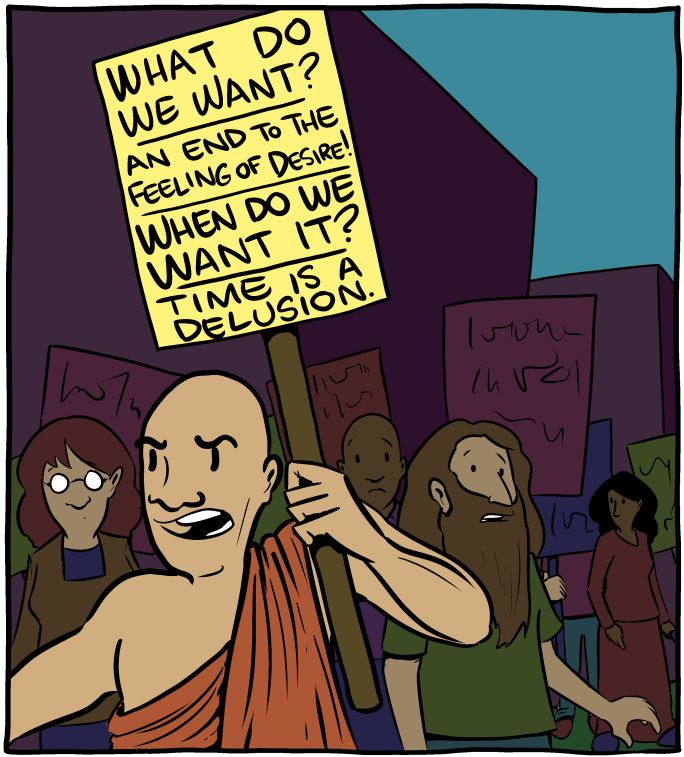
WE WANT AN END TO THE DELUSION OF TIME *NOW*
10 Oct 12:00

Para (ou contra) o Dia das Crianças

Na semana retrasada, em Buenos Aires, uma criança de seis anos foi autorizada a mudar de nome e de gênero no registro de identidade argentino. Ela tinha nascido menino, Manuel, e declarava ser menina e princesa desde os 18 meses. A criança passa a se chamar agora Luana, nome que ela já tinha escolhido dois anos atrás. Ela se vestirá de menina, brincará com as meninas e, na escola, frequentará o banheiro feminino. Esse detalhe não é irônico: pouco tempo atrás, nos EUA, uma criança transgênero da mesma idade de Luana, Coy Mathis, teve que recorrer à Justiça para obter o direito de frequentar o banheiro feminino de sua escola. Simpatizo com os juízes norte-americanos e argentinos, porque sua decisão não foi fácil. Simpatizo ainda mais com os pais de Luana, de Coy e de todas as crianças pequenas que hoje são reconhecidas como transgênero. Leia mais (10/10/2013 - 03h00)
10 Oct 02:21

joqatanarama: lonelygrey: explosivemarbles: YOU HAVE NO IDEA...


joqatanarama:

lonelygrey:

explosivemarbles:

YOU HAVE NO IDEA HOW SATISFYING THIS GIF IS TO ME

life answers

provided by tumblr

one by one

This is Knotworking…

09 Oct 23:50

SEM FÉ

by historiasdasruas

Na principal praça de Americana, considerada um ponto turístico da cidade, consegui encontrar um história bem interessante:  Descrente de tudo, Luciana, com uma expressão bem triste, conversou comigo.
Luciana não mora nas ruas, mas tem um estilo de vida bem diferente. Fui pego despercebido, ao passar à sua frente ela me chamou e me ofereceu um programa. Recusei o mesmo e expliquei  porquê gostaria de conversar com ela, e ela topou.

Imagem

“Tenho quarenta e quatro anos e nasci na cidade do Rio de Janeiro. Tive uma infância pobre e meus pais não tinham condições de me criar, então desde cedo tive que arranjar alguma forma de conseguir dinheiro para eu mesma me sustentar. Quando tinha quinze anos eu deixei a minha casa, e comecei a me prostituir. É um dinheiro fácil e por isso continuo nessa vida.
Minha vida de prostituição tem muito tempo, tem varias histórias e me lembro até hoje o meu primeiro programa, que pra mim foi normal. Já não era mais virgem quando tive que me prostituir porque antes disso eu tinha um “namoradinho” e  já havia tido relações sexuais com ele.
Muitos anos se passaram e eu não tinha mais contato com ninguém de minha família, só tinha meu pai e minha mãe ao meu lado. Depois da morte de meus pais eu fiquei sem ninguém e comecei a viajar. Viajei muito, e viajo até hoje. Sou uma pessoa totalmente sem destino e sem fé. É, sei que é um pouco estranho eu falar isso, mas não acredito em Deus, nunca tive motivos para acreditar em algo assim.
Hoje estou nessa cidade, mas amanha não sei onde vou estar. Vou viajando, ganhando o meu dinheiro e vendo até onde chego.  Sendo assim a única coisa que me resta é viver.”

Uma pessoa fria, que não aparenta se chocar com nada, Luciana estava lá, sentada em um banco pedindo para que outros homens fizessem programa com ela. Em suas respostas, a frieza ainda continuou.

A senhora tem filhos?
- “Não, nunca tive e não tenho vontade de ter também. Já tive que abortar uma criança.”
Qual foi o motivo que te levou ao aborto?
- “Não tenho condição de criar um filho, e para não colocar uma criança no mundo que vai ter o mesmo destino que eu, preferi fazer o aborto.”Faria de novo se fosse preciso?
- “Sim, se fosse preciso não pensaria duas vezes.”
Você tem vergonha de fazer o que você faz?
- “Não. Não vou dizer que gosto do que faço, porque estaria mentindo, mas não tenho vergonha de ser quem eu sou. Considero sim o que faço um trabalho.”
Porque não acredita em Deus?
- “Nunca tive motivo para acreditar. Sempre tive uma vida muito difícil e sempre batalhei sozinha, nunca ninguém me ajudou.”
Você gosta de viver nesse estilo de vida totalmente sem destino, sem paradeiro?
- “Ninguém gosta né? Eu tento me manter assim, viajando e conhecendo lugares novos. Já conheci muitos lugares e é assim que vou levando a minha vida.”
Tem algum sonho?
- “Nenhum.”
Você se considera uma pessoa fria?
- “Não, apenas levo a vida sem pensar no amanha. Acho que se metade das pessoas levassem a vida do meu jeito, o mundo teria menos problemas.”
E porque acha isso?
- “Porque não há preocupações.”
Você não se sente mal por estar sempre sozinha, sem amigos e família?
- “Não, a convivência é uma coisa muito difícil e ninguém pode negar isso. Eu tenho os meus defeitos como qualquer pessoa então não tenho dificuldade de me manter sozinha e viver sozinha. Eu sou a minha própria companhia.”
Luciana, firme em suas respostas, e ao mesmo tempo educada e simpática, se mostrou sem motivação para nada, apenas vivendo a vida a cada dia como ela mesma disse.
Triste ver, e não saber o que fazer… É isso que todos pensam ao saber mais dessa senhora.

09 Oct 23:47

nevver: Fortune cookie

09 Oct 18:46

yatzer: A tale of desire starring Daft Punk and Milla...

09 Oct 17:15

crescendudes: this is basically all you  need to know about the...


crescendudes:

this is basically all you  need to know about the government shut down. 

09 Oct 11:54

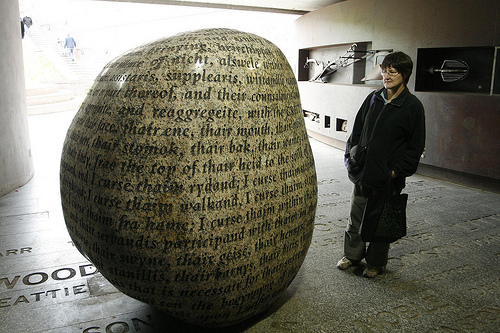
The Cursing Stone

by Greg Ross
http://www.flickr.com/photos/11121568@N06/6888260793/in/photolist-buG8X8-aedPzD-ccaMgd-dhMwXk-7TsqAG-fjmVkp-byQd6G-fCtVa5-fCeBY4-fCtYeW-b9tzN2-b9rMdr-9phBiJ-7Qo9Ak-9q9LyC-8NGTS5-8yVJoM-9VN2Cg-9VN1kK-9VQSp3-9VQRAE-9VN1Jc-egnN7q-egh3Qt-egh3JF-dx74iG-dPMUoA-dHr86U-c1jV4u-ch4mFy-edZCvL-8B4ziq-81ENa4-dMGMfV-fCeATk-fCdD2V-fCdHyH-fCdAti-fCdM3k-fCdCGa-fCdCmF-fCt3K5-fCt3mL-fCdEV6-fCsXUA-dPGhF6-egh3Pa-9AY5u2-fe8kZZ-fe8wmK-fenPbu

Image: Flickr

In 1525, fed up with robbers and highwaymen on the Anglo-Scottish border, Archbishop of Glasgow Gavin Dunbar composed a monumentally comprehensive curse against them:

I curse their head and all the hairs of their head; I curse their face, their brain, their mouth, their nose, their tongue, their teeth, their forehead, their shoulders, their breast, their heart, their stomach, their back, their womb, their arms, their legs, their hands, their feet, and every part of their body, from the top of their head to the soles of their feet, before and behind, within and without.

I curse them going and I curse them riding; I curse them standing and I curse them sitting; I curse them eating and I curse them drinking; I curse them rising, and I curse them lying; I curse them at home, I curse them away from home; I curse them within the house, I curse them outside of the house; I curse their wives, their children, and their servants who participate in their deeds; their crops, their cattle, their wool, their sheep, their horses, their swine, their geese, their hens, and all their livestock; their halls, their chambers, their kitchens, their stanchions, their barns, their cowsheds, their barnyards, their cabbage patches, their plows, their harrows, and the goods and houses that are necessary for their sustenance and welfare.

May all the malevolent wishes and curses ever known, since the beginning of the world, to this hour, light on them. May the malediction of God, that fell upon Lucifer and all his fellows, that cast them from the high Heaven to the deep hell, light upon them.

May the fire and the sword that stopped Adam from the gates of Paradise, stop them from the glory of Heaven, until they forebear, and make amends.

May the evil that fell upon cursed Cain, when he slew his brother Abel, needlessly, fall on them for the needless slaughter that they commit daily.

May the malediction that fell upon all the world, man and beast, and all that ever took life, when all were drowned by the flood of Noah, except Noah and his ark, fall upon them and drown them, man and beast, and make this realm free of them, for their wicked sins.

May the thunder and lightning which rained down upon Sodom and Gomorrah and all the lands surrounding them, and burned them for their vile sins, rain down upon them and burn them for their open sins.

May the evil and confusion that fell on the Gigantis for their opression and pride in building the Tower of Babylon, confound them and all their works, for their open callous disregard and oppression.

May all the plagues that fell upon Pharaoh and his people of Egypt, their lands, crops and cattle, fall upon them, their equipment, their places, their lands, their crops and livestock.

May the waters of the Tweed and other waters which they use, drown them, as the Red Sea drowned King Pharaoh and the people of Egypt, preserving God’s people of Israel.

May the earth open, split and cleave, and swallow them straight to hell, as it swallowed cursed Dathan and Abiron, who disobeyed Moses and the command of God.

May the wild fire that reduced Thore and his followers to two-hundred-fifty in number, and others from 14,000 to 7,000 at anys, usurping against Moses and Aaron, servants of God, suddenly burn and consume them daily, for opposing the commands of God and Holy Church.

May the malediction that suddenly fell upon fair Absalom, riding through the wood against his father, King David, when the branches of a tree knocked him from his horse and hanged him by the hair, fall upon these untrue Scotsmen and hang them the same way, that all the world may see.

May the malediction that fell upon Nebuchadnezzar’s lieutenant, Holofernes, making war and savagery upon true Christian men; the malediction that fell upon Judas, Pilate, Herod, and the Jews that crucified Our Lord; and all the plagues and troubles that fell on the city of Jerusalem therefore, and upon Simon Magus for his treachery, bloody Nero, Ditius Magcensius, Olibrius, Julianus Apostita and the rest of the cruel tyrants who slew and murdered Christ’s holy servants, fall upon them for their cruel tyranny and murder of Christian people.

And may all the vengeance that ever was taken since the world began, for open sins, and all the plagues and pestilence that ever fell on man or beast, fall on them for their openly evil ways, senseless slaughter and shedding of innocent blood.

I sever and part them from the church of God, and deliver them immediately to the devil of hell, as the Apostle Paul delivered Corinth.

I bar the entrance of all places they come to, for divine service and ministration of the sacraments of holy church, except the sacrament of infant baptism, only; and I forbid all churchmen to hear their confession or to absolve them of their sins, until they are first humbled by this curse.

I forbid all Christian men or women to have any company with them, eating, drinking, speaking, praying, lying, going, standing, or in any other deed-doing, under the pain of deadly sin.

I discharge all bonds, acts, contracts, oaths, made to them by any persons, out of loyalty, kindness, or personal duty, so long as they sustain this cursing, by which no man will be bound to them, and this will be binding on all men.

I take from them, and cast down all the good deeds that ever they did, or shall do, until they rise from this cursing.

I declare them excluded from all matins, masses, evening prayers, funerals or other prayers, on book or bead; of all pigrimages and alms deeds done, or to be done in holy church or be Christian people, while this curse is in effect.

And, finally, I condemn them perpetually to the deep pit of hell, there to remain with Lucifer and all his fellows, and their bodies to the gallows of Burrow moor, first to be hanged, then ripped and torn by dogs, swine, and other wild beasts, abominable to all the world.

And their candle goes from your sight, as may their souls go from the face of God, and their good reputation from the world, until they forebear their open sins, aforesaid, and rise from this terrible cursing and make satisfaction and penance.

As part of Carlisle’s millennium celebrations in 2001, local artist Gordon Young carved 383 words of the curse into a granite boulder. Since then, local livestock herds have been wiped out by foot-and-mouth disease, a devastating flood has struck the city, factories have closed, and the Carlisle United soccer team dropped a league. Jim Tootle, a local councillor who blamed these misfortunes on the revived curse, himself died suddenly in 2011.

“It is a powerful work of art but it is certainly not part of the occult,” Young insisted. “If I thought my sculpture would have affected one Carlisle United result, I would have smashed it myself years ago.”

(Thanks, NMN.)

09 Oct 11:48

Equal Opportunity

by Greg Ross
Adam Victor Brandizzi

Nunca me ocorreu isso, mas agora parece óbvio.

commons.wikimedia.org/wiki/File:Pythagorean_theorem_generalization_4.svg

The Pythagorean theorem works for any similar shapes, not just squares.

In the figure above, A + B = C.

If the three sides of a right triangle are made the diameters of three circles, then the combined area of the two smaller circles equals that of the largest. That’s also the area of the circumcircle, since a right triangle’s hypotenuse forms the diameter of its circumscribing circle.

09 Oct 11:45

Umniah first to launch Wikipedia Zero in Jordan

by Carolynne Schloeder
Adam Victor Brandizzi

Esse programa Wikipédia Zero é muito bom, seria legal se pegasse por aqui também.

This post is available in 2 languages: العربية 7% • English 100%

In English

“Wikipedia Zero – Umniah” by Pshegubj, under CC-BY-SA 3.0 Unported, from Wikimedia Commons

Umniah is the latest mobile operator to join the Wikipedia Zero free knowledge movement, and our first partner to launch in Jordan. Now Umniah’s 2.7 million mobile subscribers can access Wikipedia in Arabic and English free of data charges.

Nart Abdullah, Senior Value Added Services Officer at Umniah, came to us after hearing about Wikipedia Zero in the news. Umniah has a history of initiatives to reduce the digital gap, and Wikipedia Zero is in line with their values of community and inclusivity. According to CEO Ihab Hinnawi, Umniah is happy to provide free access to Wikipedia as “an important gateway to helping educate members of society, specifically ones facing financial burdens.” (Press release)

I recently joined the Wikimedia Foundation as Director of Mobile Programs, and Umniah is the first mobile operator I helped launch. I’m impressed with the way the Umniah team has embraced the program. They did a teaser campaign on their Facebook page asking general trivia questions leading up to the Wikipedia Zero announcement. That simple campaign captures the essence of Wikipedia opening a world of knowledge at your fingertips. And they even made a video about the partnership.

I’m also impressed with the Wikipedia Zero team and honored to be a part of it. We have a small and very talented group of people who work hard on implementations and infrastructure. We’re scaling our efforts to meet the growing commitments from mobile operators. So far we’ve rolled out in 19 countries, and we have agreements with carriers to serve over half a billion people.

Thanks again to Umniah, and welcome to the free knowledge movement. We’re glad you’re here (and I’m really glad to be here, too).

Carolynne Schloeder
Director of Mobile Programs, Wikimedia Foundation


العربية

أمنية أول من يطلق ويكيبيديا صفر في الأردن

أمنية هو أحدث مشغل موبايل ينضم إلى حركة المعرفة الحرة ويكيبيديا صفر، وهو أول شريك يطلق هذا البرنامج في الأردن. يستطيع الآن ٢.٧ مليون من مشتركي أمنية الاتصال بويكيبيديا بنسختيها العربية والإنكليزية بدون أي تكلفة بيانات.

تواصل نارت عبد الله من فريق خدمات القيمة المضافة في أمنية معنا بعد أن قرأ عن برنامج ويكيبيديا صفر في الأخبار. لأمنية تاريخ طويل في تقليص الفجوة الرقمية، وويكيبيديا صفر توافق قيم مجتمعهم وسياستهم الشمولية. ووفقا للرئيس التنفيذي إيهاب الحناوي فإن أمنية سعيدة بتوفير اتصال مجاني لويكيبيديا “كبوابة هامة للمساعدة في تثقيف أفراد المجتمع، خاصة أولئك الذين تقع عليهم أعباء مادية”  (بيان صحفي)

لقد انضممت مؤخرا إلى مؤسسة ويكيبميديا كمديرة لبرامج الموبايل، وأمنية هي أول مشغل ساعدت على إطلاق البرنامج معه. لقد تأثرت من كيفية رعاية فريق أمنية للبرنامج، حيث أنهم قاموا بحملة دعاية على صفحتهم على فيسبوك مطلقين أسئلة متنوعة لتصل إلى برنامج ويكيبيديا صفر. إن تلك الحملة البسيطة تحميل معاني ويكيبيديا ووضعها معرفة العالم بين يديك. كما أنهم أنتجوا أيضا فيديو حول الشراكة.

كما أني أيضا معجبة بفريق ويكيبيديا صفر وفخورة بكوني عضوا فيه. لدينا مجموعة صغيرة ومميزة من الأشخاص الذين يعملون بجهد لوضع البنية التحتية. كما أننا نعمل بشكل متواصل لتوسيع الجهود من أجل موائمة التوسع مع مشغلي الموبايل. لقد أطلقنا البرنامج حتى الآن في ١٩ دولة، ولدينا اتفاقيات مع مشغلين يخدمون أكثر من نصف بليون مستخدم.

كل الشكر مرة أخرى لأمنية ومرحبا بها إلى حركة المعرفة الحرة. نحن سعيدين بكونكم معنا (وأنا سعيدة جدا بوجودي هنا، أيضا)

كارولين شلويدير

مدير برامج الموبايل، مؤسسة ويكيميديا


09 Oct 10:31

Photo


09 Oct 10:28

Photo


09 Oct 10:26

Prominent wildlife photographer donates images to Wikimedia Commons

by Carlos Monterrey

Nilgiri tahr kid photo by N.A. Naseer

For those who love nature and photography, there is exciting news in the Malayalam Wikimedia community. The photographs of one of India’s famous photographers have been published in Wikimedia Commons. N.A. Naseer was approached as part of the Malayalam Loves Wikimedia-3 program in an effort to encourage photographers to contribute photos and other documents onto the Malayalam Commons page. As a gesture of solidarity to the more than 75 Wikimedians who participated in the event, Naseer and his friend Joseph Lazar added more than 350 original photographs.

N.A. Naseer by NPT

Naseer is a wildlife photographer from South India. He has published his writings and photographs in a variety of magazines, including Sanctuary Asia, Hornbill, Frontline, Outlook, and Traveler. Naseer practices Tai chi-chi kung, karate, yoga, taido, and upasana meditation. For the past 35 years, Naseer has been a frequent explorer of the Kerala forest. An advocate for the preservation of wildlife, Naseer founded the Nature Conservation Society of Photographers. He is also a lifelong member of the Bombay Natural History Society. Naseer’s book, “Woods and Photographer” was the first of its kind written in Malayalam. The book contains photographs of fauna in the regions of Southern India. The book sold out in three months.

More than 14,000 photos have been collected as part of the Malayalam Loves Wikimedia-3 campaign. Naseer’s photo collection provides new high-resolution photographs of a variety of rare species of animals including the white wild buffalo, nilgiri marten, Indian bisons, rufous babbler, and an array of elephants, bears and sloths. For both the casual and experienced photographer, Naseer’s photos are an exciting and useful resource.

You can view Naseer’s photographs in this Category on Commons. (user cat(hidden))

MLW3 collected 14606 (32.54 GB)images and user:Vinayaraj(7869) was the top uploader from this event.

Manojk (Malayalam Wikimedian)

Notes

Manojk (talk) 13:28, 2 October 2013 (UTC) (Malayalam Wikimedian)

08 Oct 19:14

Os EUA são aliados ou inimigos dos países de maioria islâmica? Resposta? Aliados

by Gustavo Chacra

Não existe uma guerra entre os Estados Unidos e o Ocidente contra o Mundo Islâmico. Na verdade, o governo americano é aliado de absolutamente todos os países de maioria muçulmana do mundo, menos da Síria, atualmente em guerra civil, e do Irã, que iniciou negociações envolvendo a sua questão nuclear.

Todos os demais mantêm parcerias com os EUA em uma série de setores, incluindo o Líbano, onde o Hezbollah, e seus parceiros cristãos ligados a Michel Aoun, controlam o governo.

Além disso, não existe uma unidade “islâmica”. Os países muçulmanos são extremamente diferentes entre si. Alguns são árabes, outros não. Alguns tem maioria xiita, outros sunitas. Alguns foram colonizados, outros não. Alguns travaram guerras entre si, outros não. Alguns democráticos, outros ditaduras. Alguns são religiosos, outros seculares.

Portanto, apenas para ficar claro, não existe um choque entre o Ocidente e o Mundo Islâmico. 

Guga Chacra, comentarista de política internacional do Estadão e do programa Globo News Em Pauta em Nova York, é mestre em Relações Internacionais pela Universidade Columbia. Já foi correspondente do jornal O Estado de S. Paulo no Oriente Médio e em NY. No passado, trabalhou como correspondente da Folha em Buenos Aires

Comentários islamofóbicos, antisemitas e antiárabes ou que coloquem um povo ou uma religião como superiores não serão publicados. Tampouco ataques entre leitores ou contra o blogueiro. Pessoas que insistirem em ataques pessoais não terão mais seus comentários publicados. Não é permitido postar vídeo. Todos os posts devem ter relação com algum dos temas acima. O blog está aberto a discussões educadas e com pontos de vista diferentes. Os comentários dos leitores não refletem a opinião do jornalista

Acompanhe também meus comentários no Globo News Em Pauta, na Rádio Estadão, na TV Estadão, no Estadão Noite no tablet, no Twitter @gugachacra , no Facebook Guga Chacra (me adicionem como seguidor), no Instagram e no Google Plus. Escrevam para mim no gugachacra at outlook.com. Leiam também o blog do Ariel Palacios


08 Oct 10:55

A regra dos dois desvios

by Leonardo Monasterio
Adam Victor Brandizzi

Aliás, li o livro, é bem legal.

Ao que parece, a regra será a minha maior (e única) contribuição ao Saber Universal. Eu a reproduzi no verbete "Brigas, críticas e debates" do meu magnum opus "Manual de sobrevivência na universidade: da graduação ao pós-doutorado". Aí vai:

"
"Nunca brigue se o adversário estiver a mais de dois desvios padrãode você em qualquer dimensão: conhecimento, ideologia, inteligência ou porte físico."

Se você não sabe o que é desvio padrão, nenhum problema. Traduzindo: nunca brigue se o adversário for muito melhor ou pior do que você em qualquer dimensão: conhecimento, ideologia, inteligência ou porte físico.

Se o adversário é muito mais inteligente ou conhece muito melhor o assunto, ouça-o com atenção, faça as perguntas relevantes e aprenda. Não é vergonha. Agora, se o sujeito é burro ou ignorante no assunto, o melhor é desconsiderar. Afinal, qual é a graça de ganhar uma discussão com um cara desses? Não há jeito de se sair bem. Se você vencer a briga, você terá apenas vencido a briga com um idiota. O que, cá entre nós, não é lá grande mérito. Além disso, os observadores sensatos vão lhe julgar como covarde. Agora, se você tropeçar e perder a discussão, você terá perdido para um idiota. O que, também, não vai ficar bem para você. O melhor mesmo é ignorar as críticas cretinas. Ignorar é ignorar mesmo. Nada de ironias. Só um "É, pode ser", já basta.

No geral, lembre-se: a vida é muito, muito curta mesmo para você perder tempo com besteiras. Ao invés de desperdiçá-lo em brigas bobas, leia um livro, passeie ou sei lá... corte as unhas do pé. Certamente é um gasto melhor do seu tempo do que ficar batendo boca ao vivo ou na internet.

Brigue a boa briga pelo motivo certo e com quem merece. Se você tem razão e o adversário merece a sua energia, não hesite em defender a sua posição com neurônios e saliva. No mais, deixe para lá.

As mães ensinam que é feio criticar os outros. Por simetria, achamos que receber críticas também é ruim. Críticas são boas. São boas para quem as recebe. O espírito do argumento do John Stuart Mill para a defesa da liberdade de expressão também é válido no meio acadêmico. Se quem critica estiver certo, tenho a oportunidade de corrigir os erros. Se quem critica estiver errado, sou obrigado a organizar o meu argumento para melhor rebatê-lo. De qualquer forma, só saio ganhando.


Trabalho bom é criticado. Trabalho ruim é ignorado. Nada mais triste do que apresentar algo e provocar apenas o tédio e o silêncio da plateia. Não ter críticas significa que tudo está tão errado que nem vale a pena sugerir ou questionar. Ser criticado é bom, porque significa que o seu trabalho chamou a atenção de alguém. Ouça, pense e incorpore se considerar necessário."

08 Oct 00:40

Photo


08 Oct 00:40

Photo


07 Oct 21:18

Rebolo e Fabiel 4

by Laerte

07 Oct 19:08

Broke and Alone: “Coming Up Short”

by Eve Tushnet
Adam Victor Brandizzi

Note em especial os links para o Cracked.

Because most of the traditional pathways to adulthood—marriage, economic independence, stable job—seem out of reach or prove to be reversible, working-class young adults have developed a new definition of maturity. This new pathway relies heavily on therapeutic culture: You become an adult by overcoming the trauma of your past, whether that involved abusive parents, drug addiction, mental illness, or less flamboyant hardships. Young adults who take on this new definition focus on protecting the fragile self, and they reject solidarity and close, committed relationships in favor of individualistic, judgmental competition.

This is the basic thesis of Jennifer M. Silva’s insightful, frustrating new book, Coming Up Short: Working-Class Adulthood in an Age of Uncertainty. “At its core,” Silva writes, “this emerging working-class adult self is characterized by low expectations of work, wariness toward romantic commitment, widespread distrust of social institutions, profound isolation from others, and an overriding focus on their emotions and psychic health.”

Silva interviewed 100 white and black working-class adults, defining “working-class” as native-born Americans, with native-born parents who didn’t have college degrees—Silva herself fits this definition. A lot of what she found rang very true to me from my own conversations with young adults in low-wage jobs, although I suspect her findings don’t generalize quite as much as she thinks: The worldview she describes has definitely influenced some of the women I counsel at the pregnancy center, for example, but they’re also shaped by communal ties, religious history and their own religious fervor, and a culture of childbearing.

Silva finds relatively little of the “redemption through procreation” language which men expressed in the recent Doing the Best I Can: Fatherhood in the Inner City, and none of the catastrophic romanticism which drove premarital relationships for the “red-state” young adults in 2011′s Premarital Sex in America. So she’s only capturing part of the picture of working-class or poor young adulthood.

And there were many times when I felt the heavy hand of the medium upon the planchette, as Silva seemed to overinterpret her interviewees’ words to drag them closer to her preexisting theories. She often quotes an interview and then summarizes it in terms which don’t really capture what I would mean if I said what her interviewee said, or what people I’ve heard say those things meant when they said them. She talks a lot about “social institutions” and how there should be more of them or how they’ve failed, but the only ones she actually names in a positive context are unions, and she relies almost exclusively on government intervention for signs of hope.

Like I said, it’s a frustrating book. But its primary insights are important and true. There is a working-class therapeutic culture, that culture did arise in large part because of the disruption of older institutions which provided stability and a source of identity, and that culture is intensely prone to self-blame and judgmental “crabs in a barrel” sniping at other working-class people who aren’t sufficiently self-helping.

Silva notes that “the transition to adulthood has been inverted; coming of age does not entail entry into social groups and institutions but rather the explicit rejection of them.” This might actually be the book’s most important point, bigger than the sexier point about the infiltration of therapy culture into the working class. Growing up means rejecting or overcoming your parents and family of origin, your church if you had one, your college if you went to one. It means getting over the longing for marriage or commitment, getting over your belief that your employer will look out for you—learning to stand on your own.

She acutely points out the way that needing to be “flexible” for the job market, being constantly told that you must be ready to move across the country at the drop of a hat for a job, makes it extremely hard to commit to one’s family or find a spouse. A startling number of her interviewees report that they’re not interested in romantic relationships at all: Their economic lives are too unstable for that kind of commitment.

Silva also finds a common theme of betrayal, both by one’s family of origin and by institutions—especially colleges. These young adults were told all their lives that college was absolutely necessary. They’re hard-working, rule-following (and like many Millennials, they can be intensely self-righteous about just how hard-working and rule-following they are—they are the deserving poor and know it, not actually a great basis for compassion or solidarity), and so they tried to go to college like they were told. They found bureaucratic barriers they couldn’t understand—several reported that they didn’t understand the FAFSA financial aid forms or their parents refused to provide the required information—and when they did make it to college they were totally unprepared. Their primary and secondary education had left them far behind where their colleges expected them to be; this left them humiliated and bewildered. Even when they did receive counseling and support from their colleges, they were so overwhelmed that relatively minor setbacks led them to drop out or get expelled, leaving them with serious debt and no degree. I was surprised at the level of anger Silva finds toward colleges and high schools, but now that I think about it, I’ve heard that story myself several times.

As I read Silva’s book I kept thinking of John Cheese, a columnist for Cracked. He does a lot of self-help-style columns (with lots of cussin’, click at own risk), many of which have helped me and my friends enormously. He focuses on the ways in which your painful past can create habits which keep you dysfunctional and poor. He doesn’t do structural analysis or tell you to go organize a union.

Although he’s a lot less judgmental of others than most of Silva’s interviewees, he is articulating a more empathetic version of the self-reliant, therapeutic-path-to-adulthood worldview. Grappling with that more empathetic version would help Silva figure out why a worldview she clearly abhors nonetheless speaks to so many people today. It’s easy for “Don’t give up—if you give up you’ll definitely fail” to become, “If you fail, it’s because you didn’t try hard enough or in the right way.” Cheese almost always avoids that trap but you can hear it clearly in many of Silva’s interviewees.

As Silva notes, the therapy narrative can push “young adults to draw harsh boundaries against their families,” and “boundaries against those who do not have the will to be healthy, happy, and strong.” But then, I think most of us know people who had to “draw harsh boundaries” against a parent because she was abusive, or against the cousin who steals your stuff and sells it for drugs, or against friends because you got sober (see #6). “Neoliberalism,” Silva’s favorite slur, is not a great descriptor of why that happens.

Silva has made a major contribution to understanding where young adults are coming from, what influences them, and what they consider to be common sense. Everybody reading this article already has opinions about what would improve young adults’ chances of getting a stable job. But until the day when our preferred economic programs are implemented, are there any possible counternarratives which would protect young adults from the isolation and blame of the “hardened,” independent self?

You’ll have your own answer to that question too. For me, what I feel most keenly is how few of Silva’s interviewees hint that they have heard the Christian messages that suffering and failure are not signs of personal sin; that hope comes through repentance and forgiveness; that judgment of others is a form of cruelty; that giving ourselves to others is not a foolish risk but the path to peace; that solidarity (including political solidarity) with and among those in need is part of what it means to be human; that friends, neighbors, and even family may betray us, but there is One Who is always trustworthy, always loving. There’s so much sorrow and loneliness in her interviewees, and so little sense that anybody has said, “You aren’t your economic worth. You aren’t the grade report, uniform or name tag. You aren’t self-sufficient, you never will be, and that is okay.”

I guess these are messages we don’t often hear in our churches, either.