Submitted by: (via katoninetales)
Shared posts
24 Aug 21:59
What Every Office Needs
Julianamarques likes this


20 Jul 18:55
![]()

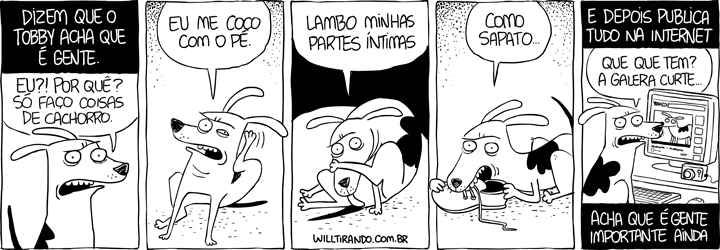
Além do mais, a titia que me ensinou a transar!
Transar com a própria irmã, pode?
by O Criador
Além do mais, a titia que me ensinou a transar!
The post Transar com a própria irmã, pode? appeared first on DrPepper.com.br.
06 Jul 00:01


Bricksy reúne releituras de obras de Banksy feitas com LEGO
by Amanda de Almeida
Jeff Friesen é um fotógrafo premiado que, durante as férias escolares da filha June, costuma se dedicar a projetos lúdicos, em parceria com a menina. A combinação de LEGO e fotografia já rendeu alguns bons resultados, como é possível conferir no site The Brick Fantastic, como o recente Bricksy, que reúne releituras de obras de Banksy feitas com LEGO.
São 20 imagens bastante divertidas, todos com uma sacadinha inesperada que nos ajuda a ter uma visão mais ampla de como as obras poderiam ser contextualizadas. Confira algumas delas
 Post originalmente publicado no Brainstorm #9
Twitter | Facebook | Contato | Anuncie
Albener Pessoa, Barciella and one other like this
15 Jun 18:01

What Kind of Restaurant Patron Are You?
by DOGHOUSE DIARIES

Can you serve the meal on an oven pan or coffee table book? I’m allergic to plates.
09 Jun 12:14
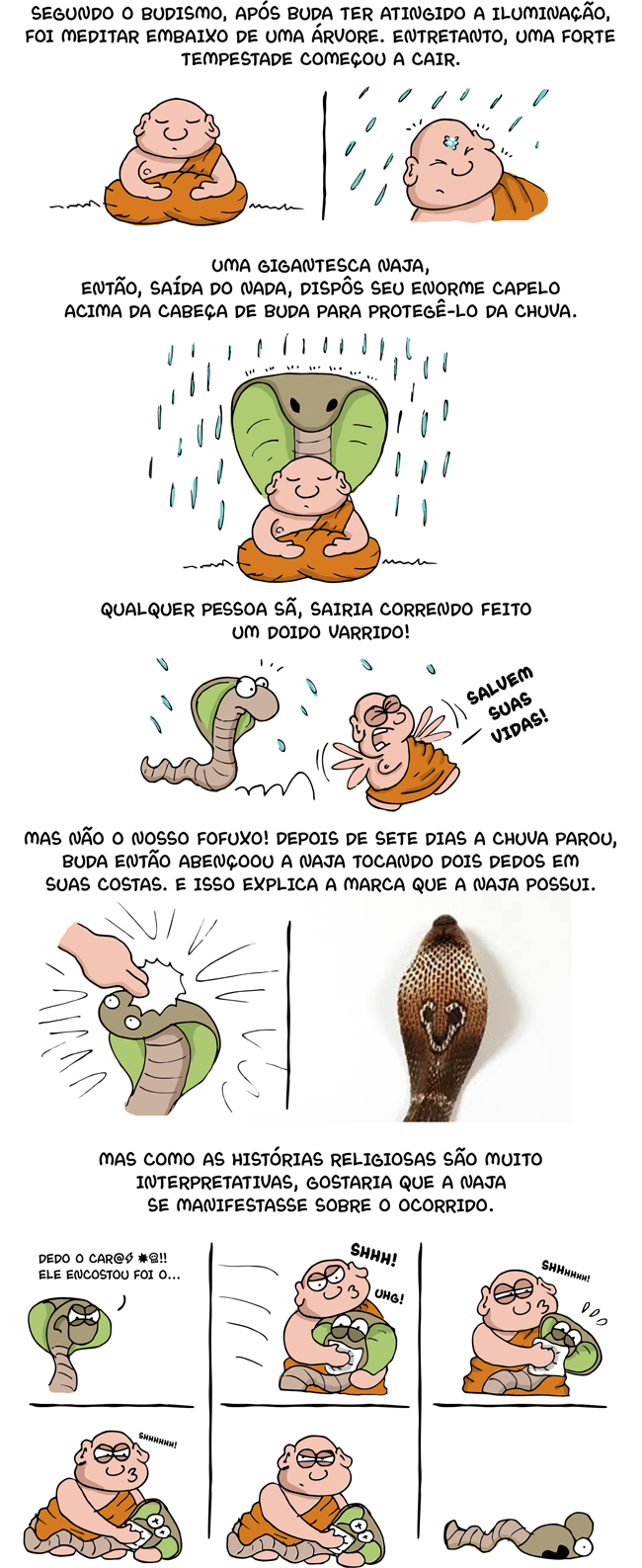
Homeopathic Dog Piss Pills
by drew

PetAlive Better-Bladder Control are granules that you give your dog to make him stop pissing. The only saving grace on this product is that most homeopathic “remedies” are water, which would make your dog piss more, but these are dry granules, which might bind up some of your dog’s water and cause him to crap it out rather than pee it on your carpet. Of course, that’s a pretty flimsy justification for selling 20 grams of fake dog pills for $27.
At least it’s not “C-Caps: Promote Complete Cellular Health”, a $44 bottle of homeopathic pet pills from the same company. What is cellular health, you ask? I’m glad I pretended you asked, because there’s a crazy-ass book about it, and the cover image has a tape measure wrapped around a strand of DNA as a metaphor for its nonsensical ideas about “toxins” and weight-loss.
09 Jun 12:14
Cuchini: Anti-camel-toe pad for your underwear
by drew
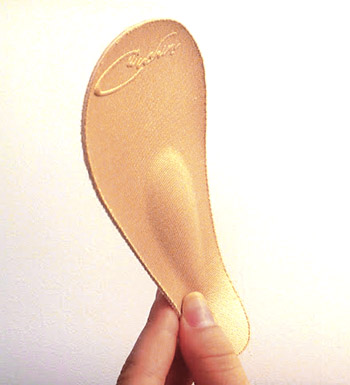
The Cuchini is a plastic insert you put in your underwear to keep your clothing from forming what the manufacturer describes as a “frontal wedgie.” Unfortunately, customers seem to hate it. The free market has yielded alternatives such as Camel-Not and CamelAmmo Waging War On The Front Lines, though as with many products I write about, the product is an afterthought to the name.


01 Jun 22:09

Sweet dreams everyone😆😆
Sweet dreams everyone😆😆
Damiani.guilherme, Rtersieva and 2 others like this


01 Jun 13:28
Update-enabling Windows XP registry hack is great news for XP die-hards
by Peter Bright
Although Microsoft has officially stopped providing free security patches for Windows XP, millions of people haven't got the message and are still running the ancient operating system. As a result of this, there's widespread interest in figuring out ways to get patches, and last week, a registry change started circulating that appeared to reinstate Windows XP's security updates.
In spite of the end of public support, Microsoft is still developing security updates for Windows XP. There are two main demographics that benefit from these fixes. The first are the governments and large corporations that are paying Microsoft large sums of money to gain continued access to hotfixes.
The second are users of Microsoft's various embedded versions of Windows XP. These versions of the operating system are designed for things like ATMs and industrial machinery. The core parts of these operating systems are identical to those from regular, non-embedded Windows XP, and as such, patches that apply to these operating systems will tend to also work on regular Windows.
01 Jun 13:26

Google’s “right to be forgotten” response is “disappointingly clever”
by WIRED UK
Shutterstock
Google has revealed its solution for removing URLs from its index that any European demands be forgotten from the public conscience: a form.
Google already has forms for takedown requests that relate to copyright issues, and its response to the Court of Justice of the EU's 13 May decision that the public has the digital "right to be forgotten" appears to be along similar lines.
The form is simplistic, but it comes with a few caveats for the user, the most important being that a copy of a valid photo ID must be attached. The public can make takedown requests on behalf of others, but the photo ID of the target individual must always be attached. Complainants have to provide their name and e-mail address, the country whose law applies to the request, the name of the individual featured in the relevant search results, and a list of every URL they want taken down. The key part of the form is the complainant's explanation for the takedown since, as Google notes, the EU ruling only relates to information in its index that is "inadequate, irrelevant or no longer relevant, or excessive in relation to the purposes for which they were processed."
firehose likes this
01 Jun 13:23
TrueCrypt security audit presses on, despite developers jumping ship
by Dan Goodin
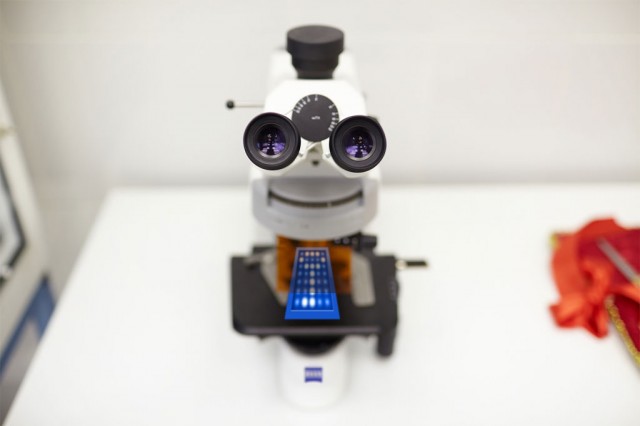
TrueCrypt, the whole-disk encryption tool endorsed by National Security Agency leaker Edward Snowden and used by millions of privacy and security enthusiasts around the world, will receive a second round of safety audits despite being declared unsafe and abruptly abandoned by its anonymous developers two days ago.
Phase II of the security audit was already scheduled to commence when Wednesday's bombshell advisory dropped on the TrueCrypt SourceForge page. After 24 hours to reflect on the unexpected move, an organizer with the Open Crypto Audit Project said he saw no reason to scrub those plans. Online fundraisers to bankroll the project have raised about $70,000, well past the $25,000 organizers had initially aimed for.
"We have conferred and we are firmly going forward on schedule with the audit regardless of yesterday's circumstances," Kenn White, a North Carolina-based computer scientist and audit organizer told Ars Thursday. "We don't want there to remain all sorts of questions or scenarios or what ifs in people's minds. TrueCrypt has been around for 10 years and it's never received a proper formal security analysis. People are going to continue to use it for better or worse, and we feel like we owe the community the proper analysis."
Tadeu likes this
01 Jun 13:14

Pirate Bay co-founder Peter Sunde arrested in Sweden
by Megan Geuss
Since the trial, Sunde has hit the public speaking circuit. As shown here, he spoke at Campus Party Mexico in 2010.
Pirate Bay co-founder Peter Sunde was arrested in Southern Sweden on Saturday, Reuters reported. Sunde was convicted of aiding copyright infringement in 2009 and was sentenced to a year in prison, plus a fine. That year of jail time was reduced to eight months, but in 2012 Sunde failed to appear at the Swedish prison where he was to be incarcerated, and he has been wanted by Interpol ever since.
Sunde, who was arrested in the Swedish county of Skåne, had been living in Berlin when Ars caught up with him a month ago. He had recently launched a campaign to represent Finland as a member of the European Parliament, and he seemed fairly confident that he would not be taken into custody. As Ars reported in May:
”In a Skype text chat with Ars, Sunde said that his standing conviction in Sweden isn’t a barrier to his running for office, nor has it been a barrier for his ability to live and travel throughout Europe.
“Well, I have multiple appeals in and few people looking for me,” he said. “As in, there's no need for me to be in Sweden, and basically no one wants me to go to prison. So no one looks for me outside of Sweden.
“It's quite easy to cross borders in Europe without any controls. And the Nordic Union, don't forget—the Nordic countries has been passport-free since ages before Schengen,” Sunde added. He was referring to the Schengen Agreement, which has effectively eliminated internal passport control within Europe.
Sunde said that he wasn’t sure if there was a warrant out for his arrest in Sweden.
“No idea,” he said. “Probably? Well, besides not being a hard criminal, nor being in Sweden, I also have no €10 million ($13.8 million) to give anyone.”
It is unclear why Sunde was in Sweden at the time of his arrest, and Swedish officials have not provided further details.
31 May 18:35

The Crash of 2016: The Plot to Destroy America - And What We Can Do to Stop It (Audiobook) By Thom Hartmann, read by Dan Woren
Unabridged edition 2013 | 9 hours and 32 mins | ISBN: 1478980737 | MP3 64 kbps | 275 MB
Read more »


The Crash of 2016: The Plot to Destroy America - And What We Can Do to Stop It (Audiobook)
The Crash of 2016: The Plot to Destroy America - And What We Can Do to Stop It (Audiobook) By Thom Hartmann, read by Dan Woren
Unabridged edition 2013 | 9 hours and 32 mins | ISBN: 1478980737 | MP3 64 kbps | 275 MB
Read more »
29 May 18:49
Apple Reportedly Testing Wireless Charging Coils for iWatch Ahead of Fall Launch
by Richard Padilla
Apple is once again said to be considering wireless charging capabilities for the iWatch, according to a various Chinese media reports citing sources at Apple supplier Luxshare (Google Translate, via GforGames).
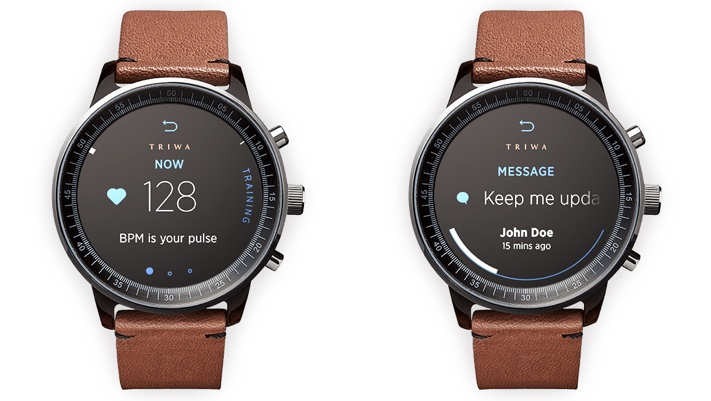 Traditional watch-style iWatch concept by Gábor Balogh.
The Shenzen-based company has reportedly sent Apple wireless charging coils for certification, and pending approval, will likely be providing the wireless charging modules for the iWatch. The report also notes that the iWatch will launch in the second half of this year pending production times.
A report last December also stated that Apple would include wireless charging capabilities in the iWatch, allowing the device to charge from up to a meter away. The iWatch's battery life has been previously reported as a problem for Apple, with iWatch prototypes lasting only 1-2 days on a charge and the company hoping to find ways to extend that to 4-5 days. While wireless charging would be one way to reduce the burden of frequent charges, it is still unclear exactly how it would be implemented in the device's body.
Rumors have indicated Apple's iWatch will contain several different biometric sensors allowing it to track health-related metrics like heart rate, sleep quality and more. The sensors will aggregate data that will be stored in a rumored "Healthbook" application, slated for inclusion in iOS 8.
Along with health-related functionality, the iWatch will likely integrate with the iPhone and iPad to provide notifications and quick access to frequently used apps and services.
Apple's iWatch is rumored to ship later this year two different sizes to accommodate different sized wrists. A report last week stated the the device will feature a round face similar to that of Motorola's Moto 360 smart watch, with production beginning in late July.


Traditional watch-style iWatch concept by Gábor Balogh. The Shenzen-based company has reportedly sent Apple wireless charging coils for certification, and pending approval, will likely be providing the wireless charging modules for the iWatch. The report also notes that the iWatch will launch in the second half of this year pending production times.
A report last December also stated that Apple would include wireless charging capabilities in the iWatch, allowing the device to charge from up to a meter away. The iWatch's battery life has been previously reported as a problem for Apple, with iWatch prototypes lasting only 1-2 days on a charge and the company hoping to find ways to extend that to 4-5 days. While wireless charging would be one way to reduce the burden of frequent charges, it is still unclear exactly how it would be implemented in the device's body.
Rumors have indicated Apple's iWatch will contain several different biometric sensors allowing it to track health-related metrics like heart rate, sleep quality and more. The sensors will aggregate data that will be stored in a rumored "Healthbook" application, slated for inclusion in iOS 8.
Along with health-related functionality, the iWatch will likely integrate with the iPhone and iPad to provide notifications and quick access to frequently used apps and services.
Apple's iWatch is rumored to ship later this year two different sizes to accommodate different sized wrists. A report last week stated the the device will feature a round face similar to that of Motorola's Moto 360 smart watch, with production beginning in late July.
Tadeu likes this