Shared posts

13 May 17:40

The Nomadic Libraries Bringing Books to the Four Corners of the Globe

by Allison Meier
58Camel: credit Jambyn Dashdondog/Mongolian Children's Culture Foundation/Go Help

The Mongolian Children’s Mobile Library carried by camel to nomadic herding communities and remote parts of the Gobi desert. (photo by Jambyn Dashdondog/Mongolian Children’s Culture Foundation/Go Help, all images courtesy University of Chicago Press)

Arriving by camel in remote areas of Mongolia or on boat along the coast of Norway, contemporary libraries are often mobile, creative, and community-driven, and are adapting rather than fading with the rise of electronic books and decrease in budgets. Improbable Libraries: A Visual Journey to the World’s Most Unusual Libraries by Alex Johnson, published last month by the University of Chicago Press, celebrates some of the more surprising libraries transporting books to readers across desert, jungle, water, and road.

Cover of 'Improbable Libraries' by Alex Johnson (courtesy University of Chicago Press)

Cover of ‘Improbable Libraries’ by Alex Johnson

“Librarians have a long history of overcoming geographic, economic, and political challenges to bring the written word to an eager audience, they continue to live up to that reputation today, despite the rapid, sweeping changes in how we read and share books in the 21st century,” Johnson writes in an introduction. He also emphasizes that “[t]he vast majority of the smaller libraries in this book owe their existence to a single person, a ‘librarian’ with an unstoppable vision.”

Artist and activist Raúl Lemesoff drives the streets of Argentina in his “Weapon of Mass Instruction,” a 1979 Ford Falcon converted to look like an armored tank sheathed in bookshelves. In Colombia, school teacher Luis Soriana started Biblioburro and travels to rural areas with two donkeys named Alfa and Beto. And for two decades now Jambyn Dashdondog has been riding a camel (and sometimes a horse, cow, or reindeer) to remote regions of Mongolia as part of his Mongolian Children’s Mobile Library. Before all of them, Johnson notes, Mary Titcomb of the Washington County Free Library in Maryland started a horse-drawn library program in 1905, one of the first “animal libraries” to rely on a furry collaborator for affordable transportation on uneven ground.

202WeaponofMassInstruction: credit Guillermo Turin/Secretaría de Cultura y Educación, Municipalidad de Rosario

Weapon of Mass Instruction by activist and artist Raúl Lemesoff in Buenos Aires (photo by Guillermo Turin/Secretaría de Cultura y Educación, Municipalidad de Rosario)

Pages from 'Improbable Libraries' (photo of the book for Hyperallergic)

The Mobile Art Library by PRODUCTORA that drives around Mexico City ‘Improbable Libraries’ (photo of the book for Hyperallergic)

190TucsonBookbike: credit Pima County Communications Dept

The Bookbike operated by Pima County Public Library in Tucscon, Arizona (courtesy Pima County Communications Dept.)

Johnson, a British journalist, has two librarians for parents, and back in 2012 he published Bookshelf, a tome centered on bookcases. The square-shaped hardcover Improbable Libraries is definitely a labor of love for literature, and offers a global perspective on how essential access to books is in bringing communities vibrancy and education. It’s engaging to flip through the pages and discover unexpected projects like Big Brother Mouse in Laos, where an elephant transports books into remote communities, the Epos ship that travels the western coast of Norway with a cargo of 6,000 books, and South America’s Bibliotaxi, where books dangle in sleeves from the driver’s seat, and can be signed out in a notebook and returned to any vehicle in the system. The Think Differently Book Exchange in Canterbury, New Zealand, has free lending libraries installed in sites left vacant by the 2010 earthquake, one holding the books in an old refrigerator. And in Magdeburg, Germany, an open-air library open 24 hours a day is installed on the site of a defunct district library, with covered seating on the street designed as a gathering space.

Almost all these libraries are free, and without membership, and it’s the passion of the people involved that keeps them going. Last month the New York Times reported that between 2006 and 2014 New York City budgeted at least $620 million for new stadiums for the Yankees and Mets and the Barclays Center, which is a third more than the city’s $453 million budget for libraries over the same period, even though they serve seven times more people in a year than the sports stadiums. New York’s case is just one in a long history of library funding issues, and while the DIY and individual-driven libraries Johnson highlights are inspiring, it’s also essential that he locates them in the contemporary context of why they are needed in places underserved or ignored by institutions.

Pages from 'Improbable Libraries' (photo of the book for Hyperallergic)

A home library designed by Travis Price for Wade Davis in Washington, DC ‘Improbable Libraries’ (photo of the book for Hyperallergic)

Occupy: credit David Shankbone

The People’s Library at Occupy Wall Street in New York, set up in 2011 (photo by David Shankbone)

BambooDome: credit Boris Zeisser/24H-architecture

Library with a bamboo dome designed by 24H>architecture at Soneva Kiri resort in Koh Kood, Thailand (photo by Boris Zeisser/24H>architecture)

71LibrairieUrbaine: credit Didier Muller/House Work

Didier Muller’s “Librairie Urbaine” installation of suspended cabins for books (photo by Didier Muller/House Work)

80GapFiller: credit Hannah Airey/Gap Filler

Think Differently Book Exchange, part of the Gap Filler initiative in Canterbury, New Zealand, after the 2010 earthquake (photo by Hannah Airey/Gap Filler)

88OneTwoMany: credit Marta Wengorovius/João Wengorovius

Portuguese artist Marta Wengorovius’s “One, Two, Many” project designed with Francisco Aires Mateus, where a mobile library holds 60 books with reading space for one (courtesy Marta Wengorovius/João Wengorovius)

93LittleFreeLib: credit Little Free Library

An outpost of Little Free Libraries in an Iowa park (courtesy Little Free Library)

110Luckenwalde: credit Andreas Meichsner/ff-Architekten

New library wing attached to a former rail station in Luckenwalde, Germany (photo by Andreas Meichsner/ff-Architekten)

126Muyinga: credit BC architects

A library for deaf children in Muyinga, northern Burundi (courtesy BC architects)

132UofAberdeen: credit Adam Mork

University of Aberdeen library (photo by Adam Mork)

228Bondi: credit One Green Bean

A library on Bondi Beach, Sydney, created by IKEA (courtesy One Green Bean)

Improbable Libraries: A Visual Journey to the World’s Most Unusual Libraries by Alex Johnson is available from the University of Chicago Press

13 May 17:32

Dimensions

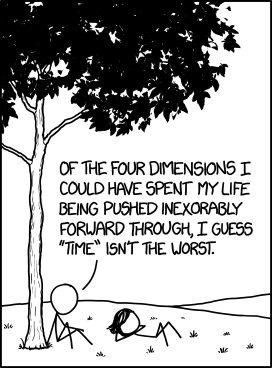
I would say time is definitely one of my top three favorite dimensions.
13 May 17:32

Feminist Lisa Frank wants to 'dismantle patriarchy, one rainbow kitten at a time'

by Laura Hudson
tumblr_nnjs5yxhFb1urwngso1_500

In the great tradition of Tumblr mash-up memes, Feminist Lisa Frank juxtaposes neon animals and quotes by Gloria Steinem, Shonda Rhimes, and more. Read the rest

13 May 17:31

Photo


13 May 17:19

pardonmewhileipanic: misandry-mermaid: the-exercist: condign...


pardonmewhileipanic:

misandry-mermaid:

the-exercist:

condignlife:

the-exercist:

fitblrholics:

x

What makes you think that this person is just starting? 

Why can’t a larger body be seen as inspirational without implying that they’re a beginner, just starting out, or are trying to change themselves?

Typically fat people don’t work out

image

Dwayne Leverock 

image

Brenda Villa

image

Mariam Usman

image

Michelle Carter

image

Prince Fielder 

image

Zhou Lulu

image

Roy Nelson

image

Ele Opeloge

image

Reese Hoffa

And some reading:

And some stuff on tumblr:

So you wanna rethink that rancid embarrassment of a post?

Also it’s creepy, dehumanizing and objectifying to post a fat woman’s body with her head cropped out to use as your fitspo.

people love chopping fat bodies into pieces for their thinspo/fitspo in order to further dehumanize and “other” us

we aren’t people to them; we’re decapitated before shots with a warning label slapped where our humanity should be

13 May 17:18

lukecastellan: what is the point of having 3 different spiderman franchises with 3 different white...

lukecastellan:

what is the point of having 3 different spiderman franchises with 3 different white dudes what is the point

what is the point

what is the

point?

the point, what is it?

13 May 17:18

largecoin: me online: me irl:

largecoin:

me online:

image

me irl:

image

13 May 17:18

fuckviserys: Dearly bruhloved we are swaggered here today to join these two bros in holy...

fuckviserys:

Dearly bruhloved we are swaggered here today to join these two bros in holy matrihomie.

13 May 17:18

Photo


13 May 17:18

Photo


13 May 17:15

literal-ghost: Today’s sketch turned into a tiny comic about...


literal-ghost:

Today’s sketch turned into a tiny comic about crows. I think I’m going to try making small comics every day just to get accustomed to the process of making them. I really enjoyed this entire drawing, and I want to do more comics ANYWAY, so it seems like the logical thing to do. Crows do exhibit this sort of behavior. They will remember people’s faces or traits about them, and will tell other crows if that person treats them poorly.

12 May 21:04

kropotkindersurprise: April 26 2015 - To mark 7 months since...


kropotkindersurprise:

April 26 2015 - To mark 7 months since the disappearance of the 43 students in Mexico, without their bodies being found, Normalistas and members of the teachers union CETEG attacked the local congress building of Chilpancingo. One of them wrote “We are still missing. 43” on the wall.  [video]

12 May 21:01

Remembering, Repeating, and Working Through

by Roxie Pell

How do we begin to describe the indescribable? In McSweeney’s newest book That Thing You Do With Your Mouth, actor Samantha Matthews and author David Shields challenge the way we think about trauma by changing the way we talk about it. Read an excerpt of the collaborative text and watch the video trailer after the jump! And to preorder That Thing You Do With Your Mouth, out from McSweeney’s Books on June 9th, please visit their store.

***

I’ve been taught to not apologize before any performance, and I find it annoying when actors apologize for what they’re about to do, particularly during an audition, but in this case I need to do that, once; I feel terrified. If I just say it, instead of pretending to know what I’m doing, maybe I can start off on an honest path. My mind doesn’t think at all linearly. I have a hard time keeping up with my thoughts and narrowing them down. I don’t know. This might be a complete mess.

In no way do I want to feel like I’m being self-indulgent, talking about all of my “issues.” Who gives a shit? Who am I to be telling a story? I have this intimacy-junkie part of me, though, that wants to provoke others to see something deep inside themselves. I like breaking down barriers—not to be perverse but to find a more authentic connection. Generally speaking, we’re not unique.

*

A director once said to me, “Sam, it’s so exhausting for the audience to watch you hold up all that armor. If you could stop holding it up, it would be so much easier not only for you but also for us to watch. The energy required to protect yourself just gets in the way of telling the story.”

*

I have less and less of a need, I think, to pretend I’m a good girl. I should be professional, friendly, responsible, accommodating, easy to get along with, elegant, and graceful. Must never step out of the house without wearing at least a tiny bit of makeup, because you never know who you’re going to run into. Lipstick is a winner, because my lips sort of blend in with my face. Must be confident. Don’t slouch. Don’t diminish yourself in public or in any conversation. Wear classic clothes, which suit you. Nothing too tight-fitting because that looks cheap. Always good to make people wonder what’s under those clothes instead of shoving it in their face. Game’s over, and so is their respect for you. I must foresee everyone’s needs. If I’m incredibly attentive to everyone and everything around me, I can avoid all possible conflict, dangerous and trivial situations alike. No one can call me selfish, either. Don’t get in the way or be irritating. Don’t joke around and make silly faces with three chins (I’m really good at that) around your lover, who will then find you unattractive, even disgusting. Be aware of how big your nose is (once, on an airplane when I was fifteen, my mom told me maybe I could just get my sinuses operated on and the surgeon could do a quick little nose job while he was at it). Try to avoid the profile: not good. I should never talk about anything negative—that’s a waste of energy and makes others see you as a negative person. I can smile and say yes to everything, make your life easier. Keep those nails trimmed and not painted. No, leave them a little longer, but still not painted; he doesn’t like that. Don’t paint your toenails; he doesn’t like that, either. Be strong. No, don’t. That’s butchy. Seeing a difference between men and women is better. Be vulnerable, but don’t cry around men because there’s a study that says the smell of women’s tears actually lowers their sexual desire for you. Be mindful. Do yoga. It gives you a great ass.

Friday, Friday—how many days to Friday? It’s only Tuesday. Four more days of this till I can escape.

*

Interesting that you should choose to ask me now how I view my own physical appearance, as that very same theme came up over the last few days and led to an explosion of tears the other night. I was cast in what will supposedly become a TV series. The guy who is producing it, directing it, and starring in it is an American actor I worked with last year on a film. The premise and script of the series are really sharp, and I was flattered that he cast me, felt/feel a pressure to do well, etc. He was going to introduce my character later on, but at the last minute he decided to put me in the teaser. I knew nothing about my character, and when I went for my makeup test, the costume designer said the only thing she knew was I was supposed to be very sexy—the first time anyone has cast me in a role like this.

I received the script for the teaser two days before shooting, and my lines didn’t give me any more information about who I was. On the day of the shoot, I thought surely the director would let me know more about the role, but he was very busy running around, so I didn’t dare ask him. Finally, I asked him in a sort of jokey way, “So, Thomas, ya know, any information about what I’m doing here?” He said, “Well, basically, let’s just say you’re the sex kitten of the show. Do all your lines with that in mind. Everything should have an erotic undertone to it.” Gulp.

I was supposed to say the first line staring directly into the camera, which for me is always the most difficult thing to do. I like to work off of people and forget about myself. I saw my reflection and didn’t like the makeup job—bags under my eyes and a giant mosquito bite above my left eyebrow, which I immediately asked the makeup artist to cover up. She’d done what most makeup artists do: the minimal thing, making my tiny eyesThat Thing You Do With Your Mouth disappear into my face. Eyes are everything; if the audience can’t see them, you have no power, and I felt ugly. I could tell the DP was having difficulty lighting my face to get that sex kitten look and I had to feel confident regardless.

To me, a sex kitten is a model, an Angelina Jolie. I felt short and squatty, my quads massive. One absurd Thanksgiving when I was nineteen, Jesse and Carl were invited to our house on Vashon Island. I hadn’t seen them or talked to them since I was about eleven. My dad thought it was a good idea to get the darling boys back in the house after an eight-year absence for a family reunion. I thought it was especially wonderful to catch up with them since Jesse had just made his TV debut on Oprah Winfrey, claiming to be a recovered rapist. He took me aside and apologized for abusing me, then he and my parents went to bed, leaving me up with Carl, who’d brought along his chef’s knife collection, as you do. He began to study my body with that look I was supposed to give the camera, telling me the reason brothers are always jealous of their sisters’ boyfriends is because they really just want to fuck their sisters. And he wanted to smell me and lick me and make me come. After all, I owed it to him, as my dad had abandoned him and he’d been living on the streets for years. I was sitting in a chair and he knelt down in front of me, grabbing my calves, massaging them and saying, “Ahhh. Too bad you got the Matthews legs.” “The big, ugly, unfeminine legs” is what he was saying: “You’re lucky I even find you attractive.” This is what I’m fighting in my head, trying to push away, as the camera rolls and the director calls, “Action!” Carl’s look is nasty, wrong, and I’m supposed to give the exact same look now, but I feel everyone can read what’s going through my head. I’m exposed—vulnerable, scared. I feel my face trembling.

I managed to battle my way through the first close-ups and the director said, “We got it. I know it feels really mechanical, but you’ll see: it’s just going to be quick flashes, and with editing it’ll work just fine.” The whole thing has become a farce. They took a risk by giving me this role, and now they can see I’m definitely not a sex kitten. They’re definitely going to cut me out of the series. (I’m waiting for an email from the director saying he’s going to go with someone else. And out of embarrassment, I don’t dare “like” any of the Facebook photos of the shoot.)

On my way home I stopped by our local restaurant and found my friend, the owner, sitting outside. I was hoping he’d be there, because I needed a drink. I needed not to feel humiliated. Focusing on the job and talking about it positively and numbing out all the detestable feelings would be the answer. I ended up meeting a couple girlfriends later, didn’t eat any dinner, and got quite hammered. I was now celebrating the idea of being cast and cracking jokes about the shoot.

I get home and William and I start watching an episode of The Killing in bed. There’s a scene in which the female cop discovers the councilman’s emails that are evidence he’s the rapist/murderer of a young girl. The computer screen lighting the dark, empty room where the cop is looking at the emails; and then suddenly the murderer behind her, his terrifying silhouette, and his asking her what she’s doing—all this takes me back to watching Star Trek with Jesse in that dark, blue-lit room. The fear, locked in there, no escape. And on the other side of that bedroom, the other brother waiting to hunt me. I lost it and broke into sobs, pressing my face into my pillow, and told William to turn it off. A feeling of disgust came over me. This fucked-up, ugly, Matthews-legged girl, spiraling into a pile of shit, mulling around in it, going darker and darker, thinking there’s no way anyone would be capable of finding me attractive, and even if I were beautiful, my mental state would be such a massive turnoff.

My eyes have been swollen for two days now—-yet another physical manifestation of the mess inside me. I can’t hide it. I just want to stay home and be left alone until it passes, but I can’t because I’ve got to take Roc and Ava to their afterschool activities and talk to mothers with whom I have nothing in common, pretending all is fine.

***

Samantha Matthews is a pseudonym. The co-author is an American actress who lives in Barcelona with her partner and two children.

David Shields is the author of twenty books, including Reality Hunger (named one of the best books of 2010 by more than thirty publications); The Thing About Life Is That One Day You’ll Be Dead (a New York Times bestseller); Black Planet (a finalist for the National Book Critics Circle Award); and, forthcoming over the next year, War Is Beautiful (PowerHouse Books) and Other People (Knopf). I Think You’re Totally Wrong: A Quarrel, co-written by Caleb Powell and published by Knopf in January 2015, has been adapted by James Franco into a film that will premiere next month at Vancouver’s DOXAdocumentary film festival. Shields’s work has been translated into twenty languages.

Related Posts:

12 May 20:55

me: hey don't harass disabled people for proof every time a donations post comes up.

me: hey don't harass disabled people for proof every time a donations post comes up.
anon: they don't deserve the money though.
me: ya but that potato salad person definitely did, and no one harassed them for proof of shit
different anon: how am i harassing disabled people by not donating to them.
me: never told u to spend ur money.
12 May 20:55

but seriously lots of people come in our askbox like: “I only donate to good mentally ill/disabled...

but seriously lots of people come in our askbox like: 

“I only donate to good mentally ill/disabled people who can respond appropriately and answer all of my questions and provide me with endless proof of their disabilities and mental illnesses in an abled/neurotypically acceptable way, but if they so much as ACT like they don’t have the time/energy/ability to go through my tedious questioning because they’re not abled or neurotypical, then u can say goodbye to me.” 

and that’s like … so trash? I’m not telling anyone to spend their money but if you’re treating people as thought they’re not disabled/mentally ill, yet expecting them to prove they are like?? what the fuck are you expecting? everyone just happens to be able communication in a neurotypical way? everyone just happens to have all the energy/ability to prove things??? 

12 May 20:54

balladoftarby: that snail looks so proud of itself in the last...


balladoftarby:

that snail looks so proud of itself in the last pic, 

like “hell yeah i drank the bubble, go me”

12 May 20:54

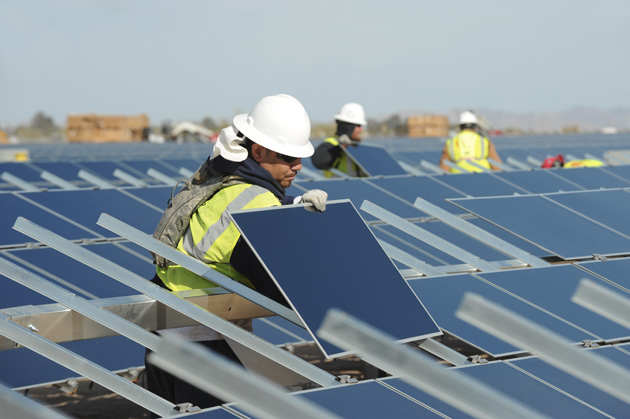
MIT Study suggests current solar power tech is good enough

by Terrence O'Brien
The standard line about solar power is that while good in theory, the technology just isn't there to keep our lights on and our Netflix streaming. But a new study from MIT (PDF) suggests that's not the case. According to the massive report (an epic 3...
12 May 15:50

tinarannosaurus: “Why would you head-butt me!”“I was gonna...


tinarannosaurus:

“Why would you head-butt me!”
“I was gonna punch you, but I’m holding wine.”

request [x]
11 May 02:11

i find you to be a horrible person for reblogging the picture of the girl with the "black eye" who "Stopped a guy" and got "headbutted" it was proven to be a fake makeup job and black eyes dont actually look like that. I bet you even donated money and even encouraged others to donate. I hate feminism on tumblr for this reason. you never fact check. you just hit the reblog button so fast and allow lies to spread. if you support lies for profit of feminism you're disgusting

If you checked my blog, you’d see I’ve done more fact checking around this than almost anybody else.

I’m going to answer this assuming that you legitimately don’t know the additional information out there about this situation, and not that you’re one of those people that I’ve encountered who insist that every single court & news report about this is fake, including fabricating quotes from judges and lawyers, and that it’s a massive media conspiracy, rather than accept that a post on tumblr from an amateur self-styled detective is wrong.

http://ami-angelwings.tumblr.com/tagged/internet_detectives

There’s the tag of all my posts about this.  From the beginning I checked it out.  It’s a bit ironic you’re complaining that I hit reblog without checking it out, when that’s my complaint about the people reblogging the debunk.  Just because something claims to be a debunk doesn’t mean IT also doesn’t have to be vetted too. 

http://ami-angelwings.tumblr.com/post/108154735989/no-good-deed-goes-unpunished

http://ami-angelwings.tumblr.com/post/108524690249/no-good-deed-goes-unpunished

Or if you don’t want to read through those.

http://www.westerndailypress.co.uk/prison-man-headbutted-young-mum-broke-nose/story-17648167-detail/story.html

http://www.mirror.co.uk/news/uk-news/good-samaritan-mum-headbutted-by-thug-1495221

http://www.thewestonmercury.co.uk/news/court/man_sentenced_after_head_butting_stranger_1_1751023

http://www.thewestonmercury.co.uk/news/court/in_the_dock_1_1781518

And that final link is a list of the court cases that happened.

n Dacian Martin (27), of Church Street, Banwell. Two counts of assault: Two-year community order with three-year restraining order, ordered to pay £100 compensation, £100 costs and £60 victim surcharge.

The debunk was wrong.  The person who made that debunk already apologized to her, that’s why they deleted the post and their account.  Don’t believe everything you read on tumblr just because it fits a “conviction by contradiction” narrative that Sherlock Holmes and Encyclopedia Brown stories have trained us to believe.

I’m posting this publicly in hopes this might also reach others that still believe the “debunk”.

And please, people, spread this around if you can because that “debunk” continues to go like wildfire, and she’s still getting so much hate for this and a reputation of being the worst human alive on tumblr despite her story being true, just nobody reads the follow up posts. If you see the “debunk” crop up, tell your friends who reblogged it that it’s incorrect, you can link them to my posts if you want.

11 May 00:21

justira: #DiversifyAgentCarter in pictures | my twitter The...


justira:

#DiversifyAgentCarter in pictures | my twitter

The “Women Guerrillas” corps trains in Manila, Philippines in 1941. #DiversifyAgentCarter pic.twitter.com/7zia1Rr2vW

— Jennifer de Guzman (@Jennifer_deG) May 9, 2015

My grandfather was an Air Force instructor to Tuskeegee Airmen before & during WWII. #DiversifyAgentCarter pic.twitter.com/3QoURyx2pf

— Starfishncoffee (@starfishncoffee) May 9, 2015

#DiversifyAgentCarter MT @womenshistory: Maggie Gee, 1 of only 2 Chinese-Am women to serve in the WASP during WWII. pic.twitter.com/1kMwd0SQKG

— Helen Shin (@H_X_S) May 9, 2015

1928 pilot license photo of Ms. Pancho Barnes, who broke Amelia Earhart’s air speed record. http://t.co/ov1rzvi9b3 pic.twitter.com/WYUewz0fuo

— Saladin Ahmed (@saladinahmed) May 9, 2015

1940s superspy Senorita Rio, the first Latina lead character in US comics. #DiversifyAgentCarter pic.twitter.com/xsQQX5lb1G

— Saladin Ahmed (@saladinahmed) May 9, 2015

#DiversifyAgentCarter because Katherine Sui Fun Cheung was the first Asian Am woman to get a pilots license in 1932! pic.twitter.com/PnMRJCwe3I

— UbeEmpress (@ubeempress) May 8, 2015

My Arab great-grandma, a detective & civil defense director in 1950s NYC. These women existed. #DiversifyAgentCarter pic.twitter.com/YGVcadaadT

— Saladin Ahmed (@saladinahmed) May 9, 2015

#DiversifyAgentCarter because of this book on my Amazon wish list about the history of gay men and women during WWII. http://t.co/UFD1DIdvsd

— Jennifer Matarese (@trollprincess) May 9, 2015
11 May 00:20

sandandglass:The Nightly Show, May 6, 2015


sandandglass:

The Nightly Show, May 6, 2015

10 May 22:33

Big Free Library: Public Pavilion Built of 50,000 Stacked Books

by Urbanist
[ By WebUrbanist in Architecture & Public & Institutional. ]

lacuna large volume art

Stacked books form the structural columns of this remarkable structure while support beams in between serve as shelves for even more volumes that can be borrowed, all scanned and donated by the Internet Archive. Even the roof is formed of reading material, featuring fluttering book pages suspended from support wires. Like Free Little Libraries, this huge book repository offers its wares to anyone who wants to take a novel to read and (optionally) return, in turn letting each person who interacts with it to permanently shift its shape.

lacuna building structural books

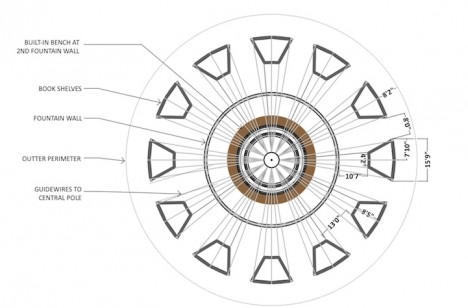
Opening in one month at the Bay Area Book Festival, this temporary building is made to dissolve – the act of removing books from its shelves will change the way it looks and how light passes through its emptying walls. Reading benches in and around its twelve alcoves provide spaces for retreat or interaction.

lacuna structural design diagram

The title of this project, Lacuna, is also an obscure word referring to missing pages or sections of a book. Its creators FLUX Foundation have a great deal of experience building robust but interactive public art and architecture, including large-scale projects for Black Rock City (as part of the Burning Man festival). Over 200,000 books were actually donated by the Internet Archive, but the remaining 150,000 volumes will be saved for future similar projects.

lacuna project sketch

The Book Festival will also feature talks and readings by hundreds of authors as well as other structures and exhibits. More on the design and its inspiration: “Lacuna is a temple to books. Each of the twelve alcoves of Lacuna are formed by pillars created out of stacked books. Connecting these pillars are shelves filled with books. Above, fluttering book pages attached to guy-wires create a thatch-like roof, creating a space in which visitors literally, and figuratively, inhabit the interiority of books and their contents. “


Want More? Click for Great Related Content on WebUrbanist:

Book Mountain: MVRDV Designs Glass Pyramid Library

A new public library in the Netherlands by MVRDV flouts the conventional wisdom of keeping books in the dark, placing them under a glass pyramid-shaped ... Click Here to Read More »»


Lilliputian Library: 4500 Miniature Books Form Huge Collection

Peek into the astonishing collection of a miniature book enthusiast who may have the littlest huge library in the entire world. Click Here to Read More »»


Face Books: 4 Written Portraits form 3D Autobiographies

Move over, Facebook. Here is a novel hybrid celebration of the written word, printed page, physical sculpture and possibilities of cutting-edge technologies. Click Here to Read More »»


Share on Facebook

[ By WebUrbanist in Architecture & Public & Institutional. ]

[ WebUrbanist | Archives | Galleries | Privacy | TOS ]


10 May 22:32

Find It: Laser Cut Velvet Leggings

by Erin

ab7fa07e95702227eff80c88eed8a9ad

Thing I need right this minute: laser-cut velvet leggings. The good news is, these are cheap, and can be found all over Amazon and eBay for about $10. I chose these, $9.89 on Amazon.

RZ0043DL

10 May 22:30

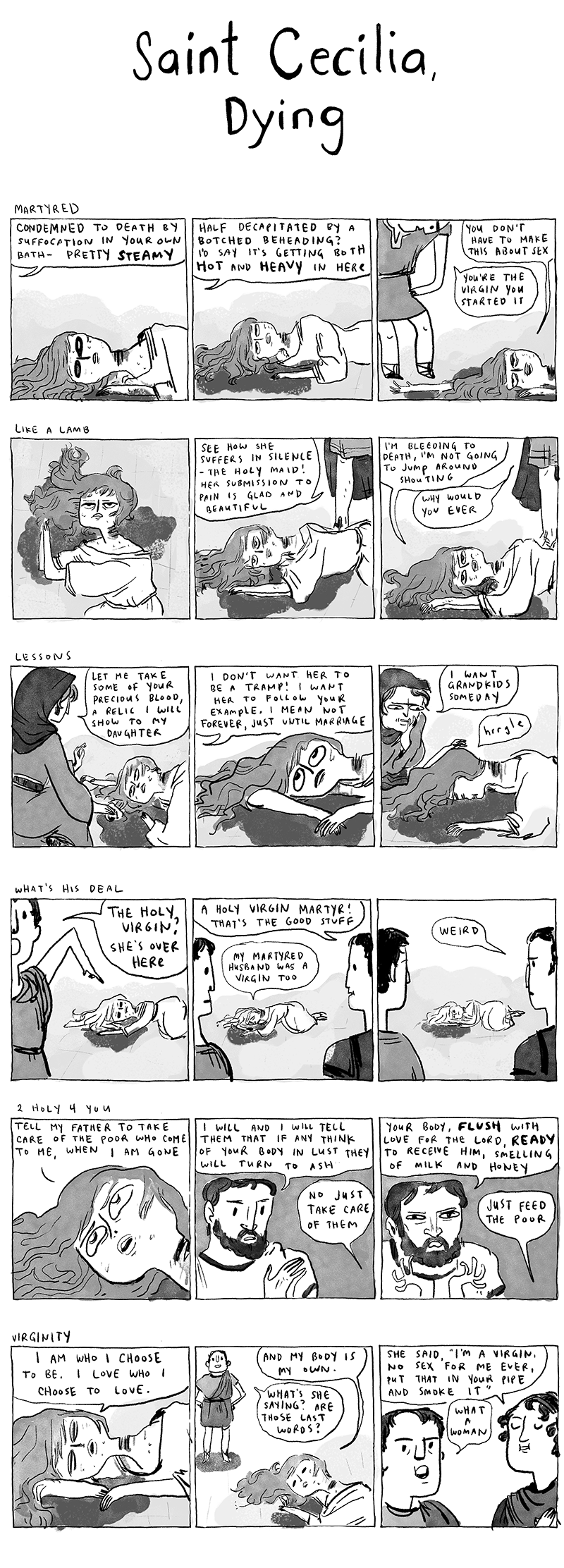
Hark, A Vagrant: Saint Cecilia


buy this print!

I guess we don't know if Valerian was a virgin or not, but if he was, I doubt the choice would precede his name if people prayed to him.

If you grew up Catholic like me you had a lot of those picture books full of saints. They were great because they were crazy and gory and exciting, and they could be inspiring too. And if you were a girl, you were probably given a lot of cards and books and whatnot about all the virgin martyrs. Saint Cecilia didn't get it as bad (virgin onslaught-wise) as .. oh, anyone from Saint Agnes, Lucy, Agatha, Maria Goretti (yikes)- but like all the virgin martyrs, this aspect of her life is presented with a certain... fervour. Gather round girls, let me tell you what a woman should be! And so when you start questioning what's going on in the Church's attitude towards ladies, these virgin martyrs are among the first to go.

I was reading a bit of feminist interpretations of these women's lives, and it was super interesting, to try and think of their stories in their own terms (as much as you can anyway), rather than a tool to tell me what I was and was not supposed to be. I'm no theologian, I just liked coming back to something that did have an impact on me, years ago. And so here's Saint Cecilia, because the image of her still touches my heart, I admit.

I like a good rant now and then, don't you?
10 May 22:28

What Can We Do About Online Harassment? Danielle Citron and Brianna Wu on Legal and Technical Responses

by natematias

What legal routes are available to people facing online harassment, and what policies might need to be changed to better address this issue?

Today at the MIT's Comparative Media Studies/Writing Colloquium, we were joined by Danielle Keats Citron (@daniellecitron), author of Hate Crimes in Cyberspace, a book that describes the harms experienced by victims of online harassment and outlines the related legal issues. Danielle is the is Lois K. Macht Research Professor of Law at the University of Maryland Francis King Carey School of Law. Her work focuses on information privacy, cyber law, automated systems, and civil rights. Citron is also an advisor on the California Attorney General's Task Force Against Cyber Exploitation.

Citron is also joined by game developer Brianna Wu (@spacekatgal), head of development at Giant Spacekat games, whose game Revolution 60 received wide critical acclaim. Brianna is also creator of Isometric, a podcast with a focus on equity of participation in gaming. Wu has also notably received particularly violent and intense threats over the last year, in relation to the GamerGate controversy. After Danielle presented her talk, Wu offered a response.

Special thanks Wang Yu and the anonymous contributors who helped write this post.

What is cyber-harassment, asks Danielle? It's a course of conduct targeted at a particular person that causes emotional distress and the fear of physical harm. It's often perpetrated in four ways. The first mode of attack is to do whatever you can to terrorize someone: threatening physical violence, impersonating someone online or putting up their address. The second mode of attack is to do what you can to hijack someone's career. The third way we see harassers attack victims is to invade privacy, hacking someone's computer to obtain confidential information and then posting that information, often posting nude images. Finally, attackers use technology to shove people offline, whether through Distributed Denial of Service attacks or false claims that someone's behaviour is abusive -- thereby knocking them offline.

Danielle illustrates this with two examples, starting with the story of Anita Sarkeesian. Two years ago, Anita Sarkeesian was a media critic who had posted YouTube videos about sexism in video games. Anita wanted to fund a documentary series on Kickstarter. About a week after the announcement of the Kickstarter campaign, a cybermob "descends" sending her graphic images in her inbox. A game was created called "beat up Anita Sarkeesian" that invited gamers to harm a virtual image of her. The cybermob decided to attack her campaign, Kickstarter received hundreds of complaints, false reports that her work was hate speech, spam, or terrorism. Because Anita was well-known at the time, people at Facebook and other platforms got in touch with her, and she was able to forestall the knocking down of her campaign. However, her website was subject to DDOS campaigns that set out to take down the site, which were often successful for days at a time.

During the GamerGate controversy in 2014, Anita started to receive texts and emails, not only with graphic descriptions of how people would harm her, but also with her home address. Two days before a talk at a Utah State University, the dean received an anonymous note saying that if Anita Sarkeesian were to speak at the school, there would be a school shooting. The event was cancelled.

This issue isn't limited to prominent women. Danielle, who interviewed over 60 people for her book, notes that they're primarily everyday women and men - from nurses or dentists to a stay-at-home mom. One example is Holly Jacobs, a graduate student who broke up with her longtime boyfriend after several months of graduate school. Holly started to get strange texts and emails saying that they were following up with her advertisement. When Holly googled her name, she found was that there were over 300 revenge porn and adult singles sites that had posted nude photos, a video of them having sex that she wasn't even aware of, her address, cell-phone number, and text saying that she was interested in sex. Other sites claimed that she was sleeping with her students. Holly was devastated.

Based on the information in the sites publishing this unsolicited information, someone sent an email purporting to be from her to her employer with links to the sites. The dean of the school received anonymous emails accusing her of sleeping with her students. The dean gave the advice: "change your name. I can't have a graduate student teaching students that can Google you and this is what they see." Danielle can talk about her because now Holly runs the Cyber Civil rights Initiative and an anti-harassment campaign to End Revenge Porn. When Holly attempted to take down the material, most of the sites ignored her. Some of the sites wrote back and said "we'll take down the nude photos if you pay us 400 dollars." Only a few sites took down the photos.

Stories like this aren't unusual, says Danielle. Based on a 2006 study from the Bureau of Statistics, over 800,000 people experience some kind of cyber harassment. According to a nationally-representative study on online harassment by Pew, 25% percent of women between 18 and 24 experience some kind of cyber stalking, as defined. Men also experience these kinds of threatening or humiliating speech, photos, and personally-identifying information.

What can law do right now about this?

Victims could potentially sue their harassers for a variety of civil tort claims. But it's incredibly expensive to sue. Even if you have the resources, it's often true that harassers don't have deep pockets, and it's not worth your time and energy to sue them. Furthermore, we know that platforms are immune from liability under the section 230 of the Communications Decency Act. There's no one with deep pockets to sue.

Under criminal law, we have laws about threats, stalking, and harassment that we can enforce today. But part of the problem is underenforcement says Danielle. When victims go to law enforcement, officers are unfamiliar with the technology or law and say, "eh, turn your computer off and ignore it." It's really hard for victims when you have to admit you don't know something and you don't know when to start. That's why Danielle has been working with law enforcement in California to create checklists for law enforcement.

In 40 percent of states, says Danielle, harassment laws don't cover cases where content is published widely on third party sites. They only cover what’s sent directly from perpetrator to victim. Danielle describes a case where the abuse was sent to employers and family members -- the State of New York didn't count that harassment. In 32 states, it's not a crime to invade someone's privacy by posting their nude photos in violation of their trust and confidence.

We also must understand online harassment as civil rights violations, argues Danielle, alongside its connection to torts and crimes. When a cybermob goes against Anita Sarkeesian, what motivates them? When we try to take away someone's fundamental life opportunities because they're part of a protected group, that's a civil rights violation. When people harass someone like Anita Sarkeesian, it's a message to all women, not just Anita.

Danielle argues that online harassment is fundamentally a first-amendment issue. The first amendment does not operate in absolutes. We protect speech because we want to give breathing room to speech, but there are certain categories of speech that the Supreme Court have long held that get no protection, and speech that is given less rigorous protection.

Law is a blunt instrument, says Danielle. It moves slowly and it takes time to support people to use it. Another approach is to work with companies, something that Danielle has also been involved in. Although platform companies technically have no responsibility over user generated content, Danielle argues that companies have to take a stand, referring to recent policy changes by Reddit and new Twitter policies as examples. Danielle also to companies like Microsoft, who says are working hard at getting enforcement right to create systems that value fairness. She wanted to hear big shots at big gaming companies and say "this is not okay." Danielle draws an analogy to the Mothers Against Drunk Driving, a campaign started in the 1980s by an advocacy group that is now "baked into who we are." She argues that it's important for companies to say that harassment is not okay, make clear to users what they consider harassment, and explain to users what happens if they violate terms of service and community guidelines. It doesn’t mean the stop of speech, only a sign that what’s accepted there.

Let's not despair, says Danielle. In the 1960s and 1970s, women in the workplace were told that if they didn't like workplace harassment they should leave. When the law stepped in, we started to understand culturally that women shouldn't have to leave if they didn't like abuse. We can make the same shift today, and we're early in the history of our networked tools, and it's something that we need to do together as digital citizens. To the audience at MIT, she encourages designers need to build privacy and safety into our systems from the very first.

Response by Brianna Wu

Brianna Wu also gave a presentation at the event, noting that the problem of online harassment is "multi-factoral," with a need for a wide variety of people involved and taking a wide set of approaches.

Brianna opens by arguing that GamerGate and the forces associated with it began in 2012 with Anita Sarkeesian. When Anita launched FeministFrequency, she received horrible rape and death threats-- "all sorts of abusive behaviour." Brianna started to wonder, "what if that was me?" She described Anita Sarkeesian as patient zero, with the tactics used against her evolving into a "playbook" that others have used against women.

The July Incident - Critiquing Giant Bomb

The gaming industry had been burning for a while, Brianna says. She mentions a "July Incident" experienced by a gaming journalist in 2014. There aren't many prominent women in games. That year, this journalist sent out a tweet critiquing "Giant Bomb," a website that caters to a particular kind of player, non-inclusive of people who aren't straight, white, cisgendered, or male. After this tweet, people followed the "playbook," going through her life, publishing information and shaming her. The reason people do this is to turn the person into a monster, using information from their past to justify targeting that person. This journalist eventually left the industry and isn't coming back-- depriving the industry of one of the best and brightest voices.

The Zoe Quinn Incident - The Start of #GamerGate Hashtag

Brianna next describes the experience of Zoe Quinn, whose ex-boyfriend published private information expressly to destroy her life and career. Brianna calls this the most sexist incident in the history of videogames because it involves destroying a women as form of entertainment.

The Playbook

Where is this hatred coming from? Brianna explains that women used to be a small percent (3%) of game players, but they are now 52% of game players. The average gamer is now a 36 year-old woman and not a teenage boy. GamerGate comes from a past where some people feel threatened by these changes, she argues. All year long, GamerGate have been attacking women one-by-one with the same playbook. They look into information from someone's past, publish it, and try to threaten them out of the industry. "Imagine how it is not just for me but for all the people out there" says Brianna, citing Leigh Alexander and Mattie Brice as two more examples of women who stepped back from the industry to some degree after facing harassment. "I run a company and I see my friends being picked up one by one," Brianna says. The outcome of this playbook is fear and terror at what might come next.

Brianna's Experience

Brianna next tells the story of what happened to her, telling us the story of Isometric, a podcast that featured women in videogames. Brianna had also been critiquing GamerGate publicly, not caring if they came after them. After someone from the show created a meme of claims from the podcast, the website 8chan (an offshoot of 4chan) saw it and got involved. Participants on 8chan spent an entire day creating new, dehumanizing memes that threatened her with rape and murder.

This moment presented Brianna with a choice. One option was to step away, hoping that the problem would go away. Would she stay silent and let them continue, or would she stand up for what she believed in? She expected that if she continued to speak out, what happened to Zoe would also happen to her. Yet Brianna decided to stay around and keep making games. After making that choice, participants in 8chan decided to dox her, mixing the threats with information about her address. When she called the police, they visited her, took a report, and told her to "turn your electronic devices off for the rest of the evening." At that point, she and her husband left their home.

One response is to reach out to the press. After the games industry continued chosen to stay silent about the problem of harassment in the summer of 2014, Brianna decided that games companies and games press were never going to say anything and reached for wider media coverage in the New York Times, CNN, MSNBC, The Guardian, and many other outlets.

Another approach is to work behind the scenes with the companies involved. As a CEO, Brianna is able play a role behind the scenes, talk to people and bring about change. Brianna argues that there's a role that lawyers can play. Activists and media critics like Anita Sarkeesian can also bring this criticism more widely. "We need you," says Brianna. "We need people to stand up and say, this is not acceptable any more." She argues that it's not enough to believe that women are equal; we need to challenge the unconsciousness biases that reinforce the problem.

10 May 22:27

http://4erep-i-kosti.livejournal.com/4548097.html


10 May 22:27

everlasting-charm: People with social anxiety will be able to...


everlasting-charm:

People with social anxiety will be able to relate with this easily

10 May 22:26

You Can’t Defend Public Libraries and Oppose File-Sharing

by Rick Falkvinge

Public libraries started appearing in the mid-1800s. At the time, publishers went absolutely berserk: they had been lobbying for the lending of books to become illegal, as reading a book without paying anything first was “stealing”, they argued. As a consequence, they considered private libraries at the time to be hotbeds of crime and robbery. (Those libraries were so-called “subscription libraries”, so they were argued to be for-profit, too.)

British Parliament at the time, unlike today’s politicians, wisely disagreed with the publishing industry lobby – the copyright industry of the time. Instead, they saw the economic value in an educated and cultural populace, and passed a law allowing free public libraries in 1850, so that local libraries were built throughout Britain, where the public could take part of knowledge and culture for free.

In other words, they made explicit exceptions to the copyright monopoly for the benefit of public access to culture and knowledge. In most copyright monopoly legislation today, it says explicitly that monopoly holders to not have any kind of right to object to their works being displayed, read, and lent from public libraries. This can be traced back to the insights of 1850.

So how is this different from file-sharing? From manufacturing your own copies of knowledge and culture from others’ sources? Is it different at all?

Yes, it is different. It differs in efficiency. Where public libraries can educate one citizen at a time from one original book, file-sharing has the potential to educate millions at a time with the same effort spent.

Libraries and file-sharing do not differ in payment to copyright monopoly holders. You would frequently hear that authors are paid royalties when their books are borrowed from a library. This claim is not true. Authors do indeed get some slush money in most European countries, and this is based on library statistics, but it is no form of compensation for that library activity. The difference is crucial.

Rather, that money “from libraries” is a unilateral cultural grant that happens to use library statistics for data. It is not true that authors get money when their books are borrowed from libraries. In some cases, they do, but that’s mostly a coincidence. When Harry Potter in Swedish is borrowed from a Swedish library, for example, J.K. Rowling does not get a single penny for that. (The translator does, though. It’s a grant to promote culture availability in the local language, not to reward the author.) So the equivalence – the connection between lending and compensation – can be trivially disproven through examples.

Libraries and file-sharing do not differ in principle. The purpose of libraries was – is – to make culture and knowledge available to as many as possible, as efficiently as possible, for free – simply because of the greater socioeconomic benefit of an educated and cultural populace. How is this not file-sharing?

So we can observe that public libraries and file-sharing differ in scale and efficiency – and only in scale and efficiency. Quite a bit, even. But that’s a quantitative difference, not a qualitative difference. I sometimes hear people trying to defend the copyright monopoly by saying that file-sharing makes public libraries too efficient, and therefore cannot be allowed.

I can’t do anything but shake my head at that.

That has to be a first in the public debate: Are those people actually standing up and demanding that public services, such as public libraries, be made less efficient, to have less output for the tax money spent on it?

No. That does not make sense. And they deserve to hear it, to hear the absolute silliness of their own argument.

You just cannot defend public libraries and oppose file-sharing at the same time. They are one and the same phenomenon. One is just vastly more efficient.

In a quote from the 1850s that went past my information flow in February 2009, I noted that a publisher of the time had argued, paraphrased, that “you cannot possibly allow people to read books for free! If you pass this law, no author will ever make a penny from books again! Not a single more book will be written if you pass this law!”

(Sadly, I have lost the source of that quote. If somebody recognizes it, I would love to re-source it.)

Indeed, no book has been written since 1850. And no movie or piece of music has been created since large-scale file sharing with the Internet arrived around 1999. Either that, or these arguments are completely bogus, and there are only gains to be had from enabling the largest library ever created.

History does repeat itself. As do the people trying to defend obsolete guild-like privileges, even across centuries.

We have built the most amazing public library ever created. All of humanity is able to access the collective culture and knowledge of all of humanity, twenty-four by seven, as well as contribute to that collective pool. All the tools are already in place, all the infrastructure already rolled out, all the training already completed. Not a single tax penny needs to be spent to accomplish this. The only thing we need to do is to remove the ban on using it.

Why are we letting a cartoon industry stand in the way of this?

About The Author

Rick Falkvinge is a regular columnist on TorrentFreak, sharing his thoughts every other week. He is the founder of the Swedish and first Pirate Party, a whisky aficionado, and a low-altitude motorcycle pilot. His blog at falkvinge.net focuses on information policy.

Book Falkvinge as speaker?

Follow @Falkvinge

Source: TorrentFreak, for the latest info on copyright, file-sharing, torrent sites and anonymous VPN services.

08 May 16:03

Elon Musk: The World’s Raddest Man

by Tim Urban

This is Part 1 of a four-part series on Elon Musk’s companies.

__________

PDF and ebook options: We made a fancy PDF of this post for printing and offline viewing (see a preview here), and an ebook containing the whole four-part Elon Musk series:


PDF buttonget the ebook

___________

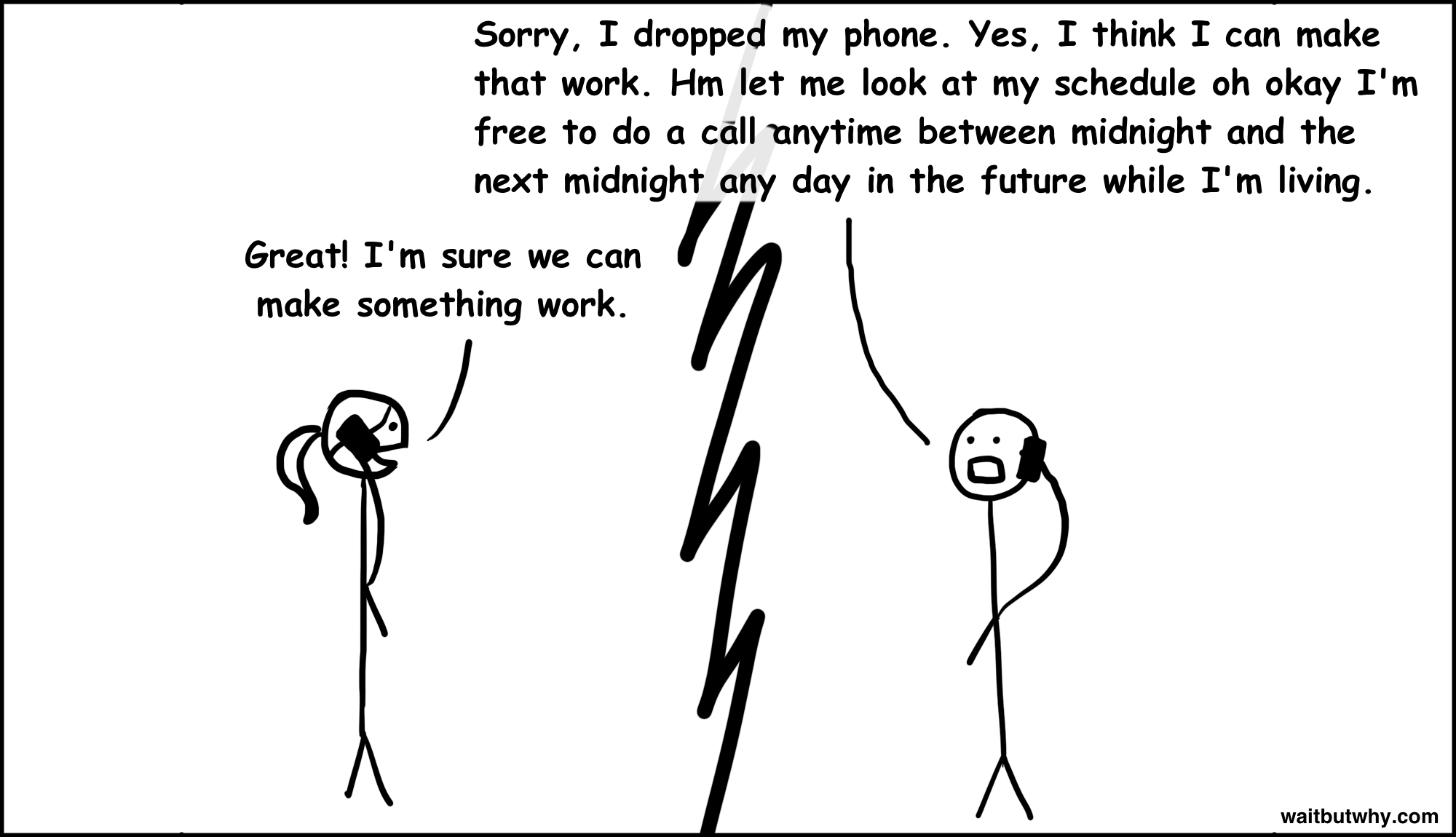
Last month, I got a surprising phone call.

Call 0

Call 1

Call 2b

Call 3

Call 4

Call 5

Call 6

Call 7

Call 8

Elon Musk, for those unfamiliar, is the world’s raddest man.

Untitled 4

I’ll use this post to explore how he became a self-made billionaire and the real-life inspiration for Iron Man’s Tony Stark, but for the moment, I’ll let Richard Branson explain things briefly:1

Whatever skeptics have said can’t be done, Elon has gone out and made real. Remember in the 1990s, when we would call strangers and give them our credit-card numbers? Elon dreamed up a little thing called PayPal. His Tesla Motors and SolarCity companies are making a clean, renewable-energy future a reality…his SpaceX [is] reopening space for exploration…it’s a paradox that Elon is working to improve our planet at the same time he’s building spacecraft to help us leave it.

So no, that was not a phone call I had been expecting.

A few days later, I found myself in pajama pants, pacing frantically around my apartment, on the phone with Elon Musk. We had a discussion about Tesla, SpaceX, the automotive and aerospace and solar power industries, and he told me what he thought confused people about each of these things. He suggested that if these were topics I’d be interested in writing about, and it might be helpful, I could come out to California and sit down with him in person for a longer discussion.

2Call1

2Call2

For me, this project was one of the biggest no-brainers in history. Not just because Elon Musk is Elon Musk, but because here are two separate items that have been sitting for a while in my “Future Post Topics” document, verbatim:

– “electric vs hybrid vs gas cars, deal with tesla, sustainable energy”

– “spacex, musk, mars?? how learn to do rockets??”

I already wanted to write about these topics, for the same reason I wrote about Artificial Intelligence—I knew they would be hugely important in the future but that I also didn’t understand them well enough. And Musk is leading a revolution in both of these worlds.

It would be like if you had plans to write about the process of throwing lightning bolts and then one day out of the blue Zeus called and asked if you wanted to question him about a lot of stuff.

So it was on. The plan was that I’d come out to California, see the Tesla and SpaceX factories, meet with some of the engineers at each company, and have an extended sit down with Musk. Exciting.

The first order of business was to have a full panic. I needed to not sit down with these people—these world-class engineers and rocket scientists—and know almost nothing about anything. I had a lot of quick learning to do.

The problem with Elon Fucking Musk, though, is that he happens to be involved in all of the following industries:

  • Automotive
  • Aerospace
  • Solar Energy
  • Energy Storage
  • Satellite
  • High-Speed Ground Transportation
  • And, um, Multi-Planetary Expansion

Zeus would have been less stressful.

So I spent the two weeks leading up to the West Coast visit reading and reading and reading, and it became quickly clear that this was gonna need to be a multi-post series. There’s a lot to get into.

We’ll dive deep into Musk’s companies and the industries surrounding them in the coming posts, but today, let’s start by going over exactly who this dude is and why he’s such a big deal.12← click these

The Making of Elon Musk

Note: There’s a great biography on Musk coming out May 19th, written by tech writer Ashlee Vance. I was able to get an advance copy, and it’s been a key source in putting together these posts. I’m going to keep to a brief overview of his life here—if you want the full story, get the bio.

Musk was born in 1971 in South Africa. Childhood wasn’t a great time for him—he had a tough family life and never fit in well at school.2 But, like you often read in the bios of extraordinary people, he was an avid self-learner early on. His brother Kimbal has said Elon would often read for 10 hours a day—a lot of science fiction and eventually, a lot of non-fiction too. By fourth grade, he was constantly buried in the Encyclopedia Britannica.

One thing you’ll learn about Musk as you read these posts is that he thinks of humans as computers, which, in their most literal sense, they are. A human’s hardware is his physical body and brain. His software is the way he learns to think, his value system, his habits, his personality. And learning, for Musk, is simply the process of “downloading data and algorithms into your brain.”3 Among his many frustrations with formal classroom learning is the “ridiculously slow download speed” of sitting in a classroom while a teacher explains something, and to this day, most of what he knows he’s learned through reading.

He became consumed with a second fixation at the age of nine when he got his hands on his first computer, the Commodore VIC-20. It came with five kilobytes of memory and a “how to program” guide that was intended to take the user six months to complete. Nine-year-old Elon finished it in three days. At 12, he used his skills to create a video game called Blastar, which he told me was “a trivial game…but better than Flappy Bird.” But in 1983, it was good enough to be sold to a computer magazine for $500 ($1,200 in today’s money)—not bad for a 12-year-old.3

Musk never felt much of a connection to South Africa—he didn’t fit in with the jockish, white Afrikaner culture, and it was a nightmare country for a potential entrepreneur. He saw Silicon Valley as the Promised Land, and at the age of 17, he left South Africa forever. He started out in Canada, which was an easier place to immigrate to because his mom is a Canadian citizen, and a few years later, used a college transfer to the University of Pennsylvania as a way into the US.4

In college, he thought about what he wanted to do with his life, using as his starting point the question, “What will most affect the future of humanity?” The answer he came up with was a list of five things: “the internet; sustainable energy; space exploration, in particular the permanent extension of life beyond Earth; artificial intelligence; and reprogramming the human genetic code.”4

He was iffy about how positive the impact of the latter two would be, and though he was optimistic about each of the first three, he never considered at the time that he’d ever be involved in space exploration. That left the internet and sustainable energy as his options.

He decided to go with sustainable energy. After finishing college, he enrolled in a Stanford PhD program to study high energy density capacitors, a technology aimed at coming up with a more efficient way than traditional batteries to store energy—which he knew could be key to a sustainable energy future and help accelerate the advent of an electric car industry.

But two days into the program, he got massive FOMO because it was 1995 and he “couldn’t stand to just watch the internet go by—[he] wanted to jump in and make it better.”5 So he dropped out and decided to try the internet instead.

His first move was to go try to get a job at the monster of the 1995 internet, Netscape. The tactic he came up with was to walk into the lobby, uninvited, stand there awkwardly, be too shy to talk to anyone, and walk out.

Musk bounced back from the unimpressive career beginning by teaming up with his brother Kimbal (who had followed Elon to the US) to start their own company—Zip2. Zip2 was like a primitive combination of Yelp and Google Maps, far before anything like either of those existed. The goal was to get businesses to realize that being in the Yellow Pages would become outdated at some point and that it was a good idea to get themselves into an online directory. The brothers had no money, slept in the office and showered at the YMCA, and Elon, their lead programmer, sat obsessively at his computer working around the clock. In 1995, it was hard to convince businesses that the internet was important—many told them that advertising on the internet sounded like “the dumbest thing they had ever heard of”6—but eventually, they began to rack up customers and the company grew. It was the heat of the 90s internet boom, startup companies were being snatched up left and right, and in 1999, Compaq snatched up Zip2 for $307 million. Musk, who was 27, made off with $22 million.

In what would become a recurring theme for Musk, he finished one venture and immediately dove into a new, harder, more complex one. If he were following the dot-com millionaire rulebook, he’d have known that what you’re supposed to do after hitting it big during the 90s boom is either retire off into the sunset of leisure and angel investing, or if you still have ambition, start a new company with someone else’s money. But Musk doesn’t tend to follow normal rulebooks, and he plunged three quarters of his net worth into his new idea, an outrageously bold plan to build essentially an online bank—replete with checking, savings, and brokerage accounts—called X.com. This seems less insane now, but in 1999, an internet startup trying to compete with the large banks was unheard of.

In the same building that X.com worked out of was another internet finance company called Confinity, founded by Peter Thiel and Max Levchin. One of X.com’s many features was an easy money-transfer service, and later, Confinity would develop a similar service. Both companies began to notice a strong demand for their money-transfer service, which put the two companies in sudden furious competition with each other, and they finally decided to just merge into what we know today as PayPal.

This brought together a lot of egos and conflicting opinions—Musk was now joined by Peter Thiel and a bunch of other now-super-successful internet guys—and despite the company growing rapidly, things inside the office did not go smoothly. The conflicts boiled over in late 2000, and when Musk was on a half fundraising trip / half honeymoon (with his first wife Justine), the anti-Musk crowd staged a coup and replaced him as CEO with Thiel. Musk handled this surprisingly well, and to this day, he says he doesn’t agree with that decision but he understands why they did it. He stayed on the team in a senior role, continued investing in the company, and played an instrumental role in selling the company to eBay in 2002, for $1.5 billion. Musk, the company’s largest shareholder, walked away with $180 million (after taxes).5

If there was ever a semblance of the normal life rulebook in Musk’s decision-making, it was at this point in his life—as a beyond-wealthy 31-year-old in 2002—that he dropped the rulebook into the fire for good.

The subject of what he did over the next 13 years leading up to today is what we’ll thoroughly explore over the rest of this series. For now, here’s the short story:

In 2002, before the sale of PayPal even went through, Musk started voraciously reading about rocket technology, and later that year, with $100 million, he started one of the most unthinkable and ill-advised ventures of all time: a rocket company called SpaceX, whose stated purpose was to revolutionize the cost of space travel in order to make humans a multi-planetary species by colonizing Mars with at least a million people over the next century.

Mm hm.

Then, in 2004, as that “project” was just getting going, Musk decided to multi-task by launching the second-most unthinkable and ill-advised venture of all time: an electric car company called Tesla, whose stated purpose was to revolutionize the worldwide car industry by significantly accelerating the advent of a mostly-electric-car world—in order to bring humanity on a huge leap toward a sustainable energy future. Musk funded this one personally as well, pouring in $70 million, despite the tiny fact that the last time a US car startup succeeded was Chrysler in 1925, and the last time someone started a successful electric car startup was never.

And since why the fuck not, a couple years later, in 2006, he threw in $10 million to found, with his cousins, another company, called SolarCity, whose goal was to revolutionize energy production by creating a large, distributed utility that would install solar panel systems on millions of people’s homes, dramatically reducing their consumption of fossil fuel-generated electricity and ultimately “accelerating mass adoption of sustainable energy.”7

If you were observing all of this in those four years following the PayPal sale, you’d think it was a sad story. A delusional internet millionaire, comically in over his head with a slew of impossible projects, doing everything he could to squander his fortune.

By 2008, this seemed to be playing out, to the letter. SpaceX had figured out how to build rockets, just not rockets that actually worked—it had attempted three launches so far and all three had blown up before reaching orbit. In order to bring in any serious outside investment or payload contracts, SpaceX had to show that they could successfully launch a rocket—but Musk said he had funds left for one and only one more launch. If the fourth launch also failed, SpaceX would be done.

Meanwhile, up in the Bay Area, Tesla was also in the shit. They had yet to deliver their first car—the Tesla Roadster—to the market, which didn’t look good to the outside world. Silicon Valley gossip blog Valleywag made the Tesla Roadster its #1 tech company fail of 2007. This would have been more okay if the global economy hadn’t suddenly crashed, hitting the automotive industry the absolute hardest and sucking dry any flow of investments into car companies, especially new and unproven ones. And Tesla was running out of money fast.

During this double implosion of his career, the one thing that held stable and strong in Musk’s life was his marriage of eight years, if by stable and strong you mean falling apart entirely in a soul-crushing, messy divorce.

Darkness.

But here’s the thing—Musk is not a fool, and he hadn’t built bad companies. He had built very, very good companies. It’s just that creating a reliable rocket is unfathomably difficult, as is launching a startup car company, and because no one wanted to invest in what seemed to the outside world like overambitious and probably-doomed ventures—especially during a recession—Musk had to rely on his own personal funds. PayPal made him rich, but not rich enough to keep these companies afloat for very long on his own. Without outside money, both SpaceX and Tesla had a short runway. So it’s not that SpaceX and Tesla were bad—it’s that they needed more time to succeed, and they were out of time.

And then, in the most dire hour, everything turned around.

First, in September of 2008, SpaceX launched their fourth rocket—and their last one if it didn’t successfully put a payload into orbit—and it succeeded. Perfectly.

That was enough for NASA to say “fuck it, let’s give this Musk guy a try,” and it took a gamble, offering SpaceX a $1.6 billion contract to carry out 12 launches for the agency. Runway extended. SpaceX saved.

The next day, on Christmas Eve 2008, when Musk scrounged up the last money he could manage to keep Tesla going, Tesla’s investors reluctantly agreed to match his investment. Runway extended. Five months later, things began looking up, and another critical investment came in—$50 million from Daimler. Tesla saved.

While 2008 hardly marked the end of the bumps in the road for Musk, the overarching story of the next seven years would be the soaring, earthshaking success of Elon Musk and his companies.

Since their first three failed launches, SpaceX has launched 20 times—all successes. NASA is now a regular client, and one of many, since the innovations at SpaceX have allowed companies to launch things to space for the lowest cost in history. Within those 20 launches have been all kinds of “firsts” for a commercial rocket company—to this day, the four entities in history who have managed to launch a spacecraft into orbit and successfully return it to Earth are the US, Russia, China—and SpaceX. SpaceX is currently testing their new spacecraft, which will bring humans to space, and they’re busy at work on the much larger rocket that will be able to bring 100 people to Mars at once. A recent investment by Google and Fidelity has valued the company at $12 billion.

Tesla’s Model S has become a smashing success, blowing away the automotive industry with the highest ever Consumer Reports rating of a 99/100, and the highest safety rating in history from the National Highway Safety Administration, a 5.4/5. Now they’re getting closer and closer to releasing their true disruptor—the much more affordable Model 3—and the company’s market cap is just under $30 billion. They’re also becoming the world’s most formidable battery company, currently working on their giant Nevada “Gigafactory,” which will more than double the world’s total annual production of lithium-ion batteries.

SolarCity, which went public in 2012, now has a market cap of just under $6 billion and has become the largest installer of solar panels in the US. They’re now building the country’s largest solar panel-manufacturing factory in Buffalo, and they’ll likely be entering into a partnership with Tesla to package their product with Tesla’s new home battery, the Powerwall.

And since that’s not enough, in his spare time, Musk is pushing the development a whole new mode of transport—the Hyperloop.

In a couple of years, when their newest factories are complete, Musk’s three companies will employ over 30,000 people. After nearly going broke in 2008 and telling a friend that he and his wife may have to “move into his wife’s parents’ basement,”8 Musk’s current net worth clocks in at $12.9 billion.

All of this has made Musk somewhat of a living legend. In building a successful automotive startup and its worldwide network of Supercharger stations, Musk has been compared to visionary industrialists like Henry Ford and John D. Rockefeller. The pioneering work of SpaceX on rocket technology has led to comparisons to Howard Hughes, and many have drawn parallels between Musk and Thomas Edison because of the advancements in engineering Musk has been able to achieve across industries. Perhaps most often, he’s compared to Steve Jobs, for his remarkable ability to disrupt giant, long-stagnant industries with things customers didn’t even know they wanted. Some believe he’ll be remembered in a class of his own. Tech writer and Musk biographer Ashlee Vance has suggested that what Musk is building “has the potential to be much grander than anything Hughes or Jobs produced. Musk has taken industries like aerospace and automotive that America seemed to have given up on and recast them as something new and fantastic.”9
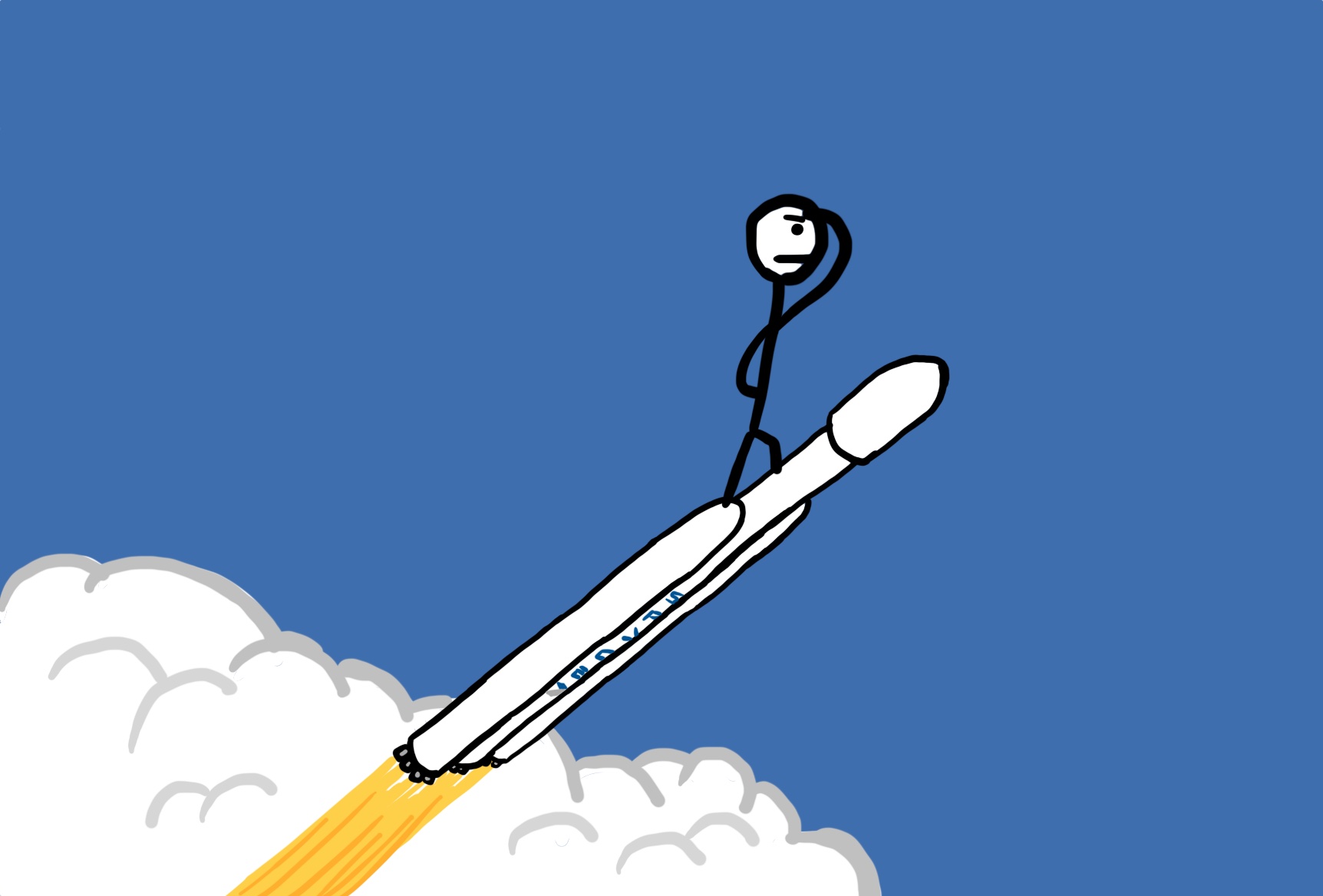
FChris Anderson, who runs TED Talks, calls Musk “the world’s most remarkable living entrepreneur.” Others know him as “the real life Iron Man,” and not for no reason—Jon Favreau actually sent Robert Downey, Jr. to spend time with Musk in the SpaceX factory prior to filming the first Iron Man movie so he could model his character off of Musk.10 He’s even been on The Simpsons.

And this is the man I was somehow on the phone with as I frantically paced back and forth in my apartment, in pajama pants.

On the call, he made it clear that he wasn’t looking for me to advertise his companies—he only wanted me to help explain what’s going on in the worlds surrounding those companies and why the things happening with electric cars, sustainable energy production, and aerospace matter so much.

He seemed particularly bored with people spending time writing about him—he feels there are so many things of critical importance going on in the industries he’s involved in, and every time someone writes about him, he wishes they were writing about fossil fuel supply or battery advancements or the importance of making humanity multi-planetary (this is especially clear in the intro to the upcoming biography on him, when the author explains how not interested Musk was in having a bio written about him).

So I’m sure this first post, whose title is “Elon Musk: The World’s Raddest Man,” will annoy him.

But I have reasons. To me, there are two worthy areas of exploration in this post series:

1) To understand why Musk is doing what he’s doing. He deeply believes that he’s taken on the most pressing possible causes to give humanity the best chance of a good future. I want to explore those causes in depth and the reasons he’s so concerned about them.

2) To understand why Musk is able to do what he’s doing. There are a few people in each generation who dramatically change the world, and those people are worth studying. They do things differently from everyone else—and I think there’s a lot to learn from them.

So on my visit to California, I had two goals in mind: to understand as best I could what Musk and his teams were working on so feverishly and why it mattered so much, and to try to gain insight into what it is that makes him so capable of changing the world.

___________

Visiting the Factories

The Tesla Factory (in Northern CA) and the SpaceX Factory (in Southern CA), in addition to both being huge, and rad, have a lot in common.

Both factories are bright and clean, shiny and painted white, with super high ceilings. Both feel more like laboratories than traditional factories. And in both places, the engineers doing white collar jobs and the technicians doing blue collar jobs are deliberately placed in the same working quarters so they’ll work closely together and give each other feedback—and Musk believes it’s crucial for those designing the machines to be around those machines as they’re being manufactured. And while a traditional factory environment wouldn’t be ideal for an engineer on a computer and a traditional office environment wouldn’t be a good workplace for a technician, a clean, futuristic laboratory feels right for both professions. There are almost no closed offices in either factory—everyone is out in the open, exposed to everyone else.

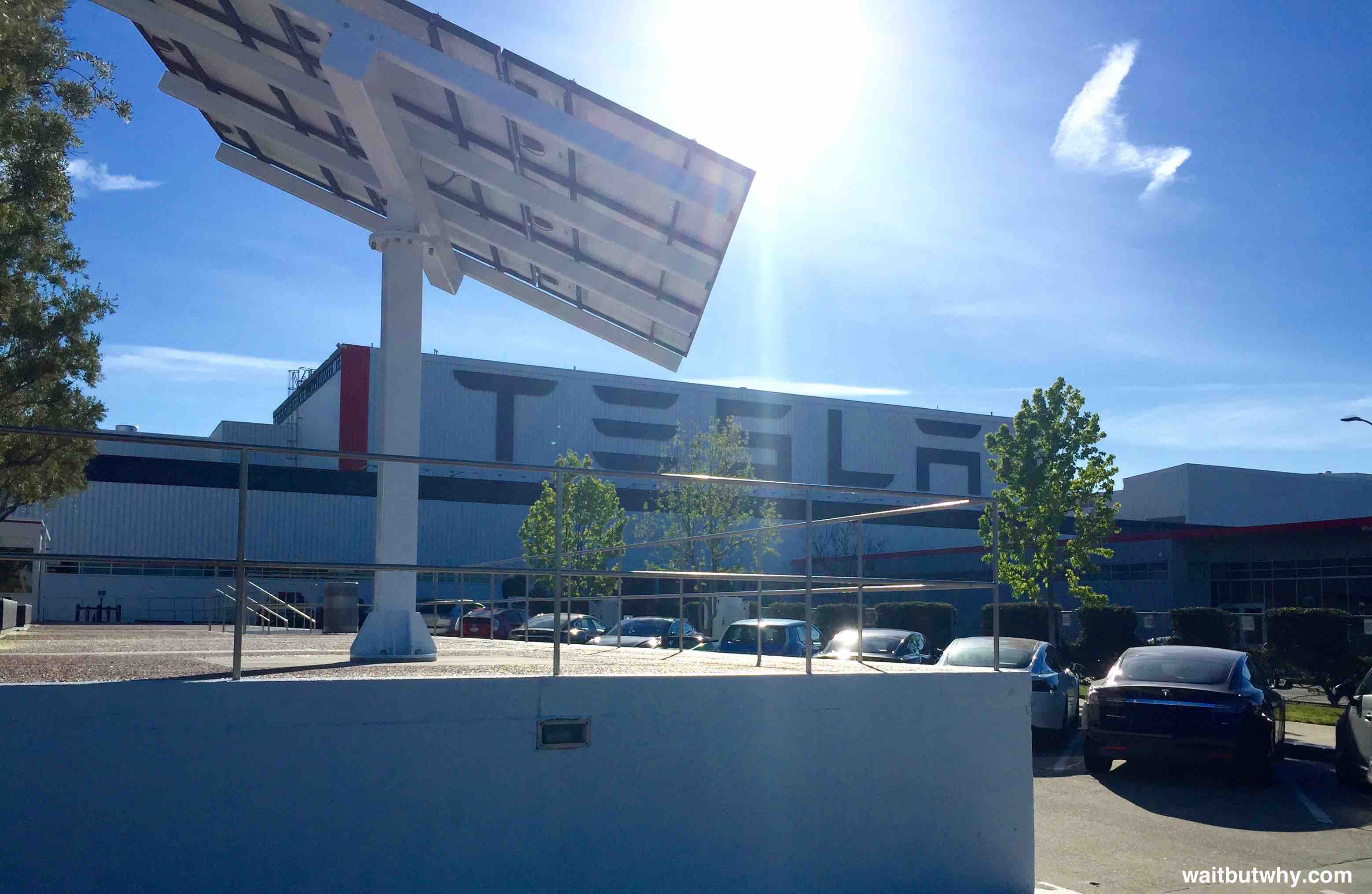
When I pulled up to the Tesla factory (joined by Andrew), I was first taken by its size—and when I looked it up, I wasn’t surprised to see that it has the second largest building footprint (aka base area) in the world.
IMG_6427

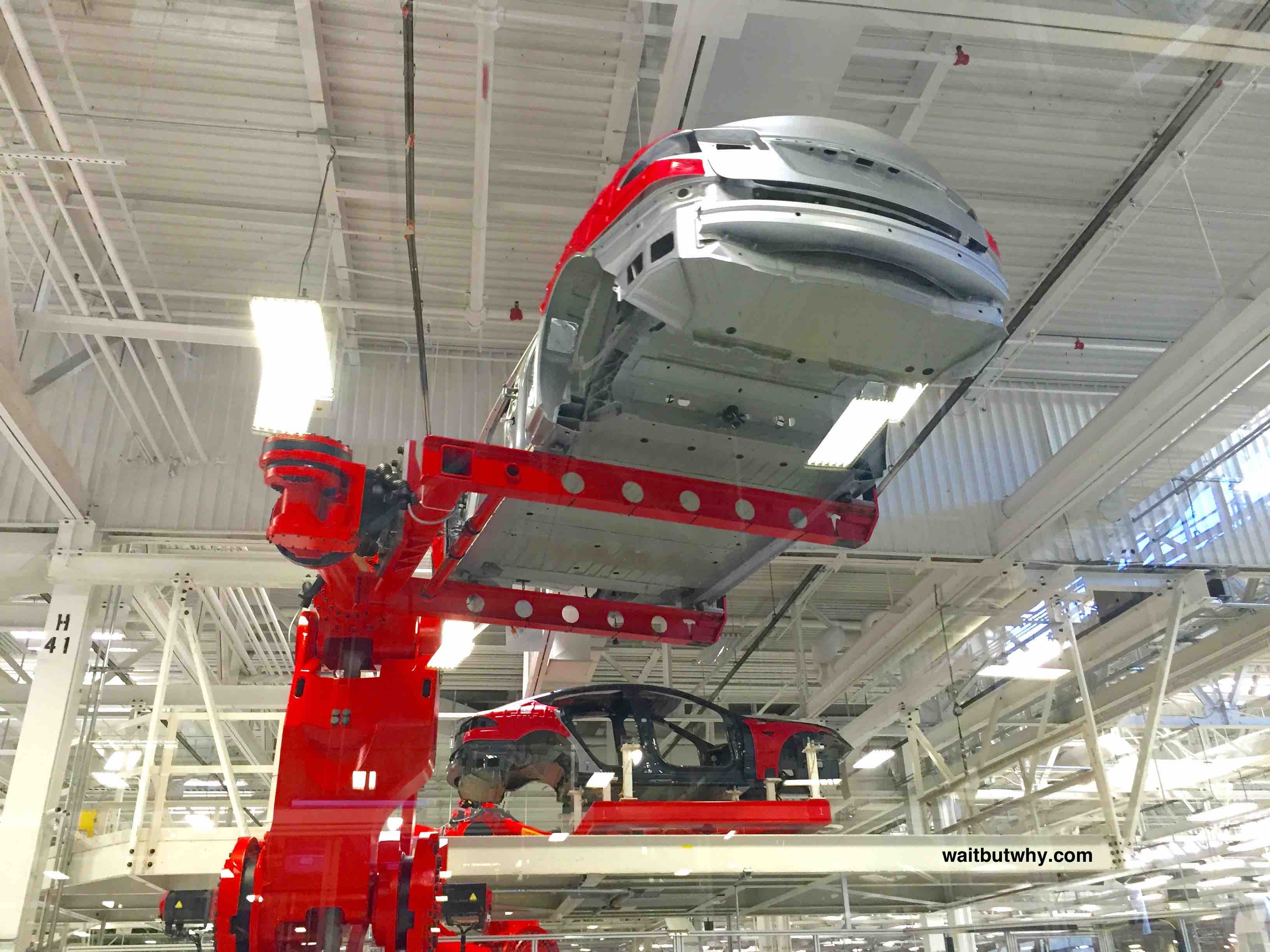
The factory was formerly jointly owned by GM and Toyota, who sold it to Tesla in 2010. We started off the day with a full tour of the factory—a sea of red robots making cars and being silly:6
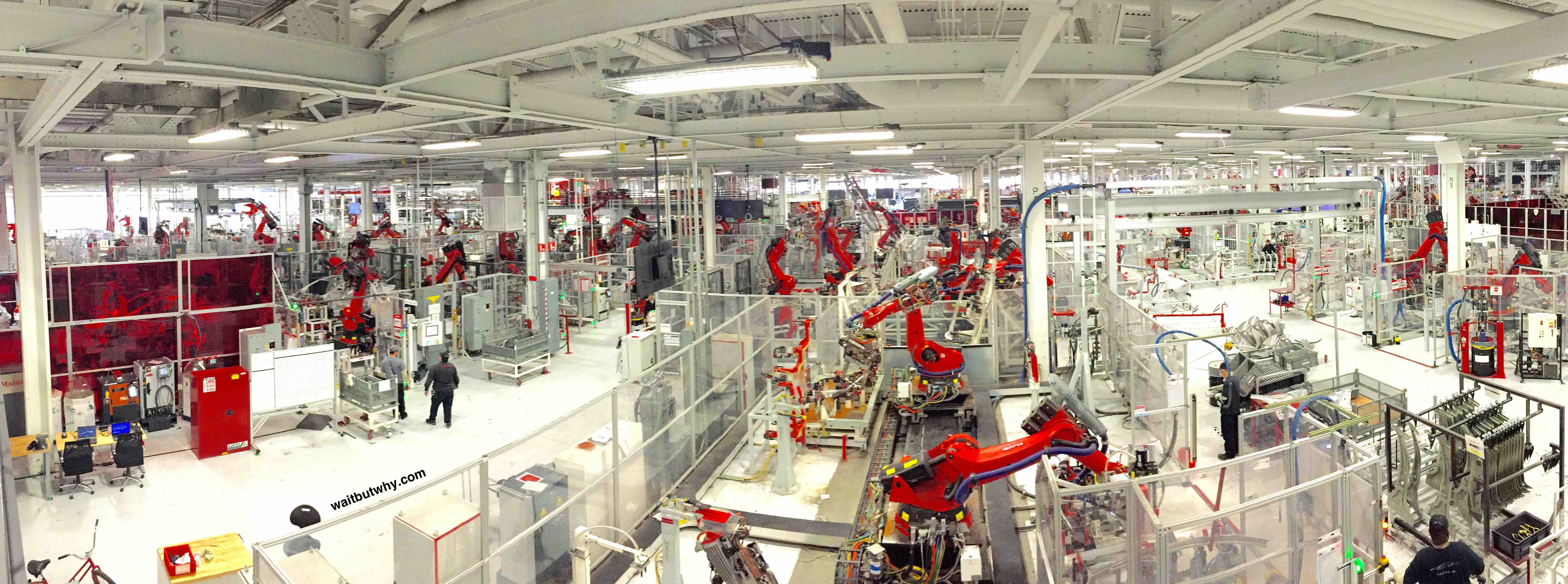
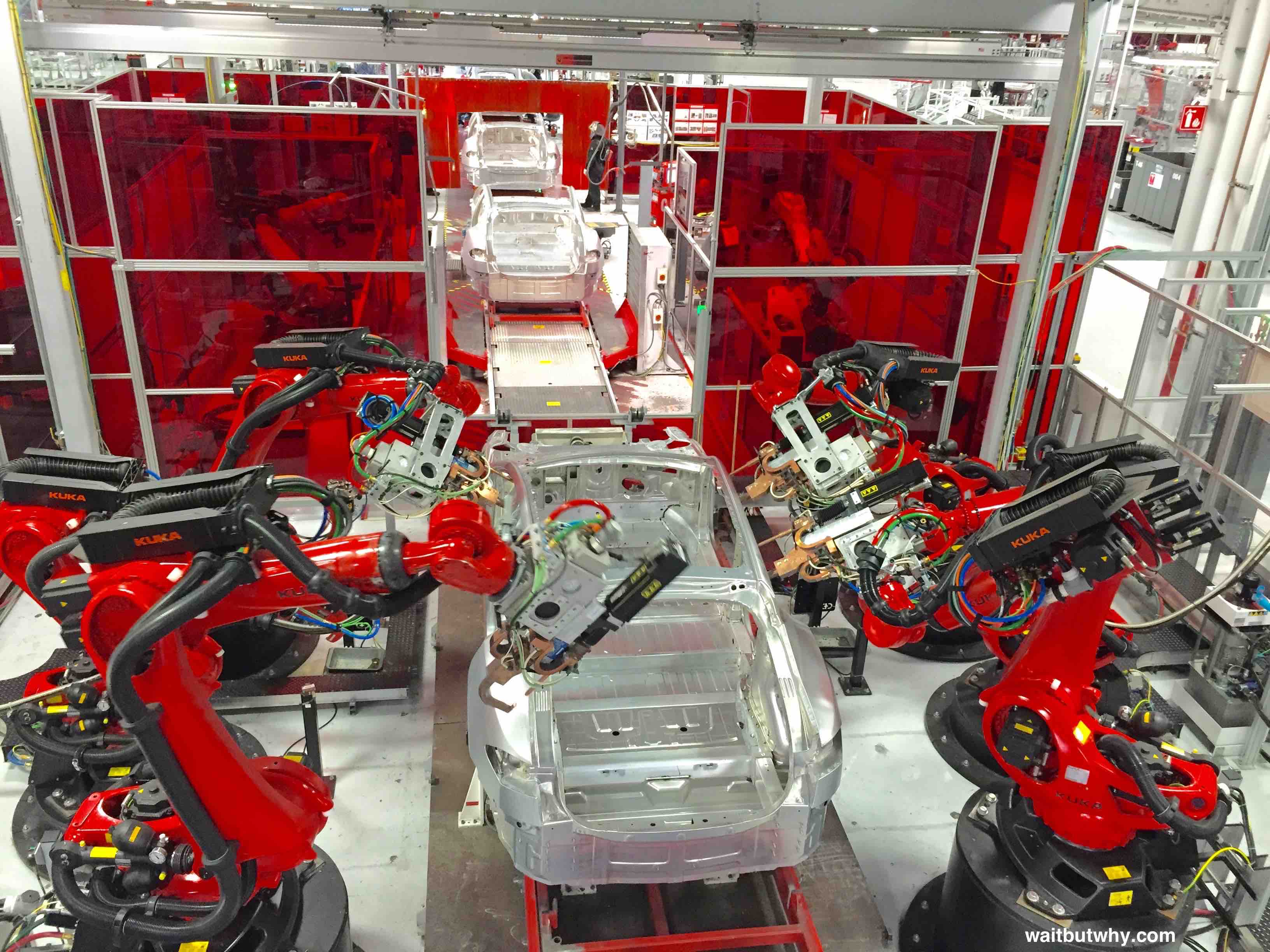
IMG_6434

IMG_6439

IMG_6444

And other cool things, like a vast section of the factory that just makes the car battery, and another that houses the 20,000 pound rolls of aluminum they slice and press and weld into Teslas.
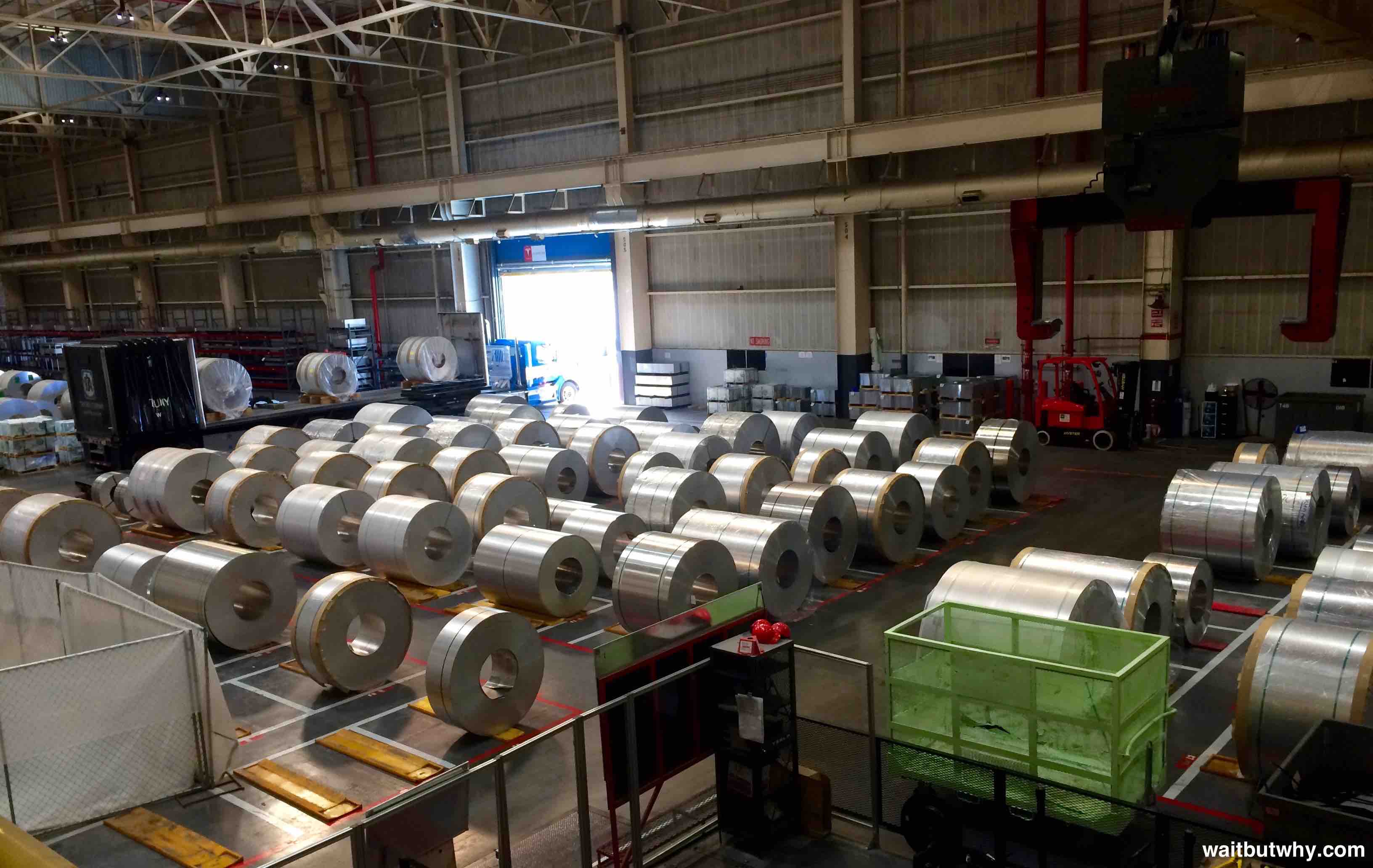
130

And this giant press, which costs $50 million and presses metal with 4,500 tons of pressure (the same pressure you’d get if you stacked 2,500 cars on top of something).
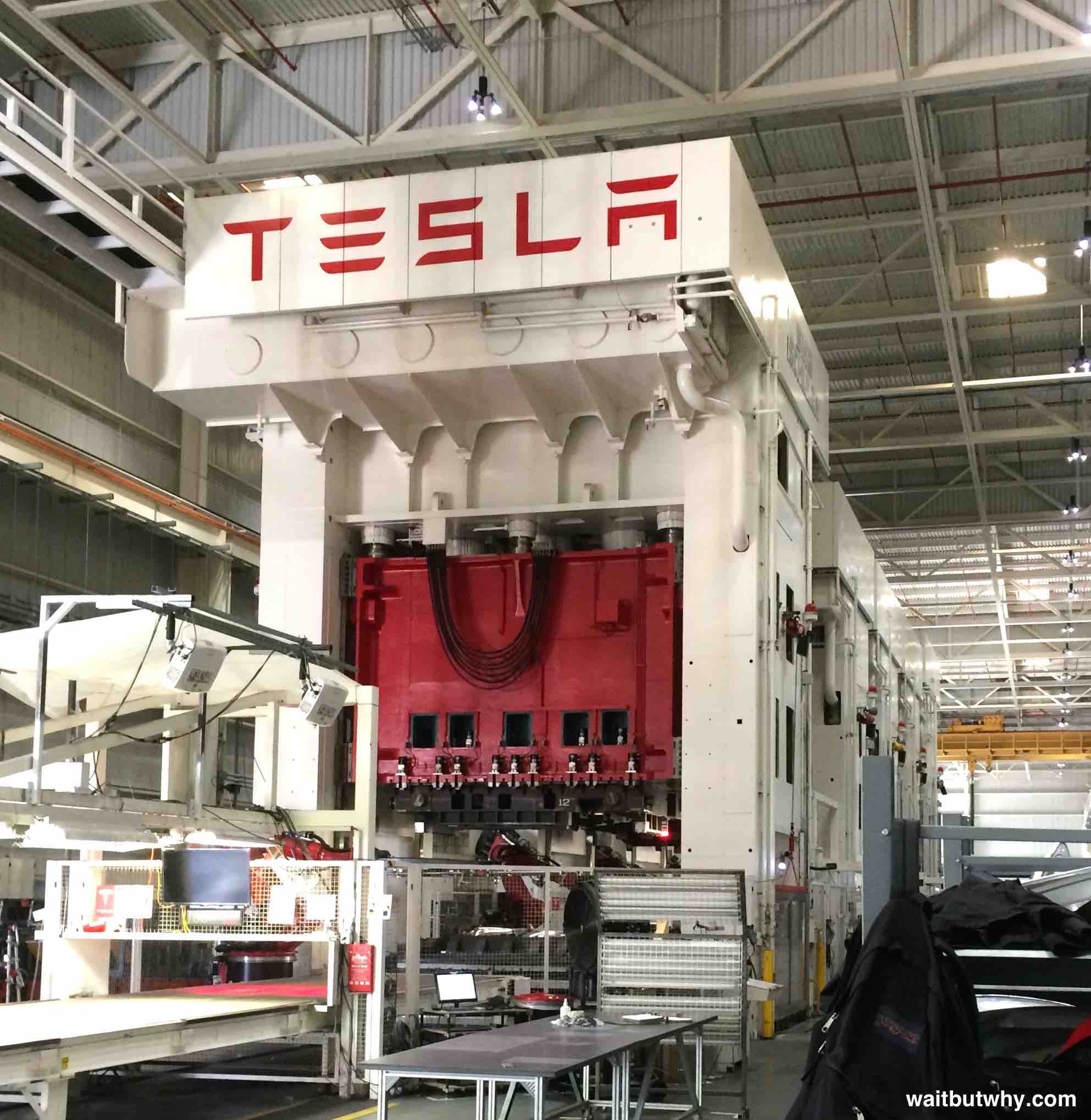
142

The Tesla factory is working on upping its output from 30,000 cars/year to 50,000, or about 1,000 per week. They seemed to be pumping out cars incredibly quickly, so I was blown away to learn that Toyota had been on a 1,000 cars per day clip when they inhabited the factory.

I had a chance to visit the Tesla design studio (no pictures allowed), where there were designers sketching car designs on computer screens and, on the other side of the room, full-size car models made of clay. An actual-size clay version of the upcoming Model 3 was surrounded by specialists sculpting it with tiny instruments and blades, shaving off fractions of a millimeter to examine the way light bounced off the curves. There was also a 3D printer that could quickly “print” out a shoe-sized 3D model of a sketched Tesla design so a designer could actually hold their design and look at it from different angles. Deliciously futuristic.

The next day was the SpaceX factory, which might be even cooler, but the building contains advanced rocket technology, which according to the government is “weapons technology,” and apparently random bloggers aren’t allowed to take pictures of weapons technology.

Anyway, after the tours, I had a chance to sit down with several senior engineers and designers at both companies. They’d explain that they were a foremost expert in their field, I’d explain that I had recently figured out how big the building would be that could hold all humans, and we’d begin our discussion. I’d ask them about their work, their thoughts on the company as a whole and the broader industry, and then I’d ask them about their relationship with Elon and what it was like to work for him. Without exception, they were really nice-seeming, friendly people, who all came off as ridiculously smart but in a non-pretentious way. Musk has said he has a strict “no assholes” hiring policy, and I could see that at work in these meetings.

So what’s Musk like as a boss?

Let’s start by seeing what the internet says—there’s a Quora thread that poses the question: “What is it like to work with Elon Musk?”

The first answer is from a longtime SpaceX employee who no longer works there, who describes the day that their 3rd launch failed, a devastating blow for the company and for all the people who had worked for years to try to make it work.

She describes Elon emerging from mission command to address the company and delivering a rousing speech. She refers to Elon’s “infinite wisdom” and says, “I think most of us would have followed him into the gates of hell carrying suntan oil after that.  It was the most impressive display of leadership that I have ever witnessed.”

Right below that answer is another answer, from an anonymous SpaceX engineer, who describes working for Musk like this:

“You can always tell when someone’s left an Elon meeting: they’re defeated…nothing you ever do will be good enough so you have to find your own value, not depending on praise to get you through your obviously insufficient 80 hour work weeks.”

Reading about Musk online and in Vance’s book, I was struck by how representative both of these Quora comments were of whole camps of opinion on working for Musk. Doing so seems to bring out a tremendous amount of adoration and a tremendous amount of exasperation, sometimes with a tone of bitterness—and even more oddly, much of the time, you hear both sides of this story expressed by the same person. For example, later in the comment of the effusive Quora commenter comes “Working with him isn’t a comfortable experience, he is never satisfied with himself so he is never really satisfied with anyone around him…the challenge is that he is a machine and the rest of us aren’t.” And the frustrated anonymous commenter later concedes that the way Elon is “is understandable” given the enormity of the task at hand, and that “it is a great company and I do love it.”

My own talks with Musk’s engineers and designers told a similar story. I was told: “Elon always wants to know, ‘Why are we not going faster?’ He always wants bigger, better, faster” by the same person who a few minutes later was emphasizing how fair and thoughtful Musk tends to be in handling the terms for a recently fired employee.

The same person who told me he has “lots of sleepless nights” said in the adjacent sentence how happy he is to be at the company and that he hopes to “never leave.”

One senior executive described interacting with Musk like this: “Any conversation’s fairly high stakes because he’ll be very opinionated, and he can go deeper than you expect or are prepared for or deeper than your knowledge goes on a given topic, and it does feel like a high wire act interacting with him, especially when you find yourself in a [gulp] technical disagreement.”7 The same executive, who had previously worked at a huge tech company, also called Musk “the most grounded billionaire I’ve ever worked with.”

What I began to understand is that the explanation for both sides of the story—the cult-like adulation right alongside the grudging willingness to endure what sounds like blatant hell—comes down to respect. The people who work for Musk, no matter how they feel about his management style, feel an immense amount of respect—for his intelligence, for his work ethic, for his guts, and for the gravity of the missions he’s undertaken, missions that make all other potential jobs seem trivial and pointless.

Many of the people I talked to also alluded to their respect for his integrity. One way this integrity comes through is in his consistency. He’s been saying the same things in interviews for a decade, often using the same exact phrasing many years apart. He says what he really means, no matter the situation—one employee close to Musk told me that after a press conference or a business negotiation, once in private he’d ask Musk what his real angle was and what he really thinks. Musk’s response would always be boring: “I think exactly what I said.”

A few people I spoke with referenced Musk’s obsession with truth and accuracy. He’s fine with and even welcoming of negative criticism about him when he believes it’s accurate, but when the press gets something wrong about him or his companies, he usually can’t help himself and will engage them and correct their error. He detests vague spin-doctor phrases like “studies say” and “scientists disagree,” and he refuses to advertise for Tesla, something most startup car companies wouldn’t think twice about—because he sees advertising as manipulative and dishonest.

There’s even an undertone of integrity in Musk’s tyrannical demands of workers, because while he may be a tyrant, he’s not a hypocrite. Employees pressured to work 80 hours a week tend to be less bitter about it when at least the CEO is in there working 100.

Speaking of the CEO, let’s go have a hamburger with him.

My Lunch With Elon

It started like this:
Lunch 1Lunch 2

Lunch 3


Lunch 5

Lunch 6

Lunch 2

After about seven minutes of this, I was able to get out my first question, a smalltalk-y question about how he thought the recent launch had gone (they had attempted an extremely difficult rocket-landing maneuver—more on that in the SpaceX post). His response included the following words: hypersonic, rarefied, densifying, supersonic, Mach 1, Mach 3, Mach 4, Mach 5, vacuum, regimes, thrusters, nitrogen, helium, mass, momentum, ballistic, and boost-back. While this was happening, I was still mostly blacked out from the surreality of the situation, and when I started to come to, I was scared to ask any questions about what he was saying in case he had already explained it while I was unconscious.

I eventually regained the ability to have adult human conversation, and we began what turned into a highly interesting and engaging two-hour discussion.8 This guy has a lot on his mind across a lot of topics. In this one lunch alone, we covered electric cars, climate change, artificial intelligence, the Fermi Paradox, consciousness, reusable rockets, colonizing Mars, creating an atmosphere on Mars, voting on Mars, genetic programming, his kids, population decline, physics vs. engineering, Edison vs. Tesla, solar power, a carbon tax, the definition of a company, warping spacetime and how this isn’t actually something you can do, nanobots in your bloodstream and how this isn’t actually something you can do, Galileo, Shakespeare, the American forefathers, Henry Ford, Isaac Newton, satellites, and ice ages.

I’ll get into the specifics of what he had to say about many of these things in later posts, but some notes for now:

— He’s a pretty tall and burly dude. Doesn’t really come through on camera.

— He ordered a burger and ate it in either two or three bites over a span of about 15 seconds. I’ve never seen anything like it.

He is very, very concerned about AI. I quoted him in my posts on AI saying that he fears that by working to bring about Superintelligent AI (ASI), we’re “summoning the demon,” but I didn’t know how much he thought about the topic. He cited AI safety as one of the three things he thinks about most—the other two being sustainable energy and becoming a multi-planet species, i.e. Tesla and SpaceX. Musk is a smart motherfucker, and he knows a ton about AI, and his sincere concern about this makes me scared.

The Fermi Paradox also worries him. In my post on that, I divided Fermi thinkers into two camps—those who think there’s no other highly intelligent life out there at all because of some Great Filter, and those who believe there must be plenty of intelligent life and that we don’t see signs of any for some other reason. Musk wasn’t sure which camp seemed more likely, but he suspects that there may be an upsetting Great Filter situation going on. He thinks the paradox “just doesn’t make sense” and that it “gets more and more worrying” the more time that goes by. Considering the possibility that maybe we’re a rare civilization who made it past the Great Filter through a freak occurrence makes him feel even more conviction about SpaceX’s mission: “If we are very rare, we better get to the multi-planet situation fast, because if civilization is tenuous, then we must do whatever we can to ensure that our already-weak probability of surviving is improved dramatically.” Again, his fear here makes me feel not great.

One topic I disagreed with him on is the nature of consciousness. I think of consciousness as a smooth spectrum. To me, what we experience as consciousness is just what it feels like to be human-level intelligent. We’re smarter, and “more conscious” than an ape, who is more conscious than a chicken, etc. And an alien much smarter than us would be to us as we are to an ape (or an ant) in every way. We talked about this, and Musk seemed convinced that human-level consciousness is a black-and-white thing—that it’s like a switch that flips on at some point in the evolutionary process and that no other animals share. He doesn’t buy the “ants : humans :: humans : [a much smarter extra-terrestrial]” thing, believing that humans are weak computers and that something smarter than humans would just be a stronger computer, not something so beyond us we couldn’t even fathom its existence.

I talked to him for a while about genetic reprogramming. He doesn’t buy the efficacy of typical anti-aging technology efforts, because he believes humans have general expiration dates, and no one fix can help that. He explained: “The whole system is collapsing. You don’t see someone who’s 90 years old and it’s like, they can run super fast but their eyesight is bad. The whole system is shutting down. In order to change that in a serious way, you need to reprogram the genetics or replace every cell in the body.” Now with anyone else—literally anyone else—I would shrug and agree, since he made a good point. But this was Elon Musk, and Elon Musk fixes shit for humanity. So what did I do?

Me: Well…but isn’t this important enough to try? Is this something you’d ever turn your attention to?

Elon: The thing is that all the geneticists have agreed not to reprogram human DNA. So you have to fight not a technical battle but a moral battle.

Me: You’re fighting a lot of battles. You could set up your own thing. The geneticists who are interested—you bring them here. You create a laboratory, and you could change everything.

Elon: You know, I call it the Hitler Problem. Hitler was all about creating the Übermensch and genetic purity, and it’s like—how do you avoid the Hitler Problem? I don’t know.

Me: I think there’s a way. You’ve said before about Henry Ford that he always just found a way around any obstacle, and you do the same thing, you always find a way. And I just think that that’s as important and ambitious a mission as your other things, and I think it’s worth fighting for a way, somehow, around moral issues, around other things.

Elon: I mean I do think there’s…in order to fundamentally solve a lot of these issues, we are going to have to reprogram our DNA. That’s the only way to do it.

Me: And deep down, DNA is just a physical material.

Elon: [Nods, then pauses as he looks over my shoulder in a daze] It’s software.

Comments:

1) It’s really funny to brashly pressure Elon Musk to take on yet another seemingly-insurmountable task and to act a little disappointed in him that he’s not currently doing it, when he’s already doing more for humanity than literally anyone on the planet.

2) It’s also super fun to casually brush off the moral issues around genetic programming with “I think there’s a way” and to refer to DNA—literally the smallest and most complex substance ever—as “just a physical material deep down” when I have absolutely no idea what I’m talking about. Because those things will be his problem to figure out, not mine.

3) I think I’ve successfully planted the seed. If Musk takes on human genetics 15 years from now and we all end up living to 250 because of it, you all owe me a drink.

___________

Watching interviews with Musk, you see a lot of people ask him some variation of this question Chris Anderson asked him on stage at the 2013 TED conference:

How have you done this? These projects—PayPal, SolarCity, Tesla, SpaceX—they’re so spectacularly different. They’re such ambitious projects, at scale. How on Earth has one person been able to innovate in this way—what is it about you? Can we have some of that secret sauce?

There are a lot of things about Musk that make him so successful, but I do think there’s a “secret sauce” that puts Musk in a different league from even the other renowned billionaires of our time. I have a theory about what that is, which has to do with the way Musk thinks, the way that he reasons through problems, and the way he views the world. As this series continues, think about this, and we’ll discuss a lot more in the last post.

For now, I’ll leave you with Elon Musk holding a Panic Monster.

IMG_6470


___________

If you’re into Wait But Why, sign up for the Wait But Why email list and we’ll send you the new posts right when they come out. Better than having to check the site!

If you’re interested in supporting Wait But Why, here’s our Patreon.

Next up in this series: Part 2: How Tesla Will Change the World

Other posts in the series:

Part 3: How (and Why) SpaceX Will Colonize Mars
Part 4: The Chef and the Cook: Musk’s Secret Sauce

Extra Post #1: The Deal With Solar City
Extra Post #2: The Deal With the Hyperloop


Some Musk-y Wait But Why Posts:

The AI Revolution: The Road to Superintelligence

The Fermi Paradox

What Makes You You?


Sources

A large part of what I learned for this post came from my own conversations with Musk and his staff. As I mentioned above, Ashlee Vance’s upcoming biography, Elon Musk: Tesla, SpaceX, and the Quest for a Fantastic Future, is excellent and helped me fill in a bunch of gaps. Further info came from the sources below:

Documentary: Revenge of the Electric Car
TED Talks: Elon Musk: The mind behind Tesla, SpaceX, SolarCity
Khan Academy: Interview With Elon Musk
Quora: What is it like to work with Elon Musk?
SXSW: Interview with Elon Musk
Consumer Reports: Tesla Model S: The Electric Car that Shatters Every Myth
Wired: How the Tesla Model S is Made
Interview: Elon Musk says he’s a bigger fan of Edison than Tesla
Interview: Elon Musk gets introspective
Business Insider: Former SpaceX Exec Explains How Elon Musk Taught Himself Rocket Science
Esquire: Elon Musk: The Triumph of His Will
Oxford Martin School: Elon Musk on The Future of Energy and Transport
MIT Interview: Elon Musk compares AI efforts to “Summoning the Demon”
Documentary: Billionaire Elon Musk : How I Became The Real ‘Iron Man’
Reddit: Elon Musk AMA
Chris Anderson: Chris Anderson on Elon Musk, the World’s Most Remarkable Entrepreneur
Engineering.com: Who’s Better? Engineers or Scientists?
Forbes: Big Day For SpaceX As Elon Musk Tells His Mom ‘I Haven’t Started Yet’


  1. Thank you for following instructions. I came across much more in my research than I have room to fit in these posts, so I’ll tuck extra tidbits and related thoughts into these blue circle footnotes throughout the post. Click these if you have time.

  2. He was badly bullied in his early teens, including one particularly traumatic incident in which a group of guys who constantly picked on Elon attacked him in full force one day, pushing him down a flight of stairs and then beating him unconscious. He has breathing problems to this day because of the injuries.

  3. He first became enamored with computers and video games during a trip to the US he accompanied his father on when he was a little kid and all the hotels they stayed in had arcades—this was also when he first became enamored with America.

  4. As an experiment, he lived for a while on $1/day during college, eating mostly hot dogs.

  5. Musk and the PayPal team stayed on good terms, for the most part, and a number of them have since invested in Musk’s later companies.

  6. Here’s a cool video of the robots in action.

  7. He didn’t actually gulp.

  8. I did an odd but kind of a hilarious thing and fucked with him at the very beginning. I knew from watching interviews with him the certain things he absolutely hates being asked about because he thinks the topics are impossibly stupid and impractical. I picked the three that seemed to bother him most, and right in the beginning of the interview, said: “So by the way, since we spoke on the phone, I’ve altered the plan a bit, and I’m going to focus on three main things in these posts: hydrogen fuel cells, solar panels in space, and the space elevator.” He looked at me with horrified disappointment and after a pause, said, “Really??” Then I told him I was just messing with him and he exhaled hugely and said, “Oh thank god.” Fun.

The post Elon Musk: The World’s Raddest Man appeared first on Wait But Why.

08 May 15:59

Drug pump is "most insecure" devices ever seen by researcher

by Cory Doctorow

Security researcher Jeremy Richards has called the Hospira Lifecare PCA 3 drug-pump "the least secure IP enabled device" he's examined.

The device attracted a NIST/DHS warning that classed the risk from the Lifecare product a 10/10.

Though the Lifecare product makes some particularly egregious security blunders, many of its mistakes are typical of medical devices.

What's worse than buggy, insecure software is buggy, insecure software that's illegal to research. Between the Computer Fraud and Abuse Act's ban on "exceeding authorization" on a computer (the law under which Aaron Swartz was charged) and the Digital Millennium Copyright Act's ban on publishing information that would help subvert an "effective means of access control," researchers who uncover these critical flaws face real jeopardy just for telling us information that we need to know in order to make good choices in matters of life and death.

Governments are terminally compromised when it comes to this stuff. On the one hand, they don't want voters dropping dead in the streets as hackers pwn their implanted defibrillators. On the other hand, they rely on weak computer security (ever going so far as to sabotage our systems and devices by deliberately introducing exploitable bugs in them) as a means of attacking "bad guys," who use the same computers as the rest of us. They also actively encourage the trade in offensive tools that weaponize bugs, even turning a blind eye to the sale of these tools to despotic regimes who use them to hack their adversaries in the USA (and elsewhere).

You can't have it both ways. Either we have real security, in which researchers aggressively root out flaws in our systems and get them patched; or we make life easier for the Tom Clancy LARPers in the security services, who do everything they can to turn all our systems into reservoirs of long-lived digital pathogens that they can exploit, threatening researchers who report bugs, and giving them big, military-industrial-complex-style paydays when they sell those bugs to digital arms dealers.

Someone you love already has an implanted medical device -- a pacemaker that can cook their hearts in seconds if it's badly secured, a cochlear implant that could serve as the world's most invasive listening device, a lethally compromised insulin pump. You probably spend part of every day in a car, building, or other enclosure whose informatics could kill, maim, or compromise you if it was compromised. When spooks, cops and politicians decide that catching bad guys is more important than keeping you secure against crooks, griefers, identity thieves, spies, dirty cops and other adversaries, they show themselves to be unfit for office. As Aaron Swartz said, "It's not OK not to understand the Internet."

What he found was shocking. Among other things, Richards noted that the device was listening on Telnet port 23. Connecting to the device, he was brought immediately to a root shell account that gave him total, administrator level access to the pump.

“The only thing I needed to get in was an interest in the pump,” he said.

Richards found other examples of loose security on the PCA 3: a FTP server that could be accessed without authentication and an embedded web server that runs Common Gateway Interface (CGI). That could allow an attacker to tamper with the pump’s operation using fairly simple commands.

The PCA pump also stored wireless keys used to connect to the local wireless network in plain text on the device. That means anyone with physical access to the Pump could gain access to the local medical device network and other devices on it. Furthermore, if pumps are not properly wiped prior to being sold, those keys may be transmitted to unknown buyers on the second-hand market, Richards warned.

Like other medical devices that independent security researchers have looked at, Richards said the Hospira LifeCare pump did not validate the authenticity of firmware updates prior to installing them – a common problem in the medical device sector.

Researcher: Drug Pump the ‘Least Secure IP Device I’ve Ever Seen’ [Paul/Security Ledger]

(via /.)

This entry passed through the Full-Text RSS service - if this is your content and you're reading it on someone else's site, please read the FAQ at fivefilters.org/content-only/faq.php#publishers.