Shared posts

23 May 08:43

Eye Candy: Hot New Porn, Feline Photobomb

by Violet Blue
07 May 22:52

Kingdom of the Blind

by Roxie Pell

So it goes. Kurt Vonnegut’s classic novel Cat’s Cradle has been optioned for television, setting the gears in motion for an adaptation of a book Vonnegut himself gave an A+ grade. With such great source material, hopefully the series won’t disappoint.

Related Posts:

06 May 11:19

Book Review: Jason Scott Smith, A Concise History of the New Deal

by Erik Loomis

women_with_stack_of_mattresses_they_made_-_nara_-_285221

Cheyenne women with mattresses they made, Federal Emergency Relief Administration project, 1940

I was a bit skeptical about reviewing Jason Scott Smith’s new overview of the New Deal because it is part of a series edited by Donald Critchlow, noted paid hack of the Koch Brothers and man who has claimed that any history that discusses race is “revisionist” and bad because it takes away talking about how awesome America is. But the book is published by Cambridge University Press and those standards apply regardless of editor, which is good because Smith has written a solid overview useful for most readers.

The most important thing about this book is how Smith positions himself within the mythology around the New Deal. For a long time, people criticized the New Deal from the left, asking why it was so tame and moderate in a time of leftism. “Did FDR undermine the potential for workers to take over the state through his corporatist policies” might be a leftist view of the New Deal. But those days are long gone in the national discourse. Rather, Smith sees his book as responding to the conservative attacks on the New Deal that perhaps dominate narratives of the period today. He attempts, convincingly of course since the original claim is absurd, to repudiate those who claim that New Deal were “radicals who were deeply opposed to capitalism or the vitality of the market economy.” Rather, they were “reformers who were deeply interested in fixing the problems of capitalism” (2). To me this thesis is so obvious as to be self-evident. But for a book written primarily for the classroom rather than scholars, that thesis is not so obvious. Certainly I run into students who know nothing about the New Deal except that FDR was an awful socialist who got in the way of American corporations running the economy in the natural laissez-faire ways they believe in like a religion. Since there’s a whole right-wing machine pushing this propaganda out, it’s probably more important to correct myths about the New Deal being a crazy leftist program rather than that it undermined real leftists, as it might have the argument 40 years ago.

Sad times, but there we are.

As for the heart of the book, largely it’s a fairly standard overview of the period that is useful for the general reader, while also providing a valuable addition to the surveys of the New Deal for scholars. Smith compares the Great Depression to Hurricane Katrina in that both are perfect storms of a series of factors leading to a true disaster: in the case of the Depression, “a combination of horrifically bad timing, the outcome of dimly understood economic changes and partially perceived structural changes, and the product of poor decision-making by American elites in government and business.” (15) Herbert Hoover has good intentions, but his voluntarist ideas during the Depression are “a dead and rotting ideology.” (24) Yet the early New Deal built on many of Hoover’s programs and attempted to shore up capitalism without creating enormous structural changes in society that FDR was uncomfortable with until 1935. It wouldn’t be until after the 1934 elections that using government to fundamentally reshape society would become a key part of the New Deal, a move created not only by the Democrats’ overwhelming victories in those elections but the strikes of earlier that year and the failure of the National Recovery Administration to right the lurching ship of American capitalism because it concentrated power too much in the largest firms and did nothing concrete for workers.

Smith strongly urges readers to see the New Deal as much as a political campaign as an economic program. The personal appeal of both Franklin and Eleanor Roosevelt were “a foundational component of the New Deal electoral coalition.” (66) Roosevelt and his advisers openly sought to use New Deal patronage to build the Democratic Party. WPA projects were intended to promote Roosevelt’s preferred politicians, both in primaries and general elections. Western states particularly benefited from public works projects because they were swing states as opposed to the old post-Reconstruction electoral map that still held through the early 20th century in much of the country. While court-packing was a major reason for the conservative reversal of the New Deal after 1938, as was the leftward tilt of the New Deal after 1935 that scared the South, the clear relationship between politics and public works projects also went far to alienate many, especially those not favored by Roosevelt.

The book is almost entirely political in nature, which is OK except that the “society and culture” chapter becomes something of a catch all for everything from the CIO and John Steinbeck to how liberals marginalized non-whites from the period’s populist cultural forms and the forced repatriation of Mexicans, including American citizens of Mexican descent. Such a chapter is a natural result of a book focused on politics and government, but one ideally wishes he had integrated these topics into other chapters rather than the standalone chapters that never quite mesh with the rest of a book.

Ultimately, the New Deal not only saved American capitalism but also shaped the postwar world in ways that include the creation of the middle class, the rise of the Sunbelt, and the creation of the nuclear state. It also helped build up the military before World War II, as both FDR and George Marshall saw the need for preparedness and viewed WPA projects as a way to build that infrastructure. Marshall routinely lauded the WPA in the press, giving it room to grow in a period of backlash to the overall New Deal. Smith closes the book by reiterating his major point–unlike what conservatives claim, government can and does create jobs, stimulate the economy, and improve the lives of everyday Americans. It’s sad we have to rescue these obvious points from right-wing mythology in 2015.

Finally, in an important bit of trivia to my life, Philadelphia was granted a new professional football franchise in 1933 after its previous team had gone bankrupt. It was named the Philadelphia Eagles after the blue eagle of the NRA because the New Deal was so popular. I did not know this.

06 May 10:56

diddy-wah-diddy: diddy-wah-diddy: Self care 101  Okay...

Sophianotloren

Long before "Treat Yo' Self" there was this bit of wisdom...


diddy-wah-diddy:

diddy-wah-diddy:

Self care 101 

Okay reblogging this again because this scene literally changed my life

06 May 10:52

Crimes of the Art

by Benjamin Sutton
Marco Evaristti, "The Rauður Thermal Project" (2015) (photo by engstrom_elin/Instagram)

Marco Evaristti, “The Rauður Thermal Project” (2015) (photo by @engstrom_elin/Instagram)

Crimes of the Art is a weekly survey of artless criminals’ cultural misdeeds. Crimes are rated on a highly subjective scale from one “Scream” emoji — the equivalent of a vandal tagging the exterior of a local history museum in a remote part of the US — to five “Scream” emojis — the equivalent of the Isabella Stewart Gardner Museum heist.

Artist in Hot Water Over Geyser Stunt

crimes-of-the-art-scream-4The Chilean, Copenhagen-based artist Marco Evaristti has been sentenced to 15 days in jail in Iceland for pouring pink food dye into the beloved Strokkur Geysir. “I do what I do be­cause I’m a painter, a landscape painter who does­n’t use a can­vas, I paint di­rectly on na­ture,” said Evaristti in his defense.

Verdict: When he gets out, Evaristti should collaborate on a project with pink-loving photographer Richard Mosse.

Casual Thieves or Well-Meaning Salvage Artists?

crimes-of-the-art-scream-1A couple walked off with a $5,500 painting and a blank canvas belonging to San Francisco artist Nicholas Coley that he’d left sitting out on the street next to his garage “for maybe 10 minutes.”

“They definitely didn’t look like they were trying to steal anything,” said officer Carlos Manfredi, a San Francisco Police Department spokesman. “They hesitated before they picked it up like they couldn’t tell if it was free and then they hung around for a second after they grabbed it.”

Verdict: Don’t leave your art sitting in an alley unattended. Duh.

Book Thief Makes Off with Marquez Masterpiece

crimes-of-the-art-scream-3A thief stole a signed first edition of Gabriel Garcia Marquez’s One Hundred Years of Solitude from the International Book Fair in Bogota, Colombia. The book was valued at $60,000.

Verdict: One hundred years in solitary if they ever catch the culprit.

A work by Jenny Odell in an image from GetArtUp's Facebook page (photo by Rod Graves, via GetArtUp/Facebook)

A work by Jenny Odell in an image from GetArtUp’s Facebook page (photo by Rod Graves, via GetArtUp/Facebook)

Get My Art Down!

crimes-of-the-art-scream-3A number of artists whose works are available for sale or rental on the site GetArtUp never gave its administrators permission to advertise their works, or never got their artworks back, or never received payment for the sale of certain pieces, or had their works mishandled, retitled, and misrepresented. One of them, Jenny Odell — whose work appears in the main image on site’s homepage — said she “considered the work stolen” and has threatened to file a police report and lawsuit.

Verdict: When running an online art sales site, priority number one should be keeping the artists who make the work that’s for sale happy.

Chicagoans Bummed Out by “Bum Bait” Signs

crimes-of-the-art-scream-4An anonymous artist has been putting up signs around Chicago in the style of the Streets and Sanitation Department’s posters about poisoned rat bait, except these read “Target: Bums,” and the locals are not happy. The offending posters also state “Bums can cause guilt — avoid eye contact” and “Properly dispose of all cardboard boxes.” Said one Chicagoan: “I found it completely offensive. I took it down.”

Verdict: Someone needs to parody the parody artist — bring on the “Target: ‘Bum Bait’ Poster Artist” posters.

06 May 10:50

A&E Pulls 8 Minutes From The Air

by Bubbles
In the face of increasing media interest and consistent pressure from sex worker activists, A&E has deleted the website for 8 Minutes from its site and pulled the next episode, which was scheduled to air this Thursday night. Tits and Sass left a message with the show’s publicist (and even spelled out the name of […]
06 May 10:50

Four Lingering Questions from Last Night’s Metropolitan Museum Gala

by Alexander Cavaluzzo
Sarah Jessia Parker

Sarah Jessica Parker in a dragtastic Phillip Treacy headdress and (kind of basic, to be honest) gown she designed in collaboration with H&M (all images via instagram.com/metmuseum unless otherwise noted)

The fashion world’s elite came out last night in what is likely one of the most important events in the industry, as well as a huge fundraiser for the Metropolitan Museum of Art. In absorbing last night’s festivities, I had a few questions.

Who put on yellow face for the occasion?

The evening’s theme — Chinese fashion — accompanied the Met’s exhibit China: Through the Looking Glass, which has been raising eyebrows of those worried about cultural appropriation for the past few months. Given that the past two years’ dress codes — Punk and White Tie — were evidently difficult for guests to grasp, it was easy to assume the worst when a predominantly white crowd was told to dress “Chinese inspired.”

Though some trotted out in their chinoiserie, like Sarah Jessica Parker in a blasé H&M gown and spiky headdress that looks like she borrowed it from a drag queen named Ming Vase, or Jennifer Lopez in an Atelier Versace dragon mess, most guests played it safe, simply wearing a Communist red frock (Amal Clooney in Margiela) or flat out eschewing any kind of reference to Chinese design elements at all (Dakota Johnson in Chanel).

JLo

Jennifer Lopez serving Dragon Lady Realness thanks to Atelier Versace

Amal

Amal Clooney making Mao proud in a Margiela gown, with George Clooney

Are tech and fashion growing ever closer?

Anna Wintour, editor-in-chief of American Vogue and trustee of the Met, always has her usual guests of honor at the Met Gala, with Jennifer Lawrence getting the coveted seat this year as gala co-host and Gong Li as the token Chinese actress to tie in with the exhibition. But this year had a surprising guest: Marissa Mayer, chief executive of Yahoo. Given the huge advertising tie-in Conde Nast did with Apple to promote the hottest piece of wearable tech, having Yahoo co-sponsor the exhibition makes Anna seem very savvy about the very real future intersection of fashion and technology.

FKA Twigs

FKA Twigs slaying in a Christopher Kane gown, with Cedric Diggory (er, Robert Pattinson)

Why is FKA Twigs so amazing?

Strutting out in a dress designed by Christopher Kane that looks like Matisse figures wrapped around your body is one thing. Having a visible penis above your thigh brings it to a new level of amazing.

What the hell did Rihanna’s Guo Pei couture coat resemble?

Pizza? A sous chef’s omelette being poured into a cast iron pan? The internet may not reach a consensus, but at least we have a hilarious new fashion meme.

Screen Shot 2015-05-05 at 2.44.04 PM

Pure genius, via Twitter

06 May 10:48

Basic Income Day is a Great Idea, and Especially on May Day!

by Scott Santens

In a recent opinion piece published on May 2nd, Jurgen De Wispelaere made a case for the need to change Basic Income Day to a date other than May 1st. As the organizer of the Reddit Basic Income community’s involvement in promoting Basic Income Day for the past two years, I’ve been invited to respond to his criticism. This is my response and I will start with a question.

Why does the labor movement exist?

Think about that question for a moment. What is the ultimate goal and purpose of the entire labor movement? From whence did it arise? Where is it now? Where will it be in 50 years? And how do we best respect the history of the movement as time goes on?

In a recent piece titled “Ours to Master”, Peter Frase writing for Jacobin magazine makes the case for what he refers to as “enlightened Luddism,” where there should no longer exist in the logic of labor a short-sighted push against innovative new technologies. Advancing technology should be embraced for all it is capable of achieving. If a machine can do someone’s work, better and cheaper, it should. The problem is not technology’s elimination of jobs. The problem is in not properly distributing the resulting gains. So how should labor best go about doing that? Well, according to Frase…

Winning a share of the fruits of automation for the rest of us requires victory at the level of the state rather than the individual workplace. This could be done through a universal basic income, a minimum payment guaranteed to all citizens completely independent of work. If pushed by progressive forces, the UBI would be a non-reformist reform that would also quicken automation by making machines more competitive against workers better positioned to reject low wages. It would also facilitate labor organization by acting as a kind of strike fund and cushion against the threat of joblessness. A universal basic income could defend workers and realize the potential of a highly developed, post-scarcity economy; it could break the false choice between well-paid workers or labor-saving machines, strong unions or technological advancement.

A few very important ideas need to be understood here. In the 21st century, the labor movement will require winning basic income as a key victory, so as to not only win the gains of technology away from only continuing to fall into the hands of owners of capital, but to actually further empower the labor movement itself through enabling a massive general strike potential the likes of which has never before existed in all of history. Additionally, by achieving the ability for all workers to say “No” to unsatisfactory wages and conditions, the bargaining power of every single worker will be increased.

In other words, basic income is not the enemy of the labor movement. It’s its best friend.

It’s for this reasoning that a day such as Labour Day in the years ahead should galvanize labor around the idea of making technology work for workers – all workers – including those involved in all forms of unpaid labor involving care work like parenting (you know, that kind of work that makes new workers). And it should do so through a 21st century fight for universal basic income.

Basic Income Day is not antagonistic to Labour Day. It is synergistic. Its purpose is not to step on the accomplishments of labor in previous centuries, but to honor them and to propel the movement into a future of even greater accomplishments. Yes, people have died for the labor movement. People died on May 1st, 1929 fighting for the rights of workers too. And they were there for the same reason a group of coal miners went on strike on May 1st, 1926. They were there for the same reason the 1st International Workers Day was organized on May 1st, 1889. They were there for the same reason workers in the US called for a general strike for an 8-hour workday on May 1st, 1886, days prior to the bombing in Chicago on May 4th. And they were essentially there for the same reason the American Equal Rights Association was formed on May 1st, 1866.
What is that reason? The ultimate reason is the answer to the question I posed at the beginning: “Why does the labor movement exist?”

The labor movement exists because it is its right to exist, because humans have a right to exist. The labor movement exists because work should not only benefit the individual worker, but all workers in solidarity and even all of humanity in ultimate solidarity, not just the owners of capital. And the labor movement will cease to exist, if it does not rally around the idea of a basic income guarantee for all. The owners of technology will see to that, and so the labor movement must come to see it as well. This is a matter of equal economic rights, and these rights must be fought for and won.

Without fighting for and winning a basic income for all, unions will continue losing power through a continuing shift in the way we all work from what was once secure full-time jobs in manufacturing that complemented a labor movement, to what is increasingly insecure part-time jobs and globalized freelance labor involving zero-hour contracts and continually varying schedules. What work is shifting to makes it extremely difficult to gain leverage over capital.

The labor movement needs basic income if it is to not only survive but flourish. Workers need the ability to choose to work for themselves and to decline working for others, and that is only possible through basic income. Workers also should be able to benefit from technological gains, through either increased incomes or decreased work hours or greater benefits or even ownership. Working for others should be a choice, and that choice needs to be won by workers for all workers, whether traditionally seen as work or not.

That is universal solidarity and that is Basic Income Day.

I also personally see Basic Income Day as far more respectful to all that workers have fought for over the years – and some even died for – than to watch the modern labor movement continue fighting to work, instead of for the freedom from work, or to let the labor movement fade away entirely as human labor gets replaced by machine labor.
What is the purpose of a labor union, anyway? I mean, when we get down to the core aim. Well, what is the purpose of a car company? The CEO who believes a car company’s purpose is to make cars is actually both incorrect and short-sighted. The real purpose of a car company is to enable the transportation of its customers in a way that always improves. Getting stuck on an existing means of providing transport, such as a car, is an obstacle to progress. A company should always seek ways to improve quality for its consumers. Cars are not the endpoint of the how to get a consumer from point A to point B problem, and the company that fails to see this will fail as a company because another company will innovate a new and better way.

It’s for the same reasoning that unions should stop to consider their own purpose. Is the purpose of labor unions to perpetuate themselves in current form? Is their purpose to increase wages and decrease hours through greater bargaining power for only those who are members? What will happen to labor unions in a world that no longer requires human labor? Is there a desire to celebrate May 1st, 2050 looking back at how people used to be able to live good lives, back when labor unions still existed?

The labor movement needs to recognize what year it is, just as all the rest of us do. Technology and globalization exist and we must recognize the effects these are already having on all of us. Basic income is the real “fight of the century”, and labor must not only join the fight, but lead it. If a truly universal basic income is to be won, in a way that grows over time to be more than basic, it must come from the left. The right, although also supportive of basic income, seems more likely to support a version that favors capital over labor. To be won in progressive form as a growing share of continually increasing national productivity will be a fight for the left to win.

Winning this fight for a universal basic income will begin at step one and that is realizing basic income is what the labor movement has actually been fighting for all along, without even knowing it – the right of a human being to the fruits of one’s own labor and to life itself.

We all have the right to greater bargaining power. We all have the right to never again need to worry about our next meal or about a roof over our heads. We all have the right for our labor to be replaced by machines and to benefit from this replacement. And so we all have the right to a basic income.

That’s the message of Basic Income Day, and it’s a message for all workers, past and present, to convey every Labour Day, and International Workers’ Day, and May Day from now until the day we come together to remember how we all once were compelled to labor for others in order to live.


(This piece was originally published in Basic Income Earth Network's opinion section)


Silvrback blog image

Like my blog? Please subscribe and also consider making a monthly pledge of support.


Want to crowdfund a basic income? Take The BIG Patreon Creator Pledge.

Subscribe to my blog | Follow me on Twitter | Like me on Facebook | Follow me on Tumblr

06 May 10:48

Sharing Is Not Caring: Amtrak, DHS and Travelers’ Rights

by Evan Anderson
Traveling in today’s America is becoming more and more constrained. Every year, there are more checks, more searches, and more … Read More →
06 May 10:47

Botched Restoration Leaves Ancient Mosaics Looking Like Cartoons

by Benjamin Sutton
A tweet by Simone Wilson comparing one of the botched mosaics to Turkish President Recep Tayyip Erdoğan (via simone_elektra/Twitter)

A tweet by Simone Wilson comparing one of the botched mosaics to Turkish President Recep Tayyip Erdoğan (via simone_elektra/Twitter)

It’s been nearly three years since an ill-trained restorer bestowed Beast Jesus upon the world (wide web), but now a mosaic artist in southern Turkey is calling attention to the similarly cartoonish makeover given to Roman mosaics at the Hatay Archaeology Museum. Mehmet Daşkapan told the Antakya Gazetesi that about 10 of the artworks recently restored by the museum — which has the world’s second-largest mosaic collection — have been left looking like “caricatures of their former selves,” BBC News reports.

“Valuable pieces from the Roman period have been ruined,” he added. “Some are in an especially poor condition and have lost their originality and value … The panel that I saw could not have been the original mosaic from the second century. Some of its stones are missing, while others have been misplaced, creating a discordant look.”

"Restored" mosaics at the Hatay Archaeology Museum (via CarlavanderWaal/Twitter)

A mosaic before (left) and after (right) a recent restoration at the Hatay Archaeology Museum (via CarlavanderWaal/Twitter)

According to Mustafa Bozdemir, the deputy director of the heritage and museums department of Turkey’s Culture Ministry, an investigation has been launched into the allegations. “Necessary information will be provided once the commission completes its investigation,” he said in a statement quoted by the Hürriyet Daily News. In the meantime, the ministry has suspended all restoration work at the museum, and the governor has ordered the galleries with the controversial mosaics — which have been left with more pronounced facial expressions and contours, and more muted colors — closed to the public. A Culture Ministry official told Hürriyet that the company responsible for the restoration had employed “erroneous practices.”

Defending the company’s work, a member of the team that restored the Hatay mosaics alleged that the images appearing in Turkish media had been manipulated. He also claimed that his team had successfully undone the damage of French restorers who, in the 1930s, had added painted stones where tiles were missing and varnished the mosaics. According to the restorer, the mosaics’ new muted tones, pronounced contours, and missing sections are more accurate.

While experts investigate the merits of varying restoration practices, the artworks have been the subject of ridicule. Selçuk Erdem, a cartoonist with the magazine Penguen, tweeted: “Perhaps, the restoration’s target was to liken him to [Turkish President Recep Tayyip] Erdoğan.”

06 May 10:45

Frack, Frack Away!

by Erik Loomis

images

I’m sure that plunging ahead with fracking will have no unintended consequences or deleterious effects on the environment. Going forward with the procedure without proper testing, oversight, or regulation is a brilliant idea.

A study released Monday on a rural Pennsylvania county’s drinking water found traces of toxic fluids used in the controversial oil and gas drilling technique, fracking. The study, published in the science journal Proceedings of the National Academy of Sciences, tackles head on the fear that fracking could contaminate the water supply. “‘This is the first documented and published demonstration of toxic compounds escaping from uncased boreholes in shale gas wells and moving long distances’ into drinking water,” Susan Brantley, one of the study’s authors, told the Associated Press.

The researchers collected drinking water samples in 2012 that contained traces of a chemical commonly used in fracking, as well as in paint, cosmetics, and cleaners. “The industry has long maintained that because fracking occurs thousands of feet below drinking-water aquifers, the drilling chemicals that are injected to break up rocks and release the gas trapped there pose no risk,” according to the New York Times. “In this study, the researchers note that the contamination may have stemmed from a lack of integrity in the drill wells and not from the actual fracking process far below.”

Of course, defenders of fracking will cling to the uncertainty expressed by the researchers as to precisely how these chemicals got in the water supply. On one level, that’s fine because the question clearly calls for additional research. That’s what scientific research does. But on the other hand, the very people who might say that are also those absolutely don’t want to see any restrictions on fracking no matter what scientific research says, such as the overwhelming evidence that fracking causes earthquakes. Scientific research should not be a one-way street, but in a nation that both fetishizes technology and capitalists and in a nation that needs jobs and has not put nearly enough resources into non-fossil fuel energy, it’s hardly surprising.

06 May 10:45

Two Projects Call on Camera-Armed Public to Record Police Brutality and Its Aftermath

by Jillian Steinhauer
A photo from the streets of Baltimore (photo by @nellaware/Instagram)

A photo from the streets of Baltimore (photo by @nellaware/Instagram)

Although the idea of a digital revolution may often feel like a stretch, the recent and tragically ongoing series of videos of black men being brutalized by police — as well as live documentation of ensuing protests — makes clear that smartphones have done some undeniable good: affording people who don’t normally have the privilege of writing history or the news a chance to tell their own stories. Two initiatives launched in the past week are capitalizing on this: a public call by the Maryland Historical Society (MdHS) for photographs from the ongoing protests in Baltimore, and a new app from the American Civil Liberties Union (ACLU) of California that sends videos of police brutality recorded by users to the organization automatically.

“We are, we have been since 1844, the center for Maryland history, particularly centered on the city of Baltimore, and this is part of history,” explains Alexandra Deutsch, chief curator of the Maryland Historical Society. “It’s really our job as an institution to document it and preserve it for future generations to look at and connect with the past. It’s very much the present now, but it won’t be.”

The organization released its public call for “images from professional and amateur photographers in order to document the Freddie Gray protests, unrest and cleanup efforts in Baltimore,” as well as related objects, yesterday — just over a week after the protests began. “It was important for us to be timely about it,” says Deutsch. “This is written into the fabric of the city, for better or for worse. It’s not our job to stand above these events and pass judgment on them, but it is our job to document them and provide a record of what’s happening.”

MdHS’s initiative follows similar efforts over the years: an exhibition called Here Is New York brought together professional and amateur photographs of 9/11 in downtown Manhattan a week after the attacks, and more recently, the Brooklyn Historical Society did the same with pictures of Hurricane Sandy on the one-year anniversary of the storm. But what MdHS is doing may be a first in that the institution is collecting images of the Gray protests digitally, and plans to display all of them — at least at first — in a virtual exhibit.

“This is the first time we’re dealing with the complexity of getting digital images from various sources — questions of ownership and copyright, we’re working with those at the same time,” says Deutsch. “Some of the challenges that came after 9/11, with the artifacts that were collected, it became its own strategic problem of managing that kind of thing —things associated with tragedy like this, they just pour in. We have to be a venue to host them, but we also have to figure out the best way to manage them.”

Deutsch says she and the organization have already begun receiving submissions, and she anticipates (and hopes) that MdHS may one day collect as many as 3–5,000 photographs. But the plan for how they will sort through and organize all of those is still being figured out.

The dashboard of Mobile Justice (image courtesy ACLU SoCal) (click to enlarge)

The dashboard of Mobile Justice (image courtesy ACLU SoCal)

The volume of videos that the ACLU of California will receive through its new app for documenting police brutality will hopefully not be as high — but who knows. Mobile Justice CA “is modeled after the New York stop-and-frisk app that came out three years ago,” explains Marcus F. Benigno, new media strategist at the ACLU of Southern California. The app has been in the works for a year, and the fact that its release has coincided with the protests surrounding the death of Freddie Gray in Baltimore police custody is “uncanny, almost,” in Benigno’s words.

The app allows users to record video of a civil rights violation by police — only, when you hit stop, the video not only saves to your camera roll but also gets sent immediately to the ACLU. In addition to lessening the amount of work you have to do, this means a copy of the video gets saved in case your phone is confiscated or destroyed. The app also includes a function for filling out and submitting an incident report directly to the ACLU, an option to receive notifications when users are recording incidents nearby, and a copy of the ACLU’s Know Your Rights publication — which in this case is specific to California laws, because that’s the state for which the app was built, but people can use Mobile Justice CA across the country; Benigno says the ACLU of California will send videos from other states to local branches of the organization.

Similarly to MdHS’s open call, Mobile Justice CA presents the problem of how the ACLU will manage a flood of potentially thousands of videos a week. “We’re treating it the way we treat legal intakes: with the disclaimer that we will be checking videos that come with reports,” Benigno says. “Let’s say there was some huge protest happening, we will go through and watch the videos there, but we’re really encouraging folks to submit a report or to even call after and make sure that we do check it.”

The app gives the ACLU a license to use and distribute any video shot with it, but the person who recorded the video retains all rights to it, including copyright.

“This app and many other apps like it, it’s great that they’re coming out, but the issues at the heart of it aren’t new,” Benigno says. “It’s just with these videos and the technology, we’ve been able to shed light on it. For a lot of folks in the black community, it’s a relief that these videos are surfacing, because the conversation is not new but it has seemed like it is.”

He adds that the organization has teamed up with the founders of #BlackLivesMatter to plan “a very aggressive tour across the States … to get [Mobile Justice] to the communities that need it most.”

Photographs from Baltimore may be submitted to the Maryland Historical Society by emailing Remembrance@mdhs.org. See the open call for guidelines. Mobile Justice CA is available for free download.

06 May 10:43

Honoring the Long-Classified Ghost Army of World War II

by Allison Meier
The Ghost Army of World War II

A dummy artillery piece created by the World War II Ghost Army (courtesy Princeton Architectural Press)

The Ghost Army journeyed from New York to England on May 2, 1944, alongside many American troops crossing the Atlantic ahead of the Normandy invasion. With inflatable tanks, fake artillery, carefully orchestrated sonic illusions, and hand-sewn interchangeable patches for their uniforms, the 23rd Headquarters Special Troops, as they were officially known, were the Allied front’s secret weapon of deception. Many of the around 1,100 men in the 23rd were enlisted straight from ad agencies and art schools like Pratt Institute and Cooper Union. It wasn’t until four decades after the war that their elaborate exploits were declassified, and now two congressional representatives are introducing bipartisan legislation to formally honor their contributions.

Announced last Friday, Representatives Annie Kuster (D-NH) and Peter King (R-NY) are co-authoring legislation to give the Congressional Gold Medal to the 23rd Headquarters Special Troops. “I think it takes a special kind of braveness to operate on or at the front when your goal is to draw enemy fire and you don’t have any heavy weapons with which to defend yourself,” Rick Beyer, who produced a PBS documentary on the Ghost Army, told Hyperallergic’s Jillian Steinhauer in a 2013 interview.

The Ghost Army of World War II

Inflatable tank instructions (courtesy Princeton Architectural Press) (click to enlarge)

Beyer is the co-author, with Elizabeth Sayles, of a book called The Ghost Army of World War II, released last month by Princeton Architectural Press. It includes firsthand accounts of the 23rd’s actions, along with art created by the soldiers, much of it never before seen in print. “We were sleeping in hedgerows and foxholes,” Ghost Army member and future art director John Jarvie says in the book, “but nothing kept us away from going someplace to do a watercolor.”

Members of the Ghost Army included numerous artists who would go on to impact US visual culture in their careers, including minimalist painter Ellsworth Kelly, wildlife illustrator Arthur Singer, fashion designer Bill Blass, and photographer Art Kane. Before that, though, they were inflating tanks, dragging fake treads in the earth across Europe, and mimicking a battalion often 10 times their size with visuals, sound, and movement. As Beyers and Sayles write in The Ghost Army of World War II:

What they did was so secret that few of their fellow American soldiers even knew they were there. Yet they pulled off twenty-one different deceptions and are credited with saving thousands of lives through stagecraft and sleight of hand. Like actors in a repertory theater, they would ask themselves: “Who are we this time?” Then they would put on a multimedia show tailored to that particular deception, often operating dangerously close to the front lines.

Because their efforts were long classified, and even when first revealed sounded so absurd as to stretch credulity, it’s only in recent years that the significance of the Ghost Army’s work has been recognized, particularly in the Battle of the Bulge and the forging of the Rhine River. As military historian Jonathan Gawne affirms in the book: “There are German records that show that some of the deceptions were taken — hook, line and sinker. The Twenty-Third did not win the war single-handedly, but I think it would have cost a lot more American casualties had they not been there.”

The Ghost Army of World War II

Inflatable dummy tank (courtesy Princeton Architectural Press)

The Ghost Army of World War II

Camouflage lesson (courtesy Princeton Architectural Press)

The Ghost Army of World War II

Joseph Mack, “GI Sketching” (1943) (courtesy Princeton Architectural Press)

The Ghost Army of World War II

Arthur Singer, “Trévières Church, Interior” (1944) (courtesy Princeton Architectural Press)

The Ghost Army of World War II

Map created in 1945 showing Operation Brest, with both real units and the 23rd (courtesy Princeton Architectural Press)

The Ghost Army of World War II

Cleo Hovel, “Sunday Letter” (1945) (courtesy Princeton Architectural Press)

The Ghost Army of World War II by Rick Beyer and Elizabeth Sayles is published by Princeton Architectural Press and available from Amazon and other online booksellers.

06 May 10:28

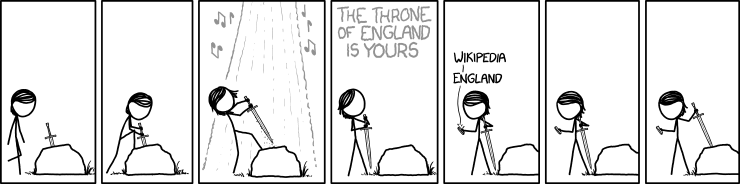
Sword in the Stone

That seems like an awful lot of hassle when all I wanted was a cool sword.
06 May 08:58

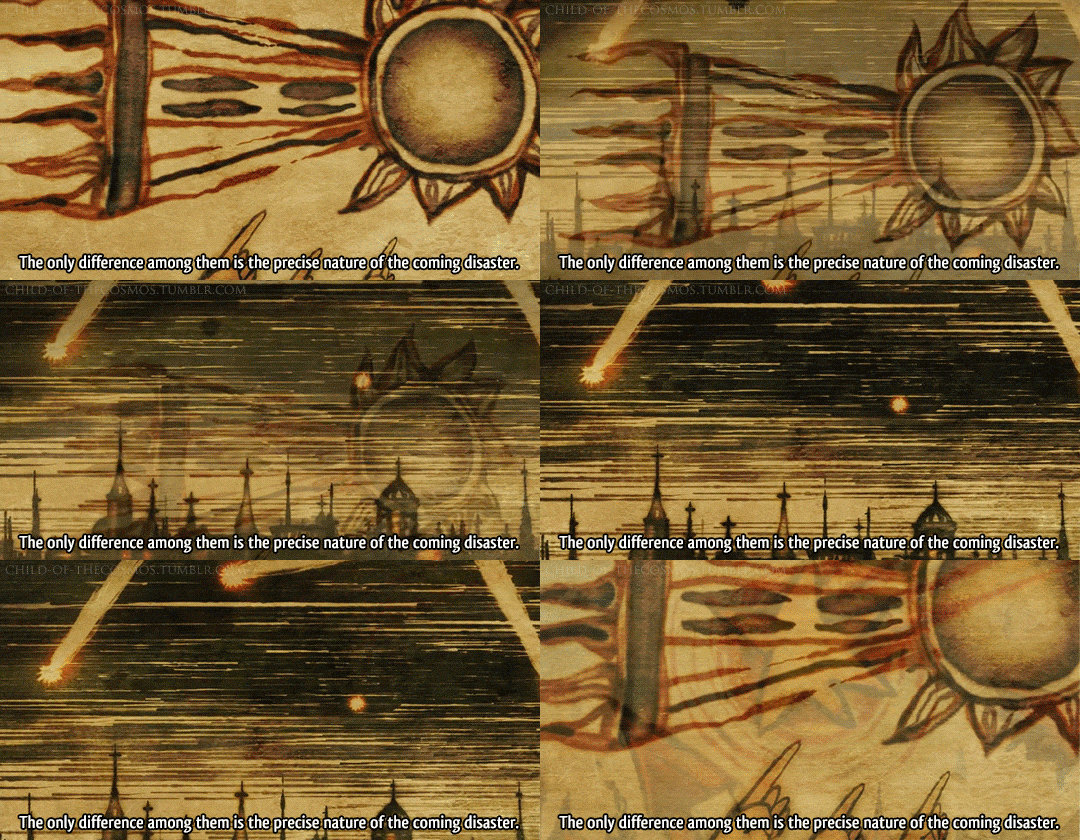
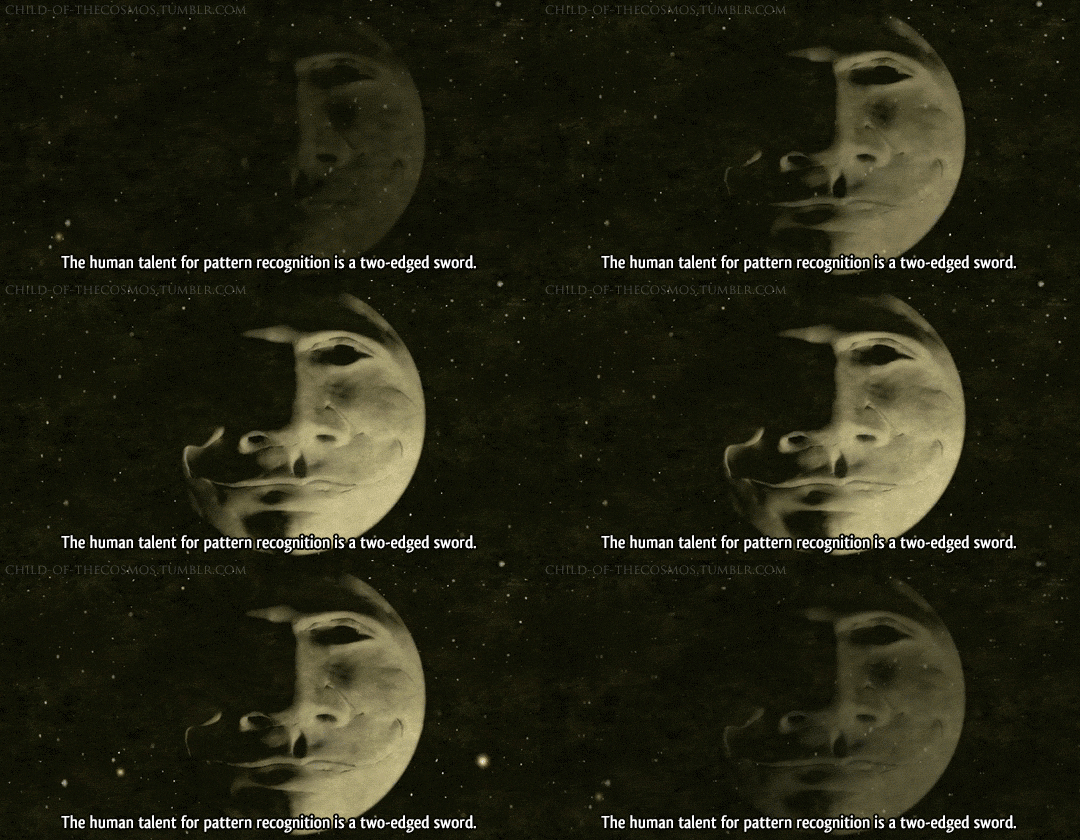
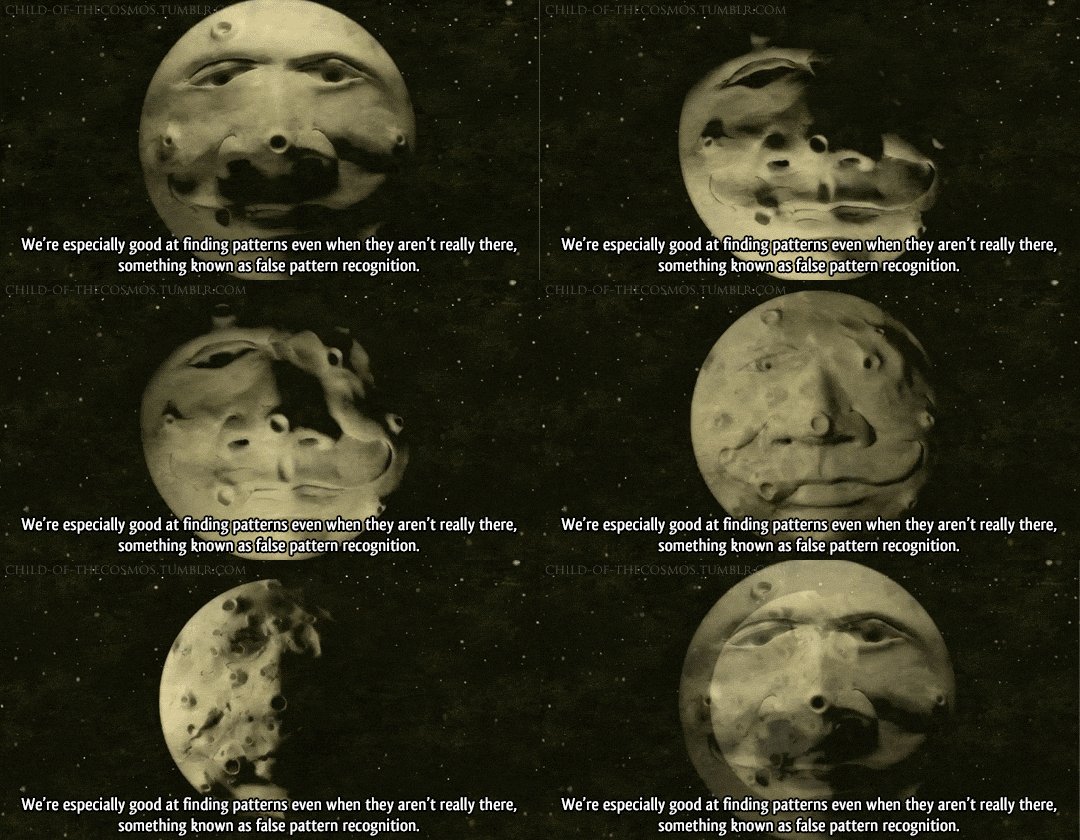
Episode 3: When Knowledge Conquered Fear, Cosmos: A SpaceTime...


Episode 3: When Knowledge Conquered Fear, Cosmos: A SpaceTime Odyssey
06 May 08:32

Not-A-Kludge: That's Just Unsettling

awesome product,clever,lightbulb,not a kludge

The perfect accessory for all my sideways ideas. ~Not-So-Handy Andy

Submitted by: Unknown

06 May 08:31

softerworld: It’s the end of the world. A Softer World is...

Sophianotloren

Noooooooooooooooooo!


softerworld:

It’s the end of the world. A Softer World is ending, and we want to do something fun to celebrate!

Are you with us?!

06 May 08:29

Photo


06 May 08:28

INDIANA JONES 5 Will For Sure Happen

by Devin Faraci

It's just that nobody knows when.

Read more...

06 May 08:28

Op-Alt: The money spent to arrest and prosecute Freddie Gray for nonviolent crimes could have sent him to college

by By Marina Smelyanskaya
In the much-anticipated May 1 press conference Baltimore City State’s Attorney Marilyn Mosby said that Freddie Gray’s arrest was illegal. Freddie Gray should have never been in that van. And the failed policies that have brought Freddie Gray and thousands like him into police vans across this country should have been a part of every media story about Baltimore last week.
06 May 08:28

A bit of a suprise when checking the pump today. Think the wind has blown this b...

by Fresh Citrus Direct
A bit of a suprise when checking the pump today. Think the wind has blown this big guy off course. #emu #lonerider #offthebeatentrack #myriverland #freshcitrusdirect


06 May 08:17

Snowden documents reveal how the NSA searches voice calls

by Andrew Tarantola
The Intercept has released a new document from Edward Snowden's cache of government files describing how the NSA has been converting voice calls to searchable text documents for nearly a decade. The NSA has long monitored signals intelligence (SIGNIT...
06 May 08:16

#1122; In which a Man Drowns

by David Malki

Really, I'd rather let a hundred men drown than do almost anything at all

06 May 08:10

Enough

by mattilda bernstein sycamore
It’s bad enough when the New York Times editorial, “The Quest for Transgender Equality”—WAIT, I CAN’T SAY ANYTHING MORE, I’M ALREADY VOMITING AT THAT TITLE. But when the New York Times starts its list of “heartening stories” of transgender inclusion with the tale of a CIA analyst transitioning on the job, and NOW I’M CHOKING ON MY VOMIT.

But, IT GETS BETTER because this brave CIA analyst receives an Ann Taylor gift certificate from her colleagues instead of a pink slip—NOW I’M READY TO SHIT IN RED, WHITE AND BLUE. (Of course, Ann Taylor offers the perfect outfit when you have blood on your hands.)

And then we hear about “thousands” of transgender troops who “serve in anguish because the military bans openly transgender people from joining the service”—LET THE ANGUISH GROW AND GET OUT BEFORE YOU KILL AGAIN.

(Of , course, this statistic about thousands of transgender troops is no doubt brought to us by the propaganda machine funded by our first openly transgender robber baroness billionaire, Jennifer Pritzker, go team!)

So “the military bans openly transgender people from joining the service”— GREAT, LET’S NOT END UP AS TOOLS OF IMPERIALISM LIKE THE GAYS.

But I’m most haunted by a sentence near the end of the editorial, where it says that a handful of senior Department of Defense officials “have become convinced that lifting the ban would unlock the service members’ unfulfilled potential.” Unfulfilled potential. Unfulfilled potential. They mean the potential to kill, right? Because that’s what the military does. GET EVERYONE OUT OF THE MILITARY BEFORE IT’S TOO LATE—THAT’S THE ONLY REAL POTENTIAL.

There are good points in the New York Times editorial, but in the end it just becomes militaristic gibberish about how to “formally integrate transgender troops.” WILL TRANSGENDER TROOPS BE ABLE TO FIGHT ON THE BATTLEFIELD LIKE REAL MEN I MEAN WOMEN I MEAN MEN, tune in on Fox News I mean read about it in the New York Times or listen live on NPR, it’s all the same horrible coverage. WILL TRANS TROOPS BE RELEGATED TO GUARDING DRONE BASES IN NEVADA, WHERE NO ONE WILL EVER SEE THEIR TRUE COLORS, tune in at 11!

The right to kill is not a right. It’s not all right. I am so sick of the way militarism invades everything. I’m disgusted at how quickly a so-called transgender movement that mimics the worst mistakes of the gay movement has sprung up. THE WORST MISTAKES. And then we have so-called straight allies desperate to prove their open-mindedness by supporting the grossest counterproductive violent garbage disguised as “progress.” Any so-called social justice movement that points to military service as an achievement is not a social justice movement. Enough. Enough with this charade, this charade that keeps killing people. Over and over and over and over. Enough.
06 May 08:08

Photo


06 May 08:07

Force Fed

by Mark

2015-05-04-ForceFed

You picked the wrooong neighbirdhood…

06 May 08:07

A Wooden Coffee Table Contains a ‘Playable’ Labyrinth with Moveable Figures

by Christopher Jobson

maze

Designed by artist and cabinetmaker Benjamin Nordsmark, the Labyrinth Table is a minimalist rectangular coffee table that contains a maze underneath a glass top. The piece contains a set of six metal figurines that can be moved with the help of magnetic knobs. For his work on the project Nordsmark won a Silver A’Design Award earlier this year. (via Laughing Squid, My Modern Met)

table-1

table-2

table-3

table-4

table-5

06 May 08:06

archiemcphee: These awesome little European Bee Eaters, huddled...


archiemcphee:

These awesome little European Bee Eaters, huddled together for warmth on a chilly morning in Ávila, Spain, so closely resemble a fuzzy caterpillar that photographer José Luis Rodríguez decided to title the image Oruga de Plumas or “caterpillar of feathers.”

[via Neatorama]

06 May 08:06

Honest political ad

by Minnesotastan
06 May 08:01

g0h0stgirl: lukshiznits: jamesbleach: onceuponakhaleesi: voidethered: ask-omnipony: luckydreami...

g0h0stgirl:

lukshiznits:

jamesbleach:

onceuponakhaleesi:

voidethered:

ask-omnipony:

luckydreaming:

Are fedoras really that bad?

imageimageimageimageimage

YES YES THEY ARE

I don’t really believe this mumbo jumbo

image

I mean it’s a goddamn hat.

image

Right..?

imageimage

The white rose, it symbolizes the unique beauty of all the women who wish not to be with a nice guy such as myse-

image image

I wonder if this works with other kinds of hat…

imageimage

Nothing ventured, nothing gained…

imageimage

WHEEEN THE MOON HITS YOUR EYE LIKE A BIG PIZZA PIE THAT’S AMORREEEEEEEEEEEEEEEEEE

image
Men of Tumblr are my favorite kind of people…

wait, does that mean?

imageimage

oh boy…….

imageimageimage
image

You guys are fucking silly

image

and I’m gonna prove it!

image

Because honestly, only an idiot would believe that you can simply-

image

I must say Reginald, the oil sales have been most disappointing in the last fortnight, it’s positively appal-

image

IT GOT BETTER.