Shared posts

26 Dec 13:54

Museo Metropolitano de Arte libera más de 400.000 trabajos para descargar en alta resolución

by Esteban Zamorano

Hoy en día, con lo económicas que son en las grandes ciudades las impresoras profesionales a color, crear tu propio poster para adornar tu habitación nunca fue tan sencillo. Por ejemplo, en Santiago por menos de USD$2 puedes ir a una imprenta a que te impriman un poster tamaño doble carta a color con cualquier imagen que les lleves en un pendrive (o se lo envíes por email).

Si eres de los que les gusta decidir con qué adornar tus murallas (o eres un amante del arte en general) te gustará saber que el Museo Metropolitano de Arte de Nueva York decidió liberar más de 400.000 trabajos para descargar en formato de imágenes JPG de alta resolución con un tamaño de por lo menos 10 megapixeles.

El museo cuenta con trabajos de diversos artistas como RembrandtMonet, Manet, Degas, Cézanne,Van Gogh, Rodin o El Greco. Basta con que la obra esté marcada con la sigla OASC (por Open Access for Scholarly Content, o Acceso Abierto a Contenidos Académicos) en la parte inferior para que esté habilitado un botón para descargar la obra sin mayores problemas.

dore

Lo impresionante es que el museo tiene una de las colecciones más grandes del mundo, por lo que no solo hay trabajos de pintura. También se pueden descargar por ejemplo trabajos fotográficos, imágenes de esculturas aztecas o griegas, caligrafía china y un largo etcétera.

Cabe recordar que las imágenes del museo apuntan a ser utilizadas por estudiantes, educadores, investigadores y creadores de contenido no comercial. Si quieres utilizar las imágenes para fines comerciales debes solicitar una licencia al museo.


08 Jun 04:48

Does Adding Pasta Water Really Make a Difference?

by Daniel Gritzer

Got a question for Serious Eats? Email your questions to AskTheFoodLab @seriouseats.com and please include your Serious Eats user name in your email. All questions will be read, though unfortunately not all can be answered.

[Photographs: Robyn Lee]

Does adding pasta water really matter?

Everyone seems to have a different idea about how to cook pasta, including using some of the pasta water in the sauce. Does adding pasta water to the sauce really make a difference? What about finishing the pasta in its sauce?

There's pasta. And then there's sauce. Put them together and you have dinner. Simple as that, right?

Of course not!

See, the thing is, pasta (the dish) isn't just about the pasta (the starch), and it's not just about the sauce either. It's about the marriage of the two. And like all marriages, there are some secrets to getting the union to work. It just so happens that I was recently working on a screenplay on this very theme. Take a look:

SCENE: INT OF A FRYING PAN - DAY

A piece of Penne stands opposite blushing bride Tomato Sauce, whose happy tears have reduced her to an absolute puddle (or maybe it's just her saucy streak). In the pews are hundreds of happy guests, including size-zero aunt Spaghetti and beefy uncle Bolognese, plump grandma Ravioli and wise old grandpa Sage-Butter. Priest Strozzapreti stands between the the soon-to-be-newlyweds, near a font of holy pasta water.

PRIEST STROZZAPRETI
Dearly beloved, we gather here today to witness the joining of Penne and Tomato Sauce in holy macaroni. Do you, Penne, and you, Tomato Sauce, take each other as lawfully wedded husband and wife?

PENNE AND TOMATO SAUCE TOGETHER
Al dente.

- CUT SCENE -

Pixar will totally buy the rights to this script, right? Anyway, the point is that getting pasta and sauce to unite is critically important for the dish to be truly great. The only question is, what's the best way to bring them together?

Most pasta aficionados will tell you that the best way to do it is by finishing cooking the nearly-done pasta on the heat in its sauce with a little of the pasta-cooking water. According to that line of thinking, the starchy pasta water helps to bind and thicken the sauce, and in some cases—such as buttery or oily sauces—emulsifies it into a creamy, non-greasy coating. All of my own pasta-cooking experience supports that theory, but I'd never done side-by-side tests to prove that it actually works better.

The Tests

Test 1: Exploring the Basic Methods

There are three basic ways to cook pasta:

  • First, you can boil the pasta, then drain it and top it with the sauce;
  • second, you can boil the pasta, drain it, then toss it with the sauce off the heat;
  • third, you can boil the pasta, then drain it (saving some of the cooking water), and then briefly cook it in the sauce with a splash of that reserved water.

So the first thing I decided to do was to do a side-by-side test of these three methods with spaghetti and tomato sauce, and see if one of them was clearly better than the others.

I served each pasta with grated cheese to my colleagues without revealing what I was testing, and asked them to pick their favorite. (Obviously, the pasta that had a puddle of sauce sitting on top was visibly different from the two that were coated in sauce, but otherwise I didn't divulge what I was up to.)

The pasta that had been cooked in its sauce with some of that pasta water won by a landslide. That method bound pasta and sauce together, making the two become one, in a way the other methods didn't.

As for the other methods, plopping some sauce on top of a pile of plain boiled noodles meant that no matter how much we tried to combine them on the plate, we always ended up with noodles that weren't evenly coated in sauce. Meanwhile, tossing the pasta and sauce together off the heat did a decent job of coating the noodles, but there wasn't the same level of fusion (and we all know you need some serious fusion or the marriage isn't really official, if you know what I mean).

Test 2: Getting Starchy With It

Just because our first test demonstrated that it's best to cook pasta in its sauce with some of the starchy cooking water doesn't prove beyond a doubt that the starch itself is important. Maybe cooking pasta in its sauce is all that matters, starchy water or not.

To test this out, I prepared three new batches, with the goal of getting water with different levels of starchiness:

  • I cooked one using the frequently recommended ratio of 1 pound of pasta (in this case penne) to 1 gallon of water, to create moderately starchy water;
  • I cooked another following Kenji's recommended low-water method, with 1 pound of pasta in 1/2 gallon water, which created the starchiest water;
  • For the control, I cooked a third batch of pasta and paired it with plain tap water.

In all cases I salted the water, including the tap water, following our pasta-salting guide.

From left: The starchiest water was the result of cooking 1 pound of pasta in 1/2 gallon water; moderately starchy water from 1 pound of pasta in 1 gallon water; plain salted tap water with no starch in it was the control.

To really put this to the test, I used equal amounts of plain olive oil as the "sauce". As you all know from making vinaigrettes, mixing water and oil is never easy. If starch was going to prove its worth, it was going to have to do a better job of turning plain olive oil into a sauce than the tap water would.

After cooking all of the pasta until just al dente, I moved the batches to pans with the oil and 1/4 cup each of the three types of water, and cooked them. As the sauces reduced, the value of the starch became clear: the plain salted water formed a thin sauce that was very oily; the moderately starchy water formed a sauce with a thicker texture, but it still had a fair amount of oil on its surface; the starchiest water formed a sauce that was the thickest, creamiest, and silkiest, with the least oil on its surface.

The starchiest water produced the thickest, most emulsified sauce.

None of the sauces formed a totally perfect emulsion (that's what I get for trying to make a sauce from nothing more than oil and water), but the starchiest water was by far the most emulsified of the three. A little grated cheese tossed in at the end is all I would have needed to fully bind the sauce.

Bonus Test: The Pasta Matrix, or How to Bend Pasta-Cooking Times to Your Will

So now we have what I think is pretty conclusive evidence that it's not only best to finish pasta by cooking it in its sauce with a little of the cooking water, but that starchier water yields the best sauce. Hopefully most of you are convinced.

But I know that old habits die hard. If you're still not on-board, I'm going to give you a choice: Take this blue pill, and you can go on living your pasta life, eating bowls of so-so spaghetti and thinking it's all great. But if you want to know the truth, take this red pill. I warn you, though, your whole idea of what's real may never be the same...

...ah, so you took the red pill (or you're just curious and are still reading—that's fine too). So, what if I told you that you can bend pasta-cooking times to your will? What if I told you that there's a way to take pasta that typically reaches the al dente stage in 10 minutes and stretch it out so that it takes 12 or 15 minutes? What if I told you that there is no noodle?

Okay, there's a noodle...as far as my noodle can tell, anyway. But you really can change its cooking time, and the way to do it is—drumroll please—to transfer it to the sauce to finish cooking. The earlier you transfer the pasta to the sauce, the longer it will take to finish cooking, because pasta cooks more slowly in sauce (even sauce that's watered down with cooking water) than it does in boiling water. Just take a look at this photo to see what I mean.

At left, pasta that's been boiled for 14 minutes; at right, pasta that also cooked for 14 minutes, first in boiling water for 5 minutes, then in its sauce for 9 minutes. The sauce-finished pasta is less cooked (as evidenced by the white ring at its core) than the boiled pasta, despite cooking for the same amount of time.

Both the pieces of penne you see came from the same batch of pasta, which I started cooking at exactly the same time in the same pot of salted boiling water. About halfway through the pasta's suggested 12-minute cooking time, I fished out half the penne and immediately transferred it to a pan with some simmering tomato sauce, and cooked them together, gradually adding ladlefuls of the pasta-cooking water, much like making risotto. Here's what happened:

  • At the 10-minute mark, the pasta in the pot was al dente, and the pasta in the sauce was underdone.
  • At the 12-minute mark, the pasta in the pot was tender, while the pasta in the sauce still hadn't reached the al dente stage.
  • By the time 14 minutes had passed, which is the stage shown in the photo, the pasta in the pot was nearly overcooked, while the pasta in the sauce was just reaching al dente (note the white ring of uncooked pasta at the core of the one on the right).

This is what I like to call Pasta Bullet Time, a state where pasta on the verge of being overcooked suddenly slides into a slow-motion crawl to doneness, buying you time to finish cooking the chicken that isn't quite done, or dress and toss the salad that you totally forgot about. Now you have the power!

Conclusion

If you want your pasta to have a long, happy marriage with its sauce, it's best to cook them together with a little of the pasta-cooking water. Plus, that method reduces the chance of overcooking the pasta, since the pasta cooks more slowly once it's simmering in its sauce.

Just one bit of caution when cooking pasta in its sauce: Because the pasta-cooking water is salted, there's a risk of the dish becoming too salty if you keep adding and reducing ladlefuls of it. Keep tasting the pasta and sauce as you cook them together—and switch to adding plain unsalted water if the pasta needs to cook a little longer but already has enough salt.

22 May 15:24

Photo


22 May 03:48

Photo

by holyfuuu


22 May 03:47

De Arica pal’ mundo!


De Arica pal’ mundo!

21 May 08:45

Unrealistic Ads

by admin

21 May 08:43

thahalfrican: All these laxatives… And you still ain’t shit.

thahalfrican:

All these laxatives… And you still ain’t shit.image

21 May 07:54

Intriguing Lime Green Blobs Appear In The Andes Mountains. Are They Alive?

Intriguing Lime Green Blobs Appear In The Andes Mountains. Are They Alive?

Oops.

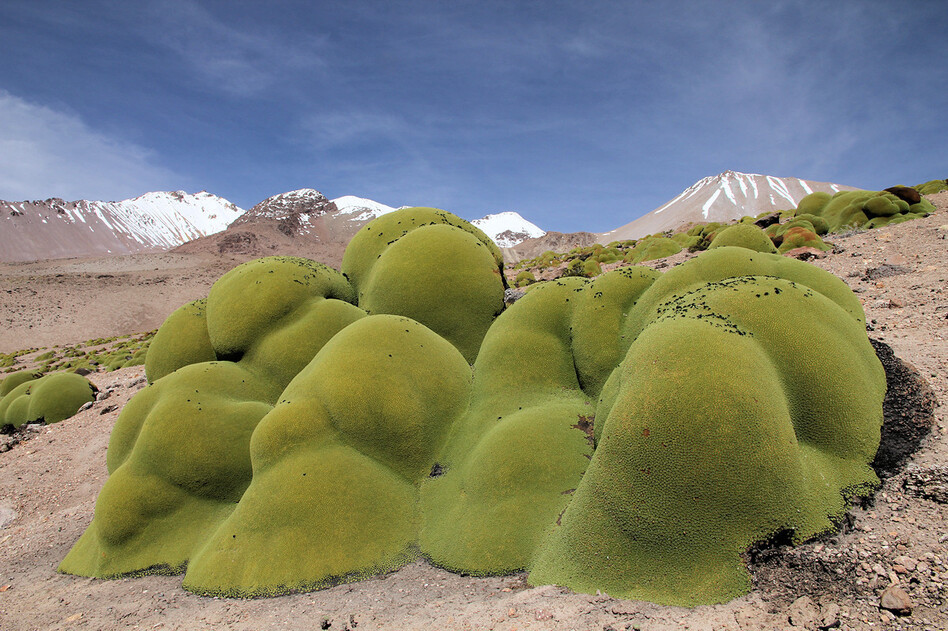
Someone dropped lime sherbet on the desert — and it's melting. Who's going to clean this up?

Nobody. Because this — believe it or not — is a plant. It may look like a glob of goo, but it's not at all gooey. It's solid to the touch, so solid that a man can lie on top of it and not sink in, not even a little.

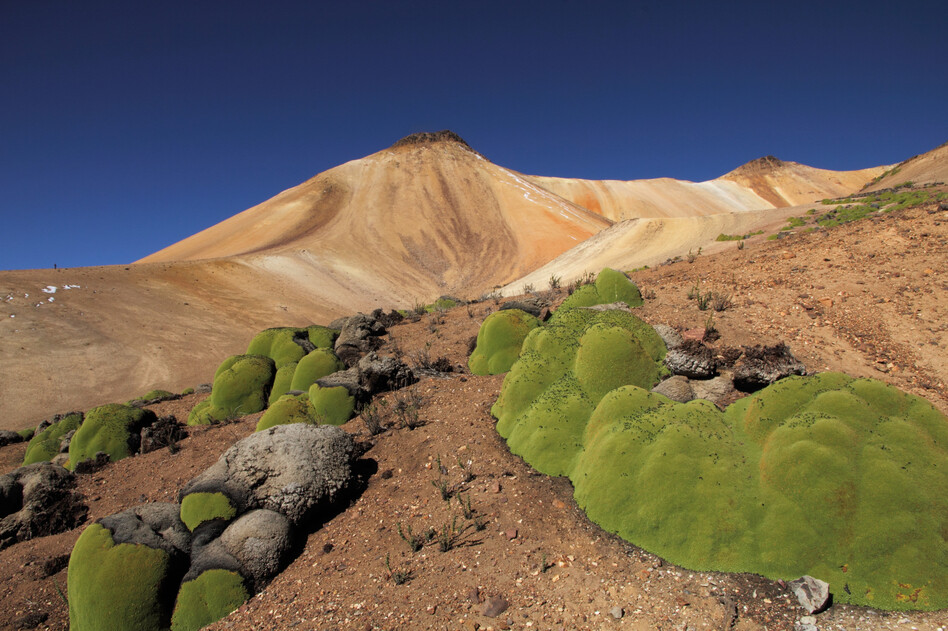
What kind of plant is this? In Spanish it's called llareta, and it's a member of the Apiaceae family, which makes it a cousin to parsley, carrots and fennel. But being a desert plant, high up in Chile's extraordinarily dry Atacama, it grows very, very slowly — a little over a centimeter a year.

Think about that. If you asked one of these plants, "What did you do during the 20th century?" it would answer, "I grew a meter bigger." At that rate, plants rising to shoulder height (covering yards of ground, lump after lump) must be really, really old. In fact, some of them are older than the Giant Sequoias of California, older than towering coast redwoods. In Chile, many of them go back 3,000 years — well before the Golden Age of Greece.

They look like green gift-wrapping. One imagines that they are mold-like, wrapping themselves around boulders. But that's wrong. The truth is much weirder. That hard surface is actually a dense collection of tens of thousands of flowering buds at the ends of long stems, so densely packed, they create a compact surface. The plant is very, very dry, and makes for great kindling.

As the Bolivian guide explains in the video below (the plant can be found throughout the Andes), llareta is such good fuel that, even though it's very ancient, people regularly use it to start campfires and even, back in the day, to run locomotives. (That's 3, 000 to 4,000 years of captured sunshine thrown into a steam engine for a quick ride — I'm trying not to think about that.) It's also good for muscle pain.

ea1calendula/YouTube

The best thing about llareta is what it looks like. It's like nothing else. You climb 10,000 to 15,000 feet up into the Andes; there are boulders, loose rocks, jagged edges all about, and suddenly you come upon this soft-looking round thing that resembles a lime-green beach ball, and you think, "What is this?" When artist/photographer Rachel Sussman saw her first llareta, she apparently did a little happy dance. As she writes in her new book, "Every once in a while you see something so ludicrously beautiful that all you can do is laugh."

Me too.


Artist/photographer Rachel Sussman has some pretty nice photos of llareta in her new book, The Oldest Living Things in the World. You can see and hear Rachel talking about her photos here. Our llareta photos come courtesy of the Terrace Lodge, in Putre, Chile, very near Lauca National Park where, due to melting ice and water vapor floating in, there's just enough moisture to keep the plants growing.

Copyright 2014 NPR. To see more, visit http://www.npr.org/.
21 May 06:29

Photo

by comegatos


21 May 03:11

Pelea de gallos: Goku contra Superman

by La Gusa
Nuguiler

El final está super *burn*

Como siempre, seguimos los avances de Epic Rap Battles of History, que cada vez son más épicas. Después de la batalla que enfrentó a Hitler y Darth Vader, tenemos la ocasión de ver el enfrentamiento entre Son Goku y Superman (uno de ellos, que yo ya le tengo perdida la pista).

En mi opinión creo que Goku efectúa ataques más punzantes y va donde duele, lo cual es bastante sorprendente (el tipo nunca se ha caracterizado por su ingenio). Debería ser proclamado ganador, aunque también hay que reconocer que es muy fácil insultar a Superman.

Visto en Laughing Squid

Ver más: Dragon Ball, música, rap, supermán
Seguir @NoPuedoCreer - @QueLoVendan


21 May 01:53

Photo


21 May 01:49

Photo


21 May 01:46

Photo

by tepenetroennochebuena


21 May 00:42

groovinthemoon: This g’raph is irrelphant 🐘 

by joberholtzer


groovinthemoon:

This g’raph is irrelphant 🐘 

21 May 00:35

Photo

by elbestianegrahd


21 May 00:34

Photo


21 May 00:32

Así vestían las chicas “decentes” y las “descaradas” en las últimas diez décadas

by Redacción

50

¿Cómo vestía una chica integrada en Occidente en los años 50 y como lo hacía una contracultural? La fotógrafa Anna Lisa Hartlaub ha llevado a cabo este experimento fotográfico-antropológico haciendo ella misma de modelo y escarbando en el baúl de los recuerdos de su madre y de su abuela. De esta guisa vestían las mujeres “normales” y las que iban de anti desde los años 20 del siglo pasado hasta nuestros días, de los hippies a los hipsters, pasando por los inefables ye-yé.

20

Años 20.

30

Años 30.

40

Años 40. 50

Añ0s 50.

60

Añ0s 60.

70

Años 70.

80

Años 80.

90

Añ0s 90.

00

2000.

10

Década actual (¿los dieces?).

Visto en Flickr.

The post Así vestían las chicas “decentes” y las “descaradas” en las últimas diez décadas appeared first on Cooking Ideas.

21 May 00:31

Photo


21 May 00:26

Photo

by darkkagehd


21 May 00:22

FBI deberá flexibilizar sus políticas anti-marihuana para poder contratar hackers

by Esteban Zamorano

En estos momentos en Estados Unidos, el FBI está buscando activamente contratar a más agentes destinados a la ciberseguridad. Sin embargo, se ha encontrado con un problema bastante grande: el FBI tiene una política de cero tolerancia contra las drogas, incluyendo la marihuana.

Este año el Congreso norteamericano autorizó al FBI a añadir 2.000 agentes, donde la mayoría deberán ser reclutas asignados a combatir el cibercrimen ya que es una prioridad que crece cada año para la agencia.

El director de la agencia, James B. Comey, aseguró este lunes ante el Colegio de Abogados de Nueva York que si el FBI tiene la intención de continuar manteniendo sus capacidades a la par con la de los cibercriminales, la organización deberá relajar sus políticas de cero tolerancia para así contratar a personas que fumen marihuana.

Sin duda que es bastante gracioso atestiguar que el mandamás de la policía federal más grande del mundo reconoce que los hackers son bastante asiduos al consumo de cannabis:

Debo contratar una fuerza laboral de excelencia para competir contra los cibercriminales, y algunos de estos jóvenes quieren fumar marihuana camino a la entrevista de trabajo.

Comey afirmó que la agencia está analizando cómo flexibilizar sus políticas respecto a la marihuana, las que excluyen a cualquier postulante que haya consumido cannabis en los últimos tres años. De hecho, uno de los asistentes a la conferencia de Comey le comentó que 'un amigo' no quiso postular por estas políticas de cero tolerancia, ante lo que Comey respondió que "igual debería postular".


20 May 23:20

"Here is how the internship scam works. It’s not about a “skills” gap. It’s about a morality gap. 1)..."

“Here is how the internship scam works. It’s not about a “skills” gap. It’s about a morality gap.

1) Make higher education worthless by redefining “skill” as a specific corporate contribution. Tell young people they have no skills.

2) With “skill” irrelevant, require experience. Make internship sole path to experience. Make internships unpaid, locking out all but rich.

3) End on the job training for entry level jobs. Educated told skills are irrelevant. Uneducated told they have no way to obtain skills.

4) As wealthy progress on professional career path, middle and lower class youth take service jobs to pay off massive educational debt.

5) Make these part-time jobs not “count” on resume. Hire on prestige, not skill or education. Punish those who need to work to survive.

6) Punish young people who never found any kind of work the hardest. Make them untouchables — unhireable.

7) Tell wealthy people they are “privileged” to be working 40 hrs/week for free. Don’t tell them what kind of “privileged” it is.

8) Make status quo commentary written by unpaid interns or people hiring unpaid interns. They will tell you it’s your fault.

9) Young people, it is not your fault. Speak out. Fight back. Bankrupt the prestige economy.”

-

The moral bankruptcy of the internship economy | Sarah Kendzior (via brutereason)

solarbird added: see also the intrinsic fraud of the prestigious internship. (via solarbird)

this comes from the top rope.

(via bainard)
20 May 07:08

Frozach Submitted

20 May 01:39

Dribbble - Rocket Lift off by Joe Ski

by brodowski
20 May 01:34

Photo

by cristianghost


19 May 21:50

Photo

Nuguiler

Bestias de costumbres


19 May 20:45

Photo

by cristianghost


19 May 19:12

La accidentada entrada de un buque portacontenedores en el puerto de Hong Kong

by alvy@microsiervos.com (Alvy)
Nuguiler

Solo faltaría el remolcador fuera lo de atrás para hacerlo más épico

Una vez escuché a alguien explicar que cuando eres el capitán de un gigantesco barco que se dirige a la costa y realizas una maniobra equivocada –entrar a más velocidad de la adecuada, errar en las coordenadas o encontrarte un obstáculo imprevisto– el peor problema es que te das cuenta cinco minutos antes de que el desastre es inevitable. La razón: aunque puedas reaccionar y poner los motores en reversa a toda potencia el poderío de la inercia de tantas toneladas de metal es insalvable: realizar una maniobra rápida es casi imposible.

Ahora échale un vistazo al vídeo desde este portacontenedores de bandera alemana en el puerto de Hong Kong.

.
.
.

Según cuentan en el vídeo este buque de 192 metros de eslora comenzó a desviarse de su rumbo por un problema con el motor principal, que se había estropeado. Las autoridades decidieron que lo mejor era encallarlo lo más lejos posible de la zona principal del puerto, pues así no impediría el paso de otras embarcaciones. Y allá que se fue.

Pero en el último momento la tripulación pudo lanzar el ancla, que con un ruido de mil demonios tocó fondo y detuvo el barco a tiempo – algo increíble a la vista de las imágenes. Luego llegó un remolcador y la liberó llevándola a otra zona. Así que aunque la historia aquella que me contaron fuera cierta en general, ya conozco un caso en el que los marineros salvaron la situación en unos pocos segundos.

# Enlace Permanente

19 May 17:30

Photo

by elbestianegrahd


19 May 17:26

Photo


19 May 17:06

TRUE NATURE FACT: Wild lemurs have been observed using giant...

Nuguiler

Lemures pachecos


TRUE NATURE FACT: Wild lemurs have been observed using giant millipedes in a rather interesting fashion. They grab the millipede and nip it, which freaks the millipede out (understandably) so that it goes into its defensive mode and secretes this nasty toxic gunk that tastes foul and contains cyanide. The lemur proceeds to “milk” the gunk from the millipede, nipping it occasionally to keep it defensive, and rubs the gunk into its fur, where it acts as a natural pesticide, killing fleas and other parasites that make the lemur itchy.

This’d be cool in and of itself, but there’s another side effect. Apparently if you rub millipede goo on your fur, you get high. The lemurs—this has been observed in brown lemurs and in ringtails—display every sign of being high as little fuzzy kites. Their eyes get glazed and buggy, they stagger around in the branches, their tongues stick out, and I assume once the naturalists stop looking, they go pig out on Doritos and giggle a lot.

This is all really, honestly true (except for the Doritos.) So that got me thinking about brave lemur warriors, gallivanting around the canopy, who instead of flasks of brandy, keep their pet millipede around for those times when warrioring just gets too darn stressful. And hey, nobody likes fleas in their armor, so it’s probably good for that, too.

(Obviously millipede should only be used responsibly and in moderation. Do not millipede and drive. Just say no to millipede, kids! Etc.) - Ursula Vernon