Save yourself some work, save yourself some time, and let’s gobble up the dishes our food’s packed up in:
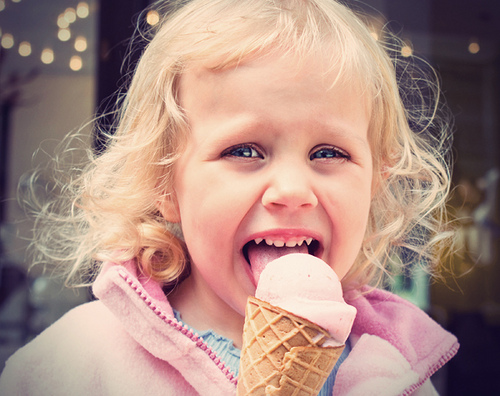
• Ice cream cones. Bubble gum ice cream from Baskin Robbins was a staple of my childhood and I’d always get it in a cup to save the chalky pink frozen gum for the end. One day I switched up my game and went wild with a sugar cone instead… and after that there was no looking back. That cone is like three meals in one: ice-cream only appetizer, cream-n-crunch entrée, and a final mini-goblet of bubbly melted dessert. Check please!
• Chili bread bowls. Once in a while a local diner will try plain soup in bread bowls but the wet mess that results from a hot ladle of chicken noodle poured into a stale bun is beyond awful. No, let’s hold hands here today and stick with chili and chowder.
• Frankensteins. Sometimes you go mad scientist and whip up an edible monster. Lightning crashes out the window of your dark kitchen as you cackle and unveil scrambled eggs and bacon wrapped in a pancake or a cold leftover hamburger squirted with ketchup and wrapped in a giant lettuce leaf. Not bad, not bad.
• Edible beer bottles. Okay, maybe these haven’t been invented yet but I think it’s only a matter of time. Sip, sip, crunch, crunch, stay on the couch. Think about it, Doritos.
• That creamy spinach dip in the big brown bread. This is a staple of any snooty party and you’ll score massive yuppie points for bringing it with some stinky cheese or dark salamis. And don’t worry about the nutritional content here because those thin ribbons of spinach stirred into that mayo soup totally take away the guilt, too.
• Almosts. These are foods you don’t always eat from a dish but also don’t really require any dishes. They’re hot-dogs and hamburgers and wraps and burritos. They’re not quite the same as edible dishes … but almost.
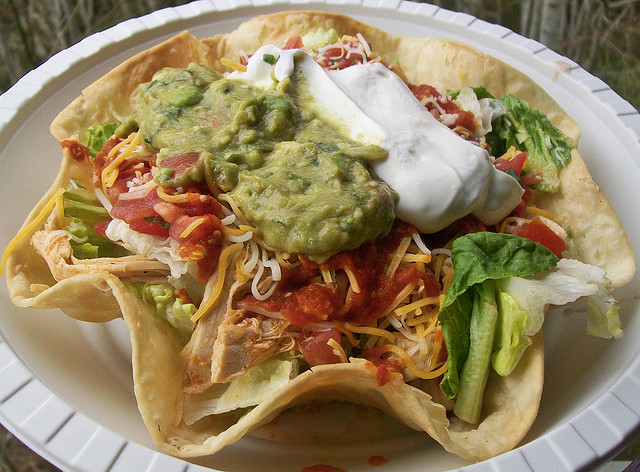
• Taco salad in that crazy giant taco bowl. Whoever invented this magically delicious dish deserves some props for making a fat exploded taco sound healthy. Come on, this is just a salad, people. Get some greasy enchiladas and a bowl of deep-fried ice cream to finish off your meal.
When you’re eating off an edible dish the food suddenly becomes more fun and there are drippy challenges to keep you entertained. Plus, after you’re done you can forget soaping up, scrubbing down, and setting your dishwasher to off-peak hours. Just remember: when you’re eating messy food off edible dishes … you’re digesting love.
The archipelago of Japan consists of more than 6,800 islands, of which around 280 are inhabited, and in a few places, known as neko-shima or “cat islands,” felines vastly outnumber the human residents. Fishing villages like the one on Aoshima, the most well-known of around a dozen cat islands, introduced the creatures in the early 20th century to combat rodent infestations. Their prolific progeny, perched on walls and scampering underfoot, have been a continuous source of fascination for photographer Masayuki Oki.
For the past eight years, Oki has documented clowders of cats in his home city of Tokyo and on islands around the nation, focusing on the feral animals’ interactions. Viewed through a an anthropomorphic lens, the images capture playful pounces and awkward entanglements with humor and a knack for good timing.
You can follow Oki’s feline adventures on his blog and Instagram. He releases annual calendars featuring some of the year’s best photographs, and he also updates a YouTube channel with short videos of furball shenanigans.
Masanaga Noike, who’s behind the Nagano City-based studio naga-no-glass, has summoned some super cute spirits to the table just in time for the most haunted day of the year. Designed to cradle chopsticks on their pudgy bellies, every ghostly dinner guest is hand-formed and given whimsical expressions, so no two are alike. Noike makes them by coating a white powdered glass over the top of transparent glass, then pulling the hands and tail and denting the stomach where the utensils can be placed.
Los Angeles-based artist Jon Ching imagines the fantastic possibilities of melding Earth’s flora and fauna, rendering bizarre creatures with mushroom feathers and striped tulip fins. His latest oil paintings, which are on view this fall in Habitat at Beinart Gallery, extend this interest in hybridity by blending aquatic, aerial, and terrestrial organisms and their environments.
Marine ecosystems appear in many of the pieces, alongside cacti and succulents native to Ching’s home in southern California. In “King Tide,” for example, rising water approaches a cockatoo with plant-like plumage, and “Acclimate” depicts two green parrots perched on aloe growing below the surface. Each work envisions how different ecologies could converge and references nature’s resilience, the climate crisis, and the growing necessity of adapting to a changing world.
Ching’s solo show Habitat runs from September 11 to October 2 in Melbourne. Prints and stickers are available in his shop, and you can follow his latest works on Instagram.
A mass of unruly curls, scaly bodies, and motifs painted in red cradle the sleeping children in Lena Guberman’s ceramics. Lying in the center of round plates, the young characters are suspended in states of slumber, their joys, anxieties, and formative experiences flowing from their resting bodies. “I was an introverted child, compensating for my loneliness with dreams and fantasies. I had a feeling that there is a creature protecting me from anything bad that can happen,” the Israel-based artist tells Colossal. “I think those visions came to me when sculpting.”
Primarily illustrating picture books, editorial pieces, and animations, Guberman began working with ceramics a few years ago, although only recently returned to the medium as a reprieve from her otherwise two-dimensional practice. Part of her growing sculpture collection, the plates shown here reflect her imaginative style and similarly capture the expressive, whimsical qualities of her drawings.
Guberman shares an archive of her works on Behance and Instagram.
“When we spend a lot of time in a place, and if we are paying attention, a kind of intimacy develops,” says Jeanne Simmons. The artist, who’s based in the Pacific Northwest, grounds her practice in this sense of familiarity and ease with her surroundings. “We come to know the plants that grow there and the critters that roam there… We may even begin to feel that we ourselves have become part of that place, and it is this feeling that sustains and inspires me.”
After gathering natural materials like branches, wild vegetables, and bark, Simmons constructs garments that intertwine her own body and those of others with the landscape and obscure the distinction between the two. In one work, a full skirt made of Queen Anne’s Lace trails from the artist’s waist and blends with a meadow, while another piece braids dried vegetation into a model’s blond hair, developing a feet-long braid that appears to emerge from the ground. “Grass Cocoon” is similar, twisting locks into the material and swaddling a figure’s body in a sheath of green. “This is how I celebrate and deepen my connection with the natural world. I suppose I have discovered that the best way for me to become part of the landscape… is to wear it,” she shares. “It is also, at least in part, a lamentation for the catastrophic loss of that connection that we are witnessing in real-time.”
Simmons has several works in progress at the moment, including a kelp shroud and fennel gown, and is collaborating with director and producer Ward Serrill on a film about her practice. Keep up with those projects on her site and Instagram. (via Lustik)
Shanghai-based production company Linmon Pictures created a lovely logo animation that runs before its films. Directed by Lin Zhe, the short features a lone figure who opens a curtain to reveal a brilliant explosion of abstract color that gradually envelops the frame. The animation was first created in 2D before being completed with an oil painting effect achieved through Photoshop and Artrage. The hand-painted feel is not unlike the 2017 film “Finding Vincent,” which utilized a substantial team of fine artists to actually paint the entire movie. You can see more behind-the-scenes documents of Zhe’s process on Behance, and if you liked this, also check out Eran Hilleli’s similar journey-based opening sequence for the Style Frames Design Conference.
Update: An earlier version of this article accidentally stated the short was fully hand-painted.
Yukiko Morita works against the grain with her collection of bread-based home goods. The baker-turned-designer launched PAMPSHADE back in 2016 after nearly a decade of experimenting with the doughy material, and today, the brand creates a variety of quirky, functional objects, including croissant nightlights, baguette chandeliers, and naan timepieces that appear to be the leavened counterpart to Salvador Dalí’s melting clocks.
Each design utilizes leftover pastries and loaves sourced from nearby retailers that are then treated with antiseptic and a mildew-deterrent and hollowed out to fit an LED light. “By purchasing the unsold bread, the bakeries are happy, and it leads to a sustainable creative activity,” she tells Creative Boom. “Within the scope of normal use, (the lamps) can be used semi-permanently. However, be careful not to break them!”
Head to the PAMPSHADE site to pick up a crusty ciabatta or slice of toast, and follow the latest upcycled designs on Instagram.
Bogotá-based illustrator Carolina Rodríguez Fuenmayor draws portraits and intimate scenarios brimming with surreal elements and spots of color. In her digital pieces, Rodríguez Fuenmayor tends to obscure subjects’ faces with bright bursts, masses of florals, and whirlpool-like ripples that cloud their minds and explode into their surroundings. The vivid illustrations peek into the workings of the human psyche and the idiosyncratic commotion it produces. “I wouldn’t say that there’s a particular feeling I’m focused on,” she shares. “I infuse all my pieces with a mix of random, confusing, and funny emotions about what I think life is about.”
In 2018, the team at Facebook had a puzzle on their hands. Cambodian users accounted for nearly 50% of all global traffic for Messenger’s voice function, but no one at...
Atelier Hatena’s bread bugs are the only critters we’d gladly snuggle up with at night. The whimsical, fiber-rich characters are part of the Hiroshima-based artist’s growing troupe of felt creatures: there are four-legged rolls, tiny insects sprouting mushrooms, and pastries with eyes poking from their crusts. Atelier Hatena’s shop is currently stocked with the adorable critters, although they sell out quickly, so keep an eye on Twitter for updates. (via Spoon & Tamago)
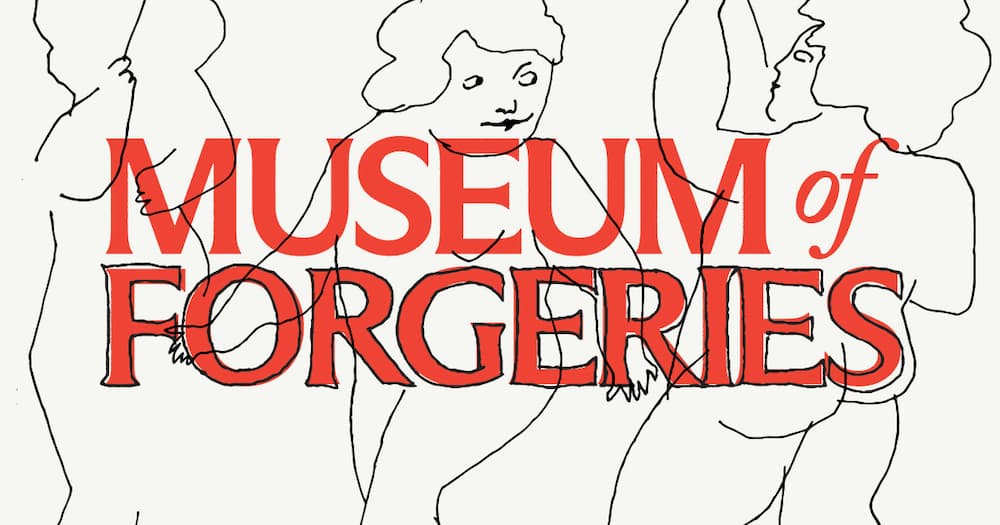
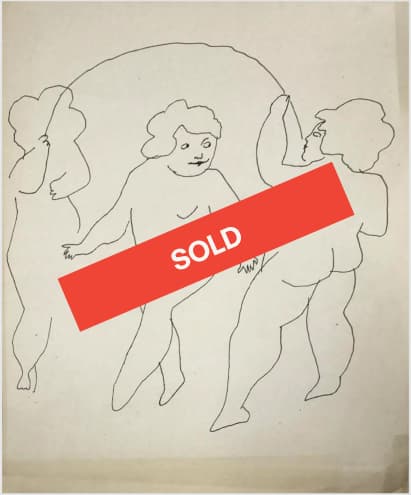
La gente del Museum of Forgeries(Museo de las falsificaciones) se lo ha montado bien y ha demostrado que más vale maña que engaño, en una operación junto con el el colectivo artístico MSCHF[mischief] de la que han obtenido pingües beneficios. La cosa es así: compraron un original de Andy Warhol por 20.000 dólares, hicieron 999 copias indistinguibles del original y vendieron las mil obras (999 falsas y una auténtica) a 250 dólares la unidad.
En el contrato de venta se incluía la promesa de que alguien al azar se llevaría el original. El resultado: 250.000 dólares para la buchaca, alguien contento porque tiene un original de Warhol y otros 999 que creen que pueden tenerlo y han participado en el ¿ingenioso? ¿absurdo? ¿rompedor? montaje. ¡Arte!
El título de las obras es Copia de «Hadas» de Andy Warhol, con la posibilidad de que sea real (2021), firmada por el colectivo MSCHF o Andy Warhol, de 42 × 32 cm, en tinta sobre papel. Como detalle curioso en el Museo de las Falsificaciones ni siquiera han tenido que esforzarse mucho para hacer las copias puesto que el trabajo de copia lo realizan sus robots, trazo a trazo. Luego han destruido todo rastro de qué lámina era la original.
Las copias son Warhols. Warhol y La Fábrica [su estudio de arte] definieron las bases de la producción en masa del arte, algo equivalente a las fábricas para los bienes de consumo. Las réplicas que producimos en el Museo siguen ese camino: eliminamos las aberraciones de las manos humanas reemplazándolas por las de los brazos robóticos. Es el sueño de los industriales de todo el mundo: la obsolescencia de la humanidad.
Niels Bohr fue un físico danés que jugó un papel fundamental en aquellos maravillosos años de la ciencia en los que se descubría y discutía el corazón del átomo y la mecánica cuántica. Ganó el premio Nobel de Física en 1922, por lo que en los años 30 y durante la Segunda Guerra Mundial ya era una referencia mundial en este campo. Este relación entre la ciencia y la guerra la narra muy bien Sam Kean en un magnífico libro recién publicado en España titulado La brigada de los bastardos. Kean también cuenta la historia del anagrama Maud Ray Kent, el falso aviso de Bohr sobre los nazis y la bomba atómica.
Maud Ray Kent, el falso aviso de Bohr sobre los nazis y la bomba atómica, no era tal aviso y era algo más mundano, pero resultó útil en cualquier caso
Durante los primeros años de la Segunda Guerra Mundial, Bohr estaba convencido de que su obligación era seguir en su país, Dinamarca. A pesar de que desde 1940 los nazis lo habían invadido, la situación no era crítica y él aguantaba en Copenhague. Esto lo aisló del resto de la comunidad científica en gran medida. Estaba en una zona ocupada, por lo que su relación con los británicos, estadounidenses y con otros científicos que habían emigrado, era complicada. Y no era un alemán, por lo que los alemanes no contaban con él.
Llegó un momento en el que ese aislamiento llevó a pensar a algunos colegas del bando aliado que podría haber sido detenido o incluso algo peor. Temían también que sus conocimientos estuvieran sirviendo a los nazis para el desarrollo de una bomba atómica, un miedo muy presente en aquellos días. Podrían estar obligándole a trabajar para ellos. En la foto superior, por cierto, está Bohr junto al alemán Werner Heisenberg, Nobel de física en 1932, famoso por su Principio de incertidumbre y otro de los puntales de la física cuántica.
En esta situación Bohr consiguió enviar una comunicación. Lo hizo a través de otra científica, Lise Meiter, destacadísima investigadora austríaca que abrió camino en la fisión nuclear, esencial en las bombas atómicas, y que había tenido que huir de los nazis, refugiándose en Suecia. Bohr le pidió expresamente a Meiter que enviara el siguiente telegrama a Inglaterra:
He visto a Niels y a Magrethe [que era la mujer de Bohr] recientemente. Ambos bien pero tristes por los acontecimientos. Por favor, informad a Cockcroft y Maud Ray Kent.
El telegrama de Bohr con el Maud Ray Kent se recibió a la vez con alivio y con desconcierto
La recepción de aquella comunicación alivió a los colegas de Bohr. Estaba bien y no estaba siendo obligado a trabajar para los nazis. De las personas a las que había que informar a petición de Bohr, Cockcroft era John Cockcroft y era conocido. Era un físico británico que acabaría ganando el premio Nobel en 1951, junto con el irlandés Ernest Walton. Lo merecieron por “por el trabajo pionero que realizaron sobre la transmutación de los núcleos atómicos acelerados artificialmente por partículas subatómicas”.
El problema venía con la petición de informar a Maud Ray Kent. Nadie sabía a quién se refería Bohr con aquello. Le preguntaron a Cockcroft si tenía alguna idea sobre Maud Ray Kent y este se puso a darle a la cabeza. Su afición a los crucigramas y a los juegos de palabras le llevaron a una conclusión sorprendente.
Maud Ray Kent era un anagrama de radyum taken. Es decir, Bohr estaba informando a sus colegas británicos de que los nazis había confiscado el radio del Instituto Bohr donde él trabajaba. Este elemento químico en aquel tiempo era clave en las investigaciones y es infinitamente más radioactivo que el uranio, como bien muestran los cuadernos radioactivos de Marie Curie. Aquello sólo podía significar que los alemanes estaban trabajando en el desarrollo de una bomba atómica. La pequeña licencia de radium, radio en inglés, escrito como radyum, no anulaba el anagrama.
El fin de la historia parece sacado de una película de humor
Pero no acaba aquí la historia. Bohr era de familia judía y llegó un momento en que su vida se vio amenazada directamente. Cuando su nombre figuraba ya entre los objetivos a detener por la Gestapo, en septiembre de 1943, tuvo que escapar a Suecia. A las pocas semanas viajó a Londres y finalmente voló a Estados Unidos para colaborar en el proyecto Manhattan. En Londres le preguntaron por aquel ingenioso Maud Ray Kent que había enviado como advertencia. La respuesta de Bohr dejó a todos desconcertados.
Bohr dijo que no se trataba de ningún anagrama. Quería que Maud Ray, una señora que vivía en Kent, fuera avisada de que los Bohr estaban bien. Había cuidado de sus hijos antes de la guerra y se tenían mucho cariño.
Esta curistoria, la conté ya hace 6 años bajo el título el mensaje secreto de Niels Bohr, pero entonces no sabía que sí habían llegado a emitir esa hipótesis sobre el radio confiscado.
No, nadie se ha dejado un pequeño nigiri de salmón en un acuario de Fukushima, en Japón. Se trata de un crustáceo cuya apariencia con esta sabrosa pieza de sushi es realmente sorprendente. Las fotos las compartió el propio acuario en sus redes sociales, en una publicación en la que cuentan algunas curiosidades sobre su […]
 Let’s get tasty.
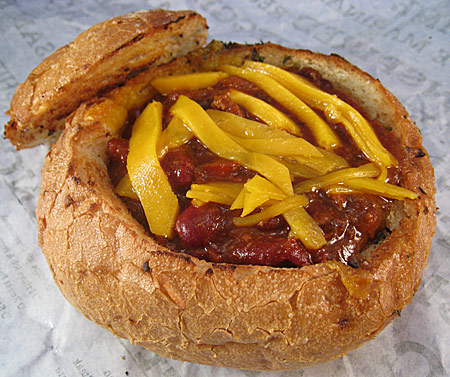 • Chili bread bowls. Once in a while a local diner will try plain soup in bread bowls but the wet mess that results from a hot ladle of chicken noodle poured into a stale bun is beyond awful. No, let’s hold hands here today and stick with chili and chowder.
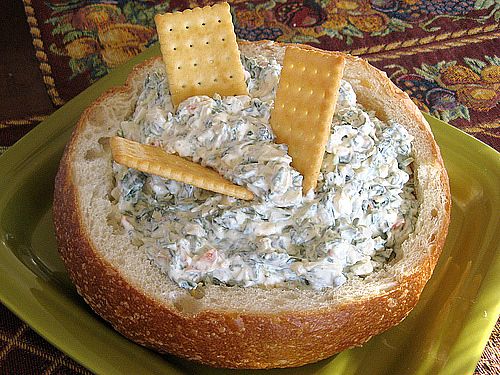 • That creamy spinach dip in the big brown bread. This is a staple of any snooty party and you’ll score massive yuppie points for bringing it with some stinky cheese or dark salamis. And don’t worry about the nutritional content here because those thin ribbons of spinach stirred into that mayo soup totally take away the guilt, too.
 Photos from: here, here, here, here, and here






 En el contrato de venta se incluía la promesa de que alguien al azar se llevaría el original. El resultado: 250.000 dólares para la buchaca, alguien contento porque tiene un original de Warhol y otros 999 que creen que pueden tenerlo y han participado en el ¿ingenioso? ¿absurdo? ¿rompedor? montaje. ¡Arte!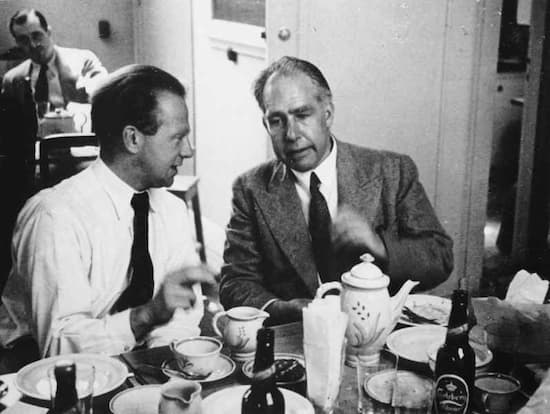


 [más info][traducción]