Trying to stay abreast of current global issues! #podcastplaylist
The U.S. and its partner nations, which include several Arab nations, dropped bombs on four oil refineries in Syria over the weekend. The facilities were said to have been in the hands of ISIS, the Muslim extremist organization that has taken control of large areas near the Iraq–Syria border. On Saturday, the Pentagon also reported strikes in an area of Syria controlled by Kurds but under heavy ISIS attack. Experts warn the effort to eradicate ISIS will be long, costly and extremely difficult. Diane and her guests discuss the fight against ISIS, what’s possible and at what cost.
Martin Wolf's column in the Financial Times has been called "required reading for the international financial elite." The former World Bank economist has a new book about the global financial crisis. Wolf criticizes the policies that caused it as well the responses to it. He calls for abandoning the orthodox thinking that led policymakers to completely miss the signs of the oncoming meltdown. He talks with Diane about why the global financial system remains so fragile and what can be done to strengthen it.
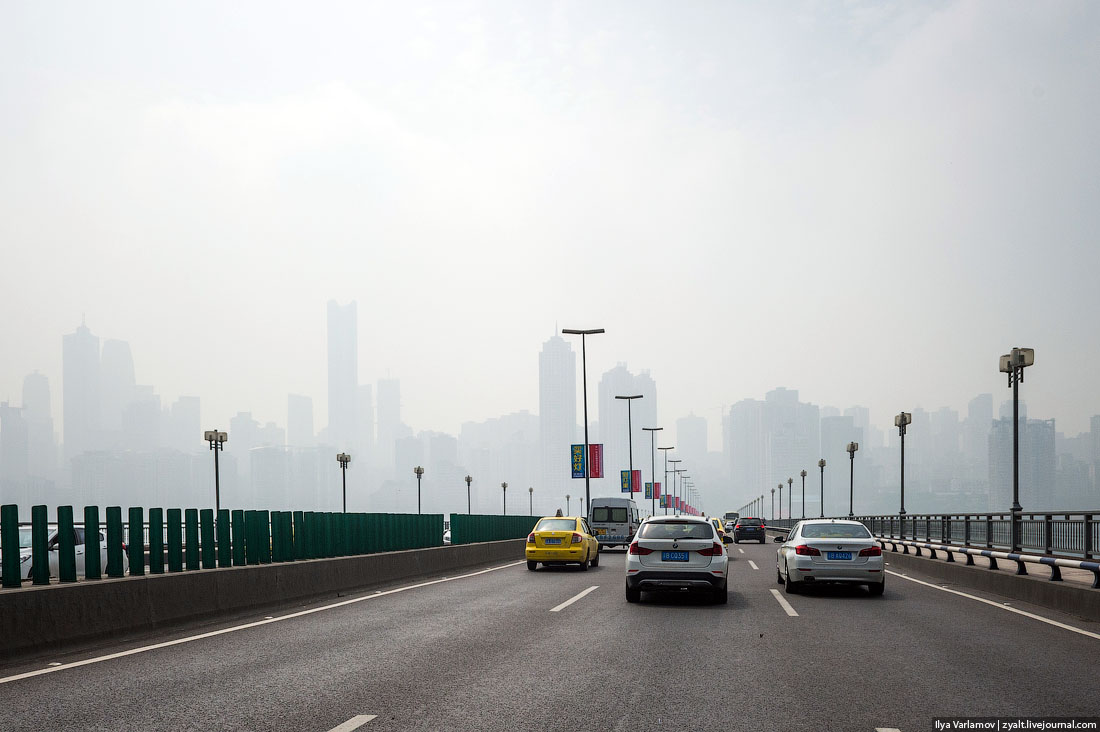
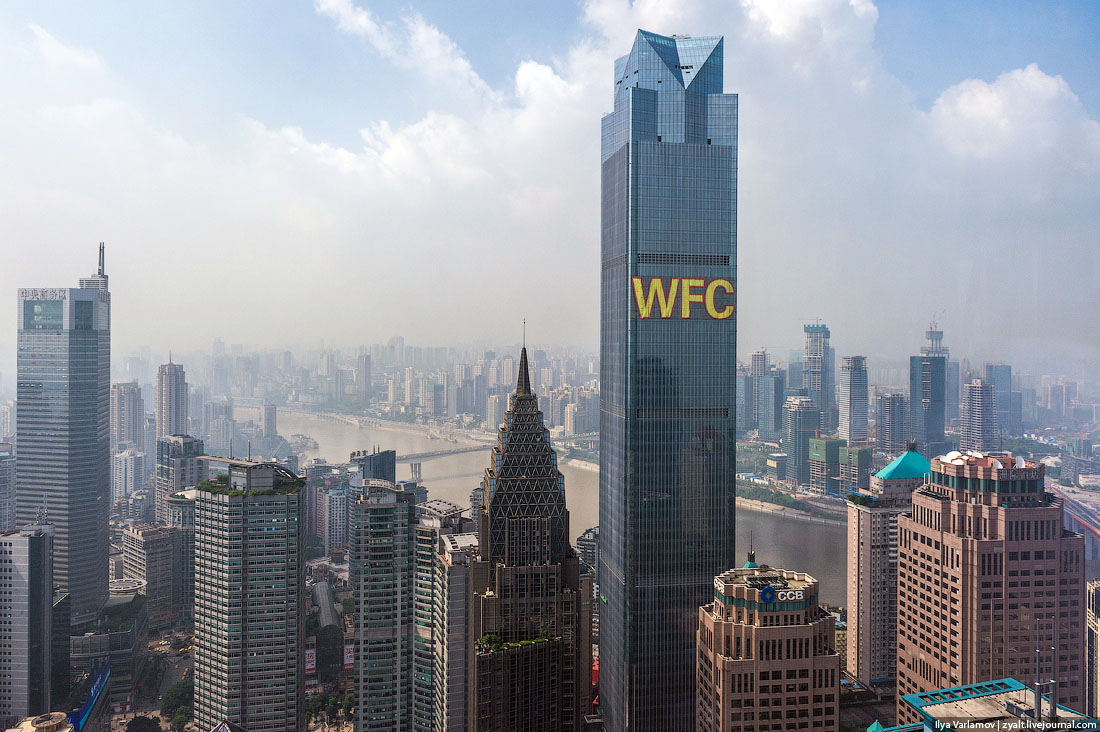
Чунцин - крупнейший город Китая. По разным данным в нем проживает до 40 миллионов человек. По размеру город сопоставим с Австрией, раскинулся он на 450 километров в длину и 470 в ширину. Конечно, не все 82 000 кв. км Чунцина застроены, но дело поправимое. Строительство тут идет какими-то фантастическими темпами. Я посмотрел фотографии 2010 года и не узнал Чунцин! За последние годы тут построили кучу новых мостов, небоскребов и эстакад. Год развития Чунцина, как 20 лет для Москвы.
01. Кроме всего прочего, Чунцин - крупный промышленный центр. В городе расположены сотни заводов, от химических до автомобильных. Как результат - почти круглый год город затянут смогом.
02. Полдень солнечного дня.
03. Большинство небоскребов, которые вы видете на фотографии, появились тут за последние 10 лет.
04.
05. Старые здания активно сносят, на их место придут небоскребы.
06.
07. В центре города совсем маленькая пешеходная зона с десятком дорогих бутиков.
08. На берегах еще остались старые кварталы, но их уже вытесняют современные жилые комплексы
09. Старый Чунцин
10. Через пару лет его не останется.
11. Все старье идет под снос. Пока город похож на большую стройку.
12. Для туристов сохраняют и перестраивают отдельные старые домики. Но этот новодел не представляет интереса.
13. В целом Чунцин совершенно неуютный город. Приезжать сюда можно только по делам. Ну или на 1 день, как я, посмотреть на строительные успехи китайцев.
14. Набережная
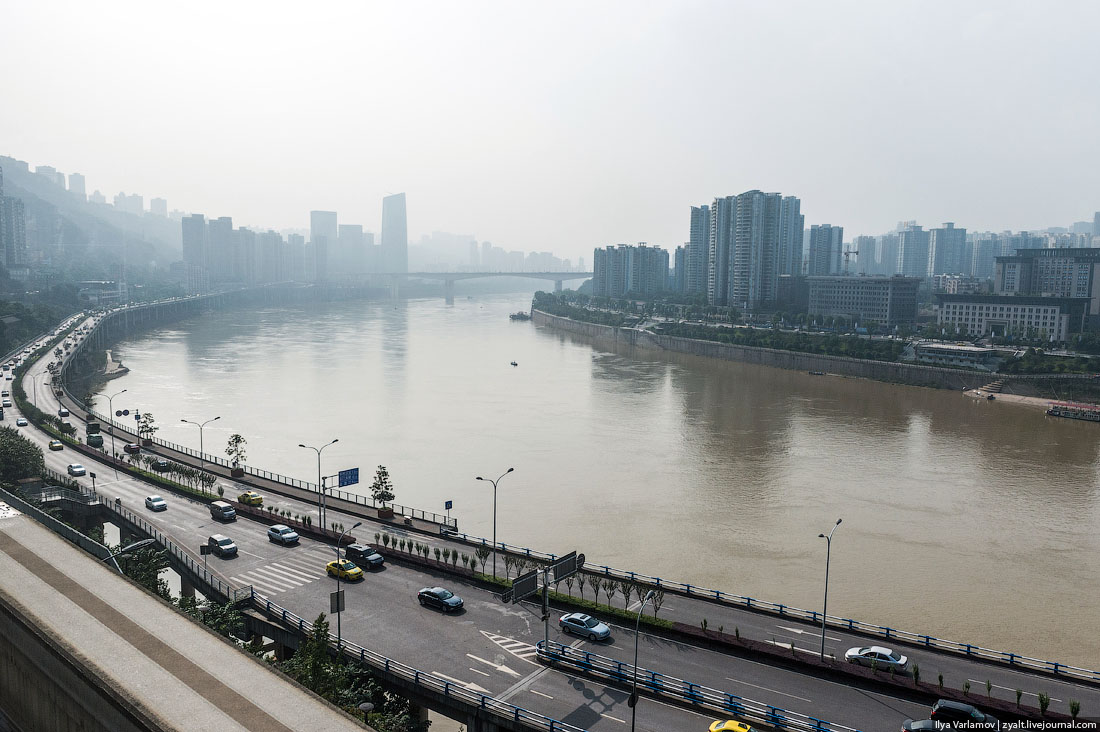
15. Центр города расположен на месте слияния двух рек Цзялинцзян и Янцзы. Уровень воды в реках меняется в зависимости от сезона, поэтому набережные очень высокие.
16.
17.
18.
19. Город расположен на крутом рельефе. Это, кстати, единственный крупный город в Китае, где почти нет велосипедистов. По крутым горкам не поездишь.
20. Река
21. Новый деловой квартал, построили за 2 года
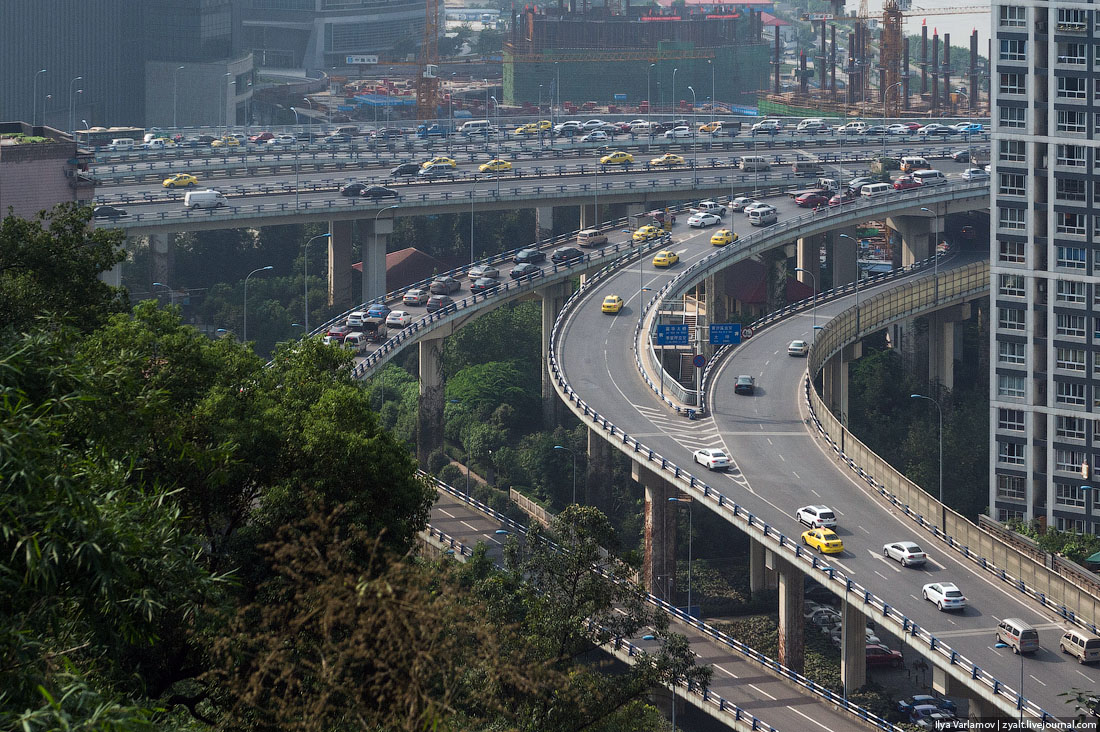
22. Главная достопримечательность - это, конечно, фантастические эстакады, которые тут все опутали.
23. Набережная.
24. Эстакады идут на сваях прямо вдоль берега
25. По старым жилым кварталам.
26.
27.
28. Старые мосты
29. Новый мост, только открыли
30.
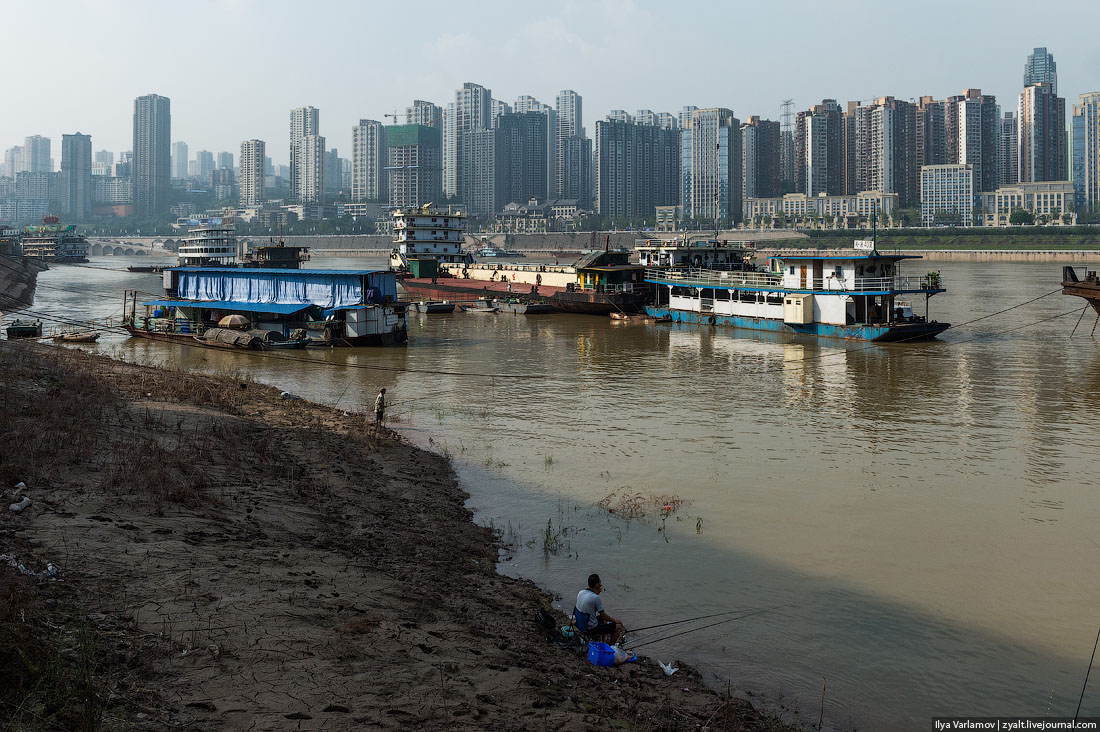
31. Китайский дебаркадер, обратите внимание, справа на нем сделали 2 лифта ). Вот он - размах!
32. В городе есть 2 ветки метро и 2 ветки монорельса.
33. На входе в метро продают всякое барахло. Прямо как у нас на станции Выхино.
34. В метро есть киоски Макдональдса, которые продают напитки и мороженное.
35. Список запретов в метро впечатляет.
36. Поезд монорельса имеет 4 вагончика.
37. Внутри можно ходить и даже сидеть на гармошке
38.
39. В городе крутая трехмерная навигация.
40.
41. Местная кухня представлена всякими внутренностими, лапами, головами и даже свиными пятачками.
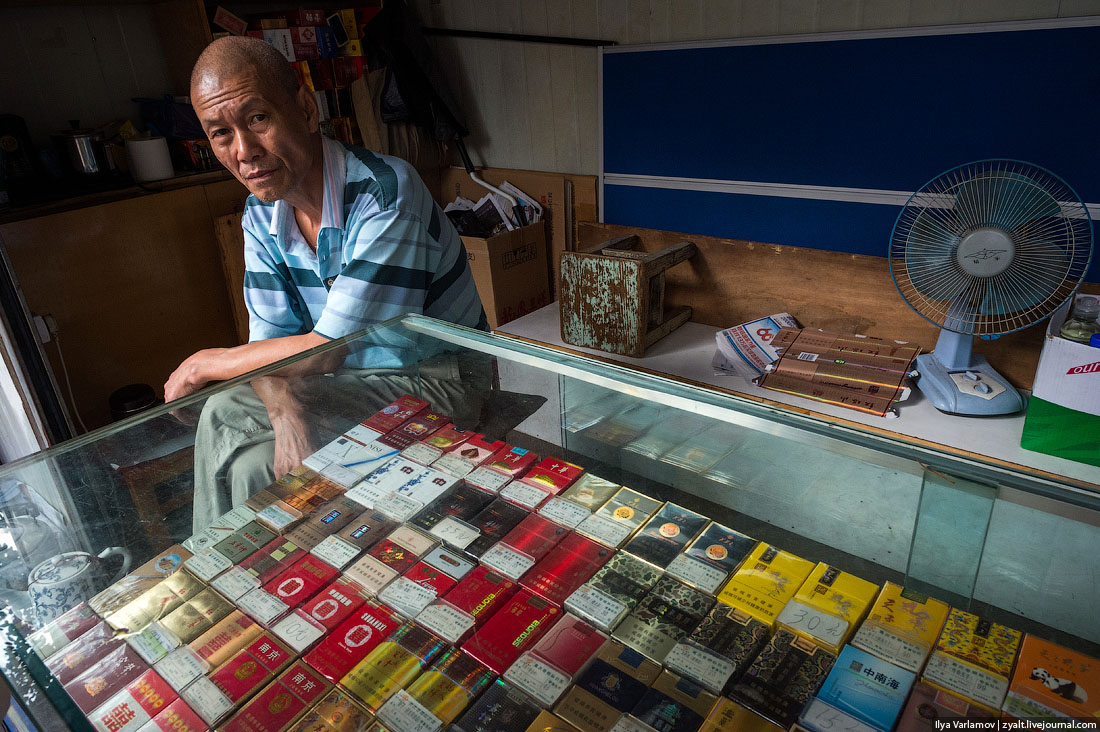
42. Продажа сигарет. У всех китайских сигарет очень красивые пачки. Обязательно должны переливаться. Курение статусная вещь. По пачке вас сразу вычислят. Одни из самых дорогих сигарет — "Чжунхуа" ("Китай»), стоят почти 500 рублей за пачку!
43. Переноска детей
44. Торговцы фруктов
45. Еще в городе есть канатная дорога с одного берег на другой. Местная достопримечательность. Раньше, когда не было столько мостов, выполняла транспортную функцию, а теперь больше как аттракцион.
46.
47.
48. Мост Чаотяньмэнь — арочный мост с самым длинным в мире пролётом. Общая длина моста — 1.7 км.
49.
50. Центр города
51. А еще Чунцином руководил Бо Силай. Он много сделал для развития городской инфраструктуры, строил мосты, сократил 2 000 городских чиновников и заботился о народе. При Бо в Чунцине устраивали хоровое пение революционных песен и массовые походы по местам боевой славы КПК. Народ Бо очень любил. Ему пророчили место в Политбюро ЦК КПК, а возможно и кресло председателя. Но не срослось. Жену Бо Силая обвинили в организации убийства иностранного бизнесмена и приговорили к расстрелу, самого Бо исключили из партии и дали пожизненное за коррупцию. Вот такой Китай.
USDA has increased its estimate of the corn crop again this month, building on already forecast record highs. Corn production is forecast at 14.4 billion bushels, up 3 percent from both the August forecast and from 2013 and yields are expected to average 171.7 bushels per acre, almost 13 bushels an acre higher than last year.
“It will be the fifth record crop that we’ve had in the last 12 years,” says National Corn Growers Association Vice President of Public Policy Jon Doggett, who commented on the crop during a during a Fuels America press call Thursday discussing the importance of EPA keeping the ethanol requirements under the Renewable Fuel Standard (RFS) going forward. “When the energy bill was passed in 2008, there was a challenge to the corn industry to produce the corn, and we have produced the corn,” he said, adding that farmers have done it so well that prices have fallen back below cost of production.
“The American farmer has done it again!” said Bob Dinneen, president and CEO of the Renewable Fuels Association (RFA). “The innovation and rapid technology adoption we’ve seen in the corn sector over the past decade has been nothing short of astounding. The American farmer has again risen to the challenge to meet all demands for feed, food and fuel.”
As harvest ramps up in fields across the country, corn demand from the ethanol sector is ramping up as well. Dinneen notes that DOE projects 2014 ethanol production will be 14.3 billion gallons. “A decade ago, who would have dreamed that 14 billion bushels of corn and 14 billion gallons of clean-burning, domestically-produced ethanol would be the reality in 2014?,” he said.
Dinneen added that EPA’s proposal to reduce the 2014 RFS requirement for “renewable fuel” from 14.4 billion gallons to 13.01 billion gallons would effectively reduce demand for corn by some 500 million bushels, at a time when corn stocks are rising and prices are slumping to levels below the cost of production. “Now is not the time to artificially constrain demand for corn and tie the hands of the American farmer,” Dinneen said, urging EPA to “finalize a rule that returns the RFS to its intended trajectory.”
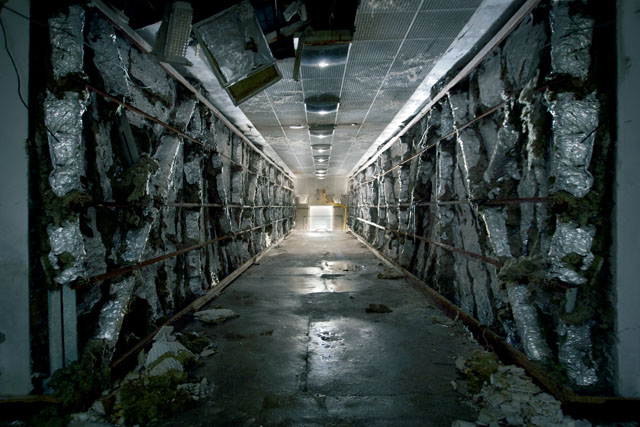
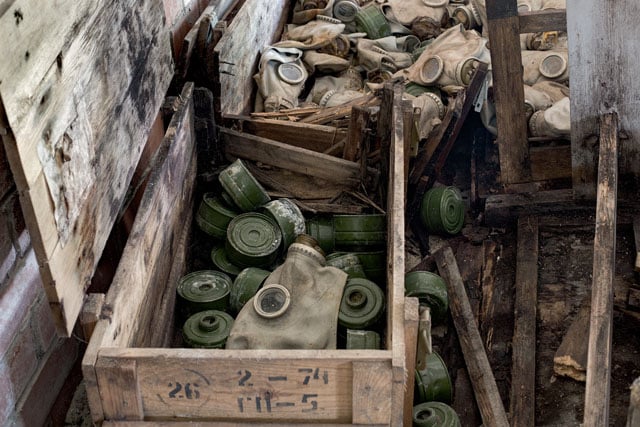
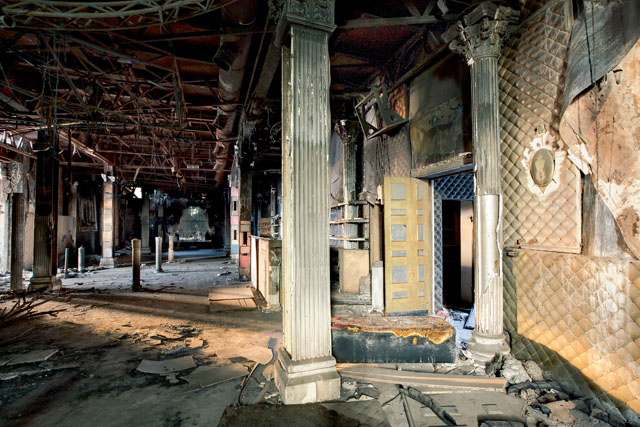
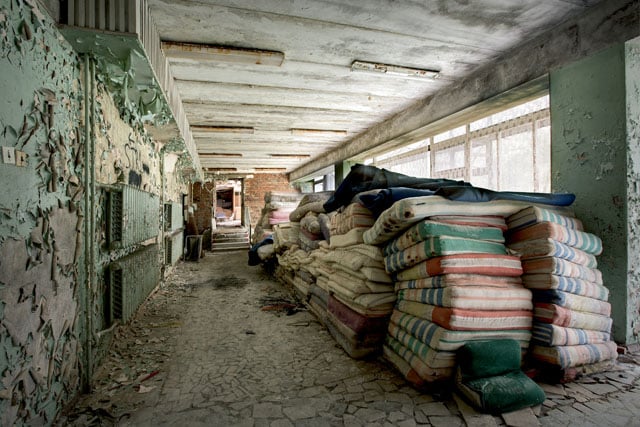
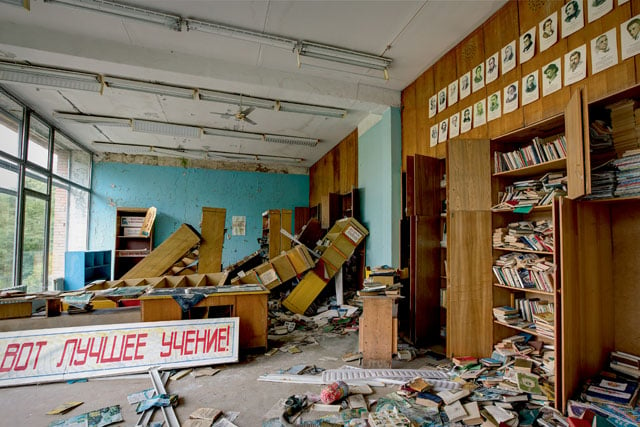
Rebecca Litchfield is a photographer who has faced radiation exposure risks, arrest and interrogations, and even accusations of espionage… all for the sake of her project “Soviet Ghosts.”
You see, Litchfield is an avid urban explorer who has been fascinated by scenes of decay found in countries that were formerly part of the USSR and the Eastern Bloc.
Photographing and exploring the old Iron Curtain isn’t the easiest thing to turn into a project, she says:
Not many explorers travel to Russia, where the rules are very different, locations are heavily guarded and a strong military presence exists everywhere. There are serious consequences for getting caught. We managed to stay hidden for all of the trip, we maximised our stealthiness, ducking and diving into bushes and sneaking past sleeping security. But on day three our good fortune ran out as we visited a top secret radar installation. After walking through the forest, mosquitos attacking us from all directions, we saw the radar and made our way towards it, but just metres away suddenly we were joined by military and they weren’t happy…
Fortunately for Litchfield, she was able to wiggle out of that tricky situation and continue her adventure through more than 10 different countries.
She says that her goal is to capture the scenes as they are, highlighting their beauty in decay, “like a memory hanging on that will soon be lost in a breeze, a museum that no one gets to see.”
Here are some of the haunting photographs in the project:
The photos in the project have also been published in a book that’s available from $28 over on Amazon. You can also find more of Litchfield’s work over on her website.
Image credits: Photographs by Rebecca Litchfield and used with permission
Fucking sucks. " Ed Crooks of the FT noted on Twitter that anti-fracking signs “outnumber anti-coal signs by more than 10:1”; he followed that with an observation that there were “possible even more [signs] about #fracking” than about #climate”. Both are consistent with what I saw. This despite the fact that fracking, notwithstanding its problems and limitations, has reduced U.S. greenhouse gas emissions and helped create the political space for EPA power plant regulations that will do more."
The People’s Climate March, which drew a reported three hundred thousand people to the New York streets on Sunday, deserves much of the applause and attention it’s attracted. No one who attended the march can deny the enthusiasm of the crowd, or the fact that the gathering has helped keep climate change on the front page for a week. And yet, throughout the day, I couldn’t shake the feeling that I’d stumbled into an anti-fracking march that also happened to be about climate change. And I couldn’t escape the conclusion that this focus could end up undermining the very climate change goals that the march was ostensibly about achieving.
Five years ago, climate change rallies were typically focused on coal. Whatever one thought of the old protest tactics, or the wisdom of the specific policy demands, there’s no question that the activities were targeting a significant climate problem. Coal is the largest and fastest growing source of carbon dioxide emissions from energy use. Blunting coal use unquestionably reduces global greenhouse gas emissions.
Fast-forward a couple years. With a rally outside the White House in 2011 that generated front-page coverage, climate activism shifted focus to the Keystone XL pipeline. Now the emphasis was on a project that promised to have little impact on climate change regardless of whether the protesters got what they wanted – perhaps not the ideal place to focus so much energy.
Sunday’s climate march had me pining for those good old days. There was barely any anti-Keystone paraphernalia beyond the small, designated anti-tar-sands section. There was little about coal outside the similarly small anti-mountaintop-mining zone. But boy were there a lot of anti-fracking signs. Ed Crooks of the FT noted on Twitter that anti-fracking signs “outnumber anti-coal signs by more than 10:1”; he followed that with an observation that there were “possible even more [signs] about #fracking” than about #climate”. Both are consistent with what I saw. This despite the fact that fracking, notwithstanding its problems and limitations, has reduced U.S. greenhouse gas emissions and helped create the political space for EPA power plant regulations that will do more.
Take a step back: In the last five years, organizers have gone from drawing a few thousand people to lonely protests to bringing out hundreds of thousands on the streets of New York. They’ve done that in part through superior organizing and by tapping into growing concern about climate change. But they’ve also done it in part by shifting their emphasis from a central part of the climate problem (coal) to a marginal issue (Keystone) to opposing something that, while decidedly imperfect, actually helps deal with climate change (natural gas). This seems to be a Faustian bargain at best.
More pragmatic players in the climate movement often explain this bargain by arguing that anything that gets people mobilized on climate helps the overall cause. Playing a pure inside game on climate change has its limits. And it’s easier to mobilize people around opposition to energy developments in their back yards that scare them, carried out by companies that can be easily demonized, than to get them revved up about amorphous climate threats and subtle policies that might counteract those. (One friend at the march threatened to chant, “What do we want? Better seals on natural gas compressors! When do we want them? Now!” He wisely decided against it.) It’s also possible, in principle, to mobilize around one thing (say, Keystone) and then pivot to another (say, EPA power plant regulations) when the time for policy action arrives. Take this too far, though, and you back yourself into a corner: one has to wonder, among other things, how much the anti-fracking marchers will support the new EPA power plant rules once they discover that a central impact will be to increase demand for fracked natural gas.
It’s great to have leaders who help draw vocal attention to climate change. But those who care about confronting climate change yet understand how wrongheaded some of what’s being called is for need to speak up just as loudly.
The origins of human conflict! It's kind of a specious leap (pun intended), but fun to find someone else to blame for humanity's problems!
sciencehabit writes A major new study of warfare in chimpanzees finds that lethal aggression can be evolutionarily beneficial in that species, rewarding the winners with food, mates, and the opportunity to pass along their genes. The findings run contrary to recent claims that chimps fight only if they are stressed by the impact of nearby human activity—and could help explain the origins of human conflict as well.
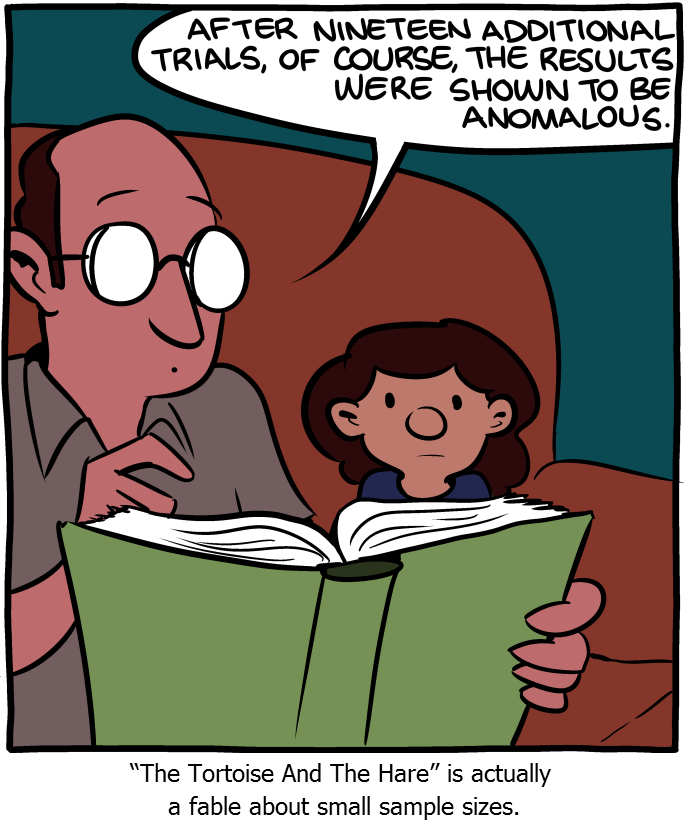
A couple summers ago, I read a book a day. I’d heard when President Bill Clinton was in office, he read two books a day. I didn’t know if it were true or not, but I loved this idea. I was not President and not even that important, so I could certainly read one book a day. So it began.
The trick, I realized early on, was choosing small books. Short books. It wasn’t cheating (and hey, I was making up the rules anyway), and books were books, short or not. So I started with the Penguin “Great Ideas” Series. And read them all. Then, I heard someone say something about a curriculum, and started theming my weeks. Bread-making, gardening, astronomy. It became easy.
It never occurred me to blog about it, or keep track of what I was reading even. It wasn’t about the public display of information, or proving to anyone that I could do it. It was just me against books. And sometime around late July, about 45-50 books in, I proved to myself that I could.
And so I quit. One day, I just stopped.
Me versus me
The Book-A-Day project just ended. No fanfare, no apologies, no blog post announcing I was done. I stopped.
The project wasn’t about finishing, it was about seeing if I could do it. It was about the formulation of ideas, the construction of a book framework — and in a trial of “me versus me,” who would come out on top? What interesting-ness would emerge if I spent time prototyping ideas with myself? What could I make?
Making no
What you choose not to do, who you choose not to spend time with, and who and what you decide to say no to — what you do choose — is how you mark time.
In irony, the whole experiment taught me that my barrier to quitting was my attraction to making. The reason I do is to create.
The same is true in my predilection for saying yes.
I say yes to make things. I say yes to watch projects grow, to collaborate, to see progress.
But too much yes, I quickly found, is unsustainable and unhealthy.
What could I make from no?
So I started a list. Instances of saying no.
The No List
When I say no (e.g., conference talk invites, “pick my brain” invitations, jury solicitations), I immediately add my regret to the No List. I nurture this growing list of no-things, adding category data like dates events would have happened, themes, and date turned down.
Suddenly, I’m making list of cities not seen, airplanes not embarked, and time saved, rather than time taken away. Several months later, I have a made a substantial something. It’s how I’ve marked time.
There are many instances where deadlines are crucial, where getting things done needs to get done. Sometimes saying yes is just the thing that must happen. But just as importantly, most times it is not.
Stop reading a book halfway through, keep a list of your turn-downs, and celebrate the fringe benefits of no.
For the second time this year, Paul Krugman has written a column explaining that serious studies consistently conclude that slashing global carbon dioxide emissions doesn’t need to be expensive. Also for the second time, he gives much of the credit to falling costs for renewable energy, particularly solar power. He’s absolutely correct on the broader point – but dead wrong in explaining why the studies come to that conclusion.
Back in April, Krugman rightly pointed out that an IPCC review had concluded that slashing emissions might reduce annual GDP growth by as little as 0.06 percentage points. In today’s column, he cites a new report from the New Climate Economy (NCE) Project to reasonably suggest that, once public health co-benefits are considered, substantial emissions cuts might come close to paying for themselves.
No problems so far. In each case, though, he offers a similar observation about why the numbers come out so small. Here he is in April:
“What’s behind this economic optimism? To a large extent, it reflects a technological revolution many people don’t know about, the incredible recent decline in the cost of renewable energy, solar power in particular.”
And today:
“The economics of climate protection look even better now than they did a few years ago. On one side, there has been dramatic progress in renewable energy technology, with the costs of solar power, in particular, plunging, down by half just since 2010.”
(The other side is the co-benefits.)
If you read the IPCC and NCE reports, though, you’ll know that their optimistic cost estimates have little to do with cheap solar.
Take a look first at the IPCC report. The 0.06 percentage point figure is for a set of “default technology assumptions” that include availability of nuclear power, carbon capture and sequestration (CCS), and other tools. The plot below (from the IPCC report) shows what happens to the model projections when you rule out CCS and still try to hit an ambitious two-degree temperature goal: the median model that doesn’t crash projects that costs rise by about 140 percent. (Most of the models the IPCC uses can’t even find a pathway – at any cost – that hits the temperature goal once you rule out CCS.) Something similar happens when you rule out abundant bioenergy. In contrast, if you rule out abundant wind and solar, the median model shows increased costs of only a few percent, and the most pessimistic one projects only a 25 percent cost rise. The take-away is that the low cost projections are being driven far more by abundant CCS and bioenergy than by cheap wind or solar.
How about the NCE study? The plot below is the critical one from that report. Only 30 percent of the opportunities identified come from energy shifts of any sort at all. (Opportunities in land use in particular are claimed to be much larger.) Out of that slice, less than half comes from renewable power, dominated by wind rather than solar. (Exact numbers will need to wait until NCE publishes its appendices.) Nuclear and CCS play a substantial role; energy efficiency plays a massive one as well.
Why does any of this matter? Krugman does an important service by rebutting those on both the right and the left who claim that serious climate action requires turning our economic system upside down. (It’s a good guess that this Wednesday column from Mark Bittman, which basically called for the end of capitalism in order to deal with climate change, provoked Krugman to write his latest.) But the sorts of policies you pursue if you think that serious climate action is mostly about wind and solar are fundamentally different from those you pursue if you believe otherwise. A central upshot is that if the modeling exercises that Krugman touts are correct, and countries pursue policies based on a belief in wind and solar, the actual costs of cutting emissions will be far higher than what Krugman claims. At the same time, if the modeling exercises Krugman highlights are wrong, he hasn’t given us particularly strong reason to believe that steep emissions cuts would be cheap.
It may well be the case that falling costs for renewable energy will make cutting greenhouse gas emissions cheap. There’d be no problem if Krugman cited serious analysis that connected falling renewables costs to low estimates for the costs of serious climate policy. We can get ourselves into trouble, though, when we use estimates of the cost for one type of policy to encourage another.
With his company repurposedMATERIALS, Damon Carson comes up with creative ways to keep all sorts of unwanted stuff out of landfills.
Of the three Rs in the classic green mantra "reduce, re-use, recycle," it's the last that is most widely embraced. But despite its popularity, recycling is the least energy efficient alternative of the three. Damon Carson is more interested in the middle one. As founder of repurposedMATERIALS in Denver, Colorado, Carson has spent the last four years keeping millions of pounds of material out of the waste stream by finding creative re-uses for discarded industrial products.
Pavlina Tcherneva's chart showing the distribution of income gains during periods of economic expansion is burning up the economics internet over the past 24 hours and for good reason. The trend it depicts is shocking:
For a long time, most of the gains from economic growth went to the bottom 90 percent of the income distribution. And, after all, the bottom 90 percent includes the vast majority of people. Since 1980, that hasn't been the case. And for the first several years of the current expansion, the bottom 90 percent saw inflation-adjusted incomes continue to fall.
The data series ends in 2012 and we don't know how long the expansion will last, so that negative income trend may evaporate before all is said and done. But unless there's a massive break with the previous three expansions we will continue to have an economy where the typical family's living standards grow much more slowly than GDP growth per se would allow.
Don't they understand that Haber and Bosch solved this problem 100 years ago? Amateurs.
An anonymous reader writes Irish teenagers Ciara Judge, Émer Hickey and Sophie Healy-Thow, all 16, have won the Google Science Fair 2014. Their project, Combating the Global Food Crisis, aims to provide a solution to low crop yields by pairing a nitrogen-fixing bacteria that naturally occurs in the soil with cereal crops it does not normally associate with, such as barley and oats. The results were incredible: the girls found their test crops germinated in half the time and had a drymass yield up to 74 percent greater than usual.
The days when thieves used clothes hangers to break into cars may soon be a thing of the past.
Nearly half the 89,000 vehicles broken into in London last year were hacked with electronic gadgets, according to London’s Metropolitan Police.
The hackers appear to be targeting higher-end cars, which commonly have more than 50 low-powered computers installed on board.
“Car crime is no longer the preserve of the opportunist but a more targeted activity towards prestige brands which are stolen to order,” said Andrew Smith, managing director at Cobra UK.
Thieves are hacking into these on-board computers using cell-phone-sized electronic devices originally designed for locksmiths.
One of the most prevalent of these devices can trick a car – “spoofing” – into thinking the owner’s electronic key is present by using radio transmitters that intercept key signals. Another type of hacking device can gain access to a car’s on-board diagnostic unit remotely, which allows thieves to program a blank key to control the engine control unit.
The whole operation takes less than 10 seconds.
The devices can apparently be purchased on the internet, primarily from websites located in Bulgaria, according to Sky News. Video tutorials for using the device are also available online.
Picture of an electronic car-hacking device.
Meanwhile, in February, security experts in Spain created a device that can bypass any encryption on a car before running malicious code through the vehicle’s system.
The so-called “CAN Hacking Tool (CHT)” allows hackers to control lights, locks, steering and brake systems. The price tag: $20.
All joking aside, would anyone go to this with me? Tix are $70, but I can't imagine he's going to be getting any better, or newer. Just seems like a good time to see a cultural icon.
Garth Brooks coming to MN for 4 shows
MINNEAPOLIS - It's been awhile since country music giant Garth Brooks graced his Minnesota "friends in low places" with his presence.
Well, it appears Mr. Brooks is trying to make up for lost time, announcing that he will play four shows in two nights at the Target Center November 14 and 15. He will play shows at 6:30 p.m. and 10:30 p.m. both nights, with tickets priced at $70.50 including service fees.
At K102 FM, callers flooded phone lines, inquiring about tickets.
"It's true Garth form. The guy just does it his own way the way he does it he is a marketing genius, always has been," said Muss, K102 FM's Afternoon Drive Host, who said he went to 8 of 9 concerts last time Garth Brooks was in Minnesota.
Muss said he believes Garth will add more shows in Minnesota, just as he has done in other states. He vows the show will dazzle people who don't even consider themselves country music fans.
"This guy runs, jumps, flies all over the stage and all over the arena, it's amazing. I swear if you are not having a good time at a Garth Brooks show he would find you at his show and solely dance for you to make sure you are having a good time. He's amazing," said Muss.
Those tickets will go on sale at 10 a.m. October 3, with an imposed limit of 8 per transaction. They are only available at www.AXS.com/GARTH or by phone at 1-855-411-4849. Promoters suggest pre-registering at AXS.com if you don't already have an account to speed up your purchase.
Garth Brooks will play four shows in two nights at Target Center November 14 and 15.(Photo: KARE)
The Garth Brooks World Tour will bring him to Minnesota for the first time since 1998 when Brooks sold out nine shows, playing for more than 159,000 fans. After dominating country and mainstream radio through the 90s, Brooks retired in 2001 to raise his children but has played selected shows for charity and special occasions. He has taken 25 songs to number one on the charts.
"The thing I get asked about every single time I go anywhere – do you think Garth Brooks is coming? And now we found out today he is," said Amy James, K102 FM's Midday Host, who fielded lots of calls from fans. "It will be a big party in downtown Minneapolis."
Brooks' wife Trisha Yearwood will open the shows.
Read or Share this story: http://www.kare11.com/story/entertainment/music/2014/09/24/garth-brooks-coming-to-mn-for-4-shows-target-center/16144769/
About 3 months ago photographer Dan Tobin Smith set up a website to ask the public to donate kipple: junk that was lying around their house. “It’s time to free yourself of the pointless or unused objects in your life,” read the plea. “Give them a purpose as part of Dan Tobin Smith’s installation for the London Design Festival 2014.”
Sure enough, the donations began coming in and in no time at all Smith had enough junk on his hands to create a sprawling installation that filled an entire floor and mezzanine, “carpeting 200-square-metres with a dense, precise, chromatically-themed arrangement of thousands of objects.” The objects are so carefully placed that gradients seem to blend together seamlessly.
The fictional word Kipple was coined by science fiction writer Philip K Dick. Kipple appears in his 1968 novel “Do Androids Dream of Electric Sheep” (the film adaptation was Blade Runner) and is used to describe useless, pointless stuff that humans accumulate. It served as the inspiration for Smith’s installation “The First Law of Kipple,” which was part of London Design Festival this month. (via Creative Review)
It's a decent speech. I'm particularly impressed with how she keeps her nerves under control, while not completely masking them. Makes her humanity more tangible than most international celebrities.
UN Women Goodwill Ambassador Emma Watson spoke at the launch of UN Women's He for She campaign, aimed at expanding the network of male allies to work with wo...







































































 Фэйсбук
 ВКонтактик
 Основной Твиттер
 Одноклассники




 USDA has increased its estimate of the corn crop again this month, building on already forecast record highs. Corn production is forecast at 14.4 billion bushels, up 3 percent from both the August forecast and from 2013 and yields are expected to average 171.7 bushels per acre, almost 13 bushels an acre higher than last year.
  “It will be the fifth record crop that we’ve had in the last 12 years,” says National Corn Growers Association Vice President of Public Policy Jon Doggett, who commented on the crop during a during a Fuels America press call Thursday discussing the importance of EPA keeping the ethanol requirements under the Renewable Fuel Standard (RFS) going forward. “When the energy bill was passed in 2008, there was a challenge to the corn industry to produce the corn, and we have produced the corn,” he said, adding that farmers have done it so well that prices have fallen back below cost of production.
  As harvest ramps up in fields across the country, corn demand from the ethanol sector is ramping up as well. Dinneen notes that DOE projects 2014 ethanol production will be 14.3 billion gallons. “A decade ago, who would have dreamed that 14 billion bushels of corn and 14 billion gallons of clean-burning, domestically-produced ethanol would be the reality in 2014?,” he said.