Matthew
Shared posts
23 May 19:31
avianawareness: (via The Pencilsword: On a plate - The...


firehose, ThePrettiestOne and -1 others like this
23 May 01:24
Why Mitch McConnell Cannot Be Allowed to Decide the Fate of the Patriot Act
Senate Majority Leader Mitch McConnell has made it clear this week that, while the Senate is rapidly approaching recess, the Senate “will stay in [session] until a deal is struck to extend” the Patriot Act. McConnell has also introduced legislation for both long-term and short-term reauthorization of the Patriot Act’s expiring provisions. It seems that McConnell is trying to bully the entire Senate into passing short-term reauthorization, giving him more time to further weaken reform efforts. A look at McConnell’s history makes this unblinking support of unconstitutional surveillance less surprising. But what is impressive is his commitment to supporting untenable positions. He acts as if the Snowden leaks, which helped expose just how out of control NSA spying is, as well as the recent Second Circuit decision holding that the NSA’s telephone records program was unlawful, never happened.
This was especially apparent today, when McConnell stood on the Senate floor and rattled off a litany of the exaggerated threats that NSA defenders have been relying on to scare Americans into submission: ISIL, Al Qaeda, Al Shabaab, safe havens in Syria for extremists, and safehouses in Yemen for terrorists. He wrapped it up with an all time greatest hits of NSA defenders, explaining why he thinks we need bulk collection (more on that below).
So what was McConnell saying pre-Snowden? An op-ed he wrote in support of Patriot Act reauthorization in 2007 shows that he hasn’t changed his tune at all in eight years. In fact, he practically could have been reading sections of the article as he stood on the Senate floor today to defend NSA spying. And earlier this month, he said, “This has been a very important part of our effort to defend the homeland since 9/11.” In 2011, after President Obama signed the most recent Patriot Act extension, he claimed that the Patriot Act has “ kept us safe for nearly a decade and Americans today should be relieved and reassured to know that these programs will continue.” That’s been his position all along, without regard to the what the rest of Americans (or the world, for that matter) think, after all they’ve learned about NSA overreach .
Here’s why, in his own words (which apparently are evergreen, no matter how much we find out about NSA spying abuses), McConnell is clearly the wrong person to be calling the shots when it comes to NSA reform:
McConnell: Intelligence officials tell us the Patriot Act is as valuable today as the day it was signed. They have given us real-world examples of its positive impact in discovering and disrupting terrorist plots overseas and at home.
While intelligence officials have certainly maintained that surveillance under the Patriot Act is valuable, we (and Mitch McConnell) know those claims are overblown, and sometimes simply false. Although surveillance under the Patriot Act has been shrouded in secrecy, because of Snowden’s leaks, claims about the efficacy of these programs have come under scrutiny. The specific contention that “54 attacks have been stopped” by bulk phone records collection has been thoroughly debunked. In fact, Sen. Patrick Leahy forced former NSA director Keith Alexander to admit that the “54 attacks” claim was inaccurate in front of Congress.
Independent studies from the President’s Review Group, the Privacy and Civil Liberties Oversight Board, and the New America Foundation have all made it clear: we don’t need bulk phone records collection.
McConnell: After all, the best piece of evidence is the one that is most obvious and most important: not a single successful attack on U.S. soil since the morning we awoke to the danger and acted on it in our laws.
While this may have been accurate in 2007, it is, unfortunately, not true now. The Boston Marathon bombing was a tragic example of a terrorist attack on U.S. soil. After the attack, there were questions about whether the FBI could have done more, but the FBI made it clear that there was nothing else it could have done. And while some have claimed that’s because of the legal limits on what the FBI can do (more on that below), Rep. Jim Sensenbrenner very sensibly pointed out that mass records collection can actually be detrimental: “It didn't stop the Boston Marathon Massacre. Sometimes too much information means that what you are looking for is actually a very small needle in a very large hay stack. You can be drowned in too much information.”
And while the Boston Marathon bombing got a justifiably significant amount of media attention, there’s also an epidemic of domestic terrorism against American Muslims that’s getting little attention. In particular, the arson of mosques has become more and more widespread. This kind of terrorism isn't what Section 215 of the Patriot Act was aimed at addressing. But domestic terrorism was a significant focus of other provisions of the law. Yet these crimes are never talked about in the same breath as the Patriot Act—and that’s not only because terrorism against Muslims is low on the media and government’s list of concerns. It’s also because hate crimes against Muslims have dramatically increased since the passage of the Patriot Act, not decreased. There’s no official government estimate of how many of these qualify as terrorism. But under the definition from Section 802 of the Patriot Act itself, nearly any hate crime would qualify.[1] This epidemic of terrorism simply doesn’t fit into the contrived narrative of why we need the Patriot Act. But since these are terrorist attacks against Americans, McConnell might want to focus on this blatant homeland security failure, instead of trying to reauthorize a program of limited usefulness.
McConnell: [The provisions in the Patriot Act] removed bureaucratic barriers that had kept intelligence officials and criminal investigators from sharing information, a simple but major shift that FBI director Robert Mueller has credited with "significantly alter[ing] the landscape for conducting terrorism investigations.”
The oft-repeated claim that had the Patriot Act been in place before 9/11, the NSA would have been able to stop the attack is simply false. According to a 2004 report from the 9/11 Commission, authored by Senior Counsel Barbara Grewe, which the government did not declassify until five years after it was written:
The information sharing failures in the summer of 2001 were not the result of legal barriers but of the failure of individuals to understand that the barriers did not apply to the facts at hand. Simply put, there was no legal reason why the information could not have been shared.
These problems still persist. According to the Government Accountability Office website, as of 2015 “The sharing of terrorism-related information has been designated as high risk [for fraud, waste, and abuse, or mismanagement] because the government faces formidable challenges in analyzing and disseminating this information in a timely, accurate, and useful manner.”
McConnell:Indeed, alarmist concerns notwithstanding, the Patriot Act is one of the most important and overdue pieces of legislation in a generation. My guess is that most Americans were more alarmed to discover that arcane laws once hobbled intelligence agents from tracing terrorist phone calls than they are by the streamlined practice of it now.
McConnell was certainly right when he said the Patriot Act is one of the most important pieces of legislation in a generation. But that’s not because of the reasons he may have thought. It’s one of the most important pieces of legislation in a generation because it is under the guise of the Patriot Act that the NSA has committed some of the most blatantly unconstitutional surveillance this country has ever grappled with.
And he’s also wrong about how Americans feel about surveillance. A recent study by Global Strategy Group (commissioned by ACLU) found:
By nearly a 2:1 margin (60% modify, 34% preserve), Americans believe the Patriot Act should not be reauthorized in its current form. With broad, bipartisan support across all ages, ideologies and political parties, voters are rejecting the argument that the Patriot Act should be preserved with no changes because of potential terrorist threats.
What’s more, the 2004 Grewe report made it clear that it was actually a severe lack of understanding of what McConnell is calling “arcane laws,”—in particular Foreign Intelligence Surveillance Act [FISA]—that led to intelligence failures. Agents missed information-sharing opportunities because of an “overabundance of caution” on the sharing of information by the NSA, as well as a failure to use all the tools available. For instance, the FBI knew it had reason to be concerned about would-be 9/11 hijacker Zacarias Moussaoui. But because they had considered starting an investigation that might require a FISA warrant, when it came to using a criminal warrant to get the information they needed “they just did not think about that option at the time.”
When it came to sharing information about the movements of hijacker Khalid al-Mihdhar, the report explains: “everyone was confused about the rules governing the sharing and use of information gathered in intelligence channels.” What’s more, in the years, months, and days before 9/11, the NSA already had access to a massive database of Americans’ call records. Analysts—at NSA or CIA—could have easily searched the database for calls made from the U.S. to the safehouse in Yemen. They simply didn't.
What should be most alarming to Americans is the level of incompetence that these failures, which could have possibly prevented the tragedy of 9/11, demonstrate. Yet these same intelligence agencies continue to conduct invasive, overbroad surveillance and ask for ever more authority—without ever really addressing the problems that led to their massive failure in 2001.
McConnell: If there is one lesson from Sept. 11 that we should have learned by now, it is that the people who protect us from terrorism should have more, not fewer, tools to do their jobs. The Patriot Act and FISA are among the most valuable. It is time we acknowledged as much.
Senator McConnell’s bald-faced use of the tragedy of 9/11 as an excuse for surveillance programs that trample on the Constitution is as repugnant now as it was then. EFF has always thought that bulk collection was unconstitutional—that’s why we’ve been suing the NSA since 2008, years before the first Snowden leak. And now, unlike then, the truth has been very clearly demonstrated. Of course, it’s not because the government decided to come clean. We know the truth because of those leaks and because of all the transparency work being done by privacy advocates. Quality over quantity must be the rule for surveillance tools. The people who protect us from terrorism should have tools that actually work, while maintaining the privacy and civil rights of all Americans. If you agree, call Congress now and let them know.
[1] "Domestic terrorism" means activities with the following three characteristics:
- Involve acts dangerous to human life that violate federal or state law;
- Appear intended (i) to intimidate or coerce a civilian population; (ii) to influence the policy of a government by intimidation or coercion; or (iii) to affect the conduct of a government by mass destruction, assassination. or kidnapping; and
- Occur primarily within the territorial jurisdiction of the U.S.
Related Issues:
Related Cases:


21 May 02:50
Spotify Running Mode detects the rhythm of your feet and picks music to match
by Rob Jackson
The music industry is experiencing a huge shift with physical and online music purchases declining and streaming music services on the rise. Among the most popular is Spotify who today in New York City made some interesting announcements to bring their customers entirely new experiences.
The most exciting new feature is for runners: Spotify now has a mode that will detect your running pace, the rhythm of your feet, and select songs that perfectly match the way you run. This is an outrageously cool idea that I know exercise enthusiasts will be dying to try out.


Spotify also announced partnerships with Nike and RunKeeper to bring this feature to the Nike Plus and RunKeeper apps later this year. We can only assume you’ll have these features on your Android Phones in due time.

Running Mode is the most exciting feature Spotify announced but it’s not the only thing. The new Spotify aims to deliver 3 key elements:
- The perfect soundtrack for any part of your day
- New types of content
- Better experiences with innovative solutions
The “soundtrack for your life” could also prove promising. They’ve created an auto-create playlist feature that takes into consideration everything about you to continually decide what song it thinks you’ll want to hear next.
Depending on who you are it selects music for when you wake up, when you go running, when you get to work, when you’re commuting, and so on and so forth. It constantly learns who you are, where you go and when, what you like during those times, and creates the soundtrack for your life in real-time.
This isn’t a particularly new idea, but alternatives offered by the likes of Google Play Music, iTunes Radio, and Pandora don’t choose music particularly well. Spotify’s “soundtrack for your life” could end up being pretty darn awesome. We’ll have to wait, try it, and see.
Enhancing the experience with new types of content is an interesting concept as well, but again, nothing particularly new here. Spotify is adding new forms of media from popular podcasts, news programs, television shows, and more- including some video content.
Are you a Spotify customer? If so, do any of these developments sound particularly exciting? If not, will these new features entice you to become a Spotify customer?
19 May 11:54
These CBP agents -- like too many other law enforcement officers -- had no idea how to react when their authority was challenged. They only saw one route to take: escalation.
Cooke knew the CBP agents needed something in the way of reasonable suspicion to continue to detain her. But they had nothing. The only thing offered in the way of explanation as they ordered her to return to her detained vehicle was that she appeared "nervous" during her prior interaction with the female CBP agent. This threadbare assertion of "reasonable suspicion" is law enforcement's blank check -- one it writes itself and cashes with impunity.
The CBP supervisor then stated he'd be bringing in a drug dog to search her vehicle -- another violation of Cooke's rights. The Supreme Court very recently ruled that law enforcement cannot unnecessarily prolong routine stops in order to perform additional searches unrelated to the stop's objective.
If the purpose of CBP is to secure borders and regulate immigration, then this stop had very little to do with the agency's objectives. Cooke is an American citizen and had not crossed a border. If the CBP's objective is to do whatever it wants within x number of miles of the border, then it's apparently free to perform suspicionless searches. In this case, the CBP was operating in drug enforcement mode, but even so, it still hadn't offered anything more than Cooke's alleged "nervousness" to justify the search and detainment. Additionally, the CBP's decision to bring in a drug dog raised the bar for justification.
Shortly thereafter, this exchange occurred:
And for all the hassle, the CBP came up with nothing.
Things are slowly changing, though. Law enforcement officers can no longer rely on the belief that citizens know less about their rights than they do. They will need to do more to justify searches and seizures in the future, instead of just making vague claims about perceived nervousness. Otherwise, their unconstitutional search attempts are either going to rely heavily on ensuring compliance through inapproriate use of force, or head to the other end of the spectrum, where they won't even get a chance to take a look. [Language possibly NSFW]
Permalink | Comments | Email This Story


Border Patrol Agents Tase Woman For Refusing To Cooperate With Their Bogus Search
by Tim Cushing
Jessica Cooke, a New York native who had recently applied for a position with Customs and Border Protection, asked the only question that needed to be asked after being tased by CBP agents for asserting her rights: "What the fuck is wrong with you?!?"
Cooke was driving from Norfolk to her boyfriend's house in Ogdensburg, the northern border of which is the St. Lawrence River. If you cross the river, you are in Canada, but Cooke was not crossing the river. She nevertheless became subject to the arbitrary orders of CBP agents by driving through one of the country's many internal immigration checkpoints, which can be located anywhere within 100 miles of the border (a zone that includes two-thirds of the U.S. population). For some mysterious reason, she was instructed to pull into a secondary inspection area, where she used her cellphone to record a five-minute video of the stop (below). [Language possibly NSFW]
These CBP agents -- like too many other law enforcement officers -- had no idea how to react when their authority was challenged. They only saw one route to take: escalation.
Cooke knew the CBP agents needed something in the way of reasonable suspicion to continue to detain her. But they had nothing. The only thing offered in the way of explanation as they ordered her to return to her detained vehicle was that she appeared "nervous" during her prior interaction with the female CBP agent. This threadbare assertion of "reasonable suspicion" is law enforcement's blank check -- one it writes itself and cashes with impunity.
The CBP supervisor then stated he'd be bringing in a drug dog to search her vehicle -- another violation of Cooke's rights. The Supreme Court very recently ruled that law enforcement cannot unnecessarily prolong routine stops in order to perform additional searches unrelated to the stop's objective.
If the purpose of CBP is to secure borders and regulate immigration, then this stop had very little to do with the agency's objectives. Cooke is an American citizen and had not crossed a border. If the CBP's objective is to do whatever it wants within x number of miles of the border, then it's apparently free to perform suspicionless searches. In this case, the CBP was operating in drug enforcement mode, but even so, it still hadn't offered anything more than Cooke's alleged "nervousness" to justify the search and detainment. Additionally, the CBP's decision to bring in a drug dog raised the bar for justification.
While nervousness alone might be deemed enough for reasonable suspicion, SUNY Buffalo immigration law professor Rick Su told the local NPR station, "it is not sufficient" to justify a vehicle search, which requires probable cause to believe the vehicle contains evidence of a crime.Things escalated when Cooke refused to return to her vehicle and wait passively for the CBP to perform its questionable search. Cooke told the officers she would leave if the search wasn't performed within 20 minutes. The supervisor told her she could leave, but her car couldn't and if she tried, spike strips would be deployed.
Shortly thereafter, this exchange occurred:
CBP agent: I'm going to tell you one more time, and then I'm going to move you.Cue said "touching," followed almost immediately by screams of pain and swearing as Cooke is tased. Before the recording end, you can hear the CBP agent claiming Cooke "assaulted a federal officer." (As one does…)
Cooke: If you touch me, I will sue your ass. Do you understand me?
CBP agent: Go for it.
Cooke: Touch me then.
CBP agent: Move over there.
Cooke: Go ahead. Touch me.
CBP agent: I'm telling you to move over there.
And for all the hassle, the CBP came up with nothing.
During an exterior inspection of her vehicle by the unit, nothing was found, Ms. Cooke said. She said agents then opened the car doors, got her keys and opened the trunk.There will always be those who feel citizens who refuse to meet law enforcement instructions with anything but meek obedience deserve whatever happens to them. "It's tough being in law enforcement," they claim. And it is. But considering the job contains the constant threat of injury or death, a little mouthiness or stubbornness shouldn't be met with this level of force.
Again, nothing was found, Ms. Cooke said, adding that agents did a second search of the vehicle with the K-9 unit, but found nothing.
Things are slowly changing, though. Law enforcement officers can no longer rely on the belief that citizens know less about their rights than they do. They will need to do more to justify searches and seizures in the future, instead of just making vague claims about perceived nervousness. Otherwise, their unconstitutional search attempts are either going to rely heavily on ensuring compliance through inapproriate use of force, or head to the other end of the spectrum, where they won't even get a chance to take a look. [Language possibly NSFW]
Permalink | Comments | Email This Story
17 May 23:40
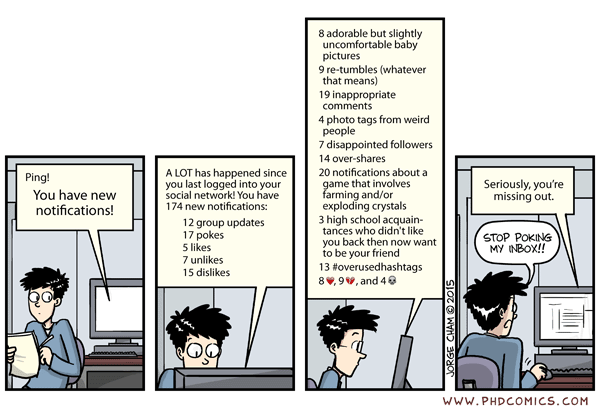
05/15/15 PHD comic: 'Missing Out'
| Piled Higher & Deeper by Jorge Cham |
www.phdcomics.com
|
|
 |
||
|
title:
"Missing Out" - originally published
5/15/2015
For the latest news in PHD Comics, CLICK HERE! |
||
firehose likes this
15 May 14:48
Mozilla: If Facebook Really Wants To Help Developing Nations, It Should Ignore Zero Rating And Fund Real Internet Access
by Karl Bode
Facebook's been taking a lot of heat lately for failing to understand (or pretending to fail to understand) how its Internet.org initiative spells trouble for net neutrality. As noted previously, Facebook's vision has been to deploy a "free" walled-garden service like AOL to developing nations. Critics have been dropping out of Internet.org, stating they don't like Facebook picking which companies get included in the walled garden. Things have gotten particularly heated in India, where neutrality advocates have made it very clear they think Facebook's vision hurts the open Internet long term.
Zuckerberg's response so far? You're hurting the poor if you don't like the way we're doing things, because a walled garden is better than no Internet at all. Of course that's a false choice: Facebook could offer subsidized access to the real Internet, it just wouldn't get pole position in delivering ads to billions of new users in dozens of developing nations. It's a mammoth advertising play dressed up as utterly-selfless altruism, with a dash of indignant at suggestions there's a better way.
Mozilla recently decided to jump into the conversation with a series of blog posts offering a much more intelligent, nuanced take on the problem with zero rated apps. In one post, Mozilla notes how if you let Facebook create a new definition of the Internet today, you're setting the stage for notable problems down the road:
In short, there are options that don't turn the Internet into a glorified version of CompuServe. But rushing toward walled gardens again isn't just about today, it's about what these ideas mutate into over the longer haul. Mozilla Foundation Chair Mitchell Baker took this idea further in a second blog post:
Permalink | Comments | Email This Story


Zuckerberg's response so far? You're hurting the poor if you don't like the way we're doing things, because a walled garden is better than no Internet at all. Of course that's a false choice: Facebook could offer subsidized access to the real Internet, it just wouldn't get pole position in delivering ads to billions of new users in dozens of developing nations. It's a mammoth advertising play dressed up as utterly-selfless altruism, with a dash of indignant at suggestions there's a better way.
Mozilla recently decided to jump into the conversation with a series of blog posts offering a much more intelligent, nuanced take on the problem with zero rated apps. In one post, Mozilla notes how if you let Facebook create a new definition of the Internet today, you're setting the stage for notable problems down the road:
"We understand the temptation to say “some content is better than no content,” choosing a lesser degree of inclusion over openness and equality of opportunity. But it shouldn’t be a binary choice; technology and innovation can create a better way, even though these new models may take some time to develop. Furthermore, choosing limited inclusion today, even though it offers short-term benefits, poses significant risk to the emergence of an open, competitive platform that will ultimately stifle inclusion and economic development."That mirrors concerns by folks like Stanford Professor Susan Crawford, who have lambasted such models for "entrenching and amplifying existing inequalities and contributing to poverty of imagination." Mozilla notes there's plenty of ways to help fund Internet access to developing nations that doesn't involve building walls and cherry picking program participants. For example the company has struck a partnership with Orange to provide $40 Firefox OS smartphones with 6 free months of voice, text, and up to 500 MB per month of data. Another effort offers a small allotment of free data for watching an ad.
In short, there are options that don't turn the Internet into a glorified version of CompuServe. But rushing toward walled gardens again isn't just about today, it's about what these ideas mutate into over the longer haul. Mozilla Foundation Chair Mitchell Baker took this idea further in a second blog post:
"Selective zero-rating is unquestionably bad for the long term opportunities and inclusion for the people it is designed to serve. It pre-selects what’s available, directing people to where others want them to go. It is bad for economic inclusion. It is bad for the ability of new entrepreneurs to grow onto the global scale. It is bad for the long term health of the Internet. Zero-rating as practiced today is “selective zero-rating for a few apps and websites; exclusion for the rest of the Internet."In other words, if Facebook really wants to help the poor, it can do so by using Internet.org to fund access to the "real Internet," not some bastardized version of the Internet that lets Facebook and select ISP partners play god. The conversation in India mirrors the conversation we've been having about systems like AT&T's Sponsored Data here in the States; opposition to zero rating is simply about getting massive gatekeepers out of the way and ensuring equal access to the purest version of the 'Net possible.
The correct answer is that all data is transmitted at the same price, whether that price is "zero" or anything else. This way, consumers pick the content they choose to access based on the quality of that content, not the financial power and business partnerships of the provider. This way, new entrepreneurs can still reach any and all users on the Internet, even if they are a few people working in a co-working space with no ability to subsidize data charges."
Permalink | Comments | Email This Story
06 May 21:40

Chipotle Reveals Its Coveted Guacamole Recipe — Food News
by Ariel Knutson

Everyone who has been to Chipotle knows that guacamole costs extra. The question becomes: Do you splurge, or do you forgo avocado heaven? Maybe now you can just DIY.
Chipotle just released their recipe for guacamole so you can make it home. Care to share your tortilla chips?

17 Mar 18:14
A Bechdel Test for Music
by Paul de Revere

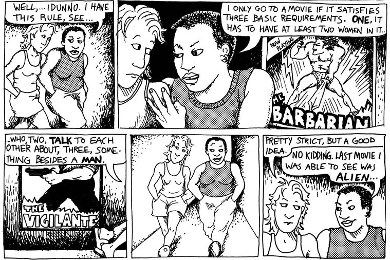
Thirty years ago, cartoonist Alison Bechdel published "The Rule" in her syndicated comic strip Dykes to Watch Out For. Adapted from an anecdote one of her friends told her, Bechdel had unintentionally created the Gold Standard for indicating gender bias in film. It was even named after her: the Bechdel Test. About half of all films today still fail the simple three-part test:
- It has to have at least two women in it
- They have to talk to each other
- They have to talk about something other than a man
But it hasn’t been adapted to music (until now). Women may be fairly present on the Billboard charts these days but the sparse master list of songs from which to build a playlist like this—ones that fit the following parameters—indicates that there’s a way to go toward gender parity. Female voices and faces—Nicki Minaj, for example, who makes a worthy two appearances on this playlist—may dot the recent top 40 but they largely aren’t covering topics or themes besides men, for example. Minaj’s "Anaconda" doesn’t pass this Bechdel Test but "Starships", featured here, does.
It’s not a high bar. The following parameters are relatively easy to meet, yet so few songs actually do. But think of this playlist a decent place to start, and an example of how adaptable Bechdel's idea is 30 years on.
The following is a playlist of songs that:
- Have at least one female-identifying lead performer, performing as themselves or a female-identifying likeness
- Involve the female self, another woman, other women or otherwise an implied female audience in the song’s lyrics
- Have a central lyrical topic or theme that’s something or someone besides a man
Alicia Keys: "Girl on Fire"
This latter-day worldwide hit from Keys—the title track and lead single off her 2012 record Girl on Fire—passes because it’s a third-person celebration of the state of her own life as woman, balancing her at-the-time newly announced marriage, motherhood and the continuation of her successful career.
Au Revoir Simone: "Crazy"
The song passes in that its lyrics—written and performed by Erika Forster, Annie Hart and Heather D'Angelo off the band’s 2013 LP Move in Spectrums—seem to address platonic relationships, specifically directed at unnamed women (perhaps each other) with the bluesy refrain "Ooh, you girls, you drive me crazy."
Bikini Kill: "Rebel Girl"
This seminal Bikini Kill love song off the band’s 1994 record Pussy Whipped passes the test, with Kathleen Hanna’s frenetic mix of envy, friendship and a little lust directed toward her fellow rebel girl.
The Blow: "Bonjour Jeune Fille"
Khaela Maricich’s bilingual franglais lyrics (the title translates to "Hello Young Girl") on this manic funky cut off 2006’s Paper Television are, according to an interview with Maricich in the Believer, about women having good sex.
Britney Spears: "Me Against the Music" [ft. Madonna]
This 2003 hit off Spears’ In the Zone passes the test, featuring her and the pop legend in a two-woman duet—a rarity for songs breaking the U.S. top 40, much less worldwide hits like this one. Rarer still: Spears and Madonna aren’t singing about men but a still-all-too-rare topic for top 40: getting caught up in your love of music.
The Ditty Bops: "There's a Girl"
Jaunty roots-music duo Abby DeWald and Amanda Barrett pass the test, writing a song about same-sex love on the down low ("with buried secrets, the ground is heavy") on its 2004 self-titled LP. The jangly electric guitar melodies on the intro and outro is the cherry on top.
Icona Pop: "Girlfriend"
Borrowing the "me and my girlfriend" hook from 2Pac's "Me and My Girlfriend", Icona Pop passes the test extolling the virtues of female companionship doing what it does best on its 2013 record This Is... Icona Pop: anthemic and fun EDM pop hooks.
Janelle Monáe: "Electric Lady" [ft. Solange]
The radio-friendly title track from 2013’s The Electric Lady is a narrative excerpt of Monáe’s Metropolis concept series, passing the test because it’s about Cindi Mayweather, a time-traveling messianic female android.
M.I.A.: "Bad Girls"
Maya got her groove back on her 2010 mixtape Vicki Leekx, passing the Bechdel Test talking about rebellious women like her, all while showing she could still pull a killer pop hook out of her proverbial hat, all over that chattering squeaking Danja beat.
Marina and the Diamonds: "Hollywood"
This cautionary tale off 2010’s The Family Jewels passes the test easily, with Marina Diamandis singing about a "Polish girl in America" pursuing her ill-fated dreams in Tinseltown. The Welsh-born Diamandis writes as a detached observer, singing on the chorus, "I’m obsessed with the mess that’s America."
Nicki Minaj: "Starships"
Minaj’s big pop breakthrough passes this test for its self-love and crossover-rap braggadocio from a female rapper. The sky isn’t the limit for "bad bitches" like her, citing herself as Onika (her legal name) and Nicki. They’re in a rocket, ready for lift off.
Original Broadway Cast of ‘Rent’: "Take Me or Leave Me"
The tuneful breakup of the most dramatically fraught same-sex relationship in Rent (no, the other one) passes the test when Maureen and Joanne present each other with a soulful my-way-or-the-highway ultimatum.
Tegan and Sara: "I Know, I Know, I Know"
The lyrics are fairly ambiguous on this cut off the duo’s 2004 stateside debut So Jealous but it passes the test when read as two sisters’ post-argument truce song to one another, likely about the patience-testing rigors of touring. "House after house, just like car after car," they sing. "You see club after club and it all seems so far."
Willow Smith: "Fireball" [ft. Nicki Minaj]
This 2011 one-off single’s fierce lyrics pass the test as a vehicle for self-aggrandizement for Smith, with a nimble assist from Minaj. "Fireball" is an all-too-little-heard banger, with Willow upping her swag, saying she’s more than her hair (back and forth). She’s "the fireball of the party" on this track but much respect to Minaj for the "Street Fighter" reference. Hadouken!
15 Mar 13:21


First-ever findings about 'interested but concerned' cyclists
March 12, 2015
Michael Andersen, Green Lane Project staff writer

Photo: Christopher Porter.
For 10 years, urban policymakers have been talking more and more about the so-called "interested but concerned" — people who would like to bike more but who are, for some reason, held back.
Make biking attractive to those people, the thinking goes, and great things can happen to a city: road capacity rises, parking shortages ease, auto dependence declines, development costs fall, public health improves.
Since then, several local studies have explored the opinions of these people, usually within cities that were already fairly bike-friendly. But since the "interested but concerned" concept was popularized, there's never been a study of these people at the national level.
Until now, that is.
A new national survey interviewed 9,376 adults who want to bike more

Photo: 10 10.
As part of its new national survey about bicycling participation, PeopleForBikes hired a public research firm to anonymously ask thousands of U.S. adults a series of questions. One of them: whether they would like to ride a bicycle more often.
To make sure people weren't lying to make us happy, we asked whether they'd ever visited an imaginary website, and then disregarded all answers from people who claimed they had. After that, to ensure a representative sample, we weighted the remaining answers by age, gender, region, ethnicity, and income to make the sample look like the United States.
As we shared here last week, 53 percent of American adults answered that yes, they want to bike more.
But that question also gave us an opportunity to do something else: to look more closely at the situations of the people who answered "yes" to this question. By comparing their answers to different questions, we can explore one of the holy grails of bicycling advocacy: what the most important obstacles to biking might be.
After a week of looking closely at the numbers, here are our six most interesting discoveries.
1) One third of people who want to bike more are dissatisfied with existing bike infrastructure

Chicago's Milwaukee Avenue. Photo: John Greenfield.
Among people who would like to ride more, 34 percent disagree with the statement below, 26 percent are neutral and 38 percent agree.

This is actually slightly better than the population at large (31 percent of all adults agree with the statement), which probably reflects the fact that people who like to bike tend to live in bike-friendlier areas. But it still leaves a huge share of adults who disagree — and speaks to the fact that in the United States, we simply haven't built enough bike-friendly neighborhoods to serve even the people who currently wish they could live in them.
2) Bicycle ownership is a major barrier to riding, especially among poorer households

Indianapolis, Indiana.
It's pretty hard to ride a bike regularly if you don't own one— or, even more frustrating, if your tire went flat or your brake cable snapped and you've never gotten around to fixing it.
The good news is that adults who know they want to ride more are about 25 percent likelier than the population at large to have at least one working adult bike in their home. But even among these interested adults, 35 percent still have no bike. This problem is dramatically higher for low-income families:

This is actually a powerful argument for (among other things) affordable, accessible bike sharing. Because bike-share systems essentially pool bike purchase and maintenance costs among many different people, they can be even cheaper than bike ownership as a way to get around.
3) Fear of being personally targeted is a major barrier to riders of color

Photo: waltarrrrr.
Traffic collisions aren't the only physical threat that keeps people off bicycles. Depending on what you look like and where you live, you might be biking less than you'd like because you're afraid of being targeted by a criminal — or maybe, sad to say, by law enforcement. On average, 41 percent of people who want to bike more feel agree with the statement below, but there's a lot of variation by race — more than the variation by gender, region or income.

According to this survey, white adults who want to bike more are least likely to have this concern; 38 percent do. But the concern is shared by more than half of Hispanic adults who want to bike more: 52 percent.
4) The western United States is much better at the bike + transit combo

Photo: Radcliffe Dacanay.
Bicycles are the "secret weapon of suburban sustainable transport," says Ben Plowden of Transport for London. By designing all-ages bikeways that connect to public transit routes and hubs, U.S. suburbs can dramatically reduce car dependence and start increasing transit quality.
But to do that, you've got to be able to ride your bike to the rail station, load it onto a bus rack, park it securely while you're away and so on. Our survey found that 35 percent of U.S. adults disagree with the statement below, compared to 26 percent who are neutral and 38 perent who agree. Intriguingly, the answer to this question varies widely by region. "Interested but concerned" bikers in the western United States are far more likely to be satisfied with bike-transit integration. Cities and transit agencies east of the Great Plains should look to Asia and Europe for ideas, but they can also look west.

5) Every group worries a lot about getting hit by cars, but some more than others

Monroe, Wash. Photo: Papahazama.
There wasn't much divide on this issue among men and women or among people of different incomes. There was a bigger difference by race and ethnicity. Black adults were the least likely to agree with this statement (though still 57 percent) and Hispanic adults the most likely (a whopping 66 percent).
But the biggest divide of all was actually by region, with 65 percent of adults in the South agreeing with this worry and only 54 percent of adults in the Midwest.

This brings us to our final observation...
6) Every single demographic group wants protected bike lanes

Schenley Drive, Pittsburgh.
Not much ambiguity here.

Compared to 46 percent of the general population, an overwhelming 64 percent of people who would like to bike more say that protected bike lanes would make a difference to their transportation choices. Of this "interested but concerned" group — which, to reiterate, consists of half the U.S. adult population — only 13 percent disagreed with the statement above.
As with the other questions, we broke this finding out by gender, region, income and race to look for trends within the data. We found exactly one trend: everyone feels more or less the same way.

And that's all we have to say about that.
The Green Lane Project is a PeopleForBikes program that helps U.S. cities build better bike lanes to create low-stress streets. You can follow us on LinkedIn, Twitter or Facebook or sign up for our weekly news digest about protected bike lanes. Story tip? Write michael@peopleforbikes.org.
 |
 |
See all Protected Bike Lanes blog entries
Please enable JavaScript to view the comments powered by Disqus.
blog comments powered byRelated Articles
- > Measuring how America rides
- > Rich? Poor? Two charts show both know good biking when they see it
- > Selling biking: Perceived safety, the barrier that still matters
Community Stories
> Building trails
See All >
13 Mar 11:43


#Megagamerzgate
by jon

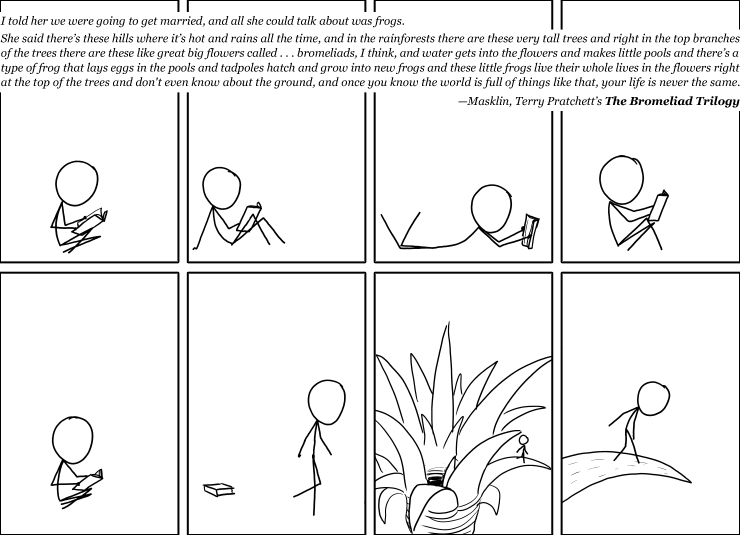
The Megagamerz are back again to mix it up with things and thoughts! They are realer than real, wetter than fish. Don’t mess with Gamer1 and Gamer2 unless you like pork and punches.
Okay!
![goat-rfv[1]](http://amultiverse.com/wp-content/uploads/2014/07/goat-rfv1-450x187.png)
11 Mar 22:01
Meet the updated Chromebook Pixel and the new Google Store
by Google Blogs
Two years ago, we introduced the first Chromebook Pixel. The idea was to bring together the best in hardware, software and design to inspire the next generation of Chromebooks. It's been exciting to see how the entire range of Chromebooks—from classroom-proof to high-end—has made a difference to people at school, at home, and at work. Today, we’re introducing an updated and more powerful Pixel to fuel the imaginations of another wave of Chromebook enthusiasts. Plus, we’ve created a new, online Google Store where you can get the Pixel and other devices made with Google, all in one place.
One charger for all your stuff
These days, packing for a trip means remembering to bring all your different chargers—for your phone, laptop, tablet, watch, etc. We think you should be able to use just one charger for all your electronics. So for the new Pixel, we’ve joined forces with some of the biggest names in the industry to create a new standard for charging, called USB Type C. The Pixel is one of the first products to launch with this new standard, with more Chromebooks and Android devices following suit soon.
Not only does Type-C enable multi-device charging, but it also allows high-speed data and display over the same connector and cable. It’s small enough to work with smartphones, powerful enough to charge computers, and conveniently symmetrical (no more guessing which side is up!). Speaking of symmetry, the new Pixel doesn’t just have one Type C port—it has two, one on each side, so you can plug in wherever is convenient.
Thoughtful design
Like the original Pixel, the new Chromebook has a high-resolution touchscreen, a sleek aluminum body, and smooth glass trackpad. We’ve also made a few other enhancements, including a new wide-angle camera lens.
Of course, the Pixel is also great on the inside. It’s got a powerful Intel® Core™ i5 with 8GB RAM and a 32GB SSD. If that’s not enough for you, we’re making an LS (yup, that stands for "Ludicrous Speed") version that's even faster. And even with the new charger, you probably won’t be carrying it around much, since the new Pixel has 12 hours of battery life.* When you do need to top up, it’s fast—you’ll get up to two hours of battery life with just 15 minutes of charging.*
Shop for the Pixel and more at the Google Store
We’ve been selling our devices on Google Play for years, but as we’ve added more products to the family, we thought it was time to make it easier for you to learn more about them. So today we’re also launching the Google Store, the new home for the latest devices made with Google.
At store.google.com, you can shop Nexus phones and tablets, Chromecast and Chromebooks, learn more about newer technology like Android Wear, Nexus Player and Nest, and stock up on accessories like cases, keyboards and chargers. You’ll see how the Google apps you already know—like Search, Maps and YouTube—work seamlessly with all these products. The Google Store is available on your phone, tablet, or laptop, and right now you’ll get free shipping on everything** (consider it our way of saying hello).
 Once you’ve found the right device at the Google Store, you can still head to Google Play to find apps, games, music, movies, TV shows and more. If you recently bought a device on Google Play, don’t worry—your order info will automatically be transferred to the Google Store. See our Help Center for more information.
The Chromebook Pixel is available for purchase starting today in the U.S. on the new Google Store for $999 and $1299 for the LS version. Come check it out, and see what else is in store.
Posted by Andrew Bowers, Director of Consumer Hardware
*Battery life tested using Chromium standard PowerLoadTest at default brightness. The PowerLoadTest was created to emulate average user behavior and measure the resultant battery life. Charge time testing is measured by battery capacity increase with lid closed divided by average energy usage during PowerLoadtest. Battery life and charge time may vary depending on usage and other conditions.
**Free shipping applies to the lowest cost shipping option. Free shipping promotion may be modified or discontinued at any time.
One charger for all your stuff
These days, packing for a trip means remembering to bring all your different chargers—for your phone, laptop, tablet, watch, etc. We think you should be able to use just one charger for all your electronics. So for the new Pixel, we’ve joined forces with some of the biggest names in the industry to create a new standard for charging, called USB Type C. The Pixel is one of the first products to launch with this new standard, with more Chromebooks and Android devices following suit soon.
Not only does Type-C enable multi-device charging, but it also allows high-speed data and display over the same connector and cable. It’s small enough to work with smartphones, powerful enough to charge computers, and conveniently symmetrical (no more guessing which side is up!). Speaking of symmetry, the new Pixel doesn’t just have one Type C port—it has two, one on each side, so you can plug in wherever is convenient.
Thoughtful design
Like the original Pixel, the new Chromebook has a high-resolution touchscreen, a sleek aluminum body, and smooth glass trackpad. We’ve also made a few other enhancements, including a new wide-angle camera lens.
Of course, the Pixel is also great on the inside. It’s got a powerful Intel® Core™ i5 with 8GB RAM and a 32GB SSD. If that’s not enough for you, we’re making an LS (yup, that stands for "Ludicrous Speed") version that's even faster. And even with the new charger, you probably won’t be carrying it around much, since the new Pixel has 12 hours of battery life.* When you do need to top up, it’s fast—you’ll get up to two hours of battery life with just 15 minutes of charging.*
Shop for the Pixel and more at the Google Store
We’ve been selling our devices on Google Play for years, but as we’ve added more products to the family, we thought it was time to make it easier for you to learn more about them. So today we’re also launching the Google Store, the new home for the latest devices made with Google.
At store.google.com, you can shop Nexus phones and tablets, Chromecast and Chromebooks, learn more about newer technology like Android Wear, Nexus Player and Nest, and stock up on accessories like cases, keyboards and chargers. You’ll see how the Google apps you already know—like Search, Maps and YouTube—work seamlessly with all these products. The Google Store is available on your phone, tablet, or laptop, and right now you’ll get free shipping on everything** (consider it our way of saying hello).
The Chromebook Pixel is available for purchase starting today in the U.S. on the new Google Store for $999 and $1299 for the LS version. Come check it out, and see what else is in store.
Posted by Andrew Bowers, Director of Consumer Hardware
*Battery life tested using Chromium standard PowerLoadTest at default brightness. The PowerLoadTest was created to emulate average user behavior and measure the resultant battery life. Charge time testing is measured by battery capacity increase with lid closed divided by average energy usage during PowerLoadtest. Battery life and charge time may vary depending on usage and other conditions.
**Free shipping applies to the lowest cost shipping option. Free shipping promotion may be modified or discontinued at any time.

26 Feb 13:39
As Blurred Lines Trial Starts, Take A Listen To The Special 'Copyright Only' Remix That Jurors Will Hear
by Mike Masnick
A few weeks ago, we noted how the copyright case over whether or not Pharrell Williams and Robin Thicke violated the copyright of Marvin Gaye with their song "Blurred Lines" was getting interesting, as it started to explore the somewhat blurry lines between what's actually covered by a copyright and what's not. Under the 1909 Act, under which Marvin Gaye's "Got to Give it Up" was recorded, only the specific sheet music is covered by the copyright, not the sound recording itself. And that represented a problem, since the Gaye Estate's attorneys wanted to play the original song, which has a number of similarities to Blurred Lines. But many of those similarities -- including the bass line and the party atmosphere in the background -- are not actually a part of the copyright covered composition. Thus, the judge told the Gaye family to figure out some way to create a recording that only included the copyright covered parts.
The EFF's Parker Higgins predicted that such a recording "likely sounds like the MIDI version that auto-played on a Geocities home page, or a rendition by the animatronic band at Chuck E. Cheese." Well, the enterprising folks over at Ratter got their hands on the recording so that you can take a listen too: It would seem that Parker's prediction was not that far off. The Gaye Estate is also presenting a remixed version of that MIDI-ized version with Pharrell and Thicke's lyrics put on top: From there, they certainly sound quite different. And, it's important to note (again) that sounding like something doesn't mean that it's infringing on that thing. If that were the case, we wouldn't have much in the way of culture, since so much of it is built off of the works of others. It will be interesting to see how a jury sees this, as I could see a confused jury thinking that merely because the lyrics fit over Gaye's song that somehow makes it infringing. Hopefully they can see through that, however.
The trial is currently going on and jury selection is certainly interesting, as they're asking people what kind of music they listen to and what they think of the famous video for "Blurred Lines" that included a bunch of naked models....
Permalink | Comments | Email This Story


The EFF's Parker Higgins predicted that such a recording "likely sounds like the MIDI version that auto-played on a Geocities home page, or a rendition by the animatronic band at Chuck E. Cheese." Well, the enterprising folks over at Ratter got their hands on the recording so that you can take a listen too: It would seem that Parker's prediction was not that far off. The Gaye Estate is also presenting a remixed version of that MIDI-ized version with Pharrell and Thicke's lyrics put on top: From there, they certainly sound quite different. And, it's important to note (again) that sounding like something doesn't mean that it's infringing on that thing. If that were the case, we wouldn't have much in the way of culture, since so much of it is built off of the works of others. It will be interesting to see how a jury sees this, as I could see a confused jury thinking that merely because the lyrics fit over Gaye's song that somehow makes it infringing. Hopefully they can see through that, however.
The trial is currently going on and jury selection is certainly interesting, as they're asking people what kind of music they listen to and what they think of the famous video for "Blurred Lines" that included a bunch of naked models....
Permalink | Comments | Email This Story
21 Feb 23:42
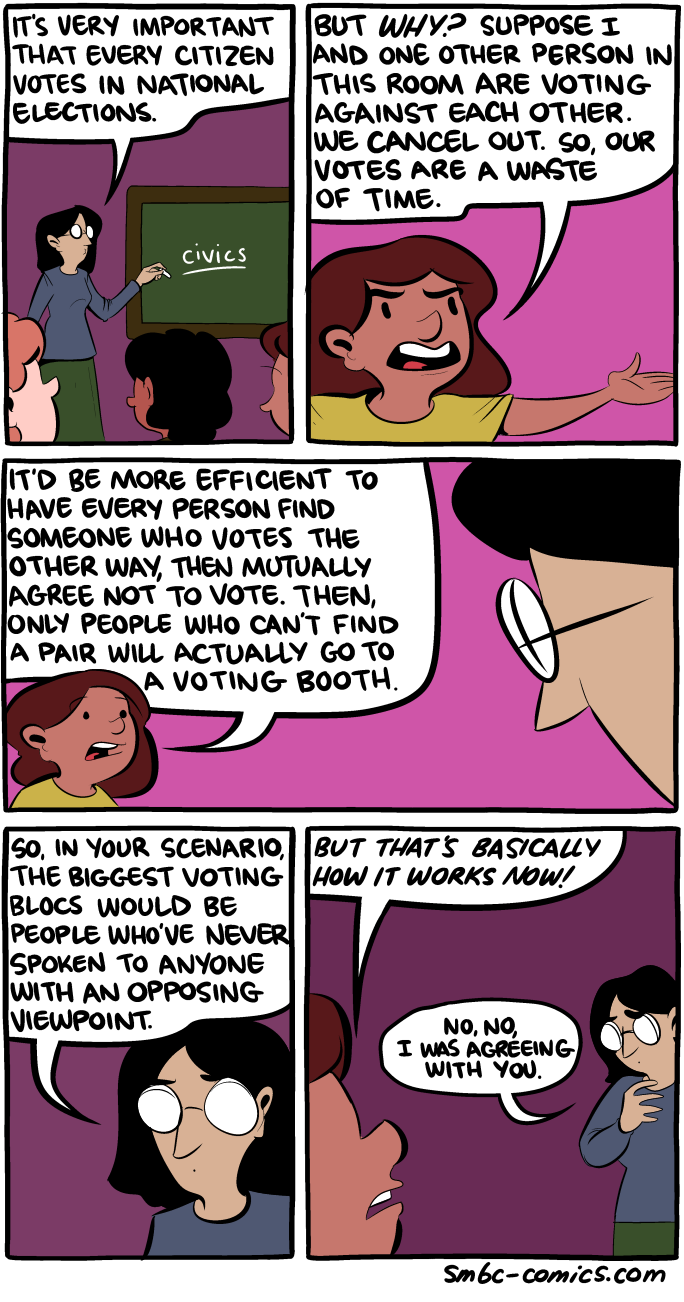
Hehehe. Marty made a recruiting video, involving explosions, for Pinterest.

February 21, 2015
Hehehe. Marty made a recruiting video, involving explosions, for Pinterest.
Tadeu, Luke.stirling and 3 others like this



12 Feb 03:16
A remedy for your health-related questions: health info in the Knowledge Graph
by Google Blogs
Think of the last time you searched on Google for health information. Maybe you heard a news story about gluten-free diets and pulled up the Google app to ask, "What is celiac disease?" Maybe a co-worker shook your hand and later found out she had pink eye, so you looked up “pink eye” to see whether it’s contagious. Or maybe you were worried about a loved one—like I was, recently, when my infant son Veer fell off a bed in a hotel in rural Vermont, and I was concerned that he might have a concussion. I wasn’t able to search and quickly find the information I urgently needed (and I work at Google!).
Thankfully my son was OK, but the point is this stuff really matters: one in 20 Google searches are for health-related information. And you should find the health information you need more quickly and easily.
So starting in the next few days, when you ask Google about common health conditions, you’ll start getting relevant medical facts right up front from the Knowledge Graph. We’ll show you typical symptoms and treatments, as well as details on how common the condition is—whether it’s critical, if it’s contagious, what ages it affects, and more. For some conditions you’ll also see high-quality illustrations from licensed medical illustrators. Once you get this basic info from Google, you should find it easier to do more research on other sites around the web, or know what questions to ask your doctor.
 We worked with a team of medical doctors (led by our own Dr. Kapil Parakh, M.D., MPH, Ph.D.) to carefully compile, curate, and review this information. All of the gathered facts represent real-life clinical knowledge from these doctors and high-quality medical sources across the web, and the information has been checked by medical doctors at Google and the Mayo Clinic for accuracy.
That doesn’t mean these search results are intended as medical advice. We know that cases can vary in severity from person to person, and that there are bound to be exceptions. What we present is intended for informational purposes only—and you should always consult a healthcare professional if you have a medical concern.
But we hope this can empower you in your health decisions by helping you learn more about common conditions. We’re rolling it out over the next few days, in the U.S. in English to start. In the long run, not only do we plan to cover many more medical conditions, but we also want to extend this to other parts of the world. So the next time you need info on frostbite symptoms, or treatments for tennis elbow, or the basics on measles, the Google app will be a better place to start.
Posted by Prem Ramaswami, Product Manager
Thankfully my son was OK, but the point is this stuff really matters: one in 20 Google searches are for health-related information. And you should find the health information you need more quickly and easily.
So starting in the next few days, when you ask Google about common health conditions, you’ll start getting relevant medical facts right up front from the Knowledge Graph. We’ll show you typical symptoms and treatments, as well as details on how common the condition is—whether it’s critical, if it’s contagious, what ages it affects, and more. For some conditions you’ll also see high-quality illustrations from licensed medical illustrators. Once you get this basic info from Google, you should find it easier to do more research on other sites around the web, or know what questions to ask your doctor.
That doesn’t mean these search results are intended as medical advice. We know that cases can vary in severity from person to person, and that there are bound to be exceptions. What we present is intended for informational purposes only—and you should always consult a healthcare professional if you have a medical concern.
But we hope this can empower you in your health decisions by helping you learn more about common conditions. We’re rolling it out over the next few days, in the U.S. in English to start. In the long run, not only do we plan to cover many more medical conditions, but we also want to extend this to other parts of the world. So the next time you need info on frostbite symptoms, or treatments for tennis elbow, or the basics on measles, the Google app will be a better place to start.
Posted by Prem Ramaswami, Product Manager
10 Feb 22:43

And now, the WINNER of BAHFest 2015, Sarah Hird:

February 10, 2015
And now, the WINNER of BAHFest 2015, Sarah Hird:
Ben, Scott Weigand and 6 others like this
06 Feb 03:40
Google and Mattel could be announcing an all new virtual reality View-Master on Feb 13th
by Chris Chavez

Amidst rumors of Google working a “Kid’s Mode” for Android — and their quiet acquisition of Launchpad Toys — it seems Google has really taken a liking to kid-friendly products and services as of late. Another clue? Google and Mattel are now teaming up too announce a new product that will be unveiled in an event in New York on February 13th (just a day ahead of the NYC Toy Fair).

Okay, so maybe not entirely new. The tag line reads, “view what’s possible,” and with an image of one of those View-Master film reels in the invite (I used to have an awesome Michael Jackson’s Thriller one). Something tells us that, with Google’s new emphasis in VR and Google Cardboard being announced back at IO, this could be Mattel’s version of 3D VR that connects to your Android device.
We wont really know until this Friday, but if I’m right, I’ll be first in line to pick one of these up.
06 Feb 03:37
Permalink | Comments | Email This Story


The World's Email Encryption Software Relies On One Guy, Who Is Going Broke
by Julia Angwin, ProPublica
The man who built the free email encryption software used by whistleblower Edward Snowden, as well as hundreds of thousands of journalists, dissidents and security-minded people around the world, is running out of money to keep his project alive.
Werner Koch wrote the software, known as Gnu Privacy Guard, in 1997, and since then has been almost single-handedly keeping it alive with patches and updates from his home in Erkrath, Germany. Now 53, he is running out of money and patience with being underfunded.
"I'm too idealistic," he told me in an interview at a hacker convention in Germany in December. "In early 2013 I was really about to give it all up and take a straight job." But then the Snowden news broke, and "I realized this was not the time to cancel."
Like many people who build security software, Koch believes that offering the underlying software code for free is the best way to demonstrate that there are no hidden backdoors in it giving access to spy agencies or others. However, this means that many important computer security tools are built and maintained by volunteers.
Now, more than a year after Snowden's revelations, Koch is still struggling to raise enough money to pay himself and to fulfill his dream of hiring a full-time programmer. He says he's made about $25,000 per year since 2001 — a fraction of what he could earn in private industry. In December, he launched a fundraising campaign that has garnered about $43,000 to date — far short of his goal of $137,000 — which would allow him to pay himself a decent salary and hire a full-time developer.
The fact that so much of the Internet's security software is underfunded is becoming increasingly problematic. Last year, in the wake of the Heartbleed bug, I wrote that while the U.S. spends more than $50 billion per year on spying and intelligence, pennies go to Internet security. The bug revealed that an encryption program used by everybody from Amazon to Twitter was maintained by just four programmers, only one of whom called it his full-time job. A group of tech companies stepped in to fund it.
Koch's code powers most of the popular email encryption programs GPGTools, Enigmail, and GPG4Win. "If there is one nightmare that we fear, then it's the fact that Werner Koch is no longer available," said Enigmail developer Nicolai Josuttis. "It's a shame that he is alone and that he has such a bad financial situation."
The programs are also underfunded. Enigmail is maintained by two developers in their spare time. Both have other full-time jobs. Enigmail's lead developer, Patrick Brunschwig, told me that Enigmail receives about $1,000 a year in donations — just enough to keep the website online.
GPGTools, which allows users to encrypt email from Apple Mail, announced in October that it would start charging users a small fee. The other popular program, GPG4Win, is run by Koch himself.
Email encryption first became available to the public in 1991, when Phil Zimmermann released a free program called Pretty Good Privacy, or PGP, on the Internet. Prior to that, powerful computer-enabled encryption was only available to the government and large companies that could pay licensing fees. The U.S. government subsequently investigated Zimmermann for violating arms trafficking laws because high-powered encryption was subject to export restrictions.
In 1997, Koch attended a talk by free software evangelist Richard Stallman, who was visiting Germany. Stallman urged the crowd to write their own version of PGP. "We can't export it, but if you write it, we can import it," he said.
Inspired, Koch decided to try. "I figured I can do it," he recalled. He had some time between consulting projects. Within a few months, he released an initial version of the software he called Gnu Privacy Guard, a play on PGP and an homage to Stallman's free Gnu operating system.
Koch's software was a hit even though it only ran on the Unix operating system. It was free, the underlying software code was open for developers to inspect and improve, and it wasn't subject to U.S. export restrictions.
Koch continued to work on GPG in between consulting projects until 1999, when the German government gave him a grant to make GPG compatible with the Microsoft Windows operating system. The money allowed him to hire a programmer to maintain the software while also building the Windows version, which became GPG4Win. This remains the primary free encryption program for Windows machines.
In 2005, Koch won another contract from the German government to support the development of another email encryption method. But in 2010, the funding ran out.
For almost two years, Koch continued to pay his programmer in the hope that he could find more funding. "But nothing came," Koch recalled. So, in August 2012, he had to let the programmer go. By summer 2013, Koch was himself ready to quit.
But after the Snowden news broke, Koch decided to launch a fundraising campaign. He set up an appeal at a crowdsourcing website, made t-shirts and stickers to give to donors, and advertised it on his website. In the end, he earned just $21,000.
The campaign gave Koch, who has an 8-year-old daughter and a wife who isn't working, some breathing room. But when I asked him what he will do when the current batch of money runs out, he shrugged and said he prefers not to think about it. "I'm very glad that there is money for the next three months," Koch said. "Really I am better at programming than this business stuff."
Related stories: For more coverage, read our previous reporting on the Heartbleed bug, how to encrypt what you can and a ranking of the best encryption tools.
Republished from ProPublica. ProPublica is a Pulitzer Prize-winning investigative newsroom. Sign up for their newsletter.
Permalink | Comments | Email This Story
05 Feb 01:26
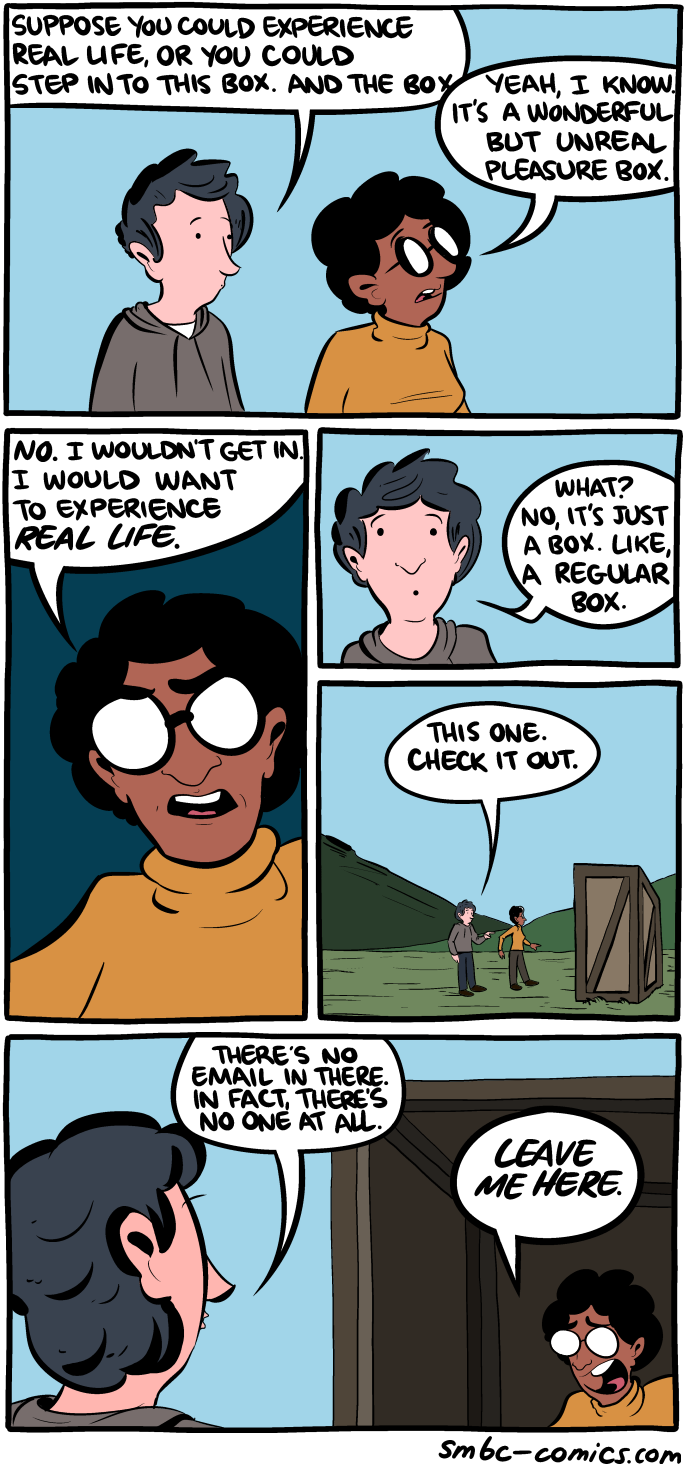
Penguin penguin, kangaroo, kangaroo, penguin.
February 04, 2015
Penguin penguin, kangaroo, kangaroo, penguin.
bernot, Adam Victor Brandizzi likes this
05 Feb 01:22


Spanish Pedestrians May Soon Face Tickets for Walking While Drunk — Food News
by Kristin Appenbrink

Next time you visit Spain, be sure not to over-imbibe, even if you're planning to walk back to your hotel.
In a surprising new proposal, the Directorate General of Traffic in Spain has proposed that walking while intoxicated could result in fines for the pedestrian if they are involved in an accident.