Shared posts

06 Jul 12:10

Solved: The Riddle of the Nova of 1670

by David Dickinson
This chart of the position of a nova (marked in red) that appeared in the year 1670 recorded by the astronomer Hevelius and was published by the Royal Society in England in their journal Philosophical Transactions. Image credit: The Royal Society

The position of a nova (marked in red) that appeared in the year 1670 recorded by the astronomer Hevelius and was published by the Royal Society in England in their journal Philosophical Transactions. Image credit: The Royal Society

It is a 17th century astronomical enigma that has persisted right up until modern times.

On June 20, 1670, a new star appeared in the evening sky that gave 17th century astronomers pause. Eventually peaking out at +3rd magnitude, the ruddy new star in the modern day constellation of Vulpecula the Fox was visible for almost two years before vanishing from sight.(...)
Read the rest of Solved: The Riddle of the Nova of 1670 (926 words)


© David Dickinson for Universe Today, 2015. | Permalink | 7 comments |
Post tags: 1670 nova, CK Vul, ESO APEX, luminous red nova, red transient, Vulpecula nova

Feed enhanced by Better Feed from Ozh

12 Jun 11:42

Composite Archaeology

by Geoff Manaugh
[Image: A laser scan of the Pantheon, courtesy ScanLAB Projects and the BBC; view larger!].

ScanLAB Projects, focus of a long article on Wired last month, are back in the news with a BBC documentary exploring the infrastructure of ancient Rome.

The show "explores Roman infrastructure and ingenuity, all below ground level":
We journeyed via the icy, crystal clear waters of subterranean aqueducts that feed the Trevi fountain and two thousand year old sewers which still function beneath the Roman Forum today, to decadent, labyrinthine catacombs. Our laser scans map these hidden treasures, revealing for the first time the complex network of tunnels, chambers and passageways without which Rome could not have survived as a city of a million people.
The results, as usual, are both breathtaking and bizarre.
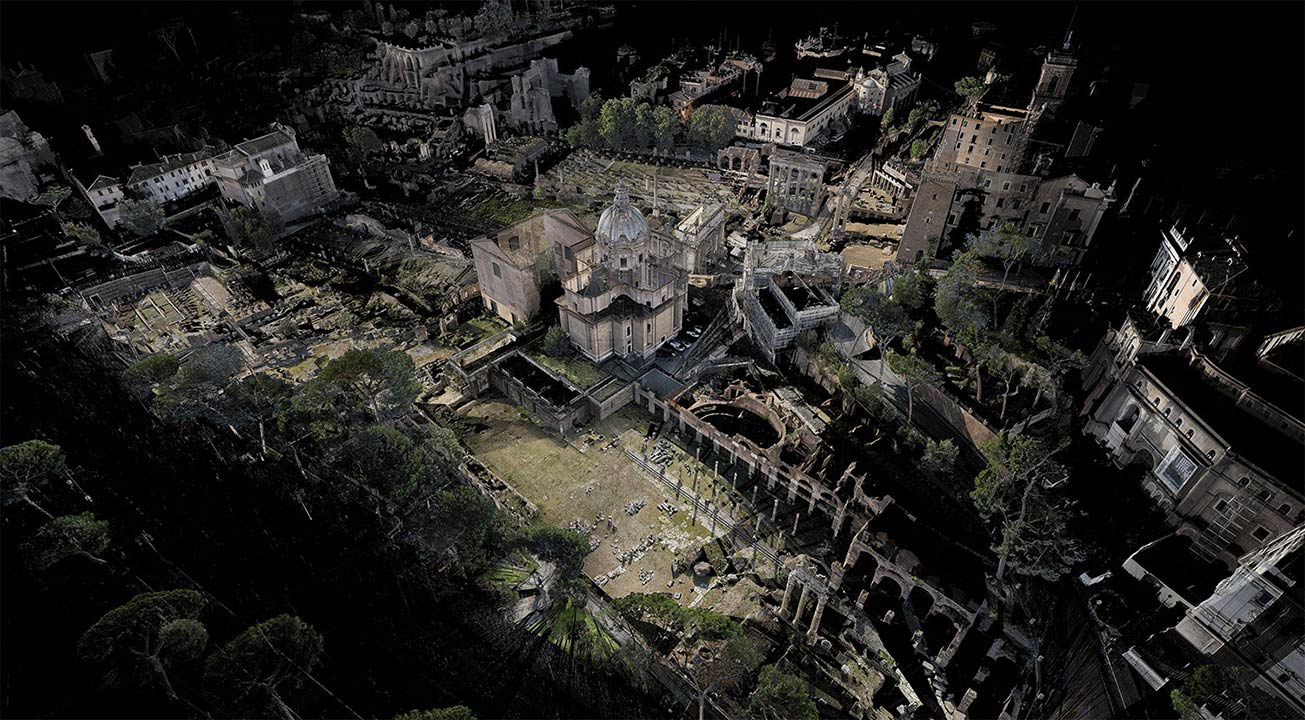
[Image: Courtesy ScanLAB Projects and the BBC].

The surface of the city is scraped away, a kind of archaeological dermabrasion, to reveal sprawling networks of knotted masonry and old corridors spliced together in a translucent labyrinth less below than somehow in the city.

[Image: Courtesy ScanLAB Projects and the BBC].

One of the most interesting points made in Mary-Ann Ray's excellent Pamphlet Architecture installment—1997's Seven Partly Underground Rooms and Buildings for Water, Ice, and Midgets—is when she describes her use of composite photography as a way to experiment with new forms of archaeological documentation.

Indeed, the pamphlet itself is as much architecture as it is archaeology—perhaps even suggesting a new series of historical site documents someone should produce called Pamphlet Archaeology—looking at wells, baths, cisterns, and spherical refrigeration chambers, in various states of ruin.

All of these are representationally difficult spaces, Ray explains, either curving away from the viewer in a manner that is nearly impossible to photograph or presenting constrictions of perspective that make even wide-angle photographs inadequate.

[Image: Courtesy ScanLAB Projects and the BBC].

Ray writes that the spatial complexity of the buildings, quarries, basements, and other excavations that she explores are, in a sense, an entirely different kind of space: knotty, interconnected, unstable. "They were also spaces," she writes, "which seemed to have the ability to 'flip-flop' in and out of multiple spatial or constructional readings."

What appears to be near is revealed to be far; what seems far away is suddenly adjacent.

[Image: Courtesy ScanLAB Projects and the BBC; view larger!].

Ray uses the metaphor of a "hyper-camera" here in order to draw comparisons between her composite photography and what she calls "a kind of cubist multiple view," one where "the frame might succumb to the taper of perspective into deep space, or it may counter it, or build it into something else altogether."

"In these composite views," she adds, "the photograph can record the enactment of space as one maneuvers or roams through it with the eye or body."

While Ray's photographic approach is technologically, materially, and even visually very different from the work of ScanLAB, the two projects share a great deal, conceptually and methodologically. In fact, if many of the above quotations were applied, instead, to the images seen in the present post, they would seem to be the appropriate descriptions.

[Image: In the ruined basements of architectural simultaneity; ScanLAB Projects and the BBC].

ScanLAB's laser work seems to fulfill many of the promises of Ray's composite photography, offering multiple, overlapping perspectives simultaneously whilst also eliminating the problem of the horizon or ground plane: you can thus look straight-on into the basement of an ancient structure without losing sight of the upper floors or chambers.

The city is split in two, made into an architectural section of itself that is then animated, made volumetric, turned into Ray's "enactment of space as one maneuvers or roams through it with the eye or body."

The show airs tonight on the BBC. Check out ScanLAB's website for more info, and definitely consider picking up a copy of Mary-Ann Ray's book; it remains one of my favorites and has actually become more, not less, topical since its original publication.
08 Jun 13:16

Photo


08 Jun 12:16

Photo


08 Jun 12:15

Photo


08 Jun 11:23

Photo


08 Jun 10:52

http://4erep-i-kosti.livejournal.com/4572477.html

Carnibore

No hugs. Period.


08 Jun 10:44

Comic: Hating The Player

by tycho@penny-arcade.com (Tycho)
New Comic: Hating The Player
08 Jun 10:26

I strongly believe this can happen.

Carnibore

If you have ever wondered what that WPS button on your router was for...


I strongly believe this can happen.

08 Jun 10:18

Photo


08 Jun 09:24

Photo


08 Jun 08:39

Photo


08 Jun 04:18

Photo


07 Jun 22:18

Lonely Hearts Club 💊🍃

07 Jun 17:23

aestheticoftheday: Today’s Aesthetic of the day is: RADICAL...


aestheticoftheday:

Today’s Aesthetic of the day is: RADICAL WWII SICK TRICKS

07 Jun 16:42

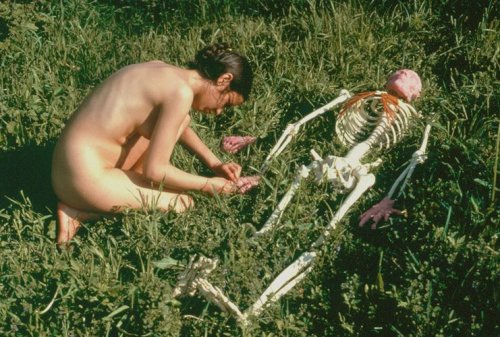
navisis: On Giving Life, 1975 Ana Mendieta


navisis:

On Giving Life, 1975

Ana Mendieta

06 Jun 16:25

Photo


05 Jun 19:26

Photo


05 Jun 17:41

Photo

Carnibore

Me right now with cider.


03 Jun 07:54

thenightlymirror

02 Jun 20:46

Photo

Carnibore

Danger 5


02 Jun 12:10

Photo


02 Jun 07:19

Photo

Carnibore

via Mitch Laue


02 Jun 06:55

MASTODON Members 'Murdered' In Latest 'Game Of Thrones' Episode

Carnibore

Looking forward to seeing them alive and well in august....

Atlanta progressive metallers MASTODON were featured on the latest episode of HBO's smash TV phenomenon "Game Of Thrones". Band members Brann Dailor, Bill Kelliher and Brent Hinds portrayed wildlings in the episode "Hardhome" that premiered Sunday, May 31 at 9 p.m. with multiple repeat showings during the week. The band was personally invited to participate the show's creator and executive producer, Dan Weiss, as well as the other executive producers, who are all fans of the band. The scenes were filmed on location in Belfast, Northern Ireland, and the band also got to visit the sets at Titanic Studios. Dailor describes MASTODON's time Beyond The Wall: "It was such an incredible experience to be on set as extras for our collective favorite show, 'Game Of Thrones', and to be wildlings murdered and then brought back to life by White Walkers was beyond amazing. I watched my best friends Brent and Bill murdered right in front of me as I myself was stabbed in the stomach and had my throat slit multiple times, and I didn't mind at all. It made me love being in MASTODON even more. "We are more than privileged and honored to have been a part of one of the greatest stories ever told on film, and the catering wasn't bad either." MASTODON is featured on the "Game Of Thrones" mixtape "Catch the Throne: The Mixtape Vol. 2" with a new original song, "White Walker". The band will spend its summer overseas, performing at all the major European and South American festivals, including Belgium's Pukkelpop, the prestigious Reading and Leeds in England, as well as the massive Rock In Rio festival in Brazil. They will also support METALLICA for two shows in Russia. Photo credit: Helen Sloan/HBO mastodongameofthrones2
31 May 12:08

Photo


31 May 11:50

Photo


29 May 16:06

punchingart: Evolution by Matthew Day JacksonMore skulls here.

Carnibore

via Randy Laue

Left to right: Rage, Quake 4, Doom 3, Quake 3, Quake 2, Quake 1... for the last one.. I don't know.. games before had sprites. But I want to say Doom. goberserk


punchingart:

Evolution

by Matthew Day Jackson

More skulls here.

29 May 11:55

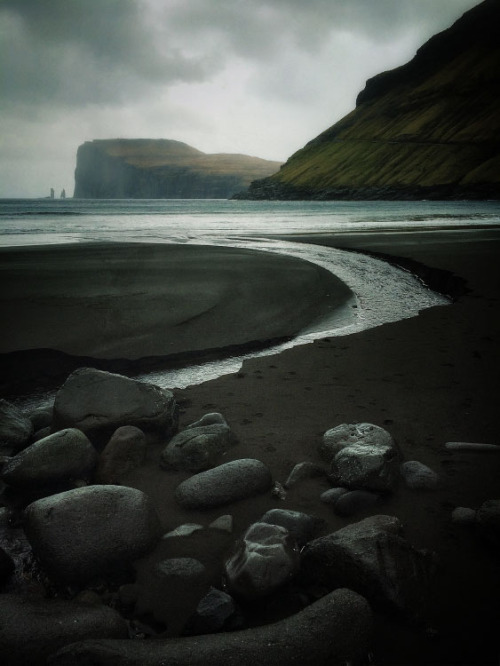
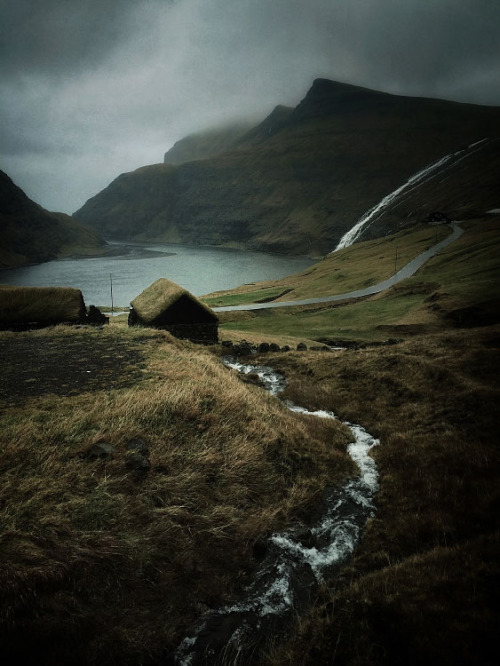
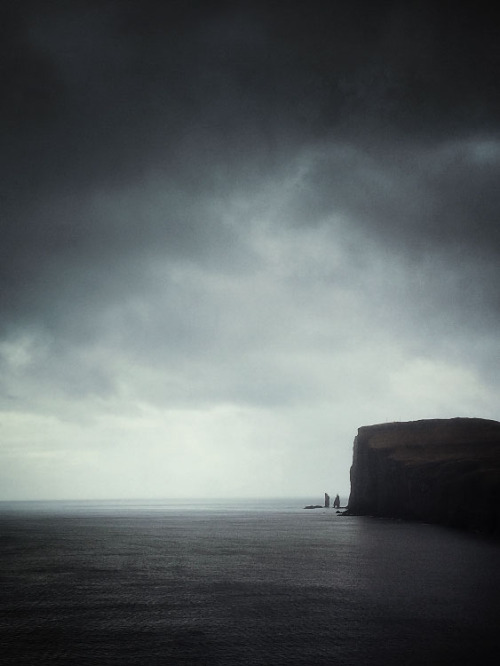
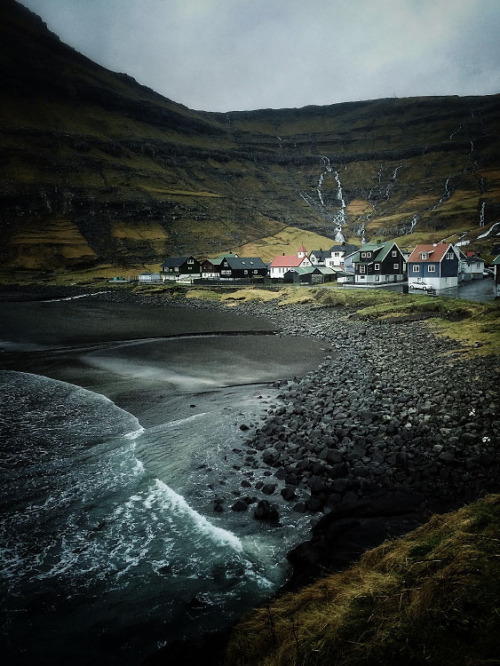
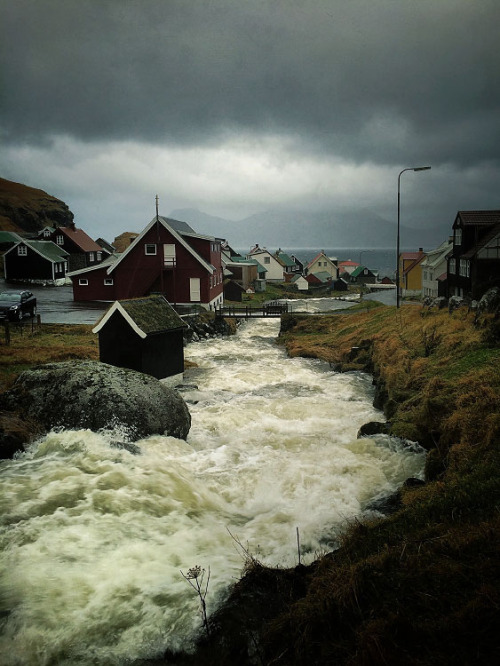
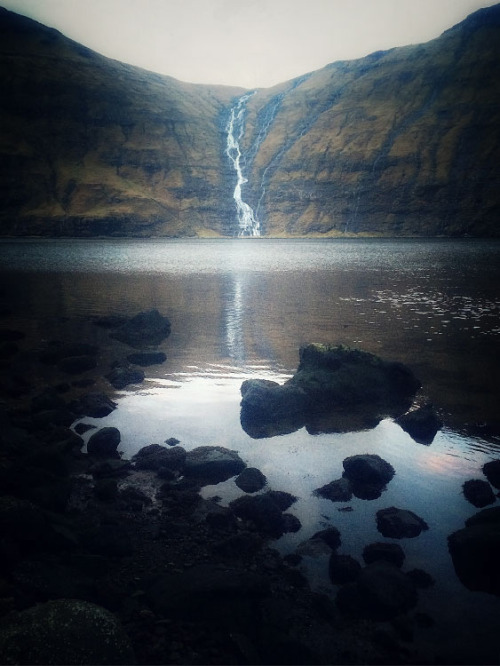
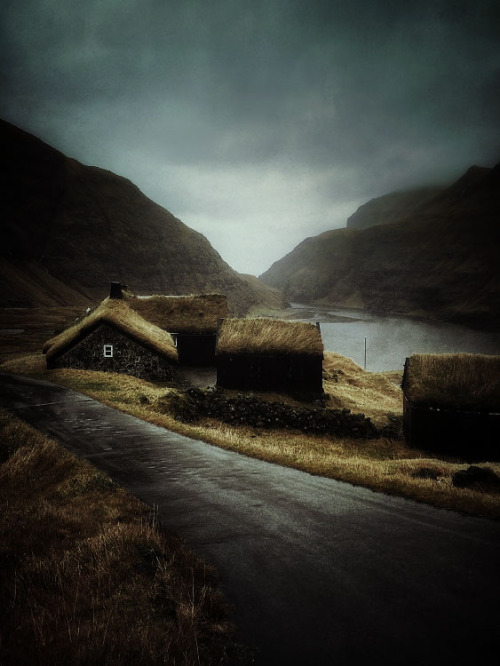
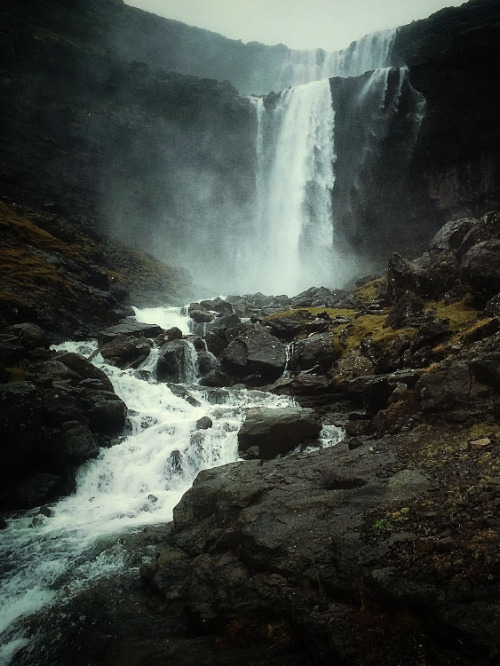
darksilenceinsuburbia: Julian Calverley Faroe Islands

28 May 13:39

Pluto Reveals Many New Details In Latest Images

by Bob King
These images show Pluto in the latest series of New Horizons Long Range Reconnaissance Imager (LORRI) photos, taken May 8-12, 2015. Hints of possible complex surface geology and the polar cap first seen in April are visible. Credit: NASA

These images show Pluto in the latest series of New Horizons Long Range Reconnaissance Imager (LORRI) photos, taken May 8-12, 2015. Hints of possible complex surface geology and the polar cap first seen in April are visible. Credit: NASA

Hey Pluto, it’s great to see your face! Since sending its last batch of images in April, NASA’s New Horizons probe lopped off another 20 million miles in its journey to the mysterious world.  Among the latest revelations: the dwarf planet displays a much more varied surface and the bright polar cap discovered earlier this spring appears even bigger.
(...)
Read the rest of Pluto Reveals Many New Details In Latest Images (432 words)


© Bob King for Universe Today, 2015. | Permalink | 19 comments |
Post tags: New Horizons, Pluto, polar cap

Feed enhanced by Better Feed from Ozh

27 May 21:12

Photo