Shared posts

13 Jul 16:42

GIF cinematográficos

by Marco Santos

Aliens

Cinematográficos

O formato de imagem .GIF é quase tão antigo como a própria Internet.

E embora seja vulgar associá-lo a pequenas imagens humorísticas espalhadas pela Web, nem sempre a sua utilização foi pacífica e inócua: problemas relacionados com a patente do algoritmo de compressão LZW usado na produção dessas imagens impediam a sua utilização pelos programadores de Software Livre.

Quem fizesse uso desse algoritmo de compressão corria o risco de ser processado pelas empresas que detinham a patente, Unisys e IBM. Como tais restrições eram contra o espírito do Software Livre e Aberto, muitos websites ligados ao movimento Open Source e GNU/Linux boicotaram o uso do formato, com o venerável guru Richard Stallman à cabeça do movimento de boicote.

Mas essas são já histórias antigas: as patentes foram expirando, dos Estados Unidos à Europa e, a partir de Outubro de 2006, deixou de haver qualquer problema em usar esse formato na criação de imagens e pequenas animações.

Sem restrições, ganhou a criatividade. E o conceito de «fotos animadas» pôde usar o velhinho GIF para mostrar uma combinação subtil e sofisticada de elementos estáticos e animados, uma mescla de fotografia e vídeo combinados num único formato.

Jamie Beck e Kevin Burg foram os primeiros a reanimar o GIF e a criar o que muita gente não hesita em classificar como «arte». Começaram em 2010, andaram durante mais de um ano em experiências e começaram a produzir e a mostrá-las a partir de Fevereiro deste ano.

Primeiro começaram por criar uma sequência de imagens estáticas mostradas numa rápida sucessão e em loop para criar a ilusão de movimento – uma técnica comum e quase «ancestral».

Depois começaram a combinar foto e vídeo para criar uma animação mais fluida e localizada. O processo é moroso e essencialmente manual: uma imagem pode demorar um dia a ser finalizada. Mesmo as mais fáceis exigem de três a quatro horas de trabalho. A natureza mais «arcaica» do GIF não é restritiva, afirma a fotógrafa, porque estimula a criatividade.

O impacto das fotos depende sobretudo da escolha do que deve estar em movimento e do que permanece estático. Algumas dessas escolhas são óbvias, outras mais subtis, mas quase todas são hipnóticas.

Depois desta «invenção» de Beck e Burg, e em conjunto com a «explosão» dos Tumblr – blogues ricos em imagens e minimalistas nos textos – os GIF rejuvenesceram e voltaram a estar na moda.

O All That Is Interesting lançou há pouco tempo uma compilação de 43 dos melhores GIF cinematográficos que se encontram na Web. E o sítio FilmakerIQ selecionou trinta cinematografias GIF dos filmes de Stanley Kubrick, todas retiradas do melhor projeto que conheço do género: If you don’t, remember me.

06 Jul 19:30

Photo


30 Jun 20:41

Cloud Ceiling: An Interactive Cloud Made with 15,000 Light Bulbs at Progress Bar in Chicago

by Christopher Jobson

Cloud Ceiling: An Interactive Cloud Made with 15,000 Light Bulbs at Progress Bar in Chicago multiples lighting light installation clouds Chicago

Cloud Ceiling: An Interactive Cloud Made with 15,000 Light Bulbs at Progress Bar in Chicago multiples lighting light installation clouds Chicago

Cloud Ceiling: An Interactive Cloud Made with 15,000 Light Bulbs at Progress Bar in Chicago multiples lighting light installation clouds Chicago

Cloud Ceiling: An Interactive Cloud Made with 15,000 Light Bulbs at Progress Bar in Chicago multiples lighting light installation clouds Chicago

Cloud Ceiling: An Interactive Cloud Made with 15,000 Light Bulbs at Progress Bar in Chicago multiples lighting light installation clouds Chicago

Calgary-based artists Caitlind r.c. Brown and Wayne Garrett (previously) swung by Chicago this month and installed this amazing interactive lighting solution called Cloud Ceiling at Progress Bar. Constructed from hand-bent steel, reflective mylar, electronics, motion sensors, LEDs, and 15,000 re-appropriated incandescent light bulbs, the cloud is now a permanent fixture in the bar which opened earlier this week. Motion sensors embedded in the ceiling cause the cumulous surface of light bulbs to illuminate, effectively ‘mapping’ a lit path through the cloud as bar patrons move through the space.

Brown and Garret were featured in this space last year, for a similar interactive cloud installed at Nuit Blanche Calgary. You can learn more about Cloud Ceiling here.

29 Jun 22:02

Leandro Erlich’s Reflective Optical Illusion House Now in London

by Christopher Jobson

Leandro Erlichs Reflective Optical Illusion House Now in London mirrors installation illusion

Leandro Erlichs Reflective Optical Illusion House Now in London mirrors installation illusion

Leandro Erlichs Reflective Optical Illusion House Now in London mirrors installation illusion

Leandro Erlichs Reflective Optical Illusion House Now in London mirrors installation illusion

Leandro Erlichs Reflective Optical Illusion House Now in London mirrors installation illusion

Leandro Erlichs Reflective Optical Illusion House Now in London mirrors installation illusion

Leandro Erlichs Reflective Optical Illusion House Now in London mirrors installation illusion

Leandro Erlichs Reflective Optical Illusion House Now in London mirrors installation illusion

Want to pretend you’re Spiderman but can’t afford the suit and the genetic mutation? Argentine artist Leandro Erlich was commissioned by the Barbican in London to install a version of his wildly popular optical illusion that creates the visual effect of instant weightlessness. Using a wall of giant mirrors propped against a huge horizontal print of a Victorian terraced house, visitors are free to climb and jump around as their reflections appear to move freely without the pesky effects of gravity. Titled Dalston House the piece was erected in Hackney just off Dalston Junction on a disused lot that has remained vacant since it was bombed during the Second World War.

The installation opens today and is free to all visitors and will remain up through August 4th. Erlich will also be giving a talk tomorrow starting at 7:30pm. All images courtesy the Barbican. (via visual news)

29 Jun 22:01

The human cost of Detroit’s petroleum Koch piles

by James Fassinger

Made in Detroit, owned by the Koch Brothers and burned in Michigan.

Much has been written recently about the mysterious black piles that appeared in one day in November 2012 on the banks of the Detroit River, not far from the Motor City’s downtown district, right next to the Ambassador Bridge – the busiest international crossing in North America. These huge stockpiles of petroleum coke, the byproduct of refining tar sands oil at the Marathon refinery in Southwest Detroit, are owned by Koch Carbon, a company run by the brothers Charles and David Koch.

Debate about possible health and environmental concerns, as well as permit and storage issues have been widely reported in the press both in the US and across the river in Windsor, Canada. Citizen and environmental groups are calling for action, while US Congressman Gary Peters (D-Mich) introduced the Petroleum Transparency and Public Health Study Act in Washington on June 6, 2013 that calls for an investigation into the piles and seeks information on how Michigan residents are affected by them.

This series of photographs takes a closer look at the people the petroleum coke piles are impacting, the areas around the stockpiles and where it is being produced.

McKenzie Duke looks out the window onto the three story piles of petroleum coke accumulating across the street from the building she lives in. Duke, an attorney and counselor in Detroit, moved into The Hudson lofts building on Fort street in August 2012. In November that same year, piles of petroleum coke, the byproduct of refining tar sands crude from Alberta, appeared and started growing across the street. During the past 6-8 weeks since the weather has been warmer, she has had her windows open and says she has been feeling poorly. Her face has broken out in a severe rash and her doctor has been unable to find out what could be causing it.

McKenzie Duke looks out the window onto the three story piles of petroleum coke accumulating across the street from the building she lives in. Duke, an attorney and counselor in Detroit, moved into The Hudson lofts building on Fort street in August 2012. In November that same year, piles of petroleum coke, the byproduct of refining tar sands crude from Alberta, appeared and started growing across the street. During the past 6-8 weeks since the weather has been warmer, she has had her windows open and says she has been feeling poorly. Her face has broken out in a severe rash and her doctor has been unable to find out what could be causing it.

Piles of petroleum coke, or pet coke, stored close to the city center along the Detroit River just east of the Ambassador Bridge, the busiest international crossing in North America. The material is produced at the Marathon Petroleum refinery in Southwest Detroit and has been purchased by Koch Carbon, a company run by the brothers David and Charles Koch. Detroit Bulk Storage is managing the stockpiles on industrial property leased from Ambassador Bridge owner Matty Moroun, with transportation from the refinery provided by Savage Industries of Melvindale, Michigan. In response to questions about storage along the river, Paul Baltzer Director of Communication for Koch Companies wrote in an email statement, “Koch Carbon owns the petroleum coke currently being stored and shipped from a facility operated by Detroit Bulk Storage. Under our contract, the material is to be stored and handled in a safe and compliant manner, in accordance with all applicable city, state and federal requirements.” With additional concerns about permits being granted for the storage of this type of material along the river, Daniel Cherrin, spokesperson for Detroit Bulk Storage said in a written statement, “An application for a permit to store the pet coke in its current location has been submitted to the City of Detroit for review. A variance has also been requested. Detroit Bulk continues to work with government officials, ensuring full compliance.”

Piles of petroleum coke, or pet coke, stored close to the city center along the Detroit River just east of the Ambassador Bridge, the busiest international crossing in North America. The material is produced at the Marathon Petroleum refinery in Southwest Detroit and has been purchased by Koch Carbon, a company run by the brothers David and Charles Koch. Detroit Bulk Storage is managing the stockpiles on industrial property leased from Ambassador Bridge owner Matty Moroun, with transportation from the refinery provided by Savage Industries of Melvindale, Michigan.

In response to questions about storage along the river, Paul Baltzer 
Director of Communication for Koch Companies wrote in an email statement, “Koch Carbon owns the petroleum coke currently being stored and shipped from a facility operated by Detroit Bulk Storage. Under our contract, the material is to be stored and handled in a safe and compliant manner, in accordance with all applicable city, state and federal requirements.”

With additional concerns about permits being granted for the storage of this type of material along the river, Daniel Cherrin, spokesperson for Detroit Bulk Storage said in a written statement, “An application for a permit to store the pet coke in its current location has been submitted to the City of Detroit for review. A variance has also been requested. Detroit Bulk continues to work with government officials, ensuring full compliance.”

With local residents, business owners, as well as Canadians across the river in Windsor, concerned about potential health and environmental risks resulting from the uncovered stockpiles, U.S. Congressman Gary Peters (D-Mich) holds a press conference on May 28th 2013 to raise new concerns about pet coke stored along the river. With the black coal-like mounds visible behind him, Peters told reporters, “This material is basically dirtier than the dirtiest coal.” He plans to introduce legislation this week in Washington that will call for a complete study of the health and environmental impacts of the material. He added, “Michiganders deserve answers for why pet coke is allowed to be stored in open air, near the Detroit River and our community, and whether this is being stored with proper permits.”

With local residents, business owners and Canadians across the river in Windsor, concerned about potential and environmental risks resulting from the uncovered stockpiles, U.S. Congress man Gary Peters (D-Mich) holds a press conference on May 28th, 2013 to raise new concerns about pet coke stored along the river.

With the black coal-like mounds visible behind him, Peters told reporters, ”This material is basically dirtier than the dirtiest coal.” He added, “Michiganders deserve answers for why pet coke is allowed to be stored in open air, near the Detroit River and our community, and whether this is being stored with proper permits.” The following week Peters introduced the Petroleum Transparency and Public Health Study Act in Washington.

Fishermen on the Detroit River troll by Koch Carbon’s mountains of pet coke on an early Sunday morning. When asked, many who fish the river say they are not concerned about potential hazards like runoff or dust from the piles on them, the fish in the river or the Great Lakes watershed. The city’s much-photographed abandoned train station, Michigan Central Station, sits only a few blocks away, while storm drains that run under the site can be seen running into the river.

Fishermen on the Detroit River troll by Koch Carbon’s mountains of pet coke on an early Sunday morning. When asked, many who fish the river say they are not concerned about potential hazards like runoff or dust from the piles on them, the fish in the river or the Great Lakes watershed. The city’s much-photographed abandoned train station, Michigan Central Station, sits only a few blocks away, while storm drains that run under the site can be seen running into the river.

Petroleum coke resembles large grains of sand and is slightly sticky to the touch. Its high heat and low ash content make it attractive for burning in coal-fired power plants but it is high in sulfur thus, to comply with current North American emissions standards, some form of sulfur capture is required.

Petroleum coke resembles large grains of sand and is slightly sticky to the touch. Its high heat and low ash content make it attractive for burning in coal-fired power plants but it is high in sulfur thus, to comply with current North American emissions standards, some form of sulfur capture is required.

Petcoke piles along the Detroit river. Byproduct of tar sands oil refinement at the Marathon refinery in Detroit Michigan

Media continue to shy-away from reporting petroleum coke that is churning out of the Marathon refinery in SW Detroit is in fact being burned at the DTE Monroe coal plant just downriver from the piles.

Current news reports have stated that pet coke from the Marathon refinery is being sold mostly for use in overseas markets like China and India where it will be burned as fuel. However, DTE Energy spokesperson Randi Berris has confirmed that the power company did use pet coke from the Detroit refinery in tests at their Monroe coal plant downriver in February and March of this year.

The Michigan Department of Natural Resources and Environment granted DTE an air permit in late 2010, just before new stricter federal regulations came into effect to burn the material. The permit allows DTE to burn 10-12% pet coke in its fuel mix at the facility according to Berris.

Randi Berris, spokesperson for DTE Energy confirmed in a phone conversation that the plant has burned petroleum coke during tests in August 2012, February and March 2013. A total of 13,500 tons of pet coke was used over the three months. She said the Marathon refinery in SW Detroit supplied the pet coke for the February and March tests, with 500 tons – 10 truck-loads – coming directly from the controversial piles along the river upstream in Detroit. Pet coke for the August 2012 tests came from Louisiana according to Berris.

She added that with the controversy surrounding the Koch-owned stockpiles along the Detroit river, DTE decided against getting its supply from that location in the future because they, as she put it, “want to be good corporate citizens.” She said that if DTE decides to burn petroleum coke in the future, and they choose the Marathon refinery to get it from, they will secure supplies directly from the refinery, not an outside supplier.

The pet coke being stored along the river is produced here at the Marathon Petroleum refinery in Southwest Detroit.  Located in an economically distressed area of the city, home to the most polluted ZIP code – 48217 – in Michigan, Marathon put $2.2 billion dollars into refitting and expanding the refinery to handle the large flow of tar sands crude coming from Alberta transported via the Keystone pipeline. This expansion has encroached even further on the already crumbling neighborhood of Oakwood heights bordering it. Marathon has offered buyouts to some homeowners to relocate in order to create a ‘buffer zone’ around the refinery, while holding out on others.

The petroleum coke stored along the river is produced here at the Marathon Petroleum refinery in Southwest Detroit.  Located in an economically distressed area of the city, home to the most polluted ZIP code – 48217 – in Michigan, Marathon put $2.2 billion dollars into refitting and expanding the refinery to handle the large flow of tar sands crude coming from Alberta transported via the Enbridge pipeline.

This expansion has encroached even further on the already crumbling neighborhood of Oakwood Heights bordering it. Marathon has offered buyouts to some homeowners so they can relocate in effort to create a ‘buffer zone’ around the refinery, while holding out on others.

Sherry Griswold has lived here for over 20 years. The expansion of the refinery has not only brought the section that produces the pet coke right up to the boarder of her lot, she says it has created a nightmare of explosions and chemical releases that have severely damaged her health. According to her, a recent incident on May 21, 2013, exposed her to an overwhelming dose of chemicals, “I walked outside and the whole ground was shaking.” She continued, “I called on them finally at seven o’clock, it started at one, I couldn’t handle it no more, I couldn’t handle the noise, I had nowhere to go.” She called Marathon and they shut it down immediately. “That’s when they gassed me through the front window,” she said. The following morning she woke up smelling gas and her skin and eyes were burning. Her doctor advised her to get to the Emergency Room where they x-rayed her lungs to check for inhalation of chemicals and treated burns to her arms and face. Sherry added that on May 29, her doctor informed her during a check-up that tests have shown her brain has been injured from exposure to chemicals and that he has referred her to The Michigan Institute for Neurological Disorders, MIND for treatment.

Sherry Griswold has lived here for over 20 years. The expansion of the refinery has not only brought the section that produces the pet coke right up to the boarder of her lot, she says it has created a nightmare of explosions and chemical releases that have severely damaged her health.

According to Sherry, a recent incident on May 21, 2013, exposed her to an overwhelming dose of chemicals, “I walked outside and the whole ground was shaking.” She described. “I called on them finally at seven o’clock, it started at one, I couldn’t handle it no more, I couldn’t handle the noise, I had nowhere to go.”

She called Marathon and they shut it down immediately. “That’s when they gassed me through the front window,” she said.

The following morning she woke up smelling gas with her skin and eyes burning. Her doctor advised her to get to the Emergency Room where they x-rayed her lungs to check for inhalation of chemicals and treated burns to her arms and face.

Sherry added that on May 29, her doctor informed her during a check-up that tests have shown her brain has been injured from exposure to chemicals and that he has referred her to The Michigan Institute for Neurological Disorders, MIND for treatment.

Rhonda Anderson (left), Organizing Representative for the Sierra Club’s Environmental Justice Program, talks with Sherry during a recent visit to Sherry’s home. Rhonda has been helping her since 2010 in her fight against the Marathon refinery. Since Governor Rick Snyder has been in office Rhonda states that nothing with regards to environmental justice has been done for citizens of the community. Speaking about industry and environmental justice, “They run, they can’t stand it, cause they think it’s gonna cost them some money,” she says. “But then what’s the cost to the community? Whose cost is the most important?” She adds, “Right now, residents are on the losing end.”

Rhonda Anderson (left), Organizing Representative for the Sierra Club’s Environmental Justice Program, talks with Sherry during a recent visit to Sherry’s home. Rhonda has been helping her since 2010 in her fight against Marathon refinery.

Since Governor Rick Snyder has been in office Rhonda feels nothing with regards to environmental justice has been done for citizens of the community. Speaking on industry and environmental justice she says, “They run, they can’t stand it, cause they think it’s gonna cost them some money.”

“But then what’s the cost to the community? Whose cost is the most important?” She adds, “Right now, residents are on the losing end.”

Sherry keeps careful track of the incidents she witnesses in her home coming from the refinery next door and each call she makes to report it. This is her list from May detailing dates, times and incident numbers given to her by Marathon.

Sherry keeps careful track of the incidents she witnesses in her home coming from the refinery next door and each call she makes to report it. This is her list from May detailing dates, times and incident numbers given to her by Marathon.

The Marathon refinery can be seen from just about every angle in Sherry’s neighborhood. Rhonda Anderson says that communities like these are the sacrifice zones. When addressing environmental justice, she first looks at communities of color, and low income communities, because this is where industry most often sets up shop. “This is what’s happening to Sherry, this is what’s happening to this entire community,” she explains.

The Marathon refinery can be seen from just about every angle in Sherry’s neighborhood. Rhonda Anderson says that communities like these are the sacrifice zones. When addressing environmental justice, she first looks at communities of color, and low income communities because this is where industry most often sets up shop.

“This is what’s happening to Sherry, this is what’s happening to this entire community,” Rhonda explains.

Marathon Petroleum has purchased and demolished a number of homes in the neighborhood bordering the refinery, offering buyouts for some home owners and renters, to create a ‘buffer zone’ around the facility. Some residents here have hired real estate agents to help sell their homes instead of taking a buyout, hoping for a better offer from Marathon. Others like Sherry Griswold and her friend and landlord Tom Gutenschwager who owns a welding business across the street from her, were offered nothing, even though they are the closest property to the refinery. “They’re trying to smoke us out,” Sherry says.

Marathon Petroleum has purchased and demolished a number of homes in the neighborhood bordering the refinery, offering buyouts for some home owners and renters, to create a ‘buffer zone’ around the facility.

Some residents here have hired real estate agents to help sell their homes instead of taking a buyout, hoping for a better offer from Marathon. Others like Sherry Griswold and her friend and landlord Tom Gutenschwager, who owns a welding business across the street from her, were offered nothing even though they are the closest property to the refinery.

“They’re trying to smoke us out,” Sherry says.

The neighborhood next to the refinery has a surreal air about it. Buildings purchased by Marathon are boarded up and locked with TV satellite dishes and Christmas lights still attached. These sit next to occupied homes with families living in them and across the street from houses burned-out and strewn with litter.

The neighborhood next to the refinery has a surreal air about it. Buildings purchased by Marathon are boarded up and locked with TV satellite dishes and Christmas lights still attached. These sit next to vacant lots and homes with families living in them while other houses across the street are burned-out and strewn with litter.

Just down the street from Sherry Griswold Robert Parmenter sits on his front porch. He has lived in the neighborhood for 20 years and rents the house. “I’m ready to go,” he says, “As soon as [the landlord] sells the house, I’d be out the same day.” Marathon did not offer him a buyout to leave. When asked if he has experienced any health problems from living next to the refinery, he replies, “Except breathing?” He adds that Marathon has ruined the entire area, “This neighborhood ain’t no good man.”

Just down the street from Sherry Griswold, Robert Parmenter sits on his front porch. He has lived in the neighborhood for 20 years and rents the place. Marathon did not offer him a buyout to leave. “I’m ready to go,” he says. “As soon as [the landlord] sells the house, I’d be out the same day.”

He adds, “This neighborhood ain’t no good man,” and says Marathon has ruined the entire area. When asked about any health problems he has from living next to the refinery, he replies, “You mean except breathing?”

Residential neighborhoods surround the Marathon refinery. These homes in Melvindale, on the other side of the refinery from Oakwood Heights also back up to the facility.

Residential neighborhoods surround the Marathon refinery. These homes in Melvindale, on the other side of the refinery from Oakwood Heights also back up to the facility.

Sam Rosado has lived in the industrial area of Southwest Detroit for 16 years. Fishing on the shore across from the piles of pet coke and coal on Zug Island, not far from the Marathon refinery and home to United States Steel, he says he won’t eat the fish he catches and does it just for fun. Casting out his line he adds, “I pulled some fish out of here and they don’t look right.”

Sam Rosado has lived in the industrial area of Southwest Detroit for 16 years. Fishing on the shore across from the piles of petroleum coke and coal on Zug Island, not far from the Marathon refinery and home to United States Steel, he says he won’t eat the fish he catches and does it just for fun.

Casting out his line he adds, “I pulled some fish out of here and they don’t look right.”

Sam says of his catch, “If I get something big enough I give it away to people I know.”

Sam says of his catch across from Zug Island, “If I get something big enough I give it away to some people I know.”

Back upriver, in a fishing area next to the controversial stockpiles of pet coke owned by Koch Carbon, Lawrence Jackson pulls a Silver Bass out of the river. He doesn’t worry too much about contamination.

Back upriver, in a fishing area next to the controversial stockpiles of pet coke owned by Koch Carbon, Lawrence Jackson pulls a Silver Bass out of the river. He doesn’t worry too much about contamination he says.

The General Motors Renaissance Center, world headquarters of the Detroit auto giant, looms in the background of the stockpiles of pet coke along the river. According Detroit Bulk Storage, the company in charge of storing and managing the material at this site, six acres of asphalt has been put down under the piles to direct any runoff water away from the Detroit River and towards the center of the pad in compliance with DEQ guidelines. They add that the asphalt also provides an impermeable barrier between the pet coke and the ground soil.

The General Motors Renaissance Center, world headquarters of the Detroit auto giant, looms in the background of the stockpiles of pet coke along the river. According to Detroit Bulk Storage, the company in charge of storing and managing the material at this site, six acres of asphalt has been put down under the piles to direct any runoff water away from the Detroit River and towards the center of the pad in compliance with DEQ guidelines. They claim the asphalt also provides an impermeable barrier between the pet coke and the ground soil.

A vacuum and water truck are stationed at the site and according to Detroit Bulk Storage, used to help keep dust levels down. In a statement from the company, spokesperson Daniel Cherrin writes, “Detroit Bulk continuously sprays the roadways and the active piles of pet coke with water from a 3000 gallon tanker truck to minimize fugitive dust in the air, water or land around the property.” Cherrin adds, “Detroit Bulk sprays the piles with an encrusting agent similar to an epoxy seal on non-active piles to trap fugitive dust and the absence of a traditional canvas or tarp on the piles, does not indicate that the piles have not been sealed in order to prevent the emission of dust particles. Detroit Bulk has a vacuum truck on the property which is used as needed to conform to the Fugitive Dust Plan submitted to the DEQ.”

A vacuum and water truck are stationed at the site and according to Detroit Bulk Storage, used to help keep dust levels down. In a statement from the company, spokesperson Daniel Cherrin writes, “Detroit Bulk continuously sprays the roadways and the active piles of pet coke with water from a 3000 gallon tanker truck to minimize fugitive dust in the air, water or land around the property.”

Cherrin adds, “Detroit Bulk sprays the piles with an encrusting agent similar to an epoxy seal on non-active piles to trap fugitive dust and the absence of a traditional canvas or tarp on the piles, does not indicate that the piles have not been sealed in order to prevent the emission of dust particles. Detroit Bulk has a vacuum truck on the property which is used as needed to conform to the Fugitive Dust Plan submitted to the DEQ.”

From the picnic tables outside the Green Dot Stables restaurant on West Lafayette, the black piles of pet coke along the river are clearly visible and only a block away. At first, owner Jacques Driscoll was a bit disappointed that the three story piles blocked his customers’ international view across the river to Canada, but later began to be concerned about other issues that might arise from the uncovered piles being stored so close.

From the picnic tables outside the Green Dot Stables restaurant on West Lafayette, the black piles of pet coke along the river are clearly visible and only a block away. At first, owner Jacques Driscoll was a bit disappointed that the three story piles blocked his customers’ international view across the river to Canada, but later began to be concerned about other issues that might arise from the uncovered piles being stored so close.

Owner Jacques Driscoll is now worried about the pet coke and what storing it out in the open might do to him, his family, his employees and his customers. He and his wife live close by and wishes someone would come out with a definitive answer if it is harmful or not, “I don’t want to be a whistleblower or anything like that, I just want to know,” he says. “Not knowing is the hardest part.” “Let’s say that it is fine, but it has a minimal health affect, what if I live here for the next 30 years, I’m still exposed to it. What about the other people that live here? Do you want to have that in the back of your mind every time you open a window?”

Jacques is now worried about the pet coke and what storing it out in the open might do to him, his family, his employees and his customers. He and his wife live close by and he wishes someone would come out with a definitive answer if it is harmful or not.

“I don’t want to be a whistleblower or anything like that, I just want to know,” he says. “Not knowing is the hardest part.”

“Let’s say that it is fine, but it has a minimal health affect, what if I live here for the next 30 years, I’m still exposed to it. What about the other people that live here? Do you want to have that in the back of your mind every time you open a window?”

Jacques Driscoll started the Green Dot Stables restaurant with his wife Christine just over a year ago. They are part of a growing number of young entrepreneurs who have set up business in Detroit not only take advantage of opportunity as the city struggles to recover from economic crisis, but to contribute its comeback and be a part of the community. Talking about the uncovered pet coke sitting just a block away he says, “It’s pretty ballsy to put something on the river knowing that it’s bad, if it truly is bad, and try to get away with it.”

Jacques started the Green Dot Stables restaurant with his wife Christine just over a year ago. They are part of a growing number of young entrepreneurs who have set up business in Detroit not only take advantage of opportunity as the city struggles to recover from economic crisis, but to contribute its comeback and be a part of the community.

Talking about the uncovered pet coke sitting just a block away he says, “It’s pretty ballsy to put something on the river knowing that it’s bad, if it truly is bad, and try to get away with it.”

A Canadian view of the stockpiles along the river they share with Detroit. Here in Windsor, Canadians not only look out onto the pet coke piles each day but complain of the large amounts of dust and particulate matter in the air that blows over the river on to their city. Many are sounding alarm bells about the potential health and environmental issues of storing the piles out in the open

A Canadian view of the stockpiles along the river the city shares with Detroit. Here in Windsor, Canadians not only look out onto the pet coke piles each day but complain of the large amounts of dust and particulate matter in the air that blows over the river onto their city. Many are sounding alarm bells about the potential health and environmental issues of storing the piles out in the open.

Dan Germain looks out the eighth floor windows of the high-rise condo he lives in with his wife Ruth and their daughter across the river from Detroit in Windsor. The family relocated from Toronto three years ago and after moving into their new condominium at Portofino Riverside Towers along the river, was impressed with the view they had of the Detroit skyline. But that changed after the piles of Petroleum coke appeared in November 2012. Ruth Gemain wrote letters about the pet coke piles to the city and provincial governments but she says, “Ontario has been quiet about it.” Fed up with the dust, worried about potential health risks, and tired of waiting for the government to step in, Ruth Germain started the Facebook page, Detroit’s Petroleum Coke Piles, in March 2013 to raise awareness about the issue. With little information about the production and use of petroleum coke, Ruth started researching, connecting with others and putting up her findings on the page. The Windsor Star was one of the first newspapers to write about the piles she says, well before the Detroit press ever took notice. She cannot understand why there is no law mandating the piles be covered. “We shouldn’t be reinventing the wheel here,” she says about such law, since one already exists in California to that regulates that state’s petroleum coke storage. She adds that people across the river in Detroit don’t realize, “What impacts you, impacts us.”

Dan Germain looks out the eighth floor windows of the high-rise condo he shares with his wife Ruth and their daughter across the river from Detroit in Windsor. The family relocated from just outside Toronto three years ago and after moving into their new condominium at Portofino Riverside Towers along the river, were impressed with the view they had of the Detroit skyline.

But that changed after the piles of Petroleum coke appeared in November 2012. Dan’s wife, Ruth Gemain, wrote letters about the pet coke piles to the city and provincial governments but she says, “Ontario has been quiet about it.”

Fed up with the dust, worried about potential health risks, and tired of waiting for the government to step in, Ruth started the Facebook page, Petroleum Coke Awareness Detroit, in March 2013 to raise awareness about the issue. With little information about the production and use of petroleum coke, she started researching, connecting with others and putting up her findings on the page.

The Windsor Star was one of the first newspapers to write about the piles she says, well before the Detroit Press ever took notice. She cannot understand why there is no US law mandating the piles be covered.

“We shouldn’t be reinventing the wheel here,” she says, “since one already exists in California that regulates that state’s petroleum coke storage.” She adds that people across the river in Detroit don’t realize, “What impacts you, impacts us.”

People enjoy a Sunday morning fishing on the Windsor shore. Across the river, not far from the Ambassador Bridge and the controversial piles of pet coke, Detroit Bulk Storage manages another site at the Nicholson Docks where the material is also being stored and loaded onto freighters.

People enjoy a Sunday morning fishing on the Windsor shore. Across the river, not far from the Ambassador Bridge and the controversial piles of pet coke, Detroit Bulk Storage manages another site, seen here, at the Nicholson Docks where the material is also being stored and loaded onto freighters.

Back in Detroit, the debate heats up over the pet coke piles and with legislation slated to be introduced this week in Washington to deal with the issue, local residents and businesses on both sides of the river are waiting for answers. Daniel Cherrin, spokesperson from Detroit Bulk Storage welcomes the opportunity to talk with others about the precautions being taken to ensure the health and safety of the community, “With the shipping season underway, empty vessels will appear at the docks every two weeks or sooner to be loaded with pet coke which will result in smaller stockpiles along the river. The community concerns about their health and safety while the petroleum coke may be stockpiled outside awaiting transport are understandable.” Windsor resident Ruth Germain puts it this way, referring to the entire process of extracting, transporting, refining and burning crude from the Alberta oil sands, “[People] need to realize it’s not just the piles and there is much more to it.”

Back in Detroit, the debate heats up over the pet coke piles and with the Petroleum Transparency and Public Health Study Act introduced in Washington to deal with the issue, local residents and businesses on both sides of the river are waiting for answers.

Daniel Cherrin, spokesperson from Detroit Bulk Storage welcomes the opportunity to talk with others about the precautions being taken to ensure the health and safety of the community, “With the shipping season underway, empty vessels will appear at the docks every two weeks or sooner to be loaded with pet coke which will result in smaller stockpiles along the river. The community concerns about their health and safety while the petroleum coke may be stockpiled outside awaiting transport are understandable.”

Windsor resident Ruth Germain puts it this way, referring to the entire process of extracting, transporting, refining and burning crude from the Alberta oil sands, “[People] need to realize it’s not just the piles and there is much more to it.”

Originally photographed for the Guardian UK and published on June 7, 2013

And also here in an additional story which accompanied it on the same day


27 Jun 19:33

O 'Bom' Jovi

by Henrique Monteiro
27 Jun 19:31

A Young Hummingbird

27 Jun 19:29

23 People Who May Be Getting Fired Today

Um, nice job?

This nice Italian restaurant waitress.

This nice Italian restaurant waitress.

Via: youtube.com

This wine store stock boy.

This wine store stock boy.

Via: youtube.com

This public safety employee.

This public safety employee.

Via: thewhatever.com

This adventure journalist.

This adventure journalist.

Via: gifbin.com


View Entire List ›

27 Jun 19:28

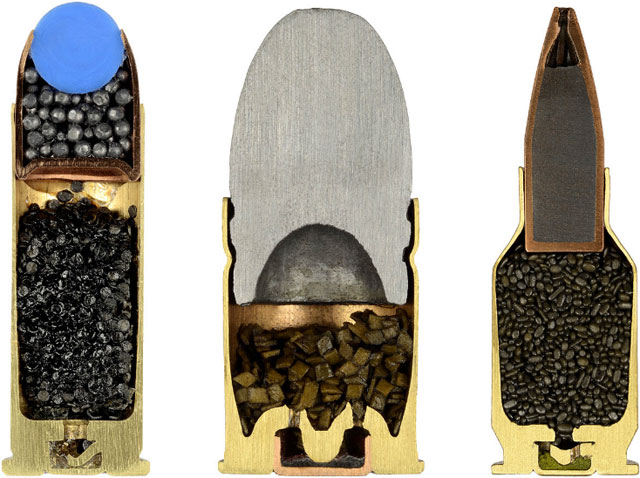
Bullet cross-sections

by Jason Kottke

Sabine Pearlman's photos of bullets split in half reveals there are many ways to make them.

Bullet Cross Sections

Tags: guns   photography   Sabine Pearlman
26 Jun 22:40

pedrogsena: SOCORR HALP STAHP


pedrogsena:

SOCORR HALP STAHP

26 Jun 22:39

2006_fisheye.jpg (изображение «JPEG», 528x700 пикселов)

by arisu
26 Jun 22:38

Photo


26 Jun 19:40

Unauthorized Installations: The Fine Art of Urban Subversion

by Urbanist
[ By WebUrbanist in Art & Street Art & Graffiti. ]

street art brad downey

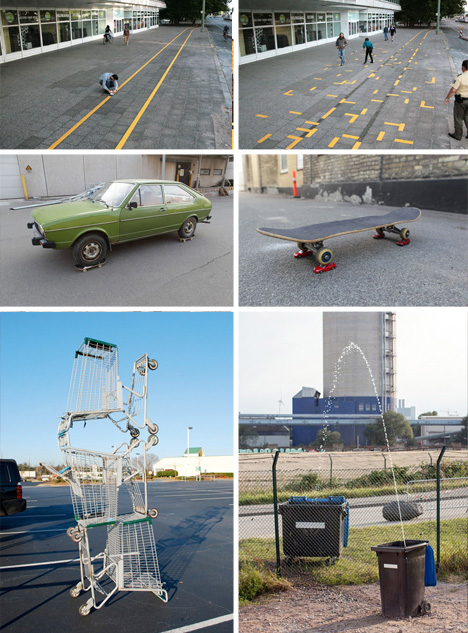
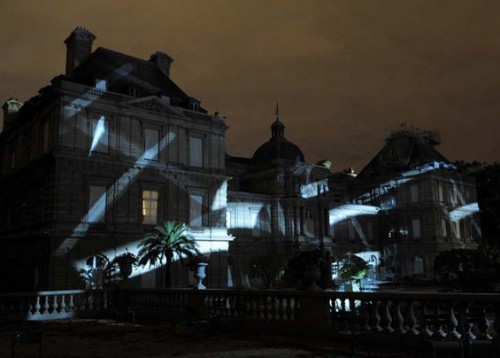
Brad Downey is familiar with both sides of the art world, with a fine arts degree and gallery exhibitions, on the one hand, and run-ins with the authorities about his sometimes-unsanctioned street art on the other.

street sidewalk ripped up

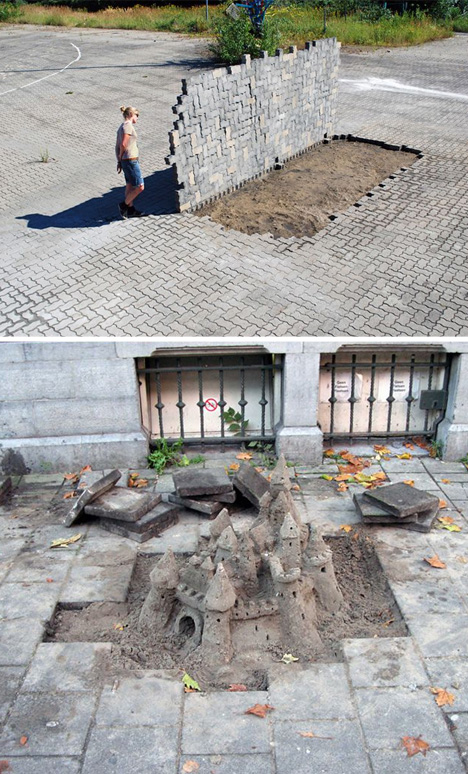
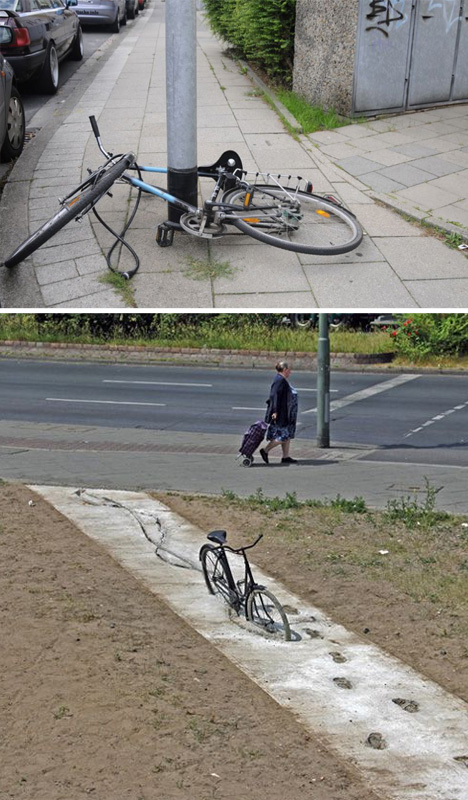
His work is harder to describe that it is to simply see, since it is often in the most public places you could imagine (or documented via extensive photography) – erupting from sidewalks, disrupting bicycle lanes or literally ripping up cobbled streets

street art object manipulations

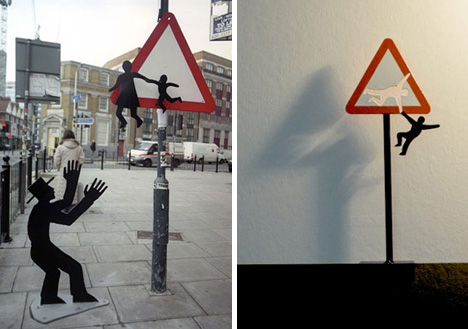
Per the pictures, sometimes these installations transpose ideas and objects from other contexts, but they also frequently warp existing everyday objects like bicycles, cars, signs, benches, shopping carts and garbage cans.

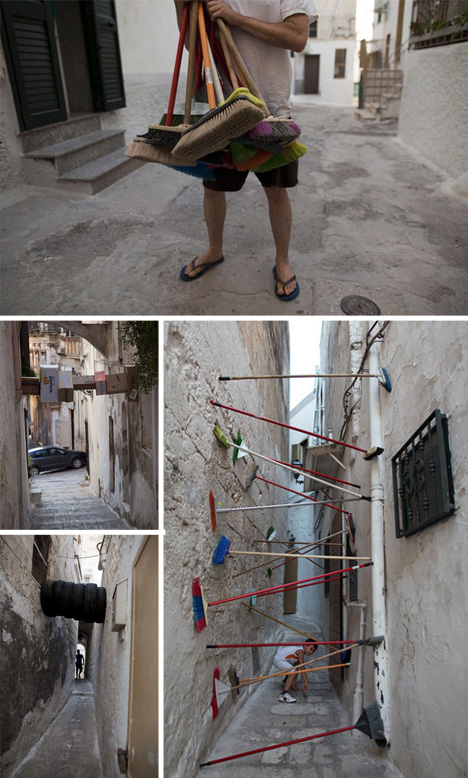
street alley art wedging

Sometimes he works alone – sometimes collaboratively. Some of his pieces are stand-alones and one-offs while others form sets, like Wedging (shown above), which is a series of experiments of balance and obstruction in alleys with ordinary household items.

street art impossible bicycles

He has had run-ins with police while working in cities ranging from London to Amsterdam, on both art and guerrilla marketing projects performed in that gray area of public and possible vandalism.

Share on Facebook

[ By WebUrbanist in Art & Street Art & Graffiti. ]

[ WebUrbanist | Archives | Galleries | Privacy | TOS ]


26 Jun 19:39

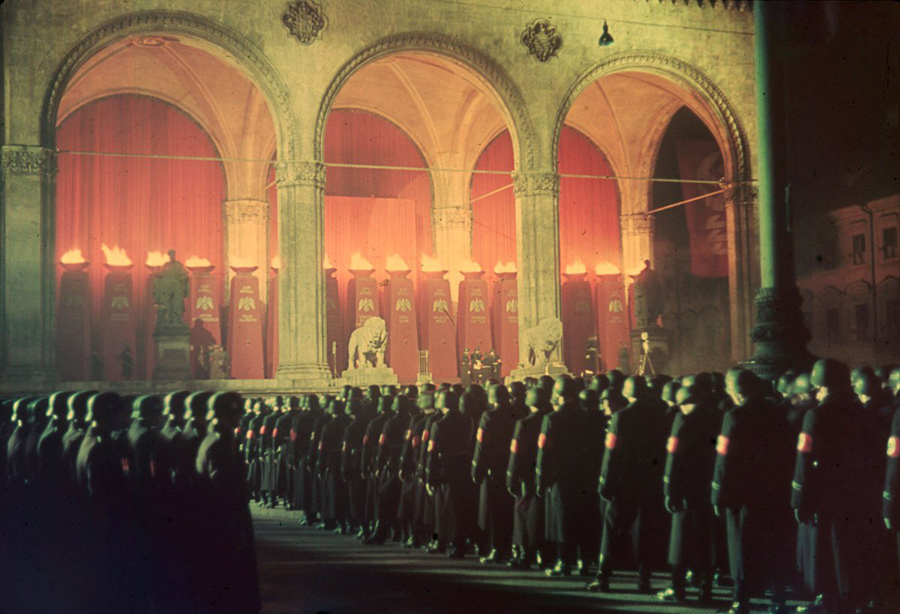
A Thousand Year Reich

by but does it float
Photographs (from the LIFE archives) by Hugo Jaeger (Adolf Hitler’s personal photographer) The story of how LIFE came to own Jaeger’s collection of 2,000 photographs Folkert
25 Jun 18:55

The craft of screen graphics and movie user interfaces – interview with Joseph Chan

by Kirill Grouchnikov

Continuing a series of interviews with designers and artists that bring user interfaces and graphics to the big screens, today I’m honored to host Joseph Chan. You have seen his work on “Tron: Legacy” and “Oblivion”, as well as one quite a few motion ad campaigns for companies such as Sony, Google, HP, Intel, Blackberry and others.


Kirill: Please tell us about yourself and how you started in the field.

Joseph: I’m a motion graphic designer and I’ve been working in the industry since 2007. I graduated from Pasadena Art Center in 2006 with a degree in graphic design, specializing in motion graphics.

Before that I attended UC Irvine, I didn’t have a major and was deciding what I wanted to do as a career, and it was around the year 2000 when the .com boom was in full force. It was a great and inspiring time for me, people were designing amazing abstract graphics from 3D programs that I had never seen before. I learned Photoshop and put together a portfolio with personal projects that I did in my spare time. After I was accepted into Art Center, I transitioned from graphic design into motion design which had started to ramp up midway through my college years.

Kirill: What happened after you graduated?

Joseph: During school I took two internships. One was in an interactive design studio, creating graphics and content for websites. In my latter terms at Art Center, I took a class with Chris Do who owns and operates Blind which does motion graphics, and I interned under him and Tom Koh. From then on I decided to focus entirely on motion graphics.

Kirill: And here you’re not talking about Flash / VRML containers that were very popular at that time in the browser environment.

Joseph: I wasn’t into the technical side of Flash or into creating websites. I was mainly using it as a tool for simple layer and text animations, because that was what people used at the time. But the designers who were using Flash in amazing ways, creating beautiful websites full of motion really caught my eye and pushed me towards my career.

Kirill: So back to what you did after graduating…

Joseph: I graduated in mid December in 2007, took some time off for the holidays, and started freelancing at different motion graphics studios around LA and Santa Monica, and I’ve been doing it ever since. I’ve never been staff at a studio before, at this point in my career I feel freelancing is the way to go as I have a little bit more freedom in terms of studio and project choices.

Kirill: Are you also involved in art direction / concept design?

Joseph: Sometimes I am brought in to a project midway or near the tail-end, so therefore I won’t be as involved with the concept as someone who had been on the project since the beginning. So in that scenario I’d be helping out with animation and finishing. Other times I am brought in from the pitch phase, and that includes art direction, concepting, and designing. I do enjoy all parts of the process, designing and animating, and personally I like to find a balance between the two, trying not to do too much of one thing for long stretches of time.

Kirill: You’ve worked on projects with rather different styles. For example, the spot for the first launch of Google Chrome, the recent spot for Google Now and the one for the Gates foundation are semi-vintage illustration style, while Beats Envy and Sony spots have a very modern high-tech industrial feel. Do you like exploring radically different styles?

Joseph: Absolutely. I’m influenced by all kinds of different styles and I try not to limit myself to a particular one per se. I’d like to think that each project has a different and unique solution, so I keep my mind open to what the project asks for.

Kirill: How many people do you usually have collaborating on a single spot?

Joseph: It all depends on the project and what it entails. The spot for Google – compared to other big budget projects that I’ve worked on – was quite simple from the start and we knew that. We did everything from concept to delivery – illustrations, design, compositing and animations – with a team of four people. The spot for Beats Envy also had a small team, but it was a little bit more complicated due to the need for 3D modeling and animation. I worked on the UI designs, compositing of 2D and 3D elements, and the overall grade. The team was four or five people. And then of course we had producers and the creative directors.

Kirill: Was the spot for Sony more complex?

Joseph: The UI and graphic design, a little bit. We had a small graphics team in charge of about 30 screens, so that was a bit daunting. But the direction was very open and we had time to experiment in Cinema 4D and After Effects.

With regard to the overall project, it wasn’t too complex. We weren’t in charge of compositing the graphics so we did our own thing and handed it off.

Kirill: On a spot such as Sony, do you limit the design to be just beyond the edge of what is generally available in consumer electronics and software? Do you aim to create something explicitly futuristic?

Joseph: I feel designers are best when they aren’t constrained by the software. My philosophy is to really design without worrying too much about the technical limitations. That way, the design will be the best possible solution, and that rings true for animation as well. It can always be pushed, experimented with, and figured out.

On a spot such as the Sony Mouse & Cat, we were given free reign on the look of the UI, so naturally the designs were quite far out, futuristic. I think it fit quite well with the techy nature of the campaign.

Kirill: And then a few years ago you worked on “Tron: Legacy”. How was the transition to working on a much bigger project?

Joseph: I always wanted to work on something related to film, especially in the sci-fi genre because of the futurism involved. There’s always a lot of potential there, and I was very happy to be a part of Tron: Legacy. It was unlike anything that I’ve worked on. Not just being involved with and experiencing the massive Digital Domain pipeline (we were a small team of graphic designers and animators sitting in a small corner surrounded by them). But also knowing that your work is going to be viewed by people from all over the world, really challenged and inspired me.

We were creating our content with the usual toolsets (Photoshop, Illustrator, After Effects, C4D), with the exception of some generative art, and handed the results off to the compositors.

Kirill: What is compositing?

Joseph: The compositors take the graphics that we’ve created – 2D or 3D – and implement them into the shots. It’s the layering of these separate objects, put together in order to get the final picture.

Kirill: And then you reunited with most of the people on the same team to work on “Oblivion”. How was it?

Joseph: It was fun. It was pretty much the same team, with a few newcomers. Gmunk contacted me to bring me in, and opined that it wasn’t going to be as big as Tron: Legacy, but it was with the same director (Joe Kosinski), with a lot of freedom to do what we do, so I was immediately on board.

It was also exciting for me because I took on much larger role than on Tron: Legacy. This time I was able to be involved with the project from pre-production to post, and that allowed me to have more design and animation input.

Kirill: How are you preventing yourself from falling into the trap of not using the same graphic and animation elements in different projects?

Joseph: Sometimes recycling ideas, elements or animation is required for the sake of time and to make ones’ life easier, but personally I try to push myself to learn something new, perhaps something that I’m not comfortable with, in the projects that I work on. It could be a very small or big thing, but I feel it’s a good challenge. In order not to fall into the trap of rehashing things, you just have to be aware of it.

Kirill: How did you handle the on-set playback schedule of “Oblivion”?

Joseph: The Light Table was shot on set, so we made sure that the graphics looped, with startup and turnoff animations. We packaged everything and delivered it to a company called i.Solve who took our graphics and ran them through their software. They were on set, controlling the specific timings of each animation.

Kirill: And then you had screen designs for the automatic drones. They don’t really need to project that information for themselves, but you also can’t just show a blank screen. You need to support the narrative with some kind of a menacing automated scanning interface.

Joseph: It’s part of the magic of designing these interfaces because we’re essentially creating stylized, almost exaggerated versions of information that may not make perfect sense in the real world. Like you said, the drones would obviously not display information for themselves, but we decided to allow it anyways while also maintaining its menace, danger and mystery.

Kirill: Are you concerned about how this work will look like in 15-20 years? How it will have “survived” the actual technological advances known to that future audience?

Joseph: I’m not too concerned. Things change, technology, styles, taste. New things will get introduced and change the way we think and that’s just the nature of it.

I guess if you look back at Oblivion in 15-20 years, it’d be like looking into a little time capsule, where you can see the choices we made based on the technology available at the time. Our research and influences–the functionality of interfaces and HUDs that exist today–reflect the times, and we used that as a base to make sure it was grounded in reality.

We also looked at other interfaces to see what others have come up with. Movies, video games, all have great examples of what others have thought up. I think we’re all in the same camp where we don’t really know what the future may hold, but we’re excited and we’re inventing as we go along.

Kirill: Are you comfortable with having this work described as Fantasy UIs?

Joseph: I think that’s a nice way to put it. Technology is all about enriching humans in some way or another, so inventing the design, look, and animation of how we interact with new technology really gives it that fantasy element.

It’d be a totally different beast if we were designing for real life applications though. The research and development process alone would take years, every detail has to have a real function. So it’s nice working with Fantasy UIs.

Kirill: How were you able to validate some of the explorations for this big light table in “Oblivion”?

Joseph: The Light Table was basically three flat screens horizontally and one that went vertical. Joseph Kosinski [director], the director, decided to use HDTVs and even shared a photo of himself sitting and interacting with a screen laid flat just to give us a sense of scale. So the design fit the 1080p dimensions of the screens perfectly.

The main section was the map which the character in the movie, Vika, interacts mainly with. Then we had a Drone monitor, HydroRig monitor, and a weather map, which took up the vertical screen.

After the design phase we took a trip to i.Solve’s studio with some stills of the Light Table, and we were able to get it up on the screens. We checked for any color or size discrepancies, and they took it from there.

Kirill: What are you thoughts on the software tools that you’re using? Are you frustrated by them? Do you wish to see a radically different way to interact with them?

Joseph: You learn not to be frustrated by them. They are just tools and in the work that I do the concept is always the most important. When you get to art directing and having a more hands-off approach, then the software tools and its limitations do not become so much of a problem as you have technical teams that take your direction and help bring your designs to life.

In terms of interaction, I am open to new things. Years ago I never experienced working with a Wacom tablet and now I can’t work without it. Touch screens allowed us to interact with our fingers. And if something new becomes introduced that changes the way we interact with software, then I’ll be the first to try it.

Kirill: Where do you see the human-computer interaction heading in the near future?

Joseph: I sometimes wish that I’d be able to interact with holograms the way Tony Stark does in Iron Man. As a viewer, it just looks so cool, but I don’t know how functional that would be in real life. I can only guess, but I do think touch screens are going to be more and more relevant in the future, and so the devices that we have now, iPhones and iPads etc. which use natural gestural elements, are maybe preparing us for that.

Kirill: What happens the first time you watched the movies you’ve worked on?

Joseph: It can be quite distracting. Personally I have a hard time focusing on the story the first couple of times. I watched “Oblivion” three times. The first was an early cut on our first day of work, which didn’t have any VFX and graphics in it. The audio and sounds effects also weren’t complete so it really left a lot to the imagination. We were invited to the screening a few weeks before the premiere, and this time it was distracting because I was mainly paying attention to our work, trying to pinpoint anything that might have went wrong, even though there is no way that we could have made changes. It was however great just experiencing for the first time our graphics composited, colored, and implemented into the shots. Digital Domain and Pixomondo did a great job, obviously. The third time I watched it with a few friends, and that’s when I enjoyed it the most, being able to take in the story, the great audio and visuals.

Kirill: Where do you see yourself moving forward?

Joseph: It was a great experience working on several film projects as it’s completely different from motion graphics. I had the chance to work with small tight-knit teams that allowed me to have more creative freedom and input. Working directly with a film director like Joseph Kosinski allowed a close collaboration that sometimes is rare in a motion graphic setting as things get convoluted dealing with agencies and clients.

I hope to continue doing what I’m doing, having fun working and learning from great people, on meaningful projects that I care about. And to continue growing as a designer and story teller.


And here I’d like to thank Joseph Chan for this great opportunity to talk about his work. You can find Joseph online at his portfolio site.


Related posts:

  1. The craft of screen graphics and movie user interfaces – conversation with Shaun Yue When we are surrounded by glowing screens wherever we go, what does it take to...
  2. The craft of screen graphics and movie user interfaces – conversation with Jayse Hansen At times futuristic, at times mirroring the outer edge of the latest research, and almost...
  3. The craft of art direction – conversation with Tim Grimes In this installment of the “In Motion” series I talk with Tim Grimes about his...
25 Jun 18:51

Horrifying Moment of the Day

Horrifying Moment of the Day

Submitted by: Unknown

25 Jun 18:48

Calvin and Hobbes for June 24, 2013

25 Jun 18:48

Tumblr

by chaim
25 Jun 18:48

winneganfake: crescita-e-conoscenza: Le chiama fairies… ma a...


winneganfake:

crescita-e-conoscenza:

Le chiama fairies… ma a me sembrano tanto alieni queste dolls. Bellissime.

She calls her dolls fairies… but they seems aliens to me. Beautiful.

I may have reblogged these before, but I’m doing it again, because they’re fucking brilliant. 

25 Jun 18:46

Some of Japan's Cutest and Most Amusing Twitter Pics

by Brian Ashcraft

Some of Japan's Cutest and Most Amusing Twitter Pics

Twitter doesn't only inform at 140 characters a tweet, but it also amuses and delights with pictures. Here's a look at some, certainly not all, of Japan's most adorable, entertaining, and interesting photos found on Twitter.

As with these things, be aware that people in Japan also find these images unusual—hence, them being retweeted numerous times. Many of them were retweeted thousands of times.

Some of the photos are riffs one well-known memes, while others (such as the top image) can be easily explained(it's Halloween). And many of the photos are just people screwing around. You know, hijinks.

Then, there are simply the surprising sights people have encountered and shared online.

Some of Japan's Cutest and Most Amusing Twitter Pics

Some of Japan's Cutest and Most Amusing Twitter Pics

Some of Japan's Cutest and Most Amusing Twitter Pics

Some of Japan's Cutest and Most Amusing Twitter Pics

Some of Japan's Cutest and Most Amusing Twitter Pics

Some of Japan's Cutest and Most Amusing Twitter Pics

Some of Japan's Cutest and Most Amusing Twitter Pics

Some of Japan's Cutest and Most Amusing Twitter Pics

Some of Japan's Cutest and Most Amusing Twitter Pics

Some of Japan's Cutest and Most Amusing Twitter Pics

Some of Japan's Cutest and Most Amusing Twitter Pics

Some of Japan's Cutest and Most Amusing Twitter Pics

Some of Japan's Cutest and Most Amusing Twitter Pics

Some of Japan's Cutest and Most Amusing Twitter Pics

Some of Japan's Cutest and Most Amusing Twitter Pics

Some of Japan's Cutest and Most Amusing Twitter Pics

Some of Japan's Cutest and Most Amusing Twitter Pics

Some of Japan's Cutest and Most Amusing Twitter Pics

Some of Japan's Cutest and Most Amusing Twitter Pics

Some of Japan's Cutest and Most Amusing Twitter Pics

Some of Japan's Cutest and Most Amusing Twitter Pics

Some of Japan's Cutest and Most Amusing Twitter Pics

Some of Japan's Cutest and Most Amusing Twitter Pics

Some of Japan's Cutest and Most Amusing Twitter Pics

Some of Japan's Cutest and Most Amusing Twitter Pics

Some of Japan's Cutest and Most Amusing Twitter Pics

Some of Japan's Cutest and Most Amusing Twitter Pics

Photos: miryou, TSNet64, CatCutePhotos, k_ami_c, xX_harowan_Xx, napalmthing, _G_A_I, sorata22, hayama_syoko, nobu_12_, akiranagahashi, py0nk1ch7, kihhie_1052, Tired_Nova, hyper_shimeji, when_sir, matome, kataoka_k, xxkaixz, yuukitokuda, de_ji_be, nakamukae, Nekopic, ymtk_, kataoka, ag_gt

To contact the author of this post, write to bashcraftATkotaku.com or find him on Twitter @Brian_Ashcraft.

Kotaku East is your slice of Asian internet culture, bringing you the latest talking points from Japan, Korea, China and beyond. Tune in every morning from 4am to 8am.

25 Jun 18:45

How dinosaurs happened. [via]


How dinosaurs happened. [via]

25 Jun 18:44

Churros

by Cris

Quando eu tinha uns 12 anos de idade minha irmã mais velha levou meu irmão e eu para passarmos uns dias na cidade de Campinas-SP. Quando vi uma máquina de churros numa loja no centro fiquei vidrada! E acho que nem precisei pedir para ela comprar, só me lembro de sair da loja lambuzada de doce de leite. Quando voltei para a cidade para fazer a faculdade, quis visitar a mesma loja para ver se ainda vendiam os churros... E acho que passei isso para meus filhos! 

Hoje meu menino de oito anos acordou, tomou café da manhã, fez a lição, chegou pertinho de mim,deu um beijinho e perguntou se eu podia fazer churros para ele comer de sobremesa. Quem resiste? Procurei meu aparelhinho que comprei de algum catálogo há muitos anos e fiz a receita da embalagem com algumas alterações. Claro que antes procurei outras opções e vi que algumas receitas levam ovos, e imaginei que deveriam ficar bem parecidas com a massa de carolinas... Foi assim que fiz, com ovos! Mas já testei antes sem ovos e ficou uma delícia também.
Desejo de criança realizado - churros de sobremesa!
Xícara medidora: 240 ml

Churros
2 xícaras de água
1 pitada de sal
2 colheres (sopa) de manteiga ou margarina

2 xícaras de farinha de trigo
2 ovos levemente batidos (opcional)

1/2 lítro de óleo para fritar

1) Leve ao fogo uma panela com a água, o sal e a manteiga. Quando ferver, apague o fogo e coloque duas xícaras de farinha de trigo. Mexa rapidamente até formar uma bola e desgrudar da panela. Se usar os ovos, adicione-os agora, batendo até incorporar bem. 

2) Aqueça o óleo em uma frigideira alta ou fritadeira. 

3) Transfira a massa para a máquina de churros ou um saco de confeitar com bico pitanga grande ou bico de churros. Empurre a massa até o tamanho desejado e corte com os dedos, já sobre o óleo quente. - Atenção ao fogo que não deve estar muito alto. - Deixe fritando até dourar de um lado, vire e deixe dourar do outro lado. Depois de fritos, passe os churros no açúcar com canela em pó. Recheie com doce de leite.


25 Jun 18:43

the-doctor-deduces-camelot: daveshady: virtutethecat: nonphall...

23 Jun 20:39

This massive mirrorball was created by Canadian artist Michel De...


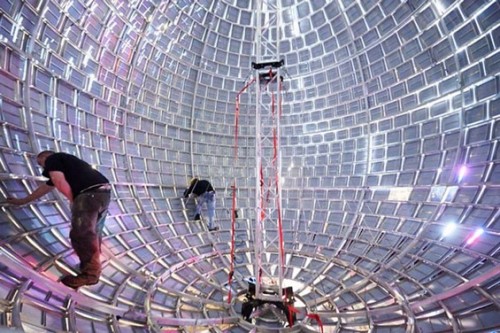
This massive mirrorball was created by Canadian artist Michel De Broin as a site-specific installation for the Luminato Festival in Toronto. Entitled One Thousand Speculations, the awesome disco ball measures over 25 feet in diameter. Each night of the festival the ball is hoisted 80 feet into the air, spotlit and spun, transforming the grounds of the festival into a wondrous starry landscape.

“Initially inspired by a photograph which appeared in the Los Angeles Times in 1942, “The Battle of Los Angeles”, showing anti-aircraft searchlights concentrating on Unidentified Flying Objects, the largest mirror ball ever made will be suspended from a construction crane lit by many beams of light. The one thousand mirrors will reflect the light to render and re-create the starry sky for Toronto’s citizens during Luminato festival.”
[via Beautiful Decay]

23 Jun 15:56

Delírio erótico de hoje!

by paparazzi

23 Jun 15:56

A Felicidade não tem preço!

by paparazzi

23 Jun 15:34

Daily strip 16. Jun 2013

23 Jun 14:40

Photo


23 Jun 14:39

http://imgfave.com/view/3693483

by Galadriel

Submitted by Galadriel
23 Jun 14:39

Whenever I hear someone saying: "I don't care about PRISM nor my privacy, I have nothing to hide".

..

by @RlIxOTA4