Tasmania-based furniture and lighting designer Duncan Meerding highlights the naturally occuring cracks in sustainably sourced logs by inserting warm yellow LEDs that illuminate each piece of wood from within. Meerding, who is legally blind, is fascinated by unusual light applications which he refers to as his “alternative sensory world.” Each cracked log lamp can be used as a stool, table, or simply a light accessory, and the pieces are available through a number of shops throughout Australia. Photos by Jan Dallas. (via My Modern Met, Inhabitat)
The most common way of representing Africa on maps and globes dramatically understates the size of the continent.
Designer Kai Krause’s visualization of some of the world’s largest
territories puzzled together inside Africa’s outline gives a sense of
the distortions introduced by the Mercator projection.
I did not know this was a fact until about two years ago. I lived nearly forty years on this planet, and attended some form of school until I was 25, and never learned how massive the continent of Africa actually is.
When Baltimore's Julie Baker hung some rainbow-colored solar lights in her yard, a helpful neighbor slipped a charming note through her door chastising her for her "Relentlessly Gay" yard, threatening to call the police unless it came into compliance with the "Christian" neighborhood ethic.
Read the rest
"In the last 35 or 40 years, there has been an increasingly aggressive effort on the part of the top 1 percent to take it all. And that aggression has not been effectively countered by middle-class and working families."
Read the rest
Of course it should. If that is the level of ethics people are stuck on, we may as well give up and go back to subsistence farming. The really tough questions are thing like how we have the software determine where the greatest risk to life is. Do we have every car report to its neighbours how many people are on board? If so, do pregnant women count double?
And what if someone exploits the rules in the software, intentionally putting themselves in harm's way in order to force a self-driving car off the road to injure or kill the driver? How do we measure culpability in a case like that?
What if somebody hacks the vehicle they are in to misreport the occupancy level and that causes it or another car on the road to take a different evasive action leading to injury or death? If we assume, as with all software, that these things are hackable, do we even allow private ownership of cars in the future? Perhaps the only way to stop people writing self-preservation code into their own cars is only have cars act as taxi services. It has the fringe benefit of needing fewer cars to service all needs, and makes the need for parking spaces much lower.
There are a lot of questions, but if we get hung up on the idea that the job of the vehicle we are in to preserve our own lives at all costs, well then fuck humanity. We don't deserve nice things.
Should your self-driving car be programmed to kill you in order to save others? Matt Windsor asked Ameen Bargh, a bioethicist at University of Alabama at Birmingham, this soon-to-be-real-life version of the classic Trolley Question.
Read the rest
I am not a fan of Brendan O’Neill. I think he’s a libertarian ass and under all the pretense, an old-fashioned conservative. He has, of course, decided that Tim Hunt is being persecuted.
The Illiberal Persecution of Tim Hunt An old guys tells a bad joke and academia descends into a frenzy
New rule #1: when you’re going to accuse a group of being in a “frenzy”, explain what you mean and give evidence.
Because I don’t see it. I’ve been seeing academics write about it and deplore Hunt’s words; I’ve seen them suggest that this behavior ought to be publicly repudiated by major organizations. That sounds about right to me. That’s what ought to be done: academics and journalists ought to express their opinions honestly, and have an expectation of some accountability.
New rule #2: when you start accusing a group of being in a “witch hunt” or comparing them to the Inquisition, you have to be specific in saying exactly what they ought to do differently.
Yes, O’Neill compares the response on Twitter to the Inquisition.
The response to Hunt is way more archaic than what Hunt said. Sure, his views might be a bit pre-women’s lib, pre-1960s. But the tormenting and sacking of people for what they think and say is pre-modern. It’s positively Inquisitorial.
The irony is too much to handle: Hunt is railed against for expressing an old-fashioned view, yet the railers against him do something infinitely more old-fashioned: they expel from public life someone they judge to have committed heresy. Kick him out. Strip him of his titles. Mock his misfortune. “Savour the moment.” How awfully ironic that the Royal Society, which played a key role in propelling Britain from medievalism to modernity, is now being asked to behave in a medieval fashion and send into the academic wilderness a heretic among its number.
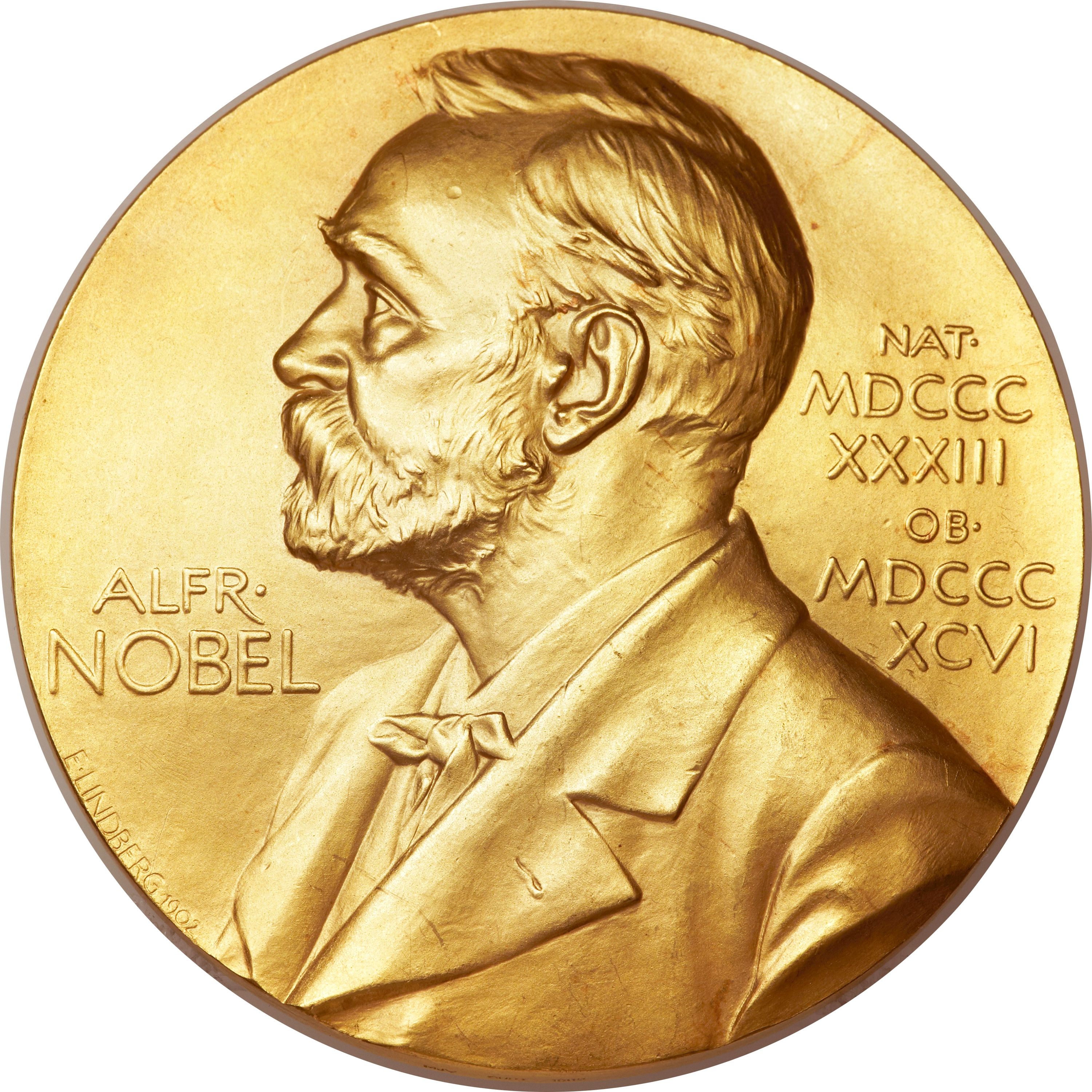
Excuse me, but how has he been expelled from public life? Is he in solitary confinement in a cage somewhere? Is his ability to interact in public in any way diminished compared to, say, me, or Brendan O’Neill, or yours? Is he wandering in a wilderness, or is he crying in his comfortable home with the expensive paintings on the wall and a lovely gold medal from the Nobel Foundation?
Here’s what’s illiberal: that someone said something repugnant and stupid in public, and Brendan O’Neill does not think the public should be allowed to judge that person. We are supposed to give a certain privileged subset of humanity carte blanche and never criticize them. Deciding that a public figure has uncivilized, ignorant views…why, that’s not to be allowed! And to speak out and actually say that those views are vile…why, that it is the true vileness!
So O’Neill does have a suggestion for how we all should respond to people like Hunt. We should all shut up.
The Hunt incident is quite terrifying. For what we have here is a university, under pressure from an intolerant mob, judging a professor’s fitness for office by his personal thoughts, his idea of humour. Profs should be judged by one thing alone: their depth of knowledge. It shouldn’t matter one iota if they are sexist, stupid, unfunny, religious, uncouth, ugly, or whatever. All that should matter is whether they have the brainpower to do the job at hand.
Oh, gosh. I had no idea. Professors are exempt from all the normal rules of human behavior! Perhaps science isn’t really part of the domain of human experience after all. We get to be judged on one narrow criterion, and everything else is excluded. At long last, I can kick puppies! I can spit on poor people in the street! I can go play in a national forest with a chainsaw!
Oddly, though, the administrators and faculty at my university don’t think that way. It’s not as if every year I go in and take a test on developmental and cellular biology, and my “depth of knowledge” determines my employment status.
I am regularly evaluated on the academic holy trinity: research, teaching, and service. Did you know that public outreach, administration, collegiality, and communication are actually regarded as significant components of the professor’s job? O’Neill clearly doesn’t.
So his answer is flatly wrong and unrealistic. Professors aren’t excused from being more than grant-writing lab-running machines.
So what would O’Neill’s actual solution to this “illiberal frenzy” be? Are my posts on the Tim Hunt affair to be deleted? Should anyone on Twitter who was appalled at his behavior have their accounts banned? Perhaps we’re just prohibited from saying anything about Hunt’s offensive remarks — we should all change the subject to something about cyclin-dependent kinases.
Once again, conservative histrionics are exposed for what they are: a massive case of projection. The whine about illiberal academia is really a complaint that we can disagree strongly.
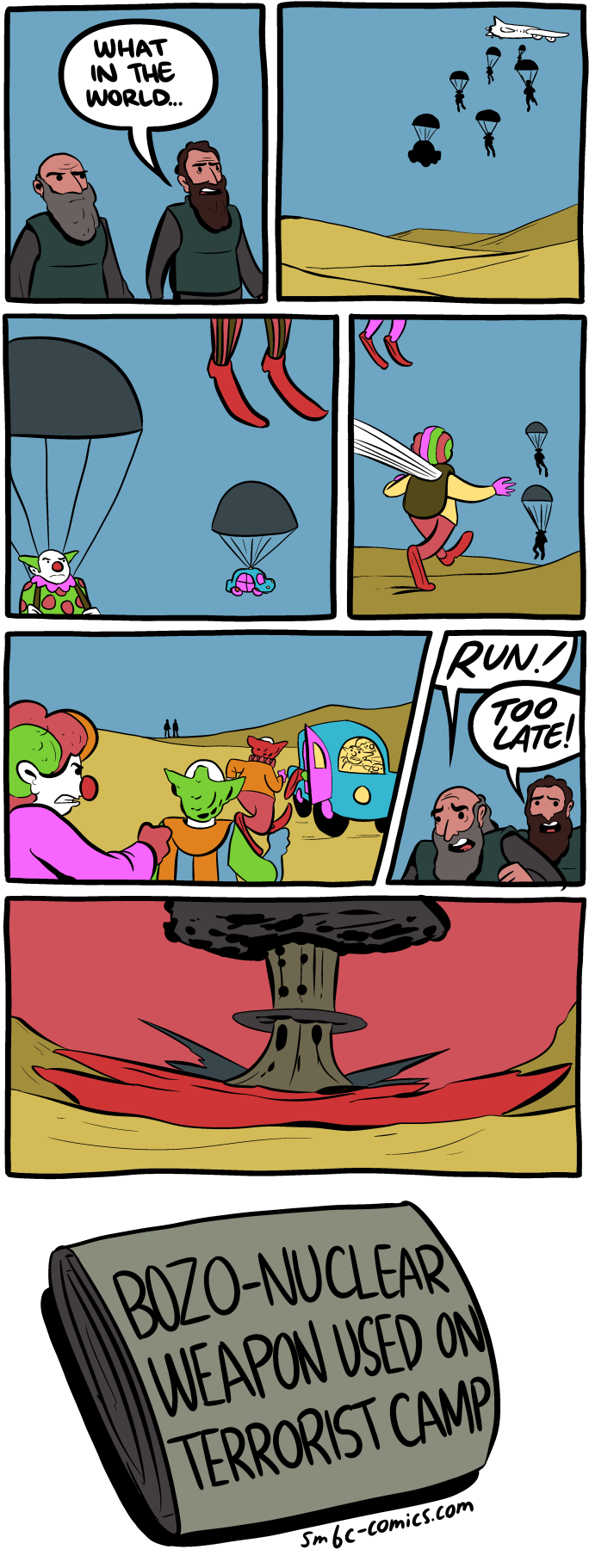
There are of course many towns that have declared themselves "nuclear-free zones," but Richmond, California, is the first one (to my knowledge) that has taken the time to call for a ban on space weapons.
A minor disturbance in Richmond
On May 19, the Richmond city council voted 5-2 to adopt "a resolution in support of the Space Preservation Act and the Space Preservation Treaty to permanently ban space-based weapons." Because of the importance of this resolution, and because it's not that long, I reproduce it in full:
WHEREAS, the Space Preservation Act and the companion Space Preservation Treaty has established a permanent ban on all space-based weapons, on the use of weapons to destroy or damage objects or persons from or that are in orbit; and the permanent termination of research and development, testing, manufacturing, production and deployment of all space-based weapons; and
WHEREAS, the Space Preservation Act, companion to the Space Preservation Treaty, introduced by U.S. Congressman Dennis Kucinich (D-Ohio), requires the U.S. President to continue enforcement of banning space-based weapons and the use of weapons to destroy or damage persons or objects that are in or from orbit; and
WHEREAS, the Space Preservation Treaty has established an outer space peacekeeping agency to monitor outer space and enforce the permanent ban of space-based weapons. In addition, this legislation serves as a safeguard for targeted individuals who claim to be under assault from weaponry that should be outlawed by the Space Preservation Act; and
WHEREAS, the well-being of all residents is of the upmost [sic] importance to the City of Richmond;
NOW THEREFORE BE IT RESOLVED that the City Council of the City of Richmond hereby supports the Space Preservation Act and companion Space Preservation Treaty, to ensure that individuals will not be targets of space-based weapons.
Emphasis added. In the accompanying report (see Resolution I-1 and supporting documents), the resolution's sponsor clarified that this concern is not just speculation. She states that three years ago, she personally met a Richmond resident who informed her that "she was a survivor of such horrible attacks." Who zapped her and exactly what they zapped her with is not made clear. But "[a]ccording to her description, these government patented technologies and weapons interfere [with] and disrupt the targeted individual's health physically and psychologically by remote transmission." (Translation: they hurt people from a distance.) The sponsor has been informed that "many survivors" of these attacks have reached out to city officials, only to be mocked, dismissed, stonewalled, ignored, or called "unstable."
In Richmond, at least, that is now a thing of the past.
Nothing against the Richmond City Council, but it might also be a good idea to alert some higher authority to the continuing space assault. Congress doesn't seem interested, though, because while Rep. Kucinich has indeed introduced a "Space Preservation Act"—at least three times, in fact—it never got out of committee. You could try the United Nations, but despite what the resolution says there is currently no "Space Preservation Treaty" that bans space-based weapons. Nations that have signed the Outer Space Treaty have agreed not to put weapons of mass destruction up there, but that obviously doesn't cover whatever is being used to harass this lady in Richmond from orbit.
As the comet it’s parked on moves closer to the sun, the Philae lander has woken up! It better get busy and upload all the data it’s got stored and start collecting more. It’s been sleeping long enough!
I am finished, he says. I had hoped to do a lot more to help promote science in this country and in Europe, but I cannot see how that can happen. I have become toxic. I have been hung to dry by academic institutes who have not even bothered to ask me for my side of affairs.
He does not make a convincing argument. His wife takes his side; he’s a good cook and has a nice garden; he was just being totally jocular, ironic (which is an odd thing to claim when even in his apology he said he meant it). Oh, and of course, it was just part of his upbringing. He went to a single-sex school in the 1960s, because no one ever escapes the harm done to them in their childhood, unless it’s sexual abuse, in which case they should just grow up and get over it. It’s basically a cry that everyone is being so mean to him…which is a bit ironic, given that he’s relatively wealthy, has a nice home, has international prestige, and has a Nobel prize.
Hunt’s comments were foolish and hurtful. I’m sure he regrets making them, but a smart man should know better. That said, I think this situation raises some interesting questions. I’d love to hear what you think too.
OK! I always wait for permission to express my opinions.
I thought Hunt’s plaintive whines were a big bowl of bollocks. Look, I know people are complex and more than just their one stupid off-the-cuff remark — Hunt’s work on cell cycle regulation was important, and I’ve heard from more than one person that he was not a raging misogynist in his lab, but actually did a reasonable job mentoring both men and women. I am not suggesting that he be taken out and flogged and then get damned to an eternity in Hell, or even that he deserves that. But it is precisely a problem when we are so dazzled by that shiny Nobel that we think someone ought to be given a pass for some odious and harmful attitudes.
I don’t even think the following are interesting questions.
Did we make matters worse?
Hunt’s comments were made in a non-public venue. They were brought to the public via Twitter. Blogs and traditional media extended the story’s reach. It’s safe to say that the average young female aspiring scientist would never have heard about his comments had it not been for the rest of us repeating what he said. …and I mean ‘us’ because I shared a number of those stories on social media too. Expressing displeasure and correcting mistakes is important – but did we (the online scientific and academic community & media) exacerbate the situation?
What exactly was done to Tim Hunt? His own words were made public. It is not an excuse to say that if there were no Twitter, no “young female aspiring scientist” would have actually heard those words. Do we argue that if we quit using those fancy diagnostic tools, we wouldn’t be diagnosing cancer as early, so people would have a few more months of blissful ignorance?
Exposing bias is essential to correcting it. What happened here is that a shameful bit of sexism was brought into the light, and the perpetrator was mocked and publicly scorned, but there were no “lynch mobs” or “witch hunts”, those favored phrases of the indignantly exposed — there was open discussion of what should be done. And UCL made their own decision that his views failed to appropriately represent the goals of that university.
Could Hunt come out a winner?
Unlike the time when Matt Taylor wore “That Shirt” – there seems to be much stronger pushback from Hunt’s defenders. They are painting him as a victim of overzealous ‘tweeters’ and institutions they say rushed to judgment. He and his wife have have also refused to remain silent, opting to defend themselves publicly. Is it possible that this strategy could turn things in their favor?
Tim Hunt did not receive a sentence of life in prison. There is no specific act that needs to be retracted or changed — he is who he is, warty exterior and all. What possible outcome are you talking about? That he didn’t say those stupid things, stereotyping women? That the public will change and say that it’s perfectly OK that he stereotyped women? I hope not.
Another point here is that people are already placing the blame on “overzealous tweeters” or people who went overboard in mocking his stupid remarks. What do you want, for everyone to shut up and be silent? It’s not a problem if no one talks about it? It’s not a problem for the privileged people who promote sexism, but it’s always a problem, silent or not, for the people who are targeted by sexism. The concern here is misplaced; it’s because open discussion of the problem flips the table and exposes the ideas of the perpetrators to criticism.
Somehow, when that happens, there’s always a group of people who are perturbed by the disruption of the status quo and think we need to do something to curb the critics. They don’t seem to consider that maybe the status quo sucks.
Will scientists be less likely to go-public?
If some ill-advised comments at a conference can deep-6 the career of a Nobel Prize winner, will other researchers think twice before stepping up to a podium? How about doing media interviews? Aside from the obvious impact on women, will this incident serve as a setback for all of science communication?
Oh, please.
There was no career getting deep-sixed. We’re talking about a 72 year old man with a collection of honorary positions who lost one; a man who thought his past laurels put him beyond question, and is now shocked that having a Nobel does not mean that he can say stupid things and be instantly forgiven. Talk to me when his grants, awarded for promised competencies in the lab, are retracted because he demonstrated social incompetence. These honorary positions are awarded specifically because the recipient is thought to add luster to the granting university. When the recipient does the opposite, it’s only fair that they be removed.
Are there researchers who don’t think twice before doing public lectures or media interviews? Then they shouldn’t be doing them.
If you’re concerned about science communication, then the harm was done when a prominent scientist stepped up to a microphone and suggested that women are too emotional and ought to be segregated into women-only labs.
Will other universities and scientific societies respond differently?
If Hunt worked for a U.S. university, I’m fairly certain he would have retained his position. The school may have expressed disagreement, but it would likely have stood up for academic freedom. Remember when Columbia University stood up for Dr. Oz after a group of doctors from across the country tried to get him fired for things he said?
I have academic freedom, too, but that doesn’t mean I am free of all possible consequences. I have a contract. As long as I do my job in the lab and classroom, I won’t be fired for expressing controversial opinions. I was not hired in a public relations move, but instead because I was considered a good teacher. So, yeah, if I don’t do my job, I’m out.
Hunt’s appointment at UCL was an honorary position — it actually was a PR appointment. His job was to be an ambassador for science and higher education, and he failed. I also suspect that there wasn’t a contract, or much of one, that granted him tenure as an honorary professor.
So when I speak out against religion in my private life, my university would have a tough time trying to fire me for that — that’s what academic freedom is all about, protecting the right of professors to speak their mind. If I’d had an honorary appointment at Liberty University — they’d been really thrilled with my work on grasshopper embryos 20 years ago — it would not infringe on my academic freedom if they retracted my non-paying title.
I don’t buy any of these arguments. What I see is a guy who did great work, was a competent scientist, who was lucky, hardworking, and privileged enough to win one of the highest honors you can be granted in science, who is now complaining that he’s being abused because people don’t like his hopelessly outdated and harmful ideas about women, or more charitably, that he’s an idiot when he gets in front of a microphone.
He was wrong. He couldn’t possibly stack up enough Nobels to change that simple fact.
You know, I don’t have a reputation for diplomacy or tact, but even I would not attend a Women’s Science and Technology Association meeting and babble about how women are weepy and difficult in the lab.
“I am David, an illustrator from Lithuania. I want to introduce some of my pictures – traveling illustrations I made. In these pictures I show the mood of great life moments when we travel. Fairly simple postcard-type images of towns are revitalized by my digital watercolor technique. You can feel the wind, the sun, the rain — everything. I’m a bit known in my country but I’d really love to share my work with the rest of the world.”
Tuvalu
Roterdam, Netherlands
Jasper National Park, Alberta. Canada
USA, Nevada desert
Ireland, field of cherry trees
Lithuania, Vilnius
Mexico, Baja California Desert
France, Paris
Need hosting? Design You Trust is proudly supported and hosted by WebHostingBuzz Premium Infrastructure & Network.
Charts from OKCupid, showing how straight women and men rate each other based on ages. For women, the men they find most attractive are roughly their own age. For men, the women they find most attractive are roughly the same age - 20 to 23 - regardless of the age of the man. (538)
Well then, men (on okcupid) are kinda sad and gross.
I both understand the point, and deeply question their choice of x and y axes.















 It's 4.5" in diameter and spins slowly so long as there's light for the solar cells: $140 on Thinkgeek.



![[10 years later] Man, why are people so comfortable handing Google and Facebook control over our nuclear weapons?](http://imgs.xkcd.com/comics/planning.png "[10 years later] Man, why are people so comfortable handing Google and Facebook control over our nuclear weapons?")